
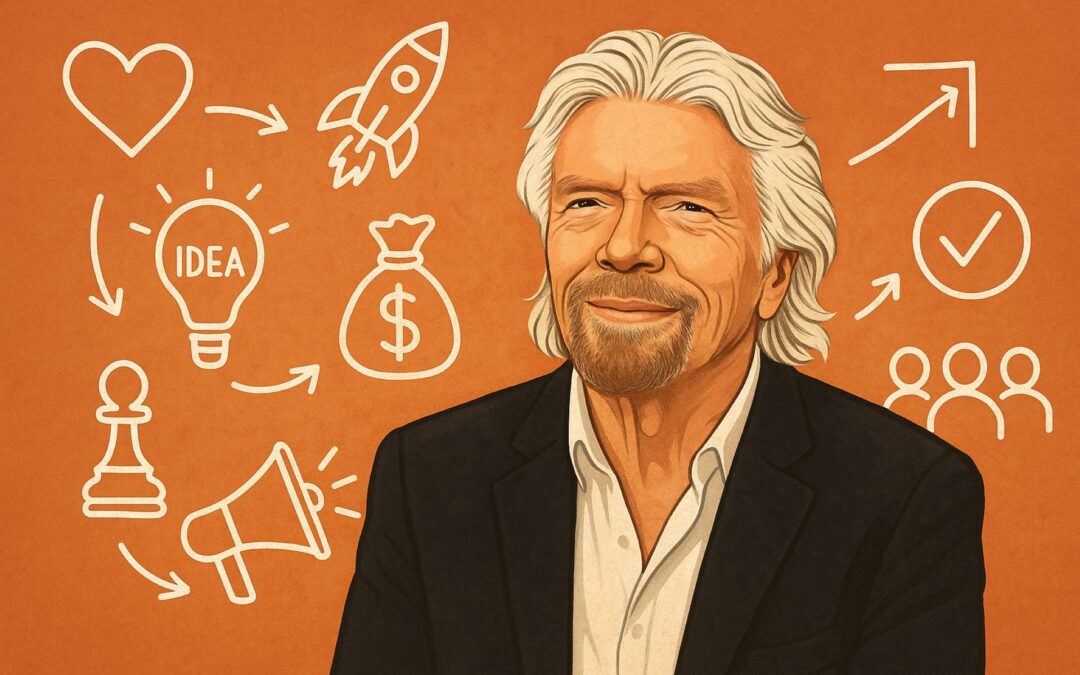
Richard Branson, the renowned rebel billionaire, is a living testament to the adage that there are countless ways to amass a million dollars. Branson’s life journey from a prophesied path of potential billionaire status to brushes with failure and his ultimate rise to an estimated net worth of 3 billion USD is an inspiring saga of entrepreneurship. In this article, we will embark on a deep dive into Branson’s life philosophy and business acumen, exploring how his principles can guide you on the path to riches.
Start with What You Love
Richard Branson’s approach to entrepreneurship is deeply rooted in the idea of passion. The notion that a business should be based on something you love might seem like common sense, yet it’s astonishing how many entrepreneurs overlook this crucial aspect. Branson argues that the heart of any successful venture is a founder’s genuine passion for the product or service. If you’re not passionate about what you’re creating, it becomes incredibly difficult to convince others that it’s worth their time and money.
Branson’s own journey demonstrates this perfectly. His first major business venture was Virgin Records, a project born from his love of music. This wasn’t just an opportunistic move to make money; it was a manifestation of his deep interest in the music industry. Branson knew that to succeed, he had to be wholeheartedly invested in his work, which meant understanding the industry inside and out, forging relationships with artists, and crafting an environment that catered to both creativity and business.
The importance of starting a business you care about is not just about passion; it’s about authenticity. When you are genuinely invested in your product, it resonates with people on a deeper level. Customers can tell when a business is run by someone who believes in what they’re offering. This connection fosters loyalty and trust, which are often the deciding factors between choosing one brand over another. In today’s market, where consumers are constantly bombarded with options, authenticity and genuine passion make a brand stand out.
Moreover, passion provides the resilience necessary to overcome challenges. Entrepreneurship is a tough road, filled with hurdles and setbacks. If you don’t care about what you’re doing, it’s easy to give up when the going gets tough. But when your business is built around something you’re passionate about, those obstacles feel like minor detours rather than insurmountable challenges. Branson’s success didn’t come easily, and many of his ventures faced obstacles—yet his unwavering belief in his work allowed him to continue pushing forward.
Be Brave, Take Risks
Bravery is one of the cornerstones of Branson’s entrepreneurial philosophy. He believes that entrepreneurship is essentially a high-stakes bet, and in order to win, you have to be willing to take risks. The business world is not for the faint-hearted; it’s for those who can make bold decisions and endure the uncertainty that comes with starting something new. Branson has often said that the most successful entrepreneurs are those who embrace optimism and see the potential for success even when the odds are stacked against them.
What sets Branson apart from many other business moguls is his ability to stay optimistic despite setbacks. The path to success is never linear, and Branson’s career is full of examples of ventures that didn’t work out as planned. From Virgin Records’ early financial struggles to the challenges of Virgin Airlines, Branson has faced numerous obstacles. Yet, through it all, his optimism remained unwavering. Instead of letting failure discourage him, Branson viewed it as an opportunity to learn and grow.
Branson’s story teaches that success is not about avoiding failure; it’s about taking the leap despite the possibility of falling. Every venture Branson embarked on was, in a sense, a risk. His decision to start Virgin Records in an industry dominated by huge, established labels was an incredibly bold move. Similarly, his entry into the airline industry was not an obvious choice. He was entering a market already dominated by big players like British Airways, and many people doubted his ability to succeed. But Branson’s mindset was different. He didn’t let fear of failure hold him back. Instead, he embraced the possibility of failure as part of the process.
Moreover, bravery in business is not only about making bold moves—it’s also about persevering through the tough times. Branson admits that throughout his career, there were moments when things looked bleak. In the face of crises, such as the global pandemic, Branson faced the very real possibility of losing everything he had worked for. However, rather than retreating into fear, he faced these challenges head-on, knowing that risk and failure are inherent parts of entrepreneurship. His story serves as a powerful reminder that taking risks—and failing—does not mean the end of the journey. It simply means that you’ve learned one more way that doesn’t work, and that brings you one step closer to finding the way that does.
Focus on Creating a Great Product
For Branson, the key to long-term success lies not just in making money, but in delivering great products. He stresses that a business should never be driven solely by the desire for profit. Instead, businesses should be built around a product that genuinely adds value to the customer’s life. While profit is undeniably necessary for sustaining a business, it should be a natural byproduct of creating something people truly need and want.
Branson’s philosophy challenges the common notion that business success comes from finding a quick way to make money. In fact, he argues that focusing solely on profit often leads to compromises in product quality, which can hurt a brand’s reputation in the long run. A product that lacks authenticity or quality is doomed to fail, even if it is marketed effectively. Branson’s success, in contrast, has always been centered around a commitment to creating the best possible product. Whether it was his music label or Virgin Atlantic, Branson focused on delivering something remarkable.
The importance of product quality is evident when you look at some of the most successful companies today. Take Apple, for example. Apple’s success is built on its ability to consistently create products that are both innovative and beautifully designed. Their commitment to quality has earned them a loyal customer base that is willing to pay a premium for their products. Similarly, Branson has always focused on creating memorable experiences for his customers. Virgin Airlines wasn’t just another airline—it was about providing a unique and enjoyable travel experience that went above and beyond what was offered by the competition.
A great product does more than just meet the immediate needs of customers—it also creates a connection with them. Branson’s approach to business is about more than just selling a product; it’s about building a relationship with the consumer. When you offer something that truly enhances the customer’s experience, they are more likely to return and recommend your brand to others. In today’s crowded market, where consumers are overwhelmed with choices, a product that stands out in terms of quality and value is more likely to succeed.
Furthermore, Branson highlights that the current business environment is increasingly dominated by large corporations that often prioritize profit over product quality. This creates an opportunity for smaller businesses to step in and offer simpler, better products. In this space, authenticity and innovation are key differentiators. Branson’s commitment to product excellence has allowed him to carve out niches in industries like travel, music, and telecommunications, and it continues to be a driving force behind Virgin Group’s success. By putting the customer and the product first, Branson has demonstrated that focusing on creating something great will always yield the best long-term results.
Surround Yourself with People Who Are Better Than You
One of the most well-worn pieces of entrepreneurial advice is to surround yourself with people who are smarter or more skilled than you. It’s advice that is often repeated, but it’s also something that many entrepreneurs misunderstand or overlook. Richard Branson not only believes in this, but he also adds an important caveat that many people miss: you can’t expect to work with people who are better than you unless you provide them with a compelling reason to work with someone who might be less capable in certain areas.
Building a successful business isn’t just about hiring talented people—it’s about creating an environment where these talented people want to stay and thrive. This requires understanding the motivations, needs, and values of your team members. Branson emphasizes that simply offering financial compensation is not enough. People are driven by more than just salary; they want to feel that their work is meaningful, that their contributions are valued, and that they are part of something bigger than themselves.
Branson’s leadership style revolves around making sure his employees feel supported and empowered. He doesn’t just hire talented people and expect them to perform; he works to create an environment where they can excel. This means providing them with the tools, autonomy, and recognition they need to do their best work. It also means fostering a culture of collaboration, where everyone, regardless of their role, feels valued and integral to the company’s success.
What Branson does differently is recognizing that great people need more than a paycheck—they need respect, a sense of purpose, and a supportive work culture. For example, when Branson first launched Virgin Atlantic, he didn’t just hire experienced flight attendants or pilots; he worked closely with them to ensure they felt personally invested in the success of the company. He also made sure that his staff felt like they were part of the Virgin family, not just employees of a corporation. This approach to team building has been one of the pillars of Virgin’s long-term success.
The lesson here is that your team’s talent is only as good as the environment you create for them. It’s not enough to bring on the smartest people—you must foster a culture that motivates, supports, and allows them to excel. A great leader empowers their team, nurtures their growth, and helps them develop to their full potential.
Marketing: Make Yourself the Brand
Marketing is an area where many entrepreneurs struggle, especially when starting out. Without a large marketing budget to throw around, it can be incredibly difficult to compete with bigger players who have millions to spend on advertisements. Richard Branson, however, has always known that the best way to promote his businesses was to use himself as the brand. Rather than spending millions on advertisements, he became the face of Virgin, putting his personal brand at the forefront of his ventures.
Branson’s marketing philosophy is simple: if people don’t know about your business, they won’t buy your product. This idea sounds obvious, but it’s something that many startups miss. Branson recognized that in order to stand out, he had to do things differently. Instead of competing with massive corporations on their terms, he used his own unique personality and flair to grab attention. Whether he was flying across the Atlantic in a hot air balloon or showing up dressed as a pirate to promote Virgin Atlantic, Branson was willing to do whatever it took to get people talking.
One of the most famous stunts Branson pulled off was when Virgin Airlines first secured its spot at Heathrow Airport. At the time, British Airways was the dominant player in the airline industry, and they weren’t happy to see Virgin enter the market. In response, Branson orchestrated a publicity stunt where he dressed up as a pirate and stormed British Airways’ display jet at 4:30 in the morning. It was a cheeky and bold move, but it garnered massive media coverage, and Virgin Atlantic quickly became a household name.
Branson’s use of self-promotion didn’t just stop at stunts—it was a fundamental part of his branding strategy. He understood that his personality and his willingness to embrace risk, humor, and adventure were qualities that could help define Virgin as a brand. Branson became synonymous with Virgin, and his willingness to put himself in the spotlight ensured that the company’s name was always front and center.
In today’s crowded marketplace, where people’s attention spans are shorter than ever, Branson’s approach to marketing is more relevant than ever. It’s not enough to just have a great product—you have to make sure people know about it. And what better way to do that than by using your own image and reputation as a tool for visibility? Whether it’s through social media, interviews, or good old-fashioned stunts, being the face of your own brand is a surefire way to make a lasting impression.
Find Your Differentiator
In a world filled with competition, finding a unique differentiator is essential for any business looking to thrive. Richard Branson’s understanding of this principle helped Virgin Group carve out a space for itself in industries that were already dominated by large, established players. Whether it was music, airlines, or telecommunications, Branson knew that in order to succeed, Virgin had to offer something that competitors couldn’t replicate.
When Branson entered the airline industry with Virgin Atlantic, he knew he would be competing against heavyweights like British Airways, which had far more resources and brand recognition. So, rather than trying to compete on price or service alone, Branson focused on creating a unique customer experience. He recognized that flying wasn’t just about getting from point A to point B—it was an experience, and it could be enhanced to make the journey more enjoyable. As a result, Virgin Airlines became known for its in-flight entertainment, quirky touches like hiring masseuses and comedians, and an overall atmosphere of fun and excitement.
The key to Virgin’s success was that its differentiator wasn’t something other airlines could easily replicate. While other airlines competed on price or the number of routes, Virgin offered an entirely different experience—one that was tailored to customers who were looking for something beyond just getting from one place to another. Branson’s willingness to invest in unique experiences helped Virgin create a loyal customer base that didn’t just choose the airline for convenience but because they wanted the Virgin experience.
This lesson is incredibly important for entrepreneurs today. In a world where industries are saturated, and competition is fierce, a product or service cannot rely on price alone to stand out. Finding a differentiator that speaks to customer needs or desires in a way that competitors cannot easily copy is the key to long-term success. Whether it’s through innovation, customer experience, or offering something unique, businesses that focus on differentiation have the potential to create a lasting impact in their industries.
Branson’s experience teaches that businesses should never be content with simply offering what’s already available. The real opportunity lies in offering something that sets your brand apart from the competition—something that customers will not find anywhere else.
Be Your Own Customer
One of Richard Branson’s most insightful pieces of advice is to be your own customer. This philosophy is central to his approach to entrepreneurship, as it allows him to directly experience the product or service from the perspective of the consumer. While many business leaders sit behind desks in boardrooms, removed from the reality of their customers, Branson immerses himself in the customer experience, ensuring that every touchpoint meets the standards he expects from a business.
Branson doesn’t just rely on customer feedback or surveys to improve his products. He actively seeks out opportunities to experience his businesses firsthand. For example, after Virgin Galactic’s first successful spaceflight, Branson didn’t just celebrate; he made a detailed list of 35 things that needed improvement. He identified issues like personalized seating, color-coded seats, and seat belt designs that could be improved for future customers. By experiencing the service as a customer would, Branson was able to pinpoint areas that could be enhanced, providing a better experience for future passengers.
This hands-on approach allows Branson to have a deeper understanding of his businesses and their strengths and weaknesses. It also allows him to empathize with his customers, understand their pain points, and make adjustments that will directly benefit them. By stepping into the shoes of his customers, Branson can more effectively address their needs, ensuring that the business remains relevant and successful.
The key takeaway from this philosophy is the importance of staying connected to the product and the customer journey. Business leaders should not distance themselves from the experience they are offering. Whether it’s flying on Virgin Atlantic, staying at a Virgin hotel, or using a Virgin service, experiencing the product firsthand gives leaders the insight they need to make improvements that can increase customer satisfaction and loyalty. It also ensures that leaders can address issues before they become significant problems.
Start with Yourself and Work Outward
Richard Branson’s approach to leadership and personal success is rooted in balance. He believes that in order to build a successful business, you first need to take care of yourself. This might sound counterintuitive—after all, entrepreneurs are often told to work tirelessly, sacrifice personal time, and prioritize their business above all else. However, Branson’s philosophy stresses that personal well-being is crucial for long-term success.
Branson’s mantra is that the starting point for success is a healthy and balanced life. Entrepreneurs often push themselves to the brink of exhaustion, thinking that their business will suffer if they don’t give it all their attention. But Branson believes that when you prioritize your health and well-being, you’ll be in a better position to take on the demands of business. He recognizes that you cannot be a successful leader if you’re burned out or physically unwell.
Once you’ve ensured that you are in a healthy, balanced state, Branson advises extending this focus outward—first to your immediate family and close relationships, and then to your community, your business, and ultimately the world. Branson emphasizes that a successful business should be built on a foundation of positive personal relationships. This approach not only ensures that your personal life is thriving but also that your business is surrounded by support and collaboration.
Starting with yourself and working outward also means taking responsibility for the impact your business has on others. Branson’s belief is that businesses should exist to improve the lives of others, whether through the products or services they offer, the jobs they create, or the causes they support. By focusing on making a positive difference in the lives of those closest to you, you create an environment where your business can thrive and make a greater impact in the world.
This principle encourages business leaders to lead by example. If you want your business to thrive, you must first ensure that you are in a place where you can give your best. It’s about creating a healthy, balanced ecosystem, starting with yourself and extending outward to everyone you touch—your employees, your customers, and your community.
Always Strive for Better
One of the core principles that has guided Richard Branson throughout his entrepreneurial career is the constant pursuit of improvement. For Branson, nothing is ever good enough, and he consistently seeks ways to make things better, whether it’s a product, service, or internal process. This mindset of continuous improvement has been a significant factor in his ability to stay relevant and competitive in a constantly changing business environment.
Branson’s pursuit of perfection is not about trying to create something flawless—he knows that perfection is an unattainable goal. Instead, it’s about making incremental improvements and always seeking ways to get better. This philosophy has been evident in every aspect of his businesses, from Virgin Airlines to Virgin Galactic. He has always looked for ways to enhance the customer experience, improve efficiency, and offer more value.
An example of this mindset in action is his approach to Virgin’s airlines. When Branson entered the airline industry, he knew that he was up against giants like British Airways. Rather than simply competing on price, Branson focused on improving the overall customer experience. He introduced innovations such as in-flight entertainment, more comfortable seating, and unique services like offering massages and performances to passengers during their flights. These enhancements helped Virgin stand out in an industry that was often seen as lackluster and customer-unfriendly.
Branson’s focus on continuous improvement also extends to his leadership style. He constantly seeks feedback from his employees and customers, using it to drive innovation within his businesses. He believes that by listening to feedback and making changes based on that input, businesses can evolve and stay ahead of the competition. This mindset encourages a culture of innovation within his companies, where employees are empowered to suggest improvements and take ownership of their work.
The takeaway from Branson’s philosophy of striving for better is clear: never be satisfied with the status quo. Success in business requires a constant commitment to improvement, whether it’s refining a product, improving customer service, or enhancing internal processes. Entrepreneurs who adopt this mindset are better equipped to adapt to change, stay ahead of trends, and build businesses that stand the test of time.
Have Fun
While many entrepreneurs view business as a serious, high-pressure endeavor, Richard Branson has always taken a different approach. He believes that fun should be an integral part of the entrepreneurial journey. Branson’s belief is that business doesn’t have to be all about hard work and stress; it can and should be enjoyable. In fact, he argues that making work fun is one of the reasons for his long-term success.
For Branson, the idea of having fun in business goes beyond just enjoying the work—it’s about creating an environment where employees, customers, and partners all feel energized, motivated, and excited about what they’re doing. He believes that when people are having fun, they perform better, they are more creative, and they are more likely to go the extra mile. This positive energy is contagious, and it creates an atmosphere where people are excited to work together to achieve shared goals.
One of Branson’s most famous examples of bringing fun into business came when he took over a portion of British Rail in the UK, which had been previously run by the government. The staff was demoralized and in need of a morale boost. To turn things around, Branson invited the entire workforce—over 10,000 people—to a massive party at his countryside estate. He set up tents, hired bands, and even created a playground for children. It wasn’t just a corporate event—it was a celebration that helped foster a sense of community and excitement among the employees. This party had a lasting impact, boosting employee morale and creating a more positive atmosphere within the company.
Branson’s belief in fun doesn’t stop with employees. He believes that customers should also enjoy their experience with the company. Whether it’s the quirky, fun atmosphere on Virgin Airlines or the lighthearted promotions Virgin has become known for, Branson ensures that the customer experience is never dull. By injecting humor and excitement into every aspect of his businesses, Branson has created a brand that people love and look forward to engaging with.
Ultimately, Branson’s approach serves as a reminder that business doesn’t have to be a grind. By creating a fun, positive environment, entrepreneurs can inspire creativity, build stronger relationships with customers and employees, and make the journey more enjoyable. The result is not just a successful business, but a company culture that people want to be a part of.
Conclusion
Richard Branson’s idiosyncratic yet successful approach to business is a treasure trove of valuable lessons for budding entrepreneurs. Begin with passion, prioritize superior products, embrace optimism, and never overlook the significance of fun in your journey. By incorporating these principles into your entrepreneurial endeavors, you too can navigate the path to riches and perhaps carve your own unique and extraordinary entrepreneurial legacy, akin to that of Richard Branson.