
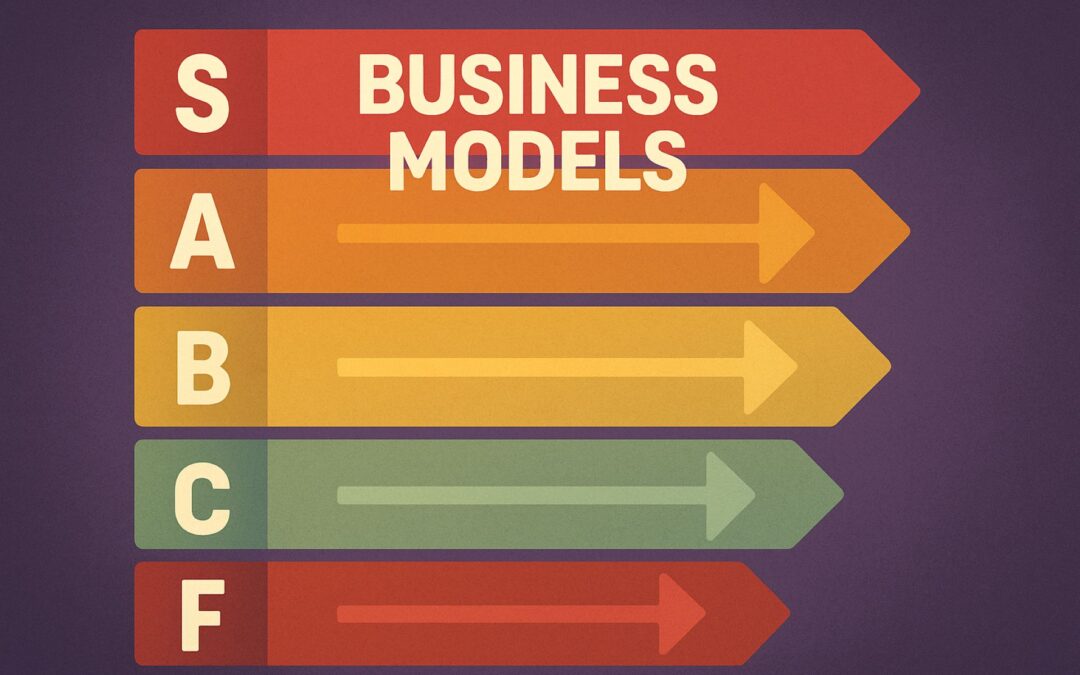
Business models are the engines behind every enterprise, shaping the path from inception to profitability. Yet, not all models are created equal. Some are fraught with pitfalls, barely sustainable, while others scale into empire-building machines generating hundreds of millions annually. The nuances lie in startup costs, profit margins, time to profitability, and overall success rates. Here’s a candid ranking of major business models—straight talk on what really works.
F Tier: The Business Models You Should Avoid Like the Plague
Multilevel Marketing (MLM)
Multilevel marketing schemes have long been marketed as golden opportunities—an accessible path to wealth through leveraging your personal network and building a team that sells products on your behalf. On the surface, it appears enticing: recruit five people, each recruits five more, and income flows passively from the growing chain beneath you. However, this model is fundamentally flawed at its core, doomed by simple mathematics and human psychology.
At the heart of MLM lies exponential recruitment, which sounds like a recipe for infinite growth, but in reality, it hits a hard ceiling almost immediately. With each person required to bring in multiple recruits, the pool of potential participants is exhausted exponentially fast. For example, if just 100 people each recruit five others, within 13 cycles the number of recruits surpasses the Earth’s population. This means the system inevitably collapses under its own weight.
Financially, MLM participants bear most of the risk. Startup costs vary widely—anywhere from $100 to $5,000 or more—often disguised as mandatory “starter kits” or inventory purchases. This inventory frequently remains unsold, tying up cash in products that can’t be liquidated. The dream of residual income clashes with harsh realities: the Federal Trade Commission estimates less than 1% of MLM participants ever make a profit. The rest face losses, sometimes significant.
The business model also thrives on recruiting over selling. Success depends less on actual product demand and more on convincing others to join, creating a cycle of pressure and disappointment. This recruitment obsession leads to strained personal relationships and burnout. Ultimately, MLM is a predatory ecosystem where only those at the very top profit, while the vast majority struggle or fail outright.
Life Coaches Without Real Experience
The life coaching industry has exploded in recent years, fueled by social media and a culture hungry for personal development. However, not all coaching is created equal. A vast number of individuals brand themselves as “life coaches” with minimal credentials, little practical experience, and no proven track record. Many have completed short certification programs or watched a few online tutorials, but lack the depth of knowledge and real-world application that distinguish a true coach from a motivational speaker.
Opening a coaching business is deceptively simple and cheap. Startup costs include building a website, creating social media profiles, and possibly investing in branding—often only a few hundred dollars. Margins seem attractive because delivering coaching calls costs almost nothing besides your time and internet connection, giving a theoretical profit margin above 90%.
The critical barrier, however, is client trust and proven results. Without a demonstrated history of helping clients achieve meaningful change—such as guiding executives through pressure-cooker situations or growing thriving businesses—attracting and retaining clients becomes a Sisyphean task. Most inexperienced coaches rely heavily on motivational captions and curated online personas rather than tangible value.
Ironically, many life coaches earn the majority of their income by teaching others how to become life coaches, perpetuating a cycle of superficial knowledge. The industry’s oversaturation and low barrier to entry drag the overall success rate below 5%. Genuine coaching requires years of experience, emotional intelligence, and a track record of results—qualities that separate true professionals from the noise.
F tier business models share a common thread: they promise easy riches but lack foundational sustainability. Multilevel marketing is a mathematical mirage, an inevitable dead end disguised as opportunity. Meanwhile, inexperienced life coaching masquerades as expertise, offering little beyond motivational fluff. Both drain time, money, and energy with little return, making them models to avoid for serious entrepreneurs seeking lasting success.
D Tier: Models That Work but Are Hard to Sustain
Restaurants
Restaurants hold a special place in the collective imagination—who hasn’t dreamed of owning a cozy café or a bustling bistro? Yet, despite their allure, restaurants sit squarely in the D tier because they are notoriously difficult to make profitable and maintain long-term.
The capital requirements are formidable. Opening a restaurant typically demands anywhere from $100,000 to $500,000 upfront. This covers the cost of securing a prime location—rent in desirable areas can be astronomical—as well as outfitting the kitchen with specialized equipment, hiring and training staff, purchasing initial inventory, and meeting health and safety regulations. The overhead alone can sink even the most passionate restaurateurs before the doors open.
Profit margins in this industry are razor-thin, usually between 3% and 10%. Food costs, labor, rent, utilities, and waste all chip away at potential earnings. Operational complexity further complicates matters: sourcing fresh ingredients, maintaining consistent quality, managing fluctuating customer volumes, and juggling the unpredictable dynamics of service all require precision and experience. The industry’s unforgiving nature shows in its grim statistics: more than half of all new restaurants shutter within three years, and roughly 80% close before their fifth anniversary.
Location is critical but also fickle. An amazing site can mean steady foot traffic and loyal clientele, while a misjudged spot can doom a restaurant to obscurity. The community around the restaurant also plays a role—a neighborhood with a vibrant dining culture or supportive patrons can sustain a business that might otherwise struggle. Because these ideal conditions are rare and hard to cultivate, restaurants are a high-risk, labor-intensive business that demands relentless dedication.
Traditional Retail Stores
Traditional brick-and-mortar retail stores, especially small specialty shops or mall-based outlets, face mounting challenges in the modern economy. Startup costs are substantial, ranging from $50,000 to $250,000, accounting for lease agreements, inventory purchase, store build-out, staffing, and marketing. Unlike online commerce, retail stores are locked into a fixed physical location, limiting their market reach to local foot traffic and visitors.
Profit margins vary but tend to be low, often between 5% and 20%. The physical store bears many fixed costs regardless of sales volume, including rent, utilities, and salaries, which intensifies pressure to maintain consistent customer flow. Competing with e-commerce giants like Amazon, which offer vast selections, lower prices, and rapid delivery, puts brick-and-mortar stores at a severe disadvantage.
Consumer shopping habits have shifted decisively toward online purchasing for convenience, variety, and cost savings. Many traditional retailers have responded by closing physical locations or pivoting fully to online sales. This transition is fraught with challenges—creating a seamless omnichannel experience, managing logistics, and investing in digital marketing.
Small retail stores that survive and thrive often do so by carving out hyper-local niches, offering unique products, or delivering exceptional in-person customer service. However, the overall trend signals a difficult environment, where maintaining profitability demands agility and innovation.
Small-Scale Manufacturing
Small-scale manufacturing occupies a diverse space, from artisans crafting bespoke furniture to makers producing small batches of gourmet foods or handmade apparel. Here, the business owner wears multiple hats—creator, manufacturer, marketer, and distributor—blurring lines between craftsmanship and entrepreneurship.
Startup costs vary tremendously based on the complexity of production, necessary tools, workspace rental or purchase, and raw material costs. Estimates range from $10,000 for simpler operations to well into six figures for more sophisticated or capital-intensive crafts.
Margins in this sector typically fall between 10% and 30%. This relatively modest range reflects the substantial expenses involved in materials, labor, quality control, shipping, and the challenges of managing supply chains that often lack economies of scale. Unlike large-scale manufacturers, small producers cannot leverage bulk purchasing or automated processes to reduce costs substantially.
Time to profitability can extend from one to two years, requiring patience and perseverance. Success in this arena often hinges on two key strategies:
- Hyper-Niche Market Ownership: Focusing on an ultra-specific product category where competition is minimal. For example, creating specialty gear for an obscure hobby like falconry. Enthusiasts in such niches often value exclusivity and are willing to pay premium prices, granting a significant competitive moat.
- World-Class Quality and Brand Reputation: Producing unparalleled craftsmanship can justify high prices and attract dedicated clientele. The example of handcrafted Japanese chef knives illustrates this: knives painstakingly forged over weeks, with customers waiting months and paying thousands, enable sustainable business despite the limited production volume.
Without these advantages, small-scale manufacturers face intense competition from mass-produced goods and imported products, making scalability and long-term profitability challenging.
D tier business models embody grit and resilience but come with heavy operational demands, steep costs, and narrow margins. Restaurants require a rare mix of location savvy, culinary skill, and management excellence. Traditional retail battles the tides of e-commerce disruption and shrinking foot traffic. Small-scale manufacturing demands niche mastery or unmatched quality to survive in a crowded marketplace. These models are far from impossible but exact a heavy toll on founders in time, money, and energy.
C Tier: Trend-Dependent and Margin-Thin Models
Drop Shipping
Drop shipping is often heralded as the “easy” entry point into e-commerce because it eliminates the need to hold inventory or manage shipping logistics. At its core, drop shipping involves listing products—usually sourced from overseas manufacturers or wholesalers, most commonly in China—on your online store. When a customer places an order, the supplier ships the product directly to the buyer. This hands-off approach allows entrepreneurs to launch a store with relatively little upfront capital.
Startup costs are moderate, generally between $500 and $5,000, with most of the budget funneled into digital advertising campaigns on platforms like Facebook, Instagram, or TikTok. However, the profit margins are notoriously thin—usually hovering between 5% and 10%. Occasionally, if a product goes viral, margins might temporarily spike up to 30%, but such cases are exceptions rather than the rule.
Time to profitability can be swift—often within 3 to 6 months—if you can identify a winning product and nail your marketing. However, the model suffers from a fundamental flaw: extreme replicability. Once a product gains traction, competitors flood the market, driving prices down in a relentless race to the bottom. This commoditization, combined with poor control over product quality, shipping times, and customer service, creates a fragile business with little longevity.
In essence, drop shipping is more akin to running a short-term marketing campaign than building a lasting brand. While it can generate pocket money or quick wins for skilled advertisers, it lacks the foundational elements needed for sustainable growth.
Print on Demand
Print on demand (POD) offers creative individuals a chance to monetize their designs on products like T-shirts, mugs, posters, and phone cases without the headaches of inventory management. The model works by uploading your artwork to POD platforms, which then handle the manufacturing, packaging, and shipping of items as orders come in.
Startup costs are negligible—essentially limited to the time spent creating and refining your designs and any software or tools needed for artwork. Margins typically fall between 10% and 30%, constrained by relatively low price points and intense competition.
The real challenge with POD is oversaturation. Millions of designers use these platforms, flooding the market with similar or derivative designs. This glut drives a fierce price war, pushing sellers to undercut one another, which erodes profitability. Moreover, many designs fail to connect with meaningful audiences, resulting in inconsistent or negligible sales.
Print on demand functions more as a low-stakes side hustle than a scalable business for most. While a select few manage to build loyal followings or carve out unique niches, the vast majority earn sporadic, modest income insufficient for full-time entrepreneurship.
Ad-Based Apps
Ad-based apps are those free-to-download applications monetized primarily through in-app advertisements. This model spans a wide variety of apps, from simple games to utility tools and novelty concepts.
Development costs for such apps can vary drastically—from a few thousand dollars for a simple app to over $100,000 for complex, server-intensive products requiring professional UX/UI design and ongoing maintenance. The high startup costs stem from the need to build a stable, user-friendly product, host backend services, and regularly update features.
While software distribution is cost-effective, the net profit margins for ad-based apps tend to be modest—between 5% and 15%. Ad revenue per user is often low, and user engagement is typically fleeting, with most users abandoning apps after brief periods. Retention challenges and the necessity for massive user bases to generate meaningful income make profitability elusive.
The success rate is low, with most apps failing to break even within the first couple of years, quietly disappearing with minimal downloads and negligible ad revenue. However, the scalability of digital platforms means that if an app gains viral traction and amasses millions of users, even small per-user revenue can translate into substantial earnings. Flappy Bird’s $50,000 daily revenue at its peak stands as a rare testament to this potential.
In summary, ad-based apps are a high-risk, capital-intensive venture with uncertain returns, requiring exceptional execution and luck to break into the profitable tier.
C tier business models offer low entry barriers but come shackled with fierce competition, thin margins, and uncertain sustainability. Drop shipping appeals with its simplicity but faces brutal commoditization and quality issues. Print on demand provides creative freedom with minimal investment but battles market saturation and low sales volume. Ad-based apps promise scalability but demand significant upfront investment and user acquisition mastery, with most failing to generate lasting revenue. These models can serve as launching pads or supplemental income sources, but entrepreneurs seeking longevity and growth should proceed with caution.
B Tier: Reliable, Profitable, and Accessible Models
Freelancing and Consulting
Freelancing and consulting represent one of the most straightforward and accessible paths to entrepreneurship. Here, your primary asset is your expertise—whether it’s writing, design, marketing, programming, or specialized advisory services. Unlike product-based businesses, freelancing demands minimal upfront investment, sometimes literally nothing beyond a computer and internet connection.
Setting up a profile on freelancing platforms like Upwork, Fiverr, or Toptal is free, and the overhead remains low, usually limited to professional tools or software subscriptions. This translates into impressively high profit margins—often exceeding 90%—because you are essentially selling your own time and skills without intermediaries or inventory costs.
The time to profitability can be immediate if you have an in-demand skill and a strong portfolio, or it can stretch to three to six months as you build a reputation and client base. What makes freelancing particularly attractive is its scalability within limits: you can gradually raise your rates, specialize, or build long-term retainer clients, shifting from transactional gigs to steady revenue streams.
According to studies, about one in four U.S. freelancers earns six figures or more annually, demonstrating that freelancing is not merely a stopgap but a viable career and business model. The biggest challenges are client acquisition, time management, and maintaining a steady pipeline, but with persistence and skill, freelancing offers a reliable income and independence.
Agencies
Building on the freelancing model, agencies involve assembling a team to deliver services collectively. This allows entrepreneurs to take on larger, more complex projects and expand their market reach beyond what one individual could manage alone.
Startup costs increase compared to solo freelancing. You might need office space, additional software licenses, payroll systems, and marketing efforts. Typical initial investments range from $1,000 to $10,000, depending on scale and location.
Profit margins in agencies are slimmer, usually between 20% and 40%, because you must cover employee salaries, benefits, and increased operational costs. However, agencies benefit from multiplied capacity and diversified skill sets, allowing them to serve more clients and offer comprehensive solutions.
The time to profitability closely mirrors that of freelancers, generally between immediate and six months, but managing a team introduces new challenges: leadership, resource allocation, maintaining quality, and sustaining client relationships.
Success rates remain favorable, but only with strong management and clear strategic vision. Agencies offer a clear growth path for freelancers wanting to scale their business without losing control.
Local Services
Local services cover a broad spectrum of labor-intensive businesses offering essential, often recurring, services such as residential or commercial cleaning, landscaping, plumbing, electrical work, and repairs.
These businesses thrive on a tangible, location-based need and benefit from relatively stable demand—people always require maintenance and upkeep of their homes or businesses. Startup costs vary depending on the trade but generally fall between $2,000 and $15,000 for equipment, vehicles, insurance, and initial marketing.
Margins range from 20% to 50%, influenced by the service type, scale, and operational efficiency. For example, specialized trades with certifications (electricians, HVAC technicians) often command higher prices and better margins than general cleaning services.
Time to profitability is swift—often just one to two months—due to the relatively low upfront investment and consistent demand. The model favors operators who build solid reputations and leverage word-of-mouth referrals and recurring contracts.
In many underserved markets or smaller cities, local service businesses face little competition and enjoy loyal customer bases. While not glamorous, these “boring” businesses quietly generate six-figure revenues and sustainable livelihoods for skilled entrepreneurs. Their evergreen demand and tangible value make them a solid foundation for those preferring hands-on, grounded enterprises.
B tier business models strike a balance between accessibility and reliability. Freelancing and consulting offer flexibility, low startup costs, and high margins but require continuous client development and self-discipline. Agencies build on this with team growth, opening new revenue channels at the expense of operational complexity. Local services anchor entrepreneurs in real-world demand, providing steady cash flow and scalable margins with the tradeoff of labor intensity.
These models excel as dependable income sources and stepping stones toward larger ventures, rewarding skill, consistency, and strong client relationships. For many, B tier businesses form the bedrock of sustainable, profitable entrepreneurship.
A Tier: High Potential, High Margins, But Not Beginner-Friendly
Franchise Ownership
Franchise ownership offers entrepreneurs a compelling blend of established brand recognition, proven systems, and operational support, reducing many uncertainties inherent in startups. By purchasing a franchise, you essentially buy the rights to operate under a reputable brand with access to its supply chain, marketing resources, and business model.
The initial investment is substantial, typically ranging from $50,000 to several million dollars depending on the franchise’s size, industry, and territory exclusivity. This includes franchise fees, equipment, real estate, inventory, and ongoing royalties or marketing contributions.
Profit margins generally fall between 10% and 20%. While not sky-high, this level of margin is respectable given the reduced risk of failure. Most franchises reach profitability within 1 to 2 years, aided by comprehensive training and operational guidelines. Furthermore, over 85% of franchises survive beyond five years, a survival rate far above the average for independent startups.
However, franchising is not a passive investment. Franchisors impose strict criteria on applicants, including operational experience, financial stability, and market analysis of the proposed location. Franchisees must adhere to brand standards and performance benchmarks, and can even be terminated if results falter. This structure ensures consistency and protects brand equity but limits entrepreneurial freedom.
Franchise ownership suits those with capital and a desire for a relatively structured business environment. The built-in systems, brand trust, and support network create a reliable foundation, making it an attractive option for first-time business owners ready to commit resources and effort.
Digital Products
Digital products are among the most scalable and lucrative business models, prized for low overhead, global reach, and virtually limitless replicability. This category divides into two main streams:
Audience-Based Digital Products
These include online courses, subscription content, paid communities, ebooks, and other knowledge-based offerings. Success in this space hinges on building and nurturing a loyal audience over time, often requiring years of consistent content creation, engagement, and trust-building through platforms like YouTube, podcasts, blogs, or social media.
Startup costs are variable and twofold: first, the effort and resources invested in audience building (which can span years), and second, the creation of the product itself, ranging from a few thousand dollars for simple courses to millions for complex platforms with extensive functionality.
Margins on digital knowledge products are impressive—typically between 80% and 95%—because once created, distribution costs are minimal. Profitability timelines vary widely: an ebook might become profitable almost immediately, while subscription platforms or apps may take several years to scale.
The key to success is trust and genuine value. If your audience believes in your expertise and the product delivers real benefits, conversion rates and customer retention improve dramatically.
Technology-Based Digital Products
This subcategory includes plugins, automation tools, workflow add-ons, and software utilities that improve efficiency or save time. These products often cater to niche markets such as photographers, video editors, or developers.
Startup costs are generally low, around $2,000 to $3,000 if you build the product yourself. Margins remain high at roughly 90%. Time to profitability depends on market fit and niche targeting: products designed for established audiences can turn profitable within 1 to 3 months, while broader markets may require 6 to 12 months or more to gain traction.
Digital products’ core advantage lies in their “build once, sell forever” nature, enabling infinite scalability without inventory or significant incremental costs. This makes them perennial favorites for entrepreneurs seeking passive or semi-passive income streams with substantial upside.
Direct-to-Consumer (DTC) E-Commerce Brands
Direct-to-consumer brands revolutionize traditional retail by manufacturing or white-labeling products and selling them directly through proprietary websites. This model bypasses traditional wholesale or retail channels, allowing brands to own the customer relationship, data, and pricing power.
Typically, DTC brands outsource production, often through factories in Asia, enabling scalability without the burdens of manufacturing overhead. White labeling allows entrepreneurs to purchase finished products and customize packaging, branding, and marketing, transforming generic goods into premium experiences. For example, an influencer’s lipstick line or protein bar might be the same factory-made product rebranded and marketed as unique.
Startup costs for DTC ventures vary widely—solo founders can start with around $10,000, while building a global brand often requires six to seven figures. Margins tend to range from 30% to 60%, depending on product category, brand strength, and supply chain efficiency.
Time to first profit typically spans 6 to 12 months, contingent on effective marketing and product-market fit. However, only 10% to 20% of DTC brands achieve sustained profitability, largely because successful brands invest heavily in marketing, customer acquisition, and retention strategies.
The strength of the DTC model lies in building brand loyalty and repeat business, allowing premium pricing and differentiation in crowded markets. It demands savvy marketing, supply chain mastery, and constant innovation but can reward founders with scalable, profitable businesses.
A tier business models combine high barriers to entry with immense potential for profitability and scale. Franchise ownership offers structured, lower-risk entrepreneurship for those with capital. Digital products provide unmatched scalability and margin benefits, especially for entrepreneurs who build engaged audiences or serve niche markets with specialized tools. Direct-to-consumer brands blend manufacturing with marketing mastery, transforming commoditized products into premium, customer-loved brands.
These models require capital, expertise, and strategic foresight but offer pathways to significant wealth creation and business longevity for those willing to invest the time and resources.
S Tier: The Business Models of the Ultra Wealthy and Visionary Entrepreneurs
Software as a Service (SaaS)
Software as a Service (SaaS) stands at the pinnacle of scalable business models. Unlike traditional software sales, SaaS delivers applications via the cloud on a subscription basis, creating steady, recurring revenue streams. The beauty of SaaS lies in its ability to “build once, sell many times,” with minimal incremental costs for each new user.
Startup costs for SaaS ventures vary dramatically, from modest beginnings at around $10,000 for simple niche tools to hundreds of millions for enterprise-level platforms with robust security, integrations, and scalability. Development demands skilled engineers, designers, product managers, and ongoing infrastructure costs like servers and customer support.
Profit margins are extraordinarily high—typically between 70% and 90%—because software distribution and maintenance costs per user are low compared to the subscription fees collected. These margins allow SaaS companies to reinvest heavily in product improvement and growth.
Time to profitability is longer than in many other businesses, often 12 to 24 months or more. The initial phases focus on product-market fit, user acquisition, and churn reduction. Success is more likely in highly specialized, niche markets where SaaS solves a concrete problem, enabling the company to charge premium prices.
The recurring revenue model builds financial predictability and resilience, transforming SaaS companies into reliable, high-growth “money-printing machines.” Amazon Web Services (AWS) exemplifies this model’s power, generating over half of Amazon’s profits through cloud subscriptions, highlighting SaaS’s potential to dominate vast markets.
Marketplaces
Marketplace platforms connect buyers and sellers, facilitating transactions without owning inventory. This intermediary role enables marketplaces to capture value by taking a commission or fee from each transaction, effectively monetizing the flow of goods or services.
Launching a marketplace demands significant upfront investment—typically between $50,000 and over $1 million—to develop a seamless, secure user experience, address technical challenges, and solve the “chicken-and-egg” problem of balancing supply and demand (liquidity). Platforms require robust UX design, security infrastructure, payment systems, and customer support.
Margins range between 40% and 70%, as marketplaces don’t bear inventory or manufacturing costs but must maintain platform operations and marketing. Profitability typically takes 1 to 3 years as the platform scales its user base and transaction volume.
Marketplace success stories like Airbnb, Uber, and Amazon have transformed entire industries by efficiently matching demand and supply. However, building a dominant marketplace is extremely difficult, requiring massive user acquisition, trust-building, and continuous innovation to fend off competitors.
Smaller, niche marketplaces can also thrive by focusing on specialized verticals, lowering capital requirements and operational complexity while capitalizing on underserved segments.
Fintech
Fintech companies are reshaping the financial landscape by building infrastructure for payments, digital wallets, investment platforms, lending, and more. Their revenue often comes from small fees on transactions, recurring subscriptions, or usage-based charges—each tiny on its own but massive when scaled to millions of users.
Entering fintech demands not only technological prowess but also deep regulatory knowledge and compliance capabilities. This makes it one of the most complex and capital-intensive business models. Startup and operational costs are enormous, with many fintech firms investing years and significant funding before achieving profitability.
Margins can be substantial once scale is reached, thanks to the recurring and transactional revenue nature. However, success rates remain low due to the regulatory hurdles, fierce competition from incumbent banks and tech giants, and the difficulty of acquiring user trust in managing financial data.
When executed well, fintech disrupts traditional financial systems, offering better user experiences, lower costs, and novel financial products. Its impact is profound and transformative, often ushering in entirely new ways of managing money.
S tier business models embody the apex of entrepreneurship: immense scale, high margins, recurring revenue, and global reach. SaaS offers unparalleled financial predictability with subscription-based income; marketplaces unlock exponential network effects by connecting buyers and sellers; fintech pioneers redefine the foundations of finance with innovative, tech-driven solutions.
Though resource-intensive and complex, these models reward visionaries with the capacity to build transformative, enduring enterprises that command vast markets and reshape industries. Mastery of these models is often the hallmark of the ultra wealthy and industry disruptors.
Conclusion
Choosing the right business model is the cornerstone of entrepreneurial success. From the pitfalls of MLMs and the fierce competition in drop shipping, to the reliable earnings of freelancing and the expansive potential of SaaS and fintech, each model carries its own risks, rewards, and demands.
Understanding the nuanced trade-offs—startup costs, profit margins, scalability, and time to profitability—equips you to make informed decisions aligned with your resources, skills, and ambitions. The path to building a lasting, profitable enterprise isn’t uniform, but armed with this clarity, you can navigate the complex landscape of business with confidence and purpose, setting the stage to transform ideas into thriving realities.