
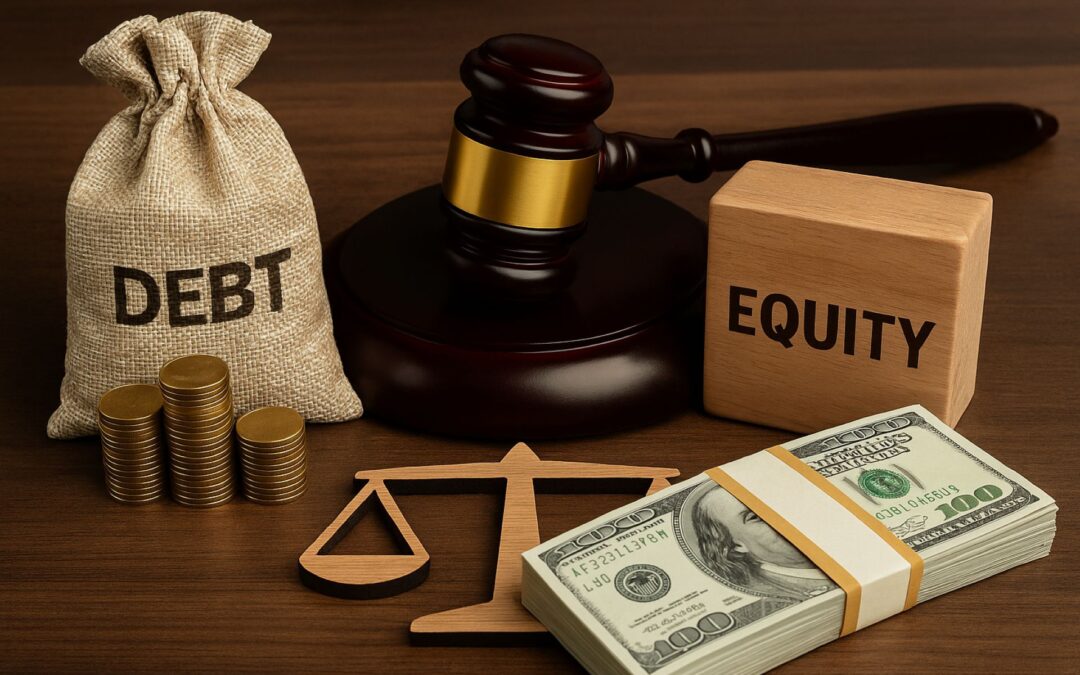
Would you rather own 100% of a small cake or 10% of the bakery that bakes thousands every day? This quintessential question captures the dilemma every entrepreneur faces: how do you fund your business without losing control? The answer often boils down to two fundamental choices—debt or equity—and each path carries profound implications for ownership, risk, and wealth creation.
The Capital Conundrum: Debt or Equity?
Capital is the bloodstream of every business—without it, ideas remain dormant, operations stall, and growth grinds to a halt. But securing that capital is rarely straightforward. Entrepreneurs face a fundamental fork in the road: should they raise money by selling ownership stakes (equity), or should they borrow funds that must be repaid with interest (debt)? This seemingly simple choice ripples through every aspect of the company’s future—control, risk exposure, financial flexibility, and ultimately, the founder’s wealth.
Understanding the Stakes: Why Capital Structure Matters
At its core, capital is about resources, but it’s also about relationships and power. When you raise capital by selling equity, you’re inviting partners into your venture. Each share sold chips away at your control, handing over decision-making influence to investors who expect a return. This means your business becomes a collective enterprise, where founders share authority and profits with external stakeholders.
Conversely, debt is a contractual obligation—borrowed money that must be repaid regardless of how the business performs. Unlike equity, debt doesn’t grant lenders any ownership or say in company affairs. You remain the undisputed owner. But with that control comes risk: missed interest payments can trigger default, damaging credit and even risking insolvency.
Why Startups Favor Equity
Startups, especially in their infancy, typically don’t qualify for loans. Banks look for collateral, stable revenue, and predictable cash flow—luxuries few startups possess. This makes equity the natural choice for early-stage entrepreneurs. Angel investors and venture capitalists invest based on potential, not profit, willing to shoulder risk in exchange for shares.
This reliance on equity is why approximately 70% of early-stage startups pursue equity funding. Founders trade future ownership for the capital to build products, test markets, and prove business models. This infusion is often the difference between an idea languishing in a notebook and becoming a disruptive market force.
The Debt Advantage for Established Businesses
As companies scale and establish predictable earnings, they gain access to credit markets. Mature businesses often prefer debt because it preserves ownership stakes and can be a cheaper source of capital due to tax-deductible interest. Unlike equity investors who demand a share of the upside and control, lenders expect fixed payments.
Notably, more than 90% of companies listed on the S&P 500 use debt as their primary funding source. This includes tech giants and industry leaders with massive cash reserves. Apple, for instance, had over $160 billion in cash but continued to issue corporate bonds. This counterintuitive behavior is a calculated financial strategy: borrowing at low interest rates reduces taxable income and avoids diluting ownership.
Control Versus Risk: The Core Trade-off
At the heart of the debt vs. equity decision lies a fundamental trade-off between control and risk:
- Equity: You dilute control by bringing on investors, but you share financial risk. If the business falters, you don’t owe investors their money back, but you do lose a piece of your company.
- Debt: You retain full ownership and control, but financial risk increases. Failure to service debt obligations can jeopardize the business and personal assets, depending on the structure.
Entrepreneurs must weigh their appetite for control against their tolerance for risk. Those eager to maintain authority may favor debt, while those seeking growth capital without immediate repayment prefer equity.
The Long-Term Impact on Wealth Creation
The capital structure chosen at the outset has cascading consequences on how wealth is ultimately created and distributed. Equity investors participate in the upside, potentially multiplying initial investments into fortunes. Founders who dilute too much risk losing control and a disproportionate share of future profits.
Debt holders do not participate in upside gains; their return is limited to interest payments. But by preserving ownership, founders keep the lion’s share of long-term value creation—provided they can manage the repayment obligations.
Equity Funding: Selling Pieces of Your Dream
Equity funding is the heartbeat of the startup ecosystem—a powerful but complex method where entrepreneurs exchange ownership stakes in their company for much-needed capital. This approach transforms abstract ambition into tangible growth, enabling founders to bring innovative ideas to life, scale operations, and compete in fierce markets. But beneath its allure lies a delicate balance of power, dilution, and expectation.
The Fundamentals: What Is Equity Funding?
When a company raises money through equity, it sells shares representing a portion of ownership to investors. Unlike loans, equity does not require repayment or interest. Instead, investors become partial owners, sharing both risks and rewards. If the company succeeds, their shares appreciate, potentially delivering outsized returns. However, if the business fails, investors lose their stake without any guarantee of recovering their capital.
For founders, equity funding provides critical cash to cover everything from product development and hiring to marketing and infrastructure. The downside? Each round of equity financing slices the founder’s ownership percentage, eroding control and future profits.
The Startup Lifecycle and Equity Stages
Equity funding unfolds in distinct stages, each aligned with the company’s growth and risk profile:
Seed Capital: Planting the Idea
Seed funding is the earliest infusion of cash, often sourced from angel investors, friends and family, or early-stage venture capital firms. At this embryonic phase, the startup is mostly a concept—maybe a prototype or a business plan but little more. Investors here bet on the founder’s vision, passion, and potential market opportunity rather than proven revenue or traction.
This stage is critical for transforming ideas into testable products and validating market demand. The capital raised typically covers initial product design, small teams, and early customer acquisition efforts. However, founders often give up a sizable equity portion relative to the amount raised, reflecting the high risk investors take.
Series A: Proof of Concept and Product-Market Fit
Once the startup demonstrates some traction—user engagement, initial sales, or pilot projects—it enters the Series A round. This stage signals that the business model is working, and investors now focus on scaling potential.
Series A investors demand metrics: paying users, growth rates, customer retention, and revenue forecasts. Unlike seed investors, they are less interested in the founding story and more in quantifiable evidence. Funding at this point fuels building out product features, expanding teams, and refining go-to-market strategies.
In exchange for capital, founders dilute their ownership further and often concede board seats or voting rights, giving investors a voice in strategic decisions.
Series B and Beyond: Scaling and Market Expansion
As the company matures, it moves into Series B and subsequent rounds, where the emphasis shifts from validation to aggressive scaling. Revenue and customer bases are established, and capital fuels expansion into new markets, massive hiring sprees, and infrastructure development.
Investors in these rounds—usually larger venture capital funds or growth equity firms—are highly data-driven. They scrutinize unit economics, operational efficiency, and competitive positioning. The company’s valuation rises sharply, but so does dilution. Founders may own only a fraction of the company they started.
At this stage, investor expectations escalate. Reporting requirements increase, governance tightens, and founders often find themselves balancing growth pressures with operational realities.
Series C and Pre-IPO: Market Domination and Exit Preparation
Series C rounds are played at a different level. Companies at this point aim to dominate categories, acquire competitors, expand internationally, and prepare for liquidity events like IPOs or acquisitions. The sums raised can reach hundreds of millions of dollars.
Investors now include private equity firms, hedge funds, and even large corporations seeking strategic stakes. The company’s narrative transforms from scrappy startup to formidable market leader.
Preparing for an IPO requires rigorous financial audits, compliance with regulatory frameworks, and establishing transparent governance structures. Public markets demand accountability, steady growth, and clear paths to profitability.
The IPO: Public Markets and the Ultimate Equity Event
An Initial Public Offering (IPO) is the culminating equity event—where a private company lists its shares on a public stock exchange, opening ownership to institutional and retail investors worldwide. IPOs raise massive capital, sometimes billions, fueling further growth or paying down debt.
But going public also means relinquishing significant control. The company becomes answerable to shareholders, market analysts, and regulatory bodies. Quarterly earnings reports become battlegrounds where even small misses can trigger stock price crashes. The IPO process itself is costly, complex, and time-consuming, with expenses running into tens of millions of dollars.
The IPO democratizes ownership but amplifies scrutiny. Founders must navigate market expectations, shareholder activism, and sometimes hostile takeovers.
The Control Dilemma: The Cost of Giving Away Ownership
Equity funding’s most insidious risk is the gradual loss of control. Each funding round typically involves issuing new shares, diluting existing ownership. Over time, founders can become minority stakeholders in their own companies.
This power shift can lead to conflicts between founders and investors, especially if visions diverge. The classic case is Steve Jobs, who, after Apple went public, was ousted following a power struggle due to insufficient voting control despite his founder status.
Founders must balance the immediate benefits of capital infusion with the long-term implications of diluted authority. Negotiating investor rights, board composition, and voting structures becomes as critical as growing the business itself.
Equity Funding: Beyond Money—Access to Expertise and Networks
While equity financing dilutes ownership, it often brings invaluable strategic advantages. Investors—particularly seasoned venture capitalists—offer mentorship, industry connections, recruiting networks, and operational guidance. They act as force multipliers, accelerating growth and opening doors that cash alone cannot.
These intangible assets frequently justify the cost of dilution. Well-chosen investors can catalyze success, while poor fits can introduce friction and misaligned priorities.
Debt Funding: Leverage Without Losing Control
Debt funding is a strategic cornerstone for established businesses and an essential tool in the billionaire’s financial arsenal. Unlike equity, debt allows a company to raise capital without diluting ownership, enabling founders and executives to maintain control while fueling growth. However, this control comes tethered to obligations—repayment schedules, interest costs, and financial discipline—that must be managed carefully to avoid jeopardizing the company’s stability.
Why Debt? The Power of Leverage
Debt is fundamentally a contract: you borrow money now and commit to paying back principal plus interest over time. Unlike equity investors who become part-owners and expect a share of profits, lenders are entitled only to their agreed-upon repayments. This arrangement offers a compelling advantage—if a business can generate returns exceeding the cost of debt, it magnifies profits for the owners.
This amplification effect is called financial leverage. By borrowing at relatively low interest rates and deploying that capital productively, companies can accelerate expansion, invest in R&D, acquire competitors, or optimize operations—all while preserving existing ownership stakes. The trade-off is increased financial risk, as debt payments are mandatory regardless of business performance.
The Debt Landscape: From Loans to Bonds
Debt funding manifests in various forms tailored to company size, maturity, and needs. Understanding these options is crucial for deploying debt wisely.
Business Loans: The Traditional Route
For many small to medium enterprises, the most familiar form of debt is the bank loan. Banks provide a lump sum upfront with fixed repayment terms—monthly installments over a predefined period, including interest.
To secure a business loan, companies must demonstrate creditworthiness, collateral, and stable cash flow. This requirement excludes many startups and early ventures but suits established businesses with predictable revenues.
The major advantage here is ownership retention—founders keep full control and do not have to dilute equity. The downside is the rigid repayment schedule. If revenues falter or unexpected expenses arise, debt obligations still loom, exerting pressure on cash flow and potentially triggering defaults.
Lines of Credit: Flexible Cash Flow Management
Modern businesses increasingly rely on lines of credit—pre-approved borrowing limits they can draw from as needed. Unlike fixed loans, lines of credit provide flexibility, with interest charged only on the amount used.
This instrument is especially valuable for managing the timing mismatch between incoming revenue and outgoing expenses. For example, a retailer may need inventory funding months before seasonal sales generate cash. A construction firm might start a project funded by client payments that arrive in stages.
Lines of credit act as a financial safety net, smoothing out operational hiccups and enabling growth without permanent capital commitments. They are widely used across industries and are considered a standard financial tool.
Corporate Bonds: Debt on a Grand Scale
When companies reach significant scale, traditional loans and lines of credit are often insufficient. Enter corporate bonds—debt securities issued by companies to investors globally.
Issuing bonds allows corporations to tap into massive pools of capital at competitive interest rates. The company promises to pay periodic interest (coupons) and repay principal at maturity. Bonds are traded on public markets, offering liquidity to investors and flexibility to issuers.
Apple’s example illustrates this well. Despite holding over $160 billion in cash, Apple routinely issues bonds at low interest rates—around 3.5%—because borrowing is cheaper than using internal funds. The interest expense reduces taxable income, providing a significant tax shield that enhances after-tax returns.
Corporate bonds offer scalability, allowing companies to borrow billions in a single issuance. They diversify funding sources beyond banks and private lenders, reducing dependence on any single creditor.
Managing Debt: Risks and Rewards
Debt’s allure is undeniable, but it carries inherent risks. Repayment is not optional. If business downturns impair cash flow, companies may struggle to meet interest and principal payments, leading to defaults, credit downgrades, or bankruptcy.
Moreover, excessive debt—known as overleverage—can constrain future flexibility. High debt burdens limit the ability to raise additional capital, invest in innovation, or withstand economic shocks. Creditors may impose covenants restricting business activities or financial policies.
Therefore, prudent debt management is paramount. Companies must carefully calibrate debt levels, ensuring interest coverage ratios and cash flow projections comfortably cover obligations. Financial officers engage in rigorous stress testing to anticipate worst-case scenarios.
Tax Advantages: Why Debt Is Often Cheaper Than Equity
One key reason debt is favored over equity by mature businesses is its tax deductibility. Interest payments on debt reduce taxable income, effectively lowering the company’s tax bill. In contrast, dividends paid to equity investors are not tax-deductible.
This tax advantage makes debt a cheaper form of financing on an after-tax basis, incentivizing companies to optimize their capital structures by blending debt and equity. Strategic use of debt enhances shareholder returns without surrendering control.
Debt as a Growth Catalyst: Examples from Tech Titans
Major tech companies—including Amazon, Microsoft, Meta, and Google—are among the largest issuers of corporate debt. They borrow billions not out of necessity but strategic choice.
For example, Amazon may issue bonds to finance new fulfillment centers, invest in cloud infrastructure, or acquire emerging competitors. Borrowing at low interest rates allows rapid expansion without diluting founder or shareholder stakes.
This strategy leverages the company’s credit strength and stable cash flow, balancing growth ambitions with capital efficiency. Debt becomes a tool for outpacing competitors and seizing market opportunities.
Debt vs. Equity: A Dynamic Balance
No single funding method reigns supreme. Debt and equity are complementary instruments that serve different purposes depending on company stage, market conditions, and strategic goals.
Early-stage companies often cannot access debt due to risk profiles and lack of collateral. As businesses mature, debt becomes a lever to amplify returns and maintain control. Meanwhile, equity remains essential for absorbing risk and funding breakthrough innovation.
Savvy entrepreneurs and financial strategists orchestrate a blend—using equity to ignite growth and debt to fuel scale—crafting capital structures optimized for their unique circumstances.
Bootstrapping: The Underrated Path of Independence
Bootstrapping is the entrepreneurial equivalent of forging your own path through uncharted territory—building a business from the ground up using personal resources, customer revenue, and relentless ingenuity rather than relying on external funding. While it lacks the flash and fireworks of multi-million-dollar funding rounds, bootstrapping embodies a raw, unvarnished form of entrepreneurship that offers unique advantages and formidable challenges.
What Is Bootstrapping?
At its essence, bootstrapping means starting and growing a business without significant outside capital. Founders rely on their savings, reinvested profits, and cash flow generated by early customers to fund operations and expansion. There are no angel investors, no venture capitalists, and no bank loans shaping the journey. Every dollar earned is a hard-fought victory, every decision intimately tied to financial reality.
Bootstrapping is the most common way businesses begin—especially side projects, small businesses, and many tech startups before they reach the fundraising stage. It requires founders to wear multiple hats: salesperson, marketer, product developer, customer support agent, and accountant. The learning curve is steep, but so is the payoff in autonomy and self-reliance.
The Benefits of Bootstrapping
Total Ownership and Control
Without outside investors, founders retain 100% ownership of their business. This means no dilution of equity, no external board members, and no investor-imposed strategic directions. Decisions rest solely in the hands of the entrepreneur, allowing for unwavering commitment to their vision and values.
This independence means founders can steer the company through uncharted waters without pressure from stakeholders seeking quick returns or aggressive growth targets. They call the shots, set the pace, and keep the culture intact.
Financial Discipline and Focus
Bootstrapping instills a relentless focus on profitability and cash flow. Because resources are limited, founders must prioritize efficiency—building only what’s necessary, cutting waste, and iterating based on direct customer feedback. This lean approach often leads to more sustainable business models and a clear understanding of unit economics.
The pressure to generate revenue early fosters creative problem-solving and forces entrepreneurs to validate their product-market fit organically. It minimizes the risk of overexpansion fueled by unchecked investment dollars.
Flexibility and Agility
Bootstrapped companies can pivot rapidly without needing investor approval. This agility enables faster response to market feedback, experimentation with new ideas, and the freedom to fail fast and iterate. There are no protracted board meetings or shareholder pressures slowing down crucial decisions.
The Challenges of Bootstrapping
Limited Capital and Slower Growth
The most obvious limitation of bootstrapping is capital scarcity. Without large infusions of cash, growth tends to be incremental rather than explosive. Scaling operations, marketing campaigns, and hiring often must be paced to match available funds.
This slower growth trajectory can be disadvantageous in hyper-competitive markets where first-mover advantage and rapid scale define winners. Some opportunities simply require capital intensity that bootstrapping cannot match.
Personal Financial Risk
Bootstrapping entrepreneurs often risk personal savings, retirement funds, or even home equity to finance their ventures. This concentration of personal financial risk can add stress and complicate life decisions, especially if the business faces setbacks.
Unlike equity investors who accept loss as part of risk, founders bear the full brunt of financial downside, sometimes with consequences extending into personal credit and well-being.
Resource Constraints and Operational Burden
Wearing every hat means founders must juggle diverse responsibilities—from product development to sales to bookkeeping. This can lead to burnout and inefficiencies. Scaling operations while maintaining quality and customer satisfaction without a full team is a constant juggling act.
Bootstrapping in Action: Real-World Examples
Many iconic companies began as bootstrapped ventures before seeking external funding or remaining private indefinitely. Basecamp, the project management software company, famously built a profitable business without venture capital, prioritizing customer revenue and slow, sustainable growth.
Mailchimp, now a marketing giant, was bootstrapped for years, growing through reinvested earnings and laser focus on customer needs before eventually selling for billions.
Even in capital-intensive sectors, bootstrapping can provide a sturdy foundation. Founders often bootstrap the early phases to validate ideas and build initial traction before approaching investors from a position of strength.
When to Bootstrap and When to Raise Capital
Bootstrapping suits entrepreneurs who value control, prioritize profitability, and operate in markets where gradual growth is viable. It’s a path for those willing to endure slower scaling in exchange for independence.
However, some ventures require rapid scaling, significant upfront investment, or operate in fiercely competitive environments where delayed growth can mean obsolescence. In such cases, external funding—equity or debt—becomes necessary.
The best entrepreneurs assess their industry dynamics, market size, competitive landscape, and personal goals to decide the right balance between bootstrapping and raising capital.
The Billionaire’s Playbook: Control, Risk, and Wealth
Billionaires don’t stumble upon their fortunes by accident. Behind the staggering wealth lies a meticulously crafted approach to funding—a strategic orchestration of debt, equity, and bootstrapping that balances control, risk, and returns. Understanding this playbook reveals how the ultra-wealthy build empires without relinquishing command or exposing themselves to reckless financial peril.
Early Stage: Equity as the Launchpad
In the nascent stages of a company, equity is often the only viable currency. Founders rarely have assets or revenues to back loans, and bootstrapping may not generate enough fuel for rapid innovation or market entry. Billionaires who began as entrepreneurs understand that selling shares to investors—angels, seed funds, or venture capitalists—is a pragmatic necessity.
The genius lies in selective equity sharing. The most successful founders raise just enough capital to hit critical milestones—product development, market validation, and early customer traction—without giving away excessive ownership. Maintaining a meaningful stake is vital to preserving influence over strategic decisions and company culture.
Scaling Up: Deploying Debt with Surgical Precision
As companies mature and generate consistent cash flows, debt becomes the billionaire’s weapon of choice for scaling without dilution. Leveraging debt allows them to amplify returns on equity by borrowing at low interest rates, often using sophisticated instruments like corporate bonds.
Apple’s 2023 example is instructive. Despite hoarding over $160 billion in cash, Apple issued tens of billions in bonds. This move is far from desperation; it’s a calculated tax-optimization strategy. Interest expenses on debt reduce taxable income, lowering the company’s effective tax rate while preserving cash for strategic initiatives or shareholder returns.
This approach requires impeccable creditworthiness and cash flow management. Billionaires know that overleverage can cripple a business, so debt levels are calibrated to optimize tax benefits and growth while maintaining financial flexibility.
Bootstrapping: The Foundation of Discipline and Control
Bootstrapping isn’t just a fallback; it’s often the bedrock upon which billionaire founders build initial momentum and embed a culture of fiscal discipline. By self-funding early operations, founders maintain absolute control and cultivate intimate knowledge of their business’s operational realities.
Many billionaires credit bootstrapping for instilling resilience and operational savvy, qualities that serve them well even after raising external capital. This lean foundation tempers reckless spending and grounds long-term strategic thinking.
Balancing Risk and Control: The Art of Capital Structure
Billionaires exhibit mastery in balancing risk exposure and control. Equity funding dilutes control but shifts financial risk to investors, who accept losses in exchange for upside potential. Debt preserves ownership but imposes mandatory repayments, increasing financial risk.
The most successful entrepreneurs dynamically adjust this balance as their businesses evolve. Early-stage ventures absorb risk through equity; mature enterprises manage risk through prudent debt use. Bootstrapping remains a constant thread, anchoring growth with discipline and control.
Strategic Use of Equity: Beyond Cash Infusion
Equity partners bring more than money—they provide expertise, industry connections, and strategic guidance. Billionaires carefully select investors who align with their vision and can accelerate growth through networks and operational support.
At later stages, equity raises often serve to bring in strategic partners or prepare for liquidity events like IPOs or acquisitions. Billionaires negotiate terms that protect control—dual-class shares, voting rights, and board compositions—to safeguard their influence even as ownership stakes shift.
Sophisticated Debt Instruments: Beyond Simple Loans
Billionaires and their companies utilize a spectrum of debt instruments tailored to optimize capital structure—convertible notes, mezzanine financing, syndicated loans, and bonds. These tools offer flexibility, cost advantages, and strategic leverage.
For example, convertible debt lets companies borrow money that can convert into equity at a future event, combining benefits of both funding types. Mezzanine financing blends debt and equity characteristics, providing capital with attached warrants or options.
Understanding and employing these sophisticated instruments allows billionaire-backed companies to minimize cost of capital and maximize control.
Tax Optimization and Wealth Preservation
One critical dimension of the billionaire playbook is tax strategy. Using debt to finance growth leverages interest tax deductions, reducing overall tax burdens. Equity financing often triggers capital gains taxes and dilution but can be structured to optimize wealth transfers, estate planning, and philanthropic goals.
Wealthy entrepreneurs collaborate with legal and financial advisors to engineer capital structures that maximize after-tax returns while ensuring regulatory compliance and risk mitigation.
Real-World Examples: How Billionaires Fund Their Empires
- Elon Musk famously bootstrapped his first ventures, reinvesting profits before raising equity to scale Tesla and SpaceX. He carefully balances equity dilution with strategic debt financing and public offerings to maintain control over his sprawling enterprises.
- Jeff Bezos started Amazon with his savings and a small equity raise. As Amazon grew, it employed debt strategically to finance expansion and acquisitions while maintaining founder control.
- Mark Zuckerberg retained majority control through dual-class shares even as Facebook raised billions in equity and went public, demonstrating the use of ownership structures to balance capital needs with control.
Conclusion
The choice between debt and equity isn’t a mere financial decision; it’s a strategic crossroads that defines your company’s destiny. Entrepreneurs must balance control, risk, and growth ambitions. Equity invites partners and potential dilution but fuels rapid expansion. Debt demands discipline and reliable cash flow but safeguards ownership. Bootstrapping embodies independence but may limit scale.
Billionaires and corporate titans don’t just pick one; they blend these instruments artfully across their journey—equity to ignite the flame, debt to stoke the fire, and self-reliance to steady the hearth.
In the end, it’s not just how you fund your business but how wisely you wield that capital that determines whether you own the bakery or just a slice of the cake.