
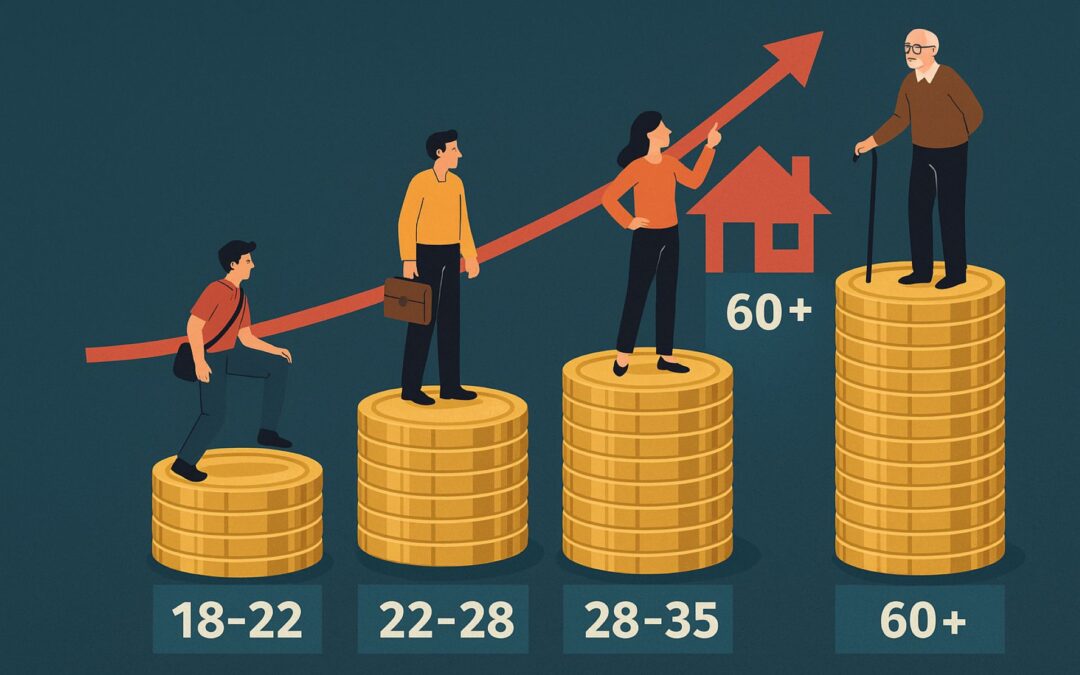
Does it sometimes feel like no matter how hard you work, save, or sacrifice, others are zooming ahead financially? Like they hold some secret map that you don’t? The truth is, they do—sort of. Building wealth is not random chaos. There’s a deliberate sequence, a ladder of financial goals that, if climbed in order, create lasting momentum. Hit the right goals at the wrong time, and your financial foundation could crumble.
Let’s unpack the critical financial milestones you need to aim for at every stage of your adult life to build a resilient, growing wealth system.
Level One: Age 18 to 22 — Master Living Below Your Means
The transition from adolescence to adulthood marks a profound shift—not just emotionally or socially, but financially. For many, ages 18 to 22 coincide with college years or first jobs, periods defined by limited income, unpredictable expenses, and a steep learning curve in personal finance. This stage is less about how much money you make and more about how you manage what you have.
Living below your means at this juncture isn’t merely about spending less; it’s about cultivating an unshakeable mindset of financial prudence and foresight. That means every dollar earned is treated as a strategic tool, not instant gratification fuel.
Start by saving at least 10% of your income—even if it’s just a few dollars here and there. This disciplined habit carves out the foundation for your emergency fund, ideally housed in a high-yield savings account to maximize growth while maintaining liquidity. The target might seem modest—$500 to $1,000—but its true value lies in psychological security. When your laptop crashes or a rent payment arrives unexpectedly, knowing you have a financial buffer is empowering. It anchors you amidst uncertainty.
Tracking your expenses down to the last rupee or cent sharpens awareness. This painstaking effort reveals where your money quietly leaks—daily coffees, subscription services you forgot to cancel, or impulse buys. Many find this exercise uncomfortable, but it’s the bedrock of financial literacy.
Perhaps the toughest challenge here is resisting lifestyle inflation. As your income starts to inch up, so does the temptation to upgrade your phone, splurge on clothes, or increase social outings. However, succumbing to these urges prematurely is a trap that dilutes your capacity to build wealth. Instead of flaunting newfound earnings, delay the urge to “perform success” and focus on building a system that sustains growth.
The mental discipline gained through living well below your means transcends money. It fosters patience, delayed gratification, and self-control—traits that compound wealth faster than any salary hike. By mastering this stage, you leapfrog the majority of peers who confuse income increases with financial progress.
Level Two: Age 22 to 28 — Eliminate Bad Debt and Build a Financial Buffer
In your mid to late twenties, the financial landscape becomes more complex and consequential. With a steadier paycheck, your attention pivots from basic survival to securing stability and resilience. The two pillars here are eliminating high-interest debt and creating a robust financial buffer.
High-interest debts—credit cards, payday loans, and store financing—are silent wealth assassins. Though they may present themselves as convenient short-term solutions, these instruments impose crushing interest rates that siphon off your income and erode future earning potential. The illusion of temporary relief quickly morphs into chronic financial strain.
Devoting at least 20% of your income to aggressively extinguishing this debt frees you from its exhausting grip. This relentless focus releases mental bandwidth and restores your confidence. You’re no longer living paycheck to paycheck but carving out real breathing room.
Concurrently, establishing a financial buffer equivalent to three to six months of living expenses is non-negotiable. This fund acts as a shock absorber, protecting you from sudden job loss, medical emergencies, or unexpected bills. With this safety net, you gain the priceless freedom to make choices unshackled from immediate financial fear—like quitting a toxic job or taking time off to reskill.
Retirement savings enter the picture with greater seriousness, too. Allocating about 10% of your income to retirement funds leverages the powerful effect of compound interest. The earlier you start, the less you need to save later, making discipline now an exponential advantage.
Despite growing earnings, lifestyle inflation remains a lurking danger. The habit of increasing expenditures with income gains can derail progress. Maintaining frugality—choosing modest housing, delaying luxury purchases, and mindful spending—ensures extra funds funnel into buffers and investments, not fleeting pleasures.
Ultimately, this stage transforms financial goals from vague aspirations into essential, actionable priorities. The buffer you build here isn’t optional; it’s the foundation that makes adulthood manageable, stable, and full of possibility. You’re not just protecting yourself from bad luck; you’re architecting a life of deliberate freedom.
Level Three: Age 28 to 35 — Buy Your First Property and Invest Aggressively
Your late twenties to mid-thirties mark a pivotal evolution in your financial journey, where the abstract idea of building wealth begins to take tangible form. At this stage, buying your first property often becomes a central goal—not just as a place to live, but as a foundational asset that anchors your long-term financial stability and growth.
By now, your emergency fund is likely well-established, and you’ve become comfortable contributing regularly to savings and investments. Investing approximately 15% of your income into diversified vehicles like index funds or ETFs signals a shift from reactive money management to proactive wealth building. Alongside this, setting aside 20 to 30% of your income in a high-yield savings account dedicated to a property deposit becomes your focused mission. This dual approach balances short-term preparedness with long-term growth.
Preparation for homeownership isn’t merely about accumulating a down payment; it’s about sculpting your entire financial profile over several years. Eliminating or significantly reducing high-interest debt remains critical, as lenders scrutinize your debt-to-income ratio closely. A spotless credit score and low credit utilization ratio strengthen your borrowing power and qualify you for better mortgage rates.
Income stability is equally essential. Lenders favor applicants with consistent employment and income history, so avoid large, discretionary purchases that might raise red flags or inflate your credit obligations during this phase. Understanding how much you can comfortably afford is paramount—not just what a bank is willing to lend. Stretching beyond your means may get you the keys faster, but it jeopardizes your financial security.
Research becomes your greatest asset in this phase. Familiarize yourself with market trends, neighborhood dynamics, and interest rate fluctuations. Knowing the difference between emotional impulse and sound investment will prevent costly mistakes. Your first home likely won’t be perfect—expect it to require some cosmetic or structural work or be located in a transitional area. Yet, it’s a crucial stepping stone, a tangible asset that starts building equity rather than feeding a landlord’s mortgage.
Owning property does more than provide shelter; it’s a gateway to wealth accumulation. Equity built in your home can be leveraged for future investments or act as a financial buffer during downturns. Additionally, rental properties acquired later can transform your cash flow and passive income streams.
If purchasing a home right now isn’t feasible, use this period to continue strengthening your financial position. Saving aggressively, maintaining financial discipline, and enhancing your creditworthiness ensure you’re poised to act decisively when the opportunity arises.
Level Four: Age 38 to 44 — Acquire Secondary Property and Ramp Up Investing
Once you reach your late thirties and early forties, your financial situation should reflect a significant leap beyond mere survival and basic wealth building. This phase is characterized by expanding your asset base strategically and intensifying your investment discipline.
Purchasing a secondary property is often the hallmark of this stage. Unlike your first home, this acquisition is typically an investment property designed to generate rental income or serve as a future residence for family members. Here, your decisions are less driven by emotion and more by rigorous analysis. You evaluate factors such as location desirability, maintenance costs, expected cash flow, vacancy risks, and potential appreciation. This data-driven approach minimizes speculative risks and maximizes the property’s contribution to your long-term financial health.
In addition to real estate, your investment portfolio becomes more sophisticated. Committing 15 to 20% of your monthly income to a mix of retirement accounts, brokerage accounts, and other investment vehicles turns investing into a disciplined habit rather than an afterthought. Automation of these contributions ensures consistency regardless of market conditions or personal circumstances.
Experience tempers your financial decision-making. Having witnessed market cycles—including downturns and recoveries—you’re better equipped to stay calm during volatility, maintain your investment course, and avoid chasing trends or “get rich quick” schemes. Your focus shifts to solid, reliable funds that deliver consistent returns and build a portfolio designed to pay you whether you’re actively working or not.
Lifestyle choices continue to reflect intentionality. Upgrades and new purchases are carefully weighed against long-term goals rather than impulsive desires. If you have children, their educational needs and future financial security increasingly factor into your planning. Alternatively, you might prioritize building a life that offers independence from reliance on others, whether through diversified income or liquid assets.
Discipline at this stage requires embracing productive discomfort. Saying no to unnecessary lifestyle inflation, maintaining a tight circle of trusted advisors and friends, and dedicating time to financial education are not sacrifices—they’re investments in your freedom and security.
Momentum built during these years lays the groundwork for financial freedom in the coming decades. By expanding assets thoughtfully and investing with unwavering discipline, you propel yourself toward a future where work is a choice, not a necessity.
Level Five: Age 44 to 55 — Build Enduring Wealth, Not Just Security
In your mid-forties through mid-fifties, the financial landscape shifts from establishing stability to actively building lasting wealth. This stage is about leveraging the foundation you’ve meticulously constructed to create a portfolio that generates meaningful, sustainable cash flow and long-term security.
By now, your emergency fund is robust, providing ample protection against unforeseen expenses, and most, if not all, high-interest debts have been eliminated. You are consistently contributing to your retirement accounts, often maxing out limits where possible, understanding that this is non-negotiable for the financial independence you desire.
Mortgage payments should be shrinking, or you’re aiming to have your primary residence paid off within the next 5 to 10 years. The equity in your home has become a powerful financial asset—more than just shelter, it’s a springboard for further wealth building. You might be considering or already owning multiple properties, such as rental units, which diversify your income and provide cash flow beyond your regular salary.
Your investment strategy becomes more nuanced. You’re no longer chasing the highest short-term returns or speculative investments. Instead, you’re focusing on diversification and income generation—dividend-paying stocks, real estate, bonds, and index funds that produce steady returns. This approach not only grows your wealth but also insulates you from market volatility.
Lifestyle choices continue to evolve from status-driven consumption toward intentional spending aligned with your priorities. You recognize that true wealth means freedom: the power to say no, to make choices independent of financial pressure or social expectation. Multiple income streams become an essential component of your financial ecosystem—whether through rental income, consulting gigs, business ventures, or investments.
This period also marks the closing window for aggressive catch-up. The margin for error narrows, and the urgency to maximize returns grows. Playing it safe with overly conservative investments or limited income sources risks losing ground to inflation and missed opportunities. Smart risk-taking, calculated and informed, becomes critical to solidify your retirement readiness.
You’re gearing up to transition from working out of necessity to working by choice. The wealth you build now will dictate whether retirement is a comfortable chapter or a source of stress.
Level Six: Age 50 to 60 — Transition to Financial Freedom
Your fifties represent a decisive decade where financial freedom moves from aspiration to reality. The decisions you make during this phase carry heightened significance as your margin for mistakes diminishes.
All the accounts and investment vehicles you have nurtured over previous decades—retirement funds, brokerage accounts, real estate holdings—now become the pillars supporting your freedom. It’s vital that you stay vigilant: don’t skip contributions or delay investments, as lost time now has disproportionate impact.
Financial simplicity becomes a powerful strategy. Extravagances such as large homes, luxury vehicles, or superfluous subscriptions no longer hold appeal. Instead, you embrace a lifestyle that prioritizes mental clarity and reduced financial complexity. Simplifying your financial obligations reduces stress and creates space for intentional living.
At this stage, your focus shifts from accumulation to living with financial freedom in mind every day. The goal is to have enough passive income and liquid assets to say yes or no to opportunities without hesitation, to fund a child’s education or take extended sabbaticals without worry.
This decade can evoke contrasting emotions. Those who prepared early feel a sense of lightness, empowerment, and excitement about what lies ahead. Conversely, late starters may feel pressure mounting as the years slip by without the foundation needed for true independence.
Remaining disciplined, embracing simplicity, and protecting the wealth you’ve built are essential. Financial freedom is not a destination but a journey that requires constant stewardship. Your success in this decade sets the tone for the quality of life you’ll enjoy in retirement and beyond.
Level Seven: Age 60+ — Secure Your Legacy
Entering your sixties and beyond signifies a profound shift from accumulation and active wealth building to preservation and legacy creation. This stage is less about growing your portfolio and more about ensuring that everything you’ve worked tirelessly to build can be sustained and responsibly transferred to future generations.
Your investments and income streams should now be generating stable, predictable cash flow, fully supporting your lifestyle without requiring active labor. But wealth at this level carries responsibility—how it is passed on can either empower or burden those who inherit it.
Estate planning becomes paramount. This involves crafting wills, establishing trusts, and carefully structuring assets to minimize taxes and legal complications. A well-designed estate plan ensures your wealth doesn’t dissipate unnecessarily, protects your heirs from potential pitfalls, and aligns with your wishes for asset distribution.
But beyond documents and dollars lies the equally vital task of educating and preparing your heirs. Teaching children and grandchildren the principles of financial stewardship—how to protect, grow, and wisely manage wealth—helps prevent the erosion of your legacy through mismanagement or unpreparedness. This knowledge transfer can be more valuable than the assets themselves.
Many in this stage also turn toward philanthropy and community impact. Funding scholarships, supporting charitable causes, mentoring younger generations, or establishing foundations becomes a way to extend influence and create meaning beyond personal wealth. These endeavors ensure that your legacy lives on in ways that uplift others, creating a ripple effect far beyond your lifetime.
The greatest risk now is complacency. Without deliberate planning and active engagement, decades of hard work can unravel quickly. Families unprepared for the responsibilities of inheritance can face conflicts, financial loss, or legal battles. Proactive stewardship, clear communication, and professional guidance are essential to safeguard your lifetime achievements.
Securing your legacy is not simply the endgame—it is a new chapter of purpose, where your impact transcends accumulation, shaping futures and inspiring lasting change.
Bonus: Avoid the Trap of Early Complacency
One of the most insidious dangers on the path to financial freedom is the temptation to ease off the accelerator after initial successes. Many people hit a few significant milestones—paying off debt, buying their first home, or reaching a comfortable income—and mistakenly believe the hard work is over.
This premature complacency can quietly erode progress. Inflation relentlessly chips away at idle cash holdings, meaning your emergency fund loses purchasing power year after year. Opportunities to invest in growing assets or diversify income streams are missed. Confidence wanes as your “full” savings start to feel insufficient, and monthly expenses begin to encroach on your ability to save.
Momentum, the invisible force powering financial growth, requires consistent effort to sustain. Each win should be harnessed as fuel to propel you toward the next goal, not a stopping point. Pausing or slowing means the system begins to decay.
Remaining vigilant means continuously investing—not just money, but in your knowledge and skills. Markets evolve, tax laws change, and new opportunities emerge. Staying educated and adaptable lets you capitalize rather than fall behind.
Moreover, earnings should be diversified and protected. Relying on a single income stream or hoarding cash stifles growth. Building multiple passive income sources and deploying capital strategically keeps your financial engine running efficiently.
Financial freedom is a lifelong journey, not a destination marked by a single milestone. The “levels” don’t conclude until you deliberately choose to stop climbing. Until then, relentless focus, continuous learning, disciplined saving, and prudent investing remain your greatest allies.
Conclusion
Reaching financial security and building lasting wealth is less about luck and more about following a deliberate, age-appropriate sequence of goals. Each stage—from mastering frugality in your early twenties to securing a meaningful legacy in your sixties and beyond—builds upon the last, creating momentum that propels you forward. Avoid the trap of complacency after early wins and keep pushing toward greater financial freedom and impact.
By understanding where you are today and what milestones lie ahead, you empower yourself to make intentional choices that lead not just to wealth but to true autonomy and a legacy that endures. Your financial journey is uniquely yours—own it with purpose and persistence.
Which financial level are you at right now? What’s the next milestone you need to conquer? Your future self depends on the answer.