
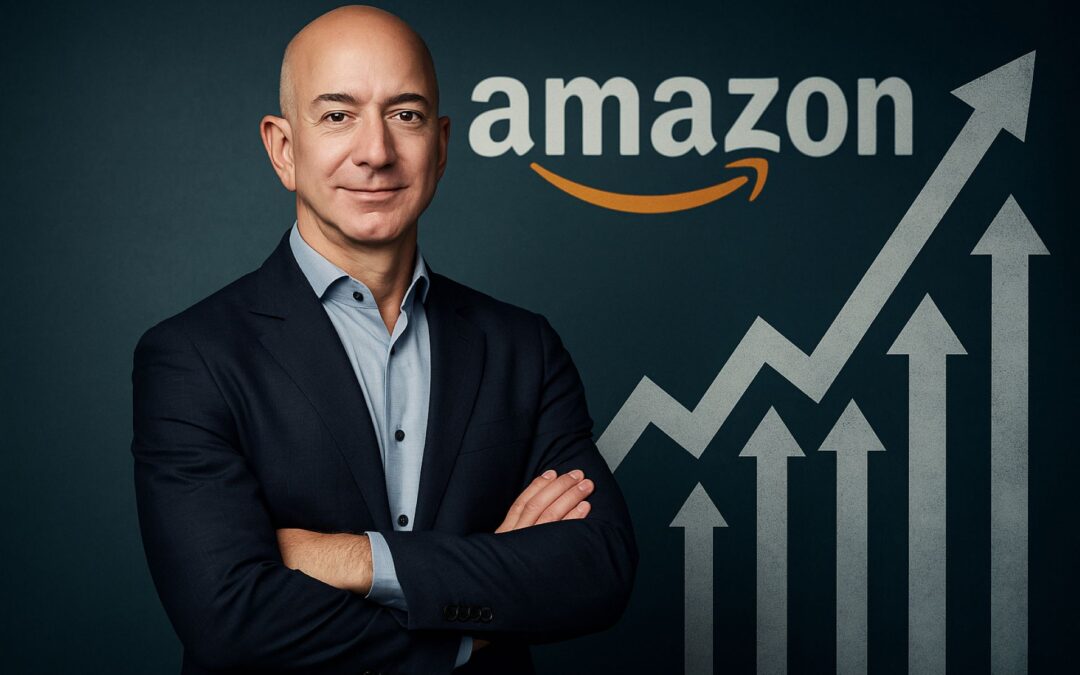
Jeff Bezos, the visionary founder of Amazon, is often regarded as one of the most successful entrepreneurs of our time. His journey from a small online bookstore to a global e-commerce empire is a testament to the power of bold decision-making. Throughout his career, Bezos has faced countless choices—some small, others monumental—but it’s the decisions that shaped Amazon into the trillion-dollar company it is today that stand out.
From leaving a high-paying job on Wall Street to expanding Amazon into virtually every market imaginable, Bezos’ ability to make smart, calculated decisions has been a driving force behind his success. In this article, we explore seven key decisions that turned Bezos into a billionaire, offering valuable insights for anyone looking to make smarter choices in their own lives.
1. Choosing to Leave Wall Street and Pursue Amazon
In 1994, Jeff Bezos was living what many would consider a dream life. He had secured a senior vice president role at D. E. Shaw & Co., one of the most prestigious hedge funds on Wall Street, and was well on his way to a long, prosperous career in finance. He had the stability, financial security, and the respect that came with being at the top of the financial world. His career was already set, yet something about the burgeoning internet era caught his attention and ignited a spark in him.
Bezos was introduced to a statistic that would change everything: the internet was growing at an astonishing rate of over 2,000% per year. This rapid expansion opened his eyes to a new frontier of business that most people at the time didn’t even know existed. The idea struck him like a bolt of lightning—what if he could create an online bookstore? It sounded like a novel concept, but it wasn’t without its challenges. The internet was still in its infancy, and e-commerce was almost a taboo subject. At that time, no one could predict how online shopping would evolve.
Despite the opportunity, Bezos was gripped by doubt and fear. Leaving behind the comfort of his secure job and the life he had built would mean abandoning everything he had worked so hard for. The prospect of failure loomed large. The idea of venturing into the unknown without guarantees terrified him. But it was this very fear that set Bezos on the path toward greatness. He knew that playing it safe wasn’t going to give him the fulfillment he craved. He was faced with an essential question that would guide his future decisions: When I’m 80 years old, will I regret never trying, or will I regret trying and failing?
This simple but powerful question cut through the noise of his doubts. Bezos understood that failure could be painful, but the regret of never attempting to follow his dream would be far worse. With this realization, he made the bold decision to leave Wall Street behind. He packed his bags, left his comfortable job, and moved across the country to Seattle, where he would go on to launch Amazon in his garage.
This decision to act on a bold vision, despite the risks and uncertainties, is a core reason for Bezos’ extraordinary success. By choosing to take the leap into the unknown, he set in motion one of the most transformative companies in the world. It wasn’t just about leaving Wall Street; it was about following his passion and trusting that the pursuit of his dream would be worth the risks. The lesson here is clear: sometimes, you have to step away from the safety of your current life to chase the future you truly desire. Success doesn’t always come from staying in your comfort zone; often, it comes from taking that leap into the unknown.
2. Recognizing the Power of Two-Way Doors
In his journey to build Amazon, Jeff Bezos developed a powerful decision-making framework that helped him avoid paralysis by analysis: the concept of “two-way doors.” Not every decision, he realized, is irreversible, and this insight would change the way he approached business. A “two-way door” decision is one where, if things don’t work out, you can always pivot, adjust, or go back. In contrast, a “one-way door” is irreversible—once you step through, there’s no going back. Recognizing this distinction helped Bezos make faster, more confident decisions, without being bogged down by the fear of making mistakes.
When Bezos started Amazon, he understood that every decision—whether it was about hiring, product selection, or expanding into new areas—wasn’t as permanent as it seemed. A great example of this mindset was Amazon’s early decision to expand beyond books. Bezos originally envisioned Amazon as an online bookstore, but he soon realized that there was far more potential to grow the company into a global e-commerce platform. Expanding into new categories like electronics, groceries, and clothing was a massive leap, and it could have been disastrous if customers didn’t embrace the idea.
But Bezos didn’t hesitate. He didn’t overthink whether expanding was the “right” decision. Instead, he recognized that this was a two-way door. If Amazon expanded into new categories and it failed, they could always scale back and focus on books again. The key here was speed. Bezos wasn’t interested in waiting for perfect data or perfect conditions. He knew that in business, acting quickly, especially when the decision wasn’t permanent, was often the best strategy.
This mindset allowed Amazon to move fast and keep evolving. In the early days, Bezos didn’t agonize over every choice. He trusted that if something didn’t work, they could always change direction without causing irreparable harm to the business. This helped Amazon become a nimble, responsive company that was constantly innovating and adjusting to consumer needs.
Contrast this with how many businesses and entrepreneurs handle decisions today. Too often, we treat every choice like a one-way door, fearing that one wrong step will doom us. This fear leads to overthinking, hesitation, and ultimately, inaction. Bezos, however, showed that treating most decisions as two-way doors allows for flexibility and experimentation, enabling you to move forward with confidence. This philosophy helped Amazon scale at an unprecedented pace, and it can be a powerful tool for anyone looking to accelerate their own growth.
In your own decision-making, the question to ask is: “Is this a one-way door, or can I go back if things don’t work out?” If it’s a two-way door, don’t overthink it—take action, learn from the experience, and adjust course if necessary. Most decisions, Bezos taught us, are reversible. The key is to act quickly, learn fast, and keep moving forward.
3. Betting on the Amazon Marketplace
As Amazon’s growth exploded during the early 2000s, Jeff Bezos was confronted with an urgent challenge: the company’s original business model—buying products and reselling them—wasn’t scalable. While Amazon had started as an online bookstore, Bezos quickly realized that the world of e-commerce was evolving far beyond books. The challenge was to expand into other categories like electronics, clothing, and even groceries. But how would Amazon handle such an enormous variety of products without losing control over inventory or quality?
This dilemma sparked one of Bezos’ boldest and most transformative decisions: the creation of Amazon Marketplace. Instead of continuing to buy and store products in warehouses, Amazon would allow third-party vendors to sell their products directly on Amazon’s platform. It was a radical departure from the original business model, and there were significant risks involved. Bezos had no solid market data to support the idea, and there was a strong chance that customers might not trust products sold by third-party vendors, fearing low quality or dishonest sellers.
Nevertheless, Bezos understood that the internet’s true potential lay in the ability to scale rapidly without being constrained by inventory. He recognized that other businesses needed a platform to sell their products online, and if Amazon didn’t become that platform, it would lose the opportunity to dominate the e-commerce space. Rather than overthinking the decision, Bezos acted decisively, betting on the idea that the convenience and massive selection Amazon offered would outweigh customers’ hesitation about third-party sellers.
Bezos was right. The launch of Amazon Marketplace didn’t just diversify Amazon’s revenue streams—it fundamentally reshaped the company’s role in the digital economy. Today, third-party sales account for over 40% of Amazon’s total revenue, and millions of small businesses thrive because they can reach Amazon’s global customer base. By enabling other vendors to sell on his platform, Bezos created a win-win scenario: Amazon gained more products to offer its customers, and third-party sellers gained access to one of the most powerful e-commerce platforms in the world.
The lesson here is clear: great entrepreneurs don’t just solve their own company’s problems—they identify opportunities to solve problems for others, too. Bezos didn’t just build Amazon to sell products; he built a platform where businesses could sell their products, thus creating an entire ecosystem. This decision laid the groundwork for Amazon to become not just a retailer, but a global marketplace. It shows that sometimes, the best way to scale isn’t by doing everything yourself, but by empowering others to succeed with you.
4. Ignoring the Numbers for Amazon Prime
One of the most insightful and risky decisions Bezos made came in 2005, when Amazon was struggling with a common issue in e-commerce: slow shipping. As the company grew rapidly, so did the number of customer complaints about delays in delivery. Bezos knew that improving shipping times would be crucial to maintaining customer satisfaction and loyalty. The solution seemed obvious—offer faster shipping, but at a cost.
However, when Amazon surveyed customers, the data didn’t support the idea of paying extra for faster delivery. The numbers were clear: customers weren’t willing to pay more for quicker shipping. But Bezos, who had learned that relying solely on data can be limiting, decided to ignore the numbers and trust the deeper insights he had gathered from real customer interactions.
In interviews, customers expressed frustration not just with the speed of delivery but with their desire to have faster service as part of an overall better experience. They didn’t necessarily want to pay for faster delivery, but they wanted a guarantee that their products would arrive quickly and reliably. Bezos saw this as an unmet need—one that the data alone couldn’t capture. Rather than sticking to the numbers, he decided to take a leap of faith and introduced Amazon Prime, a subscription-based service offering two-day shipping for a flat fee.
The gamble was significant. Many people were skeptical, and the initial numbers didn’t make sense. But Bezos trusted his customers’ desires and, even more importantly, he trusted his intuition about the future of e-commerce. The launch of Amazon Prime marked a pivotal turning point in the company’s trajectory. The program was not only a huge hit—it became the gold standard in e-commerce logistics. Prime subscribers have become incredibly loyal, and the service has played a huge role in Amazon’s dominance in the market.
Today, Amazon Prime boasts over 200 million subscribers worldwide, generating billions of dollars in revenue each year. The success of Prime has far exceeded anyone’s expectations, and it’s now considered one of the most important services in e-commerce. This decision to act on customer feedback over data highlights an important lesson for entrepreneurs: the best business decisions often come from understanding people’s needs and desires, not just from analyzing numbers. Numbers may help guide you, but stories and customer experiences provide the deeper insights that drive meaningful innovation.
In the end, Bezos didn’t let the data dictate his decisions—he trusted that customers would value the service in ways that traditional surveys and numbers couldn’t explain. By prioritizing customer experience over purely quantitative metrics, he not only launched one of Amazon’s most successful initiatives, but he also redefined customer loyalty in the digital age.
5. Disagree and Commit: The Whole Foods Acquisition
When it comes to making major decisions, it’s easy to assume that success comes from unanimous agreement and consensus within a team. However, Jeff Bezos has long championed a very different philosophy: disagree and commit. This principle became particularly evident in one of Amazon’s most high-profile acquisitions—the purchase of Whole Foods in 2017.
At the time, Amazon’s expansion into the grocery sector seemed like a risky move. Whole Foods was a well-known but niche brand, and its focus on organic and premium-priced products didn’t immediately align with Amazon’s traditionally low-price, high-volume business model. Many inside Amazon questioned the acquisition: Was it too expensive? Did it fit with Amazon’s core strategy? Would the culture clash between Amazon’s tech-driven, efficiency-obsessed environment and Whole Foods’ more traditional retail approach be insurmountable? The internal debates over these questions were fiery.
But Bezos, as a leader, didn’t let the team’s disagreements prevent the decision from moving forward. His philosophy of “disagree and commit” meant that once he made up his mind to go ahead with the acquisition, he expected everyone to support the decision fully, even if they still had doubts. This wasn’t about silencing opposing views or avoiding criticism—it was about moving forward and ensuring that the entire team, despite disagreements, would unite behind the decision to integrate Whole Foods into Amazon’s ecosystem.
The gamble paid off. The acquisition allowed Amazon to seamlessly integrate Whole Foods into its existing platform, adding physical stores to its vast online retail network. It also expanded Amazon’s grocery and fresh food offerings, which had been a key area of growth for years. Whole Foods became a pivotal piece of Amazon’s grocery strategy, not just as a retailer but as a gateway to more efficient, tech-driven grocery delivery services like Amazon Fresh. In the years following the acquisition, the integration of Whole Foods into Amazon Prime’s delivery service further solidified the success of this risky move.
The broader lesson here is that successful leaders are not necessarily the ones who always make everyone happy, but those who can make decisions confidently and then bring the team together to execute them. Bezos’ ability to make bold calls—despite internal disagreements—ensures that Amazon continues to innovate and dominate across industries. His approach to decision-making shows that indecision is far more damaging than disagreement, and that sometimes, the best course of action is to commit fully to a decision and rally your team around it.
6. Embracing Failure as Part of Success
Jeff Bezos’ career has not been without its failures, and he is the first to admit that failure is an essential part of his entrepreneurial journey. One of the defining aspects of Bezos’ decision-making strategy is his willingness to embrace failure—not as a setback, but as a stepping stone toward success. This mindset is exemplified by some of Amazon’s biggest flops, most notably the Fire Phone, which was launched in 2014.
The Fire Phone was meant to revolutionize the smartphone market, offering unique features like 3D imaging and a dedicated button for Amazon shopping. However, despite the hype and anticipation, the phone failed to capture the market’s attention and lost Amazon millions of dollars. It was quietly discontinued within a year. Yet, instead of viewing this as a catastrophic mistake, Bezos and Amazon took it in stride. Failure wasn’t something to avoid—it was simply the cost of making big bets.
In fact, Bezos has frequently stated that if you’re not failing, you’re not taking enough risks. This idea is at the heart of Amazon’s success. While the Fire Phone was a monumental failure, it was just one of many experiments that didn’t pan out. Other Amazon projects like Amazon Auction, Amazon Dash Buttons, and Amazon Spark also failed to meet expectations and were quietly shut down. But Bezos understood something that many other entrepreneurs miss: You don’t need every idea to work. You just need a few big successes that outweigh the failures.
This philosophy of placing many bets, knowing that only a few will succeed, has allowed Amazon to continually innovate and stay ahead of the curve. Bezos’ willingness to experiment and fail has led to some of Amazon’s greatest achievements, from AWS (Amazon Web Services) to Amazon Prime. The lesson here is that if you’re not failing, you’re likely not pushing the boundaries far enough. Bezos’ failures didn’t define him—they taught him invaluable lessons that ultimately contributed to Amazon’s triumphs.
7. Thinking Long-Term: The Creation of AWS
Perhaps the most visionary decision Jeff Bezos ever made was the creation of Amazon Web Services (AWS), which has now become a cornerstone of Amazon’s success. In the early 2000s, when Amazon was still primarily an e-commerce platform, Bezos recognized a huge opportunity: what if Amazon could sell its infrastructure to other companies who needed to scale their own online operations?
At the time, most businesses were building their own servers and infrastructure from scratch to support their online presence. This was a labor-intensive and costly process. Bezos realized that Amazon already had the technology, infrastructure, and expertise to provide cloud computing services to other companies. So, why not offer these services to businesses that needed them?
The idea for AWS wasn’t just a small incremental improvement—it was a long-term bet on the future of cloud computing. At the time, cloud services were not a widely understood concept, and the idea of selling computing infrastructure as a service was revolutionary. It would require massive investment, and it would take years before AWS became profitable. But Bezos wasn’t interested in short-term gains. He saw the potential of cloud computing to transform the way businesses operated, and he was willing to take the long view.
Bezos made the decision to invest heavily in AWS, even though it would be several years before it began generating significant revenue. The initial costs were enormous, and the concept was so new that few could predict whether it would succeed. But Bezos thought decades ahead, not just years. He was betting that the future of computing was in the cloud, and that businesses would eventually need scalable, on-demand infrastructure.
Fast forward to today, and AWS is responsible for over $90 billion in revenue annually, accounting for more than two-thirds of Amazon’s operating income. It powers some of the world’s biggest companies, including Netflix, Airbnb, and thousands of other businesses. AWS has become one of the most important and profitable parts of Amazon’s business. Bezos’ ability to think in long-term horizons, to make decisions that wouldn’t pay off immediately but would shape the future, has been a key driver of Amazon’s success.
This long-term thinking is one of the hallmarks of Bezos’ decision-making. While many businesses are focused on quarterly results, Bezos has always been willing to make investments that wouldn’t yield immediate returns, knowing that they would pay off massively in the future. By thinking decades ahead, Bezos has positioned Amazon as a leader not just in e-commerce, but in cloud computing, artificial intelligence, and a range of other industries. His ability to think long-term and make decisions with a multi-decade timeline in mind is a powerful lesson for any entrepreneur.
Conclusion
Jeff Bezos’ path to success wasn’t paved by a single decision, but rather by a series of bold, calculated risks that he took with unwavering confidence. His ability to embrace uncertainty, trust his instincts, and think long-term has not only transformed Amazon into a global powerhouse but also reshaped entire industries. The decisions outlined in this article serve as a masterclass in entrepreneurship, leadership, and innovation.
As you reflect on your own decision-making, consider the lessons from Bezos’ journey. Whether it’s embracing failure, making decisions swiftly, or thinking decades into the future, these principles can guide you toward making choices that shape a successful and fulfilling life.