
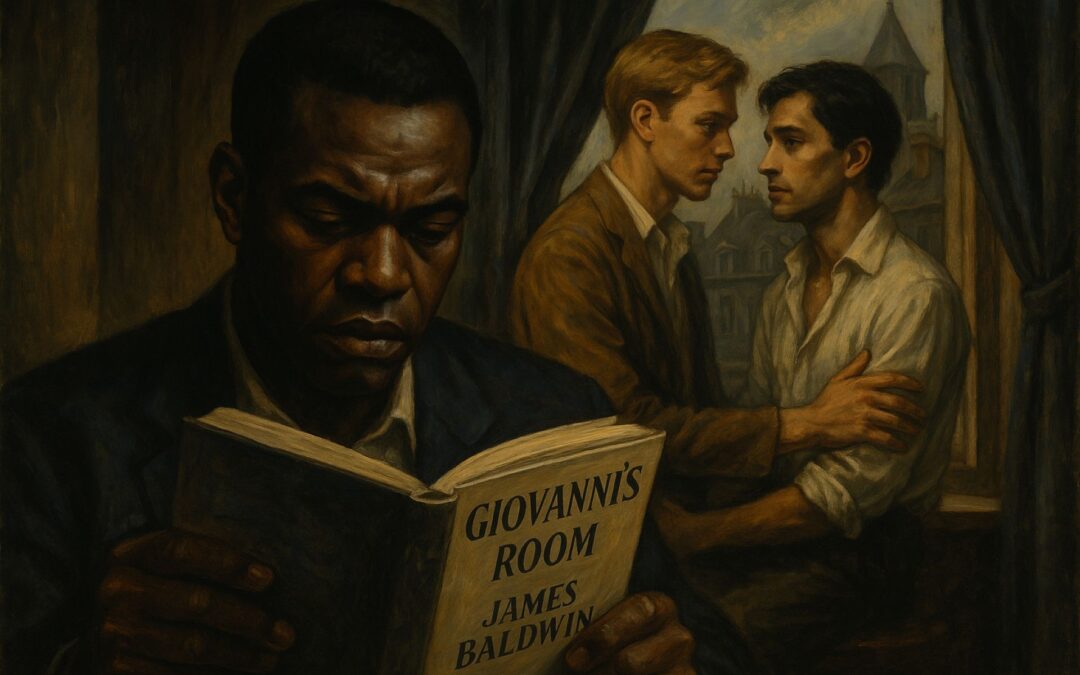
James Baldwin, born a century ago, stands as a towering figure in American letters — a radical voice who shattered norms and redefined narratives. His 1956 novel Giovanni’s Room was not just groundbreaking; it was a seismic cultural event. A mainstream novel penned by a Black author that unapologetically delved into queer themes, it emerged at a time when America was still shackled by segregation and decades away from the gay rights movement. Baldwin’s boldness was not merely literary—it was revolutionary.

A Defiant Literary Maverick in a Time of Turmoil
James Baldwin’s literary career is defined by a rare combination of audacity and vulnerability—a writer unafraid to expose the raw, often uncomfortable truths about identity, race, and sexuality at a moment when such subjects were deeply taboo. His debut novel, Go Tell It on the Mountain, published in 1952, immediately placed him in the spotlight. It was a work that laid bare the complex intersections of religion, family, and Black American life with an unflinching honesty that critics and readers alike found compelling.
Yet Baldwin’s true radicalism manifested not just in what he wrote, but in what he dared to write next. Giovanni’s Room was a defiant leap into territory virtually untouched by mainstream American literature, especially from a Black author. The manuscript boldly centered on a white, gay protagonist grappling with desire and societal rejection, a narrative that ran counter to the dominant literary and cultural narratives of the time.
The response from Baldwin’s American publisher, Alfred Knopf, was swift and severe—he advised Baldwin to burn the manuscript. This was not merely a conservative publisher’s knee-jerk reaction; it was a reflection of the broader cultural anxieties and deep-seated prejudices that defined mid-century America. Homosexuality was still criminalized, stigmatized, and hidden in the shadows. For a Black writer to openly depict queer desire was, in many eyes, doubly transgressive.
Baldwin’s refusal to acquiesce to this censorship was an act of profound courage. He understood that his artistic integrity and the necessity of authentic representation outweighed commercial expediency or popular acceptance. By turning to a British publisher, he bypassed the gatekeepers who sought to confine his voice. This decision exemplified a broader pattern in Baldwin’s life—continually pushing boundaries, questioning norms, and demanding a space where his multifaceted identity could be fully expressed without apology or dilution.
His boldness paved the way for future generations of writers to explore queer and racial themes in more open, nuanced ways. Baldwin was not just a chronicler of his time; he was an agent of transformation, using his pen to challenge the very structures that sought to silence him.
Harlem’s Son: The Roots of a Voice
James Baldwin’s formative years unfolded against the dynamic, complex backdrop of Harlem during its Renaissance—a cultural movement that heralded a flowering of African-American art, music, and literature. Harlem was both cradle and crucible: a place of immense creativity and communal pride, yet also one marked by grinding poverty, systemic racism, and social upheaval.
Baldwin’s upbringing was steeped in hardship and contradiction. His mother, Emma Burdis Jones, epitomized resilience. A young woman who migrated from Maryland to Harlem, she supported her family through backbreaking labor as a crab picker and oyster shucker. Baldwin’s birth out of wedlock and the absence of his biological father left him vulnerable in a society that was quick to judge and slow to support.
At age three, Emma married David Baldwin, a charismatic preacher whose sternness and disdain for James shaped much of the young boy’s emotional landscape. The preacher’s austere religious worldview and harsh discipline introduced Baldwin to the complexities of authority, guilt, and redemption—themes that would echo through his writing. Baldwin’s complex relationship with his stepfather is vividly reflected in Go Tell It on the Mountain, where the figure of the preacher looms large, embodying both spiritual aspiration and oppressive dogma.
Despite these challenges, Baldwin found solace in books. The public library became his refuge, a sanctuary where the limits of his Harlem surroundings dissolved, replaced by vast landscapes of imagination and knowledge. His precocious talent emerged early; he wrote poems, short stories, and plays, channeling his inner turmoil and observations into art.
At fourteen, Baldwin’s brief but formative stint as a preacher sharpened his rhetorical skills and deepened his engagement with biblical symbolism. This experience infused his prose with a cadence and intensity reminiscent of sermonizing, while also embedding his narratives with rich spiritual and moral undertones. Biblical allusions became a vital element of Baldwin’s literary voice, linking his personal history with broader themes of sin, salvation, and identity.
This complex interplay of family dynamics, religious fervor, and intellectual hunger forged the foundation of Baldwin’s distinctive voice—one that could articulate the pains and hopes of marginalized communities while probing universal human truths with empathy and piercing insight.
Names and Echoes: The Recurring “David”
The recurrence of the name “David” throughout Baldwin’s life and work is far from coincidental; it is a deliberate, multifaceted symbol woven into his literary and personal narrative. This name resonates on several levels: as a reflection of Baldwin’s own family, a nod to biblical history, and an emblem of the psychological struggles that animate his characters.
David was the name of Baldwin’s stepfather—a figure of authority, control, and complex emotional weight. It was also the name of his brother, grounding the name in intimate familial ties. Beyond the personal, Baldwin used “David” repeatedly in his literary creations. The protagonist of Giovanni’s Room bears the name, as do characters in his short story “The Outing,” his play Amen Corner, and elsewhere.
The biblical King David serves as an underlying archetype. Known for his multifaceted nature—warrior, lover, sinner, and king—David embodies contradictions that Baldwin’s own Davids grapple with: passion and restraint, vulnerability and power, love and transgression. Notably, the Old Testament’s portrayal of David’s relationship with Jonathan is often read as an early depiction of same-sex love and devotion, a thematic thread Baldwin knowingly invokes.
By repeatedly naming key characters David, Baldwin layers his narrative with echoes of personal history, myth, and cultural symbolism. This practice enriches his exploration of identity, desire, and the human psyche, suggesting that the struggles of his characters are at once deeply individual and universally resonant. The name “David” becomes a vessel through which Baldwin examines themes of authority, belonging, and the quest for self-acceptance amid external and internal conflict.
Exile and Liberation: Paris as Sanctuary
For James Baldwin, Paris was not just a change of scenery—it was a radical act of self-preservation and reinvention. In the turbulent aftermath of World War II, America was a landscape rife with racial violence, institutionalized segregation, and cultural repression. Riots erupted across multiple cities, and the deadly grip of Jim Crow laws suffocated the lives of Black Americans. Baldwin, disillusioned by the ceaseless brutality and exhausted by the daily grind of racism and loss, sought refuge beyond the nation’s borders.
Arriving in Paris in 1948 with little more than $40 and his ambition, Baldwin stepped into a vastly different world. Paris was a city with a long tradition of artistic freedom and cultural openness, attracting countless expatriates from around the globe. For African-American artists and intellectuals, it represented an oasis free from the legalized racial discrimination endemic to the United States. Baldwin’s choice to live as an exile was fueled by the yearning for a space where he could exist fully—not only as a Black man but as a gay man—without the suffocating constraints imposed by American society.
In Paris, the social norms that dictated rigid racial boundaries were largely absent. Baldwin noted how he could rent a room in any hotel without fear of rejection based on his skin color. Interracial relationships, taboo and often criminalized back home, were met with indifference or quiet acceptance. Likewise, same-sex relationships, especially among the expatriate artistic community, flourished in relative freedom. The city’s bohemian enclaves—cafés, salons, and bars—became crucibles of creativity and self-expression, where Baldwin mingled with luminaries like Simone de Beauvoir, Jean-Paul Sartre, and Richard Wright.
This atmosphere of liberation was not just external; it penetrated Baldwin’s writing and self-understanding. Paris afforded him the psychological and physical distance needed to reflect critically on American society. Far from the immediate threats of racial violence and social ostracism, Baldwin was free to interrogate his identity, desires, and the contradictions of his homeland. The city infused Giovanni’s Room with its unique flavor—the smoky gay bars, the dimly lit apartments, the mélange of languages and cultures—creating a setting as complex and nuanced as the novel’s emotional landscape.
Baldwin’s Parisian exile thus symbolizes both escape and confrontation: escape from American oppression and confrontation with the self. It was here that he was able to craft a narrative that challenged conventions and demanded a new honesty about race, sexuality, and belonging.
Literary Lineage: Balzac and Henry James
James Baldwin’s literary genius was informed by a rich heritage of European and American masters whose influence permeates Giovanni’s Room. Two towering figures stand out in particular: Honoré de Balzac and Henry James, each contributing crucial elements to Baldwin’s stylistic and thematic architecture.
Balzac’s La Comédie Humaine is a sprawling collection of novels and stories that meticulously dissect the social fabric of 19th-century France. He portrayed the bourgeoisie and working classes with acute realism, capturing their desires, hypocrisies, and struggles. His focus on lives deemed vulgar or unworthy of literary attention was revolutionary, dismantling notions of high culture and exposing the raw humanity beneath societal veneers.
Baldwin channels this Balzacian ethos in his vivid portrayal of Parisian life—particularly the seedy, marginalized spaces inhabited by queer characters and immigrants. The dingy bars, cramped apartments, and winding streets in Giovanni’s Room are not mere backdrops; they function as microcosms of social tension and emotional turbulence. Baldwin’s commitment to realism, unflinching in its depiction of desire and despair, echoes Balzac’s fearless exploration of life’s complexities.
Henry James’s influence on Baldwin is equally profound, though more subtle and psychological. James, an American expatriate himself, is renowned for his intricate character studies and themes of cultural displacement. His novel The Ambassadors centers on an American man navigating the dissonance between Old and New Worlds, grappling with identity and purpose in a European setting—a narrative framework that Baldwin adopts and adapts.
Baldwin kept a signed photograph of James over his writing desk, signaling deep admiration and kinship. Giovanni’s Room has often been called Baldwin’s most “Jamesian” novel because of its introspective narrative style and complex psychological portrait of its protagonist, David. Both authors explore the tension between societal expectations and personal desires, employing nuanced prose to reveal the inner workings of their characters’ minds.
This literary lineage situates Baldwin within a transatlantic tradition, one that bridges American and European cultural dialogues. It underscores his ambition to transcend racial and sexual identities to engage with universal human experiences through sophisticated narrative craft.
The Anatomy of Desire and Denial: David and Giovanni
At the core of Giovanni’s Room lies the fraught, passionate relationship between David, the novel’s narrator and protagonist, and Giovanni, the enigmatic Italian bartender. This relationship is not simply a love affair; it is a profound study of desire, denial, identity, and the devastating effects of societal repression.
David is introduced as a young American man preparing to marry Hella, his fiancée, embodying the expectations of heteronormativity and conventional success. Yet beneath this facade simmers a turbulent inner world riddled with confusion, fear, and unacknowledged longing. His encounter with Giovanni plunges him into an emotional and sexual awakening that both exhilarates and terrifies him.
The novel’s structure—oscillating between present-day anguish and flashbacks—mirrors David’s fragmented psyche. In the present, he is trapped in a self-destructive spiral of alcoholism and despair in a small French village, a stark contrast to the vivid recollections of his affair with Giovanni in Paris’s nocturnal underworld. This narrative fragmentation reflects the compartmentalization and denial David employs to manage his conflicted identity.
David’s earlier same-sex encounters, including a formative episode with his childhood friend Joey and a subsequent liaison during his military service, compound his internalized homophobia and self-doubt. These experiences inject his sexuality with shame and anxiety, highlighting the psychological toll exacted by societal condemnation.
Giovanni, in contrast, is a figure of raw emotional intensity and vulnerability. His charisma and openness stand in stark relief to David’s repression. The bar Giovanni works in, owned by Guillaume—a sophisticated older gay man with a tragic backstory—serves as a crucible for the marginalized queer community, a space both of refuge and peril.
The affair unfolds primarily within the cramped, squalid room Giovanni rents—the titular “Giovanni’s Room”—which becomes a symbol of both intimacy and imprisonment. It is a private sanctuary where love and pain intertwine, but also a claustrophobic cage reflecting the limitations imposed by external prejudice and internalized fear.
David’s struggle is not merely with his sexual orientation but with the oppressive societal expectations that demand conformity and silence. His inability to fully embrace his desire for Giovanni, combined with his relentless fear of social ostracism, fuels a tragic cycle of rejection, betrayal, and loss that drives the novel’s emotional intensity.
The Crushing Cost of Conformity
David’s agonizing decision to suppress his true self and marry Hella encapsulates the novel’s central tragedy—the devastating human toll exacted by societal pressures to conform. This choice is not simply about personal sacrifice; it reflects the crushing weight of heteronormativity and the pervasive fear of deviancy in mid-20th-century Western society.
The act of abandoning Giovanni without explanation is emblematic of David’s internalized shame and denial. Giovanni, blindsided and devastated, is left in a limbo of confusion and despair, highlighting the emotional violence inflicted by rejection rooted not in personal failing but in social taboo. This cruelty unfolds silently but resonates powerfully throughout the narrative, exposing the collateral damage wrought by fear and repression.
The novel’s climax, with David preparing to embark on a life he does not truly desire, is juxtaposed with his continued secretive excursions into Parisian gay bars, underscoring the inescapability of his desires despite conscious denial. The poignant scene where Hella unexpectedly confronts David in one such bar with a sailor serves as a harsh illumination of the fragility of facades and the destructive consequences of duplicity.
Hella’s eventual departure, returning alone to America, crystallizes the novel’s pervasive theme of exile—not just physical but emotional and spiritual. She embodies the innocent caught in the crossfire of David’s self-betrayal, and her bewilderment at the fractured relationships around her emphasizes the alienation that conformity breeds. Baldwin does not present David’s path as a personal failure alone but as a symptom of broader societal failings that deny authentic existence and love.
Beyond Sexuality: A Broader Human Inquiry
While the homosexual themes in Giovanni’s Room initially sparked controversy, Baldwin’s novel transcends the confines of sexual identity to interrogate fundamental human experiences—fear, shame, belonging, and the consequences of self-repression. The novel is not an isolated “gay story” but a profound meditation on the human condition itself.
Baldwin deliberately eschews racial identifiers for his main characters, choosing white protagonists in a novel written by a Black author, which shifts the focus from racial discourse to more universal questions of identity and desire. This choice underscores his intent to challenge pigeonholing and assert his literary ambition beyond the boundaries of race. He sought to dismantle simplistic categorization and instead explore the intersections of identity that defy neat classification.
The novel’s refusal to conform to genre or identity expectations makes it a radical statement on the fluidity of human experience. It confronts the reader with uncomfortable truths: how fear and societal condemnation can fracture selfhood, how shame can sever authentic connection, and how the struggle for acceptance is often the most intimate and harrowing battle one faces.
By situating personal struggle within broader existential themes, Baldwin invites readers of all backgrounds to reflect on the universal yearning for love, freedom, and self-acceptance. The characters’ torment is not confined to the marginalized but speaks to the fundamental human quest to reconcile inner truth with external realities.
The American Experiment and Its Discontents
At the heart of Baldwin’s work lies a relentless scrutiny of the American social and political experiment—a nation grappling with the paradoxes of liberty and systemic oppression. Giovanni’s Room serves as a microcosm of this critique, illustrating how the ideals of freedom and democracy are often undermined by fear, prejudice, and exclusion.
David’s characterization as a “homeless European”—a man alienated from his own culture and unable to find sanctuary anywhere—reflects Baldwin’s broader conception of displacement in the American context. Baldwin saw America as a place that promises belonging yet frequently denies it, creating psychological homelessness for those who fail to conform to its rigid definitions of identity.
The novel’s transatlantic setting—David as an American expatriate in France—amplifies this sense of dislocation. Baldwin uses Paris both as a literal refuge and as a symbolic landscape where the contradictions of identity, desire, and belonging play out away from America’s racial and sexual strictures. Yet even in exile, the shadow of America looms large, reminding readers that escape is never complete.
Baldwin’s scathing examination extends beyond individual alienation to indict cultural and institutional structures that perpetuate exclusion. Fear, shame, and prejudice are not merely personal failings but societal afflictions that corrode the fabric of community and humanity.
Ultimately, Giovanni’s Room challenges us to confront the failures of the American dream—the dissonance between its lofty ideals and the lived realities of those it marginalizes. Baldwin’s work is a call to recognize that no geography or culture offers true refuge if the internalized chains of fear and denial remain unbroken. The path to freedom begins with honest self-recognition and the courage to defy the boundaries imposed by society.
Conclusion
James Baldwin’s Giovanni’s Room remains a timeless and searing exploration of identity, desire, and the human cost of societal repression. Through the prism of David and Giovanni’s tragic relationship, Baldwin exposes the profound consequences of fear, shame, and the pressure to conform—forces that transcend race, nationality, and era. By situating this intimate story against the backdrop of postwar Paris and the broader American condition, Baldwin not only challenged the literary conventions of his time but also crafted a universal meditation on the quest for authenticity and belonging.
His unyielding courage to confront uncomfortable truths invites readers to reflect on their own boundaries and prejudices, reminding us that true freedom is only possible when we embrace our whole selves without fear. Giovanni’s Room endures not merely as a novel, but as a radical testament to the power of self-acceptance and the human spirit’s resilience.