
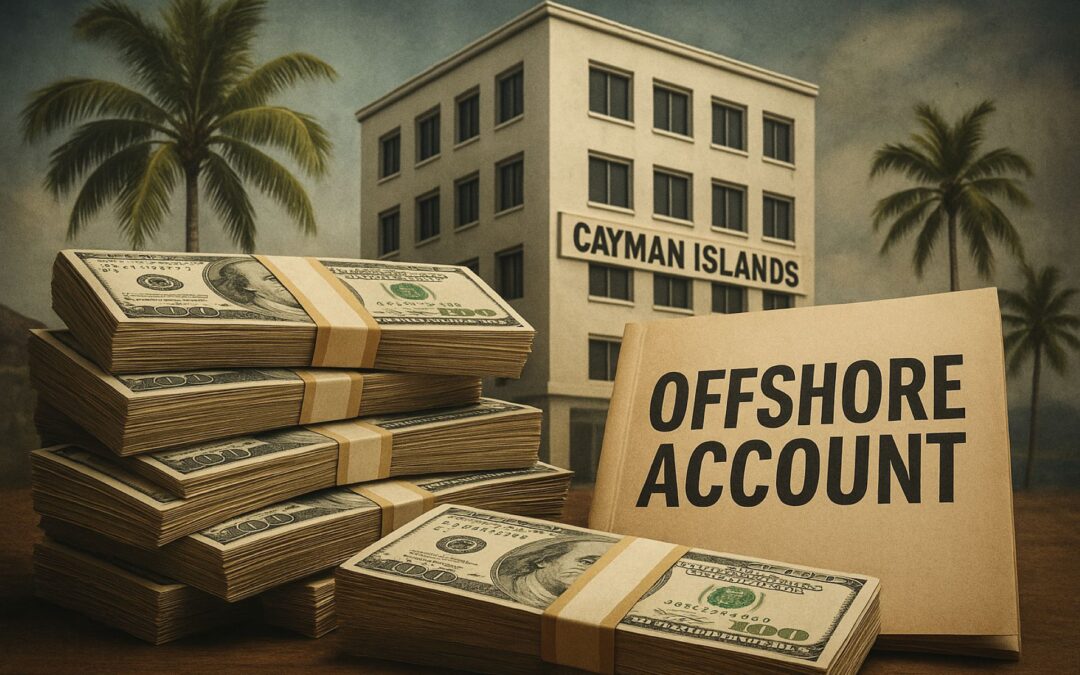
In today’s interconnected world, wealth doesn’t just sit quietly in a bank account or under a mattress—it moves fluidly across borders, cloaked in layers of legal structures and financial ingenuity. Offshore banking has emerged as the preferred strategy for the world’s richest individuals and corporations to legally minimize taxes, protect assets, and maintain unparalleled privacy.
From modest buildings like the infamous Ugland House in the Cayman Islands to sprawling multinational corporations employing intricate tax strategies, offshore finance is a vast and complex system that most people never fully understand.
This article peels back the curtain on how offshore banking works, why it’s so effective, and the remarkable ways the wealthy use it to keep their fortunes growing while paying far less tax than most of us.
The Mystery of Ugland House: The Epicenter of Offshore Wealth
Ugland House, situated on the sun-drenched streets of the Cayman Islands, might look like an ordinary office building, but it is anything but typical. This modest five-story structure is infamous for being the registered address of nearly 20,000 companies—a number so staggering that it prompts disbelief. How can a single building possibly accommodate so many entities? The answer lies not in physical office space but in legal and financial wizardry.
Ugland House functions as a virtual headquarters, a nexus where countless shell companies are registered without a real operational presence. These companies do not conduct traditional business activities within its walls. Instead, they exist primarily on paper—entities created to take advantage of the Cayman Islands’ remarkably favorable legal environment. The building acts as a hub for law firms, trust companies, and financial intermediaries who manage registrations and administrative paperwork, offering a postal address and legal domicile.
This concentration is not accidental. The Cayman Islands, by design, have cultivated a legal framework that encourages foreign companies to incorporate there by offering zero direct taxes, minimal reporting requirements, and robust confidentiality protections. Ugland House embodies this setup: a symbolic heart of a global offshore system enabling the wealthy and corporations to channel assets and profits through legal entities that enjoy immense tax advantages and privacy.
Public figures and activists have spotlighted Ugland House as a prime example of systemic inequality embedded in the financial world. Bernie Sanders famously pointed out that the building either houses an impossible crowd or is a façade—underscoring the reality that the majority of these companies don’t have a tangible presence. For critics, Ugland House represents the epitome of the “tax haven” phenomenon, facilitating wealth concealment and tax avoidance at a scale that outpaces many entire economies.
Yet, beyond the controversy, Ugland House is also a testament to the sophistication of international finance, where jurisdictional arbitrage—exploiting legal differences between countries—creates complex corporate landscapes. It’s a gateway to a hidden world where legal fiction becomes a tool for preserving and growing wealth under the radar of most regulatory systems.
Offshore Banking: The Playground for the World’s Wealthiest
Offshore banking is no secret pastime—it’s a vital pillar of modern wealth management for the world’s richest. Whether you’re a Hollywood star seeking privacy, a CEO optimizing tax liabilities, or a political figure safeguarding assets, offshore financial systems are the go-to solution for sophisticated asset protection and fiscal planning.
Jurisdictions like the Cayman Islands, Switzerland, and the British Virgin Islands have carved out unique niches as financial sanctuaries. These countries are not passive participants but active competitors in a global race to attract affluent clients and multinational corporations. They tailor laws and banking practices to provide unmatched privacy, tax efficiency, and regulatory flexibility.
Privacy is paramount. Swiss banking, for instance, has long been synonymous with secrecy, though global pressures have somewhat loosened these standards. The Cayman Islands and British Virgin Islands offer layers of confidentiality, where the names of beneficial owners are often shielded from public or governmental scrutiny. This discretion appeals not only to the wealthy but also to those seeking protection from political instability, litigation, or unwanted attention.
Taxation policies in these jurisdictions are intentionally favorable. Many have zero income, capital gains, and corporate taxes. This allows clients to legally reduce their tax burdens through structures that transfer profits and assets offshore. Unlike countries dependent on natural resources, manufacturing, or tourism, these financial hubs monetize their legal and regulatory frameworks—turning banking secrecy and tax advantages into lucrative exports.
Flexibility is another critical component. Offshore financial centers typically impose lighter reporting requirements and relaxed regulations, allowing for complex corporate and trust arrangements that can be tailored to individual needs. This adaptability is crucial for multinational businesses and high-net-worth individuals who seek bespoke solutions to minimize taxes, protect assets, and maintain privacy.
Through these three pillars—privacy, tax advantages, and flexibility—offshore banking has grown into a multi-trillion-dollar industry that thrives on legal innovation and global financial integration.
The Hidden $10 Trillion: Wealth Beyond Borders
The magnitude of wealth held offshore is truly staggering. Estimates suggest that over $10 trillion of global financial assets are parked in offshore financial centers worldwide—a sum surpassing the entire annual economic output of Japan, the world’s third-largest economy. This immense pool represents roughly 8 to 10% of the world’s total household financial wealth, revealing just how deeply offshore finance penetrates global capital flows.
This offshore wealth is spread across a constellation of jurisdictions. Swiss banks remain a primary repository, historically revered for their stability and secrecy, holding upwards of $800 billion in private assets. Yet, the offshore ecosystem is far more diverse. Singapore and Hong Kong function as critical gateways for Asian wealth, combining robust financial services with favorable regulations. Luxembourg, often called Europe’s private banking capital, serves as a hub for investment funds and corporate holding companies. The Caribbean jurisdictions—the Cayman Islands, Bermuda, and British Virgin Islands—offer zero-tax environments and legal frameworks ideal for trusts and special-purpose vehicles.
What makes this offshore wealth particularly “hidden” is the intricate legal layering used to shield beneficial owners. Funds, properties, intellectual property, and other assets are often held by a maze of companies, trusts, and foundations registered across multiple jurisdictions. Each layer adds a veil of secrecy, complicating efforts by tax authorities and regulators to trace true ownership.
This vast, hidden wealth presents a significant challenge to global tax systems. Governments worldwide struggle to prevent erosion of their tax bases due to the outflow of capital to offshore havens. International organizations such as the OECD have ramped up efforts to promote transparency and cooperation, but the scale and complexity of offshore finance continue to outpace regulatory reforms.
For many ordinary citizens, the idea that trillions move freely beyond borders, often beyond taxation or scrutiny, raises profound questions about fairness, governance, and the sustainability of global economic systems. This offshore capital, sitting quietly in jurisdictions many cannot even locate on a map, is a silent yet powerful force shaping the modern financial landscape.
What Exactly Is Offshore Banking?
At its core, offshore banking refers to the practice of holding money or conducting financial transactions in a country different from one’s country of residence, particularly in jurisdictions known for their favorable banking laws and tax regimes. These countries—often dubbed offshore financial centers or tax havens—have cultivated reputations for financial discretion, low or no taxation, and regulatory environments designed to attract international capital.
What makes offshore banking alluring is the unique blend of benefits it offers, which can be distilled into three primary features:
- Tax Advantages: Many offshore jurisdictions levy no personal income tax, capital gains tax, or corporate tax. This means individuals and corporations can legally reduce their tax burdens by routing income and assets through these centers. For example, someone earning investment income or running a multinational business can structure their affairs to shift profits to these low-tax or no-tax environments, significantly lowering overall tax liability.
- Privacy and Confidentiality: Offshore banks and jurisdictions often enforce stringent privacy laws, limiting the disclosure of client identities and financial details. This confidentiality protects clients from unwanted scrutiny—whether from competitors, media, or even certain government bodies. Unlike many countries where bank accounts and beneficial ownership are publicly accessible or disclosed to tax authorities, offshore centers frequently ensure that client information remains shielded, with exceptions only for criminal investigations.
- Regulatory Flexibility: Offshore financial centers tend to have lighter reporting requirements and less bureaucratic oversight compared to onshore banking systems. This regulatory leniency simplifies compliance for wealthy clients, allowing for complex financial structures such as trusts, holding companies, and special purpose vehicles that might be cumbersome or impossible in their home countries.
These three elements—tax efficiency, confidentiality, and flexible regulation—create a compelling value proposition for high-net-worth individuals and corporations. By leveraging offshore banking, clients can legally optimize their financial situations, safeguard assets, and maintain privacy within a global legal framework designed to accommodate their needs.
The Crucial Distinction: The Rich Don’t Own—Their Companies Do
One of the most profound insights into offshore finance is understanding that the ultra-wealthy rarely own assets outright in their personal names. Instead, ownership is typically vested in legal entities such as corporations, trusts, or foundations, which serve as intermediaries between the individual and the asset. This separation between person and property is foundational to how offshore banking functions.
Why does this matter? Because ownership determines legal responsibility, tax obligations, and liability. When a person owns an asset directly, they are responsible for paying taxes on income it generates, and that asset can be subject to lawsuits, seizure, or political interference. However, when a company or trust owns the asset, the individual behind the scenes can enjoy benefits without direct ownership, significantly altering the financial and legal landscape.
For salaried employees or ordinary taxpayers, income is typically reported, taxed at source, and monitored closely. Laws such as the U.S. Bank Secrecy Act (BSA) and the Foreign Account Tax Compliance Act (FATCA) impose strict reporting on foreign accounts and financial transactions exceeding specific thresholds. Every paycheck, bonus, and bank transfer above $10,000 is tracked, making complete privacy and tax avoidance virtually impossible.
In contrast, the wealthy use shell companies registered in offshore jurisdictions to hold assets, bank accounts, intellectual property rights, and investments. These entities do not have physical offices or employees in most cases—they exist only on paper but are fully legal. By having companies own the assets, the beneficial owner (the individual) can remain anonymous, control the asset indirectly, and legally reduce tax exposure.
This corporate veil is a powerful tool. It enables the transfer of income and wealth through complex international networks, making the true ownership difficult to trace. For tax authorities and regulators, this presents a formidable challenge—tracking money and assets becomes a labyrinthine exercise across borders, legal systems, and confidentiality laws.
The Tale of Two Millionaires: James vs. Mike
To illustrate the stark contrast between traditional income reporting and offshore wealth management, consider the hypothetical example of two millionaires: James and Mike.
James lives in New York and earns $1 million annually as a salaried CEO. His income is straightforward—his employer deducts federal, state, and local taxes before he even receives his paycheck. Living in a high-tax state, James loses almost half of his income to taxes. Every dollar he earns is reported to the IRS, and any substantial bank transfer triggers additional reporting requirements. James’s financial life is transparent and heavily regulated. His ability to shield income or assets is limited by the tax laws that govern employment income and personal bank accounts.
Mike’s financial life, however, operates on a very different plane. Mike does not earn a salary in the conventional sense. Instead, he established a trust in the Cayman Islands that owns a holding company based in Luxembourg. This holding company holds the licensing rights to software Mike developed. When sales of this software occur worldwide—whether in Europe, Asia, or Africa—profits flow through this complex network of entities rather than being recorded as direct personal income.
Mike receives money not as a salary but as distributions or dividends, routed through countries with favorable tax treaties or no income taxes at all. Because the trust owns the holding company, and Mike is merely a beneficiary of the trust, he technically owns nothing personally. He retains control over when and how to receive funds, allowing him to defer tax liabilities and minimize tax rates legally.
This layered structure is crucial—it transforms Mike’s income from a taxable paycheck into a series of corporate profits and trust distributions, which are taxed differently, often at much lower rates or not at all. While James’s income is immediately visible and taxable, Mike’s income is shielded behind a sophisticated offshore web designed to maximize privacy and tax efficiency.
This example encapsulates how offshore banking and corporate structuring empower the wealthy to operate within legal frameworks while drastically reducing their tax burdens—an advantage unavailable to the average salaried individual.
Tax Avoidance vs. Tax Evasion: Walking the Legal Tightrope
Understanding the distinction between tax avoidance and tax evasion is critical when exploring offshore banking. While they may sound similar, they occupy very different legal and moral territories.
Tax evasion is outright illegal. It involves deliberately misrepresenting or concealing information to reduce tax liability. Examples include failing to report income, hiding money in unreported accounts, falsifying deductions, or using fake invoices. Evading taxes is a criminal offense and can result in severe penalties—fines, back taxes, and even imprisonment. Authorities worldwide devote significant resources to uncovering and prosecuting tax evasion.
Tax avoidance, on the other hand, operates entirely within the bounds of the law. It involves using legal strategies, incentives, and loopholes established by tax codes to reduce the amount owed. Common forms of avoidance include claiming legitimate deductions, tax credits, or structuring transactions in ways that minimize taxable income. For example, businesses can write off expenses like travel or office supplies, and individuals can claim depreciation on assets.
Offshore banking epitomizes high-level tax avoidance. The ultra-wealthy engage specialized teams of lawyers, accountants, and bankers who dedicate their careers to navigating and exploiting complex international tax laws. These professionals identify legal grey areas—loopholes, mismatches between jurisdictions, treaty benefits—that allow profits and assets to be shifted offshore, thus reducing taxable income in high-tax countries.
The system is intricate and meticulously designed to comply with the letter of the law while sidestepping the spirit of tax obligations. Governments often find themselves in a reactive position, trying to close loopholes or negotiate multilateral agreements, such as the OECD’s Base Erosion and Profit Shifting (BEPS) project, to curb aggressive tax planning.
In summary, offshore tax avoidance is a high-stakes, legal game played at the intersection of international finance and sovereign tax policies. While ethically contested, it remains a lawful method for the wealthy to preserve their fortunes.
Apple’s Offshore Odyssey: A Masterclass in Tax Avoidance
Few examples capture the ingenuity and controversy of offshore tax avoidance better than Apple’s corporate tax strategy in the early 21st century. From 2003 to 2013, Apple orchestrated one of the largest profit-shifting maneuvers in history through subsidiaries based in Ireland.
Apple established two Irish companies, each a legal entity with no employees or physical offices—essentially paper companies. These subsidiaries were granted ownership of the intellectual property rights to Apple products sold outside the United States, such as iPhones, iPads, and Macs. Instead of recording profits in the U.S., where corporate tax rates were significantly higher, Apple funneled revenue through these Irish entities.
Ireland’s tax laws at the time contained a loophole that allowed companies to be “stateless”—meaning they were incorporated in Ireland but not considered tax residents there or anywhere else. This anomaly meant the Irish subsidiaries did not pay corporate taxes in Ireland, and U.S. tax laws did not tax them either, provided the income remained offshore.
The result was astonishing: Apple reported effective tax rates as low as 0.005% on billions of dollars in profits. Over a decade, more than $120 billion in profits were funneled through this structure, drastically minimizing Apple’s tax liabilities. For perspective, where Apple might have owed around $40 billion under standard U.S. tax rules, it paid only approximately $600 million.
This strategy sparked global outcry. The European Union launched an investigation, concluding that Ireland had granted Apple illegal state aid through this preferential tax treatment. After protracted legal battles, Apple was ordered to pay $14 billion in back taxes in 2024, marking one of the most significant corporate tax recovery cases in history.
Apple’s offshore tax maneuver showcased how multinational corporations exploit disparities in national tax laws, creating complex, legally defensible structures that enable them to shift profits and reduce tax bills dramatically. It also ignited international efforts to reform tax systems and close loopholes enabling such profit shifting.
Multinationals and the Offshore Tax Shift
Apple’s offshore strategy is just the tip of the iceberg. Multinational corporations across the globe systematically employ similar techniques to shift profits to low- or no-tax jurisdictions, significantly lowering their worldwide tax obligations.
Companies like Amazon, Google, Meta, Nike, Starbucks, and Microsoft have all been documented utilizing intricate webs of offshore subsidiaries, licensing arrangements, and intercompany loans to move earnings from high-tax countries to favorable tax havens. These structures often involve intellectual property transfers, where profits from trademarks, patents, or software licensing are booked in jurisdictions with minimal tax rates, despite the economic activity occurring elsewhere.
According to data from the Organisation for Economic Co-operation and Development (OECD), approximately 40% of multinational corporate profits are shifted to low or zero-tax jurisdictions. This massive profit shifting contributes to “base erosion,” where countries lose substantial tax revenues, challenging their ability to fund public services.
The exposure of offshore financial dealings in leaked documents such as the Panama Papers and Pandora Papers has unveiled the vast scope of offshore finance use by not only corporations but also by politicians, billionaires, and public officials. While many offshore structures are legal, their opacity and complexity have raised concerns about transparency, fairness, and potential abuse.
In response, international bodies and governments have intensified cooperation through initiatives like the OECD’s BEPS project and the Common Reporting Standard (CRS) to increase transparency and limit aggressive tax planning. Despite these efforts, multinational companies continue to find new ways to navigate the evolving tax landscape, underscoring the dynamic and contentious nature of offshore tax strategies.
The Art of Invisible Ownership: The Rich Rich Don’t Show Their Names
One of the most fascinating—and confounding—aspects of offshore wealth is the deliberate erasure of the individual’s name from the public and legal record. The ultra-wealthy rarely have their assets, bank accounts, or companies registered in their personal names. Instead, they create layers of legal entities—shell companies, trusts, foundations—that effectively anonymize ownership. This phenomenon, often referred to as “invisible ownership,” is a cornerstone of sophisticated wealth management and asset protection.
This invisibility serves multiple purposes. First, it provides a shield against taxation. If an asset is not legally owned by a person but by a corporation or trust in a tax haven, governments find it difficult to impose personal taxes on the individual beneficiary. Second, it protects privacy and security. High-profile individuals—celebrities, business magnates, politicians—can keep their assets out of public view, guarding against unwanted attention, litigation, or political targeting. Third, it offers legal insulation; if a lawsuit or government seizure threatens an individual’s assets, those assets are legally held by entities separate from the person, complicating claims against them.
Consider the case of a multimillion-dollar mansion. Instead of being titled in the homeowner’s name, it may be owned by a company registered in Bermuda. That company, in turn, could be held by a trust based in Jersey, managed by a nominee director in Panama. The individual beneficiary is hidden behind these layers, making it legally and practically challenging to link the property to them directly.
This intricate web of ownership is not accidental but carefully engineered. Law firms, financial advisors, and trust companies specialize in setting up and managing these structures, ensuring compliance with local laws while maximizing anonymity and protection. The complexity can be overwhelming to outsiders, and even some regulators struggle to penetrate these veils.
While such arrangements are legal when properly structured and reported, their opacity fuels debates about financial transparency, tax fairness, and the potential facilitation of illicit activities. Nevertheless, for the wealthy, invisible ownership remains a powerful tool for preserving and enjoying their fortunes discreetly.
How Offshore Structures Work: A Simplified Breakdown
The architecture of offshore wealth is built on a few fundamental steps, each adding a layer of legal separation and complexity that shields assets and income from direct ownership and taxation.
Step 1: Create a Shell Company
The first building block is the creation of a shell company—a legal entity registered in an offshore jurisdiction such as the Cayman Islands, British Virgin Islands, or Panama. These companies often exist only on paper, with no employees, office space, or active business operations. Yet, they possess full legal rights to own property, open bank accounts, and enter contracts. This company becomes the nominal owner of various assets.
Step 2: Transfer Asset Ownership to the Company
Rather than owning assets like real estate, yachts, intellectual property, or bank accounts personally, the individual transfers legal title to the shell company. This means the company holds ownership on record, effectively distancing the asset from the individual. If legal actions arise—such as lawsuits or tax claims—the individual can claim no direct ownership, offering protection and flexibility.
Step 3: Add a Trust Layer
To further obscure ownership and add protections, the shell company is itself owned by a trust established in a different jurisdiction, often one with strong privacy laws like Jersey or the Isle of Man. The trust names beneficiaries—often the original individual or their family—but the trust’s structure and location keep these identities confidential. The individual is no longer the legal owner but a beneficiary who enjoys the use and benefits of the assets without direct title.
By layering ownership across multiple jurisdictions and legal forms, the individual creates a robust firewall between themselves and their wealth. This complex structure complicates asset tracing, taxation, and potential seizure, allowing maximum discretion and control.
For example, a $150 million superyacht might be owned by a company in the British Virgin Islands, held by a trust in Jersey, and managed by nominee directors in Panama. The true beneficial owner’s identity is hidden behind these layers, making it nearly impossible for outsiders to connect the asset directly to the individual.
These structures require expert legal and financial advice to set up and maintain but are standard tools among the ultra-wealthy for tax planning, privacy, and asset protection.
Spending Offshore Money Without Triggering Taxes
Having wealth offshore is one challenge; accessing and spending it without incurring immediate tax consequences is another. Transferring large sums directly from an offshore account to a personal bank account in one’s home country often triggers tax events—such as income or gift taxes—because it constitutes repatriation or realization of income.
To circumvent this, the ultra-wealthy employ sophisticated strategies centered around borrowing rather than selling or transferring assets. One of the most prominent methods is the “buy, borrow, die” strategy.
Here’s how it works:
- Instead of cashing out assets held offshore (which could generate taxable income), individuals use those assets as collateral to secure loans from banks—often at ultra-low interest rates given the size and stability of the collateral.
- These loans provide liquidity for lifestyle expenses, investments, or other needs without triggering a taxable event because borrowing itself is not considered income.
- The borrower then repays and re-borrows as necessary, cycling through this process indefinitely.
- Upon death, assets are passed to heirs, often benefiting from a stepped-up basis, which can eliminate capital gains taxes on appreciated assets.
This strategy allows billionaires to enjoy their wealth without ever “selling” it in a taxable manner. It leverages the legal distinction between income and loans to maximize tax efficiency.
For corporations like Apple, a similar approach applies. Rather than repatriating offshore profits to the U.S. and incurring high tax liabilities, they borrow against these assets, accessing cash without triggering repatriation taxes. This preserves the tax-advantaged status of the offshore funds while still funding corporate operations or shareholder returns.
In essence, the ability to borrow against offshore assets is a powerful financial tool that converts illiquid paper wealth into accessible cash with minimal tax friction—a privilege reserved for those with substantial and well-structured offshore holdings.
Conclusion
Offshore banking is not simply about hiding money or evading taxes—it is a sophisticated, legally sanctioned financial ecosystem built on strategic ownership, jurisdictional arbitrage, and expert planning. It leverages global differences in tax laws, privacy regulations, and corporate governance to create opportunities that the average taxpayer can scarcely imagine. While controversial and often criticized for perpetuating inequality, offshore finance remains a powerful tool for the wealthy to preserve and expand their wealth with remarkable efficiency. Understanding its mechanisms reveals not just how fortunes are protected but also exposes the challenges governments face in creating fair and effective tax systems in an increasingly borderless financial world.