
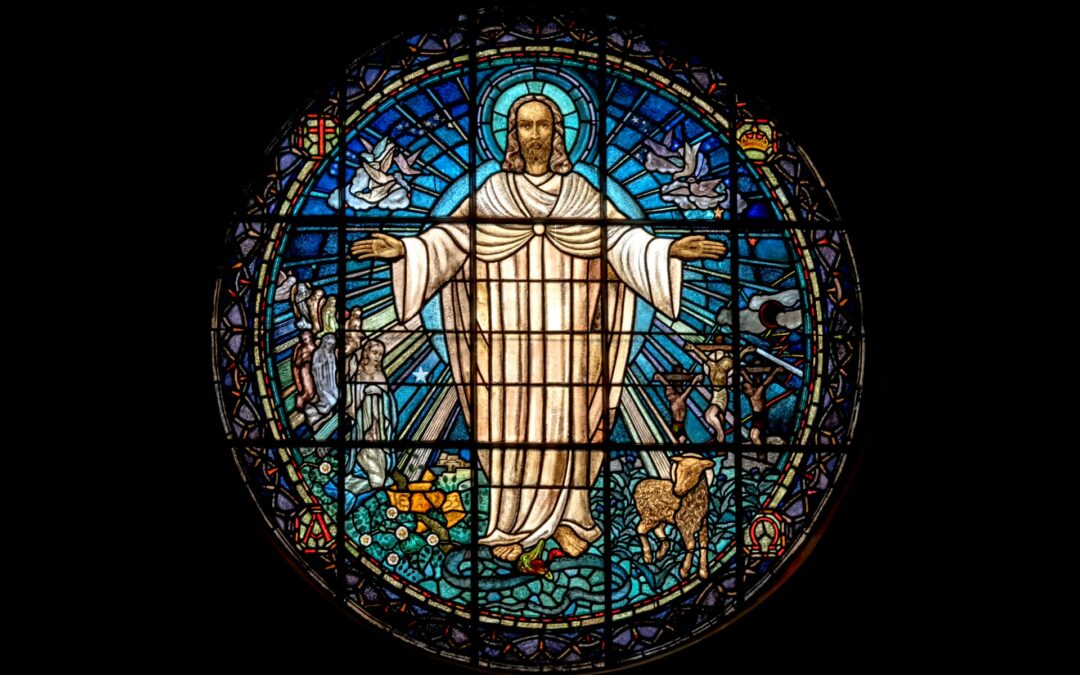
Jesus Christ stands at the crossroads of history, faith, and culture—a figure whose life and legacy continue to provoke debate, devotion, and deep reflection across the globe. Revered as divine by billions, dismissed as myth or man by others, Jesus embodies one of humanity’s most enduring puzzles. Exploring the multifaceted perspectives on who Jesus was, whether he performed miracles, and how these beliefs shape our world reveals not only theological complexity but also profound questions about truth, coexistence, and the power of narrative. This article unpacks the layers of the “Jesus Problem,” examining its historical roots, cultural impact, and the challenges it poses to pluralistic societies.
The Puzzle of Jesus’ Identity Across Beliefs
Jesus Christ is one of the most polarizing figures in human history—yet he remains universally recognizable. The kaleidoscope of interpretations surrounding him is as vast as it is profound, reflecting centuries of theological evolution, cultural shifts, and ideological conflicts. Understanding this complex mosaic requires unpacking how each major belief system constructs Jesus’ identity, often in ways that reflect deeper worldviews and values.
In Christianity, Jesus is not merely a historical figure but the very incarnation of the divine. This belief transcends mere biography; it is a theological affirmation that God entered human history in the person of Jesus to reconcile humanity with the divine. The doctrine of the Trinity articulates this complex identity: Jesus as fully God, fully man. His miracles—walking on water, healing the blind, raising Lazarus from the dead—serve as irrefutable evidence of his divine authority. For Christians, these acts are not allegories but concrete demonstrations of God’s kingdom breaking into the world. The resurrection, in particular, stands as the linchpin of Christian faith, validating Jesus’ claims and offering hope of eternal life. This comprehensive view shapes Christian liturgy, moral teachings, and communal identity, influencing billions globally.
By contrast, Islam offers a nuanced, yet distinct, portrayal of Jesus. Within Islamic theology, Jesus (Isa) is among the highest-ranking prophets but emphatically not divine. The Quran asserts Allah’s absolute oneness and rejects any notion of offspring or division in God’s nature. Therefore, Jesus is revered as a human messenger, born miraculously of the Virgin Mary by Allah’s command, tasked with guiding people with a new revelation. His miracles are acknowledged—healing the sick, speaking as an infant, and even raising the dead—but these are explicitly framed as gifts from Allah, not evidence of divinity. This theological framing preserves strict monotheism while honoring Jesus as a significant spiritual figure who foretells the coming of the Prophet Muhammad. Islam’s view exemplifies a balance of respect and doctrinal clarity, affirming Jesus’ importance without compromising its foundational beliefs.
The Jewish perspective is markedly different and historically critical. Jews generally reject Jesus as the Messiah and divine figure, emphasizing adherence to Mosaic Law and awaiting a messianic figure yet to come. In this view, Jesus is often regarded as a charismatic teacher or an ordinary man who claimed messianic status without fulfilling expected prophecies. Some historical Jewish texts and traditions have even cast him as a false prophet or a disruptive influence. This perspective emerges from a complex history of religious divergence and social-political tension, which shapes Jewish communal identity. It also reflects a broader skepticism towards new religious movements that challenge or reinterpret established doctrine.
The atheist standpoint, representing a growing demographic globally, strips away the supernatural dimension entirely. Atheists typically view Jesus as a historical figure—if acknowledged—whose life and teachings are important socio-cultural phenomena rather than divine truth. Miracles are dismissed as myth or legend, products of oral tradition and theological embellishment. For many atheists, Jesus’ significance lies in his ethical teachings or his role as a revolutionary figure in history, not in any supernatural capacity.
Finally, the diverse spiritual traditions that make up the remaining 25% of the global population offer eclectic and sometimes contradictory views of Jesus. Many Buddhists regard Jesus as a spiritually enlightened teacher or bodhisattva, whose miracles can be understood as manifestations of profound meditative powers or compassionate intent. Some Hindus interpret Jesus as an avatar—an incarnation of Vishnu or another deity—drawing parallels between his life and Hindu epics, with miracles comparable to those of Krishna or Rama. Others within folk and indigenous religions might see Jesus as a healer or shaman, blending Christian elements with local beliefs. This syncretism reflects how Jesus’ image adapts to varied cultural and religious matrices, often transcending orthodox definitions.
This broad spectrum creates an intricate tapestry of belief where the question is not simply “Who was Jesus?” but “Who do we need Jesus to be?” This plurality means that Jesus can simultaneously be God, prophet, myth, teacher, or man, depending on the interpretive lens. The fact that approximately 71% of humanity accepts the reality of his miracles while 28% see him as an ordinary man encapsulates this enduring ambiguity and underlines why the Jesus problem persists as a theological and philosophical puzzle.
The Historical Reality vs. Scientific Scrutiny
The question of Jesus’ historical existence is surprisingly less controversial than popular debates might suggest. A broad consensus among secular historians, scholars of antiquity, and religious academics affirms that a man named Jesus lived in first-century Judea. References to Jesus appear not only in Christian texts but also in external sources: Roman historians like Tacitus mention “Christus” who was executed under Pontius Pilate; Jewish historian Josephus alludes to Jesus as a teacher and miracle worker. While these sources are subject to scrutiny over authenticity and bias, their cumulative weight affirms the basic historicity of Jesus.
However, historical existence is one matter; the supernatural claims that surround Jesus are another. Science, rooted in empirical methodology, demands reproducibility and falsifiability. Experiments must yield consistent results to establish causality or fact. Miracles—by definition violations or suspensions of natural laws—are singular events that cannot be recreated on demand. Therefore, miracles defy scientific verification and remain outside the realm of testable phenomena.
History, as a discipline, approaches the past through fragmentary evidence: texts, artifacts, oral traditions, and archaeological findings. These are interpreted to build plausible narratives of what happened. But history cannot replicate events; it relies on accounts that are often subjective, partial, or influenced by cultural and theological motivations. The historian’s task is to evaluate sources for reliability, bias, and context critically, yet must accept that some elements—especially miraculous claims—reside in the gray area between fact and faith.
This methodological divergence explains why scientific skepticism toward miracles does not necessarily translate into historical denial. For instance, the discovery of hygiene’s importance in medicine faced resistance until empirical proof forced adoption. Conversely, no laboratory has produced evidence that water can support human weight unaided or that a person can rise from the dead. The absence of scientific proof does not falsify the historical claims but highlights the limitations of scientific tools in addressing singular historical events.
Moreover, history grapples with interpretive frameworks. Miracles recorded in ancient texts might have functioned as symbolic narratives to express theological truths or community identity rather than literal facts. Understanding the cultural milieu of the time—where supernatural explanations were normative—helps contextualize these accounts.
The tension between science and history reveals deeper epistemological questions about how humans know and validate truth. Science excels at explaining repeatable phenomena, while history tries to reconstruct unique events from incomplete records. This makes the question of Jesus’ miracles not just a matter of evidence but one of interpretation, worldview, and epistemic humility.
In the end, the divide between scientific scrutiny and historical narrative underscores the multifaceted nature of the Jesus problem, forcing us to confront the limits of our knowledge and the diversity of human experience in interpreting the extraordinary.
Absolute Truth, Relative Truth, and the Clash of Convictions
The conversation around Jesus inevitably plunges into the philosophical and cultural quagmire of truth—a concept more complicated than it appears at first glance. The debate over whether Jesus performed miracles or was simply a man is rarely just about facts; it’s a profound clash between differing conceptions of truth itself, often framed as the tension between absolute truth and relative truth.
Absolute truth refers to truths perceived as universal, immutable, and independent of individual perspectives. For many believers, religious doctrines provide such absolute truths. For instance, a devout Muslim holds the Quran’s portrayal of Jesus as the indisputable word of God—unchanging and eternal. Similarly, many Christians regard the resurrection of Jesus as an undeniable historical and spiritual fact that anchors their entire faith. In this framework, truth is singular and non-negotiable.
On the other hand, relative truth posits that what is considered true depends on cultural, historical, or personal contexts. A truth that is absolute to one person or group may be relative—or even false—to another. For example, a Christian might see the Quranic narrative about Jesus as relative truth within Islamic faith but not universally binding. Conversely, a Muslim might see Christian beliefs as interpretations influenced by human fallibility and historical contingencies.
This dynamic creates an intricate and often fragile balancing act between mutual respect and deep-seated disagreement. The language of “relative” and “absolute” truths often functions as a diplomatic veil: instead of bluntly stating “you’re wrong,” people say “that’s your relative truth,” implicitly elevating their own beliefs as absolute without alienating others outright.
Yet, in practical terms, this division rarely remains purely theoretical. When beliefs govern laws, social norms, and interpersonal behavior, the stakes become tangible. Consider:
- Atheists who reject religious observances as state mandates, arguing for secularism and individual freedom.
- Muslims who uphold dress codes, dietary laws, and religious education as essential to identity and spiritual well-being.
- Jews who maintain rituals like circumcision as foundational to covenant and community.
Each group insists their truth is not merely personal but socially necessary, leading to inevitable clashes when these convictions intersect. The challenge lies in negotiating coexistence when everyone claims an unyielding grasp on truth, and yet those truths are incompatible.
This collision fuels much of the tension in pluralistic societies. While the ideal of “live and let live” suggests peaceful tolerance, reality is messier. People do not always separate their truths from identity. When someone’s deeply held beliefs are perceived as threatened or invalidated, defensive reactions arise—sometimes escalating into social conflict or political gridlock.
Therefore, the clash over Jesus’ nature reflects a microcosm of humanity’s broader struggle with truth: how to honor divergent absolute claims without fracturing society, how to recognize the power of relative truths without descending into relativism that erodes shared values.
The Root of the Conflict: Whose Truth Shapes Our World?
The Jesus Problem extends beyond theological debate into the fundamental question of narrative authority: which truth shapes the collective history, culture, laws, and values of society? This is not merely academic but deeply political and cultural. Control over the “official” narrative is a form of power—power to influence identity, morality, and social cohesion.
History itself is often a battleground for competing truths. The dominant narrative determines textbooks, public holidays, monuments, and legal frameworks. Christianity’s profound imprint on Western civilization illustrates how religious truth claims can become entwined with governance, justice, and cultural identity. The Church’s doctrines have informed laws on marriage, morality, and human rights, shaping societies for centuries.
Yet, other worldviews resist or reinterpret these dominant narratives. For example, secularism emerged partly in response to religious hegemony, advocating for separation of church and state. Similarly, indigenous and minority groups seek recognition of their own histories and spiritual truths, often marginalized by the prevailing discourse.
This struggle over narrative authority is not benign. It can provoke social upheaval, cultural erasure, or conflict. When one group’s absolute truth becomes imposed upon others—whether through education, legislation, or social pressure—resistance ensues. The historical record itself can be contested, rewritten, or weaponized.
The question then becomes: whose truth will govern the public square? Whose interpretation of Jesus—divine savior, prophet, myth, or mere man—will influence education systems, political rhetoric, and cultural values? How do societies accommodate plural truths without fracturing into competing enclaves?
This problem mirrors the challenges faced in multicultural and multi-religious societies worldwide, where competing convictions about history, faith, and morality collide. It also highlights the fragility of social cohesion when absolute truths become exclusive claims that deny legitimacy to others.
In essence, the Jesus Problem is symptomatic of a broader human dilemma: the tension between unity and diversity, between singular narratives and plural realities. The very act of shaping history is a political one, a contest of ideas and identities, where truths become intertwined with power, legitimacy, and belonging.
Understanding this dimension is crucial to grasping why the debate over Jesus is not just theological but deeply intertwined with culture, politics, and the ongoing negotiation of societal values. It forces us to confront how societies define themselves and how they manage the inevitable friction of coexistence among diverse truths.
Navigating the Options
Confronted with the profound and persistent conflicts surrounding Jesus’ identity, miracles, and the competing truths that shape societies, humanity faces a pivotal crossroads. The question is not simply “What do we believe?” but “How do we coexist amid such divergent and deeply held convictions?” Three broad pathways emerge, each laden with complexities, trade-offs, and consequences.
1. Live and Let Live: The Ideal of Pluralistic Tolerance
At first glance, the simplest approach is mutual tolerance: acknowledge that truth varies among individuals and groups, and agree to respect others’ beliefs without imposing one’s own. This “live and let live” philosophy posits that people can hold differing convictions—whether believing Jesus performed miracles or was merely a historical figure—without conflict as long as these beliefs remain personal and do not infringe on others’ freedoms.
This path embraces diversity and pluralism, creating a social fabric woven with varied threads of faith, skepticism, and spirituality. Ideally, it encourages peaceful coexistence, social harmony, and freedom of conscience.
However, the theory often falters in practice. When beliefs intersect with public life—laws, education, civil rights—the boundaries blur. For example:
- Religious groups may seek laws reflecting their doctrines (e.g., prayer in schools, marriage definitions).
- Secular individuals might resist such impositions, championing separation of religion and state.
- Conflicts arise over symbols, holidays, and moral codes embedded in legislation.
These flashpoints reveal the fragility of “live and let live.” When a belief’s social expression clashes with another’s values or legal rights, the gloves come off. Debates over abortion, LGBTQ+ rights, and religious exemptions demonstrate how tolerance often fractures under real-world pressures.
Moreover, individuals rarely contain their beliefs privately; faith and identity are intertwined with community and public expression. Suppressing or marginalizing one’s truth often leads to alienation, social unrest, or political polarization.
Thus, while pluralistic tolerance is a noble ideal, it requires careful balancing acts, respect for diversity, and legal frameworks that safeguard minority rights without eroding societal cohesion. Without these, “live and let live” remains an aspirational but fragile solution.
2. Pure Empiricism: Science and Secularism as the Ultimate Arbiter
Another proposed route is the elevation of empirical science and rationalism as the exclusive basis for truth claims. Under this vision, only beliefs verifiable by scientific methods—repeatable experiments, observable evidence—are deemed legitimate in public discourse and policy.
This path appeals to many because it promises clarity, objectivity, and progress. It dismisses supernatural claims—miracles, divine intervention—as untestable and therefore not part of reality. Societies grounded in secular empiricism prioritize education, governance, and social norms based on evidence.
However, this approach faces significant obstacles:
- Many cultural and religious beliefs do not fit within scientific paradigms yet provide meaning, identity, and community to billions.
- Attempts to eradicate or suppress these beliefs can provoke backlash, social fragmentation, and even violence.
- History shows that sweeping secularization efforts often encounter resistance, as faith is deeply embedded in human experience.
Furthermore, science’s inherent limitations must be acknowledged. Science excels at explaining natural phenomena under controlled conditions but struggles with unique historical events, moral values, and existential questions. Reducing all human experience to empirical data risks impoverishing cultural richness and ignoring the subjective, spiritual dimensions of life.
Consequently, a purely empirical worldview can alienate large segments of society and overlook the complex ways people understand meaning, truth, and existence beyond measurable facts.
3. Mutual Humility and Embracing Complexity: Living with Ambiguity
The third, arguably most challenging, path advocates embracing the limitations of human knowledge and the complexity of truth. It recognizes that no individual or group holds the entire picture; everyone is partially right and partially mistaken.
This approach calls for:
- Humility: Acknowledging that one’s own truth claims may be incomplete or provisional.
- Empathy: Attempting to understand others’ perspectives without immediate judgment.
- Tolerance: Allowing coexistence amid conflicting beliefs without coercion or suppression.
- Dialogue: Engaging in ongoing conversation to navigate differences and build common ground.
Living in this “uncomfortable space” of ambiguity demands psychological and cultural maturity. It requires societies to institutionalize pluralism not only legally but socially and spiritually.
While difficult, this pathway holds the promise of sustainable coexistence in a world marked by diversity. It acknowledges that the Jesus Problem—and analogous conflicts—may never be fully resolved in a single, universal truth, but can be managed through respect and shared humanity.
The major hurdle is that humility and tolerance are often in short supply. Human nature gravitates toward certainty and tribalism. When beliefs form the core of identity, admitting doubt or partial truth can feel like betrayal. The result is often entrenched polarization, where dialogue becomes impossible and conflict inevitable.
The Historical Jesus: A Brief Sketch
To understand the profound impact and the enduring controversies surrounding Jesus, it is essential to reconstruct his historical context and life narrative with as much nuance as possible. Jesus emerged in a complex and volatile landscape—the Roman Empire’s eastern provinces during the early first century BCE and CE—a world marked by political oppression, religious fervor, and social stratification.
Born around 4 BCE in Judea, Jesus’ entrance into the world was set against a backdrop of tension and turmoil. His birth narrative, preserved in Christian texts, presents extraordinary elements: a virgin named Mary conceives Jesus through the Holy Spirit, an event heralded by angelic visitations and witnessed by shepherds and wise men who bring gifts steeped in symbolism—gold (royalty), frankincense (divinity), and myrrh (mortality). While these accounts are theological in nature, they reflect the merging of spiritual significance with political realities, situating Jesus as a figure both human and divine.
The historical Herod the Great, Roman-appointed king of Judea, perceived the birth of a “new king” as a direct threat to his rule. His infamous decree to kill male infants in Bethlehem—the “Massacre of the Innocents”—propelled Jesus’ family into exile in Egypt. This event intertwines historical politics with narrative motifs common in ancient literature: the threatened child destined for greatness who survives against odds.
After Herod’s death, the family returned and settled in Nazareth, a modest town with little political significance but embedded in a deeply religious Jewish culture. Little is documented about Jesus’ formative years, save for an incident at age 12 where he engages Jewish scholars in theological debate, indicating early intellectual and spiritual promise.
At approximately 30 years old, Jesus’ public ministry commenced. His baptism by John the Baptist—himself a provocative figure known for asceticism and calls for repentance—marked a pivotal moment. Contemporary accounts describe heaven opening, the Holy Spirit descending like a dove, and a divine voice affirming Jesus as God’s beloved Son. This theophany signified divine approval and inaugurated Jesus’ mission.
Immediately following baptism, Jesus retreated into the wilderness for 40 days—a symbolic number often associated with trial and purification—where he faced three temptations from Satan. Each temptation challenged his divine mission and identity: to use supernatural powers selfishly, to test God, or to succumb to worldly power. His refusal established his spiritual authority and readiness for ministry.
Jesus then began gathering followers—12 disciples from varied backgrounds including fishermen and tax collectors. He traversed Galilee and Judea, preaching radical messages of love, forgiveness, and the imminent Kingdom of God. His ministry was marked by acts that transcended social and religious boundaries: healing the sick, exorcising demons, feeding thousands with scant resources, walking on water, and calming storms.
These miraculous acts drew large crowds but also antagonized religious authorities, particularly the Pharisees, who championed strict adherence to Mosaic Law and viewed Jesus’ challenges to tradition as subversive. His willingness to associate with “sinners” and heal on the Sabbath threatened their religious order and political stability.
The tension culminated in Jesus’ betrayal by Judas Iscariot, arrest, and trial under Roman governance. He was condemned to crucifixion—a brutal and public execution method reserved for the lowest criminals. During his crucifixion, accounts describe supernatural phenomena: darkness covering the land, an earthquake, and a Roman centurion proclaiming him the Son of God, reflecting the event’s profound impact on witnesses.
Jesus’ death was followed by his burial in a tomb, but Christian tradition holds that he rose from the dead on the third day—a resurrection witnessed by many and serving as the foundational miracle of Christianity. He is said to have appeared to his disciples over 40 days before ascending to heaven, promising a future return.
This historical sketch, blending documented events and theological assertions, underscores why Jesus remains a figure of immense religious, cultural, and historical significance.
The Enduring Impact of the Jesus Narrative
The story of Jesus has transcended millennia, leaving an indelible imprint on human civilization that extends far beyond theological discourse. Whether one accepts the supernatural claims of his life or regards them as mythic constructions, the influence of the Jesus narrative on culture, ethics, politics, and society is undeniable.
At its core, Jesus’ teachings—centered on love, compassion, forgiveness, humility, and justice—have inspired ethical frameworks that underpin many modern legal systems and human rights doctrines. Concepts such as the intrinsic dignity of every individual, care for the marginalized, and the call for peace resonate in secular and religious contexts alike. These principles have fueled movements for social justice, abolition of slavery, and humanitarian aid.
Christianity’s expansion throughout the Roman Empire and beyond catalyzed the formation of institutions that shaped Western civilization—universities, hospitals, charitable organizations, and the arts. The Church became a patron of music, painting, architecture, and literature, embedding the Jesus narrative into the very fabric of cultural expression. Iconic works—Michelangelo’s Sistine Chapel, Bach’s cantatas, Dante’s Divine Comedy—reflect centuries of engagement with Christian themes.
Simultaneously, the narrative’s potency fueled political structures and conflicts. Monarchs and empires invoked Jesus and Christian symbolism to legitimize rule, unite peoples, or justify conquest. The Crusades, Reformations, and countless religious wars attest to the intense power the Jesus story wields over collective identity and authority.
Even secular societies continue to wrestle with Jesus’ legacy. Public holidays like Christmas and Easter, pervasive Christian idioms in language, and moral debates rooted in Christian ethics illustrate how deeply intertwined the narrative remains with daily life. The story informs art, film, literature, and public discourse, shaping perceptions of good and evil, sacrifice and redemption.
Moreover, Jesus’ narrative serves as a lens through which billions interpret their place in the cosmos, offering existential meaning and hope. For many, it is a source of comfort amidst suffering, a guide for moral living, and a vision of ultimate justice.
In the end, the enduring impact of Jesus transcends doctrinal disputes or historical skepticism. It is a testament to the power of narrative to shape human consciousness, culture, and history—a legacy as complex and multifaceted as humanity itself.
Conclusion
The story of Jesus is more than a religious narrative; it is a force that has molded civilizations, inspired art and ethics, and continues to shape collective identities. While absolute answers remain elusive, grappling with the diversity of beliefs surrounding Jesus invites us to confront the broader human struggle to balance conviction with tolerance, certainty with humility. Ultimately, the Jesus Problem challenges us not just to decide what we believe about one man, but how we navigate the complex interplay of faith, history, and truth in a world of many voices.