
The Second Punic War stands as one of the most dramatic and consequential conflicts in ancient history, marked by brilliant military strategy, bold decisions, and a thirst for vengeance that would forever change the course of the Mediterranean world. At the heart of this war was one of history’s most renowned generals: Hannibal Barca.
From crossing the Alps with his army and war elephants to orchestrating devastating victories against Rome’s mighty legions, Hannibal’s campaign became a masterclass in audacity and military genius. But the path that led to this legendary conflict was paved with deep resentment, broken alliances, and a thirst for retribution after the First Punic War left Carthage crippled.
This article explores the rise of Carthaginian power, the mercenary uprisings, and the early sparks of war that set the stage for Hannibal’s infamous invasion of Italy—one that would have Rome quaking in its boots and forever alter the balance of power in the ancient world.
The Mercenary War: Carthage’s Darkest Hour
The aftermath of the First Punic War left Carthage reeling, not only because of the military defeat but also due to the financial burden it placed on the state. The war had been costly, and Carthage found itself deeply in debt to Rome, with the reparations crippling the once-prosperous empire. The cost of maintaining a large military force to defend the city and its interests across the Mediterranean further strained the Carthaginian economy.
In the wake of this defeat, Carthage relied heavily on mercenaries to carry out military operations. These mercenaries came from various regions around the Mediterranean, from Iberians to Gauls to Numidians, and were used to keep Carthage’s military might intact. However, Carthage’s financial troubles meant that these mercenaries were not paid on time, and the simmering discontent began to boil over.
The result was the Mercenary War, a brutal conflict that erupted in 241 BC, a mere few years after the end of the First Punic War. The mercenaries, who had fought for Carthage during the war, were now abandoned and angry. They had been promised payment that never came. As the months passed, their dissatisfaction grew, and many began to turn on Carthage, demanding payment for their service. The Carthaginian government, already weakened and financially strapped, had no ability to pay them.
Faced with a revolt of its own soldiers, Carthage was thrust into a civil war. The mercenaries, now organized into armed groups, ravaged Carthaginian territories. The Carthaginian leadership, unable to effectively respond, was forced to scramble for solutions. To deal with the revolt, Carthage hired more mercenaries—this time to fight the original mercenaries who were revolting against them. The situation escalated to the point where it seemed as if Carthage might collapse entirely. The city-state found itself at war not just with Rome, but with the very forces it had relied upon to protect its interests.
The Mercenary War was marked by extreme violence, and both sides engaged in brutal tactics. Mercenaries looted and destroyed Carthaginian towns, while the Carthaginian military sought to regain control by any means necessary. Entire cities were burned to the ground, and countless civilians lost their lives in the chaos. Carthage’s ability to hold on to power seemed increasingly tenuous as the revolt spread across the region.
This war highlighted the fragility of Carthage’s empire and the dangers of relying on mercenaries for military strength. In the end, Carthage emerged victorious in the Mercenary War, but at an enormous cost. The financial strain, along with the social and political instability it caused, left Carthage exhausted and vulnerable. It was in this weakened state that Carthage found itself facing the next great challenge—Rome.
The Ebro River Treaty: Rome’s Coercive Diplomacy
While Carthage was embroiled in its own internal conflict, Rome was busy consolidating its power in the Mediterranean. Having emerged victorious from the First Punic War, the Romans were eager to expand their influence further and assert themselves as the dominant force in the region. They turned their attention to the western Mediterranean, where Carthage’s territories lay vulnerable and ripe for exploitation.
The Roman Senate, having already imposed harsh reparations on Carthage, sought to ensure that its defeated rival would not regain its former strength. They recognized that controlling key territories in the Mediterranean would ensure Rome’s supremacy in the region. Carthage’s weakened state provided the perfect opportunity for Rome to exert further pressure.
In 226 BC, Rome and Carthage signed the Ebro River Treaty, a diplomatic agreement that sought to divide the sphere of influence between the two powers in Spain. According to the treaty, the Ebro River would act as the demarcation line. Carthage was to have control over the territories south of the river, while Rome would control the lands to the north. This treaty was meant to prevent direct conflict between the two powers and maintain a fragile peace.
However, this agreement was anything but fair. For Carthage, it was a bitter pill to swallow. The treaty effectively limited Carthage’s expansion prospects, forcing it to remain confined to the southern part of the Iberian Peninsula, while Rome enjoyed the freedom to expand into the northern regions. This division of territory was not just a territorial concession—it was a sign of Rome’s growing dominance and a stark reminder of Carthage’s diminished status.
As Rome consolidated its control over the northern regions of Spain, it began to encroach on Carthaginian interests. The Romans sought to gain influence over local tribes and establish alliances with those tribes that had been hostile to Carthage. Rome’s interventions were designed to weaken Carthage’s grip on its territory and ensure that it remained a shadow of its former self.
The treaty’s provisions were quickly violated by both parties. While Rome maintained that it would respect the division of territories, its actions belied this claim. One of the key events that triggered Carthage’s fury was Rome’s interference with the city of Saguntum, a town located south of the Ebro River but which had established an informal alliance with Rome. The Romans had helped Saguntum with an internal dispute, thereby elevating their influence in the region. When Carthage saw the Romans’ growing involvement in Saguntum, it perceived this as a direct challenge to its sovereignty, especially since the city lay within Carthage’s sphere of influence under the terms of the treaty.
Carthage was incensed by Rome’s actions, and tensions between the two powers escalated quickly. The Romans, sensing an opportunity to weaken Carthage further, declared themselves protectors of Saguntum, even though it lay within Carthaginian territory. The strategic and political implications were immense: Rome had just defied the Ebro River Treaty and had directly provoked Carthage.
The Romans, ever the masters of manipulation, tried to defuse the situation diplomatically at first. They insisted that they had no intention of escalating the conflict but made it clear that they would not abandon Saguntum. From Carthage’s perspective, Rome had violated the treaty and was now actively undermining Carthaginian influence in Spain. This diplomatic snub, combined with the growing Roman presence in the Iberian Peninsula, was the final straw. The political climate in Carthage became more charged, and calls for revenge grew louder.
As the conflict between the two empires intensified, it became clear that the Ebro River Treaty was no longer a viable agreement. Rome’s aggressive moves in Spain set the stage for an inevitable war between the two powers. Carthage, already battered by the First Punic War and the Mercenary War, had now been pushed to the brink. The Second Punic War was on the horizon, and both sides were preparing for a fight that would define the future of the Mediterranean world.
In this high-stakes game of diplomacy and power, Rome had successfully provoked Carthage into action. The treaty had been a tool to weaken its rival, but it had also planted the seeds of the conflict that would soon engulf the Mediterranean. Carthage, still reeling from its previous defeat, now had a chance to fight back. And at the heart of the storm stood one man: Hannibal Barca, the son of Hamilcar, whose desire for vengeance and retribution would soon reshape the course of history.
Hamilcar Barca: Carthage’s Last Hope
Hamilcar Barca was not just a military leader; he was the embodiment of Carthaginian resilience and ambition. As one of the most accomplished generals of the First Punic War, Hamilcar had earned his reputation through cunning strategy and an unwavering commitment to his nation’s interests. Despite Carthage’s crushing defeat in the war, Hamilcar remained unbroken. Rather than accept the humiliation of defeat, he saw the loss as a temporary setback, one that could be overcome with the right approach. This determination to rebuild Carthage’s strength in the face of adversity would define his legacy.
After the First Punic War, Carthage’s internal politics were in disarray. The political establishment was weak, divided, and unable to effectively govern the empire. The city’s once-great navy was reduced to a fraction of its former strength, and Carthage’s economy was devastated by the reparations it owed Rome. Amidst this chaos, Hamilcar emerged as a figure of strength and vision. While Carthage’s government was paralyzed by indecision, Hamilcar took matters into his own hands and began to plan for Carthage’s recovery.
Hamilcar’s strategy was not just focused on military campaigns; it was about rebuilding Carthage’s strength through conquest and wealth accumulation. His idea was simple but profound: conquer new territories and use the wealth from those regions to restore Carthage’s fortunes. Spain, with its abundant resources and untapped potential, was the perfect target.
The Iberian Peninsula had long been a region of interest to Carthage, but Hamilcar saw its value beyond just its strategic location. Spain was rich with natural resources, particularly silver, which was the key to solving Carthage’s financial woes. By gaining control of the Iberian Peninsula, Hamilcar could access these riches and begin the long, arduous task of paying off Carthage’s debt to Rome. But Hamilcar’s ambitions went beyond financial recovery—he was also driven by a deep, personal desire for vengeance against Rome. The humiliations Carthage had suffered at the hands of the Romans were fresh in his mind, and he intended to use Spain not just as a source of wealth, but as a platform for launching a future campaign of revenge.
In 237 BC, Hamilcar Barca set sail for Spain with a small force. Over the next several years, he would spend the majority of his life in the Iberian Peninsula, where he successfully expanded Carthaginian territory, defeating local tribes and consolidating power. One of his greatest achievements was the establishment of the city of New Carthage (modern-day Cartagena), which would serve as Carthage’s new base of operations in the region. It was here, in Spain, that Hamilcar began to rebuild Carthage’s military might, creating a formidable army composed of Iberian soldiers, mercenaries, and his own Carthaginian veterans.
Hamilcar’s leadership was instrumental in strengthening Carthaginian control over the region. He recognized the importance of diplomacy in addition to military force. By aligning himself with certain Iberian tribes and incorporating them into his military campaigns, Hamilcar was able to forge alliances that would bolster Carthaginian power. The wealth flowing from Spain’s silver mines allowed him to raise funds, build a strong army, and maintain Carthage’s strategic position in the western Mediterranean.
Yet, despite his many successes, Hamilcar’s influence extended far beyond the battlefield. He was a charismatic leader who inspired loyalty and respect among his soldiers. His son, Hannibal, grew up in the shadow of his father’s campaign in Spain, absorbing lessons not just in warfare, but in leadership and revenge. Hamilcar’s influence on his son was profound, shaping Hannibal’s future decisions and emboldening his desire to avenge Carthage’s defeat in the First Punic War.
However, Hamilcar’s campaign was not without its challenges. He faced constant resistance from the native Iberian tribes, who were fiercely independent and wary of foreign invaders. Yet, Hamilcar’s military genius and willingness to adapt to the changing circumstances of the conflict allowed him to succeed. His time in Spain, though marked by constant warfare, laid the groundwork for Carthage’s recovery and positioned it as a serious rival to Rome once again.
Hamilcar’s death in 229 BC, likely due to a battle injury or natural causes, marked the end of an era for Carthage. His death left a power vacuum that was quickly filled by his son-in-law Hasdrubal, but it also signified the beginning of Hannibal’s rise to power. While Hamilcar’s death could have signaled the collapse of Carthaginian ambitions, his legacy lived on through his son, who would carry on the fight for revenge.
Hannibal Barca: The Vengeance of a Son
Hannibal Barca, the son of Hamilcar, was destined for greatness from an early age. Raised in Spain, surrounded by Carthaginian veterans and Iberian warriors, Hannibal was not only groomed to be a military leader but was also deeply immersed in the philosophy of Carthage’s struggle against Rome. The formative years of his life were steeped in the lessons of warfare, leadership, and most importantly, vengeance.
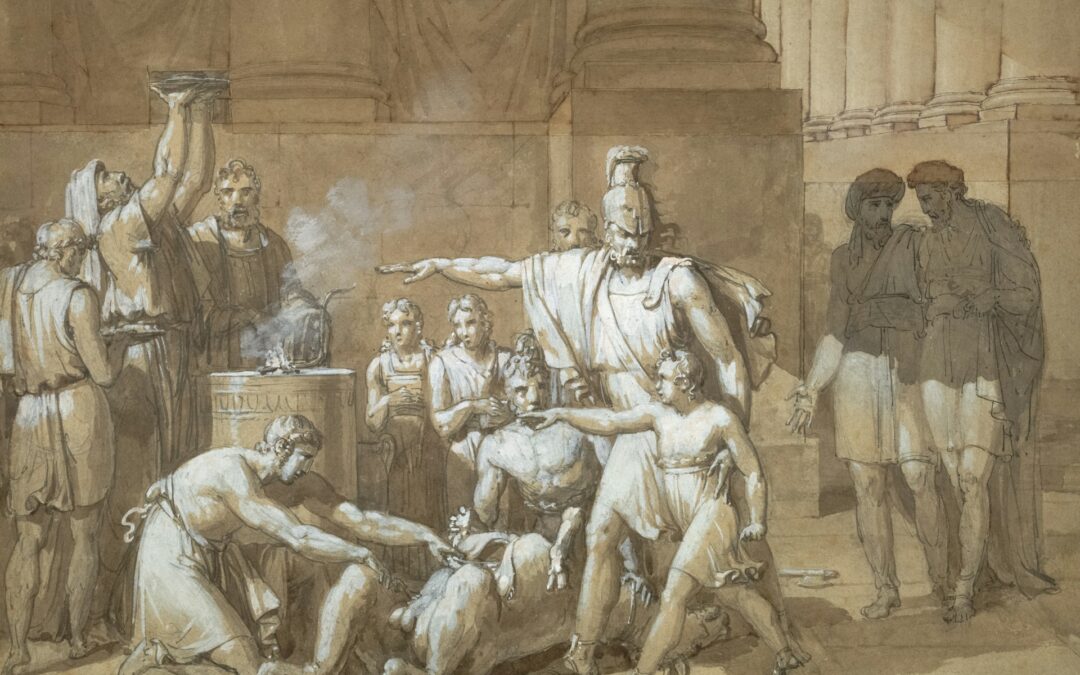
As a young boy, Hannibal swore an oath to his father that would become the driving force of his life: he vowed never to be a friend of Rome. This promise would define his career, molding him into a general with an intense, almost pathological hatred of the Roman Republic. Hannibal’s father, Hamilcar, had instilled in him the belief that Rome’s defeat of Carthage in the First Punic War was not just a military loss, but a personal insult to their honor, and that vengeance was the only way to restore Carthaginian pride.
Hannibal’s early military training under his father was intense. He learned the art of warfare firsthand, participating in campaigns against Iberian tribes and gaining invaluable experience in both combat and strategy. He was also exposed to the intricacies of leadership, learning how to inspire loyalty and command respect from his troops. This would serve him well in the years to come, as Hannibal would go on to lead some of the most famous and devastating military campaigns in history.
When Hamilcar died in 229 BC, Hannibal was still a young man, but his time to lead had arrived. His father’s death left a power vacuum in Carthage, and Hannibal’s experience in Spain made him the obvious candidate to take command of the Carthaginian forces in the region. By this time, Carthage’s control over the Iberian Peninsula was becoming more solidified, and Hannibal continued his father’s work of consolidating power.
As a general, Hannibal was unlike any leader Rome had ever encountered. He was ruthless, innovative, and completely devoted to his mission. His strategy was not simply to win battles but to break the spirit of Rome itself. He believed that if he could strike deep into Roman territory, he would force the Romans to realize that their dominance in the Mediterranean was not guaranteed.
One of Hannibal’s most remarkable decisions was to march his army from Spain across the treacherous Alps and into Italy—a maneuver that defied all expectations. This audacious strategy would become one of the defining moments of the Second Punic War and would showcase Hannibal’s ability to think beyond the conventional military norms of the time. His crossing of the Alps, while costly, allowed him to strike directly at the heart of Rome’s power.
Hannibal’s army was not just a force of soldiers, but a symbol of his vision. He understood the psychological aspects of warfare and how to use fear and surprise to his advantage. His tactics were designed to break the morale of his enemies, and his use of deception and psychological warfare was revolutionary. For Hannibal, war was not merely about winning battles—it was about completely dismantling the enemy’s will to fight.
The relationship between Hannibal and his father’s legacy was complex. While he sought to honor his father’s memory and fulfill his vision of vengeance, Hannibal also felt the weight of the expectations placed upon him. He knew that his actions would define Carthage’s future, and that the failure to succeed in the war against Rome would forever tarnish the Barcas’ name. This pressure only fueled Hannibal’s determination to achieve his ultimate goal: the destruction of Rome.
Hannibal’s rise to power was not just the result of military skill but of the deep-seated anger and resentment that he carried with him throughout his life. His campaign in Spain had been about rebuilding Carthage, but his war against Rome was about something far more personal—retribution for his father’s dreams and for the centuries of Carthaginian suffering at Roman hands. Hannibal’s story, therefore, is not just one of military brilliance, but of an unyielding thirst for vengeance that would push him to the very limits of human endurance and military strategy.
As he prepared to confront Rome in the Second Punic War, Hannibal knew that the outcome of the conflict would not just determine the fate of Carthage, but the future of the Mediterranean itself. For Hannibal, the stakes were personal. And for Rome, the war would prove to be the fight of their lives.
The Rise of Carthaginian Power in Spain
Hamilcar Barca’s campaign in Spain marked a critical turning point for Carthage, transforming the region from a wild frontier into a thriving Carthaginian stronghold. Hamilcar’s initial invasion was not just about expanding territorial holdings—it was about restoring Carthage’s military might and rebuilding its economy. Spain, rich in resources, particularly its vast silver mines, offered Carthage the lifeline it so desperately needed. By establishing control over the Iberian Peninsula, Hamilcar aimed to secure the resources necessary to pay off Carthage’s enormous debt to Rome and to regain its position as a powerful Mediterranean state.
The conquest of Spain began with careful, calculated military moves. Hamilcar’s strategy relied on both military conquest and political maneuvering. He did not just send his army to crush opposition; he also sought alliances with the indigenous Iberian tribes. These tribes were often fragmented and divided, and Hamilcar knew that by exploiting these divisions, he could gain the support of local leaders while expanding Carthage’s influence without the need for constant military engagement.
One of Hamilcar’s key achievements was the founding of New Carthage, located in what is now modern-day Cartagena. This city would become the central hub of Carthaginian operations in Spain. New Carthage was strategically located on the Mediterranean coast, providing easy access to maritime trade routes and serving as a fortified base of operations for the Carthaginian military. It also allowed Carthage to control the surrounding areas, particularly the rich silver-producing regions of Iberia, which became vital to sustaining Carthage’s war efforts and finances.
Under Hamilcar’s leadership, Carthage’s presence in Spain grew steadily, with new territories coming under Carthaginian control and local tribes increasingly falling under Carthage’s sphere of influence. Hamilcar’s army, while not overwhelmingly large, was efficient and well-led. He combined superior Carthaginian tactics with the support of Iberian warriors, who were known for their fierce fighting skills. His forces not only engaged in military campaigns to subjugate Iberian tribes but also worked to integrate these tribes into the Carthaginian military structure. This created a multi-ethnic army that combined Carthaginian experience with local knowledge of the terrain and indigenous fighting techniques.
While military conquest and territorial expansion were essential, Hamilcar understood that controlling the resources of Spain was the real key to Carthage’s recovery. The silver mines of Iberia, particularly those around modern-day Andalusia, would provide the wealth needed to restore Carthage’s military strength and secure its future. These mines were among the richest in the ancient world, and the wealth that flowed from them would allow Carthage to raise new armies and replenish its depleted coffers. By the time of Hamilcar’s death, Carthage was in a far stronger financial position than it had been since the end of the First Punic War.
However, despite these successes, Hamilcar faced constant resistance from various Iberian tribes who resented Carthaginian rule. They were often reluctant to accept foreign control, particularly from the Carthaginians, who had no natural claim to the land. Yet, Hamilcar’s ability to adapt his strategy and employ both military force and diplomacy enabled him to gradually consolidate Carthaginian control over Spain.
Hamilcar’s time in Spain also marked the beginning of a profound transformation in Carthaginian military culture. His son, Hannibal, was born into this environment of conquest and empire-building. Hannibal’s formative years were spent in Spain, observing his father’s campaigns, witnessing firsthand the brutality and strategic brilliance required to win wars, and absorbing the lessons of diplomacy and governance. More importantly, Hannibal learned from an early age the depths of his father’s hatred for Rome. It was this environment that would shape Hannibal into one of the greatest generals in history, one driven by a singular goal: revenge.
Hamilcar’s death in 229 BC, although tragic, would not be the end of Carthage’s ambitions in Spain. The foundation Hamilcar had laid down would prove crucial for his son and successors. By the time of his death, Carthage had firmly entrenched itself in the Iberian Peninsula, with a powerful military presence and the resources to challenge Rome in the future. Spain had become the jewel of Carthage’s empire, and its wealth would play a central role in the unfolding conflict between Rome and Carthage that would define the next chapter in Mediterranean history.
The Spark of War: The Fall of Saguntum
In the years following Hamilcar’s death, Carthage continued to strengthen its position in Spain. However, the growing presence of Carthaginian forces in Iberia was beginning to alarm Rome. Rome had, by this point, secured its dominance in the Mediterranean and was now focusing on expanding its influence into Iberia. The Ebro River Treaty, which had divided Spain between the two powers, had been violated on multiple occasions. Rome was growing increasingly concerned about Carthage’s military buildup and territorial expansion, especially in regions to the south of the Ebro River, which Carthage had now firmly under its control.
The immediate spark for the Second Punic War came from the city of Saguntum, a strategically important city located just south of the Ebro River, which had long been under Carthaginian influence. Saguntum, however, had formed an alliance with Rome, a move that directly violated the terms of the Ebro River Treaty. The city’s relationship with Rome had been solidified after Rome had helped it with internal disputes. This move by Saguntum, a city within Carthage’s sphere of influence, was seen by Hannibal and the Carthaginian leadership as a direct challenge to their authority.
Carthage, recognizing the potential threat of a Roman presence in Saguntum, demanded that the city cease its alliance with Rome and submit to Carthaginian control. However, the Saguntines were defiant, and their refusal to break ties with Rome marked a significant turning point. This situation presented Hannibal with an opportunity to strike at Rome’s growing influence in Iberia. For Hannibal, the city of Saguntum became a symbol of Roman arrogance—another manifestation of Rome’s interference in Carthaginian affairs.
In 219 BC, Hannibal, with his father’s vengeful spirit in mind, besieged Saguntum. The siege was long and brutal, lasting for eight months. The Carthaginian forces surrounded the city and methodically cut off its supply lines. The Romans, though they had an alliance with Saguntum, did not intervene directly in the conflict, likely because they were unprepared for such an escalation and had underestimated Hannibal’s resolve.
The final assault on Saguntum was savage. Once the walls of the city were breached, Hannibal’s forces poured in, slaughtering the defenders and massacring the citizens. The brutality of the siege sent a clear message to Rome—Carthage was not to be trifled with, and its strength was returning. Hannibal’s actions at Saguntum were calculated, not just as a military victory, but as a provocation to Rome, one that would trigger a full-scale war.
The fall of Saguntum was a turning point. Rome, unable to ignore the loss of its ally, declared war on Carthage, marking the official beginning of the Second Punic War. The Romans, furious at the slaughter of their ally and the apparent breach of the peace treaty, began mobilizing their forces. But what they failed to realize was that Hannibal had already won a psychological victory. The massacre of Saguntum not only demonstrated Carthage’s military prowess but also set the tone for the conflict that was to follow.
For Carthage, the fall of Saguntum was the beginning of a calculated war of revenge. For Hannibal, it was the realization of his father’s dreams—the first step toward fulfilling the oath of vengeance that he had taken as a child. The war would soon spill out from the Iberian Peninsula into the heart of Italy itself, as Hannibal embarked on his legendary march toward Rome. The Second Punic War had begun, and the stage was set for one of the most intense and remarkable military campaigns in history.
The Crossroads of Destiny: The Start of the Second Punic War
The outbreak of the Second Punic War was not merely a consequence of military confrontations or political disagreements—it was the culmination of years of escalating tensions between Carthage and Rome. While the fall of Saguntum was the immediate spark that ignited the conflict, the deeper causes lay in the broader rivalry between the two great powers of the Mediterranean. Rome and Carthage had clashed before, and their competition for dominance in the region had only grown more intense after the First Punic War.
In the wake of the First Punic War, Rome emerged victorious but with its own share of burdens. The war had drained the Roman treasury, and the Romans were determined to prevent such an outcome from happening again. As Carthage, under Hamilcar and then his son Hannibal, slowly rebuilt its strength and extended its power in Spain, Rome grew increasingly nervous. The growing Carthaginian presence in Spain, coupled with its expanding territorial control and the wealth flowing from Spain’s silver mines, posed a direct threat to Rome’s dominance in the Mediterranean.
The Romans were acutely aware that Carthage, with its recovering military and strategic position, could challenge Rome’s supremacy. But what Rome did not foresee was how deeply Hannibal’s sense of revenge would drive his decisions. To the Romans, Carthage was merely an enemy that had to be contained; to Hannibal, Carthage was a wounded empire that had been wronged and humiliated by Rome. His personal vendetta against Rome was not only a reflection of his father’s legacy but also a key factor in the decisions that would shape the war to come.
The declaration of war by Rome was as much a political necessity as it was a reaction to the fall of Saguntum. To maintain its credibility and protect its interests, Rome could not allow such a blatant breach of the peace agreement by Carthage to go unpunished. The Roman Senate, led by a sense of Roman superiority and a desire to reassert control, quickly mobilized its legions. In a typical Roman fashion, the Senate demanded retribution for the deaths of Roman allies in Saguntum, which they considered a direct challenge to Rome’s authority in the region.
The Romans, however, underestimated the resolve and capability of Carthage’s leadership, particularly Hannibal. They assumed that Carthage, still reeling from its previous defeat, would be unable or unwilling to wage war on the scale required. Hannibal, however, had other plans. He understood the strategic value of a preemptive strike, and his decision to invade Italy directly through the Alps—a path that no one had anticipated—was his first move in a brilliant campaign of subversion.
Rome’s confidence in its ability to deal with Carthage led to a critical underestimation of Hannibal’s capabilities. They expected a conventional war, one in which Carthage would fight on its periphery, possibly in Spain. What they did not anticipate was the audacity of a Carthaginian invasion in the heart of Italy itself. For Hannibal, crossing the Alps and striking at the very core of Roman power was not just a military maneuver; it was psychological warfare, designed to shatter Roman confidence and to shake the very foundations of the Roman Republic.
Thus, the Second Punic War, far from being a mere continuation of past conflicts, became a battle that would reshape the destiny of both empires. The outbreak of war marked the beginning of a conflict that would not only decide the future of Carthage and Rome but would also send shockwaves through the Mediterranean world, forcing both civilizations to reconsider the nature of warfare, leadership, and empire-building.
As the Romans prepared to face this new threat, they were already making assumptions about the war’s outcome. They believed they could simply repel Hannibal’s forces as they had done in the past, but Hannibal was determined to prove them wrong. His strategy was not just to fight—but to destroy. This ideological divide between the two powers, one focused on maintaining its dominance and the other on avenging past wrongs, would characterize the war and set the stage for some of the most iconic battles in history.
The Crossing of the Alps: A Daring Gamble
Hannibal’s decision to cross the Alps with his army remains one of the most audacious and celebrated military maneuvers in history. The Alps, a formidable mountain range that separated northern Italy from Gaul and the rest of Europe, had long been considered impassable for large armies. For centuries, military leaders had considered it too perilous and too challenging to navigate, especially with the logistical complications posed by terrain, weather, and supply chains. But Hannibal, ever the innovator, saw an opportunity where others saw only obstacles.
His initial challenge was to move his army from Spain into Italy. His forces had already been in Spain for years, consolidating Carthaginian power, and now Hannibal needed to take the fight directly to Rome. With Rome’s primary defensive forces stationed in Italy, a direct attack across the Mediterranean coast was out of the question. Instead, Hannibal decided to take the risky route—marching through Gaul, crossing the Alps, and emerging into the Italian plains. This would allow him to strike at the heart of Rome’s power without having to first fight through its strongholds in Spain or along the Mediterranean coast.
But the risks of this plan were immense. Hannibal’s army, already weakened from years of campaigning, would face treacherous terrain, scarce resources, and potential attacks from hostile tribes in Gaul. His forces included about 100,000 soldiers, cavalry, and war elephants, which, while impressive, presented additional logistical challenges. The elephants were a symbol of Carthaginian military might, but they were also a liability in such harsh conditions. Moving such a large and diverse force through the Alps would require unprecedented coordination and endurance, and failure to succeed could result in the loss of thousands of men and resources.
Hannibal knew that success in this mission would not just be about military strength but also about psychological warfare. The Roman Republic had grown accustomed to being the dominant force in the Mediterranean, and Hannibal’s ability to move his army undetected and strike deep into Italy would send shockwaves through Roman society. His goal was not just to defeat the Roman legions but to create a situation in which the very survival of Rome was at risk. To achieve this, Hannibal needed to shatter the Roman sense of invincibility and disrupt their ability to respond to his moves.
As the army made its way through the mountains, the situation became more dire. The path was treacherous, and the weather turned against them. The freezing temperatures, thick snow, and ice created hazardous conditions for both the soldiers and the elephants. The terrain was steep and unforgiving, and Hannibal’s men had to struggle not just to move forward, but to survive. Many soldiers died from the cold, while others were injured or lost in the blizzards. The elephants, too, suffered in the frigid conditions. Yet, despite these hardships, Hannibal pressed on.
The journey was fraught with additional dangers. As Hannibal and his army descended from the Alps, they encountered hostile Gallic tribes who were suspicious of the invading force. The Carthaginian army was forced to fight their way through some of these tribes, adding to their casualties. Supplies were already running low, and morale was beginning to deteriorate. Yet Hannibal, ever the strategist, used his understanding of psychology to maintain control over his men. He kept them focused on their ultimate goal: the destruction of Rome.
After weeks of grueling travel, Hannibal’s forces finally emerged from the Alps and into the Italian plains. However, by the time they arrived, the army had been severely depleted. What had started as an army of 100,000 men had dwindled to about 26,000, with many soldiers lost to the unforgiving mountains. The elephants, which had been such an iconic part of Carthaginian strategy, were also reduced in number, and only a handful remained. Yet, despite these losses, Hannibal’s army had achieved the impossible—they had crossed the Alps and had arrived in Italy, ready to confront the Romans on their home turf.
The Romans, caught completely off-guard by the invasion, were stunned. They had expected Hannibal to take a more conventional route, not to march directly into the heart of their territory. Hannibal’s decision to attack from the north, bypassing Roman defenses and bypassing conventional strategies, was a game-changer. For the Romans, the stakes had never been higher. For the first time, the heart of their empire was under direct threat, and the battle for the future of Rome itself had begun.
Hannibal’s crossing of the Alps was not just a military victory—it was a psychological triumph. He had taken on the impossible and emerged victorious. Now, with the Roman homeland in his sights, Hannibal was poised to make his mark on history. The Alps had been the first test of his determination and genius, and he had passed it with flying colors. Now, the real battle for supremacy would begin.
The Battle for Italy: A Monster in Roman Territory
Upon crossing the Alps, Hannibal found himself in Italy with a significantly reduced army, but still a formidable force. The Romans, who had initially thought they were invulnerable on their own turf, were now facing a Carthaginian general who had taken them by surprise in the most dramatic way possible. Hannibal’s bold decision to invade Italy and the speed with which he crossed the Alps left the Romans scrambling to respond.
However, Hannibal had no illusions about the daunting task that lay ahead. While his army was significantly smaller than it had been when it set out from Spain, it still possessed one critical advantage: its sheer audacity. Hannibal’s troops, though battle-worn and starving, were motivated by their survival through the Alps and their hatred of Rome. Hannibal had become a symbol of vengeance—a symbol of resistance to Rome’s growing dominance.
As he entered northern Italy, Hannibal sought to win the support of the Celtic tribes, many of whom had been conquered by Rome in previous decades. These tribes, resentful of Roman oppression, were keen to ally themselves with Hannibal. The Carthaginian general was not just offering them military support; he was offering them freedom from Roman rule. By positioning himself as a liberator, Hannibal was able to gain valuable allies and bolster his forces. His tactical brilliance and the strategic use of psychological warfare made him a magnetic figure for the disillusioned Celts.
Hannibal’s first major engagement in Italy was the Battle of the Ticinus River, where he inflicted a decisive defeat on a Roman army. This victory sent shockwaves throughout Rome, as it confirmed that Carthage’s greatest general had, against all odds, entered Roman territory and was not merely surviving but thriving. The defeat at Ticinus showed the Romans that Hannibal’s campaign was no fluke. It was a harbinger of what was to come.
Despite the early success, Hannibal faced a grave dilemma. His army was in no position to seize Rome immediately; his forces were weak from the trek through the Alps, and his supply lines were nonexistent. The Romans, for their part, had begun to regroup under the leadership of their consuls and were preparing for a prolonged conflict. Despite these challenges, Hannibal pressed on, moving deeper into Italy, forcing the Romans to adapt their tactics.
As the Carthaginian army advanced, it engaged in several smaller battles, each of which demonstrated Hannibal’s military genius. One of his most famous strategies was the Battle of the Trebia, where he lured the Romans into a trap by using the river as a barrier. Hannibal’s forces feigned weakness, drawing the Roman army into a vulnerable position, and then struck with devastating precision. The Romans, led by Consul Sempronius Longus, were crushed in this battle, suffering a significant loss.
The Battle of Lake Trasimene followed soon after, where Hannibal executed one of the most masterful ambushes in military history. Hannibal used the natural terrain to conceal his forces and trap the Roman army, resulting in a massive Roman defeat. It was one of the worst disasters in Roman military history, with thousands of Roman soldiers slaughtered. The Romans were now forced to confront a terrifying reality: Hannibal was a force unlike any they had ever faced, and he was in their homeland, threatening the very foundation of Roman power.
By this point, Hannibal had begun to build momentum, and his successes in Italy were starting to inspire awe among his soldiers and fear among the Romans. The once-mighty Roman army, once thought invincible, was being systematically dismantled. Hannibal’s reputation as a brilliant tactician grew with each battle, and his name became synonymous with fear and respect. The Romans, now fully aware of the gravity of the situation, were forced to take drastic measures to counter Hannibal’s invasion.
Rome’s response to Hannibal’s campaign was to adopt a strategy of attrition, avoiding direct confrontations and attempting to wear down the Carthaginian forces. But Hannibal, understanding the importance of psychological warfare, remained one step ahead. Each victory, no matter how small, reinforced the belief in his ability to defeat Rome. The Romans, despite their resources and military might, were beginning to falter in the face of a general who had already outsmarted them at every turn.
Hannibal’s campaign in Italy was far from over, but with each passing day, he was making history. He had broken the myth of Roman invincibility and had proven that a determined, strategic force, even when greatly diminished, could still wreak havoc on a superior enemy. What began as a daring gamble across the Alps had evolved into one of the most astonishing military campaigns in all of history, shaking the Roman Empire to its core.
Conclusion: The Road to Rome
The Second Punic War was not merely a clash of armies; it was a collision of ambition, revenge, and survival. Hannibal’s audacious crossing of the Alps and his subsequent victories over the Romans showcased not only his unparalleled military genius but also the lengths to which Carthage would go to reclaim its power and restore its pride. Despite suffering immense losses along the way, Hannibal’s strategy and determination brought the Carthaginian forces to the doorstep of Rome itself, forcing the Romans into a desperate fight for survival.
The war, marked by epic battles and shifting fortunes, was a turning point in the ancient world, setting the stage for future conflicts that would shape the destiny of empires. While the outcome of the Second Punic War would ultimately favor Rome, the legacy of Hannibal and his campaign remains a testament to the power of strategic brilliance and the enduring desire for vengeance. The war fundamentally altered the Mediterranean landscape, and the echoes of this conflict can still be felt in the annals of military history today.
Articles on the Second Punic War:
- The Second Punic War: The Rise of Hannibal
- The Second Punic War: Hannibal in Italy
- The Second Punic War: Rome Fights Back