
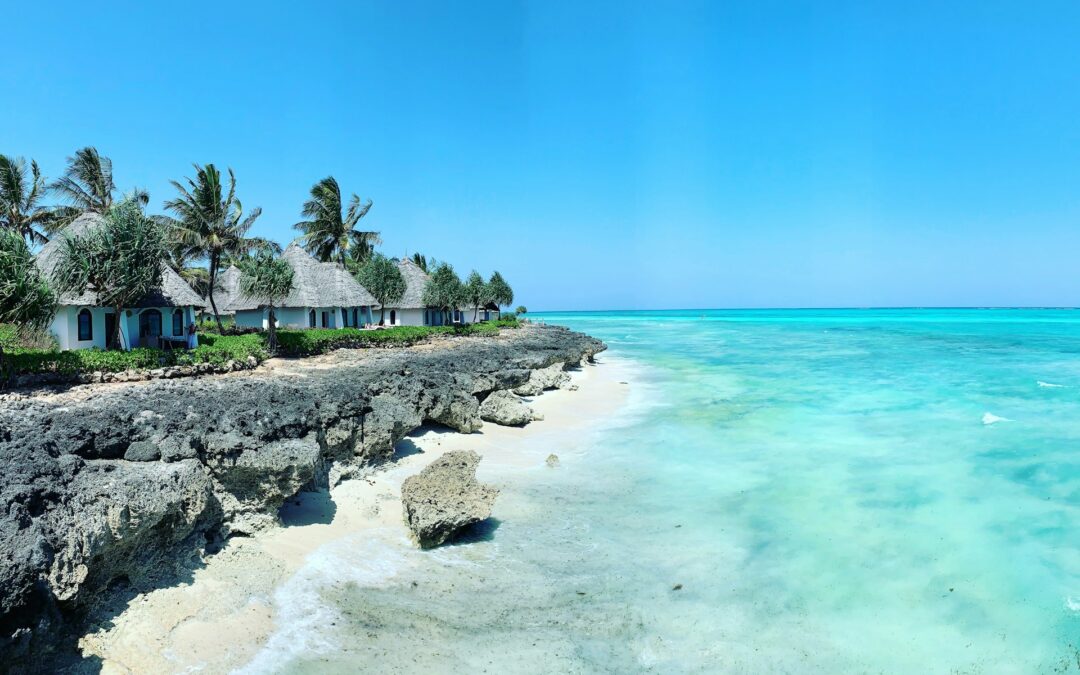
War is often imagined as a drawn-out catastrophe, lasting years and leaving scars across generations. But sometimes, history delivers something so brief and bewildering that it challenges all expectations. Enter the Anglo-Zanzibar War of 1896 — officially the shortest war ever recorded, lasting a mere 38 minutes. Behind this lightning-fast clash lies a story of colonial ambitions, political puppetry, and the final shattering of slavery in Zanzibar. Let’s unpack this curious episode that reshaped an empire and left an indelible mark on history.
A Jewel in the British Colonial Crown
By the closing decades of the 19th century, Great Britain had entrenched itself as the undisputed hegemon of the world stage. This was an era when steam power, mechanization, and industrial might converged to redefine the very fabric of global politics and economics. The Industrial Revolution, ignited in Britain, was in full throttle—factories belched smoke, railways stitched the country together, and naval vessels powered by coal patrolled oceans like sentinels of empire.
Within this colossal framework, the British Empire spread its dominion over nearly a quarter of the planet’s land surface. This sprawling empire was not just a patchwork of territories, but a carefully woven network of economic, military, and political outposts designed to extract resources, expand markets, and project power. The crown jewel in this collection wasn’t a single colony but rather the interconnected web of strategic holdings scattered across continents.
Zanzibar, a small island off the east coast of Africa near modern-day Tanzania, was one such linchpin—seemingly modest in size yet crucial in its role. Its position at the crossroads of Indian Ocean trade routes rendered it indispensable. For centuries, this island had thrived as a commercial nexus, linking merchants and caravans from Africa, the Arabian Peninsula, India, and beyond. The markets bustled with spices, ivory, textiles, and slaves—a confluence of goods that made Zanzibar a lucrative prize for any imperial power seeking to dominate East Africa.
For Britain, controlling Zanzibar was about much more than mere possession of land; it was about securing maritime supremacy and maintaining dominance over an entire region’s commerce. It offered a strategic naval foothold that could enforce British interests along the coast and beyond, counterbalancing rival European powers scrambling to carve Africa into spheres of influence. This tiny island was a gateway—a fulcrum upon which the British Empire leveraged its ambition and global reach.
From Slave Traders to Abolitionists
The economic prosperity of Zanzibar was inextricably linked to the institution of slavery. For generations, the island functioned as a critical hub in the East African slave trade. Enslaved men, women, and children were bought, sold, and transported through its ports, fueling wealth accumulation for local sultans and merchant elites. Slavery was woven into the very fabric of Zanzibar’s society and economy, shaping hierarchies and sustaining power structures.
Yet, by the dawn of the 19th century, a profound moral reckoning was underway within the British Empire. Abolitionist movements, galvanized by figures such as Thomas Clarkson and William Wilberforce, had marshaled public opinion and political will to confront the brutal realities of slavery. Their tireless campaigns peeled back the veneer of economic rationalization to expose the human suffering beneath—families torn apart, lives commodified, dignity stripped away.
This wave of humanitarian awakening culminated in landmark legislative acts. The Slave Trade Act of 1807 outlawed the transatlantic slave trade, and the Slavery Abolition Act of 1833 emancipated enslaved people throughout British colonies. Britain repositioned itself as the self-appointed moral arbiter of global abolition, pledging to eradicate slavery wherever its flag flew.
However, this crusade for freedom came with its contradictions. While Britain’s imperial elite celebrated abolition as a beacon of progress, they were equally determined to safeguard their own economic and geopolitical interests. The newfound anti-slavery stance served both as a genuine moral shift and as a tool to justify expanding colonial control under the guise of humanitarian intervention.
In Zanzibar, the British abolitionist ethos clashed headlong with entrenched local realities. The island’s Sultan and its powerful merchant class remained deeply invested in the continuation of slavery. To them, abolition was not a humanitarian cause but a threat to their wealth and social order. This fundamental disconnect set the stage for a fraught confrontation—a struggle over whether Zanzibar would be compelled to relinquish its most lucrative and abhorrent trade or resist the tide of imperial imposition.
The Dilemma of Enforcement
The British abolition of slavery in Zanzibar was a moral imperative wrapped in a geopolitical quandary. The Empire had declared slavery illegal within its vast territories, but enforcing this edict on an island whose economy and social structure were deeply anchored in the slave trade was anything but straightforward. The British faced a daunting dilemma: how to dismantle an entrenched system without igniting a full-scale uprising that could unravel their broader imperial ambitions.
The bluntest solution—imposing immediate emancipation and forcing the Sultan and the wealthy slave traders to relinquish their main source of income—was fraught with peril. Such a direct challenge risked alienating the local elite and provoking a violent backlash. The potential for guerrilla warfare, widespread rebellion, and destabilization was high. The British, while committed to abolition, were pragmatic imperialists who understood the value of maintaining order and control. They sought a strategy that balanced moral objectives with political stability.
Admiral Harry Rawson, the seasoned commander of the British naval forces in southern Africa, devised a sophisticated plan to navigate this predicament. Instead of confronting the island’s internal powers head-on, Rawson proposed leveraging British naval supremacy to choke the slave trade at sea. His vision was to deploy a fleet to patrol the waters around East Africa, intercepting and seizing slave ships before they could dock in Zanzibar’s harbors.
This maritime blockade served multiple purposes. It enforced abolitionist policies effectively, cutting off the supply chain without necessitating a costly land invasion or direct military confrontation on the island. Simultaneously, it allowed Britain to maintain the façade of respecting Zanzibar’s internal governance—avoiding the immediate appearance of heavy-handed colonial intervention.
The strategy embodied a subtle form of coercion, marrying humanitarian aims with imperial control. By wielding naval power, the British imposed their will with minimal bloodshed and maximum political leverage. It was a calculated move that exemplified how 19th-century imperial powers often cloaked economic and strategic interests in moral language, advancing their agenda under the guise of civilization and progress.
The Puppet Sultan and Rising Tensions
Britain’s acquisition of Zanzibar was less a diplomatic handover than a fait accompli shaped by the imperial realpolitik of the Scramble for Africa. European powers, particularly Britain and Germany, negotiated territorial boundaries with little regard for indigenous sovereignty or local opinion. Zanzibar’s fate was sealed in these backroom agreements, its people mere spectators to the carving up of their homeland.
To ensure a smooth colonial administration without provoking outright rebellion, Britain installed Sultan Hamad bin Thuwaini as a pliant ruler. He was a Sultan in name, but in practice, a puppet whose power was circumscribed by British interests. This arrangement preserved a semblance of indigenous governance and legitimacy, tempering unrest by maintaining familiar institutions, even as real authority rested with colonial officials.
However, the delicate balance was short-lived. Sultan Hamad’s sudden and suspicious death—likely orchestrated by his cousin Khalid bin Barghash—shattered the political equilibrium. Khalid emerged as a defiant challenger, vehemently opposed to British interference and determined to preserve the island’s slave-based economic system. His ambition was not merely dynastic but ideological: a rejection of colonial subjugation and the abolitionist agenda.
Khalid’s rival for the throne, Hammud bin Muhammad, was the British favorite—aligned with their anti-slavery policies and willing to govern under colonial oversight. The succession dispute was more than a personal rivalry; it was a proxy battle between imperial authority and indigenous resistance, between abolition and the preservation of the status quo.
This confrontation heightened tensions dramatically. Khalid’s refusal to concede power and his subsequent fortification of the palace set the stage for inevitable conflict. His position galvanized supporters who saw in him a last bastion against foreign domination and cultural erosion. For the British, installing Hammud was essential to securing their abolitionist objectives and maintaining colonial order.
The situation epitomized the complexities of imperial rule—where local agency, resistance, and power struggles intersected with global geopolitics. It underscored the challenges of imposing external values on societies with deeply rooted traditions and interests, and the lengths to which colonial powers would go to enforce compliance.
The Palace Siege Ignites
Khalid bin Barghash’s refusal to accept British demands escalated tensions into a dramatic confrontation. Upon being denied recognition as Sultan, Khalid seized the palace, barricading himself with approximately 3,000 loyal supporters. This act was not just a power grab but a profound assertion of sovereignty and resistance against foreign domination. The palace, historically a symbol of royal authority and legitimacy, transformed into a fortress—a physical and symbolic bulwark against British colonial interference.
Khalid’s supporters included not only armed men but also women and members of the local elite, all galvanized by the determination to preserve their way of life, which included the continued practice of slavery. Their fortification of the palace was meticulous, with barricades reinforcing entrances and vantage points secured to resist any assault. This show of defiance challenged the British Empire’s narrative of benevolent rule and exposed the fractures within Zanzibar’s political landscape.
Initial British attempts to negotiate were met with firm resistance. Khalid’s defiance was rooted in deep mistrust of British intentions, as previous interventions had undermined local authority and threatened traditional economic structures. His barricading was a calculated stand, intended to force Britain into recognition or capitulation.
For the British, the stakes were high. Allowing Khalid’s insurrection to succeed risked the reestablishment of the slave trade and a blow to imperial prestige. Conversely, a violent confrontation threatened casualties and instability. The British government and military leaders weighed their options carefully, balancing the desire to assert control with the potential fallout of open warfare.
The palace siege thus became a tense standoff, with both sides entrenched physically and ideologically. It encapsulated the broader conflict between colonial ambitions and indigenous resistance, the clash of abolitionist ideology with entrenched social and economic realities. This moment foreshadowed the decisive and rapid military response that would soon follow, forever marking Zanzibar’s history.
The Briefest of Battles
In the early hours of August 27, 1896, British naval forces launched a swift and overwhelming assault that would etch itself into history as the shortest war ever recorded. Three British gunboats—Raccoon, Thrush, and Sparrow—positioned themselves strategically in Zanzibar harbor, ready to unleash a barrage of high-explosive shells on the fortified palace.
The initial salvo was devastating and precise. The British gunners quickly destroyed the island’s sole shore battery, effectively neutralizing Zanzibar’s primary coastal defense. This immediate crippling of the defenders’ artillery removed any hope of meaningful resistance against the superior British firepower.
Despite the large number of defenders within the palace, the fortifications were no match for the relentless shelling. Barricades crumbled under the impact, and the buildings quickly caught fire. Thick clouds of smoke filled the air, creating a suffocating environment that trapped defenders and civilians alike. The psychological impact of the bombardment compounded the physical devastation, shattering morale and resistance.
Zanzibar’s only warship attempted a desperate counterattack, firing upon the British cruiser St George. However, the ship’s antiquated weapons and lack of training rendered the assault ineffective. Within minutes, the British responded with lethal precision, sinking the warship after just four well-aimed shots.
Two small steam launches attempted to engage British vessels but were outmatched by superior firepower and quickly neutralized. The naval defense of Zanzibar was effectively obliterated within moments.
The bombardment persisted for approximately 30 minutes, with over 500 shells fired in rapid succession. The intensity and accuracy of British artillery ensured swift domination. The conflict concluded when a Zanzibari climbed to the roof of the burning palace to lower Khalid’s flag—a poignant symbol of surrender.
The entire engagement, from first shot to capitulation, lasted a mere 38 minutes. This extraordinary brevity underscores the overwhelming technological and tactical disparity between the colonial power and local forces. The war resulted in over 500 casualties on the Zanzibari side, including defenders and civilians caught in the devastation, while British losses were limited to a single sailor, reportedly injured by an accident rather than enemy fire.
This lightning-fast conflict not only settled the succession dispute but decisively cemented British control over Zanzibar, signaling the end of an era and the imposition of imperial authority with brutal efficiency.
The Aftermath: Abolition and Exile
The swift British victory at Zanzibar’s palace was as decisive politically as it was militarily. With Khalid bin Barghash’s forces crushed and his flag lowered, the path was cleared for Britain’s favored candidate, Hammud bin Muhammad, to ascend as Sultan. This transition marked more than a change in leadership—it signaled the irreversible imposition of British colonial policy, particularly the abolition of slavery in Zanzibar.
Khalid’s response to the bombardment was revealing of the political dynamics at play. Rather than fighting to the bitter end alongside his supporters, he fled early in the shelling, seeking sanctuary in the German embassy. This act of self-preservation, leaving thousands of his followers trapped and vulnerable, underscored both the fragility of indigenous resistance and the ruthless calculus of survival amid imperial conquest.
For the thousands who remained inside the palace, the aftermath was grim. The fires and smoke triggered by the shelling led to hundreds of deaths, with many perishing not just from the bombardment but also from asphyxiation and injuries sustained in the chaos. The human cost of what was effectively a brief military action was staggering and cemented the war’s tragic legacy.
In the broader colonial context, Hammud bin Muhammad’s installation as Sultan facilitated the enforcement of British directives. Slavery was permanently abolished in Zanzibar, aligning the island’s legal framework with British imperial values. However, this abolition came at the price of local autonomy and the suppression of dissent, exemplifying the contradictions of colonial humanitarianism—liberation imposed through domination.
Khalid’s exile further illustrates the intricate geopolitics of the time. During World War I, he was captured by Allied forces and imprisoned on an island famously known for housing Napoleon Bonaparte. Despite repeated appeals to return home, British authorities denied his requests, consigning him to a life of isolation far from his homeland. His fate epitomizes the personal costs borne by those caught in the imperial machinery, reduced from power and agency to exile and obscurity.
Legacy of the Shortest War
The Anglo-Zanzibar War’s legacy resonates far beyond its astonishing 38-minute duration. It stands as a stark illustration of the overwhelming military and technological disparities that defined colonial conflicts. The British Empire’s ability to deploy superior naval firepower and coordinate swift, decisive action rendered resistance not only futile but tragically short-lived.
Yet, beneath the spectacle of rapid conquest lies a sobering human dimension. Hundreds of Zanzibari lives were lost in an instant—victims of imperial ambition cloaked in the rhetoric of abolition and civilization. The war exemplifies the paradox of 19th-century empire: humanitarian ideals advanced through violent suppression and coercion.
Moreover, the conflict encapsulates the complexities of sovereignty and power in the colonial era. Zanzibar’s local rulers, merchants, and populace were entangled in a web of competing interests—between tradition and modernity, autonomy and subjugation, economic survival and moral transformation. The war crystallized these tensions, serving as a microcosm of the broader struggles that shaped African colonial history.
Finally, the Anglo-Zanzibar War endures as a cautionary tale about the costs of imperialism and the fragility of imposed order. It challenges simplistic narratives of progress and enlightenment by revealing the ruthless pragmatism beneath imperial governance. As the shortest war in recorded history, it demands reflection on how brief moments of violence can reshape entire societies and leave lasting scars on collective memory.