
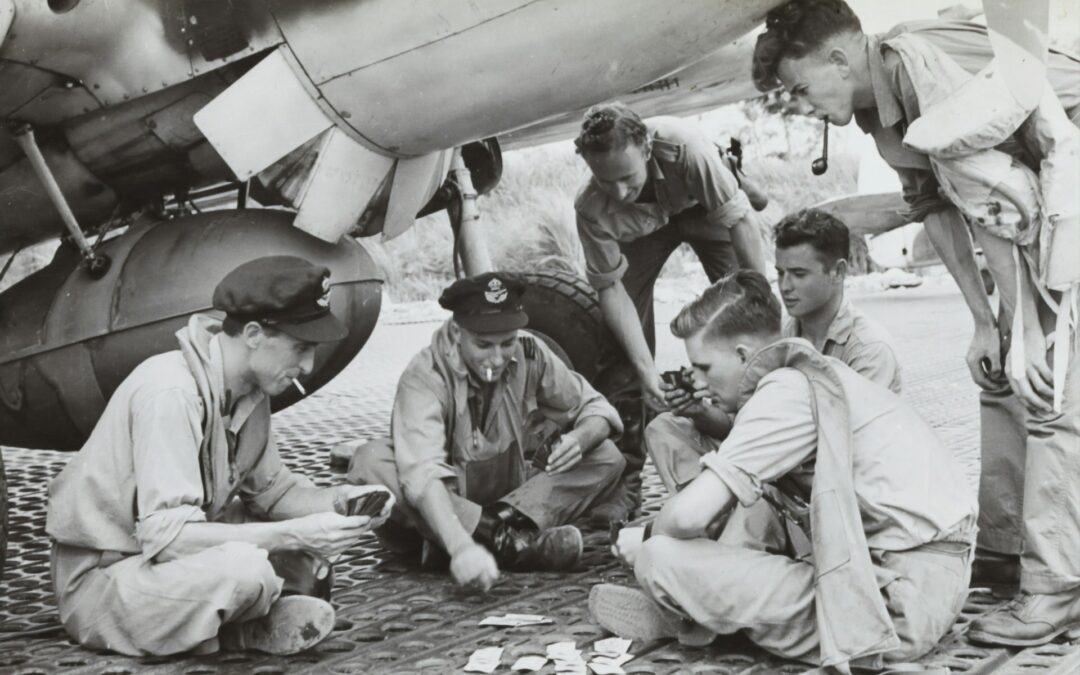
World War II is often reduced to its famous leaders — Churchill, Hitler, Stalin — the titans whose decisions shaped history. But beneath their shadows lies a grittier, more visceral narrative: the stories of the soldiers who embodied raw courage, madness, and unyielding spirit. The real warriors in mud-slicked trenches, the scouts braving enemy lines, and even the unusual combatants defying the limits of war. These tales, seldom told in mainstream history, reveal the extraordinary extremes of human will during the most devastating conflict the world has known.
Leo Major: The One-Man Army Who Captured a City
Leo Major’s legend begins in the crucible of the Second World War’s most pivotal and brutal campaigns, where his name became synonymous with audacity, resilience, and a near-mythical capacity for solo combat operations. As a scout with the Canadian infantry, Major’s primary role was the classic soldier’s reconnaissance mission: stealthily infiltrate enemy lines, gather critical intelligence, and return unscathed to inform his unit. Yet, what distinguished Major was his radical reinterpretation of that mission—he didn’t just observe from the shadows; he engaged with unflinching ferocity, turning reconnaissance into an offensive weapon.
The Normandy landings in June 1944 were the largest amphibious assault in history, a monumental effort involving over 156,000 Allied troops storming fortified beaches. The success of D-Day was the beginning, not the end, of a bloody and chaotic push through Nazi-held France. In this maelstrom, Major was tasked with scouting ahead of the Canadian advance, mapping enemy positions and safe passageways through the dense countryside.
Most scouts would have adhered strictly to their orders: find, observe, report, and retreat. Major, however, embraced a different code—one that combined stealth with aggressive initiative. On one remarkable occasion, while on patrol, he spotted a German halftrack armored personnel carrier loaded with vital communication equipment, a prize that could shift tactical advantages if captured. Rather than calling for backup, he attacked alone, neutralizing the driver and commander, and seizing the vehicle. This act was an early glimpse of Major’s extraordinary style: decisive, bold, and willing to take risks most would avoid.
But the pinnacle of his legend came in the liberation of Zwolle, a Dutch city under German occupation. Conventional military wisdom dictated a large-scale assault supported by artillery and armored units. The city, with its dense urban layout and entrenched German forces, was expected to be heavily shelled, risking civilian lives and extensive destruction.
Major volunteered for a mission that defied reason: to infiltrate and liberate the entire city single-handedly. Under cover of night, armed with a rifle, grenades, and an unshakable resolve, he entered Zwolle alone. Using a combination of guerrilla tactics and psychological warfare, he faked the presence of a massive Allied force. He created loud noises, explosions, and gunfire, strategically targeting key points to sow confusion and fear. His ruse worked flawlessly—German soldiers, believing they were under full-scale attack, surrendered en masse or fled.
Throughout the night, Major rounded up over 600 prisoners, leading them back to Canadian lines. His actions prevented the destruction of the city and spared countless civilian lives from the devastation of urban combat. This feat was more than tactical brilliance; it was an act of mercy amidst war’s brutal calculus.
Major’s resilience extended beyond his battlefield exploits. Early in the Normandy campaign, he lost an eye to white phosphorus gas, a horrific injury that would have ended many soldiers’ front-line service. Yet, with characteristic toughness and humor—“I look like a pirate,” he joked—he refused evacuation and continued fighting. When ordered to return home, he defied the command, demonstrating an unyielding commitment to his comrades and mission.
His disregard for military protocol was further highlighted when he refused to accept a prestigious medal from General Montgomery, citing personal disdain for the general’s leadership. This incident underlines Major’s fierce independence and a warrior ethos that prioritized action over recognition.
Leo Major’s story is a vivid reminder that war is not merely fought by armies or generals but by individuals whose courage and madness alter the tides of conflict. His blend of calculated risk, fearless combat, and strategic ingenuity transformed the archetype of the scout from passive observer to relentless combatant — a man whose solitary actions echoed across battlefields and history alike.
Michael Wittmann: The Black Baron of the Tiger Tank
Michael Wittmann’s rise to infamy is inseparable from the ferocious mechanization of World War II’s battlefields and the deadly shadow cast by the German Tiger I tank. Wittmann, a soldier who began his war service as a scout during the early Blitzkrieg campaigns, evolved into one of the deadliest tank commanders in history—a figure whose name instilled dread in Allied troops from the harsh steppes of the Soviet Union to the hedgerows of Normandy.
Wittmann’s initial role as a scout placed him at the vanguard of the German war machine, where speed, aggression, and the relentless pursuit of enemy positions were paramount. Unlike Allied scouts who emphasized stealth and intelligence-gathering, the German doctrine focused on rapid, destructive thrusts deep into enemy territory. Wittmann’s courage and sharp instincts made him well-suited to this brutal approach, but it was his promotion to Tiger tank commander that truly cemented his lethal legacy.
The Tiger I tank was the apex of German armored technology. Weighing nearly 57 tons and equipped with armor up to 120 mm thick, it was virtually impervious to most Allied anti-tank weapons when engaged from the front. Its 88 mm KwK 36 gun was a weapon of unparalleled precision and power, capable of annihilating enemy tanks at ranges exceeding 1,500 meters. But the Tiger was also a cumbersome beast—prone to mechanical failures, difficult to maneuver, and demanding expert crews to operate effectively.
Wittmann’s crew was a tight-knit, expertly trained team, each member mastering their critical roles under intense battlefield pressure. Bobby Wool, the gunner, was the keystone of their firepower, possessing an uncanny ability to identify vulnerable spots on enemy vehicles and calculate firing solutions with lethal accuracy. Eugene Schmidt, the loader, endured physical strain loading 20-kilogram shells swiftly and safely, ensuring the Tiger’s main gun remained operational during frenetic engagements. The driver, Sepp Stoppel, wrestled the unwieldy tank through mud, narrow roads, and the rubble-strewn landscapes of Europe, while radio operator Hinrich Röh balanced communication duties with defending the tank against infantry with a mounted machine gun. Wittmann, perched atop this mechanical juggernaut, commanded the crew with strategic acuity and unflinching composure.
His battlefield mastery was most famously demonstrated during the Battle of Villers-Bocage in June 1944. As British armored units advanced through the French countryside, Wittmann led a surprise attack in a single Tiger tank through the town’s narrow streets. In a whirlwind of destruction, he decimated a column of British tanks and personnel carriers, destroying multiple armored vehicles in quick succession. His sudden appearance sowed panic and confusion, stalling the Allied advance and exemplifying the psychological as well as physical power of armored warfare.
Over a single year on the Eastern Front, Wittmann and his crew were credited with the destruction of 138 tanks and 132 anti-tank guns—numbers that are staggering in any context. Yet, his prowess was not merely about firepower; it was his ability to anticipate enemy movements, exploit terrain, and coordinate his crew that transformed the Tiger from a formidable machine into a nearly unstoppable force.
However, Wittmann’s story is shadowed by the darker realities of the regime he served. As a Waffen-SS officer, he was part of an organization deeply implicated in war crimes and atrocities. His battlefield successes, while undeniably impressive in tactical terms, supported a genocidal and oppressive war effort. This complicates his legacy, forcing a reckoning between admiration for martial skill and condemnation of the cause it furthered.
Wittmann’s death in August 1944—killed by Canadian forces near the town of Cintheaux—brought an abrupt end to the Black Baron’s reign. His demise coincided with the gradual collapse of German forces in Western Europe, a turning point signaling the end of Nazi dominance.
Despite the controversy surrounding his service, Michael Wittmann remains a symbol of mechanized warfare’s terrifying potency and the deadly dance of man and machine. His legacy endures in military history as both a master tactician and a stark reminder of the ruthless efficiency wielded by totalitarian regimes.
Witold Pilecki: The Man Who Volunteered to Enter Auschwitz
Witold Pilecki’s story is a profound testament to the extremes of courage and sacrifice during one of history’s darkest chapters. Unlike most who sought to escape the horrors of Nazi concentration camps, Pilecki deliberately chose to enter Auschwitz—the epicenter of systematic extermination—on a mission few would dare to imagine.
In 1940, after Poland was brutally invaded and partitioned by Nazi Germany and the Soviet Union, Pilecki, a former cavalry officer and member of the Polish underground resistance, volunteered for a mission of staggering peril. His goal was to infiltrate Auschwitz, gather intelligence on the atrocities occurring within its walls, and organize resistance from inside the camp. This was not merely espionage; it was a mission of conscience to expose the horrific reality that the outside world had yet to fully comprehend.
After deliberately allowing himself to be captured during a Warsaw roundup, Pilecki was transported to Auschwitz, where he faced unimaginable conditions. The camp was a hellscape of starvation, forced labor, disease, and mass murder. Prisoners lived under constant threat of execution, subjected to brutal punishments and torturous experiments. Yet, amid this nightmare, Pilecki established a clandestine underground organization called Związek Organizacji Wojskowej (ZOW), or the Union of Military Organizations.
The ZOW was a structured resistance network, composed of prisoners from various backgrounds, including Poles, Jews, and Soviet POWs. Pilecki’s leadership fostered communication, coordinated sabotage efforts, and provided a lifeline for morale. Prisoners engaged in deliberate acts of industrial sabotage, such as weakening factory machinery and producing faulty munitions intended for the German war effort. The underground also arranged smuggling operations to supply food, medicine, and weapons to inmates, helping to sustain resistance fighters and the most vulnerable.
Pilecki’s most critical contribution was his detailed intelligence gathering. Despite the extreme risk, he managed to send out reports that meticulously documented the extermination processes, including the operation of gas chambers, the scale of mass executions, and the identities of camp personnel involved in atrocities. These reports reached the Polish government-in-exile and, through them, the Allied powers—becoming some of the earliest and most credible accounts of the Holocaust.
Despite the invaluable information he provided, Pilecki’s pleas for an armed uprising and external intervention were largely ignored. The Allies, preoccupied with the broader war effort, did not prioritize direct action against Auschwitz. Internally, the camp’s extreme security measures and ruthless suppression made organized rebellion nearly impossible. As Nazi oppression intensified, many resistance members were captured or executed, and Pilecki himself was eventually transferred to another camp.
In 1943, after nearly three years inside Auschwitz, Pilecki escaped in a daring breakout with two other prisoners. He made an arduous journey back to Polish-held territory and resumed his resistance activities. Even after the war ended, his fight continued—this time against the Soviet-backed communist regime that had seized control of Poland. Tragically, in 1948, Pilecki was arrested, tortured, and executed on false charges of espionage, his heroic deeds suppressed by the new government for decades.
It was only after the fall of communism that Pilecki’s story emerged from the shadows, recognized as one of the greatest acts of selfless bravery and defiance in history. His willingness to enter the abyss voluntarily—to witness and resist evil from within—stands as a chilling yet inspiring example of moral courage. Pilecki’s legacy challenges us to confront the darkest facets of humanity with relentless hope and action, even when the odds seem insurmountable.
Jack Churchill: The Madman With a Sword and Bagpipes
Jack Churchill’s story is a striking anomaly amid the mechanized, artillery-laden battlefields of World War II. Known affectionately—and sometimes incredulously—as “Mad Jack,” Churchill embodied a kind of old-world chivalry and eccentric bravado that seemed wildly out of place in an age dominated by tanks, machine guns, and airplanes. Yet, it was precisely this eccentricity, coupled with extraordinary courage, that etched his name into the annals of military legend.
Born in 1906, Churchill was a man of contradictions. He was a modern soldier steeped in tradition, a fierce warrior with a penchant for archaic weaponry and theatrical flair. His personal arsenal included a Scottish claymore sword—a two-handed broadsword dating back to the 16th century—and a longbow, the very same kind used by English archers at the Battle of Agincourt centuries earlier. To the astonishment of both allies and enemies, Churchill carried these weapons into combat alongside more conventional arms.
Churchill’s battlefield theatrics began early in the war. During the 1940 campaign in France, rather than retreating with his unit during the chaotic evacuation at Dunkirk, he famously led a charge while playing the bagpipes, rallying soldiers with music amid the looming threat of capture or death. His defiance was not mere bravado but a morale-boosting act that inspired those around him. In another astonishing feat, Churchill is credited with the only confirmed archery kill of World War II, shooting and killing a German soldier with his longbow—a weapon considered obsolete for centuries.
Twice captured by the enemy, Churchill’s resilience shone through as he managed to escape from both German and Italian prisoner-of-war camps, returning to active duty to continue the fight. His relentless spirit and refusal to submit underscored a deeply ingrained warrior ethos that valued honor, courage, and persistence above all else.
Despite his reputation for wild antics, Churchill was also an effective leader. His charismatic presence and unorthodox methods galvanized troops during some of the war’s darkest moments, including the Italian campaign and later operations in Northwest Europe. His refusal to conform extended to his disdain for modern warfare’s reliance on technology, as he viewed battle as a contest of personal valor and esprit de corps.
Mad Jack’s personality and exploits made him a cult figure among soldiers and military historians alike. His exploits blurred the lines between the romanticized ideals of medieval knighthood and the grim realities of 20th-century warfare. Churchill himself embraced this duality, once remarking that he enjoyed the war—a confession that reflects a complex relationship with combat as both a brutal necessity and a defining purpose.
In the end, Jack Churchill’s story is not just about the weapons he wielded or the battles he fought, but about the human spirit’s capacity to defy convention, embrace individuality, and inspire through sheer audacity. His sword and bagpipes remain symbols of a soldier who danced to his own fierce, unyielding rhythm amidst the mechanized chaos of a world at war.
Wojtek the Soldier Bear: Poland’s Furry Mascot and Artilleryman
Among the many extraordinary stories of World War II, Wojtek the bear stands out not only for its uniqueness but also for the deep bond between man and animal forged amidst the chaos of war. Wojtek was no ordinary mascot; he became an emblem of resilience, camaraderie, and unexpected humanity in one of history’s most brutal conflicts.
Wojtek’s tale begins far from the battlefields of Europe—in the rugged mountains of the Middle East, near the border of Syria or Iran, where Polish soldiers, displaced and fragmented after the invasions of their homeland, were regrouping. The Polish II Corps, composed of soldiers who had escaped Soviet captivity and Nazi occupation, found themselves in exile, fighting alongside the Allies but longing for home.
It was during this period that the soldiers encountered a young Syrian brown bear cub, abandoned and vulnerable. Demonstrating compassion amidst hardship, the men took the cub in, naming him Wojtek. From the start, Wojtek was treated not as a mere animal but as a comrade-in-arms. They fed him condensed milk from makeshift bottles, shared rations, and surprisingly indulged him with beer and even cigarettes—a testament to the desperate creativity soldiers employed to maintain morale.
As Wojtek grew, so did his role within the unit. More than just a mascot, he became a symbol of unity and hope. His playful nature—wrestling with soldiers, stealing their hats, and engaging in mock battles—provided a vital psychological balm for troops weary from prolonged combat and exile. Wojtek’s presence lifted spirits and reminded men of the simple joys of companionship amidst destruction.
Wojtek’s true military contribution, however, was far more tangible. During the grueling Battle of Monte Cassino in Italy, one of the bloodiest and most strategically vital battles of the Italian Campaign, Wojtek took on a role rarely, if ever, assigned to a bear: artilleryman. Soldiers recounted how Wojtek would help carry heavy 25-pound artillery shells up steep, rocky terrain to the front lines. His strength, stamina, and steady presence made him invaluable in the exhausting logistics of wartime artillery supply.
This remarkable service led to an extraordinary form of recognition. To circumvent British military regulations that forbade animals on transport ships, Wojtek was officially enlisted as a private in the Polish army, complete with a paybook and serial number. This bureaucratic sleight of hand allowed Wojtek to travel with the unit through various campaigns and ensured his place as a fully recognized soldier.
Beyond the battlefield, Wojtek became a legend. His wrestling matches with soldiers became the highlight of many evenings, a blend of entertainment and morale-building. New recruits would boast about their ability to “pin the bear,” only to learn the hard way about his strength and playful ferocity.
After the war, with Poland falling under Soviet influence and the soldiers unable to return home, many settled in Britain. Wojtek accompanied them, becoming a beloved figure at Winfield Airfield Camp in Scotland. His presence attracted locals and visitors, fascinated by the bear who had fought alongside men in one of history’s great conflicts. When Wojtek’s health declined, he was retired to the Edinburgh Zoo, where he lived out his final years, honored by the very people he had helped inspire.
Wojtek’s legacy endures as a symbol of the unexpected humanity found even in the darkest times. His story challenges the conventional narratives of war, reminding us that courage and companionship come in many forms—even those with fur and paws. The soldier bear became a bridge between worlds: animal and man, war and peace, despair and hope. His name remains etched in history, a unique testament to resilience, friendship, and the strange, vital warmth that sustains soldiers through war’s coldest nights.
Otto Skorzeny: The Nazi Commando Who Defied Convention
Otto Skorzeny’s wartime exploits read like a script from a thriller—bold, audacious, and shrouded in the cloak-and-dagger intrigue of covert operations. A figure who blurred the lines between soldier, spy, and saboteur, Skorzeny became one of the most infamous special forces commanders of World War II, renowned for executing missions so daring they became the stuff of legend.
Born in Austria-Hungary in 1908, Skorzeny’s military career accelerated rapidly once the war began. His reputation was forged in elite Nazi units specializing in sabotage, infiltration, and unconventional warfare—fields that required not only courage but cunning, improvisation, and psychological manipulation. What set Skorzeny apart was his uncanny ability to operate behind enemy lines, often with minimal support, relying on surprise and deception to achieve strategic goals.
His most famous mission—the rescue of Italian dictator Benito Mussolini in 1943—is widely regarded as one of the war’s most extraordinary special operations. Following Mussolini’s ousting and imprisonment by his own government, Adolf Hitler ordered Skorzeny to orchestrate a daring extraction. Executed with near-perfect precision, Skorzeny and a small team glided silently by engineless gliders onto a steep mountain plateau near the Gran Sasso Hotel, where Mussolini was held captive. The commandos swiftly overpowered the Italian guards without firing a shot, liberated Mussolini, and whisked him away in a light aircraft from the precarious mountaintop—an operation that amazed both Axis and Allied observers alike.
This mission catapulted Skorzeny to fame within the Nazi hierarchy. Known as “Scarface” due to a distinctive facial scar, he was celebrated as the Reich’s premier commando and deployed on a series of high-profile operations. His tactics combined classic special forces doctrine with psychological warfare; he understood that sowing confusion and fear could be as effective as brute force.
Among his more controversial exploits was Operation Greif during the Battle of the Bulge in late 1944. Skorzeny led a force of soldiers disguised in American uniforms, infiltrating Allied lines to spread false orders, disrupt communications, and foment distrust within the ranks. The operation created chaos and paranoia, leading American troops to suspect even their comrades, and illustrated Skorzeny’s mastery of psychological manipulation.
Skorzeny’s notoriety was further amplified by rumors of clandestine assassination plots, such as the supposed “Operation Long Jump,” an alleged Nazi plan to assassinate the Allied leaders Stalin, Churchill, and Roosevelt during the Tehran Conference. While Skorzeny himself denied the existence of such a mission, it nonetheless contributed to his mythic status as a shadowy operator willing to attempt the impossible.
Despite the chilling efficiency of his missions, Skorzeny was a polarizing figure. His post-war life was as controversial as his wartime exploits. After the collapse of Nazi Germany, he was captured and tried but managed to avoid conviction, largely due to testimonies about the Allies’ own use of similar tactics and the absence of direct evidence tying him to war crimes. He eventually escaped custody, fleeing to Francoist Spain, where he lived comfortably and engaged in arms trading and mercenary activities.
In an extraordinary twist, during the Cold War, Skorzeny reportedly worked with Western intelligence agencies, including the CIA, training forces in the Middle East. He also allegedly collaborated with Israel’s Mossad in covert operations, demonstrating the complex, often contradictory post-war realignments where former enemies became uneasy allies in the geopolitical chess game.
Skorzeny’s life embodies the dark allure and moral ambiguity of special operations—where audacity meets ethical compromise, and heroism is inseparable from villainy. His ability to execute high-risk missions with surgical precision earned him a reputation as one of the most formidable and enigmatic commandos of the 20th century. Yet, his legacy is forever entwined with the brutal regime he served and the murky shadows of clandestine warfare.
Conclusion
These extraordinary stories reveal the unpredictable human dimension of World War II—a conflict often defined by grand strategies and towering leaders, yet shaped in equal measure by the wild, daring, and sometimes surreal acts of individual soldiers. From Leo Major’s lone liberation of a city to Wojtek the bear’s unexpected heroism, and from Jack Churchill’s swords and bagpipes to Otto Skorzeny’s shadowy commando raids, these narratives remind us that war is as much about personality, grit, and improvisation as it is about weapons and tactics. In exploring these wild soldiers, we gain a richer, more nuanced understanding of the war’s complexity and the remarkable extremes to which humans will go when tested by the crucible of conflict.