
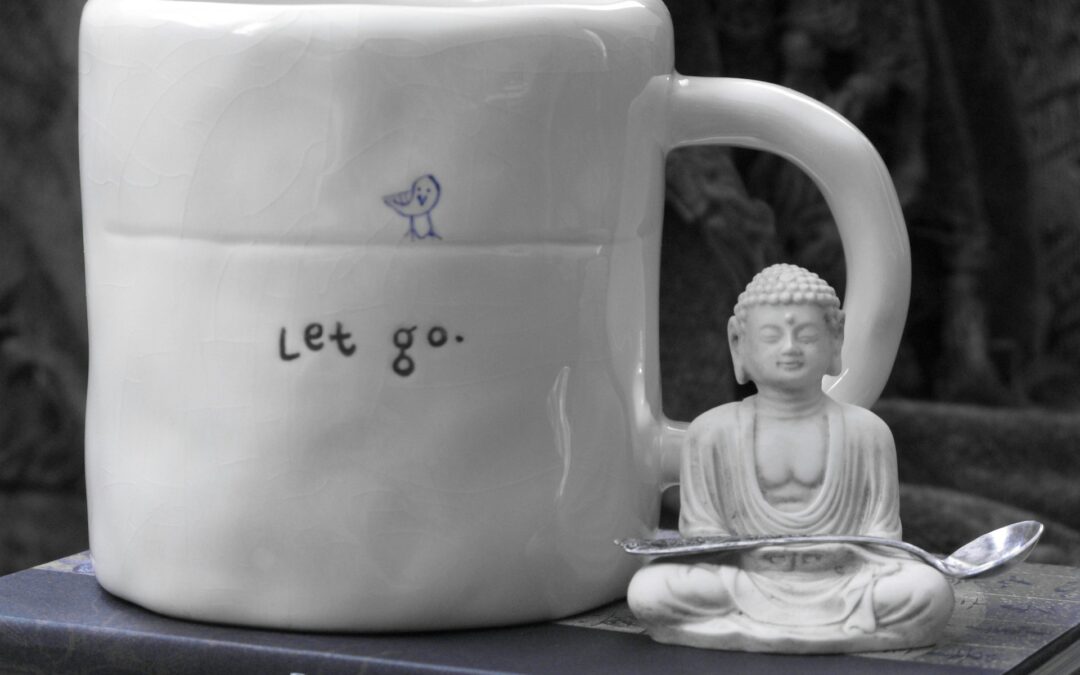
In the fast-paced world we live in, the pursuit of happiness and fulfillment often feels like an endless chase. We strive to achieve, accumulate, and attain, believing that each goal we reach will bring us closer to the contentment we seek. Yet, as many have discovered, this approach only leads to more desire, and the cycle continues.
Zen Buddhism offers a refreshing and paradoxical solution: to stop seeking. In its core teachings, Zen reveals that the more we pursue, the further we move from true fulfillment. It teaches that enlightenment is not something to be attained but something to be realized by letting go.
In this article, we will explore the radical approach of Zen, the profound shift known as satori, and how letting go of desire and attachment can free us from the endless cycle of dissatisfaction.
The Endless Cycle of Desire
Human existence is often a pursuit of fulfillment—a constant cycle of desire, action, and temporary satisfaction. From the moment we are born, we are thrust into a world where our basic needs evolve into complex desires. The very nature of being human seems to revolve around a series of goals that are perpetually just out of reach, creating a never-ending chase for something better, something more satisfying.
The cycle begins innocently enough. We seek food, shelter, comfort, and security—basic desires that are necessary for survival. These needs are met, and for a moment, we feel content. But the moment one need is fulfilled, another emerges. This perpetual cycle continues, spiraling into the territory of more complex desires—desire for status, success, material possessions, or approval. With each desire met, there is a brief sense of relief, followed by the emergence of new wants. The satisfaction we gain from attaining a goal is never lasting; it is fleeting. Think about the pursuit of wealth: once we achieve a certain financial goal, there’s always another milestone to reach, another target to hit. This leads to a paradox: the more we fulfill our desires, the more intense and unrelenting our desires become.
This dissatisfaction, this constant longing, is often compared to drinking salt water to quench thirst. The more we drink, the more thirsty we become. We trick ourselves into thinking that each goal will bring ultimate contentment, yet it is never enough. This endless cycle of desire and craving forms the heart of what the Buddha referred to as dukkha, which is commonly translated as suffering. It is not just physical pain but also the suffering inherent in the impermanent nature of life and the insatiable nature of desire.
In the realm of Zen, this cycle of endless craving is a central concept. The teachings of Zen ask us to question why we are constantly chasing something, why we keep seeking and desiring when the satisfaction we seek seems impossible to find. The Zen response to this cycle is radical: stop seeking. Rather than continuing the fruitless chase, Zen suggests that liberation comes not from the accumulation of more, but from the letting go of desires. This is a profound shift from conventional thinking, where fulfillment is equated with possession, success, or accumulation.
By letting go of desires, we step off the endless hamster wheel of longing. The Zen way teaches that true satisfaction is not found in attaining what we think we want but in the cessation of seeking itself. This does not mean renouncing all desires, but rather releasing the attachment to them—the belief that they are essential for happiness. When we stop chasing, we create space for peace to naturally arise.
Zen’s Radical Approach
Zen Buddhism offers a counterpoint to the more conventional path of gradual spiritual development. While many Buddhist traditions, especially the Theravada school, emphasize a gradual path to enlightenment—one that requires diligent practice, ethical living, and mindfulness—Zen presents a radical alternative. Zen teaches that enlightenment is not something we acquire or gradually build towards, but something that already exists within us. The key, according to Zen, is not to seek enlightenment but to recognize that it is already there, hidden beneath the layers of mental constructs and distractions.
This approach is radically different from the linear and progressive path advocated in other traditions. Imagine a person standing in front of a thick fog that clouds their vision. For those following a gradual path to enlightenment, they slowly work to dissolve the fog, bit by bit, until clarity is achieved over time. In Zen, the fog can be blown away in an instant—like a gust of wind that clears the sky in one powerful sweep. This sudden insight or awakening is called satori—a profound, immediate realization of the true nature of existence. It’s an awakening to the fact that what we’ve been searching for is not out there in the future or hidden behind a mountain of goals. It’s already within us, if only we stop grasping, stop searching, and allow the mind to clear.
The Zen path to awakening does not emphasize a gradual buildup of merit or insight. Instead, it encourages a radical shift in perception that occurs suddenly and without warning. In many ways, Zen embraces the concept of spontaneity, which is deeply influenced by Taoist philosophy. Taoism speaks of wu wei, or effortless action, which is the idea that we should not force life to unfold but allow it to happen naturally. Zen integrates this principle, teaching that true enlightenment arises not through striving but through surrender—letting go of the desire to control and simply experiencing the world as it is.
Zen’s radical approach is not just about the “how” of spiritual practice, but also about the “what.” It challenges the very notion of what it means to attain enlightenment. In many spiritual traditions, enlightenment is seen as a distant goal that requires effort, discipline, and years of practice. Zen, however, teaches that enlightenment is not a distant goal to be reached but a present reality to be realized. This is why Zen encourages living fully in the present moment, as this is where the realization of enlightenment can occur—suddenly, spontaneously, and without any effort to make it happen.
The Taoist Influence on Zen
Zen Buddhism owes much of its philosophy to Taoism, a Chinese tradition that emphasizes naturalness, spontaneity, and harmony with the Tao, or the Way. The concept of wu wei—non-action or effortless action—is central to both Zen and Taoism. Zen is deeply influenced by this idea, urging practitioners not to strive or force things but to allow them to unfold naturally. When we stop trying to control the flow of life and allow ourselves to be in harmony with it, we experience the world without the distortions of the ego and our incessant mental activity. This alignment with the Tao, which is essentially the natural order of things, helps practitioners find peace and clarity.
In Taoism, the ideal way of living is not through strenuous effort or constant striving but through being attuned to the natural rhythm of the world. Zen adopts this principle, emphasizing that enlightenment is not something we need to chase or strive for—it is something that happens naturally when we stop interfering with it. This approach frees Zen from the confines of linear progression and allows for the possibility of a sudden, transformative awakening.
Satori: The Sudden Shift
Satori, the sudden realization of the true nature of reality, is at the heart of Zen’s radical approach to enlightenment. Unlike the gradual approach favored by other Buddhist traditions, where enlightenment is seen as a long-term goal that develops through years of practice, satori is immediate and transformative. It’s an awakening that happens in an instant, shattering the illusion of a separate self and revealing the interconnectedness of all things.
To understand satori, it’s helpful to think of it as the sudden clearing of a fog. Imagine standing in a dense fog, unable to see anything clearly. As you move forward, the fog slowly dissipates, and eventually, you see the world around you as it truly is. In contrast, satori is like a gust of wind that blows the fog away in a single moment, instantly revealing the sky above. It’s not a gradual clearing but a sudden, profound shift in perception. In that moment, you realize that the fog—representing all of your mental constructs, attachments, and illusions—was never truly there in the first place. The world, as it always was, is revealed in its true form.
The experience of satori is not intellectual or conceptual. It is direct and immediate, bypassing the mind’s filters and mental constructs. In this moment, the sense of a separate, fixed self collapses. The idea that you are an individual, separate from the rest of existence, dissolves. This is often described as the collapse of the ego—the “self” that we believe is distinct and separate from the world around us. What is left is the pure experience of being—unified with everything, without separation or judgment.
Satori is not something that can be sought through effort or desire. In fact, the very act of seeking enlightenment creates a barrier to it. Zen teaches that the ego, which constantly seeks and strives, must be transcended before true enlightenment can arise. The key to experiencing satori is not to chase after it but to let go of the attachment to it. In this letting go, the mind clears, and the truth of reality becomes evident in a single, transformative moment.
Living in the Present Moment
The essence of Zen practice revolves around a profound relationship with the present moment. In Zen, there is no past, no future—there is only now. This focus on the present may seem simplistic, but it underpins the entire Zen tradition and offers a powerful tool for spiritual awakening and personal peace. Our constant mental distractions, rooted in either reflections on the past or anxieties about the future, obscure the simplicity and clarity that can be found in the moment we are actually living. The present moment is the only time that truly exists; it is where all experience, sensation, and understanding take place.
In modern life, most of us spend a great deal of time in the past or future. We replay memories from the past—whether good or bad—over and over in our minds, or we project our fears, hopes, and desires onto an imagined future. These mental activities create an emotional and psychological distance between us and the present moment. This disconnection from the now breeds dissatisfaction, anxiety, and stress. When we allow ourselves to become obsessed with the past or preoccupied with the future, we lose the opportunity to fully experience the richness and potential of the present.
Zen Buddhism teaches us to drop all mental attachments and fully inhabit the present. This is not just about being aware of what’s happening around us; it’s about truly experiencing life in its fullness. Zen calls this “living in the moment” or “being present,” but it’s more than just an intellectual awareness—it’s a shift in how we interact with the world. The Zen practice of meditation, particularly zazen, is designed to focus the mind, quiet distractions, and bring the practitioner into full alignment with the present. Through the stillness of zazen, practitioners learn to notice thoughts and sensations without becoming attached to them, allowing the present moment to unfold in its fullness.
Zen’s emphasis on the present moment also echoes teachings in other philosophical traditions. For instance, Stoicism, with its focus on virtue and rationality, aligns with Zen in its view of the present as the only time that can be controlled. The Stoic philosopher Marcus Aurelius repeatedly reminded himself to live in the present because it is the only time we have control over. By embracing the present, we can act with purpose and intention, free from the distortions of past regrets or future anxieties. Similarly, Taoism promotes the idea of living in harmony with the present moment, encouraging individuals to align themselves with the natural flow of life, without forcing or resisting.
This moment-by-moment mindfulness opens the door to a deeper understanding of existence. Zen asks us to approach each moment as though it is unique and fleeting. This practice is known in Japan as ichigo ichie, or “one time, one meeting,” which teaches that each moment and experience is unique, never to be repeated. The tea ceremony, for example, is one of Zen’s most revered practices and serves as a powerful metaphor for living in the present. Each tea ceremony is an opportunity to be fully present, to appreciate the transience of life, and to experience a sense of stillness and clarity that can only be found when we embrace the present moment without distraction.
Living in the present is more than a mental exercise—it is a way of being. The practice of being present in each moment allows us to experience life with freshness, unburdened by the weight of past mistakes or future expectations. By embracing the now, we move toward a more profound and direct connection with reality, free from the illusions created by the ego.
The Practice of Letting Go
At the heart of Zen practice is the concept of letting go. Letting go is not about renouncing or abandoning—it’s about releasing attachment, particularly to the constructs of the mind and ego. This act of surrender is at the core of the Zen approach to enlightenment, which is radically different from striving or clinging. Zen teaches that we cannot force or chase enlightenment—it is something that naturally arises when we stop grasping, when we stop trying to control and hold on to things.
Letting go begins with the awareness that attachment is the source of much of our suffering. The ego constantly attaches to ideas, identities, desires, and outcomes, believing that these things define who we are and what we need to be happy. However, Zen teaches that all attachments—whether to material possessions, social status, or even our own identity—are illusions. The ego is like a false mirror, reflecting back a distorted image of who we think we are. This illusion is what traps us in the endless cycle of craving and dissatisfaction.
The key to liberation in Zen is not to eliminate desires but to let go of the attachment to them. Desire itself is not inherently harmful; it’s the attachment to desire, the identification with it, that leads to suffering. Zen meditation, or zazen, is a practice that helps practitioners release attachment by training the mind to observe thoughts, emotions, and sensations without becoming entangled in them. The goal is not to suppress or eliminate thoughts but to cultivate a non-reactive awareness where thoughts arise and pass away naturally, without clinging to them.
In letting go, Zen practitioners learn to detach from the constant pull of the ego. This detachment does not mean becoming indifferent or passive; it means releasing the need to control or possess. For instance, in the practice of zazen, when thoughts arise, a practitioner does not push them away or engage with them. Instead, they simply observe and let them pass, just as clouds pass through the sky. This process of letting go creates space for true insight and clarity to arise. It allows the practitioner to experience life without the veil of self-importance or personal attachment.
The act of letting go extends beyond meditation and into everyday life. Every interaction, every moment, can be an opportunity to release attachment. When we cling to outcomes—whether in relationships, work, or personal goals—we become entangled in frustration and disappointment. By letting go of the need for a specific result, we open ourselves to the flow of life, accepting things as they come without resistance.
In the Zen tradition, the concept of wu wei—effortless action—further emphasizes the importance of letting go. Rather than striving or forcing things to happen, Zen teaches us to act with clarity and ease, without excessive mental effort or attachment to the outcome. This alignment with the natural flow of life leads to a state of peace, where actions are spontaneous and harmonious, free from the weight of attachment and desire.
The process of letting go is not a one-time event but an ongoing practice. It is a continuous unraveling of the ego’s grip on the mind, a practice of surrendering to the present moment, and an openness to the unfolding of life as it is. Through letting go, Zen teaches that we can experience a deeper connection to the truth of our existence—an existence that is free from the limitations imposed by our mental constructs.
The Illusion of the Self
One of Zen’s most profound teachings is the illusion of the self. The sense of “I” or “me” that we hold so dearly is, according to Zen, not a fixed or permanent entity but a transient construct—a collection of thoughts, memories, and experiences that we identify with. This false sense of self, often referred to as the ego, is a major source of suffering because it leads us to believe that we are separate from the rest of the world, isolated in our own little bubble of identity. Zen teaches that the ego, or atman, is a fiction—something that we create and reinforce in our minds, but something that has no inherent existence.
In Zen, the ego is seen as a temporary aggregation of thoughts, feelings, and memories that we mistake for our true identity. The ego creates the illusion of a separate self by constantly comparing, judging, and labeling. It holds on to past experiences, clings to desires, and projects fears into the future. But this sense of self is not static; it is always changing and fluid. Our thoughts and emotions shift, our experiences evolve, and yet we continue to identify with the “self” as if it were a fixed, unchanging entity.
The illusion of the self is like a cloud that obscures the sky—an ever-shifting formation that prevents us from seeing reality as it is. When we believe ourselves to be separate from the world, we create a divide between “us” and everything else. This belief in separation leads to feelings of alienation, isolation, and fear. Zen teaches that true liberation comes when we realize that this sense of a separate self is an illusion. The ego may seem real, but it is not the essence of who we are.
The dissolution of the ego is often described in Zen as an awakening—a sudden realization that the self we have been so attached to does not truly exist. This realization is not intellectual; it is a direct experience. It is the moment when the illusion of the self falls away, and we see ourselves as part of the larger web of existence, interconnected with all things. In this moment, the ego’s grip on the mind is released, and we experience a profound sense of unity with the world.
This awakening to the illusion of the self is at the heart of Zen practice. It is not something that can be intellectually understood or achieved through effort. Rather, it is a direct experience that arises when we let go of the mental constructs that create the false self. This experience is often referred to as satori—a sudden insight that shatters the illusion of the ego and reveals the true nature of reality.
In Zen, the practice of letting go is inseparable from the recognition of the illusory nature of the self. By releasing attachment to the ego, we can experience life more fully and authentically. The Zen practitioner learns to transcend the limitations of the ego and awaken to the interconnectedness of all things. This realization is not a one-time event but a continuous process of shedding the layers of illusion and reconnecting with the present moment. Through this process, Zen leads us to a deeper understanding of who we truly are—not as isolated individuals, but as part of the vast, interconnected whole of existence.
The Trap of Seeking
One of the most insidious and counterproductive tendencies in human nature is the urge to always be seeking. In almost every aspect of life, we are taught that success, happiness, and fulfillment lie just beyond our grasp, and that the way to attain them is through continuous effort, striving, and seeking. However, Zen teaches that this very act of seeking is the barrier to enlightenment. The more we search, the further we move from what we are seeking.
In Zen, seeking is viewed as a product of the ego, which perpetually desires something it doesn’t have. Whether it’s the desire for happiness, enlightenment, or material success, the ego constantly pulls us toward future outcomes, believing that the key to fulfillment lies somewhere outside ourselves. Yet, the paradox of this approach is clear: the more we chase, the more elusive the object of our desire becomes. Seeking is rooted in a sense of lack—the belief that something is missing from our lives and that we must find it to feel complete. This sense of incompleteness drives us to look outside ourselves, but no matter what we attain, it never truly satisfies the craving within.
The trap of seeking is not limited to the material world—it extends to spiritual aspirations as well. Many practitioners of Buddhism, for instance, believe that enlightenment is something to be attained through effort and discipline. However, in Zen, enlightenment is not something to be sought or earned—it is already inherent in us. The act of seeking only reinforces the false belief that we are separate from enlightenment. The more we try to attain it, the more elusive it becomes. This is why Zen encourages practitioners to abandon the very concept of seeking. Enlightenment, according to Zen, is not an external object to be acquired but a state of being to be realized through the cessation of desire.
The key to freeing oneself from this trap lies in the understanding that true fulfillment does not come from the accumulation of external things but from the recognition of what is already present. When we let go of the desire to seek, we allow ourselves to experience the world as it truly is, without the distortions created by our expectations and attachments. This doesn’t mean giving up on goals or aspirations; rather, it’s about letting go of the idea that fulfillment lies in the future or in some unattainable ideal. The present moment, when fully embraced, offers all that we need to experience the fullness of life.
Zen encourages us to stop seeking, to stop chasing, and to let go of the need to grasp onto anything. The paradox is that once we stop seeking, what we were searching for—whether it’s enlightenment, peace, or joy—becomes readily available. By relinquishing our attachment to the outcome, we open ourselves to the experience of life as it is, and in that acceptance, we find a deeper sense of fulfillment and contentment.
Koans and the Practice of Letting Go
Koans are one of the most distinctive aspects of Zen practice, offering a profound and challenging means of deepening one’s understanding and breaking through the limitations of conventional thinking. A koan is a paradoxical riddle, statement, or question designed to challenge the logical mind and point the practitioner toward direct, non-conceptual insight into the nature of reality. The purpose of the koan is not to be solved in a rational or intellectual way but to exhaust the mind’s ability to conceptualize and force the practitioner into a state of direct experience, free from the interference of thought.
A famous example of a Zen koan is the question: “Does a dog have Buddha-nature?” This seemingly simple question is actually a profound inquiry into the nature of existence and the concept of Buddha-nature, which suggests that all beings, not just humans, possess the potential for enlightenment. The typical Zen response to this question is “Mu,” a word that means “no” or “nothingness.” However, the word “Mu” is not a simple answer—it’s a tool to dismantle the mind’s tendency to grasp for understanding and to confront the limitations of thought. The answer “Mu” points directly to the emptiness of all concepts, the absence of a fixed or permanent essence behind all phenomena, including the very idea of Buddha-nature.
Koans work by disrupting the mind’s habitual patterns of thinking and forcing the practitioner to confront the limitations of conceptualization. The mind’s natural tendency is to categorize, label, and define experiences, but the purpose of the koan is to break through these intellectual constructs. By confronting the paradoxes in the koans, the practitioner is compelled to let go of their reliance on logical thinking and to embrace direct experience. This practice gradually weakens the ego’s grip on the mind, allowing the practitioner to experience reality without the interference of concepts or mental projections.
While koans may seem perplexing or nonsensical at first glance, they serve as powerful tools for awakening. The process of working with a koan is not about finding the correct answer, but about moving beyond the mind’s usual ways of thinking and allowing a deeper, intuitive understanding to emerge. When a koan is “resolved,” it is not through intellectual insight, but through a direct, transformative shift in perception—often likened to a sudden moment of clarity or satori. This shift is a letting go of the need to understand, to grasp, and to control, and instead a surrender to the present moment, free from the limitations of thought.
The practice of working with koans, along with other Zen techniques, encourages the practitioner to continually let go of mental constructs and attachments. Each koan is an invitation to dissolve the ego and its mental illusions, leading to a deeper realization of one’s true nature. This process is not a quick fix or a linear path, but a continuous cycle of letting go, experiencing, and awakening. The power of the koan lies not in its intellectual challenge, but in its ability to point beyond the mind and to the direct experience of reality, free from the veils of conceptual thought.
Direct Experience: Beyond Words
Zen is not a system of beliefs or intellectual theories—it is a practice of direct experience. In Zen, understanding is not achieved through accumulating knowledge or engaging in theoretical study. Instead, it is the result of firsthand experience, free from the filter of the ego and the limitations of conceptual thought. Zen teachings point toward a truth that cannot be fully grasped by words or concepts, but only through direct engagement with life in the present moment.
In many ways, Zen challenges the very nature of intellectualization. Words, concepts, and labels are helpful tools for communication, but they are ultimately limited in their ability to convey the true nature of reality. As Zen master Dogen famously said, “To study the Buddha Way is to study the self. To study the self is to forget the self.” This statement captures the paradox at the heart of Zen practice: to understand the truth, we must let go of the very tools (words, concepts, and the ego) that we use to define and understand the world. The true experience of reality is beyond language and thought—it is something that can only be directly felt, observed, and lived.
The Zen practice of zazen (sitting meditation) is a key way to experience life directly. In zazen, the practitioner sits in stillness, allowing thoughts, feelings, and sensations to arise and pass without attachment. The goal of zazen is not to achieve a particular state of mind but to simply be present with whatever arises, without judgment or interpretation. This practice of non-attachment allows the practitioner to experience life as it is, without the filter of the ego or the conceptual mind.
In Zen, the act of experiencing is the most important aspect of practice. Words and concepts are seen as temporary constructs that can only point to the truth—they are not the truth itself. Zen teachings emphasize that direct experience transcends all labels and categories. To truly experience the world is to let go of all preconceived notions and to encounter reality with an open and untainted mind. This is not a passive experience but an active, engaged participation in life.
The ultimate realization in Zen is that the truth cannot be found through intellectual understanding alone. Concepts like “self,” “enlightenment,” or “Buddha-nature” are useful pointers, but they are not the reality itself. The reality is something that can only be grasped through direct experience, free from the distractions of thought and judgment. This experience is not a rare, extraordinary event but a constant, unfolding process. By engaging directly with the present moment and letting go of the need to define or explain, the practitioner awakens to the inherent truth of existence. This truth is not something separate from us—it is what we are, in our most direct, unfiltered experience of life.
Zen invites us to step beyond the limitations of language, thought, and ego, into a space where we can experience life as it is—whole, interconnected, and free from separation. It is in this direct experience that the deepest understanding and liberation are found.
Conclusion
Zen Buddhism presents us with a paradox that challenges the foundation of how we approach life: the more we seek, the more we move from what we desire. Through mindfulness, meditation, and letting go of attachments, Zen offers a path to awakening that does not require effort but a release of effort.
The true nature of our existence is already within us, obscured only by our mental constructs and the ego’s constant striving. By embracing the present moment and relinquishing the need to attain, we uncover the clarity and peace that have always been there. In Zen, the answer to life’s deepest questions isn’t found in seeking but in letting go, allowing us to experience the world as it truly is—without illusion or distortion.