
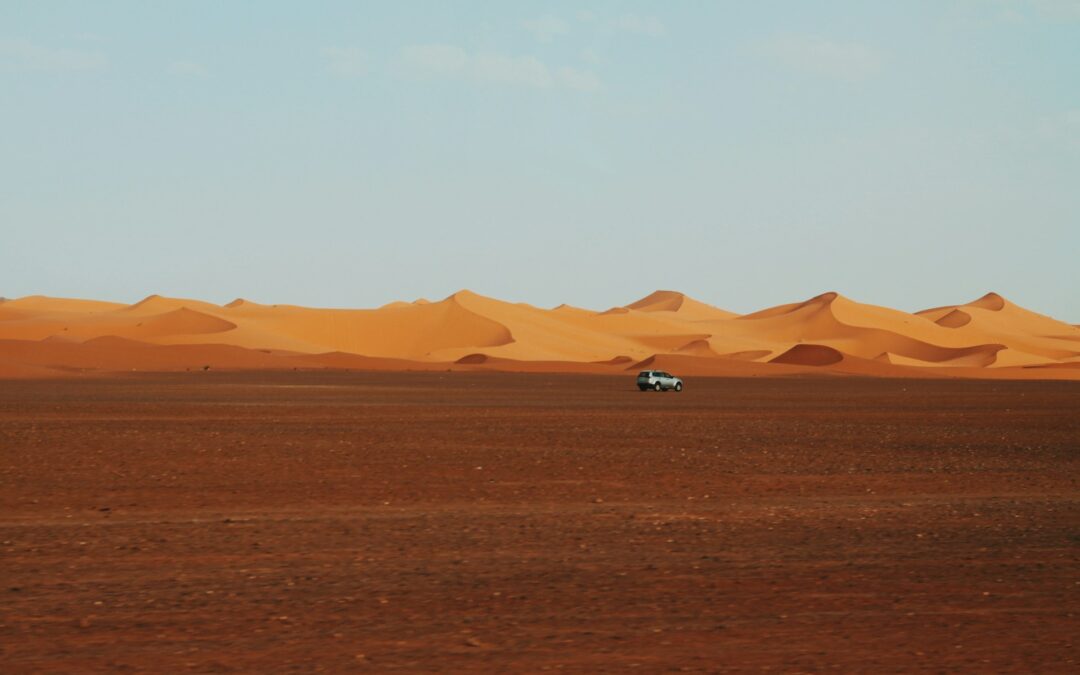
Most people have never heard of the world’s second-longest wall. You won’t find it in travel guides or history textbooks, and you can’t see it from a plane window. It stretches 2,700 kilometers through the Sahara—an immense barricade of sand, barbed wire, and landmines that splits an entire nation in two. Behind it, 130,000 soldiers stand guard over one of Africa’s richest landscapes, while the people who call it home live scattered in exile, forbidden from returning.
This is Western Sahara—a land that officially doesn’t exist. On paper, it is a non-self-governing territory under the United Nations. In reality, it is a nation occupied, silenced, and exploited. Its phosphates feed the world’s farms, its fish stock Europe’s markets, and its winds power Morocco’s cities. Yet the Sahrawi people—its rightful inhabitants—remain voiceless, trapped between the indifference of the West and the ambitions of their northern neighbor.
What unfolds here is not just a forgotten conflict—it is a mirror of modern hypocrisy. A war without headlines. A colony without recognition. A crime hidden in plain sight.
The Wall of Sand and Silence
Stretching across the barren expanse of North Africa, the Moroccan “Berm” is an edifice of both engineering and oppression. To the untrained eye, it may seem like nothing more than a sand ridge fading into the horizon—but this wall, stretching 2,700 kilometers from the Atlantic coast to the Algerian border, represents one of the most militarized frontiers on Earth. Built throughout the 1980s with the technical and logistical support of France, the United States, and Israel, it is a continuous scar—a literal line in the sand dividing occupation from exile, silence from resistance.
The Berm’s sheer scale is staggering. Seventeen times longer than the Berlin Wall, it cuts the Western Sahara into two worlds: the Moroccan-occupied zone to the west and the sliver of “Free Zone” territory under Sahrawi control to the east. Guarded by an estimated 130,000 Moroccan soldiers and supported by over 240 fortified outposts, it is an ever-vigilant barrier. Armored vehicles patrol its perimeter, radars sweep the dunes, and Israeli-made drones circle above like metallic vultures.
Beneath and around the wall lies an even more chilling weapon: nine million landmines—making this the densest minefield on the planet. Each mine is a silent predator, invisible until it maims or kills. They have claimed thousands of lives—children playing near the sand, herders guiding their camels, refugees trying to return home. The mines are not random—they are deliberate. They are meant to ensure that the refugees stay exiled, that the Polisario fighters cannot move freely, that the Sahrawi dream of return remains impossible.
From orbit, satellites can trace the Berm as a faint, snaking line—a human fingerprint etched across the Earth. But on the ground, it feels like something far darker: a wall built to erase a people from geography and memory. Morocco’s state media rarely mentions it; international journalists are rarely allowed to see it. The few who have describe a haunting sight—endless dunes interrupted by watchtowers, trenches, and rusting signs that warn of death underfoot.
Yet the Berm is not merely a military defense. It is a psychological instrument. It divides families who have not seen one another for decades. It splits a culture that once moved fluidly with the rhythm of the desert winds. For those trapped west of the wall, it is a daily reminder of occupation; for those east of it, an emblem of exile.
And all of this for a land that, to the outside world, seems desolate and empty. But beneath its sands lies the real reason the Berm exists—riches so vast that they could change the destiny of nations. Western Sahara holds some of the world’s largest deposits of phosphates—an essential ingredient in fertilizers, and thus in global food production. Its coastal waters are among the richest fishing grounds on Earth. Its winds and sun, constant and intense, are perfect for renewable energy.
The Berm’s purpose, then, is not merely to hold territory—it is to hold wealth. It protects an empire of stolen resources, guarded by soldiers, financed by foreign interests, and silenced by international complicity. It stands as one of the most obscene paradoxes of modern geopolitics: a wall built in the name of security, maintained in the name of profit, and preserved by the apathy of the very institutions that claim to uphold freedom.
Behind its sand and barbed wire, the Sahrawi people live unseen, their homeland turned into a fortress for foreign powers and a graveyard for international law.
The People of the Desert
Before the barbed wire and the checkpoints, before colonial flags fluttered over their land, the Sahrawi people lived by the rhythms of the desert. For centuries, they were masters of its secrets—navigating the vast plains between the Atlantic and the Sahel, trading salt, gold, and spices between sub-Saharan Africa and the Mediterranean coast. Their life was one of movement, poetry, and endurance. The desert was not their prison; it was their map, their identity, their teacher.
The Sahrawi are ethnically Arab-Berber, bound by a shared language and a shared struggle. They speak Hassaniya, a melodic dialect of Arabic infused with Berber and African linguistic influences—distinct enough to mark them apart from Moroccans in both accent and vocabulary. Their faith is Islam, yet practiced with a quiet mysticism born of isolation. Hospitality is sacred, poetry revered, honor absolute. The desert forged in them a resilience unmatched by any army.
When European powers convened at the Berlin Conference of 1884 to divide Africa like spoils, Spain claimed this harsh but strategic stretch of land, christening it Spanish Sahara. The Canary Islands lay just 100 kilometers offshore, making it an easy colonial extension of Spanish power. At first, Spain showed little interest in the territory—it seemed barren, inhospitable, unprofitable. But when vast phosphate reserves were discovered near Bou Craa in the 20th century, everything changed.
Phosphate, the mineral backbone of fertilizers, became global gold. And with it, Western Sahara transformed from a forgotten desert into a prize. Under General Francisco Franco’s dictatorship, Spain began extracting this treasure while subjugating the local population. Resistance was inevitable. Uprisings in the 1930s and 1950s were met with brutal crackdowns. Protesters were shot, villages razed, and dissidents imprisoned or executed.
Yet through it all, the Sahrawi maintained their dignity. They preserved their nomadic traditions even under colonial rule—herding camels between oases, maintaining clan structures, and passing oral histories that chronicled both hardship and pride. Their poetry, often sung by women, celebrated the desert’s austerity and the endurance of their people.
By the 1960s, as winds of independence swept through Africa, the Sahrawi began to demand their own liberation. The United Nations placed Spanish Sahara on its list of “non-self-governing territories,” a diplomatic euphemism for “colonies.” In theory, this meant Spain was obliged to prepare the territory for self-rule. In practice, Spain did what colonizers often do when cornered—it stalled, extracted, and suppressed.
For the Sahrawi, the struggle was not simply about sovereignty. It was about survival—cultural, economic, spiritual. To be Sahrawi was to resist erasure. Their tents, their songs, their migration patterns—all were acts of defiance against those who sought to confine them.
Then, as the colonial age waned and new nations emerged across Africa, one promise gave them hope: a referendum to decide their own future. Spain, under mounting international pressure, agreed to grant the people of Western Sahara a choice—independence or integration. It was to be their moment of destiny.
But destiny has a cruel sense of irony.
Spain delayed the vote. Morocco and Mauritania, both newly independent, began to circle the territory like vultures over a dying beast. And in the dying days of Franco’s regime, the fate of the Sahrawi people was decided not in their deserts, but in smoke-filled rooms in Madrid, Rabat, and Washington.
What followed was not liberation—but the beginning of a second colonization, this time by a neighbor who claimed kinship while wielding conquest.
The Birth of the Polisario Front
The seeds of the Sahrawi liberation struggle were planted in blood and betrayal. After decades of Spanish rule, the Sahrawi had grown restless under colonial exploitation. Their phosphate-rich land was mined by foreign companies while their people were denied education, opportunity, and dignity. Yet their resistance, though scattered, endured through whispers, desert gatherings, and smuggled pamphlets calling for independence.
In 1970, a young schoolteacher named Muhammad Bassiri emerged as the voice of this awakening. Educated in Syria and Morocco, Bassiri was deeply influenced by the anti-colonial movements sweeping the Arab world. He believed in nonviolence—a faith in reason over rebellion. That year, he founded the Harakat Tahrir (the Liberation Movement), advocating peaceful protest to pressure Spain into granting independence.
His message resonated. On June 17, 1970, thousands of Sahrawis gathered in El Aaiún, the capital of Spanish Sahara, waving banners and chanting for freedom. It was a moment of hope—the first time the Sahrawi people had come together publicly to demand their rights. But by nightfall, the hope had turned into horror. Spanish troops opened fire on the crowd in what became known as the Zemla Uprising. Protesters were gunned down. Women and children trampled in the chaos. Bassiri was arrested, interrogated, and disappeared. His body was never found.
The massacre shattered any illusions of peaceful negotiation. For many young Sahrawis, Bassiri’s death marked the end of dialogue and the beginning of armed struggle. Among those who survived were students, shepherds, and exiles who would go on to form a new movement—the Frente Popular para la Liberación de Saguia el-Hamra y Río de Oro, or simply, the Polisario Front.
Formed in 1973, the Polisario united disparate resistance groups under one banner. Its founding members were idealists and revolutionaries, inspired by Algeria’s war of liberation, Che Guevara’s guerrilla tactics, and the anti-imperialist fervor of the 1970s. Their goal was simple yet radical: total independence from colonial powers, first Spain and later any successor occupiers.
The Polisario’s first military operation came in May 1973, when a handful of fighters attacked a Spanish outpost at El-Khanga. The raid was symbolic more than strategic—it announced to the world that the Sahrawi were ready to fight. Within months, the movement had spread across the territory, mobilizing nomadic tribes, students, and exiles.
Spain, weakened by Franco’s declining health, struggled to maintain control. Meanwhile, the United Nations, under pressure to complete the process of decolonization, placed Spanish Sahara on its official list of colonies awaiting independence. It passed repeated resolutions affirming the Sahrawi people’s right to self-determination. By 1974, Spain finally conceded to hold a referendum.
But geopolitics has a way of consuming justice. Just as the Sahrawis prepared for their long-promised vote, two neighboring nations—Morocco and Mauritania—laid claim to their homeland. What had begun as a struggle against Europe was about to become a struggle against Africa itself.
The Polisario Front, though poorly equipped, was not naïve. Its founders understood the desert’s brutal calculus: that survival depended not on numbers, but on mobility, unity, and purpose. Their war would be fought not in cities, but in the boundless void of dunes and stars.
The Great Betrayal
By the mid-1970s, Spain was crumbling. Francisco Franco, the dictator who had ruled since the Civil War, was dying. His government was desperate to preserve its interests while avoiding another colonial embarrassment. Western Sahara was a small, distant outpost—but beneath its sands lay phosphate reserves worth billions, and in its coastal waters, fisheries that fed Europe.
At the same time, Morocco’s monarchy was under pressure. King Hassan II faced domestic unrest, economic stagnation, and two failed coup attempts by his own generals. His legitimacy was fragile. To unify the nation and distract from poverty and corruption, he turned to an old myth—the idea of “Greater Morocco.”
This myth claimed that Morocco’s rightful borders once encompassed parts of modern-day Algeria, Mali, Mauritania, and all of Western Sahara. The evidence was tenuous—historical allegiances of a few desert tribes to Moroccan sultans—but it was enough to ignite nationalist fervor. The king needed a cause, and Western Sahara provided the perfect one: close, resource-rich, and politically defenseless.
In 1975, Morocco and Mauritania appealed to the International Court of Justice (ICJ) to validate their claims over Western Sahara. The case was closely watched by the world. When the verdict came on October 16, 1975, it was decisive: the ICJ found no legal ties of sovereignty between Western Sahara and either Morocco or Mauritania. The Sahrawi people, the court affirmed, had the right to self-determination through a free and fair referendum.
Legally, that should have been the end of the story. But in politics, legality often bends before power.
Within hours of the ruling, King Hassan II addressed the Moroccan nation on television. He declared that Morocco’s historical rights had been affirmed (a blatant lie) and announced an extraordinary act of “peaceful liberation” known as the Green March.
On November 6, 1975, more than 350,000 Moroccan civilians, accompanied by 20,000 soldiers, began marching into Western Sahara, waving flags, holding Qur’ans, and singing patriotic songs. The spectacle was designed for cameras—a nonviolent invasion cloaked in religious symbolism. But behind the showmanship, Moroccan troops were already crossing the border under cover of night, seizing Spanish military positions and engaging the Polisario.
Spain, paralyzed by Franco’s impending death, capitulated. On November 14, 1975, it secretly signed the Madrid Accords with Morocco and Mauritania, dividing Western Sahara between them. In exchange, Spain secured lucrative fishing rights and a share in future phosphate profits.
The deal was illegal under international law. Western Sahara was not Spain’s to give away—it was a non-self-governing territory under UN supervision. The Sahrawi people had never been consulted, and no referendum had been held. Yet the world, preoccupied with the Cold War, said nothing.
What followed was an onslaught. Moroccan aircraft bombed fleeing Sahrawi civilians with napalm and white phosphorus, weapons banned under international conventions. Entire villages were burned. Witnesses spoke of pregnant women miscarrying from shock, of children’s limbs blown apart by cluster bombs, of families buried alive by sand after air raids.
Tens of thousands fled eastward on foot, carrying little more than blankets and water skins. It was one of the harshest exoduses of the modern era—a march through burning sand, under strafing jets, toward the uncertain refuge of Algeria. Many died along the way from heat, hunger, or airstrikes.
By the time Spain completed its withdrawal in February 1976, half the Sahrawi population had become refugees. The Polisario declared the Sahrawi Arab Democratic Republic (SADR) the very next day, determined to continue the struggle for independence.
But the betrayal was complete. Spain had abandoned its moral duty. Morocco had begun its occupation. And the United States and France—eager to maintain a loyal monarchy on the southern shore of the Mediterranean—looked the other way.
What began as a march for liberation became the foundation of a 50-year occupation. The Green March, celebrated in Moroccan textbooks as a triumph, is remembered by the Sahrawi as a day of conquest—a day when their homeland was stolen not by colonizers from across the sea, but by their own continent’s kings.
For Morocco, the invasion was an act of national rebirth. For the Sahrawi, it was the death of their future. And for the world, it was a quiet lesson in hypocrisy—a reminder that, in the deserts of geopolitics, the sands of principle shift easily beneath the weight of power.
The Struggle for Freedom
The Moroccan and Mauritanian invasions of 1975-76 triggered not only one of Africa’s least-known wars but also one of its most enduring acts of resistance. For the Sahrawi, it was never simply a war over territory—it was a fight for existence. The invasion shattered families, scattered entire tribes, and uprooted nearly half of the population. But it also transformed the Sahrawi from an unrecognized people into a nation of survivors.
As Spanish forces retreated, Moroccan aircraft and ground troops advanced deep into Western Sahara. The assaults were relentless—bombing villages, torching tents, poisoning wells, and massacring livestock to ensure no one could return. The Polisario Front, outnumbered and under-armed, shifted tactics. They turned the desert itself into their ally, launching lightning raids from the dunes, ambushing supply convoys, and disappearing into the horizon before Moroccan jets could retaliate.
By February 27, 1976, Spain had fully withdrawn, and the Polisario Front declared the birth of the Sahrawi Arab Democratic Republic (SADR)—a government in exile that still exists today, recognized by over 80 nations at its height. Its capital was not a city but a cluster of refugee camps near Tindouf, Algeria—harsh, wind-blasted settlements built from canvas, corrugated iron, and courage.
In those camps, something extraordinary happened. Despite hunger, displacement, and loss, the Sahrawi built a functioning society. They elected local councils, created schools and hospitals, and enshrined gender equality as a cornerstone of their movement. Women became ministers, educators, and soldiers. The Polisario saw them not as victims, but as leaders of a revolution that refused to die.
In interviews from the 1980s, Sahrawi women spoke of running literacy programs by lantern light, of teaching children the history Spain had erased, and of keeping hope alive through song and poetry. In a world that had forgotten them, they became custodians of memory.
Algeria’s support was crucial. Still glowing from its own anti-colonial revolution against France, Algeria provided weapons, training, and sanctuary. Libya’s Muammar Gaddafi also offered aid, viewing the Sahrawi struggle as part of the global wave of liberation movements. But as the Cold War logic tightened its grip, the Sahrawi found themselves isolated. The Soviet Union, dependent on Moroccan phosphate imports, refused to help. Meanwhile, the United States, France, and Saudi Arabia armed Morocco to the teeth.
The imbalance was staggering. Morocco deployed over 100,000 soldiers, equipped with U.S. Cobra gunships, French Mirage jets, and artillery financed by Saudi oil money. Polisario fighters—most barely out of their teens—fought on camels and pickup trucks, wielding Soviet-made rifles and boundless conviction. Yet they proved astonishingly effective.
In 1979, the Polisario forced Mauritania—Morocco’s southern ally—to withdraw and recognize the Sahrawi Republic, a major diplomatic victory. But Morocco simply expanded its control southward, now claiming nearly 80% of Western Sahara.
As the war dragged into the 1980s, Morocco’s costs mounted. The monarchy, already fragile from failed coups, funneled a quarter of its GDP into the conflict. The International Monetary Fund stepped in to bail out the Moroccan economy—but demanded harsh austerity measures: cutting subsidies, raising taxes, and privatizing industries. While Moroccan elites grew richer off war contracts, ordinary citizens grew poorer.
King Hassan II faced a dilemma. He could not win the war outright, yet he could not afford to lose it. So he turned to an ancient tactic—containment. He would build a wall.
The Wall and the Divide
The Berm—Morocco’s colossal sand wall—was conceived in the early 1980s as both a military barrier and a political strategy. It would not only keep the Polisario guerrillas at bay but also solidify Morocco’s control over the occupied zone. Over the next decade, with the help of American, French, and Israeli engineers, Morocco constructed one of the longest continuous fortifications in human history.
The wall runs 2,700 kilometers—from the Atlantic coast near Mahbes to the southeastern frontier near Tindouf. It consists of sand embankments up to three meters high, flanked by deep trenches, barbed wire, radar stations, and anti-tank ditches. Every few kilometers stands a fortress—each manned by soldiers, armed vehicles, and heavy artillery.
But the wall’s true cruelty lies beneath it. The area surrounding the Berm is seeded with millions of landmines, forming the world’s densest minefield. To cross it is to gamble with death. Children chasing goats have lost their limbs; herders have vanished without a trace; even camels—symbols of the Sahrawi’s ancient freedom—have been torn apart by explosions.
Strategically, the wall succeeded in dividing the battlefield. Morocco secured the coastal cities of El Aaiún, Smara, and Dakhla, along with the phosphate mines and fishing ports that underpin its occupation. East of the Berm, the Polisario retained a thin strip of desert known as the Free Zone, while over 170,000 refugees remained trapped in Algerian camps, unable to return.
The Berm divided Western Sahara into three realities:
- The Occupied Zone: A heavily militarized region where Moroccan settlers outnumber the native Sahrawi, where dissent is crushed, and where economic exploitation thrives under the guise of “development.”
- The Free Zone: A barren expanse of desert under Polisario control—symbolic sovereignty over land that yields no resources but infinite pride.
- The Refugee Camps: Tindouf’s tent cities, where generations have grown up stateless, their only homeland a memory handed down in stories.
The wall not only trapped people—it severed identity. Families were split across its breadth. A brother might live in Moroccan-occupied El Aaiún, while his sister remained exiled in Tindouf. Letters were censored, phone calls monitored, and visits rare to impossible. A UN program briefly allowed limited family reunions across the wall, but even that has long since been suspended.
For the Moroccan regime, the Berm was a triumph of control. For the Sahrawi, it was the final insult—a wall of sand built on stolen land to entomb their freedom.
In 1991, after sixteen years of fighting, the United Nations and the African Union brokered a ceasefire. The terms were deceptively simple: Morocco and the Polisario would halt hostilities, and within a year, the UN would organize a referendum to determine Western Sahara’s future—independence or integration. The UN even established a peacekeeping mission, MINURSO, to oversee the process.
But decades later, that vote has never been held.
As the referendum preparations began, Morocco flooded the territory with settlers, demanding they be allowed to vote—a violation of the Geneva Conventions, which forbid an occupying power from transplanting its population into occupied land. By 2000, settlers outnumbered native Sahrawis nearly three to one. Each year that passed made the referendum less likely, less fair, and less urgent in the eyes of the world.
The Berm thus became more than a wall—it became a policy, a monument to inertia. It cemented Morocco’s de facto control while allowing the international community to pretend the conflict was “frozen.”
For the Sahrawi, it was a slow erasure. Every grain of sand in that wall testified to a global truth: that justice delayed is not merely justice denied—it is justice buried alive.
A Colony in the Age of Globalization
Western Sahara today is the paradox of modern imperialism—a colony disguised as a partnership, an occupation justified by “development.” While the flags of empires no longer wave, their logic remains: whoever controls the land, controls its resources; whoever controls the narrative, controls its people.
Morocco, in defiance of international law, has transformed Western Sahara into a cornerstone of its economy. The occupied territory—one of the most resource-rich regions in Africa—provides Morocco with three of its most vital lifelines: phosphate, fish, and energy. Each of these sectors tells the same story—a plunder of immense scale, enabled by silence and sanctioned by profit.
The Bou Craa phosphate mine, located deep in the desert, is the largest single source of Morocco’s mineral wealth. Its reserves—estimated at more than 500 million tons—feed the global demand for fertilizer, the very foundation of modern agriculture. From the mine’s open pit, an endless conveyor belt stretches over 90 kilometers to the Atlantic coast, visible even from space—a mechanical artery pumping the desert’s lifeblood to the world. Each day, hundreds of tons of phosphate leave Sahrawi soil, bound for India, New Zealand, and beyond.
But the profits never return. The Bou Craa mine is operated by OCP Group, a Moroccan state-owned company in which the royal family holds a controlling stake. Revenue flows north—to Rabat, to Paris, to offshore accounts—but almost none to the Sahrawi who live among the ruins of their homeland. In 2002, the United Nations Legal Counsel ruled that exploiting Western Sahara’s natural resources without the consent of its people was illegal. European and African courts reaffirmed the same principle. Yet Morocco continues, and the world continues to buy.
The same story unfolds off the Atlantic coast. The fishing waters of Western Sahara are among the richest on the planet, teeming with sardines, tuna, and cephalopods. For decades, the European Union has signed trade deals with Morocco that include these occupied waters, despite knowing they are not Morocco’s to sell. In 2022 alone, 129,000 tons of fish products from Western Sahara entered the EU market—worth over $50 million. Spanish and French companies run trawlers under Moroccan licenses, while Sahrawi fishermen are pushed out of their own seas.
Agriculture, too, has become a mechanism of control. In the southern coastal city of Dakhla, vast greenhouses rise out of the sand—massive complexes producing tomatoes, melons, and blueberries. They are irrigated by underground aquifers, draining water from an ecosystem already on the brink of collapse. The produce is labeled “Made in Morocco” and shipped to European supermarkets like Carrefour and Lidl. Behind every box of tomatoes lies a contradiction: food grown on stolen land, using stolen water, by imported Moroccan labor, and sold to consumers who believe they are supporting “sustainable agriculture.”
Even the desert’s wind and sunlight—once symbols of freedom—have been colonized. Morocco’s renewable energy ambitions depend heavily on projects built in Western Sahara. By 2030, nearly half of Morocco’s wind power and a third of its solar energy will come from this occupied land. These projects are constructed and maintained by European giants like Siemens Energy, Engie, and Enel, all of whom sanitize their marketing materials to omit the words “Western Sahara.”
The electricity generated doesn’t power Sahrawi homes. It feeds Morocco’s northern grid and energizes the phosphate mines that exploit the land further. Even “green energy,” it seems, can carry the stain of occupation.
Morocco presents all this as “progress.” Its government boasts of new roads, ports, and housing. But these developments serve settlers and corporations, not the indigenous population. The Sahrawi, once self-sufficient herders and traders, are now relegated to the margins—denied access to jobs, forced into poverty, and made strangers in their own country.
Globalization has given colonialism a new lexicon. The soldiers have been replaced by investors, the flags by brands, the gunboats by trade agreements. And yet, the essence remains the same: resources are extracted, wealth is exported, and the people are left behind.
Repression and Resistance
While Morocco builds highways and solar farms, it also builds fear. Beneath the surface of its “modernization” lies an architecture of control so suffocating that Western Sahara has been called a “desert of silence.” Surveillance cameras, secret prisons, and plainclothes informants form the unseen scaffolding of an occupation maintained through intimidation rather than consent.
In the occupied zones—cities like El Aaiún, Smara, and Dakhla—Sahrawi life unfolds under the shadow of the Moroccan flag. Public expressions of identity are criminalized. The Sahrawi national colors—red, black, white, and green—are banned. The mere possession of a Polisario flag can lead to arrest. Schools teach Moroccan history, Moroccan heroes, Moroccan Arabic. The Hassaniya dialect, the linguistic soul of the Sahrawi people, is treated as provincial, discouraged in classrooms and offices alike.
Dissent is met with swift brutality. The Gdeim Izik protest camp in 2010 remains the defining example. It began innocently—families, tired of discrimination in jobs and housing, pitched tents outside El Aaiún. Their encampment grew daily, from dozens to thousands, until nearly 20,000 people lived beneath the open sky. They called it “The Camp of Dignity.” It was the first mass protest in the Arab world that decade—months before Tunisia’s uprising ignited the Arab Spring.
But Morocco saw the camp not as a grievance, but as a threat. The government cut off food and water. It expelled journalists. Then, on November 8, 2010, Moroccan security forces stormed the camp. They set tents ablaze, fired live ammunition, and unleashed tear gas and batons. Witnesses described scenes of chaos—children screaming, mothers clutching the bodies of their sons, the desert filling with smoke.
Dozens were killed; hundreds were injured. The survivors were rounded up, tortured, and brought before military courts. In one infamous trial, 25 Sahrawi activists were sentenced to life imprisonment based on “confessions” extracted under torture. Among them were journalists, teachers, and students—voices that had dared to tell the world what was happening.
To this day, these prisoners remain symbols of Sahrawi defiance. Their names are whispered like prayers in the camps of Tindouf.
International organizations have documented the atrocities for decades. Human Rights Watch, Amnesty International, and Reporters Without Borders have all chronicled Morocco’s systematic use of torture, forced disappearances, and arbitrary detention. Yet accountability remains absent.
The United Nations Mission for the Referendum in Western Sahara (MINURSO)—established in 1991—stands as the only UN peacekeeping mission in the world without a human rights mandate. It cannot investigate abuses, cannot intervene, cannot protect civilians. France, Morocco’s staunch ally, uses its veto power at the UN Security Council to block any attempt to change that.
Meanwhile, settlement programs continue. The Moroccan government incentivizes citizens to relocate south with promises of higher wages, housing subsidies, and tax breaks. These settlers receive preferential access to jobs, education, and healthcare, while Sahrawi communities face structural discrimination. In El Aaiún today, Sahrawis are a minority in their own capital.
Still, resistance persists. In whispered conversations, in underground classrooms, in the silent act of raising a banned flag, the Sahrawi continue to assert their existence. Young activists post videos of protests online, often moments before their arrest. Exiled journalists run blogs and radio stations from Spain, Mauritania, and Algeria, smuggling information out of the territory through encrypted channels.
Every act of expression—every song, every story—is an act of rebellion against erasure.
And yet, after nearly five decades of waiting, one haunting truth remains: in the occupied Sahara, hope is both weapon and wound. It keeps the Sahrawi alive—but it also keeps them tethered to a promise the world no longer intends to keep.
The Global Complicity
Every occupation needs silence to survive—and in Western Sahara, that silence is purchased, negotiated, and diplomatically maintained by some of the world’s most powerful nations. Morocco’s control over the territory is not sustained solely by military might but by a network of alliances, trade deals, and political favors that stretch from Washington to Paris, Madrid, Riyadh, and now Tel Aviv. It is a web of quiet complicity—a global consensus that convenience matters more than justice.
When the Cold War ended, many expected colonial borders to fade, giving way to self-determination and democracy. Yet Western Sahara became the exception that proved the rule: a test of whether the world’s institutions truly believed in the principles they preached. The answer came not in words, but in the silence that followed every Sahrawi appeal to the United Nations.
In 2020, the veil dropped. Then–U.S. President Donald Trump formally recognized Morocco’s claim over Western Sahara—the first and only country to do so—under a transactional agreement. In exchange for this recognition, Morocco agreed to normalize diplomatic relations with Israel under the Abraham Accords. With one signature, the right of an entire people to self-determination was traded for a geopolitical handshake.
This decision was not just symbolic—it was strategic. It gave Morocco the international legitimacy it had long sought while giving Israel a new ally in North Africa. In return, Rabat began purchasing Israeli surveillance technology and military drones—tested on Palestinians and now used to patrol the Berm and suppress Sahrawi resistance. The Pegasus spyware, produced by Israel’s NSO Group, has been used to infiltrate the phones of Sahrawi activists, journalists, and even European politicians sympathetic to their cause.
The United States, under subsequent administrations, has not reversed the recognition. Washington’s official position remains deliberately ambiguous—neither affirming nor retracting Trump’s decision. Behind closed doors, Morocco remains a key military ally, hosting U.S. AFRICOM training exercises and serving as a strategic partner on the Strait of Gibraltar. Western Sahara’s fate, once again, is sacrificed to “regional stability.”
Europe’s role is no less hypocritical. Spain, the former colonial ruler, long maintained a façade of neutrality, supporting the UN process while secretly securing fishing and phosphate contracts with Morocco. In 2022, Spain’s Prime Minister Pedro Sánchez broke decades of policy by endorsing Morocco’s 2007 “autonomy plan,” effectively legitimizing the occupation. France, Morocco’s staunchest European ally, uses its veto power at the UN Security Council to block any resolution that might pressure Rabat or expand MINURSO’s mandate to monitor human rights.
Meanwhile, the European Union continues to import resources from the occupied territory in direct violation of its own court rulings. In 2018 and again in 2021, the European Court of Justice declared EU-Morocco trade and fisheries agreements invalid because they included Western Sahara without the consent of the Sahrawi people. Yet Brussels ignored the rulings, rebranding the imports and re-signing contracts. The message was clear: law is flexible when profits are involved.
The Arab monarchies—Saudi Arabia, the UAE, and Jordan—have poured billions into Moroccan infrastructure, framing their investments as “pan-Arab solidarity.” In reality, they are buying influence, securing allies, and ensuring that another monarchy does not fall to a republican or revolutionary movement. The Sahrawi cause, with its democratic governance and gender equality, is an uncomfortable reminder of what true self-determination might look like in the Arab world.
France, the U.S., and Saudi Arabia together helped create what intelligence historians call the Safari Club—a Cold War network designed to protect Western interests in Africa. In the late 1970s, this shadow alliance coordinated weapons shipments and covert operations, ensuring Morocco’s monarchy remained stable and its occupation secure. The goal was simple: contain socialism, suppress liberation movements, and protect access to Africa’s raw materials.
And so, Morocco became indispensable to the West—a loyal client state with a predictable monarchy and a convenient geography. The cost of that loyalty was paid by the Sahrawi.
Today, even countries that once recognized the Sahrawi Arab Democratic Republic (SADR) are quietly withdrawing their support under Moroccan pressure. Israel became the second country, after the U.S., to officially recognize Morocco’s annexation in 2023. France followed suit in practice if not in name. The Netherlands, Britain, and Germany soon echoed Morocco’s autonomy plan as “the most realistic solution.”
In global politics, moral clarity rarely survives contact with economic interest. Western Sahara’s phosphates feed Europe’s farms, its fish fill European markets, its solar power lights European homes. Its people, meanwhile, remain invisible—reduced to an inconvenient footnote in the foreign policies of democracies that claim to champion freedom.
The betrayal is total—and it is collective.
The Desert That Speaks
If the deserts of Western Sahara could speak, their voice would echo like a lament—centuries of wind carrying the weight of broken promises. This is not just a political story, but a moral reckoning. It is a mirror held up to the world, reflecting what happens when laws exist only for the strong, and justice is postponed until it ceases to matter.
Western Sahara remains, by every measure of international law, a non-self-governing territory—a euphemism for “colony.” The United Nations Charter, the Geneva Conventions, and countless resolutions affirm the Sahrawi right to self-determination. And yet, nearly fifty years after Spain’s withdrawal, that right has been deferred, distorted, and denied.
The Berm, Morocco’s wall of sand, stands not merely as a physical barrier but as a monument to the decay of international order. It stretches for 2,700 kilometers—dividing families, silencing voices, and protecting an occupation declared illegal by the very institutions that now ignore it. Every grain of sand along that wall tells a story of abandonment: of resolutions unimplemented, of promises unfulfilled, of a people left to rot in refugee camps while the world applauds Morocco’s “stability.”
The Sahrawi have done everything the international community demanded. They built a government in exile, recognized by dozens of nations. They engaged with the UN peace process. They maintained a ceasefire for nearly three decades. They placed their faith in law, diplomacy, and patience. And in return, they received silence.
What makes Western Sahara so haunting is not the brutality of its occupation—though that is immense—but the indifference that sustains it. It is the quiet complicity of those who know and do nothing, who prefer the convenience of trade deals over the discomfort of justice.
International law, once imagined as the great equalizer, has become a theater of selective enforcement. When powerful nations invade neighbors, sanctions follow. When a small people is annexed by an ally, the world looks away. The Sahrawi Arab Democratic Republic remains a member of the African Union, yet the UN continues to treat its existence as a diplomatic nuisance rather than a legal reality.
The tragedy is that Western Sahara is no longer merely a colonial question—it is a philosophical one. If a people who followed every rule of international conduct can still be erased, what hope remains for those who resist by force? What meaning does “self-determination” hold when it is contingent on strategic convenience?
The Berm, in this sense, is not only a barrier—it is a tombstone. A tombstone for the ideals the world claimed to hold sacred after World War II: sovereignty, freedom, equality before the law. It marks the death of those principles, buried beneath the shifting sands of realpolitik.
And yet, the desert still speaks. It speaks in the whispers of Sahrawi poets reciting by candlelight in the camps of Tindouf. It speaks in the defiance of mothers who raise children under tarpaulin skies, teaching them that dignity is not negotiable. It speaks in the quiet endurance of nomads who still cross mined plains to tend to their herds, risking death for the right to exist on their own land.
For the Sahrawi, survival itself has become an act of resistance.
The wind carries their voices across the dunes, across the wall, across oceans of indifference. And if one listens closely—beyond the hum of diplomatic speeches, beyond the static of political hypocrisy—one can still hear it: a people refusing to vanish.
Because the desert forgets nothing. And neither will they.
Conclusion
The story of Western Sahara is not merely about land—it is about the endurance of truth in a world built on selective amnesia. For nearly fifty years, the Sahrawi people have done what the world asked of them: they built a democratic government in exile, sought peace through the United Nations, and waited for the referendum they were promised. But history has taught them a cruel lesson—that justice, without power, is just paperwork.
The Berm, that colossal wall of sand, stands as the ultimate symbol of this betrayal. It divides families, conceals crimes, and guards the spoils of occupation. It is not only the tombstone of Sahrawi freedom but of international law itself—a monument to the triumph of might over right.
And yet, beyond that wall, the desert still remembers. In the refugee camps of Tindouf, in poems whispered by candlelight, in the eyes of children who have never seen their homeland, a quiet defiance burns on. The world may forget, but the wind does not.
Because the sand still speaks—and somewhere within it, the promise of freedom still waits to be heard.