
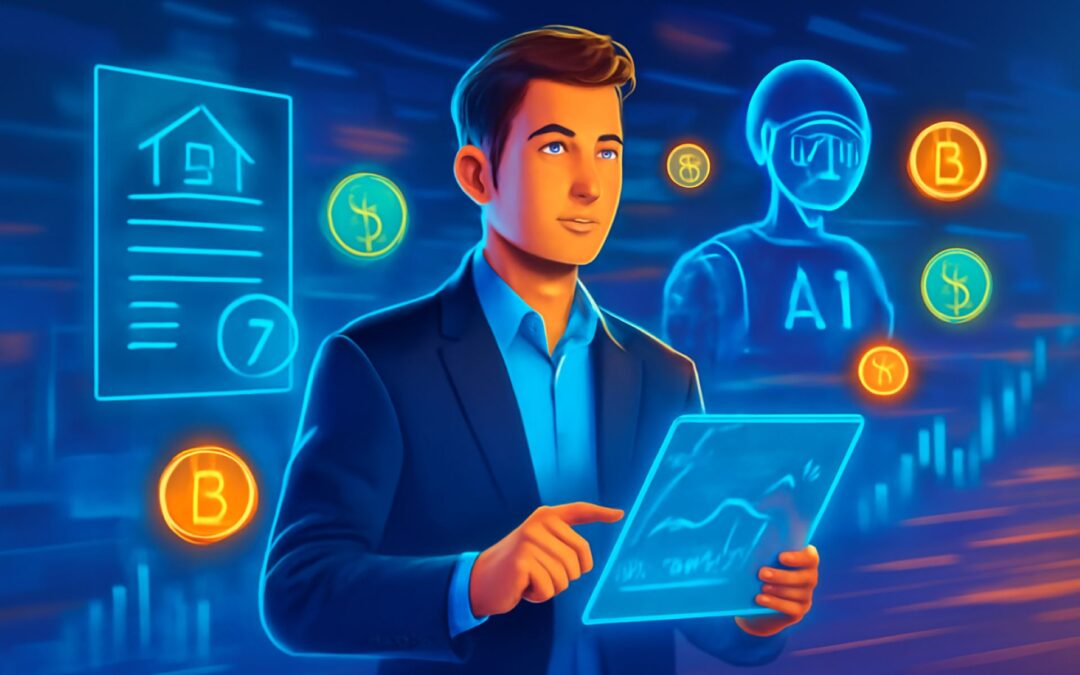
The financial industry, renowned for its conservatism and slow-paced nature, is on the verge of a significant transformation. Technology has already begun to disrupt traditional banking and finance, and as new innovations continue to emerge, the landscape is changing at an unprecedented rate. From digital mortgages that simplify the home-buying process to AI-powered financial advisors offering 24/7 guidance, the opportunities for disruption are vast.
In this article, we explore 15 groundbreaking ways that technology is revolutionizing the financial world—creating faster, more secure, and more accessible financial experiences for everyone. The future of finance is here, and it’s more exciting than ever.
1. The Timeline to Buying Your Dream Home Will Get a Lot Faster
For many, the dream of homeownership comes with an arduous and time-consuming process. The traditional journey to buying a home has been plagued by slow timelines, complex paperwork, and lengthy waiting periods for mortgage approvals. This process not only involves countless forms but also requires navigating through bureaucratic hurdles and lengthy back-and-forth communications with lenders and real estate agents. These inefficiencies often lead to frustration, confusion, and delays, particularly for first-time homebuyers.
However, technology is making this entire process significantly faster and more transparent. Digital mortgage systems, driven by artificial intelligence (AI) and machine learning, are now beginning to take hold in the industry. Instead of waiting days or even weeks to receive an approval or denial, borrowers will soon be able to submit their applications online and receive decisions within hours. This is possible because AI can quickly analyze a wealth of data—such as income, debt-to-income ratio, and credit scores—without the need for manual input or oversight. Furthermore, these systems can provide immediate feedback on any missing documentation or errors, which significantly reduces the time typically spent tracking down paperwork.
The elimination of human bias from risk assessments is another key benefit. Traditional mortgage processes can sometimes be influenced by emotions, judgment calls, or subjective factors. With machine learning algorithms, however, the approval process becomes much more objective and consistent. When you receive an approval, it is based on data and metrics, ensuring that the assessment is accurate and free from human error.
Additionally, the impact on your credit score when denied a mortgage is a thing of the past. In traditional systems, a mortgage rejection could harm your credit score, creating a ripple effect that could hinder your financial prospects for months. Digital mortgage platforms don’t report rejections to the credit bureaus, so your credit score remains unaffected, allowing you to continue with your financial journey without the long-lasting consequences of a denied application.
This shift will not only reduce the complexity of the home-buying experience but will also make it more accessible to a wider range of individuals. For people who have felt alienated by the traditional real estate and mortgage systems, digital mortgages will simplify the process, reduce stress, and accelerate the timeline for homeownership. Ultimately, the entire landscape of buying property will be forever altered for the better, making the dream of owning a home much more attainable.
2. You’ll Get the Benefits of Crypto Without the Volatility
Cryptocurrency has taken the world by storm, offering a decentralized and transparent system of financial transactions that operates outside the purview of traditional banking institutions. Blockchain technology, the underlying architecture of cryptocurrencies like Bitcoin and Ethereum, provides users with a secure and transparent way to store and transfer value. However, the extreme volatility associated with cryptocurrencies has kept many from fully embracing this new digital frontier. The price swings of Bitcoin, for instance, can range drastically within a matter of hours, making it a risky asset for those looking for stability in their investments.
Stablecoins, a new category of cryptocurrency, are solving this issue. These digital currencies are pegged to more stable assets like the U.S. dollar, gold, or even real estate, providing a less volatile alternative to traditional cryptocurrencies. By tying stablecoins to assets with predictable value, users can benefit from the security, transparency, and decentralization of blockchain without worrying about massive price swings. For example, a stablecoin like USDC is directly backed by U.S. dollars held in reserve, ensuring its value stays consistent with the dollar’s value. This removes the uncertainty that comes with other cryptocurrencies, making it a far more reliable option for everyday use and investment.
Stablecoins have the potential to revolutionize global finance, particularly in areas like international payments and trade. Traditional cross-border transactions can be slow, expensive, and subject to unfavorable exchange rates. Stablecoins, however, can make international payments seamless, reducing fees and eliminating delays. They offer instant settlement times, with transactions happening 24/7, regardless of time zones or bank hours. This ease of use will make digital currencies more attractive to businesses, governments, and individuals alike.
In addition, stablecoins have the potential to enable more people to access the benefits of blockchain technology without needing to navigate the complexities of volatile cryptocurrencies. As the world becomes more interconnected through digital payment systems, stablecoins could be the bridge that connects traditional finance to the decentralized world of blockchain. As governments and financial institutions begin to adopt these stable digital currencies, they will likely become a cornerstone of the digital economy, providing a reliable, secure, and transparent method of exchange.
3. Saving Money Will Become an Addictive Game
For many people, managing money is a stressful and daunting task. The constant pressure of budgeting, tracking spending, and planning for the future can make personal finance feel like a chore rather than an opportunity. However, technology is transforming the way people engage with their finances, making money management more interactive and fun. By gamifying the financial experience, personal finance apps are turning mundane tasks into something enjoyable and motivating.
Financial apps that gamify saving and investing are gaining popularity, and they use rewards, challenges, and interactive elements to engage users. For instance, these apps allow you to track your spending habits, set goals, and earn rewards for achieving them—just like playing a game. Imagine being able to earn digital points or badges for sticking to a budget, making a smart investment, or hitting your savings target. These rewards provide immediate gratification, which helps to reinforce good financial habits and makes the process feel more rewarding.
Additionally, many of these apps include social features that allow users to compete with friends or fellow users, providing an added layer of motivation. Whether you’re comparing savings goals or challenging each other to save more each month, these apps make personal finance feel less like a solitary task and more like a shared experience. The competitive aspect taps into our natural desire to win and be recognized, which can help users stay on track with their financial goals. Over time, these gamified experiences can turn saving and budgeting into a habit that feels rewarding rather than burdensome.
This shift toward gamification is not only about making saving money more enjoyable but also about making it easier. For many people, the difficulty lies not in the desire to save but in finding the motivation to stick to a plan. With engaging features like progress tracking, rewards, and peer competition, financial apps will help users develop better habits without the struggle. As a result, managing finances will no longer feel like a tedious task but rather an exciting journey to financial freedom.
4. You’ll Get 24/7 Access to Your Own Personal Financial Advisor
Personal financial advisors have traditionally been available only to those who could afford their services. This often means that individuals with smaller portfolios or less wealth are left without access to expert guidance. Additionally, many people struggle to reach their financial advisors during regular office hours, leaving them feeling isolated when they have questions or need assistance. This barrier to accessing financial advice is beginning to break down thanks to advancements in AI technology.
AI-powered financial advisors are revolutionizing how people receive advice and manage their money. These digital assistants are available 24/7, allowing you to get personalized financial advice and assistance whenever you need it. Whether you have questions about your investment portfolio, need guidance on saving for a major purchase, or want help navigating market fluctuations, an AI advisor can provide real-time assistance. These systems use data about your financial habits, goals, and lifestyle to craft personalized strategies that align with your needs.
Unlike traditional human advisors, AI-driven financial assistants can analyze vast amounts of data quickly, providing insights based on up-to-date market conditions and your personal situation. They are capable of adjusting your investment strategies on the fly, ensuring that your portfolio is always optimized for your objectives. For businesses, this technology means being able to scale their customer service without the need for large teams of financial experts. AI will be able to handle a much larger volume of requests and offer tailored advice to a broader audience, democratizing access to financial expertise.
Moreover, AI advisors are not limited by traditional work hours. Whether you’re in a different time zone or simply need assistance outside of business hours, an AI advisor will always be available to answer your questions and guide you through financial decisions. This level of accessibility will empower individuals to take control of their finances and make more informed decisions at any time, without the barriers of cost or availability.
5. You Won’t Have to Worry About Politics Influencing Your Investments
The stock market has long been influenced by political decisions, from trade wars and tariff changes to shifts in tax laws and government policies. These external factors often result in market volatility, creating uncertainty for investors. A single policy change or geopolitical event can send markets into a frenzy, causing stock prices to fluctuate wildly. While some investors thrive on this uncertainty, for many, the emotional impact of these swings can be unsettling, leading them to make rash decisions based on short-term events.
Fortunately, technology is now offering a solution to this problem. Digital capital market technologies, powered by AI and advanced data analytics, are set to eliminate the emotional reactions that typically drive market fluctuations. These systems will evaluate a wide range of factors—such as global sales data, historical market performance, and geopolitical events—to provide more accurate, data-driven predictions about how events will impact investments. Instead of making knee-jerk reactions based on headlines or political rhetoric, investors will have access to deeper insights that allow them to make more informed, long-term decisions.
By analyzing a company’s ability to weather political storms based on its historical performance and other factors, these systems will help investors see beyond the immediate panic and focus on a company’s true long-term potential. This technology can also help businesses secure financing more reliably, as investors will be able to assess risk more objectively. With digital platforms that monitor market conditions and respond to political shifts in real time, the financial landscape will become more stable and predictable, giving investors the tools they need to manage their portfolios effectively and with confidence.
6. Losing Your Bank Card Won’t Leave You Without Access to Money
Losing your physical bank card has always been a stressful experience. Whether you’re traveling abroad or simply misplace it at home, the immediate consequences are daunting. Not only does this leave you without access to cash, but the process of contacting the bank, freezing the account, and waiting for a replacement card can take days—sometimes even longer if you’re abroad. This vulnerability has often led to major inconveniences, such as being stranded in a foreign country without access to funds or dealing with fraud risks.
Virtual bank cards are poised to eliminate these issues entirely. A virtual card is a fully digital card, typically stored in your phone’s wallet (such as Apple Pay or Google Pay), which offers all the functionalities of a physical card but without the physicality. This means you cannot lose it because it exists solely in the digital space. If, by some chance, you do need to cancel or replace your card, the process is instantaneous. You simply deactivate it and issue a new one through your banking app.
Beyond the convenience of not having to worry about losing a physical card, virtual cards provide enhanced security features. For example, you can set specific spending limits, define time frames, or even use them for one-time purchases. This gives you greater control over your spending, as you can restrict access to certain amounts or even specific vendors. In the event of a security breach at a merchant, your main bank account remains untouched, as the virtual card is linked only to the specific transaction and not your primary account. This method also reduces the risk of overspending—once the balance on your virtual card is used up, no further transactions can be processed.
Additionally, virtual cards provide an easier way to track expenses, especially if you use them for designated categories like entertainment, groceries, or subscriptions. By compartmentalizing your spending, you gain a clearer view of your finances and can avoid the confusion that often arises from mixing various types of transactions on a single card. In essence, virtual cards represent a significant shift toward more secure, manageable, and user-friendly financial tools that put consumers in control of their spending habits.
7. You’ll Get All the Services You Need in One Go When Making Big Purchases
The process of making large purchases—like buying a car, house, or even expensive electronics—often involves a complicated and time-consuming series of steps. After the purchase itself, you may find yourself scrambling to arrange financing, purchase insurance, or secure warranties. Each of these steps requires separate interactions with different service providers, often leading to more paperwork, waiting periods, and sometimes frustration. The experience of buying a home, for instance, typically involves applying for a mortgage, arranging for homeowner’s insurance, setting up utilities, and securing a long-term warranty, each of which is an additional task to complete after the initial purchase.
Thanks to advances in financial technology, this process is about to become significantly more streamlined. Imagine walking into a dealership to buy a car and making one payment that includes not only the car itself but also the financing, insurance, and any additional services you require. Companies like Tesla have already pioneered this approach, offering integrated services as part of their car sales process. The buyer can choose financing options, get insurance, and even receive a service warranty—all wrapped up in one seamless payment plan. This “one-stop-shop” approach reduces the friction involved in making large purchases, making the experience quicker, easier, and less stressful.
This same model is expected to extend to other major purchases like homes, electronics, and more. By bundling financing, insurance, and warranties into one easy-to-manage package, you eliminate the need for multiple visits to different providers or filling out separate applications. This will not only save time but also offer better transparency about costs, as everything is handled in one place with clear breakdowns of what each part of the purchase includes. Businesses offering these integrated services will also likely see increased customer loyalty, as consumers value convenience and simplicity when making large purchases.
This model also opens the door to more competitive pricing. Because businesses that offer these integrated services can take advantage of economies of scale, they may be able to offer discounts or perks that are unavailable when each service is purchased separately. For example, bundling insurance with a car purchase could lead to lower premiums, or offering financing with a home purchase might come with lower interest rates. Ultimately, this shift toward integrated financial services will make large purchases more accessible and hassle-free.
8. E-commerce Stores Will Offer Entrepreneurs Direct Financing
Starting a business is an exciting venture, but it often comes with significant financial hurdles. Entrepreneurs typically need capital to cover the costs of setting up their businesses—purchasing inventory, paying for marketing, or developing a website. Traditionally, this funding would come from banks or venture capitalists, which can be time-consuming and complex to secure. However, e-commerce platforms are increasingly integrating financing options directly into their services, making it easier for entrepreneurs to get started and scale their businesses.
E-commerce giants like Shopify have taken the first steps toward offering financing to entrepreneurs directly through their platforms. Rather than applying for a loan from a traditional bank, an entrepreneur could access funds through the platform and repay them through a percentage of future sales. This model, known as embedded finance, is transforming how entrepreneurs can secure the capital they need. Instead of waiting for approval from a third-party lender, entrepreneurs can apply for financing and, if approved, immediately start using the funds to grow their businesses.
This financing model is particularly beneficial for those who may not have established credit histories or who want a more flexible loan structure. By tying the repayment schedule to the business’s revenue, the e-commerce platform creates a system where repayments are automatically aligned with the business’s income flow. This reduces the pressure of making fixed payments on a set schedule and gives business owners the flexibility to repay the loan based on their actual sales. It also makes it easier for entrepreneurs to avoid debt traps or financial strain, as repayments are proportionate to how well their business is doing.
Moreover, platforms offering embedded financing are using data-driven insights to assess the creditworthiness of business owners. By analyzing past sales, the potential for future revenue, and other data points, these platforms can make more informed lending decisions. This approach is faster and often more accurate than the traditional loan application process, enabling small businesses to get the capital they need to thrive without the typical delays.
9. Buy Now, Pay Later Is Making a Major Comeback
The concept of “buy now, pay later” (BNPL) has existed for centuries in one form or another, but it had largely fallen out of favor with the rise of credit cards. In recent years, however, BNPL services have reemerged, especially in the world of e-commerce, offering a new way for consumers to make purchases without paying upfront. Companies like Klarna, Afterpay, and Affirm are at the forefront of this resurgence, allowing shoppers to split payments into smaller, interest-free installments. This method is gaining traction among both consumers and businesses, as it offers a flexible payment solution that meets the demands of today’s shopping habits.
One of the most appealing aspects of BNPL is that, in many cases, consumers don’t have to pay interest. This makes it a viable option for those who need something immediately but don’t have the funds to pay for it all at once. It’s especially useful for big-ticket items like furniture, electronics, or fashion, where the total cost might be more than someone can afford upfront but can be manageable in smaller payments over time. For businesses, offering BNPL as a payment option can help increase conversion rates and boost sales by making high-value items more accessible to a wider customer base.
While BNPL is convenient, it does come with risks, particularly for consumers who might struggle with budgeting. If they miss payments or fail to keep up with installments, they may face late fees or damage to their credit score. However, the services often offer reminders and easy-to-use interfaces that help customers stay on top of their payments. For businesses, offering BNPL can also improve customer loyalty and retention. With built-in payment flexibility, customers are more likely to make purchases, knowing they don’t have to pay the full amount right away.
Despite these risks, BNPL is especially attractive to consumers who want to spread out their expenses without incurring interest charges, and businesses are recognizing this by increasingly incorporating it into their payment systems. As it becomes a more mainstream option for online and in-store purchases, BNPL is expected to continue growing in popularity.
10. You Won’t Have to Remember Different Passwords Anymore
Passwords have long been the primary means of securing online accounts, but they’re far from perfect. We’ve all struggled with remembering multiple passwords, whether it’s for banking apps, shopping websites, or social media platforms. This reliance on passwords not only creates inconvenience but also poses significant security risks. Hackers can gain access to accounts by exploiting weak or reused passwords, and users often fall into the trap of using simple, easily guessed combinations. As a result, there’s been an increasing push toward more secure and user-friendly authentication methods.
Biometric verification is the future of online security. Rather than relying on passwords, biometric authentication uses unique physical characteristics like fingerprints, facial recognition, or even voice recognition to verify a user’s identity. This system is not only faster but also more secure, as it’s nearly impossible to replicate someone’s fingerprints or facial features. For financial transactions, this means that access to your banking app, investment portfolios, or payment services can be granted simply by scanning your fingerprint or face.
Already, smartphones and banking apps are starting to implement facial recognition and fingerprint scanning, eliminating the need for remembering or typing in passwords. This trend is expected to extend to more platforms, including ATMs and point-of-sale systems. The convenience of this technology means that there’s no need to worry about forgetting a password or going through the cumbersome process of resetting it. Additionally, biometric authentication is a much stronger form of security, reducing the risks associated with data breaches or hacking.
As this technology becomes the gold standard across all industries, passwords will likely become a thing of the past. Not only will this improve user experience by simplifying access to accounts, but it will also create a more secure and seamless system for conducting transactions, making biometric verification the future of digital security.
11. Your Credit Score Will Change in Real Time
The concept of a credit score has long been a fundamental component of the financial system, used by lenders, landlords, and employers to gauge an individual’s financial responsibility. However, the current system is far from perfect. A single mistake, like missing a payment or maxing out a credit card, can cause your score to plummet. Worse, it can take months or even years to rebuild, regardless of how well you manage your finances afterward. This delay can be frustrating for individuals who are trying to improve their financial standing after a temporary setback. Moreover, for those who don’t use credit at all, the credit score doesn’t always reflect their ability to manage money responsibly.
Real-time credit scoring will change all of that. Powered by AI and advanced data analytics, this new system will adjust your credit score dynamically as your financial situation evolves. For example, if you pay off a loan or increase your savings, your score could improve within hours or days, rather than taking months to reflect positive changes. This real-time adjustment makes credit scores a more accurate reflection of your current financial health.
Beyond traditional credit data, real-time credit scoring will incorporate a wider range of financial behaviors, including rent payments, utility bills, and even subscription services. These activities, which were previously ignored or given minimal weight, will now be factored into your score. If you consistently pay your rent on time or handle your utility bills without issues, those positive behaviors will directly improve your credit score, giving you a more holistic and fair evaluation of your financial reliability.
For those who avoid using credit or struggle with debt, real-time credit scoring offers a better solution. It allows individuals who might otherwise have been penalized for relying on cash or debit to still build their financial credibility by showing that they are responsible with their money. The ability to track and manage your credit score in real time will also empower individuals to make proactive adjustments to their finances, improving their standing instantly rather than waiting for months of positive behavior to make an impact.
12. Sending Money Internationally Will Be Like Sending a Text
Sending money across borders today can be an expensive and slow process. Traditional methods, such as wire transfers, often involve significant fees and long wait times. Additionally, the exchange rates provided by banks or third-party services are usually unfavorable, further adding to the cost of international transactions. This slow and expensive process can be particularly frustrating when you need to send funds quickly, such as when supporting family abroad or making international purchases.
Blockchain technology is revolutionizing this space by enabling faster, cheaper, and more secure international transactions. With blockchain, cross-border transfers can be processed in real time, bypassing traditional intermediaries like banks or payment services. This means no waiting for days for funds to clear, no high fees eating into your transfer, and no unfavorable exchange rates to worry about. Blockchain ensures that the money is transferred directly from sender to recipient, making the entire process seamless and significantly more affordable.
Digital currencies, such as stablecoins, further enhance the appeal of blockchain-based transfers. These digital assets, tied to stable real-world assets like the U.S. dollar or gold, provide a reliable and consistent value for transactions. In the past, fluctuating exchange rates could make it difficult to predict the exact amount of money that would reach the recipient. With stablecoins, the transfer value remains fixed, eliminating that uncertainty.
The simplicity and efficiency of blockchain transactions make them comparable to sending a text message in terms of speed and convenience. Once initiated, the funds are immediately available to the recipient, regardless of their location, and the entire process is automated, meaning there are fewer chances for human error or delays. As blockchain becomes more widely adopted, international money transfers will be as easy as sending an email or text message—fast, secure, and cost-effective.
13. Your International Transactions Won’t Get Flagged Mid-Transfer Anymore
International transactions, while incredibly important in our globalized economy, are often fraught with delays and obstacles. One of the most frustrating issues faced by individuals and businesses alike is when a transaction is flagged mid-transfer. This could happen for a variety of reasons, such as regulatory compliance issues or missing documentation, leaving the sender and recipient in limbo. In some cases, the money could be held up for days or weeks, preventing timely access to funds.
Thanks to advances in financial technology, this issue is becoming a thing of the past. New banking apps and payment systems are now incorporating real-time monitoring and compliance checks, meaning that any issues with a transaction can be detected and addressed before the transfer is even initiated. Instead of the surprise delay of a flagged payment, you’ll be alerted beforehand, giving you the opportunity to provide any missing information or resolve any compliance issues right away.
For example, if your transfer involves certain international regulations—such as anti-money laundering (AML) rules or know-your-customer (KYC) requirements—your banking app will notify you about potential red flags. You’ll be given clear instructions on how to rectify the situation, allowing you to complete the transaction without the usual anxiety of wondering where your money is.
Furthermore, blockchain technology also plays a role in ensuring that transactions go through smoothly. Since blockchain operates on a decentralized, transparent network, it is inherently more secure and resistant to fraud. This transparency ensures that transactions are easier to trace and verify, making it less likely for legitimate transactions to be flagged erroneously. As a result, international payments will be faster, smoother, and less prone to disruption, providing a more reliable experience for individuals and businesses engaging in cross-border financial activities.
14. You’ll Be Able to Set Rules to Tell Your Money What to Do
Managing personal finances has always been a balancing act—trying to allocate funds for savings, spending, and investment while staying on top of regular bills and unexpected expenses. In the past, this required meticulous budgeting and constant manual tracking. However, technology is now making it possible for individuals to set automatic rules that dictate how their money is managed, streamlining the process and making it more efficient.
Smart banking tools and apps are allowing users to set specific rules for their finances. For example, you could set a rule that automatically directs a percentage of your income into a savings account as soon as it’s deposited into your checking account. If your income surpasses a certain threshold, a set portion could automatically be invested in stocks, bonds, or mutual funds. Conversely, you could set a rule that limits your daily spending once your account balance drops below a certain amount, ensuring that you don’t overspend and end up with insufficient funds before payday.
This type of automation makes financial management easier and more adaptable to changing circumstances. For instance, during months when you earn more than usual, you can automatically save or invest the extra income without having to remember to do it manually. Similarly, when your finances are tight, automated rules can help you stay within your limits by adjusting your spending based on your account balance.
For those who struggle with sticking to budgets or feel overwhelmed by financial planning, these automatic rules remove much of the guesswork. The app or platform takes care of the heavy lifting, ensuring that your money is being allocated according to your priorities without requiring constant attention. This ability to automate your financial decisions based on pre-set conditions gives you peace of mind and control over your financial future.
15. There Probably Won’t Be Physical Banks Anymore
The traditional model of banking—where customers visit physical branches to conduct transactions, meet with representatives, or access in-person services—is quickly becoming outdated. Advances in mobile banking and online financial services have made it possible to conduct virtually all banking activities from a smartphone or computer, rendering physical branches less necessary. This shift has been accelerated by the rise of digital-only banks, which operate entirely online and provide a full range of banking services without the need for physical locations.
The decline of physical banks is not just a matter of convenience but also one of cost. Operating physical branches requires significant overhead costs—staff, utilities, real estate, and maintenance—which can be passed on to customers in the form of fees. As digital banking technologies continue to evolve, more and more services can be accessed remotely, reducing the need for physical infrastructure. For example, mobile apps and online portals now allow customers to transfer money, apply for loans, pay bills, and even meet with virtual financial advisors, all without stepping foot inside a branch.
For those who still require personal assistance, video consultations and AI-powered chatbots are becoming increasingly sophisticated, providing immediate, real-time help with everything from account inquiries to financial planning. These technologies offer the same level of support as a physical branch, but with greater convenience and efficiency. With the advent of biometrics and digital identity verification, security measures are also stronger than ever, meaning that customers can perform high-stakes financial transactions with the same confidence as they would at a traditional bank.
As digital banking becomes the norm, the idea of visiting a bank branch will increasingly feel like an outdated practice. Instead of standing in long lines, waiting for paperwork to be processed, or scheduling appointments, consumers will have access to faster, more streamlined services that can be performed at their convenience. Physical banks as we know them today will likely fade away, making way for a fully digital future where financial services are accessible anytime, anywhere.
Conclusion
As technology continues to evolve, the financial industry is no longer confined by its traditional structures and processes. The rise of digital tools, from AI to blockchain and virtual banking, is democratizing access to financial services, making them faster, safer, and more efficient. Whether it’s buying a home in hours or managing your money like a game, these innovations are shaping a more streamlined and accessible financial future. The disruption is inevitable, and those who embrace these changes will be better equipped to navigate the future of finance. The question is: are you ready to adapt?