
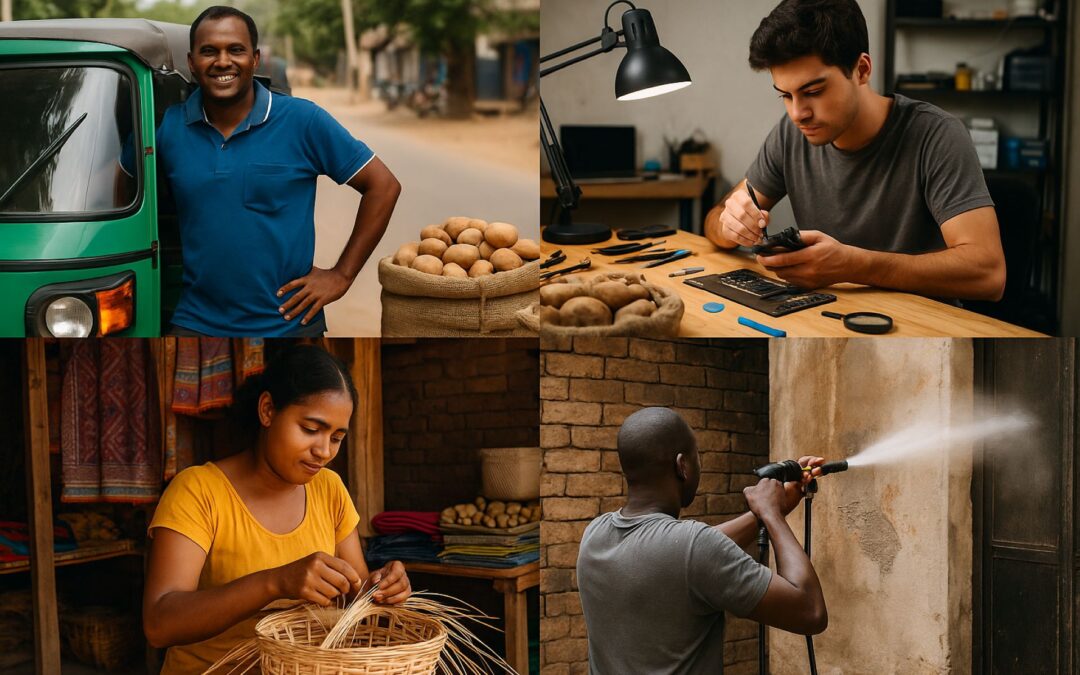
In a rapidly changing world, entrepreneurship stands as a beacon of hope and opportunity, particularly in developing countries where traditional employment options may be limited. Starting a business not only offers a pathway to financial independence but also addresses critical community needs. With creativity, resourcefulness, and a keen understanding of local needs, aspiring entrepreneurs can establish successful ventures that provide essential services.
This article explores 10 low-cost business ideas that require minimal initial investment and have the potential to make a meaningful impact on communities. From local transportation services to innovative recycling initiatives, these ventures are designed to inspire future business owners to leap into entrepreneurship.
1. Local Transportation Services
Transportation is the pulse that keeps developing economies alive, yet in many regions, formal infrastructure and public transit systems are either lacking or unreliable. This creates an undeniable demand for informal, localized transport options that serve both urban and rural populations. For an entrepreneur with limited capital, launching a local transportation service is a compelling, low-barrier entry point.
Starting with just one vehicle dramatically lowers the investment threshold. It could be a motorcycle weaving through narrow alleyways, an auto-rickshaw navigating bustling streets, a bicycle for short commutes, or even a small boat ferrying people across waterways. The key is matching your transport mode to the geographic and cultural realities of your target area. For example, in cities like Delhi or Mumbai, auto-rickshaws dominate because of their maneuverability in traffic and affordability. In parts of Sub-Saharan Africa, motorcycles, known as “boda-bodas,” have become the go-to transport for their speed and accessibility.
Owning the vehicles is optional; many successful entrepreneurs adopt a rental or lease model. By purchasing a few reliable secondhand vehicles and renting them out to local drivers, you become a facilitator of livelihood while earning steady rental income. This model offloads the day-to-day operational responsibilities onto the drivers themselves, reducing your managerial burden and risk exposure. Additionally, this setup fosters community empowerment, as drivers gain access to assets without the full upfront cost.
Scalability is a major advantage. As demand surges—whether due to population growth, urbanization, or economic activity—you can incrementally increase your fleet. Starting small allows you to test routes, pricing, and demand elasticity without overextending. Over time, you can diversify your offerings, including parcel delivery, ride-sharing, or specialized transport like school runs.
Maintenance and safety are critical considerations. Secondhand vehicles must be vetted for reliability and roadworthiness to ensure passenger safety and minimize downtime. Building relationships with local mechanics or workshops can secure cost-effective servicing. Furthermore, investing in basic insurance or driver training programs enhances professionalism and customer trust.
Socially, local transportation services address mobility gaps that affect education, healthcare access, and economic participation. By improving people’s ability to move efficiently and affordably, these businesses act as catalysts for broader community development. In essence, the entrepreneur is not just building a business but knitting together the social fabric of their locale.
2. Recycling Businesses
In the swirl of urban expansion and industrialization, waste management remains a daunting challenge in many developing countries. Garbage accumulates, often with no formal system to manage it, leading to environmental degradation and health risks. Yet within this challenge lies a golden opportunity: recycling businesses that transform discarded materials into valuable products.
Plastic waste is the poster child for this sector, notorious for polluting landscapes and waterways. Innovative entrepreneurs have cracked the code by turning this waste into building materials that rival traditional concrete products in durability but cost significantly less. Items such as roofing tiles, paving bricks, drainage gutters, and manhole covers are manufactured by compressing and molding recycled plastics, providing affordable construction alternatives.
Starting such a venture involves several key steps. First is sourcing raw materials. Urban centers and industrial zones generate copious amounts of plastic and other waste, often discarded freely or at nominal collection costs. Some entrepreneurs engage informal waste pickers, formalizing a supply chain that benefits multiple community layers. This not only guarantees raw material flow but injects economic incentives into waste collection.
Next comes processing. Recycling presses and molds are the heart of production. While commercial machinery can be expensive, resourceful operators design and build low-cost presses using locally available materials and engineering ingenuity. Some rent machines initially to conserve capital. Learning the optimal “recipe” for mixing plastics and additives ensures product strength and longevity, a critical factor for market acceptance.
Labor is hands-on and often gritty. Sorting waste demands diligence to separate plastics by type and quality, ensuring consistency. Though the work might seem unglamorous, it is pivotal for product performance. Additionally, some waste types—like industrial paper or used masks—offer unique recycling potentials, broadening the business scope.
Demand for recycled products is rising, driven by growing environmental awareness, government regulations, and cost-conscious construction sectors. Municipalities and NGOs increasingly support recycling initiatives, offering grants, training, or partnership opportunities. Entrepreneurs with savvy marketing can position themselves as eco-friendly suppliers, attracting clients eager to enhance sustainability credentials.
Profit margins can be substantial due to the low cost of raw materials and labor. Moreover, this business embodies a triple bottom line: generating profits, creating jobs, and preserving the environment. For those willing to navigate logistical and operational complexities, recycling is not only a sound financial venture but a socially transformative one.
3. Distribution Businesses
In developing countries, the supply chain infrastructure often struggles to keep pace with rapid population growth and urban sprawl. This fragmentation creates a glaring gap in the efficient movement of goods from producers and wholesalers to retailers, particularly in rural or peri-urban areas. Establishing a distribution business to bridge this gap can be a game-changer—both commercially and socially.
At its core, a distribution business involves sourcing fast-moving consumer goods (FMCG) such as food products, personal care items, household chemicals, and fresh produce from manufacturers or wholesalers, then delivering these products to local retailers, markets, or even directly to consumers. The high population density in many developing countries translates to a constant, and often increasing, demand for these essential goods.
One key advantage of this model is its relatively low barrier to entry. Unlike manufacturing, which demands significant capital, or retail, which requires prime locations and inventory management, distribution relies heavily on logistics and relationship-building. Starting small—with a reliable vehicle, basic storage, and communication tools—you can negotiate supply agreements with producers and build a client base among local shops.
Moreover, because competition is typically less intense than in mature markets, newcomers can rapidly gain market share by offering dependable, timely deliveries. In many cases, remote villages or townships face significant challenges accessing essential goods; your distribution network can provide a lifeline, creating loyalty among customers who depend on your service.
To excel, focus on operational efficiency. Route optimization, inventory forecasting, and leveraging simple technologies like mobile apps or SMS ordering can improve responsiveness and reduce costs. Building trust with both suppliers and retailers is crucial—transparent communication, consistent fulfillment, and flexibility foster long-term partnerships.
Financially, this business offers steady cash flow and scalability. As your network expands, you can diversify the product range, add warehousing, or even branch into last-mile logistics. Socially, improving product availability enhances living standards by making necessities more accessible, especially in underserved communities.
4. Cash Crop Farming
Agriculture remains the economic backbone for many developing nations, employing a large segment of the population and driving food security. Within this sector, cash crop farming—cultivating crops specifically for sale rather than personal consumption—offers a pathway to higher incomes and market integration.
Cash crops such as coffee, cocoa, cotton, spices, and various specialty fruits enjoy perennial demand locally and internationally. These crops are often embedded in daily life—coffee and cocoa for beverages, cotton for textiles—ensuring steady market interest. Importantly, many developing countries possess climates and soils well-suited for these crops, creating natural comparative advantages.
Starting a cash crop farm involves securing access to arable land. While ownership is ideal, alternative arrangements such as leasing or joint ownership with partners can mitigate upfront costs. Starting small enables experimentation with crop selection, soil management, and cultivation techniques. It’s crucial to understand local agroecological conditions and market demand before scaling operations.
Profitability hinges on quality and yield. Investing time in proper seed selection, pest management, irrigation, and harvesting methods increases both quantity and grade of produce. Engaging with local cooperatives or agricultural extension services can provide valuable knowledge and access to inputs or financing.
Market linkage is equally critical. Selling to local processors, exporters, or commodity traders requires building trustworthy relationships and understanding pricing dynamics. Some cash crops, especially those targeting export markets, demand adherence to certifications like organic or fair trade, which may require additional investment but can command premium prices.
Risk management strategies are essential to navigate challenges like weather variability, pests, or fluctuating commodity prices. Diversifying crops or incorporating complementary income activities—such as intercropping or livestock—can provide buffers.
In sum, cash crop farming marries traditional agricultural skills with market savvy, offering a scalable avenue for income generation. It empowers farmers to move beyond subsistence, integrating them into value chains that connect rural producers to urban and international consumers.
5. Mobile Phone Repair
The proliferation of smartphones in developing countries has been nothing short of remarkable. Even in low-income areas, mobile devices have become indispensable tools for communication, commerce, education, and entertainment. However, the high cost of purchasing new phones means that many users prefer repairing their existing devices rather than replacing them. This dynamic creates a lucrative and accessible opportunity for entrepreneurs skilled in mobile phone repair.
Starting a mobile repair business requires minimal capital investment compared to many other tech ventures. Basic tools—screwdrivers, soldering irons, diagnostic software, and replacement parts—can be acquired at reasonable prices. Technical expertise is essential but can be developed through affordable training courses, online tutorials, or apprenticeships with experienced technicians.
Common repairs include screen replacements, battery swaps, charging port fixes, camera repairs, and software troubleshooting. These services are in constant demand, as phones often endure rough use, accidental drops, and exposure to dust or moisture. Because many models prevalent in developing markets are designed with repairability in mind, the technical barrier to entry is lower than in more sophisticated markets.
Beyond repairs, savvy entrepreneurs can expand into refurbishing broken or discarded devices. Buying damaged phones at a low price, restoring them to working order, and reselling them opens a profitable resale market targeting customers who cannot afford new models. This “repair and resale” cycle promotes affordability and sustainability by extending device lifespans.
Success in this business depends heavily on reputation. Reliable, timely, and affordable services foster customer loyalty and generate word-of-mouth referrals. Marketing through community networks, local social media groups, or partnerships with phone retailers can boost visibility.
To maintain competitiveness, continuous learning is necessary as smartphone technology evolves rapidly. Expanding into repairs for tablets, laptops, or accessories can diversify revenue streams. Additionally, offering accessories like chargers, cases, or screen protectors can supplement income.
In summary, mobile phone repair blends technical skill with entrepreneurial spirit, requiring modest investment but offering steady, recession-resistant income in markets hungry for affordable tech solutions.
6. Water Delivery
Access to clean, safe drinking water remains a critical challenge across many developing countries. For millions, obtaining potable water involves long, arduous journeys to distant wells or community taps. This creates a persistent demand for reliable water delivery services, turning water into both a fundamental necessity and a lucrative business opportunity.
Establishing a water delivery enterprise begins with identifying dependable sources of clean water—natural springs, boreholes, or municipal supplies—and securing rights or partnerships to access them. The next step involves logistics: acquiring suitable transport vehicles such as trucks, motorbikes with water tanks, or even boats in flood-prone areas.
Investment in water storage containers—large jerry cans, drums, or bottled water—is vital to ensure safe transport and distribution. Maintaining hygiene standards throughout the process is non-negotiable; contamination risks can quickly erode customer trust and invite regulatory penalties.
Pricing strategies must balance affordability with business sustainability. Many customers are price-sensitive, so offering tiered delivery options or subscription models can stabilize revenue while accommodating diverse budgets.
Water delivery services can focus on both residential customers and institutions such as schools, clinics, or small businesses. Contracting with local governments or NGOs to supplement community water infrastructure may provide steady contracts and social legitimacy.
An innovative approach involves integrating water delivery with existing transportation or logistics businesses, optimizing routes and vehicle usage to lower costs and increase efficiency.
While capital intensive relative to other small businesses, water delivery fills an essential service gap with enormous social impact. Reliable access to clean water improves public health, reduces waterborne diseases, and frees time for education and income-generating activities.
Entrepreneurs in this sector can also explore value-added services such as water purification, filtration sales, or water storage solutions. With thoughtful planning and community engagement, water delivery businesses become lifelines that blend profit with profound purpose.
7. Handicrafts
Handicrafts are tangible expressions of culture, heritage, and artistry. For many in developing countries, they offer a pathway to entrepreneurship that harmonizes creativity with commerce. Starting a handicraft business typically requires low capital, a home workspace, and a passion for making unique, high-quality products.
Materials vary widely, including textiles, beads, clay, wood, metal, and recycled materials, and are often locally sourced, which keeps costs minimal while supporting local suppliers. The ability to imbue items with cultural symbolism or storytelling elevates their appeal, especially in regions with rich artistic traditions.
Product lines can range from jewelry, woven baskets, and pottery to decorative household items and souvenirs. The uniqueness and authenticity of handmade goods attract both locals who value cultural identity and tourists eager to bring home meaningful mementos.
Marketing plays a crucial role. Participating in local markets, craft fairs, and cultural festivals provides exposure and direct sales opportunities. In tourist-heavy areas, partnerships with hotels, galleries, and souvenir shops amplify reach. Digital platforms increasingly open new frontiers; selling through online marketplaces or social media allows artisans to tap into global audiences.
Craft businesses also foster community empowerment. Cooperative models enable shared resources, collective marketing, and skills training, increasing production capacity and negotiating power. Women and marginalized groups often find handicraft enterprises accessible and empowering, promoting inclusive economic development.
Challenges include ensuring consistent quality, managing supply chains for materials, and competing with mass-produced imitations. However, with commitment to craftsmanship, branding, and customer relationships, handicrafts can evolve from a small sideline into thriving microenterprises.
Overall, handicraft businesses combine the joy of creation with sustainable income, preserving cultural legacies while adapting to contemporary markets.
8. Home Cleaning Services
As urban populations swell in developing countries, the demand for professional home cleaning services is surging. Many households, especially dual-income families and busy professionals, seek reliable assistance to maintain cleanliness but face a scarcity of trustworthy providers. This gap presents an accessible and scalable opportunity for entrepreneurs to start a home cleaning business with minimal upfront costs.
Initially, the business can launch using household cleaning products and tools already at your disposal. This low barrier to entry allows you to begin with limited capital while building a client base through word-of-mouth and local advertising. Providing thorough, consistent, and affordable cleaning builds trust—a key differentiator in service industries.
Once you gain traction and generate profits, you can invest in specialized equipment such as microfiber cloths, vacuum cleaners, steam cleaners, and environmentally friendly cleaning agents to enhance service quality and efficiency. Expanding your offerings to include window washing introduces a higher-value service, especially for small businesses, offices, and residential complexes. Though it requires investment in ladders and safety training, this can significantly increase revenue streams.
For those with entrepreneurial ambition, pool cleaning and aquarium maintenance services offer lucrative niches with less competition. Such specialized services require technical knowledge but command premium pricing due to their complexity and infrequency among competitors.
Another high-demand avenue is pressure washing for exteriors—building facades, sidewalks, and driveways. Pressure washing requires an initial investment in equipment but has broad application in commercial and residential sectors. Targeting property managers, real estate agents, and small businesses can provide consistent contracts.
Scaling this business involves hiring and training trustworthy staff, implementing scheduling and quality control systems, and establishing robust client communication channels. Offering subscription-based packages ensures steady income and improves customer retention.
In essence, a home cleaning service combines simplicity with high demand, allowing entrepreneurs to start small and grow organically by expanding services, professionalizing operations, and targeting diverse customer segments.
9. Street Food Stalls
Street food is a vibrant cornerstone of daily life in many developing countries. It offers quick, affordable, and culturally rich meals to locals and fascinates tourists eager to experience authentic flavors. Launching a street food stall requires minimal capital investment, making it an ideal business for aspiring entrepreneurs.
Success hinges on carving a unique culinary niche. Developing a signature recipe or putting an innovative twist on traditional dishes helps your stall stand out amid a crowded marketplace. For example, combining local ingredients with international flavors or creating visually appealing presentation can captivate customers.
Location is critical. High foot-traffic areas such as markets, transportation hubs, university campuses, or tourist districts maximize exposure. Regular customers often frequent the same stalls, so consistency in quality and hygiene directly affects customer loyalty and word-of-mouth referrals.
Keeping overhead costs low is achievable by using compact, portable equipment and sourcing ingredients from local farmers or markets, ensuring freshness while controlling expenses. Pricing strategies should balance affordability for local customers with profit margins, recognizing that street food is often purchased multiple times a day for snacks or meals.
Compliance with health and safety regulations is essential to avoid fines or closures. Demonstrating attention to sanitation through clean utensils, food storage, and waste management builds customer trust and protects public health.
Building a strong brand through signage, social media, or loyalty programs can transform a simple food stall into a community fixture. Some vendors grow their operations into brick-and-mortar restaurants or franchise models.
Beyond economics, street food stalls celebrate cultural identity and community spirit. They create employment, support local agriculture, and preserve culinary traditions. For the entrepreneur, it’s a chance to blend passion, creativity, and commerce in an accessible and rewarding way.
10. Opening a Barber Shop
Hair care and grooming are perennial needs that transcend economic cycles, making barber shops a resilient and profitable business in developing countries. Whether operating a modest home-based setup or a dedicated storefront, this venture requires relatively low capital, primarily invested in quality tools and hygiene supplies.
Starting small allows for personalized service and the development of a loyal customer base. Excellence in craft—clean cuts, stylish grooming, and attention to detail—builds reputation and encourages repeat visits. Investing time in customer relations, creating a welcoming atmosphere, and maintaining consistent quality sets the foundation for growth.
Branding can differentiate your barber shop in a competitive market. This might include specializing in traditional haircuts, modern styles, or niche services such as beard grooming, children’s haircuts, or even offering additional services like facial massages or scalp treatments. Creating a unique identity fosters customer loyalty and word-of-mouth referrals.
Expanding into a physical shop enables higher client throughput, additional stylists, and increased revenue. The space itself becomes a community hub where people gather, socialize, and exchange news—a culturally significant role in many societies. Adding retail sales of hair care products and grooming accessories supplements income and provides convenience for clients.
Professionalism matters. Maintaining strict hygiene standards, investing in comfortable furnishings, and offering reliable appointment scheduling improve client experience. Training and certifying staff ensure consistent service quality and can justify premium pricing.
Community engagement—such as sponsoring local events or collaborating with other businesses—strengthens visibility and trust. Leveraging social media platforms to showcase styles, promotions, or client testimonials enhances marketing reach.
In summary, opening a barber shop blends craftsmanship, community connection, and entrepreneurial opportunity. With dedication and smart management, it can evolve from a humble start into a thriving business with enduring appeal.
Conclusion
Embarking on the entrepreneurial journey in a developing country can be both rewarding and transformative. The ten low-cost business ideas outlined in this article present viable options for aspiring entrepreneurs eager to make their mark while meeting vital community needs. Each of these ventures offers a unique opportunity to leverage local resources, address pressing challenges, and create sustainable income streams.
As you consider these options, remember that success often comes from understanding your community’s needs and aligning your business with those demands. By taking the first steps towards establishing a business, you can contribute positively to your environment and pave the way for a brighter future—not only for yourself but also for those around you. Embrace the challenge, and let your entrepreneurial spirit thrive!