
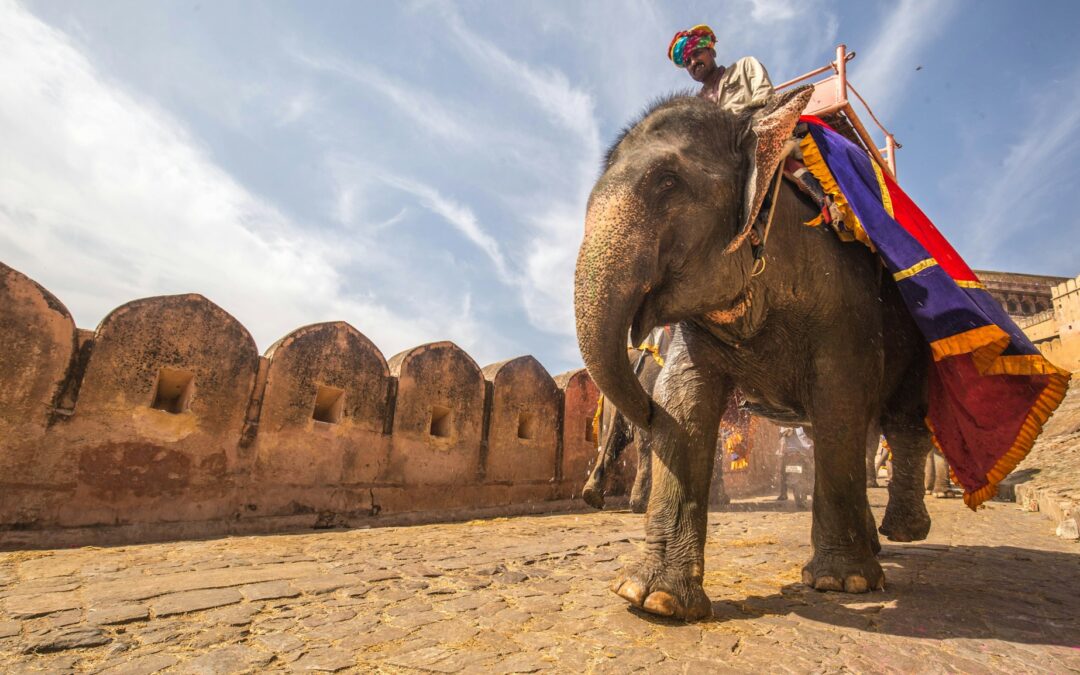
For millennia, Indian war elephants have stood as towering symbols of both power and terror on the battlefield. These formidable creatures, often seen as the backbone of Indian military strength, were considered indispensable by ancient and medieval kings alike. As the famed Mauryan minister, Kautilya, once declared, “The destruction of an enemy army depends on elephants.” This belief permeated every corner of the Indian subcontinent—from the southern Chola Dynasty to the northern Gupta Empire. However, while the war elephant’s impact was undeniable, its story is more nuanced than it may initially seem.
The Majestic War Elephant: A Battlefield Juggernaut
The war elephant, an ancient marvel of military engineering, was not just an animal of great size but a living, breathing machine of destruction. These colossal creatures were integral to the battlefield strategies of Indian kings, particularly during the medieval era. Their role in battle was built upon their immense strength, size, and impressive speed and endurance. Standing up to 12 feet tall and weighing as much as 4 tons, they were the closest thing to living tanks the world had seen before modern technology redefined warfare.
Indian elephants, in particular, had an anatomical advantage. Their broad, stout bodies, with relatively shorter legs, granted them a low center of gravity compared to their taller African counterparts. This characteristic made them much more stable when navigating the uneven and chaotic terrain of battlefields, especially when compared to their North African cousins, who, despite their larger size, had a higher center of gravity that made them more prone to stumbling and losing balance. The Indian elephant’s stable stance allowed it to charge with immense power, often directly into enemy infantry or cavalry ranks, causing them to scatter in panic.
Unlike horses, whose agility was often more celebrated, elephants’ raw power could destroy on an unparalleled scale. These massive beasts could run at speeds of up to 15 miles per hour, which, considering their weight, was an astonishing feat. When an elephant charged, it was like a wrecking ball on the battlefield—capable of crushing and trampling anything in its path. The sheer impact of their charge and their towering presence created a psychological advantage that no amount of discipline or training could immediately counter. The sight of a war elephant charging directly toward a line of infantry could induce terror, often breaking the ranks of even the most disciplined soldiers.
Moreover, their thick, loose skin acted as natural armor. While it wasn’t impenetrable, it could deflect most blows from swords, spears, and arrows—particularly when these weapons struck glancingly. The Indian war elephant’s skin, about an inch thick, could withstand various forms of damage that would have been lethal to less armored creatures or soldiers. This durable skin gave the war elephant an edge in the early phases of the battle when its size and power alone were often enough to create chaos in enemy formations. But, the true potential of the war elephant was realized not just through brute force but through years of strategic training and tactical deployment.
Armored and Equipped for War
The war elephant’s transformation from a mere beast of burden to a powerful weapon of war was a meticulous process that involved careful training and specialized equipment. Kings and commanders did not rely solely on the elephant’s natural abilities; they enhanced its combat capabilities with armor and armaments that turned the elephant into a battlefield juggernaut capable of executing complex maneuvers and strategies.
In the medieval period, Indian military engineers and trainers invested substantial resources into developing protective armor for the war elephants. The armor is usually made of steel, chainmail, and plate armor. These materials were carefully crafted to shield the elephant’s vital areas without impeding its mobility. The most heavily armored sections included the elephant’s body, chest, and neck, which were covered in thick layers of metal plating and chainmail to protect them from direct strikes. However, the trunk, one of the elephant’s most versatile tools in combat, and the underside were often left unarmored or lightly shielded to preserve flexibility and mobility. This balance between protection and agility made the Indian war elephant particularly formidable in combat, as it could withstand attacks and continue moving with agility and speed.
One of the most significant innovations in war elephant technology was the hauda, a small platform on the elephant’s back. The hauda was a structure designed to hold archers, spear throwers, or even military commanders, elevating them above the chaos of the battlefield and providing them with a clear vantage point. The platform allowed multiple soldiers to ride atop the elephant, making it a multi-purpose unit capable of melee and ranged combat. In many instances, three to four archers or spearmen would take a position in the hand, using bows, spears, and other projectile weapons to target enemy forces from a height. This setup transformed the elephant into a mobile artillery platform, capable of engaging enemies at a distance while charging directly into the fray when needed.
The hauda also allowed commanders to maintain a higher vantage point during battle. From atop an elephant, military leaders could clearly observe the battlefield, directing their forces with a bird’s-eye view that provided strategic advantages over their enemies. This was particularly crucial in large, chaotic battles where traditional command and control might be more difficult. The height advantage also made the war elephant a valuable tool for rallying troops, as commanders were easily visible atop their massive mounts, which could inspire morale among their soldiers.
The elephant’s mahout—its driver—was equally crucial to its success in battle. The mahout’s role extended beyond merely guiding the animal; they were skilled trainers who shaped the elephant’s behavior, turning it into a fearsome weapon. A mahout controlled the elephant using a two-pronged goad, a long stick with a sharp, pointed end that could prod the elephant into action or steer it amid combat. The mahout and the elephant relationship was a deeply trained bond built on mutual trust and understanding. These skilled mahouts taught their elephants to endure intense physical pain, a critical component of their ability to remain calm and focused under battle stress. This training also included teaching the elephant to obey directional commands, allowing it to execute complex maneuvers on the battlefield—using its body, trunk, tusks, and tusk-mounted weapons with deadly precision.
Skilled mahouts played an essential role in maximizing the war elephant’s effectiveness. They trained the elephants to use their trunks to grab and toss enemies while sharpening their tusks into deadly weapons. The elephant’s ears, head, and legs were all utilized in combat, making it an incredibly versatile fighter. This form of total-body combat made the war elephant far more than a simple brute; it was an agile, unpredictable weapon capable of taking on multiple roles during a battle.
In conclusion, the Indian war elephant was not just a symbol of imperial power but a highly effective and meticulously engineered instrument of war. Its combination of physical prowess, strategic deployment, and specialized equipment made it a dominant force on the battlefield. The skillful training and the use of the hauda transformed the elephant into a hybrid combat unit capable of both ranged and close combat. As formidable as they were, their success was ultimately determined by the leadership and skill of those who rode them, from the commanders in the hauda to the mahouts who guided them through the chaos of battle.
The Fearsome Power of the Trunk and Tusks
The power of a war elephant did not lie solely in its size and strength; its anatomy, particularly the trunk and tusks, turned it into a devastating weapon of war. These massive creatures were not simply charging tanks—they were living, adaptable machines that could interact with their environment and manipulate it to their advantage. The long and muscular trunk was one of the war elephant’s most versatile features.
The trunk of the Indian war elephant could be used in several ways, adding significant tactical depth to its combat capabilities. The trunk was a tool for grasping and picking up objects and a weapon in itself. It could be wielded with terrifying precision to grab enemy soldiers, hoist them into the air, and throw them with incredible force. This ability to toss soldiers—sometimes great distances—made the war elephant a versatile asset for disorienting enemy formations and creating panic. In a tightly packed formation of soldiers, an elephant’s trunk could snatch individuals from the crowd, hurling them into chaos and causing disruption that left enemies vulnerable to further attacks.
One of the most frightening abilities of the war elephant’s trunk was its capacity to target high-priority or high-ranking enemies. In certain medieval records, we see examples where the trunk was used to grab important figures such as commanders or royal family members. This tactic effectively neutralized key targets and demonstrated just how critical these beasts were to controlling the ebb and flow of battle. The trunk’s dexterity also allowed it to act almost like a mobile battering ram, enabling the elephant to break through enemy lines with precision, plucking enemies off the battlefield with a single swift motion.
The tusks, another prominent feature of the war elephant, were similarly weaponized. An elephant’s tusks are typically used for foraging or defense, but in battle, they took on a far more lethal function. The tusks of war elephants were often modified or reinforced to increase their lethality. In many instances, Indian elephants had their tusks partially removed, with the exposed parts then outfitted with steel coverings. These steel tusks could slash through enemy formations, cutting down soldiers as the elephant moved through the battlefield. The tusks were not just for close-range combat; they were designed for precision strikes that could impair or incapacitate opponents from a distance.
In some cases, the tusks were modified with additional features like sharpened blades or poison-coated tips. The poison applied to these tusks was often intended to induce chaos within enemy ranks, further escalating the terror these elephants created on the battlefield. A soldier struck by such a tusk could be injured and incapacitated, causing further confusion and panic within the ranks. Even more fearsome were the tusk-mounted flails—spiked, heavy weapons that could further extend the elephant’s reach and inflict devastating damage upon enemy soldiers.
Beyond the physical enhancements, the tusks also served a symbolic role. They represented the elephant’s status as a beast of war and a symbol of imperial power. The more fearsome the tusks, the more impressive and intimidating the elephant appeared to the enemy. This psychological effect was crucial for maintaining morale on the battlefield and instilling fear in the hearts of enemy troops.
The war elephant’s trunk and tusks combined to create a creature capable of both offensive and defensive actions. Whether grabbing soldiers to toss them aside or charging through enemy lines with sharpened tusks, the war elephant’s anatomy made it a fearsome opponent that could cause devastation at both close and long ranges. Their versatility in combat was unmatched, making them indispensable tools for any military that could afford them.
Strategic Use on the Battlefield
The war elephant was not a mindless force of destruction; it was a carefully deployed weapon that could turn the tide of a battle depending on how it was used. Their effectiveness on the battlefield stemmed from their strategic placement, versatility, and psychological impact on enemy forces. Indian commanders understood the importance of positioning elephants in the most advantageous locations to maximize their potential.
One of the most critical aspects of using war elephants in battle was their role in countering cavalry. Cavalry units were often the primary force on the battlefield, especially in the medieval period, and their mobility made them difficult to defeat. However, elephants were the perfect counter to cavalry, primarily because of the overwhelming physical presence they commanded. Horses, naturally skittish animals, were easily startled and thrown into disarray by the sight of a charging elephant. The thunderous sound of elephant hooves, the flapping of their giant ears, and the towering stature of these beasts were enough to disrupt cavalry formations and send horses fleeing in fear.
In battle, war elephants were often deployed on the army’s flanks, where they could threaten any cavalry units attempting to charge the infantry. When cavalry charged, they often attempted to break through the weaker parts of the infantry line, but a well-placed war elephant could prevent this. Elephants could disrupt their ranks by charging into the cavalry’s flank, causing them to stall or panic. The elephants often stood firm and unyielding, creating a physical barrier that cavalry could not easily penetrate. This disrupted the enemy’s strategy, forcing them to retreat or adjust their tactics.
War elephants were also deployed against infantry, where their presence was even more devastating. While effective against cavalry, Infantry formations struggled to maintain cohesion when faced with the sheer terror of a charging elephant. Commanders would use elephants to smash through infantry lines, often forming large blocks or lines of elephants to create a concentrated force that could break even the most disciplined formations. As the elephants charged, their riders would direct them to headbutt, kick, bite, and trample through enemy soldiers while the archers and spear throwers in the hauda rained down fire on the enemy from above.
One of the most effective tactics employed by Indian commanders was to charge elephants in large numbers, creating a massive wall of force that would overwhelm the enemy. This tactic was not only physically devastating but also had a profound psychological effect. The sheer number of elephants charging together created a terrifying sight, often causing enemy formations to break apart in fear. Once the lines were disrupted, cavalry and archers could exploit the chaos, picking off stragglers and isolated troops.
For added effect, elephants could be chained together, forming a continuous line of beasts that could charge simultaneously, delivering massive casualties. When directed at enemy formations, these elephant blocks could break the most tightly packed infantry lines, leaving them vulnerable to further attacks. This tactic also helped deny large battlefield sections to the enemy, as the elephants could control entire areas, forcing opponents to retreat or risk being overrun.
Furthermore, the war elephant was used strategically to reinforce specific battlefield areas. Indian commanders would place elephants in critical locations to respond to threats or reinforce weakened lines. The ability of war elephants to charge, break enemy formations, and cause chaos made them a versatile asset in battles, particularly when the enemy’s morale was low or when they were unprepared for the elephant’s terrifying presence.
In essence, the war elephant was a physical weapon and a strategic tool that shaped the flow of battle. Its ability to counter cavalry, break infantry formations, and instill fear in the enemy made it an invaluable asset for Indian armies. Whether used as a flanking force, a battering ram, or a psychological weapon, the war elephant played a central role in many of India’s greatest military victories and remains one of the most iconic symbols of ancient and medieval warfare.
Psychological Warfare and Intimidation
One of the war elephant’s most powerful aspects was its ability to instill terror and disrupt the psychological stability of opposing forces. In warfare, the mental state of the enemy can often be as important as the physical strength of one’s army. The war elephant was a master of psychological warfare, its very presence on the battlefield enough to create fear, confusion, and chaos among enemy soldiers. Its sheer size, combined with its unpredictability, made it an instrument of both physical and psychological devastation.
The war elephant’s impact on enemy troops exceeded its ability to trample or crush them. The elephant was a creature of such enormity that even the bravest soldiers could be struck with awe and fear at the sight of it charging toward them. Its massive size and thunderous hooves created an immense auditory and visual effect that could shatter the composure of even the most disciplined armies. When an elephant began its charge, it would often create a storm of panic as soldiers fled or broke ranks to avoid the unstoppable force bearing down on them.
But it wasn’t just the elephant’s size that caused terror; it was the otherworldly nature of its behavior. Elephants made sounds, unlike any other creature, with trumpeting calls that could be heard for miles, adding to the sense of impending doom. Combined with the sight of the elephant’s flapping ears and charging hooves, the battlefield became a place of overwhelming fear. This cacophony of noise and the elephant’s overwhelming presence created a form of psychological warfare that few could withstand.
The terror induced by the war elephant was compounded by the fact that these beasts were not just mindless animals charging randomly. They were trained to attack with precision, using their trunk, tusks, and other body parts to target soldiers ruthlessly. A well-trained elephant would strike high-priority targets—generals, commanders, or other key figures—disrupting the leadership of enemy forces. The mere idea that a commander could be seized by the trunk of a war elephant and thrown across the battlefield created a sense of vulnerability that could unravel an entire army’s morale.
Historical accounts from the medieval period describe terrifying scenes where war elephants would charge into enemy ranks in groups or on their own. These elephants would often be armed with steel-covered tusks, which added a glistening, menacing appearance to their already fearsome stature. As they plowed through formations, they would headbutt, trample, and gore soldiers in their wake, all the while the riders in the hauda fired arrows and spears to sow destruction further.
The impact of this psychological warfare was not limited to the enemy soldiers on the battlefield. It extended to the leadership of opposing forces as well. In many battles where leadership could change the tide, war elephants became prime targets for defeating enemy commanders. In one notable account, a war elephant captured the Vijayanagara Emperor in the Battle of Talakana, carrying him directly to the enemy Sultan, where the emperor was beheaded. Such acts not only crippled the enemy’s leadership but also had a profound effect on the morale of their forces, leading to the swift disintegration of their fighting spirit.
The use of elephants in battle was a matter of physical force and psychological manipulation. Commanders understood that breaking the will of their enemies was just as important as breaking their defenses. With its terror-inducing presence, the war elephant became one of the most effective tools for accomplishing this.
The Counter to War Elephants
While war elephants were a potent force on the battlefield, they were not invincible. Skilled commanders and adversaries quickly recognized that these mighty creatures, for all their strength and terror, had several weaknesses that could be exploited. Over time, military tactics developed that specifically targeted these vulnerabilities, rendering the once-feared war elephants vulnerable to decisive countermeasures.
One of the primary tactics used to counter war elephants was to exploit their physical weaknesses. The elephants’ size and massive bulk made them easy to target with weapons designed to damage their sensitive areas. In particular, the elephant’s eyes, trunk, and legs were vulnerable to attack. An archer with a longbow could aim for these weak points, using specially crafted arrows tipped with poison or designed to penetrate the elephant’s armor. The Ghaznavid Turks, for example, are said to have used poisoned arrows to target the elephant’s head and eyes. Once wounded in these areas, an elephant could become disoriented and even berserk, trampling its troops in a panic-induced frenzy. The Ghaznavid strategy was based on the idea that once an elephant was wounded, it could cause more damage to its side than to the enemy.
The fear of death was a significant psychological trigger for elephants. Although they were incredibly strong and resilient, elephants were also intelligent creatures and could recognize when they were in danger. When an elephant was wounded, it would often become uncontrollable, thrashing about and causing chaos on the battlefield. This created an opening for enemy forces to attack, as a berserk elephant could be just as dangerous to its side as to the enemy. This fear of death and the elephant’s instincts to flee when faced with pain made them vulnerable to coordinated attacks targeting their weak points.
Another effective strategy against war elephants was using highly mobile horse archers. With their ability to move swiftly and fire arrows from a distance, horse archers could harass elephants without ever coming into direct contact with them. This tactic, especially effective against large numbers of elephants, was used to wear down and exhaust these massive creatures over time. The horse archers would launch volleys of arrows from a safe distance, focusing on the vulnerable spots of the elephant—its eyes, trunk, and legs. The sheer volume of arrows would force the elephant to retreat or, in many cases, go into a frenzy, making it ineffective as a weapon of war.
Infantry soldiers, too, were trained to deal with war elephants, though the task was dangerous. Infantrymen often surrounded a war elephant in a circle, using their spears to target its vulnerable spots, including its legs and eyes. In some cases, soldiers would attempt to hamstring the elephant, crippling its ability to charge. The bravery and discipline required for such close combat were immense, as elephants were terrifying in size and their sheer power.
In some battles, elephants were immobilized through the use of traps. Hidden trenches or ditches could be dug in the path of a charging elephant. Since elephants could not leap over obstacles the way horses could, they would often fall into these traps, where they could be trapped and surrounded by enemy forces. Once an elephant was immobilized in this way, it was easy for enemy troops to swarm the creature and kill the elephant and its riders.
Another countermeasure involved targeting the leadership of the army. War elephants often carried commanders or high-ranking officers into battle, providing them a tactical advantage through the high vantage point. However, this made the commanders themselves vulnerable. In several recorded instances, enemy forces focused on attacking the war elephant carrying the commander. In the Battle of Takalam, for example, the Chola prince was killed after his elephant was struck by a volley of arrows, causing chaos in the ranks and ultimately leading to the collapse of the Chola forces. Similarly, in the Battle of Kopam, the Chola king, Raja Dharaja, met his end when enemy forces targeted his war elephant, killing him and forcing the Chola army to break ranks.
Despite these vulnerabilities, war elephants remained a force to be reckoned with on the battlefield. However, as military strategies evolved and firearms, archery, and cavalry improved, the once-dominant war elephant began to lose its edge. Countermeasures developed to exploit its weaknesses, and the rise of new military technologies gradually rendered the war elephant less effective. Still, its symbolic power and role in battle strategies ensured that it remained a part of Indian warfare for centuries, even adapting to newer forms of combat.
The Politics of War Elephants
The war elephant was not just a weapon of war but also a political tool that symbolized power, prestige, and control. In ancient and medieval India, the acquisition, maintenance, and deployment of war elephants were heavily tied to the empire’s political structure and its projection of authority. Rulers understood that the size of their elephant corps was not only a military asset but also a statement of their legitimacy and power. The presence of a large, well-maintained elephant corps was a visual representation of a ruler’s wealth and ability to command vast resources and a means of solidifying their dominance over rival factions.
Capturing and maintaining war elephants was a significant financial burden, requiring immense food, shelter, and care resources. The elephant corps of a kingdom was often carefully guarded and kept in large stables, where each elephant was treated almost like a member of the royal family. The elephants would require vast amounts of food and water, consuming up to several hundred kilograms of food every day. They would also need to be trained and maintained by specialized mahouts, the elephant drivers, who played an integral role in ensuring the elephants were battle-ready.
The cost of acquiring a war elephant was staggering. It was reported that a war elephant could cost around 100,000 dirhams (the currency used in the Islamic world), a substantial portion of a kingdom’s military budget. This high cost made elephants a rare and valuable asset, further elevating their symbolic importance. Therefore, a well-maintained elephant corps would become a visual and material demonstration of a ruler’s wealth and military might. As a result, owning many elephants became a status symbol for rulers across India, often used to project power internally to subjects and externally to rival kingdoms.
Beyond military applications, elephants were also used as symbols of authority and imperial legitimacy. Their massive size and imposing presence were an effective means of intimidating both enemies and potential rebels. Commanders would use elephants to maintain control over their subordinates, reminding them of the ruler’s power and the threat of retribution. As such, the presence of elephants in royal processions, rituals, and state affairs further reinforced the king’s sovereignty. The king’s elephant, in particular, was often seen as a divine representation of the ruler’s power, with the animal symbolizing earthly and celestial dominion.
On the political front, war elephants could also be employed as a strategic tool for consolidating power. Indian rulers often demanded that their feudatories—lesser kingdoms and regional powers—supply them with war elephants at their own expense. This imposed a significant financial burden on these subordinates, who would need to raise and maintain elephants for their overlords. Not only did this drain the resources of the feudatories, but it also deprived them of valuable military assets that could be used to challenge the ruler. This created a system where the ruler maintained both military superiority and control over the loyalty of their subordinates. The resulting financial and military dependence ensured that the feudal states remained loyal and that any potential rebellion was suppressed before it could gain momentum.
The strategic use of war elephants as a tool of political control was particularly important in maintaining the stability of large empires. For example, the Chalukyas and the Cholas were known for effectively using war elephants in this way. The Chalukyas, in particular, were renowned for demanding large numbers of elephants from their feudatories, ensuring that no individual kingdom could field a comparable force of war elephants to challenge their authority. This tactic helped suppress internal dissent and maintained a strong sense of imperial dominance that was difficult to contest.
Even beyond India, war elephants were used as diplomatic symbols. They were often given as gifts to foreign rulers to cement alliances or display the gifting kingdom’s military might. Such gifts served a dual purpose: they reinforced the ruler’s status as a generous and powerful benefactor and sent a clear message of military strength. The legacy of war elephants as both a tool of war and a symbol of power lasted through the medieval era, influencing how kings, sultans, and emperors viewed their military capabilities and diplomatic standing.
Legacy of the War Elephant
The legacy of the war elephant is deeply ingrained in India’s military and cultural history. Even as warfare evolved and firearms and artillery took precedence, the war elephant played a significant role as a symbol of power and a tactical force on the battlefield. Over the centuries, the war elephant became emblematic of military prowess and India’s vast cultural heritage, intertwined with the nation’s religious, political, and royal traditions.
Though its use began to diminish with the rise of modern weaponry, the image of the war elephant persisted well into the colonial era. During the 18th century, under Tipu Sultan, the Mysore Kingdom famously employed war elephants in combat against the British Empire. These elephants, outfitted with cannons and other armaments, were used in skirmishes against British forces, proving that the war elephant still held symbolic and military value even in an age of rifles and artillery. Tipu Sultan’s use of these elephants in battle, alongside his innovative use of gunpowder artillery, was part of his broader strategy to resist British colonial expansion.
The British Empire, which ultimately conquered much of India, understood the political and symbolic power of war elephants and sought to neutralize them both on the battlefield and in cultural memory. They adapted to the threat of elephants through gunfire, modern artillery, and new tactics. However, despite their best efforts, the war elephant continued to symbolize India’s resistance against foreign domination, even if it was no longer as formidable in direct combat.
Beyond their military applications, war elephants left a lasting imprint on Indian art, literature, and culture. The elephant symbolizes royal authority, wisdom, and strength in many texts. Elephants were often depicted in temples, on coins, and in sculptures, serving as reminders of the power of the rulers who used them. The association of elephants with deities such as Ganesha, the elephant-headed god of wisdom and prosperity, further reinforced their significance in Indian culture. This divine connection to the elephant highlighted the cultural reverence for the animal, which transcended its use as a military asset.
Additionally, the strategic use of war elephants in battle influenced military thinking beyond India. The use of elephants as shock troops was adopted by various cultures, including those in Southeast Asia and the Middle East, where elephants were sometimes incorporated into armies to carry out similar functions. Historical accounts from Persia, Greece, and even Rome show that war elephants were not only used by Indian rulers but were also employed in battles fought in distant lands. Alexander the Great, for example, encountered elephants during his invasion of India and was struck by their power on the battlefield, realizing that they could pose a serious challenge to his army’s cavalry.
Even in modern times, the image of the war elephant evokes awe and respect, often appearing in historical documentaries, films, and books exploring India’s ancient and medieval military history. The war elephant represents a time when warfare was as much about imposing psychological power as physical might. The elephants’ role in ancient Indian battles serves as a testament to a sophisticated approach to military strategy that combined strength, skill, and psychological warfare, leaving a legacy that continues to captivate the imagination of people worldwide.
The war elephant’s legacy is seen in military history and its enduring cultural impact. It remains a symbol of India’s ancient military grandeur and the complex relationship between politics, warfare, and culture, ensuring that the mighty war elephant’s story will continue to resonate for generations.
Conclusion
With its immense size, strategic versatility, and unparalleled ability to instill fear, the war elephant was more than just a tool of war—it was a symbol of power, authority, and the intricate relationship between military might and political control. From its formidable role on the battlefield to its use as a diplomatic and cultural symbol, the war elephant shaped the course of Indian history and left an indelible mark on military tactics and statecraft.
Despite the eventual decline of its dominance in warfare with the advent of modern technology, the legacy of the war elephant endures, both as a remarkable feat of ancient engineering and as a testament to the ingenuity and resourcefulness of Indian kings. The war elephant’s place in history as a living juggernaut reflects India’s military prowess and reminds us of the complex interplay between warfare, power, and symbolism that transcended centuries and civilizations.