
Most people assume that getting ahead financially requires something dramatic. A high-paying job, a lucky investment, or access to information others don’t have. It feels like wealth is built through big, visible moves.
But if you look closely at the people who consistently do well with money, the pattern is much quieter.
They follow simple habits.
Nothing flashy. Nothing complicated. Just small decisions, repeated over time, that slowly change how money behaves in their lives. Instead of constantly disappearing, their money begins to stay. Then it starts to grow. Eventually, it begins to work for them.
That’s the real shift.
Money doesn’t just come down to how much you earn. It comes down to the systems guiding where that money goes every single month. And once those systems are in place, the results start compounding in the background, almost without effort.
In this article, we’re breaking down five simple money habits most people ignore. On their own, they seem small. But together, they quietly transform the way your financial life unfolds.
Pay Yourself First
Most people approach saving in the same way. Money comes in, expenses go out, and whatever is left at the end of the month gets saved.
In theory, it sounds reasonable.
In reality, it almost never works.
By the time the month is over, the money is already gone. Small purchases, daily expenses, and unexpected costs slowly eat through what could have been saved. Nothing feels excessive in the moment, but together, they leave very little behind.
This is why so many people feel like they’re trying to save, but never actually making progress.
Paying yourself first flips this entire system.
Instead of saving what’s left, you save at the beginning. The moment money comes in, a portion of it is moved away—out of reach from everyday spending. What remains is what you live on.
That one shift changes everything.
Now, your future is no longer dependent on leftover discipline. It’s already been accounted for. Bills still get paid. Life still continues. But saving is no longer optional—it’s automatic.
And something interesting happens when you do this consistently.
Your lifestyle adjusts.
People often assume that saving first will make life feel tighter. But in most cases, spending simply adapts to whatever is available. You don’t feel deprived—you just operate within a slightly smaller range, and it quickly becomes normal.
The habit becomes even more powerful when it’s automated. Money arrives, and a fixed percentage quietly moves into savings or investments without requiring a decision. There’s no internal debate. No reliance on motivation. The system runs on its own.
At first, the amount may feel insignificant. Almost too small to matter.
But over time, those small, consistent actions begin to stack. What once disappeared every month now stays. Then it grows.
And without realizing it, you’ve turned saving from something you try to do into something that simply happens.
Turn Your Money Into Assets
Once you start paying yourself first, something important changes.
For the first time, you have money that isn’t meant to be spent immediately. It’s set aside for the future. And that raises a simple but powerful question:
What should that money do?
Most people leave it sitting in cash.
It stays in a bank account, untouched, safe, and still. There’s a certain comfort in that. Nothing fluctuates. Nothing feels risky. But there’s also a hidden cost.
Cash doesn’t grow.
It waits.
Assets are different.
Assets are anything that can grow in value or produce value over time. A business generates income. A stock represents ownership in a company that continues to earn. Property can generate rent. Even certain digital assets or intellectual property can keep producing long after the initial investment.
In a simple way, assets are like workers.
They keep doing their job in the background, whether you’re paying attention or not.
And this is where the habit becomes powerful.
Instead of letting your money sit idle, you give it a role. You move it into things that have the potential to grow, produce, or multiply over time.
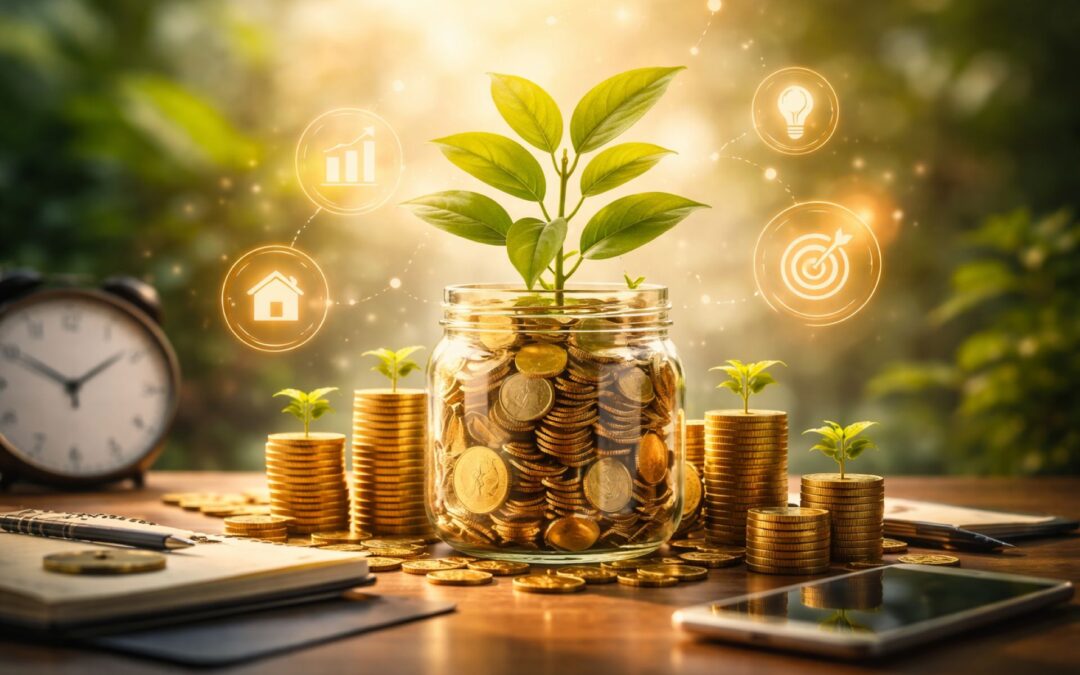
Think of money like seeds.
If seeds stay in a bag, nothing happens. But when you plant them, growth begins—slowly at first, almost invisible. For a while, it might even look like nothing is happening at all. But beneath the surface, roots are forming.
Given enough time, those small beginnings turn into something strong.
Turning money into assets works the same way.
Not every decision will be perfect. Some assets grow faster than others. Some take years to show results. But the habit itself is what matters. Each time you move money into something productive, you’re planting another seed.
And over time, those seeds start to compound.
What changes isn’t just your balance—it’s your relationship with money. It stops being something that only passes through your hands and starts becoming something that works alongside you.
And once money begins to work, building wealth becomes a very different game.
Buy Things That Pay You Back
Spending is a natural part of life. Money comes in, money goes out. You pay for something, you enjoy it, and the story ends there.
For most purchases, that’s exactly how it works.
But some purchases behave differently.
Some don’t just take money—they return it.
And this is where a subtle but powerful habit begins to form.
Before buying something, pause and ask a simple question: Will this help my future?
That one question changes the direction of your spending.
Some things you buy help you grow. A course that builds a skill. A tool that improves your work. A book that shifts how you think. A piece of equipment that allows you to create something new. These purchases don’t just serve the present—they continue adding value long after the money is spent.
They give you leverage.
Think of spending in two categories.
Some purchases are like small plants. They appear, give a bit of value, and then fade away. A meal out, a quick upgrade, something convenient in the moment. There’s nothing wrong with them, but their impact is short-lived.
Other purchases are like trees.
They take time to grow, but once they do, they keep giving. They produce results year after year—through skills, opportunities, or income. The value compounds quietly in the background.
The goal isn’t to eliminate enjoyment or strip life of comfort.
It’s to redirect a portion of your spending.
Instead of every purchase being about today, some begin to serve tomorrow. Over time, more of your money flows into things that strengthen your abilities, expand your opportunities, and increase what you can produce.
And slowly, the pattern changes.
Money no longer only leaves your life. Some of it starts finding its way back—often in ways that are much bigger than the original cost.
Don’t Try to Save Every Dollar
Saving money is important.
But the way you approach it matters just as much as the act itself.
There are two very different mindsets when it comes to saving.
The first is forward-looking. You set money aside early, just like in the first habit. You think about what that money can become—assets, skills, opportunities. Your focus is on building something larger over time.
The second mindset is much narrower.
It turns saving into an obsession.
Every expense feels like a mistake. Every small purchase becomes something to question. You start tracking every coin, every receipt, every tiny outflow of money. And slowly, your attention shifts.
Instead of asking, What can I build? you start asking, What can I cut?
At first, this might feel responsible. Disciplined, even.
But over time, it creates a subtle problem.
Your world starts to shrink.
When all your attention is focused on minimizing loss, it becomes harder to notice opportunities for growth. You become more concerned with protecting what you have than expanding what’s possible. And ironically, this rarely leads to meaningful financial progress.
Because real progress doesn’t usually come from saving a few extra dollars here and there.
It comes from the bigger moves.
Learning valuable skills. Investing in assets. Taking calculated risks that increase your earning potential. These are the decisions that actually move your life forward.
A healthy approach to saving keeps things in balance.
Yes, you avoid waste. Yes, you’re intentional. But you don’t let small expenses dominate your thinking. You don’t reduce your financial life to a constant exercise in restriction.
Instead, you give your money direction.
You save with purpose, not fear. You focus on growth, not just preservation. And that shift keeps your attention where it matters most—on building something bigger, not just holding onto what you already have.
Don’t Check the Market Every Day
When people start investing, something unexpected often happens.
They begin watching the market constantly.
Prices go up, prices go down. News appears. Opinions flood in. Predictions change by the hour. It becomes very easy to open an app and check again… and again… and again.
At first, it feels responsible. Like you’re staying informed.
But in reality, this habit usually makes investing worse.
Markets are designed to move in the short term. That’s their nature. Prices fluctuate daily, sometimes for reasons that have nothing to do with real value. Businesses, on the other hand, grow slowly. Industries evolve over years. True progress takes time.
And when you focus too closely on daily movements, you start reacting to noise.
A small drop feels like danger. A small rise feels exciting. Headlines trigger emotions. Decisions become reactive instead of deliberate. You begin to treat investing like a series of short-term events rather than a long-term process.
This creates a cycle.
You check frequently, you feel something, and then you act too quickly. You adjust strategies, second-guess decisions, and stress over movements that would normally correct themselves with time.
But investing doesn’t reward constant attention.
It rewards patience.
The real power of investing comes from allowing time to do its work. Businesses grow. Profits accumulate. Compounding builds slowly, almost invisibly at first. Then, over time, those results begin to stack.
And that only happens if you stay the course.
When you stop checking the market every day, something shifts. You move from reacting to trusting. From chasing signals to following a system. You give your investments the space they need to grow.
Because in the end, wealth isn’t built in the daily fluctuations.
It’s built in what happens when you stop interfering.
Conclusion
Wealth rarely comes from a single breakthrough moment.
It comes from small decisions, repeated consistently, long before the results become visible.
Each of these habits is simple on its own. Saving first. Investing into assets. Spending with intention. Thinking beyond small expenses. Staying patient with investments. None of them feel dramatic. None of them promise immediate change.
But together, they create something powerful.
They change the direction of your money.
Instead of constantly slipping away, your money starts to stay. Then it begins to grow. Eventually, it starts working alongside you—quietly building momentum in the background while you focus on living your life.
That’s the real shift.
Not more effort. Not more stress. Just better systems.
And once those systems are in place, wealth stops being something you chase… and starts becoming something you naturally build over time.