
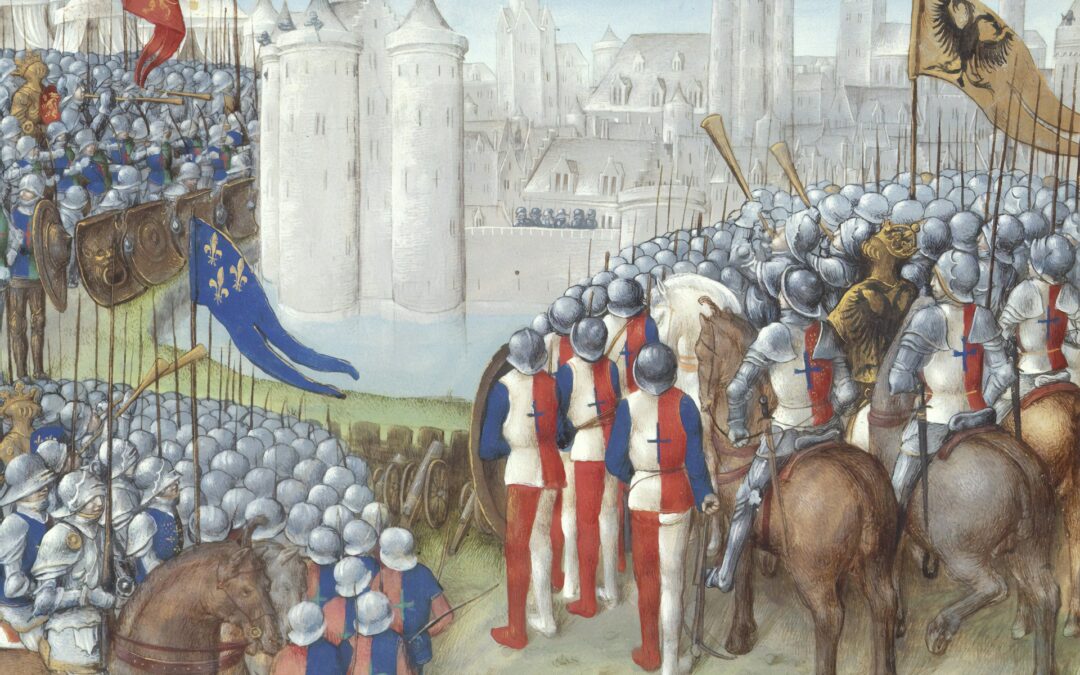
Picture this: you’re the king of a modest fortress, and another monarch, puffed up with ego, mocks your humble stronghold as a “keep so weak even surfs laugh at it.” An insult almost too brutal to stomach in the 13th century, ranking just behind your moat being called a glorified puddle. What do you do? Siege. But siege warfare? It’s no whimsical afternoon pastime with armies bashing walls and a few battle cries. It’s a cruel, drawn-out chess match drenched in mud, misery, and maddening uncertainty.
The Grim Reality of Sieging a Castle
Siege warfare in the medieval era was a brutal, relentless ordeal—far removed from the glorified, cinematic portrayals of heroic knights scaling walls with flags flying and trumpets blaring. It was a war of attrition, a drawn-out chess match where the stakes were life, death, and the very survival of entire communities. Castles were not merely buildings; they were living fortresses, intricately designed and painstakingly maintained to withstand years of assault. Their massive stone walls, often several feet thick, were engineered to resist battering, fire, and mining efforts, and their elevated battlements provided defenders with a commanding vantage point.
When an army laid siege to such a fortress, it faced immense logistical and tactical challenges. Simply surrounding a castle was insufficient; attackers needed to maintain supply lines for their own forces, protect their camps from sorties and counterattacks, and withstand the harsh realities of weather, disease, and dwindling morale. Armies consisted mostly of peasants and farmers conscripted or hired for campaigns, whose primary concern was often the welfare of their families and lands back home. The mental strain of standing idle for weeks or months, coupled with the fear of starvation or disease, wore down even the most resolute.
On the other side, defenders, though confined within walls, were far from powerless. They had home advantage, intimate knowledge of the terrain, and the psychological boost of protecting their own homes and loved ones. Their fortifications were designed to maximize defensive advantage: arrow slits allowed archers to pick off enemies while remaining shielded; murder holes enabled boiling oil or rocks to be dropped on assailants; and thick walls absorbed the impact of trebuchet stones. Furthermore, many castles had layered defenses—outer walls, inner keeps, moats, and drawbridges—that forced attackers to repeatedly breach successive barriers under heavy fire.
The result was a slow, grinding contest where progress was measured in days and weeks rather than hours. Sieges drained resources on both sides, inflicted heavy casualties, and demanded patience and cold calculation. Victory wasn’t guaranteed; many sieges ended in stalemate, attrition, or costly retreats. The toll on human life, physical endurance, and psychological stamina was staggering, making siege warfare one of the most grueling chapters of medieval conflict.
Starve Them Out? Think Again.
The idea of starving out a castle sounds straightforward: cut off all supply routes, surround the fortress, and wait until the defenders run out of food and water, forcing them to surrender. However, medieval castles were far better prepared than one might expect. Lords and commanders took provisioning seriously, stocking granaries with vast quantities of grain, salted meats, dried fish, and preserved vegetables, carefully packed to withstand months or even years of siege conditions.
This stockpiling was not mere precaution; it was a calculated defense strategy. Castles often contained sophisticated food storage systems and facilities: underground cellars to keep perishables cool, smokehouses for meat, and wine or ale casks for hydration and nutrition. Some even had fish ponds within their walls, providing a renewable food source when stored supplies dwindled. Water was secured through deep wells dug inside the fortress, ensuring a fresh supply even when outer moats or rivers were inaccessible.
Surprisingly, many castles could endure sieges for upwards of 20 to 30 weeks without collapsing from hunger alone. This meant that a besieging army, attempting to starve out defenders, faced a long and arduous wait. Meanwhile, the attackers had to sustain their own men—thousands of soldiers who also needed food, water, shelter, and medical care. Maintaining a siege camp was an enormous logistical challenge, often stretching supply lines thin and exposing troops to the elements, disease, and enemy raids.
The psychological strain of waiting out a siege was immense for the attackers. Many soldiers, drawn from agrarian backgrounds, grew restless and homesick as they watched the weeks drag by. The looming threat of desertion grew as men worried about their farms and families, fearing the loss of crops and livelihoods during their absence. Commanders had to manage not only the enemy behind the walls but also the morale and loyalty of their own men.
Historical examples like the Siege of Kenilworth in 1266 highlight the futility of starvation tactics. King Henry III’s forces attempted to starve out the rebel-held castle for six grueling months, only to see the defenders thrive, supported by fish ponds, mills, and abundant stores. The attackers, meanwhile, suffered disease and dwindling morale until forced to abandon the siege. Starving out a castle was a gamble against time and endurance, one that frequently backfired, turning the besiegers into victims of their own strategy.
Storm the Walls? Prepare to Lose Men Fast
When starvation failed or the urgency of war demanded quicker results, commanders resorted to storming the castle walls directly—a tactic both infamous and infamous for its devastating cost in human life. The imagery often associated with this approach is one of heroic charges, banners flying, and triumphant warriors scaling battlements. Reality, however, was far grimmer and far less glamorous.
Castle walls were towering monoliths of stone, often more than 20 feet thick and designed explicitly to resist assault. Attackers faced a vertical fortress wall that was not only a physical barrier but a lethal gauntlet. Defenders had the advantage of height, cover, and deadly weaponry. Archers, protected behind narrow arrow slits, could rain down volleys of arrows with deadly accuracy. Stones, boiling oil, and hot sand could be poured through murder holes onto attackers below. The psychological terror of witnessing comrades crushed by falling rocks or engulfed in flames was enough to shatter the morale of even the most stalwart soldiers.
Siege ladders, the simplest assault tool, required attackers to rush forward carrying heavy, cumbersome wooden planks, prop them against the wall, and climb upward—all while exposed to a barrage of projectiles. Defenders could easily push ladders away or knock climbing soldiers into the moat or sharp stakes below. The element of surprise was rare; defenders were usually well-prepared to meet assaults.
Siege towers represented a technological leap—massive, wheeled wooden structures that could approach walls and allow troops to climb directly onto battlements. In theory, they provided protection and a platform for attacking soldiers. In practice, these towers were vulnerable to mud, uneven terrain, and fire. A well-placed flaming arrow could turn the tower into a blazing coffin, killing everyone inside. Furthermore, the sheer size of siege towers made them slow and unwieldy, easy targets for defenders’ countermeasures.
Battering rams were another brutal instrument of assault. Teams of men would laboriously swing a heavy, often iron-tipped log against fortified gates or weaker sections of walls. The attackers operating rams were exposed to incessant arrow fire and falling debris, making their task perilous. The noise, mud, and exhaustion added to the hellish conditions.
Despite the dangers, commanders sometimes had little choice but to order assaults, especially when time was short or supplies dwindling. Yet, success came at a price—historical records suggest a success rate of only about 30%, meaning most attacks resulted in heavy casualties with little gain. The decision to storm a castle was a gamble with human lives, often reflecting desperation rather than strategy.
Bring Out the Big Guns: Trebuchets and Ballistae
When patience was scarce and direct assaults were too costly or impossible, siege warfare turned to its most formidable engines: trebuchets and ballistae. These colossal machines were the medieval artillery, reshaping siege tactics with their unparalleled destructive power and psychological impact.
The trebuchet was a masterpiece of engineering, harnessing the principles of leverage and gravity to hurl massive projectiles with terrifying accuracy and force. Using a counterweight mechanism, trebuchets could launch stones weighing up to 90 kilograms over distances exceeding 300 meters. These boulders crashed into walls, towers, and courtyards, inflicting structural damage and spreading chaos among defenders. The noise alone—thunderous crashes reverberating through stone and earth—was a weapon in itself.
Beyond mere rocks, trebuchets were infamous for launching grotesque payloads: diseased corpses, burning pitch, and barrels of foul substances. These projectiles were designed not only to damage but to infect, demoralize, and disgust those inside. The psychological warfare was as vital as the physical destruction. Defenders faced the dual threat of collapsing walls and unseen diseases spreading within their ranks.
Ballistae, in contrast, were precision weapons. Essentially giant crossbows, they launched enormous iron bolts—some over six feet long—with devastating accuracy. Unlike the trebuchet’s indiscriminate bombardment, ballistae targeted individuals: commanders, archers, messengers, or any vulnerable target that could disrupt the defenders’ coordination. A single ballista bolt could pierce armor and kill with lethal efficiency, turning these machines into silent assassins on the battlefield.
The presence of these engines communicated a message beyond the immediate threat: the attackers possessed the resources, ingenuity, and resolve to wage a prolonged and merciless siege. Constructing and deploying trebuchets and ballistae required weeks of labor, skilled engineers, and substantial materials—investments that underscored the siege’s seriousness. The sight of these monstrous machines looming on the horizon was enough to sap defenders’ morale, as they understood that resistance meant enduring relentless bombardment and inevitable destruction.
Together, trebuchets and ballistae were the heavy artillery of their time, transforming siege warfare from a battle of manpower and willpower into a contest of engineering, endurance, and psychological dominance.
Sneaky Siege: Tunnels and Sabotage
When blunt force and starvation tactics failed to yield quick results, medieval commanders turned to stealth and subversion to undermine their foes. One of the most ingenious yet perilous methods was undermining—digging tunnels beneath castle walls with the intent to collapse them and breach defenses from below.
This subterranean strategy was akin to medieval termites gnawing at the foundation of a stone giant. Siege engineers and sappers would begin by selecting a section of the wall, preferably a vulnerable or strategically important tower or curtain. Using shovels and picks, teams toiled tirelessly underground, sometimes for weeks, carving out tunnels deep and long enough to extend beneath the foundations.
Once the tunnel was excavated, the next step was to prop it up with wooden beams, holding the weight of the stone above in a delicate balance. At the opportune moment, these supports would be set ablaze, causing the tunnel to collapse. The earth and masonry above would cave in, creating a breach through which attackers could pour.
However, undermining was a high-risk, high-reward gamble. Digging tunnels was slow, exhausting, and dangerous work often conducted in near darkness, with poor ventilation and the constant risk of tunnel collapse. Defenders were acutely aware of such tactics and employed countermeasures. They listened for sounds of digging through the ground, sent their own miners to intercept, or flooded tunnels with water or smoke to disrupt operations.
Even successful undermining did not guarantee victory. Collapsing a wall segment created chaos, but many castles featured concentric defenses—multiple layers of walls or earthworks—so attackers often faced fresh fortifications immediately behind the breach. Moreover, rushing through a freshly made hole was fraught with danger: defenders concentrated their forces at the breach, waiting to repel the assault in brutal close-quarters combat.
The siege of Rochester in 1215 exemplifies undermining at its most effective. King John’s forces managed to collapse a tower by burning fat-soaked timbers used as props, causing the structure to tumble and open a breach. But such victories were exceptional and required patience, skill, and often a bit of luck.
When All Else Fails: Biological Warfare
As sieges dragged on and conventional methods faltered, commanders sometimes resorted to the most ruthless weaponry known to mankind: biological warfare. Medieval fortresses were bustling microcosms, packed with soldiers, servants, women, and children living in cramped quarters. Disease was a constant threat, and the introduction of contagion could be as deadly as any sword.
Attackers exploited this vulnerability in grim fashion. They contaminated water supplies by dumping dead animals, sewage, or decomposing bodies into wells and reservoirs, turning essential resources into vectors of sickness. But the most notorious tactic was catapulting diseased corpses and plague-infected cadavers over castle walls, turning the defenders’ living quarters into a breeding ground for infection.
This was not mere spite; it was strategic terror. The presence of disease spread panic and confusion among defenders, weakening both body and spirit. Morale, already strained by hunger and constant threat, would collapse under the invisible enemy of illness.
A chilling historical example occurred in 1346, when Mongol forces besieging the city of Kafa (now Feodosia, Crimea) used plague-infected corpses as biological weapons. The resulting outbreak decimated the defenders and is believed by many historians to have contributed to the rapid spread of the Black Death throughout Europe in the ensuing years. This horrendous legacy illustrates how medieval siege warfare sometimes unwittingly unleashed pandemics that changed history.
The use of biological warfare blurred the line between combat and atrocity, transforming the siege from a battle of armies into a war on human health and dignity. It was a dark chapter that reminds us how desperation and cruelty often went hand in hand in the quest for victory.
Espionage: The Art of Betrayal
While siege engines battered walls and starvation tactics strained bodies, the most effective weapon sometimes wasn’t steel or starvation but subterfuge and treachery. Espionage in medieval siege warfare was a complex dance of deception, bribery, and betrayal that could render even the mightiest fortress vulnerable from within. Castles, no matter how impregnable, were only as strong as the loyalty of the people inside their walls.
Attackers often deployed spies disguised as merchants, servants, or travelers long before the siege began. These agents worked covertly to gather intelligence on the castle’s defenses, supply lines, and morale, but more importantly, they sought to exploit fissures within the defenders’ ranks. Disgruntled guards, resentful servants, or those simply tempted by gold could be bribed or coerced into cooperation. Sometimes, the motivations ran deeper—personal grievances, political ambitions, or even jealousy could lead insiders to betray their lords.
One of the most famous examples of espionage turning the tide of a siege was Edward I’s capture of Stirling Castle in Scotland. Rather than enduring a protracted siege, Edward successfully bribed a gatekeeper to open the castle gates, allowing his forces to enter without bloodshed. This episode underscores a harsh truth of siege warfare: no matter how solid the walls, a single act of treachery could nullify months or years of defense.
Espionage added a layer of psychological warfare inside castles. Suspicion poisoned relationships, and paranoia could lead to internal purges or mistrust among defenders, weakening their unity. The fear that anyone could be an informant gnawed at morale, sometimes proving as debilitating as any battering ram or trebuchet. For attackers, cultivating spies and fomenting dissent became a vital part of their arsenal, turning the enemy’s own people into instruments of defeat.
The Power of Psychological Warfare and Deception
Siege warfare extended far beyond physical confrontation—it was as much about manipulating minds as breaking walls. Psychological warfare was an essential, though often invisible, component of medieval sieges. Commanders understood that conquering a fortress could be as much about breaking the spirit of defenders as overcoming their defenses.
Bluff and deception played key roles. Besiegers frequently spread false rumors of overwhelming reinforcements, suggesting that a massive army was marching to relieve the siege or that the attacker’s forces were far greater than in reality. These lies aimed to sow doubt and fear within the castle, eroding defenders’ confidence and encouraging surrender without further bloodshed.
Conversely, attackers might threaten brutal reprisals should the defenders refuse to yield, promising mercy only if gates were opened swiftly. Sometimes, subtle psychological tactics involved exploiting personal weaknesses—threatening loved ones, forging forged letters, or claiming false news from home to demoralize soldiers and civilians trapped inside.
These manipulations often had a swifter and less costly impact than direct assaults. The mind’s vulnerability became a battlefield where hope and despair waged war. Commanders adept at psychological warfare could break sieges with words alone, saving lives and resources.
Moreover, the very presence of siege engines, massive encampments, and the relentless hammering of trebuchets served as a constant reminder of the attackers’ resolve and power. The prolonged noise, dust, and destruction took a toll on defenders’ sanity, making the fortress feel less like a sanctuary and more like a prison.
Ultimately, siege warfare was as much a contest of wills as of weapons. The slow, inexorable grinding down of resistance—through hunger, fear, betrayal, and despair—often determined the outcome long before any gate was forced open.
The Slow Death: Breaking the Spirit
In siege warfare, the mightiest walls and fiercest warriors were often secondary to the most insidious weapon of all: time. The true victory came not from smashing gates or scaling ramparts but from the gradual erosion of the defenders’ spirit. Siege warfare was a prolonged psychological crucible designed to wear down hope, morale, and resilience until surrender became the only option.
This slow death manifested in myriad subtle ways. Inside the castle, the constant drip of water leaking through cracked roofs became a symbol of relentless decay—small discomforts accumulating into unbearable misery. Food stores, once plentiful, began to dwindle. The rats that infested grain stores became unwelcome pests, gnawing not only at provisions but also at nerves. Nights stretched long and cold, sleep disturbed by fear, hunger pangs, and the cacophony of siege engines and distant battle cries.
The monotony and uncertainty played havoc with mental health. Defenders grappled with isolation and despair, compounded by the absence of news from loved ones or the outside world. Letters that never arrived or rumors of defeat eroded confidence. Spiritual leaders within the walls whispered prayers and doubts alike, sometimes sowing uncertainty about divine favor or the righteousness of resistance.
Morale became a fragile thread. The constant exposure to danger, dwindling resources, and the psychological weight of encirclement cracked even the strongest wills. Defenders faced the agonizing choice between continuing hopeless resistance and surrendering to an unknown fate.
From the attackers’ perspective, this erosion of spirit was the siege’s ultimate goal. The dripping water, the creeping rats, the cold nights, and the endless waiting were all part of a calculated strategy to break the defenders without unnecessary bloodshed. It was a war of patience, endurance, and mental fortitude, where victory came not in bursts of glory but in the quiet collapse of hope.
Crossing the Line: The Darkest Tactics
When patience failed and the slow grind of siege warfare dragged on too long, commanders sometimes abandoned notions of chivalry or restraint and descended into ruthless, often horrific measures. These darkest tactics blurred the lines between warfare and atrocity, transforming the siege from a battle of armies into a campaign of terror and annihilation.
Hostages were taken—often the most vulnerable: the old, the sick, and children—paraded before the castle walls as living proof of the attackers’ ruthlessness and as tools to break defenders’ resolve. The silent message was clear: surrender, or witness the suffering of those you love. Such displays were psychological weapons, designed to corrode morale and instill dread deeper than any sword.
Beyond hostages, scorched earth policies came into brutal play. Villages surrounding castles were razed to the ground, crops burned, and wells poisoned or salted to ensure sterility. The attackers aimed to strip the defenders of any hope for relief or sustenance beyond the walls. The destruction was total—homes reduced to ash, fields turned barren, livelihoods obliterated.
This wasn’t strategy; it was punishment. A deliberate infliction of suffering designed to teach a lesson that echoed beyond the siege itself. It left scars not just on the land but in the collective memory of communities, fostering hatred and resentment for generations.
When the final gates opened, it was often not in victory but in despair. The conquering king or commander no longer walked as a hero but as the embodiment of death incarnate—a figure of dread whose legacy was whispered in fear rather than celebrated. Such sieges left behind smoke, silence, and the hollow aftermath of hope destroyed.