
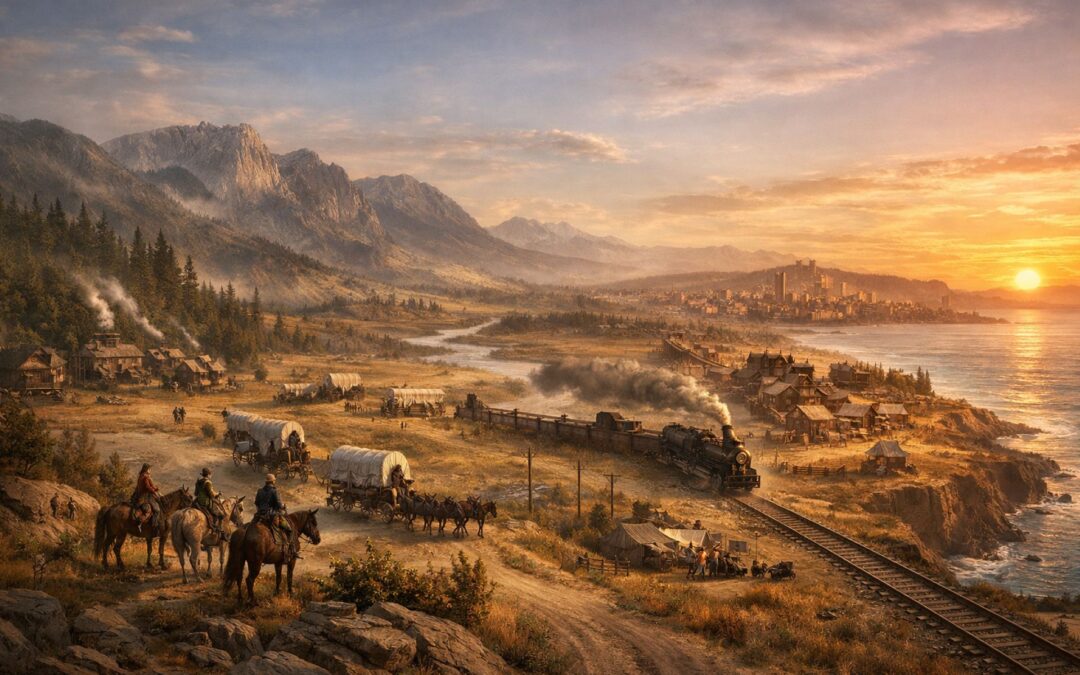
At the dawn of the 19th century, the United States was a small and fragile republic clinging to the eastern edge of North America. Its population was modest, its institutions still forming, and its reach extended little beyond the Appalachian Mountains. To the west lay a vast and largely unknown expanse of forests, plains, rivers, and mountains—home to countless Native American nations who had lived on and shaped these lands for thousands of years. Within little more than a century, however, this young nation would transform itself into a continental power stretching from the Atlantic to the Pacific, and eventually beyond.
This transformation did not occur through a single event or a unified plan. Instead, it unfolded through a complex and often chaotic combination of exploration, migration, political ambition, economic opportunity, and military conflict. Land was acquired through negotiation and purchase, as in the Louisiana Purchase; through war, as in the conflict with Mexico; and through settlement, as waves of migrants moved westward in search of land, wealth, and freedom. At the same time, this expansion came at a profound human cost, particularly for Native American peoples who were displaced, dispossessed, and forced into increasingly confined spaces as the United States advanced.
What emerged from this process was not just a larger country, but a new national identity. The idea that the United States was destined to expand across the continent—later described as Manifest Destiny—became deeply embedded in the American psyche. Railroads, gold rushes, homesteads, and frontier towns turned distant territories into integrated parts of a growing nation. Yet beneath the narrative of opportunity and progress lay a parallel story of broken treaties, cultural erasure, and violent confrontation.
This article traces the full arc of that expansion. It explores how a narrow coastal republic became a continental empire, how its people reshaped the land and were in turn shaped by it, and how the legacies of that expansion continue to define the United States today.
The Early Republic and the Limits of the Atlantic World
In 1783, with the signing of the Treaty of Paris, the United States emerged as an independent nation, but its geography told a story of both promise and constraint. The new republic inherited territory stretching from the Atlantic Ocean to the Mississippi River, yet in practical terms, its center of gravity remained firmly anchored along the eastern seaboard. Cities like Boston, New York, Philadelphia, and Charleston formed the economic and political core of the country, while the interior remained distant, difficult to access, and only loosely understood.
The Appalachian Mountains served as a formidable natural barrier separating the settled East from the vast lands beyond. For early Americans, these mountains were not just a physical obstacle but a psychological frontier—marking the edge of the known world. Roads were scarce, infrastructure was minimal, and communication across this rugged terrain was slow and unreliable. As a result, most of the population clustered in coastal regions, where trade, governance, and community life were more easily sustained.
Yet even in these early years, the pull of the West was already being felt. Land hunger was one of the defining characteristics of the young republic. For many settlers, especially small farmers and veterans of the Revolutionary War, land represented independence, opportunity, and upward mobility. The eastern states, with their increasingly crowded and expensive farmland, could not indefinitely satisfy this demand. Beyond the mountains, however, lay millions of acres of fertile land waiting to be claimed—at least from the perspective of American settlers.
It was individuals rather than institutions who first began to bridge this divide. Frontiersmen like Daniel Boone became legendary figures not because they represented a coordinated national effort, but because they embodied the restless energy of a population unwilling to remain confined. Boone’s exploration of the Cumberland Gap—a natural pass through the Appalachians—opened one of the earliest and most significant routes into the western territories. What had once been a path used by Native American tribes became a corridor for American expansion.
Through routes like the Wilderness Road, settlers began to trickle westward into regions such as present-day Kentucky. These movements were tentative and often perilous. Settlers faced not only the challenges of an unforgiving environment but also the reality that these lands were already inhabited. Encounters between settlers and Native American nations ranged from trade and negotiation to conflict and violence, setting a pattern that would repeat itself throughout the expansion of the United States.
Despite these challenges, the idea of westward movement took root quickly. The early republic may have been geographically limited in its infrastructure and governance, but it was expansive in its ambition. Even before formal policies were established, the foundations of westward expansion were already being laid—not through grand strategy, but through the cumulative actions of individuals pushing against the boundaries of the known world.
In this way, the United States began its expansion not with a coordinated march, but with a slow and uneven drift—one that would soon be shaped, accelerated, and formalized by the policies of a growing nation.
Organizing the Frontier: The Northwest Ordinance and First Western States
As settlers began to move beyond the Appalachian Mountains, it became increasingly clear that westward expansion could not remain an unstructured, ad hoc process. The early republic faced a fundamental challenge: how to transform distant, sparsely settled lands into stable, governed parts of the nation without repeating the colonial patterns it had just rejected. The answer came in the form of one of the most significant pieces of legislation in early American history—the Northwest Ordinance of 1787.
The Northwest Ordinance established a clear and replicable system for incorporating new territories into the United States. Rather than treating western lands as permanent colonies or secondary regions, it laid out a pathway by which territories could evolve into full-fledged states with equal standing. This was a radical departure from European imperial models and reflected a core American principle: expansion would not just increase land, but also extend political participation and representation.
The territory governed by the ordinance—known as the Northwest Territory—stretched from the Great Lakes in the north to the Ohio River in the south, and from Pennsylvania in the east to the Mississippi River in the west. It included what would eventually become the states of Ohio, Indiana, Illinois, Michigan, and Wisconsin. For the first time, a vast portion of the interior was placed under a formal administrative framework, with provisions for governance, legal systems, and eventual statehood.
The ordinance also set precedents that would shape the nation’s future. It prohibited slavery in the Northwest Territory, established guidelines for public education, and outlined a staged process by which territories could transition to statehood based on population thresholds. In doing so, it created a blueprint for expansion that balanced order with opportunity—ensuring that settlement would be accompanied by institutions rather than chaos.
This framework quickly translated into tangible growth. By the 1790s, the steady trickle of settlers moving westward began to produce measurable demographic change. Kentucky, which had initially been part of Virginia, was admitted to the Union as the 15th state in 1792. Just a few years later, in 1796, Tennessee followed as the 16th state. These early additions signaled that the United States was not only expanding geographically, but also successfully integrating new regions into its political structure.
However, this process was far from neutral or uncontested. The lands organized under the Northwest Ordinance were not empty. Native American nations had long inhabited and governed these regions, and the imposition of American territorial systems often led to displacement, conflict, and treaty negotiations that disproportionately favored the expanding republic. While the ordinance provided order for settlers, it also marked the beginning of a more systematic encroachment onto indigenous lands.
At the same time, the success of this early expansion reinforced a powerful idea within the United States: that growth westward was both possible and inevitable. The combination of accessible land, structured governance, and rising population pressures created a self-reinforcing cycle. As more settlers moved west, more territories were organized; as more territories were organized, more settlers were encouraged to follow.
In this way, the Northwest Ordinance did more than just organize land—it transformed expansion from a scattered frontier movement into a national project. It provided the United States with a durable mechanism for growth, one that would be repeatedly applied as the nation pushed further into the continent in the decades to come.
The Louisiana Purchase and the Opening of the Continent
At the turn of the 19th century, the United States faced both an opportunity and a strategic dilemma that would fundamentally reshape its future. The vast territory west of the Mississippi River, known as Louisiana, was controlled by France under the leadership of Napoleon Bonaparte. For the young American republic, the presence of a powerful European empire on its western border posed a significant threat. Control of the Mississippi River—and especially the vital port of New Orleans—was essential for trade, particularly for farmers and merchants in the western territories who depended on the river to move goods to international markets.
President Thomas Jefferson initially sought a limited solution. His administration aimed to purchase New Orleans and secure navigation rights along the Mississippi. However, global events intervened in unexpected ways. France, facing mounting challenges in Europe and a failed attempt to reestablish control over Haiti, reconsidered its ambitions in North America. In 1803, Napoleon made a stunning decision: rather than holding onto Louisiana, he offered to sell the entire territory to the United States.
The scale of this offer was unprecedented. For $15 million, the United States acquired approximately 828,000 square miles of land—effectively doubling the size of the nation overnight. The Louisiana Purchase stretched from the Mississippi River all the way to the Rocky Mountains, encompassing an immense and largely unmapped region. It was one of the most consequential land deals in history, not only because of its size, but because of the possibilities it unlocked.
Yet the acquisition also raised immediate questions. What exactly had the United States purchased? Where did this new territory begin and end? What peoples, resources, and landscapes did it contain? To answer these questions, Jefferson authorized an ambitious expedition to explore and document the newly acquired lands.
In 1804, Meriwether Lewis and William Clark set out from St. Louis with a small group of soldiers, scouts, and interpreters. Their mission was both scientific and strategic: to map the terrain, establish contact with Native American nations, and identify a potential route to the Pacific Ocean. Over the course of more than two years, the expedition traversed rivers, plains, and mountain ranges, ultimately reaching the Pacific coast in 1805.
The journey of Lewis and Clark had a profound impact on the American imagination. Their reports provided the first detailed insights into the geography, flora, fauna, and indigenous cultures of the western territories. More importantly, their successful crossing of the continent demonstrated that expansion to the Pacific was not only possible, but achievable. The idea of a nation stretching “from sea to shining sea” began to take root.
However, like earlier phases of expansion, the Louisiana Purchase was not an empty canvas. The territory was home to numerous Native American nations, each with their own established systems of governance, trade, and culture. While the United States had acquired the land through negotiation with France, it had not secured the consent of the people who actually lived there. This disconnect would become a recurring source of tension as American settlers began to move into the region in the decades that followed.
In the immediate aftermath of the purchase, settlement remained limited. The sheer size and unknown nature of the territory meant that expansion would be gradual. But the psychological shift was immediate and irreversible. The United States was no longer a coastal republic with distant ambitions—it was now a continental power in the making, with the land, resources, and vision to match.
The Louisiana Purchase did more than expand borders. It changed the scale of American thinking. What had once seemed like a distant frontier was now part of the national domain, waiting to be explored, settled, and transformed.
Manifest Destiny and the American Imagination
By the 1830s and 1840s, westward expansion was no longer just a series of individual migrations or isolated government decisions—it had evolved into a powerful national belief. This belief, later termed Manifest Destiny, held that the United States was destined—by providence, history, or inherent superiority—to expand across the North American continent. What began as a loose collection of ambitions hardened into an ideology that would justify and accelerate expansion on an unprecedented scale.
The term “Manifest Destiny” itself was popularized in 1845 by journalist John L. O’Sullivan, who argued that it was America’s obvious and inevitable fate to overspread the continent. While the phrase was new, the sentiment it described had been building for decades. The Louisiana Purchase, the Lewis and Clark expedition, and the steady stream of settlers moving west had already created a sense that expansion was both natural and necessary. Manifest Destiny gave that instinct a name—and more importantly, a moral framework.
At its core, the ideology blended several ideas. There was a belief in progress—the notion that American systems of government, agriculture, and commerce were inherently superior and should be extended across the land. There was also a strong religious undertone, with many viewing expansion as part of a divine plan. Finally, there was a deep sense of national identity tied to land ownership, independence, and self-reliance. Together, these elements transformed expansion from a practical goal into a perceived obligation.
This shift had profound consequences. Expansion was no longer debated purely in terms of strategy or economics; it became a question of destiny. If the nation was meant to stretch from the Atlantic to the Pacific, then resistance—whether from foreign powers or Native American nations—was increasingly seen as an obstacle to be overcome rather than a reality to be negotiated with. The language of inevitability made expansion feel justified, even when it involved conflict, displacement, or war.
At the same time, Manifest Destiny was not universally accepted. Critics within the United States argued that expansion could lead to overreach, intensify divisions—particularly over the issue of slavery—and provoke unnecessary wars. Others questioned the morality of displacing Native populations or annexing territories through force. Despite these objections, the momentum behind expansion proved difficult to resist, especially as each new acquisition or settlement reinforced the belief that the nation was fulfilling its destiny.
The ideology also shaped how Americans perceived the land itself. The West was no longer just a distant and dangerous frontier; it became a symbol of opportunity, renewal, and national purpose. Stories of fertile valleys, vast plains, and untapped resources circulated widely, encouraging thousands to undertake the journey westward. The hardships of the journey—disease, starvation, harsh weather, and isolation—were real, but they were often framed as necessary trials on the path to a greater future.
Importantly, Manifest Destiny blurred the line between policy and belief. Government actions—whether land purchases, treaties, or military campaigns—were increasingly influenced by this broader cultural mindset. Expansion was not simply something the United States did; it was something many Americans believed it was meant to do.
In this way, Manifest Destiny became one of the most powerful forces driving the expansion of the United States. It provided a unifying narrative that connected disparate events—migration, war, settlement, and development—into a single, sweeping story of national growth. Yet beneath that narrative lay deeper tensions and contradictions, particularly regarding the rights and futures of those who already inhabited the lands being claimed.
As the nation continued its push westward, these tensions would become more visible—and more consequential—shaping the next phase of American expansion in ways that would leave a lasting imprint on its history.
Life on the Early Frontier: Traders, Trails, and Survival
Beyond the Mississippi River, the American frontier in the early 19th century was not yet a place of towns, farms, and stable communities. It was a world defined by uncertainty—vast, unmapped, and often unforgiving. For most Americans, it remained distant and intimidating. But for a small group of traders, trappers, and explorers, it became both a livelihood and a proving ground. These individuals were among the first to move deep into the interior, laying the practical foundations for the larger waves of settlement that would follow.
At the heart of this early frontier economy was the fur trade. Animal pelts—especially beaver—were highly prized in global markets, and the rivers and forests of the West offered abundant supply. Men known as mountain men ventured into these remote regions, often spending years at a time in isolation. Figures like Hugh Glass and Jim Bridger became legendary not because they represented organized expansion, but because they accumulated knowledge—of rivers, passes, weather patterns, and indigenous trade networks—that would later prove invaluable to settlers.
The frontier they navigated was shaped by natural systems rather than political boundaries. Rivers served as highways, mountain passes as gateways, and seasonal cycles dictated movement and survival. Trading posts began to emerge as key nodes within this landscape. These were not permanent settlements in the modern sense, but fortified outposts where goods were exchanged, information was shared, and temporary communities formed. They connected indigenous trade networks with expanding American commercial interests, creating a hybrid frontier economy that was both cooperative and competitive.
Over time, these scattered routes and trading paths began to coalesce into more defined trails. What had once been informal tracks used by Native American nations and fur traders were gradually mapped and marked, forming the earliest overland routes into the West. Trails such as those leading toward the Oregon Territory became critical arteries for migration. Though still dangerous and demanding, they offered a semblance of structure—a way for groups of settlers to attempt the journey in organized wagon trains.
The journey itself was a test of endurance. Families moving westward faced months of travel across difficult terrain with limited supplies. Disease was common, accidents frequent, and the threat of starvation or exposure ever-present. Decisions about when to cross rivers, which routes to take, or how to manage dwindling provisions could determine whether a journey succeeded or failed. The romantic image of the frontier often obscures this reality: for most settlers, the West was not an adventure, but a gamble with very real risks.
At the same time, these early movements began to transform the geography of the frontier. What started as isolated trading routes gradually became migration corridors. Temporary camps evolved into semi-permanent settlements. Knowledge that had once been held by a few—trappers, traders, and indigenous guides—became more widely disseminated, reducing some of the uncertainty of the journey and encouraging larger numbers of settlers to follow.
However, this expansion was not occurring in a vacuum. Native American nations had long used these same routes, relied on the same resources, and inhabited the same regions. As more settlers moved westward, competition for land and resources intensified. The fragile balance that had existed during the early fur trade era began to break down, giving way to more frequent and more sustained conflict.
In this transitional phase, the frontier was neither fully wild nor fully settled. It was a space in flux—shaped by movement, exchange, and survival. The trails carved by traders and early settlers would soon carry far greater numbers of people, turning pathways into highways of migration and setting the stage for the next, more accelerated phase of American expansion.
Native American Nations and the Cost of Expansion
As the United States expanded westward, it did so across lands that were neither empty nor unclaimed. For thousands of years, Native American nations had lived on, governed, and shaped these territories, developing complex societies, trade networks, and cultural traditions deeply tied to the land. Yet as American settlers moved west, these realities were increasingly ignored or dismissed. Expansion brought not just settlement, but a systematic reordering of the continent—one that came at a profound and enduring cost to indigenous peoples.
In the early years of the republic, the United States government often approached Native American nations through treaties. These agreements, at least in principle, recognized Native tribes as sovereign entities and sought to establish boundaries between indigenous lands and American settlements. In practice, however, these treaties were frequently unequal, misunderstood, or deliberately violated. As pressure for land increased, the federal government repeatedly renegotiated or disregarded prior commitments, prioritizing expansion over enforcement.
By the 1820s and 1830s, tensions had reached a breaking point, particularly in the southeastern United States. This region was home to several well-established Native nations, including the Cherokee, Muscogee (Creek), Seminole, Chickasaw, and Choctaw—often referred to as the “Five Civilized Tribes” by American officials of the time. These communities had adopted various aspects of European-American culture, including agriculture, written language, and centralized governance, in part to strengthen their position within the expanding United States. Despite these efforts, they remained targets of removal.
In 1830, under President Andrew Jackson, Congress passed the Indian Removal Act. This legislation authorized the federal government to relocate Native American tribes living east of the Mississippi River to lands further west, in what was designated as Indian Territory (in present-day Oklahoma). While framed as a policy of exchange and voluntary migration, in reality it was enforced through coercion, deception, and, ultimately, force.
The consequences were devastating. Tens of thousands of Native Americans were uprooted from their ancestral lands and compelled to undertake long and arduous journeys westward. The most infamous of these forced migrations became known as the Trail of Tears. Along the way, thousands died from disease, starvation, exhaustion, and exposure. Entire communities were fractured, and cultural ties to ancestral lands—central to identity and tradition—were irreparably severed.
This episode was not an isolated tragedy but part of a broader pattern that would continue throughout the 19th century. As settlers pushed further west, Native American nations were repeatedly displaced, confined, or pressured into agreements that ceded more land. Even when treaties were signed guaranteeing certain territories, they were often broken when those lands became desirable to settlers or rich in resources.
The cost of expansion was therefore not just measured in miles gained or states admitted, but in lives disrupted and cultures undermined. Native American resistance did not disappear—in many regions, it intensified—but the balance of power increasingly favored the United States, whose population, resources, and military capabilities continued to grow.
At the same time, the narrative of expansion within American society often minimized or justified these outcomes. The language of progress, destiny, and opportunity overshadowed the realities faced by indigenous peoples. This disconnect between national ideals and lived consequences became one of the defining contradictions of American expansion—a contradiction that would deepen as the frontier moved further west.
In understanding the expansion of the United States, it is impossible to separate growth from displacement. The same forces that created new opportunities for settlers also systematically dismantled the worlds of those who had long called these lands home.
War and Conquest: Texas and the Mexican-American War
By the mid-19th century, the expansion of the United States was no longer confined to gradual settlement or land purchases. It had entered a more aggressive phase—one defined by annexation, armed conflict, and the redrawing of borders on a continental scale. Nowhere was this more evident than in the events surrounding Texas and the Mexican-American War, which together transformed the map of North America.
The roots of this transformation lay in the complex history of Texas. Originally part of Mexico following its independence from Spain in 1821, Texas became a destination for American settlers who were invited by the Mexican government to help populate the region. Over time, however, cultural, political, and economic differences between these settlers and the Mexican authorities grew increasingly pronounced. Many settlers brought enslaved people with them, clashing with Mexico’s opposition to slavery. Disputes over governance, autonomy, and identity deepened tensions further.
In 1836, these tensions erupted into open rebellion. After a series of battles, Texan forces declared independence and established the Republic of Texas. Although Mexico refused to recognize this independence, Texas functioned as a separate nation for nearly a decade. During this period, the question of whether Texas should join the United States became a major political issue. Supporters saw annexation as a natural extension of American expansion, while opponents feared it would provoke war with Mexico and exacerbate divisions over slavery.
In 1845, the United States formally annexed Texas, making it the 28th state. This decision immediately heightened tensions with Mexico, which still considered Texas part of its territory. The situation escalated further due to a dispute over the southern boundary of Texas: the United States claimed the Rio Grande, while Mexico recognized the Nueces River further north. When American troops were deployed into the contested area, clashes soon followed.
In May 1846, the United States declared war on Mexico. The conflict that followed lasted nearly two years and was fought across multiple fronts—from the deserts of the Southwest to the heart of Mexico itself. American forces, benefiting from stronger logistics, leadership, and industrial support, achieved a series of decisive victories. The war culminated in the capture of Mexico City in 1847, effectively forcing Mexico to negotiate.
The resulting Treaty of Guadalupe Hidalgo, signed in 1848, marked one of the most significant territorial expansions in U.S. history. Mexico ceded an vast portion of its northern territories to the United States, including present-day California, Nevada, Utah, Arizona, New Mexico, and parts of Colorado and Wyoming. In exchange, the United States paid $15 million and agreed to assume certain debts owed by Mexico.
This acquisition dramatically altered the scale and scope of the United States. With access to the Pacific Coast now secured, the long-held vision of a transcontinental nation became a reality. Ports in California opened new trade routes to Asia, while the vast interior offered land and resources that would fuel further growth.
However, the war and its aftermath also exposed deep internal tensions. The question of whether slavery would be permitted in the newly acquired territories intensified political divisions between the North and South, contributing to the growing crisis that would eventually lead to the Civil War. At the same time, the war raised moral questions about the nature of American expansion, with critics arguing that it represented an unjust act of aggression driven by ambition rather than necessity.
For Mexico, the consequences were profound and lasting. The loss of territory represented not just a reduction in land, but a blow to national identity and sovereignty. For the United States, the gains were immense—but they came with complexities that would shape the nation’s future in ways few could have fully anticipated.
In this phase of expansion, the United States moved beyond exploration and settlement into outright conquest. The map of the continent was redrawn, and the idea of Manifest Destiny was no longer just an aspiration—it had become a geopolitical reality, achieved through war as much as through vision.
The Gold Rush and the Acceleration of Migration
In the late 1840s, just as the United States was finalizing its vast territorial gains from Mexico, a discovery in the hills of California would ignite one of the most dramatic population movements in modern history. In 1848, gold was found at Sutter’s Mill, and although the news spread slowly at first, it soon triggered a global frenzy. Within a year, the California Gold Rush was underway, transforming the pace, scale, and character of westward expansion almost overnight.
The timing of the discovery was crucial. California had only just become part of the United States following the Treaty of Guadalupe Hidalgo, and its remote location had previously limited large-scale settlement. The promise of gold changed everything. By 1849, tens of thousands of people—soon known as the “49ers”—were preparing to journey west in search of fortune. What had once been a slow trickle of settlers moving across the continent became a surge.
The routes taken by these migrants were as varied as the people themselves. Many traveled overland in wagon trains, following established paths such as the Oregon, California, and Santa Fe Trails. These journeys could take months and were fraught with danger—disease, harsh weather, difficult terrain, and the constant risk of running out of supplies. Others chose to travel by sea, either by sailing around the southern tip of South America or by crossing the Isthmus of Panama, where they would disembark, trek across the narrow land bridge, and then board another ship to California. Regardless of the route, the journey demanded resilience, resources, and a willingness to embrace uncertainty.
The scale of migration was unprecedented. By the mid-1850s, approximately 300,000 people had arrived in California. They came not only from across the United States, but from around the world—Latin America, Europe, China, and beyond—making the Gold Rush one of the first truly global migration events in American history. California, once a distant and sparsely populated frontier, rapidly became one of the most dynamic and diverse regions in the country.
This influx had immediate and transformative effects. Settlements that had barely existed a few years earlier exploded into bustling towns and cities. San Francisco, for example, grew from a small settlement into a major urban center within a matter of years. Infrastructure struggled to keep pace with the population boom, leading to chaotic conditions, inflated prices, and makeshift systems of governance.
For most prospectors, however, the dream of striking it rich proved elusive. Gold was difficult to find, and as more people arrived, competition intensified. Many who came in search of wealth ended up working for wages, providing goods and services to others, or leaving with little more than they had arrived with. In contrast, those who supplied equipment, food, lodging, and transportation often found more reliable paths to profit. The Gold Rush, in many ways, revealed that opportunity in the West extended beyond the resources themselves to the economies built around them.
At the same time, the rapid expansion came with significant social and environmental consequences. Native American populations in California suffered catastrophic declines due to displacement, violence, and disease. The sudden demand for land and resources led to widespread ecological disruption, including deforestation and river pollution from mining activities. Lawlessness was common in many areas, as formal legal systems struggled to keep up with the speed of change.
Despite these challenges, the Gold Rush fundamentally altered the trajectory of American expansion. It accelerated the integration of the West into the national economy, strengthened the case for infrastructure development, and demonstrated the powerful pull of opportunity that could draw people across vast distances. In 1850, just two years after the discovery of gold, California was admitted to the Union as the 31st state—an unusually rapid transition that reflected the extraordinary pace of its growth.
More broadly, the Gold Rush marked a turning point. It showed that the West was not just a distant frontier to be gradually settled, but a region capable of rapid transformation under the right conditions. The surge of migration it unleashed would echo through the following decades, fueling further expansion, shaping new economies, and reinforcing the idea that the continent was there to be claimed, developed, and inhabited.
In this sense, the Gold Rush did more than enrich a few individuals—it accelerated the expansion of the United States itself, compressing decades of gradual movement into a few intense years of change.
Boomtowns, Resources, and the Economic West
The discovery of gold in California was not an isolated event—it was the beginning of a broader pattern that would define the economic character of the American West throughout the 19th century. As exploration and settlement pushed further inland, new deposits of gold, silver, and other valuable resources were uncovered across vast regions. Each discovery triggered its own wave of migration, giving rise to a landscape defined by sudden growth, intense competition, and equally rapid decline.
At the center of this pattern were boomtowns—settlements that appeared almost overnight in response to resource discoveries. Places like Deadwood in South Dakota and Tombstone in Arizona became synonymous with this phenomenon. What began as temporary encampments of miners quickly evolved into bustling towns filled with thousands of people, all drawn by the promise of wealth. Streets lined with saloons, gambling houses, hotels, and general stores emerged in a matter of months, creating economies that revolved as much around supporting miners as mining itself.
These towns were inherently unstable. Their fortunes were tied directly to the availability of resources. When a mine produced, the town thrived; when it ran dry, decline was swift and often irreversible. Many boomtowns became ghost towns within a few years, abandoned as quickly as they had been built. This cycle of rapid rise and fall gave the western economy a volatile character, where opportunity was abundant but rarely lasting.
Yet beneath this instability, more durable economic systems were taking shape. Mining required capital, equipment, and organization, leading to the development of more structured enterprises over time. Railroads extended into resource-rich regions, connecting remote areas to national and international markets. Financial networks expanded to support investment in mining operations, signaling a shift from individual prospecting to more industrial forms of extraction.
At the same time, not all economic activity in the West revolved around minerals. The vast grasslands of the central United States proved ideally suited for livestock, particularly cattle. This gave rise to the ranching economy, which became one of the defining features of the western landscape. Large herds were raised on open ranges and driven across long distances to railheads, where they could be transported to markets in the East.
The figure of the cowboy emerged from this environment—not as a romantic archetype, but as a laborer engaged in demanding and often dangerous work. Cowboys managed herds, navigated difficult terrain, and endured long periods away from settled communities. Over time, however, their image became deeply embedded in American culture, symbolizing independence, resilience, and life on the frontier.
The growth of these economic systems also contributed to the development of new markets and supply chains. Towns that had initially served as mining hubs or cattle centers began to diversify, supporting agriculture, trade, and services. As transportation networks improved, the West became more closely integrated with the rest of the country, allowing goods, people, and information to move more freely.
However, this economic expansion came with consequences. The extraction of resources often led to environmental degradation, including deforestation, soil depletion, and water contamination. Indigenous lands were frequently targeted for their resource potential, intensifying conflicts and accelerating displacement. Labor conditions in mines and on ranches could be harsh, with workers facing long hours, physical danger, and limited protections.
Despite these challenges, the economic transformation of the West was a critical component of American expansion. It turned newly acquired and sparsely populated territories into productive regions that contributed to national growth. Wealth generated from mining, agriculture, and ranching flowed eastward, reinforcing the economic ties that bound the expanding nation together.
In this phase, the West was no longer just a destination for settlers—it was becoming an engine of economic activity. The search for resources, the rise of new industries, and the creation of interconnected markets all helped to solidify the United States’ presence across the continent. What had once been frontier land was increasingly becoming part of a functioning, if still evolving, national economy.
Migration Beyond Profit: Religion, Freedom, and Identity
While economic opportunity was one of the most powerful drivers of westward expansion, it was far from the only one. For many who journeyed into the American West, the motivation was not gold, land speculation, or commercial gain, but the pursuit of religious freedom, social autonomy, or a chance to build a new identity far removed from the constraints of the East. These migrations added a different dimension to expansion—one rooted not just in material ambition, but in belief, community, and survival.
One of the most significant examples of this was the migration of the Latter-day Saints, commonly known as Mormons. Founded in the early 19th century, the movement faced intense hostility and persecution in the eastern United States. Conflicts with local populations, legal pressures, and violence forced the community to relocate multiple times, moving from New York to Ohio, then to Missouri, and later to Illinois. Each move was an attempt to find a place where they could practice their faith in peace, yet each was met with renewed resistance.
Following the murder of their leader Joseph Smith in 1844, the Mormons, under the leadership of Brigham Young, made the decision to undertake a far more ambitious migration. Rather than remain within the increasingly crowded and contested regions of the East and Midwest, they would move beyond the existing boundaries of American settlement into the far West. Their destination was the Salt Lake Valley, a remote and arid region that, at the time, lay outside the effective control of the United States.
Beginning in 1846, thousands of Mormon settlers embarked on a long and arduous journey across the continent. The migration was highly organized, with wagon trains, supply systems, and leadership structures designed to sustain large groups over extended distances. Over the next two decades, approximately 70,000 Mormons made this journey, establishing a network of settlements centered around what would become Salt Lake City.
Unlike many other migrations of the period, which were driven by individual or family decisions, the Mormon movement was collective and intentional. Settlements were planned, irrigation systems were developed to make the desert land productive, and a strong sense of community governance took root. The result was the creation of a distinct social and cultural enclave in the West—one that demonstrated how expansion could be shaped not just by opportunity, but by shared purpose and belief.
At the same time, the Mormon experience was part of a broader pattern. The West offered a kind of blank slate—at least from the perspective of incoming settlers—where new communities could be formed with different social norms, economic systems, and cultural identities. For some, this meant escaping religious persecution; for others, it meant avoiding economic hardship, political instability, or rigid class structures that limited opportunity in the East or in Europe.
This diversity of motivations contributed to the complexity of western settlement. The frontier was not populated by a single type of person or a unified vision of society. It included farmers seeking land, entrepreneurs chasing profit, religious groups building communities, and individuals looking for reinvention. Each brought different expectations and experiences, shaping the regions they settled in unique ways.
However, even these migrations, rooted in ideals of freedom and self-determination, were not isolated from the broader dynamics of expansion. The establishment of new communities still required land—land that was already inhabited by Native American nations. As with other forms of settlement, these movements often contributed to displacement and conflict, even when their primary motivations were not economic.
In this sense, the story of westward migration is not just one of profit or conquest, but of human aspiration in many forms. The West became a space where people sought to redefine their lives, whether through faith, independence, or opportunity. Yet these aspirations were always intertwined with the larger forces of expansion, ensuring that even the most idealistic migrations were part of a much more complex and contested process.
Railroads and the Physical Unification of the Nation
By the mid-19th century, the United States had acquired vast territories stretching to the Pacific, but possession alone did not guarantee integration. The sheer size of the country posed a fundamental challenge: how could a nation spanning thousands of miles function as a cohesive economic and political unit? Travel between the eastern states and the Pacific coast could take months, communication was slow and unreliable, and large parts of the interior remained isolated. If expansion was to be sustained, the United States needed not just land—but connection.
The answer came in the form of the railroad.
Rail transport had already begun transforming the eastern United States, linking cities, markets, and industrial centers with unprecedented efficiency. Extending this network across the continent, however, was a far more ambitious undertaking. It required crossing plains, rivers, and mountain ranges, as well as mobilizing vast amounts of labor, capital, and coordination. Despite these challenges, the strategic importance of such a project was clear: a transcontinental railroad would bind the nation together, accelerate settlement, and solidify control over the western territories.
In 1862, during the height of the American Civil War, Congress passed the Pacific Railway Act, authorizing the construction of a transcontinental line. Two companies were tasked with the effort. The Union Pacific Railroad would build westward from Omaha, Nebraska, while the Central Pacific Railroad would construct track eastward from Sacramento, California. The goal was to meet somewhere in the interior, completing a continuous rail link between the Atlantic and Pacific worlds.
Construction began in earnest in 1863, though progress was uneven at first due to the demands of the Civil War. After the war’s conclusion in 1865, the project accelerated rapidly. Thousands of workers—many of them immigrants—labored under harsh and often dangerous conditions. The Central Pacific relied heavily on Chinese laborers, who undertook the grueling task of blasting tunnels through the Sierra Nevada mountains. The Union Pacific, meanwhile, employed large numbers of Irish immigrants and Civil War veterans to lay track across the Great Plains.
The scale of the engineering challenge was immense. Workers faced extreme weather, difficult terrain, and constant logistical obstacles. Supplies had to be transported over long distances, while crews worked to build bridges, grade land, and lay track at a pace that often prioritized speed over safety. The project also brought workers into frequent contact—and conflict—with Native American nations whose lands the railroad crossed, further intensifying tensions across the frontier.
Despite these difficulties, the two lines finally met on May 10, 1869, at Promontory Summit in the Utah Territory. The completion of the railroad was marked by the ceremonial driving of the “Golden Spike,” symbolizing the unification of the nation’s transportation network. What had once been a journey of months could now be completed in little over a week.
The impact of the transcontinental railroad was immediate and transformative. It revolutionized trade, allowing goods to move quickly and cheaply across vast distances. It facilitated migration, making it far easier for settlers to reach the West. It enabled more effective governance, as communication between regions improved. In short, it turned the idea of a continental nation into a practical reality.
Beyond transportation, the railroad also stimulated broader economic development. Towns sprang up along the rail lines, serving as hubs for commerce, agriculture, and industry. Land grants given to railroad companies encouraged further settlement, as companies sold parcels to farmers and developers. The railroad did not just connect existing communities—it actively created new ones.
At the same time, the expansion of the railroad had profound consequences for Native American nations. Rail lines cut through traditional lands, disrupted migration patterns of animals such as bison, and brought increased numbers of settlers into previously remote areas. The very infrastructure that unified the nation also accelerated the displacement of indigenous peoples.
In many ways, the railroad represented the culmination of earlier phases of expansion. Trails became tracks, isolated settlements became connected towns, and distant territories became integrated parts of a national system. The physical barriers that had once defined the limits of the United States were no longer insurmountable.
With the rails in place, the West was no longer truly “far.” It had been brought within reach—economically, politically, and culturally—marking a decisive step in the transformation of the United States into a unified continental power.
Government Policy and the Settlement Machine
While individual ambition and private enterprise played crucial roles in westward expansion, the growth of the United States across the continent was also actively engineered by the federal government. Expansion was not left to chance alone—it was encouraged, structured, and accelerated through a series of policies designed to populate the West, develop its land, and integrate it into the national economy. Among these, none was more influential than the Homestead Act of 1862.
Passed during the Civil War, the Homestead Act was a bold attempt to turn vast stretches of federally owned land into productive farmland. It offered settlers parcels of land—typically 160 acres—at little to no cost, provided they met certain conditions. Applicants were required to live on the land, improve it, and cultivate it for a minimum number of years. If they fulfilled these requirements, ownership would be granted. For many Americans, particularly those with limited means, this represented an unprecedented opportunity: land ownership, long associated with wealth and status, was now within reach.
The appeal of the Homestead Act was immense. It attracted not only Americans from the eastern states, but also immigrants from Europe who saw in it the promise of a new beginning. Posters, pamphlets, and word-of-mouth accounts spread the message that land in the West was available for those willing to work it. The idea of a self-sufficient farm, carved out of open land, became a central part of the American dream.
In practice, however, the experience of homesteading was often far more difficult than the promise suggested. Much of the land offered was not immediately suitable for farming. Settlers faced harsh climates, unpredictable weather, limited access to water, and isolation from established communities. Building homes, planting crops, and sustaining a livelihood required resilience and resourcefulness. Many homesteaders failed to meet the requirements and abandoned their claims, while others struggled for years before achieving stability.
Despite these challenges, the Homestead Act played a critical role in populating the West. It provided a legal and economic framework that encouraged settlement on a massive scale. Farms spread across the plains, transforming grasslands into agricultural regions that could support both local populations and distant markets. Over time, these scattered homesteads formed the basis of towns, counties, and eventually states.
The Act was part of a broader set of policies aimed at facilitating expansion. Land grants to railroad companies encouraged the construction of infrastructure while simultaneously promoting settlement along rail lines. Additional legislation supported irrigation projects, land surveys, and the distribution of property titles, all of which contributed to the systematic development of western territories.
Yet, like other aspects of expansion, these policies were built on land that was already inhabited. The availability of “free” or cheap land depended on the prior displacement of Native American nations. As federal policies opened new areas for settlement, they also reinforced the process by which indigenous peoples were pushed onto reservations or forced to cede their lands through treaties and coercion.
In this sense, government policy functioned as a settlement machine—transforming abstract claims of territory into lived realities. It converted land into property, migrants into landowners, and distant regions into integral parts of the nation. Expansion was no longer just a movement of people; it was a coordinated effort backed by law, incentives, and national ambition.
Through measures like the Homestead Act, the United States ensured that westward expansion would not stall or remain uneven. Instead, it would continue with momentum, driven not only by individual dreams, but by a system designed to turn those dreams into permanent settlement.
Lawlessness and Order on the Frontier
As settlement expanded across the American West, it often outpaced the development of stable institutions. Towns appeared faster than governments could organize them, populations surged before legal systems could take hold, and vast distances made centralized authority difficult to enforce. In this environment, the frontier developed a reputation for lawlessness—an image that would later be immortalized in popular culture, but which was rooted in very real challenges of governance and control.
The conditions that gave rise to crime were, in many ways, structural. Settlements were widely dispersed, communication was slow, and law enforcement resources were limited. Banks, stagecoaches, and trains carried valuable goods across long distances with minimal protection, making them attractive targets. For individuals willing to operate outside the law, the West offered both opportunity and anonymity.
Outlaws such as Jesse James, Butch Cassidy, and the Sundance Kid became some of the most infamous figures of the period. They robbed banks, trains, and stagecoaches, often gaining notoriety that blurred the line between criminality and legend. In some cases, they were even romanticized as rebels or anti-establishment figures, particularly in regions where distrust of authority ran deep. However, the reality of their actions—violence, theft, and instability—contributed to an environment of uncertainty that affected both settlers and businesses.
The response to this lawlessness was gradual and uneven. In the absence of strong centralized authority, local communities often took it upon themselves to establish order. Vigilante groups emerged in some areas, dispensing justice outside formal legal frameworks. While these groups sometimes succeeded in curbing crime, they also introduced new risks, as their methods could be arbitrary, excessive, or influenced by personal interests.
At the same time, more formal systems of law enforcement began to develop. Sheriffs, marshals, and deputies were appointed or elected to maintain order within towns and territories. Figures like Wyatt Earp and Pat Garrett became well-known for their roles in enforcing the law, often operating in environments where legal authority was still being established. Their work was difficult and dangerous, requiring them to confront armed criminals in settings where backup and institutional support were limited.
Beyond local lawmen, private organizations also played a role. The Pinkerton National Detective Agency, for example, was hired to track down criminals, protect assets, and assist in maintaining order across large areas. Their involvement reflected the growing need for more organized and far-reaching forms of law enforcement as the West became more economically integrated.
Over time, as populations stabilized and infrastructure improved, the conditions that had enabled widespread lawlessness began to change. Towns developed more structured governments, courts were established, and communication networks made coordination easier. The expansion of the railroad and telegraph further reduced the isolation that had once allowed criminals to operate with relative impunity.
However, the image of the lawless frontier endured. Stories of gunfights, robberies, and rugged individualism became central to the mythology of the American West. These narratives often emphasized personal bravery and conflict, sometimes overshadowing the broader processes of community-building, governance, and economic development that were simultaneously taking place.
In reality, the frontier was a place of transition. Lawlessness was not its defining characteristic, but rather a phase within a larger process of settlement and integration. As institutions took root, the balance gradually shifted from disorder to stability, reflecting the broader transformation of the West from a loosely connected frontier into a more structured and governed part of the United States.
This evolution was essential to the continuation of expansion. Without the eventual establishment of law and order, the West could not have sustained long-term growth. The very forces that once made it unpredictable and dangerous were gradually replaced by systems that made it livable, governable, and economically viable.
Wars on the Plains: Native Resistance and U.S. Military Expansion
As the United States pushed deeper into the western interior in the mid to late 19th century, conflict with Native American nations intensified into sustained and organized warfare. Earlier tensions, marked by treaties and localized violence, gave way to broader campaigns as the federal government sought to assert control over the Plains and open them fully to settlement, railroads, and economic development. For Native nations, this was not simply a struggle over land—it was a fight for survival, sovereignty, and a way of life that had endured for generations.
Among the most formidable resistance came from the Plains tribes, including the Sioux and the Apache. These nations had adapted to the unique environment of the Great Plains, developing cultures centered around mobility, hunting—particularly of the bison—and strong warrior traditions. As American expansion encroached on their lands, disrupted migration routes, and depleted essential resources, resistance became increasingly organized and determined.
The Great Sioux War of 1876 stands as one of the most significant conflicts of this period. Tensions had been building for years, particularly after the discovery of gold in the Black Hills—land that had been guaranteed to the Sioux by treaty. As prospectors and settlers flooded into the region, the U.S. government demanded that the Sioux relocate to reservations. When many refused, military campaigns were launched to force compliance.
During this conflict, Native forces achieved one of their most famous victories at the Battle of the Little Bighorn. Led by leaders such as Sitting Bull and Crazy Horse, Sioux and allied warriors defeated a U.S. Army detachment commanded by Lieutenant Colonel George Armstrong Custer. The battle became a powerful symbol of Native resistance, demonstrating that the expansion of the United States was neither uncontested nor inevitable.
However, such victories were ultimately short-lived. The United States possessed significant advantages in terms of population, industrial capacity, and military resources. In the years that followed, the federal government intensified its efforts, deploying more troops, establishing forts across the frontier, and systematically targeting the resources that sustained Native life—most notably the bison, whose near extinction had devastating consequences for Plains cultures.
In the Southwest, the Apache Wars of the 1880s reflected a similar pattern of resistance and suppression. Leaders like Geronimo led small, mobile groups of warriors in guerrilla-style campaigns, using their knowledge of the terrain to evade capture and launch attacks. These efforts prolonged resistance, but they could not ultimately overcome the sustained pressure of U.S. military campaigns.
The outcome of these conflicts was the forced confinement of Native American nations onto reservations. These lands were often far smaller, less fertile, and more isolated than the territories they had previously occupied. Traditional ways of life were disrupted, and efforts were made to assimilate Native populations into American society through policies that targeted language, culture, and social structures.
For the United States, these wars marked the final phase of securing control over the continental interior. Military expansion ensured that settlement, railroads, and economic development could proceed with fewer obstacles. For Native American nations, however, the consequences were profound and enduring—loss of land, autonomy, and cultural continuity.
The wars on the Plains reveal a central truth about American expansion: it was not a peaceful or uncontested process, but one shaped by conflict, resistance, and imbalance of power. The same forces that enabled the United States to grow into a continental nation also led to the systematic dismantling of indigenous societies that had long thrived on these lands.
As the frontier continued to close, the era of open resistance came to an end. But the legacy of these conflicts—both in terms of historical memory and ongoing challenges faced by Native communities—remains an integral part of the story of American expansion.
A Diverse West: Immigration and Demographic Change
As the American West developed in the latter half of the 19th century, it became a meeting ground for people from vastly different backgrounds, cultures, and experiences. The expansion of the United States was not driven solely by native-born Americans moving westward; it was also shaped by millions of immigrants arriving from across the world, each bringing their own motivations, skills, and identities. The result was a West far more diverse and complex than the simplified image of homogenous frontier settlers often suggests.
In the eastern United States, cities such as New York, Philadelphia, Boston, and Baltimore experienced rapid population growth due to mass immigration from Europe. Many of these newcomers—particularly from Ireland and Germany—fled economic hardship, political instability, and, in some cases, famine. Upon arrival, however, they often encountered overcrowded living conditions, limited employment opportunities, and social discrimination. For many, the West offered an escape—a place where land was available, labor was in demand, and the rigid social hierarchies of the East seemed less entrenched.
As these immigrants moved westward, they became an integral part of the region’s development. German immigrants, for example, established farming communities across the Midwest, contributing to agricultural expansion and local economies. Irish immigrants often found work in infrastructure projects, including the construction of railroads, canals, and roads that connected the growing nation. Their labor was essential to the physical transformation of the landscape.
At the same time, migration to the West was not limited to Europe. From across the Pacific, thousands of Chinese immigrants arrived, particularly in California. Drawn initially by the Gold Rush, many later became crucial to the construction of the Central Pacific Railroad, undertaking some of the most dangerous and demanding tasks in the project. Despite their contributions, Chinese workers faced significant discrimination, exclusion, and violence, culminating in restrictive laws that limited their rights and opportunities.
African Americans also played a significant role in the settlement of the West, particularly in the decades following the Civil War. With the abolition of slavery, many sought new opportunities beyond the South, where racial oppression and limited economic prospects persisted. Some became farmers, while others worked as cowboys, soldiers, or laborers. In fact, it is estimated that a substantial proportion of cowboys during this period were African American—challenging later cultural portrayals that largely erased their presence.
The diversity of the West extended beyond ethnicity and nationality to include differences in class, religion, and purpose. Some arrived with resources and ambitions to build businesses or acquire large tracts of land, while others came with little more than hope and determination. Communities formed around shared identities—ethnic enclaves, religious settlements, and labor networks—each contributing to the evolving character of the region.
However, this diversity did not eliminate tension. Competition for jobs, land, and resources often led to conflict between different groups. Discrimination, segregation, and violence were not confined to the East; they were present in the West as well, shaping the experiences of many who sought opportunity there. Laws and social norms frequently favored certain groups over others, reinforcing inequalities even as the frontier was being settled.
Despite these challenges, the demographic transformation of the West was one of its most defining features. It was not simply an extension of the East, but a region shaped by a convergence of people from across the United States and around the world. This diversity influenced everything from economic development to cultural life, leaving a lasting imprint on the identity of the nation.
In this way, the expansion of the United States was not just a story of land acquisition and settlement, but of people—millions of individuals whose journeys, struggles, and contributions collectively shaped the character of the American West.
Expansion Beyond the Mainland: Alaska and Hawaii
By the late 19th century, the continental United States had largely taken shape, but American expansion did not stop at the Pacific coastline. Instead, it extended beyond the mainland, reflecting a shift in both strategic thinking and global ambition. The acquisition of Alaska and the annexation of Hawaii marked a new phase—one in which the United States began to project its influence across oceans, moving from continental expansion toward a more outward-looking presence.
In 1867, the United States purchased Alaska from the Russian Empire for $7.2 million in a deal negotiated by Secretary of State William H. Seward. At the time, the acquisition was widely criticized. Many Americans viewed Alaska as a remote, frozen wilderness with little apparent value, dismissively referring to it as “Seward’s Folly” or “Seward’s Icebox.” Its distance from the mainland and harsh climate made it seem impractical and unnecessary.
Yet beneath this skepticism lay strategic considerations. Russia, facing financial difficulties and concerned about defending Alaska from potential British expansion in North America, was willing to sell. For the United States, the purchase eliminated a European presence on the continent and expanded its reach into the far northwest. Over time, Alaska’s value became increasingly clear. Rich in natural resources—including fur, timber, minerals, and eventually oil—it proved to be a significant asset. The discovery of gold in the Yukon region in the late 1890s further spurred migration and economic activity, bringing thousands of prospectors into the region.
While Alaska represented expansion through purchase, Hawaii reflected a different dynamic—one shaped by economic interests, political influence, and strategic positioning in the Pacific. American involvement in the Hawaiian Islands began earlier in the 19th century, initially through missionaries who arrived in the 1820s. Over time, American businessmen established a strong presence, particularly in the sugar industry, which became a central component of the islands’ economy.
As economic ties deepened, so did political influence. By the late 19th century, American settlers and business interests held significant power within Hawaii. In the early 1890s, tensions between these groups and the Hawaiian monarchy came to a head. With the support of U.S. representatives and military presence, a group of American and European residents orchestrated the overthrow of Queen Liliʻuokalani, effectively ending the kingdom’s sovereignty.
Following the overthrow, Hawaii was established as a republic dominated by American interests. In 1898, amid the broader context of expanding American influence during the Spanish-American War, the United States formally annexed the islands. Hawaii’s location made it a valuable strategic outpost in the Pacific, serving both commercial and military purposes, particularly as the United States began to engage more actively in global trade and geopolitics.
Unlike earlier phases of expansion, which were largely focused on contiguous land, these acquisitions signaled a shift in perspective. The United States was no longer just filling in a continental map—it was extending its reach beyond it. Alaska and Hawaii were geographically distant, culturally distinct, and integrated into the nation under very different circumstances than earlier territories.
Both regions would remain territories for decades before achieving statehood in 1959, reflecting their unique positions within the broader American framework. Their eventual incorporation as states marked the completion of a long process of territorial growth, but also highlighted the evolving nature of American expansion—from land-based settlement to strategic global presence.
In this phase, expansion was no longer solely about settlers moving westward. It had become a matter of national policy, economic interest, and international positioning. Alaska and Hawaii represented the outer edges of this transformation, demonstrating that the expansion of the United States had moved beyond the frontier and into a new era of influence.
The Closing of the Frontier and the Birth of Modern America
By the end of the 19th century, the character of the American West had changed fundamentally. What had once been described as an open frontier—a vast, shifting boundary between settled and unsettled land—was rapidly disappearing. Railroads spanned the continent, towns and cities had taken root across the plains and valleys, and federal authority extended into regions that had once seemed distant and ungovernable. The process that had defined the United States for over a century—continuous westward expansion—was drawing to a close.
This transition was not marked by a single event, but by a gradual realization. In 1890, the U.S. Census Bureau declared that the frontier line, as it had previously been defined, no longer existed. There were no longer clear, contiguous areas of unsettled land waiting to be claimed. The gaps had been filled, the territories organized, and the remaining spaces integrated into a national framework. The frontier, in a geographic sense, had been closed.
The implications of this shift were profound. For generations, the idea of the frontier had been central to American identity. It represented opportunity, reinvention, and the possibility of moving beyond the limitations of the present. With its closure, the nation faced a new reality: growth would no longer come from the simple acquisition of land, but from the development, management, and integration of what had already been acquired.
Politically, this period saw the final incorporation of territories into states. Oklahoma joined the Union in 1907, followed by New Mexico and Arizona in 1912. These additions completed the continental framework of the United States, transforming what had once been distant territories into fully integrated parts of the nation. Although Alaska and Hawaii would not achieve statehood until 1959, the essential outline of the modern United States was now in place.
Economically, the focus began to shift from extraction and settlement to industrialization and urbanization. The resources of the West—its minerals, land, and infrastructure—were increasingly tied into national and global markets. Cities grew, industries expanded, and the United States began to emerge as a major economic power on the world stage. The frontier, once defined by movement and uncertainty, gave way to a more structured and interconnected society.
For Native American nations, the closing of the frontier marked the end of large-scale armed resistance and the consolidation of reservation systems. While some communities adapted to the new conditions, the loss of land, autonomy, and traditional ways of life had lasting consequences that would continue to shape their experiences in the decades to come. The policies of this period often focused on assimilation, further eroding cultural and social structures.
Culturally, however, the frontier did not disappear. Instead, it was transformed into a powerful myth. Stories of pioneers, cowboys, outlaws, and open landscapes became central to American storytelling, shaping how the nation understood its past. This mythology often emphasized independence, courage, and adventure, sometimes overlooking the complexities and conflicts that had accompanied expansion.
In many ways, the closing of the frontier marked the end of one chapter and the beginning of another. The United States had completed its transformation from a coastal republic into a continental nation. The challenges ahead would be different—less about expansion and more about consolidation, development, and engagement with the wider world.
By the early 20th century, the foundations of the modern United States were firmly in place. Its borders were largely defined, its infrastructure established, and its population increasingly interconnected. The long era of westward expansion had come to an end, but its impact—on the land, the people, and the identity of the nation—would endure long after the frontier itself had faded into history.
Conclusion
The expansion of the United States across North America stands as one of the most transformative processes in modern history. In little more than a century, a narrow band of former colonies along the Atlantic coast evolved into a vast continental nation, stretching from ocean to ocean and eventually projecting its influence beyond the mainland. This transformation was not the result of a single vision or policy, but of overlapping forces—exploration, migration, ideology, economic ambition, and state power—working together over time.
At one level, this expansion created immense opportunity. It opened land to settlement, enabled economic growth through agriculture, mining, and trade, and fostered the development of infrastructure that connected distant regions into a unified whole. Railroads, cities, and markets turned once-remote territories into integral parts of a national system. Millions of people—immigrants, settlers, and communities seeking new beginnings—found in the West a chance to reshape their lives.
At another level, however, this growth came with profound and often devastating consequences. Native American nations were displaced, their lands taken, their cultures disrupted, and their autonomy systematically undermined. Treaties were broken, conflicts were fought, and entire ways of life were forced into decline. These realities are not peripheral to the story of expansion—they are central to it, revealing the human cost behind the narrative of progress.
The idea of Manifest Destiny helped unify these developments into a single national story, but it also masked the tensions and contradictions within that story. Expansion was framed as inevitable and justified, even when it involved war, coercion, and inequality. The same processes that built a powerful nation also exposed deep moral and political divisions—some of which would erupt into conflict within the United States itself.
By the time the frontier was declared closed at the end of the 19th century, the United States had fundamentally redefined itself. It was no longer a fragile experiment in self-government, but an established nation with continental reach and growing global influence. The patterns set during this period—of growth, integration, conflict, and adaptation—would continue to shape its trajectory in the centuries that followed.
Understanding the expansion of the United States is therefore not just about tracing the movement of borders. It is about examining how a nation imagines itself, how it justifies its actions, and how it reconciles the gap between its ideals and its realities. The legacy of this expansion remains embedded in the landscape, the institutions, and the ongoing conversations about identity, justice, and belonging that continue to define the United States today.