
When you hear “Seven Wonders of the World,” what springs to mind? The Eiffel Tower? Stonehenge? The Coliseum? If so, you’re off track. Those landmarks are often confused with the wonders, but they hardly fit the bill. The truth about the World Wonders is tangled in history, nationalism, and a hefty dose of modern marketing—and it’s far more fascinating than popular culture lets on.
The Great Pyramid of Giza: The Last Standing Ancient Wonder
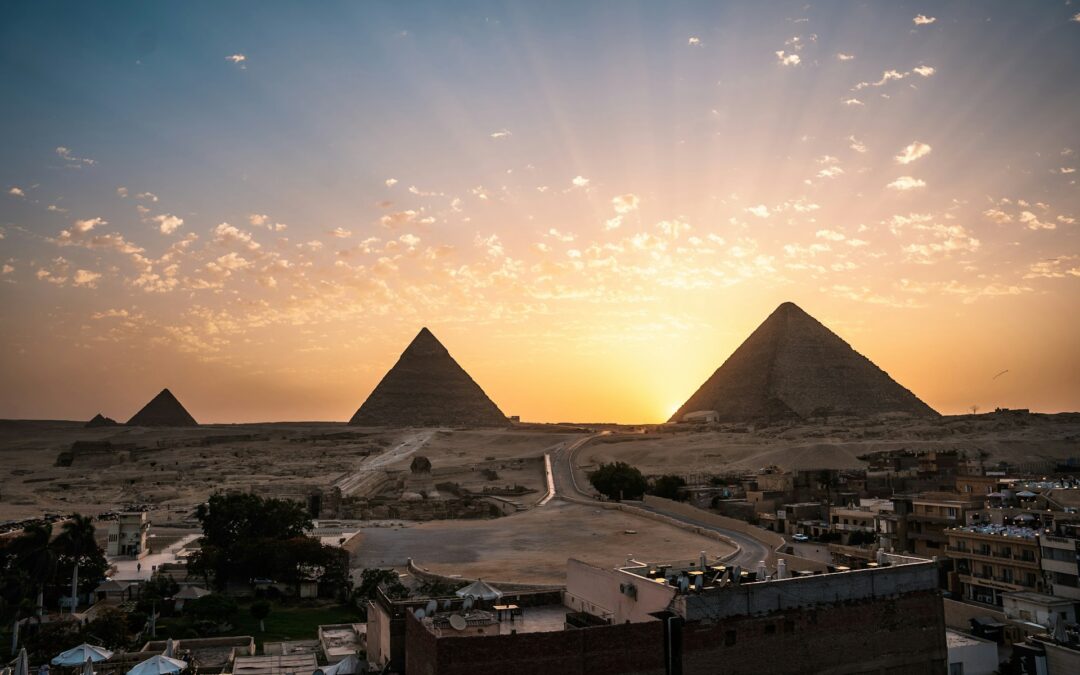
The Great Pyramid of Giza is an unparalleled monument to human ambition and engineering mastery, standing as the oldest and only surviving structure of the original Seven Wonders of the Ancient World. Erected around 2560 BCE during Egypt’s Fourth Dynasty, it was commissioned by Pharaoh Khufu, also known as Cheops, as his eternal tomb and spiritual fortress. This pyramid remains a marvel not just for its size but for the sophistication of its design and the mystery enshrouding its construction.
At its zenith, the pyramid reached approximately 146 meters (480 feet), making it the tallest man-made structure on Earth for over 3,800 years. The core was constructed with an estimated 2.3 million limestone blocks, averaging 2.5 tons each, with some granite blocks weighing up to 80 tons transported from quarries hundreds of kilometers away. The logistics of quarrying, transporting, and precisely placing these stones without cranes or modern machinery imply an extraordinary level of coordination and ingenuity.
The pyramid’s construction challenges many common myths. Rather than being built solely by enslaved laborers, archaeological evidence points to a workforce of skilled artisans, architects, engineers, and seasonal laborers who worked under organized labor systems. These workers were housed in nearby temporary villages, provided with medical care and sustenance, indicating a structured, respected labor force rather than coerced slaves.
The internal architecture of the Great Pyramid is as perplexing as its external grandeur. The King’s Chamber, carved entirely from massive granite blocks, houses an empty sarcophagus, presumed to be Khufu’s final resting place. Adjacent is the Queen’s Chamber, which, intriguingly, shows no signs of having held a burial and remains an enigma to scholars. The pyramid also contains intricate passageways and dead-end chambers, the purpose of which is debated—from potential symbolic representations of the afterlife journey to functional ventilation shafts.
These shafts, especially those emerging from the King’s Chamber, are aligned with certain stars, suggesting astronomical significance possibly linked to Egyptian cosmology and beliefs about the afterlife. The mystery deepens with the precision of the pyramid’s orientation, which aligns almost perfectly with the cardinal points, indicating advanced understanding of astronomy and surveying.
Over the millennia, the pyramid has been subjected to natural disasters, including earthquakes that dislodged casing stones, and human actions such as the stripping of its smooth limestone outer shell for other construction projects. These factors have transformed the pyramid’s appearance from a gleaming, polished monument into the weathered and dust-covered silhouette seen today. Yet, even in its eroded state, the Great Pyramid continues to inspire awe, symbolizing human determination, spirituality, and architectural genius that withstands the ravages of time.
The Hanging Gardens of Babylon: Myth or Marvel?
The Hanging Gardens of Babylon have captured the imagination for centuries as an extraordinary feat of ancient engineering and an emblem of romantic devotion. Traditionally attributed to King Nebuchadnezzar II, who ruled Babylon in the 6th century BCE, the gardens are said to have been constructed to replicate the lush, verdant landscapes of his wife Amytis’s distant homeland, assuaging her homesickness with a green oasis rising dramatically in the midst of the arid Mesopotamian plains.
Descriptions depict an architectural wonder of tiered terraces, brimming with a myriad of trees, vines, and flowers, cascading in a verdant spectacle that defied the harsh surrounding desert. The irrigation system is said to have been remarkably advanced, employing an early form of the Archimedes’ screw or chain pump to lift water from the Euphrates River to the upper terraces. This hydraulic ingenuity allowed for an efficient and continuous flow of water, enabling the survival of an extraordinary botanical array in an environment otherwise hostile to such lush growth.
Despite these evocative accounts, the historical existence of the Hanging Gardens remains intensely debated. Unlike other wonders, there is a conspicuous absence of physical evidence at Babylon’s archaeological sites. Excavations have failed to uncover definitive remains of terraced gardens or water-lifting mechanisms that would validate ancient texts.
Most evidence for the gardens comes from Greek and Roman historians such as Strabo and Philo of Byzantium, who wrote centuries after Nebuchadnezzar’s reign. Some scholars posit that the gardens were a poetic or symbolic creation, possibly conflated with garden structures in other cities or palatial complexes, like those in Nineveh, built by the Assyrian king Sennacherib.
This skepticism has not diminished the gardens’ cultural resonance. The Hanging Gardens epitomize the human desire to harness nature’s beauty through technology and artistry, to create paradises where none should exist. Whether fact or fable, their legend continues to inspire, embodying the intersection of love, power, and innovation in ancient civilization.
The Temple of Artemis at Ephesus: A Cycle of Devastation and Renewal
The Temple of Artemis at Ephesus was one of the grandest and most artistically significant sanctuaries of the ancient Greek world, dedicated to Artemis, the goddess of the hunt, fertility, and nature. Situated in modern-day Turkey, the temple underwent several reconstructions over centuries, each iteration more magnificent than the last, reflecting the religious devotion, wealth, and political power of the Ephesians.
The earliest known temple was constructed during the Bronze Age, modest by later standards but already a vital center of worship. However, catastrophic flooding around 700 BCE devastated the temple and surrounding farmland, an event that was interpreted as divine displeasure. This calamity spurred the Ephesians to build a more magnificent replacement, a colossal Ionic temple featuring over 100 columns, each intricately decorated, spanning an area large enough to host grand festivals and gatherings.
The second temple’s artistic program included contributions from celebrated sculptors such as Scopas, Bryaxis, Timotheus, and Leochares, whose works adorned the façade and interiors with elaborate friezes and statues that narrated mythological tales and glorified the goddess. The temple’s scale and artistry made it a hub not only of religious rites but also of commerce and cultural exchange, attracting visitors from across the Mediterranean.
Tragedy struck when Herostratus, a man motivated by a desire for eternal fame, set fire to the temple in 356 BCE. His act was both destructive and symbolic, an assault on the city’s pride and religious identity. Despite the city’s efforts to erase his name from history, Herostratus achieved a perverse immortality through his infamy.
In response, the Ephesians rebuilt the temple yet again, surpassing previous grandeur with marble construction and even more elaborate artistic detail. This final temple stood for centuries, witnessing the ebb and flow of empires and religions.
However, the rise of Christianity and the subsequent decline of pagan worship led to the temple’s gradual abandonment and ruin. The temple’s stones were eventually repurposed, including in the construction of the nearby Hagia Sophia, blending the remnants of a pagan monument into Christian heritage. The ruins of the temple remain a powerful symbol of human creativity, resilience, and the complex interplay of faith and politics over time.
The Statue of Zeus at Olympia: Divine Majesty in Marble and Gold
The Statue of Zeus at Olympia was not simply a colossal sculpture; it was the epitome of religious devotion and artistic excellence in ancient Greece. Crafted by the master sculptor Phidias around 435 BCE, the statue was housed within the grand Temple of Zeus at Olympia, the religious and athletic heartland where the ancient Olympic Games were held. Towering approximately 12 meters (about 40 feet) tall, this chryselephantine masterpiece combined gold and ivory over a wooden framework, a technique reserved for only the most prestigious statues, amplifying its sacred aura and grandeur.
Phidias’s artistry went far beyond mere size. Zeus was depicted seated on an intricately adorned throne, crafted with ebony, ivory, gold, and precious stones. The throne itself was a tapestry of mythological scenes and symbolic motifs, crafted with unparalleled attention to detail. Zeus held a figure of Nike, the goddess of victory, in his right hand, symbolizing triumph, while a scepter crowned with an eagle rested in his left, embodying his supreme authority as the king of gods. His serene yet commanding visage exuded both divine majesty and benevolence, reinforcing the spiritual connection between the Greek people and their pantheon.
The statue was more than an object of awe; it was a living symbol of Greek identity, religious fervor, and artistic achievement. Pilgrims who traveled from across the Greek world to Olympia regarded the statue as a tangible presence of Zeus himself, and it was central to rituals that underscored the city’s cultural cohesion.
Despite its magnificence, the statue did not survive antiquity. Likely destroyed by fire—possibly in the 5th century CE during periods of turmoil—the statue’s physical form vanished, leaving behind only literary descriptions, coins bearing its image, and a legacy that would influence religious art for centuries. Today, the Statue of Zeus stands as a poignant reminder of the intimate bond between art, religion, and identity in the ancient world.
The Mausoleum at Halicarnassus: A Monument to Ambition and Love
The Mausoleum at Halicarnassus was a bold architectural statement, commissioned by Artemisia II in the 4th century BCE to honor her husband and brother Mausolus, a satrap (governor) under the Persian Empire. Situated in what is now Bodrum, Turkey, the tomb was not only a final resting place but a dazzling blend of cultural influences—Greek, Egyptian, and Lycian—reflecting the cosmopolitan milieu of the Hellenistic period.
Rising approximately 45 meters high, the Mausoleum’s design was unprecedented. It featured a rectangular base decorated with sculptural reliefs depicting battle scenes, mythological narratives, and ceremonial processions. Above this, a stepped pyramid roof culminated in a quadriga—a chariot drawn by four horses—sculpted with dynamic realism. This combination of a classical temple base, a pyramid roof, and an equestrian statue crowned the structure with a dramatic fusion of styles rarely seen before or since.
The artistic program was a collaborative effort by some of the most celebrated sculptors of the time, including Scopas, Bryaxis, Timotheus, and Leochares. Their mastery transformed the mausoleum into a sculptural showcase of movement, emotion, and narrative, elevating it beyond a tomb to a monument celebrating life, power, and artistic triumph.
Despite its grandeur, the Mausoleum did not withstand the test of time intact. It suffered damage from earthquakes between the 12th and 15th centuries and was ultimately dismantled, its stones repurposed for fortifications and other buildings. The very name “mausoleum” became synonymous with monumental tombs, ensuring that Artemisia and Mausolus’s legacy endures not just in ruins but in the lexicon of funerary architecture worldwide.
The Colossus of Rhodes: Triumph and Tragedy Cast in Bronze
The Colossus of Rhodes was a towering symbol of victory and resilience, constructed to commemorate Rhodes’ successful defense against Demetrius Poliorcetes’ siege in 305 BCE. Erected over a 12-year period, this bronze and iron giant stood approximately 30 meters (98 feet) tall, rivaling the tallest statues of antiquity, and was dedicated to Helios, the sun god, whom the Rhodians believed had aided their defense.
The statue was a feat of engineering as much as artistry. Made from thousands of bronze plates mounted over an iron skeleton, it was said to have stood astride the harbor entrance—though recent scholarship suggests this might be a myth—and its imposing presence was a deterrent to potential invaders and a beacon of Rhodian pride.
The Colossus was forged from the spoils of war, including captured weapons and siege equipment, symbolizing the transformation of destruction into creative triumph. Its construction required advanced metallurgical techniques and a deep understanding of structural balance to support such a massive figure without collapsing.
Tragically, the statue’s life was brief. Roughly 56 years after its completion, an earthquake shattered its legs, causing the Colossus to collapse. The Rhodians, interpreting the destruction as a divine message, chose not to rebuild it, despite offers of financial support, out of reverence or superstition.
The remains lay in ruins for centuries, attracting visitors who marveled at the giant’s scale and the story it embodied. Eventually, the bronze was sold and repurposed, marking the end of one of antiquity’s most iconic monuments. The Colossus’s legacy endures as a symbol of human ambition, resilience, and the transience of even the grandest achievements.
The Lighthouse of Alexandria: Beacon of Civilization
The Lighthouse of Alexandria, also known as the Pharos of Alexandria, was one of the greatest engineering feats of the ancient world, constructed around 280 BCE on the small island of Pharos just off the coast of Alexandria, Egypt. It was commissioned by Ptolemy I Soter, a successor of Alexander the Great, to guide ships safely into the bustling harbor of one of the Mediterranean’s most important trade centers. Standing approximately 130 meters tall, it ranked among the tallest man-made structures for over a millennium, symbolizing the city’s wealth, power, and maritime prowess.
Designed by the Greek architect Sostratus of Cnidus, the lighthouse combined functionality with monumental grandeur. Its architecture was tiered: a broad square base formed the foundation, above which rose an octagonal middle section, topped by a circular tower where the beacon flame burned. This tripartite design was both structurally sound and aesthetically impressive, making the lighthouse a visual landmark visible from miles at sea.
Because electricity was unknown, the lighthouse relied on a massive wood-fueled fire as its light source. To amplify this light, polished bronze mirrors and lenses were ingeniously employed, focusing the flame’s glow into a powerful beam that pierced through fog and darkness, allowing sailors to navigate treacherous waters safely. This application of early optics was revolutionary, marking the lighthouse as a precursor to modern maritime navigation technology.
Beyond its navigational role, the lighthouse was a potent symbol of Alexandria’s status as a cosmopolitan hub of trade, knowledge, and culture. The city’s bustling harbor attracted merchants from around the Mediterranean and beyond, and the lighthouse’s beacon was a welcome sign of safety and prosperity.
Despite its sturdy construction, the lighthouse endured numerous earthquakes between the 10th and 14th centuries that gradually eroded its structure until it finally collapsed. Today, only underwater ruins hint at its former glory, but its influence echoes through history as the archetype for lighthouses worldwide and a testament to human ingenuity.
Why the Original Wonders Vanished and What Replaced Them
The ancient Seven Wonders were all extraordinary achievements, but time was merciless to all but the Great Pyramid of Giza. Natural disasters, wars, religious upheavals, and human neglect conspired to dismantle these marvels. Earthquakes toppled the Colossus of Rhodes and the Lighthouse of Alexandria; fires and invasions razed the Temple of Artemis and the Statue of Zeus; while the Mausoleum at Halicarnassus succumbed to repeated seismic destruction and stone scavenging.
This pattern reveals a striking paradox: these wonders were built to last and symbolize eternal glory, yet they were vulnerable to the shifting sands of history. Their destruction was sometimes sudden and catastrophic, other times gradual and corrosive, but invariably they succumbed to the impermanence that defines all human creations.
Fast forward to the dawn of the 21st century, when a global initiative sought to redefine the world’s wonders through an online vote that gave the public a voice. This democratic exercise aimed to celebrate humanity’s greatest architectural and cultural achievements across all ages. However, the process was heavily influenced by nationalism and tourism economics, with countries vigorously campaigning to ensure their landmarks made the cut, often using sophisticated media campaigns to sway votes.
The modern list of wonders, including the Great Wall of China, Machu Picchu, and the Taj Mahal, reflects this blend of global heritage and contemporary branding. It fills the void left by the lost ancient wonders but introduces a different ethos—one less about mythic grandeur and more about cultural diversity, accessibility, and living history.
Curiously, the Great Pyramid, the sole surviving ancient wonder, was relegated to an honorary position rather than the main list, underscoring the tension between historical significance and modern popular appeal. This modern reinvention of wonders illustrates how cultural memory evolves, shaped by technology, politics, and economic interests as much as by history.
The Enduring Allure of Wonder
Wonders, ancient or modern, encapsulate the human drive to create meaning, inspire awe, and transcend the mundane. They are physical manifestations of aspiration, ingenuity, and identity, bridging the ephemeral nature of human life with the desire for permanence and legacy.
The ancient wonders were born from a profound fusion of religious devotion, political ambition, and artistic expression. Each was crafted to impress not only contemporaries but generations yet unborn—a statement that civilization, faith, and creativity endure beyond individual lifespans. They represent a shared language of human achievement, where architecture and sculpture become storytelling mediums for power, spirituality, and cultural pride.
Though most have crumbled or vanished, their stories persist in texts, ruins, and imagination, fueling curiosity and reverence. They challenge modern societies to reflect on what constitutes true greatness—whether sheer scale, technological innovation, artistic beauty, or cultural resonance.
In an era where new wonders arise from steel and glass, satellites and algorithms, the ancient wonders remind us that awe is timeless. They beckon us to dream bigger, build bolder, and appreciate the transient yet magnificent journey of human creativity. Ultimately, wonder connects us across time, inviting each generation to leave its mark and to marvel at those who came before.