
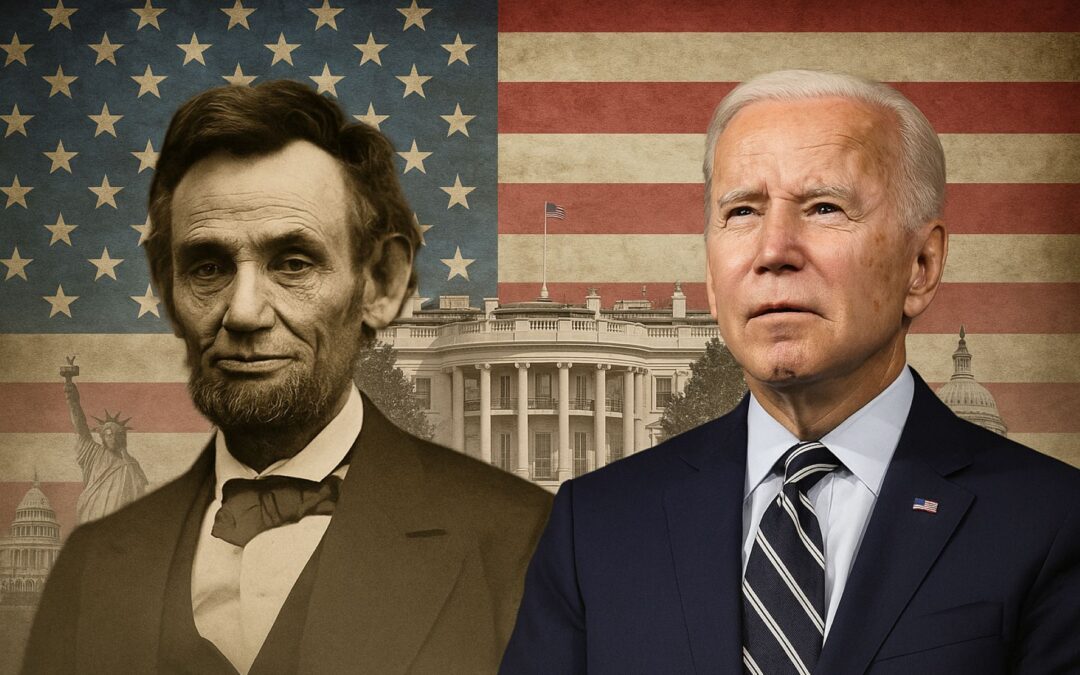
Every American president has left fingerprints on history—some faint, others etched in steel. From the dawn of the Republic to the digital age, each leader faced a singular test that revealed not just the character of the man, but the character of the nation he led.
Some expanded borders, others expanded rights. Some built highways and empires, others built hope out of despair. Together, their legacies form a mosaic of ambition, courage, misjudgment, and progress—a living testament to the evolution of democracy itself.
This is not merely a chronology of power. It’s the story of invention, crisis, and conviction. The story of how ordinary men in extraordinary moments shaped a nation that refuses to stand still.
George Washington – The Power of Walking Away
George Washington entered the presidency with no blueprint—no constitutionally defined limits, no precedent for behavior, no model to emulate. Every move he made set a standard that would echo for centuries. He formed the first cabinet, establishing a collaborative executive branch that could make decisions efficiently without resembling a monarchy. He respected Congress’s authority, vetoed sparingly, and made the presidency a position of disciplined restraint rather than domination.
When the Whiskey Rebellion erupted over a controversial tax, Washington didn’t hide behind proclamations or letters. He mounted his horse, donned his military uniform, and personally led federal troops to suppress the insurrection—proving that the new government was not a fragile experiment but a functioning state capable of enforcing its laws.
Yet Washington’s greatest act was not one of war, policy, or governance—it was his exit. After two terms, in a world where kings ruled until death, Washington voluntarily stepped down. That single gesture—walking away from power—established the most sacred democratic tradition in American life: the peaceful transfer of power. His restraint shaped the very character of the presidency, transforming leadership from possession into stewardship.
John Adams – Choosing Peace Over Popularity
John Adams inherited a divided, suspicious, and volatile young nation. The French Revolution was tearing Europe apart, and American ships were being harassed on the seas. When French agents—the infamous “XYZ Affair”—demanded bribes from U.S. diplomats, Congress and the public roared for war. National pride demanded retaliation.
But Adams thought beyond emotion. He knew that war could destroy the fragile Republic before it found its footing. Against the cries of his own party and the fury of the people, he pursued peace. He sent envoys to France and negotiated the Convention of 1800, formally ending the alliance forged during the Revolution and preventing a catastrophic conflict the U.S. could not afford.
This decision likely cost him reelection, but it preserved the nation’s stability and sovereignty. In an age of impulsive heroics, Adams chose patience, proving that true courage often means refusing to fight. His legacy is quiet but monumental—the preservation of peace when war was the popular path.
Thomas Jefferson – The Real Estate Deal of the Millennium
Thomas Jefferson was an idealist who believed in the power of agrarian independence and the spread of liberty through land. In 1803, he executed one of the most extraordinary acts of foresight in American history—the Louisiana Purchase. When Napoleon Bonaparte’s imperial dreams crumbled and France needed quick cash, Jefferson seized the chance to buy 828,000 square miles of territory for just $15 million—about three cents an acre.
Overnight, the United States doubled in size. The Mississippi River became an American artery, the Great Plains opened to settlement, and the Rockies defined the nation’s western horizon. It was an audacious gamble—one Jefferson himself doubted was constitutional—but it redefined the nation’s destiny. The Louisiana Purchase made America not merely a republic, but a continent-spanning idea.
It also catalyzed the spirit of exploration—Lewis and Clark’s expedition followed soon after, charting a world of unknown lands and untapped potential. Jefferson’s genius lay not just in what he acquired, but in how he envisioned that land—as the stage upon which freedom could expand.
James Madison – The War That Proved America Could Endure
When James Madison took office, the United States was still an untested experiment. Britain was kidnapping American sailors, interfering with trade, and mocking the country’s sovereignty. Reluctantly, Madison led the nation into the War of 1812—a war for respect, not conquest.
The conflict was disastrous at first. British forces invaded Washington, D.C., and burned the Capitol and the White House. The U.S. army, inexperienced and poorly equipped, stumbled from defeat to defeat. But America refused to collapse. Naval victories on the Great Lakes restored morale, and local militias stiffened their resolve.
Then came Andrew Jackson’s stunning triumph at the Battle of New Orleans—a ragtag American army crushing Britain’s elite forces. The war ended in a stalemate, but psychologically, it was a victory. The young republic had faced its former imperial master and survived. Madison’s steady leadership through humiliation and hardship gave America its first true taste of unity—and the confidence to stand tall among nations.
James Monroe – Drawing the Line in the Sand
By 1823, the colonial empires of Europe were collapsing, and Monroe saw an opening to redefine the world order. His Monroe Doctrine was both warning and promise: the Western Hemisphere was closed to European colonization, and any interference would be viewed as an act of aggression.
It was bold. The United States, still militarily modest, had no navy capable of enforcing such a doctrine. Yet Monroe’s declaration carried weight because it articulated a new identity—America as protector of the New World. The policy became the cornerstone of U.S. foreign affairs for over a century, invoked by presidents from Theodore Roosevelt to John F. Kennedy.
Beyond its geopolitical impact, the Monroe Doctrine marked a psychological shift. America stopped thinking of itself as a fragile offspring of Europe and began seeing itself as an equal, even superior, power. Monroe’s stance was less about defiance and more about destiny—a vision of hemispheric sovereignty that still resonates in the language of modern diplomacy.
John Quincy Adams – Building a Connected America
John Quincy Adams inherited his father’s intellect but channeled it into innovation rather than ideology. He believed infrastructure was the soul of progress—roads, canals, and bridges as arteries of unity. His administration oversaw the completion of the Erie Canal in 1825, a 363-mile engineering marvel linking the Great Lakes to the Atlantic Ocean.
The canal transformed the American economy. Western farmers could now ship goods to eastern markets cheaply and efficiently, turning cities like New York into booming trade hubs. Adams envisioned a nation knit together not by proximity, but by purpose—a single economic organism fueled by connectivity.
Though his presidency was politically embattled, his foresight was prophetic. The infrastructure revolution he championed laid the groundwork for America’s industrial age. Adams’ dream wasn’t glory—it was glue: a vision of unity through construction, not conquest.
Andrew Jackson – The Man Who Killed the Bank
Andrew Jackson embodied volatility—equal parts hero and havoc. To his supporters, he was a warrior for the common man; to his enemies, a tyrant in boots. His crusade against the Second Bank of the United States was both populist vengeance and economic experiment.
Jackson saw the Bank as a corrupt institution that served the wealthy elite at the expense of ordinary Americans. He vetoed its recharter, withdrew federal funds, and redistributed them to state “pet banks.” Against every warning, he stood firm. In 1835, for the first and only time in U.S. history, America had no national debt.
The triumph was short-lived. Without the stabilizing force of the Bank, speculation spiraled, leading to the Panic of 1837. Yet Jackson’s war on financial oligarchy cemented his mythos as the people’s president—defiant, flawed, but unyielding. He redefined democracy as a force driven by will, not wealth.
Martin Van Buren – Safeguarding the Treasury
Martin Van Buren inherited an economy in ruins. The Panic of 1837—triggered by Jackson’s economic chaos—had shuttered banks and thrown thousands into unemployment. Public money, once stored in private institutions, was vulnerable to collapse. Van Buren’s answer was the Independent Treasury System, a simple but revolutionary idea: separate government finances from private banks entirely.
This reform created a network of federal vaults that held national funds securely, protecting the public purse from private failure. It wasn’t glamorous, but it was stabilizing. Van Buren’s system insulated the government from financial crises and restored public confidence in federal management.
Though derided at the time as overly cautious, the Independent Treasury became a bedrock of fiscal integrity. Van Buren’s prudence, not his politics, became his legacy—proving that quiet competence can sometimes be as transformative as bold reform.
William Henry Harrison – The Birth of Modern Campaigning
William Henry Harrison’s presidency was over almost before it began—he died just 31 days after taking office—but his campaign forever changed American politics. Facing accusations of being too old and out of touch, his supporters crafted one of history’s first modern marketing spectacles.
They rebranded him as a rugged frontiersman—a man of the people who drank hard cider in a log cabin. They organized massive rallies, wrote campaign songs, printed slogans (“Tippecanoe and Tyler Too!”), and distributed merchandise to rally public enthusiasm. Harrison’s campaign tapped into something new: politics as performance.
His landslide victory proved that charisma, imagery, and emotional appeal could outweigh policy discussions or experience. Every presidential campaign since has followed his playbook. Though his term was tragically short, Harrison’s campaign permanently fused democracy with showmanship—creating the spectacle-driven politics we still live with today.
John Tyler – Annexing Texas
John Tyler, originally elected as vice president, found himself thrust into the presidency after William Henry Harrison’s sudden death. Few expected much from him. But Tyler defied expectations with one of the boldest geopolitical moves in U.S. history—the annexation of Texas.
At the time, Texas was an independent republic carved out of Mexico, a nation wary of losing more territory to its northern neighbor. Expansionists in Congress framed annexation as “Manifest Destiny,” the belief that America was destined to span the continent. Tyler seized that momentum. Despite fierce opposition from abolitionists—who feared the addition of another slave state—he pushed the measure through Congress by joint resolution, not treaty, sidestepping political gridlock.
In 1845, Texas officially entered the Union, adding vast swaths of fertile land and setting the stage for westward migration. But this victory carried a cost: it inflamed tensions with Mexico and reignited the divisive slavery debate that would eventually lead to civil war. Tyler’s move defined his legacy—a man who, against every political storm, expanded America’s borders and vision of itself.
James K. Polk – The Expansionist Dynamo
James K. Polk ran for office with a clear agenda—and delivered every promise in four relentless years. He was a workhorse president, not a showman, and his achievements remain staggering. Under Polk’s direction, the United States waged and won the Mexican-American War, a conflict that redrew the map of North America.
Through the Treaty of Guadalupe Hidalgo, America gained California, Nevada, Utah, Arizona, New Mexico, and parts of Colorado and Wyoming—nearly half of Mexico’s territory. At the same time, Polk secured the Oregon Territory through a peaceful negotiation with Britain, ensuring U.S. control of the Pacific Northwest.
Polk’s presidency marked the zenith of Manifest Destiny—the idea that American expansion was both justified and inevitable. But he paid a personal price: the immense strain of his work ethic and wartime decision-making ruined his health. He left office voluntarily after one term, exhausted but triumphant. Polk had taken America from coast to coast—an empire of liberty, ambition, and contradictions.
Zachary Taylor – Standing Up to the South
Zachary Taylor, the blunt-spoken general who triumphed in the Mexican-American War, was the last man anyone expected to challenge the South. A lifelong slave owner, Taylor shocked his supporters by opposing the spread of slavery into the newly acquired western territories.
When southern leaders threatened secession if California entered as a free state, Taylor’s response was ferocious. He told them he would personally lead the army to hang anyone who took up arms against the Union. His defiance startled Washington—a reminder that his loyalty was to the nation, not to sectional interests.
But before his vision could take shape, Taylor suddenly died in office in 1850, cutting short what might have been a presidency defined by moral steel. His brief tenure left a legacy of principle over politics, a flash of integrity that hinted at the resolve Lincoln would later embody.
Millard Fillmore – A Temporary Truce
When Taylor died, Millard Fillmore inherited a political powder keg. The North and South were at each other’s throats over slavery, and the Union teetered on collapse. Fillmore’s most significant act—the Compromise of 1850—was an attempt to hold the country together with duct tape and diplomacy.
The compromise admitted California as a free state, banned the slave trade in Washington, D.C., and allowed new territories to decide the slavery question through popular sovereignty. But it also included the Fugitive Slave Act, forcing northern citizens to return escaped slaves under threat of imprisonment.
Fillmore’s compromise bought time, but not peace. The deal soothed tempers temporarily while deepening moral fault lines that would later erupt into civil war. Historians remain divided on his legacy—some view him as a pragmatist who saved the Union from premature collapse, others as an appeaser who postponed the inevitable.
Franklin Pierce – Completing the Continental Dream
Franklin Pierce’s presidency was quiet but consequential. In 1853, he finalized America’s modern borders with the Gadsden Purchase, buying a small strip of land from Mexico for $10 million. That purchase secured the southern parts of modern Arizona and New Mexico, providing the flat terrain necessary for a future transcontinental railroad.
It was a rare moment of peaceful diplomacy in an era dominated by expansionist aggression. Pierce avoided war, completed the continental puzzle, and opened the door for coast-to-coast commerce.
Yet beneath the stability, the nation’s divisions were widening. The Kansas-Nebraska Act, passed during his tenure, reignited the slavery debate and pushed the country closer to conflict. Pierce’s accomplishments were overshadowed by his inability to calm the storm. Still, his border negotiations marked the final strokes on the map of the lower 48 states—a lasting geographic legacy of precision and peace.
James Buchanan – The Peace That Never Was
James Buchanan took office as the country fractured along sectional lines. When rumors of a Mormon uprising in Utah reached Washington, he overreacted—sending 2,500 troops to suppress what turned out to be little more than rumor. The “Utah War” never happened; Buchanan’s army found no rebellion, just confusion. To avoid bloodshed, he offered full pardons in exchange for peace.
While the episode avoided unnecessary conflict, Buchanan’s tenure was defined by inaction on the issues that mattered most. As southern states threatened secession, he stood paralyzed, believing the Constitution gave him no authority to stop them. His decision not to act allowed the crisis to spiral into full-blown rebellion under his successor.
Still, his peaceful resolution of the Utah incident showed flashes of statesmanship—a man who preferred negotiation over confrontation. Unfortunately, in the grand sweep of history, Buchanan is remembered not for what he solved, but for what he failed to prevent.
Abraham Lincoln – The Savior of the Union
When Abraham Lincoln took the oath of office, seven southern states had already seceded, and more were threatening to follow. His presidency was not about politics—it was about survival. With unshakable resolve, Lincoln steered the Union through its darkest hour, proving that democracy could endure even the most brutal test.
Early defeats nearly crushed the northern will to fight. Washington, D.C., itself was almost encircled. But Lincoln refused to surrender to despair. He replaced weak generals with men of steel—most notably Ulysses S. Grant—and transformed the war from a struggle for unity into a crusade for freedom.
The Emancipation Proclamation reframed the Civil War as a moral battle, turning America’s founding ideals into a living cause. When the war ended, Lincoln’s vision of “a new birth of freedom” became the guiding light of American identity. His assassination sealed his martyrdom—but his legacy is eternal: the man who kept a fractured nation whole through wisdom, humility, and indomitable faith.
Andrew Johnson – The Cold Bargain of Alaska
Andrew Johnson inherited a nation exhausted by war and broken by assassination. Tasked with rebuilding the South, he failed politically but succeeded economically in one crucial act: approving the purchase of Alaska from Russia in 1867.
Critics mocked it as “Seward’s Folly,” named after his secretary of state, William H. Seward. They saw Alaska as an empty, frozen wasteland—a $7.2 million mistake. But Johnson’s administration persisted, recognizing the long-term value of the land.
Time proved him right. Alaska turned out to be rich in oil, gold, timber, and fisheries—resources that would later become vital to America’s prosperity and defense. The acquisition also removed Russia from North America, securing the continent for future American dominance. Though Johnson’s presidency remains marred by his failures in Reconstruction, Alaska stands as his enduring triumph—a cold bargain that burned bright in the century that followed.
Ulysses S. Grant – The War Against Terror
Ulysses S. Grant entered the presidency as a national hero—the general who crushed the Confederacy and preserved the Union. Yet his greatest achievement as president came not on the battlefield but in the courtroom and the streets of the postwar South.
As white supremacist groups like the Ku Klux Klan terrorized newly freed Black citizens, Grant unleashed federal power to protect them. He signed the Enforcement Acts, empowering the government to prosecute Klan members and deploy federal troops to dismantle their networks. For a time, his campaign succeeded—the KKK’s influence waned, and voting rights flourished in the South.
Grant also championed the 15th Amendment, securing suffrage for African American men. Though his administration struggled with corruption scandals, his determination to defend civil rights was extraordinary for its time. He proved that victory in war meant nothing without justice in peace. Grant’s legacy is that of a soldier-statesman who fought not just for union, but for equality under its banner.
Rutherford B. Hayes – The Price of Compromise
Rutherford B. Hayes entered office not through overwhelming victory, but through the smoke of a political standoff. The election of 1876 was one of the most disputed in American history—Tilden won the popular vote, but contested electoral results left the presidency hanging in limbo. The deadlock was resolved by the Compromise of 1877: Democrats agreed to concede the presidency to Hayes if he withdrew federal troops from the South.
Hayes accepted the deal, and with that decision, Reconstruction—the ambitious federal effort to rebuild the South and protect the rights of newly freed Black Americans—came to an end. The move averted another civil conflict and restored national stability, but it also abandoned millions of African Americans to the horrors of Jim Crow.
In the short term, Hayes preserved peace; in the long term, he allowed a century of racial injustice to fester. His presidency stands as a painful lesson in the price of compromise—a choice between conflict and conscience, in which he chose the former.
James Garfield – A Crusader for Merit
James Garfield’s presidency was brief, but its intent was bold. A self-made man who rose from poverty to become a scholar, general, and congressman, Garfield despised the “spoils system”—the corrupt tradition of handing out government jobs as political favors. He envisioned a merit-based bureaucracy where competence, not connections, determined appointments.
Garfield’s push for reform put him at odds with powerful party bosses who profited from patronage. His insistence on integrity cost him dearly. Just four months into his presidency, he was shot by a disgruntled office seeker—an assassin who believed he deserved a government position. Garfield lingered for months before dying from infection.
His death ignited a national outcry for change. Though Garfield did not live to see it, his assassination paved the way for civil service reform. In death, he achieved what politics had denied him—transforming government from a nest of cronies into a system that valued merit.
Chester A. Arthur – Reforming the System He Built
No one expected Chester A. Arthur to become a reformer. A product of the very spoils system Garfield opposed, Arthur had built his career on political patronage. When he assumed the presidency after Garfield’s death, the public feared the worst—a corrupt insider at the helm.
Instead, Arthur shocked the nation. Moved by Garfield’s legacy, he signed the Pendleton Civil Service Reform Act in 1883, which required competitive exams for federal jobs and outlawed forced political donations from government workers. It was a revolution in ethics—a blow against the entrenched machine politics that had dominated Washington for decades.
Arthur’s transformation from party loyalist to reformer remains one of history’s most unexpected redemptions. Though he served only one term, his courage to defy his own past set a moral precedent: leadership is not about where you begin, but how you change.
Grover Cleveland – The Relentless Reformer
Grover Cleveland was a human roadblock to corruption. As the first Democrat elected after the Civil War, he took office with a singular purpose—to clean house. Cleveland vetoed more bills than all his predecessors combined, targeting wasteful spending, fraudulent pension claims, and pork-barrel projects.
He was a rare politician who treated the presidency as a public trust, not a personal opportunity. His plainspoken honesty and refusal to pander made him both respected and resented. “Public office is a public trust,” he declared, and he governed by that creed.
Cleveland’s insistence on fiscal restraint and ethical conduct restored credibility to a government drowning in cynicism. His two nonconsecutive terms symbolized a return to principle amid patronage. He didn’t charm; he corrected. And in an era addicted to self-interest, his integrity was revolutionary.
Benjamin Harrison – Drawing the Line on Monopoly Power
Benjamin Harrison presided over a nation bursting with industrial ambition—and monopolies. Corporate giants like Standard Oil and the railroads had grown so vast that they strangled competition and dictated prices. Harrison recognized that capitalism without rules becomes tyranny.
In 1890, he signed the Sherman Antitrust Act, the first federal law aimed at curbing monopolistic power. Though the law’s early enforcement was weak, it laid the groundwork for future trust-busting under Theodore Roosevelt and beyond. Harrison’s legislation was a declaration of economic justice: the marketplace would serve citizens, not corporate kings.
His presidency also saw advances in environmental conservation and naval modernization. Harrison was no populist, but he grasped a timeless truth—unchecked power, whether political or financial, always corrupts. The Sherman Act remains one of America’s defining legal tools against greed.
William McKinley – The Dawn of an Empire
William McKinley entered office as an advocate of industry and national pride, but fate turned him into an imperial president. When the USS Maine exploded in Havana Harbor, public outrage ignited the Spanish–American War. Though brief—barely 100 days—it changed America forever.
Under McKinley’s command, the U.S. swiftly crushed Spanish forces in both the Caribbean and the Pacific. The victories of Admiral Dewey in Manila Bay and the Rough Riders at San Juan Hill catapulted America into global prominence. The resulting Treaty of Paris handed the United States new territories—Puerto Rico, Guam, and the Philippines—and positioned it as a world power for the first time.
McKinley’s presidency fused patriotism with expansionism. He didn’t merely lead a war—he oversaw a transformation. America’s age of continental conquest ended; its age of global influence began.
Theodore Roosevelt – The Progressive Powerhouse
Theodore Roosevelt exploded into the White House like dynamite. Bursting with energy, vision, and reformist zeal, he sought to make the presidency a moral compass for the nation. His “Square Deal” championed three core principles: fairness for workers, regulation of corporations, and preservation of natural resources.
Roosevelt became known as the “Trustbuster,” taking on monopolies like Standard Oil and the Northern Securities Company. But his reform wasn’t just punitive—it was philosophical. He believed capitalism should serve the public good, not private greed.
Beyond economics, Roosevelt was America’s first great conservationist president. He established national parks, forests, and monuments, preserving more than 230 million acres of wilderness for future generations. His blend of vigor and intellect redefined leadership—not as distant administration, but as active stewardship. Roosevelt made the presidency bigger, bolder, and louder—a pulpit from which justice could roar.
William Howard Taft – The Quiet Enforcer
William Howard Taft was no firebrand like Roosevelt, but he was every bit as effective. A deliberate, judicial-minded man, Taft continued the trust-busting crusade with relentless precision. In just four years, he filed nearly 100 antitrust suits—twice as many as Roosevelt—including cases against corporate giants like U.S. Steel.
Taft’s reforms extended to the postal system, interstate commerce, and civil service efficiency. He preferred methodical governance to dramatic confrontation, earning him a reputation for caution that belied his productivity.
Ironically, his commitment to legal fairness strained his friendship with Roosevelt, who accused him of being too conservative. Yet history vindicated Taft as a steady hand—an administrator who believed justice should be institutional, not impulsive. After his presidency, he achieved his lifelong dream by serving as Chief Justice of the Supreme Court, where his passion for law found its purest expression.
Woodrow Wilson – The Architect of Stability
Woodrow Wilson, the academic-turned-president, reshaped America’s financial and global identity. His most enduring domestic achievement was the creation of the Federal Reserve in 1913. Before Wilson, the economy lurched from boom to panic, driven by private banks and speculative chaos. The Federal Reserve centralized control over currency, credit, and interest rates, giving the government a lever to stabilize the financial system.
But Wilson’s ambitions stretched beyond economics. He believed in moral governance and sought to align American power with democratic ideals. His administration passed the Clayton Antitrust Act to strengthen competition and the Federal Trade Commission to guard against corporate abuse.
Abroad, Wilson would later champion self-determination and international cooperation—but it was the Fed that ensured America’s internal stability. It remains the cornerstone of U.S. economic management, a testament to his foresight. Wilson’s intellect and reformist energy made him one of the most consequential—if controversial—architects of the modern American state.
Warren G. Harding – The Peace Broker
When Warren G. Harding took office in 1921, the United States was fatigued from war and weary of ideological crusades. His message of a “return to normalcy” resonated with a population desperate for calm. Harding’s presidency sought to dial back government overreach, repair the economy, and restore public confidence after the turbulence of World War I.
His most profound accomplishment, however, came on the global stage. Harding convened the Washington Naval Conference in 1921–22—the first major disarmament summit in history. Leaders from the world’s dominant powers—Britain, Japan, France, Italy, and the United States—met to negotiate limits on naval expansion. The result was the Five-Power Treaty, a groundbreaking agreement that capped battleship tonnage and curbed the naval arms race that had been draining treasuries and stirring suspicion since before the Great War.
The conference achieved what few thought possible: a decade of relative peace among major powers. It allowed nations to redirect resources from war to recovery, and for America, it reaffirmed leadership through diplomacy, not force. Though Harding’s presidency later became infamous for scandals like Teapot Dome, his success at Washington stood apart—a rare example of political restraint triumphing over ambition.
Calvin Coolidge – The Silent Steward of Prosperity
Calvin Coolidge embodied austerity and discipline. In an era of exuberance, he stood for restraint. Nicknamed “Silent Cal” for his laconic nature, he governed by a simple philosophy: prosperity thrives when government stays out of the way.
Coolidge reduced federal spending, slashed taxes, and balanced the national budget—a trifecta of fiscal responsibility rarely seen before or since. He believed excessive taxation was “robbery under legal forms,” and his economic policies reflected that conviction. The result was a decade of unprecedented growth: wages rose, unemployment fell to near record lows, and consumer innovation—from automobiles to radios—transformed daily life.
Under Coolidge, the federal government ran surpluses, paid down the national debt, and maintained confidence in American capitalism. Critics accused him of passivity, but his quiet governance was deliberate—a steady hand allowing private enterprise to flourish. The Roaring Twenties roared precisely because Coolidge refused to shout.
Herbert Hoover – The Monument of Ingenuity
Before the Great Depression defined his presidency, Herbert Hoover was known as a builder—both literally and metaphorically. His crowning achievement, the Hoover Dam, remains one of the most ambitious infrastructure projects in human history.
Conceived to control the unpredictable Colorado River, prevent flooding, and generate hydroelectric power for the Southwest, the dam embodied the optimism of American engineering. Towering over the desert, it transformed the arid landscape into a source of life and electricity for millions. Cities like Los Angeles, Phoenix, and Las Vegas owe much of their modern existence to the dam’s power and irrigation systems.
Completed during the depths of the Depression, the Hoover Dam became a monument to what human ingenuity could achieve even in times of despair. It symbolized the national spirit of construction over collapse, progress over paralysis. Though Hoover’s name became synonymous with economic failure, this achievement remains an enduring testament to his vision of self-reliant, solution-driven America.
Franklin D. Roosevelt – The Great Rebuilder
When Franklin D. Roosevelt took office in 1933, the nation was broken. Banks were collapsing, unemployment was soaring, and hunger haunted every city street. With boldness matched only by empathy, FDR reshaped America through the New Deal—a sweeping series of programs, reforms, and relief efforts that redefined the role of government in public life.
Roosevelt’s initiatives created Social Security, the Securities and Exchange Commission (SEC), and the Federal Deposit Insurance Corporation (FDIC). Agencies like the Civilian Conservation Corps (CCC) and the Works Progress Administration (WPA) put millions of unemployed Americans to work building roads, bridges, parks, and schools—laying the foundation of modern infrastructure.
But the New Deal was more than policy—it was psychological rescue. It restored faith in the system, in democracy, and in the future. Roosevelt’s fireside chats brought warmth and reassurance to living rooms gripped by fear. Under his leadership, the presidency evolved into a guardian of both economy and spirit. FDR didn’t just save the nation from collapse; he reinvented what it meant to be American in the modern age.
Harry S. Truman – Ending the Unendurable
Harry Truman’s presidency began at one of the most critical junctures in human history. World War II was nearing its end in Europe, but Japan refused to surrender. Truman faced an agonizing choice: invade Japan at the cost of hundreds of thousands of lives or use a weapon that would change the world forever.
In August 1945, he ordered the atomic bombings of Hiroshima and Nagasaki, bringing the war to a swift and brutal end. The decision remains one of history’s most debated, yet its impact was undeniable—it saved countless soldiers’ lives and forced humanity to confront the power of its own inventions.
Truman’s leadership extended beyond wartime. He launched the Marshall Plan, rebuilding Europe’s shattered economies, and created the Truman Doctrine to contain communism, laying the groundwork for American influence throughout the Cold War. He also desegregated the U.S. military, a moral step decades ahead of its time. Truman’s presidency marked the birth of America’s modern global leadership—decisive, moral, and unflinchingly pragmatic.
Dwight D. Eisenhower – The Great Connector
Dwight Eisenhower’s genius lay in execution. A military commander turned statesman, he approached governance like strategy—calculated, disciplined, and visionary. His greatest domestic achievement was the creation of the Interstate Highway System, the largest public works project in American history.
Inspired by the efficiency of Germany’s Autobahn during World War II, Eisenhower recognized that mobility meant power. The Federal-Aid Highway Act of 1956 authorized over 41,000 miles of high-speed roads, linking cities, fueling commerce, and transforming the landscape. The highways connected rural America to industry, boosted suburban growth, and created the infrastructure backbone that still drives the nation today.
Beyond the asphalt, Eisenhower balanced budgets, avoided major wars during a tense Cold War, and warned against the unchecked rise of the “military-industrial complex.” His leadership was calm yet commanding, and his roads became more than physical routes—they were metaphors for a connected, confident, and mobile America.
John F. Kennedy – The Calm at the Edge of Chaos
John F. Kennedy’s presidency burned bright and brief, defined by charm, intellect, and crisis management at the highest stakes imaginable. The Cuban Missile Crisis of 1962 brought humanity closer to nuclear annihilation than ever before. Soviet missiles had been discovered just 90 miles off the Florida coast, and the world held its breath.
Kennedy faced an impossible decision: strike and risk global war, or stand down and appear weak. Instead, he chose a third path—imposing a naval blockade around Cuba while secretly negotiating with the Soviets. After 13 days of tension that could have ended civilization, the Soviets withdrew their missiles in exchange for a U.S. pledge not to invade Cuba and the quiet removal of American missiles in Turkey.
Kennedy’s restraint and diplomacy pulled the world back from the brink. He proved that strength need not roar—it could reason. The episode defined his presidency: measured courage under unthinkable pressure. His assassination cut short a leader who had glimpsed humanity’s darkest potential and refused to let it consume us.
Lyndon B. Johnson – The Moral Turning Point
Lyndon B. Johnson rose from the rugged fields of Texas to the highest office in the land and wielded his political mastery to achieve one of the greatest social transformations in American history—the Civil Rights Act of 1964.
In a nation still torn by racial segregation and hatred, Johnson used the momentum of Kennedy’s legacy and his own legislative prowess to pass the act that outlawed discrimination based on race, color, religion, sex, or national origin. It dismantled the legal pillars of segregation in schools, workplaces, and public spaces, finally bringing federal power to bear on the side of equality.
Johnson followed it with the Voting Rights Act of 1965 and launched the “Great Society” initiatives, expanding education, healthcare, and poverty relief. Yet his domestic triumphs were overshadowed by the Vietnam War, which fractured public trust. Still, his work on civil rights remains monumental—proof that power, when wielded with courage and conscience, can bend the moral arc of a nation.
Richard Nixon – Opening the Dragon’s Door
Richard Nixon’s presidency was a paradox of brilliance and self-destruction. Before Watergate consumed his legacy, he achieved one of the most daring diplomatic breakthroughs of the 20th century—opening relations with Communist China.
For two decades, the U.S. had refused to recognize Mao’s regime, treating China as a global pariah. Nixon, a master strategist, saw opportunity where others saw danger. By reaching out to Beijing, he aimed to exploit the rift between China and the Soviet Union, reshaping the balance of power in the Cold War.
In 1972, Nixon’s visit to China electrified the world. Images of him shaking hands with Mao Zedong symbolized not just rapprochement but realignment. Trade, diplomacy, and cultural exchange followed, ushering in a new geopolitical era. Nixon’s maneuver isolated the Soviets, elevated the U.S. position in Asia, and redefined global diplomacy.
Ironically, the man who built bridges abroad would burn them at home. Watergate would end his presidency in disgrace—but his audacious opening to China remains a masterstroke of strategic statecraft, one that continues to shape the world’s political landscape today.
Gerald Ford – Choosing Healing Over Hatred
When Gerald Ford took office in 1974, the American presidency was in shambles. Watergate had shattered public faith in government, and Richard Nixon’s resignation left the nation leaderless and humiliated. Ford, a man of quiet integrity, was chosen not for charisma but for character. His mission was to restore trust in the office and bring the country back from the brink of cynicism.
Ford’s defining act came almost immediately: his decision to pardon Nixon. It was one of the most controversial choices in presidential history. Critics called it a betrayal of justice, accusing Ford of shielding corruption. Yet Ford saw it differently. To him, the nation could not heal while its former leader was on trial. The pardon, he explained, was not about absolving guilt—it was about ending paralysis. “Our long national nightmare is over,” he declared.
Though the decision likely cost him reelection, history softened its judgment. Ford’s humility, transparency, and decency began mending a country fractured by scandal. He proved that leadership isn’t always about triumph—it’s often about taking the hit for the greater good.
Jimmy Carter – The Peacemaker of Camp David
Jimmy Carter entered the White House as a moral compass in an era of disillusionment. A devout and humble man from Georgia, he believed diplomacy was humanity’s highest calling. His crowning achievement came in 1978 at the Camp David Accords, where he brokered peace between two bitter enemies—Egypt and Israel.
For 13 tense days, Carter personally mediated between Egyptian President Anwar Sadat and Israeli Prime Minister Menachem Begin. The two men, each scarred by war and mistrust, were on the verge of walking away several times. Yet Carter persisted—meeting privately with each, appealing to their humanity, even invoking faith when politics failed.
The result was historic. Egypt became the first Arab nation to recognize Israel, and Israel agreed to withdraw from the Sinai Peninsula. The handshake between Sadat and Begin, with Carter standing between them, symbolized not just peace, but the possibility of reconciliation in a region defined by conflict.
Though domestic troubles and an energy crisis later dimmed his popularity, Carter’s achievement at Camp David remains one of the greatest diplomatic triumphs in modern history—a reminder that empathy, persistence, and moral courage can achieve what armies cannot.
Ronald Reagan – Restoring Faith in the American Dream
When Ronald Reagan took office in 1981, America was dispirited. Inflation was rampant, unemployment was high, and global confidence in U.S. power had waned. Reagan’s genius was not only in policy but in persuasion—he revived America’s belief in itself.
His signature economic philosophy, “Reaganomics,” combined tax cuts, deregulation, and tight monetary policy to break the back of stagflation. The top tax rate dropped dramatically, encouraging investment and spurring economic growth. By mid-decade, inflation had plummeted, jobs had surged, and the economy was booming.
But Reagan’s impact extended far beyond economics. His foreign policy helped end the Cold War through a paradoxical blend of strength and diplomacy. His Strategic Defense Initiative unnerved the Soviets, while his partnership with Mikhail Gorbachev thawed decades of hostility. Reagan’s words—“Mr. Gorbachev, tear down this wall!”—became the moral soundtrack of a generation yearning for freedom.
To millions, Reagan restored optimism, patriotism, and a renewed sense of destiny. Critics decried the inequality his policies bred, but his legacy as “The Great Communicator” endures—proof that leadership is as much about belief as it is about policy.
George H. W. Bush – The Six-Week War
George H. W. Bush was a statesman in the truest sense—measured, disciplined, and globally minded. His presidency’s defining moment came in 1991 during the Gulf War, when Saddam Hussein invaded Kuwait and threatened to destabilize the Middle East.
Rather than act unilaterally, Bush built a coalition of over 30 nations under the banner of the United Nations—a diplomatic feat in itself. Operation Desert Storm began with precision airstrikes and a swift ground offensive that liberated Kuwait in just six weeks. American casualties were remarkably low, and global respect for U.S. leadership soared.
Equally significant was Bush’s restraint. Despite his overwhelming military advantage, he chose not to march on Baghdad, understanding the chaos such an occupation would unleash. His decision to end the war once objectives were met showcased prudence over hubris.
At home, Bush also oversaw the end of the Cold War, managing the dissolution of the Soviet Union with calm, steady diplomacy. His leadership proved that true strength lies not in aggression, but in control—the mark of a commander who knew when to stop fighting.
Bill Clinton – The Boom of Balance
Bill Clinton inherited a deficit-ridden economy and transformed it into one of the most prosperous periods in modern history. Guided by pragmatism rather than ideology, his presidency blended fiscal conservatism with social progress.
Clinton’s economic policies—deficit reduction, trade expansion, and tech-driven innovation—fueled the 1990s boom. Under his watch, the U.S. created 22 million new jobs, unemployment fell to historic lows, and inflation stayed tame. The federal budget didn’t just balance—it ran surpluses, the first in decades.
His administration also oversaw the rise of the digital economy, laying the groundwork for America’s tech dominance. Internationally, he brokered peace in Northern Ireland and advanced NATO expansion, anchoring America’s role as global stabilizer after the Cold War.
Despite the personal scandals that shadowed his presidency, Clinton’s tenure remains synonymous with growth, optimism, and modernization. He proved that when economic discipline meets innovation, prosperity follows. His time in office was the last great chapter of pre-digital simplicity—an age when balance, not division, defined political success.
George W. Bush – Strength After the Smoke
On September 11, 2001, George W. Bush’s presidency changed forever. The terrorist attacks on New York and Washington plunged the country into shock, fear, and fury. Standing atop the rubble at Ground Zero with a bullhorn in hand, Bush vowed that “the people who knocked these buildings down will hear all of us soon.” Those words became a rallying cry for a wounded nation.
Within weeks, the United States invaded Afghanistan, toppling the Taliban regime that had harbored al-Qaeda. The speed and precision of the operation demonstrated America’s unmatched military might. For a brief, unified moment, the world stood behind the U.S., and Bush’s approval soared to unprecedented heights.
His subsequent decision to invade Iraq in 2003—based on flawed intelligence about weapons of mass destruction—proved far more divisive. The war dragged on for years, costing lives and eroding trust. Yet in those early months after 9/11, Bush’s leadership was clear and resolute. He gave a grieving nation direction, purpose, and a renewed will to fight against terror.
His presidency remains a story of contrasts—courage and controversy intertwined—but no one can deny that, in America’s darkest hour, George W. Bush stood firm.
Barack Obama – Health Care for a New Era
Barack Obama’s presidency carried the weight of history before it began. As the first African American president, he inherited a nation crippled by the Great Recession and divided by fear. His administration’s most significant domestic achievement—the Affordable Care Act (ACA)—reshaped the American social contract.
Signed into law in 2010, the ACA expanded Medicaid, required insurance coverage for preexisting conditions, and allowed young adults to remain on their parents’ health plans until age 26. For millions of uninsured Americans, it was a lifeline. The law marked the most significant expansion of healthcare access since Medicare and Medicaid in the 1960s.
Beyond health reform, Obama rescued the auto industry, enacted sweeping financial regulations through Dodd-Frank, and ordered the operation that killed Osama bin Laden. His calm, cerebral leadership style contrasted sharply with the chaos of the era he inherited.
Though critics attacked the ACA for its costs and complexity, its endurance through legal and political challenges cemented it as a pillar of modern American life. Obama’s legacy lies in humanizing policy—proving that governance can be both pragmatic and compassionate.
Donald Trump – The Tax Shockwave
Donald Trump’s presidency was a storm of disruption, controversy, and spectacle—but amid the noise, one major legislative victory stood out: the Tax Cuts and Jobs Act of 2017. The law slashed the corporate tax rate from 35% to 21%, incentivized business investment, and offered temporary cuts for individuals.
The immediate effects were dramatic. Unemployment dropped to a 50-year low, wages rose, and stock markets soared to record highs. Manufacturing confidence surged, and GDP growth briefly exceeded expectations. Supporters hailed it as a revival of American enterprise; critics condemned it as a boon for corporations and the wealthy.
Trump’s administration also prioritized deregulation, cutting hundreds of federal rules across energy, finance, and healthcare. The result was a short-lived but potent economic surge—one halted only by the global pandemic of 2020.
While his presidency fractured the nation politically, Trump’s economic agenda underscored his belief in aggressive capitalism and nationalist self-reliance. His policies reshaped debates about trade, taxation, and sovereignty—proof that even chaos can leave lasting structural change.
Joe Biden – Rescuing a Nation in Recovery
Joe Biden assumed the presidency in early 2021 amid overlapping crises—a raging pandemic, economic upheaval, and social tension. His first mission was stabilization. Through the American Rescue Plan, a $1.9 trillion relief package, he directed stimulus checks to households, extended unemployment benefits, funded vaccine distribution, and aided struggling small businesses.
The plan jumpstarted a sluggish recovery. Vaccination rates soared, unemployment plummeted, and consumer spending reignited the economy. By the end of 2021, the U.S. had regained millions of jobs lost to the pandemic, and GDP growth rebounded strongly.
Beyond immediate relief, Biden’s administration launched long-term initiatives like the Infrastructure Investment and Jobs Act, aimed at modernizing transportation, clean energy, and broadband networks. Internationally, he rebuilt alliances frayed by years of political turbulence, reasserting America’s commitment to global cooperation.
Biden’s presidency has been defined by empathy and endurance—steady leadership in a time of exhaustion. His policies continue to balance recovery with reinvention, proving that healing a nation is not about spectacle, but about showing up, again and again, until the wounds begin to close.
Conclusion
Across nearly two and a half centuries, America’s presidents have embodied the contradictions of the country they served—idealism and pragmatism, courage and caution, unity and division. Each faced a different battlefield: war, economy, morality, or survival. Some rose to the challenge; others stumbled under its weight. Yet every presidency, for better or worse, pushed the story forward.
From Washington’s graceful exit to Biden’s cautious recovery, the presidency has remained less about the power it grants and more about the responsibility it demands. History, in the end, does not remember their titles—it remembers their choices. And in those choices lies the ongoing experiment of America itself: imperfect, relentless, and forever unfinished.