
When Russia launched its full-scale invasion of Ukraine in February 2022, Ukrainian resistance depended on more than conventional military forces. Behind the front lines, specialized intelligence officers and commandos were gathering information, disrupting enemy movements, and carrying out missions that ordinary military formations were not equipped to undertake. Some of these capabilities had been developed quietly over the preceding eight years, through an intelligence partnership between Ukraine and the United States.
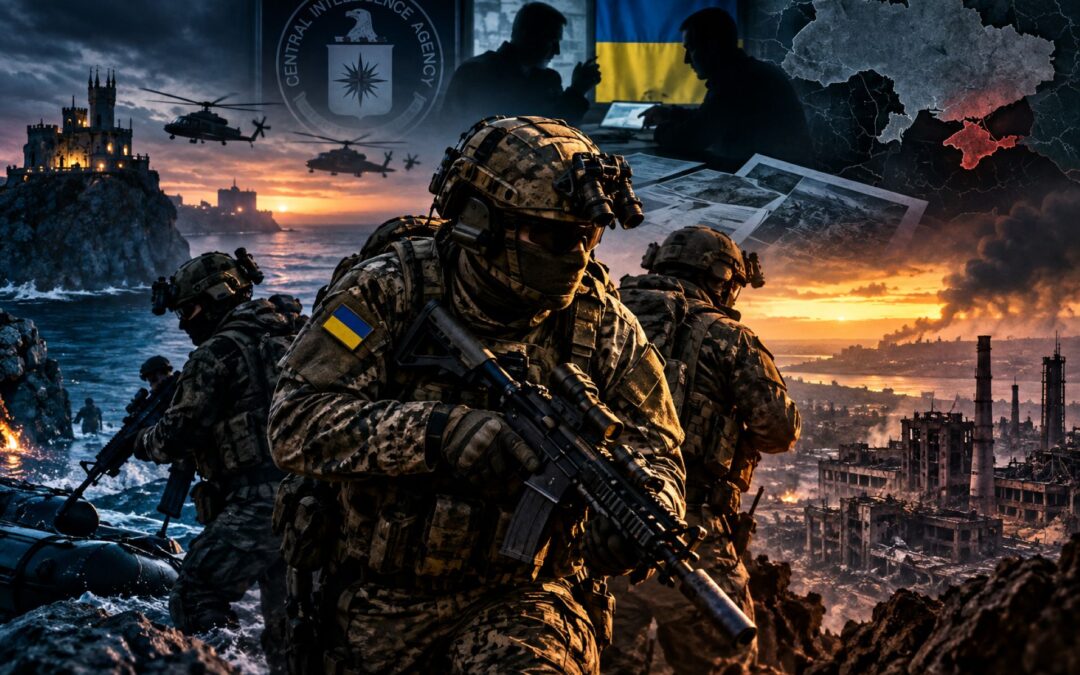
One of the most intriguing products of that partnership was Unit 2245, a specialized Ukrainian military intelligence formation that received training from the Central Intelligence Agency (CIA). Its personnel conducted reconnaissance, collected Russian military technology, participated in covert operations, and eventually found themselves fighting in some of the most dangerous engagements of the war.
The unit’s history is not simply a catalogue of successful secret missions. It includes a failed operation in Crimea, the assassination of one of its commanders, remarkable rescue efforts, and battlefield decisions that some of its own members later questioned. Understanding Unit 2245 means examining how Ukraine rebuilt its intelligence capabilities after 2014, why the CIA became involved, and how the partnership evolved when intelligence collection gave way to the demands of an expanding war.
Why Ukraine Needed a New Intelligence Force After 2014
The origins of Unit 2245 lie in the political and military crisis that transformed Ukraine in 2014. In November 2013, President Viktor Yanukovych suspended preparations for an association agreement with the European Union, prompting demonstrations by Ukrainians who wanted closer European integration and opposed government corruption. The protests, known as Euromaidan, grew into a wider confrontation over the country’s political direction.
Violence escalated during the winter, culminating in deadly clashes between protesters and security forces in February 2014. Yanukovych fled the country, and Ukraine’s parliament established an interim government. Russia subsequently occupied and purported to annex Crimea, while armed separatist movements supported by Moscow took control of territory in the eastern regions of Donetsk and Luhansk.
Ukraine suddenly faced an adversary that understood many of its military institutions from the inside. Its armed forces and intelligence agencies had inherited Soviet-era structures, procedures, and professional relationships. Although Ukraine had been independent since 1991, personnel on both sides had sometimes attended the same institutions, maintained personal connections, or worked within intelligence traditions developed under Moscow’s influence.
These relationships created serious counterintelligence concerns. Valentyn Nalyvaichenko, who became head of Ukraine’s domestic security service, the SBU, described arriving at an institution whose senior leadership had largely disappeared. According to his later account, Russian intelligence officers had enjoyed extraordinary access to sensitive Ukrainian systems, while departing officials had taken information and equipment with them.
The extent of Russian penetration varied across institutions, and it would be misleading to assume that every officer with Soviet-era experience was disloyal. Nevertheless, Ukrainian leaders had good reason to question whether existing structures could protect sensitive information or reliably organize operations against Russia.
The immediate response involved rebuilding intelligence relationships, recruiting personnel, and developing organizations less vulnerable to Russian influence. Ukraine also began seeking assistance from American and British intelligence services. That cooperation eventually produced specialized capabilities that would become central to the country’s ability to monitor Russian forces and conduct operations beyond conventional battle lines.
How Unit 2245 Was Built With CIA Help
The emerging partnership did not begin with unrestricted American support. Washington was wary of Ukrainian intelligence agencies that had maintained longstanding relationships with Russian counterparts, while Ukrainian officials were frustrated by the reluctance of Western governments to become more directly involved in their conflict with Moscow.
A significant turning point came in 2015, when Valerii Kondratiuk became head of Ukraine’s military intelligence service, commonly known as HUR or GUR. He believed that demonstrating Ukraine’s value as an intelligence partner was more effective than simply requesting American assistance.
During meetings with American intelligence officials, Kondratiuk provided classified Russian military documents collected by Ukrainian operatives. The material included information about Russian weapons systems, naval capabilities, and military planning. CIA analysts evaluated the intelligence to establish whether it was genuine or had potentially been supplied as part of a Russian deception operation.
The information proved valuable, and the relationship began developing into something considerably more substantial. As detailed in ABC News’s investigation into the partnership between the CIA and Ukrainian intelligence, former officials described a relationship in which Ukraine supplied intelligence on Russia while the United States provided equipment, training, funding, and technical expertise.
From approximately 2016, the CIA began training Ukrainian military intelligence personnel in specialized operational skills. Kondratiuk also sought to reduce the risk of infiltration by recruiting younger officers who had grown up after Ukrainian independence and had fewer professional connections to Soviet intelligence institutions.
Unit 2245 emerged from this effort to develop a more dependable and capable Ukrainian military intelligence force. Its personnel received specialized training from American intelligence professionals, including elements of the CIA’s paramilitary organization. Investigative reporting also describes some recruits being sent to the United States for intensive courses.
The distinction between these soldiers and ordinary CIA intelligence officers is important. The American agency trains its own personnel for responsibilities that can include recruiting sources, conducting clandestine intelligence collection, and managing sensitive relationships. Although some of these disciplines overlap with military intelligence, the skills described in accounts of how the CIA trains intelligence officers should not be mistaken for an identical training programme followed by every member of Unit 2245.
Ukraine’s commandos were military personnel operating within their country’s intelligence organization. They needed capabilities appropriate to reconnaissance, dangerous field assignments, and operations in hostile territory, rather than simply the professional skills of a civilian intelligence case officer.
One of the unit’s early members was Kyrylo Budanov, who would later become head of Ukrainian military intelligence. By the time he rose to that position, he had accumulated experience in operations against Russian and Russian-backed forces and developed close relationships with American intelligence personnel.
The CIA’s relationship with Ukraine also extended beyond Unit 2245. American assistance supported intelligence facilities, surveillance systems, and secure communications networks. A separate initiative, known as Operation Goldfish, trained Ukrainian intelligence officers to operate under Russian identities and exploit their linguistic and cultural familiarity.
These programmes served related purposes but should not be treated as a single organization. Unit 2245 was one component of a broader effort to transform Ukrainian military intelligence into a service capable of collecting information that both Kyiv and Washington considered valuable.
What Unit 2245 Was Trained to Do
Unit 2245 combined military field skills with intelligence collection. Its members were expected to operate in dangerous environments where conventional military formations might be too conspicuous, slow, or unsuitable for the assignment. Public accounts describe training that included reconnaissance, specialized combat skills, protective duties, and elements of espionage.
One of its most consequential documented functions was the collection of Russian military equipment. Ukrainian personnel recovered drones, communications devices, and other technology from the battlefield, providing material that American specialists could examine.
Captured equipment can reveal information that observation alone cannot provide. Engineers and intelligence analysts may be able to study an adversary’s electronic components, communications architecture, and technical capabilities directly. This makes battlefield recovery valuable not only for understanding individual weapons but also for identifying weaknesses and improving countermeasures.
Reporting on Unit 2245 describes a reciprocal arrangement in which captured Russian technology was provided to CIA technicians for reverse engineering and analysis of communications systems. The Ukrainians gained technical assistance and intelligence capabilities, while the Americans gained access to equipment and information that could be difficult to acquire independently.
The broader intelligence partnership also developed sophisticated signals-intelligence capabilities. American-supported facilities helped Ukrainian officers intercept and analyze Russian communications, while secure systems enabled sensitive information to be exchanged between the two countries. These developments strengthened Ukraine’s understanding of Russian military movements and decision-making.
However, the existence of these capabilities does not establish that Unit 2245 personally operated every electronic interception system, conducted every cyberattack, or disrupted particular Russian command centers. Military intelligence organizations contain different units with specialized responsibilities, and accounts of their collective achievements cannot automatically be assigned to one formation.
Public reporting also does not establish a standardized Unit 2245 curriculum divided into fixed phases of physical training, psychological manipulation, cyberwarfare, and assassination preparation. Individual members may have received different instruction depending on their responsibilities, experience, and assignments.
What can be established is more significant than an imagined training syllabus. Unit 2245 represented an attempt to combine Ukrainian knowledge of Russian forces with specialized Western instruction and technology. Its value came from turning those complementary advantages into intelligence and operational capabilities that Ukraine had previously struggled to develop.
The 2016 Crimea Raid and the Limits of Cooperation
The relationship between Unit 2245 and the CIA faced a serious test in 2016, when Ukrainian military intelligence organized a covert operation in Russian-occupied Crimea.
American and Ukrainian officials had different expectations about how their growing partnership should be used. Washington wanted intelligence on Russian activities but was concerned that operations involving sabotage or lethal attacks could provoke a dangerous escalation. Ukrainian commanders, meanwhile, believed they were facing an adversary preparing for further aggression and wanted capabilities that could disrupt Russian military preparations.
These disagreements had already surfaced when Kondratiuk proposed placing explosives near Russian military logistics infrastructure. American officials objected, and the proposed operation was canceled. The episode revealed an important limitation of the partnership: assistance intended to strengthen intelligence collection did not amount to American approval of every operation Ukrainian commanders wished to undertake.
Later in 2016, Ukrainian intelligence learned that Russia was deploying military helicopters at an airfield in Crimea. Kondratiuk decided to organize an operation that would place explosives at the installation, potentially allowing Ukrainian forces to attack the equipment if Russia launched another offensive.
Rather than seeking American approval, he assigned the mission to Unit 2245.
Kyrylo Budanov, then a Ukrainian military intelligence officer, was among the commandos involved. According to The New York Times investigation into the CIA’s secret intelligence partnership with Ukraine, the Ukrainian group entered Crimea but encountered Russian special forces before completing its intended mission.
A firefight followed. Russian personnel were killed, and the Ukrainian commandos withdrew from the peninsula. The operation did not achieve the successful destruction of the military installation that some later accounts have suggested.
The incident rapidly became an international confrontation. Russian President Vladimir Putin accused Ukraine of preparing a terrorist attack and threatened retaliation. American officials were angered that personnel trained with CIA assistance had participated in an operation that Washington had not authorized and that risked escalating the conflict.
Then-U.S. Vice President Joe Biden subsequently contacted Ukrainian President Petro Poroshenko and expressed the Obama administration’s concern. Kondratiuk lost his position as head of military intelligence, although the intelligence partnership between Ukraine and the United States survived.
The operation also remained important within Ukrainian military intelligence. In February 2026, Ukraine’s Defence Intelligence Directorate publicized a documentary about the Crimea-2016 mission, describing an attempt to weaken Russian air power by targeting attack helicopters and modern air-defense systems deployed on the peninsula.
That later institutional account identified Budanov as a central figure in planning and executing the mission. It also described a confrontation with personnel from Russia’s Vympel special-operations unit and the Ukrainian group’s withdrawal by sea. These details provide additional insight into how Ukrainian intelligence remembers the operation, although an official account should not be confused with independent verification of every operational claim.
The Crimea raid illustrates the distinction between developing a capability and determining how that capability should be used. American training made Ukrainian personnel better prepared for dangerous assignments, but the CIA did not exercise complete control over Ukrainian operational decisions.
For Ukrainian commanders, acting independently could be necessary when their assessment of the threat differed from Washington’s. For American officials, the same independence created risks that American involvement might be associated with missions capable of provoking a wider confrontation.
The failure of the Crimea mission did not end the cooperation. Both sides continued to see significant benefits in sharing intelligence on Russia, even when their views on acceptable operational risk diverged.
The Human Cost of Ukraine’s Shadow War
Covert operations became an increasingly dangerous part of the conflict between Ukraine and Russia after 2014. Intelligence officers faced the possibility of capture, injury, and death, while the secrecy surrounding their assignments made it difficult for the public to understand the circumstances of their losses.
One of the most consequential incidents involving Unit 2245 occurred in June 2017, when its commander, Colonel Maksym Shapoval, was killed by a car bomb in Kyiv.
Shapoval had been involved in Ukraine’s military intelligence operations and its developing relationship with American counterparts. The New York Times subsequently reported that he was traveling to meet CIA officers when the explosion occurred, attributing his assassination to Russian operatives. His killing demonstrated how the intelligence conflict exposed Ukrainian personnel to danger even away from conventional battlefields.
The wider covert struggle was becoming more aggressive. Ukrainian intelligence agencies developed capabilities for sabotage, clandestine surveillance, and targeted attacks against individuals associated with Russian military or occupation structures.
However, these activities were not all conducted by Unit 2245. Ukraine’s domestic security service, the SBU, and its military intelligence directorate, HUR, operated separate structures with overlapping but distinct responsibilities.
A detailed Washington Post investigation into Ukraine’s shadow war against Russia described operations attributed to both organizations, including attacks against Russian officials, military figures, collaborators, and prominent supporters of the war. American intelligence officials told the newspaper that the CIA had not participated in Ukrainian targeted killing operations and that their cooperation concentrated primarily on intelligence collection and related capabilities.
The distinction matters because a close intelligence partnership does not mean that every operation undertaken by one partner was planned or endorsed by the other. Ukrainian officials argued that covert actions were necessary responses to Russian aggression, while some American and Ukrainian officials questioned the strategic value and potential consequences of particular attacks.
The targeting of civilians and other individuals not directly participating in hostilities also raises legal and ethical questions that cannot be resolved simply by invoking wartime necessity. Covert operations may weaken an adversary, but they can also escalate conflict, harm bystanders, and complicate relations with international partners.
For Unit 2245, Shapoval’s death was a direct reminder that the intelligence struggle involved more than equipment and classified information. Its personnel operated in a conflict where the boundaries between conventional fighting, espionage, political violence, and personal danger had become increasingly difficult to separate.
From Kabul to the Full-Scale Invasion
By 2021, Unit 2245 had developed experience that extended beyond Ukraine’s conflict zones. Its members were called upon for a mission thousands of kilometres from home during the chaotic final days of the Western withdrawal from Afghanistan.
As the Taliban advanced toward Kabul in August 2021, foreign governments struggled to evacuate citizens and vulnerable Afghans. Ukraine organized a military intelligence mission involving Unit 2245 personnel and other specialized operatives to help extract people from the collapsing security environment.
An initial reconnaissance team led by an officer identified as Maks arrived in Kabul on 15 August, the day the Taliban entered the Afghan capital. Ukrainian personnel subsequently returned with a larger group that combined combat experience with medical, communications, intelligence, and other specialized skills.
The mission included efforts to evacuate Ukrainian nationals, security contractors, and Afghan civilians at risk. Among those helped were individuals connected to foreign journalists, including people who had worked with Canadian reporter Mark MacKinnon.
The evacuation demonstrated the breadth of tasks that experienced intelligence commandos could undertake. Rather than conducting a conventional military assault, they had to protect people, coordinate movements, assess rapidly changing conditions, and operate in an environment where political authority and public security had collapsed.
MacKinnon later documented the experiences of several of these men in his extensive reporting on Ukraine’s elite intelligence soldiers for The Globe and Mail. His investigation followed participants through the Afghan evacuation and the subsequent Russian invasion, providing a human perspective on missions that otherwise might have remained known only through official statements.
Six months after Kabul, the situation in Ukraine changed dramatically.
When Russia launched its full-scale invasion on 24 February 2022, Unit 2245 personnel were among the formations ordered into action. Some members were stationed in Kramatorsk in eastern Ukraine, where Russian missile strikes signaled the beginning of a much larger war.
According to one member interviewed by MacKinnon, the unit was ordered toward Kupiansk in the Kharkiv region. Its mission was to interfere with Russian advances and help Ukrainian forces respond to rapidly developing threats.
Elsewhere, Ukrainian military intelligence units operated around Kyiv, including areas where Russian forces attempted to seize strategic infrastructure and establish approaches to the capital. American-trained Ukrainian special forces contributed to the defense by exploiting local knowledge, intelligence support, and opportunities to disrupt advancing Russian formations.
This was a different operational environment from the limited covert assignments for which specialized units had originally been developed. Intelligence commandos were now responding to a conventional invasion involving armored columns, artillery, aviation, and large numbers of soldiers.
The demand for experienced personnel created further risks. As Russia’s assault on Mariupol intensified, Ukrainian defenders became surrounded inside the Azovstal steelworks. Military intelligence personnel organized helicopter missions to deliver ammunition, medical supplies, and other necessities while attempting to evacuate wounded fighters.
Members of Unit 2245 participated in these dangerous flights. One operative, identified as Ivan, described a mission that successfully reached Azovstal, unloaded supplies, and evacuated eight severely wounded defenders.
Another member, Nazar Borovytskyi, repeatedly volunteered for missions despite the danger. When a Ukrainian helicopter was shot down following a subsequent operation, Nazar joined an effort to reach the crash site and recover those aboard.
That rescue attempt ended in catastrophe. The helicopter carrying Nazar’s team was also shot down, and his fate became the subject of painful uncertainty for his family. Human remains later returned to Ukraine were identified as belonging to him, but his relatives struggled to accept that the identification settled every question about what had happened.
The Mariupol missions reveal the limitations of viewing elite military units only through their successes. Specialized training can improve the chances of completing dangerous assignments, but it cannot eliminate the risks created by enemy defenses, changing circumstances, and repeated exposure to combat.
They also reveal how the responsibilities of military intelligence personnel had expanded. Members of Unit 2245 who had trained for reconnaissance and covert operations were now participating in evacuation flights, defensive engagements, and missions to sustain surrounded troops.
The distinction between Unit 2245 and the wider HUR organization remains important here. Some operations involved mixed teams drawn from different intelligence formations, and the presence of Unit 2245 personnel does not mean the entire mission was conducted exclusively by that unit.
What Became of Unit 2245?
One of the most difficult operations involving Unit 2245 personnel took place in May 2022, when Ukraine attempted to retake Snake Island in the Black Sea.
Russia had captured the island during the opening days of the invasion. Its location near the approaches to Odesa gave it military significance, while the defiance of its Ukrainian defenders had made it a national symbol of resistance.
After Ukraine sank the Russian cruiser Moskva in April, Ukrainian commanders attempted to exploit the opportunity by organizing an assault on the island.
The operation brought together personnel from several military intelligence formations, including Unit 2245 and the Shaman Battalion. On 8 May, Ukrainian helicopters carried an assault force toward Snake Island, but the operation encountered stronger resistance than expected.
Russian defensive fire inflicted casualties, and the Ukrainian force withdrew after briefly establishing a presence. Participants later described the assault as poorly executed and costly. Members of the Shaman Battalion were among those killed, while other personnel questioned whether the operation had been adequately prepared.
The consequences extended beyond the immediate battlefield. One Unit 2245 member interviewed by MacKinnon requested reassignment because he believed the formation had been repeatedly exposed to unacceptable risks. The reporter subsequently described Unit 2245 as having been reorganized and given a new name.
The unsuccessful assault should not be confused with the eventual outcome of the battle for Snake Island. Ukraine continued attacking Russian positions with artillery, missiles, and other weapons, and Russian forces withdrew on 30 June 2022. Ukrainian personnel later returned to the island and raised their national flag.
The episode illustrates how the growing demands of the war transformed specialized intelligence organizations. Personnel originally selected for relatively small, discreet missions were increasingly drawn into larger combat operations, sometimes alongside formations with different training and responsibilities.
Public reporting does not establish a complete account of Unit 2245’s subsequent organizational identity. Its reorganization also makes it difficult to determine which later operations involved members of the original formation, successor units, or other elements of HUR.
The wider intelligence partnership between Ukraine and the United States continued, although its political vulnerability became visible in March 2025. Washington temporarily suspended military assistance and intelligence sharing during a dispute with Kyiv, before announcing the resumption of both following talks in Saudi Arabia on 11 March.
This interruption demonstrated that even an established intelligence relationship remained subject to political decisions outside the control of individual officers or military units. It did not establish that Unit 2245 itself had ceased operating or that the intelligence partnership had permanently ended.
Leadership within Ukrainian military intelligence also changed. Budanov, who had headed HUR since 2020, remained an influential figure in Ukraine’s security establishment before being appointed head of the Presidential Office on 2 January 2026. In the same announcement, President Volodymyr Zelenskyy confirmed that Oleh Ivashchenko would take over Ukraine’s Defence Intelligence Directorate.
By this stage, the conflict had changed enormously from the circumstances in which Unit 2245 had been created. Ukraine had developed extensive intelligence, drone, electronic warfare, and special-operations capabilities, while its military continued adapting to a prolonged war against Russia.
Whether the original Unit 2245 designation survived, how its personnel were redistributed, and what specific missions its successors undertook cannot be established comprehensively from available public evidence.
Its documented history nevertheless provides a revealing account of Ukraine’s intelligence transformation.
The creation of Unit 2245 demonstrated how a military facing a stronger adversary could develop specialized capabilities through a combination of domestic experience, foreign training, and intelligence cooperation. Captured technology, clandestine reconnaissance, and operational flexibility gave Ukraine tools that conventional military strength alone could not provide.
Yet the unit’s history also demonstrates the limits of specialization. The Crimea raid showed how intelligence partners could disagree over operational objectives and acceptable risks. The deaths of Shapoval and other personnel revealed the personal costs of the clandestine struggle, while the missions around Mariupol and Snake Island showed that elite training could not guarantee success when battlefield conditions became overwhelming.
Unit 2245 mattered because it was part of Ukraine’s effort to build an intelligence service capable of acting independently while benefiting from Western expertise. Its story is ultimately about the difficult relationship between information, military capability, political judgment, and the human consequences of decisions made in secret.
Last Updated on October 27, 2026 by Aseem Gupta