
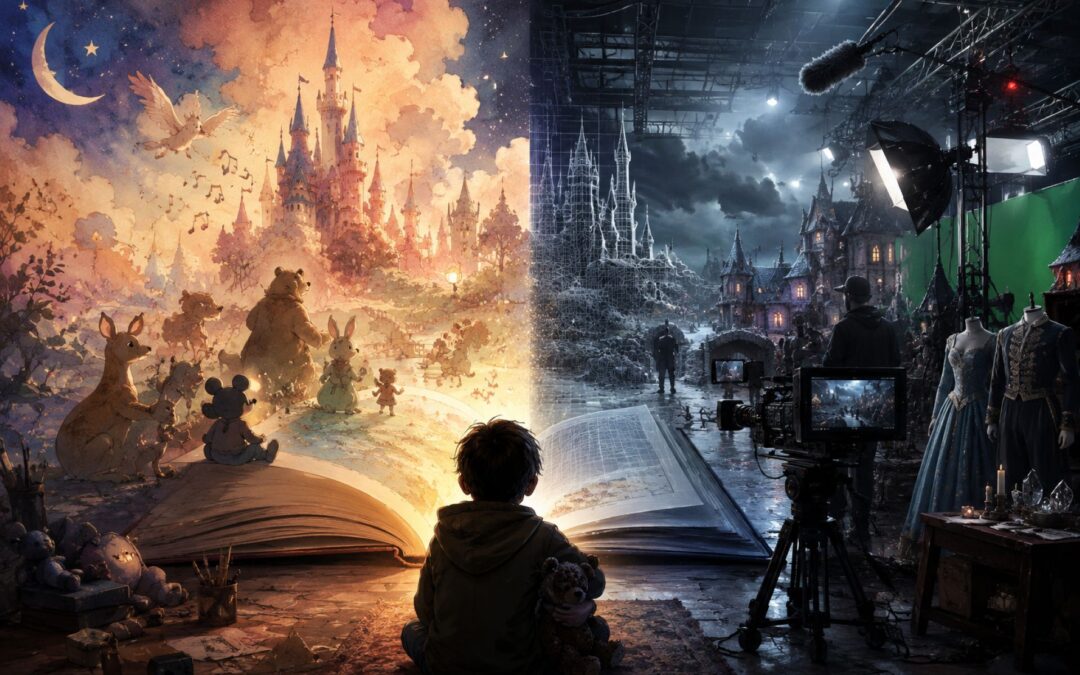
Disney live-action remakes are easy to mock.
They look like the safest possible products: familiar titles, familiar songs, familiar characters, familiar marketing hooks, and a built-in audience of parents who grew up with the originals. From the outside, the strategy can seem almost too obvious.
Take a beloved animated classic. Add modern stars. Use advanced visual effects. Update a few themes. Sell nostalgia to adults and wonder to children.
Repeat.
And yet, the reaction is never that simple.
Some Disney remakes make enormous money. Beauty and the Beast, Aladdin, The Lion King, The Jungle Book, and Lilo & Stitch all show why Disney keeps returning to this strategy. The box office record of Disney’s live-action reimaginings proves that audiences have not rejected the idea outright.
But the same films also provoke irritation, fatigue, suspicion, and sometimes outright anger. Viewers complain that the remakes are unnecessary. Critics argue that photorealism drains the life out of animated stories. Fans debate casting, songs, tone, modernization, and whether the new version understood the original at all.
That is the strange thing about Disney’s remake machine.
It can be commercially powerful and creatively fragile at the same time.
The reason is simple: these films are built on a contradiction.
They sell the emotional safety of nostalgia, but they are judged on whether they can transform that nostalgia into something worth watching again.
If they copy the original too closely, they feel pointless.
If they change too much, they feel like a betrayal.
That is why Disney live-action remakes keep dividing audiences. They are not only adapting movies. They are adapting memories.
Disney Found a Business Model Hidden Inside Nostalgia
Disney did not stumble into live-action remakes by accident.
The strategy made business sense.
Animated classics are among Disney’s most valuable assets. They come with characters people already recognize, songs people already know, stories parents can share with children, and emotional associations built over decades. In a risky theatrical market, that familiarity is powerful.
Original films must explain themselves. Remakes arrive with awareness already built in.
A new family movie has to earn attention from scratch. A remake of The Lion King or Beauty and the Beast begins with a giant cultural head start. Adults remember the original. Children recognize the characters from toys, theme parks, streaming libraries, books, costumes, and school conversations. The marketing does not need to introduce the world. It only needs to reactivate it.
That reduces risk.
Not all risk, but enough to matter.
This is why Disney’s remake era produced such massive hits. The Lion King earned more than $1.6 billion worldwide. Beauty and the Beast crossed $1.2 billion. Aladdin crossed $1 billion. The Jungle Book was both a commercial and critical success. More recently, Lilo & Stitch became the first Hollywood release of 2025 to reach $1 billion worldwide, according to Variety.
From a corporate point of view, the logic is almost irresistible.
Why gamble only on unknown stories when the company already owns some of the most emotionally durable stories in modern popular culture?
That is not a cynical question. It is a real business question.
The problem is that what makes the remakes attractive as business assets also makes them dangerous as creative works. They are not being made from neutral material. They are being made from stories people feel they already own emotionally.
Disney is not just remaking films.
It is reopening childhood.
Nostalgia Is Powerful Because It Feels Personal
Nostalgia is not simply “liking old things.”
It is more intimate than that.
Research from the University of Southampton describes nostalgia as a complex emotion tied to the past, often mixing warmth, longing, identity, and personal memory. A song, image, character, or story can become attached to family rituals, childhood routines, school holidays, parent-child relationships, or the feeling of being young.
That is exactly why Disney nostalgia is so potent.
For many people, The Little Mermaid is not just a movie. It is a VHS tape watched repeatedly in childhood. The Lion King is not just a story about a lion cub. It is a soundtrack, a bedroom poster, a school performance, a trip to the theater, a memory of watching with a sibling. Lilo & Stitch is not just a family comedy. It is a specific emotional imprint for a generation that grew up with it.
When Disney remakes these films, it is not only competing with the old movie.
It is competing with the viewer’s memory of the old movie.
That is almost impossible.
Memory edits. It softens awkwardness, preserves emotion, and turns certain scenes into private mythology. The original film does not have to be perfect to feel perfect in memory. It only has to be loved.
This is why viewers can react so strongly to changes that seem small from the outside. A lyric change, a missing scene, a different characterization, a altered romance, a new visual style, or a modernized line can feel less like an adaptation choice and more like interference.
Nostalgia attracts people to the remake.
Then nostalgia makes them harder to satisfy.
That is the trap.
Disney uses old affection to bring audiences back, but old affection comes with emotional expectations. People want to be surprised, but not alienated. They want freshness, but not disrespect. They want the old feeling, even if they also know the old film cannot simply be experienced again for the first time.
The remake is asked to do something impossible:
Be new enough to matter, but old enough to feel safe.
The Remake Trap: Too Faithful or Too Different
Every Disney live-action remake faces the same impossible question.
How much should it change?
If the film stays too close to the animated original, audiences wonder why it exists. Scene-for-scene recreation can produce recognition, but recognition is not the same as enchantment. Viewers may enjoy seeing familiar moments revived, but they can also feel they are watching a more expensive, less expressive copy.
The remake becomes a museum exhibit.
Respectful, polished, and strangely lifeless.
But if the film changes too much, the backlash can be immediate. Fans complain that the story has been misunderstood, modernized beyond recognition, or stripped of the qualities that made it beloved. The remake becomes not a celebration of the original, but a correction of it. That can make audiences defensive.
This is why the strongest remakes tend to find a third path.
They do not merely duplicate the surface. They reinterpret the emotional core.
The Jungle Book worked better than many remakes because it had a clear reason to exist in a new form. It used modern visual effects to create a more immersive adventure while preserving the boy-in-the-wild emotional structure. Cinderella worked because it leaned into sincerity, beauty, and old-fashioned romance without becoming embarrassed by the fairy tale. It did not try to apologize for being Cinderella.
The weaker remakes often get stuck between reverence and revision.
They keep enough of the original to trigger comparison, then change enough to irritate people who wanted the familiar version. Or they reproduce major scenes so closely that the new film invites the most damaging question any remake can face:
Why not just watch the original?
That is the core remake problem.
A faithful remake can feel unnecessary.
A bold remake can feel unfaithful.
The audience wants the impossible middle.
Animation Does Not Simply Become Better When It Becomes Real
One of the quiet assumptions behind many live-action remakes is that realism is an upgrade.
It is not.
Realism is a different tool.
Animation is not a rough draft of live action. It is its own artistic language. Walt Disney Animation Studios describes animation as a form built through artistry, storytelling, and technology, and that distinction matters. Disney’s animated classics worked because animation allowed them to exaggerate emotion, movement, color, rhythm, music, and fantasy in ways live action often cannot.
A singing crab can work beautifully in animation because the world has already taught us how to watch it. A teapot can be a maternal figure. A lion can express grief, guilt, jealousy, and joy through a face designed for emotional clarity. A mermaid’s hair can move like underwater music. A villain can stretch, bend, loom, and transform with theatrical force.
Animation does not need to obey the ordinary physical world.
That is its power.
When these stories move into live action or photorealistic CGI, they enter a different contract with the viewer. The more realistic the world becomes, the harder it is to preserve the elastic charm of animation. Exaggeration can look strange. Songs can feel awkward. Animal faces can become less expressive. Fantasy can become visually impressive but emotionally colder.
This is why some viewers resent the remakes on artistic grounds.
They are not simply saying, “The old one was better.” They are saying the old one belonged to a medium whose strengths the remake does not fully understand.
A cartoon becoming “real” is not automatically progress.
Sometimes it is subtraction disguised as spectacle.
Photorealism Can Drain the Magic
The Lion King is the clearest example of this problem.
Technically, the film was impressive. Its animals, landscapes, lighting, and textures demonstrated extraordinary visual craft. As a commercial product, it was a massive success. But its photorealistic style also revealed the limits of realism when applied to a story originally built on expressive animation.
The animated Lion King used faces and movement to communicate emotion with clarity. Simba could look mischievous, terrified, ashamed, playful, devastated, or brave in ways that felt natural within the animated world. Scar could be theatrical because the design allowed theatricality. Musical sequences could explode into color, abstraction, and symbolic movement.
The remake’s realism narrowed that expressive range.
Real lions do not smile, sneer, and sing like Broadway characters. Their faces are not built for human emotional readability. The more realistic they look, the less freely they can perform the emotional demands of the story.
This creates a strange effect.
The world becomes more believable, but the drama can become less vivid.
Photorealism can make fantasy look expensive while making it feel smaller. It can impress the eye without fully reaching the heart. In a musical fairy-tale tradition, that matters. Disney’s animated films often work because they are heightened. They are not trying to imitate reality. They are trying to distill emotion.
The same issue appears, in different forms, across other remakes.
When a story depends on stylization, movement, exaggeration, and musical fantasy, the remake must do more than make the image realistic. It must find a new visual language that carries the same emotional force.
Too often, Disney’s remakes confuse technical achievement with enchantment.
The two are not the same.
Modernization Turns Nostalgia Into Debate
Disney’s old animated films were made in different cultural moments.
That creates another remake challenge.
Some story elements now feel dated. Gender roles have changed. Ideas about romance, consent, representation, race, beauty, agency, and cultural identity are more openly debated. A remake made today cannot always reproduce an older film without comment. But the moment it updates the material, it changes the emotional terrain.
Modernization can be necessary.
It can give characters more agency. It can correct stereotypes. It can make old stories more accessible to contemporary audiences. It can deepen supporting characters, complicate villains, or make passive protagonists more active.
But modernization can also feel awkward when it is handled defensively.
Sometimes a remake seems embarrassed by the original. It keeps the brand, the songs, the costumes, and the marketing value, but signals that the old story was too naive, too romantic, too traditional, or too simple to be told directly. That can alienate audiences who loved the original not because it was ideologically perfect, but because it created a feeling they still value.
This is where live-action remakes become cultural battlegrounds.
Some viewers welcome changes as overdue. Others see them as unnecessary lectures. Some want fairy tales updated. Others want fairy tales preserved. Some are open to reinterpretation. Others feel that if the remake dislikes the old story, it should make something new instead.
The problem is not modernization itself.
The problem is mistrust.
When audiences trust the adaptation, they are more willing to accept changes. When they suspect the remake is using a beloved title while looking down on what made it beloved, even reasonable updates can become flashpoints.
Nostalgia is emotional.
Modernization is interpretive.
Put them together carelessly, and the remake stops being a movie. It becomes an argument.
Snow White Became the Perfect Remake Flashpoint
The 2025 Snow White became a near-perfect example of how many remake tensions can collide at once.
It was based on Disney’s first animated feature, a film with enormous historical significance but a much older storytelling style. The original came from 1937, which meant the remake had to deal with a fairy tale shaped by a different era of gender roles, romance, beauty, and fantasy. That alone made adaptation difficult.
Then came public controversy.
The film faced debates over casting, story changes, dwarf representation, Rachel Zegler’s comments about the original, and whether the remake was distancing itself too aggressively from the 1937 film. Business Insider’s explainer on the Snow White controversy captured how many different issues became attached to the film before audiences even saw it.
But it would be too simplistic to say controversy alone sank the movie.
The deeper issue was demand.
Did enough modern viewers actually want a live-action Snow White? Did the film offer a compelling reason to revisit that story? Was the original’s cultural importance the same as active audience desire? Those are different questions.
The Guardian reported that Snow White opened to $43 million domestically, the weakest opening among Disney’s recent animated-film remakes at the time, despite a reported production cost of around $270 million. Decider’s analysis argued that the underperformance reflected not just online backlash, but broader remake fatigue, weak audience urgency, and the difficulty of reviving a property whose nostalgia may not be as commercially alive as Disney assumed.
That is the lesson.
Not every famous title carries the same kind of living affection.
Snow White matters historically. But historical importance is not the same as contemporary excitement. For some viewers, the original is foundational. For others, it is distant, old-fashioned, and less emotionally present than later Disney films.
The remake faced the hardest version of the Disney problem: it needed to preserve a classic, update a classic, justify revisiting a classic, and survive online debate about what that classic means.
That is a lot for one movie to carry.
Lilo & Stitch Shows the Strategy Is Not Dead
If Snow White showed the danger of the remake strategy, Lilo & Stitch showed why Disney will not abandon it.
The live-action Lilo & Stitch became a major commercial success, with Box Office Mojo listing it at more than $1 billion worldwide. That result matters because it complicates the idea that audiences are simply done with Disney remakes.
They are not.
They are selective.
Lilo & Stitch had several advantages. It belonged to a newer generation of Disney nostalgia. Many adults who grew up with the 2002 animated film are now old enough to take children, younger siblings, or friends to a remake. Stitch also remained culturally visible through merchandise, theme parks, memes, and Disney branding. He is not just a character from one film. He is an icon with ongoing recognition.
The story also has a strong emotional hook.
At its core, Lilo & Stitch is not about spectacle. It is about loneliness, grief, family, belonging, and the idea that broken or strange people can still be loved. That emotional center translates more naturally into live action than some more heightened fairy-tale stories.
Business Insider’s comparison of Lilo & Stitch and Snow White emphasized the difference in generational nostalgia and audience appeal. Le Monde’s review similarly argued that the remake worked better than many Disney reimaginings because it stayed grounded in human relationships rather than relying only on spectacle.
That does not mean everyone loved it. The Guardian’s negative review shows that even successful remakes can still be criticized as unnecessary or inferior to the animated original.
But that divide is exactly the point.
A remake does not need universal approval to work. It needs enough emotional relevance, audience desire, and executional clarity to justify the return.
Lilo & Stitch had that in a way Snow White did not.
The strategy is not dead.
It is uneven.
The Real Question Is Whether the Remake Has a Reason to Exist
The best question to ask about any Disney live-action remake is not, “Is it faithful?”
It is, “Why does this version need to exist?”
That question cuts through both nostalgia and backlash.
A remake can be faithful and still unnecessary. It can be different and still hollow. It can be visually expensive and emotionally thin. It can modernize the story and still miss the point. It can reproduce famous scenes and fail to recreate the feeling those scenes once carried.
A remake needs a reason beyond recognition.
That reason might be emotional. It might reveal something new about a character. It might deepen a relationship. It might use live action to create intimacy, texture, or scale that animation did not attempt. It might reinterpret the story for a new cultural moment without sneering at the old one. It might find a visual style that honors the spirit of animation without merely flattening it into realism.
But there has to be a reason.
The weakest remakes feel like brand exercises. They exist because the title is valuable, not because the story has found a new form. They turn nostalgia into content, then seem surprised when audiences notice the transaction.
The strongest remakes understand that audiences are not asking for a duplicate.
They are asking for a renewed emotional experience.
That is much harder.
Disney’s problem is not that it remakes old films. Adaptation has always been part of storytelling. Disney itself built many animated classics by reimagining fairy tales, folklore, novels, myths, and older stories.
The issue is whether the remake transforms or merely extracts.
When transformation is real, audiences can accept change. When extraction is obvious, nostalgia curdles into resentment.
Conclusion
Disney live-action remakes divide audiences because they touch something more delicate than ordinary franchise filmmaking.
They touch memory.
People do not walk into these films as neutral viewers. They bring childhood, songs, family rituals, old fears, old comforts, favorite scenes, and private emotional attachments. They bring the original film, but also the version of the original that lives inside them.
That gives Disney enormous power.
It also creates enormous risk.
A remake has to honor what people loved while proving that the new version has its own reason to exist. If it copies the old film too closely, it feels unnecessary. If it changes too much, it feels like a betrayal. If it chases realism too aggressively, it can lose the expressive magic of animation. If it modernizes carelessly, nostalgia turns into debate.
That is why the strategy keeps producing both money and frustration.
Audiences are not simply asking whether the remake is good.
They are asking whether it understood why the original mattered.
That is the burden Disney carries every time it reopens the vault. The company is not just remaking movies. It is asking people to revisit a feeling.
And feelings are much harder to remake.
Last Updated on June 10, 2026 by Aseem Gupta