

James Clear’s Atomic Habits became one of the defining self-improvement books of its era because it offers an appealing answer to a familiar problem: people often know what they want to change, yet repeatedly fail to make that change endure. Clear argues that the problem is usually not a lack of ambition. It is that people concentrate on desired outcomes while neglecting the systems, environments, repeated actions, and feedback loops that actually produce those outcomes.
The book’s central insight is simple enough to fit into a slogan: very small behaviors, repeated consistently, can accumulate into disproportionately large effects. But Atomic Habits is more substantial than that slogan suggests. Across twenty chapters, Clear moves from the mathematics and psychology of incremental improvement to identity, environmental design, motivation, friction, reward, tracking, accountability, aptitude, boredom, deliberate practice, and the danger of becoming trapped by the very identity a successful habit helped create.
Its greatest achievement is not the discovery of an entirely new science of behavior. Most of its core ingredients come from existing psychology, behavioral science, learning theory, and practical experience. Clear’s real contribution is architectural: he organizes those ingredients into a memorable system in which useful habits should be made obvious, attractive, easy, and satisfying, while unwanted habits should be made invisible, unattractive, difficult, and unsatisfying.
That organization makes the book exceptionally usable, but it can also make messy behavioral science look cleaner than it really is. The Four Laws are powerful design principles rather than literal universal laws, identity is important without necessarily being the privileged starting point for every kind of change, and some of Clear’s neuroscience and motivational claims are more compressed than contemporary research permits. The fairest way to understand Atomic Habits, therefore, is to take its practical system seriously while distinguishing the strength of that system from the precision of every explanation used to support it.
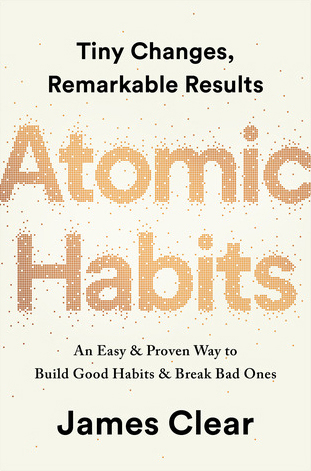
What Atomic Habits Is Trying to Change About the Way We Think About Habits
Clear begins with his own life rather than with a theory. As a teenager, he was struck in the face by a baseball bat during practice, suffering severe injuries that required emergency treatment and a long recovery. The accident disrupted the athletic identity he had been developing and left him far from the kind of dramatic comeback story that motivational books often prefer. His return to baseball was slow, uncertain, and built from routines that initially seemed too small to matter.
College gave him an environment in which he could rebuild deliberately. Clear describes improving his sleep, study habits, training, and organization through repeated adjustments rather than a single breakthrough. He eventually became an accomplished college athlete, but his point is not that a few habits magically turned him into a star. The experience taught him to pay attention to the cumulative influence of ordinary behaviors whose effects were almost invisible from day to day.
That personal history later merged with his work as a writer. Clear began publishing about habits and behavior change, built an audience around practical explanations of those subjects, and eventually developed the framework that became Atomic Habits. His autobiography therefore serves two functions: it gives the book an origin story, and it introduces its preferred model of change through lived experience before any formal terminology appears.
The framing also reveals an important feature of the book. Clear rarely begins with abstraction when he can begin with a person, a problem, or a vivid example. The anecdotes do not always provide scientific proof, but they make each mechanism easier to remember and convert behavior change from a theoretical problem into something that feels operational. From the beginning, the book is designed less like a textbook on habit science than like a manual intended to make behavioral principles usable.
The Fundamentals: Small Changes, Systems, Identity, and the Four-Step Habit Loop
The first three chapters establish the intellectual structure for everything that follows. Clear first explains why tiny behaviors can matter even when their immediate effects are negligible, then argues that lasting change reaches deeper than outcomes into identity, and finally presents a four-stage model of habitual behavior. The Four Laws are not introduced as arbitrary tips; they are built from that progression from scale, to self-concept, to mechanism.
Why Tiny Changes Matter—and Why Systems Beat Goals
Chapter 1 begins with British Cycling and coach Dave Brailsford’s pursuit of what became known as the aggregation of marginal gains. Rather than searching for one revolutionary improvement, the team looked for small advantages across training, equipment, recovery, hygiene, clothing, and other aspects of performance. Clear uses the story to introduce the logic that governs the whole book: an improvement that appears trivial in isolation can matter greatly when repeated or combined with many other improvements.
He compares habits to compound interest. A small choice rarely transforms a life on the day it is made, just as one financial return rarely creates wealth. The importance lies in accumulation. Helpful habits can compound into knowledge, fitness, trust, skill, or financial stability, while harmful habits can accumulate into stress, debt, illness, resentment, or disorganization.
Clear dramatizes the idea with the familiar calculation that becoming 1 percent better each day would produce an enormous cumulative difference over a year, while becoming 1 percent worse would move in the opposite direction. The mathematics should not be interpreted as a literal psychological growth curve. Human improvement does not increase by a clean exponential percentage every twenty-four hours. The calculation functions as a metaphor for repeated directional change, and the book is strongest when read that way.
The more psychologically important point is that results often lag behind behavior. People can make good choices for days or weeks without seeing an obvious reward, just as ice can remain apparently unchanged while its temperature rises toward the melting point. Clear calls this delayed region the Plateau of Latent Potential. The frustration people experience while crossing it becomes the Valley of Disappointment: effort is already accumulating, but visible evidence has not yet caught up.
That idea helps explain why promising routines are abandoned. If someone exercises for a week and expects a transformed body, saves money for a month and expects wealth, or practices a skill briefly and expects mastery, the mismatch between effort and visible outcome feels like proof that the habit is ineffective. Clear asks readers to interpret the lag differently. The early repetitions are not necessarily wasted; they may be building a foundation whose effects become noticeable only after enough accumulation.
From there, he attacks excessive dependence on goals. The first problem is that winners and losers can want the same outcome. Every team wants to win, many applicants want the same job, and millions of people want to become fitter or wealthier. A goal therefore does not explain why one person succeeds while another fails.
The second problem is that achieving a goal produces only a temporary change if the system that created the original condition remains intact. Cleaning a messy room solves the immediate mess, but not necessarily the habits that generated it. Reaching a target weight does not guarantee that the eating, exercise, and environmental patterns required to maintain it have been established.
The third problem is psychological. Goals can create a conditional relationship with happiness in which satisfaction is continually postponed until a future achievement. Clear prefers a system that allows satisfaction to come from participating successfully in the process itself rather than waiting for a finish line before feeling that progress counts.
The fourth problem is that a goal can actually terminate the behavior that produced it. A runner trains for a race, finishes the event, and then stops training because the external endpoint has disappeared. A system is designed to continue after any particular milestone has been reached.
Clear is sometimes interpreted as saying that goals are useless, but that is stronger than the book needs to claim. Goals can identify direction, clarify priorities, and define desired outcomes. His real argument is that goals alone do not create the repeated behaviors required to reach or sustain them. The lasting object of attention should therefore be the system.
That is why the chapter ends by defining an atomic habit in two complementary senses. It is very small, but it is also fundamental—a unit within a larger system. The power of the habit comes not from its size in one moment but from its place in a repeating structure.
Identity-Based Habits: Becoming Before Achieving
Chapter 2 deepens the theory by distinguishing three layers of behavior change. The outer layer concerns outcomes: losing weight, writing a book, winning a championship, getting a promotion, or saving a certain amount of money. The middle layer concerns processes: training routines, writing schedules, budgeting systems, study practices, and other recurring behaviors. The deepest layer concerns identity: the beliefs a person holds about who they are.
Clear argues that many people approach change from the outside inward. They choose an outcome and then attempt the behavior they think will produce it. He prefers movement from the inside outward: decide what kind of person you want to become and use repeated actions as evidence for that identity.
This is why the book treats identity as more than motivational self-talk. Clear does not simply advise readers to announce that they are healthy, disciplined, artistic, organized, or productive. An identity becomes credible through behavior. Every repetition functions like a small vote for a particular conception of the self.
A person who writes regularly accumulates evidence for the identity of a writer. Someone who trains consistently reinforces the belief that exercise is something they do rather than an occasional project. Someone who repeatedly keeps promises becomes more able to see reliability as a feature of their character.
The mechanism also runs in the opposite direction. Once an identity becomes established, it influences future decisions because people prefer behavior that feels consistent with their conception of themselves. The habitual action reinforces identity, while identity makes future repetitions more psychologically natural. Clear therefore presents habits and identity as a feedback loop rather than two independent variables.
His smoking example captures the distinction. A person who responds to an offered cigarette by saying they are trying to quit still defines themselves, at least implicitly, as a smoker engaged in resistance. Someone who says they do not smoke speaks from a different identity. The practical behavior may be identical in the moment—refusing the cigarette—but the self-conception supporting it is different.
The chapter does not imply that identity should become rigid. That qualification appears much later and is essential to the complete book. At this stage, Clear’s purpose is to move readers away from treating habits as chores performed for an external prize and toward treating them as evidence about the person they are becoming.
This also explains what Clear calls the real reason habits matter. Their effect is not confined to the immediate result. Repeated behavior gradually alters a person’s self-story, making certain actions easier to imagine and others harder to reconcile with the identity being built.
Cue, Craving, Response, Reward: The Four-Step Habit Loop
Chapter 3 supplies the mechanism that turns the previous ideas into a system. Clear begins with Edward Thorndike’s experiments in which cats placed inside puzzle boxes gradually learned behaviors that allowed them to escape and reach food. Responses followed by satisfying consequences became more likely to be repeated, providing one historical foundation for later thinking about learning and habit formation.
For Clear, a habit is a solution that the brain has learned to a recurring problem. Conscious deliberation is expensive, so when a behavior repeatedly works, the brain becomes more efficient at recognizing the situation and deploying the response. What begins as effortful problem solving can eventually become automatic.
He organizes this process into four stages: cue, craving, response, and reward. The cue is information that predicts a possible reward. The craving is the motivational state that makes the reward desirable. The response is the behavior itself. The reward is the consequence that satisfies or teaches.
Clear divides the process into a problem phase and a solution phase. Cue and craving belong to the problem phase because they indicate that something could be gained, relieved, experienced, or avoided. Response and reward belong to the solution phase because they involve acting and receiving the consequence.
Cravings are particularly important because the object of desire is often not the literal behavior. A person does not necessarily crave checking social media as an end in itself; they may crave novelty, connection, relief from boredom, validation, or stimulation. Someone does not crave brushing their teeth for its own sake but may want cleanliness, freshness, or protection from dental problems.
The four stages become the foundation for Clear’s Four Laws of Behavior Change. To establish a good habit, make the cue obvious, make the anticipated behavior attractive, make the response easy, and make the result satisfying. To weaken a bad habit, invert each law: make the cue invisible, the behavior unattractive, the response difficult, and the consequence unsatisfying.
The elegance of the model is one of the reasons the book became memorable. It translates a general learning loop into four diagnostic questions: Can I notice the behavior? Do I want to do it? Can I perform it with little friction? Do I get enough reinforcement to repeat it? Clear acknowledges that human behavior cannot be exhaustively explained by four sentences, but he argues that they form a useful practical framework.
The rest of Atomic Habits proceeds through those four stages in order. Each law receives a group of chapters containing tools designed to intervene at the relevant point in the loop.
The First Law: Make It Obvious
If a habit begins with a cue, then behavior change begins by making useful cues easier to notice and harmful cues harder to encounter. Clear therefore starts not with motivation but with awareness: people cannot deliberately redesign routines they barely notice. The chapters under the First Law move from recognizing automatic behavior to specifying new cues, reshaping environments, and reducing exposure to triggers for unwanted habits.
Awareness and the Habits Scorecard
Chapter 4 opens with a story about an experienced paramedic who sensed that something was wrong with a family member even though the symptoms did not initially appear dramatic. Years of exposure to medical patterns had trained rapid recognition that operated faster than conscious explanation. Clear uses similar examples to show how expertise allows the brain to identify meaningful cues automatically.
That automaticity is useful when the learned pattern is beneficial, but it creates a problem for behavior change. People stop consciously noticing routines precisely because those routines have become efficient. A person may unlock a phone, open an app, snack, complain, interrupt, or check email with almost no felt decision point.
Clear turns to the Japanese railway practice often called Pointing-and-Calling, in which workers physically point toward signals, gauges, or conditions while verbally identifying them. The procedure deliberately converts an automatic act into an explicit observation. By forcing attention onto the situation, it reduces the chance that familiarity will allow an important cue to pass unnoticed.
The personal equivalent is the Habits Scorecard. Clear asks readers to reconstruct a typical sequence of behavior from waking onward and list what they actually do rather than what they imagine they do. Each habit can then be evaluated as helpful, harmful, or neutral in relation to the identity and outcomes the person wants.
The classification is deliberately contextual. Drinking coffee is not inherently “good” or “bad” in the abstract; its value depends on what it does inside the relevant system. The point is to identify which repeated behaviors move the person toward or away from the desired direction.
Clear also recommends verbalizing an unwanted behavior and its likely consequence when awareness is weak. Saying, in effect, that you are about to perform a particular action and that it conflicts with your objective brings the behavior out of automatic mode. Awareness does not guarantee change, but it creates the decision point from which deliberate redesign becomes possible.
Implementation Intentions and Habit Stacking
Chapter 5 addresses a common failure of good intentions: vagueness. People decide that they will exercise more, read more, eat better, write regularly, or spend less without deciding exactly when and where the action will occur. Clear argues that unspecified intentions leave behavior dependent on remembering, feeling motivated, or encountering a convenient opportunity.
His first tool is the implementation intention, expressed as a plan that specifies a behavior, time, and location. Instead of “I will exercise more,” the person decides when the exercise will happen and where it will happen. The purpose is to convert a general preference into a situational cue.
Clear then introduces habit stacking. Existing routines are already connected to reliable cues, so a new habit can be attached to one of them. Rather than depending on a clock time alone, the person uses the completion of an established behavior as the trigger for the new one: after an existing routine, the new routine begins.
The idea connects to what Clear calls the Diderot Effect, the tendency for one acquisition or behavior to generate related behaviors. Human activities often arrive in clusters and sequences rather than as isolated acts. Making coffee leads to sitting at a particular table; finishing dinner leads to clearing dishes; arriving home leads to placing keys somewhere; opening a laptop leads to checking certain applications.
A strong habit stack therefore depends on choosing the right anchor. If the cue is inconsistent, ambiguous, or occurs in the wrong context, the stack is fragile. Clear advises making the connection specific enough that the existing behavior reliably signals the next action.
The method also illustrates how the book layers its techniques. Identity tells the reader what direction matters, but identity by itself does not schedule behavior. The implementation intention converts aspiration into a concrete plan, while habit stacking embeds that plan inside an existing routine.
Environment Design and the Limits of Self-Control
Chapter 6 widens the definition of a cue by treating the physical environment as an active part of behavior. Clear recounts an intervention associated with physician Anne Thorndike in which changing the arrangement and availability of drinks and food in a hospital cafeteria altered what people chose. The example matters because behavior changed without requiring a motivational lecture or a dramatic increase in discipline.
Clear’s conclusion is that visible options compete for attention. If fruit is hidden and biscuits are placed on a counter, or water is inconvenient while sugary drinks are immediately available, the environment is already expressing a behavioral preference. People frequently interpret the resulting choice as an act of personal character even though the surrounding system has shaped what was noticed and how much effort each option required.
For desirable habits, useful cues should therefore be prominent. A person who wants to practice guitar can leave the instrument visible rather than sealed away. Someone who wants to take medication consistently can position it near an established morning routine when safe to do so. A reader can place a book where it will be encountered at the time reading is intended to happen.
Clear goes further by arguing that entire contexts can become cues. A couch may become associated with television, a desk with work, a kitchen with snacking, or a phone with distraction. Repetition creates a relationship not merely between a single object and an action but between a behavioral pattern and a broader setting.
This is why he sometimes recommends creating distinct spaces for distinct purposes. When the same location is repeatedly used for one kind of behavior, the environment becomes less ambiguous. In small homes, where separate rooms are impossible, even a particular chair, corner, device configuration, or ritual can help create functional boundaries.
Chapter 7 applies the inverse law to bad habits: make them invisible. Clear uses the famous research on heroin use among American soldiers in Vietnam to illustrate the importance of context. Many soldiers who used heroin in Vietnam did not continue at the same rate after returning home, an outcome that challenged the expectation that addiction would continue unchanged regardless of environment.
Clear’s practical inference is that context can contain powerful cues. Returning home removed many of the people, places, routines, stresses, and situational triggers associated with drug use. By contrast, a person attempting to stop a behavior while remaining surrounded by the same cues may have to fight the learned response repeatedly.
The example allows Clear to challenge the romantic image of the highly self-controlled person constantly defeating temptation. People who appear disciplined may sometimes have arranged their lives so that they encounter fewer temptations requiring active resistance. Removing the cue can be more sustainable than winning the same internal argument every day.
That principle is highly useful for ordinary habits, but it should not be stretched into the claim that serious addiction is simply an environmental design problem. Addiction involves biological, psychological, social, and clinical dimensions that can require professional treatment. Clear himself recognizes limits to simple habit techniques when behavior reaches that level of severity.
Within the scope of ordinary routines, however, the First Law forms a coherent sequence. First notice the behavior, then define a reliable cue for the replacement, place that cue in a stable environment, and reduce exposure to triggers for the behavior you want to weaken.
The Second Law: Make It Attractive
Noticing a cue does not guarantee action. The cue must lead to a sufficiently strong desire, expectation, or emotional pull for the response to become likely. The Second Law therefore focuses on the craving stage of Clear’s loop and asks how anticipation, social influence, and interpretation can make a desired behavior feel more compelling.
Dopamine, Anticipation, and Temptation Bundling
Chapter 8 begins with Nikolaas Tinbergen’s studies of instinctive responses and exaggerated stimuli. Animals can sometimes react more strongly to artificial or amplified versions of natural cues than to the ordinary stimuli for which their behavior originally evolved. Clear uses the concept of supernormal stimuli to explain why modern environments can produce extraordinarily attractive foods, media, games, and other experiences.
The broader point is that attraction can be engineered. Highly processed foods combine tastes and textures in ways that intensify reward. Digital products provide novelty, social feedback, unpredictability, and rapid stimulation. These are not neutral environments asking users to exercise pure willpower; they are systems optimized to capture attention and encourage repetition.
Clear then introduces dopamine as part of his explanation for why anticipation matters. He emphasizes that motivational activity can rise in response to the expectation of reward rather than only after the reward arrives. A learned cue can therefore become attractive because it predicts something desirable.
This helps explain why the moments before an experience can motivate action so powerfully. The notification, smell, location, image, schedule, or ritual associated with a reward begins to acquire motivational value. The craving is not merely for a behavior but for the expected change in state that the behavior predicts.
The practical technique is temptation bundling. A behavior a person needs to perform is paired with something they already enjoy. Exercise might be associated with a preferred form of entertainment, or an administrative task might be paired with a pleasant ritual. The enjoyable experience lends some of its attractiveness to the less immediately appealing behavior.
Clear also combines temptation bundling with habit stacking, producing a longer behavioral chain in which an established habit triggers something necessary, followed by something wanted. This shows how the Four Laws can overlap even before the book explicitly analyzes them as a unified system.
The neuroscience is useful as an intuition but should not be mistaken for a complete account of dopamine. Clear’s purpose is practical: reward prediction and anticipation can motivate repetition. Later evidence makes clear that dopamine signaling participates in a much more complicated family of learning, prediction, movement, and motivational processes than the popular shorthand “dopamine equals anticipated reward” captures.
Social Norms: The Close, the Many, and the Powerful
Chapter 9 shifts from individual reward to social attraction. Clear uses the Polgar family, whose daughters became remarkable chess players, to illustrate what happens when a behavior is embedded in a culture where it is normal, admired, and continuously reinforced. The point is not merely that the sisters practiced hard. Their social environment made chess a natural part of family life.
Clear argues that people tend to imitate three broad groups: the close, the many, and the powerful. The “close” are friends, family members, coworkers, and others whose behavior surrounds us repeatedly. Their routines establish local expectations about what people like us normally do.
The “many” represent the larger group. When uncertain, people use collective behavior as information about what is sensible or acceptable. This tendency can override private preferences because belonging has social value and deviation can be costly.
The “powerful” are people associated with status, prestige, competence, wealth, attractiveness, influence, or another desirable position. If a behavior appears connected with membership in a respected group, the behavior itself can become more attractive.
This leads to one of Clear’s most useful identity recommendations: join a culture in which the desired behavior is normal and where you share something in common with the group. A runner surrounded by runners, a writer surrounded by writers, or a student surrounded by people who treat studying seriously receives more than information. The social environment continuously tells the person that the desired behavior belongs to their identity.
The chapter therefore expands the idea of environmental design beyond physical objects. Other people are part of the environment too. They alter the social reward structure around a habit, making some actions sources of belonging and others sources of friction.
The principle has a negative side. Groups can normalize destructive behavior just as easily as constructive behavior. The same desire to belong that supports exercise, sobriety, scholarship, or craftsmanship can support overspending, substance use, cruelty, prejudice, or reckless risk-taking when those behaviors signal membership in the relevant group.
Reframing the Cravings Behind Bad Habits
Chapter 10 asks a deeper question: what are people really seeking when they perform a habitual behavior? Clear argues that surface cravings are often expressions of more fundamental motives. Behaviors become attractive because people learn to predict that they will produce relief, status, connection, security, energy, novelty, approval, or another desired state.
This allows the same external event to produce different cravings in different people. A difficult day might cue one person to exercise and another to drink. An open evening might feel like an opportunity for reading to one person and a cue for endless scrolling to another. The event does not mechanically determine the behavior; interpretation and learned expectation connect the cue to the response.
Clear uses smoking and other bad habits to show how reframing can weaken attractiveness. Instead of concentrating exclusively on the feeling of deprivation created by giving something up, a person can repeatedly attend to what the habit costs and what freedom from it provides. The technique attempts to change the expected meaning of the action.
He uses the same principle positively by recommending a change from “I have to” toward “I get to.” The wording is not a magic spell, but it can alter attention. Exercise can be interpreted as an obligation or as evidence that one has a body capable of movement; saving can feel like deprivation or increased future control.
Clear also recommends a motivational ritual in which a pleasant cue or routine becomes associated with a difficult behavior. Repeated pairing can make the preparatory ritual itself signal a productive state. Athletes, performers, and workers often develop such routines because predictable sequences reduce the psychological distance between ordinary life and focused performance.
Some of the chapter’s claims about universal human motives are broader than its evidence can carry. Human motivation cannot be reduced cleanly to one compact list of underlying desires. But the actionable idea is sound enough: attraction depends partly on learned interpretation, so changing the meaning attached to a cue can change the motivational force it exerts.
The Third Law: Make It Easy
The first two laws concern seeing and wanting. The Third Law asks what happens when a person intends to act but the required response is too difficult, inconvenient, complex, or effortful to occur consistently. Clear’s answer is not simply to demand greater discipline but to reduce friction, make the starting action smaller, prepare the environment, and use technology or commitments to eliminate recurring decisions.
Repetition, Practice, and Automaticity
Chapter 11 opens with a story commonly attributed to photography instructor Jerry Uelsmann. One group of students is judged by the quantity of photographs produced, while another is judged by the quality of a single result. The quantity group ends up producing some of the strongest work because repeated execution gives them more opportunities to learn from errors than prolonged theorizing gives the quality group.
Clear uses the story to distinguish motion from action. Motion includes planning, researching, organizing, discussing, preparing, and optimizing. These activities can be useful, but they can also become sophisticated forms of avoidance because they create the feeling of progress without exposing the person to the risk of actual performance.
Action produces the result. Reading about strength training is motion; completing the workout is action. Planning articles is motion; writing them is action. Looking for the perfect diet can be motion; preparing and eating the intended meal is action.
The distinction matters because habits are learned through repetition. People sometimes ask how many days it takes to form a habit as though the calendar itself produces automaticity. Clear argues that frequency of performance is more important than passively waiting for a certain number of days to pass.
As repetitions accumulate, the behavior becomes more efficient and requires less conscious effort. Clear represents this as a curve of automaticity: early repetitions require substantial attention, while later repetitions increasingly feel natural. The key question becomes not simply how long a person has wanted the habit but how often the relevant behavior has actually occurred under conditions that reinforce it.
This is one place where the book is notably better than popular “21-day” folklore. Clear explicitly rejects a universal short timeline. Later research confirms the importance of that caution, although habit development is more variable than any single repetition-based rule suggests.
Friction, Environment Priming, and the Law of Least Effort
Chapter 12 introduces the Law of Least Effort: when multiple options can produce a similar reward, people tend to favor the one requiring less energy. Clear does not mean that humans are incapable of hard work. People can devote enormous effort to activities they care about, but unnecessary friction reduces the probability that a behavior will be repeated.
He uses Jared Diamond’s geographic arguments as an analogy for the way an environment can make certain actions easier to spread or sustain. The details of Diamond’s historical thesis are not essential to Clear’s behavioral point. His concern is that outcomes are partly shaped by the terrain through which action must travel.
For good habits, the goal is therefore to reduce friction. A gym located on the route home requires less logistical effort than one requiring a long detour. Healthy food already prepared is easier to choose than ingredients that still require substantial work. A writing document already open at the desired location is easier to resume than a project buried among distractions.
For bad habits, the same logic is inverted. Clear suggests increasing the number of steps required to perform them. Log out of distracting services, place devices farther away, remove stored payment information, or otherwise make the unwanted response slightly less immediate.
The size of the intervention can look absurdly small, but that is precisely his point. People imagine that behavior changes only in response to dramatic motivation, while repeated decisions are often sensitive to tiny changes in convenience. Seconds and steps matter because they recur.
Clear also recommends “priming” the environment for future use. A person can prepare workout clothes, arrange ingredients, set out study materials, clean the workspace, or otherwise leave the next desired action easier than it would have been. The present self performs a small setup task that reduces resistance for the future self.
This chapter strengthens a theme introduced under the First Law. The environment affects more than what someone notices. It also determines how expensive each possible response feels. A single design choice can therefore operate on multiple stages of the habit loop.
The Two-Minute Rule and Decisive Moments
Chapter 13 confronts procrastination by shrinking the beginning of the behavior. Clear uses dancer and choreographer Twyla Tharp’s ritual of getting into a cab to go to the gym as an example of a gateway action. The important behavior is not the cab ride itself, but once that first step occurs, the probability of the larger routine increases.
Clear calls certain choices decisive moments because they send the rest of a period down different paths. Entering a restaurant rather than cooking at home, lying down with a phone rather than picking up a book, turning toward the gym rather than driving directly home—small initial choices can determine which cluster of later behaviors becomes available.
The Two-Minute Rule is designed around that leverage point. When starting a habit, scale it down until the entry behavior takes roughly two minutes. “Read before bed” becomes “read one page.” “Run three miles” becomes “put on running shoes.” “Study for an hour” becomes “open the notes.”
The technique can sound trivial if interpreted as the whole habit. Clear is explicit that it is not. The two-minute version is a gateway designed to make showing up reliable. Once the ritual is established, duration and difficulty can grow.
His broader principle is to standardize before optimizing. People often try to design the perfect workout before becoming someone who consistently begins exercising, or the perfect writing process before consistently sitting down to write. Clear prefers establishing the entrance to the behavior first, then improving what happens after entry.
The strategy also protects against perfectionism. A tiny version of the habit gives someone a way to preserve continuity on difficult days without pretending that the reduced version is identical to full performance. Showing up keeps the behavioral identity alive and makes the next full repetition easier to resume.
Commitment Devices, One-Time Choices, and Automation
Chapter 14 asks how a person can use present decisions to constrain future behavior. Clear tells the story of Victor Hugo, who reportedly used an extreme commitment strategy while facing a writing deadline: by making ordinary social life difficult for himself, he reduced his ability to avoid the work. The example is theatrical, but it introduces a practical concept.
A commitment device is a choice made now that controls or restricts choices later. The aim is to lock in a desirable future behavior before temptation, fatigue, inconvenience, or changing motivation arrives. The device changes the structure of the decision rather than requiring the person to make the virtuous choice from scratch every time.
Clear gives examples such as automatic financial transfers, technologies that restrict distracting applications, and systems that make a preferred behavior the default. The cash register is another kind of mechanism: once a transaction occurs, the device makes a record automatically, reducing dependence on memory or honesty at the moment of accounting.
He distinguishes recurring habits from one-time choices that shape many future behaviors. Buying a smaller television, removing an unhealthy food from regular purchasing patterns, enrolling in automatic savings, choosing housing near useful infrastructure, or purchasing equipment that supports a desired routine can alter thousands of later decisions.
Automation pushes the Law of Least Effort to its logical extreme. The easiest behavior is one that no longer requires a new decision at all. When the system can reliably produce the desired result automatically, the person preserves attention for problems that genuinely require judgment.
Automation has limits, especially when flexibility is needed. A system that removes bad decisions can also preserve outdated ones if circumstances change. That problem becomes more important in the advanced chapters, where Clear insists that good systems still require periodic reflection.
The Fourth Law: Make It Satisfying
A behavior can be obvious, attractive, and easy enough to perform once, yet still fail to become stable if its immediate consequence is unrewarding. The Fourth Law addresses this maintenance problem. Clear focuses on the mismatch between immediate and delayed consequences and then develops methods—reinforcement, tracking, rapid recovery, accountability, and social costs—that make the desired direction emotionally or practically meaningful now rather than only in the distant future.
Immediate Rewards and the Cardinal Rule of Behavior Change
Chapter 15 centers on the principle that behavior followed by satisfying consequences is more likely to recur. Clear uses work associated with public-health researcher Stephen Luby in Karachi, Pakistan, where improvements in handwashing were aided not simply by telling people that hygiene was important but by making the experience easier and more satisfying through better soap and practical intervention.
The example introduces a larger mismatch. Many good habits have an immediate cost and a delayed benefit. Exercise requires effort now while much of the health benefit arrives later. Saving money reduces present spending power while increasing future security. Studying costs time now while competence develops slowly.
Bad habits often reverse the structure. Overeating, excessive drinking, impulsive spending, avoidance, or endless scrolling can feel rewarding immediately while their costs accumulate later. Human decision-making is therefore frequently biased toward behaviors whose short-term reward is vivid even when their long-term consequences are poor.
Clear’s Fourth Law attempts to compensate for that mismatch. When a good habit does not naturally produce an immediate reward, adding a modest form of reinforcement can help keep the behavior emotionally viable long enough for delayed benefits to matter.
He is careful, however, that the reward should not contradict the identity being built. Rewarding a successful workout with a behavior that undermines the health objective creates a conflict in the system. The immediate satisfaction should reinforce the direction of change rather than cancel it.
Satisfaction can also come from completion itself. Checking something off, recording progress, seeing a streak, placing money into a visible fund, or otherwise receiving evidence that the desired action occurred gives the brain a short-term signal that the behavior mattered.
The Fourth Law therefore does not mean that every habit needs a prize. It means that repeated behaviors survive more easily when the consequences are not experienced as unrelieved sacrifice.
Habit Tracking, Streaks, and “Never Miss Twice”
Chapter 16 makes progress visible. Clear tells the story of stockbroker Trent Dyrsmid, who used paper clips to count completed sales calls, and discusses historical examples such as Benjamin Franklin’s attempts to monitor personal conduct. The broader principle is that tracking converts invisible repetition into observable evidence.
A habit tracker can support behavior in several ways. Recording the action makes the desired behavior more obvious because the tracker itself becomes a cue. Visible progress can make continuation attractive because people dislike breaking an established sequence. Completing the record is also satisfying because it provides immediate evidence of success.
Clear understands that tracking can become burdensome if it creates more friction than the habit itself. He therefore prefers automation when possible and simple manual tracking when it is not. The record should serve the behavior, not become an elaborate administrative project.
Streaks create their own danger because people can interpret one failure as the destruction of the entire project. Clear counters this with the principle “never miss twice.” Missing one workout, study session, writing period, or other repetition is an event; allowing the miss to become a new pattern is the more serious problem.
This is a crucial distinction between perfection and consistency. Successful habit formation does not require flawless execution. It requires rapid recovery before an exception becomes the new normal.
The chapter also contains one of Clear’s most important self-criticisms. Measurement can distort behavior if people begin optimizing the number rather than the underlying objective. A person can chase steps without improving health, reading counts without understanding books, hours worked without producing value, or streaks without asking whether the behavior still serves its purpose.
Not everything important is measurable, and what is easiest to measure is not always what matters most. Clear’s warning prevents habit tracking from becoming a simplistic doctrine of “what gets measured gets improved.” A metric is useful only while it remains a credible proxy for the actual goal.
Accountability Partners and Habit Contracts
Chapter 17 completes the Four Laws by examining immediate costs. If satisfying consequences encourage repetition, then making an unwanted behavior immediately unsatisfying should reduce its appeal. Clear moves from private tracking to social accountability because other people can make consequences immediate in ways long-term outcomes often are not.
He uses Roger Fisher’s provocative thought experiment about nuclear launch codes to illustrate a broader principle: people behave differently when the consequences of a decision are psychologically immediate rather than abstract or distant. The extremity of the example is less important than the structure. Distance weakens felt consequence; proximity strengthens it.
An accountability partner creates social visibility. Someone else knows what the person intends to do and whether it happened. Failure may produce embarrassment, inconvenience, disappointment, or another immediate social cost that did not exist when the commitment remained entirely private.
Clear formalizes the idea through habit contracts. The person specifies the behavior, the conditions under which it will occur, the consequences of failure, and the people who will enforce or witness the agreement. A contract can even automate penalties so that noncompliance is harder to rationalize away.
The method is not appropriate for every behavior or every personality. Excessive punishment can create shame, anxiety, secrecy, or avoidance, and serious psychological or compulsive problems should not be reduced to clever penalties. The useful principle is narrower: when distant consequences are too weak to influence present behavior, carefully designed immediate accountability can change the decision environment.
With this chapter, the central framework is complete. A good habit becomes easier to repeat when its cue is visible, its expected result desirable, its execution convenient, and its completion rewarding. A bad habit becomes less likely when its cues disappear, its expected value is reframed, its execution is obstructed, and its consequences become immediate.
Advanced Tactics: Talent, Motivation, Mastery, and the Risks of Automaticity
After presenting a system that can sound almost mechanically reliable, Clear spends the final three chapters complicating it. Building consistency is not the same thing as becoming excellent, and no habit operates independently of aptitude, environment, challenge, boredom, reflection, or identity. These chapters are essential because they prevent Atomic Habits from ending as a simple instruction to automate everything.
Choosing Habits That Fit Your Strengths
Chapter 18 begins with the contrast between swimmer Michael Phelps and runner Hicham El Guerrouj. Both were elite athletes, but their body proportions suited very different competitive environments. Clear uses the comparison to argue that success depends partly on matching abilities and traits to the game being played.
The chapter does not say that genes determine destiny. Clear’s point is that genetic differences affect predispositions, and effort produces different returns depending on the environment in which those predispositions operate. A person should therefore avoid interpreting difficulty in one domain as proof of general inadequacy.
He extends the discussion into personality, referring to broad traits that influence behavioral preferences. Some people naturally seek stimulation and social interaction, while others prefer solitude and lower-stimulation environments. A habit that fits those tendencies may require less motivational force than one that constantly opposes them.
This gives rise to a practical question: if people should choose habits that suit them, how do they discover the right fit? Clear recommends a balance between exploration and exploitation. Early on, experiment broadly enough to learn which activities produce satisfaction, progress, interest, and unusually favorable results. Once a promising domain appears, concentrate enough effort to benefit from specialization.
He also recommends creating a game where the odds are favorable when possible. Someone who cannot dominate an existing category may combine skills in a way that creates a distinctive niche. Moderate strengths can become unusually valuable when combined.
The danger is turning this advice into genetic fatalism. Many skills are highly trainable, opportunity is unequally distributed, and people often underestimate what sustained practice can change. The useful conclusion is not “only do what comes naturally.” It is that habits survive and achievement becomes more likely when effort is invested in environments where personal characteristics, interests, resources, and opportunities reinforce one another.
The Goldilocks Rule and the Problem of Boredom
Chapter 19 shifts from aptitude to sustained motivation. Clear uses comedian Steve Martin’s long development as a performer to emphasize that excellence is built through extended work, much of which is repetitive and initially unrewarding. The challenge changes once a habit is established: the problem is no longer merely beginning but staying engaged.
Clear calls his answer the Goldilocks Rule. People tend to remain motivated when a task is neither so easy that it becomes boring nor so difficult that it becomes discouraging. The ideal challenge sits near the edge of current ability.
This resembles a broader family of ideas about optimal challenge and engagement. Progress requires enough difficulty to demand attention, but not so much that the connection between effort and improvement disappears. As skill increases, challenge must therefore increase too.
Clear also discusses variable rewards. Perfectly predictable rewards can lose motivational power, while some uncertainty keeps attention engaged. Games, sports, creative work, and many digital products use variability because not knowing exactly when or how a reward will appear can make continued participation compelling.
Yet the chapter eventually moves beyond motivational design. Clear argues that boredom is unavoidable. Every serious practice eventually contains repetition, dull periods, stalled progress, and days when the person would rather do something else.
This produces one of the book’s more mature distinctions between amateurs and professionals. The professional is not someone who never feels bored or unmotivated. The professional has a system that allows work to continue despite boredom.
That is an important correction to the earlier emphasis on attractiveness. Making a habit appealing can help establish it, but long-term commitment cannot depend on perpetual excitement. At some point the person must accept that mastery includes repeated performance after novelty has disappeared.
Deliberate Practice, Review, and Flexible Identity
Chapter 20 brings the argument full circle by examining the downside of successful habits. Automaticity saves attention because a familiar behavior no longer requires full conscious control. That is exactly why habits are useful. It is also why they can eventually become a barrier to improvement.
A person can repeat the same routine competently for years without getting much better because automatic performance reduces active attention to error. Clear therefore distinguishes ordinary repetition from deliberate practice. Habits establish a reliable baseline, but improvement beyond competence requires feedback, targeted correction, and work near the edge of ability.
His ideal of mastery alternates between habit and deliberate practice. Some components of performance become automatic, freeing attention for more difficult components. Those components are then practiced until they too become easier, allowing attention to move upward again.
The Pat Riley example illustrates structured review. Riley developed a Career Best Effort system for the Los Angeles Lakers that attempted to quantify dimensions of player performance and encourage improvement relative to prior bests. Clear uses the system to show how measurement can support excellence when it is combined with interpretation rather than treated as a mechanical scoreboard.
Clear applies the same principle personally through periodic reviews. Instead of assuming that every established habit should continue forever, he examines what worked, what did not, where he drifted from priorities, and what needs adjustment. Reflection reintroduces consciousness into behaviors that automaticity may have made invisible.
The chapter then returns to identity, creating an important qualification to Chapter 2. Identity-based habits are powerful because they make behavior feel self-consistent, but the same mechanism can become restrictive. If someone becomes too attached to being “the athlete,” “the entrepreneur,” “the manager,” “the academic,” or any other narrow role, evidence that the role no longer fits can become psychologically threatening.
Clear therefore recommends identities that are broad enough to survive changing circumstances. Instead of defining oneself only by a particular activity, identify with a more transferable quality expressed through that activity. The athlete might care about being someone who values physical capability; the entrepreneur might identify with creating and solving rather than with owning a particular company.
This is more than a minor warning. It changes the meaning of identity-based habits. Identity should provide direction without becoming a prison. A person needs enough self-consistency to sustain useful behaviors and enough flexibility to revise them when reality changes.
The Conclusion and Appendices: What Lasting Results Mean
Clear ends the main argument by returning to accumulation. The conclusion uses the Sorites paradox—the puzzle of when adding one grain at a time becomes a heap—to illustrate a threshold problem already present in the Plateau of Latent Potential. Individual changes can be too small to produce a meaningful label, yet accumulation eventually creates a state that is clearly different from where the process began.
The implication is that transformation does not require identifying one magical repetition. There may be no particular workout that creates fitness, no single page that creates a writer, no individual saving decision that creates financial stability, and no isolated study session that creates expertise. The system matters because the repeated behaviors alter the probability of future outcomes.
The Four Laws are therefore not presented as a program one completes and leaves behind. They form a diagnostic cycle. If a useful habit is failing, examine whether its cue is obvious enough, whether its expected reward is attractive enough, whether the response contains too much friction, and whether the experience provides enough reinforcement.
Improvement also makes the cycle recursive. Once a behavior becomes easy, the person can raise the difficulty or refine the system. Once an environment changes, old cues may disappear and new ones may need to be designed. Once an identity no longer fits reality, reflection must update it.
The appendix called “Little Lessons from the Four Laws” extends the framework into broader reflections about desire, expectation, happiness, suffering, emotion, sacrifice, and satisfaction. Some of these observations are illuminating, especially when they restate the connection between expectation and emotional response. Others travel farther from the behavioral evidence that makes the core of the book persuasive and are better read as philosophical heuristics than as established psychological laws.
The remaining appendix material is comparatively minor. “What Should You Read Next?” mainly directs readers toward additional resources. The sections titled “How to Apply These Ideas to Business” and “How to Apply These Ideas to Parenting” in this edition do not contain full business or parenting frameworks; they direct readers toward separate bonus material.
That distinction matters for a complete summary because it prevents external material from being silently imported into the book. Atomic Habits itself ends with the Four-Law framework, its advanced qualifications, Clear’s final reflections, and pointers toward additional applications rather than with substantial new business or parenting chapters.
How the Four Laws Work as One Integrated System
The Four Laws are easiest to remember as four separate instructions, but they are more useful when understood as a single behavioral architecture. The habit loop asks why an action occurs repeatedly, while the laws ask where intervention is possible. Cue, craving, response, and reward become the points at which the environment or the person can alter the probability of repetition.
The First Law controls visibility. A behavior that never enters awareness or appears in the relevant context is unlikely to occur, so useful cues should be made prominent while triggers for unwanted behavior should be reduced. Implementation intentions, habit stacking, visual reminders, dedicated spaces, and cue removal all work primarily by changing what becomes behaviorally available at the right moment.
The Second Law controls motivational value. Once a cue is noticed, the person must expect something sufficiently worthwhile from the response. Temptation bundling, social belonging, status, reframing, and motivating rituals all attempt to change what the behavior predicts emotionally.
The Third Law controls response cost. Even an attractive behavior can fail when it requires too many steps, too much preparation, or too large a commitment at the moment of action. Friction reduction, the Two-Minute Rule, environment priming, commitment devices, and automation attack this bottleneck.
The Fourth Law controls reinforcement. A behavior whose benefits are entirely delayed competes badly with alternatives that provide pleasure now. Tracking, visible completion, aligned rewards, accountability, and immediate consequences change what follows the response and therefore influence whether the loop is repeated.
Real behavior is less tidy than this map. Environment design, for example, affects both cues and friction. A running group can alter identity, attractiveness, accountability, and the ease of showing up. A habit tracker may function as a cue before an action, a motivating signal during it, a reward afterward, and a source of reflective data later.
That overlap is not a weakness so much as evidence that the Four Laws are a design framework rather than a literal partition of the human mind. Wendy Wood’s contemporary review of habit change describes habits as context-response associations strengthened by repeated rewarding action in stable settings and highlights rewards, disruption of cues, and friction as important behavior-change levers. Those findings map closely onto Clear’s system even though academic habit science does not package them into the same four labels.
Identity sits partly outside the four-stage loop. It influences what rewards matter, which groups feel attractive, how behaviors are interpreted, and whether a response feels consistent with the self. That is why Chapter 2 cannot simply be assigned to one law: identity changes the meaning of the whole system.
Reflection sits outside the loop in a different way. It determines whether the person should keep optimizing the current habit at all. Without review, a perfectly automated routine can continue after it stops serving the larger objective.
The integrated version of Atomic Habits is therefore more sophisticated than “do four tricks.” Choose a direction through identity and goals, shape the behavior through the Four Laws, repeat under stable conditions long enough for automaticity to develop, monitor whether the system still produces the desired result, and revise when circumstances change.
How to Apply the Atomic Habits Method in Practice
Clear scatters practical techniques across twenty chapters, so applying the book well requires recombining them. The useful sequence is not to perform every technique mechanically but to diagnose where a behavior is failing and redesign that part of the system. A new habit may require strong cue design but little additional reward; another may already be desirable but fail because the response is too inconvenient.
Building a Good Habit from Identity to Reward
The process begins with direction. Clear’s identity framework asks what kind of person the repeated behavior would provide evidence for. This does not require a grand declaration; it requires a connection between the routine and a larger self-conception that matters enough to guide choices.
The next step is behavioral precision. Instead of choosing “be healthier” or “read more,” define an observable action. A behavior can only be designed when it is clear enough to perform or not perform.
Then identify the cue. An implementation intention provides a specific time and place, while habit stacking can attach the behavior to an existing routine. The stronger cue is usually the one that occurs reliably in the same context.
Environment comes next. Place useful objects where they will be encountered, reduce setup steps, and arrange the surroundings so that the desired response is obvious. If the environment repeatedly competes with the intended behavior, redesigning it is usually more sustainable than rehearsing the same act of resistance.
Attractiveness can then be increased. Link the habit to a valued identity, join people for whom the behavior is normal, pair the routine with something pleasant when appropriate, and attend to the immediate benefits rather than only the delayed obligation. The purpose is not to convince oneself that every difficult activity is enjoyable but to make the anticipated value emotionally available.
The starting response should be small enough to happen consistently. Use the Two-Minute Rule when the behavior feels too large, and prepare in advance so that the first step requires little friction. The initial standard is reliable entry rather than maximum performance.
Once the routine is happening, provide immediate evidence of success. Tracking can help if it remains simple, and a satisfying completion ritual can reinforce repetition. The reward should support the desired identity rather than undermine it.
Finally, increase difficulty only after the habit is stable enough to support it. Clear’s advanced chapters matter here. A habit that never evolves can become empty repetition, so the system should eventually progress from showing up toward deliberate improvement.
Breaking a Bad Habit by Inverting the Four Laws
Breaking an unwanted habit starts with observation rather than condemnation. Identify the cue, context, emotional state, preceding behavior, and expected reward. Without knowing what function the habit serves, intervention tends to rely on vague determination.
The first inversion is to make the cue invisible where possible. Remove the food, app, device, purchasing trigger, social context, or other stimulus that repeatedly starts the sequence. If complete removal is impossible, create distance or change the context enough that the automatic chain is interrupted.
The second inversion is to make the behavior unattractive. Bring delayed costs into present attention, question the belief that the behavior provides what it promises, and identify the underlying need more precisely. An unwanted habit often survives because it still appears to be the easiest available route to relief or reward.
The third inversion is to make the response difficult. Add steps, delays, restrictions, blockers, storage distance, financial barriers, or other forms of friction. Even small obstacles can matter when an action is repeated frequently.
The fourth inversion is to make the result unsatisfying. Accountability can create immediate social consequences, and a habit contract can impose a cost that competes with the short-term reward. This should be used carefully; the purpose is not humiliation but restructuring incentives.
A replacement behavior is often more sustainable than pure suppression because the original habit was solving some problem, however imperfectly. If scrolling regulates boredom, drinking regulates stress, or impulsive purchases generate excitement, simply removing the behavior leaves the motive intact. The system works best when a healthier response is made easier and more rewarding at the same time that the unwanted response becomes harder.
There are also important boundaries. Addiction, eating disorders, compulsions, serious mood disorders, trauma-related behaviors, and other clinical problems may require professional support rather than self-administered environmental tricks. Clear’s framework is strongest as a method for ordinary repeated behavior, not as a substitute for treatment.
Reviewing and Adjusting the System Over Time
The system should be reviewed because both the person and the environment change. A habit that works during one job, home, relationship, health condition, or season may collapse when its cues disappear. That does not prove the original system failed; it means the conditions supporting it changed.
Tracking can help identify those shifts, but Clear’s warning about metrics should remain active. The question is not merely whether the streak survived. It is whether the behavior still contributes to the identity, capability, relationship, or outcome that justified it.
The principle “never miss twice” is particularly useful during disruption. One failure does not require redesigning a whole life, but repeated failures are information. If the same breakdown keeps occurring, the system contains too much friction, the cue is unreliable, the reward is too weak, the environment has changed, or the behavior is no longer well matched to the person.
Chapter 18 adds the question of fit. If enormous effort repeatedly produces little progress while another form of the activity generates energy and improvement, experimentation may reveal a better game. Persistence matters, but persistence in a badly chosen system can become stubbornness.
Chapter 19 adds challenge. Once a habit becomes boring because it is too easy, increasing difficulty can restore attention and promote growth. Chapter 20 adds deliberate review so that automaticity does not become complacency.
The final adjustment concerns identity. A habit should reinforce identity without turning identity into a rigid demand that reality conform to an old self-conception. The mature application of Atomic Habits therefore includes the willingness to retire or redesign a successful habit when it stops serving the larger life it was meant to support.
What the Science Supports—and What Needs Qualification
Atomic Habits is a popular behavior-change book, not an academic monograph, so judging it fairly requires distinguishing between the usefulness of its prescriptions and the scientific precision of every explanation. Many of Clear’s strongest recommendations fit well with contemporary habit research. The areas requiring qualification usually involve universality, causal certainty, or simplified mechanisms rather than a complete absence of evidence.
Strongest Ground: Context, Repetition, Friction, and If-Then Planning
Clear’s emphasis on stable cues and contexts is among the strongest parts of the book. Modern habit research commonly treats habits as learned relationships between contexts and responses that strengthen through repeated performance. Once established, the relevant context can trigger behavior with less dependence on active deliberation.
A 2022 longitudinal study of context stability during habit building examined people developing new habits and found that greater context stability predicted greater automaticity and better goal attainment. The finding does not mean every routine must happen in an identical room at an identical minute, but it supports Clear’s practical advice to use dependable contexts while a behavior is becoming automatic.
Repetition is similarly important, but the evidence supports a more variable picture than any universal timetable. Clear deserves credit for rejecting the popular claim that a new habit reliably forms in twenty-one days. A 2024 systematic review and meta-analysis of health-related habit formation found substantial variation across people and behaviors, with reported central estimates commonly extending over months and individual formation times varying widely.
That evidence both supports and qualifies Clear. Repetition matters, and there is no magic day on which a behavior suddenly becomes automatic. But habit formation depends on more than a raw repetition count: behavior type, context, timing, individual differences, affective experience, and other conditions influence the process.
The Law of Least Effort also has strong conceptual support. Wood’s review emphasizes friction as an important route for habit intervention: making an established response harder and an alternative easier can change behavior without requiring a corresponding transformation in stated intentions. Clear’s advice to redesign paths of least resistance is therefore not merely a productivity trick; it corresponds closely to a serious understanding of how context and effort shape habitual action.
Implementation intentions are another well-supported technique. The Gollwitzer and Sheeran meta-analysis of implementation intentions examined ninety-four independent tests and found a meaningful positive effect of specifying when, where, and how goal-directed action would occur. If-then planning appears especially useful because it prepares a response in advance rather than requiring the person to invent the decision at the moment of temptation or distraction.
This research also reveals why Clear’s slogan that motivation is “overrated” should not be read literally. Motivation and goals can help initiate intentional habit formation; over time, stable context-response associations can reduce the degree to which every repetition depends on fresh motivation. The more defensible position is that motivation alone is unreliable and often overcredited, not that it has no role.
Identity, Rewards, and Dopamine: Useful Ideas, Stronger Claims
Clear’s identity framework is psychologically plausible and supported in part by research linking habits with self-concept. Research by Bas Verplanken and Jie Sui on habit and identity found meaningful associations between habitual behavior and what participants regarded as aspects of their true selves. Repeated behavior can therefore become integrated with identity rather than remaining a disconnected action.
What the evidence does not establish is that identity must always be the deepest or best starting point for successful behavior change. Some habits may begin because of external constraints, environmental redesign, explicit goals, necessity, social pressure, or experimentation and only later become incorporated into identity. Clear’s “votes for identity” metaphor is useful precisely because it can accommodate that bidirectionality, even if some of his rhetoric makes identity sound more causally privileged than the evidence warrants.
Rewards are on stronger ground in the general sense that reinforcing outcomes help behaviors become learned and repeated. Clear’s Fourth Law also correctly identifies a practical problem: long-term health, financial, or professional benefits often compete against alternatives that offer immediate gratification. Introducing aligned short-term reinforcement can help bridge that temporal gap.
Dopamine requires more caution. Clear’s account of anticipation conveys an important idea: cues predicting valued outcomes can acquire motivational force, and reward learning is not confined to the moment of consumption. But dopamine cannot be summarized accurately as a single chemical signal that rises simply because a reward is anticipated.
A 2024 Nature Neuroscience perspective on dopamine and prediction errors describes a far more complex picture. Reward prediction error remains an influential framework, but dopamine activity also relates to sensory information, movement, action selection, uncertainty, and other functions that require broader models. Clear’s explanation works as introductory popular neuroscience, but it should not be treated as a complete account of why habits become attractive.
That distinction matters because the practical recommendation does not depend on overstating the neuroscience. Temptation bundling can be useful because pairing an unpleasant action with a valued experience changes the expected reward structure. It does not need a simplified dopamine story to remain plausible.
The Limits of “1% Better,” “Laws,” and Universal Habit Advice
The “1 percent better” formulation is one of the book’s most memorable ideas and one of the easiest to misunderstand. Small improvements clearly can accumulate, and the logic of repeated directional change is sound. What is not scientifically established is that human capability, health, wealth, or character compounds at a fixed percentage like money in an idealized account.
The exact arithmetic is rhetorical. It forces the reader to stop dismissing tiny improvements as meaningless, but it should not be used to predict outcomes. Real progress includes ceilings, plateaus, setbacks, nonlinear growth, trade-offs, illness, changing environments, and forms of development that are not reducible to one metric.
The term “laws” deserves a similar qualification. Make it obvious, attractive, easy, and satisfying are powerful design heuristics. They do not describe four inviolable rules that exhaust all causes of human behavior.
People sometimes perform actions that are difficult, painful, invisible, or immediately unsatisfying because values, duties, emergencies, long-term commitments, relationships, social structures, or conscious intentions override the easier path. Conversely, a behavior can satisfy all four laws and still fail because of competing goals, limited resources, disability, mental illness, unstable living conditions, organizational constraints, or circumstances outside the person’s control.
Clear’s goals-versus-systems contrast is also sharper rhetorically than it needs to be scientifically. A useful goal can identify direction and establish criteria for deciding whether a system works. A system without any desired outcome can become efficient activity disconnected from purpose.
The strongest synthesis is therefore complementary. Goals clarify where someone wants to go; systems determine what happens repeatedly; feedback determines whether the system is actually moving in the desired direction. Clear’s critique is valuable when it stops people obsessing over goals while neglecting process, not when it is interpreted as a reason to abandon goals altogether.
The same qualification applies to willpower. Environment design can reduce the frequency with which willpower is needed, which is a major advantage. But some environments cannot be fully controlled, and behavior change often still involves deliberate decisions, especially early in the process.
The Four Laws remain useful after these qualifications because their value does not depend on universality. They work as diagnostic questions. When a desired behavior repeatedly fails, examining cue visibility, motivation, friction, and reinforcement is an unusually productive place to begin.
Examples, Evidence, and the Book’s Blind Spots
Clear’s storytelling is one of Atomic Habits’ greatest strengths, but readers should distinguish an example from evidence. British Cycling, Michael Phelps, Hicham El Guerrouj, Steve Martin, Twyla Tharp, Victor Hugo, the Polgar family, the Lakers, and other stories help readers remember mechanisms. They do not necessarily prove that the featured mechanism caused the person’s success.
This matters especially in elite-performance examples. Successful people have many characteristics at once: talent, opportunity, coaching, resources, social support, luck, favorable timing, discipline, institutional advantages, and habits. Selecting one visible routine after success has occurred can produce a compelling narrative without demonstrating how much causal weight that routine deserves.
The British Cycling story illustrates the problem particularly well. Marginal gains are an excellent metaphor for systematic improvement, and teams unquestionably benefit from attention to process. But the story should not be treated as controlled evidence that a particular collection of tiny optimizations explains all or even most of the team’s later dominance.
Clear generally uses anecdotes to make ideas concrete rather than pretending every anecdote is an experiment, which makes this limitation less damaging than it would be in a book presenting itself as rigorous causal science. Still, the narrative style can create a halo of proof around an idea simply because the supporting story involves a famous and successful person.
A deeper limitation is the book’s focus on individual agency. Most examples involve people who can alter their rooms, schedules, technologies, food availability, social groups, purchases, work processes, or accountability structures. That is useful for readers with substantial control over their environments but less complete for people whose circumstances are constrained by poverty, shift work, caregiving, crowded housing, unsafe neighborhoods, disability, unstable employment, discrimination, or institutional rules.
Environment matters profoundly, but “design your environment” assumes some authority over that environment. A worker cannot always move the workplace closer to home. A student may not have a quiet room. A caregiver may not control sleep schedules. A person living with others may not be able to remove every tempting food, device, or social cue.
This does not make the framework useless under constraint. Small increases in control can still matter, and Clear’s emphasis on systems is arguably more compassionate than blaming every failure on character. But the book rarely examines what happens when the system producing behavior belongs partly to an employer, landlord, family, platform, school, city, or economic structure rather than to the individual.
The treatment of addiction is another boundary. The Vietnam heroin example powerfully demonstrates contextual influence, but addiction cannot be generalized from ordinary habit engineering. Environmental cues matter enormously in addiction, yet dependence, withdrawal, psychiatric comorbidity, trauma, social conditions, and biological adaptation can require interventions far beyond cue removal and friction.
Chapter 18 creates a different problem by compressing genetics and personality into practical advice. The recommendation to choose games suited to one’s strengths is sensible, but the relationship among genes, personality, environment, opportunity, and achievement is much more complicated than a self-help chapter can explore. Readers should treat those sections as guidance for experimentation and fit rather than a scientific method for determining destiny.
The Goldilocks Rule is similarly helpful as a heuristic. Tasks that are overwhelmingly difficult can demotivate, while tasks that are trivial can become boring. But there is no universal measurable point at which every person becomes optimally motivated, and challenge interacts with interest, fatigue, stakes, feedback, personality, and experience.
The “Little Lessons” appendix stretches the framework farthest. Clear moves from practical principles about reinforcement and expectation toward broader statements about happiness, suffering, desire, emotion, and peace of mind. Some are elegant extensions of the book’s logic, but they do not inherit empirical authority merely because they appear after a well-structured habit system.
Another blind spot comes from success itself. A habit can become maladaptive when circumstances change, which Clear recognizes in Chapter 20. Yet many earlier techniques make a routine increasingly automatic and identity-consistent, precisely the conditions that can make it harder to abandon.
That tension is one of the book’s most interesting features. The framework is designed to make behavior less dependent on conscious choice, but mature behavior requires enough conscious review to determine whether automatic behavior still deserves to continue. Clear ultimately resolves the contradiction by making reflection a higher-order habit.
The book also underplays conflict among good habits. Time and energy are finite, so making ten desirable routines obvious, attractive, easy, and satisfying does not guarantee that they can all coexist. A system needs priorities, trade-offs, and sometimes deliberate decisions about what not to optimize.
Finally, Atomic Habits has a measurement bias even though Clear recognizes it. Habit trackers, streaks, repetitions, routines, and visible inputs are easy to operationalize. Qualities such as wisdom, originality, emotional depth, ethical judgment, friendship, good parenting, strategic thinking, and creative insight do not always improve through straightforward repetition counts.
Clear partly corrects for this through deliberate practice and review, but the tension remains. Habit is an extraordinarily useful unit of change, yet not every valuable human achievement is primarily a habit problem.
Why Atomic Habits Is So Easy to Use: Style, Structure, and Repetition
Clear’s writing is engineered around recall. Chapters often begin with a story, shift into a conceptual explanation, introduce a named principle or technique, provide examples, and end with a concise summary. The structure reduces cognitive load because readers repeatedly encounter the same architecture from different angles.
The names matter. “Habit stacking,” “Two-Minute Rule,” “Plateau of Latent Potential,” “temptation bundling,” “habit contract,” “Goldilocks Rule,” and “never miss twice” compress complicated ideas into short labels. A label gives the reader something retrievable at the moment a decision occurs.
The Four Laws themselves are particularly effective because they use ordinary language. “Make it obvious” is easier to recall than a technical instruction about stimulus control. “Make it easy” immediately suggests removing friction even if the reader has forgotten the chapter’s terminology.
Clear also uses formulas sparingly but effectively. The implementation-intention pattern turns vagueness into a sentence structure. Habit stacking converts sequential behavior into another simple template. Readers do not need to memorize a complicated taxonomy before applying the ideas.
The book’s diagrams and chapter summaries reinforce this modular design. Each chapter can stand alone well enough to be useful, while cumulative tables remind readers where the new technique sits within the larger Four-Law system. This makes Atomic Habits unusually easy to revisit after an initial reading.
The cost of that accessibility is repetition. The same concepts—systems, identity, cues, small improvements, environment, consistency—return frequently, sometimes with only a new story or label attached. A reader who understands the framework quickly may feel that later examples repeat conclusions already established.
Yet some of the redundancy is functional rather than accidental. The book is attempting to teach memorable behavioral principles, and repeated exposure is itself consistent with its thesis that what is revisited becomes easier to retrieve. Its prose performs some of the same work its habits framework recommends: reduce friction, repeat the cue, make the idea satisfying to remember.
The more important criticism is that memorable language can sound more precise than the underlying claim. “Goals are at odds with long-term progress,” “motivation is overrated,” or the Four “Laws” are rhetorically powerful because they are compressed. The nuance appears in the surrounding chapters, but readers who remember only the slogans can walk away with a more absolute philosophy than Clear’s full argument supports.
As a work of practical nonfiction, however, the style is exceptionally well matched to its purpose. Clear does not ask readers to admire complicated theory. He wants them to recognize a behavioral problem on Tuesday afternoon and remember a useful question quickly enough to change what happens next.
Critical Review: What Atomic Habits Does Exceptionally Well—and Where It Falls Short
The fairest standards for judging Atomic Habits are not whether every idea is unprecedented or whether the book can replace technical psychology. It presents itself as a practical system for making useful behavior more repeatable and unwanted behavior less repeatable. On those terms, it succeeds to an unusual degree, while its weaknesses emerge mainly when elegant practical principles are allowed to sound like universal scientific explanations.
Its Strongest Contribution
The book’s strongest contribution is integration. Readers may have encountered goal setting, implementation intentions, environmental design, rewards, tracking, social accountability, small steps, or deliberate practice separately. Clear makes those ideas feel like parts of one machine.
The Four Laws provide the machine’s control panel. When a habit fails, the reader has somewhere to look. Is the cue unreliable? Is the behavior emotionally unappealing? Is the first step too difficult? Is the reward too delayed? That diagnostic simplicity is extremely valuable.
Clear is also excellent at removing moral judgment from many routine failures. If someone repeatedly fails to exercise, the first question need not be “Why am I so lazy?” It can be “Why is exercise inconvenient in my current environment?” A change in framing can replace shame with design.
His critique of dramatic transformation is similarly useful. Many self-help systems encourage emotional intensity at the beginning, which produces unrealistic expectations about what daily life will feel like later. Clear prepares readers for slow progress, invisible accumulation, boredom, and imperfect consistency.
The “never miss twice” principle deserves particular praise because it attacks all-or-nothing thinking. Habit systems often fail not when one repetition is missed but when a person interprets one miss as evidence that the whole attempt is ruined. Clear treats recovery speed as more important than perfection.
The book also improves as it approaches the end. Chapters 18 through 20 complicate the framework with fit, challenge, boredom, deliberate practice, review, and identity flexibility. Without them, the book could be mistaken for an argument that mindless repetition is enough. With them, Clear acknowledges that automation is a foundation for improvement rather than the final state of mastery.
Identity-based habits are another persuasive contribution when kept in proportion. The idea that repeated behavior creates evidence about who a person is can make consistency psychologically meaningful even before external results appear. This helps bridge the Plateau of Latent Potential because progress can be interpreted as identity evidence while visible outcomes are still delayed.
Most importantly, the system is usable immediately without requiring specialized equipment, expensive programs, or technical training. Readers can redesign a cue, reduce a step, attach a behavior to an existing routine, or remove a distraction the same day they encounter the idea. That low friction is part of why the book has endured.
Its Most Important Limitations
The central limitation is that pedagogical neatness sometimes outruns scientific precision. Human behavior fits imperfectly into four laws, just as motivation fits imperfectly into a single dopamine story and personal development fits imperfectly into a 1-percent compounding metaphor. The system is strongest as a decision framework and weaker when its language sounds like a comprehensive behavioral theory.
Originality also needs to be judged carefully. Clear did not invent implementation intentions, stimulus control, reinforcement, social influence, context-dependent habits, commitment devices, or deliberate practice. His originality lies primarily in selection, simplification, organization, terminology, and communication.
That should not be dismissed. Synthesis is a genuine intellectual and practical contribution when it makes existing knowledge dramatically easier to apply. A cookbook can be valuable without inventing agriculture, and a behavior-change system can be valuable without discovering every psychological principle it contains.
The book’s individualistic assumptions are more consequential. Readers with control over their homes, schedules, digital environments, money, food, and social networks can implement environmental design more readily than people whose choices are heavily constrained. A framework that explains outcomes mainly through personal systems can understate the systems imposed on the person.
There is also a risk of optimizing what is easy to count. Habit tracking works beautifully for repeated actions with clear completion states. It is less informative for complex goals requiring judgment, exploration, creativity, negotiation, or emotional understanding.
Clear recognizes this problem, but readers attracted to the book’s precision can still over-apply it. Not every problem needs a streak. Not every valuable practice improves by becoming automatic. Not every aspect of identity should be reinforced through repeated evidence.
Some advice can also become counterproductive in rigid hands. A strong identity can support consistency but become a source of denial. Accountability can help but become punitive. Environment design can reduce temptation but become avoidance if a person never learns to function outside controlled conditions.
The later chapters reduce these risks by emphasizing review and flexibility, which is why they are essential to a fair reading. The biggest mistake is to read the first half of Atomic Habits, collect the popular slogans, and ignore the advanced chapters that tell readers when automaticity, identity, and repetition can become limiting.
Despite these weaknesses, the flaws do not destroy the central project. Most can be handled by interpreting the Four Laws as heuristics rather than literal laws and by recognizing that ordinary habit change is only one layer of human behavior.
Who Will Benefit Most—and Who May Need More Than This Book
Atomic Habits is especially useful for readers who know roughly what they want to do but struggle to make the behavior consistent. Exercise, studying, writing, reading, saving, practicing a skill, reducing digital distraction, maintaining routines, and similar repeated behaviors fit the framework particularly well.
It is also valuable for people who rely heavily on motivation and repeatedly interpret inconsistency as a character flaw. Clear gives them alternative levers: cues, environment, friction, social norms, tiny starting actions, reinforcement, and review. The result is a more practical way to think about discipline.
Readers who already know behavioral psychology may encounter relatively little that is conceptually new. Their value will come from the systematization, examples, terminology, and communication rather than from novel theory.
People facing clinical addictions, severe compulsions, eating disorders, major depression, trauma-related avoidance, or other mental-health conditions should not expect the book to substitute for appropriate treatment. Habit design may be part of a broader intervention, but those problems involve mechanisms and risks outside the scope of a general self-help framework.
The book is also incomplete for problems dominated by institutions or structural constraints. Better personal systems can improve the part of life someone controls, but they cannot eliminate every external barrier. Recognizing that limitation prevents a useful framework from becoming an ideology in which every outcome is treated as proof of an individual’s habits.
Readers seeking a technical account of neuroscience or academic habit theory will likewise need more specialized sources. Atomic Habits translates research into an intervention system; it does not attempt to resolve scientific debates about automaticity, reinforcement learning, identity, motivation, or dopamine.
For its intended audience, though, that is largely a virtue. The book succeeds because it does not require readers to become behavioral scientists before they can change the distance between themselves and the biscuit tin, decide when a workout begins, or make a distracting application slightly harder to open.
Is Atomic Habits Still Worth Reading?
Yes. Atomic Habits remains worth reading because the value of the book was never primarily that every component was unprecedented. Its lasting strength is that James Clear turns a wide field of behavioral ideas into a system ordinary readers can understand, remember, diagnose, and apply.
Its best insight is deeper than “small changes add up.” Small changes matter because repetition reorganizes the environment, skill, expectations, and identity from which future choices are made. A behavior that begins as a tiny deliberate action can eventually become the default response to a familiar context, reducing the amount of conscious effort required to keep it alive.
The book is also wiser than its most famous slogans sometimes make it appear. Clear does not ultimately argue that goals never matter, that motivation never matters, that everyone can achieve anything through tiny habits, or that automaticity alone produces mastery. His final chapters insist on fit, increasing challenge, deliberate practice, reflection, and flexible identity.
Where the book should be resisted is in its moments of overcompression. The 1-percent arithmetic is a metaphor, not a prediction. The Four Laws are highly useful heuristics, not exhaustive scientific laws. Identity can support behavior without always being its starting point, and dopamine cannot be reduced to a simple popular story about anticipation.
Those qualifications leave the central method remarkably intact. Stable cues, repeated behavior, implementation planning, environmental design, friction, reinforcement, recovery after lapses, and feedback all remain powerful ways to change recurring behavior, and many align closely with the strongest contemporary evidence in habit research.
The fairest evaluation is therefore that Atomic Habits is not the final scientific word on why human beings behave as they do. It is something more modest and, for most readers, more useful: an unusually well-designed operating manual for changing the repeated behaviors that are actually susceptible to deliberate redesign.
Its deepest practical lesson is not that every life can be transformed by a two-minute trick. It is that outcomes emerge from systems, systems emerge from repeated decisions and environments, and those systems can often be altered at points far smaller than the outcome itself. Once that distinction becomes intuitive, the reader stops asking only what result they want and starts asking what kind of repeated structure would make that result more likely.
That shift—from wishing for an outcome to designing the conditions that repeatedly produce it—is why Atomic Habits still deserves its reputation. Its science should be read with nuance, its anecdotes with appropriate skepticism, and its “laws” as practical tools rather than universal truths. Used that way, the book remains one of the clearest and most effective introductions to the practical engineering of everyday behavior.
Last Updated on August 26, 2026 by Aseem Gupta