

Michelle Obama entered the White House in January 2009 as one of the most recognizable women in the world, yet Becoming is deliberately constructed to make that historic role feel like neither the beginning nor the culmination of her story. The memoir starts much earlier, with a girl growing up in a cramped upstairs apartment on Chicago’s South Side, and it continues beyond the presidency to a moment when Obama once again has to decide who she is without an official role defining her. This article follows the original 2018 Crown ebook, which organizes that journey into three parts: Becoming Me, Becoming Us, and Becoming More.
The title captures the argument Obama eventually makes about her own life. As a child and young adult, she tends to think in terms of achievement: learn the material, earn the grade, enter the right school, qualify for the prestigious job, and prove that she belongs. Adulthood repeatedly disrupts that model. Love cannot be scheduled like an exam, grief does not reward preparation, fertility does not obey professional competence, marriage involves another person’s priorities, motherhood destroys fantasies of perfect control, and political life exposes a private individual to judgments she cannot manage.
What makes Becoming more than a presidential memoir is the continuity Obama creates between these stages. The concerns that later shape her work as First Lady—education, children, health, military families, opportunity, belonging, and the importance of seeing people like oneself in powerful spaces—are rooted in experiences that long precede Barack Obama’s presidency. At the same time, the memoir is a carefully shaped retrospective account by someone who had spent years under extraordinary public scrutiny, which makes questions of memory, self-presentation, political restraint, and narrative polish part of what the book itself invites readers to consider.
What follows discusses the memoir from beginning to end, including Michelle Obama’s family losses, miscarriage and IVF, marital difficulties, presidential campaigns, the full White House period, the 2016 election, and the Epilogue. The central movement is not from obscurity to fame so much as from a belief that a successful life can be planned toward an acceptance that identity has to remain adaptable. Obama never stops being disciplined or ambitious. She gradually learns that becoming requires knowing when those qualities are useful and when life demands a different kind of strength.
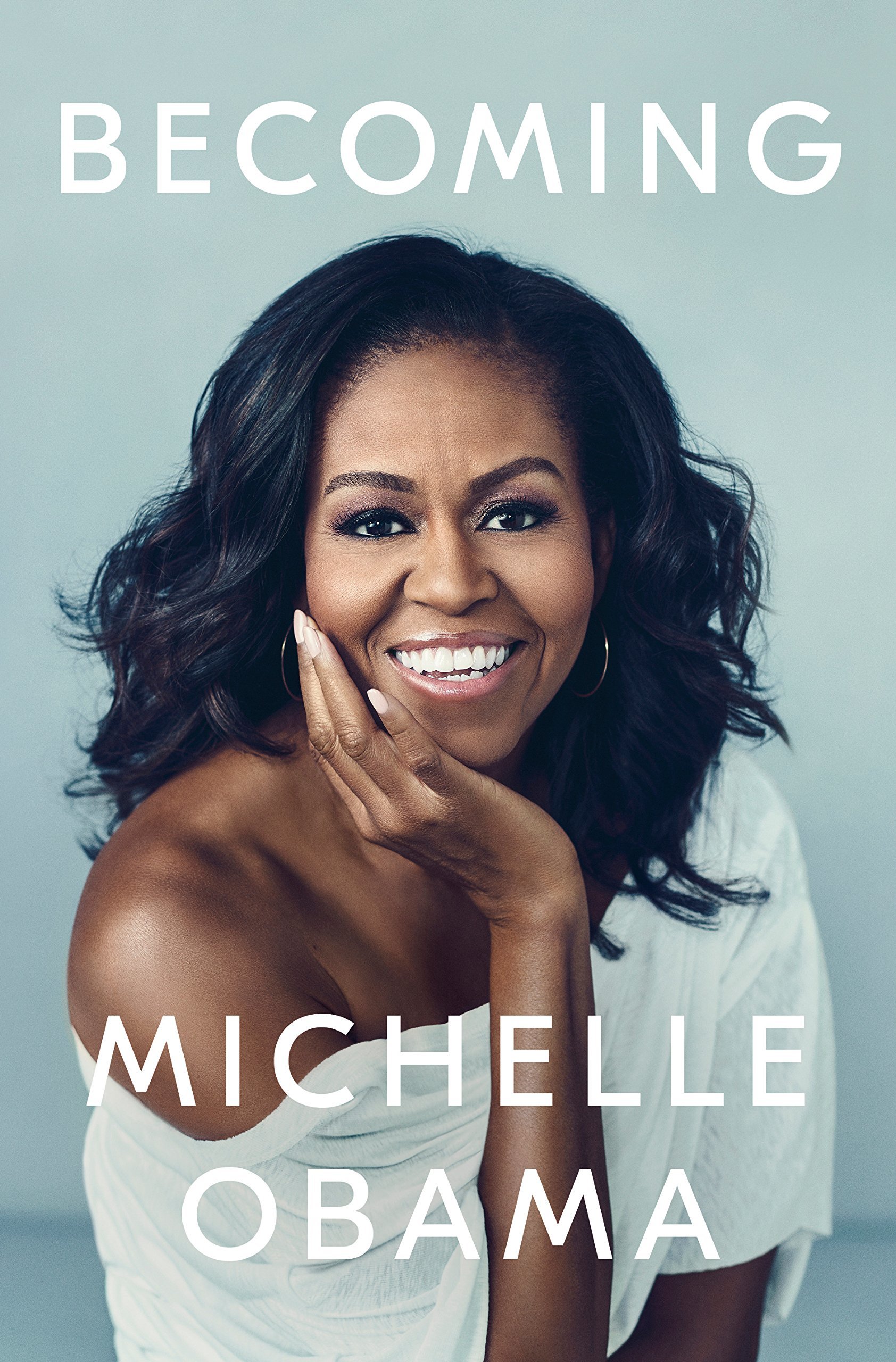
Becoming Me: Family, Education, and the Making of a Striver
The first eight chapters explain the foundations Michelle Obama carries into everything that follows: an unusually stable family, a strong expectation of competence, a neighborhood shaped by racial and economic change, and a growing conviction that she can enter institutions that were not built with someone like her in mind. Becoming Me is therefore not merely childhood background. It establishes both the strengths of Obama’s achievement-oriented personality and the assumptions that adulthood will eventually force her to revise.
Euclid Avenue and the Robinson Family
Michelle LaVaughn Robinson grows up on Euclid Avenue in Chicago’s South Shore neighborhood, where her family occupies the upstairs portion of a house belonging to her great-aunt Robbie and great-uncle Terry. The arrangement gives Michelle, her older brother Craig, and their parents relatively little private space, but Obama remembers the household as emotionally secure. Her father, Fraser Robinson III, works for the city, while her mother, Marian, initially concentrates on raising the children and running the home.
One of Obama’s earliest stories concerns piano lessons with Robbie. Michelle is impatient to advance and keenly aware of how quickly she is progressing compared with other students. Robbie’s piano has a damaged middle C, and the physical imperfection becomes a useful marker that allows Michelle to orient herself instantly at the keyboard. When she later performs on a pristine piano at a recital, she briefly freezes because the familiar visual cue is gone, and Robbie has to point her toward the correct key.
The scene is memorable because it captures something larger about Michelle’s childhood without requiring the memoir to announce it abstractly. She grows up with clear reference points: family routines, demanding adults, a known neighborhood, and an expectation that effort produces competence. The Robinson household does not remove difficulty from her path, but it gives her a stable place from which to confront it. Much of Becoming will concern what happens when she enters environments where those familiar markers disappear.
Fraser’s multiple sclerosis is another defining presence in the family. His condition progressively affects his movement, but Obama remembers him resisting self-pity and continuing to work. His physical struggle is visible to his children even when he minimizes it, and Craig at one point thinks practically about how they could get their father out of the house in an emergency after seeing a nearby fire. Fraser’s disability therefore teaches Michelle something different from the lesson of the piano: preparation matters, but there are realities that effort cannot simply eliminate.
Marian provides another model of strength, one that is less publicly dramatic but equally important. She pays attention to her children’s education and intervenes when necessary, yet she does not build their lives around constant parental rescue. When Michelle lands in a weak second-grade classroom, Marian recognizes that the situation is not good enough and pushes for a better placement. The lesson Michelle absorbs is not that institutions are automatically fair but that she has a right to expect something from them and, when necessary, to insist on it.
The family is embedded in a South Side community undergoing significant racial and economic change. White families leave, schools change, and the neighborhood acquires a reputation that does not necessarily match how Michelle experiences her own home. Her family is not wealthy, but the memoir is careful not to convert her childhood into a simplistic deprivation narrative. The Robinsons possess stability, expectations, extended family, social ties, and a powerful sense that Craig and Michelle’s futures should not be confined by the circumstances around them.
Obama also begins discovering that Black identity itself can contain internal judgments about class, education, and authenticity. A cousin’s question about why she “talks like a white girl” unsettles her because it turns the way she has learned to speak into a racial signal. She is already discovering a problem that will follow her through Princeton, professional life, and national politics: advancement into predominantly white spaces can produce accusations of not belonging there, while the very habits that help someone advance can also be interpreted as evidence of distance from the community she came from.
Her extended family gives these questions a historical dimension. Obama reflects on relatives whose personalities and frustrations cannot be separated from the opportunities they were denied. Her grandfather Dandy, in particular, represents a generation of Black men whose ambitions encountered structural barriers in education and employment. The memoir does not reduce him to those barriers, but Michelle gradually understands that what can look like an individual temperament may also carry the residue of historical exclusion.
By adolescence, Michelle is already becoming the person she later calls a striver. She likes clear standards and tangible proof that she has met them. School offers a particularly satisfying system because success can be measured, and a good performance usually produces another opportunity. The danger hidden inside that strength is that she is beginning to equate forward movement with following the correct sequence, an assumption that will work remarkably well until the sequence itself stops feeling meaningful.
Whitney Young, Princeton, and “Am I Good Enough?”
Michelle’s admission to Whitney M. Young Magnet High School enlarges her world. The daily commute takes her across parts of Chicago that make differences in race, geography, and resources increasingly visible. At Whitney Young, she also finds herself among ambitious students for whom academic achievement is ordinary, forcing her to measure herself against a stronger peer group.
Some classmates possess forms of privilege she has rarely encountered directly. They travel more widely, have more money, and seem familiar with opportunities that Michelle’s parents must work to make possible. The contrast does not produce a simple rejection of wealth; instead, it teaches her how much apparently natural confidence can depend on prior access. When the Robinsons stretch their resources to support opportunities such as a school trip to Paris, Michelle becomes increasingly conscious of how much effort stands behind the experiences that better-off classmates may take for granted.
Her friendship with Santita Jackson, daughter of Jesse Jackson, gives her an early view of political family life. Michelle sees the excitement surrounding a charismatic political figure but also the disruptions imposed on the family: public attention, absences, security concerns, and the way private life becomes organized around a public mission. Long before Barack seriously enters electoral politics, Michelle has therefore already absorbed reasons to distrust the idea that political ambition is cost-free for spouses and children.
The most important test of her academic confidence comes when she decides to follow Craig to Princeton. A counselor tells her, in effect, that she may not be Princeton material. Michelle does not confront the judgment dramatically; she simply refuses to let it become final. She applies, is admitted, and carries the episode forward as one of many moments in which an authority figure’s limited expectation collides with her own determination.
Princeton presents a different challenge. Being admitted proves that she can meet the institution’s formal standards, but it does not automatically produce a sense of belonging. The campus is overwhelmingly white compared with the communities Michelle knows, and she becomes more conscious of the fact that academic access and social ease are not the same thing.
The experience with her first roommate makes that point especially sharply. Michelle later learns that the roommate’s mother objected to her daughter living with a Black student, a form of prejudice that reaches Michelle indirectly rather than through an explicit confrontation. The Third World Center becomes important partly because it offers Black students a space in which they do not have to spend so much energy explaining themselves. Michelle also builds friendships and participates in programs that connect her elite education to people outside the traditional student body.
Princeton deepens rather than erases her relationship to the South Side. She can move through an Ivy League campus while remaining aware that people she loves have had very different access to opportunity. Her growing knowledge of her family’s history extends this awareness backward, connecting the educational doors opening for her to generations for whom such doors had been closed.
Her friendship with Suzanne Alele introduces a more personal challenge to the striver mentality. Suzanne is less committed to Michelle’s idea that adulthood requires moving methodically through the safest prestigious options. Through people like Suzanne, Michelle begins to see that changing direction is not necessarily evidence of failure. She will later describe such choices as swerves, and the concept becomes crucial because her most important adult decisions will depend on her willingness to leave paths that look impressive from the outside.
Michelle nevertheless continues along the conventional route for a while. She graduates from Princeton, goes to Harvard Law School, and joins Sidley & Austin, reaching the sort of corporate legal position that once seemed like an obvious destination. The achievement is real, but satisfaction does not arrive with it. For the first time, the structure that has carried her forward produces an uncomfortable question: what if being good at something is not the same as wanting to spend one’s life doing it?
Sidley, Barack, and the First Major Swerve
At Sidley & Austin, Michelle is assigned to mentor a summer associate with an unusual name and an equally unusual résumé: Barack Obama. He arrives with a background that bears little resemblance to her own linear progression. He has lived in Hawaii and Indonesia, attended different colleges, worked as a community organizer in Chicago, and approached law school with a more openly political and philosophical sense of purpose.
Michelle’s first response is professional rather than romantic. She is conscious of their workplace relationship, skeptical of the attention surrounding him, and not immediately persuaded that his unconventional style is evidence of anything extraordinary. Yet she is intrigued by the ease with which he seems to inhabit himself. Where Michelle has trained herself to meet external standards, Barack often appears to begin from an internal conviction about what matters.
Their attraction develops gradually. Basketball, conversation, and time away from the formal office environment allow Michelle to see dimensions of Barack that professional reputation cannot capture. His intelligence matters, but so does his sense that a career should answer a larger question about the world rather than simply prove personal success.
Their first kiss closes Becoming Me at an important structural point. Michelle has spent the first part of the memoir constructing a highly capable individual self, one shaped by family discipline and educational achievement. Barack does not erase that identity, but his arrival introduces a life organized around partnership, conflicting temperaments, public purpose, and uncertainty. The next stage of becoming will require Michelle to discover how much of herself can change without disappearing.
Becoming Us: Love, Loss, Motherhood, and Political Ascent
The second part of the memoir is more complicated because the organizing unit of Michelle’s life is no longer solely Michelle. Marriage, grief, career change, fertility, motherhood, and Barack’s expanding political ambitions repeatedly force her to negotiate between personal desires and shared obligations. Becoming Us is therefore not a simple love story; it is an account of how two strong but very different people try to create a durable “we” without becoming the same person.
Love, Grief, and Leaving the Expected Path
Michelle’s relationship with Barack becomes serious partly because she sees that his idealism is not merely conversational. Watching him speak to community members about the gap between “the world as it is” and “the world as it should be,” she begins to understand why he has made choices that appear inefficient by the standards governing her own career. His willingness to spend years organizing communities rather than racing toward wealth gives his idealism practical credibility.
The relationship also reveals how differently the two of them operate. When Barack returns to Harvard, he is comfortable writing long letters and living inside extended stretches of thought. Michelle wants more immediate, practical forms of connection. The difference seems small compared with the political conflicts that will later surround them, but it anticipates a central marital issue: Barack can disappear into a purpose, while Michelle is more attentive to the daily structures that allow a shared life to function.
Michelle travels to Hawaii and meets members of Barack’s family, widening her understanding of the complicated history that produced him. Later, a trip to Kenya will expose her to another side of his family network. These experiences matter because Barack’s identity is expansive and geographically scattered in ways Michelle’s is not. She comes from a family deeply rooted in Chicago, while his story involves multiple countries, absent and extended family members, and an ongoing effort to make sense of inheritance.
Meanwhile, Michelle’s professional dissatisfaction becomes harder to ignore. She tries to make her work at Sidley more meaningful, including through efforts connected to diversity recruiting, but the larger question remains unresolved. She has reached the position toward which years of education were supposed to lead and still cannot persuade herself that the work is the best use of her life.
The death of Suzanne Alele from cancer makes that uncertainty urgent. Suzanne had embodied a willingness to live without Michelle’s rigid commitment to the safest sequence, and her death confronts Michelle with the danger of endlessly postponing the life one actually wants. Achievement suddenly looks less like protection against uncertainty than a way of pretending uncertainty can be managed.
Barack’s success at Harvard intensifies the contrast. Becoming the first Black president of the Harvard Law Review places lucrative and prestigious options before him, but he remains interested in civil-rights work, teaching, writing, and community-oriented public service. Michelle admires his commitment even while recognizing that his willingness to choose purpose over conventional security is easier for him emotionally than it is for her.
Then Fraser Robinson dies. His decline has been part of Michelle’s life for years, but losing him removes one of the fixed points around which her identity has been built. The deaths of her father and Suzanne in a relatively compressed period make the idea of postponement intolerable. If life is finite and unpredictable, choosing a career merely because it represents a respectable next step begins to seem like its own form of risk.
Michelle starts looking for alternatives. Through people including Art Sussman, Susan Sher, and especially Valerie Jarrett, she discovers professionals who use their skills in public and civic life rather than corporate law. Jarrett is particularly important because she gives Michelle a model of a successful Black woman whose ambitions do not require accepting the definition of success Michelle inherited from elite professional culture.
Leaving Sidley is therefore one of the memoir’s first major adult swerves. Michelle does not abandon ambition; she changes what ambition is for. She moves into Chicago city government, where the work is less glamorous by conventional corporate standards but closer to the kind of public purpose that has increasingly attracted her.
Her personal life moves toward commitment at the same time. Barack eventually proposes, but marriage does not magically resolve the differences that have already emerged between them. Their trip to Kenya deepens Michelle’s understanding of his family history while also reminding her that marrying someone does not mean inheriting their past as though it had always been one’s own.
They marry in 1992, surrounded by the Chicago family and community that anchor Michelle’s identity. Barack works on Project VOTE! during the election cycle, while Michelle continues moving through city government and public-service roles. The political energy surrounding them is substantial, but at this point she still sees politics primarily as Barack’s interest rather than a shared vocation.
Their differences over time and responsibility quickly reappear. Barack’s struggle to complete his book eventually leads him to Bali, where he can concentrate away from ordinary obligations. Michelle supports the work but also experiences the underlying inequity: he seems able to protect large spaces for his purpose, while she is increasingly aware of the practical labor required to build a joint life.
That conflict becomes more significant as her career continues to evolve. She leaves City Hall for nonprofit work, moving closer to the community-building values that now feel more meaningful to her. Her professional swerves are not acts of rebellion against achievement; they are attempts to reconcile achievement with purpose before the structure of marriage and parenthood makes the question even harder.
Public Service, IVF, Motherhood, and Marital Strain
Michelle becomes the founding executive director of the Chicago chapter of Public Allies, an organization built around preparing young people for public service. The job fits her better than corporate law because she can see the connection between daily work and the opportunities available to people who might otherwise be excluded from civic leadership. She later moves into positions at the University of Chicago, continuing to combine institutional responsibility with a strong interest in community relationships.
Barack is building an equally unconventional portfolio. He practices civil-rights law, teaches, writes, participates in community life, and enters electoral politics by winning a seat in the Illinois Senate. Michelle respects the substance of his ambitions but remains uneasy about the costs of political life, especially because she has already seen through the Jackson family how public purpose can consume private time.
The death of Barack’s mother, Ann Dunham, adds another loss to their lives. At the same time, Michelle and Barack are trying to have children, and Michelle discovers that the confident sequence she once assumed—education, career, marriage, motherhood—cannot simply be executed on schedule. She experiences a miscarriage and later learns that conceiving a child will require medical assistance.
The memoir’s treatment of infertility is important because Obama presents it as both physically and psychologically isolating. She had assumed that reproduction would be another ordinary stage of adulthood, only to discover how little she understood about the difficulties many women experience. The couple turn to in vitro fertilization, and Michelle undergoes much of the bodily burden while Barack’s political and professional obligations continue around them.
Malia is born in 1998, and Sasha later follows, also after IVF. Motherhood brings enormous joy, but Obama refuses to represent it as a solution that simplifies the rest of her life. Instead, it multiplies the number of things she cares about while reducing the amount of time she can devote to any of them.
The practical asymmetry in her marriage becomes harder to ignore. Barack can still be summoned by political meetings, legislative work, writing, or late conversations, while Michelle becomes the parent most responsible for maintaining predictable routines. She is simultaneously trying to preserve a serious career, and the cultural language of “having it all” begins to look increasingly detached from how families actually function.
Barack’s unsuccessful congressional campaign against Bobby Rush intensifies Michelle’s frustration with electoral politics. The campaign consumes time and exposes the family to political calculation without producing victory. During a family trip to Hawaii, circumstances involving their daughter and Barack’s absence from an Illinois legislative vote become political ammunition, demonstrating that even ordinary parental choices can be reframed as evidence of professional failure once a family enters public life.
Michelle eventually accepts a senior role at the University of Chicago Medical Center, a job that better accommodates both her ambitions and the family’s practical needs. Yet changing jobs cannot solve the deeper marital problem. She increasingly resents the way Barack’s schedule seems to assume that the household will bend around him.
The couple enter counseling, one of the memoir’s most revealing admissions because Obama does not use therapy to prove that Barack was wrong and she was right. She gradually recognizes that she has been waiting for him to change in ways that would make her happy, while failing to ask what she can alter about her own routines and expectations. That insight does not remove the imbalance, but it gives her a more useful form of agency.
A practical change follows. Michelle stops delaying dinner and the children’s bedtime in the hope that Barack will arrive when expected. The family eats on schedule, the girls go to bed on schedule, and Barack joins when he can. Michelle also protects time for exercise rather than treating her own needs as the first thing to disappear whenever the household becomes busy.
This is one of the clearest examples of what “becoming” means in the memoir. Michelle does not solve marriage by becoming less demanding, nor does she solve it by forcing Barack into her preferred model of organization. She changes the system around the conflict, accepting that love between two independent people requires boundaries as well as sacrifice.
From the Senate Campaign to Grant Park
Barack’s political career accelerates dramatically in 2004. His campaign for the U.S. Senate succeeds, and his keynote address at the Democratic National Convention introduces him to a national audience. Michelle understands the significance of the moment but also knows that political success means greater demands on the family rather than simply a more impressive title.
The Senate victory brings Washington closer, but Michelle remains rooted in Chicago. She dislikes much of what she sees in national political culture and is unwilling to romanticize the disruption caused by Barack’s ambitions. The more serious his prospects become, the harder it is for her to treat politics as a noble abstraction detached from childcare, travel, privacy, and family time.
When Barack begins seriously considering a presidential campaign, Michelle is reluctant. She has no desire to become a political spouse on a larger scale, and she doubts that the United States is ready to elect a Black president. She also understands that even losing such a campaign would expose the family to extraordinary scrutiny.
Events beyond the family complicate her resistance. The devastation and governmental failures surrounding Hurricane Katrina reinforce the idea that political leadership has consequences extending far beyond the ambitions of individual candidates. Michelle never develops Barack’s affection for electoral politics, but she becomes more willing to accept that governing institutions matter enough to justify personal sacrifice.
Barack announces his candidacy in Springfield, Illinois, in 2007, beginning a campaign that rapidly transforms Michelle’s life. She learns the routines of national campaigning, works with advisers such as David Axelrod and David Plouffe, and tries to balance appearances with her daughters’ need for stability. The professional political apparatus initially attempts to understand how she should be presented, but Michelle eventually discovers that her greatest strength is not performing the role of a generic candidate’s spouse.
She is most persuasive when talking about her actual life. Stories about Fraser’s work ethic, Marian’s practicality, student debt, childcare, marriage, and the ordinary pressures of raising a family allow voters to connect Barack Obama’s campaign to experiences that do not require them to share his background. Michelle’s family narrative becomes political precisely because it does not begin as a political narrative.
The campaign also teaches her how little control a public figure has over the meaning assigned to her words. Rumors about Barack’s religion and identity spread, while Michelle’s own statements are scrutinized for evidence of radicalism, resentment, or insufficient patriotism. The same confidence that has helped her throughout life can be reframed through racial and gender stereotypes.
The Iowa caucus victory is a major psychological turning point. Until then, Michelle has partly protected herself by treating Barack’s presidency as unlikely. Iowa demonstrates that a heavily white electorate can support him in sufficient numbers to make the campaign real, forcing her to imagine not merely surviving a presidential race but possibly entering the White House.
As the Democratic primary intensifies, Michelle’s own public image becomes a campaign issue. A remark about feeling proud of her country in a new way is reduced to a claim that she had never previously been proud of America. Her Princeton thesis is examined for ideological clues, and hostile portrayals increasingly draw on the stereotype of the angry Black woman.
The experience forces Michelle to become more strategically self-conscious. She does not conclude that every criticism is illegitimate, but she recognizes that identical behaviors can acquire different meanings depending on who is performing them. An assertive white political spouse and an assertive Black political spouse do not necessarily encounter the same interpretive environment.
Appearances such as The View allow Michelle to present herself to audiences outside the campaign’s most hostile framing. She talks about marriage, children, ordinary habits, and family life, subjects that may look politically safer but are also genuinely central to her identity. The tension is complicated: making herself appear less threatening can feel like submitting to unfair expectations, yet refusing to communicate through accessible forms would allow caricatures to harden without challenge.
By the Democratic National Convention, Michelle has become a far more disciplined national speaker. She tells the story of the Robinson family and places Barack within a familiar narrative of work, family, service, and aspiration. The speech is not merely damage control; it demonstrates how effectively Michelle can convert autobiography into public rhetoric.
The general election unfolds amid a worsening financial crisis and persistent racial uncertainty. Polling may show Barack ahead, but Michelle remains aware that no major-party Black candidate has ever been tested in a presidential election. The possibility that voters might publicly express openness and privately vote differently remains difficult to dismiss.
Shortly before Election Day, Barack’s grandmother Madelyn “Toot” Dunham dies. The loss adds another private grief to a campaign already operating on a historical scale, reinforcing the memoir’s recurrent contrast between public milestones and personal events that do not wait for convenient timing.
On election night, the family arrives at Grant Park in Chicago. Barack’s victory makes him the first Black president-elect of the United States and transforms Michelle, Craig, Marian, Malia, Sasha, and the wider family into participants in a national historical event. The moment is extraordinary, but Becoming Us has spent hundreds of pages showing the private costs required to reach it.
The title of the second part therefore carries more than a marital meaning. “Us” initially refers to Michelle and Barack, then expands to include their daughters, their wider family, campaign staff, supporters, and eventually millions of people who see some part of themselves represented in the Obamas’ victory. Michelle’s challenge is that each enlargement of the “us” creates new obligations without eliminating the needs of the smaller circles inside it.
Becoming More: The White House, Public Purpose, and Leaving Power
The final part begins after the achievement that would end a more conventional success story. For Michelle, however, entering the White House creates another identity problem: the First Lady is highly visible but unelected, politically consequential but constitutionally undefined, privileged yet heavily constrained. Becoming More follows her attempt to turn that ambiguous position into useful work while preventing the institution from consuming her family and private sense of self.
Entering the White House and Inventing the First Lady Role
The presidential transition moves quickly enough that Michelle has little time to absorb the change. The outgoing Bush family helps the Obamas understand the practical realities of presidential life, while Michelle begins assembling staff and deciding what kind of First Lady she wants to become. The process immediately teaches her that the White House is not merely a home or symbol but an enormous institution governed by traditions, security procedures, permanent staff, and expectations accumulated over generations.
Jill Biden becomes an important partner, particularly through their shared interest in military families. Marian Robinson agrees to move into the White House as well, giving Malia and Sasha continuity at a moment when nearly everything else in their lives is changing. Characteristically, Marian enters presidential life without acting impressed by it, retaining the independence that has shaped Michelle since childhood.
The inauguration is emotionally overwhelming. The family participates in ceremonies and celebrations that symbolize a change many Americans had once considered impossible, yet by the end Michelle is exhausted. Her response reflects a pattern throughout the memoir: historic moments are almost always accompanied by bodily fatigue, logistical difficulty, family concern, or some other reminder that symbolism never replaces ordinary human needs.
Life inside the White House introduces an extraordinary paradox. The family has access to resources almost unimaginable to ordinary Americans, but simple decisions—leaving the building, going to a restaurant, allowing the girls to visit friends—require planning and security. Michelle is surrounded by service while losing many forms of autonomy she previously considered normal.
She therefore works to make the residence feel like a family home rather than a ceremonial museum. She learns how the permanent staff operate and becomes conscious of maintaining appropriate boundaries between their professional service and the family’s private life. The girls need rules, chores, school routines, and grandparents even if their address is now internationally famous.
One unexpected benefit of the presidency is that Barack sometimes becomes physically more predictable. His office is now inside the same complex where the family lives, making dinner together more possible than during periods when state politics, campaigning, and travel kept him away from Chicago. The presidency constrains the family enormously, but in this limited respect it can also bring father and daughters closer.
Michelle’s international travel gives her another way to understand her public position. At London’s Elizabeth Garrett Anderson School, she meets girls from diverse, often working-class and immigrant backgrounds and recognizes versions of the questions that once preoccupied her. What does someone imagine is possible when the people occupying prestigious spaces seem to come from an entirely different world?
The encounter reinforces her belief that visibility can have practical value even when it does not change material conditions by itself. Michelle cannot personally solve structural inequality for every student she meets, but appearing in a school, taking the students seriously, and showing that someone with her background can inhabit elite institutions has symbolic consequences she no longer dismisses as trivial.
The White House kitchen garden develops from a similarly concrete starting point. Michelle is thinking about her daughters’ health and about the broader environment shaping what children eat. The garden becomes both a physical project and an organizing symbol for what develops into Let’s Move!, an initiative addressing childhood health through food environments, information for families, physical activity, and collaboration with schools and other institutions.
Initiatives, Security, Violence, and the Second Term
Michelle’s efforts to create a useful First Lady role expand gradually rather than emerging as a fully designed program on inauguration day. She visits communities dealing with disasters, spends time with wounded service members, meets families whose lives are shaped by military deployment, and continues working on childhood health. These encounters help determine which issues she can address effectively without pretending she possesses the policy authority of an elected official.
The undefined nature of the First Lady’s position creates constant tension. Michelle has a vast communications platform, access to senior officials, and the ability to attract media attention, but she does not control legislation or executive policy. Her influence therefore depends on persuasion, partnership, convening power, symbolism, and an ability to direct attention toward issues that can be connected credibly to her own experience.
Her public image is also subject to unusually gendered scrutiny. Barack can appear repeatedly in variations of the same suit, while Michelle’s clothing becomes a continuing subject of cultural interpretation. Fashion offers opportunities to support designers and communicate accessibility, but it also demonstrates how easily a woman in public life can have substantive work displaced by discussion of appearance.
Even private recreation can become political. A date night in New York draws criticism because any presidential movement requires substantial public resources and security. The episode reveals how thoroughly the presidency transforms ordinary personal choices into public events and why maintaining a marriage inside the office requires accepting that privacy can never be fully restored.
Conversations with Hillary Clinton help Michelle understand another difficulty built into the role. A First Lady is expected to matter without appearing to possess unaccountable power, to have convictions without becoming politically threatening, and to be simultaneously accomplished and deferential. Michelle’s strategy is to choose issues with genuine personal roots and then pursue them seriously within those boundaries.
Her partnership with Jill Biden leads to Joining Forces, launched to support service members, veterans, and military families in areas including employment, education, wellness, and public awareness. The issue resonates partly because Michelle sees how rarely civilian political conversation reflects the sustained burdens military families carry during years of war.
The presidency’s symbolic power is accompanied by direct danger. Donald Trump’s promotion of the false claim that Barack was not legitimately American troubles Michelle not only because she regards it as racist and dishonest but because inflammatory conspiracy theories aimed at a president can endanger his family. Her fear becomes less abstract when gunfire strikes the White House while members of the family are away.
This is an important limit on any romantic picture of public service. Michelle’s family possesses immense protection precisely because threats are real. The Secret Service provides safety but also reminds the Obamas continuously that their movement, friendships, and children’s ordinary experiences must be managed around risks most families never have to consider.
Major events of Barack’s presidency enter the memoir primarily through this family and institutional perspective. Michelle recalls, for example, the night of the operation that killed Osama bin Laden, but she does not turn Becoming into a strategic history of presidential decision-making. Her position is adjacent to extraordinary power rather than identical with it, and the memoir usually preserves that distinction.
Barack’s reelection in 2012 confirms that the family will remain in the White House for another four years. By then Michelle is more confident in the role and more practiced at using television, public events, humor, and popular culture without believing that visibility alone constitutes achievement. Her advocacy increasingly focuses on creating bridges between institutions and young people who may not automatically imagine themselves belonging inside them.
The second term is also marked by repeated encounters with violence. The Sandy Hook school shooting devastates Michelle, as it does the wider country. Soon afterward, Chicago teenager Hadiya Pendleton, who had participated in inaugural events, is killed by gunfire, bringing the national problem into especially painful proximity to Michelle’s own South Side roots.
Michelle attends Hadiya’s funeral and later spends time with students in Chicago. The experience reconnects the White House to the world of her childhood, but with a disturbing contrast: she has gained access to the highest levels of American power while young people growing up only miles from where she did continue to confront violence and limited opportunity.
Education becomes an increasingly important focus. Through Reach Higher, Michelle encourages young people to continue their education beyond high school, whether through college, vocational training, or other forms of postsecondary preparation. The initiative grows naturally from the memoir’s earliest chapters, where educational access repeatedly expands the range of futures Michelle can imagine.
The Final White House Years, the 2016 Election, and Departure
As Malia and Sasha become teenagers, Michelle’s responsibilities change again. The girls need more independence at precisely the moment when their family remains one of the most monitored in the world. Michelle works with the Secret Service and White House staff to give them as much ordinary social life as security permits, while avoiding the temptation to make her daughters characters in a public narrative they did not choose.
The later Obama years also place questions of race and violence increasingly at the center of national attention. Michelle watches Barack respond publicly to killings, policing controversies, and racial conflict while carrying the emotional burden of being the first Black president. The massacre at Emanuel African Methodist Episcopal Church in Charleston and Barack’s “Amazing Grace” eulogy become especially powerful examples of how grief, faith, history, and presidential symbolism can converge.
Other moments point in a more hopeful direction. When the Supreme Court ruling establishing marriage equality leads to the White House being illuminated in rainbow colors, the building itself becomes a public symbol of social change. For Michelle, who has spent years thinking about who gets represented within national institutions, such images are not merely decorative.
Her educational work becomes international through Let Girls Learn, which focuses on barriers preventing adolescent girls around the world from receiving education. The project extends a principle that has run through her life: ability is widely distributed, but access is not, and young people often require both practical resources and evidence that their aspirations are legitimate.
The 2016 presidential campaign destroys any possibility that Michelle can leave electoral politics quietly. Donald Trump’s candidacy represents to her many of the tendencies she finds most disturbing in political culture, while Hillary Clinton’s campaign offers the prospect of continuing much of the political direction associated with the Obama years. Michelle becomes one of Clinton’s most effective surrogates.
Her speeches during the campaign crystallize a public philosophy she has developed under years of attack. She argues for refusing to imitate the cruelty of opponents and for answering degradation with higher standards of conduct. The formulation is both moral and strategic: Michelle has learned that as a Black woman in public life, displays of anger can be used to confirm stereotypes in ways that anger from others may not be.
She expects Clinton to win. Trump’s victory therefore lands not merely as a partisan disappointment but as a repudiation of assumptions about the country’s trajectory that the Obama presidency had encouraged. Yet the memoir refuses to interpret the result as proof that the previous eight years were meaningless or that civic engagement was naïve.
A visit connected to Hamilton, with its racially diverse cast retelling the story of the American founding, becomes a fitting image for Michelle’s understanding of national identity. The country’s inherited institutions may have been created in exclusionary circumstances, but the people who claim ownership of those institutions can change. Representation matters because it alters who can plausibly imagine themselves inside the story.
The Epilogue carries the family through January 20, 2017. Michelle and Barack say goodbye to the White House staff, many of whom have known Malia and Sasha for half their childhoods, and prepare to transfer the residence and office to the incoming president. The outgoing administration’s final task is not to pretend that nothing has changed but to make the democratic transition professionally.
At Trump’s inauguration, Michelle is acutely aware of the contrast between the visible diversity surrounding Barack’s inaugurations and the overwhelmingly white and male composition she sees around the new administration. She eventually stops attempting to manufacture an expression of enthusiasm she does not feel. Even so, she and Barack complete the transition according to the standards they have chosen for themselves.
Leaving the White House removes a role that once seemed impossibly large. Michelle is no longer First Lady, her daughters are nearly grown, and Barack is no longer president. Instead of treating this as an ending, she returns to the question with which the memoir began: who is she now that another identity has fallen away?
Michelle Obama’s Character Arc: From Box-Checker to a Self She Chooses
Michelle Obama describes herself with enough consistency that a recognizable character emerges long before the memoir reaches national politics. She is competitive, disciplined, cautious, highly sensitive to expectations, and comforted by systems in which hard work produces measurable results. These characteristics allow her to move from Euclid Avenue to Whitney Young, Princeton, Harvard, and a major law firm, but Becoming is ultimately about learning that a life built entirely around external markers of advancement can become a trap.
The young Michelle tends to answer insecurity through preparation. When an institution raises the question of whether she belongs, her instinct is to become so competent that the doubt can be defeated empirically. The counselor who questions whether she is Princeton material does not inspire a philosophical reconsideration of elite education; Michelle applies, gets in, and proves the judgment wrong.
This response becomes part of the recurring “Am I good enough?” question running beneath the memoir. Obama’s confidence is genuine, but it is often achievement-dependent. Entering spaces where few people look like her requires not merely performing well but continually reading the room for evidence that she is being evaluated as representative of something larger than herself.
Corporate law exposes the weakness in the strategy. By reaching Sidley, Michelle has accumulated many of the credentials her younger self would have considered proof of success, yet she is unhappy. There is no higher score that can solve the problem because the problem is no longer competence. She has to decide what she wants rather than what a high-performing person is expected to want.
The first major transformation is therefore the willingness to swerve. Suzanne’s early death, Fraser’s death, Barack’s unconventional choices, and Valerie Jarrett’s example all weaken Michelle’s assumption that the safest prestigious path is automatically the wisest. Leaving corporate law does not make her less ambitious; it moves ambition from credential accumulation toward meaningful responsibility.
Marriage exposes a second limitation in the box-checking personality. Michelle initially expects the shared household to function according to a plan and becomes angry when Barack’s habits repeatedly disrupt it. Counseling helps her recognize that waiting for another adult to conform perfectly to her system gives him too much control over her happiness.
Her decision to run dinner and bedtime on a predictable schedule whether Barack is present or not is deceptively important. She does not relinquish structure; she uses it more intelligently. Instead of treating structure as a way to make another person behave correctly, she uses it to protect the parts of family life she can actually control.
Infertility and motherhood force an even deeper adjustment. Michelle has been trained by experience to believe that preparation and work improve outcomes, but miscarriage and IVF confront her with bodily realities that do not reward moral effort. Raising children further complicates the fantasy of control because the needs of Malia and Sasha have to coexist with two adult careers and an increasingly public family.
Political life then subjects Michelle to judgments that cannot be defeated through better preparation alone. She can craft speeches carefully and still be caricatured; she can express patriotism and have a fragment of the statement recast as its opposite; she can fulfill the expectations of First Lady and still be criticized for clothing, tone, travel, or influence. The scale of scrutiny teaches her that competence cannot guarantee control over interpretation.
The White House period shows a more mature version of the same personality visible in childhood. Michelle remains organized, demanding, practical, and attentive to standards, but she is less willing to let external institutions define what counts as worthwhile. She chooses a portfolio of issues grounded in her experience, protects family routines where she can, and accepts that much of presidential life is beyond her authority.
Her development should not be exaggerated into a transformation from anxious conformist to spontaneous free spirit. Obama never becomes Barack. She continues to value preparation, routines, excellence, and deliberate planning, and those qualities are essential to what she accomplishes. Her growth lies in learning that discipline should serve a chosen life rather than becoming the substitute for choosing one.
That distinction explains why the memoir can end after the White House without implying that Michelle has lost her defining achievement. If the presidency were the final destination, leaving it would be a decline. Under the logic of becoming, it is simply another moment when she has to separate the self she intends to preserve from a role that can no longer organize her life.
Family and Relationships: The People Who Shape Becoming
Although Becoming has one narrator, Michelle rarely presents identity as a solitary accomplishment. Her strongest qualities are repeatedly traced to relationships, and major changes in her life often become possible because another person models an alternative way of living. Family, friendship, mentorship, marriage, and motherhood therefore function not as background to her development but as the environments in which that development occurs.
Fraser and Marian Robinson
Fraser Robinson is one of the memoir’s central moral figures. Michelle remembers his multiple sclerosis worsening over time, but the quality she emphasizes most is his refusal to organize his identity around illness. He keeps working, maintains his responsibilities, and resists invitations to understand himself primarily through limitation.
That example helps explain both Michelle’s resilience and some of her pressure on herself. Fraser teaches dignity through persistence, and his children learn not to assume that hardship entitles them to abandon responsibility. At the same time, the family’s tendency to normalize his worsening condition may contribute to Michelle’s broader instinct to manage difficulty by simply continuing to perform.
Marian’s influence is quieter but in some respects even more fundamental. She advocates when institutions fail her children, as in Michelle’s early schooling, yet does not make herself the center of their achievements. She gives advice, expects independence, and allows Craig and Michelle to experience consequences rather than constantly controlling their choices.
Michelle also gradually recognizes Marian as a woman rather than merely as a mother. That recognition matters because the memoir repeatedly asks how women maintain a self while fulfilling family roles. Marian’s example is not built on professional prestige; it rests on judgment, emotional steadiness, autonomy, and an ability to support other people without losing her own point of view.
Together, Fraser and Marian give Michelle something she will spend the rest of the memoir trying to reproduce for her own daughters: a home secure enough that children can take risks outside it. The White House may be physically grander than Euclid Avenue, but Michelle measures successful parenting by continuity with the values created in the smaller home.
Craig, Extended Family, Friends, and Mentors
Craig is Michelle’s first peer and protector. Because he is older, socially confident, and already moving through many of the institutions she later enters, he provides both reassurance and comparison. His own path to Princeton makes the school imaginable before Michelle applies, while his basketball-centered social ease contrasts with her more guarded temperament.
The wider Robinson family complicates any simple story of upward mobility. Robbie gives Michelle discipline through music, while relatives such as Dandy connect individual character to the historical restrictions imposed on Black families. Michelle’s movement into elite institutions therefore feels less like departure from an unambitious background than the realization of capacities that earlier generations often lacked the opportunity to exercise.
Suzanne Alele’s importance arises partly from difference. Michelle initially evaluates life through progress toward recognizable milestones, whereas Suzanne appears more willing to experiment and enjoy the present. Her early death does not transform Michelle through a simplistic lesson about “living every day to the fullest,” but it does make indefinite postponement harder to justify.
Santita Jackson gives Michelle access to another form of education by showing her political life from inside a family. Years before presidential politics becomes Michelle’s own problem, she can see how a public mission reorganizes private relationships. That experience helps explain why her later resistance to Barack’s ambitions is informed rather than merely fearful.
Valerie Jarrett becomes one of the memoir’s most consequential mentors because she represents a life Michelle has not previously imagined clearly. Jarrett is accomplished, connected, Black, female, and engaged in public service rather than confined to the elite corporate track. Her example makes it easier for Michelle to leave Sidley because it proves that a professional swerve need not be a retreat from seriousness.
Barack Obama: Love, Difference, and Negotiation
The relationship with Barack is compelling because Becoming refuses to make compatibility depend on similarity. Michelle admires qualities in him that also frustrate her: intellectual independence, comfort with uncertainty, willingness to sacrifice conventional security for purpose, and a capacity to become absorbed in ideas or public missions. What first expands her imagination later complicates domestic life.
Their differences are visible from the beginning. Michelle wants communication that is immediate and concrete; Barack can be content with reflection and long letters. She approaches adulthood as a sequence requiring organization, while he is more willing to pursue an idea without knowing exactly where it will lead.
Marriage intensifies rather than erases the difference. Michelle sometimes envies the freedom with which Barack can protect time for writing, politics, and reflection, especially after children arrive. His public ambitions depend in part on domestic structures she is more responsible for maintaining, and the memoir is strongest when it admits the resentment this produces.
Couples counseling prevents that conflict from becoming a simple indictment of Barack. Michelle begins to recognize that she has constructed happiness partly around his compliance with her expectations. The lesson she draws is not that her needs are unreasonable but that she requires a stronger sense of agency over her own daily life.
This is one reason Emily Lordi’s reading of Becoming as a motherhood memoir is useful. The presidential story can easily dominate discussion of the book, but the marriage is transformed just as decisively by children, childcare, professional pressures, and Michelle’s effort to avoid disappearing into support for someone else’s vocation. The private negotiation gives the later political partnership its foundation.
By the presidential campaigns, Michelle is both Barack’s strongest intimate critic and one of his most effective public advocates. She can explain him to voters because she understands the idealism that drives him, but she never wholly adopts his enthusiasm for politics. Their partnership works because the memoir allows a distinction between believing in Barack and believing in every feature of political life.
The result is a marriage portrayed as durable without being effortless. Barack expands Michelle’s sense of what a life can be used for; Michelle insists that purpose does not excuse neglecting the practical requirements of family. Each person therefore becomes a constraint on the other’s excesses as well as a source of possibility.
Malia and Sasha: Motherhood, Privacy, and Continuity
Malia and Sasha change Michelle’s priorities more radically than any professional promotion does. Their births follow miscarriage and IVF, making motherhood something the memoir cannot treat as automatic. Once they arrive, Michelle’s abstract questions about work-life balance become concrete decisions about childcare, schedules, schooling, travel, and which parent will be physically present.
The girls also become one of Michelle’s strongest limits on political ambition. She can accept inconvenience for herself more readily than disruption for them, and much of her negotiation with Barack’s campaigns concerns preserving a recognizable family life. The presidential campaign and White House years continually test whether such preservation is possible.
Inside the White House, Michelle resists turning her daughters into public property. They appear in the memoir because they shape her life, but she generally avoids giving readers unrestricted access to their private development. That restraint is itself part of her maternal strategy: the family may be public, but the girls should retain as much ownership of themselves as circumstances allow.
Motherhood also influences Michelle’s public agenda without making every initiative reducible to her daughters. Concerns about food, education, mentorship, opportunity, and young people’s ability to imagine larger futures all have obvious personal roots. Her First Lady work can therefore be read partly as an expansion of the protective and aspirational instincts first directed toward Malia and Sasha.
The Major Themes of Becoming
The memoir’s themes develop through repeated situations rather than formal arguments. Michelle rarely stops the narrative to construct an abstract theory of ambition, race, gender, service, or identity; instead, the meaning of these ideas accumulates as similar pressures reappear in different settings. The result is strongest when the White House chapters can be traced backward to experiences that seemed ordinary when they first occurred.
Striving, Self-Doubt, and Belonging
Michelle’s striving is not portrayed as pure insecurity. It is a practical strategy that works. She studies, prepares, enters competitive schools, earns prestigious degrees, and builds professional credibility because she has learned that excellence creates options.
Yet achievement never permanently answers the question of belonging. The Princeton counselor’s doubt can be defeated through admission, but entering Princeton creates new forms of uncertainty. Corporate law demonstrates that belonging to an elite profession does not prove that the profession belongs in one’s life.
The chipped middle C is an especially effective early image for this pattern. At home, Michelle knows exactly how to orient herself. On the unfamiliar recital piano, the old cue disappears, and she has to learn that competence survives even when the environment changes.
The same structure recurs socially. Whitney Young, Princeton, Sidley, national campaigning, and the White House all remove familiar reference points. Michelle becomes increasingly capable of functioning without external reassurance, but the memoir never claims that self-doubt vanishes completely.
Belonging therefore becomes less about receiving unanimous permission and more about refusing to treat unfamiliarity as disqualification. By the Epilogue, Michelle can understand her and Barack’s portraits in the National Portrait Gallery as evidence that the visible boundaries of belonging have expanded. The point is not that exceptional achievement should be required for acceptance but that representation can weaken the assumption that certain spaces naturally belong to only one kind of person.
Race, Class, and Access
Race enters Becoming first through ordinary family and neighborhood life rather than national political conflict. Michelle grows up in a Black community shaped by migration, segregation, white flight, unequal schools, and constrained employment opportunities. These structures matter, but her household is stable and aspirational, preventing the memoir from collapsing Black South Side life into a stereotype of dysfunction.
Class becomes increasingly visible as Michelle moves outward. At Whitney Young and Princeton, she encounters peers with forms of financial and cultural capital her family does not possess. What looks like effortless confidence often turns out to rest on familiarity with institutions, travel, professional networks, and expectations inherited from previous generations.
The memoir is particularly attentive to access. Michelle repeatedly encounters talented people who do not need to be “fixed” so much as given an opening, a mentor, adequate schooling, information, or proof that a particular future is possible. This helps connect her early educational experiences to her later work with young people.
Race also changes how achievement is interpreted. At Princeton, Michelle can be simultaneously qualified and suspected of not belonging. During the presidential campaign, confidence can be recoded as anger, and ordinary statements can acquire meanings shaped by stereotypes about Black patriotism or hostility.
As First Lady, the stakes become historical. Michelle is not simply a Black woman occupying a prestigious position; she is the first Black woman to inhabit a role loaded with traditional expectations about American femininity, family, decorum, and national representation. Every choice therefore risks being read simultaneously as personal behavior and racial symbolism.
The memoir’s treatment of race is strongest when it remains connected to these lived mechanisms. It is less interested in presenting a systematic political theory than in showing how social structures enter school choices, housing patterns, speech, professional confidence, media interpretation, and the emotional experience of being watched.
Gender, Work, Motherhood, and Visibility
Michelle’s professional story initially resembles a classic achievement narrative. She obtains elite credentials and a prestigious job, yet the memoir gradually exposes how incomplete that model is for someone whose adult life also includes marriage and motherhood. Professional success does not remove gendered expectations about who will notice that childcare has failed, dinner is late, or a child needs to be taken to the doctor.
The IVF chapters sharpen this difference by locating reproduction physically in Michelle’s body. Barack shares the desire for children, but Michelle undergoes the medical process. The imbalance is not presented as his moral failure; it is a reality of embodiment that exposes the limits of treating family-building as a perfectly symmetrical project.
After the girls are born, the language of balance looks increasingly inadequate. Michelle does not discover a formula in which every domain receives equal attention. She makes trade-offs, changes jobs, depends on childcare and family support, resents Barack, attends counseling, protects exercise time, and builds routines that reduce chaos.
The First Lady role then magnifies gendered visibility. Michelle’s clothing, physical appearance, tone, marriage, parenting, and even expressions of affection are public material. Her body becomes part of the political image of the administration in a way Barack’s rarely does.
The memoir does not reject this visibility outright. Michelle enjoys fashion and learns to use cultural attention strategically, but she also understands that the focus can reduce an accomplished woman to appearance. Her challenge is to exploit the platform without allowing the platform to define the limits of what she can contribute.
Public Service, Politics, and the World as It Should Be
One of the memoir’s most productive tensions is Michelle’s repeated insistence that she does not like politics despite spending much of her adult life close to political power. The apparent contradiction becomes clearer if electoral politics is separated from public service. Michelle distrusts campaigning, partisan theater, personal attacks, fundraising, and the distortions political ambition imposes on family life, but she has long believed in institutions and community work.
Fraser’s precinct responsibilities offer an early example of politics at the neighborhood level. Michelle sees him interact with people whose problems require attention rather than rhetoric. Later, Public Allies, city government, nonprofit work, and university administration allow her to serve public purposes without becoming an elected politician.
Barack’s formulation about the world as it is and the world as it should be gives language to the distinction. He believes political organization can reduce the distance between the two. Michelle agrees with the desired movement more readily than she agrees with the political machinery required to produce it.
Her First Lady initiatives are therefore consistent with her pre-White House career. She prefers defined problems, institutional partnerships, practical programs, and direct contact with people affected by the issue. The scale becomes national or international, but the underlying approach remains closer to community work than to legislative politics.
This distinction also explains why leaving the White House does not produce a desire to run for office herself. Michelle can believe deeply in democratic participation while deciding that candidacy is not the most authentic form of service for her. Becoming treats purpose as broader than position.
Voice, Optimism, and Ongoing Becoming
Michelle’s increasing command of her own voice is one of the memoir’s less obvious arcs. As a child, she is already outspoken within environments where she feels secure. Entering more powerful institutions makes expression complicated because she becomes aware that other people are interpreting not just what she says but what they believe someone like her represents.
The 2008 campaign turns this into a national problem. Michelle learns that authenticity does not eliminate the need for strategy, because public speech can be detached from context and filtered through prejudice. She becomes more disciplined without accepting that discipline means becoming artificial.
Storytelling becomes her most effective response. Rather than arguing abstractly that the Obamas understand ordinary American life, she talks about Fraser, Marian, work, debt, children, family responsibilities, and the choices that shaped them. Voice becomes powerful when it is connected to a specific life rather than optimized into generic political language.
Optimism develops in parallel. Obama does not present it as confidence that events will automatically improve. Her family history, racial experience, losses, campaign attacks, gun violence, and the 2016 election make such confidence impossible.
Instead, optimism becomes a refusal to let disappointment remove the obligation to act. Fraser’s persistence, Marian’s faith in her family and neighborhood, Barack’s community organizing, young people’s ambitions, and Michelle’s own work all become examples of hope expressed as behavior. The memoir’s final insistence on becoming depends on that distinction: progress is possible, but it has to be continually chosen rather than assumed.
Symbols and Motifs: Middle C, Home, Movement, and Visibility
Becoming is not a symbol-heavy literary memoir in which every object demands decoding, but Michelle Obama repeatedly returns to physical images that reinforce the book’s central concerns. These patterns are most useful when treated as suggestive rather than as evidence of a hidden symbolic system. They give concrete form to questions about orientation, belonging, movement, freedom, and public identity.
The chipped middle C is the clearest example. In childhood, it gives Michelle an easy point of orientation, and its absence at the recital briefly unsettles her. The scene anticipates what happens whenever she leaves a familiar environment: she still possesses the skill, but she can no longer rely on the same external marker to tell her where she stands.
Home functions similarly. Euclid Avenue is physically modest but psychologically secure, while later homes are larger and socially more prestigious without necessarily providing greater freedom. The White House represents the extreme case: it is among the most famous residences in the world, staffed at an extraordinary level, yet the family cannot simply walk out the door.
Movement recurs throughout the memoir in literal and conceptual forms. Michelle travels long distances across Chicago to attend Whitney Young, leaves the South Side for Princeton, follows a conventional professional route, then learns to “swerve.” Barack’s campaigns produce constant travel, while presidential motorcades transform movement into a controlled operation.
The contrast between mobility and confinement becomes especially striking in the White House. Michelle has access to aircraft, motorcades, international travel, and powerful institutions while possessing less freedom to move spontaneously than at almost any earlier point in her life. Status expands the geographic scale of her existence while narrowing ordinary autonomy.
The White House garden combines several of these themes. It turns a symbolic national space into something physical, domestic, educational, and useful. Its importance lies partly in the fact that Michelle can touch the soil, involve children, and connect abstract public-health concerns to a visible activity.
Clothing and appearance form a different kind of motif. Michelle’s wardrobe repeatedly becomes public commentary, demonstrating that visibility is never neutral. She learns to enjoy fashion and use attention productively while remaining aware that a woman’s appearance can eclipse her work.
Taken together, these images reinforce the memoir’s understanding of identity. Becoming does not mean finding one permanent middle C, one perfect home, one straight path, or one public image that finally resolves uncertainty. It means retaining enough internal orientation to keep moving when the external markers change.
How Becoming Is Written: Structure, Voice, Memory, and Self-Presentation
The accessibility of Becoming can make its construction look simpler than it is. Obama tells her story largely chronologically and writes in an informal, readable voice, but the memoir is carefully organized to make later public commitments appear rooted in earlier private experiences. Its effectiveness depends on balancing intimacy with the unavoidable fact that the narrator is also a former First Lady managing one of the most scrutinized public identities of her generation.
From Me to Us to More
The three-part structure gives the memoir its clearest formal argument. Becoming Me is about the construction of an individual identity through family, education, race, and achievement. Becoming Us asks what happens when that identity enters marriage, parenthood, professional compromise, and political partnership.
Becoming More expands the scale again. Michelle is no longer responsible only for herself or even for a family; she becomes a national symbol and gains a platform capable of affecting public conversation. The word “more” could easily suggest that the White House represents a superior version of her previous life, but the memoir resists that hierarchy.
The larger identity contains the smaller ones rather than replacing them. First Lady Michelle still depends on the child shaped by Fraser and Marian, the student who questioned whether she belonged, the professional who changed careers, the woman who struggled with infertility, and the mother determined to protect her daughters. The structure therefore makes public significance an expansion of self rather than the proof that earlier stages were merely preparation.
The Epilogue completes the pattern by removing the largest role. If “more” were synonymous with permanent accumulation of status, leaving the White House would represent becoming less. Instead, Obama treats the transition as another opportunity to reconsider what remains after a public identity has ended.
Conversational Storytelling and Domestic Detail
Obama’s prose is strongest when large historical developments enter through ordinary experience. The 2008 election matters nationally, but the memoir has already shown Michelle worrying about childcare, campaign travel, her daughters’ routines, her father’s memory, and the possibility of racist hostility. History feels close because the narrator does not stop being a family member when she becomes part of it.
Her humor performs a similar function. Barack can be a historic president and an irritatingly late husband in the same book. Marian can live in the White House without becoming reverential toward presidential grandeur. Such details protect the memoir from turning every retrospective scene into solemn mythology.
Dialogue and reconstructed scenes also create immediacy. Obama frequently presents conversations, emotional reactions, and small moments as though readers are moving through them beside her. Like all memoir, this depends on retrospective reconstruction rather than a transcript of the past, but the technique makes a long chronological narrative unusually readable.
The prose rarely aims for experimental literary effects. Its strengths are clarity, rhythm, narrative pacing, characterization through anecdote, and the ability to move from domestic detail to social meaning without requiring specialized language. That accessibility helped Becoming reach readers far beyond the usual audience for presidential-family memoirs.
The trade-off becomes more visible in the White House chapters. As the number of programs, public events, national crises, trips, and famous figures increases, the story can become more institutional. The book remains personal, but the density of official responsibilities sometimes pushes the intimate Michelle Robinson of the early chapters behind the First Lady explaining what her office tried to accomplish.
Memory, Curation, and the Public Michelle Obama
A memoir should not be read as an unfiltered deposit of memory. Michelle is writing years after many of the events, and she has unusual incentives to consider how stories about her marriage, daughters, political opponents, staff, and presidential administration will circulate publicly. The resulting narrative is candid in important ways but still unmistakably curated.
The candor is substantial. Obama writes about professional unhappiness, jealousy of Barack’s freedom, resentment within the marriage, counseling, miscarriage, IVF, fear, racial humiliation, and her dislike of politics. Those admissions complicate the idea that Becoming is simply image management.
At the same time, the memoir’s coherence should make readers cautious about treating retrospective explanation as untouched experience. Childhood scenes line up elegantly with later initiatives; early questions about belonging anticipate national representation; Michelle’s career changes prepare the philosophy of becoming. These connections are persuasive, but memoir necessarily organizes a messy life after the fact.
The most obvious curation involves politics. Michelle is frank about her reactions to political figures she considers dangerous, but Becoming is not a comprehensive accounting of controversial decisions made during Barack’s presidency. The administration is usually viewed from the perspective most relevant to Michelle’s own life and work.
A contemporary New Yorker assessment of Michelle Obama’s use of First Lady “soft power” identified a related tension: the memoir is most distinctive when it departs from the ceremonial conventions of First Lady narratives, but parts of the later material can feel closer to an official presentation of programs and accomplishments. That criticism is fair, particularly when compared with the psychological specificity of the earlier chapters.
This does not make the later sections insincere. It reflects the problem Michelle is describing: she became an institutionally significant figure whose private identity could no longer be separated cleanly from a staff, a communications strategy, a presidential administration, and a national symbolic role. The polished public Michelle Obama is not necessarily a false layer hiding an authentic private person; she is one of the selves the memoir is trying to explain.
What the Epilogue Means
The Epilogue returns Michelle Obama to the present tense of transition. On January 20, 2017, she and Barack leave the White House, say goodbye to the permanent staff, and participate in the peaceful transfer of power to Donald and Melania Trump. The ritual matters because Michelle is determined to finish the presidency according to standards of dignity and democratic continuity even while feeling profound disappointment about what comes next.
Her reaction at the inauguration is nevertheless emotionally unvarnished. Looking at the incoming leadership, she notices a level of racial and gender homogeneity that reminds her of elite spaces she has encountered throughout life. She stops trying to perform cheerfulness she does not feel, a small act that captures the line the memoir repeatedly negotiates between public responsibility and private authenticity.
Leaving office also dissolves a structure that has organized the family for eight years. Barack no longer carries presidential responsibility, Malia and Sasha are approaching adulthood, and Michelle is no longer obligated to perform the undefined role of political spouse. She has to find herself again precisely because the institution that seemed to make her globally significant is gone.
This is why the book cannot end with election night in 2008, Barack’s reelection in 2012, or even the completion of a successful First Lady initiative. Any of those endings would imply that becoming culminates in achievement. The Epilogue instead makes loss of status part of the same process as gaining it.
Michelle explicitly rejects the recurring speculation that her next stage should involve running for political office. Her years in the White House have not converted her into someone who enjoys partisan conflict or wants elected power. She continues to believe politics can accomplish good, but she distinguishes believing in democracy from believing that every civic-minded person should become a candidate.
The final form of optimism is therefore more demanding than the optimism of 2008. Michelle has seen political victories reversed, public rhetoric become uglier, racial divisions exploited, and a candidate she strongly opposed succeed Barack. Hope can no longer depend on believing that history moves automatically toward the outcome she prefers.
Instead, she roots optimism in the examples that shaped the whole memoir: Fraser continuing despite illness, Marian believing in her children and neighborhood, Barack organizing people around an improbable political vision, grieving families converting loss into advocacy, educators investing in students, and children imagining possibilities adults may have learned to dismiss. Optimism becomes an ethical refusal of cynicism rather than a prediction.
The title finally becomes an argument against finished identities. Michelle became a lawyer, wife, mother, executive, political spouse, campaigner, First Lady, advocate, and former First Lady, but none of those nouns is sufficient to contain her. The point of becoming is not to find the perfect label. It is to remain capable of growth after a label that once seemed permanent no longer applies.
Critical Review: What Becoming Achieves—and Where It Pulls Its Punches
Becoming succeeds because the extraordinary portion of Michelle Obama’s life does not erase the ordinary pressures that precede and continue through it. The memoir gives readers access to history through a person who remains a daughter, wife, mother, professional, Black woman, reluctant political spouse, and ambitious individual even after entering the White House. Its limitations arise largely from the same position: Michelle is a gifted memoirist of her own experience, but she is also a disciplined public figure whose account of political history is selective and whose instinct toward constructive uplift can sometimes soften conflict that deserves harsher examination.
What the Memoir Does Exceptionally Well
The Robinson family chapters are arguably the book’s greatest achievement. Fraser and Marian emerge as specific people rather than saintly parental archetypes, and their influence is visible in Michelle’s habits long after the childhood narrative ends. The family’s modest circumstances are rendered without either embarrassment or sentimental exaggeration.
That foundation makes Michelle’s later success intelligible. Princeton, Harvard, Sidley, and the White House do not appear as magical transformations of someone previously without resources; they are expansions of a competence and confidence cultivated at home. The distinction gives the memoir more sociological depth than a simple “from humble beginnings to greatness” story.
The marriage material is similarly strong. Michelle clearly admires Barack, but she permits readers to see how maddening his temperament can be for someone organized like her. His capacity for abstraction, political purpose, and tolerance of uncertainty is attractive when she first meets him and exhausting when she is waiting for him at home with small children.
The counseling chapters are effective because they resist the most flattering possible interpretation of Michelle’s frustration. She does not merely report that therapy helped Barack understand her. She recognizes the degree to which she had built her own well-being around the hope that he would become more like the person she wanted him to be.
The treatment of miscarriage and IVF is another major strength. Obama uses her own experience to expose how easily reproductive difficulty can remain hidden behind public assumptions about successful families. The disclosure has emotional force because it appears within the chronology of a life that, from the outside, can look almost impossibly well managed.
Afua Hirsch’s contemporary review of the memoir was right to emphasize the way Becoming combines race, marriage, reproductive experience, and the ugliness of political life. The book becomes political even when Michelle is describing private experience because those experiences are shaped by institutions, public expectations, racial stereotypes, and unequal forms of access.
Her treatment of race is particularly effective when grounded in scenes. The Princeton roommate situation, the question about “talking white,” the scrutiny of her thesis, the “angry Black woman” caricature, and the experience of becoming the first Black First Lady all show racial identity operating through different mechanisms. The memoir does not pretend that racism has one stable form.
The book is also unusually good at showing how historical symbolism feels from inside the people carrying it. Grant Park matters not only because a Black man has been elected president but because Michelle is standing there with the accumulated memory of Fraser, Marian, Craig, South Shore, Princeton, professional struggle, marriage, and children. Historical significance becomes emotional rather than merely ceremonial.
Michelle’s prose supports this effect. She is clear, funny, observant, and skilled at selecting domestic details that prevent public figures from becoming statues. The ability to make a presidential family recognizable without making its circumstances seem ordinary is difficult, and Becoming accomplishes it consistently.
The three-part structure is another strength. Me, Us, and More give the book a conceptual architecture that feels natural because each stage genuinely changes the scale of Michelle’s obligations. The structure allows the White House to appear as a development of earlier concerns rather than as a separate celebrity memoir appended to a childhood story.
Most importantly, the memoir has a convincing protagonist. Michelle is neither presented as secretly destined for greatness nor as a passive witness to Barack’s career. Her choices matter, her mistakes have consequences, her resentment is real, and her philosophy develops through conflict.
Its Most Important Limitations
The main weakness appears as the story moves deeper into the White House years. The early chapters derive energy from uncertainty: Michelle does not know where she will go, whether she likes her career, whether her relationship will work, whether she can have children, or how Barack’s ambitions will affect the family. Later chapters are written from inside an identity whose public meaning is already highly organized.
That shift makes some sections feel more programmatic. Initiatives, trips, speeches, public events, famous encounters, and national crises accumulate quickly. The material remains relevant, but the density of institutional accomplishment sometimes displaces the psychological detail that made the earlier narrative so compelling.
This is partly a structural problem rather than a failure of honesty. A First Lady simply does have an enormous schedule, and Michelle is trying to explain what she did with an unusual platform. Yet the later chapters occasionally resemble a polished account of an administration’s social initiatives more than an exploration of unresolved personal experience.
The memoir is also selective as political history. Readers receive Michelle’s view of major elections, racism directed at the family, gun violence, military families, education, health, and aspects of Barack’s presidency that intersect with her role. They do not receive a comprehensive evaluation of the Obama administration’s foreign policy, economic record, surveillance controversies, immigration policy, use of executive power, or other contested areas of governance.
That is not inherently a flaw because Becoming does not claim to be a presidential history. It becomes a limitation only if readers treat Michelle’s proximity to power as equivalent to comprehensive political testimony. The book is strongest as a memoir of what it felt like to inhabit the Obama era from her position, not as a definitive account of what that era meant politically.
Its inspirational register can also become smoothing. Michelle has earned the right to describe optimism as something tested by real difficulty, and much of the memoir’s hopefulness is more substantial than generic motivational rhetoric. Even so, the tendency to convert conflict into a lesson about growth sometimes makes the narrative cleaner than the underlying tensions appear likely to have been.
Yiyun Li’s critique that the memoir could have demanded more from its readers identifies a genuine pressure point. Michelle’s public language has been shaped by years in which anger from a Black First Lady could be weaponized quickly, so dignity and optimism are politically understandable strategies. Yet those strategies can also constrain how radically the memoir interrogates the institutions and conflicts it describes.
The issue is especially visible in the book’s treatment of respectability and public image. Michelle understands that she must manage herself differently because stereotypes are waiting for confirmation. The memoir explains that burden powerfully, but it is less interested in asking whether continual mastery of those expectations inadvertently reinforces the idea that marginalized public figures must meet unusually high standards of composure to deserve legitimacy.
The book’s retrospective coherence creates another limitation. The later Michelle can see clear connections between childhood education and Reach Higher, motherhood and Let’s Move!, family sacrifice and Joining Forces, or Princeton alienation and mentoring girls. Those links are plausible and often persuasive, but a life remembered after success inevitably looks more narratively ordered than a life being lived.
Readers should therefore distinguish meaningful retrospective insight from literal inevitability. Nothing in the Euclid Avenue piano lesson proves that Michelle was destined to become First Lady, and the memoir is at its best when the metaphor of becoming resists that kind of destiny narrative. Occasionally, however, the careful arrangement of episodes makes the eventual public identity feel more prefigured than the philosophy of openness would suggest.
None of these weaknesses destroys the memoir’s central project. They define its boundaries. Becoming is an intimate, skillfully shaped, politically aware autobiography written by someone who remains conscious that almost anything she says about her family or presidency can acquire public consequences.
Historical Value, Lasting Relevance, and the Readers It Serves
The book’s historical value is considerable even with those limits. Michelle Obama was the first Black First Lady of the United States, and her account records the emotional and practical experience of entering institutions that had never contained a family like hers at the highest level. Her observations about race, symbolism, security, children, gendered scrutiny, and the First Lady’s ambiguous authority preserve aspects of presidential life that conventional policy histories often overlook.
Its value is equally strong outside presidential history. Becoming is a useful account of Black middle-class aspiration in twentieth-century Chicago, educational mobility into elite institutions, professional disillusionment after conventional success, infertility, marriage between ambitious partners, and the unequal logistical pressures of parenthood. Readers can find substantial material here even if they have limited interest in electoral politics.
The memoir also remains valuable because its central model of identity resists one of the most persistent simplifications in success literature. Michelle does not discover a single passion at eighteen and march directly toward destiny. She succeeds at one career, discovers she does not want it, changes direction, renegotiates marriage, revises her expectations of motherhood, reluctantly enters political life, invents a public role, and then has to leave that role behind.
Readers seeking a hard-edged analysis of the Obama presidency will need other books. So will readers looking for a neutral account of the 2008 or 2016 elections, a comprehensive history of First Lady policy influence, or an adversarial examination of Democratic politics. Becoming provides something different: an intelligent participant’s account of how political history entered an already complicated private life.
Its broad accessibility is part of the achievement. Obama writes without assuming specialist knowledge of American government, law, race theory, feminism, or political history, yet the experiences she describes naturally open onto all of those subjects. The memoir can therefore serve as an entry point without pretending to be the final word.
Is Becoming Still Worth Reading?
Becoming remains worth reading because Michelle Obama’s most consequential achievement as a memoirist is not making an extraordinary life seem glamorous. It is showing how an extraordinary public role grows out of recognizable struggles over family expectations, educational opportunity, work, marriage, children, self-doubt, racial identity, and the search for meaningful purpose.
The strongest parts of the book are the ones in which success complicates rather than resolves Michelle’s life. Princeton raises new questions about belonging. Corporate law proves that achievement can feel empty. Marriage exposes the limits of individual control, motherhood makes perfect balance impossible, and the White House grants immense influence while taking away ordinary freedom.
Its limitations are real. The political history is selective, the later chapters can become institutional, and Michelle’s preference for constructive optimism sometimes softens conflicts that might support a more searching critique. Readers should approach it as a carefully shaped memoir by a former First Lady rather than as an unfiltered record of the Obama years.
Within those boundaries, however, the book succeeds unusually well. Michelle Obama creates a self-portrait that is admiring of achievement without pretending achievement is completion, candid about difficulty without converting suffering into spectacle, and hopeful without claiming that history automatically bends toward better outcomes.
That is ultimately why the title works. The child on Euclid Avenue, the Princeton student, the dissatisfied lawyer, Barack Obama’s partner, the mother undergoing IVF, the reluctant campaigner, the First Lady, and the woman leaving the White House are not separate versions of Michelle Obama competing to be declared the “real” one. They are stages in a life whose meaning comes from remaining capable of change while carrying earlier selves forward.
For readers interested in Michelle Obama, the Obama presidency, race and belonging, ambitious marriages, motherhood, career change, or the psychological experience of entering powerful institutions, Becoming remains an exceptionally useful memoir. Its fairest lesson is also its least simplistic one: a meaningful life is not a destination one finally earns the right to inhabit. It is an identity that has to keep being made.
Last Updated on August 27, 2026 by Aseem Gupta