

Some people find the usual career question difficult for reasons that have little to do with laziness, indecision, or lack of ambition. They can imagine themselves doing many things, become genuinely absorbed in several fields, learn quickly when curiosity takes hold, and then feel trapped when adulthood seems to demand that they compress those interests into one permanent answer to the question, “What do you want to be?”
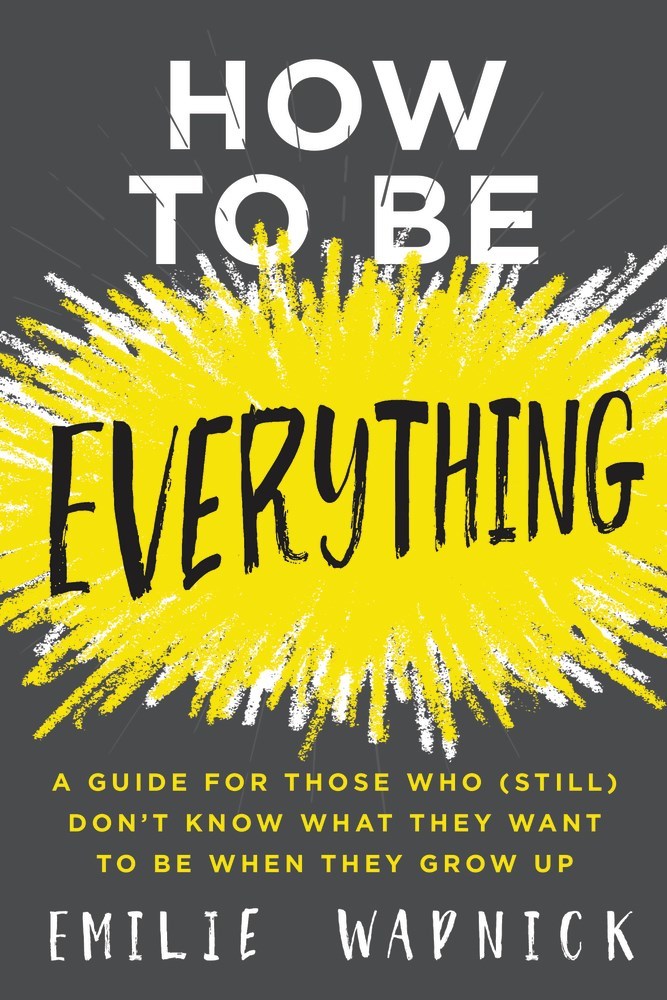
Emilie Wapnick’s How to Be Everything begins by challenging that demand. The book is aimed at people Wapnick calls multipotentialites: people with many interests and creative pursuits who may combine several fields at once, move from one field to another over time, or construct a working life that does not fit a single professional identity. Wapnick had already introduced the idea to a large audience in their 2015 TED talk about people who do not have one true calling, but the book goes considerably further than the reassuring message that it is acceptable to want more than one thing.
Its real subject is design. Once a reader stops assuming that one permanent vocation is mandatory, a harder question appears: how can a life with many interests actually work? Wapnick answers with a practical framework built around money, meaning, variety, four different work models, systems for managing multiple projects, and strategies for dealing with fear and social misunderstanding. The book is strongest when it treats multipotentiality not as an excuse to chase every impulse, but as a constraint that requires deliberate choices about time, energy, work structure, and financial sustainability.
That makes How to Be Everything more disciplined than its title initially suggests. It does not promise that anyone can literally do everything. Instead, it argues that people whose identities and interests resist specialization can build coherent lives without forcing themselves into a single occupational story—and that doing so requires selection, sequencing, experimentation, and compromise.
The Problem the Book Is Built to Solve
Wapnick begins with a personal experience that captures the emotional problem behind the book. After deciding to attend law school, they encounter a former acting teacher who remembers another earlier plan: Wapnick had been interested in filmmaking. The exchange produces the familiar embarrassment of someone whose ambitions seem to change too often. If filmmaking once mattered, why law now? If law matters now, was the filmmaking phase evidence of confusion?
For Wapnick, the difficulty is not merely that interests change. It is that the culture surrounding education and work often encourages people to interpret changing interests as a failure to discover their real vocation. Childhood allows a person to imagine many futures, but adulthood increasingly rewards a clean answer: doctor, lawyer, engineer, artist, professor, entrepreneur. A coherent identity is expected to narrow.
Wapnick calls the assumption behind this expectation the Myth of the One True Calling. In this model of adulthood, everyone supposedly has one profession, purpose, or passion that fits them more authentically than all the others. The central task of career development is therefore discovery: find the correct calling, commit to it, and remain committed long enough to build a satisfying life.
The problem is that Wapnick’s own experience does not fit that pattern. They describe repeatedly becoming fascinated by a subject, immersing themselves in it, learning rapidly, reaching a meaningful level of competence, and then feeling the pull of something different. What looks from the outside like failure to commit can feel from the inside like a recurring pattern of genuine engagement followed by genuine completion or transformation.
To describe people with this pattern, Wapnick uses the word multipotentialite. The term refers broadly to someone with many interests and creative pursuits rather than one dominant lifelong specialization. Wapnick also mentions related labels such as polymath, Renaissance person, scanner, and jack-of-all-trades, but does not insist that readers adopt any particular identity. The term is meant to supply language for a recurring experience, not to function as a diagnosis.
One of the book’s important refinements is that multipotentialites do not all behave in the same way. Wapnick places them on a simultaneous–sequential spectrum. Someone near the simultaneous end may prefer several active projects, jobs, or businesses at once. Someone near the sequential end may immerse deeply in one field for years before moving toward another. A person can therefore be multipotentialite without constantly juggling ten projects.
This distinction becomes essential later because the book’s career models solve different versions of the same underlying problem. A person who needs daily variety may require a fundamentally different work structure from someone who enjoys long periods of immersion followed by reinvention. Multipotentiality, as Wapnick uses it, describes plurality of serious interests, not one mandatory pattern of behavior.
The opening chapter also identifies three practical problems that the rest of the book must solve. The first is work: how can someone with many interests earn a sustainable living without feeling permanently trapped? The second is productivity: how can a person make real progress when several projects compete for attention? The third is self-esteem: how can someone stop interpreting unfinished projects, changing interests, beginner status, or unconventional work arrangements as evidence of personal failure?
This is why the book cannot end with the sentence “there is nothing wrong with you.” That reassurance is psychologically important, but it does not solve the logistical problem created by finite time, limited money, unequal energy, and competing commitments. Once the reader accepts the possibility that one career need not contain an entire identity, the book has to explain how that freedom can be organized.
Why Wapnick Thinks Multipotentiality Can Be a Strength
After reframing multiplicity as something other than failure, Wapnick makes a stronger claim: having several interests can produce useful abilities. Chapter 2 is built around five qualities that Wapnick calls multipotentialite “superpowers.” The playful term is memorable, although the later analysis of the book needs to distinguish these proposed advantages from scientifically demonstrated traits.
The first is idea synthesis. A person who has spent meaningful time in several fields can sometimes combine concepts that specialists working within only one field might not naturally connect. Wapnick uses the founders of Twig Terrariums, Michelle Inciarrano and Katy Maslow, to show how botanical knowledge, visual design, miniature storytelling, craft, and entrepreneurship can become one distinctive business. Their value lies partly in the combination.
This kind of synthesis is central to Wapnick’s conception of multipotentiality. Different interests do not have to remain isolated hobbies competing for space. They can become raw material for new occupations, businesses, products, or ways of solving problems. The connection between fields may matter more than mastery of one isolated field.
The second claimed advantage is rapid learning. Wapnick argues that people who repeatedly enter unfamiliar domains can become experienced beginners. They learn how to identify important resources, tolerate initial confusion, ask useful questions, transfer concepts from previous interests, and move through the early stages of competence without being surprised by the discomfort involved.
The claim is not that a multipotentialite magically learns every subject faster than everyone else. Wapnick’s deeper point is behavioral: repeated experience beginning again can reduce some of the psychological friction associated with beginning. The person learns not only a new topic but also something about how they themselves learn.
The third “superpower” is adaptability. Someone accustomed to moving between roles may be comfortable changing responsibilities, shifting context, or operating in uncertain environments. A person who has worked as a designer, teacher, marketer, programmer, or performer may not see occupational boundaries as fixed in the same way as someone whose identity has been tightly attached to one role.
Wapnick’s fourth advantage is big-picture thinking. Experience across domains can make relationships between systems more visible. A narrow expert may possess far greater depth in one area, but a generalist or interdisciplinary thinker may notice that a technical problem also has organizational, psychological, economic, or communication dimensions.
The fifth claimed strength is relating and translating. People who have spent time in different professional cultures may become useful intermediaries. They can understand enough of several vocabularies to explain one group to another, connect collaborators, or communicate technical ideas in language outsiders can use.
These five advantages allow Wapnick to reject a simplistic opposition between generalists and specialists. The book does not argue that expertise is unnecessary. Many tasks clearly require prolonged specialization, and Wapnick acknowledges that deep technical skill matters. The argument is instead that specialization is not the only source of value. Some problems are solved through depth, while others benefit from synthesis, translation, adaptability, or a wider systems view.
Historical figures such as Leonardo da Vinci and Benjamin Franklin help Wapnick dramatize the point. They are recognizable examples of people whose identities crossed disciplinary boundaries, and the book later supplies more names in its appendix. Their rhetorical purpose is to show that breadth is compatible with substantial achievement.
Yet the book’s most useful implication does not depend on proving that multipotentialites are inherently more innovative than specialists. It is enough to recognize that a person’s previous interests may remain useful even after they move into another field. Knowledge accumulated in one phase of life can become a resource in another, turning what initially appears to be a scattered biography into a source of unusual combinations.
Money, Meaning, and Variety: The Three Tests for a Sustainable Life
Once Wapnick has established that plurality can be legitimate and potentially useful, the book turns toward design. The central question is no longer “What single job are you meant to have?” but “What conditions must your life contain in order to work for you?” Wapnick reduces those conditions to three recurring requirements: money, meaning, and variety.
Money appears first because a career system that ignores material reality is not sustainable. Wapnick asks readers to think concretely about how much income they actually need rather than treating money either as the only measure of career success or as something enlightened people should disregard. Housing, food, debt, dependents, healthcare, savings, travel, leisure, and preferred standards of living all influence what counts as enough.
The important shift is from abstract salary comparison to personal requirements. A career that looks financially modest may be entirely viable for one person and impossible for another. Conversely, someone may discover that the income level they had assumed was necessary is partly attached to expectations they do not value very much. Money becomes a design variable rather than a moral judgment.
The second requirement is meaning. Wapnick does not assume that meaning must come from one grand mission. Instead, readers are encouraged to look for recurring Whys beneath activities they have loved. Someone may discover that apparently unrelated interests repeatedly involve teaching, building systems, helping people understand complexity, performing, solving puzzles, advocating for others, creating beauty, or bringing groups together.
This move is particularly important for sequential multipotentialites. Two careers may look completely unrelated at the level of job title while satisfying the same underlying motivation. A shift from filmmaking to law, for example, need not represent a complete abandonment of one identity if both activities engage some deeper attraction to storytelling, problem-solving, collaboration, persuasion, or complex systems.
Meaning also need not be confined to paid work. One of the book’s persistent challenges to conventional career thinking is that a job does not necessarily have to supply every important part of a person’s identity. A stable occupation can fund and protect meaningful activities that happen elsewhere, while an entrepreneurial venture may combine meaning and income more directly.
The third requirement is variety, and this is where Wapnick’s framework becomes distinctly multipotentialite. Different people require different quantities and rhythms of change. A highly interdisciplinary occupation may provide enough variety on its own, while someone else may need three separate roles. Another person may prefer almost no simultaneous variety but require the freedom to reinvent their career every several years.
There is therefore no ideal number of projects. A person who becomes overwhelmed by excessive switching should not treat constant multitasking as proof of authentic multipotentiality. Likewise, someone who needs frequent shifts should not assume that dissatisfaction with a narrowly repetitive role means they are incapable of commitment. The task is to calibrate how much variety produces engagement without creating chaos.
Wapnick’s Perfect Day exercise expands the decision beyond job titles. Readers are asked to imagine the structure of a satisfying ordinary day: where they work, how much time they spend alone or with people, whether they move around or remain in one place, how much autonomy they possess, when they do creative work, what kind of pace they prefer, and what their non-work life looks like.
This matters because two people who love the same subject may need completely different careers. One may want stability, colleagues, regular hours, and predictable income. Another may prefer freelance work, shifting projects, and geographic freedom. Career satisfaction therefore depends not merely on what a person does but on the structure through which they do it.
Money, meaning, and variety become the book’s main testing mechanism. Every career model that follows can be evaluated against those three needs. The reader is not told to find the most exciting possible job. They are asked to construct an arrangement that supports their material life, supplies enough significance, and gives them an appropriate amount of variation.
The Four Multipotentialite Work Models
Part II is the practical center of How to Be Everything. Wapnick presents four broad ways a multipotentialite can structure paid work, each designed for a different relationship between interests, income, time, and identity. The models are not permanent personality types, and the book repeatedly allows readers to mix them, modify them, or move between them as circumstances change.
The four models also reveal why the earlier simultaneous–sequential distinction matters. Some arrangements combine several interests inside one job, some distribute them across several roles, some deliberately separate paid work from other passions, and some accommodate multiple interests across different stages of life.
The Group Hug Approach: One Multifaceted Career
The Group Hug model brings several interests together inside one job, role, organization, or business. Instead of asking which interest should defeat the others, the reader looks for a professional container broad enough to use several of them at once.
One route is to enter a field that is interdisciplinary by nature. Urban planning, for example, can involve design, policy, infrastructure, sociology, economics, environmental questions, public communication, and politics. A person interested in several of these areas may not need to choose among them if the field itself already exists at their intersection.
Wapnick uses people such as Jimena Veloz and science communicator Katy Mould to illustrate how apparently separate interests can converge inside professional work. The larger lesson is that jobs are often more complicated than their titles suggest. A person searching only by familiar occupational categories may miss roles that combine the activities they actually enjoy.
A second route is to find an interdisciplinary niche within a broader profession. Someone may begin inside a conventional field and gradually move toward a corner of it that draws on additional interests. A lawyer might specialize in technology, an engineer might become heavily involved in education, or a scientist might move toward communication and public engagement.
A third route is to work for a small or flexible organization. Smaller workplaces often require employees to take on several functions because responsibilities are not divided among many specialists. A person hired for one role may eventually contribute to strategy, writing, operations, events, design, hiring, or client work.
Wapnick’s example of Margaux Yiu shows how an existing position can expand when an employee develops credibility and identifies useful work outside the original job description. The key is not to demand total freedom immediately, but to become valuable enough that additional responsibility becomes plausible.
Entrepreneurship offers the broadest version of the Group Hug model. Wapnick uses the term Renaissance Business for a venture designed to engage several interests and abilities. Entrepreneurship can permit the founder to combine product creation, branding, marketing, teaching, writing, design, management, performance, or community-building inside one enterprise.
The attraction is obvious, but so is the difficulty. A broad business must still create something customers understand and will pay for. Multipotentiality does not eliminate the need for positioning, execution, operational discipline, or commercial focus. The business may contain many interests internally while presenting a much simpler promise externally.
Wapnick’s exercises therefore push the reader beyond fantasy. The process begins by listing interests, eliminating those that no longer feel alive, identifying clusters, experimenting with unusual intersections, researching existing interdisciplinary fields, and imagining possible businesses or organizational settings. The reader then tests possible directions against money, meaning, variety, and the Perfect Day rather than choosing the combination that merely sounds most original.
The Group Hug model is the clearest expression of Wapnick’s idea of “smooshing” interests together. It works best when the interests reinforce rather than sabotage one another and when the resulting role has a coherent economic function. Its promise is not infinite variety but integration.
The Slash Approach: Several Parallel Income Streams
The Slash model keeps interests more separate. Instead of combining them within one profession, the person maintains two or more part-time jobs, freelance practices, businesses, or other income-producing roles at the same time.
Wapnick uses Morgan Siem as an example of someone whose working life includes distinct activities rather than one unified occupational identity. Nonprofit work, freelance marketing, and aerial-silks performance do not need to become one hybrid profession. Each can remain different while contributing something to the larger life.
This is one of the book’s most important distinctions. A person does not need to force every passion into one elegant interdisciplinary job. Sometimes the more honest design is simply to let different roles remain different.
One slash may provide financial stability while another provides creative meaning. One activity may be solitary and intellectually demanding while another offers social connection. A third may satisfy a physical or performance-related interest that has no obvious relationship to the others.
Wapnick connects this arrangement with the idea of a portfolio career, but also recognizes a crucial distinction between intentionally choosing several roles and being forced into multiple precarious jobs because no single job provides enough income. The surface appearance may be similar—a person has several jobs—but the experience can be radically different depending on autonomy, compensation, scheduling, and necessity.
That distinction prevents the Slash model from being romanticized too easily. The attractive version offers flexibility, control, variety, and the ability to preserve specialized interests without combining them artificially. The unattractive version can produce administrative burden, fragmented schedules, lack of benefits, unstable income, exhaustion, and constant switching.
The book nevertheless shows why the intentional version can suit some multipotentialites extremely well. A person who wants substantial engagement in several distinct domains may feel constrained inside even a broad interdisciplinary job. Parallel roles create clearer boundaries and allow each interest to retain its own identity.
Transitioning toward a Slash arrangement does not necessarily require quitting everything at once. Wapnick suggests starting with a marketable skill, accepting a part-time opportunity, experimenting with freelance work, or allowing a side activity to expand gradually. The model can emerge incrementally rather than through one dramatic career leap.
The accompanying exercises ask readers to identify skills people might pay for, imagine possible income streams, and construct combinations of roughly two to five roles. These combinations are then tested against the same questions introduced earlier: Does the arrangement provide enough money? Does it contain enough meaning? Does it create the desired variety? Does its actual schedule resemble the life the reader wants?
That last question matters because the Slash model can look exciting conceptually while feeling terrible operationally. Three fascinating jobs that all require the same hours are not a viable portfolio. The model succeeds only when the pieces fit not just psychologically but logistically.
The Einstein Approach: A Good-Enough Job Plus Other Passions
The Einstein model is named after Albert Einstein’s period working at the Swiss patent office while pursuing scientific work outside the occupation that paid his bills. Its core idea is deliberately unfashionable in a culture that often treats work as the primary source of identity: your job may not need to contain all of you.
Wapnick draws on Barbara Sher’s concept of a Good Enough Job. Such a job is not necessarily a calling, but neither is it simply something to endure at any cost. It should provide enough income, be sufficiently tolerable or interesting, and leave enough time and energy for the person’s other pursuits.
The distinction between time and energy is especially important. A job can consume forty hours a week yet leave a person mentally fresh enough to write, perform, study, volunteer, build a business, or pursue other projects. Another job might occupy fewer hours but create so much emotional depletion that the remaining time is almost useless.
Wapnick therefore encourages readers to examine the type of energy their paid work demands. If the job and the outside project require exactly the same cognitive or emotional mode, the combination may be exhausting. A person who writes commercially all day may struggle to write fiction at night, while a job involving different mental or physical demands might leave that same creative capacity more available.
April Vomfell’s story illustrates the value of narrowing paid work in order to create space elsewhere. The important insight is that career optimization does not always mean making the job itself more expansive. Sometimes a narrower job creates a larger life.
The Einstein model also challenges the expectation that every passion should be monetized. Turning an interest into paid work can change the relationship to it. Deadlines, clients, commercial demands, competition, and dependence on income can transform something that was once playful or intrinsically motivated.
For some multipotentialites, refusing to monetize an interest is therefore not a failure of ambition. It may be the strategy that protects the interest. A person can take music, writing, research, craft, sport, activism, or community work extremely seriously without requiring it to become a primary source of income.
Wapnick extends the model beyond employment through the idea of a Good Enough Business. Self-employment does not have to become a grand expression of every passion either. A relatively straightforward business can generate income while preserving autonomy and leaving psychological space for other pursuits.
The book also recognizes that different skills have different market values. A person may possess several genuine interests but discover that one produces far more income per hour than another. The Einstein approach allows that difference to become an advantage rather than a betrayal: the highly marketable skill can finance the rest of the life.
This model is among the book’s strongest because it removes pressure from the relationship between identity and employment. Instead of asking one occupation to deliver salary, status, community, creative expression, purpose, novelty, and personal development simultaneously, the reader can distribute those needs across life.
The Phoenix Approach: One Career at a Time
The Phoenix model is designed for people closer to the sequential end of Wapnick’s spectrum. These readers may not want several active careers at once. They may prefer to immerse themselves deeply in one field, remain there for years, and eventually move toward something substantially different.
The phoenix metaphor captures death and renewal. A career can be meaningful without being permanent. Leaving it does not necessarily prove that entering it was a mistake.
Wapnick uses stories of people who pursued advanced study or demanding professional tracks and eventually reached a point at which the path no longer fit. The “abandoned Ph.D.” pattern is especially useful because it challenges the idea that investment creates an obligation to continue indefinitely. Someone may spend years building expertise, receive real value from the experience, and still reach a legitimate endpoint.
The chapter returns to the idea of underlying Whys. A person’s successive careers may appear unrelated from the outside while fulfilling similar deeper motivations. What changes is the form through which those motivations are expressed.
Wapnick’s own movement through filmmaking and law helps illustrate this point. The occupational identities differ, but the person moving between them is not necessarily becoming someone entirely different. Curiosity, problem-solving, persuasion, storytelling, or systems thinking can recur under different labels.
The Phoenix model therefore treats career change as something that can be planned rather than postponed until collapse. Drawing on Pamela Slim’s “loathing scale,” Wapnick encourages readers to notice dissatisfaction before they reach a state of complete burnout or desperation. The goal is not to flee at the first difficult week, but to distinguish ordinary frustration from a deeper completion of the path.
Transition strategies include exploring the next field while still employed, developing relevant skills gradually, talking with people already doing the work, using existing networks, deliberately expanding those networks, volunteering, taking courses, and emphasizing transferable abilities. The new career does not have to begin with a dramatic break from the old one.
Wapnick also discusses Charlie Hoehn’s idea of doing strategically chosen work for free as a way to demonstrate value, gain experience, or build relationships. That tactic can sometimes lower barriers to entry, but it is highly dependent on context. Someone with savings, spare time, or family support has far greater ability to provide unpaid labor than someone already struggling to meet basic obligations, and free work can easily become exploitation when the expected exchange is vague.
The book also advises readers to leave roles responsibly. Reinvention is not an excuse to disregard commitments, damage relationships, or disappear without planning. A graceful exit preserves both professional reputation and the possibility that earlier skills or connections may become useful again.
For entrepreneurs, the sequential version can become serial entrepreneurship. Someone may build one business, lose interest after reaching a natural endpoint, and later create another. Tina Roth Eisenberg appears as an example of a career whose ventures evolve and accumulate rather than fitting one permanent business identity.
The Phoenix exercises include imagining “ten lives” and exploring which of those possible futures creates genuine curiosity. Instead of deciding that one imagined life must become the final answer, the reader selects a small number of possibilities worth investigating and identifies concrete experiments that would provide information.
The model ultimately changes the meaning of commitment. Commitment can be serious without being lifelong. A person can devote years to one path, learn deeply, contribute meaningfully, and then decide that the next period of life requires something else.
How the Models Can Be Mixed, Tested, and Changed
Wapnick does not present the four models as boxes into which readers must classify themselves forever. They are design patterns. A person might use an Einstein structure while building a side business, shift toward Slash once that business generates income, turn several activities into a Group Hug company, and later become Phoenix-like by leaving the entire arrangement for a new field.
Life stage also changes what is possible. A highly experimental portfolio may work well in one decade and become undesirable after children, health changes, financial obligations, relocation, or changing priorities. A stable Einstein job may later feel restrictive, while an entrepreneurial Group Hug arrangement that once seemed exciting may eventually become exhausting.
This flexibility is why money, meaning, variety, and the Perfect Day remain more important than allegiance to a model. The models are tools for satisfying requirements, not identities to defend. Wapnick’s method works best when readers treat career design as iterative: form a hypothesis about a workable life, test it, notice what the experience actually feels like, and adjust.
A Productivity System for Too Many Interests
After designing a work structure, the book confronts a different problem: even the right structure can fail if too many interests compete for finite attention. Wapnick therefore refuses to offer one universal productivity routine and instead builds a customizable system around project selection, scheduling, stopping rules, and execution.
The purpose is not to maximize the number of active pursuits. It is to help readers give real attention to the things that matter without interpreting every temporary pause as abandonment.
Choosing Priority Projects and Waiting-in-the-Wings Projects
Wapnick begins with a simple constraint: a person may have many legitimate interests, but they cannot necessarily work seriously on all of them at the same time. The solution is to distinguish Priority Projects from Projects Waiting in the Wings.
Priority Projects receive meaningful attention now. Waiting-in-the-Wings projects remain valid but are intentionally postponed. This distinction is psychologically useful because postponement no longer has to mean rejection.
For a multipotentialite, that difference can reduce the anxiety of choosing. A conventional productivity system may say, “Pick the most important thing and eliminate the rest.” Wapnick instead says, in effect, “Pick what matters now and preserve permission to return to other interests later.”
This system also acknowledges that priorities change. A project may be central for six months, reach an endpoint, and then create room for something that has been waiting. The portfolio evolves without requiring every new curiosity to become an emergency.
Wapnick nevertheless recognizes that curiosity can sometimes become distracting before a new project has earned priority status. Tinkering time provides a compromise. A reader can give a new interest a limited experimental space—researching it, trying a lesson, making a prototype, reading introductory material—without allowing it to displace established commitments immediately.
The distinction between exploration and commitment is crucial. A multipotentialite does not need to suppress curiosity, but curiosity also does not automatically deserve control of the calendar. Tinkering lets the reader gather information before promoting an interest into a major project.
Finding Time: Fluid Schedules, Prepared Schedules, and Project Immersion
Once priorities are chosen, Wapnick turns to scheduling. Different multipotentialites need different temporal structures, partly because the simultaneous–sequential spectrum affects how frequently someone enjoys switching tasks.
A Fluid Schedule allows the person to choose among current priorities according to energy, interest, urgency, or context. This can work well for someone who enjoys variety and has enough internal discipline to prevent exciting new tasks from permanently displacing difficult important ones.
A Prepared Schedule creates more predetermined structure. Specific projects receive particular blocks of time, which reduces the number of decisions required during the day. This can protect work that matters but does not always feel urgent.
Project Immersion gives one project most of the available attention for a limited period. A person may spend days or weeks focused intensely on a launch, performance, course, manuscript, client project, or technical challenge before returning to other interests.
Extended Project Immersion stretches that pattern over a longer period. This approach is particularly compatible with sequential multipotentiality because it permits genuine depth without requiring a lifetime commitment.
Wapnick does not declare one schedule superior. The point is to observe how the reader actually works. Someone who becomes restless after two hours may need more switching, while someone who takes hours to enter deep concentration may find frequent transitions destructive.
Energy again matters alongside clock time. A calendar can appear balanced while leaving the most demanding work perpetually assigned to periods when the person is exhausted. Effective scheduling therefore requires knowing not only when time is available but what kind of attention is available during that time.
Personal End Points, Resistance, and Knowing When to Quit
Perhaps the most distinctive part of Wapnick’s productivity framework is the idea of a Personal End Point. Many people assume a project is legitimate only if it reaches the culturally recognized endpoint: the degree is completed, the business becomes permanent, the hobby reaches expert level, or the person remains in the profession indefinitely.
Wapnick argues that an individual may have a different reason for pursuing something. The desired endpoint might be learning enough to answer a question, performing once in public, building one object, reaching conversational fluency, mastering a particular technique, completing a personal challenge, or simply experiencing what participation in the field feels like.
Once that personal objective has been achieved, declining interest may not represent failure. The project may have done what the person needed it to do.
The difficulty is that loss of interest can also mask fear. Wapnick borrows Steven Pressfield’s concept of Resistance to describe the avoidance that appears when meaningful work becomes uncomfortable. A person may claim to be “done” precisely when a project begins demanding vulnerability, sustained practice, public exposure, difficult revision, or the possibility of failure.
Multipotentialites therefore need to ask whether they have reached a true endpoint or merely encountered the part of the work where novelty disappears. Wapnick does not provide a perfect objective test because there is none. The reader has to examine the pattern, the original goal, emotional reactions, and whether the impulse to stop resembles genuine completion or escape.
This distinction protects the philosophy from an obvious weakness. If every loss of enthusiasm were automatically interpreted as evidence that an interest had run its course, “multipotentiality” could become a flattering explanation for chronic avoidance. Personal End Points allow quitting, but they also require enough self-awareness to know what one is quitting and why.
Small Steps, Timers, Flow, Accountability, and Zero-Progress Days
The rest of Chapter 8 gathers execution tools that are more familiar but still useful within Wapnick’s framework. One is reducing an intimidating project to the smallest concrete next action. “Write a book” is psychologically enormous; “open the draft and revise the first paragraph” is actionable.
Timers and Pomodoro-style work sessions can lower the emotional cost of beginning. A person does not need to promise an entire day of concentration; they need only enter the work for a defined interval. Once momentum develops, the session may continue naturally.
Wapnick also discusses flow, the absorbed state in which attention becomes deeply engaged with a demanding but manageable task. The practical implication is not that every project should feel effortless. Meaningful work often requires creating conditions in which difficulty is high enough to be absorbing without becoming so chaotic that attention collapses.
Another useful distinction concerns creating, connecting, and consuming. These modes can compete with one another. Research, networking, and reading may all support creative work, but they can also become respectable substitutes for making something. A personal productivity system needs to protect creation rather than allowing preparation to expand indefinitely.
Accountability can provide external structure. Commitments to collaborators, clients, groups, deadlines, or other people can help when internal enthusiasm fluctuates. This is particularly useful for readers who enjoy beginning projects but struggle with the less stimulating middle stages.
Finally, Wapnick asks readers to notice progress that does not initially look dramatic. Some days are devoted to solving a small technical problem, recovering energy, organizing materials, having one useful conversation, or identifying why something is not working. These days may feel unproductive compared with a visible finished result, but sustained projects are built partly from such small movements.
The chapter’s larger achievement is to make productivity subordinate to life design rather than turning productivity into the goal. The reader is not supposed to become efficient at doing everything. The system exists to help a person decide what deserves attention now, protect space for it, and recognize when the relationship to a project should change.
Fear, Confidence, and People Who Do Not Understand
Even a workable career structure and productivity system may not solve the emotional problem that opened the book. A person can understand intellectually that a nonlinear life is legitimate while still feeling guilty, fraudulent, behind, inconsistent, or embarrassed whenever other people ask for a simpler story.
Chapter 9 therefore moves from external design to internal and social friction. Wapnick’s advice is deliberately reassuring, but the problems it addresses are real: changing direction can feel like wasting earlier work, repeated beginnings require repeated incompetence, and unconventional careers are harder to explain than familiar occupational identities.
Guilt, Beginner Discomfort, Perfection, and Impostor Syndrome
One common source of guilt is losing interest in something that once mattered deeply. People often interpret that shift as evidence that the earlier period was wasted. Years of study, equipment, training, contacts, or work can feel difficult to justify once the person changes direction.
Wapnick resists that interpretation. Skills can transfer, dormant interests can return, and experiences can influence later work in ways that were impossible to predict when they began. An abandoned interest may leave behind technical ability, confidence, relationships, aesthetic taste, knowledge, or a new way of thinking.
The book does not claim that every investment will eventually prove useful. Its more defensible point is that usefulness is broader than continuation. An experience can matter even when it does not become a permanent career.
Repeated beginner status creates another difficulty. Every new field contains a period when the learner is slow, uninformed, and dependent on people who know more. Multipotentialites who repeatedly enter new areas encounter this phase again and again.
That can be uncomfortable for adults who have already achieved competence elsewhere. Someone accustomed to being respected in one field may find it humiliating to become visibly inexperienced in another. Wapnick reframes beginnerhood as a recurring stage rather than a personal defect.
A related fear is not becoming the best. Specialization culture often equates legitimacy with exceptional depth, making the generalist feel permanently inferior to experts. Wapnick argues that not every useful contribution requires world-class mastery. Synthesis, collaboration, translation, and competent execution can matter even when another person knows more about each individual component.
This does not mean standards disappear. A surgeon, engineer, lawyer, therapist, or other professional still needs whatever expertise competent practice requires. Wapnick’s point is that a person need not become the leading expert in every field they engage with for that engagement to be meaningful.
The book also addresses impostor feelings. Wapnick describes experiencing them even after the visibility created by the TED talk, illustrating how external validation does not necessarily eliminate internal doubt. Success can create its own pressure because the person now fears being exposed as less certain, accomplished, or coherent than the public image suggests.
For a multipotentialite, impostor feelings can be intensified by the difficulty of presenting a conventional professional narrative. A résumé full of transitions may look unusual. A person may know enough to contribute meaningfully while remaining aware of deeper specialists in every relevant field.
Wapnick’s response is not to wait for total confidence before acting. Confidence often develops after repeated action, evidence of competence, and familiarity with discomfort. The multipotentialite’s challenge is partly to tolerate being unfinished.
Handling Critics and Explaining What You Do
The social problem becomes especially visible when other people do not understand the career design. Parents, partners, friends, colleagues, or mentors may worry that frequent change indicates irresponsibility, that several jobs indicate instability, or that an unconventional plan threatens financial security.
Wapnick recommends deciding which relationships deserve explanation. Not every skeptical acquaintance requires a defense. Some people are central enough that a thoughtful conversation matters, while others may simply need a short answer.
When explanation is worthwhile, Wapnick advises presenting multipotentiality with confidence rather than apology. If a person describes their life as embarrassing confusion, listeners are likely to interpret it that way. If the same person can explain how several roles fit together, what each provides, and what the larger plan is, the arrangement becomes easier to understand.
The book also advises patience. Someone who has spent decades believing in one conventional career path may not immediately understand a portfolio arrangement or a planned reinvention. Concern can sometimes reflect care rather than hostility.
At the same time, persistent discouragement may require boundaries. A person whose goals are continually mocked or dismissed may need to limit how much access a critic has to unfinished plans. Supportive communities become valuable precisely because unconventional choices are easier to sustain when they are not constantly treated as defects.
The familiar question “What do you do?” receives special attention. For someone with one stable title, the question is easy. For someone with several businesses, rotating projects, or a sequence of careers, it can become an unwanted demand to reduce a complex life to one socially recognizable label.
Wapnick offers several ways to respond. A person can name several activities directly, choose a broad umbrella identity, describe the effect of their work rather than the job title, or tailor the answer to context. The objective is not to discover the one perfectly accurate label but to communicate enough for the conversation at hand.
The advice is useful as long as it is not mistaken for a complete solution to every social constraint. Confidence cannot erase financial dependency, family obligations, cultural expectations, workplace hierarchy, or unequal power. Sometimes the person who “doesn’t understand” also controls resources the reader needs. In those situations, career design requires negotiation and risk management as well as self-acceptance.
How the Book Ends—and What the Appendices Add
Wapnick ends by returning to law school, the setting that had earlier seemed to symbolize another abrupt change in direction. In a music-policy course, an interdisciplinary team project brings together law, music, entrepreneurship, business, and creative work. What initially looks strange because it crosses categories becomes powerful precisely because of that combination.
When the team enters an entrepreneurial competition, a professor advises them not to hide the project’s unusual nature but to foreground it. The story becomes the book’s final metaphor: the trait that seems hardest to explain may also be the feature around which the work should be designed.
The conclusion therefore moves beyond tolerating multipotentiality. Wapnick encourages readers to lead with it. Instead of constructing a conventional life and squeezing multiple interests into the margins, the reader can deliberately choose work models, schedules, and projects that make plurality part of the structure.
This conclusion circles back to the opening problem. At the beginning, changing interests create shame because they prevent Wapnick from offering a stable answer to what they are going to become. By the end, the goal is no longer to find the missing answer. The goal is to construct a life in which the need for one answer has lost its authority.
Appendix A reinforces the argument rhetorically through a list of well-known multipotentialites. Figures such as Maya Angelou, David Bowie, Richard Branson, Charles and Ray Eames, Benjamin Franklin, Galileo Galilei, Hedy Lamarr, Beatrix Potter, Patti Smith, and others demonstrate that crossing domains is hardly unprecedented.
The appendix is useful as permission but weak as evidence. Famous people are memorable precisely because they are unusual, and a selected list of high achievers cannot demonstrate what typically happens to an ordinary person with multiple interests. Their value is illustrative: they show that serious achievement and multidimensional identity are compatible, not that breadth reliably produces greatness.
Appendix B is more practically useful. It lists interdisciplinary fields such as artificial intelligence, bioethics, bioinformatics, creative coding, design, education, event management, filmmaking, human geography, instructional design, integrative medicine, marketing, publishing, sustainable development, urban planning, and user-experience work.
The list strengthens the Group Hug model by reminding readers that interdisciplinary careers are not always inventions waiting to be created. Many established fields already sit between older disciplines. Someone who feels forced to choose between two interests may sometimes discover that a profession already exists at their intersection.
The appendices therefore perform different jobs. One normalizes multipotentiality through recognizable biographies, while the other expands the reader’s practical search space. Neither changes the framework established in the main text, but both reinforce Wapnick’s central claim that a multifaceted identity can be designed around rather than hidden.
How the Whole Framework Fits Together
The book works best when understood as a sequence rather than a collection of career tips. Its first stage is identity permission: the reader considers the possibility that repeated interests and career changes may describe a legitimate pattern rather than a defect. Without that permission, every later decision is distorted by the assumption that the real task is still to discover the missing permanent calling.
The second stage is personal criteria. Money, meaning, variety, and the Perfect Day prevent the new freedom from becoming abstract. They force the reader to ask what life must actually provide.
The third stage is structural design. Group Hug, Slash, Einstein, and Phoenix are four different ways of arranging the relationship between paid work and multiple interests. No one model solves the problem universally because multipotentialites differ in their appetite for switching, financial needs, energy, risk tolerance, and preferred level of integration.
The fourth stage is attention management. Even a brilliantly designed career will fail if every interest becomes an immediate priority. Chapter 8 therefore introduces selection, scheduling, Personal End Points, and execution tools.
The fifth stage is psychological and social maintenance. The person still has to cope with guilt, uncertainty, beginner status, outside skepticism, and the difficulty of explaining a nonlinear identity. Chapter 9 exists because practical structure does not automatically eliminate emotional conflict.
This architecture is what makes How to Be Everything more substantial than the slogan “you do not have to pick one thing.” If that were the whole message, the book could have ended after Chapter 1. Instead, Wapnick spends most of the text dealing with what happens after permission: how choices are made, how time is allocated, how income is protected, and how the system changes when reality does not match the initial plan.
There is also a productive tension running through the book. Wapnick celebrates multiplicity, but the practical framework repeatedly introduces limits. The reader must decide how much money is enough, which projects are priorities, which interests can wait, what a Personal End Point looks like, which work structure fits current circumstances, and how much variety is actually sustainable.
In that sense, the book is not really an argument against choosing. It is an argument against treating one irreversible lifetime choice as the only legitimate form of adulthood. Multipotentialites still choose constantly; they simply make choices at different scales and for different durations.
Is a “Multipotentialite” a Psychological Type or a Useful Identity?
The word “multipotentialite” is central to Wapnick’s book, but readers should be careful about what kind of category it represents. Wapnick’s current explanation of the terminology presents it as a useful word for people with many interests and creative pursuits while also acknowledging that related language has a longer history.
The older term multipotentiality appeared in career-development and gifted-education literature before Wapnick popularized the modern community identity. A review by Kathy J. Rysiew on multipotentiality, giftedness, and career choice shows that researchers had already used the concept when discussing people whose abilities and opportunities could make occupational choice unusually broad.
That earlier literature is not identical to Wapnick’s definition. Academic discussions often centered on high-ability individuals who appeared capable of succeeding in several different domains. Wapnick’s concept is broader and more experiential: the defining feature is not exceptional measured aptitude across multiple fields but recurring interest in several pursuits.
This difference matters because readers can easily turn an appealing identity into an overly rigid psychological category. Someone who recognizes themselves in the book may begin treating “multipotentialite” as an innate type that explains every difficulty, preference, and career decision.
Wapnick generally avoids making the label clinical, and the book explicitly allows readers not to use it. That flexibility should be preserved. The concept is most useful as descriptive language for a pattern, not as a diagnosis with a validated test, fixed boundaries, or guaranteed traits.
Seen this way, the label performs a valuable psychological function. It converts what the reader may have interpreted as private inconsistency into a recognizable pattern shared by others. Naming a pattern can reduce shame, improve communication, and make alternative strategies easier to imagine.
The danger appears when the identity becomes self-sealing. A person might begin interpreting every moment of boredom as proof that they are “supposed” to leave, every failure to specialize as authenticity, or every new interest as an obligation to pursue it. The book’s own productivity chapters actually resist this interpretation by emphasizing priorities, endpoints, and constraints.
The same caution applies to the five “superpowers.” Idea synthesis, adaptability, translation, rapid learning, and big-picture thinking are plausible advantages that some people with cross-domain experience may develop. They should not be treated as automatic properties conferred by the label itself.
A person may have many interests yet struggle with synthesis. Another may switch frequently because of external circumstances rather than curiosity. A specialist may be extraordinarily adaptable, while a multipotentialite may resist change in other parts of life.
The strongest version of Wapnick’s concept is therefore modest. “Multipotentialite” names a recurring way some people relate to interests and careers, creates community around that experience, and suggests design strategies that may suit it. The book does not need the term to become a scientific personality type in order for those functions to be useful.
What Current Career Research Supports—and Complicates
Wapnick’s framework does not emerge from academic career psychology, but parts of its broader philosophy overlap with established research. In particular, the idea that careers can be actively constructed around values, identity, adaptability, and changing circumstances has clear parallels with research on self-directed career development.
A major example is the literature on protean careers. An integrative review by Douglas Hall, Jeffrey Yip, and Kathryn Doiron examines careers characterized by self-direction and values orientation, along with psychological resources such as identity awareness, adaptability, and agency.
That research does not prove Wapnick’s four-model framework, nor does it validate the category “multipotentialite.” It does, however, support the broader idea that career success cannot be reduced to progressing indefinitely inside one organization or occupational ladder. People increasingly manage careers through changing roles, identities, learning demands, and values.
Wapnick’s emphasis on experimentation also fits this broader understanding. Career decisions are often made under uncertainty, and a person may discover preferences partly through action rather than through introspection alone. Trying a project, taking a class, talking with practitioners, freelancing, volunteering, or testing a role can generate information that thinking cannot provide in advance.
The book is also right to challenge the simplistic idea of a single predestined passion. A person’s career interests can develop, interact with opportunity, and change over time. Yet rejecting the “one true calling” myth does not mean that the relationship between interests and work is irrelevant.
Research on person–environment fit complicates any interpretation that says the content of work hardly matters. A systematic review and meta-analysis of vocational-interest fit and job satisfaction supports a relationship between how well people’s interests fit their work environments and how satisfied they are.
The sensible conclusion is not that everyone has one hidden calling waiting to be discovered. It is that interests remain one meaningful ingredient in career satisfaction alongside autonomy, competence, values, relationships, working conditions, income, security, and life circumstances.
This is where Wapnick can be placed productively beside Cal Newport. In a contrasting argument about how satisfying careers are constructed, Newport rejects the idea that people should simply identify an existing passion and then search for a job that matches it. His emphasis falls more heavily on developing valuable skills, gaining autonomy, and building meaningful work over time.
Wapnick and Newport are not saying the same thing, but their arguments can correct simplistic versions of each other. Wapnick is especially good at showing why one occupational identity may not be enough for some people. Newport is especially useful against the idea that interest alone guarantees a satisfying career.
Together, the comparison reveals something important about How to Be Everything. Its strongest insights concern structure rather than destiny. Wapnick does not actually need to prove that multipotentialites possess a unique essence. The book becomes useful when it asks what arrangement of work, money, meaning, time, and variety allows a particular person to function well.
The “Perfect Day” exercise is particularly compatible with this more grounded interpretation. It moves the reader away from abstract occupational fantasy and toward actual working conditions. Someone might love the idea of being a chef but hate nights, weekends, heat, hierarchical kitchens, and physical exhaustion. Another might love writing but despise the insecurity of freelancing and prefer to write outside a stable job.
Career fit therefore has several dimensions. Wapnick broadens the search beyond “Which subject do you love most?” Current research broadens it further by emphasizing that careers develop through person–environment interactions rather than identity labels alone.
The best use of the book is consequently not to substitute “I am a multipotentialite” for conventional career guidance. It is to add another diagnostic question: if several interests are genuinely important, what career architecture gives them appropriate space without undermining financial stability or the rest of life?
The Limits of the Framework: Evidence, Privilege, and Structural Constraints
The book’s practical usefulness does not eliminate important limitations. Wapnick is strongest when describing patterns, asking reflective questions, and offering structures readers can test. The argument becomes less secure when illustrative stories begin to sound like evidence that broad claims apply to multipotentialites generally.
A second limitation concerns agency. How to Be Everything is primarily a book about designing one’s own life, but the ability to redesign work is not distributed equally. Income, benefits, labor protections, caregiving, discrimination, geography, immigration status, health, family expectations, and employer power can all determine which models are realistically available.
What Anecdotes Can and Cannot Prove
The book is rich in case studies. Readers meet people who combine careers, build unusual businesses, change industries, pursue art alongside stable work, and create roles that did not previously exist. These examples are one of the book’s strengths because they transform abstract models into imaginable lives.
The weakness is that illustrative success stories are not representative samples. A person who successfully constructed an interdisciplinary business is memorable precisely because the combination worked. The book tells us much less about people who attempted similar arrangements and encountered financial instability, exhaustion, market indifference, or logistical failure.
The same problem appears in the famous-multipotentialites appendix. Leonardo da Vinci, Benjamin Franklin, Maya Angelou, Hedy Lamarr, David Bowie, and other exceptional figures show that breadth and achievement can coexist. They do not establish that breadth causes achievement or that the average multipotentialite enjoys the same advantages.
This distinction is particularly important for the five “superpowers.” Idea synthesis is plausible because cross-domain knowledge can create unusual combinations. Relating and translating are plausible because exposure to multiple professional languages can make communication across boundaries easier.
But the book does not establish that multipotentialites as a category reliably learn faster, adapt better, think more broadly, or synthesize ideas more effectively than comparable specialists. Those qualities may develop through certain experiences, and some multipotentialites may possess them strongly. Presenting them as universal traits would go beyond the evidence.
Wapnick’s own experience also functions as evidence throughout the book. That is legitimate in a self-help work so long as its role is understood. Personal experience can demonstrate possibility, reveal a problem vividly, and inspire hypotheses. It cannot by itself show how common a pattern is or how reliably a solution works across populations.
The book is therefore most convincing when its claims are read as design propositions: “Some people with many interests may find this pattern useful; here are several ways to structure a life around it.” It is least convincing when the rhetoric approaches a generalized psychology of what multipotentialites naturally are.
Freedom, Precarity, and Who Can Afford Flexibility
The Slash model most clearly exposes the gap between chosen flexibility and imposed instability. Two people may each have three jobs, yet one experiences the arrangement as liberating while the other experiences it as economic necessity.
A systematic review of research on multiple jobholding emphasizes that people hold multiple jobs for different reasons and that the consequences can involve both enriching and depleting processes. Multiple roles can provide income, variety, skill development, autonomy, or identity, but they can also create exhaustion, conflict, overload, and instability.
This research supports a distinction Wapnick already recognizes but does not fully develop. Voluntary portfolio work is not the same phenomenon as being unable to survive on one wage. The visible structure may look identical while the underlying power differs dramatically.
Later research has pushed the question beyond individual preference. A career-ecosystem review of the antecedents of multiple jobholding emphasizes that individual choices sit inside organizational, economic, employment, and regional contexts.
That wider perspective exposes a recurring limitation across all four models. Group Hug may require access to flexible employers or interdisciplinary industries. Slash may depend on predictable scheduling and benefits. Einstein may require a job that pays enough without consuming all available energy. Phoenix may require savings, retraining, professional networks, or the ability to tolerate reduced status and income during transition.
Caregiving can constrain all four models. A parent or family caregiver may have little appetite for a portfolio of unpredictable jobs regardless of how psychologically appealing the variety would be. Health conditions can make employer-sponsored benefits or schedule stability far more important than occupational experimentation.
Geography matters too. Some interdisciplinary fields cluster in particular cities or industries. Remote work expands possibilities in some occupations but not in all of them. Professional licensing can make transitions slow and expensive.
Employer power is another constraint. A worker cannot always expand a role simply by demonstrating initiative. Some organizations rigidly separate responsibilities, restrict outside employment, claim intellectual property, or offer little control over schedules.
None of these limitations destroys Wapnick’s framework. They change how it should be used. The four models are best understood as design possibilities inside a real opportunity set, not options available equally to everyone.
The book sometimes speaks as though the key obstacle is permission: once the reader stops believing they must choose one thing, alternatives become visible. For many readers that is genuinely transformative. For others, permission is not the main bottleneck; money, security, time, access, or institutional barriers are.
The Risks of Free Work and Generic Self-Help Advice
The Phoenix chapter’s discussion of strategically doing work for free illustrates the difference between advice that can be useful in a particular situation and advice that becomes dangerous when generalized. An unpaid project can sometimes help someone enter a field, demonstrate ability, or build a relationship that would otherwise be difficult to establish.
But the cost is real. Time spent working without pay must be financed somehow. People with savings, supportive families, high-paying existing work, or few dependents can take opportunities that others simply cannot.
There is also no guarantee that unpaid work will produce access. Employers or clients may accept free labor without providing meaningful experience or future opportunity. What one person calls a strategic investment can become another person’s exploitation.
The advice therefore needs a stricter decision rule than the book always supplies. Free work makes sense only when the learning, portfolio value, relationship, or access is specific enough to justify the cost and when the person can afford that cost without jeopardizing basic stability.
Parts of the productivity chapter present a different limitation. Timers, tiny next steps, accountability, flow, and scheduling blocks are not uniquely multipotentialite discoveries. They are familiar productivity ideas adapted to the particular problem of many competing interests.
That is not a serious flaw. Self-help advice does not become useless because it is not novel. Wapnick’s contribution is often contextual rather than original: the book gathers known tools and explains how someone with many interests might use them.
The risk lies in attributing too much to personal systems. A better calendar cannot solve chronic overwork imposed by an employer. A Priority Project system cannot create childcare. Tinkering time cannot compensate for exhaustion caused by multiple insecure jobs.
The most useful reading therefore distinguishes problems of design from problems of resources and institutions. Wapnick offers strong tools for the former. The latter often require different kinds of solutions.
How to Apply the Book Without Trying to Do Everything
The title How to Be Everything can easily suggest unlimited accumulation, but the method itself points in the opposite direction. Applying the book well requires a sequence of constraints.
The first step is to decide whether the multipotentialite framing actually describes something useful about your experience. You do not need to adopt the identity permanently. The relevant question is whether you repeatedly develop meaningful interests that conventional single-path advice handles poorly.
The second step is financial. Before designing an exciting portfolio, identify what your life needs to cost. Distinguish basic obligations from preferences, but do not moralize either category. The objective is an honest number, not asceticism.
Third, identify sources of meaning. Look backward at projects, jobs, hobbies, relationships, and periods of deep engagement. Instead of asking only what the activities were, ask why they mattered.
Fourth, calibrate your desired variety. Some people need multiple active roles every week. Others need only a broad job. Still others need long stretches of depth followed by occasional reinvention.
Fifth, imagine daily life rather than occupational prestige. Consider working hours, autonomy, social contact, environment, location, physical demands, commute, energy, and non-work priorities. A career that looks attractive from a distance may fail this test immediately.
Only then does it make sense to explore the four work models. Group Hug is worth testing when several interests can reinforce one another inside a coherent role. Slash works when separate roles remain genuinely desirable and can coexist logistically. Einstein works when a stable source of income can protect meaningful pursuits rather than consuming the energy required for them. Phoenix works when the person prefers depth in one period of life and reinvention later.
The word testing is important. Wapnick’s framework is strongest when treated experimentally. A reader does not need to announce a permanent new identity before taking one class, interviewing someone in a field, freelancing for a small client, joining a project, or trying a different schedule.
Once an experiment becomes real work, priorities have to be set. Choose the projects that deserve active attention now and let other interests wait without declaring them dead. Give emerging curiosities limited tinkering space rather than allowing each one to reorganize life immediately.
Next, choose a scheduling structure that matches how your attention actually works. A Fluid Schedule may suit someone who switches productively; a Prepared Schedule may protect difficult work; Project Immersion may suit deep temporary focus; Extended Project Immersion may fit a strongly sequential person.
Define Personal End Points before every project quietly inherits the default endpoint of lifelong mastery. Decide what success means for this particular interest. The answer may be professional expertise, but it may also be one finished project, one performance, one solved problem, or sufficient knowledge to satisfy a question.
When enthusiasm drops, ask whether the endpoint has been reached or whether Resistance has appeared. Neither answer should be automatic. Multipotentiality should not become a flattering reason to escape every difficult middle stage.
Finally, account for fear and social friction. A plan that makes sense privately may still be hard to explain to people who expect a conventional path. Decide which relationships need detailed explanation, which need only boundaries, and which concerns contain information worth taking seriously.
The full method therefore contains far more discipline than the title implies. “Being everything” requires repeatedly deciding what not to do now. Its freedom comes from refusing permanent foreclosure, not from abolishing prioritization.
Style, Structure, and Workbook Design
Wapnick writes in a conversational, reassuring voice that is deliberately different from traditional career counseling. The prose assumes that many readers arrive feeling defective, so the early chapters spend considerable time reducing shame before introducing practical systems.
That emotional sequence is important. A reader who still believes changing interests indicates immaturity is unlikely to use the four models creatively. The book first establishes permission and only then asks the reader to make harder choices.
The language is memorable partly because Wapnick relies on informal labels. Group Hug, Slash, Einstein, Phoenix, Priority Projects, Projects Waiting in the Wings, and Personal End Points are easier to remember than abstract career-development terminology. The playfulness lowers the intimidation of a subject that can otherwise feel consequential and anxious.
Case studies appear throughout the book. Their practical function is to demonstrate that the models can take many forms rather than dictating one career recipe. A reader does not need to copy Morgan Siem, April Vomfell, or any other example; the stories exist to make structural possibilities visible.
Exercises give the book a workbook quality. Readers are asked to list interests, investigate intersections, identify Whys, imagine ideal days, construct career combinations, explore alternative lives, select projects, and define next steps. Someone who merely reads the text without doing any of this reflective work will receive reassurance but miss much of the method.
The structure is generally clear because each part answers a different question. Part I asks whether the reader’s plurality can be legitimate. Part II asks how work could be arranged. Part III asks how to execute the arrangement and live with its psychological consequences.
Some repetition is built into that design. Money, meaning, variety, and the legitimacy of multiple interests recur across several chapters. The repetition can occasionally feel more affirmational than analytical, particularly when the book returns to the idea that the reader does not need to fit one conventional path.
The friendly tone also sometimes outruns the evidence. The language of “superpowers,” famous multipotentialites, and successful unconventional careers gives the book momentum, but it can make possibility sound more representative than the underlying case studies justify.
Still, the accessibility is an achievement. Wapnick takes a potentially abstract problem—career identity under conditions of multiple interests—and turns it into a vocabulary readers can actually use in conversation with themselves and others. The terms may not be scientific constructs, but several are excellent design tools.
Critical Review: What How to Be Everything Achieves and Where It Falls Short
How to Be Everything should be judged primarily as a practical career-design book rather than a scientific theory of personality. On those terms, the relevant questions are whether it identifies a real reader problem, whether its framework is coherent, whether its advice can be applied, whether its claims are proportionate to its evidence, and whether the system remains useful once economic and personal constraints are taken seriously.
Its performance is uneven across those criteria, but the central framework is stronger than the book’s most enthusiastic rhetoric. The identity language attracts attention; the design system is what gives the book lasting value.
The Book’s Strongest Achievement
The strongest contribution is the combination of identity relief with structural career design. Many books could tell an uncertain reader that it is acceptable to have several interests. Wapnick does the harder work of asking what that permission changes.
Money, meaning, and variety are simple criteria, but together they correct several common failures of career advice. Money prevents romanticism. Meaning prevents pure economic optimization. Variety prevents a reader with recurring interests from choosing a theoretically sensible path that becomes psychologically suffocating.
The four models then convert those criteria into structures. This is the book’s most original practical move. Instead of searching indefinitely for one perfect job, readers can ask whether their interests belong inside one role, across several roles, outside the primary job, or across different periods of life.
Group Hug is particularly good for readers who have assumed that interests must remain separate. The model teaches them to search for intersections, interdisciplinary fields, expanding roles, and businesses broad enough to use several abilities.
Slash legitimizes a working life that remains plural rather than integrated. Its value lies partly in refusing the aesthetic pressure to make a résumé look elegant. Several unrelated roles can still form a coherent life if they collectively satisfy the person’s requirements.
Phoenix corrects another common assumption: that serious commitment implies permanence. Careers can be sequential without being disposable. A decade spent in one field can remain meaningful after a deliberate transition.
The Einstein model may be the book’s most quietly radical idea. It refuses the modern demand that work carry the entire burden of identity. A good-enough job that provides money, time, and energy can sometimes create a richer life than an allegedly perfect career that absorbs everything.
This matters because attempts to monetize every interest can destroy the very variety the reader was trying to protect. Once every passion becomes a business, each one acquires clients, deadlines, marketing, administration, and financial pressure. Einstein preserves the possibility that some serious pursuits remain valuable precisely because they are not responsible for paying the bills.
Chapter 8 strengthens the framework further by reintroducing limits. Wapnick does not tell multipotentialites to pursue everything at once. Priority Projects, Waiting-in-the-Wings projects, schedule types, tinkering time, and Personal End Points force the reader to make temporal choices.
That is why the book’s best insight is not “you never have to choose.” It is “you do not have to make one permanent choice that invalidates all other interests.” The distinction is substantial.
The Book’s Most Important Limitations
The most obvious limitation is evidence. Wapnick’s observations are often plausible, and many readers will recognize themselves in the case studies, but recognition is not the same as validation.
The five “superpowers” are the clearest example. Cross-disciplinary experience can plausibly support synthesis, translation, and adaptability, but the book does not demonstrate that these qualities systematically characterize multipotentialites. The term “superpower” is rhetorically effective and empirically loose.
Historical geniuses create a similar problem. Famous polymaths help challenge the claim that breadth and achievement are incompatible, but they are poor evidence for ordinary career outcomes. Their exceptional success makes them precisely the people least representative of the average reader.
The book is more convincing when it describes choices than when it describes types. “You might benefit from a career structure containing more variety” is a testable proposition. “Multipotentialites are naturally adaptable innovators” is far harder to support.
The second major limitation is socioeconomic. Wapnick acknowledges money and distinguishes intentional portfolio careers from survival-driven multiple jobholding, but the book remains fundamentally oriented toward readers with meaningful room to redesign their working lives.
Many people cannot freely trade salary for variety. They depend on employer-provided healthcare, a predictable schedule, a pension, visa sponsorship, disability accommodations, or income high enough to support dependents. Others live in places where the relevant industries or educational opportunities are absent.
The Phoenix model can demand retraining, savings, networking, and willingness to accept lower initial status. Slash can increase administrative burden and eliminate benefits. Group Hug may require an employer willing to let a role expand. Einstein works only when the good-enough job really does leave enough energy after work.
The advice on free work makes these inequalities particularly visible. A strategic unpaid project can be useful when the exchange is clear and the reader can absorb the cost, but presenting unpaid labor casually risks overlooking who can afford to provide it.
The third limitation is that some practical tools are generic. Timers, small next actions, accountability, flow, and schedule blocks appear throughout productivity literature. They become relevant here because Wapnick organizes them around a specific reader problem, not because the mechanisms are new.
This limitation does little damage to the book’s central project. Practical books do not need to invent every technique they use. A familiar tool placed inside a better diagnostic framework can still be valuable.
The more serious risk is motivational overreach. Readers who strongly identify with the book may begin treating every new interest as evidence that a career must change or every difficult middle period as proof that a Personal End Point has arrived. Wapnick’s discussion of Resistance tries to prevent this, but the affirmative tone can still make exiting feel easier to justify than staying.
The framework therefore depends heavily on self-knowledge. A multipotentialite needs to distinguish boredom from completion, curiosity from commitment, a meaningful transition from avoidance, and desired variety from overstimulation. The book can provide questions, but it cannot make those judgments for the reader.
Even with these limitations, the central project survives. The evidence does not justify treating multipotentiality as a superior psychological type, but the four models do not require that claim. They remain useful as practical structures for readers who genuinely need more than one field in their lives.
Who Will Benefit Most—and Who May Need Other Guidance
The ideal reader is someone who repeatedly becomes seriously interested in different subjects and has interpreted that pattern as personal failure. This person may have changed majors, switched industries, accumulated hobbies that became near-professional, launched and abandoned projects, or felt unable to answer ordinary questions about career identity.
The book is especially valuable when the reader’s main barrier is conceptual. Someone may possess enough resources, education, and flexibility to build an unconventional life but simply has never realized that work can be structured differently. Naming Group Hug, Slash, Einstein, and Phoenix can immediately expand the set of imaginable options.
It is also useful for people trying to preserve creativity without forcing it into a single career. The Einstein model can relieve enormous pressure from artists, writers, musicians, researchers, makers, and others who have assumed that an interest counts only if it becomes the primary job.
People considering a career transition may benefit from Phoenix, particularly its emphasis on experimentation, transferable skills, network-building, and gradual movement. Readers with several distinct income-producing interests may find Slash more useful because it lets them stop searching for an artificial unifying profession.
The book will be less sufficient when the reader’s central problem is structural rather than psychological. Someone facing poverty, unstable housing, immigration restrictions, caregiving burdens, discrimination, serious illness, licensing barriers, or chronic underemployment may recognize themselves in the desire for variety while having little practical ability to implement the suggested models.
That does not mean the book has nothing to offer such readers. Its identity reframe and some planning tools may still help. But the solution to structural insecurity cannot be reduced to better self-design.
The framework is also unlikely to appeal to people who genuinely enjoy long-term specialization. Some readers want one discipline, one craft, or one profession and derive satisfaction from deepening it over decades. The book should not be converted into an argument that breadth is more enlightened than depth.
Wapnick is strongest when granting another legitimate option rather than replacing the old hierarchy with a new one. Specialists and multipotentialites can contribute different forms of expertise, and many real careers contain elements of both.
Is How to Be Everything Still Worth Reading?
How to Be Everything remains worth reading for people whose interests refuse to organize themselves around one permanent occupational identity. Its enduring value lies less in the claim that multipotentialites possess special powers and more in the practical vocabulary it gives readers for designing around plurality.
The book’s four work models remain especially useful because they replace an impossible question—“Which one thing should I be forever?”—with several more concrete questions. Should multiple interests be integrated into one role? Kept separate across several roles? Supported by a stable job? Pursued sequentially across different chapters of life? Those questions can lead to action.
Money, meaning, and variety keep the framework from becoming pure encouragement. Chapter 8 adds another necessary constraint by insisting that finite attention still requires priorities. Personal End Points make room for changing interests without assuming that every project deserves endless continuation.
Readers should nevertheless treat the language of multipotentialite “superpowers” as suggestive rather than scientific. Famous polymaths show what is possible, not what is typical, and successful portfolio careers should not obscure the economic insecurity that multiple jobs can also represent.
The book is most persuasive when it helps readers design experiments rather than declare identities. Try the interdisciplinary field, explore the side business, test a different schedule, protect the non-monetized passion, investigate the next career, or deliberately postpone an interest rather than either suppressing it forever or pursuing it immediately.
That is ultimately what the title means. Being “everything” does not mean doing everything at once, mastering every interest, or refusing to choose. It means building a life spacious enough for more than one serious part of yourself to exist across work, projects, and time without requiring any single occupational label to explain the whole person.
Last Updated on September 22, 2026 by Aseem Gupta