
In June 1972, construction workers uncover a skeleton at the bottom of an abandoned well in Pottstown, Pennsylvania. The remains include scraps of red clothing and a Jewish religious object bearing a curious inscription. Before the police can determine whose body they have found, Hurricane Agnes sweeps through the town and destroys the evidence. An elderly Jewish dancer who might know the truth disappears, leaving behind a mystery that has been buried for decades.
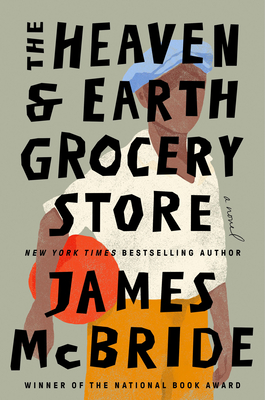
James McBride’s The Heaven & Earth Grocery Store, published in 2023, returns to the predominantly Black and Jewish neighborhood of Chicken Hill to explain what happened. The story centers on Moshe Ludlow, a Jewish theater owner; his wife Chona, who runs a neighborhood grocery store; Nate and Addie Timblin, a Black couple who work for the Ludlows; and Dodo, a deaf Black boy whom the community attempts to protect from institutionalization. Their lives become entangled with those of musicians, rabbis, shoemakers, railway workers, criminals, politicians, and families trying to survive in a town divided by race and class.
McBride builds his novel through an unusually large ensemble. Characters who initially seem to belong to unrelated stories gradually reveal their importance to one another. The mystery of the skeleton provides a narrative destination, but the greater conflict concerns whether ordinary people can protect someone whom powerful institutions have already decided is expendable.
Spoiler Warning: This article discusses the entire novel, including the sexual violence, major deaths, rescue operation, identity of the skeleton, and ending.
A Skeleton in the Well Opens the Mystery
The novel opens in June 1972, when a developer begins clearing land on Chicken Hill for a townhouse development. Workers uncover a skeleton in an old well off Hayes Street, prompting an investigation by the Pennsylvania State Police. Alongside the bones are a belt buckle, fragments of red clothing, and a mezuzah, a small religious object traditionally affixed to the doorposts of Jewish homes.
The mezuzah bears a Hebrew inscription identifying its owner as the greatest dancer in the world. Police recognize that it resembles an object attached to the doorway of an elderly Jewish man living near the abandoned synagogue. They visit him, hoping he can explain how such an object ended up beside a human skeleton.
The man is Malachi, an aging dancer whose extraordinary reputation survives among people who remember Chicken Hill’s earlier days. He answers their questions with humor, evasion, and apparent indifference. Although he recognizes the mezuzah, he provides little that would satisfy investigators trying to establish a conventional chain of evidence.
The police suspect a connection between the skeleton and the Jewish community that once occupied the hill. They are also interested in the remains of an old water system, the surrounding dairy property, and the possibility that the death involved events deliberately concealed many years earlier.
Their investigation is interrupted by Hurricane Agnes. The storm floods Pottstown, overwhelms its waterways, and washes away much of the evidence that might have established the skeleton’s identity. When investigators eventually return to question Malachi again, he has vanished.
The opening is narrated with the confidence of someone passing down a local legend. The mysterious disappearance, the catastrophic flood, and the old dancer’s remarkable past suggest that Chicken Hill possesses its own understanding of justice, even if the official authorities never discover it.
To learn what actually happened, the narrative moves backward forty-seven years, to the lives of people whose ordinary decisions eventually determine the skeleton’s fate.
How Moshe and Chona Built a Life on Chicken Hill
In 1925, Moshe Ludlow operates the All-American Dance Hall and Theater in Pottstown. A Romanian Jewish immigrant, Moshe has survived considerable hardship and is determined to establish himself in America. His business is still modest, but he has developed a talent for attracting performers and recognizing opportunities that other theater owners overlook.
One of his greatest achievements is booking Mickey Katz, a gifted Jewish clarinetist and entertainer, for a weekend of Yiddish music. A severe snowstorm threatens the performance, and Moshe must overcome financial difficulties and logistical problems to make the event happen. The resulting success brings him substantial satisfaction and an unexpected encounter.
Among the people attending is a mysterious Hasidic Jewish dancer whose astonishing movements captivate the audience. Moshe is fascinated by the stranger, who seems to possess a connection to an older Jewish world that Moshe admires but does not entirely understand.
The dancer’s appearance occurs during a particularly happy period in Moshe’s life. He has recently married Chona Flohr, the daughter of Yakov Flohr, a respected Jewish teacher and community figure. Chona has lived on Chicken Hill since childhood and has grown into an intelligent, outspoken woman with a remarkably independent understanding of religious duty.
Chona contracted polio as a child and walks with a pronounced limp. Her physical disability has exposed her to cruelty and condescension, but it has also influenced her unwillingness to accept conventional judgments about another person’s value. She speaks openly about social injustice, challenges prejudice within her own community, and insists that religious belief requires practical responsibility.
Moshe is deeply in love with her. He admires her intelligence and conviction, although he sometimes finds her refusal to compromise frustrating. Their marriage joins two people who share affection and generosity but possess different ambitions.
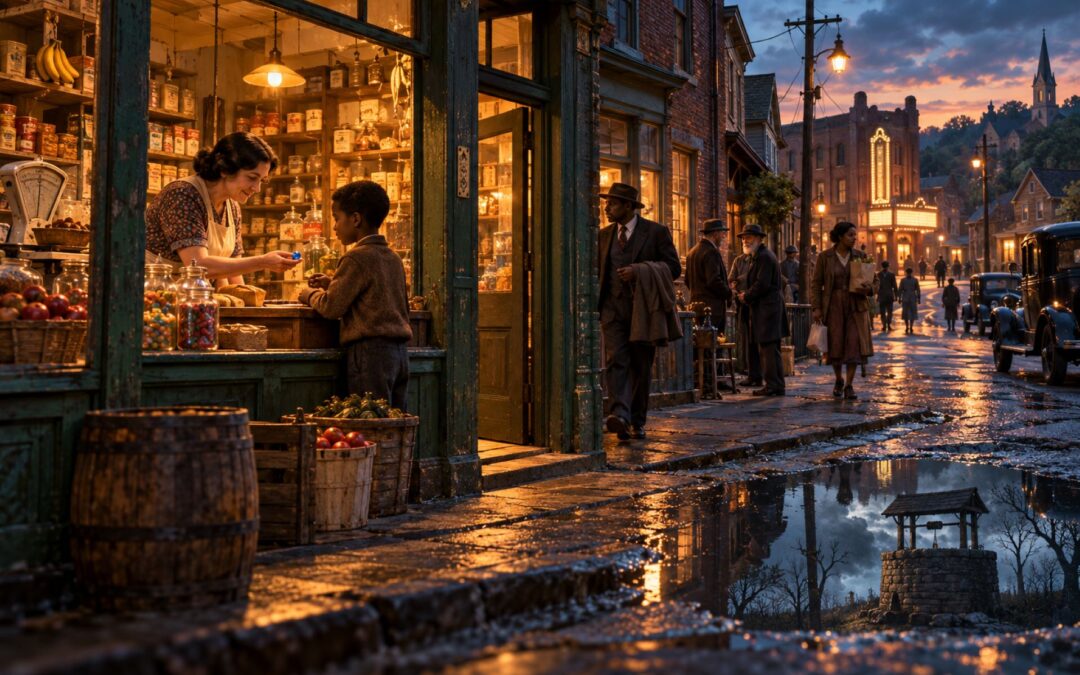
Moshe wants his theater to prosper and dreams of moving into more respectable surroundings. Chona is attached to Chicken Hill and the people living around her. She runs the Heaven & Earth Grocery Store, which occupies the lower floor of their building, and regards its importance as extending beyond the sale of food.
The shop serves customers who have little money and few alternatives. Chona allows people to buy on credit, gives away goods, and offers children small gifts. Her generosity is often commercially impractical, but she refuses to organize her life entirely around profit.
Moshe’s business succeeds in part because he makes a similarly unconventional decision. Recognizing the demand for Black entertainment, he opens his theater to Black audiences and begins booking Black musicians. The appearance of Chick Webb and his orchestra becomes another extraordinary event in the theater’s history.
Webb’s music creates an atmosphere of excitement that crosses the social boundaries ordinarily maintained in Pottstown. Moshe recognizes both the commercial opportunity and the artistic brilliance of performers excluded from many white establishments.
His decision attracts opposition from the town’s racist authorities and more respectable citizens. Moshe nevertheless continues developing the theater, eventually achieving a degree of financial security that once seemed impossible.
His success brings new problems. Moshe becomes increasingly fascinated by signs, dreams, and recurring numbers, especially the number twelve. A dream involving the biblical Moses encourages his belief that particular events carry messages about the direction of his life.
These superstitions coexist uneasily with his practical intelligence. He can negotiate difficult business arrangements and recognize extraordinary musicians, yet remains vulnerable to fears that mysterious forces might determine his future.
As the years pass, Moshe becomes more eager to leave Chicken Hill. He believes that his success has earned him a better address and greater freedom from the poverty and discrimination surrounding his business.
Chona disagrees. She sees no reason to abandon people who helped them build their lives, especially when the wider town continues denying Black residents equal services and opportunities. Her opinions on racism, antisemitism, and the Ku Klux Klan make her an uncomfortable figure for anyone who prefers respectable silence.
Her refusal to move creates a persistent difference between the couple, but it does not diminish Moshe’s devotion. Whatever he achieves professionally, Chona remains the person whose judgment matters most to him.
The marriage also contains a private sadness. Chona wants children, but the couple never has any. She expresses her affection through the neighborhood children who visit her store, remembering their preferences and collecting inexpensive toys and marbles to give them.
When Chona later develops a serious illness involving seizures and periods of unconsciousness, Moshe becomes terrified. His money can secure medical attention, but it cannot guarantee her recovery. He struggles to accept that the woman who has always seemed morally and emotionally indestructible may be dying.
Addie Timblin, a Black woman who lives nearby, helps care for Chona. She and her husband Nate have long worked for the Ludlows, and their relationship has developed beyond a simple employer-employee arrangement.
Moshe’s wealthy cousin Isaac Moskovitz offers assistance, but his practical remarks about Chona’s condition provoke an angry response. Moshe refuses to contemplate losing her.
During this period, the mysterious dancer reappears. He has acquired a bakery and introduces himself as Malachi. His arrival initially alarms Moshe, who mistakes the persistent stranger for a possible threat, but recognition soon gives way to friendship.
Malachi brings challah bread, engages Moshe in arguments about Judaism and America, and renews the atmosphere of mystery surrounding their earlier encounter. He is a terrible baker but an extraordinary dancer, and his combination of eccentricity, humor, and religious knowledge fascinates Moshe.
Moshe gives Malachi an inscribed mezuzah recognizing his reputation as the greatest dancer in the world. Malachi encourages Moshe to place it with Chona instead, connecting the object to the Ludlows’ home and marriage.
The gift will become important decades later. For the moment, however, the family is concerned with Chona’s illness and the unexpected responsibility about to enter their lives.
The Boy Hidden in the Heaven & Earth Grocery Store
Nate and Addie Timblin live a short distance from the Ludlows. Although the Black community has ministers and organizations claiming formal leadership, Nate possesses a quieter authority based on his reliability, judgment, and willingness to help neighbors.
His past is largely unknown. He is reserved, physically powerful, and careful about revealing himself. Addie understands him better than anyone else, including the fears he keeps concealed.
Their nephew Dodo has recently lost his mother, Thelma. He is deaf, and the authorities regard his disability as sufficient reason to remove him from the people who know and love him. Official documents make clear that the state intends to send him to an institution.
Dodo understands more than many adults assume. His difficulty hearing does not prevent him from recognizing danger, following conversations through observation, or expressing his wishes.
One evening, he disappears, alarming Addie. Nate eventually finds him near a creek, occupied with stones and distressed by the document announcing his mother’s death and his removal from home.
When Dodo asks why he must leave, Nate dismisses the authority of the paper and reassures him that he belongs with his family. Nate knows that such reassurance does not eliminate the government’s power, but he refuses to let the boy believe that an official document defines his worth.
As pressure increases, Nate asks Moshe to conceal Dodo temporarily inside the theater. Moshe recognizes the legal danger and is reluctant to become involved. Hiding a child wanted by state officials could threaten his business and expose everyone concerned to punishment.
Nevertheless, Moshe remembers how faithfully Addie helped during Chona’s illness. He agrees to provide refuge, initially allowing Dodo to remain in the theater basement.
When Chona discovers the arrangement, she is horrified that the bereaved child has been hidden away in a frightening space. She insists that he be brought into their home and cared for properly.
Her reaction changes the nature of the arrangement. Dodo is no longer simply a problem that Moshe has agreed to conceal for an employee. He becomes a child welcomed into the Ludlows’ household, where Chona treats him with warmth and affection.
Dodo responds to her kindness. The small toys, marbles, and gestures of attention that she offers neighborhood children become important to him because they represent a world in which he is recognized as an individual rather than classified by his disability.
Meanwhile, the community struggles to determine who has informed authorities about his whereabouts.
Patty Millison, widely known as Paper, becomes important to the investigation. She operates through a vast network of neighborhood conversations, gossip, friendships, and information exchanges. Her reputation for talking can make her appear frivolous, but she possesses an unusually accurate understanding of who knows what and which people can be trusted.
Through Paper, the narrative introduces Fatty Davis, a Black mechanic and small-time operator, and his Sicilian friend Big Soap. Their arguments, employment troubles, and comic adventures initially seem remote from Dodo’s danger.
The men’s experiences reveal the precarious economic life of Chicken Hill. They depend on personal arrangements, temporary work, and relationships that do not fit the racial boundaries officially endorsed by the town.
Fatty’s family history also leads back to Chona.
His sister Bernice once shared an intimate childhood friendship with her. Their fathers, Shad Davis and Yakov Flohr, were among the people who helped establish Chicken Hill’s communal life. The families cooperated across racial and religious lines, and the girls grew up familiar with each other’s homes.
Their friendship was damaged by an incident at school. A teacher separated children through a humiliating comparison involving robins and sparrows, imposing a racial distinction that transformed ordinary childhood relationships into a lesson about hierarchy.
Chona attempted to defend Bernice, but her intervention could not erase the humiliation. The episode created resentment and emotional distance that persisted into adulthood.
Bernice’s response matters because it complicates Chona’s assumption that good intentions can always overcome social injury. Chona was willing to challenge the teacher, but Bernice was the child forced to experience the insult personally.
Years later, Chona approaches Bernice because Dodo needs protection. Their shared history remains painful, yet the possibility of helping a vulnerable boy creates a reason to cooperate.
The women do not suddenly become uncomplicated friends again. Their relationship retains the injuries of childhood, allowing the novel to explore solidarity without pretending that racial inequality disappears through affection.
As officials continue searching for Dodo, the neighborhood becomes increasingly anxious. Paper and Addie notice suspicious activity near the grocery store. Rumors circulate about Reverend Spriggs, who has communicated with people involved in the boy’s case.
No one possesses complete information. The uncertainty exposes the fragility of Dodo’s situation: the family can hide him only as long as the officials searching for him remain unable to prove where he is.
The immediate danger comes from a white physician whose involvement extends far beyond a routine medical examination.
Doc Roberts and the Day Dodo Is Taken
Earl Roberts, commonly called Doc Roberts, is a respected white doctor who has lived in Pottstown for much of his life. His professional standing conceals a history of prejudice, resentment, and personal humiliation.
As a boy, Doc had a physical disability affecting his foot. He required specialized footwear and endured experiences that made him acutely conscious of how other people judged his body.
Rather than developing sympathy for others who experience exclusion, Doc directs his resentment outward. He becomes hostile toward immigrants, Black Americans, and Jews, eventually involving himself with the Ku Klux Klan.
His history with Chona is especially revealing.
When they were younger, Doc was attracted to her. Chona did not return his interest, and he interpreted her rejection through the combined injuries of wounded pride, antisemitism, and sexual entitlement.
He continues resenting her long after she has married Moshe. Her independence is particularly offensive to him because she refuses to accept the racial and social hierarchy that supports his position.
Doc’s cousin Carl Boydkins works in the state welfare system and is involved in Dodo’s removal. Carl asks Doc to examine the child and provide the medical authority required for institutionalization.
The arrangement gives Doc an official reason to approach the Ludlows. His professional identity makes his presence difficult to challenge, even though his motives are deeply compromised.
He arrives at the Heaven & Earth Grocery Store when Moshe is away and Addie is absent. Chona, already vulnerable to seizures, confronts a man whose hostility she knows from their shared past.
The encounter becomes violent.
Chona suffers a medical crisis, and Doc exploits her helplessness. He tears at her clothing and sexually assaults her, attempting to impose himself on a woman who has repeatedly rejected him.
Dodo is nearby and sees what is happening. Recognizing that Chona is in danger, he attacks Doc.
The boy’s intervention is an act of protection, but Doc uses his own professional standing and racial privilege to reverse its meaning. When the authorities become involved, he presents himself as the victim of an unpredictable, supposedly defective child.
Dodo attempts to escape through the building. He climbs onto the roof as police pursue him, trying to reach safety by jumping away from the men closing in.
A police officer interferes with the leap, and Dodo falls, suffering serious injuries.
The sequence makes the workings of institutional power unmistakable. Doc’s assault occurs in private, while Dodo’s desperate resistance becomes the event interpreted by official authority. Chona is incapacitated, Moshe is absent, and the child cannot communicate with investigators on terms they are willing to recognize.
The authorities treat Dodo’s disability as evidence against him rather than asking whether his actions might have a rational explanation.
His fall leaves him physically helpless and provides an additional pretext for institutional confinement.
Chona is taken for medical treatment, and Dodo disappears into the state system. The attempt to protect him has ended in catastrophe.
The incident also divides the community from the town’s official account. People on Chicken Hill increasingly suspect that Doc has concealed the truth, but knowing something is wrong does not give them the means to overturn a doctor’s word or compel the police to investigate him.
Dodo’s removal creates two simultaneous emergencies. Chona’s life is in danger, and the boy she tried to protect has been sent to an institution where his family cannot easily reach him.
Dodo and Monkey Pants at Pennhurst
Dodo is confined at Pennhurst State Hospital for the Insane and Feeble-Minded, a large institution outside Pottstown. His injuries require extensive treatment, and he spends much of his early confinement immobilized, medicated, and separated from the familiar people who previously cared for him.
The institution is organized around classifications that do not reflect the actual abilities of its residents. Deafness, physical disability, difficulty speaking, and psychological distress are treated as reasons to deny people independence and dignity.
For Dodo, the experience is bewildering. He has recently lost his mother, witnessed an attack on Chona, suffered serious injuries, and been taken away from everyone he trusts. Yet the institution interprets his behavior primarily through the assumption that he is intellectually deficient.
His new world consists of beds, wards, attendants, medical routines, and rules enforced through fear.
He is placed near another boy whom he calls Monkey Pants.
Monkey Pants has severe physical disabilities that limit his movements and speech. To attendants, he appears incapable of meaningful communication, and his body becomes the principal fact by which they judge him.
Dodo gradually discovers something different.
Monkey Pants is observant, intelligent, funny, and capable of understanding the institution’s routines. He has learned to survive by carefully controlling what he reveals to the adults around him.
The two boys begin communicating through gestures, small movements, facial expressions, and an increasingly elaborate private system. Because conventional speech is unavailable to them in different ways, they must discover methods that fit their particular abilities.
Their communication becomes sophisticated enough to express warnings, questions, memories, and affection.
Monkey Pants also teaches Dodo the importance of appearing harmless. At Pennhurst, attracting the wrong attendant’s attention can lead to punishment, restraint, or abuse. During an inspection, Monkey Pants deliberately manipulates his behavior to prevent officials from scrutinizing Dodo too closely.
Such moments demonstrate the intelligence that the institution consistently fails to recognize.
The boys develop a friendship that provides emotional relief from their surroundings. Their games and private language allow Dodo to experience companionship despite the isolation of the ward.
The marble associated with Chona’s gifts helps preserve his connection to his former life. It recalls a person who responded to his individuality with delight rather than suspicion.
Yet Dodo’s memories of the grocery-store incident increasingly trouble him. He understands that something terrible happened to Chona, but he cannot make sense of why his attempt to defend her has resulted in his own punishment.
As his physical injuries heal, the institution’s routines expose him to new dangers. He becomes more mobile and is expected to participate in activities alongside other residents, placing him within reach of attendants who have substantial control over the patients.
One of them is a man known as Son of Man.
Son of Man comes from the Black community around Hemlock Row. He has gained a position at Pennhurst that allows him to exploit people even more vulnerable than himself.
His cruelty is not an isolated lapse in an otherwise protective system. Other workers know enough about his behavior to fear him, yet the institution continues providing the opportunity for abuse.
Monkey Pants recognizes the danger and warns Dodo.
The confrontation eventually occurs when Son of Man enters the boys’ ward and sexually assaults Dodo. The child is terrified and unable to defend himself effectively.
Monkey Pants intervenes by drawing attention to himself. His actions disrupt the assault but cause him to suffer a devastating seizure.
Afterward, Dodo reaches through the bars separating their beds. The boys connect through their fingers, repeating one of the most intimate forms of communication they have developed.
Dodo thanks his friend.
He falls asleep while their fingers remain joined. When he wakes, Monkey Pants is dead, his hand still extended toward him.
The death devastates Dodo. Monkey Pants had given him protection, companionship, and a way to express himself when virtually every adult institution had failed him.
Their final contact becomes the most enduring memory of his childhood.
Pennhurst has denied the boys recognition as complete human beings, but their relationship demonstrates the intelligence, generosity, courage, and emotional complexity that the institution is unable or unwilling to see.
While Dodo struggles to survive, people outside the hospital are beginning to organize his escape.
Chona’s Death and the Community’s Reckoning
After the attack at the grocery store, Chona is hospitalized in Reading. Moshe remains desperate for her recovery, using whatever resources he can command and resisting suggestions that her condition may be irreversible.
Isaac helps pay for her treatment, but money cannot resolve the crisis. Moshe’s business knowledge and ability to negotiate are useless against the possibility of losing his wife.
The emotional strain changes him. The lively theater owner who once pursued performers and commercial opportunities becomes increasingly withdrawn, frightened, and angry.
He continues corresponding with Malachi, whose eccentric advice and observations about American life offer a connection to happier times. Conversations about Jewish identity, music, and the future now carry the additional weight of Moshe’s fear that the world he understands is disappearing.
The theater remains a place of extraordinary musical possibilities, including performances associated with Lionel Hampton and changing forms of popular music. Moshe, however, finds that professional achievement cannot restore his former sense of security.
Nate and Addie confront their own grief.
They had trusted the Ludlows to protect Dodo, and Chona’s kindness made that trust feel justified. Now Chona is dying, and the boy is confined at Pennhurst.
Nate responds with a dangerous combination of anger and silence. Although he knows the institution’s location, he resists visiting Dodo.
Addie understands that his hesitation cannot be explained simply by fear of officials. Nate’s earlier life has left him with painful memories of confinement and violence, experiences that make the prospect of entering another punitive institution intolerable.
He has spent years building a peaceful identity in Chicken Hill. Dodo’s suffering threatens to destroy the restraint on which that identity depends.
Fatty, Rusty, and other men notice his changing behavior. They recognize that Nate possesses a capacity for violence far beyond the quiet strength he ordinarily displays.
Meanwhile, rumors about Chona’s assault circulate through the neighborhood. Fioria Carissimi, Big Soap’s mother, becomes involved in the conversations, helping demonstrate how information crosses family and ethnic boundaries even when official institutions remain closed.
Doc continues denying wrongdoing. His version of the incident depends on presenting Chona’s collapse as a natural medical crisis and Dodo as an irrational attacker.
The people around Chona are less easily convinced.
At the same time, the Jewish congregation becomes embroiled in an argument about water. A bullfrog appears in the synagogue’s ritual bath, provoking a dispute that initially seems ridiculous but exposes a serious problem.
Chicken Hill has never received reliable municipal services on equal terms with more prosperous neighborhoods. The synagogue’s water supply depends on an unofficial arrangement connected to Clover Dairy and the property of Gus Plitzka.
Members disagree about whether the congregation should continue tolerating such arrangements or seek a more respectable solution elsewhere.
The dispute has practical consequences. The old water connections involve pipes, underground passages, and people who understand the infrastructure better than the town’s officials.
Those details eventually become important to the rescue and the mystery surrounding the well.
Chona briefly regains consciousness in the hospital.
Her final experiences are described through prayer, remembered sensations, and fragments of the life she has shared with Moshe. Her mind returns to childhood walks with her father, familiar religious language, affection, and the people she has loved.
When she becomes aware of Dodo’s fate, her distress intensifies. The knowledge that the child has been taken away is particularly devastating because she had accepted responsibility for him without hesitation.
Chona dies, leaving Moshe overwhelmed by grief.
McBride gives her final consciousness a strange prophetic dimension. Images of future technology and social conditions enter the narration, extending her concern about human connection and manipulation beyond the world of 1936.
Her death has immediate personal consequences and a longer communal effect.
Moshe eventually closes the Heaven & Earth Grocery Store. While clearing the premises, he discovers the small collection of toys, marbles, and gifts Chona had kept for neighborhood children.
The objects remind him of their earliest days together and the private acts of generosity that defined her life. He breaks down, recognizing that no successful theatrical booking or business arrangement can replace their marriage.
Nate and Addie help him with the closing. Their shared grief contains an unspoken connection: the boy Chona loved remains trapped in the institution, and none of them has yet secured his freedom.
Malachi returns to comfort Moshe, while Isaac begins considering how his wealth and connections might be used more effectively.
The emotional center of the story has shifted. Chona can no longer intervene herself, but the people who understood her values must decide what to do about the child she tried to save.
How the Neighborhood Plans Dodo’s Rescue
The effort to rescue Dodo does not begin with a single commanding leader or a coherent plan. It develops through conversations among people who possess different kinds of knowledge and influence.
Paper becomes one of its most important organizers.
She knows that ordinary legal approaches offer little hope. The authorities have already accepted Dodo’s confinement, and the testimony of Black neighbors carries limited weight against the conclusions of white professionals.
Paper therefore looks for people familiar with Pennhurst’s internal operations.
She travels with Fatty and Big Soap to Hemlock Row, a predominantly Black settlement outside Pottstown. The area is poorer and more isolated than Chicken Hill, and its inhabitants maintain a distinctive social identity.
Fatty is uncomfortable there. He knows little about the community and regards its residents with suspicion, revealing that Black life in the region is divided by differences in class, custom, and local reputation.
Paper is more confident. She has contacts who can bring them to Miggy Fludd, a woman known for her spiritual authority and knowledge of people’s lives.
Miggy presents an imposing figure. Although she lives among people whom respectable society overlooks, she possesses unusual confidence, intelligence, and command of information.
She has worked at Pennhurst and understands its routines.
Miggy knows about the wards, underground passages, delivery schedules, and the attendants who control access to residents. She also knows that Son of Man is dangerous.
Her account of another vulnerable boy, Duck Boy, reveals how institutional confinement allows abuse to flourish. Duck Boy’s experience becomes a warning about what may happen to Dodo if he remains at Pennhurst.
Miggy explains that Son of Man is connected to the Lowgod community. People who knew him before his employment understand his cruelty, but their knowledge has not prevented him from exploiting patients.
The institution gives him power over individuals who cannot easily escape, report wrongdoing, or expect to be believed.
Miggy identifies a possible route into Pennhurst through Bullis, the man who delivers eggs. Because the hospital requires regular supplies, delivery workers can enter areas inaccessible to ordinary visitors.
She communicates the basic arrangement indirectly, using gestures, descriptions, and eventually a diagram made with food. Nate recognizes that the pattern represents buildings and pathways.
Miggy’s assistance is cautious. She understands the risks of becoming directly implicated in an escape and therefore provides information while leaving the final decisions to others.
The rescue still requires transportation.
It will not be enough to remove Dodo from a ward if the authorities can immediately recover him nearby. He must leave the region quickly, ideally through a network capable of moving him beyond the reach of local officials.
Other residents possess exactly the connections needed.
Bernice Davis has inherited documents and knowledge concerning the underground water system established by her father, Shad. She entrusts Fatty with a Bible containing money and written instructions.
The arrangement connects the synagogue’s water problems to the wider community’s efforts. The money and instructions must reach the appropriate people, but Fatty fails to handle everything as carefully as Bernice intended.
His mistakes create confusion about funds required for the operation.
Nate eventually intervenes, insisting that money intended for Dodo be surrendered rather than treated as an unexpected personal windfall. His authority is sufficient to make Fatty obey even though Fatty deeply resents losing such a large sum.
Meanwhile, Isaac receives a visit from Marv Skrupskelis, a Jewish shoemaker with practical knowledge of the town’s problems.
Marv explains that the synagogue’s water arrangements are entangled with Plitzka’s influence and that Doc Roberts has avoided accountability for Chona’s assault. He wants justice, but Isaac recognizes that forcing Doc to confess is unlikely.
Their conversation exposes differences between principle and practical strategy.
Marv is motivated partly by affection for Chona and outrage at the treatment of her community. Isaac has spent years becoming wealthy by understanding business interests and the limitations of idealism.
Yet Isaac also knows that Moshe and Chona possessed qualities his own success could not provide. The situation forces him to consider whether financial resources are valuable if they cannot be used to protect someone in immediate danger.
He decides to help secure Dodo’s release.
Marv can reach Jewish railroad workers through immigrant and union contacts. Isaac can supply money and arrange assistance beyond Pottstown.
The rescue begins taking shape through a combination of transportation arrangements, labor relationships, local knowledge, and personal trust.
At the same time, the dispute over water creates a separate operation.
Fatty persuades Big Soap to help alter the connection near Clover Dairy. The work requires entering an underground system and making changes that the municipal authorities have refused to arrange openly.
Fatty presents the task as a manageable job. He understands machinery and considers himself capable of improvising a solution, but he underestimates the danger of the water supply.
Their involvement brings comic tension into the preparations. They argue about money, legality, equipment, and whether the job is worth the risk.
Neither man understands the entire network of events developing around him.
The town’s Memorial Day celebrations offer a useful distraction. Officials will be occupied with their annual ceremonies, while Nate and other participants can exploit ordinary deliveries and railway movements.
Nate must also reach Hemlock Row and cooperate with Bullis, despite the danger posed by Son of Man.
The arrangement is complicated because people are pursuing different goals simultaneously. The synagogue wants water. Fatty and Big Soap expect payment. Isaac and Marv want Dodo removed. Paper coordinates information. Nate intends to enter Pennhurst, whatever the personal cost.
No individual controls every part of the operation.
That apparent disorder becomes the foundation of the ending. McBride has spent much of the novel introducing people through their ordinary occupations and private troubles; now their particular skills and relationships begin to connect.
The Escape Plot and the Body in the Well
During Memorial Day weekend in 1936, Nate asks Anna Morse, the owner of a funeral home where he has worked, to help him travel toward Hemlock Row.
Anna knows him as a dependable, gentle man. She has no reason to suspect the scale of the violence and personal history concealed beneath his calm manner.
As Nate prepares for the operation, the narrative reveals more about his childhood.
He grew up in the South under the domination of an abusive father. Violence entered his life early, and a killing eventually set him on a course that included imprisonment and years of suffering.
These experiences established his reputation as a dangerous man before he began rebuilding his identity.
Meeting Addie transformed him.
Her affection and confidence gave him a reason to abandon the violent life that had shaped his youth. In Chicken Hill, he became a worker, husband, and trusted neighbor, attempting to live according to values that contrasted sharply with his earlier experiences.
Dodo’s confinement threatens that transformation because Nate knows that ordinary appeals will not protect the boy.
He fears that using violence again may cost him Addie’s love, but he believes Dodo cannot survive without intervention.
The rescue involves Bullis’s egg cart and access to the Pennhurst buildings through underground passages.
Bullis is frightened because Son of Man understands the hospital’s operations and has already become suspicious. The attendant recognizes that unusual activity around the delivery route could be part of an escape.
When Son of Man confronts Bullis, Nate emerges from concealment.
The encounter becomes a confrontation between two men who understand violence intimately but use it for radically different purposes.
Son of Man exploits powerless people for gratification and control. Nate has struggled to contain his violent impulses because he recognizes their destructive consequences.
Nate kills Son of Man with a knife.
The act removes the immediate threat to the rescue, but it is not presented as emotionally simple for Nate. He knows that he has returned to an identity he spent years trying to overcome.
He also believes that Addie may never forgive him.
With Son of Man dead, Nate forces Bullis to continue assisting him. The plan requires them to reach Dodo, carry him through the institution, and move him to the waiting transportation network.
The later epilogue confirms that they succeed.
Nate retrieves Dodo from the ward and takes him out through the basement and delivery arrangements. The drugged, frightened child has only fragmentary awareness of the journey, but he recognizes his uncle’s presence.
The escape takes place while Pottstown is occupied with its Memorial Day festivities.
Gus Plitzka, chairman of the town council, is among the officials preparing for the annual celebrations. The town’s leaders wear historical costumes associated with the Revolutionary era, turning the holiday into an occasion for civic prestige.
The elaborate performance conceals a less respectable reality.
Plitzka has become involved in financial arrangements concerning local businesses and property. Hoping to advance his interests, he borrowed money from Nig Rosen, a criminal whose associates do not tolerate unpaid debts.
Plitzka’s position in town government gives him public authority but does not protect him from the consequences of his private dealings.
Doc Roberts is also participating in the celebrations.
His distinctive footwear has long reflected the problems caused by his disabled foot, and he continues experiencing physical discomfort. He has also become anxious about rumors concerning Chona and Dodo.
The mezuzah taken during the assault remains in his possession, creating a potential connection to the crime he has denied.
During preparations for the parade, confusion arises over the historical costumes. Several officials have been given red British coats when the director wants them dressed appropriately for their roles.
Doc and Plitzka are among the men affected by the costume problem.
Doc eventually retains a red coat, a detail that will determine his fate.
While the town celebrates, Fatty and Big Soap undertake the underground water work near Clover Dairy.
They enter an old system involving pipes and a disused well. Their objective is to establish a connection that will provide water to Chicken Hill without depending on the existing discriminatory arrangements.
The work proves far more hazardous than Fatty anticipated.
Water suddenly floods the area, and the men nearly drown. Their efforts to control the pipes become a struggle for survival, adding physical danger to the comic incompetence and improvisation that characterize their partnership.
Elsewhere, Henry Lit, an associate of Nig Rosen, is searching for Plitzka.
He intends to confront the council chairman over the unpaid debt. Instead, he encounters a limping man wearing a red coat.
The combination of distinctive clothing and physical movement leads him to believe that he has found Plitzka.
The man is actually Doc Roberts.
Henry attacks him, and Doc falls into the exposed well. Henry departs without understanding that he has killed the wrong man.
The death does not result from a carefully arranged assassination or a plot developed by Nate. It is the consequence of Plitzka’s debt, the town’s historical costumes, Doc’s limp, mistaken identification, and the dangerous condition of the well.
Fatty and Big Soap eventually return to complete their work.
They cover the opening, using materials to conceal and secure the well, without realizing that Doc’s body lies inside.
The resulting concealment preserves the mystery for decades.
Doc’s red coat, personal effects, and stolen mezuzah remain associated with his remains, waiting for the construction workers of 1972.
The narrative thereby answers the central question established in its first chapter.
The skeleton is Doc Roberts.
The mezuzah does not prove that a Jewish person was buried in the well. It is there because Doc took an object associated with Chona and Malachi during the violence at the grocery store.
The inscription identifying the greatest dancer in the world connects the object to Malachi, explaining why investigators initially approach him.
Hurricane Agnes subsequently destroys the remaining evidence before officials can resolve the matter. Malachi disappears, and the public authorities never recover the complete story.
The mystery ends through a convergence of events that none of the principal rescuers entirely planned.
Nate’s operation succeeds because people choose to help Dodo. Doc’s death occurs through a separate sequence of corruption and mistaken identity, though the water work indirectly places him where the body will remain hidden.
This distinction is important. The community organizes to save a child; it does not collectively conspire to kill Doc.
The novel allows justice, chance, and consequences to overlap without turning every outcome into the product of deliberate human control.
What Happened to Dodo After Chicken Hill
The epilogue reveals the details of Nate and Dodo’s successful escape.
Two Austrian Jewish immigrants, Hirshel and Yigel Koffler, are working as railway brakemen on a freight train serving Pennhurst. Their union contact has instructed them to transport two Black passengers without asking questions.
The brothers know little about the people they are helping. They understand only that their employer and fellow railway workers expect them to follow the arrangement.
Nate enters the freight car carrying Dodo, who is frightened and weakened by his experiences.
At Berwyn, Pullman porters take responsibility for the fugitives. Their professional network enables the pair to travel through Philadelphia and continue south, beyond the immediate reach of Pennsylvania authorities.
The operation has been financed and coordinated through a remarkable chain of people.
Isaac supplies money. Bernice, Fatty, Addie, Paper, the railway workers, and the Pullman porters each contribute to its movement and practical use. Marv’s promises of shoes reward the immigrant workers who participate.
Many of these people never meet Dodo or understand the full significance of their actions.
Nate takes the boy to South Carolina, where his own roots lie.
He initially believes that killing Son of Man has destroyed his marriage and that Addie will never return to him. Eventually, however, she joins him, and they build a life together.
Isaac helps purchase a small farm for Dodo, providing material security beyond the immediate rescue.
The boy grows into an adult known as Nate Love II. He farms, marries, raises three sons and two daughters, and becomes surrounded by children and grandchildren.
His childhood in Pennsylvania gradually fades from memory. The drugs, injuries, terror, and emotional trauma of Pennhurst contribute to his separation from those experiences.
Yet two memories remain.
He remembers the woman with the dark hair and sparkling eyes who gave him marbles and treated him with affection. He also remembers Monkey Pants, particularly the finger extended toward him through the darkness.
Meanwhile, Moshe, Isaac, and other Jewish theater owners help establish Camp Chona, an inclusive camp for children with disabilities. The project continues long after its founders have died.
Chona’s influence therefore survives through an institution organized around the kind of acceptance she practiced during her lifetime.
Dodo dies on June 22, 1972, the day Hurricane Agnes devastates Pottstown.
His family surrounds him as he reaches the end of a long life. His final words puzzle those present because they refer to someone they have never known.
He thanks Monkey Pants.
The ending restores the importance of a boy whom Pennhurst had treated as incapable of meaningful contribution. Monkey Pants helped Dodo survive, and their friendship remains part of his identity long after almost everything else from his childhood has disappeared.
Chicken Hill’s Divided Social World
Chicken Hill is a neighborhood defined partly by the people whom prosperous Pottstown prefers to keep at a distance. Black families, Jewish immigrants, and other working-class residents occupy a place where cultural differences are visible but material disadvantages are often shared.
The neighborhood is not a utopia of racial cooperation. Its residents belong to different religious traditions, possess unequal resources, and disagree about respectability, business, education, and their relationships with white authorities.
Some Jewish families operate businesses and enjoy opportunities unavailable to many Black neighbors. Others experience antisemitism, immigrant insecurity, and pressure to abandon distinctive customs in order to succeed.
Black residents confront a more systematic denial of services and public authority. The absence of adequate water and sewage infrastructure makes the inequality visible in everyday life.
These differences shape the characters’ choices.
Moshe can open a successful theater and eventually contemplate moving away. Nate remains dependent on work, private connections, and careful avoidance of powerful officials. Chona can challenge discriminatory attitudes openly, but Bernice must consider the consequences of depending on a Jewish neighbor who cannot fully share her experience.
The novel’s geography reinforces these differences.
The theater offers a space where audiences and musicians can temporarily cross boundaries maintained elsewhere in town. Chona’s store provides access to food, credit, conversation, and small acts of assistance.
The synagogue preserves religious continuity for immigrants who fear losing their cultural identity. Yet its water problem reveals how limited their collective influence remains when municipal authorities refuse equal treatment.
Paper’s informal social network functions almost like an alternative communications system. Information moves through shops, kitchens, workplaces, churches, and personal visits because the official institutions cannot be relied upon to serve everyone.
The jook joint operated by Fatty offers leisure, conversation, and economic opportunity outside respectable white establishments. Its questionable transactions and comic disputes belong to the same world of improvisation that later helps Dodo.
Hemlock Row extends the social picture beyond Chicken Hill.
Its residents are poorer and more isolated, and some Chicken Hill residents regard them with suspicion. Miggy’s authority demonstrates that intellectual and social resources exist in places outsiders dismiss as backward or disreputable.
The differences between these communities matter because the rescue requires people to cross boundaries they ordinarily maintain.
Pennhurst represents the most extreme contrast to Chicken Hill’s informal relationships.
The real institution was established in 1908 and continued operating until 1987. As historian Dennis Downey explains in the history of Pennhurst State School and Hospital, it developed within a system that segregated people with intellectual and developmental disabilities and later became central to disability-rights activism.
McBride’s characters and incidents at Pennhurst are fictional, but the institution’s historical existence gives the narrative a concrete social foundation.
The contrast is striking. At Pennhurst, residents are classified, confined, and controlled by official authority. On Chicken Hill, people who possess little institutional power nevertheless recognize one another through relationships, memory, labor, and personal obligation.
This contrast does not mean the neighborhood always behaves wisely or generously. Its inhabitants quarrel, exploit opportunities, conceal information, and judge one another unfairly.
The point is that ordinary relationships provide possibilities for correction that the institution denies. A person can change someone’s mind, ask a neighbor for help, or intervene when a child is in danger.
When official systems become instruments of exclusion, those informal possibilities acquire enormous importance.
Chona Ludlow’s Faith and Moral Independence
Chona is the novel’s strongest moral presence, although her physical absence dominates much of its second half.
Her convictions originate partly in the Jewish household in which she was raised. Her father, Yakov Flohr, teaches her the religious language, stories, and practices through which she comes to understand responsibility.
She does not interpret Judaism as a collection of private rituals separated from the treatment of other people.
For Chona, belief imposes obligations toward the poor, the vulnerable, and those excluded by social convention. Her willingness to challenge prejudice follows from that understanding.
Her disability shapes her position in the world without entirely explaining her personality.
Having experienced rejection because of her limp, she understands the cruelty of judging someone through a visible physical difference. Yet McBride does not portray her simply as a woman whose suffering automatically makes her compassionate.
Chona possesses intelligence, stubbornness, humor, anger, and a capacity for defiance that often puts her at odds with people who otherwise admire her.
She refuses to accept that wealth or respectability should determine where she lives.
When Moshe becomes successful, she insists on remaining on Chicken Hill. Her attachment is practical as well as emotional: leaving would mean withdrawing from a community that depends on relationships people cannot easily replace.
Her treatment of neighborhood children reveals the same disposition on a smaller scale.
The marbles and inexpensive gifts she collects do not require great financial sacrifice, but they require attention. She notices what pleases children, remembers them individually, and creates moments in which they receive something without being judged by their social standing.
Dodo becomes especially important because he allows her to express the maternal affection she has been unable to give to a biological child.
She responds to him immediately as someone who needs safety, companionship, and tenderness. The official question of whether he belongs in an institution is, to her, secondary to the fact that he is a grieving child.
Her relationship with Bernice provides an important limitation to her benevolence.
As children, Chona and Bernice shared affection across racial lines. When their teacher imposed a humiliating distinction between them, Chona protested, but Bernice continued carrying the injury.
The incident exposes the difference between opposing racism and experiencing its consequences.
Chona’s intentions are generous, yet she cannot undo Bernice’s humiliation or assume that their relationship has remained unchanged.
The novel gives Chona a connection to racial equality that is ethically serious but not free from the limitations of her position.
Her marriage to Moshe also resists reducing her to an emblem of universal goodness.
The couple disagree about ambition, money, and where to live. Chona’s principles can frustrate Moshe because they constrain the life he believes his success has made possible.
At the same time, their love gives those disagreements emotional credibility.
Moshe does not need to share every conviction to recognize her exceptional character. Chona does not need to abandon her beliefs to remain devoted to him.
In an interview about the novel’s inspiration, McBride connected the book to his experiences working at a camp for children with disabilities and to family memories that helped shape Chona.
Those influences illuminate her character without reducing her to a direct portrait of a real person.
Chona is also susceptible to idealization. Her generosity, courage, intelligence, and steadfastness rarely receive the sustained moral scrutiny given to more conflicted characters.
Nevertheless, her importance grows from identifiable actions. She opens her home, gives away goods, refuses to abandon her neighbors, challenges discrimination, and protects Dodo.
Her death leaves a moral obligation that the survivors must translate into action.
Moshe Ludlow’s Love and Changing Identity
Moshe begins as a man who believes that success in America can provide security against the suffering of his earlier life.
His immigrant history has taught him the importance of money, negotiation, and survival. The theater gives him a means of building something independent through his own intelligence and commercial imagination.
He has an instinct for musical talent and understands that entertainment can attract audiences across boundaries that other businessmen accept without question.
His decision to welcome Black audiences is partly commercial and partly an expression of his open-mindedness. He recognizes good music wherever he finds it, even when local prejudice insists that certain performers and customers should remain separate.
Yet Moshe is not naturally heroic in every situation.
His attachment to his business makes him cautious about confronting authorities. When Nate asks him to hide Dodo, Moshe initially worries about the practical consequences.
He is also vulnerable to superstition.
The recurring number twelve, his dreams, and the mysterious dancer encourage him to interpret events as signs of a providential order. His imagination supplies meaning where rational control is unavailable.
This trait makes him comic, but it also expresses his insecurity.
The same man who can manage performers and negotiate contracts remains uncertain about forces he cannot see or control.
His relationship with Jewish identity is similarly complicated.
He admires traditional religious culture while pursuing an American future that seems increasingly distant from it. Malachi’s presence reminds him of the practices, language, and history that commercial success cannot replace.
Moshe wants to become fully American without losing the emotional meaning of his origins.
Chona challenges his assumption that prosperity requires abandoning Chicken Hill.
She regards his accomplishments with affection but refuses to accept that financial success makes one community less worthy than another.
Her illness exposes the limits of Moshe’s preferred understanding of achievement.
He can pay for care, consult relatives, and seek help, but none of these measures guarantees that she will survive.
After her death, he experiences a loss that cannot be negotiated away.
The closing of the store becomes especially painful because he discovers objects that preserve the daily habits of their marriage. A small barrel and Chona’s gifts for children contain more personal meaning than the commercial achievements of his theater.
His later involvement in Camp Chona extends her understanding of responsibility into his own life.
The development does not erase his ambition or change him into an identical copy of his wife. Rather, he learns that the most enduring use of his resources may be to provide opportunities for people whom society ordinarily excludes.
Moshe’s transformation is convincing because it grows from his love for Chona and from relationships that expose the limits of his earlier priorities.
Nate Love and the Burden of Violence
Nate is among the novel’s most psychologically complicated characters because his present reputation conceals a radically different past.
On Chicken Hill, he is known as a dependable worker and trusted neighbor. He speaks carefully, avoids drawing attention to himself, and generally prefers practical action to public declarations.
His authority does not come from elected office, religious position, or money.
Other men defer to him because they recognize his strength, consistency, and ability to make decisions when circumstances become dangerous.
His childhood explains why that authority contains an element of fear.
Nate grew up under an abusive father and learned violence before he had the opportunity to develop an ordinary understanding of safety. A killing and subsequent imprisonment altered his life, leaving him with experiences he has attempted to conceal.
His later identity is an achievement rather than a natural state.
Meeting Addie gives him a different way to live. Her trust and affection help him control the anger that once governed his behavior.
He becomes a husband and worker who expresses love through reliability, restraint, and service.
Dodo’s situation threatens this transformation because the boy’s confinement activates Nate’s memories of helplessness and punishment.
His refusal to visit Pennhurst initially appears inconsistent with his devotion. A man who has promised to protect Dodo should seemingly want to see him immediately.
Yet the institution represents precisely the kind of controlled environment that Nate fears.
He understands the danger of losing freedom to people who can define one’s behavior as disobedience and punish it without meaningful accountability.
His eventual decision to rescue Dodo is therefore emotionally difficult.
He must enter an institution associated with his deepest fears and confront a man who uses physical power to terrorize vulnerable residents.
Son of Man represents a distorted version of the violent capacity Nate has tried to restrain.
Both men understand intimidation and force, but their purposes differ. Son of Man abuses children who cannot defend themselves; Nate uses violence to interrupt that abuse and save Dodo.
The difference does not make Nate’s killing morally effortless.
He recognizes that stabbing Son of Man may destroy the identity he built with Addie and permanently separate him from her.
His fear is partly that she will condemn him, but it also concerns his own understanding of who he has become.
For years, he believed that love had freed him from the necessity of violence. The rescue forces him to confront circumstances in which he sees no other effective way to protect a child.
The novel invites sympathy for Nate without requiring the reader to believe that violence is inherently purifying.
His decision is made under extreme conditions shaped by institutional failure. The authorities have already failed Dodo, and Son of Man’s abuse continues because the people responsible for residents’ safety do not protect them.
Nate’s action saves the child, but it also reveals the desperation created when legitimate systems cease functioning as sources of justice.
His name becomes important in the epilogue.
Dodo grows into an adult known as Nate Love II, and his children continue the family line. The man who feared that his life and identity would end in violence instead becomes part of a future sustained through care.
The ending does not simply reward Nate for killing Son of Man. It recognizes the larger life he has built around responsibility and his willingness to risk that life for someone dependent on him.
Addie, Paper, Bernice, and the Network of Care
The rescue would be impossible without people who rarely receive public recognition for their work.
Addie, Paper, and Bernice are especially important because each possesses a different form of authority.
Addie’s influence is most apparent through her relationship with Nate.
She understands his history, recognizes the dangers of his anger, and helps maintain the household in which he has built a peaceful identity.
Her care for Chona and Dodo also connects the Black and Jewish families through daily acts of service rather than abstract declarations of friendship.
Addie does not need an official position to exercise judgment. She knows when someone requires assistance, when silence conceals distress, and when Nate’s behavior signals a danger he is unwilling to discuss.
Her role includes emotional labor that the more dramatic rescue scenes might otherwise obscure.
Paper possesses a different talent.
Her constant conversations give her access to information dispersed across neighborhoods, families, occupations, and social groups.
People may dismiss her as a gossip, but gossip in this world can become a means of identifying threats, locating missing individuals, and arranging assistance.
Paper understands the importance of relationships between people who would not ordinarily speak to one another.
She helps connect Chicken Hill to Hemlock Row, brings important participants together, and later uses her contacts among Pullman porters to support the escape.
Her ability to organize does not depend on formal education or institutional authority. It comes from knowing how information travels and understanding which relationships can be activated.
Bernice contributes another kind of knowledge.
Her childhood experiences with Chona have left her wary of easy claims about racial friendship, yet she remains capable of cooperation when Dodo’s life is at stake.
The documents and money associated with her father become essential to the water operation and rescue arrangements.
Her involvement connects the present crisis to an older history of communal construction.
Shad Davis helped create infrastructure that made life possible on Chicken Hill. Bernice preserves material traces of that work, allowing the next generation to use knowledge that officials have neglected or concealed.
Fatty and Big Soap occupy a more comic position in the network.
They are argumentative, opportunistic, frequently careless, and often preoccupied with money. Their friendship survives conflicts arising from their different backgrounds and their shared economic difficulties.
Their mistakes sometimes threaten the arrangements they are supposed to support.
Fatty’s mishandling of Bernice’s instructions and his reluctance to surrender money show that communal cooperation does not require everyone to become virtuous.
He can remain greedy, foolish, and entertaining while still participating in something consequential.
Big Soap’s assistance during the water operation similarly arises from ordinary friendship and the desire to earn money rather than a grand philosophical commitment.
Their near drowning transforms an apparently routine job into a dangerous contribution to the town’s future.
Miggy Fludd introduces knowledge unavailable within Chicken Hill.
Her familiarity with Pennhurst, its staff, and its hidden routes makes the rescue possible. She also recognizes Nate’s concealed history and understands the danger posed by Son of Man.
Her authority belongs to a community often dismissed by outsiders, reminding the reader that poverty and social marginalization do not establish ignorance.
Bullis contributes through his work delivering eggs.
His ordinary access to the institution becomes invaluable because he can enter spaces that family members and concerned neighbors cannot.
Isaac’s contribution is financial and organizational.
He has access to money and professional relationships far beyond Chicken Hill. Although he initially approaches problems through the logic of business, he ultimately makes those resources available to support Dodo.
Marv and Irv Skrupskelis bring the world of immigrant craft and labor into the operation.
Their knowledge of shoemaking, local business arrangements, and Jewish railway workers allows them to connect people who might otherwise remain strangers.
The Koffler brothers, newly arrived Austrian immigrants, complete their part without understanding the identity or history of the passengers they transport.
The Pullman porters carry the fugitives onward through a network whose efficiency depends on professional solidarity and discretion.
Fioria Carissimi, Rusty, Reverend Spriggs, Anna Morse, and other figures contribute information, transportation, warnings, or opportunities at different points.
Their roles are unequal, and their motives vary. Some are driven by love, some by religious principle, some by friendship, some by anger, and some by a sense of ordinary obligation.
That diversity is essential to the novel’s understanding of community.
No single relationship could save Dodo. The rescue becomes possible because separate people contribute what they possess, even when none understands the complete operation.
Dodo and Monkey Pants: Disability and Personhood
Dodo and Monkey Pants provide the novel’s clearest challenge to conventional judgments about intelligence and human value.
Dodo’s deafness makes communication difficult in an environment designed around hearing and obedience. Adults frequently assume that his inability to respond in expected ways proves that he cannot understand them.
The narrative repeatedly exposes that assumption as false.
Dodo recognizes threats, remembers people, interprets gestures, and develops relationships through forms of attention that many hearing adults fail to exercise.
His conduct during the assault on Chona demonstrates his ability to understand danger and act deliberately.
Yet the authorities interpret his intervention as evidence of dangerous irrationality because they begin with a false understanding of his disability.
Monkey Pants occupies an even more extreme position.
His physical condition limits his ability to move and speak, leaving him vulnerable to adults who regard those limitations as signs of intellectual emptiness.
He is nevertheless extraordinarily perceptive.
He understands institutional routines, knows how to avoid certain dangers, and develops a private system of communication with Dodo.
Their friendship depends on mutual recognition.
Neither boy requires the other to behave according to conventional standards before acknowledging his intelligence or emotional life.
Instead, they discover what each person can do and adapt their communication accordingly.
The process requires patience and inventiveness, qualities notably absent from the institution responsible for caring for them.
The contrast becomes especially clear in the boys’ games and attempts to communicate through movement.
What attendants might dismiss as meaningless gestures contains information, humor, warning, and affection.
McBride therefore dramatizes communication as a relationship between people rather than a fixed ability possessed by one individual.
If adults cannot understand Monkey Pants, the failure may lie in their refusal to learn how he communicates.
Dodo’s trauma complicates the picture.
He is intelligent, but he cannot simply reason his way out of fear, guilt, and institutional conditioning.
The cruelty he experiences causes him to believe that he may deserve punishment, demonstrating how persistent mistreatment can alter a person’s understanding of himself.
Monkey Pants’s friendship provides resistance to that process.
His warnings help Dodo survive, while their shared language gives him a sense of agency that the institution attempts to remove.
Their final physical contact condenses the emotional meaning of the relationship.
A finger extended through the darkness requires almost no conventional communication, yet it carries recognition, reassurance, and loyalty.
Monkey Pants’s death is particularly painful because he saves Dodo without receiving the possibility of a similarly hopeful future.
The epilogue gives Dodo decades of life, family, and happiness. Monkey Pants remains behind, remembered through the circumstances of his sacrifice.
This asymmetry prevents the novel’s treatment of disability from becoming entirely comforting.
Not every vulnerable child is rescued. The system continues causing suffering, and one of the story’s most generous characters dies within it.
McBride’s acknowledgments connect the novel to his experiences at the Variety Club Camp for children with disabilities, where he encountered an approach to inclusion based on treating children as complete individuals.
The influence helps explain why the novel gives such importance to the boys’ friendship.
Their value is not established by proving that they can become conventionally successful adults. Monkey Pants matters even though his life is short and his physical abilities severely limited.
Dodo’s eventual success is moving, but the deeper ethical claim is already visible in the ward: both boys possess complete human lives that deserve recognition before anyone knows what their futures will contain.
Doc Roberts, Son of Man, and Institutional Power
Doc Roberts and Son of Man occupy different positions in society, but both exploit authority over people who cannot easily resist.
Doc’s professional identity gives him a reputation for competence and respectability. His connection to state officials allows him to influence decisions about Dodo, while his social position protects him from immediate suspicion.
His prejudice is inseparable from his sense of entitlement.
He resents Jews and Black Americans while expecting women such as Chona to acknowledge his importance.
His physical disability provides an additional complication.
Doc knows what it means to be judged through the body, yet he uses that experience to nourish resentment rather than empathy.
His reaction to Chona’s rejection reveals how humiliation can become destructive when a person refuses to accept another individual’s autonomy.
His conduct in the grocery store exposes the moral emptiness of his respectability.
He sexually assaults a woman during a medical crisis and then uses the boy who intervenes as a means of concealing his own wrongdoing.
The system is prepared to believe him because he is a white physician and Dodo is a disabled Black child.
Son of Man possesses less public prestige but exercises similarly dangerous power within Pennhurst.
He works among residents who are isolated, dependent, and unlikely to receive fair consideration if they report abuse.
His cruelty depends on institutional arrangements that allow him to operate without meaningful accountability.
The two men illustrate different forms of the same problem.
Doc abuses social status and professional credibility. Son of Man abuses immediate physical control over vulnerable people.
Both rely on systems that classify certain individuals as less worthy of belief or protection.
Carl Boydkins and Gus Plitzka extend this pattern into administration and municipal politics.
Carl’s position within the welfare system helps transform Dodo’s family situation into an official case for institutional confinement.
Plitzka uses public authority while pursuing private interests, including financial arrangements that eventually expose him to criminal pressure.
These figures also reveal a limit in McBride’s characterization.
Doc and Son of Man are presented with histories and recognizable motives, but their villainy often remains unusually concentrated. They possess comparatively little of the emotional flexibility or generosity found among the novel’s sympathetic characters.
Doc’s damaged foot, childhood resentments, and antisemitism provide psychological background without making his cruelty especially mysterious.
Son of Man is more directly associated with terror and abuse.
Their relative simplicity helps organize a large novel around unmistakable threats. Readers understand why Dodo requires protection and why ordinary appeals to authority will fail.
At the same time, the distinction between monstrous officials and generous neighbors can make the moral structure more absolute than the complexities of real institutions and communities generally permit.
The book’s strongest criticism of institutional power therefore emerges less from the individual villains than from the systems that enable them.
Doc could not so easily destroy Dodo’s life without professional privilege, racial inequality, and officials willing to accept his account.
Son of Man could not operate with such impunity without an institution that denies residents practical means of protecting themselves.
Black–Jewish Solidarity and Its Fractures
The relationship between Black and Jewish residents is central to McBride’s vision of Chicken Hill, but the novel does not treat the two communities as socially identical.
Jewish immigrants experience prejudice, suspicion, and pressure to assimilate. Some retain religious customs and communal institutions, while others seek acceptance through commercial success.
Black residents face discrimination that shapes access to employment, education, housing, political influence, and public services.
These different circumstances affect how the communities interact.
Moshe can own a theater and employ Nate, while Nate cannot approach the town’s authorities with comparable confidence.
Chona can speak publicly against racism, but Bernice understands that a white or Jewish ally cannot entirely remove the humiliation experienced by a Black child.
Their childhood friendship reveals the emotional cost of unequal social positions.
The schoolroom incident involving robins and sparrows turns ordinary companionship into an encounter with institutional racism.
Chona’s attempt to defend Bernice demonstrates courage, but it cannot restore the equality the girls previously experienced.
Bernice’s later independence expresses both personal pride and an understandable reluctance to depend on someone whose generosity cannot erase the historical injury.
The relationship between their fathers offers a different example.
Yakov Flohr and Shad Davis helped establish communal life through practical cooperation. Their work created relationships and infrastructure that endured beyond their lifetimes.
The younger generation inherits both the benefits of that cooperation and the divisions imposed by the wider society.
Moshe’s theater reveals another kind of exchange.
Black musicians and audiences create opportunities for a Jewish business owner, while the theater offers performances and shared experiences denied elsewhere.
The arrangement is mutually beneficial, but it is also shaped by commerce.
Moshe’s willingness to cross racial boundaries does not mean he fully understands the lives of his Black employees or neighbors.
Similarly, the Jewish congregation’s arguments about remaining on Chicken Hill reveal differences within the immigrant community.
Some residents believe prosperity requires moving away from undesirable surroundings. Others feel obligated to maintain the institutions and relationships they have established.
The rescue creates a particularly strong example of solidarity because its participants are not required to become socially identical.
Isaac contributes money. Marv and Irv provide professional and immigrant connections. Paper activates Black communication networks. Bernice supplies family resources and information. Nate performs the dangerous physical intervention.
The Koffler brothers and Pullman porters cooperate without sharing a common background or even fully understanding one another.
Their participation depends on trust extended across differences.
In his discussion of the novel with PBS NewsHour, McBride connected his portrayal of Pottstown to an interest in the complicated, often overlooked diversity of American communities.
The novel’s treatment of solidarity follows that interest.
People do not need to deny their different histories in order to help one another. They must recognize a particular responsibility and become willing to act on it.
The distinction matters because an idealized account of racial harmony would undermine the significance of the rescue.
If everyone already shared equal opportunities and mutual understanding, cooperation would demand little sacrifice. In Chicken Hill, it requires people to confront prejudice, risk their livelihoods, spend scarce money, and cross social boundaries that normally separate them.
Faith, Justice, and the Meaning of Repair
Religious belief enters the novel through daily customs, personal relationships, memories, and disagreements rather than through a single theological argument.
Chona’s Judaism emphasizes obligation toward others.
She understands her faith as a reason to care for the poor, oppose discrimination, and protect vulnerable people.
Her treatment of Dodo grows from the same conviction that guides her conduct toward neighborhood customers.
Moshe’s religious imagination is more uncertain.
He is drawn toward mysterious signs, dreams, numbers, and Malachi’s extraordinary presence. He wants to believe that events possess a meaningful order, especially when fear makes the future impossible to control.
Malachi complicates the distinction between religion and superstition.
His dancing, sudden appearances, strange remarks, and later disappearance encourage the belief that he possesses unusual powers.
Yet he also functions as a recognizable immigrant character whose eccentricity and experience illuminate Moshe’s uncertainty about Jewish identity.
The novel does not require every apparently supernatural event to receive a literal explanation.
The opening narrator speaks as though divine justice has shaped the fate of Doc’s remains. The hurricane becomes part of a story in which the corrupt are swept away and the vulnerable escape.
Such language gives the novel the atmosphere of communal legend.
It also raises the question of whether justice has occurred because of divine intervention, human action, coincidence, or the storyteller’s desire to impose meaning on events.
The book allows these explanations to coexist.
Its dedication invokes tikkun olam, a Jewish concept associated with repairing the world. The idea provides a useful way of understanding the characters’ actions without converting the story into a formal religious lesson.
Repair occurs through practical conduct.
Chona gives shelter. Addie provides care. Paper gathers information. Isaac finances transportation. The shoemakers and railway workers contribute specialized resources.
Each action addresses a specific injury or need.
The contrast with Doc Roberts is important.
Doc possesses professional status, education, and public respectability, but these qualities do not produce ethical behavior.
Chona, who holds no comparable position, acts according to obligations she believes are more important than reputation or wealth.
Nate’s killing of Son of Man makes the moral picture harder.
His action protects Dodo, but it emerges from a situation in which the legal system has failed. The novel recognizes the necessity Nate perceives without developing a general doctrine that private violence should replace public justice.
Doc’s death presents an even more ambiguous example.
He dies through mistaken identity rather than a formal reckoning with his crimes. Readers may experience the outcome as deserved, but the event is neither a fair trial nor a deliberate punishment administered by the community.
The religious language surrounding such events expresses a desire for moral balance in a world that repeatedly denies it.
The most lasting form of repair appears in Camp Chona.
Moshe and Isaac transform resources into an institution intended to serve children with disabilities. Unlike the accidental death of Doc, the camp represents a deliberate continuation of ethical responsibility.
Its significance is practical: a private conviction becomes a structure capable of benefiting people beyond the lifetime of the person who inspired it.
Water, Shoes, Marbles, Music, and the Store
The novel’s recurring objects and places carry meaning because they remain involved in the action. Their symbolic associations develop through practical use rather than existing separately from the plot.
The Heaven & Earth Grocery Store is the clearest example.
For Moshe, the store forms part of the property and household attached to his theater. For Chona, it is a place where she can respond directly to other people’s needs.
Customers receive food, credit, conversation, and small gifts. The store brings together people whom the surrounding town classifies through race, religion, and economic status.
Its name suggests a meeting between ordinary material life and larger spiritual obligations.
The business deals in necessities, but Chona’s treatment of customers gives those transactions ethical significance.
The store becomes especially important when Dodo needs shelter.
Chona’s decision to bring him out of hiding transforms the building into a home for someone whom official society has excluded.
After her death, Moshe discovers that the objects she collected for children preserve the most intimate evidence of her values.
The marbles are similarly significant.
Their material value is small, but they represent Chona’s habit of recognizing children individually.
For Dodo, a marble recalls a world of affection that contrasts sharply with Pennhurst.
The connection becomes especially moving when his friendship with Monkey Pants develops through other small objects and gestures.
The mezuzah follows a more complicated path.
Traditionally associated with Jewish homes, it first connects Moshe and Malachi through friendship, cultural memory, and religious identity.
Malachi’s inscription gives it an additional personal meaning related to his remarkable ability as a dancer.
Its association with Chona makes it part of the Ludlows’ household.
When Doc takes it during the assault, the object becomes evidence of a violation that official authorities fail to acknowledge.
Its discovery beside his skeleton reverses the apparent meaning of the clue.
Investigators initially see a Jewish religious object and suspect a Jewish connection to the death. The reader eventually understands that it reached the well through Doc’s wrongdoing.
The mezuzah thus connects home, identity, violence, displacement, and the delayed exposure of truth.
Water operates on both physical and symbolic levels.
Chicken Hill’s unreliable supply exposes inequalities that the town’s leaders would prefer to ignore.
The synagogue’s ritual bath requires water for religious observance, but the community’s practical arrangements depend on unofficial connections.
The same underground system eventually leads Fatty and Big Soap into danger.
Water therefore becomes part of the machinery by which the novel’s separate stories converge.
The old well contains Doc’s body, while Hurricane Agnes destroys the evidence and prevents a conventional investigation.
Water simultaneously reveals material injustice, threatens lives, conceals wrongdoing, and helps erase the official record.
The imagery invites ideas of cleansing and judgment, but its effects are not uniformly benevolent. Flooding can destroy evidence and livelihoods as readily as it can remove the remains of a villain.
Shoes and feet recur through characters whose bodies do not conform to social expectations.
Chona’s limp shapes the way others perceive her. Doc’s disabled foot contributes to his childhood humiliation and adult resentment.
The Skrupskelis brothers’ skill in shoemaking provides a practical response to bodily difference.
Their work acknowledges that people require different forms of support to move through the world.
Shoes also connect the rescue to immigrant labor networks. Promises of new shoes become a way of rewarding the railway workers who help transport Dodo.
Music and dance establish another kind of connection.
Moshe’s theater brings together audiences divided by prejudice, while performers such as Mickey Katz, Chick Webb, and Lionel Hampton embody different musical traditions.
Malachi’s dancing introduces the possibility that extraordinary art can exceed ordinary social categories.
Music offers pleasure and shared experience, but it also exposes anxieties about cultural change. Moshe recognizes that the entertainment world is moving toward new forms that may displace the music he first loved.
The robin-and-sparrow distinction functions differently.
In the schoolroom, birds become instruments of racial classification, assigning unequal meaning to children who had previously understood themselves through friendship.
The imagery reveals how apparently innocent symbols can be used to naturalize social hierarchy.
Numbers and recurring signs are especially important to Moshe’s imagination.
The number twelve becomes associated with his efforts to identify a hidden pattern in his life.
Unlike the mezuzah or the well, however, its significance depends largely on his interpretation. The novel does not require the reader to accept every numerical coincidence as evidence of a supernatural design.
Finally, the act of touching fingers gives the novel one of its most intimate images.
Dodo and Monkey Pants develop communication despite severe constraints. Their final contact does not depend on spoken language, physical strength, or institutional recognition.
It embodies a relationship in which two people understand and protect one another through the smallest available gesture.
The image returns in Dodo’s final memory, allowing an almost forgotten childhood friendship to survive the passage of decades.
How the Nonlinear, Comic Narrative Works
McBride organizes the novel through a structure that initially appears much looser than it ultimately becomes.
The opening establishes a murder mystery in 1972, then moves backward to the 1920s and spends considerable time on Moshe’s musical career, his marriage, immigrant life, and the eccentric personalities of Chicken Hill.
Readers expecting immediate progress toward identifying the skeleton may find the early chapters unusually digressive.
The apparent delay serves a deliberate function.
The novel cannot resolve its mystery or complete Dodo’s rescue without introducing people whose connections will become important much later.
The theater, synagogue, grocery store, shoemakers, dairy property, railroad, and jook joint are initially presented through ordinary episodes rather than as components of an explicit plot.
Only gradually does the reader understand how they fit together.
This construction gives the book some of the qualities of oral storytelling.
The narrator seems willing to interrupt one story to explain a person’s history, describe a neighborhood dispute, or relate an apparently irrelevant incident.
A character may enter through a comic argument about money, an unusual family background, or a disagreement over religious practice.
The narrative often pursues such material at length before returning to the central conflict.
Its third-person perspective moves freely among characters, allowing McBride to explain their thoughts, memories, motives, and misunderstandings.
The narrator also possesses a broad historical awareness that extends beyond the immediate period of the action.
Chona’s final consciousness, for example, introduces images of a future shaped by technologies unknown to the people surrounding her hospital bed.
These moments break conventional historical realism without transforming the novel into straightforward fantasy.
McBride’s narrative voice combines affection, exaggeration, irony, and a willingness to treat improbable events as part of the neighborhood’s shared legend.
Humor is one of the novel’s most distinctive features.
Moshe’s theatrical ventures produce elaborate problems. Malachi is an astonishing dancer and an incompetent baker. Fatty and Big Soap argue through situations that become increasingly absurd.
The synagogue’s bullfrog dispute begins as a religious and communal comedy before revealing its importance to the water-system plot.
These episodes allow characters to exist beyond the immediate requirements of Dodo’s rescue.
Fatty’s foolishness, Moshe’s superstition, and the congregation’s disagreements provide personalities and social habits that make Chicken Hill feel occupied by actual people.
The humor also creates contrast with the novel’s violence.
Chona’s assault, Dodo’s confinement, and Monkey Pants’s death occur within a world that has already been established as lively, eccentric, and affectionate.
Their brutality is intensified because the reader understands what the characters stand to lose.
McBride’s prose accommodates these changes through shifts in rhythm and perspective.
Comic passages often depend on exaggerated dialogue, verbal misunderstanding, and accumulating complications. Emotional scenes become more intimate, concentrating on physical sensations, memories, and small gestures.
The transitions can be startling.
A chapter may move from broad social satire to profound grief, requiring readers to accept both as parts of the same world.
The use of coincidence is similarly ambitious.
The ending depends on multiple events arriving together: Plitzka’s debts, the Memorial Day costumes, Doc’s limp, the old well, the water operation, and Henry Lit’s mistaken identification.
In a strictly realistic thriller, such a resolution might appear excessively dependent on luck.
McBride prepares for it by creating a narrative world in which seemingly random encounters repeatedly acquire significance.
The method resembles communal legend more than procedural detection.
The narrator is interested in how stories survive, how people assign meaning to improbable events, and how a community’s understanding of justice can differ from the official record.
This approach creates both the novel’s originality and some of its difficulties.
The large cast demands patience, and the early narrative does not always distinguish immediately between essential characters and entertaining diversions.
Some readers may struggle to maintain track of relationships before the rescue clarifies their importance.
The critical reception collected by Book Marks reflects discussion of the novel’s expansive characterization and the demands of its storytelling.
The central question is whether the delayed connections justify the time devoted to apparently peripheral lives.
In its strongest passages, they do. The final rescue has emotional force because it emerges from relationships established independently of the crisis.
The novel’s form therefore enacts its social understanding: people matter before the narrative reveals exactly how they will become useful.
Why the Ending Offers Justice Without a Trial
The novel’s ending resolves the mystery of the skeleton while leaving a more difficult question about the nature of justice.
Doc Roberts dies because Henry Lit mistakes him for Gus Plitzka.
The mistake arises from recognizable circumstances: Plitzka owes money to a criminal, Doc walks with a limp, and the town’s historical celebration places him in a distinctive red coat.
The well is exposed during the water-system operation, and Fatty and Big Soap subsequently cover it without discovering the body.
Doc’s death is therefore neither a formal punishment nor a planned act of communal revenge.
The law never establishes his responsibility for assaulting Chona or helping destroy Dodo’s childhood.
Indeed, the official investigation begins decades after his death and collapses when Hurricane Agnes washes away the evidence.
From the perspective of legal institutions, the case remains unresolved.
The narrative nevertheless provides readers with the information those institutions never acquire.
We know whose skeleton was found, why the mezuzah lay beside it, and how the different events produced the death.
The gap between public knowledge and narrative knowledge is central to the ending.
Authorities possess the formal responsibility to investigate crimes, yet they repeatedly misunderstand or disregard the people most affected by them.
The community’s story preserves relationships and consequences that the official record cannot adequately explain.
Doc’s fate also creates the possibility of moral retribution without establishing a clear mechanism of divine intervention.
He steals an object connected to the Jewish woman he assaults. That object eventually becomes the identifying clue beside his remains.
The red coat worn for a display of civic patriotism contributes to his mistaken identification.
His disability, which has helped shape his resentment of others, becomes part of the physical resemblance that leads to his death.
These details carry an almost allegorical neatness.
The narrator’s language encourages the belief that a larger moral order has arranged the outcome. Yet the sequence is composed of chance encounters, human wrongdoing, and material circumstances.
Readers can understand the ending as providential justice, dark irony, or the storyteller’s imaginative effort to impose order on a cruel history.
Dodo’s fate supplies a more substantial moral resolution.
He survives because people make choices that place his life above the authority of institutions.
Nate enters Pennhurst. Bullis helps. The railway workers transport him. The Pullman porters carry him south. Isaac finances the arrangements.
Their actions produce a future that would otherwise have been denied.
The contrast between Dodo and Doc is especially revealing.
Doc possesses authority, education, professional standing, and social power, yet his life ends anonymously in a well.
Dodo is treated as defective and disposable, but he survives into adulthood, raises a family, and becomes part of a continuing lineage.
Their opposite outcomes support the novel’s moral vision without proving that the world always distributes rewards and punishments fairly.
Monkey Pants prevents any such comfortable conclusion.
He dies at Pennhurst despite demonstrating courage, intelligence, and generosity. The institution never recognizes his worth, and he receives no long future in which his suffering can be compensated.
His survival in Dodo’s memory is therefore both consoling and insufficient.
The epilogue’s final words make their friendship visible to the reader one last time, but they cannot restore Monkey Pants’s life.
Camp Chona offers a different kind of continuation.
Moshe and Isaac create an institution intended to give children opportunities and dignity that Dodo and Monkey Pants were denied.
The camp does not erase the past, but it extends Chona’s moral commitments into something capable of affecting future lives.
The novel’s strongest conception of justice is consequently practical and incomplete.
Cruelty may escape official punishment. Chance may remove a villain. Some victims may die without recognition.
What people can control, however, is their willingness to care for one another, preserve memory, and create conditions in which fewer lives are abandoned.
The Novel’s Literary Achievement and Main Limitations
The Heaven & Earth Grocery Store succeeds most convincingly through the relationship between its expansive characterization and its eventual narrative design.
McBride devotes considerable attention to people who initially appear peripheral. Their occupations, friendships, arguments, and private histories sometimes seem to delay the main story, particularly in the opening third.
As the rescue develops, however, those earlier details acquire practical significance.
The railway workers matter because the narrative has established immigrant labor networks. The shoemakers matter because their skills and connections extend beyond repairing footwear. Paper matters because her conversations allow her to reach people whom more respectable leaders cannot.
The novel’s structure makes community visible as a system of relationships rather than a collection of people who happen to occupy the same neighborhood.
This is its most distinctive literary achievement.
The rescue would be much less persuasive if an isolated hero suddenly discovered a convenient solution. Instead, the necessary resources already exist within the social world McBride has constructed.
The large cast also allows the book to portray different forms of marginalization without assuming that all characters experience them identically.
Chona’s Jewish identity and disability, Nate’s racial position and traumatic history, Dodo’s deafness, Bernice’s memories of humiliation, and the immigrant shoemakers’ experiences all create different relationships with authority.
The novel is strongest when it allows those distinctions to generate conflict.
Chona and Bernice’s damaged friendship is especially effective because kindness cannot simply erase the consequences of unequal treatment.
Moshe and Nate’s relationship similarly reveals how affection and loyalty coexist with differences in money, mobility, and social standing.
The characterization is less convincing when moral identities become too firmly divided.
Chona is generous, courageous, intelligent, and committed to justice with relatively few sustained contradictions. Her extraordinary consistency makes her an appealing center of moral gravity, but it sometimes reduces the possibility of discovering unexpected weaknesses or selfishness in her.
Doc Roberts presents the opposite problem.
His childhood disability, resentment, antisemitism, and professional position provide a recognizable history, but his development is directed so strongly toward villainy that he occasionally resembles an embodiment of prejudice more than a fully unpredictable individual.
Son of Man is even more narrowly associated with cruelty.
These portrayals serve the novel’s moral architecture, but they are less psychologically varied than characters such as Nate, Moshe, or Bernice.
Nate is particularly successful because his greatest virtue and greatest danger originate in closely related capacities.
His strength allows him to protect Dodo, yet his history of violence makes protection personally costly. His devotion to Addie creates a convincing reason for restraint, while the situation at Pennhurst forces him to risk the life he has rebuilt.
He is neither conventionally innocent nor casually brutal.
Moshe likewise combines admirable qualities with limitations.
His affection for Chona is unquestionable, but he is commercially ambitious, sometimes superstitious, and reluctant to risk his business for others.
His eventual moral development is believable because the novel has established the attractions of his earlier ambitions.
Dodo and Monkey Pants provide the book’s strongest emotional material.
Their friendship is developed through specific behavior rather than through general declarations about disability or kindness.
The effort required to communicate gives ordinary gestures unusual significance.
Monkey Pants’s death is devastating because the relationship has become recognizable in its own right, independent of the larger rescue plot.
McBride also handles Dodo’s later life with notable restraint.
The epilogue does not suggest that survival eliminates trauma. Much of Dodo’s childhood disappears from memory, and his happiness develops through an existence far removed from the place where he suffered.
His final remembrance of Monkey Pants acknowledges a debt that ordinary adult success cannot fully explain.
The novel’s historical setting is another strength.
Chicken Hill contains enough material detail to function as a social environment rather than an abstract symbol of tolerance. Businesses, religious customs, labor, transportation, public utilities, and neighborhood gossip all shape what characters can do.
The distinction between official and informal power is established through concrete circumstances.
The town can deny water services, institutionalize a child, and privilege a physician’s account of events. Yet residents can share information, supply food, organize transportation, and use private relationships to achieve outcomes unavailable through formal channels.
This gives the story’s ethical concerns a material foundation.
The treatment of disability is particularly important.
Pennhurst’s fictional wards portray an institution that confuses communication difficulties with an absence of intelligence. Monkey Pants exposes that mistake through his ingenuity, humor, and capacity for friendship.
The novel avoids making his humanity dependent on physical recovery or eventual independence.
His worth is established through the life he possesses, not through the future he might have achieved.
The book also gains considerable energy from humor.
Moshe’s musical adventures, Malachi’s bakery, Fatty and Big Soap’s arguments, and the synagogue’s bullfrog controversy create a lively narrative environment.
McBride can make characters ridiculous without necessarily depriving them of dignity.
The comedy prevents Chicken Hill from becoming a community remembered only through suffering.
People pursue money, quarrel about religion, misunderstand one another, make foolish decisions, and enjoy themselves even while living under discriminatory conditions.
This tonal variety is valuable because it allows the neighborhood to exist beyond the novel’s central moral conflict.
It also produces unevenness.
The shift from broad comedy to sexual violence and institutional abuse can be abrupt. Some readers will find the contrast emotionally powerful, while others may experience the changes as difficult to reconcile.
The novel does not always provide enough transition between playful exaggeration and extreme suffering.
Its pacing presents a related challenge.
The first half contains numerous biographies, digressions, and secondary conflicts before the rescue becomes the dominant plot.
Many of these details prove useful, but others contribute primarily to atmosphere or comic pleasure.
The abundance can make it difficult to remember how characters relate to one another, especially when the narrative moves away from Dodo for extended periods.
McBride’s method asks readers to accept temporary uncertainty and trust that the apparently disconnected material will eventually acquire significance.
The strategy generally succeeds, although some passages could be shortened without damaging the central story.
The ending’s reliance on coincidence is more debatable.
Doc’s death depends on the convergence of several circumstances: Plitzka’s criminal debt, the confusion over military costumes, Doc’s limp, the uncovered well, and Henry Lit’s mistaken identification.
Each element receives preparation, but their simultaneous arrival remains improbable.
Readers who expect the mystery to resolve through deliberate investigation or carefully planned human action may find the outcome too convenient.
The narrative establishes a more legendary mode, however, in which improbable events are part of the community’s understanding of history.
That mode does not eliminate the need for plausibility, but it changes the standard by which the ending should be judged.
The coincidence is partly an artistic choice about how justice can appear within a story whose official institutions consistently fail to provide it.
The result is satisfying at the level of moral design while remaining less convincing as a strictly realistic sequence of events.
The ending is also complicated by its treatment of punishment.
Doc dies without being confronted publicly with his crimes, while Son of Man is killed during Nate’s rescue.
These outcomes provide emotional release, but they do not offer a developed alternative to the institutional failures that made the violence possible.
The establishment of Camp Chona partly addresses this limitation by presenting a constructive response rather than another act of punishment.
Still, the story’s villains largely disappear through death while the more difficult work of reforming institutions remains beyond the central narrative.
The novel’s optimism must therefore be understood as selective.
Dodo survives, Nate and Addie remain together, and Chona’s legacy continues. Monkey Pants dies, the institutions remain deeply compromised, and the wider structures of racial inequality are not dismantled.
McBride does not entirely ignore these costs, but the epilogue places considerable emotional weight on the survival and flourishing of the people the reader has come to love.
Some may find the resolution more comforting than the earlier portrayal of injustice seems to justify.
Others will recognize that the book’s optimism is not based on the claim that suffering disappears.
It emerges from the possibility that individual lives can be changed even when the surrounding world remains profoundly unfair.
The prose supports this mixture of realism, comedy, and moral imagination.
McBride moves confidently among registers, incorporating historical detail, vernacular speech, religious language, satire, and moments of lyrical tenderness.
The narrator’s voice gives the novel a distinctive personality, although its exuberance can occasionally overwhelm the forward movement of the story.
This is a book that values the pleasures of telling stories almost as much as the efficiency of getting to their conclusions.
Its originality lies less in any single theme than in the way its themes are embodied by an intricate communal narrative.
The importance of generosity, the cruelty of discrimination, and the dignity of disabled people are familiar concerns in literature.
McBride gives them unusual force by showing how dozens of apparently separate lives become connected through practical action.
The novel’s limitations are real: some characters are morally simplified, its structure demands patience, and its ending depends on considerable coincidence.
Those shortcomings do not destroy its central achievement.
Its generosity is most convincing when expressed through labor, money, transportation, friendship, and the willingness to accept responsibility for someone outside one’s immediate family.
The result is a historically grounded novel whose emotional power depends on the imaginative possibilities of communal life.
Who the Novel Is For and Why It Endures
The Heaven & Earth Grocery Store is particularly rewarding for readers who enjoy large casts, historical settings, distinctive voices, and stories in which apparently minor details gradually become essential. Its humor, musical history, relationships, and unusual narrative construction provide pleasures beyond the resolution of its central mystery.
Readers seeking a tightly paced thriller may find the early chapters slow, while those who prefer morally ambiguous villains may question the novel’s sharper division between cruelty and generosity. Its treatment of sexual violence, child abuse, and institutional confinement also makes it emotionally demanding despite its frequently comic tone.
The book remains worth reading because it gives substantial narrative form to an ethical problem: what happens to people who cannot depend on the institutions supposedly created to protect them? McBride answers through the complicated lives of Chicken Hill’s residents, showing how different kinds of knowledge, affection, and material support can become instruments of rescue.
The final remembrance of Monkey Pants gives that achievement its most affecting expression. Dodo’s long life does not erase the suffering of the boy who helped him survive. Instead, the friendship endures as part of the person Dodo becomes, preserving the significance of someone the world around him failed to recognize.
McBride’s novel is at its finest when it allows such small, specific acts of care to carry more meaning than public status or official declarations. Its expansive storytelling can be unruly, but the accumulation of individual lives gives its conclusion a breadth and emotional force that a simpler narrative could not easily achieve.
Last Updated on October 14, 2026 by Aseem Gupta