
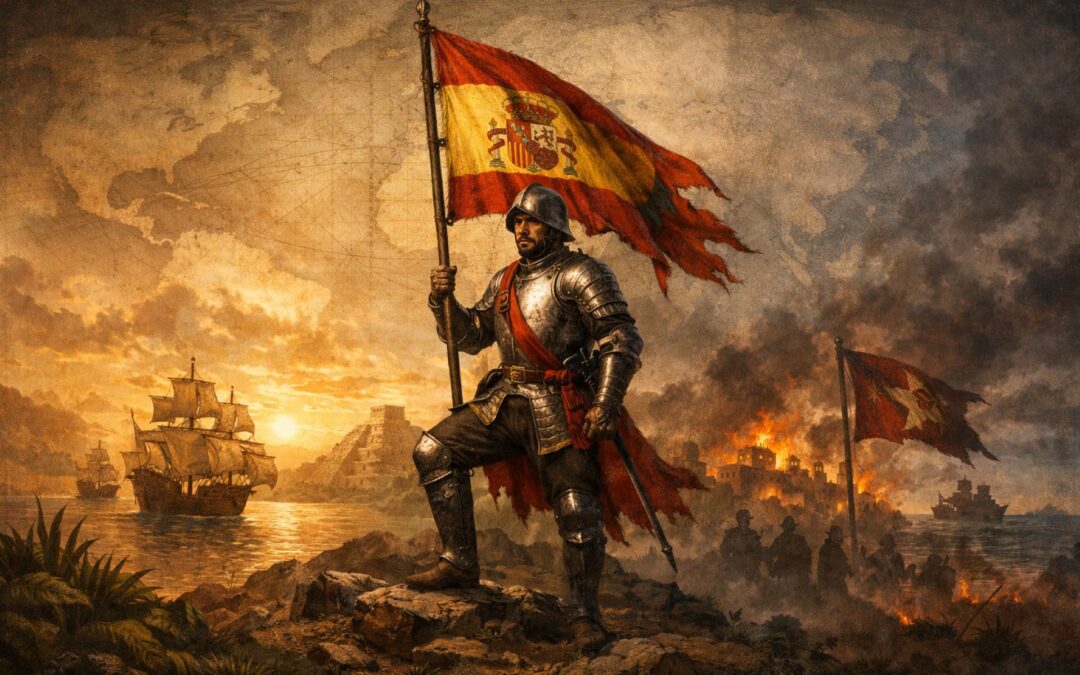
At the dawn of the 19th century, Spain presided over an empire so vast that it defied comprehension. Its territories stretched across more than five million square miles, spanning continents and oceans—from the silver-rich mountains of Peru to the bustling ports of Mexico, from the Caribbean islands to the distant shores of the Philippines. It was the first truly global empire in history, a political and economic system that connected Europe, the Americas, Africa, and Asia into a single, interdependent network. For a time, Spain stood at the center of the world.
Yet this immense power had emerged with astonishing speed. Just a few centuries earlier, there was no unified Spain at all—only a patchwork of competing kingdoms on the Iberian Peninsula, locked in a long struggle against Islamic states that had ruled much of the region since the early Middle Ages. From these fractured beginnings, Spain would rise to dominate global exploration, conquer vast civilizations, and accumulate unimaginable wealth. Its ships crossed uncharted oceans, its soldiers toppled empires, and its institutions reshaped entire societies.
This transformation was not accidental. It was driven by a convergence of forces: religious zeal forged in the Reconquista, dynastic ambition that united rival crowns, and a growing appetite for trade and expansion in an increasingly interconnected world. The discovery of the Americas—though unintended—became the catalyst that propelled Spain into a position of unprecedented dominance. What followed was not merely exploration, but conquest, colonization, and the construction of a global imperial system.
At its height, the Spanish Empire was sustained by a constant flow of silver and gold, extracted from the New World and funneled back to Europe. This wealth financed wars, funded royal ambitions, and reshaped global economies. But it also masked deeper weaknesses—overextension, poor governance, and growing competition from emerging European powers. Beneath the surface of imperial grandeur, tensions were building both within Spain and across its colonies.
Over time, those tensions would erupt. Rival empires would challenge Spanish supremacy, colonial societies would develop their own identities, and revolutionary movements would tear apart the imperial structure. By the early 19th century, much of Spain’s vast American empire had broken free, and by the end of that century, even its last overseas possessions would be lost.
The story of the Spanish Empire is therefore not just one of expansion, but of transformation—of how a regional power became the world’s first superpower, and how that same empire, stretched across continents, ultimately unraveled under the weight of its own success.
The Iberian Foundations: From Fragmented Kingdoms to Unified Power
Long before Spain became a global empire, the Iberian Peninsula was a contested frontier—a mosaic of kingdoms shaped by centuries of conflict, coexistence, and gradual consolidation. In the early Middle Ages, much of Iberia had fallen under the control of Muslim rulers following the Umayyad conquest of the 8th century. What remained in Christian hands was fragmented into small, resilient kingdoms in the north—Castile, Aragon, Navarre, and others—each pursuing its own survival and expansion.
Over the course of nearly seven centuries, these Christian kingdoms pushed southward in a prolonged process known as the Reconquista. This was not a single continuous war, but a shifting series of campaigns, alliances, and rivalries, both between Christian and Muslim states and among the Christian kingdoms themselves. Territory changed hands repeatedly, and political unity remained elusive. Yet this long struggle had a profound effect: it forged a militant, expansionist culture deeply intertwined with religious identity. Warfare, land acquisition, and the idea of reclaiming territory in the name of Christianity became central to political life.
Among these kingdoms, Castile and Aragon gradually emerged as the dominant powers. Castile, occupying much of central and northern Iberia, became known for its size, agricultural base, and military orientation. Aragon, by contrast, was more commercially focused, with territories stretching across the Mediterranean, including parts of Italy. Despite their differences, both kingdoms had reached a point where further expansion within Iberia was becoming increasingly limited—especially as Muslim power dwindled to a final stronghold in the south.
The turning point came in 1469 with the marriage of Isabella of Castile and Ferdinand of Aragon. This was not the creation of a unified state in the modern sense, but it was a dynastic union that effectively aligned the two most powerful kingdoms under a shared political project. Each retained its own laws, institutions, and administrative systems, yet their cooperation marked the beginning of a new phase in Iberian history. For the first time, there was a coordinated effort to consolidate power across most of the peninsula.
This partnership quickly bore fruit. In 1492, after a decade-long campaign, Isabella and Ferdinand completed the Reconquista by conquering the Emirate of Granada, the last remaining Muslim state in Iberia. The fall of Granada was more than a military victory—it was a symbolic culmination of centuries of religious conflict and a declaration that Christian rule over Iberia was now complete. That same year also saw the expulsion of Jews from Spain, reflecting the monarchs’ broader goal of enforcing religious unity as a foundation for political strength.
With internal rivals subdued and borders secured, the newly consolidated Spanish monarchy found itself in a position it had never occupied before: stable, unified in purpose, and ready to look outward. The energy that had once been directed toward internal conquest could now be redirected beyond the peninsula. At the same time, neighboring Portugal had already begun exploring the Atlantic and the African coastline, opening new maritime routes and demonstrating the immense potential of overseas expansion.
Spain was now primed for its next transformation. The structures forged during the Reconquista—military organization, religious zeal, and a willingness to pursue expansion—would not disappear. Instead, they would be projected outward onto a global stage. The unification of Castile and Aragon did not just end an era of internal conflict; it laid the foundation for one of the most dramatic expansions of power in world history.
The Age of Exploration and Columbus’s Voyage West
By the late 15th century, Europe stood on the edge of a profound transformation. Trade with the East—especially in spices, silk, and other luxury goods—had become immensely valuable, but it was also costly and constrained. Overland routes were dominated by powerful intermediaries, particularly the Ottoman Empire and various Italian city-states like Venice, which controlled access to goods flowing into Europe from Asia. As a result, Western European kingdoms began searching for alternative routes that would allow them to bypass these middlemen and tap directly into the wealth of the East.
Portugal had taken the early lead in this endeavor. Beginning in the early 1400s, Portuguese explorers had steadily pushed down the western coast of Africa, establishing trading posts and mapping previously unknown waters. Their long-term goal was clear: to find a sea route around Africa that would lead directly to the Indian Ocean and the markets of Asia. By the time Spain emerged as a unified power, Portugal had already built a strong maritime tradition and was on the verge of achieving a breakthrough.
It was in this competitive environment that a Genoese navigator named Christopher Columbus proposed a radically different idea. Rather than sailing around Africa, he argued that one could reach Asia by sailing west across the Atlantic Ocean. This was not a completely irrational proposal—the Earth’s spherical nature was already understood—but Columbus dramatically underestimated the distance between Europe and Asia. He believed that a relatively short voyage across an open ocean would bring him to the eastern shores of Asia.
Columbus first presented his plan to the Portuguese crown, but it was rejected. The Portuguese, already invested in their African route, saw little reason to gamble on such an uncertain and potentially dangerous alternative. Undeterred, Columbus turned to the Spanish monarchs, Isabella of Castile and Ferdinand of Aragon. At the time, they had just completed the Reconquista and were actively seeking new opportunities to expand their influence and wealth. After years of negotiation and hesitation, they agreed to fund his expedition.
On August 3, 1492, Columbus set sail from Spain with three ships—the Niña, the Pinta, and the Santa María. His journey into the Atlantic was a leap into the unknown. European sailors had little experience with such long westward voyages, and there was widespread fear of what might lie beyond the familiar boundaries of the ocean. Weeks passed without sight of land, and tensions among the crew began to rise. Yet Columbus persisted, driven by a mix of conviction, ambition, and the promise of immense reward.
On October 12, 1492, land was finally sighted. Columbus had reached an island in the Bahamas, which he named San Salvador. Believing he had arrived in the East Indies, he referred to the indigenous people he encountered as “Indians”—a misnomer that would persist for centuries. Over the course of his subsequent voyages, Columbus explored parts of the Caribbean, including Cuba and Hispaniola, gradually realizing that he had encountered lands previously unknown to Europeans.
What Columbus had discovered was not a new route to Asia, but an entirely new continent. This realization, though slow to fully take hold, would have enormous consequences. His voyages opened the door to European exploration, colonization, and conquest of the Americas on an unprecedented scale. Spain, which had only recently unified its internal territories, now found itself at the forefront of a new and potentially limitless expansion.
The significance of Columbus’s journey cannot be overstated. It marked the beginning of sustained contact between Europe and the Americas, initiating what historians often call the Columbian Exchange—a vast and complex transfer of goods, peoples, ideas, and diseases between the Old World and the New. It also set off a race among European powers to claim and control newly discovered lands, transforming exploration into empire-building.
For Spain, Columbus’s voyage was the catalyst that would propel it from a regional power to a global empire. What began as an attempt to find a trade route would soon evolve into one of the most consequential expansions of power in human history.
The Treaty of Tordesillas and the Division of the World
Columbus’s voyages did more than reveal new lands—they immediately created a geopolitical problem. Both Spain and Portugal, the two leading maritime powers of the age, now claimed rights to explore and control territories beyond Europe. Portugal had already invested decades in charting the African coast and establishing trade routes to Asia, while Spain, newly energized by Columbus’s discoveries, was eager to assert its own claims. Without a clear agreement, conflict between the two kingdoms seemed inevitable.
To resolve this dispute, both nations turned to a higher authority: the papacy. In the late 15th century, the Pope was not only a spiritual leader but also a key arbiter in international affairs, particularly among Catholic monarchies. In 1493, Pope Alexander VI issued a series of decrees that attempted to divide newly discovered lands between Spain and Portugal. These initial rulings, however, were vague and favored Spain, prompting further negotiations.
The result was the Treaty of Tordesillas, signed on June 7, 1494. This agreement established an imaginary line running north to south through the Atlantic Ocean, roughly 370 leagues west of the Cape Verde Islands. Lands to the west of this line would belong to Spain, while lands to the east would fall under Portuguese control. At the time, the geography of the world was still poorly understood, and the line was drawn based more on negotiation than on precise knowledge.
In theory, this treaty neatly divided the non-European world into two spheres of influence. In practice, it would have far-reaching and often unintended consequences. Most notably, it granted Spain rights to the vast majority of the Americas, while Portugal retained control over its African trade routes and, eventually, Brazil—whose eastern coastline happened to fall on the Portuguese side of the dividing line.
The Treaty of Tordesillas was remarkable not only for its ambition but also for what it represented. It was an early attempt to impose order on a rapidly expanding global stage, to define ownership over lands that neither party had fully explored or understood. In effect, two European kingdoms had claimed the right to divide the world between them, disregarding the countless indigenous societies that already inhabited these regions.
For Spain, the treaty provided a powerful legal and ideological justification for expansion in the Americas. It reinforced the notion that these newly discovered lands were rightfully theirs to explore, conquer, and govern. This sense of entitlement would shape Spanish actions in the decades to come, as explorers and conquistadors pushed deeper into the continent.
At the same time, the treaty intensified the spirit of competition. While Spain focused on the Americas, Portugal continued its push toward Asia, eventually establishing a vast trading network that stretched from Africa to India and beyond. The world was no longer a collection of isolated regions—it was becoming a contested, interconnected space where European powers sought dominance.
However, the agreement was far from universally accepted. Other emerging powers, particularly England, France, and the Netherlands, would later reject the legitimacy of the treaty altogether. They argued that lands not physically occupied could not simply be claimed by distant monarchs. This challenge would become increasingly important in the centuries ahead, as these nations entered the race for empire and began to encroach on territories that Spain considered its own.
In the immediate aftermath, though, the Treaty of Tordesillas cleared the way for Spain to act decisively. With its claims recognized—at least by its closest rival—Spain could move forward with confidence, transforming exploration into colonization and laying the foundations of what would soon become the largest empire the world had ever seen.
The Conquest of the Americas
If Columbus’s voyages opened the door to a new world, it was the conquistadors who forced their way through it. In the decades following the Treaty of Tordesillas, Spanish expeditions shifted from exploration to conquest, driven by a potent mix of ambition, religious zeal, and the promise of immense wealth. What followed was one of the most dramatic and consequential episodes in world history: the rapid overthrow of powerful indigenous civilizations and the creation of a vast colonial empire.
Hernán Cortés and the Fall of the Aztec Empire
The first great conquest unfolded in the heart of Mesoamerica. In 1519, Hernán Cortés, a relatively minor nobleman, led a small expedition from Cuba to the mainland of what is now Mexico. His force was modest—fewer than a thousand Spanish soldiers—but it was backed by superior weaponry, steel armor, cavalry, and, crucially, a willingness to exploit local divisions.
As Cortés advanced inland, he encountered a complex political landscape. The Aztec Empire, centered in the magnificent city of Tenochtitlán, dominated much of the region through a system of tribute and control over subject peoples. Many of these groups resented Aztec rule, and Cortés skillfully formed alliances with them—most notably with the Tlaxcalans, long-time enemies of the Aztecs.
When Cortés reached Tenochtitlán in November 1519, he was struck by its scale and sophistication. Built on an island in Lake Texcoco and connected by causeways, it was one of the largest cities in the world at the time. The Aztec ruler, Moctezuma II, received the Spaniards with caution, uncertain whether they were potential allies, enemies, or even divine figures as some early interpretations suggested.
That uncertainty proved fatal. Cortés quickly moved to assert control, effectively taking Moctezuma hostage and attempting to govern through him. But tensions escalated rapidly. In 1520, a violent uprising forced the Spanish to flee the city in a chaotic retreat known as La Noche Triste. Many were killed, and much of the treasure they had accumulated was lost.
Yet Cortés was not defeated. He regrouped, reinforced his alliances, and returned the following year with a larger, better-prepared force. In 1521, after a brutal siege lasting several months, Tenochtitlán fell. The city was devastated, its population decimated not only by warfare but also by smallpox—one of several European diseases to which the indigenous population had no immunity. In its place, the Spanish would build Mexico City, the capital of New Spain.
Francisco Pizarro and the Conquest of the Inca Empire
While Cortés was consolidating Spanish power in Mexico, another conquest was unfolding further south. The Inca Empire, stretching along the Andes across modern-day Peru, Ecuador, and Bolivia, was the largest and most sophisticated state in the Americas. It possessed an extensive road network, a centralized administration, and a highly organized society.
In the 1530s, Francisco Pizarro led the Spanish campaign against the Incas. Like Cortés, he commanded a relatively small force, but he arrived at a moment of vulnerability. The Inca Empire had recently been weakened by a civil war between rival claimants to the throne, and smallpox—introduced ahead of the Spanish—had already devastated the population.
In 1532, Pizarro encountered the Inca ruler Atahualpa in the town of Cajamarca. In a bold and calculated move, the Spanish launched a surprise attack, capturing Atahualpa despite being vastly outnumbered. The emperor offered a room filled with gold and silver as ransom for his release, a demand the Spanish accepted—and then ignored. Atahualpa was executed in 1533, leaving the empire leaderless.
The conquest of the Inca Empire was not as swift or decisive as that of the Aztecs. Resistance continued for decades, and internal conflicts among the Spanish themselves complicated the process. Nevertheless, by the mid-16th century, Spanish control over the region was firmly established, with Lima emerging as the administrative center of the new colonial order.
Disease, Alliances, and the Mechanics of Conquest
The success of the Spanish conquests cannot be explained by military technology alone. While firearms, steel weapons, and cavalry gave the Spaniards a tactical advantage, these factors were only part of the story. Far more decisive were the conditions they encountered—and the strategies they employed.
Disease played a catastrophic role. Smallpox, measles, and other European illnesses spread rapidly through indigenous populations, causing mortality on an unprecedented scale. In many regions, these epidemics struck before the Spanish even arrived in force, weakening societies and undermining their ability to resist.
Equally important were alliances. The Spanish rarely fought alone. In both Mexico and Peru, they leveraged existing rivalries, enlisting thousands of indigenous allies who saw an opportunity to overthrow dominant powers. In this sense, the conquests were not simply invasions but complex, multi-sided conflicts shaped by local dynamics.
Finally, there was the ruthless logic of conquest itself. The Spanish sought not just to explore or trade, but to dominate—to extract wealth, impose authority, and reshape societies in their own image. Cities were destroyed and rebuilt, political systems dismantled, and entire populations subjected to new forms of control.
By the mid-16th century, the foundations of Spanish power in the Americas had been firmly laid. Two of the greatest civilizations in the New World had fallen, and in their place stood a rapidly expanding empire. What began as a series of expeditions had become a transformation of an entire hemisphere—one that would define the trajectory of global history for centuries to come.
Building the Imperial System in the New World
Conquest alone did not make an empire. The fall of the Aztec and Inca civilizations gave Spain control over vast territories, but holding and managing those lands required something far more complex: administration, governance, and the creation of a durable imperial system. Over the course of the 16th century, Spain transformed its scattered conquests into a structured colonial order that could extract wealth, maintain authority, and project power across continents.
The Viceroyalties of New Spain and Peru
At the heart of this system were the viceroyalties—large administrative regions governed on behalf of the Spanish crown. The first of these, the Viceroyalty of New Spain, was established in 1535, with its capital in Mexico City, built atop the ruins of Tenochtitlán. It encompassed not only Mexico but also much of Central America, parts of the Caribbean, and even territories in North America.
Further south, the Viceroyalty of Peru was created in 1542, with Lima as its capital. This region included the former Inca heartlands and extended across much of South America. Together, these two viceroyalties formed the backbone of Spain’s American empire, serving as centers of political authority, economic coordination, and cultural influence.
The viceroys who governed these territories acted as representatives of the king, wielding immense power but ultimately answering to the crown. Their role was to enforce royal policy, oversee taxation, manage defense, and ensure the smooth functioning of colonial society. Despite the vast distances involved, Spain sought to maintain tight control over its empire, creating a system that was both centralized in intent and complex in execution.
Colonial Administration and Governance
Beneath the viceroys existed a layered administrative structure designed to extend Spanish authority into every corner of the empire. Regional courts known as audiencias handled judicial and administrative matters, while local officials governed cities and provinces. At the municipal level, cabildos, or town councils, managed day-to-day affairs, often dominated by Spanish settlers or their descendants.
In Spain itself, the Council of the Indies served as the primary body overseeing colonial governance. It drafted laws, appointed officials, and advised the monarch on matters related to the empire. This created a transatlantic administrative network that connected distant colonies to the royal court, though communication was slow and often imperfect.
One of the key challenges Spain faced was balancing control with practicality. The sheer scale of the empire made direct oversight difficult, and local officials often exercised considerable autonomy. Corruption, inefficiency, and regional variation were constant issues. Nevertheless, the system proved remarkably resilient, allowing Spain to maintain authority over its colonies for centuries.
Economic control was another central concern. The crown sought to regulate trade through a system known as mercantilism, ensuring that colonial wealth flowed back to Spain. Key ports, such as Seville, were designated as official gateways for trade, and strict regulations governed who could trade, what could be traded, and where goods could go. While this system generated significant revenue, it also encouraged smuggling and illicit trade, as colonists sought to bypass restrictions.
The Spread of Spanish Culture, Language, and Religion
Alongside political and economic control, Spain pursued a cultural and religious transformation of its colonies. Catholicism was at the core of this effort. Missionaries, particularly from orders such as the Franciscans, Dominicans, and Jesuits, spread across the Americas with the goal of converting indigenous populations. Churches, monasteries, and schools were established, and religious institutions became deeply embedded in colonial life.
This process was not merely spiritual—it was also a tool of imperial integration. Conversion to Christianity often went hand in hand with the adoption of Spanish customs, language, and social norms. Over time, Spanish became the dominant language in many regions, and Catholicism became a unifying force across diverse populations.
Yet this transformation was neither uniform nor uncontested. Indigenous cultures did not simply disappear; they adapted, resisted, and blended with Spanish influences in complex ways. The result was a hybrid cultural landscape, where European and indigenous traditions coexisted and interacted.
Education and urban development further reinforced Spanish influence. Cities such as Mexico City and Lima became major centers of learning, administration, and commerce, with universities, printing presses, and architectural styles reflecting European models. These urban hubs served as anchors of colonial society, linking distant regions into a cohesive imperial framework.
By the mid-16th century, Spain had achieved something unprecedented: the creation of a functioning imperial system spanning two continents. It was a system built on conquest, sustained by administration, and reinforced by culture and religion. This structure would enable Spain to dominate the Americas for generations—but it would also sow the seeds of future challenges, as the very complexity that made the empire powerful would later contribute to its unraveling.
Expansion Beyond the Americas
By the mid-16th century, Spain’s power was no longer confined to the Americas. What had begun as a transatlantic empire was rapidly evolving into a truly global system, stretching across oceans and linking distant regions through trade, exploration, and imperial ambition. Spain was no longer just conquering lands—it was building a worldwide network of influence that connected Europe, the Americas, and Asia.
Spanish Exploration in North and South America
Even as the core regions of Mexico and Peru were consolidated, Spanish explorers continued to push outward into less understood territories. In North America, expeditions moved through Florida, the Gulf Coast, and the vast interior of the continent. One of the most notable figures in this phase was Hernando de Soto, who, in the 1530s and early 1540s, led an extensive expedition across what is now the southeastern United States. His journey revealed the existence of large indigenous settlements and complex societies, though it also brought violence, disruption, and disease.
Further west, other expeditions ventured into the arid and rugged landscapes of what would later become Texas and the American Southwest. Yet unlike the densely populated regions of Mexico, these areas did not offer the same immediate wealth or centralized states to conquer. As a result, Spanish settlement remained limited, often confined to small outposts, missions, and coastal footholds.
In South America, exploration extended beyond the Andes into regions such as the Río de la Plata basin. Early expeditions led to the founding of settlements like Buenos Aires in the 1530s, though these areas developed more slowly compared to the wealthier centers of Peru. Much of southern South America, including parts of Argentina and Chile, remained sparsely populated by Europeans for decades, as Spain prioritized regions with greater economic potential.
The Philippines and Spain’s Entry into Asia
Spain’s expansion was not limited to the Western Hemisphere. In a remarkable extension of its imperial reach, it also established a foothold in Asia. This development can be traced back to the expedition of Ferdinand Magellan, whose circumnavigation of the globe between 1519 and 1522 demonstrated the vast scale of the Earth and the potential for global navigation.
Although Magellan himself died during the journey, his expedition revealed the existence of island groups in Southeast Asia that would later become central to Spanish ambitions. By the mid-16th century, Spain began to assert its presence in the Philippines, an archipelago that lay within its claimed sphere of influence.
In the 1560s, Spanish forces established control over key regions, particularly the island of Luzon. In 1571, the city of Manila was founded, quickly becoming the administrative and commercial center of Spanish Asia. From here, Spain could engage directly with the markets of China, Japan, and the broader East Indies.
However, Spanish control in the Philippines was never as complete as in the Americas. Resistance from local populations, especially in the southern regions such as Mindanao, limited the extent of Spanish authority. Nevertheless, the Philippines remained a vital strategic asset, serving as Spain’s gateway to Asian trade and a crucial link in its global empire.
The Global Reach of the Spanish Empire
What truly set the Spanish Empire apart was not just the scale of its territories, but the connections between them. For the first time in history, a single political entity maintained regular links across multiple continents. Ships carried silver from the mines of the Americas to Manila, where it was exchanged for Asian goods such as silk and porcelain. These goods were then transported back across the Pacific and eventually to Europe, creating a global circulation of wealth and commodities.
The Manila Galleon trade became one of the most important components of this system. Each year, ships would sail between the Philippines and Mexico, bridging the Pacific and tying together Spain’s American and Asian possessions. This transoceanic network allowed Spain to participate directly in global commerce, positioning it at the center of an emerging world economy.
At the same time, this vast reach presented enormous challenges. Communication across such distances was slow and uncertain, and maintaining control required significant resources. Yet for a time, Spain managed to hold this global system together, projecting power across oceans in a way no empire had done before.
By the late 16th century, Spain had achieved something unprecedented: it had become the world’s first global superpower. Its empire was not just large—it was interconnected, dynamic, and deeply influential in shaping the course of world history. But with this expansion came increasing strain, as the demands of governing such a vast domain began to test the limits of Spanish power.
The Engine of Empire: Silver, Trade, and Wealth
The Spanish Empire was not sustained by conquest alone—it was powered by an economic engine of extraordinary scale. At its heart lay the extraction of precious metals, particularly silver, from the Americas. This flow of wealth transformed Spain into the richest kingdom in Europe and placed it at the center of a rapidly globalizing economy. For a time, silver was the lifeblood of the empire, funding its ambitions and binding its far-flung territories into a single system.
The Mines of Potosí and New Spain
The true foundation of Spain’s wealth was discovered beneath the land of the New World. In 1545, one of the most significant finds in economic history was made at Potosí, in present-day Bolivia. There, a mountain rich in silver deposits—later known as the “Cerro Rico,” or “Rich Mountain”—became the epicenter of global silver production. Over the following centuries, Potosí would produce an astonishing share of the world’s silver, drawing tens of thousands of workers into its mines.
Similar, though smaller-scale, operations developed in New Spain, particularly in regions such as Zacatecas in Mexico. Together, these mining centers generated vast quantities of bullion, which were extracted using both indigenous labor systems and, later, wage labor. The Spanish adapted existing practices, such as the Inca mita system, into a form of forced labor that compelled indigenous communities to supply workers for the mines.
The human cost of this wealth was immense. Mining conditions were brutal, with long hours, dangerous environments, and exposure to toxic substances such as mercury used in refining processes. Mortality rates were high, and entire communities were disrupted as labor demands intensified. Yet despite these hardships, the flow of silver continued, becoming the backbone of the Spanish imperial economy.
The Treasure Fleets and Global Trade Networks
Extracting silver was only the first step; transporting it safely across oceans was an equally critical challenge. To manage this, Spain developed a highly organized system known as the treasure fleets. Each year, convoys of heavily armed ships would gather in the Americas, carrying silver, gold, and other valuable goods back to Spain. These fleets followed carefully planned routes, designed to maximize protection against storms, pirates, and rival powers.
Key ports such as Veracruz in Mexico and Cartagena in present-day Colombia became central hubs in this network. From there, goods were transported to Havana, where fleets assembled before crossing the Atlantic to Spain. The scale of these operations was immense, with entire economies organized around the timing and movement of these annual convoys.
But the flow of silver did not stop in Europe. A significant portion of it was redirected eastward, particularly through the Manila Galleon trade. Silver from the Americas was shipped across the Pacific to the Philippines, where it was exchanged for Asian goods—silk, spices, porcelain—which were then brought back to the Americas and eventually to Europe. In this way, Spanish silver became a global currency, facilitating trade between regions that had previously been only loosely connected.
The Price Revolution and Economic Consequences
The sheer volume of silver entering Europe had profound and far-reaching consequences. As more bullion flooded the economy, the value of money began to shift, leading to a sustained period of inflation known as the Price Revolution. Prices across Europe rose significantly during the 16th century, altering economic relationships and affecting both elites and common people.
For Spain, this influx of wealth was both a blessing and a curse. On one hand, it enabled the crown to finance large-scale projects, maintain armies, and assert its dominance in European politics. Spain became a major player in conflicts across the continent, using its resources to support wars in Italy, the Netherlands, and beyond.
On the other hand, this wealth was often mismanaged. Rather than investing in domestic industries or long-term economic development, much of the silver was spent on warfare and imported goods. As a result, Spain became increasingly dependent on other European economies, particularly those of the Netherlands and Italy, which benefited from Spanish spending.
Moreover, the reliance on a steady flow of silver created structural weaknesses. As production began to fluctuate and costs increased, the financial stability of the empire was put at risk. The crown’s heavy borrowing, combined with its reliance on future silver shipments as collateral, led to repeated bankruptcies—most notably during the reign of Philip II.
In essence, the very resource that had made Spain powerful also contributed to its vulnerabilities. The empire’s wealth was vast, but it was unevenly distributed, heavily exploited, and often poorly managed. What appeared to be an endless source of prosperity would, over time, reveal itself to be a fragile foundation.
By the end of the 16th century, Spain stood at the height of its power, enriched by the treasures of the New World and deeply embedded in global trade. Yet beneath this surface of abundance lay the seeds of decline—economic imbalances, overdependence on extraction, and the growing costs of maintaining a global empire.
Colonial Society and Social Hierarchy
As Spain consolidated its control over the Americas, it did not simply impose political authority—it reshaped entire societies. Over time, a complex and deeply stratified social order emerged, defined by origin, ancestry, and proximity to Spanish power. This hierarchy became one of the defining features of the Spanish Empire, influencing everything from governance and economic opportunity to identity and loyalty.
Peninsulares, Creoles, and Mestizos
At the top of colonial society stood the peninsulares—individuals born in Spain who had migrated to the colonies. They occupied the highest positions in government, the Church, and the military, serving as viceroys, governors, bishops, and senior administrators. Their authority rested not only on their roles but also on their direct connection to the Spanish crown. In many ways, they were the embodiment of imperial control.
Below them were the creoles (or criollos), people of Spanish descent who had been born in the Americas. Although often wealthy and influential—owning land, businesses, and estates—they were systematically excluded from the highest offices of power. This distinction, based purely on birthplace, would become a source of growing resentment over time. Creoles saw themselves as equal in heritage to the peninsulares, yet they were denied the same status and opportunities.
Further down the hierarchy were the mestizos, individuals of mixed Spanish and indigenous ancestry. This group grew rapidly as Spanish settlers—predominantly male—formed relationships, both formal and informal, with indigenous women. Mestizos occupied an intermediate social position: above indigenous populations but below those of full Spanish descent. Their identities reflected the blending of cultures that defined much of colonial life.
This tripartite structure, however, was only the foundation of a much more intricate system. Over time, colonial society developed an elaborate casta system, categorizing individuals based on increasingly specific combinations of ancestry. These classifications influenced legal rights, taxation, and social mobility, reinforcing divisions and maintaining Spanish dominance.
The Role of Indigenous Peoples and Forced Labor
At the base of this social hierarchy were the indigenous peoples of the Americas—the original inhabitants whose lands and societies had been conquered. Despite their marginalization, they remained essential to the functioning of the colonial economy.
The Spanish crown initially attempted to regulate their treatment through systems such as the encomienda, which granted Spanish settlers the right to collect tribute and labor from indigenous communities in exchange for protection and Christian instruction. In practice, this system often resulted in severe exploitation, as indigenous labor was used in agriculture, construction, and especially mining.
Later, in regions like Peru, the Spanish adapted existing labor systems such as the Inca mita, transforming them into mechanisms of forced labor for imperial projects, particularly in the silver mines. Entire communities were required to supply workers, disrupting traditional ways of life and contributing to population decline.
While there were efforts—particularly by some clergy—to advocate for better treatment of indigenous peoples, these reforms were unevenly enforced. The reality for many was one of hardship, displacement, and cultural upheaval, as they were integrated into an imperial system that prioritized extraction and control.
The Atlantic Slave Trade and Plantation Economies
As indigenous populations declined due to disease, overwork, and social disruption, the Spanish Empire increasingly turned to another source of labor: enslaved Africans. Beginning in the late 16th century, the transatlantic slave trade became a significant component of Spain’s colonial economy, particularly in the Caribbean and parts of South America.
Enslaved Africans were brought primarily to work on plantations, especially those producing sugar—a highly profitable commodity in European markets. These plantations required large, disciplined labor forces, and slavery provided a means of meeting that demand. Conditions were brutal, with high mortality rates and little regard for the humanity of those enslaved.
The introduction of African slaves added another layer to the already complex social hierarchy. Like indigenous peoples, enslaved Africans and their descendants occupied the lowest rungs of society, subject to harsh controls and limited rights. Over time, however, they also contributed to the cultural fabric of the empire, influencing language, religion, music, and daily life in profound ways.
The Limits of Expansion and the Beginning of Decline
By the early 17th century, the Spanish Empire had reached a point where further expansion was no longer its primary challenge—sustaining what it already possessed was. The same forces that had driven its meteoric rise—rapid conquest, vast territorial claims, and immense flows of wealth—now began to reveal their limitations. What had once been strengths gradually turned into structural weaknesses, marking the beginning of a long and uneven decline.
Overextension and Administrative Challenges
At its height, the Spanish Empire spanned multiple continents, from the Americas to Asia, connected by fragile lines of communication that stretched across oceans. Governing such a vast domain was an enormous logistical challenge. Messages between Spain and its colonies could take months to arrive, and decisions made in Madrid often reached the Americas too late to be effective.
This distance forced local officials—viceroys, governors, and administrators—to exercise a degree of autonomy that the crown could not fully control. While the imperial system was designed to be centralized, in practice it was uneven and often inconsistent. Corruption became a persistent issue, as officials exploited their positions for personal gain. Laws were frequently ignored or adapted to local conditions, weakening the authority of the central government.
At the same time, the empire’s administrative complexity made reform difficult. Efforts to tighten control or improve efficiency often encountered resistance, both from colonial elites and from entrenched bureaucratic interests. The very size of the empire, once a symbol of strength, now made it cumbersome and difficult to manage.
European Rivals: Britain, France, and the Netherlands
While Spain struggled with internal challenges, its dominance was increasingly contested by emerging European powers. England, France, and the Netherlands began to challenge Spain’s control over trade routes, territories, and resources, particularly in the Americas and the Caribbean.
These rivals adopted different strategies. The Dutch, for example, targeted Spanish shipping, attacking treasure fleets and disrupting the flow of silver. Privateers and pirates, often backed by European states, preyed on Spanish vessels, exposing the vulnerability of its maritime network. Meanwhile, England and France began establishing their own colonies in North America and the Caribbean, directly competing with Spanish interests.
One of the most significant blows came in the Caribbean, where Spain had once enjoyed near-total dominance. Over time, English, French, and Dutch forces seized key islands, transforming the region into a contested space. The loss of Jamaica to England in the mid-17th century was particularly symbolic, demonstrating that Spanish control was no longer secure.
These challenges were not limited to overseas territories. In Europe, Spain was engaged in costly and prolonged conflicts, including wars in the Netherlands and against other major powers. Maintaining its position required vast financial resources, placing additional strain on an already stretched empire.
Military Conflicts and Loss of Territory
The combination of internal weaknesses and external pressures led to a gradual erosion of Spanish power. Military conflicts became increasingly difficult to sustain, both financially and strategically. Spain’s reliance on silver to fund its wars meant that fluctuations in revenue could have immediate and severe consequences.
Repeated bankruptcies during the reign of Philip II and his successors highlighted the fragility of Spain’s financial system. Despite the immense wealth flowing from the Americas, the costs of maintaining armies, navies, and administrative structures often exceeded available resources. Debt mounted, and Spain became increasingly dependent on foreign financiers.
Territorial losses, while initially limited, signaled a broader shift in the balance of power. Regions that Spain had once claimed but failed to fully settle—particularly in North America—were gradually occupied by rival powers. In the Caribbean, strategic islands slipped from Spanish control, weakening its dominance over key trade routes.
Perhaps more importantly, the psychological impact of these losses began to alter perceptions of Spanish power. The image of an unstoppable empire gave way to one of vulnerability and stagnation. While Spain remained a significant force, it was no longer the unchallenged superpower it had once been.
Reform, Resistance, and Colonial Identity
By the 18th century, the Spanish Empire was no longer the dynamic, expanding force it had once been. Instead, it was a vast but aging system, marked by inefficiencies, regional disparities, and growing internal tensions. Recognizing these problems, the Spanish crown—now under the Bourbon dynasty—attempted to reform and modernize the empire. Yet these very efforts, intended to strengthen imperial control, would instead deepen divisions and accelerate the emergence of new colonial identities.
The Bourbon Reforms and Attempts at Centralization
Following the War of the Spanish Succession at the beginning of the 18th century, the Bourbon monarchs inherited a weakened empire and sought to restore its power through a series of sweeping reforms. Known collectively as the Bourbon Reforms, these policies aimed to centralize authority, increase efficiency, and, most importantly, boost revenue from the colonies.
One of the key objectives was to tighten control over colonial administration. The crown reduced the power of traditional institutions like the viceroys and created new administrative units, such as intendancies, which were designed to improve tax collection and reduce corruption. Officials born in Spain were increasingly favored for these positions, reinforcing the dominance of the peninsulares.
Economic reforms were equally significant. The crown sought to stimulate trade within the empire by loosening some restrictions while simultaneously ensuring that more wealth flowed directly back to Spain. Taxes were increased, monopolies were enforced, and efforts were made to curb smuggling, which had become widespread due to earlier trade limitations.
Military reforms also played a role. Spain invested in strengthening colonial defenses, building fortifications, and organizing local militias. These measures were partly a response to the growing threat posed by rival European powers, particularly Britain.
On paper, the Bourbon Reforms were logical and necessary. In practice, however, they disrupted existing power structures and alienated key groups within colonial society.
Growing Divisions Within Colonial Society
The reforms intensified long-standing tensions, particularly between peninsulares and creoles. By favoring officials born in Spain for high-ranking positions, the crown effectively sidelined the creole elite, who had long dominated local economies and social life. Despite their wealth and influence, creoles found themselves excluded from meaningful political power.
This exclusion fostered a growing sense of injustice. Creoles began to question why they, as descendants of Spaniards and inhabitants of the colonies, should be governed by distant authorities who often lacked local knowledge or investment in the region. Over time, this resentment evolved into a broader critique of the imperial system itself.
At the same time, other groups within colonial society—mestizos, indigenous peoples, and enslaved Africans—were also affected by the reforms. Increased taxation and stricter enforcement of labor systems placed additional burdens on already marginalized populations. In some regions, this led to uprisings and unrest, further destabilizing colonial order.
Cultural and intellectual shifts also contributed to changing attitudes. The spread of Enlightenment ideas—emphasizing reason, rights, and self-governance—began to influence colonial elites. While these ideas were often filtered through local contexts, they provided a framework for questioning traditional authority and imagining alternative political arrangements.
The Seeds of Independence
By the late 18th century, the Spanish Empire was still intact, but its internal cohesion was weakening. Colonial societies had evolved over generations, developing distinct identities that were no longer entirely aligned with Spain. The Americas were not simply extensions of the Iberian Peninsula—they were regions with their own histories, economies, and social structures.
Creole elites, in particular, began to see themselves as separate from Spain, even as they retained cultural and linguistic ties. They were increasingly aware of their economic importance and frustrated by their political marginalization. Meanwhile, broader social tensions—between different classes and ethnic groups—added further complexity to the situation.
The Bourbon Reforms, intended to strengthen imperial control, had instead exposed the limits of that control. By centralizing authority and extracting more resources, the crown had alienated many of the very groups it depended on to maintain order. The empire was becoming more efficient in some ways, but also more brittle.
What remained was a system under strain—one that could still function, but only as long as external conditions remained stable. It would take a major disruption to bring these underlying tensions to the surface. When that disruption came, it would not be gradual or contained. It would trigger a wave of revolutions that would dismantle the empire in a matter of decades.
The stage was now set for one of the most transformative periods in the history of the Americas: the wars of independence.
The Wars of Independence in the Americas
The collapse of the Spanish Empire in the Americas did not begin in the colonies themselves—it was triggered by events thousands of miles away in Europe. In 1808, Napoleon Bonaparte invaded Spain, deposed the ruling monarch, and installed his brother Joseph as king. This act shattered the legitimacy of Spanish authority and created a profound political crisis. If the rightful king was no longer on the throne, who held sovereignty over the empire?
Across Spanish America, this question ignited a wave of unrest. What began as a crisis of legitimacy quickly evolved into full-scale revolutions, as colonial societies seized the opportunity to challenge Spanish rule. Within a little over a decade, much of Spain’s vast American empire would be dismantled.
Revolutionary Leaders and Movements
The independence movements that emerged across the Americas were not uniform. They varied in leadership, ideology, and intensity, but they shared a common goal: the removal of Spanish authority.
In northern South America, Simón Bolívar became one of the most prominent figures of the revolutionary cause. A creole leader influenced by Enlightenment ideas, Bolívar envisioned not just independence, but the creation of unified republics across the continent. Through a series of campaigns, he led forces that liberated Venezuela, Colombia, and eventually Ecuador and parts of Peru.
Further south, José de San Martín played a crucial role in securing independence for Argentina and Chile. His strategy involved crossing the Andes—one of the most challenging military maneuvers of the time—to strike Spanish forces in Chile before moving northward into Peru. His collaboration, and occasional rivalry, with Bolívar reflected the complexity of the independence movements.
In Mexico, the struggle took a different form. It began in 1810 with a popular uprising led by Miguel Hidalgo, a priest who called for an end to Spanish rule and social injustices. Although Hidalgo himself was captured and executed, the movement he inspired continued under other leaders, eventually leading to Mexico’s independence in 1821.
Across these regions, the wars of independence were not simple conflicts between colonists and imperial forces. They were multifaceted struggles involving competing visions of the future, internal divisions, and shifting alliances.
The Collapse of Spanish Rule in Latin America
The wars of independence were long, brutal, and often chaotic. In many areas, they lasted for over a decade, with periods of stalemate, reversal, and renewed conflict. Spanish forces, supported by loyalists within the colonies, mounted significant resistance. The outcome was far from inevitable.
However, several factors tilted the balance in favor of the revolutionaries. Spain itself was weakened by the Napoleonic Wars and could not consistently project power across the Atlantic. Resources were stretched thin, and reinforcements were often delayed or insufficient.
At the same time, revolutionary leaders adapted their strategies, learning from early defeats and building more effective armies. They also capitalized on local support, drawing on the discontent of creoles, mestizos, and other groups who had grown increasingly dissatisfied with colonial rule.
By the early 1820s, the tide had decisively turned. Key victories, such as Bolívar’s campaigns in northern South America and the defeat of Spanish forces in Peru, effectively ended Spain’s control over the continent. The Battle of Ayacucho in 1824 is often seen as the final major blow, securing independence for much of South America.
The End of the Continental Empire
Within a remarkably short period, Spain lost nearly all of its American possessions. Argentina declared independence in 1816, Chile followed in 1818, and Mexico in 1821. Bolívar’s campaigns led to the creation of Gran Colombia, encompassing several northern regions. Peru and Bolivia, once strongholds of Spanish power, also broke free.
What had once been the core of the Spanish Empire—its richest and most important territories—was gone. The viceroyalties that had anchored imperial rule for centuries collapsed, replaced by a patchwork of newly independent states.
Yet independence did not immediately bring stability. Many of these new nations faced significant challenges, including political fragmentation, economic disruption, and internal conflict. The legacy of colonial rule—its hierarchies, institutions, and divisions—continued to shape their trajectories.
For Spain, the loss was devastating. The empire that had once made it a global superpower was now largely reduced to a few remaining territories. The flow of silver that had sustained its economy dwindled, and its influence on the world stage declined sharply.
The Final Collapse: The Spanish-American War
By the mid-19th century, the Spanish Empire had been reduced to a shadow of its former self. The vast continental territories of the Americas were gone, replaced by independent nations, and Spain’s global dominance had long since faded. Yet a few remnants of empire remained—most notably Cuba and Puerto Rico in the Caribbean, and the Philippines in Asia. These territories, though small compared to the empire’s former scale, carried immense symbolic weight. They represented the last vestiges of Spain’s imperial identity.
However, even these remaining colonies were increasingly unstable. Throughout the 19th century, Spain faced internal political turmoil, marked by frequent changes in government, economic difficulties, and social unrest. This instability weakened its ability to effectively govern and defend its overseas possessions. At the same time, nationalist movements within the colonies themselves were gaining strength.
In Cuba, dissatisfaction with Spanish rule had been building for decades. Economic grievances, political exclusion, and the desire for self-determination fueled repeated uprisings. The Cuban War of Independence, which began in 1895, was the most significant of these conflicts. It was characterized by guerrilla warfare, widespread destruction, and harsh countermeasures by Spanish forces, including the controversial policy of reconcentration, which sought to isolate rebels by relocating rural populations into controlled areas.
The conflict in Cuba quickly drew international attention, particularly from the United States. American economic interests in the region, combined with growing public sympathy for the Cuban cause, created pressure for intervention. Sensationalist reporting in the American press further inflamed public opinion, portraying Spanish actions in increasingly negative terms.
The turning point came in 1898, when the USS Maine, an American battleship stationed in Havana harbor, exploded under mysterious circumstances. Although the exact cause remains debated, the incident was widely blamed on Spain at the time, triggering a surge of nationalist sentiment in the United States. Within months, the United States declared war on Spain.
The Spanish-American War was brief but decisive. In the Caribbean, American forces quickly defeated Spanish troops in Cuba and Puerto Rico. Simultaneously, in the Pacific, the U.S. Navy destroyed the Spanish fleet in Manila Bay, effectively ending Spain’s control over the Philippines. Spain, already weakened and unable to sustain a prolonged conflict, had little choice but to seek peace.
The Treaty of Paris, signed in December 1898, formalized Spain’s defeat. Cuba was granted nominal independence, though it would remain under significant American influence. Puerto Rico and the Philippines were ceded to the United States, marking the transfer of Spain’s last major overseas territories.
With this, the Spanish Empire—once the largest and most powerful in the world—came to an end. What had begun over four centuries earlier with Columbus’s voyage had concluded not with a gradual fading, but with a swift and definitive collapse.
The consequences of this moment extended beyond Spain itself. For the United States, the war marked its emergence as a global power, with overseas territories and a more assertive role in international affairs. For Spain, it signaled a period of introspection and reevaluation, as the nation grappled with the loss of its imperial identity.
Conclusion
The Spanish Empire was the first to bind the world together on a truly global scale. From its origins in the fractured kingdoms of Iberia, it rose with astonishing speed to dominate continents, oceans, and trade routes, reshaping the course of history in the process. For over three centuries, Spain stood at the center of an interconnected world, linking the Americas, Europe, Africa, and Asia through conquest, commerce, and culture.
Its rise was driven by a powerful combination of forces—religious ambition forged in the Reconquista, dynastic unity, maritime innovation, and the unexpected discovery of the Americas. Through the conquests of vast civilizations and the extraction of immense wealth, Spain built an empire that was both expansive and deeply influential. Silver from the New World fueled global trade, Spanish became one of the most widely spoken languages, and Catholicism spread across continents.
Yet the very foundations of this empire also contained the seeds of its decline. Overextension made governance increasingly difficult, wealth was often mismanaged, and reliance on extraction created structural weaknesses. As rival European powers emerged and challenged Spanish dominance, the empire struggled to adapt. At the same time, colonial societies evolved, developing identities and ambitions that no longer aligned with distant rule from Madrid.
The collapse of the empire in the 19th century was therefore not sudden, but the culmination of long-standing pressures. The wars of independence in the Americas dismantled the core of Spanish power, and the final loss of its remaining territories in 1898 marked the definitive end of its imperial era. What remained was not the world’s first superpower, but a nation forced to redefine itself in a rapidly changing global landscape.
And yet, the legacy of the Spanish Empire endures. It can be seen in the languages spoken across the Americas, in the cultural and religious traditions that continue to shape societies, and in the global connections that it helped to establish. The modern world—with its networks of trade, migration, and cultural exchange—owes much to the systems that Spain helped create.
The story of the Spanish Empire is, ultimately, a story of transformation—of how a regional power became a global force, and how that force, stretched across the world, eventually unraveled. It is a reminder that empires are not only built through ambition and strength, but are also undone by the very scale of their success.