

The Little Prince is so widely quoted that it is easy to encounter its ideas without ever encountering the book that gives those ideas meaning. Images of roses, stars, foxes, and invisible essentials have escaped the novella and entered popular culture, where they often appear as gentle statements about love or childhood. In Saint-Exupéry’s actual story, however, those ideas emerge from a much more carefully constructed movement through loneliness, misunderstanding, attachment, responsibility, separation, and grief.
The book begins with an adult pilot remembering the imagination he lost as a child and ends with that same adult asking strangers to help him discover whether the friend he loved has somehow returned. Between those points, the Little Prince learns that loving someone does not make them objectively rare; rather, time, attention, and responsibility can make an otherwise ordinary being irreplaceable. The story repeatedly contrasts that relational form of value with adult systems built around authority, admiration, possession, classification, efficiency, and measurement.
This is therefore more than a fable about children being wiser than adults. It is a story about learning how to see, learning how to love, and learning what love demands once separation becomes possible. The discussion below covers the entire novella, including its final chapters and the fate of the Little Prince, so it contains full spoilers.
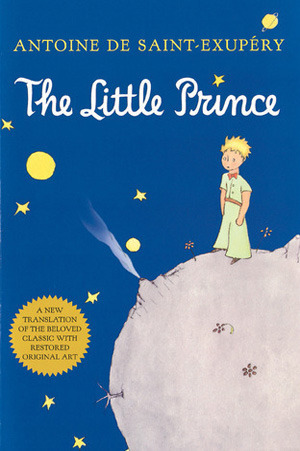
The Complete Story of The Little Prince
Saint-Exupéry structures the novella as an adult memory. The Pilot tells us about the Little Prince only after six years have passed, which means that everything we learn is already filtered through absence, longing, and an attempt not to forget. The narrative nevertheless unfolds in a clear sequence: first the Pilot’s childhood and desert crash, then the Prince’s life on B-612, his journey through a series of miniature worlds, his encounters on Earth, and finally the events that lead to his mysterious departure.
The Pilot, the Sheep, and Asteroid B-612
The story begins long before the Pilot meets the Little Prince. As a six-year-old boy, the future narrator sees an illustration of a boa constrictor swallowing an animal whole. Fascinated by the image, he draws a boa digesting an elephant, but every adult who sees the drawing mistakes it for a hat. He then produces a second picture showing the inside of the snake, only to be told that he should abandon drawing and concentrate on practical subjects such as geography and mathematics.
That reaction changes the course of his life. The child gives up his ambition to become an artist and eventually becomes a pilot. Even as an adult, however, he keeps his original drawing and occasionally shows it to people who seem potentially perceptive. Every supposed exception gives the same answer: they see a hat. The Pilot therefore learns to hide the imaginative part of himself and talk instead about subjects adults consider sensible.
Years later, his aeroplane crashes in the Sahara. He is alone, far from human settlement, with only a limited supply of water and no mechanic to help him. His survival depends on repairing the engine himself. The next morning, however, he is awakened not by rescuers but by a small boy who calmly asks him to draw a sheep.
The request is extraordinary enough, but what happens next is even more important. When the Pilot shows the child his old boa-constrictor drawing, the Little Prince immediately understands what it represents. The Prince does not see a hat. For the first time since childhood, the Pilot has met someone who shares the imaginative language adults once taught him to suppress.
The Pilot tries to draw several sheep, but the Prince rejects each one. One looks sickly, another seems like a ram rather than a sheep, and another appears too old. Frustrated, the Pilot finally draws a simple box and tells the Prince that the sheep he wants is inside it. The Prince is delighted. The solution works because both of them understand that a drawing can point beyond what is physically visible.
Their early conversations reveal almost nothing directly because the Little Prince asks questions without answering many himself. He examines the aeroplane and is amused by the fact that the Pilot fell out of the sky. Gradually, however, his comments reveal that he too has arrived from somewhere far away and that his home must be extremely small. When the Pilot suggests tying the sheep to keep it from wandering, the Prince regards the idea as unnecessary because there is nowhere very far for it to go.
The Pilot eventually concludes that the Prince came from a tiny asteroid known as B-612. He explains that a Turkish astronomer once discovered the asteroid but was initially ignored because of the clothes he wore. Only after appearing before other scientists in European dress was his discovery taken seriously. The anecdote extends the book’s satire beyond imagination: adults often judge information through social categories and appearances rather than substance.
The narrator then turns to the adult obsession with numbers. Grown-ups want ages, salaries, prices, measurements, and statistics, as though those quantities provide the essential truth about a person or place. The Pilot insists that such information tells us little about what actually makes someone lovable or something beautiful. At the same time, he acknowledges that he has begun using adult forms of explanation himself because he is afraid of forgetting his friend and wants readers to believe the story.
That confession changes the emotional frame of everything that follows. The Little Prince is not simply a strange child the Pilot once met. He is someone the narrator lost six years earlier and is still trying to hold in memory.
Baobabs, Sunsets, and the Rose
The Prince’s daily life on B-612 seems simple, but the planet requires constant care. One of his most important duties is identifying and removing young Baobab trees. Their seeds lie invisibly in the soil, and when they first sprout, Baobabs can resemble harmless plants. If neglected, however, their roots can grow large enough to split a tiny planet apart.
The Prince treats their removal as a matter of discipline rather than heroism. Dangerous growth is easiest to manage while it is still small. The Pilot illustrates the consequences of neglect with the planet of a lazy man who allowed three Baobabs to grow unchecked. What begins as an ordinary failure to attend to a small problem becomes a catastrophe that may be impossible to reverse.
Life on B-612 also allows the Prince to watch sunsets whenever he likes. Because his planet is so small, he can simply move his chair and see the sun set again. On one particularly sad day, he watched forty-four sunsets. The Pilot senses that the number reveals something about the Prince’s loneliness, but the Prince does not explain himself.
The emotional center of his life gradually becomes clear when he asks whether sheep eat flowers and whether thorns protect them. At that moment the Pilot is struggling with a stuck bolt on his engine and is frightened by the dwindling water supply. He answers impatiently and eventually tells the Prince that he is busy with serious matters.
The Prince reacts with anger. To him, the possible destruction of a flower is not trivial simply because it cannot be measured in the same way as an engine problem. If one flower is unique in all the universe and a sheep might destroy it, then the fate of that flower changes the meaning of every star associated with it. The Prince begins to cry, and the Pilot realizes that his own fear has caused him to behave like the adults he criticizes.
He stops working on the engine and tries to comfort the Prince. He promises to draw something that will protect the flower and begins listening to the story of how the Rose came to B-612.
The Rose did not resemble the ordinary flowers that usually appeared on the planet. Her seed arrived from somewhere unknown, and the Prince carefully watched the unfamiliar plant develop. Instead of producing a simple blossom, it prepared itself for a long time. The Rose seemed almost to arrange her own appearance before emerging, beautiful and self-conscious, into the sunlight.
Her beauty immediately captivates the Prince, but living with her is difficult. She asks for water, complains about drafts, requests protection, boasts about her thorns, and makes statements that do not always fit together. She is vain and theatrical, yet beneath those qualities she is also frightened and vulnerable. The Prince is too inexperienced to understand the difference between her manner of speaking and what she actually feels.
Instead of interpreting her actions, he treats her words as literal evidence. Her inconsistencies trouble him, and eventually he begins to distrust her. Only later does he realize that this was a mistake. Her fragrance filled his planet, she brought beauty into his life, and her demands often concealed affection or fear. He concludes that he had been too young to know how to love her.
The distinction matters because the Rose is not presented simply as an innocent victim or a selfish manipulator. Both characters contribute to the misunderstanding. She does not know how to express tenderness without pride, and he does not yet know how to recognize love beneath imperfect communication.
Eventually the Prince decides to leave B-612. Before departing, he performs his ordinary responsibilities with unusual care. He cleans his volcanoes, including an extinct one because one can never be entirely certain what might happen, and he removes the final Baobab shoots. He waters the Rose and prepares to place her under the glass globe that protects her.
Their farewell is very different from their earlier arguments. The Rose finally admits that she loves him and acknowledges that she has behaved foolishly. She tells him not to linger over blame and asks him to be happy. She even refuses the glass globe, accepting that life includes drafts, caterpillars, and vulnerability.
The Prince realizes that she is trying not to let him see her cry. Instead of openly asking him to stay, she tells him to go. He leaves with a migration of wild birds, carrying with him the emotional consequences of a relationship neither of them understood until separation became unavoidable.
The Six Planets of Grown-Up Absurdity
The Prince’s journey takes him first through six tiny asteroids, each inhabited by a single adult. These encounters are often treated as a simple catalogue of foolishness, but their differences matter. Each adult has organized an entire life around one narrow idea of what makes existence important.
On the first planet lives a King who immediately identifies the Prince as his subject. He claims authority over everything, including the stars, yet his power is carefully protected from failure because he gives only commands that circumstances are already likely to obey. If the Prince asks for a sunset, the King will order it only when the correct hour arrives.
The King therefore defines obedience in a way that prevents his authority from ever being disproved. Yet Saint-Exupéry gives him one idea worth taking seriously: a reasonable ruler should demand from others only what they are capable of doing. Authority becomes absurd when it ignores reality, but responsibility also becomes unjust when expectations exceed possibility.
When the Prince decides to leave, the King tries to stop him by offering offices and titles. He suggests that the Prince become a judge, even though there is almost no one to judge except perhaps an old rat. Finally, unable to keep the Prince voluntarily, he names him an ambassador. The declaration preserves the appearance of royal control over an event the King cannot actually prevent.
The second planet belongs to a Conceited Man who assumes that every visitor must be an admirer. He asks the Prince to clap so that he can repeatedly lift his hat in acknowledgment, then seeks confirmation that he is the most handsome, intelligent, wealthy, and admirable person on the planet. Since he is the planet’s only inhabitant, the praise is logically meaningless, but he wants it anyway.
His problem is not merely vanity. He requires another person while refusing to encounter that person as an independent being. The Prince exists only as an audience. Relationship is reduced to applause.
The third planet contains the Tippler, one of the shortest and bleakest encounters in the book. Surrounded by bottles, he tells the Prince that he drinks to forget. When asked what he wants to forget, he explains that he wants to forget his shame about drinking. The habit and the shame therefore sustain each other in a closed loop.
The Prince cannot solve the contradiction because the Tippler does not ask for help or imagine a life outside it. He leaves saddened and confused. Unlike the King or Conceited Man, whose absurdities are comic, the Tippler’s world suggests how adult behavior can become imprisoning even when the person recognizes its misery.
The fourth planet belongs to the Businessman, who spends his life counting stars. He claims to own hundreds of millions of them because, as far as he knows, he was the first person to think of owning them. His possession consists largely of recording the number on paper and locking the paper away.
The Prince compares this abstract ownership with his own relationship to the Rose and volcanoes on B-612. He waters the Rose and cleans the volcanoes. His possession, if it can be called possession, produces care. The Businessman does nothing for the stars he claims to own, so his idea of ownership is detached from stewardship or usefulness.
The fifth planet is so small that there is barely room for a Lamplighter and his lamp. The Lamplighter follows an instruction requiring him to light the lamp at night and extinguish it in the morning. The difficulty is that the planet now rotates once every minute, so he must perform the task continuously.
The Prince respects him more than the previous adults because the Lamplighter thinks about something other than himself. His work creates light rather than prestige, ownership, admiration, or intoxication. Yet the situation remains absurd because the rule has not changed even though circumstances have. Duty without judgment has turned meaningful service into mechanical exhaustion.
The sixth planet belongs to a Geographer who writes enormous books but does not personally explore the places he describes. Instead, explorers bring him information, and he first investigates their reliability before accepting their reports. His work appears intellectually serious, but it depends entirely on experiences he himself refuses to have.
The Geographer also distinguishes between permanent geographical features and things he regards as ephemeral. Mountains deserve recording because they are expected to endure, while flowers do not because they may disappear. When the Prince learns that “ephemeral” means threatened by rapid disappearance, he immediately thinks about the Rose he left behind with only four thorns for protection.
For the first time, mortality gives his departure a new urgency. The Rose is not merely difficult or beloved; she is vulnerable. The Geographer recommends that the Prince visit Earth, and the Prince continues his journey carrying a stronger awareness of what he may have abandoned.
Earth, the Rose Garden, and the Fox
Earth is unlike the tiny worlds that preceded it because it contains enormous numbers of kings, businessmen, geographers, drinkers, and vain people. The narrator briefly imagines the old global network of lamplighters before electric lighting, each one lighting and extinguishing lamps as night moved across the planet. From a distance, human routine becomes almost beautiful, even though the earlier Lamplighter episode showed how routine can also become absurd.
The Prince does not initially encounter crowds. He lands in the African desert and meets a golden Snake. Their conversation is cryptic, but its importance becomes clear much later. The Snake tells the Prince that people can be lonely even among other people and claims that despite his small size, he possesses enough power to return someone to the earth from which they came.
The Snake suggests that if the Prince becomes too homesick, he may be able to help. Nothing happens immediately, but the possibility of return has now entered the story. The ending is prepared long before the Prince decides to use it.
The next encounter is with a tiny desert flower. She has seen only a few humans and describes them as rootless, blown about by the wind. The image reinforces a problem running through the book: movement without attachment can leave people directionless rather than free.
The Prince then climbs a mountain, expecting that height might allow him to see the whole world and find other people. Instead, he finds bare peaks and hears only his own echo. When he speaks, the mountain repeats his words back to him. The Prince interprets the echo as evidence that people on Earth lack imagination because they merely repeat what they hear rather than answering.
Eventually he finds a road, and the road leads him to a garden filled with roses. The discovery devastates him. His Rose had led him to believe that she was unique in the universe, but here are thousands of flowers that look exactly like her.
The Prince’s entire understanding of his own importance collapses. He had imagined himself the owner of a rare treasure, but if his flower is merely one rose among thousands, then perhaps he is not rich at all. His small volcanoes suddenly seem insignificant as well. He lies down in the grass and cries.
At precisely this moment, the Fox appears. The Fox does not solve the Prince’s problem immediately because the two begin as strangers. When the Prince asks the Fox to play, the Fox says that this is impossible because they have not yet established ties.
The Fox explains that before a relationship exists, the Prince is simply one boy among countless boys, while the Fox is one fox among countless foxes. If they form a bond, however, each will become unique to the other. The important transformation does not happen because either changes species, appearance, or measurable qualities. It happens because they invest time and attention in one another.
The process requires patience. The Prince must return regularly, sit at a distance, and gradually move closer. Ritual matters because expectation changes the emotional meaning of time. If the Fox knows when the Prince will arrive, anticipation itself becomes part of the relationship.
The Fox also explains how attachment changes perception. The Prince’s golden hair will make fields of wheat, previously irrelevant to a fox who does not eat bread, become meaningful. After the Prince leaves, the wheat will remind the Fox of him. Separation will therefore hurt, but the pain does not make the relationship a mistake.
When the time comes for the Prince to leave, the Fox is sad. The Prince initially wonders whether their friendship has harmed the Fox, since he appears to have gained sorrow. The Fox directs him back to the rose garden before answering the deeper question.
The Prince looks again at the thousands of roses and now understands why they are not equivalent to his Rose. He watered her, sheltered her, listened to her, endured her moods, and spent time with her. Their history has made her unique to him even though she is not botanically unique.
This is the conceptual turning point of the novella. The Rose does not need to be objectively rare in order to be irreplaceable. Value can arise through relationship.
The Fox’s final lesson joins several ideas the book has been developing since the first drawing. Sight alone cannot reveal everything that matters. Time devoted to someone changes their significance. Once ties have been created, responsibility follows from them. The Prince now has a language for what his relationship with the Rose meant before he understood it.
Trains, Thirst, the Well, and the Prince’s Return
The Prince next meets a railway switchman who sends trains rushing in different directions. The people inside are constantly travelling but rarely know what they are seeking. They are dissatisfied where they are and move elsewhere without necessarily becoming less dissatisfied.
Children, the switchman observes, behave differently. They can become deeply attached to something as apparently insignificant as a rag doll. If it is taken away, they cry because time and attention have made it important. The example restates the Fox’s relational philosophy in an ordinary human setting.
A Merchant then offers another version of adult efficiency. He sells pills designed to eliminate thirst, supposedly saving the user fifty-three minutes every week. The Prince asks what a person should do with the saved time and concludes that if he had fifty-three minutes available, he would use them to walk slowly toward a spring.
The contrast becomes immediately important because the Pilot and Prince are now genuinely running out of water. Eight days have passed since the crash. The Pilot has not completed the engine repair, and their supply is exhausted.
They begin walking through the desert even though there is little rational reason to expect a well nearby. Their conversation changes the Pilot’s understanding of emptiness. The Prince says that the desert is beautiful because somewhere it hides a well. The Pilot remembers a childhood story that a house he knew contained hidden treasure and realizes that unseen possibility can transform the meaning of an apparently ordinary place.
When the Prince falls asleep, the Pilot carries him. Looking at the sleeping child, he begins to understand that what matters most about him cannot be reduced to what the eyes register. The Prince’s fragility, loyalty, and responsibility for the Rose give his life a meaning that cannot be measured physically.
At dawn, they find a well. It is strangely elaborate for a well in an empty desert, more like something one would expect in a village. The Pilot lowers the bucket, and the pulley makes a sound the Prince experiences almost as music.
The water they drink is not valuable simply because it chemically satisfies thirst. Its meaning includes the long walk beneath the stars, the effort of pulling the bucket, the sound of the pulley, the danger they have survived, and the companionship between them. Ordinary water becomes precious through experience in much the same way that an ordinary rose becomes unique through relationship.
The Prince then returns to the practical problem that began their friendship. The Pilot had promised to draw a muzzle for the sheep so that it could not eat the Rose. The drawing exists, but the Pilot has unknowingly left out the leather strap needed to attach it.
At first this seems like a minor detail. By the final chapter, it will become one of the most consequential uncertainties in the entire story.
The Prince reveals that the next day is the anniversary of his arrival on Earth. He asks the Pilot to continue working on the aeroplane and return later. The Pilot eventually succeeds in repairing the engine, which means that he too can now go home.
When he returns to the appointed place, he discovers the Prince sitting on an old stone wall and apparently speaking to someone below. From the Prince’s words, the Pilot realizes that he has arranged to meet the Snake. The location is not accidental: the Prince has returned to the place where he first arrived on Earth.
The Snake slips away when the Pilot approaches, but the Prince’s intention becomes increasingly clear. He tells the Pilot that both of them are going home. The Pilot’s home can be reached by aeroplane. The Prince believes that his own is too far away for his physical body to travel there.
He describes the body as something heavy that cannot accompany him, comparing what will remain to an abandoned shell. Yet he is not emotionally fearless. As the moment approaches, he acknowledges that he will be afraid.
He tries to comfort the Pilot by giving him a new relationship with the stars. Because the Prince will live on one of them and laugh there, every star can seem capable of laughter. What was previously anonymous space will become personal because one unseen point contains a friend.
The Prince also explains why he must return. He feels responsible for the Rose. She has only her thorns, and the sheep remains a potential danger. The lesson learned from the Fox is now no longer an idea; it motivates the Prince’s final decision.
The Pilot does not want him to go and follows even after being asked not to witness what is coming. The Snake strikes the Prince’s ankle. After a moment, the Prince falls silently into the sand.
The next day, there is no body.
Six years later, the Pilot remains uncertain about exactly what happened, but the absence of the body allows him to believe that the Prince reached B-612. He can sometimes look at the stars and hear laughter rather than emptiness.
Then another memory troubles him. The muzzle he drew has no strap. If the Prince cannot put it on the sheep, then the animal might eat the Rose.
The question transforms the entire universe of the story. If the Rose is alive, the stars mean one thing. If the sheep has eaten her, they mean something else. Nothing visible in the night sky changes, yet for someone who loves the Prince and cares about what he cares about, everything changes.
The narrator ends by asking readers to remember the desert landscape where the Little Prince disappeared. If someone travelling there encounters a small golden-haired boy who asks questions and refuses to answer many himself, the Pilot wants to know. Six years after the encounter, he is still waiting for confirmation that his friend has returned.
The Life Behind the Fable: Aviation, Exile, War, and New York
Understanding Saint-Exupéry’s life does not solve The Little Prince, but certain biographical facts clarify why its imagery carries such emotional authority. Saint-Exupéry was not merely an author fascinated by aviation from a distance. He was an experienced pilot whose work repeatedly placed him in remote landscapes where technical competence, weather, machinery, distance, and human vulnerability could become matters of survival.
The desert setting also has a concrete precedent in his life. Saint-Exupéry survived a 1935 crash in the Sahara while attempting a long-distance aviation record, and the experience later informed his writing about thirst, disorientation, and survival. A useful factual account of his flying career and wartime service appears in the National WWII Museum’s history of Saint-Exupéry and The Little Prince. The novella’s opening therefore takes an apparently fantastical encounter and places it inside a situation the author understood physically: a pilot stranded with failing resources in an environment where death is possible.
The book was also produced in the shadow of war and exile. Saint-Exupéry wrote The Little Prince while living in the United States after the fall of France, and the dedication to Léon Werth quietly places the story within that historical suffering. Werth was not just an abstract friend from childhood but an adult friend enduring hardship in occupied France, which gives the opening insistence that every grown-up was once a child a harsher context than the phrase initially suggests.
The Morgan Library’s surviving manuscript and preliminary drawings show the degree to which Saint-Exupéry worked simultaneously as writer and illustrator. The book was published in New York in 1943, in both French and English, before its later postwar French publication in France. That publication history helps explain why the novella can feel at once intensely French and strangely detached from any one national setting: it was created by a French writer displaced from his country and writing about home, separation, responsibility, and return.
It is tempting to convert every image into biography. The Rose is often linked with Saint-Exupéry’s wife Consuelo, while Baobabs are sometimes read as images of fascism or other destructive political forces. Such associations can illuminate the book, but they become misleading when treated as one-to-one equations. The Rose functions inside the story as lover, responsibility, vulnerability, beauty, difficulty, memory, and home; reducing her to a disguised portrait of one historical person narrows rather than enriches the character.
A similar caution applies to political interpretation. Adam Gopnik’s wartime reading of The Little Prince persuasively connects the book’s hostility toward abstraction with Saint-Exupéry’s experience of war, exile, and France’s defeat. That perspective helps explain why counting, categorizing, governing, and owning repeatedly appear as inadequate substitutes for human attachment, but the novella’s meanings exceed any single political allegory.
Saint-Exupéry himself disappeared on July 31, 1944 while flying a reconnaissance mission over the Mediterranean. Wreckage of his aircraft was eventually identified, but the exact circumstances of the crash remain uncertain. That matters editorially because later biographies and popular retellings have sometimes presented a German shoot-down as settled fact when the evidence does not justify such certainty.
The most useful biographical conclusion is therefore modest. Saint-Exupéry knew aviation, danger, separation, friendship, political catastrophe, and the possibility of never returning home. Those experiences do not decode the novella, but they help explain why a story about a pilot in a desert, a fragile Rose on a distant planet, and a friend who may never come back carries more weight than its fairy-tale simplicity initially suggests.
A Universe of Tiny Planets and Empty Distances
The world-building of The Little Prince is deliberately unlike conventional science fiction. B-612 has volcanoes small enough to clean, a horizon close enough to let someone watch repeated sunsets by moving a chair, and Baobabs whose roots can threaten an entire planet. The physical rules are not designed for astronomical plausibility; they are designed to transform ordinary emotional and social conditions into visible landscapes.
B-612 functions partly as a miniature household. Its scale makes responsibility impossible to hide. A neglected shoot can become a planetary catastrophe, an uncleaned volcano may become dangerous, and one Rose can dominate the emotional life of the entire world. The planet literalizes a truth that is easier to ignore in larger settings: everyday maintenance shapes whether a shared world remains habitable.
The six asteroids visited afterward are even more schematic. Each contains one inhabitant, one dominant activity, and almost no social complexity. Their isolation is precisely the point. The King can imagine universal authority because no ordinary political life exists to test it; the Conceited Man can demand admiration without reciprocity; the Businessman can treat stars as property because nobody else is present to dispute the claim.
These planets therefore externalize mental habits. Each adult effectively lives inside a worldview reduced to one principle. Authority, vanity, shame, possession, duty, and expertise become physical worlds, making abstract adult obsessions easy for a child to recognize.
The Lamplighter’s planet demonstrates the advantage of this method especially well. A rule that might be reasonable under one set of conditions becomes obviously ridiculous when the planet turns once per minute. Bureaucratic inflexibility is not explained theoretically; it becomes a man lighting and extinguishing a lamp every sixty seconds because nobody has revised the instruction.
Earth initially seems to promise the opposite problem because it is huge and densely populated. Yet the Prince lands in the desert, meets almost no one, and repeatedly encounters forms of loneliness: a Snake, a tiny flower, an echo, railway passengers moving rapidly without knowing why. Population does not automatically produce relationship.
The book’s geography therefore works through emotional contrast rather than scientific realism. Tiny planets exaggerate isolation, while immense Earth shows that people can remain equally isolated within crowds. The desert appears empty but contains a hidden well; the rose garden appears abundant but initially destroys the Prince’s sense of value; the stars appear physically identical but become emotionally transformed once he believes one contains his friend.
Space in The Little Prince is rarely neutral. Distance separates people, but it can also reveal what attachment means. Home is tiny because what makes it important is not size. A planet holding one vulnerable Rose can matter more than a universe containing millions of stars.
The Characters and Relationships That Give the Fable Its Weight
The major characters in The Little Prince are simple enough to be read symbolically, but the strongest of them are not exhausted by symbolic interpretation. Their contradictions, misunderstandings, and changing relationships create the emotional argument of the book. The Rose matters because she is difficult as well as beautiful, the Fox matters because friendship costs him something, and the Pilot matters because he is an adult capable of recovering what adulthood once taught him to suppress.
The Little Prince and the Pilot
The Little Prince first appears as a figure of extraordinary perception. He understands the Pilot’s boa drawing without explanation, rejects adult obsessions with numbers and ownership, and repeatedly asks questions that expose contradictions other people have stopped noticing. Yet he is not written as an infallible child philosopher who already possesses the truth.
His relationship with the Rose proves that limitation. He can recognize the absurdity of the Businessman but cannot initially understand a person he loves. He hears the Rose’s boasts and complaints without interpreting the fear beneath them, then leaves because he lacks the emotional maturity to distinguish imperfect speech from imperfect love.
His journey is therefore educational. The planetary adults show him what distorted forms of seriousness look like, but the Fox teaches him something he did not know: uniqueness can be created rather than discovered. By the time he decides to return to B-612, responsibility has become the practical consequence of that insight.
The Pilot develops in the opposite direction. He begins as someone who once understood imagination but was trained out of openly using it. Unlike the grotesque planetary adults, he is not irredeemably trapped. He remembers what has been lost, even if he has adapted himself to adult expectations.
The desert crisis exposes that conflict. When he tells the Prince that the engine is a serious matter and the Rose is not, he temporarily reproduces exactly the adult hierarchy of value he has spent the opening chapters mocking. His later change is therefore not a return to childish innocence so much as a rebalancing of practical and relational knowledge.
The Pilot still has to repair the engine. The book never suggests that mechanical reality disappears because love is important. What changes is his conviction that only one type of problem deserves seriousness.
By the time he carries the sleeping Prince through the desert, the Pilot is learning to see the child as more than a small physical body. The Prince’s loyalty to an unseen Rose becomes part of what the Pilot perceives. His final narration shows how completely that relationship has changed him: six years later, the stars themselves have different meanings because of one person who may be among them.
Their friendship also complicates the book’s apparent opposition between children and adults. The Pilot is an adult, yet he becomes the book’s most important witness. Saint-Exupéry does not finally divide humanity into biological categories; he distinguishes between modes of attention.
The Rose
The Rose is one of the book’s most frequently simplified characters. She can easily be described as vain, demanding, manipulative, or fragile, but none of those words adequately captures how her relationship with the Prince works.
She unquestionably creates confusion. She exaggerates, contradicts herself, complains about conditions she seems able to tolerate, and uses her beauty as a form of authority. Her pride makes direct vulnerability difficult, so affection is often disguised as criticism or theatrical helplessness.
At the same time, the Prince’s later self-assessment matters. He recognizes that he listened too closely to her words and not closely enough to what her presence and actions revealed. She perfumed the planet, brought beauty into his daily life, and ultimately admitted her love when he was leaving.
The farewell scene is crucial because it prevents the earlier conflict from becoming a simple warning about a bad relationship. The Rose takes responsibility for some of her behavior, releases the Prince from guilt, and accepts the risks he had been trying to protect her from. Even her insistence that he leave quickly is partly an attempt to conceal grief.
The relationship remains asymmetrical because almost everything we learn about her comes through the Prince’s memory and the Pilot’s retelling. She receives no independent narrative voice beyond the scenes the Prince recounts. This limitation matters when readers try to turn the story into a general theory of relationships: we know far more about the Prince’s education than about what the Rose needs or learns after he leaves.
Even so, her narrative function is richer than that of a symbol representing “love.” She forces the Prince to confront one of the book’s hardest lessons: loving someone does not require that the person be flawless, easy, or objectively unique. It requires learning how to see the particular being behind imperfect words.
The Fox
The Fox enters at the moment the Prince’s previous understanding of value has collapsed. The rose garden has shown him that his flower is not physically unique, so the Fox has to answer a problem created by the plot rather than simply deliver a moral lesson from nowhere.
His answer begins with relationship. Before ties exist, two beings are interchangeable from one another’s perspective. The Prince is one boy among many, and the Fox is one fox among many. Time spent together changes that condition.
The process is deliberately slow. The Fox emphasizes patience, regularity, distance gradually reduced, and ritual. Friendship is not created by declaration; it grows through repeated attention.
The wheat fields reveal the transformation especially clearly. Wheat has no practical value to the Fox because he does not eat bread. Once the Prince’s golden hair becomes associated with wheat, however, the fields acquire meaning. Nothing about the wheat changes materially, but relationship changes perception.
The Fox also refuses the idea that grief makes attachment worthless. Friendship will hurt when the Prince leaves, yet the Fox will retain the transformed meaning of the wheat. Loss becomes evidence that the relationship mattered rather than proof that it should never have existed.
The English vocabulary surrounding this episode requires some care. Katherine Woods famously renders the French apprivoiser as “tame,” but translation criticism comparing Woods and later versions shows why the broader idea of establishing ties is important. Read narrowly in modern English, “taming” can suggest domination; within the episode, the Fox is describing reciprocal relationship, ritual, vulnerability, and mutual transformation.
His philosophy is powerful precisely because it answers the Prince’s problem with the Rose. It should not, however, be treated as a complete ethical theory. Attachment can create responsibility, but relationships can also be harmful, coercive, or unequal. The Fox gives the Prince a necessary insight into care, not an all-purpose rule that every bond must be preserved regardless of circumstance.
The Snake and the Planetary Adults
The Snake occupies a different category from the adults encountered on the asteroids. He is mysterious rather than comic and possesses an actual power the Prince eventually chooses to use. His language connects death, earth, home, and release without explaining exactly how those ideas fit together.
He also appears at both ends of the Prince’s life on Earth. At the beginning, he offers the possibility of return if homesickness becomes unbearable. Near the end, that possibility becomes action. Because Saint-Exupéry refuses to explain the Snake psychologically or metaphysically, the character remains both literal and symbolic.
The six planetary adults are intentionally flatter. The King turns power into a system that cannot admit disobedience. The Conceited Man converts other people into mirrors. The Tippler is trapped in a cycle of shame and avoidance, while the Businessman mistakes counting and possession for meaningful relation.
The Lamplighter is more complicated because the Prince respects his concern for something beyond himself. His failure lies not in selfishness but in unreflective obedience to a rule that no longer fits reality. The Geographer is also more intellectually substantial than the earlier figures: he values evidence and reliability, yet his knowledge depends on experiences he does not personally undertake.
Together, these figures do not prove that all adult activity is foolish. Instead, they show how potentially useful things—authority, recognition, work, knowledge, ownership, efficiency—become absurd when detached from judgment, reciprocity, care, or lived purpose.
The Switchman and Merchant extend that critique on Earth. One manages enormous movement without knowing whether travellers understand where they are going; the other sells efficiency without asking what saved time is for. Their problem is not organization or technology itself but activity separated from a meaningful end.
What The Little Prince Is Really About
The novella’s famous lines can make its ideas sound independent of the story, but most of its philosophy develops through repeated situations rather than abstract argument. The Rose creates a problem, the journey exposes incomplete adult alternatives, the rose garden destroys one assumption about value, and the Fox provides a different model that the ending then tests under the pressure of mortality and separation.
Love, Attachment, and Responsibility
The book’s deepest idea is not that everyone has one predetermined soulmate or uniquely special object waiting to be discovered. The rose garden explicitly destroys that interpretation. The Prince’s Rose looks like thousands of others.
What makes her unique is shared history. He has watered her, listened to her, protected her, argued with her, worried about her, and spent time with her. Their relationship has changed what she means to him.
The Fox makes this logic explicit, but the book has been preparing it from the beginning. The Pilot’s old drawing becomes important because of childhood memory. The Prince’s sheep matters because it comes from the Pilot. Wheat matters because it becomes associated with a friend. Water from the desert well tastes different because of everything required to reach it.
Value in The Little Prince is therefore often relational rather than intrinsic or economic. Something need not be objectively rare, expensive, productive, or measurable to become irreplaceable within a life.
Responsibility follows because relationship creates consequences. If the Prince’s actions can affect the Rose’s survival, then loving her cannot remain merely a feeling. He has to think about the sheep, the muzzle, the globe, and ultimately whether he should return home.
This responsibility is one reason the book’s philosophy is more demanding than its gentleness suggests. Attachment does not simply make the world more beautiful. It creates obligations and makes loss possible.
The ending pushes that idea to its limit. The Prince’s love for the Rose helps motivate him toward a dangerous return, while the Pilot’s love for the Prince leaves him permanently vulnerable to uncertainty. Relationships give meaning precisely because the beings involved can be lost.
Childhood, Adulthood, and Ways of Seeing
The most obvious opposition in the book is between children and adults. Adults mistake the boa for a hat, care about numerical facts, organize lives around status or possession, and often fail to understand what children consider obvious.
Yet the book becomes more interesting when “child” and “adult” are treated as ways of perceiving rather than fixed categories. The Pilot has grown up but retains enough memory of childhood to recognize what has been lost. He can repair an aeroplane and still learn from the Little Prince.
The problem is therefore not rational knowledge itself. Geography, engineering, numbers, and evidence all have legitimate uses. The Pilot would die if he treated the damaged engine as irrelevant, and the Geographer is reasonable to care whether explorers tell the truth.
Adult vision becomes inadequate when it claims exclusivity. Numbers can describe an asteroid without explaining why someone loves it. Prices can describe a house without revealing whether it contains treasured memories. Physical appearance can describe a flower without explaining why one Rose matters more than thousands.
The Pilot’s transformation shows that maturity need not require choosing between imagination and practical competence. What must be rejected is reduction: the belief that whatever cannot be quantified is therefore unreal or unimportant.
The final chapter completes this lesson by making the reader participate. Whether the Rose still lives cannot be seen from Earth. Nevertheless, once the reader cares about the Prince, the answer matters. The book trains us to recognize an invisible difference.
Loneliness, Friendship, and the Need for Ties
Nearly everyone in The Little Prince is lonely, although not everyone recognizes it. The Pilot has spent adulthood hiding part of himself because nobody understands his drawing. The Prince leaves the Rose after mutual misunderstanding and then passes through planets occupied by people who have built entire systems around themselves.
The Conceited Man is perhaps the clearest example of loneliness disguised as social desire. He wants admiration but has no interest in knowing the admirer. The King wants subjects rather than companions, while the Businessman wants ownership without contact.
Earth does not automatically cure the problem. The Snake tells the Prince that loneliness can exist among people. The desert flower sees humans as rootless. The mountain gives the Prince only an echo, and the railway passengers rush past one another without knowing what they seek.
The Fox provides the book’s answer: proximity is not relationship. Ties require time, patience, repeated presence, and vulnerability. Friendship is something constructed.
The Pilot ultimately confirms the same point. His encounter with the Prince lasts only a short time, but six years later it still determines what the stars mean to him. Duration alone does not measure relational depth; attention does.
The book therefore does not romanticize isolation even though many of its most beautiful scenes occur in empty landscapes. Desert solitude matters because it strips away social noise and makes genuine connection more visible when it appears.
Usefulness, Ownership, Work, and False Seriousness
Adult “seriousness” is one of the novella’s most persistent targets. The Businessman believes he is serious because he spends his life counting stars. The Geographer produces impressive books. The King governs. The Merchant saves time. Each activity has a recognizable adult logic.
Saint-Exupéry’s question is not whether work, knowledge, government, or efficiency are inherently bad. It is what those activities are ultimately for.
The Businessman’s possession of the stars is empty because nothing in his relationship to them changes except a number written on paper. The Prince’s relationship with his Rose and volcanoes looks less grand but involves maintenance and care. His “ownership” produces responsibility.
The Lamplighter provides the most important complication because his work is genuinely oriented toward something outside himself. Lighting a lamp can serve others and create beauty. His tragedy is that the rule has become detached from changed circumstances, so duty consumes his entire life without anyone reconsidering its purpose.
The Geographer’s limitation is similar. His knowledge is not false, but it is second-hand by design. He values permanence so highly that he dismisses precisely the kind of vulnerable, ephemeral being the Prince most needs to understand.
The Merchant pushes the critique into modern efficiency. Saving fifty-three minutes appears obviously useful until the Prince asks what those minutes are for. Time saved without a meaningful use is not necessarily life improved.
This is also why the Pilot’s engine provides an important counterweight. Some practical work really is urgent. The lesson is not to abandon useful tasks for feelings, but to avoid using utility as the only standard by which seriousness is judged.
Mortality, Grief, and Memory
Mortality enters the story gradually. At first the Rose’s vulnerability appears through sheep and thorns. The Geographer then gives the Prince a word for her condition by explaining that flowers are ephemeral.
The Snake makes mortality more explicit. His ability is described as returning beings to the earth, while his small body contains disproportionate power. From the moment he appears, the possibility of death is present within the Prince’s desire for home.
The Fox adds another dimension by teaching that attachment inevitably creates the possibility of grief. The sadness of separation is not an accidental failure of friendship; it is one of the consequences of having made someone unique.
The well scene develops a related idea. Meaning can be created by the journey toward something, so transience does not make experience worthless. The water is precious partly because the moment cannot be separated from the effort, danger, stars, sound, and companionship surrounding it.
After the Prince disappears, memory becomes the Pilot’s way of maintaining connection. The stars become capable of laughter because he associates them with his friend. Yet Saint-Exupéry carefully avoids suggesting that memory eliminates grief.
The missing muzzle strap proves the opposite. Six years later, the Pilot is still capable of sudden anxiety because he cannot know whether the Rose survived. Love has made the universe richer, but it has also made uncertainty painful.
That unresolved combination is one reason the novella avoids becoming purely comforting. It does not promise that love prevents loss. It suggests that loving changes what loss means.
Sheep, Baobabs, Roses, Wells, and Stars: Symbols and Motifs
Saint-Exupéry’s symbols rarely carry only one fixed meaning. They accumulate associations as the story develops, often moving from comic or practical objects into emotionally complicated ones. The strongest symbols therefore work less like dictionary entries than like relationships: what they mean changes because of what has happened around them.
The Boa, the Box, the Sheep, and the Muzzle
The boa-constrictor drawing establishes the book’s central problem of perception. Adults see an external shape and stop there, while the child narrator imagines what lies inside it. The second drawing makes the hidden elephant visible, but adult explanation does not solve the deeper problem because the adults still consider the entire act of imaginative attention useless.
The box drawing later reverses that experience. Instead of needing an explicit interior picture, the Little Prince is satisfied with the unseen sheep inside the box. The Pilot no longer has to explain imagination to someone who already shares it.
The sheep itself becomes more complicated over time. Initially it is playful and desired, but once the Rose enters the story, the sheep becomes a potential threat. The same invisible animal that establishes trust between Pilot and Prince might destroy what the Prince loves most.
The muzzle is therefore a symbol of responsibility created by imagination. It exists because the Pilot promised to protect a Rose he has never seen from a sheep that exists only through a drawing. By the end, however, the missing strap turns that promise into uncertainty.
The progression is remarkable because the opening joke becomes the mechanism of the final anxiety. What seemed like a whimsical drawing exercise now determines whether a distant Rose may live or die.
Baobabs, Volcanoes, Thorns, and the Glass Globe
The Baobabs represent problems whose danger increases when attention is postponed. Because young Baobabs resemble harmless plants, responsibility begins with the difficult work of recognizing what something may become before the consequences are obvious.
That structure allows political and psychological readings without requiring one exclusive interpretation. In a wartime context, unchecked destructive forces may understandably evoke fascism or political extremism. In personal terms, Baobabs can also suggest habits, resentments, neglected duties, or other forms of growth that become harder to remove over time.
The volcanoes create a different image of care. Cleaning them is routine maintenance. Unlike the dramatic Baobab threat, the volcanoes show that responsibility often consists of repetitive work performed precisely because catastrophe has not yet happened.
The Rose’s thorns reveal the inadequacy of visible defenses. She boasts about them, but the Prince quickly recognizes that four thorns offer little real protection against a sheep. They function partly as bravado: an appearance of strength surrounding actual vulnerability.
The glass globe provides more effective protection but introduces another tension. Love wants to keep the Rose safe, yet complete protection would also isolate her from ordinary life. During the farewell, she rejects the globe and accepts that butterflies require tolerating caterpillars.
Together these objects suggest that care cannot eliminate vulnerability. Responsibility can reduce danger, but loving something does not provide total control over what happens to it.
Sunsets, Wheat, the Desert, and the Well
Sunsets first appear as a form of private consolation. The Prince watches them repeatedly when he is sad, and the tiny scale of B-612 allows melancholy to become a physical routine. The image is beautiful, but its emotional meaning depends on loneliness.
Wheat acquires meaning through the Fox. Before the relationship, it has almost none for him. After he associates its color with the Prince’s hair, entire fields become reminders of a friend.
The desert operates through a similar reversal. It initially appears empty, dangerous, and hostile. During the search for water, however, the Prince suggests that its beauty comes from the hidden possibility of a well.
The well then becomes the most concrete expression of relational value in the book. The water itself is ordinary water, but the journey transforms the experience of drinking it. Effort, danger, sound, friendship, and expectation become part of what it means.
These symbols all resist a purely visual or utilitarian definition of value. A sunset is not merely an astronomical event, wheat is not merely a crop, a desert is not merely empty land, and water is not merely a chemical necessity. Human experience changes what things become within a life.
The Snake, the Shell, and the Stars
The Snake is the book’s most unsettling symbol because it combines danger and assistance. Its venom can kill, yet the Prince understands its power as a means of returning home. Saint-Exupéry never resolves that tension.
The Prince’s metaphor of the body as a shell continues the ambiguity. A shell can be something left behind after life has gone elsewhere, but it can also simply be the remains of something dead. The comparison makes spiritual return imaginable without proving it.
The stars provide the opposite movement. At first they are objects adults can count, own, classify, or map. Their physical sameness makes the Businessman’s claim to possession especially absurd.
After the Prince leaves, the stars become individualized through memory. For the Pilot, they can laugh because one of them is associated with his friend. Their astronomical reality has not changed, but his relationship to them has.
The final uncertainty about the Rose intensifies that transformation. The same stars can become sources of joy or anxiety depending on whether an unseen flower survived. The book ends by demonstrating its own philosophy through the reader’s altered relationship to an otherwise unchanged sky.
Why the Book Feels Simple: Voice, Structure, Illustrations, and Translation
The Little Prince feels effortless because Saint-Exupéry hides much of its construction beneath short chapters, simple dialogue, repeated questions, and childlike drawings. Its apparent simplicity is not the absence of technique. The novella carefully controls what the Pilot knows, when the Prince reveals his history, how repeated comic encounters prepare later seriousness, and how visual material participates directly in the plot.
The Pilot’s Retrospective Voice and Framed Narrative
The Pilot is not a neutral narrator reporting events as they happen. He tells the story six years after losing the Prince, and that temporal distance gives the entire book the quality of memory reconstructed against forgetting.
His voice can move between the child he once was, the practical adult stranded in the desert, and the grieving man looking back. The result prevents the book from simply speaking in a child’s voice against adults. Its storyteller is someone who belongs to both worlds.
The retrospective frame also creates tension around certainty. The Pilot can describe conversations in detail, but he cannot know exactly what happened after the Prince disappeared. His belief that the Prince returned to B-612 is emotionally meaningful without becoming objective proof.
This distinction is crucial to the ending. The narrator is not presented as foolish for believing, but neither does Saint-Exupéry provide an external narrator who confirms the metaphysics. Memory, imagination, grief, and literal event remain intertwined.
The Prince’s conversational habits reinforce this structure. He asks many questions and often ignores those directed at him. Information about his past therefore arrives indirectly, sometimes several chapters after the Pilot first realizes something is unusual.
The storytelling process resembles the relationship itself: the Pilot learns through attention rather than interrogation. What matters cannot simply be extracted on demand.
Satire, Repetition, and the Shift from Comedy to Grief
The planetary chapters use deliberate repetition. The Prince arrives, encounters an adult absorbed in a narrow activity, asks simple questions, discovers an absurdity, and leaves increasingly puzzled by grown-ups.
The pattern could easily become monotonous, but Saint-Exupéry uses variation within repetition. The King is comic, the Conceited Man ridiculous, the Tippler sad, the Businessman intellectually absurd, the Lamplighter sympathetic, and the Geographer indirectly consequential to the Prince’s understanding of the Rose.
The sequence also changes the book’s emotional temperature. At first, adult foolishness can be laughed at from a safe distance. By the time the Geographer tells the Prince that flowers are ephemeral, the satire has returned him to a personal fear.
Earth continues that shift. The Snake is not comic. The rose garden causes genuine grief, the Fox makes loss part of friendship, and the final desert chapters turn the earlier imagery of stars and invisible things toward death and separation.
The book’s structure therefore moves from observational comedy into emotional participation. Readers begin by laughing at adults and end by worrying about a Rose they have never seen.
That tonal transition is one of Saint-Exupéry’s strongest achievements. The fable becomes darker without losing the simplicity of its language, so the ending feels connected to the opening rather than imported from a different kind of book.
Illustrations as Part of the Story
Saint-Exupéry’s illustrations are inseparable from the novella because some of them literally exist inside the narrative. The opening boa drawings are not decorations showing something already described; misunderstanding an image is the event that shapes the Pilot’s childhood.
The box containing the sheep works similarly. The drawing succeeds precisely because it does not visually depict the thing the Prince wants. Reader, Pilot, and Prince are invited to participate in the same imaginative act.
The Baobab illustration has another function. The narrator explicitly emphasizes the importance of drawing the dangerous trees well because he wants readers to understand their scale. Visual exaggeration becomes part of the warning.
Other illustrations establish the book’s emotional register. The Prince is small against worlds and landscapes, reinforcing both his vulnerability and the immensity of the distances he crosses. The final desert image is powerful partly because readers have learned to associate apparently simple drawings with invisible narrative possibilities.
The Morgan Library’s collection of Saint-Exupéry’s manuscript and drawings makes the integration of image and text especially clear. Surviving drafts show that the visual dimension developed alongside substantial textual revision rather than being added as an ornamental afterthought.
The style of the drawings also matters. Their apparent amateur simplicity matches the narrator’s history as a child discouraged from drawing. A more polished illustrative system would have weakened the connection between the visual world of the book and its argument about imagination.
Katherine Woods, Richard Howard, and the Problem of Translation
English readers do not all encounter exactly the same Little Prince. Katherine Woods produced the original 1943 English translation, while Richard Howard created a major new translation decades later. The official Richard Howard edition reflects an effort to bring the English closer to a more contemporary register.
The differences matter because Saint-Exupéry’s style depends on simplicity, repetition, rhythm, and words that can carry several meanings. A translation that sounds quaint or overly formal may make the book seem older or more solemn than the French does, while a more modern translation can alter familiar phrases readers have memorized.
The Fox episode is especially sensitive. The French verb apprivoiser can refer to taming, but its narrative meaning expands into establishing ties and becoming familiar through relationship. English “tame” carries stronger associations with mastering animals, which can distort the reciprocity of the scene if readers treat the dictionary meaning as the entire concept.
Translation also affects the adult satire. Woods uses some vocabulary that now sounds dated, including expressions that can make certain planetary characters seem more quaint than absurd. Howard’s later translation often modernizes the surface, though readers attached to the older version may experience the newer language as a loss of familiar music.
There is no need to declare one English version universally superior. The important critical point is that interpretations should not depend on assuming one English phrase perfectly captures Saint-Exupéry’s French. When the philosophical meaning of a passage matters, the surrounding scene is often more reliable than treating an isolated translated sentence as doctrine.
The Ending of The Little Prince Explained
The ending is deliberately ambiguous in meaning but not in its basic sequence of events. The Pilot repairs his aeroplane and returns to the Prince at the place where the Prince first arrived on Earth. He finds him speaking to the Snake, and it becomes clear that the meeting has been arranged.
The Prince believes that he cannot physically travel back to B-612 because his body is too heavy. He therefore intends to leave it behind. He compares the body to an old shell, suggesting that what he considers his true self can return home without it.
He is not carefree about the decision. He admits that he will be afraid, which prevents the scene from becoming a simple picture of serene transcendence. His desire to return is tied to his responsibility for the Rose, especially because the sheep remains a threat.
The Snake bites him on the ankle, and the Prince falls quietly into the sand. The next day his body is missing. Those are the events the Pilot can report.
What the disappearance means is less certain. Within the fable’s own imaginative logic, the Prince may literally have returned to B-612. The book contains interplanetary travel, talking animals, tiny inhabited asteroids, and a Snake whose powers are treated as real within the story, so a supernatural return is entirely compatible with its world.
A second reading treats the event as death expressed through the Prince’s language of homecoming. The Snake’s venom kills the body, while the shell metaphor provides spiritual or poetic meaning for what the Prince is about to undergo. On this interpretation, the absent body belongs to fable logic rather than requiring literal survival.
A third reading places greater emphasis on the Pilot. The story is being narrated by a grieving adult who cannot verify what happened after the Prince fell. Believing that his friend returned home allows him to preserve an ongoing relationship with the stars rather than understanding the desert encounter only as irreversible death.
These readings do not need to cancel one another. Saint-Exupéry writes the departure in a form that can sustain literal fairy-tale return, spiritual interpretation, and human grief simultaneously. The book’s interest lies less in proving an afterlife than in exploring how someone continues relating to an absent person.
The laughing stars embody that possibility. Before the Prince, the stars are anonymous points in the sky. After the friendship, the Pilot can hear laughter in them because one unseen star may contain his friend.
That transformation does not erase grief. The missing muzzle strap ensures that the ending remains unstable.
The Pilot suddenly remembers that his drawing cannot actually be fastened to the sheep. If the sheep is free to eat flowers, the Rose may have been destroyed. The Pilot cannot ask the Prince, cannot see B-612, and cannot verify the answer from Earth.
The fate of one flower therefore determines the emotional character of the entire sky. For someone who does not know the Prince, nothing has changed. For someone who loves him, everything depends on what happened to a Rose that remains invisible.
This final uncertainty completes the book more effectively than a perfectly resolved ending would have done. The reader has spent the story learning that value cannot always be established by visible evidence, price, quantity, or possession. The final chapter then asks the reader to live with a question whose emotional importance exceeds the available evidence.
The ending should not, however, be romanticized into a practical endorsement of self-destruction. The Prince’s departure occurs inside an explicitly fantastical cosmology in which he believes a Snake can return him to another planet. Treating the scene as a general lesson that death is an appropriate route out of homesickness or suffering would impose a dangerous literalism on a symbolic fable.
The emotional truth of the ending lies elsewhere. Love creates a relationship with absence. The Pilot cannot bring the Prince back, but he can no longer see the night sky as he once did. His grief becomes part of how the world appears.
The final appeal to readers extends that relationship beyond the narrator. If we ever encounter the Prince, the Pilot wants us to tell him. The request is impossible in ordinary realism, yet by the end of the novella it no longer feels emotionally absurd. The reader has been invited into the same act of hopeful attention.
Critical Review: Why The Little Prince Endures—and Where It Simplifies
Judging The Little Prince fairly requires resisting two opposite mistakes. One is to dismiss it as a sentimental children’s story whose philosophy consists of pretty quotations; the other is to treat every line as timeless wisdom beyond criticism. Its achievement is more specific: Saint-Exupéry uses the compressed machinery of a fable to make a small group of ideas emotionally memorable, while accepting the simplifications that such compression requires.
What the Novella Does Exceptionally Well
The book’s greatest strength is its extraordinary economy. Objects introduced as jokes or curiosities return with deeper significance: the sheep leads to the Rose, the muzzle becomes the final uncertainty, the stars move from counting objects to carriers of memory, and the desert shifts from empty danger to a place containing hidden water.
The Fox episode is especially effective because its philosophy has been earned by the plot. If the Fox had simply appeared near the beginning and announced that relationships make beings unique, the lesson would have been pleasant but abstract. Instead, the Prince first has to lose confidence in the Rose’s uniqueness at the garden.
The advice answers a wound. That is why it stays with readers.
Saint-Exupéry also manages the tonal movement from comedy to grief with remarkable control. The King and Conceited Man invite laughter, but the same repetitive journey eventually reaches the Geographer’s word “ephemeral,” which sends the Prince’s thoughts back toward his vulnerable Rose. The structure gradually turns adult absurdity into emotional consequence.
The Pilot is another major strength because he prevents the adult-child contrast from becoming completely rigid. He is practical enough to repair an aircraft, frightened enough to become impatient, imaginative enough to draw the box, and emotionally open enough to be transformed by the Prince. He demonstrates that adulthood need not permanently destroy the ability to see differently.
The illustrations deepen that achievement. Because drawing itself is part of the plot, visual style and narrative argument reinforce each other. The novella would remain intelligible without the pictures, but it would lose one of its most distinctive ways of making imagination concrete.
The book’s final chapters also resist easy consolation. The Prince may be home, but the Pilot cannot prove it. The Rose may be safe, but the missing strap means she may not be. Saint-Exupéry allows hope and grief to coexist instead of resolving one into the other.
That combination helps explain why The Little Prince can remain rewarding for readers who first encountered it in childhood. A child may respond to the planets, drawings, talking Fox, and peculiar adults; an adult returning later may recognize failures of communication, fear of vulnerability, the work required by relationships, and the strange persistence of grief.
Readers drawn to this kind of compressed philosophical storytelling may also appreciate Jonathan Livingston Seagull by Richard Bach, another short fable that uses an apparently simple journey to carry larger questions about meaning and self-understanding. The two books are philosophically different, but both demonstrate how a minimal narrative can invite rereading beyond its literal plot.
Where Its Simplicity Becomes a Limitation
The same compression that gives the novella its power also creates its most obvious limitations. Several planetary adults are ideas before they are people. The King is authority, the Conceited Man vanity, the Businessman possession, and the Lamplighter duty, with little psychological life outside those functions.
That is appropriate to fable, but readers expecting the layered characterization of a conventional novel may find the encounters schematic. The repeated planetary structure can also become predictable because the Prince often arrives, identifies an absurdity, and departs after declaring adults strange.
The child-adult opposition sometimes suffers from similar simplification. Adults are repeatedly associated with numbers, status, utility, and failure of imagination, while children retain access to meaning. The Pilot complicates the distinction, but the rhetoric can still feel binary if taken literally.
The Rose creates a more substantial critical difficulty. The book recognizes that the Prince misunderstood her, yet the moral education remains overwhelmingly his. We do not learn what her life becomes after his departure, whether she changes further, or how she would describe their relationship.
This matters because the Fox’s idea of responsibility can be made too morally tidy when separated from context. Real relationships involve boundaries, conflicting obligations, power differences, and cases in which leaving may be necessary. Being attached to someone does not automatically require preserving every relationship indefinitely.
The novella’s aphoristic style also risks flattening complicated questions. Statements about seeing, responsibility, adults, or friendship are memorable because they are simple, but memorable simplicity is not the same as philosophical completeness.
Contemporary criticism recognized that problem early. In a skeptical 1943 review, Katharine S. White questioned whether the book’s philosophical manner and obscurity were as well suited to children as its presentation suggested. Her response is useful because it shows that the novella was never universally experienced as transparent wisdom.
Readers who dislike allegory may also find Saint-Exupéry’s emotional directness overly sentimental. The combination of a vulnerable child, lonely pilot, Rose, Fox, stars, and death-like departure is designed to produce feeling, and for some readers the design may be visible enough to weaken its effect.
None of these limitations destroys the book’s central project. They are better understood as the costs of the form Saint-Exupéry chose. Fables gain force by simplifying, and The Little Prince is strongest when readers allow its symbols to open questions rather than treating them as final answers.
What Has Aged—and What Has Not
The most obvious element that can feel dated in English is Katherine Woods’s translation. Some vocabulary and sentence rhythms now sound more old-fashioned than contemporary readers may expect from the underlying simplicity of Saint-Exupéry’s French. Richard Howard’s later translation modernizes much of that surface.
Translation sensitivity has also changed. The language of “taming” in the Fox episode can produce associations of control that the broader relational scene does not support, making modern readers more likely to ask what establishing ties means for reciprocity and consent.
Some social assumptions in the satire also belong to the book’s historical moment. Its imagined adults are largely isolated male types defined by occupations or obsessions, while the Rose carries much of the emotional complexity associated with romantic relationship. A contemporary novel might distribute those perspectives differently.
Yet the central critiques have aged remarkably well. Adults still use wealth, productivity, follower counts, credentials, rankings, prices, and other measurable signals as shorthand for significance. The Businessman counting stars is not difficult to recognize in a culture capable of quantifying almost every form of attention.
The Merchant’s promise to save fifty-three minutes feels equally contemporary. Technologies continually promise efficiency, but the Prince’s question remains relevant: what is the saved time for? Efficiency becomes meaningful only when connected to a purpose.
The book’s treatment of grief has aged particularly well because it avoids pretending that loss has one simple resolution. Memory can make stars laugh and still leave the Pilot worried six years later. Continuing connection and continuing pain coexist.
Its central claim about relationships also remains durable when treated carefully. People and places become important partly because of what we invest in them. A childhood object, familiar street, friend, partner, pet, or ordinary routine can become irreplaceable without possessing any quality an outsider could measure.
That insight helps explain why later philosophical fables such as The Alchemist have found similarly broad audiences despite using very different ideas and narrative traditions. Readers often respond strongly to simple stories when the simplicity creates space for personal interpretation rather than closing interpretation down.
Who Will Get the Most from It
The Little Prince works especially well for adults returning to a book they encountered when young. Familiar scenes often change meaning because experiences of love, misunderstanding, work, bereavement, and responsibility make different aspects visible.
First-time adult readers can also benefit, particularly if they approach it as a novella rather than a collection of inspirational quotations. The Rose matters more when readers see the full relationship; the Fox matters more after the rose garden; the stars matter more after the Snake.
Students of children’s literature will find the dual audience especially interesting. The book speaks in a form accessible to children while repeatedly addressing adults who remember having been children. Its illustrator and narrator are effectively the same creative consciousness, allowing visual misunderstanding itself to become part of the literary technique.
Readers interested in philosophical fables are likely to appreciate how much Saint-Exupéry achieves with very little narrative machinery. Those who prefer hard philosophical argument, psychological realism, or detailed world-building may find the book frustratingly schematic.
It is also worth reading for anyone curious about the difference between a familiar quotation and the narrative that produced it. Many of the book’s ideas become more complicated when restored to context. Responsibility follows from a difficult Rose rather than an ideal one; attachment brings grief as well as joy; invisible value does not make practical reality disappear; and the adult Pilot remains responsible for repairing his aeroplane even while learning that an engine is not the only serious thing in the desert.
That complexity is the reason the novella survives repeated exposure. Its sentences may be simple, but the relationships among them are not.
The Little Prince remains worth reading because it does something unusually difficult: it makes a philosophical argument through changes in emotional attention rather than through formal reasoning. At the beginning, a drawing is misunderstood, a sheep exists inside a box, stars can be counted, and one Rose seems unique because there appears to be no other like her. By the end, the reader understands that uniqueness can arise from time and care, that ordinary water can become precious through experience, and that an unchanged sky can carry completely different meanings after someone has been loved and lost.
Its philosophy should not be treated as complete. The planetary adults are deliberately schematic, the child-adult opposition sometimes oversimplifies, and the Fox’s language of responsibility needs more qualification than a fable can provide. Those limitations matter, but they do not undermine the book’s strongest achievement.
Saint-Exupéry makes the reader participate in the very form of seeing he wants to defend. We never see B-612 directly, never meet the Rose outside the Prince’s memories, never receive proof that the Prince returned home, and never learn whether the sheep ate the flower. Yet by the final page, those invisible things matter.
That is why the book’s smallness is deceptive. Beneath its drawings and short conversations lies a serious account of how human beings create meaning through attention, how love exposes them to loss, and how memory can permanently alter the appearance of an ordinary world. For readers willing to accept the simplicity of a fable without mistaking simplicity for shallowness, The Little Prince remains one of the most affecting short works about attachment, responsibility, and the difficult art of learning what deserves to be taken seriously.
Last Updated on August 11, 2026 by Aseem Gupta