
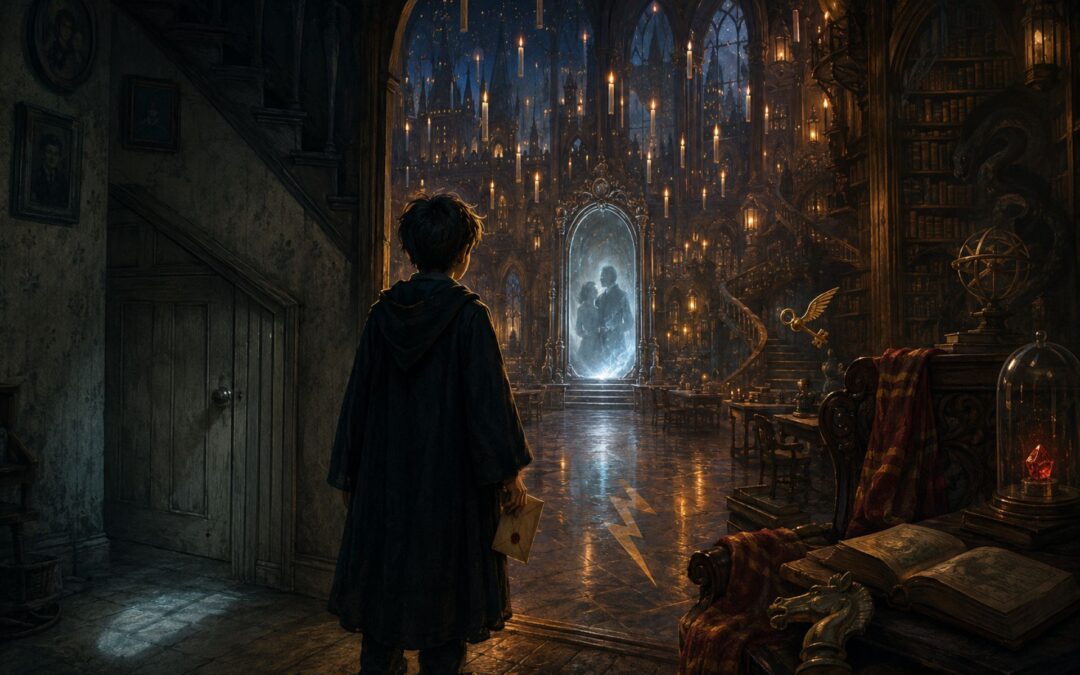
Few opening novels have had to perform as many jobs as Harry Potter and the Philosopher’s Stone. It must introduce an eleven-year-old protagonist, reveal an entire hidden society, establish a school with its own customs and rivalries, build a friendship group, construct a mystery, explain a recent magical war, and deliver a self-contained climax while leaving enough unanswered questions for a series to continue. J.K. Rowling handles those demands by keeping the story close to Harry himself: the wizarding world arrives as a succession of discoveries, so exposition becomes part of the pleasure of watching an unwanted child learn that the limits imposed on him were never the limits of his life.
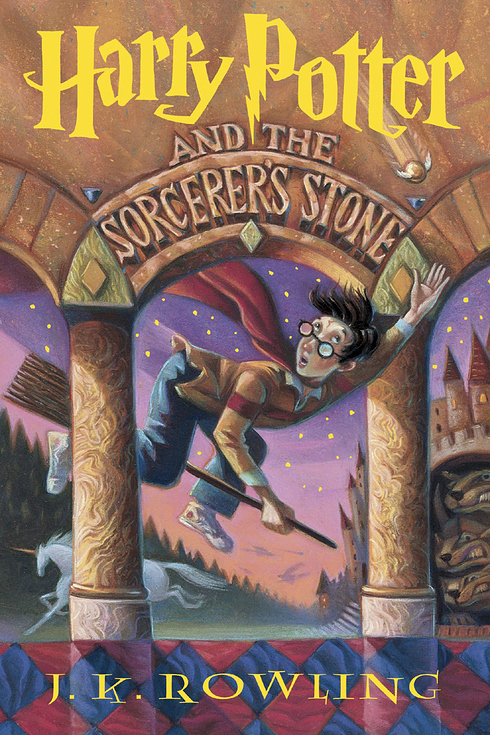
First published in Britain by Bloomsbury as Harry Potter and the Philosopher’s Stone, the novel later appeared in the United States under the title Harry Potter and the Sorcerer’s Stone. Scholastic’s account of the American publication history reflects how strongly that renamed edition became part of the book’s international identity. Yet whatever title appears on the cover, the story is fundamentally the same initiation: Harry moves from an identity defined by the Dursleys, by his parents’ deaths, and by other people’s expectations toward the first real choices through which he begins deciding who he wants to be.
This article discusses the entire novel, including the identity of the person trying to steal the Philosopher’s Stone, Voldemort’s role in the climax, and the complete ending. It therefore contains full spoilers.
Harry Before Hogwarts: The Boy the Wizarding World Already Knows
The novel begins not with Harry but with Vernon Dursley, a man who takes pride in being thoroughly ordinary. Vernon and his wife Petunia live at number four, Privet Drive, with their son Dudley, and their greatest social ambition is to appear respectable, conventional, and untouched by anything strange. That self-image is disturbed when Vernon notices unusually dressed people celebrating in the streets, hears mysterious references to the Potters, and eventually encounters a small man who seems to congratulate him for something he does not understand.
That night, the perspective moves away from Vernon as Albus Dumbledore, Professor McGonagall, and Rubeus Hagrid gather outside the Dursleys’ house. They discuss the fall of Lord Voldemort, the dark wizard who had terrorised the magical community and murdered James and Lily Potter. Voldemort also attempted to kill their infant son, Harry, but the curse somehow rebounded: Harry survived with only a lightning-shaped scar, while Voldemort disappeared.
Harry has therefore become famous before he can speak, but Dumbledore deliberately leaves him with the Dursleys rather than allowing him to grow up surrounded by celebrity. Hagrid arrives on Sirius Black’s flying motorcycle carrying the sleeping baby, and Harry is left on the doorstep with a letter explaining what has happened. The chapter establishes one of the novel’s central ironies: somewhere beyond Privet Drive, Harry is celebrated as the child who survived Voldemort, while inside the house where he grows up he will be treated as an embarrassment.
Ten years later, Harry’s everyday life is defined by neglect. He sleeps in the cupboard under the stairs, wears Dudley’s oversized cast-offs, receives little affection, and is routinely blamed whenever anything strange happens around him. Dudley, meanwhile, is excessively indulged by Vernon and Petunia, who interpret his selfishness and aggression as evidence of how wonderful he is.
Harry does not yet know that the unexplained incidents surrounding him are expressions of magic. His hair grows back immediately after Petunia cuts it badly, an ugly jumper seems to shrink when he tries to put it on, and he once finds himself on a school roof without knowing how he got there. These events are comic, but they also suggest that Harry possesses a power his guardians cannot entirely suppress.
The most important early incident occurs during Dudley’s birthday trip to the zoo. Harry finds himself strangely able to communicate with a boa constrictor, and the glass separating the snake from the visitors suddenly disappears. Dudley tumbles into the enclosure while the snake escapes, and the Dursleys blame Harry despite his inability to explain what happened.
Soon afterward, a letter addressed specifically to Harry arrives. Vernon seizes it before Harry can read it, but additional letters follow in increasingly impossible numbers and locations. When Vernon moves Harry from the cupboard to Dudley’s second bedroom in an effort to deceive whoever is writing, the next letter immediately arrives addressed to Harry in his new room.
Vernon’s response escalates from denial to panic. Letters pour through the letterbox and chimney, forcing him to flee the house with the family. He eventually takes them to a miserable hut on a rock in the sea, convinced that physical isolation will finally prevent the messages from reaching Harry.
At midnight on Harry’s eleventh birthday, someone knocks down the door. Rubeus Hagrid enters and is astonished to discover that Harry knows almost nothing about his parents or the wizarding world. He gives Harry a birthday cake and tells him the truth the Dursleys have spent a decade concealing: Harry is a wizard, James and Lily Potter were a wizard and witch, and Harry has been accepted at Hogwarts School of Witchcraft and Wizardry.
The revelation is emotionally overwhelming because it overturns almost everything Harry has been taught about himself. The Dursleys have told him that his parents died in a car crash and have treated every abnormal event as evidence that something is wrong with him. Hagrid instead explains that James and Lily were talented magical people and that they were murdered by Voldemort, one of the most feared dark wizards in recent history.
Hagrid also tells Harry why he is famous. Voldemort killed James and Lily and then tried to kill Harry, but the curse failed. Harry was left with his scar, Voldemort vanished, and the magical community came to regard the child as the survivor of an attack no one else had withstood.
Petunia’s reaction reveals that the Dursleys’ ignorance was never genuine. She knew Lily was a witch, resented the attention Lily received because of her magical abilities, and carried that bitterness into her treatment of Harry. Vernon has adopted the same hostility, turning the family’s obsession with normality into a deliberate attempt to suppress Harry’s heritage.
Hagrid finally loses his temper when Vernon insults Dumbledore and gives Dudley a pig’s tail while attempting to turn him fully into a pig. The magic is comic and uncontrolled, but its larger effect on Harry is more important: for the first time, an adult has entered his life who openly rejects the Dursleys’ account of reality and treats Harry as someone worth defending.
Harry does not simply learn that he can perform magic. He learns that he has a history, that his parents loved him, that an entire world knows his name, and that the life he has experienced at Privet Drive is not the only life available to him. That discovery is the first major transformation of the novel, but it also creates a new problem: Harry now knows that he belongs somewhere else without yet knowing what kind of person he will become there.
Entering the Wizarding World
Hagrid takes Harry to London to buy his school supplies, and the journey gives Harry his first sustained experience of magical society. Their entrance through the Leaky Cauldron immediately reveals the strange reversal of Harry’s social position: people he has never met recognise him, shake his hand, and react emotionally to seeing him alive. Harry, who has spent his childhood being ignored or humiliated, suddenly finds himself famous for an event he cannot remember.
Behind the Leaky Cauldron lies Diagon Alley, a commercial street filled with magical shops, robes, books, ingredients, owls, broomsticks, cauldrons, and objects Harry barely understands. Rowling uses the scene to introduce the wizarding world through accumulation rather than exposition. Harry encounters its economy, fashions, technologies, professions, prejudices, and institutions while simply trying to prepare for school.
At Gringotts, the wizarding bank run by goblins, Harry discovers that his parents left him a substantial inheritance. This matters emotionally as much as financially: the Dursleys have made him dependent and treated him as a burden, whereas the vault proves that his parents provided for him. Hagrid also visits the mysterious vault 713 and removes a small package under Dumbledore’s instructions, refusing to explain what it contains.
Harry later meets a pale boy while being fitted for robes. The boy, Draco Malfoy, speaks contemptuously about Muggles, assumes certain wizarding families are superior to others, and suggests that some children should not be admitted to Hogwarts. Harry does not yet know Draco’s name, but he recognises an attitude that reminds him uncomfortably of Dudley.
At Ollivanders, Harry is fitted for his wand. After several failed attempts, one wand responds powerfully to him: holly and phoenix feather. Mr Ollivander then explains that the phoenix that supplied the feather gave only one other feather for a wand, and that its twin belongs to Voldemort.
The connection unsettles Harry. He has only just learned that Voldemort murdered his parents, and now an object that is supposed to become uniquely his is linked to the dark wizard who tried to kill him. The moment establishes a question that will recur throughout the novel and the larger series: how much can Harry’s identity be determined by connections he never chose?
Before term begins, Harry must find Platform Nine and Three-Quarters at King’s Cross. He receives crucial help from the Weasley family, especially Molly Weasley, who explains how to pass through the barrier. On the Hogwarts Express, Harry meets Ron Weasley, one of several children in a large wizarding family.
Ron initially appears almost as uncertain about Harry as Harry is about the magical world. He knows Harry’s reputation but quickly begins talking to him as another boy. Harry shares the sweets he buys from the trolley, while Ron reveals his embarrassment about hand-me-down possessions, his older brothers’ achievements, and the pressure of belonging to a family in which almost everything he owns has already belonged to someone else.
Hermione Granger soon enters their compartment while looking for Neville Longbottom’s missing toad. She is confident, highly informed, and eager to demonstrate what she knows, which makes her seem overbearing to Harry and Ron. Draco Malfoy also appears and formally offers Harry his friendship, warning him that some wizarding families are better than others.
Harry rejects him. The decision is small in practical terms, but it is one of the first choices Harry makes after learning about his heritage. He has been told very little about wizarding society, yet he already knows enough about cruelty and arrogance to recognise something he does not want to imitate.
When the students arrive at Hogwarts, the school is deliberately presented as overwhelming. The first-years cross the lake in boats, see the illuminated castle rising above them, and enter a world of enchanted ceilings, ghosts, moving staircases, portraits, long tables, and ancient traditions. For Harry, Hogwarts is immediately unlike any institution he has known because it is simultaneously intimidating and inviting.
The Sorting Hat determines which of the four houses each first-year will join: Gryffindor, Hufflepuff, Ravenclaw, or Slytherin. Harry has already heard ominous things about Slytherin and remembers that Voldemort belonged there. When the Hat suggests that Harry could do well in Slytherin, Harry repeatedly asks not to be placed there.
The Hat ultimately sends him to Gryffindor. Harry has not rejected ambition, talent, or any fixed set of personal traits; he has rejected an identity he fears would align him with Voldemort and Draco. The scene therefore turns the Sorting from a passive classification into one of the novel’s earliest demonstrations that Harry’s choices matter alongside whatever qualities he may possess.
Harry’s first evening at Hogwarts also introduces several figures who will shape his school year. He sees Dumbledore at the staff table, meets Professor McGonagall as head of Gryffindor, notices Professor Quirrell, and becomes aware of Severus Snape staring at him while his scar suddenly hurts. Harry has entered the world he was denied, but the novel immediately reminds him that belonging there does not mean safety.
Harry’s First Months at Hogwarts
Hogwarts quickly becomes both a school and a puzzle. Harry and the other students must learn ordinary academic routines within extraordinary surroundings: they attend Transfiguration, Charms, History of Magic, Herbology, Defence Against the Dark Arts, Astronomy, and Potions while navigating moving staircases, ghosts, hidden passages, confusing corridors, and teachers with radically different temperaments. The magical setting remains wondrous, but Rowling grounds it in homework, timetables, rivalries, rules, and the everyday anxieties of school.
Harry’s most hostile teacher is Severus Snape. During Harry’s first Potions lesson, Snape singles him out with difficult questions and treats his inability to answer as arrogance rather than ignorance. Harry quickly concludes that Snape hates him, and Snape’s behaviour gives him little reason to reconsider.
Draco Malfoy meanwhile becomes Harry’s main peer rival. Their conflict intensifies during the first flying lesson when Neville Longbottom loses control of his broom and injures himself. After Madam Hooch leaves to take Neville away, Draco picks up Neville’s Remembrall and challenges Harry to retrieve it.
Harry mounts his broom despite being ordered to stay on the ground and discovers that flying comes naturally to him. He catches the Remembrall in a spectacular dive, but instead of punishing him, Professor McGonagall recognises his ability and recruits him as Gryffindor’s new Seeker. Harry becomes the youngest house player in years and receives his own Nimbus Two Thousand.
The development is important because flying becomes Harry’s first public experience of competence. At Privet Drive, unusual abilities brought punishment; at Hogwarts, an unusual ability can earn admiration and a meaningful role. Harry begins moving from being known only for surviving Voldemort toward being valued for something he can actually do.
The rivalry with Draco soon produces a more dangerous incident. Draco challenges Harry to a midnight wizard’s duel, and Harry accepts despite Hermione’s attempts to stop him. Ron accompanies Harry, Hermione becomes trapped outside Gryffindor after following them, and Neville ends up joining them after being unable to enter the common room.
Draco never appears for the duel. Instead, Filch nearly catches the group, forcing them into unfamiliar parts of the castle. During their escape, they discover a gigantic three-headed dog standing over a trapdoor in a forbidden corridor.
The animal, later identified as Fluffy, transforms the mysterious package Hagrid collected from Gringotts into the beginning of a larger mystery. Harry, Ron, and Hermione infer that something valuable must be hidden beneath the trapdoor. At this stage they do not know what it is, but Hogwarts has shifted from being merely strange to containing a deliberately protected secret.
Hermione is not yet fully part of Harry and Ron’s friendship. Her insistence on following rules and correcting other students irritates them, while their casual mockery eventually leaves her crying in a bathroom on Halloween. The boys then learn that a mountain troll has entered the castle and realise that Hermione does not know about the danger.
Harry and Ron go looking for her instead of remaining safely with their house. They accidentally trap themselves in the bathroom with the troll, and the confrontation becomes a chaotic demonstration of their complementary instincts: Harry acts recklessly, Ron manages to use the levitation charm Hermione had earlier mastered, and together they bring the troll down.
When teachers arrive, Hermione lies to protect the boys from punishment by claiming that she had gone looking for the troll herself. It is the first time she deliberately breaks the rules on behalf of Harry and Ron, and the incident changes their relationship. Shared danger succeeds where proximity and academic routine had failed; from that point onward, the three become friends.
Their friendship develops not because they are naturally similar but because they supply what the others lack. Harry acts quickly and is prepared to take risks, Ron understands wizarding culture and brings humour and loyalty, and Hermione possesses knowledge, discipline, and analytical ability. The troll incident begins turning those differences from sources of irritation into the foundation of the trio.
The Mystery of the Philosopher’s Stone
The mystery around the trapdoor deepens during Harry’s first Quidditch match. While Harry plays Seeker against Slytherin, his broom begins jerking violently and appears to be trying to throw him off. Hermione looks into the crowd and sees Snape staring at Harry while muttering continuously, which convinces her that he is casting the curse.
She races through the stands and sets Snape’s robes on fire to break his concentration. On the way she knocks over Professor Quirrell, but neither Hermione nor Harry understands the significance of that accident. Harry regains control of his broom, catches the Golden Snitch in his mouth, and wins the match for Gryffindor.
The scene strengthens the trio’s belief that Snape is involved with whatever Fluffy is guarding. They already know that Snape was injured around the time the troll entered Hogwarts, and they infer that he tried to get past the three-headed dog while everyone else was distracted. Their theory is wrong, but Rowling makes it plausible by combining Snape’s genuine hostility with selectively interpreted evidence.
Christmas brings one of the novel’s most emotionally important developments. Harry remains at Hogwarts rather than returning to Privet Drive, and for the first time he experiences a holiday in an environment where he is wanted. Among his presents is an Invisibility Cloak that once belonged to his father, accompanied by an anonymous note telling him to use it well.
The Cloak allows Harry to explore the castle at night. While searching the Restricted Section of the library for information about Nicolas Flamel, he is nearly discovered and hides in an unused classroom containing an ornate mirror. When Harry looks into it, he sees not his ordinary reflection but a crowd of people standing behind him, including the parents he has never consciously known.
Harry becomes obsessed with returning to the mirror. He brings Ron, who sees himself not surrounded by family but as Head Boy and Quidditch captain, holding the House Cup. Their visions reveal different emotional absences: Harry longs for the family taken from him, while Ron longs to distinguish himself within the family he already has.
Dumbledore eventually finds Harry sitting before the mirror and explains that it shows the deepest desire of the person looking into it. The mirror provides neither knowledge nor a real future, and people can waste their lives staring into it. Dumbledore therefore removes it, warning Harry not to search for it again.
The Mirror of Erised interrupts the adventure plot with a more psychological danger. Harry’s longing for his parents is completely understandable, but the mirror cannot restore them. It offers him an emotionally perfect image without any possibility of making that image real, turning desire itself into something capable of immobilising him.
Harry, Ron, and Hermione eventually identify Nicolas Flamel through a Chocolate Frog card referring to his association with Dumbledore. Hermione then finds him in a library book and discovers that Flamel is the maker of the Philosopher’s Stone, an alchemical object capable of transforming metals into gold and producing the Elixir of Life.
The object under Fluffy now makes sense. Someone has moved the Stone from Gringotts to Hogwarts for protection, and the trio becomes increasingly convinced that Snape is trying to steal it. Because the Stone can prolong life, they also suspect that whoever wants it may be connected with Voldemort.
Hagrid accidentally complicates the situation by acquiring a dragon egg from a mysterious stranger. Dragons are illegal and impossible to hide in a wooden hut, but Hagrid becomes emotionally attached to the rapidly growing Norwegian Ridgeback he names Norbert. Harry, Ron, and Hermione eventually arrange for Ron’s brother Charlie and his friends to collect the dragon.
The operation succeeds but ends badly for the children. Draco learns about Norbert, and although McGonagall catches him wandering at night, Harry and Hermione are also caught after forgetting the Invisibility Cloak at the top of the Astronomy Tower. They lose a large number of points for Gryffindor and become unpopular with their own house.
The punishment leads directly into the novel’s darker phase. Harry, Hermione, Neville, and Draco receive detention in the Forbidden Forest with Hagrid and are sent to investigate a series of injured and dead unicorns. The Forest introduces a side of the magical world very different from Diagon Alley’s excitement or Hogwarts’ eccentricity: it is ancient, dangerous, and largely outside ordinary human control.
Harry eventually encounters a hooded figure bending over a dead unicorn and drinking its blood. The sight causes intense pain in his scar, and a centaur named Firenze rescues him. Firenze explains that unicorn blood can keep someone alive even when they are close to death, but that killing such a pure creature brings a terrible cost.
The implication is horrifying. Someone at Hogwarts is so desperate to survive that they are willing to live a damaged, cursed existence, and Firenze pushes Harry toward the conclusion that Voldemort may be involved. If Voldemort can obtain the Philosopher’s Stone after using unicorn blood to remain alive, he may be able to restore himself.
The mystery now stops being a school adventure. Harry believes that the man who murdered his parents may be approaching a return to power, and his suspicion of Snape becomes attached to that larger fear. The children are no longer simply curious about a secret beneath the school; they believe they may be witnessing an attempt to bring Voldemort back.
Their urgency increases after examinations. Harry suddenly remembers that the stranger who gave Hagrid the dragon egg had encouraged him to talk about dangerous creatures. Hagrid had boasted that he could handle Fluffy because music would put the dog to sleep.
Harry realises that Hagrid unknowingly revealed the method for passing the first defence. When Harry, Ron, and Hermione try to warn Dumbledore, they learn that he has been summoned away from Hogwarts. Convinced that Snape has engineered Dumbledore’s absence and will attempt to take the Stone that night, the trio decides to intervene themselves.
Through the Trapdoor and the Man with Two Faces
Harry, Ron, and Hermione know that entering the forbidden corridor may result in expulsion, but they now believe the consequences of doing nothing are worse. Neville tries to stop them from leaving Gryffindor because their previous rule-breaking cost the house so many points. Hermione reluctantly immobilises him with a spell, and the trio proceeds under the Invisibility Cloak toward the trapdoor.
They put Fluffy to sleep with music and descend through the opening, landing in a mass of Devil’s Snare. Hermione recognises the plant and remembers that it hates light and warmth, enabling them to escape. The challenge establishes the pattern of the underground sequence: each obstacle rewards a different kind of knowledge or ability already developed earlier in the school year.
The next chamber contains winged keys and broomsticks. Harry’s Quidditch skill allows him to identify and catch the battered key needed to open the next door. The novel therefore turns what initially seemed like a school-sport subplot into preparation for the climax.
They then enter a life-sized game of wizard chess. Ron takes command because he is the best player and directs Harry and Hermione across the board. To create the path they need, he deliberately allows his chess piece to be struck down, sacrificing his own ability to continue so that the others can advance.
Harry and Hermione leave the unconscious Ron behind and continue. They pass a troll that has already been knocked out, another clue that someone has gone before them, and enter a chamber containing a potion puzzle. Hermione solves the logic problem and discovers that only one potion will allow Harry to move forward while another permits her to return.
Before they separate, Hermione tells Harry that he possesses qualities that books and cleverness cannot replace. Her statement does not reject intelligence—her intelligence is precisely what has brought them this far—but recognises that knowledge must sometimes be joined to nerve, loyalty, and moral commitment.
Harry enters the final chamber expecting to find Snape. Instead he finds Professor Quirrell.
The reveal forces Harry to reinterpret almost the entire mystery. Quirrell explains that he, not Snape, let the troll into Hogwarts as a distraction and attempted to get through the protections. During Harry’s Quidditch match, Quirrell was the one cursing Harry’s broom, while Snape was muttering a counter-curse in an attempt to save him.
Snape’s suspicious behaviour had therefore been real but misread. He had been watching Quirrell, interfering with his plans, and trying to protect Harry despite his obvious dislike of him. Quirrell’s nervousness and stutter, by contrast, had made him seem harmless enough to escape suspicion.
Quirrell cannot find the Philosopher’s Stone because the final protection is the Mirror of Erised. Voldemort, whose presence is now revealed, tells him to use Harry. Quirrell places Harry before the mirror and asks what he sees.
Harry sees himself obtaining the Stone and putting it into his pocket. Moments later he feels the actual Stone appear in his pocket, but he lies to Quirrell about the vision. The safeguard works because Harry wants to find the Stone in order to prevent its use; someone who wants the Stone in order to exploit its powers cannot retrieve it.
Voldemort understands that Harry is lying and orders Quirrell to reveal him. Quirrell removes his turban, exposing Voldemort’s face emerging from the back of his head. Voldemort is not restored to an independent body but has attached himself parasitically to Quirrell, using him as a means of surviving and acting.
Voldemort tries to persuade Harry to surrender the Stone, invoking the possibility of restoring Harry’s parents. Harry refuses. Quirrell then attempts to seize him, but physical contact causes Quirrell terrible pain and burns.
Harry realises that he can hurt Quirrell by touching him and clings to him even as the pain in Harry’s own scar becomes overwhelming. He eventually loses consciousness and wakes in the Hogwarts hospital wing with Dumbledore beside him.
Dumbledore explains what Harry can safely be told. Lily Potter did not merely die near Harry; she deliberately sacrificed herself to save him. That act left a form of protection in Harry that Voldemort cannot understand because he regards love as weakness, and it is this protection that made Quirrell unable to touch Harry without being harmed.
The Philosopher’s Stone will not remain available for another attempt. Dumbledore and Nicolas Flamel have agreed that it should be destroyed. Flamel and his wife have enough Elixir of Life remaining to settle their affairs, after which they will die.
Harry is disturbed by the thought, but Dumbledore presents death differently from Voldemort. For someone who has lived a very long life, death need not be treated as the ultimate defeat. The contrast makes the Stone more than a magical treasure: it becomes the centre of a conflict between accepting mortality and deforming one’s life in an effort to escape it.
Dumbledore also confirms that Snape was trying to protect Harry during the Quidditch match. James Potter once saved Snape’s life, and Snape’s efforts to protect Harry were partly connected to his complicated feelings about that debt. The explanation does not erase Snape’s cruelty toward Harry, but it demonstrates that Harry’s moral judgments have been too simple.
At the end-of-year feast, Slytherin initially appears to have won the House Cup. Dumbledore then awards additional points to Ron for chess, Hermione for her logic and composure, Harry for courage, and finally Neville for standing up to his own friends. Neville’s points give Gryffindor the victory.
The award to Neville broadens the novel’s definition of courage. Harry has faced Voldemort and Ron has sacrificed himself in chess, but Dumbledore specifically honours the courage required to oppose people one cares about. Moral bravery, the ending suggests, is not limited to dramatic confrontations with obvious enemies.
Harry finally returns to the Dursleys for the summer. His external situation is not magically repaired: he remains an orphan going back to an unpleasant household. Yet his understanding of that situation has been transformed because Privet Drive no longer represents the whole world.
He now has friends, money inherited from his parents, magical ability, a school where he belongs, adults who care about him, and the certainty that he will return to Hogwarts. The Dursleys can still make his summer miserable, but they can no longer successfully define who Harry is.
The Wizarding World Rowling Builds
The wizarding world succeeds partly because Rowling does not introduce it as an encyclopaedic system. Readers learn it through Harry’s limited perspective, which means each institution first appears as something he must use, survive, or understand. Diagon Alley is not introduced through a lecture about magical commerce; Harry needs school supplies. Gringotts is not explained as an abstract banking institution; Harry needs to access his parents’ vault. Hogwarts is not mapped in advance; Harry repeatedly gets lost.
That method makes world-building feel experiential. The reader shares Harry’s uncertainty about how money works, what spells are normal, which families are important, what houses signify, why Quidditch matters, and which magical creatures are dangerous. The gaps in Harry’s knowledge also support the mystery because he cannot immediately distinguish ordinary wizarding behaviour from evidence of something sinister.
Hogwarts itself combines the structure of a British boarding-school story with fantasy architecture. Students live in houses, accumulate and lose points, compete in sport, take examinations, form rivalries, complain about homework, and worry about teachers. Around that recognisable school framework, Rowling adds moving portraits, ghosts, enchanted ceilings, living suits of armour, disappearing staircases, magical feasts, restricted corridors, and creatures that would be impossible in an ordinary school.
The house system is especially efficient because it supplies community and conflict immediately. Gryffindor gives Harry a home within the larger institution, while Slytherin gives the novel a recurring social rival. Ravenclaw and Hufflepuff remain less developed in this first volume, but the four-house structure helps transform a large student body into comprehensible groups.
Quidditch serves a similar double function. It is vivid fantasy world-building, but it also behaves like a school sport with rivalries, spectators, team identity, training, equipment, and social prestige. Harry’s role as Seeker therefore makes him part of Hogwarts culture while also giving the plot an arena for danger, competition, and misdirection.
The wizarding economy is sketched through Gringotts, gold Galleons, shops, inherited wealth, and the contrast between Harry’s money and Ron’s family finances. Rowling does not construct a detailed economic model, but she gives wealth social consequences. Harry can casually buy sweets for the train journey, whereas Ron arrives with sandwiches and second-hand possessions that embarrass him.
Class and blood prejudice also enter the story early. Draco assumes that old wizarding families deserve greater status and looks down on children from Muggle backgrounds. Hermione’s ability undermines that hierarchy almost immediately because the Muggle-born student is one of the most academically capable members of her year.
The magical and Muggle worlds exist side by side but remain socially separate. The novel gives only glimpses of the Ministry of Magic and broader government, leaving the political structure mostly outside Harry’s first-year concerns. That limited scope is appropriate to Harry’s perspective, although it means that some practical questions about how the two societies coexist are simply deferred.
The same is true of Hogwarts safety. Taken literally, the school contains a three-headed dog behind a door a first-year can unlock, a dangerous forest used for detention, moving staircases, violent sports, and a sequence of deadly protections guarding an extraordinarily powerful object. Within the conventions of children’s adventure fiction, these dangers create possibility and independence; under realistic institutional standards, they would represent extraordinary negligence.
That tension is built into the novel’s appeal. Hogwarts needs to feel safe enough to become Harry’s first real home but dangerous enough to sustain adventure without adults immediately resolving every problem. Rowling manages the emotional side of that balance better than the logistical side, which is why readers often accept Hogwarts as a place of belonging even while recognising that many of its procedures make little practical sense.
The broader achievement of the world-building is therefore not exhaustive coherence. It is memorability, accessibility, and narrative usefulness. Almost every major element introduced in the first book gives Harry something to desire, fear, misunderstand, compete within, or eventually use.
Harry, Ron and Hermione
The central friendship is one of the novel’s strongest structural achievements because Harry, Ron, and Hermione are not introduced as an instantly harmonious team. Harry and Ron connect quickly, Hermione initially irritates them, and all three possess traits that create friction as well as usefulness. Their eventual friendship feels earned because it grows through shared experiences and repeated demonstrations of loyalty.
By the time they go through the trapdoor, the trio has become more than a social unit. Rowling has spent the school year establishing distinct abilities that the climax then requires: Harry’s flying, Ron’s chess, Hermione’s knowledge and logic, and Harry’s willingness to continue into direct danger. Their differences become the mechanism through which the group succeeds.
Harry Potter
Harry begins the novel with remarkably little control over the story of his own life. The Dursleys decide what he is told about his parents, where he sleeps, what he wears, and whether his unexplained abilities are treated as accidents or misbehaviour. Even after Hagrid reveals that Harry is a wizard, the magical world immediately supplies another identity for him: the famous Boy Who Lived.
Harry’s challenge is therefore not simply discovering who he is but deciding which external definitions to accept. He is famous because Voldemort failed to kill him, wealthy because his parents died, and potentially suitable for Slytherin because of qualities the Sorting Hat detects. None of those facts alone tells him what kind of person he will become.
His rejection of Draco is one of his earliest meaningful acts of self-definition. Harry has little knowledge of wizarding politics, but he knows cruelty and entitlement when he sees them. Similarly, when he asks the Sorting Hat not to place him in Slytherin, he asserts that classification should not entirely override choice.
Harry is courageous, but his courage frequently shades into recklessness. He accepts Draco’s midnight challenge, repeatedly investigates dangerous situations without adult permission, enters the Forbidden Forest at night, and ultimately goes after the Stone himself. The novel rewards many of those risks, although it does not always distinguish clearly between admirable courage and behaviour that happens to succeed because the story needs Harry in danger.
His deepest vulnerability is not fear of Voldemort but longing for his parents. The Mirror of Erised exposes that need with unusual directness because Harry does not imagine fame, victory, wealth, or magical greatness. He wants a family.
That longing could have made him susceptible to Voldemort’s promise to restore his parents during the climax, but Harry refuses. By then, his identity is no longer organised solely around what he has lost. He has begun building relationships in the present, and the novel frames that movement as healthier than becoming trapped in impossible desire.
At the ending, Harry has not completed a traditional transformation from weakness to mastery. He is still young, still impulsive, still dependent on adults, and still ignorant of large parts of his own history. What has changed is his sense of possibility: he now knows that his circumstances at Privet Drive are conditions he endures, not definitions he must accept.
Ron Weasley
Ron enters the story with the opposite problem from Harry. Harry has money and fame but no family belonging, while Ron has a large and loving family but worries that there is little about him that is uniquely his. His clothes, rat, and possessions are second-hand, and his older brothers have already established impressive records at Hogwarts.
That insecurity helps explain why the Mirror of Erised shows Ron as successful, distinguished, and publicly recognised. He does not simply want trophies for their own sake; he wants evidence that he can become more than another Weasley following older brothers through the same school.
Ron’s humour and familiarity with wizarding culture also make him Harry’s first guide of his own age. He can explain ordinary magical assumptions that Harry does not understand, but because Ron has grown up with them, he is often less academically knowledgeable than Hermione. The contrast prevents him from becoming merely an exposition device.
His finest moment comes during wizard chess. Ron recognises that victory requires his own piece to be taken and accepts the sacrifice. In a novel centred on Harry’s heroism, the scene gives Ron a decisive form of courage that is strategic rather than impulsive.
Ron can also be jealous, insensitive, and quick to mock what makes him uncomfortable, as his early treatment of Hermione shows. Those flaws make the friendship more convincing because his loyalty does not arise from idealised goodness; it develops alongside ordinary insecurity and immaturity.
Hermione Granger
Hermione initially approaches Hogwarts as something that can be mastered through preparation. She has read widely before arriving, learns spells rapidly, remembers rules, and assumes that being correct should produce social authority. Her confidence makes her academically formidable but socially isolated.
Her development begins when knowledge proves insufficient to create friendship. Harry and Ron find her irritating, and their careless criticism leaves her deeply hurt. The troll incident then reverses the relationship because the boys risk themselves to save her and Hermione responds by lying to teachers so that they will not be punished.
After that point, her respect for rules becomes more flexible rather than disappearing. Hermione does not decide that rules are meaningless; she starts judging them against competing obligations. She is willing to break school rules when she believes friendship or serious danger justifies doing so.
Her intelligence remains essential throughout the novel. She identifies Nicolas Flamel, knows how to escape Devil’s Snare, reasons through the potion puzzle, and contributes repeatedly to the Stone investigation. The story never seriously suggests that learning is unimportant.
What Hermione recognises near the climax is that knowledge is one form of capability rather than the whole of moral action. Harry’s courage and Ron’s loyalty matter in ways that cannot be replaced by reading, just as their courage would have been useless if Hermione had not known how to solve the problems in front of them.
The trio works because each character gradually learns to value strengths that do not resemble their own. Harry gains a form of family, Ron gains friends who see him as an individual, and Hermione gains belonging without having to surrender her intelligence.
The Adults, Rivals and Hidden Villains Around Harry
Harry’s understanding of adults is repeatedly incomplete. He has grown up with guardians who deliberately lied to him, so mistrust is hardly irrational, yet Hogwarts confronts him with adults whose motives are more complicated than their surfaces suggest. The Stone mystery exploits that uncertainty by encouraging Harry to confuse dislike with guilt and nervousness with harmlessness.
The supporting cast also creates alternative models of authority and identity. Hagrid offers warmth without reliability, Dumbledore offers wisdom without constant intervention, Snape offers protection without kindness, Quirrell offers apparent weakness concealing corruption, and the Dursleys offer authority stripped of moral legitimacy.
Rubeus Hagrid
Hagrid is the first person to make the wizarding world emotionally real for Harry. He does not simply deliver information; he celebrates Harry’s birthday, becomes angry on his behalf, knew his parents, and treats him as someone who deserves affection. That warmth makes Hagrid a kind of surrogate family figure long before Harry has enough context to understand Hogwarts.
At the same time, Hagrid is dangerously indiscreet. He reveals information about Fluffy, brings an illegal dragon into his hut, and tells a disguised stranger exactly how to bypass one of the Stone’s protections. His mistakes repeatedly create problems for the children.
That combination prevents Hagrid from functioning as an idealised guardian. He is deeply loyal and emotionally dependable but not consistently prudent. Rowling uses him to connect Harry to the adult magical world without giving Harry an adult who can solve every problem for him.
Albus Dumbledore
Dumbledore appears relatively little, yet his authority shapes almost the entire novel. He is the person Hagrid trusts, the headmaster Harry quickly learns to admire, the only wizard Voldemort is said to fear, and the adult who ultimately explains the deepest mysteries of Harry’s survival.
His treatment of Harry is notably indirect. Dumbledore warns him about the Mirror of Erised rather than forcibly preventing him from using it, and he answers some questions after the climax while deliberately withholding others. He treats knowledge as something Harry should receive according to readiness rather than simply curiosity.
The novel also leaves room for ambiguity around how much Dumbledore knows and permits. He returns to Hogwarts in time to intervene after Harry reaches Quirrell, and he appears unsurprised by some of the children’s actions. It is possible to infer that he understands more of Harry’s movements than he openly acknowledges, but the book does not fully confirm a deliberate plan to let Harry face the Stone’s dangers.
As a result, Dumbledore works best here as a distant mentor rather than a constantly supervising headmaster. That distance supports Harry’s agency, although it also contributes to the recurring practical question of why children are able to reach such extreme danger inside a school under Dumbledore’s leadership.
Severus Snape
Snape is the novel’s most effective piece of misdirection because Harry’s suspicions are not foolish. Snape openly dislikes him, humiliates him in class, behaves secretively, has an injured leg after the troll incident, and appears to be muttering during the Quidditch attack. The evidence is real even though Harry’s interpretation is wrong.
The final reveal forces an important distinction between moral unpleasantness and criminal guilt. Snape genuinely treats Harry unfairly, but he is also trying to stop Quirrell and protect Harry during the broom incident. Readers are asked to revise the accusation without pretending that Snape’s behaviour has become admirable.
Dumbledore’s explanation that James Potter once saved Snape’s life gives his protection of Harry an additional motive. In this first novel, however, that history remains deliberately thin. Later revelations about Snape should not be used to retroactively simplify the ambiguity Rowling creates here.
Snape’s narrative function is therefore larger than merely providing a surprise. He demonstrates how easily Harry’s limited knowledge, emotional reactions, and genuine evidence can combine into a confident but false theory.
Quirrell and Voldemort
Quirrell works because the novel teaches readers to overlook him. His nervousness, stutter, and apparently weak personality seem almost comic beside Snape’s aggression. That contrast allows Rowling to hide the actual antagonist in plain sight.
The reveal shows that Quirrell’s weakness is not innocence but surrender. He has allowed Voldemort to attach himself physically to his body, turning his own identity into a vehicle for another person’s will. The grotesque image of Voldemort’s face on the back of Quirrell’s head gives that surrender literal form.
Voldemort is present through most of the novel before he is physically revealed. People fear saying his name, Harry’s scar links him to the past, Hagrid recounts his crimes, the Forbidden Forest suggests his survival, and the Stone gives him a possible route back to power. By the climax, he has already dominated the story as an absence.
His diminished state also establishes his central relationship to mortality. Voldemort is willing to inhabit another person, drink unicorn blood through a servant, and pursue the Philosopher’s Stone because continued existence matters more to him than the moral or physical corruption required to obtain it. He survives, but only by becoming parasitic.
Draco, Neville and the Dursleys
Draco Malfoy functions less as a complex antagonist than as the first peer who offers Harry a social hierarchy to join. He assumes status should derive from family background, mocks poverty, looks down on Muggle-born students, and expects Harry’s fame to place him naturally on Draco’s side. Harry’s rejection of him is therefore a moral decision before it becomes a school rivalry.
Neville represents a quieter kind of development. He is anxious, forgetful, frequently unlucky, and initially seems positioned mainly for comic embarrassment. His decision to stop Harry, Ron, and Hermione from leaving the common room nevertheless requires him to oppose people he admires because he believes their behaviour is wrong.
Dumbledore’s award of points to Neville validates that courage explicitly. Facing enemies is difficult, but resisting friends can be equally demanding because it risks belonging itself. Neville’s moment therefore reinforces one of the novel’s central ideas: bravery is not a single personality type.
The Dursleys, by contrast, are deliberately exaggerated. Vernon represents aggressive conventionality, Petunia combines resentment with denial, and Dudley demonstrates what unrestrained indulgence can produce. They are often more caricature than psychologically nuanced family members, but their thematic function is clear.
Their treatment of Harry turns normality into a form of control. They attempt to define anything unusual as shameful, erase Lily’s magical history, and convince Harry that there is nothing significant about him beyond the inconvenience he causes them. Hogwarts matters partly because it breaks that monopoly over Harry’s identity.
Friendship, Family and Belonging
Harry’s deepest movement through the novel is not from Muggle ignorance to magical knowledge but from isolation to belonging. Magic makes that transition possible, yet the emotional transformation depends on relationships. Hogwarts becomes meaningful because it contains people who know Harry, argue with him, help him, expect things from him, and want him to return.
Ron is Harry’s first close friend because he does not primarily treat Harry as a celebrity. His curiosity about Harry exists, but ordinary companionship quickly takes over. Their shared food on the train becomes a simple early contrast with Harry’s childhood at Privet Drive, where possession and affection were both distributed according to Dudley’s desires.
Hermione complicates the friendship because she demonstrates that belonging is not always immediate. The three do not become friends because they fit naturally together but because crisis reveals something about their values. After the troll, mutual loyalty matters more than their earlier irritation.
The final journey toward the Stone makes that friendship structurally visible. Ron’s chess sacrifice and Hermione’s decision to help Harry continue show that the hero’s progress depends on other people. Harry reaches Quirrell alone, but he does not reach him independently.
Hagrid supplies another form of attachment. He knew James and Lily, brings Harry into their world, gives him the photo album containing images of his parents, and provides an emotional continuity between the family Harry lost and the life he is beginning. Hagrid’s importance lies as much in that connection as in his role as guide.
Dumbledore represents a different kind of adult relationship. He does not become a parent, and the novel deliberately keeps him at a distance. Yet his explanations after the climax give Harry something the Dursleys never offered: truthful attention to questions about his parents, his survival, and the meaning of what has happened to him.
The Weasleys are only partly developed as a family in this first volume, but even their limited presence matters. Mrs Weasley helps Harry reach the platform, Fred and George treat him casually, and Ron gives Harry access to the rhythms of a magical household. Against the emotional sterility of Privet Drive, their imperfect but affectionate family life provides an implied alternative.
Harry’s parents remain physically absent, yet they continue to shape his emotional world. The Mirror of Erised reveals how much Harry wants not just information about them but presence. By the ending, he has not replaced James and Lily, nor has the pain of losing them disappeared, but he has begun forming bonds that keep grief from becoming his only relationship to family.
This is why Hogwarts becomes home despite its dangers. Home in the novel is not defined primarily by legal guardianship or physical residence. It is the place where Harry can be known without being deliberately diminished, where his abilities have meaning, and where relationships offer him something stronger than the identity imposed upon him at Privet Drive.
The Major Themes
The novel’s themes grow naturally out of Harry’s movement between worlds. Questions of identity, courage, love, desire, prejudice, and authority do not appear as abstract lessons imposed on the story; they emerge through choices Harry and the other characters must make. The strongest themes also reinforce one another, especially in the climax, where Harry’s identity depends on friendship, his survival depends on sacrificial love, and the Stone tests the difference between possessing desire and being controlled by it.
Choice and Identity
Harry begins life carrying identities he did not choose. To the Dursleys, he is an unwanted reminder of Petunia’s sister and a source of abnormality. To the wizarding world, he is the Boy Who Lived. To Voldemort, he is the child who somehow survived an attack that should have killed him.
The Sorting Hat scene condenses that problem. Harry is told that he has qualities that could make Slytherin suitable, but he does not passively accept the classification. His repeated request to avoid Slytherin becomes evidence that the act of choosing matters alongside whatever characteristics the Hat detects.
His rejection of Draco performs a similar function. Draco assumes bloodline and reputation should determine friendship, but Harry chooses Ron instead. Harry cannot change his ancestry, fame, scar, or connection to Voldemort, but he can decide which values those facts will serve.
The theme does not imply that people create themselves without circumstances. Harry’s parents, upbringing, abilities, and social environment all shape him. The novel’s point is more modest and more convincing: inheritance may establish possibilities, but choices determine how those possibilities are used.
Friendship, Loyalty and Courage
Courage appears in several forms. Harry’s willingness to confront danger is the most obvious, but Ron’s decision during the chess match demonstrates calculated self-sacrifice, Hermione repeatedly risks punishment to help her friends, and Neville resists those same friends when he believes they are making another dangerous mistake.
Friendship changes the meaning of bravery because it gives the characters reasons to act beyond self-preservation. Harry and Ron go after the troll because Hermione is in danger. The trio investigates the Stone because they believe the consequences extend beyond themselves. Ron accepts being taken out of the chess game because the others need to continue.
The novel also avoids making courage equivalent to fearlessness. Neville is frightened, Ron understands the danger of the chess sacrifice, and Harry frequently experiences fear before acting. Courage is instead presented as action taken despite risk when something else matters more.
Dumbledore’s final points to Neville crystallise the idea. Moral courage may require confronting an obvious enemy, but it can also require risking social acceptance by opposing friends. The latter receives less dramatic attention, yet the novel deliberately treats it as worthy of recognition.
Love and Sacrifice
Lily Potter’s sacrifice is the central fact behind Harry’s survival. The novel treats love not merely as an emotion but as an action with consequences: Lily had an opportunity to protect herself and instead chose to die for her child. That choice leaves a magical protection Voldemort cannot comprehend.
The significance becomes clear through contrast. Voldemort is obsessed with preserving himself at almost any cost, while Lily accepts death to save someone else. One form of love produces protection beyond death; the pursuit of absolute self-preservation produces dependence, mutilation, and parasitic existence.
Harry repeats the basic pattern on a smaller scale when he continues toward the Stone. He does not know exactly what will happen, but he is willing to risk himself to prevent Voldemort from obtaining it. His willingness to act for something beyond himself places him morally opposite the figure whose entire project is organised around survival and power.
The novel does not claim that love eliminates loss. Lily remains dead, Harry remains orphaned, and the Mirror cannot return his family. Love matters because sacrifice retains meaning even when it cannot erase grief.
Desire, Death and Immortality
The Mirror of Erised and the Philosopher’s Stone are connected by the problem of desire. The Mirror reveals what people want most, while the Stone offers two of humanity’s oldest fantasies: wealth and extended life. Both can become traps if desire turns from motivation into domination.
Harry initially risks becoming absorbed by the Mirror because the image of his family satisfies an emotional need reality cannot satisfy. Dumbledore does not tell him that the desire itself is wrong. He warns that people can waste their lives longing before the Mirror rather than living.
The final safeguard converts that lesson into plot. Harry can retrieve the Stone precisely because he wants to find it without using it. Quirrell cannot do so because his desire is possessive: he wants what the Stone can give.
Voldemort represents the most extreme refusal of mortality. He drinks unicorn blood through Quirrell’s body, attaches himself to another person, and pursues the Elixir of Life rather than accept death. Nicolas and Perenelle Flamel ultimately provide the opposite example when they agree to the destruction of the Stone despite knowing that their remaining life will then be finite.
The novel’s treatment of death is still relatively simple compared with later volumes, but the foundation is already clear. Life becomes corrupted when avoiding death becomes more important than the moral terms on which one continues living.
Prejudice, Rules and Authority
Draco introduces blood prejudice before Harry understands its history. His contempt for Muggle-born students assumes that inherited magical background is evidence of superiority, yet Hermione’s ability quickly contradicts that assumption. The first novel does not develop the full political implications of blood ideology, but it establishes the social hierarchy early.
Class difference appears more quietly through Ron. His embarrassment about second-hand possessions contrasts with Harry’s inherited wealth, but Harry does not judge him by money. Their friendship therefore offers another rejection of Draco’s status-based worldview.
Rules are treated with similar complexity. Hermione initially trusts rules because they provide order and a standard by which behaviour can be judged. Harry and Ron are much more willing to ignore them, sometimes for good reasons and sometimes because they are impulsive children.
The novel does not simply endorse rebellion. Their midnight excursion to meet Draco is foolish, their handling of Norbert creates problems, and their actions cost Gryffindor points. Yet the attempt to protect the Stone asks whether obedience remains moral when children sincerely believe the adults responsible for a danger have failed to act.
Neville complicates the question further when he tries to stop his friends. He follows the broader interest of Gryffindor rather than personal loyalty, and Dumbledore later rewards him. Moral judgment, the ending suggests, requires something more demanding than either automatic obedience or automatic rule-breaking.
Symbols and Motifs
Rowling’s symbols are usually embedded directly in the adventure rather than separated from it. The most important objects perform practical work in the plot while also revealing something about character. The Mirror of Erised, Philosopher’s Stone, Invisibility Cloak, Sorting Hat, and Quidditch all matter because they are things Harry uses or encounters before they become ideas a reader can interpret.
The Mirror of Erised
The Mirror of Erised is the novel’s richest symbol because it exposes desire without granting fulfilment. Harry sees his dead family, Ron sees public success, and Dumbledore explains that different viewers receive different visions because the mirror reflects their deepest wants.
For Harry, the mirror gives emotional form to an absence that has previously been largely informational. Hagrid can tell him about James and Lily, but the mirror lets him imagine himself physically surrounded by them. That is precisely why it becomes dangerous: the image feels like connection without being connection.
Dumbledore’s warning establishes the symbolic lesson before the mirror becomes part of the climax. Desire can reveal what matters to someone, but a person who becomes consumed by an unattainable vision can stop living in the present.
The final protection then turns that psychological meaning into magical logic. Harry receives the Stone because he wants to find it without wanting to exploit its power. The mirror therefore distinguishes between desire that serves a purpose and desire that consumes the person experiencing it.
The Philosopher’s Stone
The Philosopher’s Stone is rooted in a long historical alchemical tradition surrounding the search for a substance capable of extraordinary transformation. Rowling adapts that inherited idea into a fantasy object that can create gold and produce the Elixir of Life, giving the novel a treasure whose powers immediately explain why it would attract dangerous people.
Within the plot, the Stone is the object everyone is protecting, seeking, or misunderstanding. The trio’s investigation gives structure to the second half of the book, while Voldemort’s pursuit of it converts a school mystery into a confrontation with the threat that defined Harry’s infancy.
Symbolically, the Stone exposes attitudes toward mortality. Voldemort sees extended life as something worth virtually any corruption, while Flamel eventually accepts the Stone’s destruction. Harry’s own role is significant because he protects an object whose greatest temptations—wealth and immortality—hold relatively little attraction for him.
The Invisibility Cloak
The Invisibility Cloak functions first as an inheritance from James Potter. Harry receives very few physical objects connecting him directly with his father, so the Cloak carries emotional importance even before its magical usefulness becomes clear.
It also grants Harry freedom. At Privet Drive, he is watched, restricted, and punished by adults who control his movements. At Hogwarts, the Cloak lets him cross boundaries and explore spaces unavailable to him, although that freedom repeatedly carries danger.
The Cloak therefore sits between inheritance and agency. It comes from Harry’s father, but Harry determines how to use it. Its later significance elsewhere in the series should not be projected backwards onto a first novel that primarily presents it as a paternal connection and a powerful tool for secrecy.
Sorting, Houses and Quidditch
The Sorting Hat and the house system symbolise the human desire to classify people. Hogwarts uses houses to create belonging, identity, competition, and tradition, but Harry’s Sorting demonstrates that categories do not fully determine character. His request to avoid Slytherin makes personal choice part of the classification process.
Quidditch provides recognition rather than classification. Harry enters Hogwarts already famous for something that happened when he was a baby, but his success as Seeker belongs to his present abilities. It allows him to become known for something he does rather than something done to him.
The sport also deepens his attachment to Gryffindor. Success contributes to house pride, while failure has social consequences. Quidditch therefore links individual talent to community membership, which is especially meaningful for a child who previously possessed neither recognised ability nor a community that valued him.
How Rowling Constructs the Novel
The novel is written primarily in third person but remains closely aligned with Harry’s perceptions once the opening chapter has placed him with the Dursleys. Readers generally know what Harry knows, suspect what he suspects, and misinterpret evidence when he does. That restricted perspective is essential to both the emotional experience of discovering the wizarding world and the mechanics of the mystery.
The first chapter is a notable exception because Harry is still a baby and cannot serve as a viewpoint character. By following Vernon Dursley through a day of unexplained magical celebrations, Rowling allows the reader to sense a larger event before understanding it. The ordinary man’s irritation with strange people also establishes the Dursleys’ worldview before Harry becomes its victim.
Once Harry is old enough to become the centre of perception, the narrative reveals information gradually. Readers do not receive a history lecture about Voldemort before meeting Hagrid; Harry hears the story only when he is emotionally ready to discover that the Dursleys lied. The same technique applies to wizarding institutions, family history, Quidditch, houses, and the Stone.
The school-year structure gives the novel a natural chronology. Arrival, lessons, Halloween, Quidditch, Christmas, examinations, and the end-of-year feast create familiar milestones even when the events occurring within them are magical. Readers always possess a basic sense of where Harry is within his first year.
For much of the novel, the plot remains episodic. The zoo, Diagon Alley, Sorting, flying lesson, troll, Quidditch match, Mirror of Erised, Norbert, and Forbidden Forest could initially seem like separate adventures. Rowling gradually connects them by allowing details introduced for one purpose to become useful later.
Harry’s flying talent, for example, first earns him a place on the Quidditch team and later lets him capture the winged key. Hermione’s academic competence initially irritates Ron but eventually solves multiple problems beneath the trapdoor. Ron’s casual talent for chess becomes the basis of his decisive contribution to the climax.
This setup-and-payoff structure is one reason the final obstacle sequence feels satisfying despite its artificiality. The protections resemble a series of puzzles designed unusually well for the three children who happen to encounter them, but they also allow the novel to convert an entire school year into preparation. Each child succeeds through an ability already established rather than an unexplained last-minute talent.
The mystery depends most heavily on Snape as a red herring. Rowling does not fabricate false evidence; she gives readers real evidence that points in more than one direction. Snape is cruel, secretive, injured, and visibly muttering during the broom incident, but the meaning of those facts is different from Harry’s interpretation.
Quirrell’s clues are comparatively easy to miss because his personality encourages readers to dismiss him. Hermione accidentally knocks him down when she rushes toward Snape during the Quidditch match, placing the true attacker directly within the scene. His apparent nervousness becomes camouflage rather than innocence.
The prose itself prioritises clarity, comic timing, visual distinctiveness, and momentum. Rowling has a strong instinct for memorable names, objects, rooms, foods, creatures, and minor character traits, which makes the world easy to picture even when descriptions are not elaborate. The writing is rarely stylistically complex, but complexity is not what the novel is trying to achieve.
Humour is especially important in the early chapters. The Dursleys are grotesquely exaggerated, Dudley’s entitlement becomes absurd, magical sweets behave unpredictably, ghosts interrupt ordinary school life, and teachers possess sharply differentiated personalities. That comic texture keeps the early fantasy inviting before the story darkens.
The tonal change occurs gradually. The first half emphasises discovery and belonging, while the later chapters introduce dead unicorns, cursed survival, Voldemort’s possible return, and the physical horror of Quirrell’s possession. Because the darkness grows out of mysteries already present, the shift does not feel like the story suddenly changing genres.
The book’s genre mixture is central to its success. It is a portal fantasy without requiring Harry to leave the ordinary world permanently, a boarding-school story in which academic life generates adventure, a mystery in which children misread adults, and a coming-of-age story organised around the discovery of identity.
Its limitations are closely connected to those same strengths. The rapid pacing often leaves secondary characters thin, the mystery requires adults to be absent or ineffective at convenient moments, and the climax resembles a carefully designed adventure course more than a plausible security system. Yet the construction is so efficient that many readers experience those improbabilities as part of the genre rather than as obstacles to enjoyment.
The Ending Explained
The ending works by correcting the central assumptions Harry has made throughout the school year. He believes Snape hates him, which is true, and then infers that Snape must therefore be trying to steal the Stone, which is false. Quirrell appears harmless, which is also false, and the entire climax depends on distinguishing surface behaviour from actual motive.
Snape’s conduct during the Quidditch match is the clearest reversal. Harry and Hermione see him staring and muttering and assume he is cursing the broom. Quirrell later reveals that he was the one performing the curse, while Snape was attempting a counter-curse.
The troll incident is similarly reinterpreted. The trio had suspected that Snape used the troll as a distraction to reach Fluffy, partly because Snape appears with an injured leg. In reality, Quirrell admitted the troll himself and Snape moved against him.
Quirrell’s physical relationship with Voldemort explains why Harry’s scar repeatedly reacts to danger in ways he cannot understand. Voldemort does not yet possess an independent restored body; he is using Quirrell as a host. The arrangement is an expression of both Voldemort’s diminished condition and Quirrell’s surrender of himself.
The Mirror of Erised is Dumbledore’s final defence for the Stone. Anyone who wants to use the Stone cannot simply obtain it by wanting hard enough because the mirror reflects that desire rather than satisfying it. Harry succeeds because his intention is protective: he wants to find the Stone but not use its powers.
That distinction explains why the Stone appears in Harry’s pocket. He is not magically rewarded for lacking all desire; he clearly wants many things throughout the book. What matters is that he does not want the Stone for gold, immortality, or personal power.
Quirrell’s inability to touch Harry comes from Lily Potter’s sacrifice. She willingly died protecting her son, and Dumbledore explains that such love left a protection in Harry’s body that Voldemort could not understand. Because Quirrell is carrying Voldemort, contact with Harry becomes physically destructive.
The novel does not reveal every mechanism behind Voldemort’s continued existence. Harry asks questions, but Dumbledore explicitly withholds some answers because he believes Harry is too young to understand them. The ending therefore resolves the immediate Stone plot while preserving the larger mystery of Voldemort.
Destroying the Philosopher’s Stone closes the immediate route to restoration. Nicolas Flamel and his wife are not accidentally deprived of immortality; they agree to the decision and possess enough Elixir to prepare for death. Their acceptance creates a thematic counterpoint to Voldemort’s refusal to accept mortality.
The House Cup provides a lighter second resolution after the confrontation. Gryffindor has fallen behind because of Harry, Hermione, and Neville’s earlier rule-breaking, but Dumbledore awards points for the qualities the adventure has revealed. Ron receives recognition for chess, Hermione for intellect, Harry for courage, and Neville for standing up to friends.
The late reversal is emotionally satisfying but also deliberately theatrical. Dumbledore waits until Slytherin believes it has won before changing the result, which gives Gryffindor a dramatic victory while making the headmaster’s method look somewhat manipulative. The scene works more cleanly as a children’s-school-story triumph than as a model of neutral institutional administration.
Harry’s return to Privet Drive is the final important movement. He has not permanently escaped the Dursleys, and the novel does not pretend that one year at Hogwarts has erased his childhood. Instead, it changes the meaning of his return.
At the beginning, Privet Drive is the only world Harry knows. At the end, it is one temporary location inside a much larger life. Harry knows who his parents were, understands that he possesses magical ability, has friends who expect to see him again, and has experienced a place where he belongs.
That difference matters more than the threat of using magic against Dudley or the prospect of another school year. Harry ends the novel with an identity that is no longer controlled by the people who tried to deny it. Hogwarts has given him not simply magic but alternatives, and alternatives make choice possible.
Critical Review: How Well Does the First Harry Potter Novel Hold Up?
Harry Potter and the Philosopher’s Stone should be judged first as the book it actually is: a children’s fantasy, boarding-school story, mystery, adventure, and series opener. It is not the most morally complicated or structurally ambitious volume associated with the larger Harry Potter saga, but judging it against complexities introduced only later can obscure how much foundational work this first novel accomplishes.
Its enduring strength lies in synthesis. Most of its ingredients had precedents long before Rowling used them, yet the combination of school routine, hidden-world fantasy, sport, friendship, mystery, comedy, danger, and emotional deprivation produces a story with unusual narrative accessibility. The book invites readers into a complicated setting without making entry feel difficult.
What the Novel Does Exceptionally Well
The opening emotional premise is remarkably efficient. Harry is not merely an ordinary child who discovers magic; he is a neglected child who discovers an entire world in which his supposed abnormality has meaning. That difference gives the fantasy immediate emotional force because every magical revelation also revises Harry’s understanding of his childhood.
Diagon Alley and Hogwarts remain especially effective introductions to a fantasy world because they are organised around desire and use. Readers see things Harry might want to buy, places he must navigate, classes he must attend, and social rules he must learn. The setting becomes memorable through activity rather than explanation.
The trio is another major success. Harry, Ron, and Hermione possess distinct enough personalities to generate conflict but compatible enough values to sustain friendship. Their final progression through the trapdoor gives narrative proof that the relationship matters rather than relying only on declarations of loyalty.
The mystery is simple enough for younger readers but constructed with real discipline. Snape is a convincing suspect because his hostility is genuine, while Quirrell remains plausible as the hidden antagonist because his apparent weakness diverts attention. The reveal does not depend on introducing an unknown villain at the last moment.
Rowling also handles setup and payoff particularly well. Quidditch, wizard chess, Hermione’s studying, Hagrid’s indiscretion, the Mirror of Erised, and Harry’s Invisibility Cloak all serve immediate purposes before returning later. The result is a story that feels richer on reflection than its fast pace initially suggests.
Harry’s emotional relationship with the Mirror may be the novel’s most mature element. The desire to see dead parents could easily have become sentimental, but Rowling gives it both tenderness and danger. Harry’s longing is valid, yet living entirely inside that longing would prevent him from building a life.
The tone is similarly controlled. The novel begins with comic exaggeration, expands into wonder, becomes a school adventure, and gradually introduces real death and horror. The final image of Voldemort sharing Quirrell’s body would be grotesque in a lighter book, but the Forbidden Forest and unicorn episode have prepared the tonal shift.
As a series opener, the novel is unusually successful because it completes its own major story. The Stone is protected, Quirrell is defeated, the school year ends, and Harry returns home. At the same time, Voldemort remains alive, Harry’s past remains partly unexplained, and the wizarding world is large enough to support future stories.
Where the Novel Is Less Convincing
The Dursleys are effective comic antagonists but limited characters. Vernon’s obsession with normality and Petunia’s resentment have thematic value, yet the degree of neglect and cruelty is frequently exaggerated for comic effect. Dudley in particular functions more as a grotesque embodiment of spoiled entitlement than as a psychologically developed child.
Several adults are similarly simplified because the novel needs children to dominate the action. McGonagall is competent but cannot recognise the seriousness of the trio’s warnings in time, Dumbledore is conveniently absent during the final crisis, and Hogwarts repeatedly allows situations that any realistic school administration would consider unacceptable.
The Stone’s protection system is difficult to defend literally. An object important enough to attract Voldemort is stored inside a school and protected by obstacles that three first-year students can overcome using abilities conveniently corresponding to their talents. The sequence works brilliantly as an adventure climax but less well as a plausible security arrangement.
Dumbledore’s role therefore invites uncomfortable questions. If he understands enough to create the Mirror protection and suspects more than he says, why allow circumstances to progress until Harry is confronting Quirrell alone? The novel gains agency for its child heroes by keeping adult intervention limited, but that narrative necessity does not entirely resolve the institutional logic.
Coincidence also helps the investigation. The children happen to discover Fluffy while avoiding Filch, happen to connect Hagrid’s comments with the mystery, happen to obtain the information needed to identify Flamel, and happen to be positioned to act when Dumbledore leaves. None of these developments is individually unreasonable, but the story’s machinery becomes visible when considered together.
The late House Cup reversal is another scene that works emotionally better than administratively. Gryffindor’s celebration is satisfying, particularly because Neville receives decisive recognition, but Dumbledore’s decision to announce the original standings before awarding enough additional points to reverse them turns school evaluation into public theatre.
The prose is highly readable but not consistently subtle. Characters often possess immediately identifiable features, emotional states are usually clear, and descriptive language tends to favour vividness over complexity. Readers seeking elaborate prose or deep interior psychology may therefore find the novel comparatively straightforward.
That simplicity, however, rarely undermines the book’s central project. Philosopher’s Stone is designed to move rapidly, remain accessible, and make readers want to inhabit its world. Greater psychological or stylistic complexity might have produced a different kind of novel but not necessarily a more effective version of this one.
What Has Aged Well—and What Has Not
The strongest emotional elements have aged extremely well. Harry’s longing for family, Ron’s insecurity about living in the shadow of siblings, Hermione’s struggle between achievement and belonging, and Neville’s courage remain immediately understandable. None depends on familiarity with the cultural phenomenon the series later became.
The world-building also remains unusually approachable. Modern fantasy can demand significant investment in terminology, maps, histories, and competing systems before its conflicts become clear. Rowling’s first novel instead teaches readers the world at approximately the pace Harry needs to understand it.
The mystery still works even for readers who already know the answer because its misdirection reveals character. Snape’s role demonstrates Harry’s tendency to form strong judgments from incomplete evidence, while Quirrell’s disguise depends on assumptions about weakness and threat. Knowing the reveal can therefore make the construction more visible rather than simply removing suspense.
Some elements feel more dated or less comfortable when read closely. The Dursleys’ treatment of bodies, weight, and appearance is frequently tied to ridicule, and several comic descriptions depend on broad physical caricature. The novel also expects readers to accept levels of school danger and adult negligence that can become harder to ignore once the wonder of Hogwarts is familiar.
Its handling of prejudice is promising but preliminary. Draco’s blood-based hierarchy is clearly presented as objectionable, and Hermione’s excellence undermines it, but the first book does not yet explore the institutional or historical dimensions of that prejudice in great depth. Readers familiar with the later series may remember more complexity than this volume itself actually contains.
What has perhaps aged best is the book’s resistance to making Harry’s fame equivalent to merit. He arrives in the wizarding world celebrated for surviving something as a baby, yet the story immediately forces him to build relationships, make decisions, fail, learn, and act. Celebrity may introduce Harry, but character must still be developed.
Who Should Read It Today?
The novel remains an especially strong entry point for younger readers moving into longer fantasy fiction. Its chapters contain clear objectives, distinctive settings, humour, mystery, and enough danger to create momentum without requiring mastery of a complicated fictional history before the story can be enjoyed.
Adults reading the series for the first time may find the first volume lighter and more overtly child-oriented than its reputation sometimes suggests. The Dursleys are broad, Hogwarts operates according to adventure-story logic, and many moral distinctions are presented clearly. Readers who accept those conventions are more likely to appreciate how efficiently the book constructs its world.
Returning readers may find different pleasures. Familiarity with later developments makes it easier to notice how many elements are established economically in the opening volume, but a fair rereading should resist importing later explanations into every early detail. The first book deserves to be examined as the comparatively self-contained story it originally presents.
Readers looking primarily for adult fantasy with dense political systems, morally ambiguous protagonists, elaborate prose, or rigorous institutional world-building will probably find Philosopher’s Stone too simple. Its strengths lie elsewhere: narrative invitation, memorable invention, emotional clarity, comic energy, and the pleasure of entering a world alongside a protagonist who desperately needs it.
The fairest evaluation is therefore neither that the novel is flawless because of its cultural impact nor that its simplicity disqualifies it from serious attention. Its plot contains conveniences, its adults frequently behave according to the needs of children’s adventure fiction, and its secondary characterisation can be broad. Yet those limitations do not outweigh the extraordinary efficiency with which Rowling makes Harry’s first year feel simultaneously like a mystery, a school story, a fantasy discovery, and the beginning of a larger life.
The book’s strongest accomplishment is making the discovery of magic inseparable from Harry’s discovery that the story he has been told about himself is incomplete. Hogwarts gives him spells, ghosts, broomsticks, secret corridors, Quidditch, and danger, but its deeper gift is the existence of other people against whom Harry can test the person he wants to become.
Its most important limitation is the degree to which the adventure depends on simplified adults, convenient danger, and institutions that stop making practical sense when subjected to realistic scrutiny. Those weaknesses are genuine, but they rarely prevent the novel from succeeding on its chosen terms because the emotional and narrative logic remains stronger than the administrative logic.
Harry Potter and the Philosopher’s Stone therefore remains worth reading both as the beginning of a famous series and as a largely complete children’s fantasy in its own right. The later books may broaden the world, complicate the characters, and deepen many of the ideas introduced here, but this first novel already understands the central emotional truth on which the larger story depends.
Harry begins the book in a cupboard because other people have decided what he is worth. He ends it returning to the same house, but the return is no longer a restoration of the old order: he now knows that Privet Drive is not the measure of his identity, that friendship can create a form of family, and that inherited history does not remove the necessity of choice. Hogwarts matters because it is magical, but it becomes home because it gives Harry his first sustained chance to decide who he will be.
Last Updated on August 15, 2026 by Aseem Gupta