

David Goggins’s Can’t Hurt Me: Master Your Mind and Defy the Odds sits in an unusual space between autobiography and self-help. The story is so extreme that it can sound almost fictional: an abused and academically struggling child grows into an overweight pest-control worker, then remakes himself into a Navy SEAL, Army Ranger School graduate, ultramarathon runner, endurance athlete, public speaker, and former pull-up record holder. Yet Goggins is less interested in presenting those achievements as a résumé than in asking what had to change inside him before any of them became possible.
That distinction matters because Can’t Hurt Me is not really built around the idea that everyone should become an ultramarathon runner or military operator. Its central claim is that people routinely confuse discomfort with incapacity. Fear, shame, habits, self-protective stories, and the desire for comfort can create boundaries that feel objective even when they are partly psychological. As Lioncrest Publishing’s description of the book emphasizes, Goggins packages this conviction most famously as the “40% Rule”: the idea that when the mind first insists that you are finished, substantial capacity may remain untapped.
The power of the book comes from watching Goggins discover that philosophy rather than simply hearing him announce it. Each major principle grows from a period of his life: the Accountability Mirror emerges from academic failure and self-disgust; the calloused mind from deliberately doing what he fears; Taking Souls from Hell Week; the Cookie Jar from ultramarathon suffering; the 40% Rule from repeated encounters with perceived limits; and the After Action Report from failure. The ten challenges at the ends of the first ten chapters turn those autobiographical discoveries into exercises for the reader.
The danger is equally important. Goggins’s life is an extreme case, and the book sometimes treats an extreme case as though it reveals universal laws. Its stories repeatedly demonstrate that perceived limits can be wrong, but they also demonstrate that fractures, pneumonia, heart defects, poor preparation, exhaustion, and damaged relationships are real. Some of its physiological explanations are simplified or inaccurate. Its strongest lessons therefore survive best when separated from the assumption that suffering is always productive or that refusing to stop is always wise.
This article covers the entire memoir, including its major failures, deaths, injuries, medical crises, athletic outcomes, family developments, and ending. The complete arc is essential because the final David Goggins is not identical to the man who first discovers that anger can make him harder. By Chapter 11, the same person who built himself through rage and defiance is beginning to understand their costs.
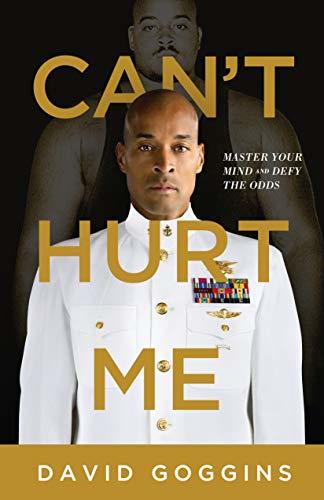
Can’t Hurt Me: Complete Chapter-by-Chapter Summary
The book is organized chronologically, but each stage of Goggins’s life also produces a new element of his philosophy. The result is a repeated pattern: an old identity fails, Goggins confronts something he has avoided, he subjects himself to a difficult test, and he extracts a principle from the experience. The ten challenges are therefore not detachable motivational extras; they are the practical counterpart to the autobiography.
Introduction: The 40% Rule and the War With Yourself
Goggins opens by challenging the reader’s confidence in their own self-knowledge. People often assume they know their limits because they have repeatedly encountered the same stopping points, but he argues that repetition can make a learned boundary feel like an objective one. A person who habitually quits when a task becomes painful may eventually describe themselves as incapable of going further without ever discovering whether the limitation was physical, psychological, or merely familiar.
He frames comfort as one of the main enemies of growth. The problem is not comfort itself but the way it can eliminate opportunities to discover hidden capability. If nothing requires a person to tolerate fear, frustration, fatigue, embarrassment, or uncertainty, they can move through life without testing the stories they tell themselves about who they are.
This is where the 40% Rule enters. Goggins does not present a laboratory-derived physiological formula; he uses the number as a representation of the enormous reserve he believes most people leave unused. When the mind announces that a difficult effort is over, he argues, the announcement often arrives before true capacity has been exhausted.
The introduction also makes clear that motivation will not be enough. Goggins distrusts emotional inspiration because emotion fluctuates. His alternative is repetition: deliberately expose yourself to difficulty, keep promises to yourself, collect evidence that you can do hard things, and slowly construct a mind that does not collapse as quickly under stress.
The rest of the book attempts to show how he reached that conclusion. Rather than beginning as a naturally confident or disciplined person, he begins as someone overwhelmed by circumstances and by his own responses to them.
Chapter 1: I Should Have Been a Statistic
Goggins’s childhood begins in Buffalo, New York, under the control of his father, Trunnis Goggins Sr. To customers at the family’s Skateland roller rink, Trunnis can appear successful and charismatic. Inside the household, however, David remembers an authoritarian father who controls the family’s money, demands exhausting work, and uses severe violence against his wife and children.
The contradiction between public image and private reality becomes one of David’s earliest lessons about concealment. The family presents an outward appearance of success while living under constant fear. His mother works at the rink without financial independence, and David and his brother are expected to endure whatever their father demands.
Violence is not an occasional interruption but part of the household’s organizing logic. David witnesses his mother being beaten and is himself physically punished. He learns to monitor his father’s moods, anticipate danger, and suppress vulnerability. Even medical care can become a struggle because his father treats illness and injury as weakness or unnecessary expense.
Over time, David’s fear begins mutating into hatred. One of the earliest signs of his later psychology appears when he realizes that his father also feeds on emotional control. Refusing to react internally becomes a primitive form of resistance. Long before Goggins has language such as “callousing the mind,” he is learning that controlling his response can preserve a small area of personal autonomy inside a situation he cannot control.
His mother eventually escapes with him to Brazil, Indiana. The move ends one form of danger but does not create an easy life. David’s older brother remains with their father, and David and his mother enter a period of poverty in which food, utilities, housing, transportation, and money are persistent concerns.
The move also exposes how much damage has already been done. David is academically behind, struggles with reading and comprehension, and develops severe anxiety. His school problems are not simply laziness. He describes stuttering, hair loss, white patches appearing on his skin, difficulty concentrating, and a nervous system that seems permanently prepared for danger.
Teachers respond differently. Some attempt to work with him; others seem to see him mainly as a problem. His mother fights to keep him from being pushed aside, but David increasingly experiences education as another environment in which he is defective compared with everyone around him.
Instead of building the missing academic foundation, he eventually learns avoidance. Cheating becomes a survival strategy. If the purpose of school is to expose how far behind he is, then appearing to know becomes easier than actually learning. The immediate problem is solved while the deeper weakness compounds.
In adulthood, Goggins interprets these years as the “bad hand” he was dealt. The phrase matters because the chapter refuses both extremes of interpretation. He does not deny that abuse, poverty, educational failure, or psychological stress affect a child; nor does he want those conditions to become a permanent explanation for every later choice.
Challenge #1 asks readers to identify their own bad hand. The exercise is deliberately uncomfortable: write down the disadvantages, trauma, insecurities, failures, external barriers, and self-created problems that shape the present. At this stage Goggins does not ask the reader to solve them. The first task is to stop hiding them.
The chapter therefore establishes a foundation for everything that follows. Before responsibility can be useful, reality must be accurately seen. The future Goggins will become obsessed with control, but Chapter 1 begins by acknowledging that many formative experiences were outside his control.
Chapter 2: Truth Hurts
If Chapter 1 establishes what happened to Goggins, Chapter 2 begins showing how he responds once he has enough autonomy to choose. The distinction is uncomfortable because his problems are no longer only inherited from childhood.
For a time, his mother’s relationship with Wilmoth Irving seems to offer a different model of adult life. Wilmoth is a successful carpenter and contractor whose presence brings stability into the household. He becomes a father figure to David without reproducing the violence associated with Trunnis Sr., and David begins to experience what a more ordinary family life might look like.
That possibility collapses when Wilmoth is murdered. His death returns the family to instability and reinforces David’s sense that safety is temporary. Experiences that might otherwise feel exceptional begin accumulating into a worldview in which danger and humiliation are expected.
Race adds another dimension. Growing up as one of relatively few Black children in Brazil, Indiana, Goggins encounters racist taunts, threats, and public humiliation. A racial slur is painted on the family’s car. Rather than simply retreat, he begins manufacturing a harder and more confrontational identity.
This defensive identity gives him protection but does not solve his deeper problems. Academically, he is still using deception to hide weak foundations. The contrast between the person he performs and the person he knows himself to be becomes increasingly difficult to ignore.
The military eventually supplies an alternative image of himself. Goggins becomes attracted to the Air Force, partly through family influence and his exposure to Civil Air Patrol. The idea of becoming a military professional offers something his adolescence lacks: standards, identity, competence, and respect.
Then he fails the Armed Services Vocational Aptitude Battery.
The failure is significant because it cannot be defeated through image. Goggins can act tough in public, change his clothes, intimidate others, or fantasize about an impressive future, but a test reveals the academic weakness he has been hiding for years. He fails again, and the gap between aspiration and preparation becomes undeniable.
The response produces one of the book’s foundational techniques: the Accountability Mirror. Goggins begins standing in front of a mirror and confronting himself without the protective stories he usually uses. He attaches Post-it notes describing goals, weaknesses, and small tasks that must be completed.
The important element is specificity. “Become successful” is useless because it does not identify what has to happen today. Passing the ASVAB requires learning material he does not know. Losing weight requires measurable physical changes. Improving his life requires doing the next action instead of admiring the final identity.
He attacks studying through repetition. Because he does not trust his academic foundation, he repeatedly writes material out and drills it until it sticks. The process is inefficient compared with someone who has spent years learning effectively, but efficiency is no longer his first concern. He needs to prove that he can stop escaping the work.
He also uses running and physical training to confront himself. Difficulty becomes useful because it produces immediate feedback. Either he keeps the promise or he does not.
Eventually he passes the ASVAB on his third attempt. The achievement matters less as proof of intelligence than as proof that deliberate action can change something he had treated as fixed.
Challenge #2 asks readers to build their own Accountability Mirror. Goggins’s language is intentionally harsh, sometimes harsher than many readers will find useful, but the underlying structure is simple: describe present reality without euphemism, identify the gap between reality and the goal, and convert that gap into small actions that can be tracked.
The Accountability Mirror becomes the moral center of the entire book. Almost every later method depends on it. Without honest assessment, discomfort becomes pointless suffering, visualization becomes fantasy, and confidence becomes self-deception.
Chapter 3: The Impossible Task
The third chapter begins with Goggins living far from the military future he once imagined. He has served in the Air Force, but his dream of becoming a Pararescueman collapsed during training.
Water is a major reason. Goggins is physically strong but deeply uncomfortable in aquatic environments, and Pararescue water-confidence evolutions repeatedly expose the fear. Instructors create stress underwater precisely because candidates must eventually function calmly when panic could be fatal.
Then a medical examination reveals that Goggins carries sickle cell trait. He does not have sickle cell anemia, but the finding initially removes him from training. When the medical decision is reconsidered, he is given the option to return, but he would have to restart a significant portion of the course.
Goggins chooses not to continue.
The official paperwork allows him to blame the medical issue, and for years he can tell the story that way. The older narrator refuses that protection. Looking back, he believes he used uncertainty around the trait as an excuse to leave an environment dominated by the water confidence he feared.
That retrospective judgment is crucial to the book’s concept of accountability. It does not mean the medical issue was invented; it means Goggins distinguishes the existence of an external circumstance from the psychological use he made of it.
He serves in Tactical Air Control Party work but eventually leaves the Air Force. His physical condition deteriorates dramatically. By the time he is working pest control at night, he is close to 300 pounds, eating heavily, and living in a state of resignation.
His job becomes a symbol of the life he believes he has accepted. He moves through restaurant kitchens and parking lots dealing with pests while remembering a younger version of himself who imagined belonging to an elite military community.
The catalyst for another transformation arrives through television. Goggins watches a program about Navy SEAL training and becomes fascinated by BUD/S, particularly the suffering of candidates enduring cold water, exhaustion, and Hell Week. What would repel most people attracts him because it appears to be exactly the environment capable of exposing everything he dislikes about himself.
The ambition appears absurd. He is too heavy to enter training and is racing against age and prior-service restrictions. After repeated calls, he eventually finds a recruiter willing to help, but the window is extremely narrow.
The first attempt to run exposes reality immediately. He barely manages a fraction of a mile before stopping. The distance between the person he is and the person he wants to become is enormous.
Instead of using that gap as evidence that the dream is impossible, Goggins turns it into a schedule. He begins an obsessive routine of cardiovascular training, swimming, cycling, calisthenics, controlled eating, and studying. The transformation is physically severe, but psychologically it gives him a new principle: weakness can be trained by deliberately entering the environment that exposes it.
This becomes the concept of the calloused mind. A hand develops calluses through repeated friction; Goggins argues that psychological resilience develops similarly. Avoided discomfort stays frightening because it remains unfamiliar. Repeatedly entering it can reduce its power.
The idea is broader than physical pain. Getting up early, studying material one dislikes, initiating an uncomfortable conversation, facing embarrassing weakness, or doing monotonous work can all function as forms of psychological friction.
Goggins eventually loses the necessary weight and reaches the standards required to enter SEAL training. The impossible task does not become easy. He simply becomes a different person through the process of preparing for it.
Challenge #3 turns that experience into a rule for readers: identify something uncomfortable that is also beneficial, then do it repeatedly. Goggins explicitly recommends gradual progression rather than demanding that every reader imitate his drastic transformation.
The challenge also changes the book’s emphasis. The Accountability Mirror tells the truth about weakness; the discomfort practice begins acting on that truth.
Chapter 4: Taking Souls
BUD/S gives Goggins the environment he has been seeking: difficulty cannot be hidden, and personal mythology is almost useless because everyone is being observed under pressure. The instructors’ task is partly technical and partly psychological. They want to discover who can continue functioning when exhaustion, cold, uncertainty, and humiliation remove ordinary sources of motivation.
Hell Week becomes the chapter’s central arena. Candidates are pushed through days of near-continuous physical evolution with very little sleep. Cold water, boat carries, log exercises, running, surf exposure, and constant instructor pressure reduce life to the next task.
Goggins enters this environment differently from the frightened Pararescue trainee. Instead of asking when suffering will end, he begins studying the people administering it.
He becomes a leader within Boat Crew Two and wants his team not merely to survive but to dominate. The crew even obtains information about the Hell Week schedule, giving them a psychological advantage because the unknown can be divided into known stages.
Knowing the schedule does not make the physical suffering disappear, but it gives Goggins a principle he will use repeatedly: uncertainty increases pain because the mind imagines no endpoint. If a person can identify the next checkpoint, an apparently limitless ordeal becomes a sequence of smaller tasks.
The defining concept of the chapter is “Taking Souls.” Goggins notices that instructors expect a particular response from exhausted candidates: hesitation, visible misery, decline, and eventually surrender. He discovers that producing the opposite response can change the psychological balance.
If an instructor wants to break him through extra work, Goggins tries to do the work with more enthusiasm. If a competitor expects him to weaken, he tries to become stronger precisely when the other person expects collapse. The opponent may not physically suffer from this, but their assumption about who has control is disrupted.
The phrase is deliberately aggressive, and Goggins’s examples are rooted in military training, yet he later broadens it. An employee facing a skeptical boss can “take a soul” by producing exceptional work; a student can respond to low expectations with preparation; an athlete can dominate practice after being denied playing time.
Its healthiest form is therefore not humiliation of another person but refusal to let another person determine one’s effort. The problematic form—turning every interaction into a contest—will become visible later in the book.
Hell Week also demonstrates how completely Goggins’s relationship with suffering has changed. Cold water, once one of his most powerful fears, becomes a setting in which he can psychologically attack the challenge rather than flee it. He experiences pride not because the pain disappears but because his response no longer resembles his earlier response.
Boat Crew Two survives Hell Week together and performs exceptionally. Goggins reaches the end feeling that the most important transformation has occurred inside the mind.
The victory is already compromised by injury. His knee is badly damaged, and the book is beginning to establish a tension it never fully resolves: mental resilience can change what suffering means, but it cannot necessarily change what physical damage is occurring.
Challenge #4 asks readers to select a competitive situation and outperform the standard being set for them. The practical core is to convert another person’s negativity into disciplined preparation rather than resentment. Instead of arguing about being underestimated, produce evidence that forces the estimate to change.
Chapter 5: Armored Mind
After Hell Week, Goggins’s injured knee becomes impossible to ignore. He attempts to conceal pain because removal from training feels more threatening than the injury itself, but no amount of psychological toughness can repair damaged bone.
The chapter repeatedly places these two realities beside each other. Goggins can control his reaction to fear, fatigue, and pain, but he cannot simply will a fracture out of existence.
Before the injury fully removes him, he faces underwater knot-tying and other aquatic evolutions that resurrect his oldest fear. Underwater, with instructors increasing stress, Goggins experiences a change in how he interprets his past.
For years he has treated childhood abuse, racism, humiliation, and fear as evidence that he started life damaged. Now he experiments with a different interpretation. If he survived experiences that once overwhelmed him, those experiences may also constitute evidence that he can survive present stress.
This becomes the “armored mind.” The point is not that abuse was beneficial or desirable. The point is that events which already happened can be given a different role in the present. Their existence cannot be undone, but their meaning need not remain limited to victimization.
That distinction allows Goggins to stop imagining himself as someone who somehow escaped a ruined childhood and begin imagining that the same child is part of the foundation of his strength. He gradually realizes that rejecting the frightened and ashamed younger David means rejecting part of himself.
Physical reality then intervenes decisively. An X-ray reveals a fractured kneecap, and Goggins is removed from the training class. Because he has not voluntarily quit, he expects another opportunity, but another opportunity means another complete confrontation with the process he has already endured.
Away from training, personal complications continue. His relationship with Pam, whom he had previously married, remains unstable. Goggins increasingly understands that his transformations do not automatically produce relational clarity. He can become extraordinarily disciplined while remaining emotionally complicated.
When he returns, he is told that the next BUD/S class will effectively be his final chance. Another serious failure or injury may end the SEAL goal altogether.
The chapter introduces Shawn Dobbs as a counterexample to Goggins’s growing philosophy. Dobbs is talented and capable, but when pressure intensifies he becomes consumed by self-doubt. Goggins watches him interpret discomfort as evidence of physical failure even when the damage he fears does not appear to be present.
For Goggins, the episode reinforces the idea that performance can collapse when the mind becomes convinced that the story is already over. Talent without command of thought is insufficient.
Yet Class 235 also produces a tragedy that prevents Hell Week from being romanticized completely. John Skop becomes seriously ill during training. Goggins remembers recognizing signs of severe sickness and watching the situation deteriorate. During a pool evolution Skop loses consciousness, is pulled from the water, and later dies.
The death exposes the obvious but sometimes obscured truth behind the rhetoric of toughness: some conditions are not tests to transcend. Physical systems can fail, and the consequences are not metaphorical.
Goggins nevertheless continues through his own injuries. His feet and lower legs deteriorate, and he relies on extensive taping while completing the remaining training. Eventually he graduates from BUD/S.
The achievement closes a loop begun when an obese Goggins first watched SEAL training on television. Yet the older narrator does not portray graduation as the endpoint. The same mental system that got him there will continue producing both remarkable achievement and serious excess.
Challenge #5 introduces strategic visualization. Goggins rejects fantasy masquerading as visualization. Imagining a trophy without preparing for the obstacles between the present and the trophy is useless. Effective visualization means rehearsing success, likely difficulties, the reasons for continuing, and the response to foreseeable setbacks.
That principle matters because it adds preparation to toughness. The armored mind is not supposed to be a mind that believes nothing can go wrong; it is a mind that has already considered what it will do when something does.
Chapter 6: It’s Not About a Trophy
By Chapter 6, Goggins has achieved the identity that once seemed impossible. He is a Navy SEAL, and ordinary achievement no longer provides the same psychological friction. Endurance sport becomes the next arena.
The immediate motivation is larger than personal self-testing. In 2005, Operation Red Wings in Afghanistan results in the deaths of special operations personnel, including men connected to Goggins through the SEAL community. Marcus Luttrell survives, but the overall loss is devastating.
Goggins wants to raise money for the Special Operations Warrior Foundation, which supports families of fallen special operations personnel. He becomes interested in the Badwater 135 ultramarathon, an extreme race associated with punishing heat and enormous endurance demands.
The problem is that he has no ultramarathon résumé. He contacts race director Chris Kostman and discovers that wanting to do Badwater is not enough. He must demonstrate experience.
That requirement sends him to the San Diego One Day, a 24-hour race on a relatively flat course. Goggins approaches it with enormous confidence and remarkably little ultrarunning-specific preparation.
The opening miles initially reinforce his belief that general fitness will be enough. He runs hard and feels capable. Experienced race director John Metz is less convinced, recognizing that Goggins’s early pace looks unsustainable.
The race gradually becomes a study in what willpower can and cannot compensate for. Goggins is strong, but he is inexperienced with pacing, nutrition, foot care, and the peculiar accumulation of damage that occurs over ultradistance.
His body deteriorates badly. His feet are damaged, his legs become increasingly painful, basic bodily functions become difficult, and the smooth opening miles are replaced by an ordeal that makes the remaining distance seem impossible.
At that point, Goggins reaches for memories.
This produces the Cookie Jar. Instead of relying on abstract encouragement, he mentally reviews specific events from his past: escaping childhood circumstances, passing military tests, losing weight, surviving Hell Week, and completing tasks he once thought impossible. Each memory becomes evidence that his present feeling of helplessness may not be reliable.
The metaphor works because the “cookies” are earned. They are not affirmations that he is powerful because he wants to feel powerful. They are records of things that actually happened.
Goggins begins breaking the remaining race into smaller pieces. The total distance is psychologically crushing; another mile or another lap is manageable. The combination of chunking and autobiographical evidence helps him keep moving.
He eventually completes more than 100 miles and earns the qualification he needs, but the finish does not vindicate his preparation. He is physically devastated and requires assistance afterward. The achievement demonstrates extraordinary persistence while simultaneously illustrating why persistence should not be confused with intelligent race strategy.
That contradiction makes Chapter 6 especially useful. Goggins proves that he had far more endurance than his suffering suggested, but he also proves that toughness can become a substitute for preparation when ego is allowed to dominate.
Challenge #6 asks readers to create their own Cookie Jar. The inventory should include not merely awards and obvious successes but difficulties survived, repeated attempts that eventually worked, habits broken, and moments in which a previous limitation was disproved.
The purpose is functional confidence. When boredom, fear, or fatigue produces the thought that a current task cannot be completed, previous evidence supplies a reason to question the thought.
Chapter 7: The Most Powerful Weapon
Finishing San Diego does not make Goggins an experienced ultrarunner. Instead, it gives him proof that he can enter the sport and a painful demonstration of how much he does not know.
He continues competing and soon encounters the HURT 100 in Hawaii, an event where terrain, elevation, trail conditions, equipment, and technical efficiency matter enormously. The race exposes the limitations of treating endurance as a simple contest of pain tolerance.
Goggins observes athletes who move more intelligently than he does. Experienced ultrarunners understand pacing, terrain, footwear, nutrition, and the conservation of energy across an extremely long race. Their example forces him to expand his philosophy: effort matters, but so does competence.
This period strengthens his belief in what he calls the brain’s “governor.” Goggins imagines the mind as a protective mechanism that attempts to reduce effort before absolute failure occurs. Fatigue feels like a command, but he increasingly treats it as information that must be interpreted rather than automatically obeyed.
The 40% Rule becomes the shorthand for this idea. It does not mean he measures himself at forty percent during a race. The number represents his conviction that subjective exhaustion often arrives with meaningful reserve still available.
Badwater becomes the major test.
This time Goggins prepares more intelligently. He studies the race, acclimates himself to heat, develops a better understanding of pacing, and enters with far more respect for the environment than he displayed before San Diego.
The contrast matters because Badwater is not merely another demonstration of brute endurance. Goggins is becoming a more competent endurance athlete. He competes around established ultrarunners and performs strongly, proving that the persistence revealed in San Diego can become much more effective when combined with preparation.
The chapter therefore shifts the question. Goggins no longer wonders whether a former 300-pound pest-control worker can survive an ultramarathon. He now wonders how much performance is hidden behind the point where the mind normally asks for relief.
Challenge #7 asks readers to push incrementally beyond their normal stopping point. Importantly, the prescription is more conservative than the legend of Goggins often suggests. He recommends small increases—roughly five to ten percent—rather than reckless leaps.
The goal is to reset the baseline. If a person repeatedly learns that the old stopping point is not final, their definition of normal changes. A difficult workload becomes familiar, and the next expansion begins from a higher level.
Goggins believes this carries over beyond exercise. Learning to manage the internal dialogue produced by physical discomfort can increase confidence in work, school, and other stressful environments.
The transfer is plausible as a motivational principle, but the chapter also plants one of the book’s biggest empirical questions: how literally should the governor and the forty-percent figure be taken? The later analysis will matter because Goggins’s metaphor is more persuasive than his physiology.
Chapter 8: Talent Not Required
Chapter 8 broadens the argument from suffering to preparation, time management, and deliberate consistency.
Goggins enters the Ultraman World Championship in Hawaii, an event combining long-distance swimming, cycling, and running. His background makes the running component relatively familiar, but cycling exposes him as technically inexperienced.
Equipment, bike fit, mechanical problems, pacing, and tactical decisions all matter. The experience reinforces something his earlier ultramarathons have already begun teaching him: effort cannot permanently substitute for knowledge.
Goggins develops the idea of “backstops”—checks that can catch errors before they become catastrophic. A plan should not merely describe an ideal path; it should contain mechanisms for recognizing when reality has diverged from the plan.
That lesson parallels strategic visualization. Mental toughness becomes more effective as it becomes less dependent on improvising in crisis.
His military life is also changing. Admiral Albert Calland and others see value in Goggins’s unusual background and public-speaking ability, and he becomes involved in recruiting, particularly efforts to reach candidates who might not fit stereotypical assumptions about SEALs.
Goggins uses his biography as evidence that elite performance does not always begin with obvious natural talent. A person who once feared water, struggled academically, and became severely overweight can still build capacities through relentless practice.
“Talent not required” is therefore rhetorical rather than literal. Ultraman itself demonstrates that technique matters. Goggins is arguing that talent without sustained effort is overrated, not that skills, genetics, knowledge, or specialized training have no value.
The chapter also describes his highly structured lifestyle. Goggins does not simply work hard whenever he happens to feel intense. He tries to account for his time, reduce distractions, and give individual tasks complete attention.
This produces Challenge #8, a three-week schedule audit. During the first week, the reader records how time is actually spent. During the second, the day is divided into specific blocks, including work, training, meals, and recovery. During the third, the schedule is refined further based on the inefficiencies discovered.
The instruction to schedule rest is important. The popular image of Goggins is someone who never rests, but the actual challenge says productive intensity requires periods in which the brain is genuinely allowed to recover.
The chapter then introduces a limit no scheduling system can eliminate.
While pursuing increasingly ambitious endurance goals, Goggins develops cardiac symptoms. Medical testing eventually reveals an atrial septal defect, a congenital opening between the upper chambers of the heart. He undergoes a catheter-based procedure to close it.
Problems persist, and he later undergoes another procedure.
The diagnosis forces Goggins into an unfamiliar relationship with limitation. Unlike the early quarter-mile run or his fear of water, a congenital heart abnormality cannot be defeated by deciding that it is an excuse. Medical intervention becomes necessary.
The chapter is therefore more complicated than its title. Talent may not be required for every achievement, but biology still exists. Goggins’s own life repeatedly shows that discipline operates inside a physical system rather than replacing one.
Chapter 9: Uncommon Amongst Uncommon
By this stage Goggins has learned how to become exceptional in ordinary environments. Chapter 9 asks what happens when the surrounding environment is already populated by exceptional people.
His military career places him among SEALs and other high-performing personnel who have already survived demanding selection processes. In such settings, merely meeting the standard no longer distinguishes anyone.
Goggins responds by continually searching for a higher standard. He attends Army Ranger School and performs strongly, pursuing not just qualification but recognition. He continues to train intensely and treats elite status as another form of complacency if it becomes an identity that no longer has to be earned.
This produces the concept “Uncommon Amongst Uncommon.” If someone has become a large fish in a small pond, Goggins wants them to find a larger pond. If everyone around them is strong, disciplined, and capable, they should ask what additional effort would still separate them.
For ambitious readers, the idea is powerful because achievement often does produce psychological relaxation. A person who once worked obsessively to enter a profession can begin protecting status instead of developing further once that status has been achieved.
Yet Chapter 9 contains one of the most important corrections to Goggins’s entire system. His standards make him individually formidable, but they do not automatically make him a good leader.
Goggins expects others to approach training and work with the same obsessive intensity he uses. He becomes judgmental when teammates do not. Rather than understanding what motivates different people, he assumes that a standard that transformed him should transform everyone.
The result is isolation.
This is not a case of Goggins being too weak or insufficiently disciplined. It is a case of a successful personal philosophy failing when transferred directly into a social role. Leadership requires something individual achievement does not: the ability to understand other people without treating difference as inferiority.
The lesson quietly challenges earlier ideas such as Taking Souls. Competition can produce effort, but a team cannot always be managed as though every relationship is an adversarial contest.
Goggins also continues confronting racism and prejudice in elite environments. His response remains consistent with the rest of the book: he refuses to let prejudice determine his standards or his self-conception. Yet his success does not logically establish that prejudice is imaginary. It establishes that agency can remain meaningful even when unfair circumstances are real.
Challenge #9 is aimed explicitly at unusually ambitious people. Goggins warns that permanent pursuit of exceptional performance demands enormous focus and may damage balance in other areas of life.
That warning is easy to overlook because the chapter’s rhetoric remains intensely aspirational. It is nevertheless an important admission: becoming “uncommon amongst uncommon” is not presented as a universal prescription for a healthy life.
Chapter 10: The Empowerment of Failure
Chapter 10 makes failure central rather than treating it as an embarrassing interruption between victories.
One strand concerns advanced military selection. Goggins performs well physically but makes a navigation decision that violates the rules while trying to meet a deadline. He is removed from the process.
The experience is important because extraordinary effort cannot reverse the result. He fails not because he refuses to suffer but because his judgment is wrong.
That distinction leads toward a more mature model of self-improvement. If every failure is interpreted simply as evidence that one should have tried harder, important information is lost. Sometimes preparation was wrong, technique was poor, equipment failed, pacing was unrealistic, a rule was misunderstood, or ego overrode judgment.
The larger example becomes his attempt to break the 24-hour pull-up record.
Goggins prepares for months and arrives at a highly public attempt at Rockefeller Center, connected with Today. He has broken the total number into manageable mathematical pieces and believes the record is achievable through disciplined pacing.
The event does not unfold as planned.
The environment, equipment, public attention, and physical demands create problems his training did not fully reproduce. He stops well short of the record. The failure is humiliating precisely because he had made it public.
The older Goggins does not protect his image by minimizing the result. Instead, he borrows a military practice: the After Action Report.
An After Action Report separates ego from analysis. What worked? What failed? What assumptions were wrong? Which factors were uncontrollable, and which could have been prepared for? What should change before the next attempt?
Goggins identifies specific problems rather than settling for “I need to be tougher.” The bar itself, hand protection, grip, pacing, breaks, training volume, and logistics all matter.
He attempts the record again and fails again. This time severe damage to his hands becomes central.
A second failure could easily become evidence that the goal itself is impossible. Instead, it produces more data.
Goggins returns for a third attempt in January 2013 with a better system. He eventually completes 4,030 pull-ups and achieves the record he had been chasing. Because records continue to change, it is important to describe him accurately today: Guinness World Records identifies Goggins as a former 24-hour pull-up record holder, with his 4,030-pull-up performance now part of the record’s history rather than the current mark.
The real lesson of Chapter 10 is therefore not persistence by itself. Goggins had persistence during the first failed attempt too. Improvement comes from combining persistence with accurate feedback.
Challenge #10 asks readers to write an After Action Report about a meaningful failure. They should identify what went well, how their thinking changed during the attempt, what damaged the outcome, which factors can be fixed, and when another attempt can be made.
Goggins explicitly tells the reader to reconnect the AAR with earlier tools. The Accountability Mirror prevents excuses, visualization prepares for recurring problems, the Cookie Jar supplies evidence against despair, and the calloused mind helps the person tolerate another attempt.
By this point the ten challenges have become a system rather than a sequence of isolated slogans.
Chapter 11: What If?
The final chapter begins by undermining the image of unlimited upward progression that Goggins has spent the previous chapters building.
His body begins changing in ways he cannot explain. During the period surrounding the 2014 Badwater race, he gains weight unexpectedly, struggles with his heart rate and breathing, and feels dramatically weaker than the athlete he had been.
This is not ordinary race suffering that improves when he becomes mentally aggressive. The symptoms persist.
Goggins seeks medical explanations. Different possibilities are investigated, but he does not receive a diagnosis that fully explains his experience. The uncertainty is psychologically destabilizing because his primary tool—work harder—is no longer producing control.
The enforced slowdown creates a different kind of confrontation. Goggins begins examining the emotional engine that has powered his transformation.
For years, anger has been useful. Anger at his father, racists, doubters, previous failures, and the weaker versions of himself gives him energy. It helps him turn humiliation into training.
But fuel is not the same thing as destination.
Goggins recognizes that rage has also narrowed his life. It contributes to harshness, isolation, and a tendency to interpret ordinary human differences through the logic of battle. Becoming difficult to hurt has not automatically made him easy to live or work with.
The chapter therefore begins releasing some of the hatred that once appeared indispensable. His father’s violence remains real. Racism remains real. Failure remains real. Forgiveness does not require pretending that those things were harmless.
What changes is Goggins’s willingness to let old enemies continue occupying psychological space.
The physical recovery story proceeds differently. Goggins remembers earlier work with Joe Hippensteel and becomes increasingly convinced that extreme muscular and connective-tissue tightness is contributing to his condition. He begins spending enormous amounts of time stretching and gradually reports dramatic improvements.
The memoir presents this recovery through Goggins’s own interpretation. That interpretation should not be confused with a medically established diagnosis of the full systemic problem he had experienced, but the subjective significance is clear: for the first time, progress comes partly from loosening rather than hardening.
The metaphor is difficult to miss. Much of Can’t Hurt Me has been about becoming harder. Chapter 11 discovers that hardness itself can become a limitation.
The family story also moves toward integration. After the death of his brother Trunnis Jr.’s daughter Kayla, David reconnects with a brother from whom he has been separated by family history and different choices. Old grievances become less important than the remaining relationship.
His mother has developed as well, eventually using her own experiences to help people affected by domestic violence. The family is no longer simply frozen in the period controlled by Trunnis Sr.
Goggins’s retirement from the Navy and later work do not produce conventional retirement from challenge. He still seeks difficult goals and refuses complacency. What changes is the reason he needs the difficulty.
The final “What if?” is therefore larger than the question Goggins asked when he first watched SEAL training. Earlier, “What if?” meant: what if I am capable of becoming somebody impressive? By the end, it means: what if I do not have to remain trapped by any of the identities I have already built, including the identity of the permanently angry hard man?
The mature destination is captured by the tension between peace and dissatisfaction. Goggins wants to be at peace with himself without becoming satisfied with avoidable stagnation.
There is no Challenge #11. That omission is appropriate. The final chapter does not provide another technique because it is integrating the consequences of all the earlier ones.
The 10 Challenges as a Progressive System of Self-Mastery
The ten challenges are often remembered separately because Goggins gives them memorable names, but their logic is cumulative. Each one solves a problem created or exposed by the previous stage.
Challenge #1, the Bad Hand inventory, begins with recognition. A person cannot take responsibility intelligently while pretending circumstances do not exist. Goggins asks readers to identify trauma, disadvantages, insecurity, present obstacles, and self-created problems in as much detail as they can tolerate.
Challenge #2, the Accountability Mirror, moves from description to ownership. The question changes from “What happened to me?” to “What can I do next?” The mirror is designed to interrupt vague ambition by forcing weaknesses and goals into specific, visible tasks.
Challenge #3 adds deliberate discomfort. Once a weakness has been identified, Goggins does not want the reader to merely understand it intellectually. They should repeatedly approach tasks they normally avoid and create a new behavioral response.
The sequence matters. Discomfort without direction can become masochism. Because it follows the Accountability Mirror, the discomfort is supposed to serve an identified area of growth.
Challenge #4, Taking Souls, introduces outside pressure. Private discipline is tested in environments where a coach, teacher, boss, competitor, or adversary has expectations about what the individual will do. Goggins recommends responding through preparation and excellence rather than complaint.
The phrase can sound like domination, but his most transferable instruction is simpler: do not let another person’s low expectation become permission to underperform.
Challenge #5 introduces strategic visualization. By this point the reader has chosen a goal and begun entering discomfort. Visualization asks them to anticipate what will go wrong. Success is rehearsed together with adversity, because confidence without contingency planning is fragile.
Challenge #6, the Cookie Jar, solves the problem that appears once present difficulty becomes emotionally overwhelming. Instead of arguing abstractly with self-doubt, retrieve real memories of earlier effort. Previous evidence helps prevent temporary suffering from rewriting the entire story of one’s competence.
Challenge #7 extends the stopping point gradually. The 40% Rule is most useful here not as a literal percentage but as permission to test the first impulse to quit. Goggins’s own challenge recommends small increases rather than uncontrolled escalation.
Challenge #8 brings organization into a system that could otherwise become dependent on heroic bursts. A schedule audit identifies wasted time, forces prioritization, and recognizes that training, work, and rest all require deliberate placement.
Challenge #9 is anti-complacency. If the earlier practices work and a person becomes unusually capable, success itself can become the next comfort zone. Goggins asks high performers to seek environments where they are no longer exceptional.
Challenge #10 closes the loop with failure analysis. Even a disciplined, prepared, mentally resilient person will still fail. The After Action Report turns that failure into information and sends the person back through the earlier system with better data.
Viewed together, the progression is coherent: recognize reality, accept responsibility, practice discomfort, perform under pressure, prepare mentally, retrieve earned confidence, test perceived limits, organize time, resist complacency, and analyze failure.
The system is strongest where it remains behavioral. Journaling, defining specific goals, scheduling, deliberate practice, reviewing mistakes, and remembering concrete evidence of past competence can all be adapted without adopting Goggins’s physical extremity.
The most dangerous mistake is to confuse the exercises with the spectacular examples used to illustrate them. The principle behind the discomfort challenge is not “run until you fracture something.” The principle is “stop allowing avoidable discomfort to decide what you practice.” The principle behind the 40% Rule is not “ignore every physical warning.” It is “question whether the first desire for relief represents your true limit.”
The book becomes far more usable once that distinction is preserved.
The Core Psychology: Accountability, the Calloused Mind, and the 40% Rule
Goggins’s psychology is less about feeling confident than about accumulating evidence that confidence has been earned. He distrusts identity claims that have not been tested by behavior. In his system, belief usually follows action: do the difficult thing repeatedly, remember that you did it, and let the memory alter what you consider possible the next time.
That structure explains why the major concepts are mutually dependent. The Accountability Mirror identifies the truth, discomfort produces new evidence, the Cookie Jar stores it, visualization prepares it for use, and the 40% Rule challenges the point where fear or fatigue tries to end the effort.
Accountability Before Motivation
Motivation is attractive because it feels like movement before much has actually changed. A person watches an inspiring speech, imagines a different future, feels temporarily energized, and mistakes the emotion for progress.
Goggins’s answer is accountability.
The Accountability Mirror is intentionally anti-comfort. It asks a person to look at the measurable difference between who they say they want to be and what their current behavior demonstrates. A goal such as losing weight, completing a degree, changing careers, or becoming physically fitter has to be broken into tasks that can fail today.
This is psychologically important because large aspirations protect the ego surprisingly well. Someone can identify as a future entrepreneur for years while never making a sale. They can imagine becoming a runner while repeatedly skipping training. The identity remains flattering because it is permanently located in the future.
Small tasks remove that shelter. Either the work was done or it was not.
Goggins’s language around accountability is often deliberately insulting. He treats euphemism as a form of avoidance and sometimes argues that people need to speak to themselves with almost brutal directness.
That style is not necessary to preserve the underlying mechanism. Honest self-assessment and self-contempt are not identical. A person can acknowledge that they did not prepare sufficiently without concluding that they are fundamentally worthless.
Indeed, Goggins’s later development suggests why the distinction matters. His younger self often requires anger to move. His older self begins learning that permanent self-war can become another trap.
The lasting insight is therefore not “be cruel to yourself.” It is “do not negotiate with facts simply to protect your self-image.”
The Calloused Mind and Chosen Discomfort
The calloused mind is Goggins’s metaphor for resilience created through repeated exposure to manageable difficulty.
Avoidance teaches the nervous system that an experience deserves avoidance. Each time a person escapes the task, the relief can reinforce the escape. The next encounter may therefore feel even more threatening.
Goggins reverses the cycle. Approach the discomfort voluntarily, remain inside it long enough to complete the intended task, and repeat. What once generated panic gradually becomes familiar.
His life provides obvious examples. He fears water and repeatedly returns to aquatic training. He is academically weak and responds with hours of repetitive study. He struggles to run and gradually turns running into a central part of his identity.
The important word is chosen. Goggins cannot choose his childhood abuse, Wilmoth’s murder, racism, or his congenital heart defect. He can choose whether to wake early, study, train, attempt BUD/S again, or enter an endurance event.
That distinction is morally important because not all suffering is growth. Abuse is not valuable because it hurts. Injury is not inherently valuable because it requires pain tolerance. The callousing principle applies most safely to controlled difficulty undertaken for a specific reason.
Its strongest everyday applications are unglamorous. Do the neglected administrative task. Practice the skill that exposes incompetence. Initiate the conversation that embarrassment has postponed. Train when enthusiasm is absent but recovery is adequate. Finish the planned study block after boredom begins.
The concept also explains why Goggins emphasizes repetition over isolated heroics. One brutal experience can become a story. Repeated smaller experiences change expectations.
A person who has repeatedly kept a difficult promise begins approaching the next difficult promise from a different identity. “I am someone who quits when this feeling appears” becomes harder to believe because the autobiographical evidence is accumulating against it.
The Cookie Jar, Visualization, and the “Governor”
The Cookie Jar is one of the book’s most psychologically elegant ideas because it changes confidence from a vague feeling into a memory practice.
In difficult moments, people often become temporally narrow. The present problem expands until it seems to define their entire capability. Someone failing an exam forgets previous academic successes. An athlete suffering late in a race forgets all the training that made reaching that point possible.
Goggins deliberately retrieves contradictory evidence.
The “cookies” are specific memories of obstacles survived, promises kept, failures corrected, and achievements earned. Their function is not nostalgia. They provide data to challenge the present mind’s claim that the current difficulty proves incapacity.
This works particularly well with the Accountability Mirror. The mirror prevents inflated self-belief; the Cookie Jar prevents excessively negative self-belief. One says, “Do not pretend you have done work you have not done.” The other says, “Do not pretend you have never done difficult work when you have.”
Visualization then projects that evidence forward. Goggins recommends imagining the desired result but also the obstacles likely to appear. What happens when the body hurts? What happens when a plan fails? What will the person tell themselves when quitting suddenly feels reasonable?
This is far different from magical thinking. Goggins repeatedly insists that visualization cannot compensate for work that was never completed. A poorly prepared person cannot imagine themselves into technical competence.
The “governor” joins these tools by explaining why they are needed during performance. Goggins believes that the mind often imposes a conservative stopping point. Pain, fatigue, boredom, and fear produce an urgent recommendation to reduce effort, and he trains himself to treat that recommendation as negotiable.
The scientific language becomes more complicated than the metaphor, but the practical insight does not require believing in a single neurological switch. People can experience severe perceived effort without having reached absolute physical incapacity. Attention, expectation, motivation, experience, emotion, and physiology all contribute to how effort is interpreted.
The danger appears when negotiability becomes denial. Some sensations are invitations to continue; others are signs of injury, medical instability, or inadequate recovery. Can’t Hurt Me is filled with examples of both.
Goggins’s strongest mental tool is therefore not the refusal to believe the body. It is the refusal to assume that every thought produced under stress is automatically true.
Trauma, Racism, Identity, and the Rejection of Victimhood
The book’s motivational reputation can obscure how much of Can’t Hurt Me is actually about identity after trauma. Goggins’s adult obsession with toughness makes little sense without the child who learned that vulnerability could be dangerous.
His father establishes the first pattern. Trunnis Sr. combines control, public charisma, financial domination, and violence. David grows up in an environment where another person can determine whether the household feels safe.
Escaping Buffalo removes him from his father’s immediate control but not from the consequences of that environment. Poverty adds new instability. Academic failure attacks his sense of intelligence. Anxiety affects speech and behavior. He enters adolescence already carrying a story that something inside him is defective.
Wilmoth Irving briefly challenges that story by representing stability and a healthier male presence. His murder then reinforces the expectation that good conditions disappear.
Racism compounds the problem because humiliation is no longer confined to the home. In Indiana, Goggins is visibly different in an overwhelmingly white environment, and some people make that difference hostile. Slurs, threats, and intimidation give him reasons to feel under attack even outside the family.
The defensive identity he creates is therefore understandable. He changes how he presents himself, becomes more confrontational, and increasingly uses anger to prevent others from seeing fear.
But defensive identity has a cost. It gives him a way to look powerful without requiring him to repair the areas where he actually feels weak.
This is why the ASVAB failure matters so much. A test does not care how intimidating he looks. It forces him to confront the gap between performance and reality.
The Accountability Mirror becomes, at least partly, an attempt to replace externally constructed identity with evidence. Goggins will no longer decide who he is based on his father’s opinion, a racist classmate’s opinion, or his own fantasies. He wants behavior to become the evidence.
That shift explains his hostility toward what he calls victim mentality. He experienced circumstances that could easily become permanent explanations for failure, and he fears that explanations can turn into identity.
The strength of that position is obvious. People sometimes do use real disadvantages to explain avoidable choices long after the immediate constraint has changed. Recognizing that something was unfair does not require surrendering all future agency to it.
The limitation is equally important. Agency and circumstance are not mutually exclusive. Childhood abuse can have lasting effects even when a survivor becomes disciplined. Racism can create real barriers even when an individual refuses to be psychologically defeated by it.
Goggins’s own life proves this more clearly than his rhetoric sometimes allows. He does not become extraordinary because the abuse was irrelevant. Much of his adult psychology is a reaction to it.
The memoir becomes deeper when Goggins stops treating the frightened child as someone who must be exterminated. During BUD/S, he begins reframing childhood suffering as evidence of survival. Later, he goes further and recognizes that permanently despising earlier versions of himself prevents integration.
Anger serves a similar arc.
Early anger is protective. It separates David emotionally from his father and later supplies energy against racists, doubters, instructors, competitors, and his own previous failures.
Achievement then reinforces the strategy. Rage works. It can produce another workout, another repetition, another mile, another attempt.
The problem is that strategies which work under threat do not necessarily create a satisfying life outside threat.
Chapter 9 exposes the social cost when Goggins treats teammates through the standards of his own private war. Chapter 11 exposes the emotional cost when he realizes that people from decades earlier are still influencing his present because he remains psychologically organized around opposition to them.
Forgiveness becomes important precisely because it is not surrender. He does not conclude that his father’s violence was acceptable or that racist treatment should be minimized. He concludes that continuing to feed every future achievement with old hatred gives the past a form of continuing control.
The final philosophy is therefore less simplistic than “never be a victim.” Goggins cannot change everything that happened to him. He can change whether those events become permanent instructions about what he is allowed to become.
His example is powerful as a philosophy of response. It becomes unfair only when transformed into the claim that every person facing trauma, discrimination, poverty, illness, or psychological difficulty has identical options at identical cost.
Suffering, Injury, and the Limits of “Mind Over Matter”
No tension in Can’t Hurt Me is more important than the distinction between perceived limitation and actual physical damage.
Goggins’s career is built on discovering that feelings of exhaustion are often not final. His first attempt to run after becoming severely overweight ends almost immediately. If he had interpreted that performance as a permanent description of his body, none of the later endurance achievements would have occurred.
BUD/S reinforces the lesson. Cold, sleep deprivation, soreness, and fear produce intense urges to quit even though many candidates are still physically capable of continuing. Learning not to obey every urge for relief is genuinely important in such an environment.
Endurance racing produces the same pattern over longer timeframes. During San Diego, Goggins reaches points where continuing seems impossible and then continues. At HURT and Badwater, the psychological experience of being “finished” repeatedly proves incomplete.
The danger is that the same biography contains obvious cases in which the body is not bluffing.
A fractured kneecap is not a mindset. Pneumonia is not weak internal dialogue. A congenital atrial septal defect cannot be calloused away. Severe hand damage during a pull-up attempt requires practical adaptation, not a more aggressive mantra.
Ultradistance sport itself carries legitimate medical risk. A recent review of injury and illness in ultratrail running discusses problems including musculoskeletal injury, gastrointestinal distress, renal complications, electrolyte disturbances, and other consequences of prolonged extreme exertion.
The existence of those risks does not invalidate endurance sport. It invalidates the assumption that every signal to stop is evidence of psychological weakness.
Goggins sometimes knows this better than the mythology around him does. Challenge #7 tells readers to increase workload gradually. Challenge #8 tells them to schedule rest. His improved Badwater performance follows more intelligent preparation. His pull-up record arrives only after failures produce technical changes.
The book therefore contains two Gogginses operating at once. One believes preparation, adaptation, and data matter. The other is willing to treat almost any obstacle as something to out-suffer.
The first is more useful for most readers.
A disciplined person should certainly learn the difference between discomfort and danger. Unfortunately, that distinction is not always available in the moment, particularly to inexperienced athletes. That is why expertise, progressive loading, recovery, medical evaluation, and coaching exist.
The safest interpretation of the calloused mind is therefore psychological rather than medical. Train yourself to tolerate the emotions that accompany difficulty: boredom, embarrassment, fear, frustration, and ordinary exertional discomfort. Do not use the concept as permission to diagnose your own serious symptoms as weakness.
Goggins’s injuries also complicate one of the book’s emotional assumptions: that stopping and quitting are usually the same thing.
Sometimes stopping preserves the possibility of returning. Rehabilitation after a fracture is not moral surrender. A medically required change in training does not necessarily represent avoidance.
Goggins himself benefits from such pauses. He returns after injury. He undergoes heart procedures. His later physical recovery requires a dramatic change in approach.
The most defensible version of “mind over matter” is therefore modest. The mind influences how matter is experienced and how much effort a person is willing to invest. It does not make matter cease to exist.
Paradoxically, accepting that distinction strengthens rather than weakens Goggins’s broader philosophy. Genuine toughness is not proven by pretending there are no limits. It is demonstrated by learning which limits should be trained, which should be respected, and which can change with time.
Achievement, Leadership, and the Cost of Being Uncommon
Goggins’s philosophy is built primarily around self-command. Leadership requires a different skill: influencing people whose histories, motivations, abilities, and priorities are not identical to one’s own.
Chapter 9 demonstrates the difference.
By then, Goggins has repeatedly learned that he performs best when standards feel hostile. He turns skeptical instructors into opponents. He treats difficult races as battles. He converts humiliation into fuel.
That works because he controls the meaning of the opponent inside his own mind.
When he begins applying the same standard outward, the system falters. Teammates who do not train with his intensity appear complacent. People with different balances between work and family can look insufficiently committed. Ordinary differences in motivation become moral differences.
Goggins eventually recognizes that he was difficult to work with because he expected others to become versions of himself.
That admission may be one of the most valuable moments in the memoir. Many books about extreme achievement never examine whether the behavior producing individual excellence also damages collaboration.
The distinction between standards and leadership matters in almost every workplace. A technically outstanding employee can become a poor manager if they assume everyone learns the same way. A founder who can tolerate endless uncertainty may destroy a team by treating normal fatigue as disloyalty. An athlete who thrives on humiliation may demotivate teammates by reproducing it.
Taking Souls is similarly useful when kept internal and dangerous when externalized. If the concept means “respond to pressure with your best work,” it can increase performance. If it means “interpret colleagues as people whose psychological defeat proves your strength,” cooperation deteriorates.
Goggins’s later self-awareness partially corrects this. He learns that being the hardest worker in the room does not mean one understands the room.
The “Uncommon Amongst Uncommon” philosophy also has an explicit cost. Goggins warns that permanent pursuit of exceptional performance may upset life balance. That warning should not be treated as a footnote.
Extreme achievement is selective by definition. Time spent training for elite endurance events is time not spent elsewhere. Obsessive professional ambition affects friendships, family, sleep, leisure, and emotional availability. A person may decide the trade is worthwhile, but the trade still exists.
Goggins often describes almost monastic periods of life in which the mission dominates everything. Readers attracted to the results can easily overlook the structure required to produce them.
The mature lesson is therefore not that everyone should become uncommon amongst uncommon. It is that people who claim to want unusual results should examine whether their daily behavior resembles the level of commitment those results require—and whether they actually want the associated cost.
That second question is just as important as the first.
What the Science Supports—and What the Book Overstates
Can’t Hurt Me moves constantly among autobiography, metaphor, practical advice, and claims about human physiology. These categories should not be treated as interchangeable. A metaphor can be useful without being a biological law, and an extraordinary personal experience can be truthful without establishing what will happen to everybody else.
The book is most convincing when Goggins describes what he did and how his own thinking changed. It becomes less reliable when the language of motivation is presented as though it maps precisely onto anatomy or exercise physiology.
The 40% Rule Is a Heuristic, Not a Measured Human Constant
The 40% Rule is the book’s most famous idea, but its usefulness depends on understanding what kind of idea it is.
There is no established universal point at which human beings reliably stop at exactly forty percent of their available capability. Goggins does not demonstrate such a constant through measurement, and readers should not treat the number as though it predicts how much physical reserve remains during any particular effort.
The principle works much better as a heuristic: your first strong desire to stop may not tell you everything about what you can still do.
That observation is consistent with ordinary experience. A runner can feel exhausted and still accelerate when the finish becomes visible. An athlete may produce more effort after encouragement or competition changes the emotional stakes. A person studying late at night may suddenly feel more alert when a deadline becomes immediate.
Perception of effort is real, but it is not identical to a fuel gauge showing an exact remaining percentage.
The distinction becomes especially important because “capacity” itself is task-specific. The reserve remaining in a set of push-ups is not the same phenomenon as the reserve remaining during heat exposure, sleep deprivation, cognitive work, or a multiday endurance event.
Goggins uses one metaphor across all these environments because he is writing a motivational memoir, not a physiology textbook.
Readers lose nothing important by accepting that.
In fact, the principle becomes safer once the number loses false precision. “Question the first impulse to quit” is a useful instruction. “Assume you always have sixty percent left” is not.
The “Governor” Is More Complicated Than the Book Suggests
Goggins’s governor metaphor has a recognizable relationship to real debates in exercise science. Researchers have long examined how the brain, motivation, perception, muscle fatigue, cardiovascular strain, temperature, metabolic factors, and other systems interact during physical performance.
The problem is not that mental regulation plays no role. The problem is treating one central governor as a complete explanation of fatigue.
A critical review of the central governor model argues that fatigue cannot be satisfactorily explained through a single centrally controlled mechanism. Depending on the activity, both central and peripheral factors can contribute.
That complexity matches what Goggins’s own story shows.
During Hell Week, expectation, emotion, fear, and meaning clearly alter performance. Candidates exposed to similar physical conditions make very different decisions about continuing.
During his fractured-kneecap episode, however, local physical damage is real whether his motivation is high or low.
During his cardiac problems, cardiovascular anatomy imposes constraints that cannot be reduced to a conservative brain trying to protect him from discomfort.
The governor therefore works best as a mental model for interrogating subjective limits. When a thought says, “I cannot do one more minute,” the person can ask whether the statement means “I am in immediate danger,” “my muscles are approaching failure,” “this hurts,” “I am afraid,” or simply “I want relief.”
Those are different statements, even though stress can make them feel identical.
Mental toughness partly consists of learning to distinguish them.
Medical and Anatomy Claims That Need Qualification
The memoir’s account of Goggins’s atrial septal defect describes a genuine congenital heart condition. An ASD is an opening in the septum separating the heart’s upper chambers, and depending on its size and physiology, it can require medical monitoring or closure.
One numerical claim in the book should not be carried forward as current fact. CDC information on atrial septal defects estimates the condition at roughly 13 cases per 10,000 U.S. births, far below the extremely high prevalence figure Goggins recounts being told.
The larger narrative point does not depend on that mistaken number. Goggins had spent years interpreting extreme fatigue and recovery difficulty mainly through the psychology of toughness before discovering an important structural heart problem. The episode is therefore one of the strongest arguments inside his own memoir against assuming that every limitation is mental.
Chapter 11 requires a different qualification. Goggins attributes his later physical recovery largely to prolonged stretching and the release of severe tightness involving areas including the psoas.
Stretching may certainly affect mobility, flexibility, comfort, and movement, but the book sometimes uses anatomical language more expansively than the evidence supports. A current anatomical overview of the iliopsoas describes a muscle complex associated especially with hip flexion, movement of the thigh, and stabilization around the hip and lumbar region.
That is different from demonstrating that psoas tightness was the single underlying cause of the full cluster of systemic symptoms Goggins experienced.
The correct way to represent Chapter 11 is therefore autobiographical. Goggins had serious unexplained symptoms; standard investigations did not provide him with a satisfying answer; he began an unusually intensive stretching practice; and he reports major improvement.
The sequence is part of the memoir. The causal explanation remains his interpretation.
This distinction does not diminish the emotional meaning of the recovery. It simply prevents personal experience from being converted into general medical advice.
How Can’t Hurt Me Is Written: Voice, Structure, and Self-Mythology
The style of Can’t Hurt Me is inseparable from its appeal. Goggins does not write like a detached observer calmly reconstructing a life. The voice is aggressive, profane, conversational, repetitive, and intensely physical.
That voice makes the book feel closer to someone telling a story in a locker room, training environment, or late-night conversation than to conventional literary memoir. Injuries, fear, bodily functions, humiliation, and rage are rarely sanitized.
The language also reproduces Goggins’s mental environment. Opponents are enemies. Training becomes war. Goals become missions. Weaknesses are attacked.
For readers who respond to that register, the style creates extraordinary momentum. The prose continually produces a sense that the next decision matters immediately.
For others, the same intensity can become exhausting. Profanity and hyperbole are repeated so frequently that they sometimes lose force. Experiences with very different stakes can be described through the same combat language.
The standard 2018 edition is particularly raw in this respect. Later versions marketed as clean editions alter the surface language, but the underlying confrontational style remains part of the book’s identity.
Structurally, the memoir is highly effective.
Each chapter usually begins with a vivid scene, moves backward or outward to explain how Goggins reached it, follows the crisis through a decision, and then extracts a principle. The challenge at the end converts the principle into something the reader can attempt.
The repeated architecture gives the book clarity. Readers rarely have to wonder why a particular race, military evolution, or childhood incident is being included.
The risk is that life can begin looking artificially tidy. Real experiences do not naturally arrive as perfectly sequenced lessons. Retrospective memoir gives Goggins the ability to organize chaos into a progression in which each ordeal appears to have been preparing the next philosophy.
That is part of the book’s self-mythology.
Goggins consciously constructs David Goggins as a character: the abused child who should have failed, the frightened recruit who quit, the obese exterminator, the candidate who becomes impossible to break, the endurance athlete who keeps discovering new reserves.
The transformation is real within the memoir, but the narrative arrangement amplifies it. Selected episodes become origin stories for principles.
Photographs reinforce that effect. The images do not merely decorate the book; they provide documentary texture to a narrative whose events often sound improbable. Childhood, military service, physical transformation, races, injuries, and personal relationships are visually incorporated into the story.
The most interesting feature of the self-mythology is that Goggins eventually attacks parts of it himself.
Chapter 9 admits that exceptional toughness did not automatically make him an exceptional leader. Chapter 10 foregrounds highly public failure rather than hiding it. Chapter 11 admits that rage, which had functioned almost like a superpower in earlier chapters, became psychologically costly.
Those admissions prevent the character from becoming completely invulnerable.
They also strengthen the book’s argument. If Goggins ended as the same furious person who discovered the Accountability Mirror, the philosophy would amount largely to permanent self-aggression. Instead, the narrative eventually allows a harder possibility: a person can outgrow even the identity that once saved them.
Critical Review: The Power and Limits of Goggins’s Method
Can’t Hurt Me has to be judged as two books operating simultaneously. As memoir, it asks whether Goggins can make an extreme life coherent, emotionally vivid, and meaningful. As prescriptive nonfiction, it asks whether the principles extracted from that life can responsibly guide people whose bodies, backgrounds, ambitions, and circumstances may be very different.
It succeeds more consistently at the first task than the second, but the second is far from empty. Several of Goggins’s tools are memorable precisely because the memoir shows the circumstances that created them.
What the Book Does Exceptionally Well
The book’s greatest strength is concreteness.
“Be disciplined” is generic advice. Watching Goggins confront an ASVAB failure, break studying into repetitive practice, post specific goals on a mirror, and eventually pass gives discipline a mechanism.
“Believe in yourself” is generic advice. The Cookie Jar improves on it by asking what evidence from one’s own history justifies belief.
“Learn from failure” is generic advice. The pull-up chapters show Goggins failing publicly, analyzing logistics, changing preparation, failing again, collecting more information, and finally succeeding.
That movement from slogan to scene gives the book unusual motivational power.
Goggins also refuses to protect himself from every humiliating detail. He admits to cheating academically, quitting Pararescue, becoming severely overweight, failing elite selection, performing badly in races, making poor strategic decisions, damaging relationships, and leading people poorly.
Those admissions matter because the book would be almost unbearable if it presented an uninterrupted sequence of superhuman achievements. Failure gives the later accomplishments narrative credibility.
The transformation from childhood to adulthood also creates genuine emotional force. The young David who is afraid, academically behind, and desperate to appear stronger than he feels is recognizably connected to the adult who becomes obsessed with never appearing helpless again.
That psychological continuity makes the extremity more comprehensible.
Another major strength is the book’s argument that confidence can be retrospective rather than imaginary.
Many motivational systems ask people to speak as though they already possess an identity they do not yet believe. Goggins instead recommends accumulating evidence. If you keep a promise to yourself today, that becomes one small reason to trust yourself tomorrow.
The Cookie Jar is the clearest expression of this, but the entire book works the same way. Each difficult experience becomes evidence that can be reused during the next one.
The Accountability Mirror is similarly strong because it connects self-belief with self-correction. Confidence without accountability becomes fantasy; accountability without memory of progress can become self-punishment. Goggins’s best methods balance the two.
The After Action Report may be the most broadly useful technique in the book. It replaces the emotional binary of success versus failure with analysis. What happened? Which decisions mattered? What can be changed? What should be repeated?
That method works in sport, business, education, creative work, and ordinary personal goals without requiring extreme physical risk.
The book also deserves credit for allowing its philosophy to become more complicated.
Chapter 9’s leadership failure is not a minor aside. It reveals that the discipline required to transform oneself is not automatically the empathy required to develop other people.
Chapter 11 goes further by questioning anger itself. The force that helped Goggins escape shame eventually becomes something he must loosen his attachment to.
That evolution gives Can’t Hurt Me a stronger ending than a simple celebration of endless escalation would have produced.
Where It Overreaches
The book’s largest weakness is generalization from an extreme outlier.
Goggins is not merely unusually disciplined. His tolerance for repetitive training, physical pain, competitive hardship, solitude, and obsessive focus is extraordinary even among highly trained people.
An extraordinary example can show that human potential is sometimes underestimated. It cannot by itself establish what every reader should do.
The difference matters because the book’s rhetoric frequently collapses “Goggins discovered he could continue” into “people generally stop far too early.” Sometimes that will be true. Sometimes it will not.
The 40% Rule illustrates the problem. As metaphor, it is memorable. As a scientifically precise statement, it is unsupported.
The same applies to the governor language. Psychological regulation, perceived exertion, and central processes matter, but human fatigue cannot be reduced to one simple internal limiter that merely needs to be overridden.
More serious are the moments when endurance through injury risks becoming part of the inspirational package.
Readers see Goggins continue while seriously hurt because those scenes are among the most dramatic in the book. The danger is that narrative admiration can turn medically questionable behavior into a standard of character.
A reader with less experience may not know whether pain reflects ordinary training discomfort, overuse, acute injury, illness, heat stress, electrolyte imbalance, or another serious condition. “Keep going” is not a sufficiently precise decision rule.
Goggins’s own cardiac history should make this obvious. For years he had achieved extraordinary physical feats while living with a congenital heart abnormality. Toughness did not make the anatomy unreal.
The Chapter 11 stretching narrative has a similar problem. Personal recovery is meaningful, but the explanation is presented with more certainty than the available evidence justifies.
The book also sometimes treats discomfort as though it possesses moral value in itself. Difficulty can produce learning, but not every difficult path is superior to an easier one. Expertise frequently consists of finding efficient systems rather than maximizing suffering.
Goggins himself eventually demonstrates this. Better pacing improves ultrarunning. Better equipment matters in multisport events. Better hand protection and bar preparation matter in pull-up attempts. A schedule matters because intensity has to be organized.
In other words, the book sometimes glorifies unnecessary pain while its own story gradually discovers the value of competence.
The adversarial language creates another limitation.
Taking Souls is motivating when the “opponent” merely provides emotional fuel. It becomes unhealthy when people begin interpreting bosses, colleagues, family members, teachers, or teammates mainly as enemies whose psychological defeat proves personal strength.
Chapter 9 effectively demonstrates the failure of that worldview in leadership.
The book is also narrower on relationships than it is on achievement. Goggins acknowledges costs, but the inner lives of people affected by his obsessive pursuit receive far less attention than the inner life of the person pursuing.
That imbalance is understandable in autobiography, yet it weakens the prescriptive argument. A system for becoming exceptionally driven is not automatically a system for becoming a better partner, parent, colleague, friend, or leader.
Its anti-victim rhetoric can be similarly overextended. Goggins is persuasive when he refuses to let real injustice determine every future choice. The philosophy becomes less fair if interpreted as evidence that structural constraints, trauma responses, mental illness, economic realities, or disability can always be overcome through sufficient toughness.
Personal agency matters enormously without being unlimited.
None of these problems destroys the book’s central project because its strongest ideas do not depend on the exaggerated claims.
The Accountability Mirror does not require believing that injuries are imaginary. The Cookie Jar does not require believing in a literal 40% reserve. After Action Reports do not require ultramarathons. Deliberate discomfort does not require destroying the body.
Can’t Hurt Me becomes better, not weaker, when its methods are separated from its mythology.
Is Can’t Hurt Me Still Worth Reading?
Yes, but the reason to read it is not that David Goggins has discovered a universal law guaranteeing that anyone can accomplish anything through sufficient suffering.
The book remains worth reading because it offers one of the most forceful modern accounts of identity as something that can be rebuilt through behavior.
Goggins begins with powerful reasons to believe that his life has already been decided. Abuse teaches fear. Poverty teaches insecurity. academic failure teaches inadequacy. Racism teaches that other people may judge him before knowing him. Pararescue teaches him that fear can still make him retreat even after he has become physically strong.
His answer is not to deny any of those experiences. It is to begin creating contrary evidence.
He studies until he passes. He loses the weight. He returns to water. He survives BUD/S. He runs beyond distances he once considered absurd. He fails publicly and returns with a better system.
The real motivational engine of the book is not pain. It is proof.
Every kept commitment becomes a piece of evidence that the old identity is incomplete.
That makes Can’t Hurt Me especially effective for readers trapped in avoidance. Someone who has spent years saying “I am not disciplined,” “I always quit,” “I cannot learn this,” or “I am just not that kind of person” may find Goggins useful because he refuses to debate those claims abstractly. He asks what behavior could begin disproving them.
Athletes and other ambitious performers can also gain a great deal from the book if they already understand training, recovery, and injury management. The mental tools become powerful when placed inside competent physical practice.
Readers interested in military memoir and endurance culture will find the narrative compelling even if they never use the exercises. Goggins’s movement from BUD/S through ultrarunning and record attempts provides a vivid look at environments in which voluntary suffering becomes a measure of identity.
The book is less suitable as literal guidance for anyone inclined to treat physical damage as weakness. It is not a substitute for medical judgment, psychological treatment, coaching, or individualized training.
It should also be approached carefully by managers or leaders attracted to the language of domination. Goggins himself eventually discovers that relentless personal standards cannot simply be imposed on everybody else.
The fairest way to read the book is as an extreme memoir of self-reconstruction combined with a toolbox.
Keep the Accountability Mirror. Keep the idea of deliberately practicing things you avoid. Keep strategic visualization. Keep the Cookie Jar. Keep the schedule audit. Keep the After Action Report. Keep the willingness to question whether the first desire for relief is telling the whole truth.
Treat the exact 40% figure as metaphor. Treat the governor as a simplified model. Treat extraordinary feats of suffering as biography rather than prescriptions. Treat medical explanations as claims that require evidence beyond autobiography.
Most importantly, read through Chapter 11 rather than stopping with the mythology of the unbreakable man.
The younger Goggins believes toughness means becoming so hard that nothing can reach him. The older Goggins begins discovering that a person can become imprisoned by hardness too. Anger can create motion while still controlling the direction of a life. Permanent war against the past can keep the past psychologically present.
That is why the ending changes the meaning of the entire book.
The most durable form of toughness in Can’t Hurt Me is not the ability to ignore pain indefinitely. It is the refusal to let fear, shame, comfort, failure, or other people’s expectations become permanent definitions of identity, combined eventually with the ability to release the anger that once made transformation possible.
Goggins ends not with contentment in the ordinary sense but with a more balanced aspiration: to be at peace without becoming complacent. That is a much more useful principle than invulnerability. It leaves room for ambition without requiring permanent self-hatred, and for resilience without pretending that the body, relationships, or circumstances have no legitimate limits.
Last Updated on August 27, 2026 by Aseem Gupta