

Neil Strauss’s Rules of the Game is easiest to misunderstand if it is treated either as a simple sequel to The Game or as nothing more than a collection of pickup techniques. Strauss’s earlier account of becoming “Style” in The Game explains how he entered the pickup-artist subculture and learned to systematize attraction. Rules of the Game begins after that transformation and asks a different question: if social confidence and attraction really can be learned, can the process be turned into a reproducible training programme for other men?
The first part answers with extraordinary confidence. Strauss breaks social interaction into daily exercises involving self-belief, posture, grooming, conversation, storytelling, persuasion, rapport, calibration, and eventually romantic or sexual escalation. The expanded edition then provides a bank of scripted routines for readers who still need help finding things to say. Yet the book does not end there, because The Style Diaries changes the experiment from “How do I attract someone?” to the much harder question of what happens once attraction actually works.
That change gives the complete book a tension its reputation often obscures. Strauss spends much of Rules of the Game teaching readers how to exert more control over social encounters, only to spend the later narratives discovering how little control technique gives him over desire, consequences, trust, attachment, other people’s lives, or his own capacity for commitment. What follows covers the complete expanded work, including the outcomes of all eleven Style Diaries, because the book’s deepest argument only becomes visible when the manual and the memoir are read together.
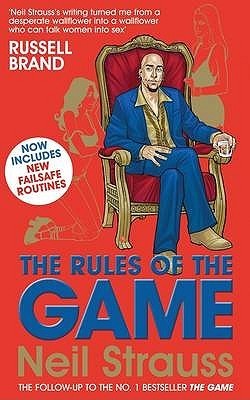
What Rules of the Game Contains
Rules of the Game originally appeared in 2007 as a work built around two major components, The Stylelife Challenge and The Style Diaries. The 2011 Canongate edition used here preserves that material in a 352-page edition, while later printings had already incorporated an additional set of scripts called The Routines Collection. A WorldCat record for the expanded 2009 edition explicitly identifies all three components: the Challenge, the Routines Collection, and the Style Diaries.
The Stylelife Challenge is structured as a thirty-day behavioural programme. Strauss warns the reader not to consume it like an ordinary book, because the sequence depends on doing missions in the real world before moving forward. Reading ahead may provide information, but the book’s theory of change rests on repeated behaviour: talking to strangers, confronting social anxiety, changing aspects of presentation, testing conversation techniques, learning to observe reactions, and gradually reducing dependence on memorized material.
That distinction matters because Strauss does not present confidence as something a reader should wait to feel. Much of the Challenge assumes the opposite causal order. The reader first behaves differently, accumulates experiences that contradict his fears, receives feedback, and only then develops a stronger self-concept. Whatever one thinks of the later pickup techniques, this action-before-confidence principle organizes almost every stage of the thirty days.
The Routines Collection extends the instructional side of the book. It provides openers, games, personality-reading devices, demonstrations, emotional-connection routines, dating transitions, and material for physical escalation. Strauss calls such material “training wheels,” however, because the intended endpoint is not permanent dependence on scripts but enough practical experience that a person can improvise naturally.
The Style Diaries then change the form completely. Strauss returns to episodes from his own romantic and sexual life and organizes them under eleven “rules,” but the stories do not function like eleven more techniques. They are closer to case studies in the unforeseen consequences of desire, and their cumulative effect is increasingly skeptical of the fantasy that someone who masters attraction has mastered relationships.
The Stylelife Challenge, Days 1–6: Building a Social Baseline
The first six days contain little of the material most commonly associated with pickup culture. Strauss begins instead with the reader’s internal excuses and observable habits, treating social failure as partly a product of avoidance. His underlying wager is that many men who believe they lack some immutable quality have never gathered enough contrary experience to know whether their assumptions are true.
Day 1 focuses on “limiting beliefs.” Strauss describes the beliefs he once held about his height, appearance, hair loss, and inability to compete with conventionally handsome men, then asks readers to identify similarly restrictive assumptions about themselves. The reader writes them down, challenges them, and begins making simple conversation with strangers, which matters because the programme immediately couples cognitive reframing with behaviour rather than allowing self-analysis to become another form of avoidance.
Day 2 turns vague desire into a written mission. A reader who merely wants to “be better with women” is asked to articulate what kind of life he actually wants and what success would mean for him. Eye contact and further low-stakes conversations become the practical exercises, making the day less about seduction than about tolerating social exposure without immediately withdrawing.
Day 3 addresses voice. Strauss’s exercises target breath, posture, projection, speed, filler words, monotony, weak volume, and upward inflection, all of which are treated as trainable rather than fixed aspects of personality. The larger principle is important: instead of telling an insecure person to “be confident,” the programme searches for specific behaviours that other people may interpret as hesitancy and gives the reader something concrete to practise.
Day 4 extends that work into posture and physical state. The reader is encouraged to develop a personal confidence ritual, notice how he holds his body, and deliberately enter ordinary interactions while presenting himself more openly. Strauss repeatedly uses small missions because each successful encounter is meant to provide evidence that social contact is survivable, even when it feels uncomfortable beforehand.
Day 5 turns to grooming and style. Some recommendations are highly specific and inevitably dated, but the central idea is that appearance is partly a matter of deliberate presentation rather than genetic luck. Strauss pushes readers to examine clothing, hair, hygiene, posture, accessories, and the impression they create, which fits his broader philosophy that identity can be reconstructed through numerous small, visible choices.
Day 6 brings the first stage to its psychological center: approach anxiety. Instead of requiring a spectacular romantic result, Strauss asks readers to give compliments and initiate contact without attaching their self-worth to what happens next. The associated briefing distinguishes a “limiting mind,” which invents reasons not to act, from a freer state in which discomfort is acknowledged without being allowed to dictate behaviour.
The useful feature of these six days is their deliberately low threshold for success. A reader can fail to impress anyone and still complete the assignments, because the initial objective is not attraction but participation. Strauss even builds in review logic rather than assuming that the passage of six calendar days automatically means the underlying skills have been acquired.
By the end of Day 6, therefore, the Challenge has created a basic behavioural platform: define what you want, identify the beliefs keeping you passive, improve the way you speak and carry yourself, take greater care over presentation, and repeatedly place yourself in social situations you would previously have avoided. Only after establishing that baseline does Strauss begin turning conversation into something resembling “game.”
Days 7–14: Turning Conversation Into a System
Day 7 introduces the opener, the basic pickup term for beginning a conversation. Strauss argues that generic interview questions often communicate interest too obviously and place too much pressure on an interaction, so he favours indirect openings built around an opinion, observation, question, or engaging topic. The exercise is not merely to memorize a line but to test openings, watch how people respond, and learn what makes a conversation easier or harder to sustain.
Day 8 adds what Strauss calls roots and time constraints. A root gives a plausible reason for asking the question, while a time constraint implies that the speaker will soon leave rather than attach himself indefinitely to the group. Both techniques are designed to reduce the suspicion that the approach is simply a disguised request for sex or validation, although they also reveal the increasingly strategic character of the system.
Day 9 functions partly as review. Readers are encouraged to repeat material that still feels unnatural, approach mixed groups rather than only lone women, and regard mistakes as feedback instead of as proof of personal inadequacy. This is one of the Challenge’s recurring strengths: Strauss treats social competence as a skill built through iterative exposure, which can be a more useful model for an anxious reader than imagining that socially successful people simply possess an inborn gift.
Day 10 marks a more consequential shift. Strauss introduces disqualification, screening, and versions of “playing hard to get,” asking the reader to stop communicating unconditional approval merely because he finds someone attractive. In the most benign interpretation, the lesson is that attraction should not require groveling and that the reader is also entitled to decide whether he likes the person he has approached; in its more calculated form, it becomes a method for increasing another person’s interest by strategically withholding validation.
Day 11 moves from individual techniques to identity. The reader is asked to define qualities he wants to embody and to begin acting in ways consistent with them, while a guest briefing mixes psychological language with ideas drawn from Huna and related self-development traditions. The practical identity exercise fits the Challenge’s overall logic, but the metaphysical or quasi-psychological claims attached to it do not deserve the same evidentiary confidence as the observable behavioural assignments.
Day 12 teaches storytelling as an indirect way of communicating desirable qualities. Instead of telling someone that he is adventurous, loyal, funny, creative, or socially connected, a reader identifies true episodes from his life in which those traits become visible through action. This is one of Strauss’s more transferable conversational ideas, because good stories usually reveal more about a person than a string of self-descriptions.
Day 13 expands the project beyond the immediate interaction. Strauss asks readers to create a more interesting calendar and lifestyle by finding activities, events, places, and social opportunities they genuinely want to experience. The practical implication is that someone whose life contains nothing except the search for romantic validation will eventually run out of both things to talk about and meaningful invitations to offer.
Day 14 gathers several earlier ideas under the concept of “demonstrating value.” The reader practises material such as the Rings Routine and learns to think about behaviour that signals social intelligence, confidence, status, humor, competence, or a desirable life. Strauss then places these ideas inside a much larger evolutionary explanation of male and female attraction, sexual selection, status, and mating behaviour.
This is where the evidentiary character of Rules of the Game changes. Grooming, conversation practice, and storytelling can be assessed as behavioural tools without requiring a grand theory of human sexuality, but Day 14 increasingly treats broad claims about male and female psychology as explanatory facts. Some average sex differences do exist, yet the existence of averages does not automatically justify universal rules about what any particular woman or man wants, and later research makes that distinction important.
The midpoint coaching session therefore arrives at a meaningful structural boundary. During the first fourteen days, Strauss has moved from basic self-management to increasingly intentional management of social perception. The second half will add methods for reading people, creating emotional resonance, setting up future meetings, using persuasion principles, building rapport, and deciding when to depart from the script.
Days 15–23: Cold Reading, Empathy, Conversation, and Influence
Day 15 introduces cold reading, one of the book’s clearest examples of a technique that can feel psychologically profound without necessarily containing genuine individualized insight. Strauss teaches readers to make personality observations, watch the response, refine the interpretation, and use broad or conditional statements that are likely to feel personally relevant. Props and personality systems may help dramatize the effect, but the central mechanism is the appearance of seeing beneath someone’s surface.
Research on the psychology of cold reading helps explain why the technique can be persuasive. Robert Hyman’s analysis links cold reading to the Barnum effect, in which generalized personality descriptions are experienced as unusually personal or accurate. That does not mean every observation Strauss recommends is false, because attentive people really can infer things from behaviour and context, but it does mean the feeling of being deeply “read” is not evidence that the reader possesses exceptional psychological insight.
Day 16 is one of the most important days in the entire Challenge because Strauss abruptly changes the definition of social value. He contrasts the person who enters an interaction asking, consciously or unconsciously, “How can I get this person to approve of me?” with the person who asks what he can contribute. The mission requires attending to another person’s actual needs and doing something that improves that person’s experience, making empathy rather than technique the stated “missing link.”
The placement of this lesson immediately after cold reading is significant. Day 15 teaches a reader how to create the impression that he understands someone; Day 16 asks him to practise actually caring about what someone else needs. Those two things can overlap, but they are not the same, and much of the book’s later ethical tension comes from the distance between genuine responsiveness and merely displaying responsiveness because it advances an objective.
Day 17 is another consolidation stage. The reader reviews unfinished skills, repeats weak assignments, combines earlier routines, and studies common mistakes made when approaching people. Strauss’s repeated insistence on review prevents the Challenge from becoming a simple accumulation of tricks, because each new technique is supposed to become part of an increasingly fluid repertoire.
Day 18 teaches conversational threads, hooks, and open loops. Instead of treating conversation as a sequence of interview questions, Strauss asks readers to notice interesting pieces of information and follow whichever thread generates energy. Improvisational storytelling exercises are meant to reduce the reader’s dependence on prepared routines by making him more comfortable constructing conversation from whatever is actually happening.
Day 19 introduces “seeding,” the practice of mentioning a future activity naturally during the conversation before later inviting someone to it. Strauss’s point is partly logistical: an invitation feels less abrupt when the activity has already become part of the shared conversation. More broadly, the lesson connects the lifestyle work from Day 13 to dating, because a person with interesting plans has genuine activities into which new acquaintances can be invited.
Day 20 turns that seed into a number exchange. Strauss prefers the contact information to arise as a practical consequence of a possible future plan rather than as a trophy collected at the end of an approach. The emphasis on continuity is useful, although the book remains intensely concerned with minimizing rejection and “flaking,” which can make human interaction sound like a conversion funnel.
Day 21 assembles the earlier lessons into an integrated “Anatomy of Attraction.” Attitude, opener, root, time constraint, disqualification, demonstration of value, personality material, storytelling, seeding, and number exchange become a sequence that can be mapped before an interaction. This is perhaps the purest expression of Strauss’s engineering instinct: what feels spontaneous from the outside is represented as a set of components that can be learned independently and then recombined.
Day 22 introduces frames and reframing. A “frame” is the interpretation through which an event is understood, and Strauss teaches readers not to accept every negative or limiting interpretation presented to them. Some of this resembles ordinary cognitive reframing—seeing rejection as information rather than catastrophe, for instance—but it also becomes a conversational influence tool when one person strategically redefines the meaning of another person’s comment or behaviour.
Day 23 makes the persuasion element explicit by drawing on Robert Cialdini’s work. Strauss discusses social proof, liking, reciprocity, consistency, authority, and scarcity, adapting them from persuasion research to courtship. Cialdini’s own principles of persuasion concern recognizable decision-making shortcuts, but Strauss’s use of them in dating is an application of those principles rather than scientific validation of a specific seduction system.
Strauss does include an important warning: influence should be used in ways consistent with another person’s interests rather than merely exploiting weakness. That caveat matters because persuasion is not intrinsically unethical; people influence one another constantly through enthusiasm, appearance, humour, storytelling, credibility, generosity, and social context. The difficult question, which the book never resolves completely, is where ordinary influence stops and manipulation begins when one participant possesses a detailed system for engineering the other’s responses.
By the end of Day 23, the Challenge has travelled a long way from the man who was simply afraid to speak to strangers. The reader now possesses a conceptual model for initiating contact, managing impressions, interpreting reactions, creating future opportunities, and using known influence principles. The last week therefore has a different task: Strauss must show that the reader can become a socially functioning person rather than a human delivery system for routines.
Days 24–30: From Routines to an Integrated Social Life
Day 24 asks the reader to plan a dinner party or comparable social gathering. Strauss frames this as more than a dating tactic: hosting people builds friendships, leadership, social confidence, and a wider network, while also providing low-pressure opportunities for people to meet again. Yet he also interprets the party strategically, as a setting in which the host appears socially connected and no longer has to compete desperately for one person’s attention.
The deeper usefulness of the assignment is that it shifts the reader’s objective from entering other people’s social environments to creating one of his own. A person who can organize activities, maintain friendships, connect people, and contribute to a community possesses something more durable than a successful nightclub opener. This is one of several places where the Challenge points toward a healthier and broader conception of self-improvement than its pickup vocabulary suggests.
Day 25 deals with telephone contact. Strauss rejects rigid formulas about waiting a fixed number of days and instead tells readers to preserve the momentum created by the original interaction. The material includes tactical advice about timing and conversation, but its place in the sequence is straightforward: the reader must learn whether initial chemistry can survive outside the context in which it was created.
Day 26 deliberately removes the safety net. After weeks of building and combining prepared material, the reader must approach people without relying on routines and compare his present behaviour with the person who began the Challenge. This is one of the strongest indicators that Strauss does not regard permanent script dependence as mastery; if the reader still cannot converse without prepared material, then the training has not yet become genuine social competence.
Day 27 turns to rapport, which Strauss defines through trust, comfort, similarity, emotional connection, and a sense of being understood. He discusses different channels through which people synchronize and asks readers to notice how connection can be created, weakened, and restored. The danger is that even rapport can be treated as another mechanism to control, but the better parts of the lesson encourage attention to the other person rather than constant preoccupation with one’s own performance.
Day 28 introduces calibration. Strauss describes it as the ability to notice the dynamics of the interaction, infer the other person’s level of interest or comfort, and change behaviour accordingly. This is a meaningful correction to rigid sequencing because it acknowledges that no universal routine should override what is actually happening between two specific people.
Calibration nevertheless has an important limit. Reading body language and adapting sensitively can improve any interaction, but inference is not a substitute for respecting explicit boundaries, especially when physical or sexual contact is involved. The skill is most defensible when it makes someone more attentive and less mechanical; it becomes problematic when ambiguous signs are interpreted primarily as clues for finding a route around resistance.
Day 29 widens the reader’s self-evaluation through the L.A.S. V.E.G.A.S. framework: Looks, Adaptability, Strength, Value, Emotional Connection, Goals, Authenticity, and Self-Worth. These categories move beyond lines or routines and ask what kind of person others actually encounter. Whatever one thinks of the acronym, the conceptual movement is significant because attraction is now attached to a broader life architecture rather than a collection of verbal tricks.
Day 30 culminates in the social event planned earlier. The reader is asked to host, interact, notice what has changed, and commit to continued development rather than imagining that a month has permanently solved his social life. The endpoint is therefore presented as identity change: a man who once waited passively for confidence should now possess enough experience to initiate, converse, organize, connect, and continue learning.
The complete thirty-day arc can consequently be read in two ways. On the surface, it is a systematic course in attraction; underneath, it is a programme for replacing avoidance with repeated exposure, preparation, reflection, and feedback. The best and worst parts of Rules of the Game grow from the same impulse: Strauss believes social behaviour can be decomposed, analysed, practised, and optimized.
The Routines Collection: Scripts as “Training Wheels”
The expanded edition’s Routines Collection exists for readers who finish the Challenge but still freeze when they have to decide what to say. Strauss openly calls the routines “training wheels,” implying that their value lies in reducing cognitive load while a novice becomes more comfortable socially. The collection is therefore less important as a catalogue of particular lines than as a demonstration of how thoroughly the pickup worldview turns conversation into modular components.
The opening material includes devices such as the Two-Part Kiss Opener, the Love Versus In-Love Opener, the Albino Gary Coleman Opener, the Spells Opener, the Cat People Cold Read, the Facebook Stalker Opener, and an assorted “grab bag” of shorter openings. The topics range from relationships and personality to strange hypotheticals and pop-cultural conversation starters. Some have aged badly at the level of reference or technology, but their common purpose is to create an interaction that feels more distinctive than generic small talk.
Other routines are designed to demonstrate skill, novelty, or apparent psychological insight. Name Mnemonics turns remembering names into a small performance, while Blood-strology combines personality classification with entertainment. The Five Questions Bet, Amazing Table Psychic, Lying Game, and similar demonstrations introduce playful prediction or guessing structures that give both people something to do besides exchanging biographical facts.
A “Time Out” inside the collection warns against mistaking the words for the skill. Strauss stresses delivery, body language, timing, congruence, and calibration because the same routine can feel playful in one context and bizarre in another. This warning reinforces the Day 26 principle: scripts are meant to make practice easier, not to become an artificial personality that must be performed indefinitely.
The later routines become more personal. Style’s EV, the Secret Self Routine, the Nancy Friday Fantasy Elicitation, and the Seven-Minute Date attempt to accelerate emotional or sexual disclosure. They reveal a recurrent feature of pickup methodology: experiences that might emerge naturally over time are converted into conversational structures intended to produce intimacy more quickly.
That acceleration becomes ethically more consequential in routines involving physical contact. The Quadruple Hand Test and Style’s Kiss Close use progressive interaction to assess or create receptivity, while the Last-Minute-Tension material deals with hesitation during sexual escalation. The article need not reproduce those procedures to understand their premise: resistance is sometimes conceptualized as a state to manage rather than as a reason to abandon the desired outcome.
The collection even extends to a Double Date Threesome scenario, illustrating how far the system’s optimizing logic can travel once interaction is treated as a sequence of strategic problems. Such material makes sense within Strauss’s project because the Challenge promises a general toolkit for navigating attraction, but it also exposes the project’s central ethical vulnerability. A technique can be effective at altering an interaction without therefore being a good way to relate to another autonomous person.
Strauss anticipates that objection in the concluding Note to Female Readers. His defence is that influence itself is unavoidable: people choose clothes, flirt, tell stories, display attractive qualities, and behave differently when they want to be liked. He therefore argues that the moral issue lies not in whether one person influences another but in intention, honesty, and whether the influence is ultimately harmful.
That defence deserves more credit than the caricature that every deliberate act of flirting is manipulation, because ordinary courtship does involve intentional self-presentation. Yet it does not settle the problem. There remains a meaningful difference between presenting one’s best qualities and strategically exploiting another person’s uncertainty, between playful persuasion and pressure, and between noticing attraction and deciding that apparent resistance is merely an obstacle to be solved.
The Routines Collection thus performs two functions at once. It is the most explicit manual of scripts in the book, but it also makes visible the limits of scripting that the rest of Rules of the Game increasingly has to confront. The Style Diaries take that tension out of the classroom and place Strauss himself inside situations where technique does not protect anyone from emotional consequence.
The Style Diaries: What Happens After the Pickup
The Style Diaries begin by announcing a darker side of the project. Strauss describes the following stories as cautionary rather than prescriptive and shifts attention from acquiring romantic or sexual opportunities to understanding desire itself. The change is crucial because the central problem is no longer social scarcity; it is what a person does once scarcity disappears and the pursuit of possibility becomes its own way of life.
The eleven episodes are arranged as “rules,” but they repeatedly undermine the fantasy that human relationships obey rules as predictably as the Challenge suggests. Strauss can become highly skilled at generating attraction and still misread people, hurt them, idealize them, act selfishly, lose trust, become compulsive, or discover that the freedom he wanted carries forms of loneliness he did not anticipate.
Preface and Rules 1–4: Desire Meets Consequence
The preface establishes the question that will eventually return in the postface. Strauss speaks with an older music producer and describes an ideal life of sexual “quantity, quality, and variety,” followed eventually by choosing one woman he will love. His imagined solution assumes that the right relationship will naturally extinguish his desire for novelty, but the producer immediately asks what happens after familiarity, children, conflict, or years of monogamy make that assumption less comfortable.
Strauss responds by trying to turn the relationship problem into a theory of male and female nature. He informally questions men and women about marriage, temporary relationships, and commitment, then draws sweeping conclusions about different gender needs. The producer is less impressed and challenges Strauss’s ethics, forcing the preface to acknowledge that the apparent “success” of pickup may create a destructive side that a self-help programme focused only on acquisition would conceal.
Rule 1, “Attraction Is Not a Choice,” begins with one of the book’s most useful attacks on Strauss’s own confidence in conscious preference. He becomes intensely attracted to Nancy, an older neighbour who does not fit his stated physical type and whose life is largely devoted to caring for her autistic son. The attraction confuses him because he has access to younger women he would conventionally describe as more desirable, yet his actual response refuses to obey his conscious ranking system.
Strauss eventually becomes involved with Nancy and later distances himself. When he encounters her again, changed and accompanied by another man, he is initially tempted to view her transformation as something he awakened. The episode becomes more interesting when he recognizes the narcissism in that interpretation and admits that she changed him as well, making the “rule” less about a universal law of attraction than about the limited power of conscious criteria to explain whom people desire.
Rule 2, “One Broken Link Destroys the Chain,” turns the pickup mindset into farce. Strauss goes out with his friend Kevin despite being buried in work, and the two become involved with women whose lives already contain marriage, pregnancy, children, partners, and other practical complications. Their effort to keep the night moving requires a chain of logistics in which each step depends on the previous step holding.
The scheme collapses through ordinary failures, including Strauss locking himself out and attempting an increasingly ridiculous workaround. The point is comic but useful: a system that treats social success as a carefully assembled sequence is vulnerable to reality because reality contains doors, schedules, partners, children, fatigue, misunderstandings, and dozens of variables no seduction diagram controls. “Game” may optimize behaviour, but it cannot abolish contingency.
Rule 3, “Game Is a Borderless State,” raises a more serious problem by taking Strauss to Bangladesh. He tests the proposition that principles of attraction are universal and becomes interested in Tripti, yet the social context around her is radically different from the Western environments in which his methods were developed. Gender expectations, family norms, public behaviour, and the dangers women may face all make the claim of cultural universality increasingly difficult to sustain.
The story includes discussion of acid attacks against women, which abruptly changes the stakes of treating courtship as a portable game. Strauss can believe that certain features of attraction recur across cultures, but the consequences attached to an interaction are not culturally neutral. His growing recognition that he does not understand the terrain exposes the difference between identifying possible human commonalities and assuming that one model explains the social meaning of those commonalities everywhere.
Rule 4, “Know the Terrain Before Taking the Journey,” continues that lesson closer to home. Strauss becomes entangled with sisters Maggie and Linda and enters a situation shaped by sibling dynamics, sexual inexperience, existing relationships, and emotional histories he does not initially understand. His skill at generating opportunities gives him access to the situation without giving him knowledge of everything the situation contains.
The larger lesson is one the manual frequently risks forgetting: every person enters an interaction carrying a world that is invisible to the stranger approaching them. Attraction is therefore never just a two-person laboratory in which technique produces predictable outputs. A successful interaction can intersect with loyalties, insecurities, rivalries, trauma, family bonds, and consequences that become apparent only after the “objective” has already been achieved.
Rules 5–8: Perception, Fantasy, and Risk
Rule 5, “What You Perceive Is Who You Are,” begins with a sexual adventure involving Leslie, a former stripper and adult performer interested in tantric practices, and develops into a group encounter involving Samantha. The important movement is not the sensational situation itself but Strauss’s judgment of Samantha. He reads her presentation and behaviour through assumptions that seem obvious to him until he learns about severe experiences in her past.
That new information destabilizes his initial interpretation. Behaviour that he had classified quickly according to sexual type acquires another possible meaning once he knows more about the person performing it. The “rule” therefore turns perception back on the observer: the speed with which Strauss labels someone reveals as much about his own framework as it does about the person being labelled.
This is a useful corrective to the interpretive confidence cultivated by techniques such as cold reading. Human beings do communicate through clothing, language, posture, history, and choices, but those signals are incomplete. A system that rewards quick pattern recognition can help someone notice more, yet it can also create the illusion that noticing patterns is equivalent to understanding a person.
Rule 6, “Expect the Best, Prepare for the Worst,” examines idealization from another direction. Strauss develops an extended correspondence with Stacy in which emotional and sexual expectations grow before the relationship has been tested through ordinary shared life. Written communication allows each person to imagine the other through an unusually concentrated stream of self-disclosure and anticipation.
When they finally meet, the lived relationship cannot sustain the fantasy at the same intensity. Strauss becomes aware that he has participated in creating expectations he does not fully share, which complicates the pickup idea that generating emotional investment is simply evidence of success. The story asks what responsibility a person has for attachment that he intentionally encourages even when he never explicitly promises the future another person imagines.
Rule 7, “Whatever’s in the Way Is the Way,” follows Strauss’s attraction to Alicia, the granddaughter of a famous musician he is interviewing. Professional boundaries, existing partners, timing problems, and other obstacles repeatedly appear, and Strauss treats each obstruction as something to navigate rather than as a definitive reason to stop. His resourcefulness makes the story entertaining, but the “rule” also displays the seductive power of converting every barrier into a challenge.
That mentality can be productive when the obstacle is fear, logistics, or self-imposed passivity. It becomes more questionable when the obstacle is another person’s relationship, vulnerability, or an ethical boundary. The diary does not cleanly resolve the distinction, which is precisely why it matters: persistence is not a virtue in the abstract but depends on what one is persisting against.
Rule 8, “Emotions Are Reason Enough,” takes Strauss to Reykjavík, where he becomes intensely attached to Veronika. Their connection acquires the atmosphere of romantic destiny, and a joking encounter with a priest becomes part of a fantasy resembling an improvised wedding. The relationship is built on genuine emotional intensity, but Strauss later becomes involved with Veronika’s friend and damages what had seemed singular.
They reconnect much later, yet timing and other relationships continue to interfere. The episode treats feeling as real without treating it as sufficient; an emotion can be powerful, sincere, and still fail to produce a sustainable relationship. Strauss, who has spent much of the manual analysing external behaviour, is confronted here with an opposite problem: inner certainty also does not guarantee a workable future.
Rules 9–11: Trust, Compulsion, and the Fear of Being Alone
Rule 9, “Love Is a Wave, Trust Is the Water,” centers on a pregnancy scare with Strauss’s girlfriend Kathy. The possibility of pregnancy transforms background uncertainty into an immediate test of the relationship, bringing questions of jealousy, fidelity, surveillance, responsibility, and future commitment to the surface. When the test is negative, the immediate crisis disappears without resolving the instability that the crisis exposed.
The title gives the story its central distinction. Emotional intensity can rise and fall, but Strauss increasingly sees trust as the medium that allows a relationship to survive those fluctuations. This is far removed from the early Challenge’s concern with creating attraction, because a partner can be strongly attracted, sexually connected, and emotionally invested while the relationship remains structurally unsafe.
Rule 10, “The Comfort Zone Is Enemy Territory,” pushes Strauss’s self-experimentation into absurd territory. He attempts a month-long period of abstaining from ejaculation while remaining surrounded by sexual opportunity, apparently hoping that discipline will give him greater control over his impulses. Instead, the restriction often makes desire more mentally dominant.
At the same time, his remote connection with Kimberly intensifies, while other women and past relationships continue entering his life. Strauss starts noticing that the issue is not simply how often he has sex but how much psychic energy is organized around the possibility of sex. Even when he is abstaining, he may still be pursuing, fantasizing, messaging, planning, resisting, or measuring himself through desire.
That recognition changes the meaning of “mastery.” The pickup artist imagines himself as someone who has gained control of a system that once excluded him, yet Strauss increasingly resembles someone whose attention is being controlled by the system he mastered. Scarcity created misery when he could not attract women, but abundance does not automatically create freedom if his life remains organized around the next possibility.
Rule 11, “No Man Wins the Game Alone,” consists of several short episodes that shift the final fear from commitment to abandonment. In one, a declaration of love feels to Strauss like a velvet prison because another person’s emotional dependence creates obligations he is unsure he wants. In another, jealousy and the residue of his sexual past contribute to a volatile relationship that makes intimacy feel constricting rather than safe.
The final movement broadens beyond romance. Strauss reflects on people whose mental or physical stability collapsed and who eventually depended on relatives or other people for care, including his grandmother. What frightens him is not simply illness but the possibility of reaching vulnerability without anyone sufficiently close to remain beside him.
The pickup fantasy has now reversed itself. At the beginning of Strauss’s journey, dependence appears humiliating and unlimited choice appears powerful; by the end of the diaries, total independence looks frightening because human beings eventually need one another. The title “No Man Wins the Game Alone” therefore turns the vocabulary of competition against itself: if intimacy is treated only as a contest for freedom and access, the winner may eventually discover that he has optimized himself for solitude.
Postface: Learning Relationships Is a Different Skill
The postface returns Strauss to the older producer from the preface. After reading the stories, the producer challenges Strauss’s tendency to interpret failed relationships as evidence that long-term relationships themselves may be defective. Strauss protests that he tried to make his relationships work by being faithful, honest, and avoiding secret affairs, but his mentor points out that these behaviours are closer to prerequisites than to actual relationship expertise.
The decisive comparison is with Strauss’s own education in pickup. He spent years reading, travelling, observing teachers, making approaches, testing techniques, reviewing mistakes, and practising until attraction became something he could navigate with unusual confidence. He never subjected relationship maintenance to anything like the same disciplined learning process.
That realization completes the book’s deepest reversal. If social competence can be learned, then perhaps relationship competence can also be learned—but it requires a different curriculum involving cooperation, compromise, communication, trust, shared goals, and the willingness to sacrifice possibilities that conflict with the life one chooses. Remaining faithful is not itself the full skill of partnership any more than standing in a bar is the full skill of social interaction.
The producer finally reframes Strauss’s obsession with “having his cake and eating it.” The problem is not that a person possesses a cake and must heroically resist eating it; the point is that once someone chooses to eat the cake, he cannot simultaneously preserve it untouched. Commitment has opportunity costs, and maturity may involve accepting that a meaningful choice closes other possibilities rather than endlessly trying to optimize a life in which nothing is ever surrendered.
Strauss would later pursue the relationship problem much more extensively in The Truth, but Rules of the Game already arrives at the question that makes such a continuation necessary. The Challenge teaches a man how to increase opportunities; the postface asks what kind of person he must become to choose among them and build something that survives novelty.
How Strauss’s Method Actually Works
Beneath the pickup terminology, Strauss’s method follows a coherent learning model. The reader begins with avoidance, then is given exposure; exposure produces experiences; experiences are reviewed for feedback; specific weaknesses are isolated; techniques are practised until cognitive effort decreases; eventually the reader is expected to improvise. Confidence is therefore treated less as an internal feeling to summon than as a side effect of accumulated behavioural evidence.
The first mechanism is desensitization through repeated action. Talking to strangers, maintaining eye contact, giving compliments, testing openers, making phone calls, and hosting people all reduce the special status of social interaction by making it routine. A rejection that once represented a catastrophic verdict gradually becomes one data point among many encounters.
The second mechanism is deliberate self-presentation. Voice, posture, grooming, stories, lifestyle, social network, and identity are not treated as superficial additions to some hidden “true self”; Strauss regards them as parts of the self other people actually encounter. This is one reason the book can feel genuinely empowering to readers who have mistaken neglect, passivity, or social inexperience for immutable personality.
The third mechanism is decomposition. Instead of telling the reader to “be charismatic,” Strauss breaks charisma-like outcomes into smaller tasks: open the interaction, give the other person a reason to continue, tell a compelling story, notice conversational hooks, create plans, exchange details, listen, build rapport, and adjust to feedback. Decomposition makes intimidating goals more learnable, which is a standard advantage whenever complex performance can be divided into trainable components.
The fourth mechanism is scripting. Scripts reduce uncertainty for beginners because the reader does not have to invent both content and delivery while simultaneously managing anxiety. The danger is that the script can become a substitute personality, which is why the later Challenge repeatedly tries to remove it through improvisation, empathy, calibration, and Day 26’s explicit routine-free approaches.
The fifth mechanism is reinforcement through outcomes. A reader who once believed no woman would speak to him may change dramatically after enough neutral or positive interactions, and the testimonials surrounding the Challenge amplify that expectation. This can create a powerful learning loop, although the book often treats anecdotal improvement as stronger evidence for the entire theoretical system than it really is.
The final mechanism is identity reconstruction. L.A.S. V.E.G.A.S., lifestyle building, social events, and the repeated instruction to become a person others enjoy being around gradually move the goal from performing successful lines to inhabiting a different social role. Strauss’s ideal graduate does not merely know what to say; he sees himself as someone who initiates, contributes, adapts, organizes, connects, and acts despite fear.
That model explains why portions of Rules of the Game can be useful even to readers who reject pickup culture. A socially anxious person can benefit from incremental exposure, deliberate practice, better grooming, conversational awareness, fuller interests, and stronger self-respect without accepting that every interaction should be strategically optimized. The practical core becomes far more defensible when success is defined as greater social capacity rather than greater control over other people’s romantic responses.
The Psychology Behind the Advice: Practice, Persuasion, and Pseudoscience
Rules of the Game gains much of its authority by moving continuously between practical observation and scientific-sounding explanation. The problem is not that all of its psychology is false; several techniques borrow recognizable concepts from persuasion, learning, social behaviour, or performance coaching. The problem is that the book often gives behaviourally plausible advice, anecdotal field experience, speculative evolutionary explanation, and established research a similar rhetorical status.
The behavioural practice is the least controversial layer. Repeatedly performing an uncomfortable social action can teach a person that anxiety is tolerable and that feared outcomes are not inevitable. Strauss does not need an elaborate theory of sexual selection to justify the practical value of speaking to strangers, improving conversational fluency, or testing whether a belief such as “nobody wants to talk to me” actually survives contact with experience.
Cold reading occupies a more complicated middle ground. Strauss presents it as a way to create an impression of insight, but Robert Hyman’s account of the cold-reading technique explains how generalized descriptions, feedback, selective interpretation, and the Barnum effect can make statements feel much more individually diagnostic than they are. A reader can become better at noticing people while still overestimating how much a successful “read” proves.
Persuasion research likewise requires careful separation from Strauss’s application. The Cialdini principles Strauss invokes describe recurrent influences on decision-making such as reciprocity, scarcity, authority, consistency, liking, and social proof. Their existence does not establish that every pickup tactic built around them is effective, desirable, or ethically equivalent to the contexts in which persuasion research was originally conducted.
The evolutionary claims are more vulnerable because Strauss often moves from population-level theories to confident claims about individual women. He discusses status, mate selection, male novelty seeking, female preferences, pornography, and the universality of attraction as though a single evolutionary framework can explain a large fraction of heterosexual behaviour. Evolutionary explanations may generate meaningful hypotheses, but they are not licences to treat individuals as interchangeable instances of a sex category.
Research does support some average sex differences. A large meta-analytic review of sex drive found an average difference favouring men across measures of sexual motivation, while an earlier meta-analysis of gender differences across sexuality research found a more varied pattern in which the size of differences depended on the behaviour or attitude being examined. Such findings are compatible with some broad observations Strauss makes, but they are far less compatible with deterministic assumptions about what a particular person will want or how every interaction will unfold.
Culture further complicates the picture. The Bangladesh diary itself inadvertently demonstrates why an explanation that seems plausible in a Los Angeles nightclub cannot simply be exported without considering norms, institutions, risk, family structure, gender power, and the consequences attached to behaviour. Even if human beings share some evolved tendencies, social meaning is mediated by context, and averages do not abolish cultural variation.
Strauss’s repeated references to “field testing” also deserve qualification. Thousands of approaches and feedback from students can generate practical observations, especially about what repeatedly seems to help anxious men converse more effectively. They do not constitute controlled evidence capable of determining whether a technique caused an outcome, whether unsuccessful cases disappeared from the record, or whether a result generalizes beyond the particular community practising it.
That distinction does not make the book useless. Self-help often contains practical knowledge that originated from experience rather than laboratories, and advice need not be scientifically novel to be worth trying. The appropriate standard is simply to distinguish “this exercise plausibly helps people practise a skill” from “this is a scientifically established law of male and female nature.”
Rules of the Game is strongest when it stays close to observable behaviour: speak more clearly, approach instead of avoiding, cultivate interests, listen for conversational threads, tell real stories, host people, pay attention, and stop relying forever on scripts. It becomes much less reliable when successful anecdotes are converted into sweeping gender psychology or when scientific vocabulary gives speculative claims an appearance of inevitability.
Consent, Manipulation, and the Ethics of the Game
The ethical problem in Rules of the Game cannot be solved by saying that all persuasion is manipulation. Human interaction is inherently influential: people dress attractively, choose flattering stories, flirt, make jokes, invite someone somewhere appealing, reveal vulnerability, and try to create a good impression. Strauss is right that deliberate self-presentation does not automatically make an interaction unethical.
The more useful distinction concerns what the influence is trying to do and how it responds to the other person’s agency. There is a difference between improving one’s grooming and deliberately inducing insecurity, between telling an interesting true story and fabricating status, between expressing attraction and strategically treating another person’s refusal as a psychological obstacle. Intention matters, but so do method and response to boundaries.
This becomes particularly important in the physical-escalation material. Calibration can be valuable when it means noticing discomfort quickly, slowing down, asking, or stopping. It becomes dangerous if the same observational skill is used to reinterpret hesitation as merely a temporary phase that can be managed until the desired outcome resumes.
Current RAINN guidance on consent defines consent as clear, voluntary, ongoing agreement that is communicated without pressure, manipulation, or fear. It also emphasizes that agreement to one activity does not automatically imply agreement to another and that a person can withdraw consent as an interaction progresses. That standard makes the limit of any purely observational “calibration” model clear: responsiveness to body language is valuable, but guessing cannot override communicated boundaries.
This issue is not external to the pickup tradition; scholars have examined it directly. Amanda Denes’s study “Biology as Consent” analyzes how pickup literature can use evolutionary and physiological narratives to privilege interpretations of bodily response over women’s verbal communication. Her target is specifically The Mystery Method, not every technique in Strauss’s book, but the criticism matters wherever resistance is interpreted as less authoritative than a seducer’s theory about what someone’s body “really” wants.
Strauss’s own Note to Female Readers attempts to answer the manipulation charge by distinguishing harmful intent from beneficial influence. That argument is strongest when applied to genuinely benign techniques: improving one’s appearance, becoming less needy, learning to hold a conversation, creating an enjoyable social environment, or expressing personality more effectively. It is weakest when applied to tactics whose purpose is precisely to overcome another person’s reluctance while preserving the pursuer’s original objective.
The concept of disqualification illustrates the ambiguity. A socially anxious man who stops worshipping an attractive stranger and remembers that he also gets to evaluate compatibility may become more balanced and self-respecting. A man who deliberately withholds approval because he believes insecurity will increase another person’s attraction is doing something psychologically different, even if the outward behaviour looks similar.
Cold reading has the same dual nature. Attentive observation and curiosity can make someone feel understood because the observer really is trying to understand them. Using generalized personality statements to manufacture an accelerated feeling of special connection may produce the same subjective effect without the same substance.
The best ethical principle already exists inside the book, although Strauss does not always follow it consistently: the other person is not merely the environment in which the reader performs. Day 16’s emphasis on empathy and Day 28’s emphasis on responsiveness point toward a relational model in which the goal is an interaction both people genuinely want. Whenever the rest of the system treats another person primarily as a sequence of reactions to optimize, it moves away from that model.
The Book’s Central Contradiction: Self-Improvement or Social Engineering?
The central contradiction of Rules of the Game is that its best material and its most questionable material are produced by the same desire to make social life teachable. Strauss observes that vague advice such as “just be yourself” or “be confident” is useless to someone who does not know what confident social behaviour looks like. He therefore breaks interaction into observable components, and that decomposition can be genuinely liberating.
A man who rarely leaves home can practise speaking to strangers. Someone who mumbles can work on breath and projection. Someone who dresses carelessly can learn presentation, someone who interrogates dates can learn storytelling, and someone who has no social life can begin creating activities and maintaining friendships. In each case, analysis turns an intimidating personality judgment into a solvable behavioural problem.
The same analytical habit becomes social engineering when the object of optimization changes from the self to another person’s reactions. Openers become tools for bypassing suspicion, disqualification becomes a way to alter perceived value, scarcity becomes an influence mechanism, cold reading accelerates perceived intimacy, and carefully sequenced escalation attempts to create a predictable path toward a romantic or sexual outcome. The method shifts from “What can I improve?” toward “What input will produce the response I want?”
Strauss repeatedly senses the danger and builds correctives into the Challenge. Day 16 tells readers to stop seeking validation and contribute to other people instead. Day 24 pushes them to build a real social life, Day 26 removes routines, Day 27 emphasizes connection, Day 28 demands attention to the actual person in front of them, and Day 29 includes authenticity and self-worth among the final attributes.
The Style Diaries deepen the correction because the people in them continually exceed the models Strauss brings to them. Nancy violates his conscious preferences, Tripti exists inside a culture he cannot reduce to universal game, Samantha’s history changes the meaning of her visible behaviour, Stacy exposes the dangers of encouraging fantasy, Veronika demonstrates that intense emotion does not solve timing or trust, and Kathy shows that relationship instability cannot be fixed by attraction.
Strauss himself also exceeds his model. Mastering the acquisition of sexual and romantic opportunities does not free him from insecurity or compulsion; it can simply give those drives a larger field in which to operate. The man who once feared he would never attract anyone eventually has to confront the possibility that constantly attracting someone new may itself be an avoidance strategy.
This is why the book cannot be classified cleanly as either self-improvement or manipulation. It contains both impulses, sometimes within the same technique. Screening for compatibility can express self-respect or manufacture scarcity; storytelling can communicate a genuine life or engineer status; calibration can express empathy or facilitate relentless pursuit.
The distinction depends on whether technique remains subordinate to mutuality. Social skills are tools for participation in human relationships, not substitutes for recognizing other people as independent centers of desire, history, fear, judgment, and choice. Rules of the Game becomes most interesting precisely when Strauss’s own narratives force that recognition back into a system tempted to abstract it away.
Style, Structure, and the Shift From Manual to Memoir
The Stylelife Challenge is written in an imperative mode designed to minimize reflection that does not lead to action. Readers are told to write, approach, practise, call, observe, repeat, host, rate, and review. Checklists, briefings, missions, guest contributions, difficulty levels, and structured exercises give the book the feeling of a training programme rather than an essay about attraction.
The gamification serves an important psychological purpose. A reader who thinks of talking to an attractive stranger as a referendum on his worth may find it easier to treat the same act as today’s assignment. Turning a frightening social moment into a mission reduces its symbolic weight, although the same game metaphor can also encourage readers to think of people as stages, obstacles, and rewards.
The Routines Collection intensifies the modular quality. Conversation becomes something that can be assembled from openers, demonstrations, games, emotional material, and closing devices. At its best, the collection offers nervous beginners temporary structure; at its worst, it makes human contact resemble a flowchart whose success is measured by advancement to the next stage.
The Style Diaries sound entirely different. Strauss returns to the fast, self-exposing narrative voice familiar from his autobiographical writing, using comic humiliation, sexual candor, abrupt reversals, self-dramatization, and scenes in which he is frequently the person who understands the least about what is happening. The narrator may be skilled at pickup, but he is not presented as a stable moral authority.
That shift is one of the book’s smartest structural choices because it allows narrative to challenge instruction without formally retracting the instruction. A manual naturally simplifies: do this, observe that, proceed when this happens. A story reintroduces everything the manual has to suppress in order to remain teachable—history, contradiction, coincidence, conflicting motives, delayed consequences, and the impossibility of knowing another person completely.
The mentor who appears in both the preface and postface supplies a loose frame around the stories. At the beginning, Strauss wants a way to maximize sexual possibility while eventually obtaining love; at the end, he is forced to recognize that a relationship requires positive skills rather than merely the absence of infidelity. The framing turns the diaries into a progression from abundance toward responsibility.
The book’s major structural weakness is that it does not fully integrate these halves. A reader can finish the Challenge and treat the diaries merely as entertaining cautionary stories rather than as a serious challenge to the worldview that generated many of the techniques. Strauss recognizes contradictions but often leaves the reader to decide how extensively those contradictions should revise the manual.
Yet that incompleteness also makes Rules of the Game a more revealing document. A sanitized rewrite could have removed the tension and presented only generic lessons about confidence and empathy. Instead, the book preserves a moment in which pickup culture’s promise of technical mastery collides with Strauss’s accumulating evidence that intimacy refuses to behave like an engineering problem.
Critical Review: What Rules of the Game Gets Right and Wrong
As a behaviour-change programme, Rules of the Game is more intelligently constructed than its reputation as a collection of pickup lines suggests. Strauss understands that people rarely overcome social anxiety by reading abstract reassurance, so the Challenge moves quickly into real-world action and increases difficulty gradually. The repeated cycle of mission, feedback, revision, and further exposure gives the programme a practical logic that many vaguer confidence books lack.
Its most durable advice is often the least exotic. Speak clearly, improve posture and grooming, develop interests, learn to tell true stories, stop idealizing attractive strangers, talk to more people, create a social life, listen for conversational threads, invite people to genuine activities, host gatherings, practise empathy, and eventually stop depending on scripts. None of those ideas requires a theory of “game” to be useful.
The book also understands an uncomfortable truth about self-confidence: waiting to feel ready can preserve the problem indefinitely. Strauss asks readers to behave differently before their identity has caught up, giving them experiences from which a different identity might eventually emerge. For the socially isolated reader the programme imagines, that may be a more actionable intervention than exhortations to love oneself first and let everything else happen naturally.
The weaknesses become greater as the book moves from changing the reader’s behaviour to claiming knowledge about women as a category. Strauss repeatedly interprets observed patterns through evolutionary narratives, status theory, gender generalizations, and pickup-community folklore. Some observations correspond to real average differences or recognizable social phenomena, but the book seldom preserves enough uncertainty between “often,” “on average,” “in these environments,” and “this is how women work.”
The scientific tone therefore exceeds the evidence. Student testimonials and thousands of approaches can tell Strauss what he and his community repeatedly experienced, but they cannot establish universal causal laws. The book would be more intellectually credible if it separated personal fieldcraft, plausible behavioural exercises, established psychological findings, and speculative explanations instead of allowing each to reinforce the apparent authority of the others.
The ethical limitations are more serious than the evidentiary ones. Rules of the Game sometimes encourages readers to become less needy, more empathetic, more socially generous, and more attentive to another person’s comfort; elsewhere it frames attraction as a sequence whose resistance points can be managed strategically. Those positions are not fully compatible when the system’s commitment to reaching an outcome competes with another person’s freedom not to provide it.
This is where scholarship on pickup culture becomes particularly illuminating. Ran Almog and Danny Kaplan’s analysis of the seduction community’s “logic of the game” describes a model in which courtship becomes standardized and rule-governed, offering socially insecure men a learnable system while risking objectification of both the women being pursued and the men reconstructing themselves as performers. Rules of the Game exemplifies both sides of that diagnosis unusually well.
The pickup framework does give some men a vocabulary for problems they previously experienced only as shame. “Approach anxiety,” “conversation threads,” “storytelling,” “rapport,” and “calibration” can convert a global belief that “I am bad with people” into narrower abilities that can be improved. The cost is that once every interaction has terminology, stages, success conditions, and optimization rules, the person on the other side can begin to resemble a system to decode.
The Routines Collection has aged the most visibly. Some technological and cultural references are period pieces, while heavily scripted conversational devices can sound artificial in a dating culture more familiar with pickup terminology than the audiences Strauss originally addressed. More importantly, contemporary consent norms make material about managing sexual hesitation much harder to defend as merely another advanced interpersonal technique.
The Style Diaries have aged better because they do not depend on the continued usefulness of a routine. Their interest lies in Strauss repeatedly discovering that access is not wisdom. Nancy complicates his preferences, Bangladesh complicates universality, Samantha complicates snap judgment, Stacy complicates the morality of creating expectation, Veronika complicates romantic destiny, Kathy complicates love without trust, and the abstinence experiment complicates the idea that abundance equals freedom.
The diaries also improve the book’s moral texture because Strauss does not consistently cast himself as the hero of his own system. He can be vain, opportunistic, self-deceiving, careless, frightened, compulsive, and emotionally immature. The willingness to preserve those contradictions is more valuable than a conventional self-help ending in which the author has permanently solved the problem he set out to teach.
Still, self-awareness is not the same as complete self-critique. Strauss can recognize that pickup success produces destructive consequences while continuing to romanticize parts of the same worldview. He can defend influence as universal without always drawing sufficiently sharp boundaries between attraction, persuasion, deception, pressure, and mutual choice.
The book is therefore more coherent as an account of learning than as a science of attraction. The Challenge shows how deliberate practice can transform behaviour; the diaries show why competence in one domain can reveal incompetence in the next. A man who learns to approach women discovers he must learn to converse; a man who learns to attract discovers he must learn to connect; a man who learns to acquire relationships eventually discovers he has not learned how to sustain one.
That progression is the book’s strongest contribution. It prevents Rules of the Game from ending at the point where a lesser pickup manual would declare victory. Strauss finally confronts the fact that attracting another human being is merely the beginning of a problem involving trust, responsibility, compromise, self-knowledge, and choices that cannot be optimized without loss.
Its most important limitation is equally clear. The book often understands relationships through the vocabulary of control before learning to understand them through the vocabulary of reciprocity. That bias affects its scientific claims, its routines, its treatment of resistance, and its tendency to turn complex people into signals that can supposedly be interpreted and managed.
For contemporary readers, then, Rules of the Game is not best approached as an authoritative manual for dating. Its strongest practical material can be separated from the more rigid pickup ideology: graded exposure to feared situations, attention to presentation, conversational practice, meaningful hobbies, social leadership, genuine empathy, adaptability, and independence from constant external validation remain intelligible lessons. The gender essentialism, pseudo-certainty, engineered scarcity, and questionable sexual-escalation logic deserve much more skepticism.
As a historical document, however, the book has arguably become more interesting. It captures an early-2000s moment when internet communities began applying the language of systems, optimization, evolutionary psychology, gaming, and self-experimentation to courtship. Many later forms of online dating advice, masculinity coaching, “social hacking,” and algorithmic self-improvement inherited aspects of that mindset even when they rejected the pickup-artist label.
Readers primarily interested in Neil Strauss will also find Rules of the Game essential because it occupies a transitional position in his larger personal narrative. The Game is about discovering and mastering a hidden system; Rules of the Game first attempts to teach that system and then begins documenting its limits. The final conversation with the producer points beyond seduction toward the problem Strauss has not yet solved: how to build a relationship rather than merely create one.
For someone who is socially inexperienced, parts of the Challenge may still be practically useful if detached from the promise of controlling attraction. A reader can practise saying hello, speaking clearly, improving presentation, building a fuller calendar, becoming comfortable with rejection, listening better, hosting friends, and acting with greater initiative without treating another person as an outcome to achieve. In that form, the strongest lesson of the book is not that attraction follows hidden rules but that passivity can be interrupted through deliberate action.
Someone looking for a contemporary guide to ethical dating and relationships, however, should not rely on Rules of the Game alone. Its treatment of consent, gender, evidence, and persuasion reflects the culture from which it emerged and sometimes gives strategic success more weight than mutual clarity. The book becomes far more useful when read critically, with its techniques treated as historical and psychological material rather than as unquestionable instructions.
The final irony is that Strauss’s own book eventually supplies the reason for that caution. Thirty days of training can teach a person to do many things he was previously afraid to do, but no sequence can eliminate the independence of everyone else involved. Attraction can be influenced without being owned, desire can be powerful without being wise, and opportunity can expand without producing fulfillment.
Rules of the Game begins with the promise that social and romantic life can be mastered through practice. It ends somewhere more interesting: with Strauss recognizing that one form of mastery merely reveals the next thing he does not know. The reader who takes the whole book seriously rather than stopping at the routines is left not with a perfect system for getting people, but with a much harder question about learning how to live with them.
Last Updated on September 25, 2026 by Aseem Gupta