

The Bro Code takes one of Barney Stinson’s most memorable running jokes from How I Met Your Mother and treats it with absurd seriousness. What was supposedly an unwritten set of rules governing male friendship becomes a constitution, etiquette manual, legal code, historical document, mathematical textbook, dating guide, and manifesto of bachelor masculinity rolled into one. Its 150 Articles regulate everything from protecting a friend’s secrets to how close two men may stand while dancing, while its Amendments, punishments, equations, pledges, charts, and invented vocabulary make Barney’s private obsessions look like the accumulated wisdom of civilization.
That elaborate form is what makes the book more interesting than a simple collection of television catchphrases. Beneath the jokes lies a recognizable tension in Barney’s worldview: he places extraordinary value on loyalty between male friends while simultaneously treating emotional vulnerability as dangerous, romance as a threat, heterosexual conquest as a competitive sport, and many ordinary preferences as tests of masculinity. The Code therefore celebrates friendship while exposing how insecure and self-serving Barney’s version of friendship can become.
This article covers the complete book, including all 150 Articles, the Amendments, enforcement system, and glossary. The goal is not to treat Barney’s rules as serious relationship advice, but to explain what the book actually contains, how its recurring systems fit together, what they reveal about Barney and the masculinity he performs, and whether the comedy still works now that many of its gender assumptions feel considerably more dated than its basic jokes about friendship and hypocrisy.
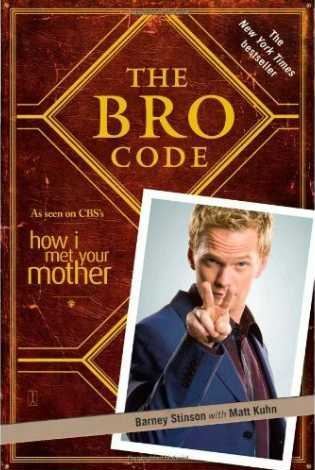
What The Bro Code Is and How It Fits How I Met Your Mother
The Bro Code was published in 2008 as an official How I Met Your Mother tie-in. It is written entirely in the voice of Barney Stinson, the suit-wearing, womanizing, self-mythologizing character played by Neil Patrick Harris, while later publisher listings explicitly credit the book to Barney Stinson with Matt Kuhn. That double authorship is central to understanding the book: Barney is the fictional authority speaking to the reader, while the real text is a carefully constructed extension of the character.
The premise already existed within the television series. Barney repeatedly invokes the Bro Code as though it were an ancient authority governing what men owe one another, but the idea becomes especially important in the Season 3 episode “The Goat”, in which his relationship with Ted is damaged because Barney has slept with Robin, Ted’s former girlfriend. The rule against sleeping with a Bro’s ex becomes serious enough within the friendship to turn a recurring joke into an emotional conflict, giving the fictional Code a convenient foundation for a real-world tie-in book.
The book is therefore not a guide to the entire character arc Barney eventually receives across nine seasons. It captures the deliberately exaggerated, mid-series version of him: hyperconfident, compulsively competitive, devoted to casual sex, terrified of conventional emotional exposure, and obsessed with transforming arbitrary preferences into universal laws. Later developments in the television series complicate that persona, but The Bro Code preserves it at full strength.
Its structure strengthens the illusion that Barney has uncovered a genuine social institution. After an introduction, a definition of the Bro, a vocabulary lesson, and a fabricated history, the book presents 150 numbered Articles. Those are followed by ten Amendments, procedures for violations and punishment, and a glossary that turns Barney’s constant invention of “Bro-” words into something resembling a complete language.
The conceit works because the book never treats its own triviality as trivial. A rule about protecting a friend’s deepest confidence may sit beside a rule about dessert, socks, sports knowledge, or how a baseball cap should be worn, and the typography grants each one roughly the same constitutional dignity. The comedy comes from that mismatch between form and content, but it also reveals something about Barney: he wants the smallest rituals of his preferred lifestyle to possess the authority of natural law.
The Book Before the Rules
Before Article 1 begins, The Bro Code constructs an entire mythology explaining why the Code supposedly exists. These preliminary sections are important because they establish the comic logic that governs everything afterward: Barney is not merely offering opinions but claiming to recover an ancient tradition that predates him, even though the tradition always happens to endorse his own desires.
That contradiction appears immediately. Brotherhood is described as a noble force capable of overcoming division and strengthening civilization, but Barney eventually identifies the ultimate purpose of international Bro solidarity as improving men’s chances of getting laid. The grand language and selfish objective coexist from the beginning.
The Introduction and Definition of a Bro
Barney opens by arguing that everyone lives according to some internal code. Other people might call that morality or religion; he calls his version the Bro Code. He claims that men have followed its principles for centuries without possessing one universally accepted written version, creating uncertainty around questions such as physical affection, weddings, family members, and the many situations in which one Bro’s romantic ambitions collide with another’s.
He presents himself as the person who has finally reconstructed this scattered tradition. The Code, he says, existed orally before he travelled, gathered fragments, and supplemented them where necessary. The joke is obvious: Barney invokes the authority of antiquity while admitting that he has personally filled gaps whenever the supposed tradition failed to provide the rule he wanted.
Even the introduction demonstrates how thoroughly the Code controls his emotional life. When he imagines future generations thanking him, he permits himself to contemplate a tear reaching his eye but immediately remembers that Article 41 forbids a Bro from crying. The Code is not simply a way of organizing friendship; it is a system through which Barney translates feelings into regulations before those feelings can become embarrassing.
The section “What Is a Bro?” then defines the book’s central relationship. A Bro is supposedly a lifelong companion who can be trusted to help, sacrifice, and remain loyal, although Barney repeatedly sabotages the nobility of the definition with selfish qualifications. A Bro might give you the shirt off his back, but perhaps only because he no longer wants it; he will be there for you unless he happens to have something better to do.
The important distinction is that not every man automatically qualifies. Being male makes someone a dude or a guy, but becoming a Bro requires demonstrated adherence to Bro principles. Brotherhood is therefore imagined as a status earned through behavior rather than simple biology.
The book also makes an exception that will become important later: a Bro does not necessarily have to be male. A woman can qualify if she acts in accordance with Bro values, especially by helping a man meet other women. This appears superficially inclusive, but the terms of inclusion reveal how thoroughly Barney defines the category around his own heterosexual priorities. Women are permitted into the institution when they assist its existing mission rather than when the institution changes to accommodate them.
Brocabulary and the Mock History of the Code
The “Brocabulary” section introduces the book’s habit of creating compound words by attaching “Bro” to almost anything. Barney warns against excessive “Broliferation,” supposedly because careless usage cheapens the importance of the mission and, more practically, makes the speaker sound ridiculous. That warning is itself part of the joke because the book subsequently invents Bro-related terminology at every possible opportunity.
This artificial language does more than generate puns. It gives Barney’s worldview the feeling of a closed culture with its own institutions, crimes, ceremonies, diagnoses, and technical vocabulary. Terms such as Broicide, Brotection, Broflation, the Brode of Silence, and wingwoman turn ordinary friendship situations into categories that seem formally recognized.
The “Origin” section then fabricates a history stretching back to humanity’s beginnings. Cain and Abel become the first tragic example of what happens when Bros lack a common code: Cain kills Abel and, even worse from Barney’s perspective, is left without a wingman. The Trojan War is similarly rewritten as a preventable dispute between two Bros who failed to respect the principle that friendship should take priority over fighting about a woman.
The parody culminates in eighteenth-century Philadelphia, where a fictional Barnabas Stinson supposedly produces an early written version of the Code. His document imitates the language and structure of the American Declaration of Independence while substituting Barney’s concerns about Bros, sexual pursuit, and “dibs” for political rights. The Code thereby acquires its mock-constitutional foundation.
One detail in this fabricated founding document becomes especially important later: it explicitly acknowledges the right of Bros to alter or abolish their own rules. That sentence quietly prepares the book’s central structural joke. The Code presents itself as sacred and timeless, but it is designed from the beginning to be rewritten whenever its supposed absolutes become inconvenient.
The 150 Articles: A Complete Guided Summary
The numbered Articles are not divided into five official parts in the book. The ranges below preserve their original order while grouping them only for readability, allowing the minor rules to remain visible without treating every one-line joke as though it requires a separate section.
Across the sequence, the Code gradually broadens from basic loyalty into a total lifestyle system. Friendship, dating, clothing, sports, alcohol, work, cars, weddings, television, physical contact, emotional expression, and even bathroom behavior become matters for regulation, while exceptions and corollaries increasingly expose how unstable those regulations actually are.
Articles 1–30: Loyalty, Wingmen, and the First Rules of Bro Identity
Article 1 establishes the foundational hierarchy: a Bro should prioritize his Bros over romantic or sexual interests. Barney gives the principle a fake biblical genealogy, creating a lost story in which Adam abandons a male companion for Eve and thereby contributes to the fall from paradise. From the opening rule, the Code treats male friendship and heterosexual desire as rival forces that must be ordered rather than relationships that might coexist naturally.
Article 2 gives a Bro permission to do something foolish when his Bros are doing it too. Collective participation turns recklessness into camaraderie, illustrated through deliberately absurd historical and pop-cultural examples. Article 3 shifts immediately from ethics to aesthetics by requiring a Bro’s dog to reach at least knee height when fully grown; giving a small dog an aggressively masculine name does not save the violation.
Article 4 is one of the most revealing pieces of the book because it instructs Bros never to reveal the existence of the Code to women, then abruptly addresses female readers and insists that the work is fictional comedy built on exaggerated gender stereotypes. The disclaimer demonstrates that the text knows exactly what it is doing, but Barney’s voice immediately undermines the responsible explanation by slipping back into condescension. The result is a miniature version of the whole book: self-awareness does not stop the joke from depending on the stereotype it acknowledges.
Article 5 requires Bros to care about sports even if they genuinely do not. It establishes a recurring rule of Barney’s masculinity: performing the expected interest matters more than possessing the interest sincerely. Article 6 applies a similar logic to locker rooms, where nudity must be treated as completely ordinary while everyone also carefully avoids looking at anyone else.
Article 7 insists that a Bro never admit he cannot drive a manual-transmission car, even after failure makes the truth obvious. Article 8 forbids greeting cards between Bros and replaces them with emotionally minimal emails for occasions such as birthdays, illness, congratulations, or bereavement. Friendship is permitted to contain care, but that care must be stripped of anything that resembles sentimentality.
Article 9 briefly reveals a gentler side of the Code by forbidding cruel jokes when a Bro loses a body part. Article 10, however, returns to Barney’s dating ethics by requiring a Bro to help another Bro end a romantic relationship, complete with examples of spectacularly insensitive breakup language. The Bro’s obligation is to his friend rather than the woman who will receive the message.
Article 11 regulates moving assistance. A Bro may ask for help, but he owes his friends an honest assessment of how much work will actually be involved, turning practical reciprocity into one of the more reasonable rules in the book. Article 12 then reduces the stakes again by declaring that Bros do not share dessert.
Article 13 introduces one of the book’s core institutions: every Bro needs a wingman. Barney treats successful male partnerships from history and popular culture as though they demonstrate a universal law of social life, but the wingman’s specific function is helping another Bro navigate social situations and pursue women. The concept turns friendship into coordinated teamwork.
Article 14 creates the “Brode of Silence,” requiring Bros to conceal one another’s sexual histories from women. Loyalty now explicitly includes secrecy and sometimes deception, a pattern that will become stronger as the Code develops. Article 15 regulates dancing by prohibiting certain gestures that Barney interprets as insufficiently masculine.
Article 16 demands knowledge of sports champions and other pieces of male-coded cultural information. A Bro need not naturally care about everything in the canon, but he must know enough to perform membership. Article 17 transforms workplace frustration into the “Pyramid of Screaming,” a hierarchy in which a person mistreated by someone above him passes the aggression downward to someone with less power.
The Pyramid is funny because it converts a recognizable chain of workplace resentment into a formal management theory, but it also demonstrates Barney’s tendency to confuse explanation with justification. The system does not solve abusive behavior; it merely tells each participant where to redirect it.
Article 18 allows the Bro responsible for buying beer to keep leftover money and conceal the receipt. Article 19 initially declares a Bro’s sister off-limits, then expands the rule through a “Bro-proofing” exercise designed to protect attractive female relatives from other Bros. The Article sounds like a serious loyalty boundary, but the language already suggests that Barney sees the prohibition as a frustrating restriction rather than an ethical conviction.
Article 20 grants special respect to military Bros, partly through the simplistic logic that they are physically dangerous. Article 21 prevents a Bro from commenting honestly on another Bro’s attractive girlfriend even when invited to do so. Loyalty means suppressing the assessment because sexual competition must not threaten the friendship.
Article 22 returns to the question of female Bros and confirms that women can qualify. The examples, however, remain centered on whether the woman helps a man gain access to other women, so the apparent flexibility of Bro identity does not substantially alter the book’s gender assumptions.
Article 23 makes female nudity on television sufficient reason to stop channel surfing. Article 24 regulates how a Bro should position a baseball cap. These small Articles illustrate the Code’s comic expansion from serious friendship obligations into lifestyle policing: Barney cannot leave taste alone when he can convert it into law.
Article 25 requires a Bro to intervene before another Bro gets a tattoo, particularly a tattoo commemorating a woman. The logic assumes that romantic relationships may disappear while the regrettable tattoo remains, giving the Bro a protective role against impulsive commitment. Article 26 similarly legislates style by rejecting belt-mounted mobile phones except under special circumstances.
Article 27 restricts shirtlessness around Bros. Article 28 requires rapid communication when two women appear likely to fight, transforming female conflict into spectacle for male observers. The rule is a clear example of the book’s tendency to treat women not as participants in the social world of the Code but as entertainment within it.
Article 29 imposes elaborate restrictions on two Bros attending a movie together, including timing and food arrangements designed to make the outing appear unmistakably non-romantic. The absurd effort required to preserve that distinction exposes a recurring insecurity: Barney’s ideal male friendship is intensely important, but it must constantly prove that its intimacy is not too intimate.
Article 30 concludes the first range by declaring that Bros do not comparison-shop. Decisiveness itself becomes part of the masculine performance, even when comparison would be economically sensible.
Articles 31–60: Dating Rules, Masculine Rituals, and Emotional Restraint
Article 31 instructs a Bro to pursue the most attractive woman first when approaching a group. The rule treats social interaction as strategic ranking, reducing women to positions in a competitive hierarchy. Article 32 directs Bros to interfere with another Bro’s marriage plans before he reaches thirty, making long-term commitment something the group should actively resist.
Article 33 regulates public-restroom conduct with the same obsessive concern about male proximity seen in the locker-room rules. Article 34 carries that concern into a threesome involving two men and a woman, where eye contact between the men becomes something carefully prohibited despite the supposedly adventurous sexual situation.
Article 35 forbids the voluntary rental of stereotypically feminine romantic films. Article 36 requires Bros to claim opposition to breast implants in conversations with women whether or not that reflects their actual preferences. The Code therefore treats deception not as an occasional exception but as an ordinary tool for managing heterosexual interaction.
Article 37 mocks conventional chivalry by arguing that modern gender equality removes the obligation to hold doors for women. The joke depends on deliberately bad-faith logic: Barney embraces equality only at the exact moment it can relieve him of courtesy. Article 38, by contrast, establishes a sincere physical limit inside male conflict by prohibiting blows to the groin.
Article 39 introduces one of Barney’s better-known dating doctrines: after obtaining a woman’s number, a Bro should wait ninety-six hours before contacting her. A related explanation treats eagerness as inflationary, suggesting that attention loses value when offered too quickly. The pseudo-economic language disguises a basic strategy of emotional withholding as a law of attraction.
Article 40 treats engagement as a condition requiring intervention. The bachelor party becomes the mechanism through which Bros confront one member’s impending movement away from unrestricted bachelorhood. Marriage is not simply another stage of life within the Code; it is repeatedly framed as a threat to the Bro network.
Article 41 states that a Bro never cries, with only narrow exceptions involving culturally sanctioned emotional moments. This is one of the book’s most important rules because it converts emotional repression into explicit law. Barney’s masculinity depends not merely on feeling confident but on preventing vulnerable feeling from becoming publicly visible.
Article 42 then demonstrates the same logic through physical affection. High fives, fist bumps, and a tightly choreographed “Bro hug” are acceptable, but an unrestricted embrace is not. The Code permits friendship to be physically expressed only through gestures that have been culturally marked as safe.
Article 43 requires patriotic loyalty, with Barney predictably treating American identity as another field for competitive exaggeration. Article 44 generally forbids Bros from applying sunscreen to one another, once again turning potentially intimate physical assistance into a problem requiring careful regulation.
Article 45 concerns clothing at strip clubs and forbids denim for supposedly practical reasons. The accompanying elaboration is characteristic of the book’s technique: a trivial preference becomes funny because Barney invents a completely disproportionate argumentative apparatus to defend it.
Article 46 assigns an airplane’s middle-seat passenger the armrest under certain conditions. It is one of several Articles that function almost like genuine everyday etiquette, though Barney inevitably complicates the sensible premise with arbitrary exceptions. Article 47 then returns to gender-coded style by rejecting pink clothing.
Article 48 forbids public disclosure of sexual-partner counts, whether the number belongs to the Bro himself or to another Bro. The rule protects status by ensuring that potentially embarrassing information cannot be verified. Article 49 requires a Bro to claim competence even when he lacks it, unless the possible damage becomes financially serious enough to outweigh the performance.
Article 50 declares that accidental genital contact between Bros should be ignored rather than acknowledged. Like many rules about male touch, the Article is built on the paradox that Barney’s Brotherhood requires extraordinary closeness while demanding constant denial of the physical reality of that closeness.
Article 51 asks Bros to inspect blind dates for one another and report whether the setup is acceptable. A chart then generalizes about women’s sexual availability according to the venue they choose. The device combines Barney’s love of pseudo-analysis with one of the book’s crudest tendencies: converting women into predictable behavioral variables.
Article 52 frees Bros from remembering one another’s birthdays. The relationship should supposedly be strong enough not to require ceremonial reminders, although occasional contact is still encouraged. Article 53 demands excessive toilet flushing even in drought conditions, a deliberately antisocial rule demonstrating how the Code sometimes treats pointless defiance as masculine in itself.
Article 54 identifies certain holidays as mandatory occasions for Bros to go out together, particularly those associated with drinking, costumes, and casual social interaction. Group ritual becomes one of the Code’s methods for maintaining Brotherhood. Article 55 prevents Bros from lending one another clothing, another boundary around possessions and bodily identity.
Article 56 introduces the Bro-to-woman ratio as a formal variable in party quality. A Bro has a duty to report the ratio accurately because misleading his friends about the number of available women undermines their strategic planning. The absurd chart makes sexual opportunity look like logistics.
Article 57 offers a more considerate form of loyalty by prohibiting sports-score spoilers when a Bro plans to watch an event later. Article 58 bans most mustaches with special exceptions, demonstrating again that the Code can convert Barney’s aesthetic preferences into supposed universal standards.
Article 59 develops one of the book’s most elaborate attempts to mathematize friendship. A Bro should post bail for another Bro, but the required financial sacrifice depends on variables such as the duration of the friendship. The formula is ridiculous precisely because it translates loyalty, usually understood as emotional commitment, into a numerical threshold.
Article 60 closes the range by insisting that Bros respect their parents while refusing to contemplate their parents as sexual beings. The rule turns ordinary discomfort into another formal prohibition, preserving Barney’s tendency to compartmentalize sexuality whenever it becomes personally inconvenient.
Articles 61–90: Loyalty, Breakups, Parties, Work, and the Hot/Crazy Scale
Article 61 requires a Bro to warn another Bro about an approaching anniversary even if he probably remembers it. The joke assumes men are naturally inattentive to romantic dates, but the underlying behavior is considerate: the Bro protects his friend from preventable relationship trouble.
Article 62 develops “dibs” into a detailed system for resolving competition when two Bros are interested in the same woman. Priority can depend on who expressed interest first, who bought a drink, differences in height, or the severity of each Bro’s recent sexual dry spell. What begins as a conflict-avoidance mechanism ends up making the woman herself almost irrelevant to the arbitration.
Article 63 creates “Brotection,” the responsibility to provide condoms to another Bro whenever possible. The framing is crude, but the principle is practical: a friend helps another friend avoid foreseeable consequences of sex. The Article is one of several moments where sensible harm reduction survives inside Barney’s otherwise ridiculous ideology.
Article 64 requires a Bro with access to a major playoff ticket to prioritize the Bro whose favorite team is participating. Article 65 establishes reciprocity for buying rounds of drinks, although Barney again introduces gender-coded judgments about which beverages count as respectable.
Article 66 concerns breakups and asks Bros to support a heartbroken friend with alcohol, restrained sympathy, and careful language about the ex-partner. Importantly, the Code advises against immediately attacking her character because reconciliation remains possible and the insults could later create problems. The rule accidentally demonstrates greater emotional intelligence than Barney usually displays.
Article 67 orders Bros to mock the man at a party who uses acoustic guitar performances to attract attention. Article 68 requires protection of another Bro’s sexual “hot streak,” although competing principles such as another Bro’s prolonged dry spell can complicate priority. Sexual success becomes a shared statistical resource within the group.
Article 69 consists essentially of a sexual joke based on the Article number itself. The lack of substantive content is the entire point, and the abrupt minimalism breaks the increasingly elaborate systems surrounding it.
Article 70 limits airport assistance. A Bro may either drive a friend to the airport or collect him after a trip, but expecting both would demand too much generosity. The recurring pattern is clear: the Code values practical support, yet Barney repeatedly caps that support before it becomes inconvenient.
Article 71 discourages groups of more than three Bros from entering parties together. Article 72 says Bros do not spell-check. Both rules are minor, but they reinforce the book’s insistence that even communication habits and group size can become markers of Bro identity.
Article 73 describes the ritual surrounding a restaurant bill. Every Bro must theatrically offer to pay even though everyone understands that the bill will probably be divided. The point is not generosity itself but performing willingness to be generous before accepting the practical outcome.
Article 74 deals with driving Bros through traffic lights and encourages aggressive assistance to keep the group together. Article 75 requires Bros to exaggerate one another’s professional status when introducing each other to women. Wingmanship has now evolved from emotional support into active management of another man’s social brand.
Article 76 prohibits openly saying “I love you” to a woman in front of Bros unless the phrase can be disguised or made ambiguous. The Article captures one of Barney’s central fears: heterosexual desire is acceptable, but emotional commitment creates vulnerability that the male group might witness.
Article 77 similarly bans cuddling except in emergency survival conditions. Article 78, however, takes wingman loyalty seriously by forbidding a Bro from stealing the woman his wingman is pursuing. A formal Wingman Pledge elevates the arrangement from casual teamwork to ceremonial obligation.
Article 79 concerns weddings and requires Bros to participate in the garter toss while displaying appropriate horror at the possibility of being next to marry. Article 80 asks Bros to assist a friend attempting a threesome involving two women, turning even an unusually private fantasy into another cooperative Bro operation.
Article 81 regulates the toilet seat for the convenience of male housemates. Article 82 says Bros do not demand formal apologies or retractions from one another after arguments. The latter rule can be read as low-maintenance friendship, but it also fits the book’s broader preference for avoiding direct emotional repair.
Article 83 introduces the “Platinum Rule,” Barney’s warning against becoming sexually or romantically involved with people who remain permanently nearby, especially coworkers and neighbors. Unlike many Code principles, the logic is recognizable: a relationship that ends badly may contaminate an environment one cannot easily leave. Predictably, Barney adds enough exceptions to ensure that the rule does not obstruct him too severely.
Article 84 creates a canon of male-coded films that a Bro is expected to watch whenever encountered on television. Article 85 requires Bros examining a friend’s new car to open the hood and behave as though they understand the machinery, another example of competence becoming performance.
Article 86 presents the “Hot/Crazy Scale,” one of the book’s most famous diagrams. Barney plots a woman’s attractiveness against what he describes as her level of instability, arguing that greater attractiveness can justify tolerating greater difficulty until an unacceptable boundary is crossed. The chart is memorable because it perfectly compresses the book’s method: crude stereotypes acquire comic authority when presented as quantitative science.
Article 87 prevents Bros from directly challenging one another’s claims about golf scores, bench-press numbers, or height, although formal wagers can create an exception. Article 88 regulates what a Bro may adjust when driving another Bro’s car, treating seat positions, mirrors, and presets as extensions of personal territory.
Article 89 requires a Bro to confirm whatever story another Bro tells a woman, even when the story is obviously false. By this stage, deception has become an explicit friendship duty rather than incidental misconduct. Article 90 finishes the range with party etiquette: a Bro should bring more alcohol than he expects to consume, although he may reclaim it if the gathering fails to justify the contribution.
Articles 91–120: Secrets, Wingmen, Dating Systems, and Male Boundaries
Article 91 prevents a Bro from successfully inventing a flattering nickname for himself. The group reserves the right to assign something more embarrassing, protecting the social hierarchy through ridicule. Article 92 then returns to sexual relationships by insisting that casual partners remain geographically and emotionally separate enough to prevent the arrangement from turning into unwanted intimacy.
The accompanying system for managing a booty call treats emotional attachment as a logistical failure. Barney’s advice is designed to maintain access to sex while preventing the obligations of a relationship, revealing how consistently the book frames affection as a complication rather than a possible goal.
Article 93 rejects the use of French between Bros. Article 94 regulates emergency toilet-paper assistance with elaborate precautions against physical contact. In both cases, the absurdity comes from treating ordinary situations as threats to an exaggerated masculine identity.
Article 95 creates silent signals through which Bros can alert each other to women they consider physically attractive. Article 96 demands some form of annual outdoor activity, or at minimum the ability to make a fire, turning ruggedness into another expected credential.
Article 97 requires each Bro to insist on the superiority of his own university’s sports program. Article 98, however, imposes an important rule of informational honesty: a Bro who claims attractive women are present at a venue must be telling the truth. A parody of “The Boy Who Cried Wolf” shows how repeated false alerts destroy the credibility needed for future coordination.
The contrast is significant. The Code permits lying to women when it helps Bros but punishes lying to Bros when it harms their strategic interests. Truthfulness is therefore not an absolute virtue; it is an obligation defined by group membership.
Article 99 reproduces the stereotype that men never ask for directions, although Barney naturally permits loopholes if asking creates an opportunity to speak to an attractive woman. Article 100 treats loud music at traffic lights as a form of masculine display, especially when there are women nearby to notice.
Article 101 establishes one of the strongest genuine friendship duties in the entire book: a secret entrusted by one Bro to another must remain secret permanently. Unlike many Articles, the principle receives relatively few self-serving qualifications. Loyalty here means accepting information as a trust rather than an opportunity.
Article 102 expands the wingman institution through a mock application process. The joke imagines the role as a position requiring recruitment, qualifications, and evaluation, but it also reveals how central coordinated friendship is to Barney’s social life. A wingman is not merely someone standing nearby; he protects momentum, validates stories, removes obstacles, and sometimes sacrifices his own opportunity for the other Bro.
Article 103 bans socks with sandals. Article 104 declares a Bro’s mother completely off-limits while constructing increasingly absurd conditions around a stepmother. The distinction exposes how quickly supposedly sacred family boundaries turn into technical loopholes once Barney’s desire becomes involved.
Article 105 deals with hurt feelings after exclusion from another Bro’s wedding. Rather than admitting the injury, the excluded Bro must pretend not to care. The rule perfectly illustrates the cost of the Code’s emotional minimalism: genuine feelings are acknowledged indirectly through the existence of the Article but then denied expression.
Article 106 requires ordering the largest available beer. Article 107 protects the high five by declaring that a Bro must never leave another hanging. A taxonomy of permissible variations turns this simple gesture into an entire language of socially acceptable affection.
Article 108 addresses forgotten names by allowing generic substitutes while warning against indiscriminate use of “Bro.” Article 109 regulates behavior when Bros appear on a stadium screen, requiring exaggerated enthusiasm and confidence because the public performance of fandom matters as much as private interest.
Article 110 is one of the fullest expressions of wingman duty. When a Bro is successfully pursuing a woman, his friends are expected to help solve obstacles that might interrupt the encounter. The accompanying troubleshooting logic turns one-night-stand pursuit into a cooperative operation involving transportation, social interference, scheduling, and tactical support.
Article 111 authorizes pranks when a Bro carelessly leaves his email account accessible. Article 112 discourages public singing except under narrow circumstances. Both reinforce the idea that the group constantly polices one another against embarrassment while simultaneously creating embarrassment for entertainment.
Article 113 presents the familiar age-difference formula in which the youngest socially acceptable partner is calculated as half one’s age plus seven. The book again borrows a piece of folk wisdom and presents it as though mathematics could resolve a complicated social judgment.
Article 114 regulates long-term couch guests by progressively increasing the household obligations they owe. The longer a Bro stays, the more meaningful his contribution should become. Like the moving and breakup Articles, it is a surprisingly practical reciprocity rule disguised inside comic excess.
Article 115 treats clothing-optional beaches as effectively non-optional for Bros. Article 116 pairs two supposed fundamental rights: a Bro should not kill another Bro and should not deliberately destroy another Bro’s chances with a woman. The absurd equivalence is one of the clearest statements of the Code’s warped constitutional priorities.
Article 117 protects possession of the television remote. Article 118 requires temporary abandonment of vegetarianism when surrounded by Bros, subordinating an individual choice to the expectations of the group.
Article 119 sets strict physical-distance rules for Bros sharing cramped cars or motorcycles. Article 120 encourages addressing Bros by surname. Together they reinforce one of the book’s strangest contradictions: Brotherhood is supposed to be the deepest and most reliable form of companionship, yet its members continually create linguistic and physical devices to stop that companionship from appearing tender.
Articles 121–150: Competition, Group Rituals, Marriage, Loopholes, and the Ex Rule
Article 121 applies the performance of competence to skiing. A Bro should reject the beginner slope even when his ability clearly belongs there, then blame equipment or circumstances after failure. Article 122 insists that Bros remain perpetually enthusiastic and supplies music intended to produce that state of energized confidence.
Article 123 establishes minimum dancing distance between men. Article 124 requires an excuse after athletic failure. Both rules protect masculine status by preventing awkwardness or incompetence from being acknowledged plainly.
Article 125 turns convoy driving into a competitive joke by encouraging the lead Bro to make following difficult. Article 126 produces one of the most revealing boundaries in the book: even while two Bros consume pornography together, they must avoid physical gestures that would normally communicate shared enthusiasm. The more explicitly heterosexual the context becomes, the more carefully male contact is controlled.
Article 127 introduces MAC, a system through which Bros reconstruct events for a friend whose memory has been impaired by alcohol. The obligation is not unconditional, because Bros may decide that forgotten humiliation is better left forgotten. As elsewhere, the Code combines genuine practical care with selective avoidance.
Article 128 prohibits excessive clothing that advertises the same team, school, or destination. Article 129 treats certain loaned tools or entertainment items as effectively surrendered once transferred to another Bro. The joke draws on familiar friendship behavior rather than one of Barney’s more extreme social theories.
Article 130 prioritizes concern about a Bro’s car immediately after an accident before turning fully to his physical well-being. The rule relocates emotion from the person to the possession, allowing concern to be expressed in the language of machinery rather than vulnerability.
Article 131 applies the same displacement to mechanical incompetence. A Bro who cannot change a tire should still create the appearance of attempting the task before obtaining outside assistance. The performance protects masculine status even when the useful behavior would simply be asking for help.
Article 132 returns to the threat of marriage. A Bro who gets married must invite his Bros despite objections from his fiancée, and the wedding is framed as a kind of transition away from unrestricted Brotherhood. The rule exposes a recurring assumption that serious romantic partnership and male friendship exist in competition for loyalty rather than as relationships capable of coexistence.
Article 133 concerns the attribution of flatulence and encourages blame before admission. Article 134 gives women a substantial role as wingmen, arguing that a woman can exploit her knowledge of other women to assist a male Bro. It is one of the book’s clearest acknowledgments that Bro skills are behavioral rather than biologically male, though the entire argument remains built around male sexual success.
Article 135 establishes contests for resolving rival claims to the passenger seat. Article 136 imposes secrecy around bachelor parties, especially when girlfriends or wives ask questions afterward. The Bro network protects itself by restricting the information available to outsiders.
Article 137 converts pizza ordering into another mathematical problem. Barney invents a formula for determining how much pizza a group requires, parodying the urge to solve mundane social decisions through supposedly scientific calculation.
Article 138 forbids laughing at a Bro who suffers a groin injury while allowing far less sympathy for strangers. Article 139 requires Bros to deny knowledge of Broadway musicals, turning cultural taste into another defense against anything perceived as insufficiently masculine.
Article 140 introduces the “Lemon Law,” another famous Barney doctrine. A person may supposedly terminate a first date almost immediately if the other person proves disappointing, borrowing the language of defective-product regulation and applying it to human interaction. The joke works because of the grotesque mismatch between legal consumer protection and dating, but that same comparison captures the Code’s recurring tendency to treat people as replaceable goods.
Article 141 allows manicures only through elaborate justifications that preserve masculine credibility. Article 142 authorizes Bros to draw on the face of a friend who passes out and denies him grounds for revenge afterward. Group cruelty becomes acceptable when codified as ritual.
Article 143 regulates high fives again, this time preventing interlocked fingers and reinforcing the need to keep male physical contact symbolically safe. Article 144 extends that anxiety to shared accommodation. Bros who must sleep in one bed are instructed to exhaust alternatives, establish barriers, and create procedures for minimizing bodily closeness.
Article 145 says Bros should not take delayed responses to calls, texts, or emails personally. This is another instance in which low-maintenance friendship can look either healthy or emotionally avoidant depending on context. Article 146 allows sexual storytelling but restricts explicit detail because too much description might cause one Bro to imagine another Bro’s naked body.
Article 147 expects Bros to support one another in fights, though the book includes practical exceptions for situations in which a friend has behaved so recklessly that joining him would be foolish. Loyalty remains important, but even Barney recognizes that Brotherhood cannot require unlimited self-destruction.
Article 148 regulates supposedly feminine music. A Bro may privately enjoy it, but public admission requires some excuse such as research into women. The rule is especially revealing because it openly separates genuine preference from acceptable performance: the problem is not what a Bro likes but what he allows other Bros to know he likes.
Article 149 requires Bros to behave as though they understand cigars. Like cars, sports, and alcohol, cigars become part of a cultural vocabulary through which masculinity is displayed independent of actual knowledge.
Article 150 then closes the numbered Code with what appears to be one of its strongest prohibitions: a Bro must not sleep with another Bro’s ex. Because the television version of the Bro Code becomes emotionally significant precisely through Barney breaking this kind of rule, Article 150 has more weight than most of the surrounding jokes. It finally seems to establish a limit that sexual appetite cannot override.
The apparent absoluteness lasts only until the Amendments begin.
Amendments, Violations, Punishments, and the Glossary
The ten Amendments reveal what the preceding 150 Articles have gradually suggested: the Bro Code is not actually a stable moral constitution. Its laws appear absolute when Barney needs authority, but the system is designed to produce exceptions whenever an absolute becomes inconvenient. The Amendments therefore complete the joke rather than simply adding bonus rules.
Amendment I immediately attacks Article 150, the supposed climactic prohibition against sleeping with a Bro’s ex. Exceptions are introduced, proving that even the sacred boundary around a former partner can be negotiated. The structural timing matters: the book spends 150 Articles building toward an apparently ultimate loyalty rule and then begins dismantling it almost immediately.
Amendment II shifts into pop-culture complaint by prohibiting a beloved space-opera creator from damaging an original trilogy with disappointing prequels. The obvious Star Wars parody gives fandom disappointment the status of constitutional law, continuing the Code’s refusal to distinguish civilization-level principles from personal taste.
Amendment III similarly weakens Article 19, which had placed a Bro’s sister off-limits. If certain conditions are met, the prohibition becomes negotiable. Once again, Barney’s desire proves stronger than the moral boundary he previously announced.
Amendments IV, V, and VI form a deliberately ridiculous sequence of reversals involving whether an uninvited Bro carrying pornography must be welcomed, whether the presence of a woman changes the rule, and whether practical storage concerns reverse it again. Their importance lies less in the subject than in the formal escalation: legal amendments cease to clarify law and instead demonstrate how endlessly Barney can manipulate it.
Amendment VII leaves room for the reader to invent another future loophole. That blank space turns participation in the Code into participation in its corruption, effectively admitting that no written system can anticipate all the circumstances in which a Bro might want to escape an obligation.
Amendment VIII suspends the Code under an exaggerated sexual-fantasy scenario involving Scandinavian twins. The joke states the system’s true hierarchy with unusual clarity: even Brotherhood’s sacred rules can be discarded when Barney imagines a sufficiently desirable sexual opportunity.
Amendment IX permits air guitar under a special gaming-related condition, another reminder that much of Bro law is simply Barney’s cultural preferences dressed as constitutional doctrine. Amendment X then makes the book itself part of the joke by allowing the supposedly secret Code to be published when money can be made from doing so.
That final Amendment is particularly effective because it breaks the barrier between Barney’s fictional universe and the physical book in the reader’s hands. Article 4 insisted that the Code must never be revealed, yet the very existence of The Bro Code violates that command. Profit becomes the official loophole through which the contradiction disappears.
The “Violations” section pretends that this unstable system can nevertheless be formally enforced. Intentional offenses are treated as more serious than accidents, disputes may be escalated to an imaginary judicial apparatus, and Bros are encouraged to seek permission before questionable behavior when possible. Even here, however, Barney introduces methods for making permission easier to obtain, such as asking when another Bro’s judgment may be impaired.
“Approved Punishments” translates the legal fantasy into sanctions specific to male friendship. A violator might lose wingman privileges, social advantages, access to particular rituals, or freedom from tedious obligations. The punishment fits the social world of the offense: exclusion from Brotherhood is more threatening than any abstract legal penalty because Bro status is the identity the entire book has spent constructing.
The Glossary then consolidates the vocabulary accumulated across the book. Terms for crimes, ceremonies, sexual strategies, communication systems, inflation of attention, memory reconstruction, protective behavior, and female wingmen create the impression that Bro-dom possesses an entire conceptual language.
That is the real ending of The Bro Code. The book does not conclude by proving that Barney has discovered a coherent moral system; it concludes by revealing that coherence was never the point. The laws, loopholes, Amendments, punishments, and vocabulary exist primarily to transform Barney’s habits into an institution, and the institution can always be altered when desire, convenience, loyalty, embarrassment, or money requires it.
What the Code Actually Values: Loyalty, Reciprocity, and Male Friendship
The easiest way to dismiss The Bro Code is to focus exclusively on its sexism and absurd lifestyle rules, but doing so would miss why the fictional Code works as more than 150 disconnected jokes. Beneath Barney’s obsession with sexual conquest is a surprisingly consistent belief that friendship creates obligations. Bros owe each other time, discretion, practical help, social backup, and protection from avoidable humiliation.
Some of the strongest rules concern ordinary forms of reliability. A Bro should help with a move if the request is honest about the workload, preserve a secret indefinitely, warn a friend about an anniversary he might forget, avoid spoiling a sports result, help after a breakup, contribute fairly to rounds of drinks, provide contraception when needed, and offer a valuable playoff ticket to the friend for whom the game matters most. These are comic variations on reciprocity rather than expressions of pure selfishness.
Even Barney’s elaborate wingman system is built around sacrifice. A good wingman does not simply stand beside his friend; he validates stories, removes obstacles, absorbs inconvenience, and sometimes gives up his own romantic opportunity. Articles such as the Wingman Pledge and the rule against stealing a wingman’s intended partner establish a hierarchy in which friendship occasionally overrides the sexual pursuit the book otherwise treats as life’s great mission.
The same pattern appears when Bros are expected to post bail, reconstruct forgotten events after excessive drinking, offer practical support after accidents, shelter one another on couches, assist in fights, or prevent impulsive tattoos. Barney may describe these duties crudely, but they all assume that friendship becomes meaningful through action rather than sentiment.
That distinction is essential. The Bro Code distrusts verbal expressions of affection while repeatedly demanding behavior that demonstrates affection. Greeting cards are unnecessary, birthday memory is optional, hugs are regulated, apologies are discouraged, and tears are forbidden, yet a Bro may be expected to give up money, time, comfort, opportunities, or social status for another Bro.
The book therefore imagines loyalty as something that should be performed through services rather than acknowledged through emotion. Barney is comfortable saying, in effect, “I will show up when you need me,” but far less comfortable saying why showing up matters.
The limitation is that this loyalty is not universal. The Code draws a sharp boundary between insiders and outsiders, especially women. Deception becomes unacceptable when it harms Bros but acceptable when used against a woman; secrets must be preserved for Bros, while women may be manipulated through coordinated stories; physical pain deserves special sympathy when suffered by a Bro and becomes comedy when suffered by a stranger.
Brotherhood in Barney’s system is therefore both admirable and tribal. It creates real obligations, but those obligations often become ethical only within the group. The Code’s most humane idea—that friendship entails responsibility—is repeatedly narrowed by its insistence that Bros deserve protections other people do not.
Masculinity as Performance: Confidence, Competition, and Emotional Avoidance
One of the most consistent ideas across The Bro Code is that masculinity is not something a Bro simply possesses. It must be performed, monitored, and defended through countless public signals. The book cares as much about appearing confident, knowledgeable, heterosexual, emotionally controlled, and culturally masculine as it does about any underlying reality.
That pattern appears in rules about sports, cars, skiing, tools, cigars, clothing, alcohol, camping, music, and driving. A Bro must care about sports even if he does not. He must claim to know how to drive a manual-transmission car, behave as though he understands what is under a car hood, reject beginner ski slopes, know how to make a fire, order the appropriate drink, understand cigars, and disguise music preferences that might be coded as feminine.
Actual competence is therefore secondary to visible competence. When a Bro cannot change a tire, the Code does not encourage learning or straightforwardly asking for assistance; it encourages creating the appearance of trying before help arrives. Failure requires an excuse because admitting a limitation threatens the performance.
The same structure governs emotional life. Article 41’s ban on crying is only the most obvious expression. Greeting cards are replaced with emotionally distant emails, sincere expressions of love must be concealed from other men, exclusion from a wedding should not produce admitted hurt, breakups are processed through controlled sympathy and alcohol, and arguments should not require vulnerable conversations about apology.
The rules governing touch are even more elaborate. Locker-room nudity requires deliberate visual avoidance. Bro hugs must follow approved choreography. Cuddling is forbidden except for survival. Dancing requires minimum distance. Shared beds require barriers and procedures, and even high fives are policed to prevent gestures from becoming physically ambiguous.
The result is a curious form of intimacy. Barney wants male friendship to be central, lifelong, reliable, and intensely involved, yet he also requires that friendship to eliminate many ordinary signals through which closeness might be expressed. The Bro is expected to know a friend’s secrets, dating history, professional ambitions, sports preferences, sexual fortunes, and personal crises while remaining anxious about hugs, tears, eye contact, touch, or sentimental language.
That contradiction makes the book useful as a piece of character comedy. Barney’s masculinity is expansive in public and fragile in private. He insists on overwhelming confidence precisely because so many tiny behaviors appear capable of threatening the identity.
Academic work on the television series helps place that pattern in a broader context without requiring us to treat the book as a deliberate sociological argument. Lauren Jade Thompson’s scholarship on the show’s performance of masculinity examines the extent to which masculine identity in How I Met Your Mother is performed rather than natural, while Stevie K. Seibert Desjarlais emphasizes the show’s contrasting masculine personas. That distinction matters because Barney is not the series’ only model of manhood; his exaggeration becomes funnier partly because other characters embody different mixtures of romanticism, domesticity, insecurity, competitiveness, and emotional openness.
The Bro Code intensifies Barney’s particular model by removing much of the surrounding television context. Inside the book, almost every ordinary preference becomes evidence for or against Bro status. Pink clothing, Broadway musicals, vegetarianism, romantic films, asking directions, desserts, manicures, dancing, crying, cuddling, and affectionate language are all treated as potential breaches requiring explanation.
Seen across 150 Articles, the pattern becomes too systematic to dismiss as random humor. Masculinity here is a surveillance regime that Bros impose on one another, although they also use the regime playfully to create shared identity. The same rituals that limit individuality give the group its recognizable culture.
That duality is why some of the jokes remain effective even when their assumptions have aged poorly. Anyone who has belonged to a close friendship group can recognize the process by which arbitrary habits become traditions and traditions become mock-sacred rules. What dates the book is not the existence of that process but the unusually narrow range of behaviors Barney chooses to authorize.
Women, Sex, and the Book’s Gender Politics
No aspect of The Bro Code has aged more visibly than its treatment of women. The book is knowingly written through the perspective of a fictional womanizer, and Article 4 explicitly signals that the rules are exaggerated comedy. Even so, women are so consistently turned into prizes, rankings, risks, obstacles, opportunities, and variables that the satire cannot be evaluated solely by pointing out that Barney is supposed to be ridiculous.
The basic vocabulary establishes the problem. Women are frequently discussed as a category of “chicks” to be approached, scored, compared, secured, avoided, or handed off between Bros. The Bro/Chick Ratio measures the quality of social environments through numerical supply, while “dibs” establishes priority when multiple men desire the same woman.
The Hot/Crazy Scale is the most famous expression of this logic because it converts both appearance and personality into coordinates. Its humor depends on applying graph-based pseudo-science to dating, but the underlying premise is that a woman’s attractiveness functions as compensation for behavior a man finds difficult. She becomes a bundle of variables to be optimized rather than a participant in the judgment.
The Lemon Law pushes the consumer analogy even further. A disappointing date can supposedly be abandoned almost immediately as though a person were a defective purchase. The joke is deliberately callous, but it belongs to a larger pattern in which human relationships are managed through rules designed primarily to protect Barney from inconvenience.
Many Articles also normalize deception. Bros should conceal one another’s sexual histories, support false stories told to women, inflate a friend’s professional status, disguise intentions, manage waiting periods before calling, and limit information about bachelor parties. The Code treats collective dishonesty as a sign of loyalty when it improves a Bro’s romantic or sexual prospects.
Women connected to Bros through family or past relationships receive special protections, but those protections are often framed less as respect for the woman than as respect for male ownership-like boundaries. Sisters are off-limits because they belong to the social territory of another Bro, mothers are protected by taboo, and ex-girlfriends become the subject of Article 150 because sleeping with them threatens Brotherhood.
The Amendments expose the weakness of even those boundaries. The sister rule and ex rule both acquire loopholes when Barney imagines sufficiently desirable circumstances. The ethical principle therefore remains subordinate to the narrator’s appetite.
Yet the book is not completely incapable of imagining women inside the Bro system. Article 22 states that a woman can be a Bro, and Article 134 develops the idea of a wingwoman who may be especially effective because she understands other women. These rules weaken any literal claim that Brotherhood must be biologically male.
They do not, however, overturn the book’s gender hierarchy. Women become honorary Bros primarily when they help men succeed with women. The institution expands just enough to recruit useful allies without reconsidering the assumptions on which the institution is built.
There are also moments when the Code reveals unexpected practicality. Brotection encourages contraception. The Platinum Rule warns about workplace and neighbor relationships that could produce long-term complications. The breakup Article discourages Bros from immediately vilifying an ex because reconciliation may happen. These ideas show that crude presentation and complete foolishness are not the same thing.
The fairest reading therefore lies between two simplistic interpretations. It would be inaccurate to treat Barney’s doctrines as sincere lessons about real women, because the book constantly signals his unreliability and turns his extremity into the joke. It would be equally incomplete to say that “it is satire” and therefore nothing about the stereotypes matters.
Satire still requires material from which to construct its jokes. The Bro Code repeatedly returns to the idea that women are irrational, sexually categorizable, strategically manageable, or interchangeable enough to be represented through charts and algorithms. The fact that Barney is the target of some of the humor does not stop readers from spending two hundred pages inside a comic system built from those assumptions.
The distinction matters most when considering why the book now feels dated. The strongest jokes generally expose Barney’s need to rationalize himself: his fake scholarship, elaborate loopholes, ridiculous equations, and fear that ordinary intimacy will destroy his identity. The weaker jokes tend to require little more than assuming that men and women belong to incompatible species with predictable defects.
The former style of comedy remains character-driven. The latter relies more heavily on cultural stereotypes associated with the period in which the book appeared. That difference explains why some parts of The Bro Code still feel sharply constructed while others now resemble a preserved specimen of late-2000s gender humor.
Contradiction Is the System: Faux Law and Barney’s Self-Serving Ethics
The most important structural insight into The Bro Code is that its contradictions are not problems the reader needs to solve. The contradiction is the joke. Barney demands absolute authority when a rule supports his preference and discovers a loophole the moment that authority becomes inconvenient.
The book announces this flexibility before Article 1 through its parody of a founding document, where the right to alter or abolish the Code is already acknowledged. The legal structure therefore provides both rigidity and escape. Barney gets to say that a rule is sacred while preserving the power to rewrite sacredness.
Corollaries and exceptions perform the same function on a smaller scale. A simple rule rarely remains simple once Barney starts testing situations in which following it might cost him something. Sisters are prohibited until an Amendment creates conditions for access. Ex-girlfriends are protected until another Amendment modifies the supposedly definitive Article 150.
The sequence of Amendments IV through VI makes the logic openly ridiculous by repeatedly reversing earlier decisions. Instead of improving consistency, the legal process multiplies contradictions. Amendment VII then effectively concedes that future circumstances will require still more inventions by allowing the reader to supply one.
Amendment VIII reveals the system’s hierarchy most bluntly by allowing an extreme sexual fantasy to override the Code. Amendment X goes even further by making commercial profit sufficient reason to violate Article 4’s command that the Code remain secret.
This elasticity explains why the faux mathematics matters. The bail formula, Bro/Chick Ratio, Hot/Crazy Scale, age calculation, and pizza equation all create the appearance of precision. The numbers imply objectivity, but the premises remain arbitrary.
Barney’s ethics work the same way. He prefers a rule to look external to him because external authority makes desire resemble principle. If he simply said, “I want my friends to behave the way I like,” the worldview would sound selfish. By inventing a constitutional tradition, he can claim that civilization itself requires those preferences.
The best jokes therefore expose the gap between law and motive. A rule may invoke history, science, mathematics, morality, friendship, or tradition, but the underlying reason often reduces to convenience, status, fear, sex, or embarrassment.
That makes The Bro Code less a consistent code of conduct than a portrait of rationalization. Barney is not funny because he lacks principles completely; he is funny because he is endlessly capable of redesigning principles so that whatever he already wants becomes correct.
Voice, Language, Visual Gags, and the Book as a How I Met Your Mother Artifact
The central achievement of The Bro Code is not any individual rule but the consistency of Barney’s voice. The book understands that extending a sitcom character into prose requires more than collecting quotations. It creates forms through which Barney’s personality can operate even when no actor is visible.
Grandiosity provides the basic tone. Barney speaks as though he is preserving wisdom comparable to scripture, constitutional law, philosophy, economics, and science, but his subjects include socks, pizza, remote controls, strip clubs, airport rides, high fives, and hairstyles. The greater the gap between intellectual form and trivial concern, the stronger the joke.
The invented vocabulary deepens that effect. Brocabulary turns ordinary friendship situations into an institutional language, allowing Barney to name concepts as though naming them proves they are real. Once something has been called Broflation, Brotection, Broicide, or the Brode of Silence, it acquires an apparent place within a larger system.
Visual devices perform a similar role. Graphs and equations give dating prejudices the appearance of quantitative rigor. Questionnaires and applications bureaucratize social relationships. Pledges convert wingmanship into ceremony, while poems and faux-historical texts suggest that Bro-dom has generated its own literature.
The variety helps a fundamentally repetitive premise survive. One hundred fifty Articles about what Bros should and should not do could easily become exhausting if every entry were a paragraph of identical prose. Short rules, diagrams, forms, calculations, sidebars, mock correspondence, quizzes, and mini-histories continually change the delivery mechanism even when the underlying joke remains similar.
Some Articles work precisely because they are extremely short. Article 69 does not need a doctrine because the number supplies the punchline. Other Articles become elaborate because Barney’s unnecessary effort is itself the joke, as with the Hot/Crazy Scale, the bail calculation, or procedures governing the wingman.
The physical-reference-book quality also makes The Bro Code more effective as a franchise object than as conventional prose nonfiction. It resembles something a fan could browse, quote from, pass around, or use to settle a joke argument. That social function fits the subject: a book about rituals between friends becomes an object designed for shared recognition.
For readers familiar with How I Met Your Mother, Barney’s voice fills gaps the page cannot literally reproduce. The reader can imagine his certainty, pauses, self-satisfaction, and sudden changes of logic. A line that might seem merely obnoxious in isolation gains an additional layer because the audience understands how reliably Barney exaggerates his own expertise.
That dependence is also a weakness. Readers who do not know the show receive much less help distinguishing the character’s pose from the worldview being parodied. The book contains internal signals—especially Article 4’s disclaimer and the obvious absurdity of its histories—but many jokes become flatter without the larger context of a sitcom in which Barney is surrounded by characters who challenge, tolerate, mock, love, and sometimes reform him.
The book should therefore be understood as a snapshot rather than a complete literary portrait. It captures one exaggerated configuration of Barney Stinson at the moment when the Bro Code was a particularly recognizable part of the series. Later developments make him more emotionally complicated, but importing those developments into every rule would dilute what this artifact was designed to preserve.
Does The Bro Code Still Work?
The Bro Code still works best when judged as a character-driven television tie-in rather than as an independent comedy book pretending to offer useful wisdom. Its most durable achievement is formal: it finds enough ways to express Barney Stinson’s personality that the joke can survive for 150 Articles without relying entirely on recycled television dialogue. Its biggest limitation is that the same exhaustive commitment concentrates the least appealing parts of his worldview until stereotypes that were once background sitcom material become impossible to ignore.
That combination makes the book both more interesting and more dated than a disposable novelty. It is clever enough to reveal something about performance, friendship, ritual, and rationalization, but narrow enough to remain trapped inside a late-2000s model of bachelor comedy.
What the Book Does Well
The strongest quality is fidelity of voice. Barney’s mixture of certainty, vanity, faux scholarship, sexual competitiveness, and unexpected loyalty remains recognizable from beginning to end. The book rarely sounds like a generic humor writer borrowing a television brand; it sounds like a character who genuinely believes that his personal preferences deserve constitutional status.
The form is equally well chosen. The numbered Articles give the book a stable structure, while Amendments, corollaries, formulas, pledges, charts, questionnaires, and glossary entries prevent that structure from becoming completely monotonous. The legal conceit is simple enough to understand instantly but flexible enough to support many variations.
The Code also benefits from callbacks and internal contradictions. An early rule may later receive an exception, while supposedly sacred principles are weakened by increasingly convenient loopholes. Because readers gradually learn how Barney’s mind works, later contradictions become character jokes rather than mere inconsistency.
There is more genuine friendship logic in the book than its reputation might suggest. Helping someone move, keeping secrets, offering breakup support, sharing practical resources, preserving a friend’s social dignity, protecting a wingman, giving up a sports ticket, and showing up during trouble all reflect recognizable obligations of close friendship.
That layer gives the comedy enough emotional foundation to avoid becoming completely cynical. Barney’s rhetoric often suggests that getting laid is the purpose of human civilization, yet many of the rules reveal that what he actually spends extraordinary energy maintaining is a network of male friendship.
The best parts also understand that the ridiculousness of the Code should implicate Barney himself. When he invents equations for relationships or treats hugging as a legal hazard, the reader is not being asked merely to agree with him. His need to codify everything becomes evidence of his insecurity.
For fans of the series, the book succeeds especially well as a transmedia artifact. It takes something that supposedly exists inside the fictional world and turns it into an object the audience can own, making the joke temporarily real without requiring a separate plot.
What Has Aged Poorly
The most obvious limitation is repetition. Even with visual variety, many Articles eventually return to the same underlying ideas: women are targets of pursuit, romance threatens Brotherhood, men must appear tough, male touch requires caution, feminine-coded interests require excuses, and lying is permissible when it helps a Bro.
The gender politics magnify that repetition. A joke that might pass quickly inside a twenty-two-minute sitcom sits differently when similar assumptions accumulate across an entire book. Women repeatedly become ratios, categories, rankings, exes, sisters, mothers, potential conquests, or variables in systems devised by men.
The treatment of male intimacy has also aged noticeably. The obsessive need to prevent hugs, dancing, shared beds, physical contact, emotional language, or culturally feminine preferences from raising questions about masculinity relies on an insecurity that contemporary readers may find more revealing than funny.
That does not make every such joke worthless. Some remain effective precisely because the fear is so disproportionate that Barney becomes the object of ridicule. The problem arises when the humor depends less on his insecurity than on asking the reader to share it.
The book also normalizes deception in ways that are difficult to separate completely from the satire. Bros are repeatedly encouraged to corroborate lies, inflate credentials, conceal information, manipulate timing, and manage women strategically. Barney’s unreliability provides comic distance, but the sheer frequency means that dishonesty becomes one of the Code’s most coherent actual values.
Several cultural details naturally belong to their period as well. The technologies, celebrity references, ideas about nightlife, assumptions about dating, and specific markers of what counts as masculine come from the late 2000s. That datedness can create nostalgia for fans, but it makes the book less universal than Barney’s grand claims suggest.
Finally, The Bro Code depends heavily on familiarity with How I Met Your Mother. Without the audience’s existing relationship with Barney, some Articles read less like parody of a beloved fictional narcissist and more like straightforwardly obnoxious observations. The sitcom supplies the affection that allows the book to be harsher than it could be on its own.
Who Will Still Enjoy It
The clearest audience remains committed How I Met Your Mother fans, especially readers who enjoy Barney Stinson as a comic character and remember the Bro Code as part of the show’s mythology. For them, the book functions almost like an artifact recovered from the fictional universe, and its elaborate commitment to Barney’s voice is the main attraction.
It also works as a piece of nostalgia for the style of mainstream comedy surrounding the series. Readers interested in how late-2000s sitcom culture represented masculinity, dating, friendship, and bachelor identity may find the book unexpectedly revealing precisely because its exaggerated rules concentrate those assumptions in one place.
Readers looking for actual relationship guidance should look elsewhere. The occasional sensible friendship rule does not transform the book into a trustworthy code of conduct, and its dating systems are designed to express Barney’s character rather than provide psychologically credible advice.
Readers with little interest in How I Met Your Mother are also unlikely to need the whole book. Individual jokes, charts, and doctrines can be amusing without the series, but the sustained pleasure depends on recognizing the gap between Barney’s monumental confidence and the absurdity of the man delivering the rules.
For the right reader, however, the book remains an unusually thorough tie-in. Many franchise humor books merely collect familiar material; The Bro Code builds a complete form around its premise and follows that form until the contradictions become part of the characterization.
That is ultimately why The Bro Code remains worth discussing. Its 150 Articles do not reveal an ancient universal law of friendship, and they certainly do not provide a defensible philosophy of relationships. They reveal Barney Stinson’s need to turn his own desires, fears, loyalties, and insecurities into universal law.
The friendship underneath the performance is often more sympathetic than Barney wants to admit. His Bros must keep secrets, provide backup, sacrifice opportunities, offer practical help, and remain present through embarrassment and failure. Yet the Code makes those obligations acceptable by disguising affection as procedure, because procedure allows Barney to care without having to call that caring vulnerability.
Its best joke is therefore larger than any individual Article. Barney constructs a constitution to prove that his lifestyle is governed by eternal principles, then spends the rest of the book creating exceptions whenever those principles interfere with what he wants. The result is formally clever, frequently funny, unmistakably of its era, and much more revealing about the character than it is useful as advice.
For fans who want the Bro Code as the Bro Code—a concentrated artifact of Barney’s mid-series persona—it still delivers exactly what the premise promises. For everyone else, its lasting interest lies in the contradiction at its center: a man obsessed with independence creates 150 rules proving how much his identity depends on other people.
Last Updated on August 27, 2026 by Aseem Gupta