

Stranded on Mars with no way to contact Earth, limited food, and equipment designed for a mission that has already been abandoned, astronaut Mark Watney faces an extraordinary survival problem. His crewmates believe he is dead, NASA has no reason to look for a survivor, and the next planned human mission to Mars is years away. Almost everything necessary to keep him alive depends on machinery that could fail long before anyone returns.
Andy Weir’s The Martian, initially self-published in 2011 and commercially released by Crown in 2014, approaches this predicament through science, engineering, and a remarkably resourceful protagonist. Watney is a botanist and mechanical engineer who responds to disaster by measuring what he has, calculating what he needs, and attempting solutions that frequently create new problems. His survival becomes a series of experiments conducted under conditions in which even a minor error can be fatal.
The story eventually expands beyond Mars to include NASA’s rescue planners, the astronauts returning aboard the spacecraft Hermes, and an international effort to bring Watney home. What begins as an account of individual ingenuity develops into a larger story about cooperation, professional responsibility, and the extraordinary lengths people will go to save another human being.
Spoiler Warning: This article covers the complete novel, including every major plot development, the rescue, and the ending.
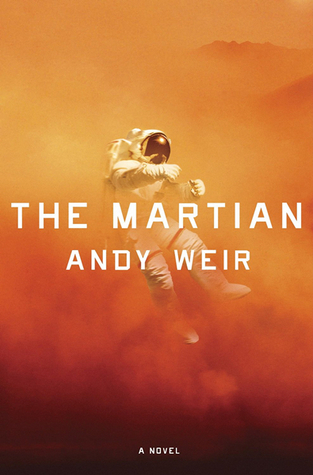
The Storm That Leaves Mark Watney Alone
Mark Watney is a member of Ares 3, the third crewed mission to land on Mars. The six-person expedition is commanded by Melissa Lewis and includes pilot Rick Martinez, medical officer Chris Beck, computer specialist Beth Johanssen, chemist Alex Vogel, and Watney, whose specializations are botany and mechanical engineering. Their surface mission is supposed to last thirty-one Martian days, or sols, before they depart aboard their Mars Ascent Vehicle (MAV) and reunite with Hermes, the interplanetary spacecraft that will return them to Earth.
Only six sols into the surface mission, an exceptionally powerful dust storm threatens the expedition. The Mars Descent Vehicle, which serves as the crew’s return vehicle’s support infrastructure before ascent, has already delivered them to the surface, while the MAV is positioned nearby for their departure. When the wind threatens to topple the MAV, Lewis orders an emergency evacuation rather than risk losing their only means of leaving Mars.
During the attempt to reach the MAV, a communications antenna breaks loose and strikes Watney. The impact tears through his spacesuit, carries him away from the others, and destroys the suit’s communications equipment. The remaining astronauts receive suit telemetry indicating that his vital signs have stopped, while blowing dust makes it impossible to locate him.
Lewis tries to find Watney instead of immediately abandoning the search. However, the storm continues to threaten the MAV, and delaying departure risks killing the entire crew. Martinez ultimately has to begin the ascent procedure while Lewis is still searching. With no indication that Watney remains alive, she reluctantly leaves Mars.
Watney survives because the antenna fragment lodged in his body partially seals the hole it created. Blood from his wound freezes around the damaged suit material, slowing the loss of air enough for the suit’s emergency systems to maintain pressure. He loses consciousness, but the suit keeps him alive until he recovers sufficiently to understand what has happened.
When Watney awakens, the storm has passed and his crewmates are gone. He manages to return to the Hab, the pressurized habitat that served as the expedition’s living quarters. Once inside, he removes the antenna fragment, treats his injuries, and assesses the damage.
The Hab is largely intact, but the communications system has been destroyed. Although Watney can continue using the shelter and its equipment, he cannot tell NASA that he is alive. The Hermes crew are already on their journey home, and their ship cannot simply reverse course and return to collect him.
The next scheduled mission, Ares 4, will arrive years later. Its landing site is far from Watney’s position in Acidalia Planitia, and its equipment was never intended to support an astronaut abandoned by an earlier expedition.
The immediate problem is survival. The Hab can produce breathable air, reclaim water, and provide shelter, but its supplies were intended for six astronauts during a short mission. Even with the other five astronauts gone, Watney does not possess enough food to survive until Ares 4 arrives.
He is also dependent on equipment that cannot easily be replaced. If the oxygenator stops working, he loses his source of breathable oxygen. A failure of the water reclaimer could kill him through dehydration, while a breach in the Hab’s pressure envelope could expose him to the near-vacuum outside.
Watney begins keeping mission logs in which he records his circumstances, calculations, experiments, and frequently sarcastic observations. His first assessment is grim, but he soon decides that the only practical response is to work through his problems systematically.
Later in the novel, Weir returns to the evacuation through a third-person account that reveals what Watney could not have witnessed. The crew’s fear, Lewis’s desperate search, and the danger surrounding their departure make clear that his abandonment was a tragic decision made under severe pressure rather than carelessness.
This distinction becomes especially important after the crew learn that Watney survived. Lewis continues to see the evacuation as her personal failure, even though the information available to her gave little reason to expect that he was alive.
Growing Food and Making Water on Mars
Watney begins by inventorying everything inside and around the Hab. The other astronauts left their food behind during the evacuation, giving him considerably more than one person’s normal supply for a thirty-one-sol mission. Nevertheless, his calculations show that rationing alone will leave him without enough calories long before Ares 4 arrives.
He considers what he can produce rather than simply what he can conserve. His botanical training gives him an important advantage: although Mars has no soil ecosystem capable of supporting familiar terrestrial crops, its surface material contains minerals that plants can potentially use. The missing ingredients include organic matter, microorganisms, liquid water, and a suitable growing environment.
The Hab provides warmth, pressure, light, and an atmosphere that can support plants. Watney therefore begins transforming part of its floor into farmland, transporting Martian surface material inside and spreading it across the available space.
Sterile mineral material is not the same as fertile agricultural soil. Watney introduces organic matter and microorganisms by mixing in the crew’s stored human waste, an unpleasant but potentially useful source of nutrients and biological activity. He adds water and allows the mixture time to develop conditions suitable for growing plants.
He also needs something to plant. Fortunately, the mission carried a small supply of real potatoes intended for a Thanksgiving meal. Unlike the packaged food, these potatoes can be cut into pieces and used to grow additional plants.
The resulting crop becomes the foundation of his long-term food strategy. Watney calculates the calories he can obtain from his existing supplies and the harvests he hopes to produce, while also estimating how much farmland he can cultivate.
His calculations remain discouraging. Growing potatoes can extend his survival considerably, but he cannot immediately produce enough food to cover the entire interval before Ares 4. Nevertheless, farming changes his situation from one in which starvation is inevitable on a known date to one in which he has at least a chance of bridging the gap.
The greatest obstacle is water.
The Hab’s reclamation equipment conserves the water already available, but Watney needs hundreds of additional liters for the farm. Recycling cannot create a net increase in the amount of water in his possession, and he cannot simply collect enough liquid water from the surrounding Martian landscape.
He therefore turns to chemistry.
The Mars mission uses hydrazine as rocket fuel, and Watney realizes that the remaining hydrazine from the descent equipment contains hydrogen he can potentially use. By decomposing hydrazine and combining the liberated hydrogen with oxygen, he can form water.
The principle is straightforward enough in chemical terms: hydrogen reacts with oxygen to produce water. Performing that reaction inside a pressurized habitat, with improvised equipment and a limited supply of critical resources, is a much more dangerous undertaking.
Watney must control the decomposition of hydrazine, handle toxic substances, collect hydrogen, and burn it without igniting anything else. He improvises equipment from available mission components and produces water, gradually supplying the agricultural system.
The operation initially appears successful, but an unexpected discrepancy emerges. Watney’s measurements indicate that some of the hydrogen he releases is not being consumed as intended. The missing hydrogen has instead accumulated within the Hab.
This is extremely dangerous because hydrogen mixed with oxygen can explode. The Hab, which is supposed to protect Watney from Mars, has become a potentially lethal environment because of his efforts to make it habitable.
He retreats to a rover while investigating how to remove the excess hydrogen. His first attempt to correct the problem produces another error: the oxygen associated with his own breathing helps create conditions for an explosion.
Watney survives the blast, but the accident demonstrates how easily an engineering solution can become a new disaster. He had correctly identified a workable chemical process while failing to account for every factor affecting its implementation.
After assessing the damage, he modifies his procedures, controls the accumulated gases, and eventually resumes water production. His plants remain viable, and the agricultural experiment continues.
The potato farm gradually begins producing results. Watney expands the cultivated area and tracks the crop’s growth while calculating how much food he can expect. His ability to manipulate the environment gives him a measure of control over a planet that otherwise offers virtually nothing necessary for his survival.
Yet the achievement is precarious. The potatoes depend on continuous warmth, pressure, moisture, functioning machinery, and living microorganisms. Watney has created an agricultural ecosystem whose survival depends on the same fragile equipment that keeps him alive.
His attention to cultivation also establishes an important feature of the novel’s scientific approach. Growing food is not presented as a miraculous discovery that solves the story’s central problem. It is a process involving biological limitations, material shortages, dangerous improvisation, calculations, and labor.
NASA Discovers Watney Is Alive
While Watney works on his survival plans, NASA believes he died during the Ares 3 evacuation. The remaining crew are returning aboard Hermes, and attention has begun shifting toward future missions and the consequences of the tragedy.
Venkat Kapoor, NASA’s director of Mars operations, wants new satellite images of the abandoned site. His initial reasons concern mission equipment and the possibility of eventually recovering information about Watney’s death. Getting images requires authorization because orbital observation resources are limited and the agency’s leadership is sensitive to the political and public consequences of the disaster.
Satellite specialist Mindy Park examines the images and notices something extraordinary. Equipment at the site has moved since the evacuation. Items that should have remained untouched are in different positions, and some changes indicate deliberate human activity.
The most plausible explanation is that Watney survived.
NASA carefully examines the evidence before publicly confirming the discovery. The announcement transforms the situation. Instead of mourning a dead astronaut, the agency must respond to the fact that a living human being is stranded on Mars.
The discovery produces a complicated mixture of relief and alarm. It is wonderful that Watney survived the storm, but NASA has no immediate means of reaching him or even communicating with him. He might be alive in the latest image while already facing an emergency that will kill him before another image can be obtained.
Teddy Sanders, the NASA administrator, must balance the rescue effort with the agency’s wider responsibilities. Venkat focuses on the practical needs of keeping Watney alive, while mission director Mitch Henderson is especially concerned about the Ares 3 crew.
The question of when to inform Hermes becomes contentious. The returning astronauts believe their colleague is dead, and NASA’s leadership initially worries that revealing his survival will distract them or damage morale during an already difficult return journey.
Mitch considers this withholding of information unfair to the people who shared the mission with Watney. For the time being, however, the decision remains with NASA’s senior leadership.
On Mars, Watney has begun preparing for a journey that may eventually save him.
The Ares 4 mission is expected to land at Schiaparelli, thousands of kilometers from his current location. Its Mars Ascent Vehicle is already positioned on the surface as part of the mission’s advance preparations. If Watney can reach that vehicle when a rescue opportunity becomes available, he may be able to leave Mars.
His existing rovers, however, were designed for relatively short excursions around the mission site. They cannot travel thousands of kilometers without significant modifications.
Watney first investigates battery capacity and driving range. He can use solar panels to recharge the vehicles, but doing so requires a repeating routine of driving, stopping, unloading panels, waiting for sunlight, and charging again.
Heating creates another serious constraint. The rovers must protect their occupant from Martian cold, and using electric heaters consumes energy that could otherwise support travel.
Watney retrieves the mission’s radioisotope thermoelectric generator, or RTG, which the astronauts had buried a safe distance from their working area. Its radioactive material produces heat through natural decay, and the device can provide a dependable heat source independent of sunlight.
By using the RTG to warm the rover, Watney reduces the electricity required for heating. He remains wary of radiation-related risks, but his calculation is that the potential danger from a properly contained device is preferable to freezing or exhausting his batteries.
Atmospheric management also becomes a problem. The rover’s carbon dioxide filters and oxygen supplies cannot support an extended expedition without careful planning. Watney experiments with ways to keep the Hab’s environmental systems and the rover’s life-support resources coordinated.
NASA observes these activities through satellite imagery. The engineers attempt to infer what Watney is doing from the location of vehicles, equipment, and solar panels. His actions sometimes appear inexplicable because the observers cannot ask him for an explanation.
Eventually, his movements suggest a specific destination: the old Mars Pathfinder landing site.
This discovery changes NASA’s expectations. Pathfinder, a real robotic mission from the 1990s, might provide a way to communicate with Watney even though the Ares 3 communications system is destroyed.
Pathfinder Restores Contact With Earth
Watney recognizes that the abandoned Pathfinder lander offers a potential solution to one of his greatest disadvantages. It contains communication equipment that was designed to transmit information to Earth, and some of its systems may remain recoverable despite decades of inactivity.
Reaching it requires a substantial rover expedition. Watney cannot simply enter coordinates and allow the vehicle to drive itself to the destination. He must navigate unfamiliar terrain using maps, landmarks, and his understanding of the Martian landscape.
His daily routine becomes repetitive and demanding. He wakes, checks atmospheric conditions, eats, prepares the vehicle, drives within his energy limits, unloads solar panels, and waits for the batteries to recharge. Small inefficiencies matter because every wasted hour and every unnecessary detour consume resources.
The journey also reveals the emotional cost of his isolation. Watney has spent weeks recording logs for an audience that may never hear them. There is no one to talk to, disagree with, or share the experience of seeing extraordinary landscapes.
He uses humor and familiar entertainment to occupy his mind, but the absence of other people remains unmistakable. The prospect of restoring communication gives him something beyond food and oxygen to pursue.
At Pathfinder’s location, Watney finds the old lander and its small Sojourner rover. Recovering the lander proves physically awkward because it was never intended to be collected by a single astronaut and transported in a rover. He improvises a loading method using the surrounding terrain and takes the equipment back toward the Hab.
Once home, he attempts to restore the lander’s electrical systems. Pathfinder has been inactive for decades, and there is no certainty that its hardware can function again. Watney connects available power sources and adapts components to reactivate the probe.
At NASA’s Jet Propulsion Laboratory, engineers have already begun preparing for the possibility that Pathfinder will reappear on their communications network. They understand the old mission’s hardware and can assemble the expertise needed to operate it.
When a signal finally reaches Earth, the achievement triggers celebrations. NASA now possesses a technological route to the stranded astronaut that did not exist when the original communications system was destroyed.
At first, however, the connection is awkward.
Pathfinder’s camera can rotate, allowing NASA to aim it toward messages Watney displays. He can place signs in front of the camera and watch it move toward predetermined responses. This creates a limited communication system, but it is too slow and ambiguous for lengthy technical instructions.
Watney improves the arrangement by using a hexadecimal representation of computer characters. Each character can be expressed through numerical codes, allowing the camera to indicate information with greater precision. The system remains primitive compared with ordinary electronic messaging, but it allows NASA and Watney to exchange meaningful text.
JPL subsequently develops software modifications that make communication more efficient. By connecting the recovered equipment with rover systems, the engineers establish a more practical channel for sending messages and instructions.
The psychological effect is enormous. Watney is no longer completely separated from humanity, and NASA no longer has to depend entirely on satellite images to understand his situation.
His initial exchanges reveal both relief and personality. He explains what he has accomplished, reports on his farm, and makes jokes even while discussing the serious problems that threaten his survival.
NASA also discovers that Watney has been planning to reach the Ares 4 site. Instead of beginning from nothing, rescue planners can now work with the person who has already spent months developing survival solutions.
The new connection introduces a different tension. Watney has grown accustomed to making every decision himself because there has been no alternative. NASA, by contrast, wants to impose procedures, limits, and supervision on an astronaut whose experiments can endanger his life.
Their relationship becomes a mixture of cooperation and frustration. Watney needs Earth-based expertise, but he also knows that NASA cannot fully understand every practical difficulty he encounters on Mars.
With communication restored and rescue planning underway, Teddy finally authorizes Mitch to inform the Hermes crew that Watney survived.
The revelation shocks the astronauts. Their grief had rested on the certainty that their colleague was dead, and they must now confront the fact that he has been alive and struggling without them.
Lewis experiences the greatest emotional burden. Although the original evacuation was justified by the information available, she cannot escape the knowledge that she personally made the decision to leave him behind. Her sense of responsibility will influence everything she does afterward.
Watney also begins receiving messages from family members, friends, and the wider public. The rescue effort has become an international spectacle, and the world follows his survival as an extraordinary human story.
For the first time since the evacuation, he can imagine something resembling a coordinated return home. That hope is about to encounter a devastating setback.
The Airlock Failure and the Destruction of Iris
The Hab’s structural integrity has always been fundamental to Watney’s survival, but one of its airlock connections has been weakening through repeated use. The problem begins with the material surrounding the airlock, where stresses accumulate as the structure expands, contracts, and bears the loads associated with maintaining pressure.
Watney does not recognize the impending failure before it occurs.
While he is using Airlock 1, the connection catastrophically gives way. The pressurized air inside the Hab forces the airlock outward, launching Watney away from the structure with tremendous violence.
The impact damages his helmet’s faceplate, and the detached airlock develops a leak. Watney suddenly finds himself trapped inside a small, damaged pressure chamber separated from the shelter that contains his food, tools, and functioning life-support equipment.
He initially responds with anger and despair. The failure seems especially cruel because it occurs after he has made substantial progress and restored communication with Earth.
Yet he eventually begins analysing his immediate predicament. He cannot remain inside the detached airlock indefinitely because its air supply is limited and the leak continues to threaten the remaining pressure.
Watney uses materials available in his suit and surroundings to create temporary repairs. He must control the escaping air, address the damaged helmet, and work out how to return to the Hab without exposing himself to Mars.
Once he escapes the airlock and reaches safety, he discovers that the larger disaster has already occurred.
The sudden decompression exposed his potato farm to conditions it cannot survive. The plants are dead, and the living soil ecosystem that supported their growth has been destroyed by the extreme change in temperature and pressure.
This loss is different from damaging a piece of equipment. A broken component might be repaired with tools and spare materials, but Watney cannot simply recreate mature plants or restore the cultivated biological system within the time remaining.
His stored potatoes are still valuable food, but the farm can no longer generate additional harvests.
He recalculates his survival deadline. The food already available will last for a limited period, but not long enough to reach the rescue window originally envisioned. His apparent progress has been reversed, and NASA must find a way to deliver supplies before starvation becomes unavoidable.
The agency begins developing an emergency unmanned supply mission called Iris. Instead of sending astronauts, NASA intends to deliver enough food to keep Watney alive until the larger rescue plan can succeed.
Time is the central difficulty. A spacecraft launch requires testing, inspection, preparation, and coordination among many specialized teams. NASA has insufficient time to complete its ordinary process without missing the window in which supplies can reach Watney.
Teddy and the engineering leadership therefore accept unusual risks. Certain inspections and tests are compressed or omitted to move the launch forward.
Bruce Ng and the engineers at JPL work under intense pressure to prepare the payload and launch system. The entire mission depends on the assumption that the accelerated schedule will not conceal a fatal problem.
Watney, meanwhile, is trying to understand what Earth can realistically accomplish. His survival has become dependent on a rocket being built and launched millions of kilometers away.
The Iris launch fails during ascent.
The loss destroys the food that Watney urgently needs, along with NASA’s immediate hopes for a straightforward solution. The failure also exposes the danger of treating extraordinary urgency as a reason to abandon safeguards that normally protect complex technical missions.
For the people on Earth, the disaster is devastating. Their calculations and preparations had been directed toward a single objective: delivering supplies before Watney ran out of food. With the payload destroyed, the original rescue timetable no longer offers a credible route to success.
The emotional force of this moment is intensified by the communications delay. Watney does not immediately know that the mission has failed, and his message asking how the launch went reaches NASA after the people responsible have already watched it end in disaster.
The situation now appears nearly impossible. Watney cannot grow more food, the emergency supply mission has failed, and the next opportunity to launch a replacement probe is severely constrained by the movement of Earth and Mars.
Rescue planners need a fundamentally different approach.
The Rich Purnell Maneuver and the Hermes Mutiny
The failure of Iris creates an opportunity for two developments that eventually combine into a single rescue plan.
The first comes from China. Chinese space officials possess the Taiyang Shen launch vehicle, originally intended for an important scientific mission. Redirecting the launcher could provide NASA with the capability needed to deliver supplies, but doing so would mean sacrificing years of scientific planning.
Guo Ming and Zhu Tao must weigh the potential loss of a valuable national project against the possibility of saving an astronaut. They ultimately choose to make the launcher available, turning what had been an American rescue effort into a major international undertaking.
The second development comes from NASA astrodynamicist Rich Purnell, who has been studying the orbital possibilities created by the positions of Earth, Mars, and Hermes.
Purnell’s proposal is radical because it challenges an assumption that everyone has been treating as fixed: that Hermes must continue toward Earth.
Rather than completing its return as originally planned, the spacecraft could alter its trajectory and use an Earth gravity assist. By passing Earth along a carefully calculated path, it could redirect itself toward Mars and eventually make a flyby near the planet.
This maneuver would bring the existing Ares 3 crew back into a position from which they might retrieve Watney.
It also offers a way to use the Chinese launcher. Instead of sending the supplies directly to Watney on Mars, NASA could launch provisions to Hermes during its passage near Earth. The extra food would enable the crew to undertake the greatly extended mission.
The plan depends on an extraordinary sequence of events. Hermes must receive supplies successfully, execute the required trajectory, return to Mars at the appropriate time, and rendezvous with Watney after he has traveled to the Ares 4 MAV.
The spacecraft cannot wait in orbit around Mars. Its high-speed flyby imposes a narrow window in which Watney must launch and intercept the ship.
Purnell’s proposal is technically promising, but it introduces major ethical and institutional problems.
The five astronauts aboard Hermes are already travelling home after losing a crewmate. Sending them back toward Mars would add a considerable period to their voyage and expose every one of them to new dangers.
If resupply fails or another major system breaks down, NASA could lose the entire crew while attempting to save Watney.
Teddy Sanders regards this risk as unacceptable. His responsibility extends beyond the stranded astronaut to all the astronauts and the organization entrusted with their safety.
Mitch Henderson sees the decision differently. He believes the crew should have a meaningful say in whether they are willing to attempt the rescue. He also thinks the proposed trajectory offers the best available chance of bringing Watney home.
NASA’s leadership formally rejects the maneuver.
Mitch nevertheless arranges for the calculations to reach Hermes. The astronauts examine the plan and understand that following it would amount to disobeying NASA’s instructions.
Lewis refuses to act unilaterally. She insists that the entire crew must agree because each astronaut will bear the consequences, and no one should be compelled to risk their life through another person’s decision.
All five agree to proceed.
Their decision constitutes the Hermes mutiny, although it is motivated by loyalty and a desire to save Watney rather than a struggle for power. The astronauts deliberately change their trajectory, making the approved return to Earth impossible without further intervention.
Once the maneuver is initiated, NASA has little practical choice but to support them. Refusing assistance would increase the danger to the crew without undoing their decision.
Teddy remains angry with Mitch for bypassing NASA’s authority, but the agency begins preparing the resupply operation required by the new trajectory.
The maneuver transforms the entire story. Watney no longer has to remain alive until a future mission lands and establishes a settlement. He needs to survive long enough to reach the already-positioned Ares 4 MAV and launch during the Hermes flyby.
That is still an enormous challenge.
The MAV is thousands of kilometers away, and Watney’s existing vehicles are not designed for such a journey. He must undertake a prolonged expedition across a dangerous landscape while carrying everything necessary to keep himself alive.
The rescue plan also involves new risks for the returning astronauts. They have committed themselves to a mission whose success depends on circumstances they cannot fully control.
Building the Mars Rover and Resupplying Hermes
When Watney learns that Hermes is returning for him, his response combines relief with an immediate recognition of the work ahead. The opportunity is real, but it requires him to transform equipment built for short local excursions into a mobile survival system capable of crossing thousands of kilometers.
He begins with the limitations of the two rovers.
A normal rover can provide pressure, warmth, oxygen, and transportation for a limited time. It does not possess enough internal space, battery capacity, or environmental support to sustain a single astronaut through a journey expected to require many weeks.
Watney needs to transport substantial quantities of food, water, tools, solar panels, and life-support equipment while preserving enough room to sleep and work. He also needs a way to recharge batteries repeatedly without exhausting his available daylight.
NASA sends instructions for modifying the vehicles. These procedures involve removing and rearranging components, creating openings, adapting electrical systems, and installing equipment taken from the Hab.
One alteration requires Watney to use an electric drill with a power supply that can deliver enough current for sustained work. The arrangement seems manageable, but an electrical fault creates a short circuit.
The resulting surge travels through the connected equipment and reaches Pathfinder’s delicate electronics.
Pathfinder is destroyed.
The incident is particularly painful because the recovered probe represented Watney’s connection with Earth. He had spent considerable effort reaching it, bringing it home, and restoring its functions. A seemingly unrelated modification has now damaged the very system that allowed NASA to guide him.
Watney cannot rebuild Pathfinder with the resources available. Once again, he is unable to communicate directly with Earth.
He does not abandon the rescue plan. He has received enough information to understand the major objective, and he knows that delaying the rover modifications could be fatal.
Without NASA’s constant advice, however, he must make more engineering decisions independently.
The mobile life-support system presents the most difficult problem.
Watney needs oxygen for breathing and must prevent carbon dioxide from accumulating in the vehicle. Carrying a large enough supply of disposable carbon dioxide filters would require more resources than he can spare.
He therefore adapts equipment from the Hab, including the oxygenator and atmospheric regulator, to support a longer expedition. These machines are valuable because they perform functions the rover’s original systems cannot sustain indefinitely.
The difficulty is that operating them consumes power. Watney cannot run every system continuously while also using electricity for transportation, heating, and other essential needs.
He works out a schedule in which different systems operate at different times. Oxygen production, battery charging, driving, and atmospheric regulation must be coordinated so that the vehicle remains habitable without exceeding its available energy.
The RTG becomes important again. By supplying dependable heat, it reduces the electrical burden associated with surviving Martian temperatures.
The rover arrangement also needs additional living space.
Watney modifies a second vehicle into a trailer and constructs an expandable pressurized sleeping compartment using material from the Hab’s emergency equipment. The resulting structure is awkward, improvised, and vulnerable to pressure loss, but it provides room to sleep without remaining confined to the driver’s seat.
He connects the compartments through carefully planned hoses and valves. These connections allow the life-support systems to work together while limiting the consequences of certain failures.
Every alteration must be tested. A leak, electrical problem, or pressure-control failure could kill him hundreds of kilometers from the Hab, where no repair team could reach him.
The construction takes an enormous amount of time. Watney must cut and drill through durable material, install connections, reposition machinery, and repeatedly verify that the resulting systems behave as expected.
He gradually turns the rover and trailer into an improvised mobile habitat.
While this work continues on Mars, the rescue operation reaches another crucial stage near Earth.
The Hermes crew contact their families during the extended voyage. These conversations reveal the personal cost of their decision. Parents, spouses, and other loved ones must accept that the astronauts have voluntarily delayed their return and placed themselves in additional danger.
Beth Johanssen’s conversation with her father exposes an especially disturbing contingency plan.
If the resupply attempt fails, Hermes will not have enough food for all five astronauts to survive the extended voyage. The crew have discussed the possibility that four of them would end their lives, leaving the remaining provisions for one person.
Johanssen has been selected as the survivor.
Even that would not supply enough food for the entire return journey. The implied contingency is that she would eventually have to consume the bodies of her dead crewmates.
The plan is shocking because it exposes the seriousness concealed beneath the crew’s jokes and professional composure. They have accepted risks extending far beyond an ordinary decision to work overtime or undertake a difficult assignment.
At the same time, Chinese engineers prepare the Taiyang Shen launcher for its redirected mission. Zhu Tao reflects on the scientific opportunity being sacrificed, recognizing that the rocket’s original purpose represented years of work and ambition.
The launch succeeds, and the supply probe approaches Hermes. Martinez performs the precision maneuver required to bring the supplies into the crew’s possession.
The successful resupply allows the extended mission to continue. The astronauts now have the food necessary to carry out Purnell’s trajectory, eliminating the immediate danger behind Johanssen’s contingency.
On Mars, Watney continues preparing for departure.
He studies the route toward Schiaparelli, examining the geography he must cross. The planned journey passes through areas of varying elevation and terrain, with limited opportunities to alter course if an obstacle becomes impassable.
He also conducts tests of his modified vehicles, checking the pressure system, oxygen production, water supply, temperature management, and battery performance. The system is complicated enough that successful operation during one test cannot guarantee reliability over many weeks.
The final preparations require difficult decisions about what to take. Every kilogram of equipment consumes storage capacity and adds to the demands placed on the vehicles. Watney must balance spare parts and tools against the food and water essential to survival.
Eventually, everything is ready.
On Sol 449, Watney shuts down the Hab and departs for Schiaparelli.
Leaving the habitat has an unexpected emotional effect. For hundreds of sols, it has provided the only dependable refuge on an otherwise lethal planet. Watney knows its systems intimately, understands its weaknesses, and has repeatedly repaired it after emergencies.
Now he must abandon that security and trust the much smaller structure he has built.
His departure marks the end of the stationary survival phase of the novel. From this point forward, Watney’s life depends on remaining mobile, finding a workable route, and reaching the MAV before the rescue window closes.
The Dust Storm and the Journey to Schiaparelli
The overland journey begins with a carefully organized routine.
Watney drives during the portion of the day when his batteries permit travel, then stops to deploy solar panels and recharge. He must also maintain his environmental equipment, prepare meals, inspect the vehicles, and monitor the systems keeping him alive.
The work is exhausting partly because the process repeats every day. Small failures threaten to consume precious time, and even successful travel requires hours of labor that would be unnecessary in an ordinary vehicle.
His route takes him through Mawrth Vallis, a large Martian valley system, and eventually toward the highlands and basin surrounding Schiaparelli.
Navigation presents a constant challenge. Watney cannot rely on ordinary terrestrial landmarks or navigation infrastructure. He uses orbital maps, the Sun’s position, terrain features, and his own calculations to determine where he is and where he should go.
Meanwhile, NASA continues observing his progress from orbit.
The loss of Pathfinder means mission control cannot ask him about his plans or provide detailed instructions. Satellite photographs reveal his location and some of his activities, but the agency often has to interpret what he is doing from physical evidence.
Watney develops ways of leaving brief messages using rocks arranged in patterns that can be read from space. This improvised method allows NASA to obtain limited information, although it falls far short of the rapid two-way communication available through Pathfinder.
A major problem emerges when NASA detects a large dust storm near his route.
Unlike the violent opening storm, the principal danger here is not wind force. Suspended dust reduces the sunlight reaching the ground, which threatens the rover’s solar power supply.
If Watney enters a region where his panels generate too little electricity, he may be unable to recharge the batteries sufficiently to continue. He could become stranded without the power required to operate his life-support equipment over the remaining distance.
NASA can observe the approaching storm, but Watney initially knows nothing about it.
Eventually, he notices that his solar panels are producing less energy than expected. The difference is small enough to be difficult to recognize immediately, particularly because ordinary environmental variations can also affect performance.
Watney investigates the discrepancy and realizes that reduced sunlight may indicate an approaching dust storm.
He faces a problem of limited information. He does not know the storm’s full shape, its direction of movement, or how conditions vary across its edges. Simply driving away from its apparent center could send him deeper into the dangerous region.
Instead, he develops an observational method.
By measuring sunlight and comparing conditions at different locations over time, he can estimate the storm’s behavior. The dust reduces solar output, effectively giving him an indirect measurement of atmospheric conditions.
He combines those measurements with his knowledge of the geography and changes his route to avoid the worst conditions.
The procedure demands patience because the storm is moving while he gathers information. His calculations must account for the fact that measurements taken at different times do not represent a stationary environment.
Eventually, Watney establishes a workable course around the dangerous region.
The successful navigation allows him to continue toward Schiaparelli, but his problems are not over.
The basin is surrounded by difficult terrain, and Watney must find a route down into it. He studies the elevation changes and selects an approach that appears to provide a manageable gradient.
His calculations suggest that the slope should be gentle enough for the rover, but the terrain proves deceptive.
The surface material is less stable than expected. While crossing the slope, the rover loses stability and overturns, dragging the trailer into a disastrous accident.
The vehicle comes to rest on its side, the trailer is inverted, and solar panels are scattered across the ground.
Watney survives because the pressurized compartments remain substantially intact and automatic valves isolate damaged connections. Had the accident breached the rover’s pressure envelope, he might have died before he could attempt repairs.
The rollover creates several immediate problems.
He must restore the vehicles to an upright position, recover the scattered equipment, inspect the systems for damage, and ensure that the rover can still provide a safe environment for travel.
The accident also consumes time and energy. Every recovery operation requires physical exertion in a spacesuit, and the limited sunlight restricts how quickly he can recharge the batteries.
Watney improvises a recovery procedure using cables, available equipment, and the geometry of the overturned vehicles. He works out where force must be applied and how to prevent the recovery attempt from causing further damage.
The operation is difficult because the vehicles are heavy and their pressurized structures were not designed to withstand arbitrary loads. Pulling from the wrong location could damage a compartment or destabilize the arrangement further.
Through repeated adjustments, Watney manages to right the vehicles and recover enough equipment to resume the expedition.
The accident is especially frustrating because Schiaparelli is now relatively close. After surviving months of isolation, countless repairs, and a long journey across Mars, he is threatened by an ordinary mechanical accident on the final approach.
Watney continues.
As he draws nearer to the Ares 4 site, he begins detecting the MAV’s radio signal. The signal provides confirmation that the spacecraft is where the mission planners expected it to be.
He eventually reaches the MAV, completing the enormous overland journey that had seemed nearly impossible when he first began experimenting with rover travel.
The sight of the ascent vehicle gives him an understandable reason to celebrate. He has crossed thousands of kilometers and arrived at the one piece of equipment capable of getting him off Mars.
Yet the rescue is still incomplete. Reaching the MAV solves the transportation problem on the surface; it does not guarantee that the vehicle can place him in the correct position to meet Hermes.
The MAV Launch and Watney’s Rescue
The Ares 4 Mars Ascent Vehicle was designed to carry a future crew from the Martian surface into orbit. Its normal mission profile does not match the emergency rescue now required.
Hermes will approach Mars on a carefully calculated flyby trajectory rather than entering a stable orbit. Watney must launch at precisely the right time and achieve a trajectory that allows the two spacecraft to approach one another.
The problem is that the MAV lacks the performance needed to reach the required speed with its ordinary configuration.
NASA’s engineers develop a radical solution: reduce the spacecraft’s mass.
Removing unnecessary weight allows the same quantity of propellant to accelerate the vehicle more effectively. However, many components that are useful or essential during an ordinary mission become obstacles under the rescue plan.
Watney receives instructions to strip out seats, equipment, internal panels, insulation, and other material. The modifications are extreme because the MAV will carry only one astronaut and will not need to support a normal crewed ascent.
Even the cabin’s structural arrangement must be altered.
A large section of the vehicle’s forward pressure enclosure is removed and replaced with Hab canvas. The material is not equivalent to the original hull, but Mars has such a thin atmosphere that aerodynamic forces are far less demanding than those experienced during launch from Earth.
The modification nevertheless creates considerable uncertainty. The pressure envelope is improvised, and Watney must wear an EVA suit during ascent rather than relying on an ordinary pressurized cabin.
He performs the required work, removing components and checking the modified spacecraft as carefully as the circumstances permit.
His preparations also involve the psychological recognition that his time on Mars is almost finished.
He has spent hundreds of sols performing unfamiliar jobs, constructing equipment, cultivating food, and responding to emergencies. Now the work is concentrated on a single launch.
The MAV offers no second chance. If the ascent fails, there will be no opportunity to repeat it with another vehicle.
As the launch approaches, people across Earth gather to watch. The rescue has become a global event involving scientists, engineers, mission controllers, political leaders, and ordinary observers who have followed Watney’s survival for months.
The Hermes crew prepare for the rendezvous while NASA monitors the mission from Earth.
Watney launches from Mars, experiencing extraordinarily strong acceleration in the modified MAV. The ascent is violent, and he suffers physical injuries, but the vehicle succeeds in carrying him into space.
Reaching space, however, does not mean that he has reached safety.
The trajectories of Hermes and the MAV do not initially produce the close, slow rendezvous needed for recovery. The relative distance and velocity between the spacecraft remain dangerous.
In orbital mechanics, two objects can appear close together while moving too rapidly relative to one another for an astronaut to cross the gap. Even a modest distance is effectively impassable if the objects are separating at high speed or if the rescuer cannot control the movement.
The crew work through the problem using the remaining propulsion and attitude-control capabilities of Hermes.
Watney proposes a desperate solution: puncturing his spacesuit so that escaping air could propel him toward the ship. He imagines steering himself by directing the escaping gas from his arm.
The idea is characteristic of Watney’s improvisational thinking, but it is dangerously uncontrolled. Lewis rejects it because he could spin unpredictably, exhaust his oxygen, or move beyond anyone’s ability to retrieve him.
The crew instead consider whether Hermes can use a deliberate release of its own atmosphere to produce thrust.
They recognize that venting air through the forward vehicular airlock could change the ship’s velocity, but simply opening the airlock would not provide a sufficiently effective or controlled impulse. The procedure also risks damaging the spacecraft and sacrificing much of its breathable atmosphere.
Vogel develops a method involving an improvised explosive charge that will rupture the airlock structure and allow the atmosphere to escape rapidly in the required direction.
The crew prepare the operation under intense pressure. Compartments must be isolated, personnel secured, and the ship oriented correctly before the charge is activated.
The explosive decompression works. The escaping atmosphere provides additional thrust, substantially improving the interception geometry between Hermes and Watney.
Even then, the rescue requires a dangerous extravehicular operation.
Beck goes outside the spacecraft using a maneuvering unit and safety tether. With support from the other astronauts, he approaches Watney’s MAV and enters it through the open forward section.
He secures Watney and brings him out of the vehicle. The two astronauts then use the maneuvering unit to move toward Hermes.
Their remaining relative motion must be reduced without snapping the tether or sending them past the recovery point. Vogel controls the line from the spacecraft, carefully managing its tension as the astronauts approach.
The maneuver succeeds, and Beck and Watney are pulled into an airlock aboard Hermes.
For the first time since the evacuation, all six members of Ares 3 are together again.
Lewis reports that the entire crew is safely aboard. The announcement produces celebrations at NASA and among the people watching around the world.
Watney’s ordeal has ended, although the spacecraft remains far from Earth.
His physical condition is poor. The violent ascent has injured his ribs, and months of isolation, restricted food, and difficult work have left him exhausted. Beck begins treating him, and Watney experiences the unfamiliar pleasure of being surrounded by people who can speak to him directly.
The reunion is both affectionate and humorous. The astronauts are relieved to have him back, but Watney’s extraordinary lack of personal hygiene also becomes a subject of jokes.
In his final log, Watney reflects on the resources and effort committed to his rescue.
His crewmates have sacrificed a substantial portion of their lives and accepted immense risks to return for him. NASA personnel have devoted months to solving problems for which no ordinary procedures existed, while Chinese officials surrendered a major scientific opportunity.
He recognizes that an extraordinary number of people have worked to save one person.
Watney concludes that human beings possess a powerful willingness to help one another, especially when someone is in desperate danger.
The novel closes with him safe aboard Hermes, still many months from Earth but surrounded by his crewmates. His injuries hurt, he is hungry and exhausted, and the journey home remains unfinished.
Nevertheless, he regards the day of his rescue as the happiest of his life.
Mars, the Ares Program, and the Logistics of Survival
Mars is more than a hostile backdrop in The Martian. Its physical characteristics determine nearly every important decision Watney makes, while the design of the Ares program defines both his opportunities and his limitations.
The planet’s atmosphere is extremely thin compared with Earth’s. An astronaut cannot breathe it, and a pressurized habitat must provide an artificial environment suitable for human life. Exposure to Martian surface conditions would rapidly become fatal without protective equipment.
Temperature creates a similar problem. Mars is cold enough that exposed equipment and biological materials can freeze, while prolonged work outside requires suitable thermal protection. Watney must therefore preserve heat as carefully as he preserves oxygen.
The planet also contains useful resources, though they are difficult to exploit. Martian surface material provides the mineral component of his potato farm, and sunlight can generate electricity through solar panels. The availability of these resources does not eliminate the need for sophisticated machinery to turn them into something usable.
Weir builds the Ares program around the assumption that human missions to Mars will require extensive advance preparation. Equipment, supplies, and ascent vehicles are delivered to the planet before the astronauts arrive, reducing what must be transported during their crewed voyage.
This arrangement explains why Watney can find the Ares 4 MAV already positioned on Mars. It was delivered for a future mission and becomes useful because of the emergency created by Ares 3.
The Hab is the central element of the original surface operation. It contains the equipment necessary for an Earthlike internal environment, including atmospheric regulation, oxygen generation, water reclamation, and food storage.
These systems are interconnected. Generating oxygen can consume water or electrical energy, while heating equipment and operating machines affect the overall power balance. A solution that improves one system may place additional demands on another.
Watney’s survival calculations repeatedly depend on these relationships.
The rovers introduce a different collection of constraints. They can move across the surface, but their batteries, life-support systems, and storage compartments were designed for limited travel. Extending their range requires careful compromises among mass, electricity, heat, and available space.
The RTG is especially valuable because it offers a source of heat that does not depend on daily solar charging. This gives Watney a practical means of conserving electrical energy for transportation and other essential tasks.
NASA’s account of the real technology behind The Martian identifies several authentic elements underlying Weir’s fictional systems. These include the historical Pathfinder mission, reprogrammable spacecraft computers, radioisotope power sources, and the established practice of sending robotic equipment to explore Mars before human missions.
The novel also draws suspense from communication delays. Messages between Earth and Mars cannot move faster than light, and the enormous separation between the planets creates delays even when the equipment works perfectly.
For Watney, this means NASA cannot directly supervise every emergency. Earth-based engineers can offer calculations and instructions, but he must carry out the physical work and respond to unexpected developments himself.
Orbital mechanics create another set of unavoidable restrictions.
Earth and Mars are constantly moving around the Sun, so spacecraft cannot simply travel between them as though they were stationary destinations. Launch dates, trajectories, fuel supplies, and travel durations depend on the relative positions and velocities of the planets.
This explains why the rescue cannot be arranged by sending an ordinary spacecraft directly to Watney whenever NASA wishes. The positions of the planets create opportunities and limitations that determine what kinds of missions are possible.
The Rich Purnell Maneuver exploits these restrictions rather than abolishing them. By using Earth’s gravity to redirect Hermes, the crew gain a possible route back toward Mars, but they also commit themselves to a particular trajectory and timetable.
The final rendezvous is difficult for precisely the same reason. Watney must reach the MAV, launch during the correct window, and approach a spacecraft already moving along a high-speed flyby path.
The geography of Mars is similarly important. Acidalia Planitia, Mawrth Vallis, and Schiaparelli are real Martian geographical features, although Weir’s expedition infrastructure is fictional.
Watney’s journey depends on elevation changes, terrain stability, navigation, and the availability of sunlight. A route that looks shorter on a map may be impractical because of slopes, surface conditions, or the difficulty of crossing particular formations.
The novel’s world-building succeeds because technological details are rarely isolated descriptions. They determine what the characters can do, what they cannot do, and which choices carry unacceptable risks.
Mark Watney: Skill, Humor, and Emotional Control
Mark Watney is an unusually competent protagonist, but his competence is specialized rather than unlimited. He knows a great deal about botany, engineering, mission equipment, and the scientific habits expected of an astronaut. He is also trained to work under pressure, maintain complex systems, and respond to emergencies.
These qualities make him a credible candidate for survival under circumstances that would quickly overwhelm someone without similar preparation.
His strongest characteristic is the ability to turn frightening situations into manageable problems.
After discovering that he has been abandoned, Watney does not immediately develop a complete rescue plan. He begins with what he can establish: available food, required calories, water reserves, equipment functions, and the number of sols he must survive.
That approach continues throughout the novel. Instead of treating the entire predicament as one impossible challenge, he repeatedly divides it into smaller questions.
Can he grow food? Can he manufacture water? Can he heat the rover without exhausting its batteries? Can he revive Pathfinder? Can he cross the planet with the resources available?
This practical way of thinking makes him compelling because readers can follow the reasoning behind his decisions. His intelligence is demonstrated through specific work rather than merely asserted by the narrator.
Watney’s errors are equally important.
The hydrogen explosion occurs because he overlooks part of the chemical situation he has created. Pathfinder is later destroyed because of an electrical mistake during the rover modifications.
These failures show that knowledge does not make him infallible. He can misunderstand conditions, take risks, and fail to anticipate the interaction between different systems.
His characteristic response is to acknowledge the error, assess the remaining resources, and attempt a correction. Sometimes that process is accompanied by anger or self-mockery, but he rarely allows frustration to prevent further action.
Humor is central to his personality.
Watney makes jokes about scientific equipment, his own mistakes, NASA’s instructions, and the entertainment left behind by his crewmates. His logs move easily between serious technical calculations and absurd observations about old television programs or disco music.
This humor does more than make the narrative entertaining. It creates a recognizable personality behind the technical explanations and prevents prolonged passages of scientific detail from becoming impersonal.
His jokes also provide a way to manage stress. Faced with circumstances that could kill him at any moment, Watney repeatedly adopts the tone of someone describing an annoying workplace problem.
That response does not mean he never experiences fear.
The detached airlock pushes him into anger and despair. The loss of his farm is devastating because it destroys the foundation of his long-term survival plan. Leaving the Hab also unsettles him more than he expects because it means abandoning the only environment that has provided consistent safety.
There are moments of sadness and vulnerability as well, particularly when he considers the possibility of dying before returning to his family and friends.
Nevertheless, the novel does not devote much space to severe psychological deterioration.
In an interview about the novel’s origins and tone, Weir explains that he deliberately wanted to concentrate on problems and solutions rather than construct a dark narrative about crippling loneliness. He conceived Watney as someone exceptionally suited to handling stress.
This choice produces both an effective protagonist and a limitation.
Watney’s resilience allows the story to maintain a brisk, optimistic rhythm. Readers can spend their attention on practical problems because his emotional state rarely becomes the primary obstacle.
At the same time, the relative stability of his personality reduces the psychological complexity that prolonged isolation might otherwise generate. Months spent without another human being could provide opportunities to explore memory, grief, identity, depression, and altered relationships with reality.
Weir acknowledges some of these possibilities but does not develop them extensively.
Watney is also somewhat less complicated in his relationships than in his engineering work. He is popular, loyal, and generally agreeable despite his irreverent style. His conflicts with NASA concern operational decisions more often than deep personal disagreements.
This simplicity suits the novel’s central adventure, but it means his development is less dramatic than his circumstances.
He begins as a skilled, optimistic astronaut with a habit of making jokes, and he ends as a skilled, optimistic astronaut who has survived an extraordinary ordeal.
His most important transformation lies in his understanding of dependence. His initial isolation requires almost complete self-reliance, while the rescue eventually demonstrates how much he owes to the work of others.
Commander Lewis and the Hermes Crew
Melissa Lewis carries the novel’s most significant burden of leadership. As commander of Ares 3, she must make decisions affecting the safety of every astronaut, including choices that may result in the death of one person to protect the others.
The evacuation is her defining experience.
Lewis searches for Watney after the antenna strike, delaying departure even while the storm threatens the MAV. When she eventually leaves, she does so because remaining would expose the entire crew to unacceptable danger.
From an operational perspective, her decision is understandable. From her personal perspective, it remains difficult to forgive.
Learning that Watney survived transforms her sense of responsibility. She begins to interpret the evacuation as a failure she must somehow correct, even though the original information gave her little reason to expect a different outcome.
Her behavior during the Hermes mutiny shows both determination and discipline. She does not simply announce that the crew will return because she wants to save Watney. She presents the proposal to the others and insists on unanimous consent.
That insistence matters because the decision affects every astronaut’s life. Lewis recognizes that personal guilt does not give her the moral authority to force others into an extended and dangerous mission.
Once the crew agree, she accepts responsibility for the new course.
Lewis’s leadership also appears during the final rescue. Rather than allowing the crew to improvise without coordination, she evaluates the available options and authorizes the dangerous atmospheric-venting maneuver that makes recovery possible.
The other astronauts contribute different forms of expertise.
Rick Martinez is the mission pilot, responsible for spacecraft operations that demand precise control. His role becomes especially important during the Chinese resupply operation and the maneuvers involving Hermes.
He also contributes humor to the crew’s interactions. His jokes help preserve the informal camaraderie that allows the astronauts to function as a cohesive group despite the risks they face.
Beth Johanssen possesses critical knowledge of the ship’s computing and electronic systems. She supports navigation calculations, communications, and other technical operations requiring precise information.
Her characterization becomes more emotionally significant through the contingency plan she reveals to her father.
The possibility that Johanssen might survive by consuming her dead crewmates exposes the disturbing consequences of their willingness to risk everything for Watney. It also demonstrates that the astronauts have considered outcomes far more terrible than simply arriving home late.
Chris Beck is the mission’s physician and a skilled astronaut responsible for medical care and extravehicular work. His role becomes especially important in the final rescue, when he leaves Hermes, reaches Watney, and returns with him.
His professional duties also shape the immediate aftermath. Watney’s reunion with the crew is interrupted by the ordinary medical necessities of treating injuries and assessing his physical condition.
Beck’s growing personal connection with Johanssen provides a modest romantic element. Their relationship remains secondary to the rescue, but it adds emotional texture to a crew otherwise defined mainly through professional collaboration.
Alex Vogel is a chemist whose expertise becomes indispensable in the final emergency. He develops the improvised charge used to create additional thrust by venting atmosphere from Hermes.
He also manages the tether during Beck and Watney’s recovery, demonstrating how carefully controlled physical operations can matter as much as dramatic technical inventions.
The relationships among these astronauts are based on trust developed through shared training and experience. They tease one another, disagree about details, and endure difficult circumstances without repeatedly questioning one another’s competence.
This dynamic gives the crew a recognizable collective personality.
Their willingness to return for Watney is emotionally credible because the novel establishes that he was a valued colleague and friend. They are not rescuing an anonymous astronaut whose plight they know only through news reports.
Nevertheless, their characterization remains uneven.
Lewis receives a sustained emotional conflict, while the others are often defined principally by their specialties and contributions to the mission. Their individual histories, desires, and internal struggles receive less attention than the procedures required for rescue.
That limitation does not prevent them from functioning effectively as an ensemble. Their differences in expertise are essential to the story, particularly because no single astronaut could have performed the entire final rescue.
The crew collectively demonstrates the importance of professional cooperation. Each person contributes something necessary, and the success of the mission depends on their willingness to trust one another’s judgment.
NASA, China, and the Ethics of Saving One Life
The Earth-based rescue operation introduces a different kind of conflict from the one Watney faces on Mars. Instead of struggling directly against environmental conditions, NASA’s personnel must make decisions within a large organization responsible for complex missions, public accountability, limited resources, and human lives.
Teddy Sanders embodies the difficulty of institutional leadership.
As NASA administrator, he must consider the safety of every astronaut, the agency’s reputation, and the consequences of decisions that could damage future space exploration. His objections to risky rescue plans are therefore not simply expressions of cowardice or bureaucratic indifference.
The rejected Rich Purnell Maneuver provides the clearest example.
Teddy understands that returning Hermes to Mars offers a possible means of saving Watney. However, it would place five astronauts in additional danger and potentially turn a mission that has already suffered one apparent fatality into a catastrophe involving the entire crew.
His responsibility is to prevent such outcomes, even when the emotionally appealing choice is to attempt the rescue.
Mitch Henderson approaches the question from a different position.
He works closely with the astronauts and believes that their willingness to undertake a mission should matter. His decision to send the maneuver information to Hermes reflects loyalty and a conviction that institutional rules should not prevent a viable rescue.
Yet his actions are ethically complicated.
Mitch effectively removes NASA’s leadership from a decision that affects the agency’s spacecraft and crew. His disobedience succeeds because the astronauts accept the risk and the mission ultimately works, but success does not erase the seriousness of bypassing legitimate authority.
Venkat Kapoor occupies a more practical position between these competing approaches. His attention remains focused on discovering what Watney needs, assessing the available evidence, and organizing the technical work necessary to keep him alive.
Mindy Park provides the first decisive evidence of Watney’s survival. Her recognition that the satellite images show human activity changes the entire direction of the story.
Her role also emphasizes the importance of observation. A person examining seemingly ordinary images notices details that senior administrators and mission planners would never have encountered without her work.
Bruce Ng and the engineers at JPL represent another form of practical intelligence. They must transform theoretical rescue plans into functioning hardware, often under conditions in which failure carries unusually severe consequences.
Their work also demonstrates the value of testing and procedural discipline. The destruction of Iris illustrates what can happen when an organization is forced to accept shortcuts in a system where minor flaws can be fatal.
Rich Purnell contributes a different kind of expertise. His mathematical understanding of orbital motion allows him to recognize an option that others have not fully considered.
The maneuver is effective because it emerges from an accurate understanding of existing constraints. Purnell cannot abolish the limitations of spacecraft propulsion or planetary motion, but he can discover a trajectory that makes a previously impossible rescue conceivable.
Annie Montrose, NASA’s public relations director, provides another perspective. She must explain rapidly changing circumstances to the public while managing the tension between what officials know and what they can responsibly announce.
The international dimension becomes particularly important through China’s involvement.
Guo Ming and Zhu Tao are responsible for a scientific program that would ordinarily deserve considerable support and attention. Their willingness to redirect Taiyang Shen comes at the cost of the research mission for which the rocket was originally intended.
The sacrifice is meaningful because it is not costless generosity. Resources, scientific ambitions, and professional work are given up to improve the chances of saving Watney.
The novel does not dwell extensively on the political complications that might accompany such an arrangement in reality. Its depiction favors the possibility that scientific institutions can cooperate across national boundaries when human lives are at stake.
This optimistic emphasis fits the larger ethical direction of the story.
The rescue effort raises a difficult question: how many people should be endangered, and how many resources should be committed, to save one individual?
Teddy’s caution demonstrates that there are legitimate limits to what an institution can responsibly risk. Mitch and the Hermes crew demonstrate that people may willingly accept extraordinary dangers on behalf of someone they know and value.
China’s contribution extends that willingness beyond personal friendship.
The book does not provide a philosophical formula for deciding when rescue efforts become excessive. Instead, it dramatizes a situation in which several groups accept different costs and responsibilities.
Its strongest ethical insight comes from the fact that these decisions are not interchangeable. Watney’s crewmates risk their own lives, NASA’s leadership risks lives entrusted to its care, and the Chinese officials sacrifice a scientific opportunity.
The eventual rescue depends on all of them, but their reasons for acting and the consequences they accept are not identical.
Problem-Solving, Mistakes, and the Limits of Control
Scientific reasoning is the novel’s principal method of generating action. Watney’s most important achievements depend on his ability to understand a physical process, identify the relevant constraints, and construct a workable response using whatever resources remain available.
His agricultural experiment provides an early example.
The initial problem is not simply that he needs food. He must create a growing environment, obtain viable planting material, provide nutrients and water, and calculate whether the harvest will produce enough calories to change his survival prospects.
Each aspect depends on the others. Potatoes cannot grow without water, additional water requires a chemical process, and that process introduces new hazards.
The hydrogen explosion reveals the limitations of reasoning under pressure.
Watney understands the chemical reaction he is trying to produce, but he overlooks a factor affecting the gas mixture inside the Hab. His failure is not a rejection of scientific thinking; it is an example of how incomplete understanding can undermine an otherwise reasonable procedure.
The accident also makes clear that being intelligent is different from being omniscient.
Watney does not possess perfect information. His tools are limited, his equipment was designed for other purposes, and his experiments often take place in conditions no one expected the mission to encounter.
His technical knowledge allows him to respond effectively, but it cannot eliminate the possibility of overlooked variables.
The destruction of Pathfinder repeats this pattern.
Watney has already demonstrated extraordinary skill by recovering and reactivating the old lander. Yet he destroys it through an electrical error while working on a different project.
The setback has consequences beyond the damaged hardware because it removes the communication channel connecting him to NASA.
His response is important. Rather than interpreting the loss as proof that all his previous work was meaningless, Watney adjusts his plans and continues with the resources and knowledge still available.
The later dust-storm problem demonstrates a more successful application of scientific reasoning.
Watney cannot see the storm’s entire structure or ask NASA for a complete forecast. He therefore observes the change in solar-panel output, considers what might be causing it, and gathers additional measurements to test his explanation.
The method allows him to estimate the storm’s movement and avoid its most dangerous conditions.
Yet success at one problem does not protect him from another. He subsequently overturns the rover because of unstable terrain that his calculations had not adequately anticipated.
The juxtaposition is significant. Even excellent reasoning about atmospheric conditions cannot guarantee that a vehicle will remain stable on unfamiliar ground.
Watney’s survival depends on repeatedly recognizing the limits of his previous decisions.
The novel also shows that technical problems are rarely independent. Water production affects atmospheric composition, heating affects battery consumption, power-system modifications affect electronic equipment, and orbital trajectories affect food requirements.
These dependencies make the rescue especially complicated.
A plan that succeeds in one area may fail because of an overlooked constraint elsewhere. Iris is lost during launch, Hermes requires additional food before it can return to Mars, and Watney must radically reduce the MAV’s mass before it can achieve the required ascent.
The characters repeatedly respond by changing the entire plan rather than merely repairing one component.
Weir’s conception of scientific work is therefore practical and experimental. The characters do not advance through grand revelations or mysterious technological breakthroughs. They apply established principles to unfamiliar situations and make adjustments when reality refuses to cooperate.
The method is optimistic because many of the problems can eventually be solved. It remains dramatic because no solution is guaranteed to survive contact with the next complication.
Solitude, Human Connection, and Collective Responsibility
Watney’s isolation begins as a physical condition. He is the only person on Mars, and no communications system remains available to connect him with Earth.
Over time, that condition affects nearly every aspect of his daily life.
He must perform all necessary work without assistance. There is no colleague to hold equipment, check a calculation, provide medical care, or take over when he is exhausted.
Ordinary social experiences also disappear. He cannot have a spontaneous conversation, share a meal with another person, or ask someone whether an unfamiliar sound indicates a problem.
His mission logs become a partial substitute for human interaction.
Watney writes as though someone may eventually read or hear his account. This imagined audience gives his thoughts a conversational structure, allowing him to explain events, complain about difficulties, and entertain himself with jokes.
The familiar entertainment left behind by the crew serves a related function.
Television programs, music, and digital books preserve traces of ordinary human culture inside an otherwise alien environment. Watney’s sarcastic commentary about his crewmates’ tastes creates a sense of continuing social connection even when those people are millions of kilometers away.
His retrieval of Pathfinder is therefore important beyond its technical function.
Restoring communication means that he can once again participate in a human network. Messages from NASA provide advice, but they also confirm that people know he is alive and are actively working to save him.
The later loss of Pathfinder threatens that connection again. Watney can still imagine the rescue effort continuing, but he no longer has a reliable way to exchange information with the people directing it.
The novel’s structure makes readers aware of an important contrast.
During the first part of the story, Watney knows almost nothing about what is happening on Earth. Once NASA discovers his survival, the narrative begins showing readers the extraordinary amount of work taking place beyond his awareness.
That contrast gradually changes the meaning of his apparent self-sufficiency.
Watney is unquestionably resourceful. Without his farming experiments, chemical improvisations, equipment repairs, and journey across Mars, he would die before any rescue became possible.
Nevertheless, his achievements are insufficient on their own.
He cannot manufacture an entirely new interplanetary spacecraft, launch supplies from Earth, calculate every orbital maneuver, or bring Hermes back to Mars without other people.
The rescue requires individuals working in different locations and institutions, often making sacrifices Watney cannot directly observe.
This pattern complicates the familiar survival-story ideal of a completely independent hero.
Watney’s individual knowledge matters enormously, but he belongs to a much larger technological and social system. His original equipment was designed and manufactured by countless people, his professional expertise came through years of collective scientific development, and his eventual rescue depends on cooperation across national boundaries.
The Hermes crew embody that interdependence in personal terms. They choose to endanger themselves because their relationship with Watney creates obligations they consider more important than the comfort and certainty of returning home.
NASA’s engineers demonstrate it through professional responsibility. Many have never met Watney, yet they devote immense effort to developing solutions.
China’s contribution extends the same principle to international scientific cooperation.
The novel’s emotional development therefore moves from solitude toward reconnection. Watney begins by addressing an uncertain future audience through his logs and ends surrounded by the people who came back for him.
His final gratitude is convincing because the narrative has shown the reader how much collective work made that reunion possible.
Potatoes, Pathfinder, and Other Recurring Motifs
The Martian is not a heavily symbolic novel, but several recurring objects gain significance through the changing roles they play in Watney’s survival.
The potatoes are the clearest example.
Initially, they are ordinary food carried for a crew celebration. Their importance changes when Watney recognizes that they can also function as planting material.
By cultivating them, he creates a connection between Earth and Mars that is biological rather than technological. The plants depend on terrestrial microorganisms, water, and an artificial environment, yet they represent a genuine attempt to produce food in a place where familiar agriculture has never existed.
The farm also gives Watney a project extending beyond immediate emergency response. Instead of merely consuming supplies until he dies, he can generate something new.
Its destruction is therefore particularly severe.
The loss eliminates his most promising food strategy and exposes the vulnerability of the ecosystem he has created. His apparent ability to transform Mars remains completely dependent on artificial pressure, temperature, and machinery.
Pathfinder serves a different function.
The old lander is a remnant of earlier human exploration, and Watney turns it into a practical communication system decades after its original mission ended. Its recovery creates a connection between different generations of space technology.
It also restores contact between Watney and Earth.
The moment the lander begins transmitting, an object that had been abandoned as obsolete becomes central to saving a human life.
Its later destruction reverses that development. Watney loses the connection he worked so hard to establish, reinforcing the instability of his circumstances.
The Hab gradually acquires the qualities of a home.
Initially, it is mission equipment intended for a short stay. As Watney repairs its systems, grows food inside it, and survives repeated emergencies, it becomes the center of his existence.
He knows where everything belongs and how the machinery behaves. Even its limitations become familiar.
Leaving it behind is emotionally difficult because the rover expedition requires him to abandon the only secure place he has known for hundreds of sols.
The rover undergoes a related transformation.
It begins as a transportation tool and becomes a mobile habitat assembled from incompatible parts. Its improvised nature reflects Watney’s engineering approach, but it also symbolizes the possibility of carrying a small fragment of human habitability across an otherwise lethal landscape.
Duct tape, wiring, cables, and improvised fittings recur throughout the story because the astronauts cannot acquire new equipment whenever something breaks.
These materials are not magical solutions. Their importance lies in the ability to adapt ordinary supplies to purposes their designers never anticipated.
The mission logs form another significant motif.
They allow Watney to record his thoughts and organize information, but they also establish his personality for the reader. Their conversational style partly compensates for the absence of actual conversation.
His collection of outdated entertainment serves a similar purpose. References to television, music, and books create continuity with ordinary life on Earth while allowing Watney to express preferences and frustrations unrelated to immediate survival.
Together, these recurring elements make the technological setting feel inhabited rather than abstract. They show how familiar objects can become sources of practical usefulness, emotional security, and personal identity under extraordinary conditions.
The Logbook Voice and the Structure of Suspense
Weir constructs much of The Martian through Watney’s first-person mission logs. The entries describe events after they have occurred or while Watney is processing their consequences, giving the narrative a conversational quality distinct from conventional third-person science fiction.
This approach is particularly effective for technical explanation.
Watney can describe a problem in the terms he would naturally use while working on it. He frequently explains quantities, calculations, chemical reactions, and equipment functions because those details determine what he plans to do next.
The result is exposition that often doubles as action.
When Watney explains why he needs additional water, the reader learns about agricultural requirements and chemical resources while also understanding what he must accomplish to stay alive.
When he calculates rover range, the technical discussion establishes the practical limits that will shape the next expedition.
His voice keeps these explanations accessible.
Watney writes informally, uses profanity, makes jokes, and occasionally interrupts scientific reasoning with observations about entertainment or personal inconvenience. The contrast between the seriousness of his situation and his deliberately casual tone creates much of the novel’s humor.
The approach also influences pacing.
A conventional adventure story might move quickly past equipment modifications or experiments. Weir frequently makes those activities the central events, asking readers to follow the development of a solution rather than simply wait for a dramatic outcome.
However, the logbook format has limitations.
Because Watney often records events after surviving them, the reader knows that he has remained alive long enough to describe the outcome. This can reduce immediate uncertainty during certain sequences, even when the underlying situation is dangerous.
Weir compensates by changing narrative perspective.
Once NASA discovers Watney is alive, the novel increasingly includes third-person scenes involving mission controllers, engineers, administrators, and the Hermes crew.
These sections allow the reader to witness events Watney cannot observe.
The discovery of his survival, the development of Iris, the Rich Purnell Maneuver, the Chinese launch decision, and the preparations aboard Hermes all gain dramatic force because they occur beyond Watney’s knowledge.
The differing perspectives also create suspense through unequal information.
NASA may know that a dust storm is approaching while Watney remains unaware. Readers understand the danger and watch him continue along a route that appears increasingly threatening.
The flashback to the Ares 3 evacuation serves another structural purpose.
Watney’s account establishes what happened to him, but the later third-person reconstruction reveals the crew’s experience. This gives Lewis’s guilt and the astronauts’ eventual decision to return a stronger emotional foundation.
The movement between perspectives becomes especially important near the ending, when the action involves several people operating different spacecraft systems simultaneously.
Readers must understand what Watney is doing, how Hermes is maneuvering, what Beck and Vogel are preparing, and how NASA is interpreting the evolving situation.
Third-person narration allows those operations to be presented as interdependent actions rather than filtered entirely through one character.
The novel’s humor also helps sustain its technical density. Watney’s jokes break up demanding explanations and remind readers that the calculations concern a person rather than an abstract engineering problem.
There is a cost to this technique.
His habit of responding to danger with sarcasm sometimes reduces the emotional impact of situations that might otherwise receive a more serious treatment. Readers who prefer sustained psychological tension may find the tonal consistency excessive.
The larger structure follows a repeated pattern of apparent stability, unexpected failure, investigation, and revised planning.
Watney establishes a farm, then loses it. He restores communication, then destroys Pathfinder. He modifies the rover, then encounters a dust storm and overturns the vehicle.
This pattern is effective because it makes technical details matter. Readers learn how a system works before watching a particular part fail, so the consequences feel causally connected rather than arbitrary.
Its weakness is that the repetition can become predictable. After enough successful repairs, the reader may begin expecting the next disaster almost as soon as Watney achieves temporary security.
As Aidan Moher’s contemporary review helps illustrate, the novel’s technical density and episodic problem-solving invite different responses depending on how much pleasure a reader derives from engineering detail.
Weir’s strongest narrative achievement lies in making that detail central to suspense. The reader is not merely waiting to discover whether Watney survives. The pleasure comes from understanding the physical problem well enough to appreciate the ingenuity, risk, and limitations of the proposed solution.
What the Ending Says About Human Cooperation
The literal ending of The Martian resolves the immediate survival conflict. Watney reaches the Ares 4 MAV, launches from Mars, survives the difficult interception, and returns to Hermes with Beck’s assistance.
The story does not conclude with his arrival on Earth. The spacecraft still has a long journey ahead, and Watney requires medical treatment for injuries sustained during the ascent and rescue.
Nevertheless, the central danger has changed.
For hundreds of sols, Watney has lived in an environment where almost every failure might kill him before anyone can help. Aboard Hermes, he once again has access to medical care, fellow astronauts, and a functioning spacecraft designed to support human life through interplanetary travel.
The emotional importance of the reunion comes from that change in circumstances.
Watney no longer needs to solve every problem alone. The people he believed he might never see again have crossed millions of kilometers to retrieve him.
His closing reflections also revise the apparent meaning of his survival.
Much of the novel encourages admiration for individual competence. Watney grows food, produces water, repairs machinery, and constructs transportation using his own knowledge.
Yet the conclusion emphasizes that those achievements were only part of the effort.
NASA’s engineers devised rescue procedures and built equipment under extreme time pressure. The Chinese space program surrendered an important scientific mission. The Hermes astronauts risked their lives and delayed their return to Earth.
The rescue was successful because individual contributions formed a coordinated effort larger than any one person’s abilities.
Watney interprets this experience as evidence that people possess a deep willingness to help one another.
The optimism is consistent with the way the novel portrays its major characters. Although NASA personnel disagree about how much risk is acceptable, virtually everyone involved wants Watney to survive.
There is little indication that anyone considers his death desirable or that personal advancement is more important than rescue. Institutional conflict arises primarily because different people disagree about how to fulfill their responsibilities.
This emphasis creates an idealized picture of human cooperation.
A real international rescue effort of comparable scale might encounter more severe political disagreements, competition for resources, and conflicting public priorities. The novel largely chooses to keep these complications secondary.
That choice does not invalidate its ending.
Weir is presenting a hopeful possibility rather than proving that humanity always behaves generously. The events of the story support Watney’s gratitude because the narrative has repeatedly shown people accepting genuine costs on his behalf.
The closing message is therefore earned through action rather than detached philosophical argument.
Watney’s final happiness comes from more than escaping Mars. He has rediscovered the presence of other human beings after a prolonged period in which even ordinary conversation was impossible.
The Martian’s Scientific Realism and Its Necessary Fiction
Scientific credibility is central to The Martian because the novel repeatedly asks readers to understand physical problems and accept that their solutions follow recognizable principles. Weir cannot rely on unexplained futuristic technology without weakening the kind of suspense he has chosen to create.
His strongest scientific material concerns the relationships among limited resources, physical constraints, and engineering decisions.
The food problem requires calorie accounting and agricultural knowledge. Producing additional water depends on chemical reactions. Long-distance rover travel depends on energy production, battery capacity, heating, and atmospheric regulation.
The rescue depends on trajectory calculations, spacecraft mass, propulsion, and relative velocity.
These are meaningful constraints rather than decorative scientific terminology.
Weir described his technical ambitions in a Penguin Random House interview about the novel. He explained that he began by designing a plausible human Mars mission and imagining failure scenarios, then worked through mathematics and physics to establish possible solutions.
The approach gives the book a distinctive form of realism. Events feel convincing because characters acknowledge limitations that ordinary adventure fiction might ignore.
The use of Pathfinder is a particularly effective example.
The real Mars Pathfinder lander reached the planet in 1997 and carried the Sojourner rover. The spacecraft was designed for a specific scientific mission, but aspects of its architecture make Watney’s fictional attempt to reactivate and adapt it conceptually understandable.
NASA’s discussion of the technology behind the story confirms that Pathfinder’s reprogrammable computer was a real feature, even though Watney’s recovery and communication system belong to fiction.
The RTG is another scientifically grounded element. Radioisotope power systems use heat from radioactive decay to produce electricity, and comparable technologies have been used in real space missions.
Watney’s use of the RTG as a heat source reflects an actual physical property of the device. Whether his complete improvised arrangement would satisfy real mission safety requirements is a separate question.
The novel’s mission architecture similarly draws on established ideas about advance deployment, spacecraft propulsion, and orbital trajectories.
The Rich Purnell Maneuver is compelling because gravity assists are genuine techniques in spaceflight. A spacecraft can exchange energy and momentum with a planet through a carefully planned flyby, changing its trajectory without requiring an enormous amount of additional propellant.
The exact fictional rescue still depends on assumptions about spacecraft performance, available fuel, timing, and operational margins. The existence of real gravity assists does not prove that every aspect of Purnell’s proposal would work under actual mission conditions.
The book’s most consequential scientific inaccuracy is the opening dust storm.
Mars certainly experiences large dust storms, sometimes affecting enormous regions for extended periods. However, the planet’s atmosphere is so thin that even relatively fast winds exert much less force than comparable winds on Earth.
According to NASA’s explanation of Martian dust storms, the strongest Martian winds are unlikely to overturn substantial spacecraft equipment in the way depicted during the Ares 3 evacuation.
This matters because the entire plot begins with the storm threatening the MAV and forcing the astronauts to leave.
The opening therefore depends on an exaggerated environmental hazard. The storm is a useful narrative device, but it is not a convincing representation of the mechanical force ordinary Martian winds could exert on a spacecraft.
Interestingly, the later dust storm is substantially more credible.
Watney’s long-distance journey is threatened because suspended dust reduces sunlight reaching his solar panels. This is a genuine concern for solar-powered equipment on Mars.
NASA has documented the difficulties dust can create for robotic missions, including reduced power generation and the accumulation of particles on exposed equipment.
The contrast illustrates the novel’s uneven relationship with scientific accuracy. The first storm sacrifices realism to establish the story, while the later storm draws suspense from a genuine environmental limitation.
Other scientific elements also involve simplification or optimistic assumptions.
Watney’s potato cultivation depends on his ability to create suitable growing conditions from limited supplies. The general principles of plant growth and nutrient cycling are recognizable, but successful agriculture on Mars would involve substantial complications in soil chemistry, contamination, environmental control, and system reliability.
His hydrazine-based water production demonstrates valid chemical ideas while relying on an extremely dangerous improvised process. The narrative acknowledges several of those dangers, including toxic materials and the possibility of explosion.
The extended operation of the Hab and rover equipment likewise assumes remarkable reliability under circumstances far beyond the systems’ intended use.
Repeated disassembly, modification, and unconventional operation would create failure risks that are difficult to quantify. Watney’s engineering skill improves his prospects, but it cannot make every improvised component behave like certified mission hardware.
The final rescue pushes the novel’s plausibility further.
Reducing the MAV’s mass is a legitimate engineering principle because vehicle performance depends on mass and available propulsion. However, stripping a crewed spacecraft so radically and replacing parts of its pressure enclosure with improvised materials would introduce serious structural, operational, and safety concerns.
The explosive venting maneuver aboard Hermes also follows a recognizable physical principle. Expelling mass can produce thrust, but achieving the precise effect needed without unacceptable damage would be extremely risky.
These speculative elements do not all have the same literary importance.
The opening dust storm is a deliberate weakness in the novel’s scientific premise because the story requires readers to accept an implausible initiating catastrophe. Later improvisations generally work better because the narrative explains the underlying constraints and treats the operations as dangerous rather than routine.
The book should therefore be understood as science-based fiction rather than a dependable manual for surviving a real Mars mission.
Its achievement lies in making scientific reasoning intelligible and dramatic, not in demonstrating that every fictional rescue procedure has been proven feasible.
How Well The Martian Holds Up as a Novel
The Martian succeeds most clearly as a survival adventure built around technical problem-solving. Weir finds a compelling source of suspense in the gap between understanding a problem and performing a solution under severe physical constraints.
The novel’s originality lies less in its basic premise than in its execution.
Stories about castaways, isolated explorers, and stranded astronauts have a long history. Watney’s predicament belongs to that tradition, but Weir distinguishes his version by making calculations, equipment limitations, and practical engineering decisions the main sources of dramatic interest.
The approach produces unusually concrete stakes.
When Watney worries about water, the reader understands why additional water is necessary for the farm. When his solar panels generate less electricity, the danger follows from the energy requirements already established. When the MAV must be stripped down, the decision grows from the difficulty of matching the trajectory of Hermes.
These explanations allow the audience to participate intellectually in the suspense.
Readers can recognize the constraints and consider possible solutions before discovering what Watney decides to attempt.
Weir is especially effective at presenting specialized knowledge without assuming that every reader possesses technical training. The explanations are detailed enough to make the problems convincing, yet Watney’s informal voice prevents most of them from feeling like textbook passages.
The humor contributes significantly to this accessibility.
Watney’s sarcastic comments about equipment, bureaucracy, and outdated entertainment create a consistent personality and provide relief from the seriousness of his situation.
His tendency to joke while confronting danger also makes the experience less emotionally exhausting than a relentlessly grim survival narrative.
Nevertheless, the humor is not always equally effective.
Because Watney frequently responds to frightening events with jokes, some emergencies lose part of their emotional weight. Readers who prefer prolonged fear, uncertainty, or psychological introspection may find that he recovers his composure too quickly.
The characterization creates a related limitation.
Watney is likable, intelligent, courageous, and resourceful, but his personality undergoes relatively little transformation. He begins as a capable problem-solver and remains one throughout the story.
His circumstances change enormously, yet his basic attitude toward life remains remarkably stable.
This consistency supports the novel’s practical focus, but it also reduces the opportunities for complex internal conflict.
The book could have explored isolation more extensively without abandoning its scientific premise. Months of solitude, the possibility of death, the destruction of familiar social relationships, and the uncertainty of rescue provide substantial psychological material.
Weir uses some of this material, particularly in the airlock crisis, the loss of Pathfinder, and the emotional difficulty of leaving the Hab. However, these episodes rarely become sustained investigations of Watney’s inner life.
The supporting characters are similarly functional.
Lewis has a convincing emotional conflict involving responsibility and guilt, and the decisions of Teddy, Mitch, and the Hermes crew introduce meaningful ethical questions.
Yet many secondary characters are primarily distinguished through their jobs, professional attitudes, and contributions to the rescue.
The effect is particularly noticeable in the NASA sequences. The staff represent different branches of an organization with genuine differences in responsibility, but their private lives and deeper psychological motivations generally remain outside the narrative.
Even so, the institutional plot is one of the book’s major strengths.
The move from Watney’s logs to scenes involving NASA and Hermes greatly expands the story’s possibilities. Watney’s survival becomes the center of an international operation involving orbital calculations, engineering work, launch planning, resource allocation, and difficult leadership decisions.
This expansion prevents the novel from depending entirely on one character repairing equipment in isolation.
The Rich Purnell Maneuver provides a particularly satisfying turning point.
Instead of introducing a miraculous new invention, Weir transforms the rescue by reconsidering the trajectory of an existing spacecraft. The solution draws on established physical principles and creates new logistical, ethical, and personal complications.
The decision to return Hermes to Mars also gives Lewis and her crew genuine agency. They are no longer simply the astronauts who mistakenly left Watney behind; they become active participants in saving him.
The Chinese contribution adds another valuable dimension.
Taiyang Shen demonstrates that rescuing Watney requires more than personal loyalty or American technical expertise. The effort expands beyond national boundaries, with scientific resources sacrificed to improve the possibility of success.
The treatment remains optimistic and politically uncomplicated, but it gives the final rescue a larger human context.
The novel’s main structural weakness is the repetition of its problem-solving cycle.
Watney identifies a threat, develops a solution, achieves temporary stability, and then encounters another failure.
This arrangement is exciting when the new difficulty introduces a genuinely different physical or operational challenge. The hydrogen explosion, Pathfinder recovery, airlock rupture, and final orbital rendezvous all work because they involve distinctive constraints.
However, the pattern becomes somewhat predictable across the full novel.
After repeated disasters, readers may begin anticipating another emergency whenever Watney appears secure. The suspense then depends increasingly on the novelty and complexity of the next technical problem rather than uncertainty about the overall direction of the narrative.
There is also a cumulative plausibility issue.
Watney survives an extraordinary number of dangerous situations through skill, luck, and the availability of usable materials. Each survival may be defensible within the immediate fictional circumstances, but the accumulation requires readers to accept an unusually favorable succession of outcomes.
That is not necessarily a fatal weakness in an adventure novel. Stories built around exceptional survival often depend on improbable perseverance, provided the author makes individual obstacles sufficiently convincing.
Weir generally manages that balance through technical detail.
The scientific exposition is both his greatest asset and a potential obstacle for readers.
Those who enjoy understanding how things work may find the calculations and engineering explanations among the book’s most entertaining passages. Others may feel that technical discussion repeatedly slows the narrative or crowds out characterization.
The novel makes few concessions to readers who have little interest in practical science.
Its central pleasures depend on caring about how much energy a rover needs, how an atmospheric regulator works, or why a spacecraft’s mass matters.
The prose itself is direct rather than stylistically ambitious.
Watney’s voice is vivid and memorable, but the third-person passages generally prioritize information, dialogue, and the movement of the plot over elaborate description or psychological subtlety.
This produces clarity and speed, which suit the adventure. It does not offer the linguistic richness or complexity readers might expect from a more literary treatment of similar material.
The pacing remains strong despite the technical density.
The initial catastrophe establishes immediate stakes, the discovery of Watney’s survival expands the narrative, the failure of Iris forces a major change in strategy, and the rover expedition creates a prolonged final movement toward rescue.
The climax is especially effective because it brings together several forms of expertise established earlier.
Martinez’s piloting, Johanssen’s calculations, Vogel’s chemistry, Beck’s extravehicular abilities, and Lewis’s command decisions all contribute to the recovery.
Watney’s role changes accordingly. For much of the novel, he survives by solving problems alone. During the final moments, he must trust other people to complete the rescue.
This transition gives the ending emotional significance beyond the mechanics of the rendezvous.
The novel’s greatest limitation is therefore closely related to its greatest strength. Weir’s commitment to scientific problem-solving creates an unusually engaging technical adventure, but it leaves comparatively little space for deeper psychological conflict, complicated interpersonal relationships, or a more challenging examination of humanity’s response to catastrophe.
That trade-off appears deliberate rather than accidental.
The story is designed around an exceptionally resilient astronaut whose ability to think clearly allows readers to remain focused on engineering problems. A darker or more psychologically unstable protagonist would produce a fundamentally different novel.
For readers attracted to scientific puzzles, space exploration, survival narratives, and the satisfaction of watching difficult problems solved through intelligence and effort, The Martian remains highly rewarding.
It is also accessible to readers who do not normally choose science fiction, provided they are willing to engage with technical explanations. Its setting may be futuristic, but most of the challenges arise from ordinary physical principles applied under extraordinary conditions.
Readers seeking elaborate world-building, complex social relationships, richly developed secondary characters, or experimental prose may find it less satisfying.
Its lasting value comes from showing how scientific knowledge can become the foundation of a gripping human story.
Weir’s characters do not overcome danger because the universe becomes compassionate or because technology can do anything the plot requires. They survive by understanding constraints, accepting uncertainty, correcting mistakes, and cooperating with people whose abilities differ from their own.
The novel’s optimism occasionally simplifies the world it depicts, but its faith in human resourcefulness is supported by enough specific action to remain convincing within the story.
The Martian is ultimately a highly successful example of accessible hard science fiction: an inventive, funny, technically ambitious thriller whose narrative momentum compensates for much of its limited psychological depth.
Its concluding emphasis on cooperation also prevents the story from becoming a simple celebration of the solitary genius.
Watney deserves admiration for surviving the months when he was effectively alone, but his return requires the expertise, courage, and sacrifices of an extraordinary number of people.
That combination of personal ingenuity and collective effort gives the novel its distinctive appeal. The reader watches one astronaut struggle to keep himself alive, then gradually discovers how an entire network of human beings has reorganized itself around the effort to bring him home.
The result is a memorable adventure that makes science entertaining while preserving a generous, if idealized, picture of what human beings can accomplish together.
Last Updated on October 15, 2026 by Aseem Gupta