

Edith Wharton’s Ethan Frome, first published by Charles Scribner’s Sons in 1911, is a remarkably compressed tragedy about a man who longs to escape an unhappy marriage and an impoverished life in rural Massachusetts. Its surface plot is simple: Ethan Frome falls in love with Mattie Silver, the young cousin who has come to help his sickly wife, Zeena. Yet Wharton turns that familiar triangle into something harsher by asking what happens when desire collides not with a single villain or prohibition but with poverty, duty, illness, dependence, moral hesitation, and a personality that repeatedly struggles to convert longing into decisive action.
The novella is also more complicated than a straightforward account of Ethan’s past. An unnamed outsider encounters Ethan decades after the catastrophe that has physically ruined him and reconstructs the earlier story from fragments, local testimony, observation, and imagination. That framing matters because the tragedy readers receive is partly Ethan’s tragedy and partly a story produced by someone fascinated by Ethan. The result is both emotionally direct and quietly uncertain.
This article contains full spoilers, including the suicide attempt and the final revelation about Ethan, Mattie, and Zeena. Those events cannot be separated from the book’s meaning, because Ethan Frome ultimately becomes a story not about lovers who escape through death but about people who survive their attempt to escape and discover that survival can create an even more complete form of confinement.
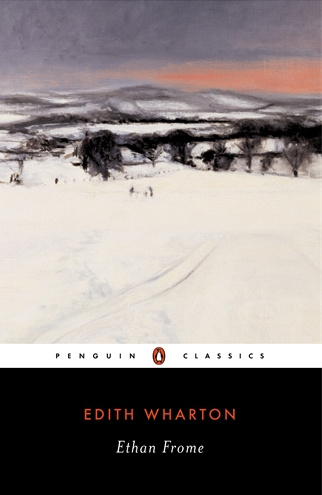
Ethan Frome: Complete Plot Summary
Wharton tells Ethan’s story through an unusual chronology. The novella first presents Ethan as a damaged middle-aged man whose tragedy has already occurred, then reconstructs the younger Ethan’s life through nine chapters, and finally returns to the present to reveal what actually became of everyone after the crash.
That structure means the reader never encounters Ethan’s romance with Mattie innocently. From the beginning, everything is shadowed by knowledge that some catastrophe has already taken place, even though its nature and consequences remain unknown.
The Ruin of Ethan Frome: The Opening Frame
The unnamed narrator has come to Starkfield, Massachusetts, because his engineering work at a nearby power-house has been delayed. During his stay he repeatedly notices Ethan Frome at the local post office. Ethan is striking not because he is socially prominent but because he seems prematurely destroyed: he is tall and once must have been physically powerful, yet he walks with a severe limp, bears the marks of an old injury, and carries himself with an almost frozen reserve.
The narrator asks Harmon Gow, a former stage driver who knows the town’s history, about him. Gow explains that Ethan was injured in a terrible accident more than twenty years earlier. His explanation of Ethan’s wider misfortune is equally memorable: Ethan has endured too many winters in Starkfield. The comment begins as local shorthand but gradually becomes central to the novella. Winter in Starkfield is not merely a season. It restricts movement, isolates households, magnifies poverty, and seems to suspend lives rather than allowing them to develop.
The narrator also speaks to Mrs. Ned Hale, who was Ruth Varnum before her marriage and knew the Frome household in Ethan’s younger days. She clearly knows more about the catastrophe than Harmon Gow does, but she becomes reluctant and emotional when questioned. Her refusal to give a complete account leaves the narrator with fragments rather than a reliable history.
Chance gradually brings the narrator closer to Ethan. When transportation becomes difficult, Ethan begins driving him to Corbury Flats. Their conversations are sparse, but the narrator discovers something unexpected when Ethan shows interest in a popular science book the narrator has been reading. The moment hints at the life Ethan might once have lived. He possesses intellectual curiosity and had once studied science and engineering, but those interests now survive only as remnants in a man apparently cut off from the larger world.
During a severe snowstorm, Ethan brings the narrator to his own house rather than leaving him stranded. Entering the Frome kitchen, the narrator hears a woman’s complaining voice. What he sees and hears inside provides what he calls the clue from which his imagination reconstructs the tragedy that follows.
Ethan and Mattie Draw Closer: Chapters 1–3
The reconstructed story begins roughly twenty-four years earlier. Ethan is twenty-eight and married to Zenobia, or Zeena, Frome. Their marriage has become emotionally barren, and Ethan’s life on the failing family farm offers little prospect of change. Into this household has come Zeena’s cousin Mattie Silver, a young woman who helps with domestic work because Zeena regards herself as too ill to manage alone.
Ethan waits outside a church social where Mattie is dancing. Instead of entering, he watches through a window, isolated from the warmth, light, music, and sociability inside. Mattie appears especially vivid to him. Her liveliness contrasts with the silence of his house, and even small details of her dress and movement seem intensified against the winter landscape.
Ethan is jealous of Denis Eady, a prosperous young man who pays attention to Mattie. His jealousy already shows that his attachment has moved beyond ordinary affection, but his attraction to Mattie has developed gradually through shared walks and conversations rather than through a sudden declaration. What matters most to Ethan is that Mattie seems to respond to things he notices in the natural world. After years of emotional isolation, he experiences the possibility of being understood.
Mattie refuses Denis Eady’s offer of a ride after the social and walks home with Ethan. Their conversation is cautious but intimate. On the way they talk about sledding down the dangerous hill near Corbury, where a large elm stands close to the bend. The exchange seems casual, but Wharton is placing one of the central elements of the ending into the story long before it becomes deadly.
Ethan also tries to discover whether Mattie is interested in Denis or wants to leave the Frome household. Her answers reassure him. Yet the return home immediately reasserts the reality surrounding them. The door, usually left open for their arrival, is locked, and Zeena herself appears to let them in. She says she has been unable to sleep because of her health.
Zeena has already noticed more than Ethan wants to admit. She casually suggests that Mattie may eventually marry Denis and need to be replaced. More pointedly, she remarks that Ethan has started shaving every morning since Mattie came to live with them. Ethan’s private emotional awakening is not as invisible as he imagines.
The next day the narrative fills in Mattie’s precarious background. Her father, Orin Silver, had left his family in disgrace after financial misconduct, and Mattie’s mother later died. Mattie had little preparation for independent employment. Attempts at clerical and commercial work exhausted her health, and relatives eventually arranged for her to live with Zeena in return for helping in the house.
Her position is therefore not simply that of a carefree visitor. She depends on the Fromes for security. Ethan recognizes this vulnerability and feels protective of her, but his sympathy is inseparable from his attraction.
A sudden opportunity appears when Zeena announces that she is going to Bettsbridge to consult a new doctor. She expects Ethan to drive her, but he invents a reason to remain behind: he claims that Andrew Hale is going to pay him money owed for lumber and that he must collect it. In reality Ethan wants an evening alone with Mattie.
The lie initially seems small, but it will matter later. By inventing an expected payment, Ethan unknowingly creates a financial assumption Zeena will use against him when she announces plans that the household cannot afford.
A Night Without Zeena: Chapters 4–5
Before Ethan and Mattie spend their evening alone, Wharton expands the history of Ethan’s confinement. He had once hoped for a life beyond Starkfield. He studied science and engineering and imagined living in a place where he could attend lectures, read, exchange ideas, and participate in a wider intellectual world.
His father’s illness ended those prospects. Ethan returned home to help run the farm, and after his father died he remained to care for his mother. Her own illness gradually turned the house into a place of almost unbearable silence. She spoke less and less, and Ethan, isolated with her, became desperate for human conversation.
Zeena Pierce entered the household as his mother’s caregiver. At first her presence was a relief. She was competent, talkative, and capable of bringing order to a situation Ethan could not manage alone. After his mother died, however, Ethan faced the prospect of another winter of solitude and impulsively asked Zeena to marry him.
The decision was partly emotional and partly practical. Ethan initially imagined that the marriage would allow them to leave Starkfield. Instead, the farm proved difficult to sell, and Zeena was not suited to the larger world he had once imagined. The relationship deteriorated. Zeena increasingly defined herself through illness and medical complaints, while Ethan retreated into work, silence, resentment, and unrealized fantasies of escape.
His financial condition is as restrictive as his marriage. Ethan visits Andrew Hale and asks whether Hale can pay fifty dollars early on a lumber account. Hale cannot. In fact, he needs more time before paying Ethan at all. The scene establishes that Ethan is not merely emotionally hesitant about abandoning his life; he lacks the money with which to construct another one.
On his way home Ethan sees Ned Hale and Ruth Varnum kissing. Their open engagement and socially legitimate affection sharpen his resentment. They can behave publicly in ways he and Mattie cannot acknowledge privately.
The evening with Mattie initially seems to offer a substitute version of domestic life. Mattie has prepared supper and arranged the table carefully. She has even taken down Zeena’s prized red glass pickle dish, an object Zeena rarely allows to be used.
The dinner is warmer and more intimate than Ethan’s ordinary evenings. Yet the household repeatedly reminds them that Zeena has not vanished simply because she is absent. The cat jumps onto the table and breaks the pickle dish. Ethan collects the fragments and puts them back on the shelf, hoping he can repair the dish before Zeena notices.
After supper Ethan and Mattie sit near the fire. Mattie briefly occupies Zeena’s rocking chair, allowing Ethan to imagine her taking Zeena’s place in the household. They speak about Zeena, Denis Eady, and what might happen if Mattie had to leave. Their feelings come close to explicit confession but remain restrained.
Ethan does not kiss Mattie directly. Instead, he kisses a piece of sewing she is holding. Even in the most favourable moment the two achieve only an indirect form of intimacy, and the scene ends without a plan or decisive declaration.
The cat eventually jumps away, leaving Zeena’s empty rocking chair moving as though someone still occupied it. The image punctures Ethan’s fantasy. Zeena will return, and nothing has actually changed.
Zeena Returns and Mattie Is Sent Away: Chapters 6–8
Ethan tries to repair the pickle dish before Zeena comes home. He searches for glue in Starkfield, but work and circumstance interfere, and he does not complete the repair in time. Zeena returns earlier than Ethan hoped, closing the brief interval in which he and Mattie had been able to imagine a different domestic arrangement.
Zeena announces that the new doctor has found serious complications in her condition. The novella never gives readers enough independent medical evidence to decide precisely how ill she is, and Ethan himself is sceptical of her complaints. What matters immediately is the practical consequence: Zeena says she needs a stronger hired girl because Mattie is not capable of doing enough household work.
Ethan objects that they cannot afford another servant. Zeena reminds him of the money he supposedly expected from Andrew Hale. Ethan’s earlier lie now traps him. Because he wanted one private night with Mattie, he has created the appearance of financial resources that do not exist.
Zeena then states the real implication of hiring another girl: Mattie must leave.
Ethan tells Mattie what has happened. The shock pushes them further than their previous restraint had allowed. He kisses her, but the scene does not become a romantic release. Mattie’s material situation immediately overwhelms the emotional moment. She has nowhere secure to go, few useful employment skills, very little money, and a history of becoming ill when trying to support herself through poorly paid work.
The danger facing her is not simply separation from Ethan. Losing the Frome household means losing one of the few forms of security available to her.
That evening Zeena joins them for supper with an eerie calm. She later goes to the china closet and discovers the broken pickle dish. Ethan tries to blame the cat, but Zeena quickly sees that someone had gathered the fragments and put them back on the shelf.
Mattie confesses that she used the dish because she wanted the table to look attractive while Zeena was away. The confession confirms what the object has already come to represent: Mattie has temporarily occupied a domestic role Zeena regards as her own. Zeena responds with anger and carries the broken pieces away with a grief and possessiveness disproportionate to their monetary value.
The next chapter turns Ethan’s fantasy of escape into a practical calculation. He retreats to the small study he once used when he still imagined an intellectual future and begins considering whether he could abandon Zeena and flee west with Mattie. He starts writing a farewell note in which he tries to divide responsibility and property as though departure were merely a difficult but manageable decision.
The arithmetic destroys the fantasy. The farm and mill are encumbered. Ethan does not have enough cash to take Mattie west and establish another household. Zeena herself could not easily support herself if he disappeared. Even if he is willing to violate his marriage vows, the economic structure of their lives does not disappear with the decision.
The following morning he discovers that Zeena has already arranged for Mattie to leave and for the new girl to arrive. Desperation pushes Ethan toward a more dishonest possibility. He considers going to Andrew Hale and inventing a story that Zeena’s health has deteriorated so badly that he needs an advance on the lumber payment.
The plan could potentially give him enough money to escape with Mattie, but an encounter with Mrs. Hale changes him. She treats Ethan with sympathy and speaks warmly of the sacrifices he has made caring for his family. Her kindness makes the contemplated deception unbearable. Ethan cannot take money from people who trust him by using a false story about illness.
This moment is central to the novella’s treatment of agency. Ethan genuinely lacks money, opportunity, and social mobility, but Wharton also gives him a route that requires moral compromise and shows him refusing it. His integrity is admirable, yet it also contributes to his imprisonment. The book will not allow him to be understood either as entirely powerless or as simply too cowardly to act.
The Last Ride and the Smash-Up: Chapter 9
Mattie prepares to leave the Frome household. Zeena would prefer Ethan to remain at the farm while someone else takes Mattie to the station, but Ethan insists on driving her himself. The journey becomes their last attempt to create private time together.
Instead of taking the most direct route, Ethan prolongs the trip. He brings Mattie to places associated with their earlier companionship, including Shadow Pond, where memories of the previous summer intensify the sense of everything they are losing. Their relationship, previously expressed through hints and gestures, becomes explicit. They acknowledge that their feelings began long before they dared to name them.
Yet confession does not alter the facts. Ethan still cannot support Mattie, and Mattie still faces an uncertain future. Her earlier work experience suggests that the world outside the Frome household offers little security.
Near the church they decide to make the sled run they had discussed earlier. Their first descent is exhilarating. Ethan controls the sled successfully, and the elm at the dangerous turn remains only a threat they avoid.
Afterward Mattie kisses him and proposes something radically different. Rather than continue to the station and submit to permanent separation, they could make another run and deliberately steer into the elm. Death, in Mattie’s reasoning, would allow them to remain together in a way life will not.
Ethan initially recoils. He understands what she is proposing and hesitates before agreeing. Once he accepts, however, the second descent becomes an intentional suicide attempt rather than an accident.
Ethan positions himself so that he can feel Mattie’s arms around him. The sled gathers speed. As the elm approaches, an image of Zeena flashes into his mind, momentarily disrupting his concentration. He then deliberately corrects the sled’s course toward the tree rather than away from it.
The impact does not kill them.
When Ethan regains consciousness, the world around him is confused by pain and snow. He hears a small, agonized sound and initially imagines that some animal has been injured nearby. Gradually he understands that the sound is coming from Mattie.
The lovers have attempted to escape life together, but the immediate consequence is not death. Wharton ends the reconstructed past before explaining what survival will mean.
Twenty-Four Years Later: The Closing Frame
The novella returns to the narrator inside Ethan’s present-day house. The kitchen contains two women, and the narrator initially struggles to understand the relationship among them. One is active and capable of preparing food, while the other sits disabled in a chair and speaks in the complaining voice he heard when he entered.
The active woman is Zeena. The disabled woman is Mattie.
The revelation overturns the identities constructed throughout the central narrative. Mattie, whom Ethan associated with vitality, warmth, movement, and escape, survived the crash with a severe spinal injury. Over the following years chronic pain and dependence changed her. According to Mrs. Hale, Mattie became irritable and difficult, acquiring traits that resemble the qualities Ethan had long resented in Zeena.
Ethan also survived permanently disabled. The physical ruin the narrator observed at the beginning of the novella is the result of the failed suicide attempt rather than an ordinary accident.
Zeena undergoes the most startling reversal. Before the crash she presented herself as too ill to run the household without assistance. After Ethan and Mattie were injured, she somehow became the person capable of caring for both of them. The supposedly helpless patient became the household’s functional caregiver.
For more than twenty years, therefore, Ethan receives exactly the opposite of the escape he imagined. He remains in the same house with both his wife and Mattie, bound to them through disability, poverty, dependence, guilt, memory, and daily necessity.
Mrs. Hale provides the novella’s bleak final judgment. Looking at the household and thinking of the Frome graves nearby, she suggests that the difference between the dead Fromes and the living ones is essentially that the people in the graveyard are quiet. The attempted solution to Ethan and Mattie’s confinement has not released them from it. It has made the confinement nearly absolute.
Starkfield, Winter, and the Economy of Entrapment
Starkfield is not merely the place where Ethan Frome happens. Wharton constructs the town, climate, transport system, farm economy, and Frome household so that the physical environment constantly defines what kinds of choices are realistically available. The setting does not remove human agency, but it makes freedom expensive in a world where the principal characters have almost no money to spend on it.
Wharton’s connection to the region was substantial. The history of the novella preserved by The Mount, Edith Wharton’s home, traces the story back to her years in the Berkshires and to an earlier French-language exercise titled Hiver, meaning “winter.” She later emphasized that she wanted to represent a New England harsher than the picturesque rural world she believed readers often encountered in regional fiction.
The name Starkfield itself suggests barrenness, but Wharton does not rely on naming alone. Snow makes movement difficult, roads become dangerous, travel requires horses and time, and communities become physically separated during winter. The narrator begins to understand Ethan only after experiencing something of this isolation himself. What initially looks like individual bleakness becomes intelligible as part of a broader environment.
The Frome farm expresses the same decline architecturally. Ethan lives in a house that once belonged to a more prosperous agricultural system. Its connecting “L,” formerly joining the main house to other farm buildings, has been removed. What remains is diminished, exposed, and less integrated than what preceded it, making the house an external version of Ethan’s own life.
Economic weakness matters just as much as weather. Ethan owns property, but ownership does not mean liquidity or independence. The farm and sawmill barely sustain the household, debts and mortgages limit his choices, and even collecting fifty dollars from Andrew Hale is difficult because Hale has financial pressures of his own. The local economy is not populated by simple villains withholding Ethan’s freedom; almost everyone operates within constraint.
That is why the common question “Why doesn’t Ethan simply leave?” misses much of the novella’s structure. Leaving Zeena would not merely require emotional courage. Ethan would need transportation, cash, somewhere to live, a way to support Mattie, and a way to deal with the property and debts he leaves behind. His imagined western escape collapses when he calculates its cost.
At the same time, Starkfield cannot serve as an excuse for everything Ethan does. Ned Hale and Ruth Varnum form a small but important contrast because they manage to create a socially recognized future within the same town. Ethan’s difficulties are much greater, but Wharton repeatedly preserves some distinction between being constrained and having no agency at all.
The tragedy works precisely because both levels are true. Ethan lives in circumstances that make change extraordinarily difficult, and he is also a man whose habits of delay, silence, fantasy, obligation, and hesitation make difficult choices even harder. Starkfield limits the field of possibility; Ethan’s character helps determine what he does inside that field.
Ethan, Zeena, Mattie, and the Triangle of Dependence
The emotional triangle at the centre of Ethan Frome invites oversimplification. Ethan can easily look like the sensitive prisoner, Zeena like the oppressive wife, and Mattie like the warm young woman who represents freedom. Wharton initially encourages those contrasts because much of the story is filtered through Ethan’s consciousness, but the complete novella destabilizes them.
Each member of the triangle is both dependent and capable of affecting the others. Their relationships change repeatedly between caregiver and patient, employer and dependent, spouse and burden, lover and imagined rescuer, until the final arrangement makes it impossible to preserve the neat moral positions Ethan once assigned them.
Ethan Frome: Desire, Duty, and Passivity
Ethan is tragic partly because he possesses qualities that seem suited to another life. He is intelligent, physically capable in youth, emotionally responsive to nature, and interested in science and engineering. The opening frame’s moment over the narrator’s science book reveals that his curiosity has survived decades after the possibility of using it productively has disappeared.
His thwarted education therefore matters. Ethan did not begin as a man satisfied by a narrow agricultural life. His father’s illness pulled him back to the farm, and his mother’s decline made him responsible for a household increasingly cut off from ordinary conversation. By the time Zeena entered his life, loneliness had already trained him to associate companionship with rescue.
That helps explain his marriage. Ethan does not marry Zeena because Wharton wants readers to believe he once experienced a great passion for her. He marries after his mother’s death because the prospect of returning to silence terrifies him. What initially looks like a solution to loneliness becomes another source of loneliness when the marriage fails to produce the larger life he imagined.
Mattie repeats the pattern in more romantic form. Ethan does love her, but he also loads her with everything missing from his existence: warmth, beauty, conversation, youth, emotional recognition, movement, and the possibility of beginning again. She becomes a person and an imagined alternative life at the same time.
This is why his passivity cannot be treated as simple cowardice. Ethan works hard, fulfils obligations, cares for family members, and refuses to obtain escape money by deceiving the Hales. His problem is not that he never acts. It is that he is much better at enduring necessary action than initiating transformative action.
Even his moral qualities become double-edged. His honesty prevents him from exploiting Andrew and Mrs. Hale, which is ethically admirable. Yet his unwillingness to injure others also leaves him searching for a form of escape in which ordinary responsibilities somehow cease to exist.
The suicide attempt is the catastrophic endpoint of this pattern. Ethan finally makes a decisive choice only when he and Mattie imagine a decision that will eliminate every practical consequence because neither of them will survive it. The act looks like a rejection of passivity, but it is also the ultimate attempt to escape the difficult work of choosing among obligations while remaining alive.
Zeena Frome: Illness, Authority, and the Problem of Perspective
Zeena is introduced to Ethan’s life as a competent caregiver. She knows how to manage illness, speaks freely in a house that has become nearly silent, and provides precisely the practical energy Ethan lacks during his mother’s decline. The transformation from that capable young woman into the chronically complaining wife Ethan resents is one of the novella’s important unexplained histories.
Ethan believes Zeena exaggerates her illnesses and is deeply frustrated by her succession of medical complaints. Wharton often presents her preoccupation with doctors and symptoms satirically, but the text does not provide enough independent evidence to conclude that she is simply pretending to be sick. The later reversal complicates the question further rather than resolving it.
Within the household, Zeena possesses forms of authority Ethan does not. She controls domestic objects, decides whether Mattie is adequate help, arranges for a replacement girl, and determines when Mattie must leave. Her discovery of the pickle dish turns that authority into open hostility because Mattie has used something Zeena regards as precious and exclusively hers.
Yet Zeena is not economically free either. She depends on the same failing household Ethan does. If Ethan abandons her, she does not possess an obvious independent income or an easy alternative life. The marriage imprisons both spouses, even if Ethan’s consciousness dominates the reader’s perception of that imprisonment.
Her final transformation is therefore crucial. After the crash, the woman whose illness had supposedly made Mattie necessary becomes the person caring for both Mattie and Ethan. It would be too simple to treat this as proof that Zeena was never sick. What the ending reveals more securely is that identities within the household are unstable: patient can become caregiver, vitality can become disability, and resentment can coexist with sustained responsibility.
Zeena is also the character most vulnerable to distortion by the narrative method. Readers spend most of the central story inside a reconstruction strongly aligned with Ethan’s emotional perspective. The novella gives little direct access to Zeena’s inner life, which means her motives should be interpreted with more caution than Ethan’s judgments often encourage.
Mattie Silver: Warmth, Precarity, and Transformation
Mattie initially appears to be everything Starkfield is not. She is associated with colour, social energy, dancing, laughter, emotional responsiveness, and movement. Ethan experiences her presence as evidence that another version of life might still be available to him.
Her brightness, however, should not obscure her insecurity. Mattie comes to the Fromes because her family has collapsed economically. She lacks the education and training needed for stable professional work, and previous attempts at employment damaged her health. Living with Zeena is not merely an unpleasant temporary arrangement; it is one of the few available forms of protection from a labour market in which Mattie has already struggled.
That precarity changes the meaning of Zeena’s decision to dismiss her. Ethan experiences the dismissal primarily as the loss of the woman he loves, while Mattie faces a more immediate problem: she may not be able to support herself. Their emotional crisis is therefore rooted in unequal but overlapping forms of economic fear.
Mattie also participates actively in the catastrophe. The idea of deliberately steering into the elm comes from her. This matters because it prevents her from functioning only as Ethan’s passive fantasy object. Faced with separation and an uncertain future, she makes a desperate proposal of her own and persuades Ethan to accept it.
The ending then destroys the symbolic role Ethan had assigned her. After the crash, Mattie is no longer the effortless embodiment of warmth and possibility. She becomes physically dependent, lives with chronic suffering, and according to Mrs. Hale becomes increasingly irritable.
That transformation should not be read as though disability itself morally corrupts her. The novella gives readers a brief second-hand description of someone who has survived years of pain, economic dependence, thwarted hopes, and confinement in the household where her attempted death occurred. Her change is tragic because Ethan had mistaken a real young woman for a permanent embodiment of escape, and life proves far more unstable than that fantasy.
The Unnamed Narrator: Sympathy, Projection, and Uncertainty
The unnamed narrator appears to solve a technical problem: he allows Wharton to introduce Ethan as a ruined man, create a mystery around the “smash-up,” and then move backward into the tragedy. Yet he also creates an interpretive problem because he does not possess direct knowledge of most events he narrates.
He assembles information from Harmon Gow, Mrs. Hale, Ethan himself, physical observation, and his own imagination. The inner narrative is therefore presented as a “vision,” not as a transcript discovered in an archive. Its psychological detail greatly exceeds what any identified witness could have supplied.
That gap has encouraged critics to ask how much the narrator’s sympathy influences the story he constructs. In their analysis of framing, heroism, and victimhood in Ethan Frome, Johanna Wagner and Marysa Demoor emphasize how the narrator’s identification with Ethan can shape the positions assigned to Ethan and Zeena. The question is not whether every event is false, but whether the arrangement of sympathy makes Ethan appear more purely victimized than a different narrator might make him.
The narrator’s engineering background reinforces that identification. He recognizes the intellectual life Ethan lost and responds to signs of the younger man Ethan might have become. His reconstruction is therefore compassionate, but compassion is not the same thing as neutrality.
Starkfield’s Supporting Characters: Community as Witness and Constraint
The secondary characters rarely receive independent development, yet they perform important structural roles. Harmon Gow preserves the town’s rough public memory of Ethan; Mrs. Hale provides the most emotionally intimate surviving testimony; Andrew Hale exposes the limits of Ethan’s finances; Jotham Powell embodies the practical routines of the farm; and Denis Eady becomes the target of Ethan’s jealousy.
Ned Hale and Ruth Varnum are especially important as a contrast. Their socially approved courtship demonstrates that affection itself is not impossible in Starkfield. What Ethan cannot obtain is not simply love but a legitimate way to reorganize a life already structured by marriage, debt, property, duty, and dependence.
Love, Duty, Poverty, Illness, and Entrapment
Entrapment is the novella’s most obvious theme, but Wharton makes it interesting by refusing to identify one jailer. Ethan is trapped by geography, money, marriage, responsibility, habit, and his own way of making decisions. Zeena is trapped by the same household and uncertain health. Mattie is trapped by economic vulnerability. Their suffering overlaps even when their desires conflict.
Love therefore does not appear as an uncomplicated force of liberation. Ethan’s feelings for Mattie are genuine, but he also treats love as a solution to problems much larger than the relationship itself. He imagines that possessing Mattie would somehow restore his lost education, youth, mobility, companionship, and sense of possibility.
The night alone with Mattie demonstrates the weakness in that fantasy. They temporarily reproduce a domestic arrangement that resembles marriage, complete with supper, fire, household objects, and Mattie sitting in Zeena’s chair. Instead of escaping the structure Ethan resents, his fantasy largely replaces one woman with another inside the same house.
Duty is similarly ambiguous. Ethan’s willingness to care for his parents and remain responsible for Zeena reveals loyalty and endurance. Those qualities prevent him from becoming a simple selfish deserter. Yet duty also becomes a language through which he postpones action until almost every practical alternative has vanished.
Poverty makes those moral conflicts concrete. Wharton does not treat money as a crude external obstacle added to an otherwise purely psychological story. Fifty dollars, a lumber payment, a mortgage, the cost of a hired girl, transportation expenses, and the difficulty of maintaining two households directly determine what characters can imagine doing.
The Hale episode shows how economics and ethics become inseparable. Ethan might obtain money by lying, but the lie requires exploiting the sympathy of people who trust him. His refusal leaves him materially trapped, yet accepting the money would create another form of moral damage.
Illness introduces a comparable ambiguity. Before the crash, Zeena’s identity is organized around sickness and care. Mattie appears healthier and more alive, even though she has her own history of physical vulnerability. After the crash those positions reverse: Mattie becomes the dependent invalid, while Zeena becomes the caregiver.
Wharton thereby prevents illness from belonging permanently to one character or moral category. Physical weakness can generate resentment, need, manipulation, compassion, endurance, and responsibility at different moments. The household reorganizes itself around whoever is capable of caring for whom.
Silence also traps the characters long before the sled does. Ethan and Zeena do not communicate honestly about their marriage. Ethan and Mattie spend much of their relationship approaching emotional confession without reaching it. By the time they speak openly, practical possibilities are already disappearing.
The repeated failure of communication is linked to the difference between fantasy and reality. Ethan thinks vividly about escape but rarely tests those fantasies against practical conditions until crisis forces him to do so. His imagined western future with Mattie survives only until he begins calculating money.
The novella’s bleakest idea may be that death itself becomes another fantasy of effortless escape. Ethan and Mattie imagine that a single irreversible act can solve the problems that living choices cannot. Their failure converts the fantasy into decades of dependence, proving that an attempt to evade consequence can itself produce the largest consequence of all.
Symbols and Motifs: Winter, the House, the Pickle Dish, and the Elm
Wharton’s symbolism is unusually integrated with ordinary physical life. The important objects in Ethan Frome are not decorative additions placed beside the plot. They participate in events: dishes break, chairs move, roads freeze, sleds accelerate, houses deteriorate, and trees become obstacles.
Winter is the largest symbolic system in the novella because it is simultaneously literal environment and psychological atmosphere. Snow can be beautiful, especially when Ethan experiences the landscape with Mattie, but it also suppresses movement and isolates households. The same environment that gives their walks a private intimacy helps trap everyone in Starkfield.
The Frome house extends that idea into domestic architecture. Once part of a more complete farm structure, it has lost its connecting “L.” The missing section suggests economic contraction and physical severance. Ethan inhabits not merely an old ancestral house but a reduced version of one.
The family graveyard deepens the house’s relationship to time. Ethan sees generations of Fromes buried near the property, and the graves suggest a frightening continuity in which family members remain tied to the same piece of land even after death. His fear is not simply that he will die in Starkfield but that he will repeat a pattern already waiting for him.
Colour repeatedly interrupts the white and grey landscape. Mattie is frequently associated with red, warmth, lamplight, fire, and living plants. Those details help explain why Ethan experiences her so intensely: she seems to introduce vitality into an environment dominated by coldness and repetition.
The red pickle dish concentrates that contrast into a single domestic object. It belongs to Zeena, is treated as precious, and is normally kept out of use. Mattie takes it down while preparing the private supper with Ethan, effectively borrowing an object from Zeena’s marriage to decorate a fantasy household from which Zeena has been temporarily removed.
When the cat breaks the dish, the accident becomes a physical version of what Ethan and Mattie are doing emotionally. They have entered territory that is not theirs, something fragile has been damaged, and Ethan tries to restore appearances without actually repairing the underlying break. Zeena’s discovery makes concealment impossible.
The rocking chair and cat serve similar purposes more quietly. Mattie sits in Zeena’s chair during the evening alone with Ethan, momentarily occupying the wife’s place. When the cat moves and the empty chair rocks, Zeena’s absent presence seems to return to the room.
Shadow Pond represents a different emotional time. Ethan and Mattie associate it with summer memories, intimacy, and a period before their relationship became an immediate crisis. Their final visit there is painful precisely because memory cannot restore the conditions it remembers.
The sled begins as a source of youthful excitement. Ethan and Mattie discuss it early in the novella, and the dangerous elm is established long before the climax. That careful foreshadowing allows the final crash to grow from an existing part of their shared experience rather than arriving as an arbitrary mechanism.
The elm itself transforms play into deliberate destruction. On the first descent, Ethan’s skill allows them to avoid it. On the second, avoidance is exactly what they reject. The difference between the two runs is therefore not fate but intention.
Yet even that apparently decisive symbol refuses to deliver the meaning Ethan and Mattie assign to it. They imagine the tree as the boundary between confinement and permanent escape. Instead, it becomes the instrument that binds them physically to the household they wanted to leave.
Frame Narrative, Irony, and Wharton’s Compressed Style
The unusual narrative architecture of Ethan Frome is central to its effect. Readers first meet the consequence, then receive an imagined reconstruction of the cause, and finally discover that even the catastrophe they expected was not the final consequence. The closing frame changes the significance of nearly everything in the central narrative.
Wharton later discussed the design in her 1922 introduction to Ethan Frome. She described the challenge of creating a tragedy whose full outcome becomes visible only a generation after the decisive event and defended the use of an outsider who assembles the story from partial perspectives. That explanation makes clear that the frame was not simply an ornamental opening attached to an otherwise conventional flashback.
The outer narrator creates distance before the reader receives intimacy. Ethan initially appears almost mythic: a ruined, silent figure embedded in Starkfield’s winter landscape. The reconstructed past then makes him psychologically understandable, allowing readers to experience his attraction to Mattie, resentment of Zeena, lost ambitions, and practical dilemmas from very close range.
The return to the frame breaks that intimacy. Suddenly Ethan is once again seen from outside, and the women whom his younger consciousness had arranged into opposing categories appear transformed. The technique forces readers to compare the romantic logic of the central story with the material reality of what followed it.
That design also makes narrator reliability an unavoidable issue. The narrator can plausibly know broad events, but he cannot directly know every private conversation, fleeting thought, jealousy, fantasy, and internal hesitation described in the nine central chapters. Wharton openly identifies the story as a reconstructed vision, leaving a deliberate gap between historical fact inside the fictional world and the form in which readers receive it.
One possible response is to accept that convention primarily as a storytelling device. Another is to ask what the narrator’s reconstruction reveals about him. Wagner and Demoor’s critical account of the novella’s framing draws attention to the way the narrator’s identification with Ethan can reinforce Ethan’s status as victim and shape the negative representation of Zeena.
The narrator’s admiration is understandable. Like Ethan’s younger self, he has technical interests and access to a wider intellectual world. When he discovers Ethan’s knowledge of science, he can imagine more vividly than many Starkfield residents what Ethan lost.
That sympathy creates much of the novella’s emotional power, but it also means readers should distinguish Ethan’s experience of Zeena from a complete account of Zeena. The novel gives Ethan extraordinary psychological depth while Zeena often appears externally, through gestures, complaints, and Ethan’s interpretations. The ending partly corrects that imbalance by revealing behaviour that the younger Ethan’s view could not predict.
Wharton’s prose is compressed without being skeletal. Small details perform several functions at once. Ethan’s shaving reveals vanity, hope, and Zeena’s vigilance; the Hale debt creates both economic information and a future trap; the pickle dish is an object, a plot device, and a symbol of threatened domestic ownership.
Foreshadowing is similarly dense. The elm appears long before the suicide attempt. Mattie’s vulnerability is established before dismissal becomes a threat. Ethan’s intellectual ambitions appear before the reader fully understands how permanently his life has narrowed.
Irony governs the entire construction. Ethan once marries Zeena partly to escape loneliness and becomes lonelier within marriage. Mattie appears to offer escape from the household but eventually becomes permanently confined inside it. Zeena, supposedly too sick to care for herself, becomes the person who cares for two disabled people.
The deepest irony concerns decisive action. Ethan spends much of the novella unable to act effectively, but when he finally makes an irrevocable choice, it is the wrong kind of action. His determination to die does not end his responsibilities; it multiplies them.
Regional speech and local testimony also help keep the story grounded despite its symbolic patterning. Harmon Gow and Mrs. Hale do not speak like abstract commentators on tragedy. Their partial knowledge reminds readers that Ethan’s disaster exists inside a small community where people observe one another, know fragments, and continue living around secrets they do not fully discuss.
The result is a novella that feels larger than its length because form and meaning are tightly joined. The frame does not merely withhold the ending. It asks readers to experience the difference between imagined escape, remembered tragedy, and prolonged aftermath.
Ethan Frome Ending Explained
The ending of Ethan Frome is often remembered for the sled crash, but the crash is not actually the ending. It is the failed solution that creates the true ending.
Ethan and Mattie decide to die because every ordinary option appears to separate them. Ethan cannot finance a new life, does not believe he can abandon Zeena without consequence, refuses to defraud the Hales, and sees no way to keep Mattie in the household once Zeena has dismissed her. Mattie faces insecure employment and the loss of the person and place to which she has become attached.
Their suicide plan transforms the elm from a danger to be avoided into an objective. On the second sled run, Ethan knows what he is doing. The brief image of Zeena that crosses his mind does not make the collision accidental; after wavering, he deliberately returns the sled to its fatal course.
The central irony is that their chosen solution depends completely on successful death. Neither has developed a plan for what happens if they survive because survival would preserve every problem they are trying to escape while adding new ones.
That is exactly what occurs. Ethan is permanently injured, while Mattie suffers severe spinal damage. They cannot independently construct the new life they imagined, and their physical condition makes them more dependent on the Frome household than before.
Zeena’s transformation intensifies the reversal. Throughout the central narrative Ethan experiences her illness as one of the forces restricting him. After the crash she becomes the person capable of sustaining the household and caring for both injured survivors.
Mattie’s transformation is equally important but should be read carefully. The cheerful young woman Ethan associated with vitality becomes chronically dependent and, according to Mrs. Hale, increasingly querulous. Wharton is not establishing a simple equation between disability and unpleasantness. Mattie has endured decades of pain, lost mobility, poverty, dependence, and the knowledge that an attempted death produced the life she now inhabits.
Ethan’s romantic categories therefore collapse. He had imagined Zeena as the sick, complaining obstacle and Mattie as the healthy, loving alternative. In the final household, Mattie has assumed many of the external characteristics he associated with Zeena, while Zeena has assumed the practical caregiving strength that once made Mattie necessary.
The outcome also complicates moral responsibility. Zeena did not force Ethan and Mattie to attempt suicide. Ethan and Mattie made that choice themselves. Yet they made it inside circumstances genuinely shaped by poverty, dependency, marriage, limited opportunities, and fear.
Wharton’s tragedy depends on maintaining both truths. If Ethan were completely free, his predicament would look merely self-created. If he had no agency at all, the suicide attempt would lose its ethical significance.
Mrs. Hale’s final comparison with the Frome graveyard completes the pattern. The dead Fromes remain near the house but are silent. Ethan, Zeena, and Mattie are still alive inside the same geography, yet their survival resembles a prolonged state of burial in which little changes and old suffering is continually renewed.
That is why the ending is more severe than a successful double suicide would have been. Death would have preserved Ethan and Mattie’s final romantic fantasy that they could escape consequence together. Survival forces them to inhabit the consequences for decades.
The ending also changes the reader’s view of the entire novella. Ethan’s tragedy is no longer simply that he cannot leave Zeena or possess Mattie. It is that he misunderstands escape itself. He repeatedly imagines freedom as the removal of an obstacle—his mother’s silence, Zeena, Starkfield, poverty, separation from Mattie—without developing a viable life beyond that obstacle.
The sled crash is the purest expression of that pattern. It offers a route away from everything but toward nothing except nonexistence. When nonexistence fails, Ethan is left with an intensified version of the life he was trying to avoid.
Critical Review: What Ethan Frome Achieves and Where It Is Limited
Ethan Frome succeeds above all through construction. It is a short novella in which almost every major detail eventually acquires additional force. Wharton does not need an elaborate sequence of external events because the tragedy develops through accumulation: a failed education, an impulsive marriage, a declining farm, a young dependent cousin, an unpaid lumber bill, a lie about fifty dollars, a broken dish, a sympathetic neighbour, and a sled ride mentioned long before it becomes fatal.
That causal density makes the book unusually rewarding to reread. On a first reading, Mattie’s dismissal and the crash can dominate attention. On a second, the tragedy becomes visible much earlier in the network of choices and limitations surrounding Ethan.
The setting is another major achievement. Starkfield risks becoming allegorical because its name and winter imagery are so suggestive, yet the material details keep it convincing. Roads, horses, mortgages, household labour, medical travel, farm income, employment prospects, and weather give the symbolic landscape practical weight.
Wharton is especially good at showing how poverty alters moral experience. Ethan’s inability to leave is not explained through a vague statement that he is poor. Readers watch him attempt to collect money, discover that his debtor cannot pay, calculate the cost of departure, contemplate fraud, and abandon that option when kindness makes the fraud morally intolerable.
The characterization is more uneven but also more complicated than simplified readings imply. Ethan is psychologically convincing because his best and worst qualities are often the same traits viewed from different directions. Loyalty becomes paralysis, imagination becomes fantasy, honesty becomes another barrier to escape, sensitivity becomes self-dramatization, and endurance becomes a way of remaining inside unbearable conditions.
Mattie receives less interior depth, but Wharton gives her enough material history to prevent her from being only an abstract symbol of youth. Her limited earning power and previous illness matter because they explain why dismissal terrifies her. Her proposal at the elm also gives her agency at the crucial moment, even though the story remains much more closely aligned with Ethan.
Zeena is the most difficult character to judge fairly. She is often unpleasant, suspicious, controlling, and capable of cruelty toward Mattie, yet the narrative gives her less interior access than Ethan. Because much of what readers understand about her arrives through Ethan’s consciousness and the outer narrator’s reconstruction, the book invites stronger sympathy for Ethan than Zeena receives.
The final reversal partly corrects this imbalance by forcing readers to confront a Zeena Ethan could not imagine. She becomes caregiver to the two people who betrayed her emotionally and attempted to escape the household together. Wharton does not sentimentalize this arrangement or tell readers exactly what Zeena feels, but her sustained care complicates any interpretation that reduces her to a villain.
The speculative frame narrator is both a strength and a limitation. Structurally, he makes the novella possible in its most distinctive form. By showing Ethan after the catastrophe before showing Ethan before it, Wharton creates a mystery whose answer becomes progressively more disturbing.
The uncertainty also adds interpretive depth. Readers are encouraged to recognize that the central story is an act of reconstruction and that the sympathies built into that reconstruction may matter. Ethan’s psychological story may be deeply persuasive without functioning as an objective account of everyone in the household.
At the same time, the frame can create distance. Readers who want complete psychological access to Zeena or Mattie will not receive it, and explaining that absence through narrator limitation does not entirely eliminate the imbalance. The book remains substantially Ethan-centred even while its ending undermines his original categories.
The symbolic method is generally effective because Wharton makes symbols act physically. The pickle dish would be heavy-handed if it existed only to represent a broken marriage, but its destruction produces a real discovery and confrontation. The sled and elm would be merely emblematic if they did not emerge from earlier conversations and shared pleasure.
Occasionally the patterning can feel almost too exact. Mattie’s later resemblance to the complaining Zeena, Zeena’s transformation into caregiver, and the lovers’ survival together in the same household create an extraordinarily complete reversal. Some readers will experience that precision as the source of the novella’s power; others may find it close to schematic.
The same disagreement applies to the climax. A deliberate double suicide by sled is undeniably melodramatic. Taken out of context, it can sound like a device from a more sensational story than the restrained domestic tragedy that precedes it.
Wharton earns much of the scene by preparing the sled and elm early, grounding the lovers’ desperation in practical realities, and refusing to reward the act with romantic death. The failed suicide is not presented as a beautiful culmination of love. Its actual consequence exposes the inadequacy of the fantasy that produced it.
The treatment of injury nevertheless deserves modern scrutiny. The ending uses bodily damage as part of a larger imagery of imprisonment, decline, and emotional ruin. That can risk making disability function too conveniently as a visible sign of catastrophe.
The novella is stronger when read more precisely. Ethan’s and Mattie’s tragedy is not simply that their bodies are damaged. It is that they survive severe injuries in poverty, without access to meaningful independence, inside a household already defined by resentment and dependence. The social and economic context makes their physical condition part of the tragedy rather than its entire explanation.
Wharton’s prose remains one of the book’s greatest strengths. She can describe landscape beautifully without converting Starkfield into picturesque scenery, and she can make tiny domestic movements feel consequential without excessive explanation. The language is controlled enough that the book’s most dramatic events emerge from a narrative that has otherwise depended on restraint.
That restraint gives the ending exceptional force. A more conventional tragic romance might conclude at the elm, preserving the lovers at the moment of ultimate commitment. Wharton instead insists on the morning after, the year after, and the decades after.
This is the novella’s strongest contribution. It asks what remains when romantic imagination collides with material consequence, then refuses to allow death to provide an elegant answer. Ethan and Mattie try to choose a conclusion; survival turns their conclusion into another beginning.
Its most important limitation is the uneven distribution of perspective. Ethan is granted an elaborate inner life, while Zeena and Mattie are understood more externally. The narrative frame provides a sophisticated reason for that inequality, but it does not make the missing perspectives irrelevant.
Even so, the imbalance does not destroy the book’s central project. In some ways the ending depends on it. Readers are first encouraged to inhabit Ethan’s simplifications and then forced to confront a reality that no longer fits them.
More than a century after its publication, Ethan Frome remains worth reading because its central conflict has not become merely historical. The exact material conditions belong to its New England setting, but the larger questions remain recognizable: how much responsibility people bear for lives shaped by circumstances they did not choose, how poverty restricts supposedly personal decisions, how easily desire turns another person into an imagined solution, and how moral obligations can become inseparable from resentment.
Readers looking for a romantic escape story may find the novella punishing because Wharton distrusts nearly every comforting version of that narrative. Readers interested in compact tragic fiction, psychologically complicated moral choices, symbolic realism, or stories in which economic conditions genuinely shape private life are more likely to find it unusually rich.
The fairest judgment is that Ethan Frome is a small book with a deliberately narrow world but an exceptionally tight tragic design. Its characters are not equally developed, its climax courts melodrama, and its treatment of illness and disability benefits from careful rather than automatic interpretation. Yet its finest elements—the Starkfield setting, the economic logic of Ethan’s predicament, the structural foreshadowing, the frame narrative, the reversal of Zeena and Mattie, and the refusal to let romantic death solve anything—work together with remarkable precision.
Ethan spends much of the novella imagining that freedom lies just beyond the obstacle directly in front of him. Wharton’s final answer is harsher: escape requires more than wanting another life, and destroying the life one has is not the same as creating a viable alternative. The sled crash makes that distinction permanent. Ethan and Mattie try to end their confinement in a single decisive act, but their survival leaves all three central characters living for decades inside the consequences of that decision.
Last Updated on September 28, 2026 by Aseem Gupta