

Arthur Conan Doyle had already established Sherlock Holmes and Dr. John Watson as one of literature’s most recognizable detective partnerships in A Study in Scarlet, the novel that introduced Holmes and Watson, but The Hound of the Baskervilles places that partnership inside a very different kind of story. Instead of keeping Holmes almost entirely within the rational world of clues, witnesses, streets, laboratories, and criminals, Conan Doyle sends Watson onto a landscape of ancestral curses, prehistoric ruins, lethal bogs, unexplained cries, family portraits, escaped murderers, and a gigantic spectral hound. The resulting novel works simultaneously as a detective mystery and as Gothic fiction.
The book was serialized in The Strand Magazine from August 1901 to April 1902, with its first British book edition appearing in 1902. It also marked the enormously successful return of Holmes to print after Conan Doyle had apparently killed him in “The Final Problem,” although the Baskerville case itself takes place earlier in Holmes’s fictional chronology. What made the return so effective was not simply the detective’s popularity. Conan Doyle gave Holmes a mystery in which rational explanation must fight for credibility against evidence deliberately arranged to look supernatural.
That tension is the key to the novel. Stapleton’s criminal achievement is not that he summons a demon but that he understands the power of people who already believe demons might exist. He turns an inherited legend into a practical weapon, combines it with a real animal and carefully staged evidence, and exploits both the geography of Dartmoor and the psychological vulnerability of his victims. Holmes ultimately proves that the hound belongs to the material world, but the rational solution does not erase the Gothic experience that precedes it.
Spoiler warning: This article explains the entire novel, including Stapleton’s identity, Sir Charles’s death, Selden’s fate, the true nature of the hound, and the complete ending.
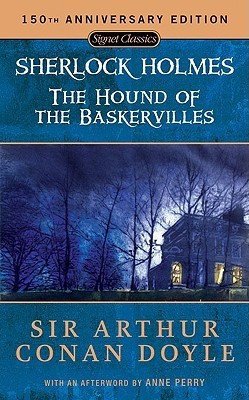
The Hound of the Baskervilles: Complete Plot Summary
The mystery is most effective when followed in the order in which Holmes, Watson, and the reader discover it. Several clues initially point toward innocent people, and information that seems supernatural later proves to have an ordinary physical basis. The summary below therefore preserves the sequence of uncertainty before explaining the complete solution.
The Curse, Sir Charles’s Death, and the New Heir
The novel begins at 221B Baker Street with a small exercise in deduction. Watson examines a walking stick left behind by a visitor and tries to infer the owner’s identity from its inscription and wear. He correctly concludes that the man is a country doctor who walks a great deal, but he mistakes several other details. Holmes reconstructs the stranger as a relatively young medical man who once worked at Charing Cross Hospital and now practices in the countryside. Tooth marks on the stick suggest that he owns a medium-sized dog, and when the visitor arrives, Holmes can literally see the spaniel outside the door.
The visitor is James Mortimer, an eccentric medical practitioner with interests in anthropology and comparative anatomy. He is fascinated by Holmes’s skull almost as much as Holmes is interested in his problem, but his real purpose is serious. Mortimer has come because Sir Charles Baskerville, his friend and patient, recently died under circumstances that have revived a centuries-old legend associated with the Baskerville family.
Mortimer produces a manuscript dated 1742. According to the family account, an ancestor named Hugo Baskerville was a violent, irreligious man who became obsessed with the daughter of a neighboring yeoman. Hugo and several companions abducted the young woman and imprisoned her at Baskerville Hall while they drank below. Terrified by what might happen to her, she escaped through the ivy and fled across the moor toward home.
When Hugo discovered the escape, he flew into a rage and pursued her on horseback, setting his hounds on her trail. His drunken companions eventually followed. They found Hugo’s mare running riderless, his hunting dogs cowering in terror, and the young woman dead from exhaustion and fright. Near her lay Hugo himself, and standing over him was a gigantic black creature shaped like a hound. The beast tore at Hugo’s throat before turning toward the witnesses, who fled in panic. The manuscript concludes with a warning that future Baskervilles should avoid the moor during the hours when evil is believed to be strongest.
Holmes treats the story as folklore. Mortimer, however, follows it with a much more recent account. Sir Charles Baskerville had restored the family’s fortunes after making substantial money in South Africa and had returned to live at Baskerville Hall. He was generous to the surrounding community and intended to improve the estate, but he also suffered from serious heart disease and had become increasingly obsessed with the family curse.
One evening, Sir Charles took his habitual walk down the Yew Alley beside Baskerville Hall and failed to return. Barrymore, his butler, discovered the body. The official inquest found no evidence of violence and concluded that Sir Charles had died from heart failure. His footprints could be followed along the path, but after he passed the moor gate they seemed to change shape, leading one observer to say that he had been walking on his toes.
Mortimer adds facts that were withheld from the inquest. Sir Charles had become so frightened by the legend that he would not cross the moor after dark. A few weeks before his death, Mortimer had seen him stare in horror at something behind the doctor; turning around, Mortimer caught only a glimpse of what he thought might be a large black calf. Other local people had reported seeing a huge, luminous animal on the moor.
Most disturbing of all, Mortimer personally examined the ground after Sir Charles’s death and noticed something Barrymore had missed. Some distance from the body were the clear footprints of an enormous hound.
Holmes immediately begins separating observation from interpretation. He questions Mortimer about the exact layout of the Yew Alley, the moor gate, the condition of the ground, and Sir Charles’s footprints. The gate had been locked, but it was low enough for someone to climb over. Sir Charles had apparently stood at the gate for several minutes, as shown by cigar ash that had fallen more than once in the same area.
Holmes also rejects the claim that Sir Charles had begun walking on tiptoe. The changed footprints, he argues, indicate something simpler: the frightened man began running. He ran desperately along the path until his diseased heart failed. Even more important is the question of why he had waited at the moor gate at all. A man frightened of the moor would not normally stand beside its entrance on a cold, damp night unless he expected someone to meet him there.
The immediate problem is Sir Henry Baskerville, the heir to the estate. He has been living in Canada and is now returning to England. Mortimer worries that sending him to Baskerville Hall may expose the final prominent member of the family to the same danger. Holmes, however, points out the weakness of treating the danger as supernatural: if an infernal force really intends to kill Baskervilles, there is little reason to assume it would be powerless in London.
After Mortimer leaves, Holmes studies a large map of Dartmoor and begins constructing the case geographically. Baskerville Hall, Grimpen, the Stapleton residence, Lafter Hall, isolated farms, and Princetown prison sit within a vast area of moorland. Holmes frames the mystery in practical terms. Before accepting any supernatural hypothesis, they must determine whether a crime has occurred, what form it took, and how it could have been committed.
Sir Henry’s London Warnings and the Broken Threads
Sir Henry Baskerville appears the next morning with Mortimer. He is a compact, energetic man with the self-confidence of someone accustomed to an active life abroad. He is also already the target of unexplained attention.
A warning has arrived at his London hotel. Most of the message consists of words clipped from a newspaper and pasted onto paper, telling him to stay away from the moor if he values his life and sanity. Only the word “moor” has been handwritten. The strange letter is important because no one was supposed to know in advance which hotel Sir Henry would choose.
Holmes identifies the printed words as having been cut from The Times. He reasons that the sender is educated but trying to conceal that fact, since the newspaper choice and the attempt to disguise handwriting point in different social directions. The address appears to have been written with the unreliable pen and nearly empty ink bottle typical of a hotel writing desk, suggesting that the warning may have been prepared somewhere near Charing Cross. The uneven placement of the clippings may indicate that the sender was working hurriedly or under fear of interruption.
Sir Henry then mentions what appears to be a trivial annoyance. One of a newly purchased pair of brown boots has disappeared from his hotel. Holmes does not yet know why anyone would want an unworn boot, but experience has taught him that apparently pointless irregularities often become meaningful later.
Mortimer tells Sir Henry the Baskerville story in full. Sir Henry has known the family legend since childhood, but he has never treated it seriously. He is shaken by the story of his uncle’s death and the warning letter, yet his reaction establishes an essential part of his character. Whether the threat comes from a man or a devil, he refuses to be frightened away from his ancestral home.
Once Sir Henry and Mortimer leave Baker Street, Holmes and Watson quietly follow them. Holmes has suspected that anyone capable of learning Sir Henry’s hotel so quickly may also be watching him. The suspicion proves correct. A man with a black beard observes Sir Henry from a cab and, once he realizes that Holmes has noticed him, orders the driver to escape.
Holmes manages to record the cab number but admits that his eagerness has cost him the chance to follow the watcher more discreetly. He sends the messenger boy Cartwright to search the wastepaper of hotels around Charing Cross for the mutilated copy of The Times. He also begins considering whether Barrymore, who has a full black beard, might somehow have been in London despite supposedly remaining at Baskerville Hall.
The situation grows stranger when Sir Henry’s old black boot disappears and the previously missing new brown boot reappears. If simple theft had been the motive, the exchange makes no sense. The difference between an unworn boot and an old one will only become clear much later.
Holmes also studies the financial stakes. Sir Charles’s fortune is enormous, and the bulk of it passes to Sir Henry. The Barrymores and Mortimer receive smaller legacies. If Sir Henry dies, a distant relative named James Desmond stands further along the line of inheritance, but Holmes’s enquiries give him no reason to suspect the elderly clergyman.
Several promising investigative lines then collapse. Cartwright cannot locate the mutilated newspaper. A telegram sent to test whether Barrymore is physically present at Baskerville Hall appears to confirm his presence, although that conclusion later proves less certain than Holmes hoped. Finally, the driver of the mysterious cab comes voluntarily to Baker Street after learning that Holmes has been asking about him.
The driver can describe his passenger but has no real identity to provide. The bearded stranger had claimed to be a detective and, before leaving the cab, deliberately told the driver his name was “Sherlock Holmes.” The joke is calculated. Their opponent not only recognized the real Holmes but predicted that the cab number would be traced and planted a message for him.
Holmes is impressed. Someone involved in the case can observe, improvise, disguise himself, anticipate Holmes’s methods, and exploit the detective’s own reputation. Holmes admits that his three lines of inquiry have snapped and becomes increasingly uneasy about sending Sir Henry into Devonshire.
Sir Henry nevertheless intends to go. Holmes cannot accompany him immediately because of another case, so Watson accepts responsibility for traveling with the baronet. Holmes instructs him to observe everything, particularly Sir Henry’s relationships with the people around Baskerville Hall, and to report facts without trying too hard to force them into a theory.
Baskerville Hall, Grimpen Mire, and the Stapletons
Watson, Sir Henry, and Mortimer travel west by train. As they approach Dartmoor, cultivated country gives way to harsher terrain, rocky hills, and stretches of open moor. Sir Henry is delighted by his return to Devon and feels an immediate ancestral attachment to the landscape, while Watson senses melancholy and danger.
Before they even reach Baskerville Hall, they encounter another source of fear. Armed guards are watching roads and stations because Selden, a notoriously violent murderer, has escaped from the prison at Princetown. Somewhere on the same moor where a supernatural hound is supposedly wandering, a genuine human killer is also hiding.
Baskerville Hall itself seems designed to intensify the family legend. Ancient towers, dark wood, ancestral portraits, heavy architecture, and long shadowed corridors make the house impressive but oppressive. Sir Henry responds differently from his uncle. Rather than surrendering to the atmosphere, he talks about installing electric lights and bringing the estate into the modern world.
The Barrymores receive the new owner formally. John Barrymore is tall, pale, and distinguished, with the full black beard that immediately recalls the man in the London cab. He and his wife have served the Baskerville family for generations, but they tell Sir Henry that they may eventually leave because Sir Charles’s death has made the Hall emotionally painful.
That night Watson hears a woman sobbing somewhere in the house. The next morning Barrymore denies that the sound could have come from his wife, but Watson later sees Mrs. Barrymore and notices that her eyes are red and swollen. Barrymore has plainly lied, though Watson does not know why.
Watson also checks Holmes’s telegram experiment. The local postmaster confirms that the message was delivered to Baskerville Hall but not directly into Barrymore’s hands. The boy gave it to Mrs. Barrymore, who said her husband was elsewhere in the house. Barrymore therefore remains a possible suspect because Holmes’s supposed proof that he had stayed in Devon is not actually proof.
On his way back, Watson meets Jack Stapleton of Merripit House. Stapleton is a naturalist, physically slight and apparently friendly, with an intense interest in the plants, insects, and unusual environment of the moor. He quickly reveals that he knows Watson’s identity and understands that Sherlock Holmes must therefore be involved in the Baskerville case.
Stapleton offers to show Watson part of Dartmoor. He points out the Great Grimpen Mire, whose bright green patches look inviting but conceal deep, unstable bog. Watson watches a moor pony become trapped and slowly disappear beneath the surface. Stapleton explains that a few safe routes lead into the Mire and that he has learned them because rare plants and butterflies can be found on the islands within it.
The scene establishes more than atmosphere. Stapleton possesses specialized knowledge of a landscape that most people cannot cross without risking death. The Mire gives him access to places that are effectively invisible to ordinary residents.
While they are walking, a long, strange cry sweeps across the moor. Stapleton suggests that bogs can produce unusual sounds and wonders whether it might be a rare bird such as a bittern, but the noise sounds disturbingly like the cry associated with the Baskerville legend. Watson, who wants rational explanations, nevertheless feels the force of the environment around him.
The moor is also covered with prehistoric ruins. Stone circles, hut remains, ancient tracks, and old monuments make modern visitors seem temporary in a place occupied by human beings for thousands of years. The Baskerville legend therefore exists within a broader landscape in which the past appears physically present.
Stapleton suddenly runs after a rare insect, leaving Watson temporarily alone. A striking dark-haired woman approaches from Merripit House and urgently tells Watson to return to London. She believes he is Sir Henry Baskerville and warns him never to set foot on the moor again.
When Stapleton approaches, she immediately changes the subject. Watson learns that she is Beryl Stapleton, introduced as Jack’s sister. After realizing her mistake, Beryl later catches Watson privately and asks him to forget what she said. Pressed for an explanation, she claims only that she believes the family curse may be real and does not want another Baskerville to die.
Her explanation does not satisfy Watson. If she merely fears a supernatural danger, there is no obvious reason why her brother should be prevented from hearing the warning. The first meeting with the Stapletons therefore leaves several questions unresolved: why Beryl is frightened, why Jack watches her so carefully, what he really thinks about the hound, and why both appear unusually interested in Sir Henry.
Watson’s Reports: Barrymore, Selden, and the Light on the Moor
The narrative now shifts into Watson’s letters to Holmes, allowing events to be recorded in the form in which he originally understood them. The effect is important because the reader shares his uncertainties rather than receiving the case retrospectively from someone who already knows the answer.
Watson reports that Sir Henry has become strongly attracted to Beryl. The attraction appears mutual, but Stapleton behaves oddly whenever they grow close. Although he supposedly has every reason to welcome a wealthy and respectable marriage for his sister, he repeatedly interferes and reacts with visible anger when Sir Henry gives her romantic attention.
Watson initially interprets Stapleton’s behavior as possessive brotherly attachment. The explanation is plausible but unsatisfactory because the intensity seems disproportionate. Beryl herself appears to measure her words carefully around Jack, as if she fears his reactions.
Other residents of the district enlarge the pool of possible suspects and distractions. Frankland of Lafter Hall is an elderly man obsessed with litigation, public rights, legal technicalities, and arguments for their own sake. He is comic compared with the darker figures around the Hall, but his powerful telescope eventually becomes useful. Mortimer remains immersed in scientific and antiquarian interests, while the escaped Selden continues to haunt the moor as a separate, very real danger.
Watson and Sir Henry also revisit the Yew Alley. Seeing the narrow path and the moor gate makes the circumstances of Sir Charles’s death more concrete. The old man stood at that gate waiting for someone, saw something that terrified him, and then ran away from the house rather than toward safety. The logic makes little sense unless terror had overwhelmed normal judgment.
The mystery inside Baskerville Hall soon becomes more important. Watson notices Barrymore moving secretly through the house at night and discovers him holding a candle to a window. Far away on the moor, another light answers.
Watson and Sir Henry confront him. The explanation finally clears the Barrymores of the darkest suspicions surrounding their behavior. Selden is Mrs. Barrymore’s younger brother. Despite his crimes, she remembers him as the boy she helped raise and cannot abandon him. The couple have secretly supplied him with food and clothes, using the candle signal to arrange the deliveries.
Mrs. Barrymore’s tears, her husband’s lies, and the mysterious light all have an explanation, but none of them concerns the death of Sir Charles. The subplot demonstrates one of Conan Doyle’s favorite forms of misdirection: suspicious behavior is genuine, yet the reason behind it belongs to a different secret.
Sir Henry and Watson decide to pursue Selden. They see the convict and chase him across the darkness but fail to catch him. During the pursuit, however, they hear something far more frightening than a fugitive human being: the long, terrifying cry of an animal somewhere on the moor.
Watson has heard the sound before, but in the darkness and after everything Mortimer has described, it seems almost impossible not to connect it with the hound. He also looks toward a distant tor and sees the silhouette of a tall man standing motionless against the sky. The figure is neither Selden nor anyone Watson recognizes.
Barrymore later repays Sir Henry’s relatively compassionate handling of the Selden affair with a significant clue. His wife had been cleaning Sir Charles’s room after the death and discovered the remains of a burned letter. Enough survived to show that a woman signing herself “L. L.” had asked Sir Charles to meet her at the moor gate at ten o’clock on the night he died.
This transforms Holmes’s earlier deduction into direct evidence. Sir Charles had indeed been waiting for someone, and the meeting had been arranged in writing.
Watson identifies “L. L.” as Laura Lyons, Frankland’s estranged daughter. She lives apart from an abusive or unsuccessful marriage and has received financial help from people in the district. Her situation makes it conceivable that she might have appealed to wealthy, generous Sir Charles.
Meanwhile, Barrymore provides information about the mysterious watcher. Selden has noticed another man hiding among the prehistoric stone huts. The stranger receives food from a young boy and has apparently been observing events on the moor for some time. Watson resolves to find him, believing that this hidden figure may finally lead to the center of the case.
Laura Lyons, the Man on the Tor, and Death on the Moor
Watson travels to Coombe Tracey and questions Laura Lyons. At first she denies knowing anything significant about Sir Charles’s final night. When Watson reveals that part of her letter survived, she admits arranging the meeting.
Laura explains that she desperately wanted to free herself legally from her estranged husband and needed money. Sir Charles’s reputation for generosity made him a natural person to approach. She therefore asked him to meet her privately at the moor gate, where she intended to explain her problem.
She never went.
According to Laura, another possibility of assistance arose after she sent the letter, so the meeting became unnecessary. She was later horrified to learn that Sir Charles had died at the exact place and approximate time she had chosen. Fear that her involvement would create scandal caused her to conceal the correspondence.
The story explains why Sir Charles was waiting, but it creates a new mystery. Whoever frightened him may have known in advance that he would be standing alone beside the moor gate. Laura’s failure to appear created the perfect opportunity for someone else.
Watson next pursues the hidden man. Frankland, pleased with his own observational cleverness, unintentionally reveals that he has seen a boy carrying food across the moor. Watson follows the clue to one of the prehistoric huts and finds evidence that someone has established a temporary base there.
The stranger turns out to be Sherlock Holmes.
Holmes has secretly come to Dartmoor and has been operating independently while allowing Stapleton and the other residents to believe that he remains occupied in London. He has received Watson’s reports through the boy who supplies him and praises Watson’s work, but his own freedom from the social role of Sir Henry’s companion has allowed him to investigate quietly.
Watson is understandably irritated that Holmes has kept his presence secret, yet the hidden operation has produced a decisive discovery. Jack and Beryl Stapleton are not brother and sister. They are husband and wife.
The revelation immediately reorganizes earlier events. Stapleton’s anger about Sir Henry’s interest in Beryl is no longer an eccentric brother’s possessiveness. Beryl’s repeated anxiety around him becomes more ominous, and her anonymous concern for Sir Henry looks increasingly like an attempt to work against her husband’s plans without exposing herself.
Holmes has also connected Stapleton with Laura Lyons. She believes Stapleton is free to marry her once she obtains a divorce. He has therefore gained influence over a woman whose legal and financial situation makes her vulnerable.
Holmes is convinced that Stapleton is their principal enemy, but suspicion is not yet enough. They still need evidence strong enough to explain how Sir Charles died and how Stapleton intends to kill Sir Henry.
Before they can advance further, Holmes and Watson hear the hound’s cry followed by a human scream. They rush toward the sound and find a body lying at the bottom of a rocky slope.
The clothes belong to Sir Henry, and for several terrible moments Holmes and Watson believe the trap has closed before they could prevent it. When they examine the face, however, they discover that the dead man is Selden. Sir Henry had given the convict some of his discarded clothing through the Barrymores, and Selden had been wearing it while hiding on the moor.
The implications are frightening. If an animal had been trained to pursue Sir Henry by scent, the clothes could have caused it to follow the wrong man. Selden appears to have run blindly in terror and fallen to his death rather than being physically killed by the hound.
Stapleton soon arrives. His presence at such an isolated place and his reaction to the body increase Holmes’s suspicions. He seems at first to expect that the victim will be Sir Henry, and once he realizes it is Selden he recovers his composure.
Holmes responds by pretending that his investigation is failing. He tells Stapleton that he expects to return to London. If the criminal believes the detective has withdrawn, he may finally make the move that Holmes needs to catch him.
Fixing the Nets and the Hound’s Attack
Back at Baskerville Hall, Holmes looks closely at the portraits of Sir Henry’s ancestors. One painting becomes crucial: Hugo Baskerville, the brutal figure associated with the original legend. Beneath the old-fashioned hair and costume, Holmes recognizes the facial structure of Jack Stapleton.
The resemblance suggests what the investigation now needs to prove. Stapleton is not merely a neighbor with an unhealthy interest in the Baskervilles. He is connected to the family itself.
Holmes and Watson return to Laura Lyons and confront her with the truth about Beryl. Laura had believed that Beryl was Stapleton’s sister and that Stapleton would marry her once she obtained her freedom. Learning that he is already married destroys his hold over her and converts her from a reluctant witness into an angry one.
Laura now gives a fuller account of Sir Charles’s final night. Stapleton had encouraged her to write to Sir Charles and arrange the private meeting. After she sent the letter, Stapleton persuaded her not to go. He also convinced her to remain silent afterward. She therefore created the appointment that placed Sir Charles beside the moor at exactly the place and time his murderer needed, without realizing she was participating in a murder scheme.
Holmes now has motive and a strong circumstantial reconstruction, but he wants direct evidence. He summons Inspector Lestrade from London and devises a dangerous plan.
Sir Henry is invited to dinner at Merripit House. Holmes asks him to attend and then walk back toward Baskerville Hall alone. The baronet is not told every detail of the danger because Holmes wants Stapleton to believe the opportunity is genuine.
Holmes, Watson, and Lestrade conceal themselves outside Merripit House. Their plan is complicated by thick fog moving across the moor. If it reaches the road before Sir Henry leaves, they may be unable to see either the intended victim or the attacker.
Sir Henry finally emerges and starts walking home. Soon afterward something large and dark appears through the fog.
The investigators see the legendary hound made flesh. It is an enormous black dog, larger and more terrifying than an ordinary household animal, with an apparently flaming mouth and luminous head. The effect is so unnatural that even men who know intellectually that they are dealing with a human crime are momentarily shocked.
The hound races after Sir Henry. Holmes and Watson fire. The animal is killed before it can finish its attack, although Sir Henry is left profoundly shaken by the encounter.
Physical examination destroys the supernatural explanation. The animal is real. Stapleton has covered parts of it with a luminous chemical substance, producing the fiery appearance that transformed a dangerous dog into something resembling the Baskerville demon. Against the darkness of Dartmoor, and especially for anyone already primed by the family legend, the effect would be devastating.
The investigators enter Merripit House and discover that Beryl has been bound and abused. Her husband no longer trusted her because she had resisted his plan and tried to protect Sir Henry. Once freed, she tells Holmes that Stapleton has fled toward the Grimpen Mire.
Following him immediately is difficult because the fog makes the lethal bog even more dangerous. When conditions allow a search, Beryl helps identify the route that Stapleton normally uses between patches of solid ground.
They find evidence that he entered the Mire but did not successfully escape it. His body is never recovered, so the novel does not provide a witnessed death. The circumstances nevertheless make drowning the overwhelmingly likely conclusion.
The investigators also reach the hidden island that had served as the operational center of Stapleton’s scheme. There they find evidence of the hound’s confinement and feeding, along with the remains of animals and the physical traces of the plan. The Grimpen Mire had allowed Stapleton to keep a huge dog within walking distance of Baskerville Hall while placing it somewhere almost no one else could safely reach.
The apparent curse has now been reduced to a physical mechanism, but several questions remain. Why was Stapleton entitled to care about the Baskerville inheritance? How had he known enough to build the scheme? Why had he followed Sir Henry in London? Why had the boots been stolen? Chapter 15 supplies the final reconstruction.
A Retrospection: How Stapleton’s Scheme Worked
Some weeks after the climax, Holmes and Watson discuss the completed case in Baker Street. Sir Henry survives physically but has suffered severe nervous shock. He is preparing to travel with Mortimer in the hope that time away from Baskerville Hall will restore his health.
Holmes then explains the history that had been concealed behind the Stapleton identity.
Jack Stapleton is actually a Baskerville. His father was Rodger Baskerville, the younger brother of Sir Charles. Rodger had acquired a bad reputation and left England for South America, where he was believed to have died unmarried. In reality he married and had a son, also named Rodger.
That son eventually married Beryl Garcia in Costa Rica. After financial or criminal trouble, he fled to England and used the name Vandeleur. He later ran a school in northern England, which collapsed after a serious epidemic. Afterward he and Beryl changed identities again and moved to Dartmoor as Jack Stapleton and his supposed sister.
Stapleton’s love of natural history was genuine. His scientific interests therefore function as more than a disguise: they explain his extraordinary knowledge of Dartmoor, his physical agility, his interest in the Mire, and his ability to move through terrain other people consider impassable.
Once near Baskerville Hall, he recognized the inheritance opportunity. Sir Charles and Sir Henry stood between him and the family fortune. Stapleton concealed his ancestry because revealing it too early would expose his motive, but the resemblance to Hugo’s portrait eventually betrayed the connection.
Sir Charles’s superstition offered Stapleton an unusually indirect method of murder. Because the baronet already feared the legendary hound and had a weak heart, Stapleton did not necessarily need an animal capable of physically killing him. He needed something frightening enough to make Sir Charles believe the family curse had come for him.
Laura Lyons supplied the appointment. Stapleton exploited her financial vulnerability and her hope of marrying him, persuaded her to ask Sir Charles for a private meeting, and then ensured that she stayed away. Sir Charles waited alone at the moor gate as arranged.
Stapleton then released the hound. Sir Charles saw the apparently supernatural animal, panicked, and ran down the Yew Alley. His diseased heart failed before the hound physically attacked him. That is why the body bore no bite wounds even though Mortimer found enormous canine footprints nearby.
Sir Henry complicated matters by arriving from abroad. Stapleton followed him to London in disguise to learn his movements and possibly find a safe opportunity to act. Beryl, already horrified by what her husband had done, tried to save the new heir by sending the anonymous warning. She concealed her handwriting and could not risk explaining the danger openly while under Stapleton’s control.
The stolen boots provided the final practical clue. Stapleton needed an object carrying Sir Henry’s scent so the hound could be set on his trail. The first stolen boot was new and unworn, so it was useless and eventually returned. The older black boot carried Sir Henry’s scent and therefore served the purpose.
Selden’s death was an unintended consequence of the same mechanism. Wearing Sir Henry’s discarded clothes, he smelled like the hound’s intended target. The animal pursued him, and he died while fleeing across dangerous ground.
The entire case therefore resolves into a chain of material causes. The ancient legend gave Stapleton a psychological weapon; the Mire gave him concealment; natural-history knowledge gave him control of the landscape; Laura created the meeting; Beryl was forced into his deception; the hound provided terror; Sir Charles’s heart disease made terror lethal; and Sir Henry’s boot allowed the same method to be attempted again.
What first appeared to be a collection of disconnected mysteries was one design.
Dartmoor and Baskerville Hall: Setting and the Gothic World
Dartmoor is not simply where the mystery happens. It is one of the mechanisms that makes the mystery possible. The real region is characterized by wide open moorland, granite tors, valleys, historic remains, and a powerful sense of remoteness, and Conan Doyle intensifies those features until the landscape becomes both psychologically oppressive and practically useful to Stapleton.
The journey to Baskerville Hall marks a transition from ordinary England into a different imaginative world. Fields and settled villages give way to exposed moor, rocks, wind, scattered houses, prison guards, and prehistoric remains. Watson repeatedly feels that modern civilization has fallen away. The impression matters because supernatural explanations seem more plausible in a landscape that visually resists modernity.
The British Library’s discussion of the novel’s fusion of detective and Gothic fiction helps explain why Holmes and Watson experience the setting differently. Holmes initially encounters Dartmoor abstractly through a map, converting it into distances, residences, routes, and opportunities. Watson encounters it physically: through darkness, sound, weather, dangerous ground, ruins, isolation, and fear.
Baskerville Hall embodies the same conflict between past and present. Its ancestral portraits, dark architecture, old dining room, heavy timbers, and long family history make the Baskerville past almost physically present. Sir Henry’s proposal to install strong electric lighting is therefore more than a decorating idea. It expresses his instinct to modernize a place that frightened his uncle.
Sir Charles surrendered psychologically to the estate’s atmosphere before he died. Sir Henry initially resists it. His confidence makes him a different target, which is why Stapleton must do more than rely on family folklore alone.
The Yew Alley is especially effective because it turns the open threat of the moor into a narrow corridor. Sir Charles waits beside a gate separating the controlled grounds of Baskerville Hall from the wild landscape beyond. Once frightened, he runs down an enclosed path rather than into an open field, making his panic feel almost like a pursuit through a tunnel.
The Grimpen Mire is even more important. Its surface looks deceptively solid, yet a wrong step can kill. Stapleton understands the safe paths, whereas nearly everyone else must remain outside. This gives him a hidden territory in plain sight. He can keep the hound close to Baskerville Hall without putting it in a conventional kennel that neighbors might discover.
The Mire also eventually destroys him. For most of the novel, Stapleton controls its dangers because he understands their patterns better than anyone else. During his final escape, however, fog and desperation remove that advantage. The landscape he used to conceal his crime becomes something he can no longer master.
The prehistoric huts contribute less directly to the murder mechanism but strongly to the book’s emotional design. Modern characters repeatedly walk among remains left by people dead for thousands of years. The Baskerville curse is therefore only one layer of history in a place where the past surrounds the living.
Princetown prison and Selden add another useful complication. Before the novel reveals its true murderer, Dartmoor already contains a known criminal capable of violence. Selden makes every unexplained movement on the moor potentially dangerous while also serving as a plausible distraction from the more sophisticated threat.
The setting works so well because Conan Doyle never asks atmosphere to replace plot. The moor frightens Watson, but it also hides Stapleton. The Mire symbolizes deception, but it also physically conceals the hound. Fog obscures knowledge, but it also nearly ruins Holmes’s operation. Baskerville Hall carries ancestral weight, but it also contains the portrait that reveals Stapleton’s lineage. Geography and Gothic mood reinforce each other.
Character Analysis
The central characters in The Hound of the Baskervilles are not equally complex, but they have sharply differentiated narrative functions. Holmes represents analytical control, Watson supplies limited and emotionally responsive observation, Sir Henry becomes the threatened heir, and Stapleton weaponizes other people’s beliefs. Beryl is crucial because she stands inside the criminal scheme while trying intermittently to resist it.
Sherlock Holmes
Holmes begins the novel in familiar form, demonstrating deduction through Mortimer’s walking stick, but Conan Doyle immediately prevents him from becoming infallible. His reasoning about the presentation inscription is partly wrong, and the London investigation later leaves him openly frustrated. Cartwright fails, the telegram test proves weak, the bearded watcher escapes, and the cabman delivers Stapleton’s mocking use of Holmes’s own name.
These setbacks make Holmes more effective as a character because they establish Stapleton as a genuine opponent. Holmes does not solve the case instantly because the evidence has been intentionally engineered to produce false interpretations. His strength lies less in magical certainty than in his refusal to stop revising hypotheses.
Holmes’s most important intellectual principle is that supernatural explanations should not be accepted before material possibilities have been exhausted. He never has to prove at the beginning that ghosts do not exist. He only insists that investigators should continue testing causes that belong to the observable world.
At the same time, Holmes’s method is more imaginative than simple skepticism. His phrase about balancing probabilities describes what he actually does. He uses observation as the starting point, then constructs possible explanations, asks what each would predict, and discards those that cannot account for the evidence.
His secret presence on Dartmoor illustrates both his strengths and his limitations. Staying hidden lets him observe Stapleton without warning him, but concealing the plan from Watson feels unnecessarily severe. Watson is not merely a passive assistant; his reports uncover the Barrymore secret, Laura Lyons, and the hidden hut. Holmes benefits enormously from the very partner he chooses not to trust with his whereabouts.
His decision to use Sir Henry as bait is even more ethically uncomfortable. It is strategically effective because Stapleton must be caught while attempting the crime, but the hound comes dangerously close to its victim. Sir Henry survives largely because Holmes and Watson are positioned close enough to shoot quickly. The operation proves Holmes right while also revealing how much risk he will impose on another person to secure decisive evidence.
Dr. John Watson
Watson is arguably more important to the experience of this novel than to almost any other Holmes story. Once he travels to Dartmoor, Holmes disappears for a substantial portion of the narrative, and Watson becomes investigator, protector, correspondent, and emotional lens.
His deductions are imperfect, but they are not foolish. He correctly notices Barrymore’s lie about his wife’s crying, recognizes that the telegram failed to prove Barrymore’s location, investigates the candle signal, identifies Laura Lyons from the initials “L. L.,” and tracks the mysterious man to the prehistoric hut. Much of the case advances because Watson keeps investigating while Holmes remains hidden.
What separates Watson from Holmes is not a simple difference between stupidity and genius. Watson experiences evidence emotionally before he can fully interpret it. The hound’s cry frightens him. The moor affects his imagination. Beryl’s warning unsettles him. The silhouette on the tor becomes sinister because Watson does not yet know who it is.
That limitation is essential to the novel’s Gothic effect. If Holmes narrated every scene, the reader would probably treat the spectral hound as a technical puzzle from the beginning. Through Watson, the possibility of something uncanny feels psychologically real even when he remains committed to rational explanation.
Watson also brings moral responsiveness that Holmes sometimes suppresses. He worries about Sir Henry’s safety, sympathizes with the Barrymores, notices Beryl’s fear, and feels the emotional consequences of Selden’s death. He sees people before he sees mechanisms.
His relationship with Holmes therefore works through complementary strengths. Holmes gives Watson analytical direction, but Watson gives Holmes access to a social and emotional world the detective often observes from a greater distance. The novel’s structure makes that partnership unusually visible.
Sir Henry Baskerville
Sir Henry is introduced as energetic, proud, courageous, and unwilling to be intimidated. His refusal to stay away from Baskerville Hall establishes that he is not a second Sir Charles. He respects the family history without allowing the legend to control his behavior.
That courage is admirable but also makes him vulnerable. Stapleton can predict that a direct warning will not permanently drive him away. Beryl’s attempt to protect him therefore fails partly because retreat would violate his sense of identity.
Sir Henry’s attraction to Beryl gives Stapleton additional control over his movements. What appears to be a conventional romantic subplot becomes another component of the criminal design. Sir Henry wants to visit Merripit House and spends increasing time with people who secretly pose the greatest danger to him.
He is also used by the investigators. Holmes asks him to dine with Stapleton and walk home alone without fully explaining how immediate the threat will be. Sir Henry agrees because he trusts Holmes, but the experience leaves him psychologically damaged.
His condition at the end prevents the conclusion from becoming too neat. Holmes solves the puzzle and saves Sir Henry’s life, yet survival does not mean the victim returns immediately to normal. The Gothic terror turns out to be artificial, but its effects are real.
Jack Stapleton
Stapleton is one of Conan Doyle’s most effective Holmes antagonists because his scheme exploits several different kinds of knowledge at once. He understands genealogy, psychology, disguise, local geography, animal handling, secrecy, romantic manipulation, and the reputation of Sherlock Holmes.
His public identity is carefully chosen. As a naturalist he appears intellectually curious rather than threatening, and his obsession with butterflies explains why he roams the moor. It also happens to be genuine, which makes the disguise stronger. A completely fabricated personality would be easier to expose than one built around real abilities.
His control of the Grimpen Mire is equally important. Stapleton has learned routes no ordinary resident would risk taking, turning a lethal natural feature into a private road system. The landscape becomes an extension of his criminal intelligence.
His greatest insight, however, concerns fear. Sir Charles does not need to be stabbed, poisoned, or shot. Because he already believes in the Baskerville curse and has a weak heart, Stapleton only needs to create an experience that Sir Charles will interpret as supernatural punishment.
The hound is therefore both brutally physical and psychologically sophisticated. Stapleton does not ask the dog to imitate a demon perfectly under close inspection. He sends it through darkness toward terrified victims who have already been conditioned by legend.
His manipulation of Beryl and Laura reveals the cruelty behind the cleverness. He controls Beryl through intimidation and violence while presenting her publicly as his sister. He seduces Laura with the promise of marriage and uses her desperation to arrange Sir Charles’s final meeting. His intellect repeatedly depends upon making other people vulnerable.
Stapleton’s resemblance to Hugo Baskerville is one of the novel’s strongest pieces of irony. The family believes it is being persecuted by a supernatural consequence of Hugo’s brutality, while the real threat comes from another Baskerville who reproduces Hugo’s domination and violence in modern form. The “curse” is not a demon inherited through blood but a pattern of cruelty reappearing in a descendant.
Beryl Stapleton
Beryl occupies a difficult position because the criminal plot initially requires readers to misunderstand almost everything about her. She is presented as Jack’s sister, but she is actually his wife. She appears strangely secretive, but the secrecy comes partly from living under a coercive husband whose plan she opposes.
Her warning to Watson, whom she mistakes for Sir Henry, is one of the earliest indications that someone close to Stapleton wants the heir protected. She cannot openly explain the danger because doing so would expose her resistance. The anonymous London warning later serves the same purpose at greater distance.
Beryl’s relationship with Sir Henry contains genuine sympathy and probably attraction, but the novel does not develop her inner life as fully as its importance deserves. Much of what readers know must be inferred from actions performed under pressure.
Her final imprisonment makes Stapleton’s abuse unmistakable. Once she refuses to continue cooperating, he binds her and leaves her injured while he attempts to kill Sir Henry. She then gives Holmes the information necessary to pursue him toward the Mire.
Beryl is therefore neither a willing accomplice nor a simple damsel waiting for rescue. She participates in the false sibling arrangement because Stapleton controls the situation, repeatedly attempts to undermine the murder scheme, and finally helps destroy it. The novel could have given her more psychological depth, but her resistance is central to the outcome.
Sir Charles, Dr. Mortimer, the Barrymores, Laura Lyons, Selden, Frankland, and Hugo Baskerville
Sir Charles is dead before the investigation begins, yet his personality shapes almost everything. He is generous, wealthy, civic-minded, physically vulnerable, and deeply superstitious. Stapleton succeeds because he studies those qualities and constructs a murder method specifically around them.
Mortimer is useful because he sits between science and superstition. He thinks of himself as a man of evidence, yet the hound footprints and local testimony destabilize his confidence. His period interest in skulls, race classification, and atavism also places the novel within a late-Victorian intellectual environment that modern readers should regard critically rather than scientifically authoritative.
The Barrymores demonstrate how secrecy generates false suspicion. They lie, hide information, signal into the night, and help an escaped murderer, yet their deception is motivated by family loyalty rather than a plot against the Baskervilles. Mrs. Barrymore’s attachment to Selden complicates easy moral judgment: she knows what her brother has done but cannot erase the child she remembers.
Laura Lyons is manipulated through economic and marital vulnerability. Her secrecy initially makes her look suspicious, but Stapleton has deliberately positioned her to carry part of the risk without understanding the crime. Once she learns that his promise of marriage was fraudulent, she becomes one of the witnesses who exposes him.
Selden functions primarily as a red herring and accidental victim. He is genuinely dangerous, so the fear surrounding him is not irrational. Yet his death also shows how indiscriminate Stapleton’s mechanism has become: the hound follows scent rather than moral responsibility and therefore pursues the wrong man when Selden wears Sir Henry’s clothes.
Frankland provides comic relief through his endless legal disputes, but even his eccentric surveillance contributes to the investigation when his telescope reveals the boy supplying Holmes. Hugo Baskerville, meanwhile, exists mainly through legend, yet his behavior forms the moral template that the modern Stapleton unexpectedly repeats.
Relationships, Deception, and Control
The mystery depends heavily on people misunderstanding relationships. Stapleton is able to move through Dartmoor without obvious motive because Beryl is believed to be his sister rather than his wife. Laura believes he is available to marry her. Sir Henry believes he is courting an unattached woman. Watson interprets Stapleton’s jealousy as a brother’s possessiveness. Each false relationship hides part of the criminal design.
Stapleton’s marriage is the most important of these deceptions. Presenting Beryl as his sister gives him social flexibility that a married man would not possess. It allows him to use her attractiveness as part of his public identity while concealing the control he exercises over her privately. The lie also makes his anger toward Sir Henry look peculiar instead of incriminating.
Beryl’s relationship with Sir Henry complicates the arrangement. She wants to protect him and appears increasingly drawn to him, while her husband needs to keep Sir Henry close enough to manipulate. Stapleton therefore faces a contradiction of his own making: the false sibling identity helps him establish access to the Baskerville heir but also creates a romantic situation he cannot tolerate.
Laura Lyons represents a different form of control. Stapleton uses hope rather than direct intimidation. She wants freedom from an unhappy marriage and believes he will marry her afterward. By making himself the imagined solution to her problem, he gains the power to tell her when to write to Sir Charles, when not to attend the meeting, and when to remain silent.
The Barrymores provide a contrasting model of secrecy. They also deceive Sir Henry and Watson, but they do so to protect Mrs. Barrymore’s brother. Their conduct obstructs the investigation, yet it arises from loyalty rather than exploitation. Conan Doyle thereby distinguishes secrecy itself from moral guilt.
Holmes and Watson have their own tension around information. Holmes repeatedly tells Watson to report facts, then secretly comes to Dartmoor without informing him. The decision has investigative logic, but it also reflects Holmes’s tendency to control the distribution of knowledge even among allies.
That habit becomes more troubling in his treatment of Sir Henry. Holmes withholds the full plan while asking the baronet to expose himself to danger. Unlike Stapleton, Holmes is trying to save rather than kill Sir Henry, and the moral difference is enormous. Still, the climax reminds readers that the detective’s confidence can become paternalistic when he assumes the right to decide how much risk other people should bear.
The novel’s relationships therefore reinforce its wider interest in interpretation. People are dangerous not only because of what they do but because others misunderstand who they are to one another. Marriage disguised as siblinghood, manipulation disguised as courtship, investigation disguised as absence, and family loyalty disguised as criminal conspiracy all turn social appearances into clues that require decoding.
Major Themes and Ideas
The book’s most famous conflict is between reason and superstition, but the distinction becomes more interesting once Stapleton’s role is understood. Superstition does not simply oppose reality. It becomes one of the things criminals can use to shape reality.
Reason, Superstition, and Manufactured Belief
Holmes’s skepticism is methodological rather than merely ideological. Mortimer presents an impossible-seeming set of facts, and Holmes does not respond by declaring that supernatural events are philosophically impossible. He responds that ordinary explanations must be exhausted before extraordinary ones are accepted.
That discipline matters because almost every terrifying observation in the novel is real. Mortimer really sees enormous hound prints. Watson really hears a frightening animal cry. Several people really encounter a luminous creature. Sir Charles really dies in terror. Selden really runs to his death after being pursued.
The mistake lies not in observing these events but in interpreting them through the Baskerville legend. Stapleton deliberately arranges material evidence to fit an existing supernatural narrative. The apparent demon is effective because nobody has to be persuaded from nothing; the community already possesses the story through which the animal can be understood.
Sir Charles is the ideal victim because belief changes his physiological response. A man who regards a strange dog as merely dangerous may try to defend himself. A man with a weak heart who believes he is seeing the hereditary agent of his family’s damnation experiences something far more overwhelming.
The novel therefore produces a sophisticated relationship between truth and belief. The hound is not supernatural, but belief in the supernatural helps kill Sir Charles. A false explanation produces real consequences.
The Burden of the Past: Family, Inheritance, and Atavism
The Baskerville family believes its past has become a supernatural burden. Hugo’s crimes supposedly generate consequences that continue across generations, and Sir Charles interprets later misfortunes through that inherited story.
The British Library’s discussion of heredity, degeneration, and the Gothic burden of the past places this aspect of the novel within broader late-Victorian anxieties. Mortimer’s fascination with atavism and skull classification reflects period attempts to connect physical inheritance with psychological or moral traits, ideas that should not be mistaken for modern scientific conclusions.
Conan Doyle makes those ideas narratively useful without needing them to be literally true. Stapleton resembles Hugo closely enough that the ancestral portrait reveals his connection to the family. More importantly, he repeats Hugo’s behavior: both men use violence and coercion against women, treat other people as instruments of desire, and act as though domination entitles them to what they want.
The result creates a deliberate irony. The supernatural curse is false, but the moral return of the past is real. A descendant of the Baskerville line becomes the agent of destruction, not because demonic punishment travels through blood but because another man reproduces the family’s old pattern of brutality.
Sir Henry represents an alternative inheritance. He also possesses the strong temper and pride associated with the Baskerville family, yet those traits express themselves through courage, loyalty to the estate, and resistance to intimidation. Heredity therefore does not operate as destiny.
Inheritance is also financial. Stapleton’s interest in genealogy is inseparable from property and money. The ancient family story, modern legal succession, and personal greed converge around Baskerville Hall. The estate carries symbolic ancestry and enormous material value at the same time.
Fear, Evidence, and the Problem of Interpretation
The Hound of the Baskervilles repeatedly shows that evidence does not explain itself. The same clue may support several possible stories until enough context appears.
Sir Charles’s changed footprints are interpreted as tiptoeing until Holmes recognizes running. Barrymore’s secret candle looks criminal until the Selden connection is revealed. Beryl’s fear looks superstitious until her marriage is exposed. Laura’s concealed letter looks incriminating until Stapleton’s manipulation becomes clear.
Even the stolen boots seem absurd because the investigators initially ask what anyone could gain from footwear. Only after the hound is understood does scent become relevant. The clue was visible almost from the beginning, but the conceptual framework needed to interpret it did not yet exist.
Holmes succeeds because he treats explanations as provisional. Watson sometimes struggles because he naturally wants each new clue to mean something immediately. Conan Doyle uses that difference to teach the reader the habits of detective fiction: observe first, compare possibilities, and remain willing to reinterpret.
Stapleton is dangerous partly because he understands the same principle. He knows people will interpret evidence through whatever story is most available. Instead of hiding every clue, he creates clues whose obvious interpretation is wrong.
Power, Gender, and Exploitation
The Hugo Baskerville legend begins with an attempted sexual violation. Hugo abducts a young woman because he believes his desire gives him the right to control her. Centuries later, Stapleton reproduces a less openly feudal but structurally similar pattern.
Beryl lives under his coercive authority, is forced to maintain a false identity, and is eventually physically restrained when she refuses to cooperate. Laura Lyons is manipulated through emotional promises and financial vulnerability. Stapleton’s schemes repeatedly depend on women whose social circumstances make resistance costly.
The parallel should not be overstated into a claim that every part of the novel is primarily about gender, but it is too consistent to ignore. The ancient legend and modern crime both involve Baskerville men treating women as tools for their own purposes.
Beryl and Laura also become essential to Stapleton’s defeat. Beryl attempts to warn Sir Henry and later directs Holmes toward the Mire. Laura’s testimony proves how Sir Charles was lured to the gate. The women Stapleton tries to control ultimately help destroy the structure of deception he built around them.
Modernity Against the Moor
The novel repeatedly contrasts technologies of modern investigation with an environment saturated by the past. London contains newspapers, hotels, cabs, telegrams, railway stations, directories, and specialized professional knowledge. Holmes treats all of these as systems through which information can be traced.
Dartmoor offers prehistoric ruins, ancient family stories, isolated houses, darkness, fog, dangerous bog, and enormous physical distances. The setting appears to resist modern explanatory confidence.
Sir Henry’s plan to electrify Baskerville Hall expresses the same opposition in miniature. He wants to illuminate the ancestral home literally and figuratively. Stapleton, however, shows that modern knowledge and ancient fear are not actually separate worlds. His scheme uses both.
The hound itself is the clearest example. It resembles a creature from medieval superstition, yet its terrifying appearance is produced by deliberate physical preparation. The modern criminal does not defeat the old legend; he engineers it.
Holmes ultimately wins because he can move between both environments. He reads newspapers and telegrams, but he also studies maps, footprints, portraits, relationships, and the physical geography of the Mire. Rationality succeeds not by ignoring the Gothic world but by understanding how it has been constructed.
Symbols and Motifs
The hound is the novel’s central image because its meaning changes repeatedly. At first it represents inherited punishment: the family imagines that Hugo’s wickedness produced a supernatural pursuer that returns across generations. Once Stapleton’s plan is exposed, the hound becomes something different—the deliberate conversion of myth into technology. Its body is ordinary enough to be killed by bullets, yet its psychological power comes from the legend surrounding it.
The Grimpen Mire carries a related meaning. Its green surface can look safer than the rougher ground around it, but appearance is precisely what makes it deadly. Stapleton’s entire social identity works the same way. He looks harmless, educated, and useful while concealing danger beneath the surface.
The Mire is not merely a symbolic duplicate of Stapleton, however. Its physical properties drive the plot. It hides the hound, restricts who can follow Stapleton, and finally appears to kill him. The strongest symbols in the novel remain functional objects and places rather than decorative metaphors.
Fog performs a similar double role during the climax. It obscures vision at exactly the moment when Holmes needs precise observation. Metaphorically, it resembles the uncertainty surrounding the case, but materially it nearly allows Stapleton’s plan to succeed.
Boots and footprints recur as markers of identity. Holmes’s method often begins with traces left unconsciously by bodies moving through the world, yet Stapleton learns to manipulate those traces. The old boot lets him reduce Sir Henry to scent so that the hound can pursue an identity without seeing the man.
The Hugo portrait operates in the opposite direction. Stapleton has concealed his name, family history, marriage, and past identities, but his face carries a resemblance he cannot completely disguise. Holmes effectively strips away the historical costume in his imagination and sees the modern criminal inside the ancestor.
Candles and artificial light appear repeatedly around secrecy and knowledge. Barrymore’s nighttime candle seems sinister until its purpose is understood. Sir Henry wants electric lights to transform Baskerville Hall. Stapleton uses a luminous substance to make the hound appear supernatural. Light in the novel does not automatically reveal truth; it can signal, modernize, deceive, or illuminate depending on who controls it.
Written documents have similarly unstable meanings. The family manuscript preserves a legend. The newspaper account gives an incomplete official version of Sir Charles’s death. Beryl’s warning conceals its author. Laura’s burned letter survives only partly. Watson’s reports preserve observations before their solution is known. Chapter 15 finally reorganizes these fragments into a coherent explanation.
The prehistoric ruins deepen the larger pattern of survival from the past. They do not carry one precise symbolic meaning, but their constant presence makes the modern conflict feel temporary within a much older human landscape. Conan Doyle repeatedly places Victorian technology and rational investigation among physical remnants of civilizations long gone.
Narrative Structure and Style
One of the novel’s greatest structural decisions is the removal of Holmes from the visible center of the story. In many Sherlock Holmes narratives, Watson accompanies Holmes and records the detective’s reasoning from close range. Here, Watson travels to Dartmoor while Holmes apparently remains in London, giving the novel a long middle section in which rational authority is physically absent.
This change transforms Watson from chronicler into protagonist-investigator. His letters and diary entries make the mystery feel immediate because they preserve his interpretations before later discoveries correct them. Readers encounter Barrymore’s behavior, Beryl’s warning, the moor cry, Laura’s letter, and the man on the tor with roughly the same uncertainty Watson experiences.
That structure develops possibilities already present in Conan Doyle’s earlier Holmes fiction, including Watson’s role as Holmes’s chronicler in A Study in Scarlet, but The Hound of the Baskervilles gives Watson far more investigative independence. He does not solve the central mystery, yet his work is essential to the solution.
Conan Doyle also layers different kinds of documents inside Watson’s narration. Mortimer reads the 1742 family manuscript. A newspaper report provides the public account of Sir Charles’s death. Anonymous clippings form the warning to Sir Henry. Watson’s reports and diary later replace ordinary retrospective narration.
These documents create competing levels of authority. The old manuscript is believed as family history but cannot be independently verified. The newspaper sounds factual but omits the hound footprints. Watson’s letters are honest but incomplete. Laura’s burned letter survives only as a fragment. The novel repeatedly reminds readers that written evidence can preserve truth while also withholding context.
Holmes’s eventual reappearance changes the genre balance. The middle Dartmoor chapters allow Gothic uncertainty to dominate because Watson lacks a stable explanatory framework. Once Holmes steps out of the prehistoric hut, the narrative begins tightening around a human suspect.
Chapter 15 completes that shift by turning suspense into reconstruction. The major action has already ended; the hound is dead, Beryl is rescued, and Stapleton has probably disappeared into the Mire. Yet Conan Doyle postpones the complete explanation because mystery fiction requires more than stopping the criminal. Readers need to understand how apparently incompatible clues belonged to the same plan.
This retrospective structure has one disadvantage. Stapleton’s full biography arrives very late, meaning that parts of his motive depend on information readers could not have known earlier. Holmes identifies him as a Baskerville through the portrait before the climax, but much of the genealogy and alias history is supplied afterward.
The novel is therefore not a perfectly “fair-play” puzzle in the strictest later sense. Readers can suspect Stapleton, recognize the importance of the boots, question his relationship with Beryl, and connect Laura to Sir Charles’s appointment, but they cannot independently reconstruct every element of his past from evidence presented early.
What Conan Doyle sacrifices in pure puzzle fairness he gains in suspense and atmosphere. The novel is less interested in asking readers to solve a formal logic exercise than in making a supernatural possibility feel increasingly credible before revealing its material construction.
The prose contributes strongly to that effect. London scenes tend to move through dialogue, deduction, objects, and information. Dartmoor scenes expand into landscape description, weather, sound, distance, and visual uncertainty. The stylistic contrast mirrors the conflict between detective and Gothic modes.
Serialized publication also helps explain the pacing. Chapters repeatedly end with a new clue, warning, unexplained figure, or reversal: hound footprints, the London watcher, broken investigative threads, a woman’s sobbing, Beryl’s warning, the light on the moor, the mysterious man on the tor, Selden’s death, and finally the hound itself. The structure keeps reopening the mystery just as one part appears to settle.
The Ending Explained
The literal ending is straightforward in its largest facts. The hound is a real animal, Stapleton has made it appear supernatural with a luminous substance, Holmes and Watson kill it before it can kill Sir Henry, Beryl is rescued from Merripit House, and Stapleton flees toward the Grimpen Mire.
The first important qualification is Stapleton’s fate. No body is recovered. The investigators find evidence strongly indicating that he tried to cross the Mire during difficult conditions and sank into it, but the novel does not provide an eyewitnessed death. Saying that he “probably drowned” is more accurate than treating recovery of his corpse as a fact.
The second important point is that killing the hound does not by itself solve the entire mystery. The animal explains the supernatural sightings and the immediate attack on Sir Henry, but Holmes still needs to connect Stapleton to the Baskerville family, Sir Charles’s appointment, the London surveillance, Beryl’s warning, and the boot theft.
The Hugo portrait establishes the hidden genealogical connection visually. Stapleton resembles the ancestor because he is himself a Baskerville descended from Rodger’s line. His inheritance motive therefore explains why he is willing to kill both Sir Charles and Sir Henry.
Laura Lyons explains the mechanics of Sir Charles’s final night. Stapleton used her to arrange the meeting and then prevented her from appearing. Sir Charles was therefore alone at exactly the spot where Stapleton could release the hound from the moor.
Sir Charles’s lack of injuries is also resolved. Stapleton did not need the dog to tear him apart. The baronet’s heart disease and belief in the curse meant that terror itself could be fatal. He ran until his heart gave out.
Beryl’s anonymous warning becomes clear once her position is understood. She knew her husband’s intentions and wanted to save Sir Henry but could not safely identify Stapleton or openly oppose him. The pasted newspaper words concealed her handwriting while allowing her to intervene.
The boots solve the scent problem. Stapleton originally obtained a new boot but discovered that it had not been worn enough to carry Sir Henry’s scent. He therefore returned it and obtained an old one instead. What looked like absurd petty theft turns out to be one of the most mechanically important clues in the novel.
Selden’s death then becomes a tragic accident within Stapleton’s system. Sir Henry’s clothes caused the hound to identify the wrong target. The dog’s behavior confirms that the murder method depended on scent rather than supernatural recognition of Baskerville blood.
The ending also changes the meaning of the ancient legend. The hound does not prove that Hugo’s sin generated supernatural punishment. Instead, another violent Baskerville descendant deliberately recreates the family nightmare for personal gain.
That distinction explains why the rational solution does not make the earlier fear pointless. Watson really heard an enormous animal. Sir Charles really died of terror. Selden really fled for his life. Sir Henry really saw a monstrous luminous hound racing toward him. The supernatural interpretation was false, but the experiences that produced it were genuine.
Holmes solves the case by replacing one causal story with another. Instead of ancestral sin producing a demon, family inheritance produces a hidden claimant; instead of a hellhound, there is an altered dog; instead of a curse, there is planning; instead of supernatural recognition, there is scent. Every major terror remains, but its mechanism changes.
Sir Henry’s final condition prevents that explanation from becoming emotionally comforting. Knowing that the hound was real does not erase the terror of seeing it. He survives the Baskerville “curse,” but he must leave the place temporarily to recover from what the human conspiracy has done to him.
Critical Review: What the Novel Achieves and Where It Falters
The Hound of the Baskervilles remains one of the most effective Sherlock Holmes stories because its central idea is unusually strong: a rational criminal exploits a supernatural legend so successfully that even intelligent observers temporarily struggle to separate physical evidence from myth. Conan Doyle does not merely attach Gothic decoration to a detective puzzle. He makes Gothic belief part of the murder method.
The novel’s greatest achievement is atmosphere. Dartmoor, Baskerville Hall, the Yew Alley, Grimpen Mire, prehistoric huts, escaped convict, fog, animal cries, and ancestral legend create a setting that feels dangerous before Stapleton’s scheme is understood. The environment is memorable because nearly every atmospheric feature also has practical relevance.
The Great Grimpen Mire is a particularly successful invention. It establishes danger early through the sinking pony, explains Stapleton’s unusual knowledge of the terrain, provides a secret place to keep the hound, and ultimately becomes the probable cause of his death. Few elements in the novel unite symbolism, suspense, setting, and plot mechanics so efficiently.
Watson’s expanded role is another major strength. Removing Holmes from sight allows Conan Doyle to sustain uncertainty in a way that would be difficult if the detective were constantly announcing probabilities. Watson is intelligent enough to investigate meaningfully but emotionally responsive enough to let the Gothic world affect him.
His work also prevents the story from reducing Holmes’s method to effortless genius. Watson clears the Barrymore mystery, follows the Laura Lyons clue, investigates the mysterious watcher, and gathers social observations that Holmes needs. The final solution belongs to Holmes, but the investigation is genuinely collaborative.
Stapleton is effective because he functions as an inverted detective. He observes people carefully, gathers specialized knowledge, manages information, anticipates Holmes, disguises himself, and constructs situations that produce misleading evidence. The London cab episode proves early that Holmes is dealing with someone capable of thinking about how investigators will react.
The villain’s use of superstition is more interesting than the physical hound itself. A large dog covered with luminous material is an extravagant device, but the psychological logic behind it is convincing. Sir Charles’s fear has been cultivated by years of belief, and Stapleton designs the attack around the victim rather than around a universally reliable murder technique.
The clue architecture is also satisfying. The anonymous warning, boots, candle signals, black beard, Laura’s initials, Beryl’s behavior, the man on the tor, Selden’s clothing, and Hugo’s portrait all change meaning as the case develops. Several apparent mysteries turn out to belong to unrelated secrets, preventing the plot from becoming a straight line toward Stapleton.
The Barrymore subplot is especially well handled because it trains the reader to distinguish suspicious conduct from the central crime. The couple are lying. They are hiding someone. Their candle signal is real. Yet solving their secret does not solve the Baskerville case. Conan Doyle uses a genuine deception as a red herring rather than inventing meaningless noise.
The novel’s weaknesses mostly concern the physical and procedural complexity of Stapleton’s plan. Holmes stories often rely on criminal arrangements that become less plausible when examined as everyday logistics, a tendency acknowledged even in broader British Library discussions of the entertaining improbabilities within Holmes’s cases. Stapleton must acquire, conceal, feed, control, transport, prepare, and repeatedly release an enormous dog without attracting decisive attention, all while managing Beryl, Laura, Sir Henry, Holmes, Watson, and his own public identity.
The hound’s luminous preparation is memorable but requires generous acceptance. Stapleton needs an effect bright enough to terrify witnesses without making the animal unusable or immediately revealing the trick. The book is more interested in the image of a blazing demon emerging from fog than in detailed chemical feasibility.
The climax also depends heavily on timing. Sir Henry must leave Merripit House at the right moment, the hound must follow the expected route, Holmes must remain close enough to intervene, and the fog must not completely cover the road. That precariousness creates suspense, but it also emphasizes how much the resolution depends on circumstances beyond Holmes’s control.
Holmes’s treatment of Sir Henry deserves genuine criticism. The detective wants evidence strong enough to destroy Stapleton’s deniability, but asking the intended victim to walk alone while a huge trained hound is waiting crosses from controlled investigation into serious risk. Sir Henry nearly pays for the strategy with his life.
Holmes’s secrecy toward Watson is less dangerous but similarly debatable. His hidden presence on Dartmoor is excellent for the reader because it produces a dramatic revelation, and tactically it prevents Stapleton from knowing that Holmes is nearby. Yet Holmes could arguably have informed Watson without compromising the operation. Keeping a trusted ally ignorant mainly increases confusion and danger.
Stapleton’s biography is another structural compromise. His identity as Beryl’s husband and his connection to Laura emerge through investigation, but the complete Baskerville genealogy and alias history arrive largely in the final retrospective explanation. Readers can identify him as the likely villain before the climax without being able to derive every component of his past independently.
That does not ruin the mystery because the central question gradually changes from “Who is responsible?” to “How does the entire scheme work?” Still, readers who prefer detective stories in which every necessary fact is available before the reveal may find the retrospective exposition less satisfying.
Character depth is uneven. Holmes and Watson are sharply realized because their personalities have already developed across the series, and Stapleton’s behavior gives him considerable presence. Sir Henry is likable and courageous but remains primarily the threatened heir.
Beryl and Laura are more complicated cases. Both are essential to Stapleton’s operation and downfall, and both possess reasons for secrecy that become psychologically credible once revealed. Yet the novel spends more time using their circumstances as mystery mechanisms than exploring their interior lives. Beryl in particular experiences coercion, fear, romantic conflict, physical abuse, and eventual liberation without receiving the depth a modern novel might give such material.
Selden is treated even more instrumentally. His crimes make him a convenient source of danger and his presence produces useful misdirection. When he dies, the event matters chiefly because it reveals something about Stapleton’s hound rather than because the novel has developed Selden as a person.
Some intellectual material has also aged poorly. Mortimer’s casual racial classifications, skull measurements, and interest in atavism reflect late-Victorian ideas that modern readers should not accept as scientific truth. The book’s engagement with heredity is historically interesting, but its vocabulary occasionally carries assumptions that are now dated or discredited.
The portrayal of social class similarly belongs to its period. Servants, villagers, convicts, professionals, landowners, and aristocrats occupy clearly differentiated social positions, and the survival of Baskerville wealth is treated as important for the whole district. Conan Doyle does not spend much time questioning the social hierarchy itself.
What has aged extraordinarily well is the novel’s understanding of manipulated belief. Stapleton effectively creates a misinformation system before the modern language for such systems existed. He knows the audience, selects an existing narrative, provides apparently confirming evidence, conceals contradictory information, and lets frightened observers persuade themselves.
The theme remains powerful because Holmes’s answer is not simply “believe experts.” Mortimer is an expert in medicine yet becomes uncertain. Holmes himself makes mistakes. The stronger principle is methodological: distinguish observation from inference, test competing explanations, ask what evidence would follow from each hypothesis, and revise when facts no longer fit.
The book also remains unusually entertaining. It moves rapidly without becoming shallow, changes scenery dramatically, contains several strong reversals, and builds toward one of the most visually memorable climaxes in detective fiction. Even readers who already know that the hound is not supernatural can enjoy watching the material mechanism gradually emerge from the legend.
Its strongest contribution to the Holmes canon is therefore broader than the monster itself. The Hound of the Baskervilles proves that Sherlock Holmes can function inside a story whose emotional logic initially belongs to another genre. Conan Doyle lets Gothic fear become convincing without surrendering the rational foundations of detective fiction.
Its most important limitation is that the final explanation sometimes relies on machinery more elaborate than the psychological insight deserves. Stapleton’s understanding of fear is more convincing than the practical management of every part of his scheme. Fortunately, the novel’s suspense, setting, and clue structure are strong enough that this weakness rarely overwhelms the reading experience.
Is The Hound of the Baskervilles Still Worth Reading?
Yes. The Hound of the Baskervilles remains one of the best entry points into Sherlock Holmes because it offers more than the familiar pleasure of watching an extraordinary detective interpret clues. It gives Watson unusual independence, places Holmes against an intelligent opponent, builds a complete Gothic environment around the investigation, and creates a mystery whose false supernatural explanation is almost as compelling as the rational one that replaces it.
The novel has aged best in its atmosphere, pacing, construction of suspicion, and understanding of how fear influences interpretation. Its dated anthropology, uneven treatment of secondary characters, elaborate murder logistics, and Holmes’s willingness to expose Sir Henry to danger are genuine limitations, but they do not break the central design.
Readers who want a perfectly fair puzzle in which every biographical fact about the criminal can be deduced before the reveal may find the final retrospective chapter overly convenient. Readers looking primarily for deep psychological characterization may also find several figures more functional than fully developed. For mystery readers, Gothic-fiction readers, and anyone interested in Holmes and Watson, however, the novel still offers an unusually complete combination of suspense, setting, deduction, and storytelling.
The most enduring idea is also the simplest. Holmes does not defeat the Baskerville curse by proving that fear is foolish. He proves that fear can be deliberately manufactured, that genuine evidence can support a false interpretation, and that the best defense is not blind disbelief but patient investigation. The hound is ultimately an animal, yet the terror surrounding it remains powerful because Stapleton understood that people do not react to facts alone; they react to the stories through which those facts become meaningful.
Last Updated on August 20, 2026 by Aseem Gupta