

John Grisham’s The King of Torts, originally published in 2003 and still available through Penguin Random House, begins with a legal protagonist who looks familiar enough: J. Clay Carter II is a young Washington lawyer who believes he is capable of more than his career has given him. He is thirty-one, overworked, badly paid by the standards of his profession, frustrated by public defense, and painfully aware that many lawyers around him enjoy money, status and opportunities he does not have. The important difference is that Clay is not an innocent lawyer who accidentally discovers corruption and then fights it. He is shown a shortcut into a corrupt system, recognizes enough of its danger to hesitate, and chooses it anyway.
That decision turns The King of Torts into something different from a conventional courtroom thriller. There are murders, pharmaceutical companies, secret experiments, class actions, enormous settlements, federal investigations and a climactic trial, but the central drama is Clay’s transformation. A lawyer who once spends his days representing poor criminal defendants discovers that legal claims can be assembled, marketed, negotiated and monetized on a scale that makes ordinary legal practice look almost irrelevant. He becomes extraordinarily rich, publicly celebrated and socially powerful, only to learn that the same machinery that produced his fortune can reverse direction just as quickly.
Grisham structures the novel as an accelerated rise-and-fall story. Tarvan gives Clay his first fortune and his first serious moral compromise. Dyloft turns him into a national mass-tort celebrity. Maxatil encourages him to believe that he can manufacture another spectacular success whenever he chooses. Hanna Portland Cement forces him to confront consequences that extend beyond plaintiffs and defendants. By the time everything collapses, the question is no longer simply whether Clay has become greedy. It is whether he has gradually replaced every other measure of professional judgment with the money, status and attention produced by winning.
Spoiler warning: The discussion below covers the entire novel, including Clay Carter’s downfall and the ending.
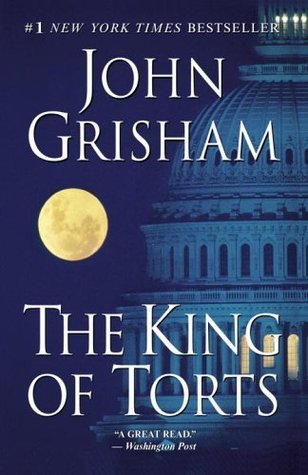
From Public Defender to Secret Corporate Fixer
The novel opens with the murder of Ramón “Pumpkin” Pumphrey in a Washington alley. Several people hear the shots, but the neighborhood has learned habits of self-protection: witnesses retreat, doors close and few residents are eager to become involved. The shooter is quickly identified as Tequila Watson, a young man with a history of drug addiction and criminal trouble. The case appears straightforward enough that nobody expects it to become the beginning of a corporate conspiracy.
Clay Carter receives Tequila’s case through the Office of the Public Defender. Grisham establishes immediately that Clay is tired of this world. Washington is full of powerful lawyers working for wealthy firms, lobbying interests and institutions, while Clay operates inside an overburdened system where difficult cases arrive faster than they can be resolved. He is not destitute, but he feels poor relative to the professional class surrounding him, and relative deprivation matters more to him than absolute comfort.
Clay has also spent enough time at the OPD to lose the sense that the work is temporary. He once imagined himself progressing into something larger, but years have passed. His cases blur together, his salary remains limited, and the lawyers enjoying the glamorous side of Washington legal culture appear to be moving farther ahead. Tequila’s murder case initially seems like more of the same.
The problem is that Tequila himself cannot explain the killing. He admits shooting Pumpkin but gives Clay no convincing motive. He had previously been addicted to drugs, yet he had recently gone through treatment and appeared to be getting his life under control. His description of the murder suggests an overwhelming and inexplicable violent impulse rather than a planned crime or recognizable dispute.
Clay visits Deliverance Camp, the rehabilitation program where Tequila had been treated, and speaks with Talmadge X. The people running the program have no reason to pretend that Tequila was an ideal patient; they know the realities of addiction and relapse too well. Yet the picture they give Clay does not fit the prosecution’s implied story of an unstable addict committing predictable violence. Tequila had been doing better.
The mystery deepens when Clay and his paralegal Rodney Albritton investigate further. Another public defender, Jermaine Vance, has a client named Washad Porter whose case resembles Tequila’s in a disturbing way. Porter is also a recovering addict who had undergone treatment, appeared to improve and then committed an apparently motiveless act of violence.
One inexplicable murder might be personal pathology. Two similar crimes connected with rehabilitation create the possibility of a pattern.
At the same time, Clay’s private life is making him particularly vulnerable to an offer of professional transformation. He has been dating Rebecca Van Horn for years. Rebecca comes from a wealthy family, and her father, Bennett Van Horn, has never been satisfied with Clay’s career. Bennett is accustomed to using money and connections to arrange outcomes, and he decides that Clay needs a more prestigious job.
Clay reacts badly when Bennett attempts to intervene. The problem is not merely that he dislikes being controlled. Bennett’s interference confirms the judgment Clay already fears: that other people see him as a capable man who has failed to become successful.
Rebecca shares some of the frustration without simply becoming her father’s mouthpiece. Clay regularly complains about the OPD but has not left. Their relationship has reached the point where professional stagnation and personal uncertainty are intertwined. Clay wants Rebecca to believe in him while resenting the standards by which her family evaluates him.
The conflict eventually breaks them apart. Rebecca steps away from the relationship, leaving Clay professionally dissatisfied and personally humiliated at exactly the moment when another man begins watching him.
That man is Max Pace.
Pace initially approaches Clay with the smooth ambiguity of a recruiter. He is well dressed, confident and apparently knowledgeable about Clay’s situation. He eventually reveals that he is not offering an ordinary legal job at all. Pace works as a corporate troubleshooter, a man brought in when a company faces a disaster too sensitive for normal channels.
He knows why Tequila Watson killed Pumpkin.
According to Pace, Tequila had unknowingly become part of an experimental program involving a drug called Tarvan. The drug was designed to combat addiction and seemed remarkably effective in many subjects. For a dangerous minority, however, prolonged exposure produced sudden homicidal impulses.
The implications are enormous. People who believed they were receiving rehabilitation treatment were being used in an undisclosed drug experiment. Some became violent. Innocent people were killed. The patients who committed those killings were arrested and prosecuted without knowing that an experimental medication may have altered their behavior.
Pace does not approach Clay because he wants the truth exposed. He wants the disaster contained.
His proposal is carefully engineered around Clay’s ambitions and conscience. Clay can leave the public defender’s office and establish his own firm. He will locate and represent the families of people killed by Tarvan subjects. The company behind the experiment will pay large confidential settlements, and Clay will receive millions in legal fees for arranging them.
The victims’ families therefore receive real compensation. Clay can tell himself that he is helping people who otherwise might never understand why their relatives died. Yet the same agreements will bury the truth, protect the corporation from public scrutiny and leave people such as Tequila facing criminal punishment without the crucial evidence that explains their actions.
Pace’s offer is effective because it is not morally empty. If he simply offered Clay millions to destroy evidence, the decision would be too easy. Instead he presents secrecy as a form of practical justice. Families receive money, the company pays for its mistake, expensive litigation is avoided and Clay becomes rich.
The compromise lies in what that private settlement cannot provide. Compensation is not the same as accountability. The public will not learn that experimental human subjects were exposed to a drug capable of producing homicidal behavior. Prosecutors and defense lawyers will not know that defendants may have committed crimes under the influence of an undisclosed medication. The company buys not only peace but silence.
Clay hesitates long enough to understand that the choice matters. Before deciding, he travels to Great Abaco Island in the Bahamas to visit his father, Jarrett Carter. Jarrett was once a successful lawyer himself but destroyed his career and now lives aboard a boat, drifting through a diminished life shaped by drinking, gambling and regret.
Clay wants guidance, perhaps because he senses that he is about to cross a line. Jarrett cannot provide the clear paternal answer he wants. His own history has weakened his authority, and Clay ultimately realizes that nobody can make the decision for him.
The trip nevertheless plants one of the novel’s most important warnings. Jarrett demonstrates that professional success is not permanent and that a lawyer can lose almost everything through his own choices. Clay sees the ruined version of a successful attorney before he becomes one himself.
He returns to Washington and takes Pace’s deal.
Clay negotiates aggressively rather than passively accepting what is offered. By the time the arrangement is finalized, the victims’ families will receive substantial settlements and Clay will receive roughly $15 million in fees. Pace supplies the money and infrastructure that make the transformation possible, while Clay signs confidentiality obligations that tie his future to the secret.
He resigns from the OPD and creates the Law Offices of J. Clay Carter II almost overnight.
The speed matters. Clay has not slowly built a private practice through years of clients and reputation. His first major success is effectively manufactured by secret corporate money. From the beginning, the firm rests on a reality different from its public appearance.
Rodney becomes part of the new operation and begins contacting families. One of the most important is Adelfa Pumphrey, Pumpkin’s mother. Clay can now tell her more about her son’s death than anyone previously could, though he cannot reveal the entire conspiracy.
The settlement offered to Adelfa is transformative. Money may allow her family to move away from a dangerous neighborhood and create opportunities they did not possess before. Grisham deliberately shows the benefit because it prevents the reader from pretending the settlements accomplish nothing good.
Other Tarvan families are approached in a similar way. They receive compensation in exchange for confidentiality, while the corporation avoids the unpredictable danger of public lawsuits. One victim, Bandy, has no readily identifiable family, a detail that quietly exposes the administrative nature of the process. Deaths have become files to be resolved.
Clay also begins enjoying the personal consequences of his new wealth. The financial anxiety that defined his old life disappears almost instantly. He can purchase things he previously only watched other lawyers enjoy, including a Porsche that functions as one of the first visible markers of the new Clay Carter.
Yet Tarvan has done something more important than make him rich. It has changed his conception of legal work. He has learned that a lawyer positioned between injury and corporate exposure can extract enormous amounts of money very quickly.
Pace soon returns with another opportunity.
This time, Clay will not need to operate in secret.
Dyloft and the Making of the “King of Torts”
The next case involves Dyloft, an arthritis medication allegedly associated with bladder tumors. Pace presents it as an opportunity to move from a confidential cleanup operation into legitimate mass-tort litigation. If enough injured users can be identified and organized, Ackerman Labs can be pressured into paying a huge settlement.
Clay now possesses the capital, staff and confidence to act quickly. He begins learning a branch of legal practice very different from individual criminal defense. Mass torts reward scale. The economic value of a case can depend not only on the seriousness of one person’s injury but on how many similar claimants can be recruited and how much aggregate exposure the defendant faces.
Clay attends a gathering of plaintiff lawyers known as the Circle of Barristers, where the culture of the profession is displayed openly. These lawyers discuss verdicts, settlements, fees and litigation opportunities with the enthusiasm of investors discussing markets. The most important person Clay encounters is Patton French.
French is enormously successful and makes no effort to conceal what success looks like. He travels by Gulfstream, lives extravagantly and commands attention from other lawyers. His wealth represents a version of the profession Clay did not know existed while working at the OPD.
Clay initially reacts with a degree of distaste. The wealth seems excessive, the boasting crude and the commodification of cases obvious. Yet even while judging French, he begins imagining himself in the same position.
The distinction between disgust and desire collapses quickly.
Rebecca’s impending marriage to Jason Myers sharpens his need to demonstrate that transformation. Clay cannot control Rebecca’s decision, but he can control the image he presents to the world. Success becomes a way to answer Bennett Van Horn and everyone else who considered him professionally disappointing.
Dyloft offers the ideal vehicle because Clay can publicly portray himself as the lawyer fighting a dangerous drug. Unlike Tarvan, there is no need for total secrecy. Publicity is useful.
The firm begins advertising aggressively for Dyloft users. Clay and his staff develop systems for fielding calls, collecting medical information, identifying potential injuries and signing clients. The office expands rapidly because the business model depends on volume.
Ted Worley becomes one of Clay’s earliest and most significant Dyloft clients. Clay persuades him to undergo medical testing after using the drug. At first Worley is simply one claimant among many, but he later becomes essential to the novel because his experience exposes the difference between the value of a mass settlement to lawyers and its value to an injured individual.
As the advertisements spread, Clay’s client list grows. He files suit against Ackerman Labs and helps turn the alleged danger of Dyloft into national news. The company responds aggressively, but the conflict itself generates more publicity, which produces more potential clients.
The process is self-reinforcing. Claims create publicity, publicity creates claimants, additional claimants increase potential exposure, and increased exposure strengthens the plaintiffs’ settlement position.
Clay also begins engaging in financial speculation. Using information obtained through Pace, he shorts Ackerman stock, betting that the company’s value will fall when negative information about Dyloft becomes public. Because Clay is simultaneously participating in litigation that contributes to the company’s problems, his roles as lawyer and investor begin to overlap dangerously.
Pace later gives him another profitable tip: Clay should cover his short position and buy Ackerman stock before a takeover. Clay does so and again makes money.
These trades matter because they reveal how accustomed Clay has become to privileged information. Pace’s knowledge once appeared extraordinary and unsettling. Now it is simply another advantage Clay is willing to exploit.
Meanwhile, Tequila Watson’s criminal case moves toward resolution. Tequila pleads guilty to Pumpkin’s murder and receives a life sentence with eventual parole eligibility. Clay knows something that the court, prosecution and Tequila himself do not fully know: Tarvan may explain why the murder happened.
The contrast is devastating. Clay’s first millions came from the information that could have transformed Tequila’s defense, yet Tequila remains imprisoned while Clay becomes wealthy.
Clay’s professional ascent continues. Patton French recognizes the power of the client inventory Clay has assembled and invites him into a larger coalition of plaintiff lawyers. French wants the Dyloft cases concentrated strategically, particularly in Mississippi, where the lawyers believe conditions may favor the plaintiffs.
The litigation becomes increasingly collective. French forms a Plaintiffs’ Steering Committee composed of major lawyers who control significant numbers of claims. Clay now sits among people he had recently viewed from the outside.
At a meeting in Idaho, the lawyers compare their inventories. The language is revealing. Thousands of human beings who may have been injured by Dyloft become numbers attached to firms. A lawyer with more plaintiffs possesses greater negotiating leverage and expects a larger share of the eventual fees.
The lawyers also study Ackerman’s finances. Their task is not merely to determine what each client deserves but to estimate what the company can pay. The settlement must be large enough to reward the plaintiffs and their attorneys without necessarily destroying the defendant before payment can occur.
Grisham is careful not to erase the underlying wrongdoing. Evidence against Dyloft continues accumulating, and studies suggest that Ackerman may have cut corners. The drug is eventually removed from the market.
Clay therefore represents people with legitimate reasons to sue. The novel’s criticism is directed more toward the economic structure surrounding those legitimate injuries. Once clients are aggregated by the thousands, individual stories can disappear behind settlement formulas.
Clay’s firm struggles to keep pace. What began as a small office with trusted colleagues becomes an organization requiring constant hiring, restructuring and management. Paulette, Rodney and Jonah help him navigate the chaos, but even they can see that the operation is changing faster than anyone can control.
Clay brings in Oscar Mulrooney, whose organizational ability becomes increasingly important. He also hires more staff, acquires more space and creates specialized units for handling different aspects of the practice. The firm begins resembling a litigation factory.
The money required to operate it rises dramatically, but Clay’s expected Dyloft recovery makes the spending seem harmless.
At the same time, Pace guides Clay through another Ackerman stock transaction connected with the company’s acquisition by Philo Products. Clay profits again and begins suspecting that Philo may be the corporate force behind Pace’s work, possibly linking the company to the original Tarvan operation.
The suspicion should encourage caution. Instead, Clay continues.
Dyloft eventually moves toward settlement. The plaintiffs’ lawyers negotiate with Ackerman and organize compensation according to categories of injury. For the lawyers, confidentiality and allocation become central issues because the total settlement will determine enormous contingency fees.
Clay receives a fortune.
The amount is large enough to redefine even his recently expanded understanding of wealth. He is no longer merely financially comfortable. He is one of the highest-earning lawyers in the country.
He rewards the people who helped him get there. Paulette, Rodney and Jonah receive enormous bonuses, reflecting Clay’s genuine gratitude. Yet the scale of the bonuses also shows how thoroughly money has become the language of the new firm. Loyalty, success and appreciation can all be translated into checks.
Public recognition follows. The media profile Clay as the astonishing young lawyer who appeared almost from nowhere and made a fortune representing injured plaintiffs. He becomes the “King of Torts.”
The nickname is irresistible because it converts money into identity. Clay is no longer simply a lawyer who earned an enormous fee. He has a title.
He buys Jarrett an expensive catamaran and tries to pull his father back toward a better life. The gift shows that Clay is capable of generosity, but Jarrett responds with concern rather than admiration. He understands how quickly professional success can disappear and senses that his son is moving too fast.
Ted Worley provides an even sharper warning. When Worley learns how his Dyloft settlement is being distributed, he is furious. The amount he receives seems painfully small compared with the money earned by the lawyers.
Legally, Clay may be able to defend the fee. Mass-tort litigation is enormously expensive, lawyers take financial risks and contingency arrangements can allow clients without substantial resources to sue powerful companies. But Worley does not experience the settlement from the perspective of litigation economics. He experiences it as a sick man whose suffering helped make other people rich.
The scene forces Clay to encounter the difference between aggregate success and individual justice. For the steering committee, Dyloft is a historic victory. For Worley, it feels like evidence that the lawyers were the real winners.
Clay largely resists that conclusion because his life is moving too quickly for self-examination. His wealth produces a spectacular change in how he lives. He buys expensive clothes, property and vehicles. His office becomes more luxurious, his political contributions increase his access, and he moves into social circles previously closed to him.
His emotional behavior reveals that much of this performance remains connected to Rebecca. She is preparing to marry Jason Myers, and Clay attends the wedding festivities with Ridley, a model whose beauty complements the identity he wants to project. The display tells everyone that Clay has not merely survived the breakup; he has become richer and more desirable than the man Rebecca left.
Yet his fixation on Rebecca demonstrates the opposite of what he wants to prove. If he truly no longer cared about the old judgment, he would not need the performance.
Dyloft would have allowed Clay to stop. He has more money than he once imagined possible. He could reduce the size of the firm, invest his fortune and choose cases carefully.
Instead, success changes his expectations.
Max Pace approaches him about Maxatil, a hormone drug allegedly associated with serious health problems. The opportunity resembles Dyloft closely enough to seem familiar. Pace expects a portion of the fees, but Clay believes he now understands the business well enough to proceed largely on his own.
That confidence marks a crucial shift. Tarvan required Pace to create Clay’s career. Dyloft required French and other experienced lawyers to guide him through a new field. Maxatil becomes Clay’s attempt to prove that he no longer needs mentors.
He accepts the case.
The King of Torts is no longer merely enjoying success. He has begun believing the title.
Maxatil, Hanna Cement, and the Costs of Expansion
Clay’s firm expands again, but the growth has become more difficult to manage. The people who built the original practice are increasingly exhausted by the pace. Jonah eventually leaves. Paulette moves to London. Rodney also departs.
Their departures matter because they remove people who knew Clay before the money. The new firm contains plenty of employees, but fewer people are capable of speaking to him as an equal rather than as the enormously wealthy founder whose decisions control their careers.
Oscar Mulrooney becomes increasingly important because he is comfortable with the large-scale operation Clay has created. The firm takes on new potential mass torts, including Maxatil, Skinny Ben and the defective-mortar claims against Hanna Portland Cement.
Clay is no longer waiting for one transformative case. The business now requires a pipeline.
His personal expenses follow the same logic. He buys a Gulfstream jet, the object that once made Patton French’s wealth seem almost fantastical. A new aircraft would require a long wait and an extraordinary price, so Clay acquires one through the market rather than waiting for a factory delivery.
Owning the Gulfstream gives him what he wanted: proof that he has reached French’s level.
It also creates enormous continuing costs. Rex Crittle, Clay’s accountant and eventual business manager, watches the numbers more carefully than Clay does. The firm is consuming money at a remarkable rate through salaries, leases, advertising, litigation expenses, travel and the maintenance of Clay’s personal lifestyle.
Clay can afford everything as long as major cases continue producing fees. That qualification becomes increasingly important.
Maxatil is much weaker than Dyloft.
Goffman, the manufacturer, fights the claims aggressively rather than moving quickly toward settlement. Other experienced plaintiff lawyers study the evidence and remain cautious. Patton French, who has every financial incentive to recognize a promising mass tort, warns Clay that the case may not establish causation strongly enough.
Clay has reason to listen. French understands the field better than he does and has no need to prove himself through one more spectacular case.
Clay instead focuses on evidence that confirms his expectations. A government study appears to support concerns about Maxatil, strengthening the public case against the drug. Media attention increases. Clay can point to scientific language and official concern as evidence that he was right to move early.
The Arizona case handled by Dale Mooneyham becomes crucial. If Mooneyham can convince a jury that Maxatil caused his client’s injury, the verdict could create enormous settlement pressure across Clay’s entire inventory.
Mooneyham, however, represents a different philosophy of plaintiff law. He is interested in his individual client and openly disdains the high-volume mass-tort world. He does not want thousands of claims assembled around his case by celebrity lawyers seeking a global settlement.
His contempt irritates Clay partly because it touches something true. Clay’s entire strategy depends on what happens in a trial where he has little direct role.
Meanwhile, the media begin turning on him. A hostile headline asking whether a hundred million dollars is not enough captures the public image forming around Clay: a lawyer whose personal fortune has become inseparable from the cases he promotes.
The Maxatil criticism would be easier to dismiss if Clay were not simultaneously expanding elsewhere.
Hanna Portland Cement becomes another major target. The company was founded in Reedsburg, Pennsylvania, after the Second World War and grew into the town’s dominant employer. Problems with its mortar create potential claims from property owners, and Clay sees the familiar possibility of aggregating those injuries into a profitable case.
Hanna’s position differs from that of a giant pharmaceutical company. The company may have serious product liability, but its financial resources are limited. A sufficiently large settlement could threaten the company’s survival.
Clay knows this and continues pressing.
Skinny Ben adds another layer of risk. Mulrooney organizes client screening for possible injuries, signing people such as Nora Tackett after medical examinations. The process is legally useful because potential plaintiffs must be identified, but it also demonstrates how the firm increasingly searches for claims rather than waiting for injured clients to arrive.
When Skinny Ben’s manufacturer enters bankruptcy, the economic value of those claims largely disappears. Clay has spent time and money building another inventory that can no longer produce the expected return.
Rex Crittle’s warnings become harder to ignore. Clay’s lifestyle and firm require extraordinary cash flow. The Gulfstream alone represents a remarkable recurring expense. Once Clay has constructed an empire around the assumption of continuing victories, simply stopping becomes difficult.
Patton French and other experienced lawyers continue to avoid Maxatil. At gatherings where mass-tort opportunities are evaluated, they decide to wait for the Arizona result rather than commit themselves. Clay is increasingly alone in a case whose failure could be disastrous.
Jarrett also warns him. During time in St. Barth, where Clay buys another luxury property, father and son confront the obvious question: how much is enough? Jarrett has already demonstrated what happens when success is followed by self-destruction, yet Clay still assumes that his own intelligence and resources will protect him.
The legal pressures then begin arriving together.
FBI agents appear at Clay’s office and reveal that Max Pace is a fugitive connected to securities fraud involving Goffman. The information reframes everything Clay knows about his mysterious benefactor. Pace was not merely a corporate fixer operating in ethically gray territory. He may have been engaged in serious criminal manipulation.
Clay’s stock transactions immediately become more dangerous. He shorted Ackerman and later purchased stock based on information Pace provided before the market knew what was happening. The profits that once seemed like another reward for being well connected now look like evidence.
Another problem emerges from the very case that created Clay’s national reputation. Ted Worley develops malignant tumors after the Dyloft settlement. Other former clients also experience serious illnesses that appear more severe than what the settlement anticipated.
Attorney Helen Warshaw begins organizing malpractice claims against the Dyloft lawyers. Her theory attacks Clay at the point of his greatest pride: perhaps the lawyers settled too early and accepted too little before the long-term consequences of the drug were understood.
If that argument succeeds, Clay could face enormous liability.
His malpractice insurance also becomes inadequate or unavailable at the worst possible moment. The firm that seemed protected by vast wealth suddenly confronts liabilities that could exceed anything Clay personally possesses.
The reversal is now complete in principle even before it becomes complete financially. Every feature of Clay’s rise has acquired an opposite meaning. His huge client base creates huge exposure. His confidential connections create a federal investigation. His enormous firm creates enormous fixed costs. His signature settlement creates malpractice claims.
Clay has built a machine that requires continued success precisely when his cases begin failing.
The Collapse of Clay Carter
The Dyloft lawyers gather to confront the developing malpractice threat. They are no longer celebrated architects of a historic settlement but potential defendants trying to determine how many former clients may sue them. Patton French, Clay and the others discover that the same techniques used to pressure corporations can be turned against plaintiff lawyers.
Clay also seeks specialized criminal advice. Zack Battle studies the Ackerman transactions and does not minimize the danger. Clay’s trades occurred under circumstances that can attract federal prosecution, and Max Pace’s criminal status makes the situation worse.
The possibility of prison is no longer abstract.
At the same time, Clay hears again from Tequila Watson, now calling himself Paul. The letter reaches backward to the beginning of the story. Paul remains incarcerated for Pumpkin’s murder, a crime Clay knows may have been caused by Tarvan.
The juxtaposition is morally important. Clay is worried about whether his own use of confidential information may lead to prosecution while a former client has already spent years imprisoned without access to the confidential information that could explain his crime.
The media reverse their treatment of Clay almost as quickly as they once created his celebrity. A leak exposes the securities investigation, and the “King of Torts” becomes the “King of Shorts.” Clay had enjoyed manipulating reporters and using publicity as litigation leverage; now publicity becomes something he cannot control.
The humiliation matters because reputation had become one of his most prized possessions. Losing money is frightening, but becoming publicly ridiculous attacks the identity he built from success.
Hanna Portland Cement presents another crisis. Clay continues demanding a settlement the company believes it cannot afford. Hanna eventually chooses Chapter 11 bankruptcy rather than meet the plaintiffs’ terms.
The result devastates Reedsburg. The company has dominated the local economy for decades, and large-scale layoffs spread pain through a community whose workers had no personal role in producing the defective mortar.
Public criticism focuses heavily on Clay. From the town’s perspective, he is not the lawyer protecting injured property owners but the rich outsider whose lawsuit helped destroy its largest employer.
The moral reality is more complicated. Hanna remains responsible for its own products, and bankruptcy does not prove that Clay’s underlying claims were false. Yet the collapse demonstrates that legal remedies distribute costs beyond the courtroom.
Clay eventually goes to Reedsburg secretly. The visit is important because he encounters consequences that cannot be expressed through a settlement spreadsheet. He hears the anger of workers and sees what the company’s collapse means to families whose economic lives depended on it.
He makes an anonymous donation to help the community. The gesture cannot repair what has happened, but its anonymity distinguishes it from the public displays that characterized his rise. Clay is beginning to act without asking what the act will do for his reputation.
Soon afterward, the anger surrounding the Hanna case becomes physical. Clay is lured toward what appears to be a meeting and attacked brutally. The assault leaves him seriously injured, with broken bones requiring surgery and a long hospital stay.
Evidence involving cement suggests a connection to Hanna or Reedsburg.
The beating should not be interpreted as legitimate retaliation; Grisham does not present vigilante violence as justice. Its narrative function is to make Clay physically vulnerable after a career built around financial abstraction. He can no longer experience consequences from the protected distance of an office or aircraft.
His hospitalization also exposes the quality of his relationships. Paulette and Jonah return to help him. Their concern is not dependent on the success of the firm. They knew Clay before the King of Torts existed.
Ridley reacts differently. Their relationship has been built largely around the world his money created, and the crisis exposes its superficiality. Rebecca, meanwhile, is becoming emotionally available again because her marriage is failing.
The convergence is almost too neat, but it serves the structure of the novel. As Clay loses the relationships and possessions associated with his manufactured identity, people connected with his earlier life return.
Everything now depends on the Maxatil trial in Arizona.
From his hospital bed, Clay follows Dale Mooneyham’s case. The trial begins to look promising. Mooneyham conducts an effective cross-examination, and the possibility of a plaintiff verdict creates renewed settlement interest from Goffman.
For Clay, the stakes are existential. A favorable verdict could validate his Maxatil inventory and generate the settlements needed to keep the firm alive. The case is no longer merely about whether clients were injured. It has become the last financial support holding up Clay’s empire.
A substantial settlement may be available, but Mooneyham refuses to abandon his individual client’s trial simply to rescue the mass-tort lawyers who built cases around it. He wants a verdict.
Clay can do little except wait.
The jury finds for Goffman.
The result destroys the value of Clay’s Maxatil operation. Without a verdict establishing persuasive causation, Goffman has little reason to pay enormous settlements to thousands of claimants. The inventory Clay treated as a future fortune becomes a liability.
Dyloft malpractice claims continue. Hanna remains in bankruptcy. Skinny Ben has failed. The FBI investigation persists. Legal costs rise. The firm’s financial obligations remain enormous.
Clay cannot save it.
He begins closing operations and liquidating what can be liquidated. The same accounting that once measured his astonishing wealth now measures insolvency.
Ted Worley dies during this collapse. His death prevents Clay from reducing Dyloft to an unfortunate business problem. Worley was a person who trusted the firm, accepted a settlement and later developed devastating illness. Whatever the legal merits of Warshaw’s malpractice theory, Clay can no longer pretend that the Dyloft story ended when the checks were distributed.
Rebecca reenters his life as her marriage ends. The return offers emotional hope, but Clay knows that she does not understand the foundation of the career she watched rise and fall.
He finally tells her about Tarvan.
The confession includes the secret drug experiment, Pace’s approach, the murders, the confidential settlements and Clay’s role in keeping the information hidden. By telling Rebecca, he surrenders the possibility of presenting himself as merely a brilliant lawyer ruined by bad luck.
His final major decision extends the confession beyond their relationship. Clay contacts Washington Post reporter Art Mariani, who had documented both his rise and collapse, and gives him the Tarvan evidence.
The documents can expose Philo Products and the corporate actors involved in the experiment. They may also help Paul Watson and others imprisoned for murders committed after exposure to Tarvan.
The disclosure cannot restore Pumpkin Pumphrey or the other dead victims. It cannot return the years Paul has spent in prison. It cannot undo Clay’s insider trading, Dyloft settlement decisions, Hanna strategy or Maxatil recklessness.
What it can do is end the lie that began everything.
Clay and Rebecca leave Washington aboard his Gulfstream, heading toward London without a normal return plan. He has lost the legal empire but retains enough of the physical remnants of wealth to leave.
The ending is deliberately incomplete. Clay does not rebuild his career on the page. He is not formally purified, acquitted or transformed into a public-interest hero.
He simply departs after finally exposing the secret that made his transformation possible.
Clay Carter and the People Who Shape His Rise and Fall
Clay’s story becomes more revealing when viewed through the people around him. Grisham gives him several different mirrors: people who embody the life he wants, people who warn him what that life can become, people who benefit from his success and people who absorb its costs. Clay’s choices are always his own, but those relationships help explain why particular temptations work.
They also prevent the novel from becoming a simple argument that wealth automatically destroys character. Different lawyers operate inside the same legal world and make different choices. Clay is shaped by the system, but he is not merely its victim.
Clay Carter
Clay begins the novel with qualities that make his later corruption plausible rather than inevitable. He is experienced enough to understand legal institutions, loyal enough to have remained in public defense for years and capable enough to recognize inconsistencies in Tequila’s case. There is no reason to believe that he begins as an incompetent or malicious lawyer.
His vulnerability is resentment. Clay believes that his life should already be larger than it is, and he experiences the success of other lawyers as evidence of something missing in himself. Bennett Van Horn’s contempt hurts because it confirms a judgment Clay secretly shares.
Max Pace therefore does not need to manufacture greed. He needs only to give Clay a story in which accepting millions can still be described as professional accomplishment.
That pattern of rationalization defines Clay more strongly than any single act of greed. Tarvan is justified because families receive compensation. Dyloft is justified because a dangerous drug may have harmed users. Maxatil is justified because a government report appears to support the claims. Hanna is justified because defective mortar caused losses.
At each stage, there is enough legitimate legal purpose to conceal how thoroughly money has taken control of Clay’s decision-making.
The key change is the standard by which Clay judges risk. Early in the novel he worries about whether Pace’s offer is morally defensible. Later he worries about whether a case will generate an adequate return. By Maxatil, the principal question is whether he can reproduce his previous success.
Clay’s consumption reflects that movement. Buying a comfortable home after becoming rich would be unsurprising. His purchases instead become increasingly symbolic. The Porsche proves immediate arrival. The Georgetown lifestyle establishes social standing. The Gulfstream places him beside Patton French. St. Barth demonstrates that geography itself can be purchased as part of the wealthy life.
None of those acquisitions is enough because the real object Clay wants is recognition.
That is why Rebecca remains so important. Her judgment predates his fortune, so her admiration cannot be purchased as easily as public attention. Clay wants her to witness his transformation because he wants the transformation to rewrite their history.
His most serious moral failure is therefore not simply that he enjoys luxury. It is that he allows external success to become evidence of internal correctness. If the cases make money, the decisions must have been intelligent. If newspapers call him the King of Torts, the career must be legitimate. If other lawyers envy him, he must have won.
The collapse forces those categories apart. Financial success disappears before Clay can preserve the illusion that it proved anything morally.
His final disclosure of Tarvan works because it is the first major decision in years that clearly damages the identity he created rather than reinforcing it. He does not confess because the story will make him richer or more famous. He confesses because continued secrecy has become impossible to defend.
That does not make him innocent. Grisham wisely stops short of complete moral cleansing. Clay is responsible for decisions made after Pace’s initial temptation, and much of the later damage comes from choices nobody forced upon him.
The ending instead gives him the beginning of moral recovery: he finally distinguishes what is right from what is profitable.
Max Pace and Patton French
Max Pace is the most direct tempter in the novel. He appears at exactly the moment Clay is vulnerable and offers him a career that seems almost custom-designed to answer his frustrations. Pace understands that the best temptation is one the target can rationalize.
His method is secrecy. He possesses information other people do not have and converts informational advantage into power. Tarvan is valuable because nobody else knows what caused the murders. Dyloft becomes valuable because Pace knows where the next crisis may develop. Ackerman stock becomes profitable because he knows events before the market does.
Clay initially recognizes the strangeness of this arrangement. As he becomes richer, he grows accustomed to it. Privileged information stops feeling suspicious and starts feeling like one of the rewards of belonging to an elite network.
Pace’s eventual exposure as a fugitive reveals the danger of that normalization. Clay never fully knows who Pace works for, what crimes Pace has committed or why particular pieces of information are being given to him. His confidence grows while his actual understanding remains limited.
Patton French represents a different form of temptation because nothing about him is hidden. French displays wealth theatrically. The aircraft, lifestyle and gatherings are advertisements for the rewards available to lawyers who master mass torts.
He is therefore less sinister than Pace and in some ways more responsible. French understands the economics of the field, recognizes weak cases and warns Clay about Maxatil. He may commercialize litigation aggressively, but he does not confuse aggression with certainty.
That distinction becomes important. Clay initially thinks becoming like French means becoming fearless. In reality, French’s success partly depends on knowing when not to gamble.
Pace gives Clay the shortcut into the profession. French shows him the summit. Clay’s downfall begins when he assumes he has learned enough from both men to exceed their caution.
Rebecca, Jarrett, Ridley, and the Life Clay Thinks He Wants
Rebecca is frequently interpreted mainly as the girlfriend who wants Clay to become more successful, but her role is more complicated. She has spent years listening to Clay complain about the OPD while watching him remain there. Her impatience is partly social ambition, especially given her family background, but it is also frustration with a man who resents his circumstances without changing them.
Bennett Van Horn intensifies everything unpleasant in that dynamic. By arranging a job for Clay, he treats Rebecca’s boyfriend as another problem that wealth and influence can solve. Clay rejects the interference because accepting would mean admitting that Bennett correctly diagnosed his inadequacy.
Pace later offers Clay something much more extreme, yet Clay accepts it because Pace packages dependency as independence. The irony is sharp: Clay refuses Bennett’s respectable shortcut and accepts a far more dangerous one from a stranger.
Rebecca’s marriage to Jason Myers then becomes part of Clay’s psychological competition. His wealth is not simply something he enjoys after the breakup. It becomes evidence he wishes he could send backward in time to prove that Rebecca and her family underestimated him.
Her eventual return during his collapse can feel narratively convenient, but it also removes the possibility that Clay can impress her with wealth. She comes back when the King of Torts identity is disappearing. Their renewed relationship therefore depends on whether Clay can show her the person beneath it, which explains the importance of his Tarvan confession.
Jarrett offers a different emotional standard. He has already achieved and lost professional success, making him one of the few people in the novel who cannot be dazzled by Clay’s money. His warnings carry the authority of failure rather than virtue.
Clay repeatedly tries to improve Jarrett’s life through material gifts, including an expensive boat. The gesture is generous, but it reveals Clay’s assumption that money can repair almost anything. Jarrett’s history suggests otherwise.
Ridley is more obviously tied to Clay’s new image. She is glamorous, attractive and socially compatible with his luxurious lifestyle. Bringing her to Rebecca’s wedding turns the relationship into a display even if genuine affection exists between them.
Grisham does not give Ridley the psychological depth of the central male characters, which weakens the characterization. She functions primarily as evidence of what Clay’s money can attract. That limitation becomes especially visible during his crisis, when the relationship proves less durable than his bonds with people from before his ascent.
Paulette, Rodney, Jonah, Mulrooney, and the Clients
Paulette, Rodney and Jonah matter because they know Clay before he becomes famous. Their loyalty begins in an environment where none of them is rich and where their work is difficult, unglamorous and personal. When they follow Clay into private practice, the decision is partly a bet on him rather than merely on his money.
Clay rewards them extravagantly after Dyloft. The bonuses are evidence that he has not forgotten their contribution, and the generosity complicates any attempt to portray him as purely selfish.
Yet the new firm gradually consumes the relationships that helped create it. Workload grows, client numbers explode and the original sense of shared adventure disappears. Jonah, Paulette and Rodney eventually leave.
Their return during Clay’s physical and financial collapse becomes important precisely because they no longer have obvious financial reasons to remain loyal. Clay discovers that some of the strongest relationships in his life were created before he had the money he believed would make relationships easier.
Oscar Mulrooney belongs to the next stage of the firm. He is capable and useful, but his importance reflects institutionalization. Clay’s practice has become too large to operate through friendship and improvisation.
The clients supply the essential moral counterweight to all of this. Tequila Watson is the client Clay leaves behind at the beginning. His case should have been transformed by the Tarvan evidence, yet the information instead transforms Clay’s career.
Ted Worley becomes the most important later client because his dissatisfaction refuses to fit Clay’s triumphant interpretation of Dyloft. To Clay, the settlement proves professional genius. To Worley, it proves that lawyers can become rich while sick clients receive far less than they imagined.
Adelfa Pumphrey complicates the picture in the opposite direction. Her settlement materially helps her family. Grisham therefore refuses to make private compensation meaningless even while criticizing the secrecy surrounding it.
Together, these clients demonstrate why the novel’s legal morality cannot be reduced to “lawsuits are bad.” The problem is the distance between the purposes of law and the incentives of the people who profit from administering it.
Washington, Mass-Tort America, and the Geography of Status
The King of Torts builds its world through professional spaces. Washington initially appears as a city containing radically different legal universes within a short physical distance. Clay works in an overloaded public defender’s office while elite lawyers at major firms earn salaries and bonuses that make his career look almost charitable by comparison.
The contrast shapes Clay’s psychology. He does not need television or fantasy to imagine wealth; he sees it around him every day. The expensive restaurants, country clubs, powerful offices and politically connected families belong to the same city as the jails and neighborhoods in which he works.
His ascent can therefore be mapped by where he gains access. The OPD and jail give way to hotel suites with Max Pace, luxury offices, elite conferences, country clubs, expensive resorts, private aircraft and political events. Geography becomes a hierarchy.
The legal landscape also expands beyond Washington. Dyloft takes Clay into national litigation networks where jurisdiction, plaintiff concentration and local strategy matter. Mississippi, Idaho and Arizona are not merely destinations; they are nodes in a system where cases can be organized to maximize leverage.
The Caribbean offers a different spatial motif. Jarrett retreats to the Bahamas. Clay vacations and buys property in St. Barth. These places represent distance from professional pressure and the fantasy that money can create a zone outside ordinary consequences.
Neither escape works. Jarrett’s problems followed him onto his boat, and Clay continues taking calls, worrying about cases and measuring his status even while surrounded by luxury.
Reedsburg reverses the pattern. Clay travels there not to enjoy money but to encounter consequences. The town is geographically distant from the conference rooms where Hanna’s settlement value was calculated, yet its workers experience the outcome more directly than most of the lawyers involved.
That contrast is the most important world-building choice in the novel. Legal abstraction becomes easier at a distance. Reedsburg restores the people who disappear when the case is reduced to numbers.
Wealth, Justice, Ambition, and Moral Responsibility
The novel’s major themes are connected by one central transformation: Clay gradually allows money to become the dominant measure of professional reality. That does not mean every wealthy lawyer is corrupt or every mass-tort case is illegitimate. Grisham’s more interesting point is that incentives can change the questions a person asks before he notices that his values have changed.
Clay begins by asking whether he should accept Pace’s proposal. Eventually he asks how large the next opportunity can become. The distance between those questions contains the moral story of the novel.
Wealth and the Performance of Success
At first, Clay wants the kind of security most people would understand. He dislikes worrying about salary, feels embarrassed by his professional status and wants more control over his life. Tarvan gives him enough money to solve those problems almost permanently.
If financial security were the true objective, the story could end there.
Instead, wealth becomes performative. Clay buys objects that other people can recognize as evidence of success. The Porsche matters because it is visible. The office matters because clients and lawyers enter it. The Gulfstream matters because it places him among a tiny professional elite.
Even political contributions become part of the performance. Money buys access, and access confirms importance.
The connection to Rebecca is especially revealing. Clay wants her to see that the man she left became extraordinary. Bringing Ridley to the wedding reception is a form of social argument.
This is why money never becomes enough. A sum capable of providing lifelong comfort cannot permanently satisfy a need for comparison because comparison has no fixed upper limit. Once Clay reaches one level, another becomes visible.
The title “King of Torts” intensifies that problem. Wealth becomes not merely something he owns but something he is. The more identity depends on external success, the more threatening any setback becomes.
Justice as a Market
Grisham repeatedly creates situations where genuine injury and commercial incentive coexist. Tarvan kills innocent people indirectly through experimental subjects. Dyloft appears to injure users. Defective mortar causes property damage. Maxatil may present serious medical risks.
The plaintiffs therefore cannot simply be dismissed as opportunists, nor can their lawyers be dismissed solely because they expect payment.
The market-like element appears in how the claims are organized. Advertising locates potential clients. Medical screening determines who belongs in the litigation. Lawyers compare inventories. Defendant finances are studied. Settlement values are calculated by category.
Justice becomes something that can be priced.
That pricing is not automatically immoral. Civil litigation often requires monetary compensation because money is one of the few remedies courts can realistically provide for many injuries. The discomfort comes from the incentives generated around the process.
The lawyer who controls more claimants possesses more negotiating power. A larger settlement creates larger fees. Publicity can improve recruitment. Medical uncertainty becomes litigation risk that can be translated into settlement pressure.
Clay becomes exceptionally good at this system because he learns to see its economic structure. The cost is that individual clients become increasingly difficult to perceive.
Ted Worley’s anger punctures the abstraction. He does not care that the aggregate Dyloft settlement is impressive if his personal share seems inadequate compared with the lawyers’ fortunes.
Tarvan presents an even deeper version of the theme. The victims’ families receive compensation, but the company purchases secrecy. The arrangement demonstrates that financial resolution and public justice can diverge sharply.
A settlement can close a case without resolving the moral problem that created it.
Ambition, Identity, and Self-Deception
Clay’s ambition becomes destructive because it adapts to every new level of success. He does not set a goal, reach it and decide whether another goal is worthwhile. Each achievement changes what he considers normal.
After years at the OPD, $15 million should represent an unimaginable transformation. Soon it feels like the starting capital for something larger. After Dyloft, the fortune becomes proof that another Dyloft should be possible.
This is where ambition turns into self-deception. Clay repeatedly describes continued expansion as rational even when the underlying reason is increasingly emotional. He needs to remain the person the previous victory allowed him to become.
Maxatil exposes the problem clearly. Experienced lawyers are skeptical. Patton French warns him. The scientific case is uncertain. Yet Clay interprets hesitation as something lesser people do because his identity now depends on seeing himself as the man who recognizes opportunities first.
Hanna shows the same pattern. Clay could compromise, but backing down feels like weakness.
His downfall therefore begins before any verdict or investigation. It begins when changing course becomes psychologically more threatening than taking additional risk.
The novel also suggests that self-deception is easier when the surrounding system rewards it. Clay receives praise, magazine covers, invitations and staggering fees. Nothing in the external environment encourages moderation until the reversals begin.
His eventual confession matters because it interrupts that feedback loop. For once, Clay acts without an obvious mechanism for converting the act into status or profit.
Victims, Clients, and the Human Cost of Abstraction
One of Grisham’s most effective techniques is to alternate between aggregate litigation and individual suffering. Whenever Clay becomes comfortable with numbers, another person appears to expose what those numbers represent.
Pumpkin is the first. His death is initially a criminal statistic and later part of a corporate crisis, but Adelfa experiences it as the loss of her son.
Tequila is treated by the system as a murderer, yet the Tarvan revelation changes the meaning of his act without eliminating the fact that Pumpkin is dead. He is simultaneously perpetrator and possible victim.
Ted Worley embodies another contradiction. He benefits from litigation while also feeling exploited by it. He can be grateful that a lawyer pursued Dyloft and angry about the settlement at the same time.
Nora Tackett and other screened clients illustrate how industrialized litigation blurs the line between serving injured people and searching for potentially profitable injuries. The process does not require inventing illness. It merely changes who initiates the relationship and why.
Reedsburg broadens the category of victim beyond formal plaintiffs. Hanna workers are not responsible for defective mortar, yet they lose jobs when the company collapses. Their suffering does not invalidate property owners’ claims, but it prevents litigation from being imagined as a clean transfer from wrongdoer to victim.
The novel is strongest when it preserves these competing truths. Corporations can commit serious wrongdoing. Plaintiffs may deserve compensation. Lawyers can perform socially useful work. The same lawyers can also build financial incentives that distort their judgment.
Moral responsibility survives the complexity. A complicated system may explain why Clay makes particular choices, but it does not absolve him from making them.
Symbols and Motifs: Money, Jets, Headlines, and Escape
Money is the novel’s most persistent motif because its meaning changes with Clay. Early on, money represents what he lacks: security, professional dignity and freedom from dependence on people such as Bennett Van Horn. Tarvan gives him enough money to escape those anxieties.
Dyloft transforms money into measurement. The size of a fee proves the size of the victory. Rankings of wealthy lawyers and public attention reinforce the idea that income can quantify professional worth.
During the collapse, money becomes something else again: obligation. Salaries, leases, aircraft costs, litigation expenses and potential judgments continue even when new fees stop arriving. The fortune that appeared to eliminate risk instead finances a structure that requires constant success.
The Gulfstream is the clearest physical symbol. Patton French’s aircraft initially represents a level of professional achievement almost beyond Clay’s imagination. Buying his own jet means he has joined that world.
The meaning reverses once Rex Crittle begins calculating expenses. The aircraft becomes proof that Clay’s lifestyle has developed enormous fixed costs.
Its final appearance completes the transformation. Clay and Rebecca leave Washington aboard the same jet, but the flight does not celebrate victory. The object that once announced arrival now enables departure.
The Porsche, luxury home and St. Barth property follow similar trajectories. Clay uses possessions to externalize identity, but the possessions cannot stabilize the person who owns them.
Public language functions in the same way. “King of Torts” elevates Clay by converting professional success into mythology. “King of Shorts” humiliates him by using the same media mechanism against him.
Both labels are simplifications. Clay embraces the flattering one and resents the hostile one, even though each demonstrates how little control he has over the public identity he values.
Escape recurs throughout the story as another motif. Jarrett has escaped to the Bahamas, Clay repeatedly travels to the Caribbean, and the ending sends him toward London. Physical distance offers temporary relief but never removes consequences.
In that sense, the final flight is deliberately ambiguous. Clay is leaving Washington, but he cannot fly away from what he has done. The possibility of a different future depends not on geography but on whether the Tarvan disclosure represents a lasting change in how he makes decisions.
Structure, Point of View, Pacing, and Legal Realism
Grisham narrates the novel mainly through a close third-person perspective centered on Clay. The choice gives the reader access to Clay’s calculations without turning the book into a confession. We see why his decisions make sense to him while remaining free to judge them differently.
That perspective is essential to the temptation structure. Pace’s offers would be less effective if viewed only from outside because their practical benefits would disappear. By staying near Clay’s thoughts and circumstances, Grisham shows how corruption can arrive disguised as a sequence of defensible choices.
The chronology is straightforward. There are few structural experiments because the story depends on acceleration. Each success produces the conditions for the next decision, and each new decision increases the scale of exposure.
The four principal legal matters perform different structural jobs. Tarvan initiates the compromise. Dyloft validates the new career. Maxatil tests Clay’s belief that success can be repeated by force of confidence. Hanna reveals consequences outside the lawyer-client relationship.
This produces a powerful symmetry between accumulation and loss. Clay acquires employees, offices, properties, relationships, political access and public identity during the rise. During the second half, those structures fragment or turn against him.
Grisham also uses numerical detail unusually effectively. Fees, settlement totals, client numbers, stock trades and operating costs are not decorative facts. They are part of the narrative language through which Clay learns to understand his world.
At first, the numbers create exhilaration. Later they create dread.
The pacing benefits enormously from this structure. Grisham can move from one negotiation, meeting or discovery to another without relying on constant physical danger. Financial momentum functions like action.
The legal realism is more complicated. Grisham’s Author’s Note expressly makes clear that his version of Washington’s public-defender system and several locations are fictionalized, so the book should not be read as documentary reporting about the real Public Defender Service.
Mass-tort procedure is also streamlined. Under actual American law, a proposed class action must satisfy the requirements of Federal Rule of Civil Procedure 23, including prerequisites concerning the class and additional requirements depending on the kind of class sought. Large groups of related federal cases can also be coordinated through multidistrict litigation under 28 U.S.C. § 1407, which is distinct from simply certifying one enormous class action.
That distinction matters because the novel often uses legal aggregation as a narrative shortcut. Real pharmaceutical and product-liability litigation can involve different injuries, medical histories, causation questions, jurisdictions and procedural vehicles. Grisham compresses those complexities so readers can understand the economic stakes without becoming lost in procedure.
The simplification should be criticized where it affects plausibility but not mistaken for accidental ignorance of fiction’s requirements. The King of Torts is trying to model incentives, not teach civil procedure.
This becomes clearer when compared with Grisham’s treatment of corporate litigation in The Runaway Jury. Both novels examine legal systems under pressure from money and strategic manipulation, but The Runaway Jury centers more heavily on attempts to control a formal decision-making process. The King of Torts is more interested in what happens before trials disappear into settlements, inventories and leverage.
The style is characteristically accessible. Grisham explains specialized practices through scenes rather than dense exposition, allowing readers without legal training to understand why a client list has value or why one Arizona verdict can change the economics of thousands of cases.
The cost of that accessibility is occasional overstatement. Lawyers, companies and cases can become cleaner embodiments of ideas than they would be in reality. Yet the resulting clarity is also what gives the novel its speed.
The Ending Explained: Confession, Exile, and Partial Redemption
The ending is easy to misread if Clay’s financial collapse is treated as automatic moral redemption. Losing money does not make him a better person. Being investigated does not repair the harm caused by earlier decisions, and being beaten does not cancel his responsibility.
The moral turn occurs when Clay chooses to expose Tarvan.
Tarvan matters because every major development in the novel grows from that original secret. Without Pace’s offer, Clay does not receive the first fortune, build the firm, enter Dyloft with privileged guidance or learn to treat confidential corporate information as a professional advantage.
The original bargain also produced a specific injustice that money could not resolve. Families such as Adelfa Pumphrey’s received compensation, but people such as Paul Watson were prosecuted without access to evidence capable of changing how their crimes were understood.
When Clay finally tells Rebecca the truth, he stops protecting the personal narrative he has constructed around his career. He can no longer claim that he simply became successful through unusual talent and then suffered bad luck.
Giving Art Mariani the documents goes further. Private confession might relieve guilt without changing anything outside Clay’s life. Providing evidence to a reporter makes exposure possible.
The disclosure potentially affects Philo Products and the people involved in the experiment. More importantly, it may help defendants imprisoned for Tarvan-related killings by revealing information that should have been available when their cases were litigated.
That is genuine accountability, but it remains incomplete.
Clay waited until his empire was collapsing. He had years in which he could have exposed Tarvan while enjoying the money it produced. The confession therefore deserves moral credit without being romanticized as heroic sacrifice on the scale it would have represented earlier.
The same qualification applies to Rebecca’s return. Her presence creates emotional hope, but the novel does not demonstrate that Clay has rebuilt himself. It merely gives him someone with whom a different life may be possible.
The final use of the Gulfstream captures the ambiguity beautifully. The jet once symbolized the highest level of Clay’s professional ambition. It was the object that proved he had become one of the elite lawyers he used to watch from below.
Now it carries him away from Washington after the identity attached to it has collapsed.
That reversal suggests exile more than triumph. Clay can leave the city, but the narrative does not pretend he leaves his history behind.
London therefore represents possibility rather than resolution. Grisham ends before proving that Clay will become a different kind of lawyer or person.
The ending asks the reader to accept something more modest: after years of allowing money to determine what counted as success, Clay finally makes a decision whose value cannot be measured by the fee.
Critical Review: What The King of Torts Does Well—and Where It Weakens
The King of Torts succeeds best as a moral thriller about incentives. Its legal world is exaggerated, accelerated and sometimes procedurally simplified, but the emotional mechanism is persuasive: a frustrated lawyer discovers that the profession contains a path to wealth so enormous that ordinary standards of success begin to look absurd.
Grisham’s most important decision is making Clay neither an innocent victim nor an obvious villain. He is compromised, ambitious, capable, generous in some relationships, selfish in others and exceptionally good at explaining his own decisions to himself.
That ambiguity gives the rise narrative real force. Readers can understand why Tarvan tempts him because the families genuinely need compensation. They can understand why Dyloft excites him because the drug appears dangerous. They can understand why Maxatil seems plausible because supporting evidence emerges.
A weaker novel would make each step obviously evil. Grisham instead allows Clay to retain just enough justification to continue.
A contemporary Publishers Weekly review recognized the unusual appeal of a Grisham protagonist who occupies both sides of the moral conflict. That is one of the novel’s strongest features. Clay does not spend the story discovering that other powerful people are corrupt; he spends it discovering how easily he can become one of them while preserving a flattering image of himself.
The mass-tort material is also handled with great narrative efficiency. Grisham takes subjects that could become painfully technical—client recruitment, contingency fees, steering committees, stock manipulation, settlement leverage and corporate exposure—and converts them into understandable dramatic stakes.
The reader learns enough to understand why a plaintiff inventory matters without needing a civil-procedure course. That accessibility is a major reason the novel maintains momentum despite spending far more time on offices, negotiations and financial calculations than on conventional courtroom scenes.
The Dyloft sequence is particularly strong. It contains the excitement of discovery, the expansion of the firm, French’s mentorship, media attention and an enormous financial payoff. The success feels sufficiently real that Clay’s decision to keep going becomes psychologically credible.
Ted Worley prevents the sequence from becoming celebratory. His dissatisfaction introduces the central critique at exactly the moment Clay wants to believe he has achieved something unquestionably good.
Reedsburg performs a similar function later. The town expands the consequences of tort litigation beyond the clients and defendants formally represented in court. Grisham does not need to prove that Hanna is innocent to show that bankruptcy can harm innocent employees.
Those scenes give the book moral substance because they challenge the easiest interpretation of each case from more than one direction.
The novel’s structural symmetry is another major strength. Objects and ideas introduced during Clay’s rise return during the collapse with altered meanings. The jet is prestige before it is expense and exile. Publicity creates the King of Torts before creating the King of Shorts. Dyloft produces the fortune before producing malpractice liability.
This design can occasionally feel too neat, but it gives the story satisfying coherence.
Clay’s personal relationships are less evenly developed. Jarrett works well because his failure creates a believable warning that Clay repeatedly ignores. Patton French is memorable as both seduction and caution: he embodies extraordinary wealth while still possessing enough professional judgment to recognize risks Clay dismisses.
Max Pace is effective as a narrative force but less convincing as a fully realized human being. His mysterious access to crucial information is essential to the plot, yet the more events he influences, the more visible the machinery becomes. He sometimes feels less like a person than the mechanism Grisham uses to move Clay toward the next temptation.
Ridley is thinner still. She largely represents the glamorous, transactional life available to rich Clay, which makes her useful symbolically but limited psychologically. The novel occasionally treats her so functionally that her characterization feels closer to satire than portraiture.
Rebecca receives more depth but is also required to perform several narrative tasks. She establishes Clay’s insecurity, becomes the person whose departure he wants to avenge through success, and then returns when that success collapses. Her eventual reunion with Clay creates emotional closure, though it can seem convenient given how much moral rebuilding would realistically be required.
The female characters generally receive less interior complexity than Clay, French, Pace or Jarrett. That imbalance is one of the book’s clearer limitations.
The legal plausibility presents another challenge. A contemporary FindLaw critique objected to important elements of Grisham’s depiction, and the criticism is understandable. The novel compresses complicated procedures, allows litigation values to change at extraordinary speed and relies heavily on dramatic information advantages.
The Arizona Maxatil verdict illustrates the issue. As narrative structure, it works brilliantly: one trial becomes the fulcrum on which Clay’s survival turns. As a model of how every related real-world claim would behave, it is necessarily simplified.
The same is true of the repeated movement between “mass tort” and “class action.” Real litigation involving pharmaceutical injuries is often messier than one consolidated narrative can represent. Individual causation, damages, jurisdictions and procedural mechanisms may differ substantially.
None of this destroys the thriller because exact procedural realism is not its main project. The more important question is whether the simplifications undermine the moral story. Usually they do not.
The Pace conspiracy comes closer to creating a problem. Pace knows about Tarvan, Dyloft, Ackerman and Maxatil, and his information repeatedly arrives exactly when Clay needs another opportunity. The pattern is effective in a fast-moving thriller but increasingly conspicuous when the novel is analyzed as a whole.
The speed of Clay’s ascent is similarly exaggerated. He moves from frustrated public defender to nationally famous, fantastically wealthy mass-tort lawyer with astonishing rapidity. That compression makes the book exciting while reducing the sense that professional transformation normally occurs through years of incremental choices.
Yet the acceleration may also serve the theme. Grisham wants Clay to acquire wealth faster than he can develop the judgment required to manage it. A slower rise might produce a more realistic lawyer but a less effective cautionary tale.
The ending remains one of the most debatable choices. Clay’s disclosure of Tarvan is morally meaningful because it directly reverses the compromise that began the story. He finally chooses truth over the secrecy that enriched him.
At the same time, the narrative moves quickly toward Rebecca and London. Ted Worley is dead, Hanna workers have suffered, the federal investigation remains serious, and Clay’s involvement in stock trading has not magically disappeared.
Readers who want proportional consequences may find the ending too forgiving.
A more charitable interpretation is that Grisham deliberately withholds full resolution. Clay does not regain his fortune, public reputation or legal dominance. The book simply allows him the possibility of starting again after making one genuinely corrective choice.
That distinction matters. Redemption is not the same as acquittal.
The novel has also aged interestingly because its broader concerns extend beyond the specific mass-tort culture it depicts. Clay’s trajectory is fundamentally about professional incentives. Once an institution rewards a person richly enough for a behavior, it becomes psychologically difficult to ask whether the reward itself is distorting judgment.
That idea remains relevant in law, finance, business and any other profession where measurable success can crowd out less measurable obligations. Clay does not lose his moral bearings because nobody ever taught him right from wrong. He loses them because the system begins rewarding him faster than conscience can impose costs.
The book also remains entertaining. Grisham knows how to make financial and procedural developments feel consequential, and he rarely allows the story to become static. Even readers who predict the broad shape of Clay’s downfall can remain interested in which part of the empire will fail first.
Those looking for extensive courtroom drama may find the book unusual. Much of the suspense occurs in negotiations, offices, conferences, media coverage, financial calculations and strategic decisions. The legal practice itself is the action.
That makes The King of Torts an especially useful companion to Grisham’s earlier portrait of professional temptation in The Firm. Mitch McDeere enters a wealthy legal world and gradually discovers the corruption surrounding him. Clay Carter enters a wealthy legal world and gradually discovers how much he enjoys benefiting from its compromises.
The contrast highlights what is distinctive about Clay. He does not need to defeat a conspiracy to preserve his integrity. He needs to recognize when his own success has become part of the problem.
For readers interested in morally compromised protagonists, that makes The King of Torts one of Grisham’s more revealing legal thrillers. Its procedural world should not be mistaken for a precise map of American mass-tort practice, and some supporting characters exist more as functions than as fully developed people. The plot also depends on coincidences and conveniently concentrated reversals.
But the central mechanism is strong enough to survive those weaknesses. Clay’s downfall feels earned because nearly every catastrophe emerges from a previous success. The clients who made him rich become malpractice claimants. The privileged information that produced profits becomes evidence. The firm built to handle thousands of cases becomes an expense he cannot support. The public attention that made him famous becomes humiliation.
Most importantly, the novel understands that corruption does not always feel like corruption from the inside. It can feel like intelligence, ambition, efficiency, compensation, opportunity or simply doing what successful people already do.
That is why the Tarvan confession matters more than the bankruptcy. Losing everything teaches Clay that he was vulnerable. Exposing Tarvan suggests that he has finally begun to understand why.
The King of Torts is therefore worth reading not because its litigation mechanics should be accepted uncritically, but because Grisham builds an unusually effective story around the gap between legal victory and justice. The book is at its best when those two ideas appear closest together: when Clay can sincerely tell himself that he is helping victims while also becoming fabulously rich from their injuries.
His tragedy is not that success arrives. It is that success becomes so persuasive that he stops treating moral doubt as useful information.
By the time the King of Torts collapses, Clay has learned what the public defender at the beginning of the novel could not yet understand: poverty and frustration were never his greatest professional dangers. The greater danger was discovering a system capable of rewarding him so spectacularly that he could mistake the reward for proof that he was right.
Last Updated on September 29, 2026 by Aseem Gupta