

A lawyer serving a ten-year federal prison sentence claims to know who murdered a prominent judge. The FBI has spent weeks investigating the crime without identifying a convincing suspect, and the prisoner offers information that could resolve the case. His price is extraordinary: freedom, a new identity, government protection, and the reward offered for solving the murders.
Published in 2012, John Grisham’s The Racketeer begins with a familiar legal-thriller premise and develops into a remarkably elaborate story of deception. Malcolm Bannister, a disbarred attorney who insists he was wrongfully convicted, seems to have discovered a way to recover the life the federal government destroyed. As he negotiates with investigators, changes his identity, and disappears into a complicated criminal scheme, it becomes increasingly difficult to distinguish the victim seeking justice from the strategist exploiting everyone around him.
The central mystery concerns the deaths of Judge Raymond Fawcett and his secretary, Naomi Clary, who are found murdered in a remote Virginia cabin. A concealed safe has been opened and emptied, but investigators cannot establish what was inside or who stole it. Malcolm’s knowledge of the crime appears to offer the FBI a breakthrough, although his explanation is only one part of a much larger operation.
Spoiler Warning: This article covers the complete novel, including the murderer’s identity, Malcolm’s concealed plan, the stolen gold, and the ending.
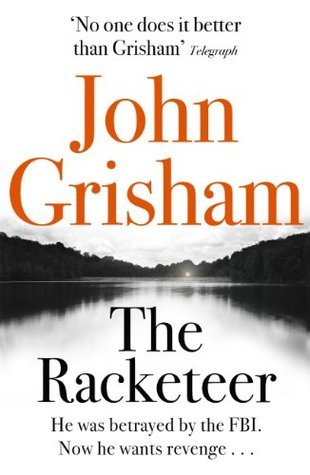
Malcolm Bannister’s Lost Career and Prison Life
Malcolm Bannister is forty-three years old and halfway through a ten-year federal prison sentence when the novel begins. He is incarcerated at the Federal Prison Camp near Frostburg, Maryland, a relatively low-security institution whose lack of imposing walls does little to diminish his sense of confinement. He understands the law well enough to know that his appeals have been exhausted and that ordinary legal remedies are unlikely to secure his release.
Before prison, Malcolm practiced law in Winchester, Virginia. He was a partner in a small firm, Copeland & Reed, Attorneys and Counselors at Law, and had built a respectable professional existence. His work did not bring him exceptional wealth, but he had a career, a family, and a place in his community. His conviction destroyed nearly everything he had achieved.
The case that ruined him began with a seemingly ordinary commercial assignment. A former law-school acquaintance introduced him to a real-estate transaction involving a complicated property arrangement. Malcolm conducted legal work, examined ownership problems, negotiated documentation, and expected to collect substantial professional fees.
What he did not appreciate was the connection between the transaction and Barry Rafko, a politically connected operator whose activities attracted federal attention. Rafko had extensive business interests and relationships with powerful people, but his enterprises also involved influence peddling and financial misconduct. When an investigation exposed his operations, Malcolm became entangled in a prosecution involving transactions he maintains he did not understand to be criminal.
The government treated the matter as part of a broader racketeering conspiracy. Malcolm believed he had performed legitimate legal services without knowing the illegal purposes behind the transaction. Prosecutors, however, were determined to establish criminal responsibility among the people connected to Rafko’s operation.
Malcolm was offered opportunities to resolve the case by pleading guilty, including a proposed sentence considerably shorter than the punishment he eventually received. He refused because he believed accepting such an agreement would require him to confess to a crime he had not committed. His refusal was understandable as a matter of principle, but it also exposed him to the enormous risks of a federal trial.
The trial was complicated and involved numerous defendants, financial arrangements, and legal theories. After lengthy deliberations, an exhausted jury returned guilty verdicts. Malcolm was sentenced to ten years and faced substantial financial penalties. His refusal to compromise his professed innocence had resulted in a punishment far worse than the agreements he had rejected.
His imprisonment also involved degrading transfers through the federal correctional system. Instead of moving directly into the comparatively tolerable environment at Frostburg, he spent time in more restrictive facilities and endured conditions that deepened his resentment. He concluded that the institutions responsible for administering justice were frequently indifferent to the people trapped inside them.
The consequences extended beyond the loss of his liberty. Malcolm was disbarred, his reputation collapsed, and his marriage to Dionne ended in divorce. Their son, Bo, grew increasingly distant from him, leaving Malcolm with the knowledge that important years of fatherhood were disappearing.
His father, Henry Bannister, remained a source of loyalty and support. Henry visited him, sent money, and listened to his frustrations, although he could do little to change his circumstances. Their meetings gave Malcolm a connection to his former life while also reminding him how much had been taken away.
At Frostburg, Malcolm works in the prison library. The position offers access to legal materials and gives him a useful role among the inmates, many of whom seek assistance with convictions, sentences, and procedural problems. His legal knowledge makes him valuable, but it also means he spends his days confronting the machinery of punishment that has already defeated him.
He develops relationships with other prisoners, including Quinn Rucker, whose importance becomes clear later. Malcolm sees the institution as a place where legal sophistication, social advantage, and willingness to cooperate can matter as much as actual culpability. His experience reinforces the belief that successful survival requires understanding how authority operates rather than assuming that authority will behave fairly.
The prison’s physical environment intensifies his dissatisfaction. Because Frostburg is a camp, the surrounding countryside is visible, and freedom can seem almost attainable. Malcolm knows that walking away would create another criminal offense and destroy whatever future he might still possess.
He therefore begins imagining an escape that will not involve physically breaking out of prison. He wants a lawful order authorizing his departure, a new identity that will free him from his criminal reputation, and enough money to establish an independent life.
His opportunity arrives when a federal judge is murdered.
Judge Fawcett’s Murder and the Secret Safe
Judge Raymond Fawcett is a federal judge serving in Virginia. His professional position gives him considerable authority, and his work includes cases with substantial political and financial consequences. He also maintains a secluded cabin near Lake Higgins, where he spends weekends away from the courthouse.
When Fawcett fails to appear for a scheduled proceeding, his colleagues become concerned. Investigators eventually reach the remote cabin and discover the bodies of the judge and his secretary, Naomi Clary. Both have been violently murdered.
The crime immediately becomes a national concern. The killing of an active federal judge is an exceptional event, and the FBI assigns considerable resources to identifying the perpetrators. The investigation is complicated by the cabin’s isolation, the lack of obvious witnesses, and the apparent professionalism of the killer.
The most important discovery is a sophisticated safe concealed in the basement. Someone has located it, opened it, and removed whatever it contained. The safe is empty when investigators arrive, and there is no obvious indication of what had been stored inside.
This creates a problem more difficult than an ordinary robbery investigation. Detectives normally begin by determining what was stolen, identifying people with access to the property, and tracing the missing items. Here, they cannot even establish the nature of the loot.
Fawcett’s professional activities offer possible explanations. Federal judges inevitably make decisions that disappoint litigants, criminal defendants, and powerful organizations. Investigators examine his cases, personal relationships, financial affairs, and habits, looking for a person with both motive and opportunity.
One case attracts particular attention: litigation involving Armanna Mines and valuable uranium deposits in Virginia. The dispute concerns substantial commercial interests and the right to exploit potentially enormous mineral wealth. Fawcett’s conduct in the proceedings raises questions because his decisions appear to become unusually favorable to the mining interests.
The case suggests a possible connection between judicial corruption and the judge’s sudden wealth. If Fawcett received an illegal payment, the contents of the safe might explain both his conduct and his murder.
Yet this theory remains speculative during the early investigation. The FBI has no confirmed evidence establishing that the judge accepted a bribe, no reliable inventory of his hidden possessions, and no suspect who can be tied convincingly to the cabin.
The deaths themselves also present a disturbing imbalance. Fawcett is the powerful public figure whose murder generates national attention, while Naomi Clary is largely identified through her association with him. Nevertheless, her death is equally part of the crime and must be explained by any successful investigation.
The FBI establishes a temporary investigative headquarters near Roanoke. The building, formerly used for frozen-food storage, becomes known as the Freezer. Agents examine forensic material, interview potential witnesses, review Fawcett’s history, and pursue leads that repeatedly fail to produce substantial evidence.
The investigation is publicized, and a financial reward is offered for information. Weeks pass without a breakthrough, increasing the pressure on the agents and their superiors.
Malcolm follows the case closely from Frostburg. He reads about Fawcett’s death, studies the reported details, and examines the judge’s professional history. Unlike the investigators, Malcolm appears remarkably confident that he understands the motive.
His interest is not casual curiosity. He has been considering a plan for years, and the deaths create the opportunity he needs to put it into motion. When the investigation begins losing momentum, he approaches the prison administration with an extraordinary claim.
He can identify the murderer.
Malcolm’s Bargain and Quinn Rucker’s Confession
Malcolm first needs the federal authorities to recognize that he possesses something valuable. He approaches Warden Wade and insists that investigators should be informed of his knowledge about Fawcett’s murder. The warden is skeptical, but the seriousness of the case makes the claim impossible to dismiss outright.
FBI agents Chris Hanski and Erardi eventually interview Malcolm. They expect a prisoner attempting to bargain for special treatment, perhaps by offering a rumor or manipulating information obtained through prison conversations. Malcolm understands their skepticism and refuses to give away the one piece of information that might make him valuable.
He says he can identify the murderer and explain the crime, but he demands a comprehensive agreement before revealing the name.
His requirements are ambitious. He wants his prison sentence eliminated, his criminal record and reputation effectively left behind, a new identity, federal protection, and the reward money associated with solving the murders. He also wants the government to provide the practical means of beginning a new life.
For the FBI, these conditions are difficult to accept. Malcolm is a convicted criminal whose information has not been verified, and he is asking for exceptional benefits. The agents initially resist giving him guarantees when they do not even know whether his accusation is credible.
Malcolm’s leverage increases as the investigation continues without progress. He writes to Victor Westlake, a senior FBI official involved in the case, and repeats his offer. He knows that the bureau faces intense professional and political pressure to solve the murder of a federal judge.
Westlake consults superiors, including FBI Director George McTavey. They weigh the risk of rewarding a dishonest prisoner against the possibility of obtaining a major breakthrough. The longer their investigation remains stalled, the more attractive Malcolm’s proposal becomes.
Malcolm’s legal experience allows him to negotiate with unusual precision. He understands the significance of Federal Rule of Criminal Procedure 35, which permits certain sentence reductions based on a defendant’s substantial assistance to the government. He is determined to secure a formal process rather than rely on informal promises from investigators.
He is eventually transported under guard to Washington, where his sentencing judge, Judge Slater, becomes involved in the arrangements. The potential reduction in Malcolm’s sentence depends on the government’s cooperation and on satisfying the conditions established for his disclosure.
Once the necessary commitments are made, Malcolm identifies his supposed murderer: Quinn Rucker.
Quinn is a Black man from Washington, D.C., with a background in organized drug trafficking. He was serving a federal sentence at Frostburg, where he became friendly with Malcolm, before escaping from the prison camp.
Malcolm claims that Quinn had a powerful reason to hate Fawcett. According to his account, Quinn’s nephew, Jakeel Staley, faced serious criminal charges before the judge. The Rucker family allegedly arranged to pay Fawcett $500,000 in exchange for a favorable ruling that would help Jakeel’s defense.
The money was supposedly delivered, but Fawcett did not honor the arrangement. The judge ruled against Jakeel, leaving the Ruckers furious and financially damaged.
Malcolm claims that Quinn confided this story to him in prison. He also alleges that Quinn had discussed revenge and believed Fawcett kept money at his cabin. Malcolm presents himself as an unwilling recipient of criminal information who now fears retaliation for revealing it.
The explanation seems to answer several questions at once. It provides a plausible motive for murdering the judge, accounts for the possibility of concealed money, connects a fugitive prisoner with a known history of criminal activity to the investigation, and explains why Malcolm would possess information unavailable to the FBI.
Investigators have doubts, but the theory is attractive because it converts a difficult mystery into an apparently straightforward criminal prosecution. Agents locate Quinn in Norfolk and arrest him.
The interrogation becomes one of the novel’s most consequential sequences.
Quinn initially denies murdering Fawcett or Naomi Clary. He acknowledges enough about his background to make the agents suspicious, but he refuses to provide the admission they want. Investigators have little direct evidence connecting him to the cabin. There is no decisive fingerprint, ballistic match, eyewitness, or physical trace establishing his presence at the crime scene.
FBI agents Pankovits and Delocke attempt to overcome this weakness through psychological pressure. They confront Quinn with assertions about supposed evidence, suggested witnesses, suspicious financial activity, and possible connections between his movements and the murder.
They also exploit his concern for relatives. The Rucker family’s criminal background gives investigators opportunities to threaten further prosecutions or suggest that cooperation might protect people Quinn cares about.
Much of the information presented to Quinn is exaggerated, manipulated, or falsely described. The agents seek to make him believe that the government possesses a much stronger case than it actually does.
Their questioning continues for hours. Quinn becomes exhausted, hungry, frustrated, and increasingly concerned about what might happen to his family. The agents suggest that a confession could spare relatives from investigation and improve Quinn’s position.
The possibility of capital punishment adds another source of pressure. Quinn understands that being charged with the murder of a federal judge could expose him to the most severe consequences.
Eventually, he agrees to confess.
The agents do not simply record an independently supplied narrative. They review the details that Quinn must include and attempt to align his statement with their understanding of the crime. The resulting confession therefore contains information shaped by the interrogators themselves.
For Westlake and the prosecution, the confession appears to vindicate the decision to bargain with Malcolm. A fugitive with a plausible motive has admitted responsibility, and the FBI can announce progress in a case that had embarrassed the agency.
For Malcolm, Quinn’s indictment is the decisive legal event. The government has fulfilled the essential condition triggering his departure from prison.
The reader is initially encouraged to understand the confession through the same investigative framework as the federal authorities. Quinn appears to be a violent offender whose resistance has finally collapsed under questioning. The agents’ methods are disturbing, but the confession seems to complete Malcolm’s explanation.
The novel later reveals that the situation is much more complicated.
Quinn’s confession is false, and Malcolm already knows it. Their apparent conflict has been carefully engineered as part of a larger plan devised during their friendship at Frostburg.
The false accusation is therefore a double deception. It persuades the government that Malcolm has solved the murder while allowing Quinn to create a record of coercive interrogation that can later be challenged.
This is an extraordinarily dangerous arrangement. Quinn must trust that Malcolm will eventually secure his release, even though the immediate result is a capital murder indictment and months of imprisonment.
Neither the investigators nor the reader yet possesses the information necessary to recognize the arrangement. Malcolm’s apparent success as an informant is actually the first major achievement of the conspiracy.
The Making of Max Baldwin and the Fragile Murder Case
After Quinn’s indictment, Malcolm is released from Frostburg. U.S. Marshal Pat Surhoff takes responsibility for his initial protection, and the former prisoner begins the process of becoming someone else.
The transition is psychologically complicated. Malcolm has spent years longing for freedom, but the ordinary world has continued without him. He must learn to make choices about housing, employment, money, travel, and relationships while avoiding the danger supposedly posed by Quinn’s criminal associates.
The government offers witness-protection arrangements designed to conceal his identity and whereabouts. Malcolm’s unusual demands also include substantial changes to his physical appearance.
He selects the name Max Reed Baldwin. The middle name honors the professional life he lost at Copeland & Reed, giving his new identity a concealed connection to his old one.
The government arranges extensive facial surgery at a facility in Colorado. Malcolm undergoes procedures intended to alter recognizable features and make him more difficult to identify.
His recovery is long and uncomfortable. He spends weeks dealing with swelling, pain, restricted movement, and the disorienting experience of watching his appearance change. The process offers a peculiar parallel to imprisonment: even as he obtains freedom, he must endure another period of confinement and bodily discomfort before he can use it.
When the medical procedures are complete, Malcolm relocates to the Jacksonville area of Florida. He settles near Neptune Beach, receives official identification, establishes financial accounts, and begins building an ordinary existence under his new name.
The reward money, amounting to $150,000 in the novel’s final arrangement, gives him considerable independence. He leases a convertible, purchases clothes, obtains a phone, and explores a coastal lifestyle far removed from Frostburg’s routines.
Federal officials also discuss employment opportunities and the necessity of creating a believable personal history. Max must have more than forged documents; he needs a consistent identity that will withstand ordinary encounters with employers, financial institutions, and strangers.
Malcolm takes pleasure in these possibilities, but he remains intensely aware of government surveillance. His protectors are also interested in monitoring him because he is a crucial witness in a major murder prosecution.
Meanwhile, the case against Quinn begins to weaken.
U.S. Attorney Stanley Mumphrey is eager to prosecute the alleged murderer. The government has invested substantial institutional credibility in Malcolm’s information, and Quinn’s confession appears to provide the proof required for conviction.
Defense attorney Dusty Shiver, however, challenges the interrogation. He argues that Quinn was pressured, manipulated, and induced to confess through improper tactics.
The prosecution has reason to worry. Agents made claims about evidence they did not actually possess, used Quinn’s concern for his family, and shaped important elements of the resulting confession. If a court excludes that statement, the government’s remaining evidence may be insufficient.
Jimmy Lee Arnold, the attorney involved in Jakeel Staley’s earlier case, also complicates matters. Investigators question him about the supposed $500,000 bribe, but there is no reliable documentation showing that Fawcett received the money.
The accusation against Quinn therefore rests heavily on Malcolm’s testimony and the confession itself. Both have weaknesses that the government is reluctant to acknowledge publicly.
The FBI continues tracking Max’s movements. Westlake receives reports about his financial activity, travel plans, telephone use, and encounters with other people.
Max resents the intrusion. Although he has received extraordinary benefits, he increasingly insists that freedom should include the right to live without federal officials observing his every move.
He travels to Miami and begins establishing a company called Skelter Films. Through business services that provide an address, telephone arrangements, and administrative support, he creates the appearance of a legitimate documentary production enterprise.
At first, the company seems like an unusual diversion for a newly released lawyer. Malcolm presents himself as someone interested in making films, but the practical arrangements are disproportionately elaborate.
He also travels in the Caribbean, examining locations and acquiring experience of the international movements that will later become important. His newly issued passport, changed appearance, and financial independence make this possible.
A supposed threat from Quinn’s relatives then gives him a reason to reject witness protection entirely. Federal investigators monitor conversations suggesting that members of the Rucker family may have located Max and intend to retaliate.
The Marshals Service responds by moving him to a safer location and proposing additional protective measures. Max refuses to continue living under government control.
Westlake and other officials urge him to cooperate. They remain concerned about the possibility of violence and need him available for Quinn’s eventual trial.
Max responds that he is a free man and has the right to make his own decisions. He promises that he will testify when necessary but insists on managing his security independently.
This conflict serves the hidden plan. By leaving witness protection, Malcolm escapes the routine monitoring that would make his next operation difficult.
He removes himself from the government’s immediate control and abandons the financial and communications habits that investigators have been tracking. His subsequent movements are calculated to mislead surveillance teams and prevent the FBI from learning where he is going.
Westlake is irritated but gradually recognizes that Max is difficult to follow. The informant has received the government’s help, acquired a new identity, and then vanished.
The government interprets this as the dangerous independence of a protected witness. Malcolm understands it as the next necessary stage of his operation.
Vanessa Young, Nathan Cooley, and the Fake Documentary
Malcolm’s disappearance allows him to return secretly to Virginia. He now has the appearance, identification, and resources needed to approach people who would otherwise recognize him as Malcolm Bannister.
His principal collaborator outside prison is Vanessa Young, Quinn Rucker’s sister.
Malcolm first noticed Vanessa when she visited Quinn at Frostburg. He was attracted to her, and their acquaintance gradually developed through conversations and correspondence. Their relationship initially existed under the restrictions imposed by prison, where even ordinary physical intimacy was impossible.
After his release, Malcolm hopes they can establish a genuine romantic relationship. Vanessa has become deeply involved in the larger plan, however, and their personal connection cannot be separated from the operation they have agreed to undertake.
She is practical, resourceful, and willing to assume considerable danger. Where Malcolm supplies legal knowledge and strategic direction, Vanessa provides mobility, cover, and the ability to act in places where he cannot safely appear.
Their target is Nathan Edward Cooley, a former prisoner who now operates a bar in Radford, Virginia. Malcolm knows him from an earlier period of incarceration, when Nathan was called Nattie.
Nathan served time for drug offenses connected to his brother Gene and had repeatedly sought Malcolm’s assistance with his sentence. During their prison acquaintance, Nathan revealed that he knew about a substantial quantity of hidden gold.
The significance of that disclosure will not become clear until the ending. At this point, Malcolm simply appears to be seeking out a former criminal whose experiences may be useful to an unusual new business venture.
Approaching Nathan directly as Malcolm Bannister would be dangerous. Nathan knows the former lawyer from prison and could recognize him or become suspicious of his intentions.
Malcolm therefore adopts another version of his new identity. He presents himself as Reed Baldwin, a documentary filmmaker associated with Skelter Films.
The proposed film concerns abuses of federal law-enforcement power, particularly incidents in which Drug Enforcement Administration operations have resulted in deaths. Malcolm claims that the subject is personally important to him and presents the project as an opportunity to expose injustice.
Nathan’s brother Gene was killed during a DEA operation, making him an unusually receptive subject. He has grievances against federal agents and strong emotional memories of his brother.
Malcolm initially approaches him through written communications and then personal meetings. He is careful to sound professional, sympathetic, and genuinely interested in Nathan’s experiences.
Nathan is suspicious at first, but the filmmaker’s attention flatters him. The possibility of telling Gene’s story to a wider audience appeals to his pride and gives him a sense that his family’s suffering might finally receive recognition.
Malcolm reinforces the illusion by providing the details of an actual production. He hires film technicians, arranges equipment, organizes interviews, and establishes schedules that make Skelter Films appear credible.
Vanessa participates under the name Gwen. Together, they create the impression of a small production team conducting serious research.
The filmmakers interview Nathan about Gene, his criminal background, his relationships with federal agents, and his experiences during the drug investigation. Nathan becomes increasingly comfortable as cameras, professional questions, and sympathetic attention transform him into the apparent subject of an important documentary.
The crew also visits locations associated with Gene’s death. These visits deepen the emotional credibility of the project because Nathan is recounting genuine experiences rather than participating in an entirely invented story.
Malcolm understands that the most persuasive deception contains enough truth to feel natural. Gene really died during a federal drug operation, and Nathan really has grievances about what happened. The fictional film gives these facts a new purpose.
The group travels to Willow Gap, Nathan’s hometown, and continues gathering material. Malcolm and Vanessa encourage Nathan to talk freely about his family, his past, and his anger toward law enforcement.
Throughout the process, Malcolm observes Nathan’s character. He recognizes his vanity, his appetite for attention, and his willingness to accept an explanation that casts him as someone unfairly treated by powerful institutions.
The film project gradually expands into the possibility of international travel. Malcolm suggests that the documentary might include other families who experienced similar abuses and that Nathan could participate in a larger production outside the United States.
The prospect is exciting. Nathan has been living a comparatively limited existence, and the idea of traveling by private jet as a featured participant in a documentary makes him feel important.
There is one obstacle: his criminal history and the restrictions associated with international travel.
Vanessa obtains forged documents, including a passport under the name Nathaniel Coley. The altered spelling and invented identity are intended to enable the next stage of the plan.
Malcolm arranges for Nathan to accompany him on a chartered flight supposedly connected to the documentary project. The preparations combine extravagant gestures with apparently ordinary production logistics.
The deception has now become much more dangerous than an invented film. Nathan is being drawn into a situation where his documents, possessions, movements, and legal vulnerability will be controlled by people he believes are helping him.
He agrees to travel because he trusts Reed Baldwin and wants the promised adventure.
Malcolm has succeeded in persuading his target to enter the trap voluntarily.
The Jamaican Trap and the Hidden Gold
The next phase begins with a chartered Challenger 604 private jet. Malcolm arranges the flight through Skelter Films, paying substantial fees to secure transportation that will impress Nathan and provide the flexibility required for the operation.
Nathan believes he is traveling toward a glamorous documentary experience. The private aircraft, professional arrangements, and personal attention reinforce his conviction that Reed Baldwin is a legitimate filmmaker with considerable resources.
Malcolm’s real objective is to get Nathan into Jamaican custody under circumstances that make him desperate to cooperate.
The journey involves a complicated combination of intoxication, misleading travel arrangements, forged identification, and concealed criminal evidence. Nathan becomes heavily impaired during the flight and is unable to exercise meaningful control over what happens next.
The aircraft reaches Jamaica, where immigration and customs authorities discover problems with Nathan’s documentation and possessions. He is traveling under a false identity, and his baggage contains a handgun and a large quantity of cocaine.
Nathan insists that he does not understand what is happening. He believed he was participating in a documentary project and had no intention of becoming involved in an international drug-smuggling prosecution.
The Jamaican authorities arrest him.
His new circumstances are terrifying. He faces serious criminal charges in a foreign country, lacks local connections, and cannot expect the protections or practical familiarity he would have in the United States.
Malcolm avoids being treated as the principal offender. He appears to be another traveler caught in an unfortunate situation and presents himself as a concerned associate trying to help Nathan.
He contacts Jamaican attorney Rashford Watley and involves him in discussions about Nathan’s predicament. Watley treats the allegations seriously and explains that a conviction could produce a long prison sentence.
Nathan’s detention conditions are harsh. He encounters violence, intimidation, and a prison environment that quickly destroys the confidence he displayed during the documentary interviews.
Malcolm visits him and maintains the appearance of sympathy. He expresses regret about the disaster, promises to explore possible solutions, and claims to be working toward his release.
Nathan begins blaming Reed for involving him in the trip, but he remains dependent on him. The man he believes caused his misfortune also appears to be his only realistic hope of escaping it.
Malcolm exploits this dependency.
He explains that resolving the charges will require money and that ordinary legal representation may not be sufficient. Nathan initially resists acknowledging the scale of the problem, but the threat of spending years in Jamaican custody increasingly overwhelms his judgment.
He eventually reveals that he possesses a hidden fortune.
The treasure is not cash. It consists of small gold bars, each weighing ten ounces, concealed at his property in Virginia.
Nathan believes that Reed can retrieve the gold and use part of it to secure his freedom. Malcolm acts surprised by the disclosure and allows Nathan to explain the hiding place.
The gold is stored in cigar boxes concealed inside a child’s casket at Nathan’s home. The location is sufficiently unusual that ordinary visitors would be unlikely to search it.
Nathan supplies the information Malcolm needs while believing that he is authorizing an emergency rescue. He does not understand that revealing the location is the central objective of the entire operation.
Malcolm coordinates with Vanessa, who has returned to Virginia and is preparing to enter Nathan’s property.
Her assignment is dangerous because Nathan’s house is not an abandoned storage facility. Friends or acquaintances may appear, and any unexpected encounter could expose her presence.
Vanessa uses Nathan’s pickup truck and moves carefully around the house. She searches for the casket and retrieves the gold from its hiding place.
During the operation, visitors arrive at the property. Vanessa must improvise to prevent them from discovering what she is doing. Her quick reactions allow her to maintain control of the encounter and avoid losing the treasure.
The scene is one of the novel’s clearest demonstrations that the plan depends on more than Malcolm’s intelligence. Vanessa must make independent decisions under pressure, and her ability to manage an unpredictable situation prevents the scheme from collapsing.
She eventually leaves the house with the gold.
Meanwhile, Malcolm continues maintaining Nathan’s confidence in Jamaica. He presents himself as a friend working to secure funds and pursue legal arrangements.
The reality is that Nathan has been stripped of his fortune. Malcolm intends to leave him in custody while the stolen treasure is transferred beyond the reach of its former possessor.
Vanessa drives north from Radford and eventually reunites with Malcolm. The two inventory the gold in a hotel room.
They count 570 small bars. At the gold price used in the novel, their treasure is worth approximately $8.5 million.
The result exceeds the security Malcolm could have obtained through the original reward money. He is no longer merely a freed prisoner with a new identity. He is a wealthy conspirator possessing a fortune whose existence remains unknown to almost everyone.
The gold also changes the nature of the central murder mystery. The empty safe at Judge Fawcett’s cabin has not been an incidental detail; it is the origin of the treasure now in Malcolm and Vanessa’s possession.
Yet possession is only the beginning of their difficulties.
The gold is valuable precisely because it can be converted into money, but such a large quantity cannot be handled casually. Banks, dealers, surveillance records, customs officials, and ordinary financial procedures could expose the conspiracy.
Malcolm and Vanessa divide the bars among safe-deposit boxes. Malcolm tests the metal’s authenticity and begins exploring ways to exchange limited quantities for cash.
He conducts transactions with a dealer named Hassan, accepting the inconvenience and expense involved in disposing of gold without creating ordinary financial records.
The proceeds help finance additional travel and provide resources that can be moved more easily than hundreds of physical bars.
Malcolm also arranges shipments to Antigua. Some packages contain ordinary-looking objects that conceal money or valuables, and he carefully separates transactions to reduce the risk of attracting attention.
The logistics are exhausting. His freedom now depends on avoiding mistakes while traveling, communicating, storing valuables, and dealing with strangers who might become suspicious.
Vanessa has another important assignment involving Quinn’s criminal prosecution.
She approaches Dusty Shiver with information suggesting that Quinn was undergoing treatment at a rehabilitation facility around the time of the murders. The documentation provides an alternative explanation for his movements and undermines the government’s theory that he murdered Fawcett.
The supposed rehabilitation history is itself part of the conspiracy. Quinn’s treatment arrangement was deliberately prepared, with a false identity and substantial payment, so that genuine institutional records could later establish an apparent alibi.
This development is particularly effective because it attacks the prosecution from another direction. The interrogation already contains serious procedural weaknesses, and now Quinn’s defense possesses documentary evidence suggesting that the original accusation was wrong.
Malcolm has created the conditions for his friend’s release while simultaneously recovering the treasure that motivated the murders.
He still needs to make sure that the government cannot prosecute him or the other participants for what they have done.
From outside the United States, he contacts Westlake and Mumphrey again. He informs them that their theory about Quinn is mistaken and offers to identify the actual murderer.
The situation resembles his original approach from Frostburg, but his bargaining position has changed. He is free, wealthy, physically transformed, and beyond the government’s immediate control.
Once again, the FBI needs information that only Malcolm is prepared to provide.
And once again, he refuses to surrender it without a comprehensive agreement.
The Real Murderer, the Final Bargain, and the Escape to Antigua
Malcolm’s final negotiation begins with the government recognizing that the original prosecution has become untenable.
Evidence concerning the gold connects Judge Fawcett’s secret safe to financial transactions conducted before his death. Investigators discover that the judge had handled small gold bars and that his concealed wealth may have been substantially greater than previously suspected.
Malcolm provides additional material, including photographs of cigar boxes and gold bars, to demonstrate that he knows important facts about the missing treasure.
The cigar boxes offer a particularly valuable connection. Some bear identifying markings from a tobacco store associated with Fawcett’s preferred brand. These details establish a plausible route between the items now known to Malcolm and the objects formerly kept in the judge’s safe.
Westlake begins to understand that Malcolm’s original accusation against Quinn was a deception.
The FBI has already expended considerable effort prosecuting the wrong person. The interrogation is vulnerable to challenge, the motive involving Jakeel Staley’s supposed bribe has not been substantiated, and Malcolm now appears to possess information about the real killer that the government cannot obtain independently.
FBI Director McTavey recognizes the practical problem. Malcolm has outmaneuvered the bureau, but attempting to prosecute him might jeopardize the opportunity to solve the murders.
Malcolm’s terms are explicit. He wants comprehensive immunity for himself and the principal participants in the conspiracy, dismissal of the murder charges against Quinn, and a sentence reduction that will secure Quinn’s release.
He also insists that the agreements must be formally approved before he reveals the truth.
The final meeting takes place on Antigua, where Malcolm has begun establishing his new life. Westlake, Mumphrey, and other government representatives arrive to negotiate.
Dusty Shiver, now representing the interests of Malcolm and his associates as well as Quinn, participates remotely from Virginia. His involvement helps ensure that Malcolm’s demands are translated into enforceable legal documents.
The agreement protects Malcolm, Quinn, Vanessa, and Denton Rucker, known as Dee Ray, from prosecution for their involvement in the Fawcett murder investigation.
Quinn’s murder charges are dismissed, and a Rule 35 motion produces the reduction necessary for his release from the sentence he was serving for drug trafficking.
Malcolm insists on confirmation that Quinn is actually free. He refuses to rely on assurances that paperwork will be completed later.
Only after the relevant documents have been signed and Quinn has been released does Malcolm explain how the murders occurred.
The story begins years earlier, when Nathan Cooley was working at a small country store near Ripplemead, Virginia.
A stranger approached him with an offer of temporary manual labor. Nathan, who was earning little money, accepted the chance to receive higher pay for helping move a heavy object.
The stranger called himself Ray.
Nathan followed him to a remote cabin, where they used improvised equipment to move a massive safe from a pickup truck into the building’s basement.
The work was difficult, but Nathan completed it and received payment. At that point, he had no reason to know that the stranger was a federal judge or that the safe contained anything more interesting than ordinary valuables.
He told his brother Gene about the encounter. The brothers were experienced criminals, and the secrecy surrounding the cabin and the unusually heavy safe excited their curiosity.
They decided to investigate.
Their initial attempts to enter the building were frustrated by secure doors and windows. Eventually, they removed a basement window and gained access without leaving obvious signs of forced entry.
Inside, they discovered material identifying Ray as Judge Raymond Fawcett. They also found information about the important uranium-mining litigation taking place in his courtroom.
Nathan and Gene began monitoring the judge. They visited the courthouse, observed proceedings, and studied his movements between Roanoke and the cabin.
They eventually discovered how the safe was concealed. A hidden mechanism behind shelving allowed a concealed section of the basement to open, revealing the safe itself.
The brothers could locate it, but they could not open it. The digital locking system required a code they did not possess.
They therefore devised a plan to observe the judge using it.
Their surveillance became increasingly patient and elaborate. They tracked when Fawcett traveled to the cabin, what he carried with him, and how he spent his weekends.
On one occasion, Gene entered the cabin while Fawcett was away fishing, hoping to obtain more information. The attempt confirmed that the safe was accessible but provided no way to defeat its security.
The brothers eventually decided that Nathan should hide inside the cabin and observe the judge when he opened it.
Nathan concealed himself in a basement closet among hunting clothes and other stored items. Gene waited outside, ready to assist if necessary.
When Fawcett arrived, Nathan watched him activate the hidden mechanism and open the safe.
Inside were cigar boxes containing small gold bars.
Fawcett handled the bars and added more gold to his concealed collection. The sight transformed the brothers’ suspicions into certainty: they had discovered a fortune.
They now knew that the judge was storing extraordinary wealth at the cabin and had personally observed the procedure used to access it.
After the judge closed the safe, Gene created a diversion by approaching the cabin and claiming to be searching for a missing dog. The disturbance allowed Nathan to escape from his hiding place.
The brothers intended to return and steal the gold. Doing so would probably require confronting Fawcett, and they were prepared to use violence if necessary.
Their plan was interrupted by their involvement in the methamphetamine business.
During a DEA operation, Gene was killed and Nathan was arrested. Nathan eventually went to federal prison, leaving the treasure untouched.
It was during this imprisonment, at the federal facility in Louisville, that Nathan met Malcolm Bannister.
Malcolm had developed a reputation for helping prisoners with legal problems. After obtaining relief for one inmate whose sentence had been calculated incorrectly, he began receiving requests from others who believed he could perform similar miracles.
Nathan was among them.
He repeatedly asked Malcolm to examine his case and obtain his release. When Malcolm explained that he could find no legal basis for overturning the sentence, Nathan attempted to persuade him with promises of money.
Eventually, he revealed the story of Judge Fawcett’s gold.
Nathan promised Malcolm a substantial share of the fortune if the lawyer could arrange his freedom. Malcolm could not deliver what Nathan wanted, but he remembered the extraordinary information.
Years later, Nathan completed his sentence and returned to the Virginia mountains.
He had not forgotten the gold.
By then, Judge Fawcett was still using the cabin, and the fortune remained hidden. Nathan returned to carry out the robbery that Gene’s death and his own imprisonment had delayed.
He confronted Fawcett, used violence to obtain access to the safe, and took the gold.
Naomi Clary was also present. Nathan tortured her and ultimately killed both victims.
The murders were therefore the culmination of a robbery Nathan had been planning for years, rather than an act of revenge connected to the Rucker family’s supposed bribery arrangement.
Nathan disappeared with the gold and concealed it at his property.
Malcolm, meanwhile, had been transferred to Frostburg, where he developed his friendship with Quinn Rucker. When the Fawcett murders became public, Malcolm recognized the connection between the empty safe and Nathan’s prison story.
He possessed information that could identify the murderer, but he also realized that the missing treasure offered an opportunity to obtain far more than freedom.
Malcolm and Quinn devised the conspiracy that would ultimately secure Malcolm’s release, falsely implicate Quinn, create the circumstances for Quinn’s eventual exoneration, and allow Malcolm to recover the gold.
The elaborate sequence of bargains, manufactured suspicion, coerced confession, new identity, fake documentary, Jamaican detention, and gold recovery was therefore connected from the beginning.
Malcolm ends his explanation by identifying Nathan Edward Cooley as the murderer. He tells the investigators that Nathan is being held in a Jamaican jail under the false name Nathaniel Coley.
The location of the suspect is another achievement of the conspiracy. The FBI now knows who committed the murders and where to find him, but Nathan has already been trapped by criminal charges that make extradition or cooperation with American authorities attractive.
Malcolm suggests that Nathan may prefer imprisonment in the United States to remaining in Jamaica.
The government has finally obtained the answer to its original question.
Yet Malcolm’s information raises another problem: the gold.
Westlake suspects that Malcolm possesses the stolen fortune and challenges his right to retain it. Malcolm denies having the gold and argues, hypothetically, that the treasure has no obvious legitimate claimant.
It was taken from a murderer who stole it from a corrupt judge. The judge apparently acquired it through illegal payments, and any original source may have little interest in admitting ownership.
Malcolm uses this uncertainty to defend the practical outcome of his scheme without explicitly acknowledging possession.
The conversation reveals the limits of the government’s victory. The FBI has solved the murders, but it has not recovered the missing fortune or established a complete accounting of its origin.
Malcolm also draws Westlake’s attention back to Armanna Mines.
He reasons that Fawcett may have received the gold as a bribe during the uranium litigation. A mining company with substantial gold-producing interests could have transferred gold to the judge through intermediaries in exchange for favorable rulings.
The financial stakes were enormous. The gold in the safe may have represented only part of a much larger payment associated with valuable mineral rights.
Malcolm cannot identify every person who arranged the bribe, and the government does not possess a complete record of the transactions. The possible corruption therefore remains a serious unresolved matter rather than a fully prosecuted conspiracy.
The personal outcome is considerably clearer.
Malcolm returns briefly to the United States and reunites with Quinn, Vanessa, and Dee Ray. The conspirators celebrate the success of a plan that had once seemed almost impossible.
Quinn is free, Vanessa is reunited with Malcolm, and the gold remains available for distribution.
Dee Ray has handled important logistical arrangements and receives compensation for his expenses and participation. The group discusses the remaining bars and agrees on a division of the fortune among the principal beneficiaries.
The final obstacle is transporting the gold to Antigua.
Dee Ray arranges a yacht and develops a method of concealing the remaining bars among bags and equipment associated with scuba diving. The conspirators replace the contents of bulky diving bags with gold, distributing the weight across luggage that appears consistent with a group preparing for recreational travel.
They travel to Antigua, where the captain completes the necessary customs procedures without exposing their cargo.
The luggage is transported to Malcolm’s villa at Sugar Cove. The conspirators finally possess the treasure outside the immediate reach of American investigators.
The novel ends with the group celebrating their arrival and entering the ocean.
There is no final arrest, confession of guilt, or conventional punishment for Malcolm’s elaborate manipulation of the authorities. The criminal who murdered Fawcett and Clary has been identified, Quinn has been released, and Malcolm has acquired freedom, wealth, and a new life.
The last image is therefore one of successful escape, although the means of achieving that success leave substantial moral questions unanswered.
Prisons, Prosecutors, and Power in Grisham’s Legal World
The institutional setting of The Racketeer is essential to the story because Malcolm’s plan depends on his intimate knowledge of how legal and administrative systems respond to pressure. Grisham does not present the law as an abstract set of principles operating independently of human incentives. Prosecutors, investigators, judges, prison administrators, lawyers, and protected witnesses all make decisions within institutions that reward some behavior and discourage other behavior.
Frostburg initially appears comparatively comfortable because it is a low-security prison camp. Malcolm can work in the library, read newspapers, communicate with the outside world, and observe the surrounding countryside. These privileges, however, do not repair the damage caused by incarceration. His legal career is gone, his family relationships have deteriorated, and his future remains controlled by officials who have little personal investment in his rehabilitation.
His earlier transfers through more restrictive prisons expose another dimension of the system. Prisoners can experience isolation, discomfort, and administrative indifference even when their crimes do not involve violence. Malcolm repeatedly observes that punishment extends beyond the sentence pronounced in court, affecting reputation, finances, family relationships, and the possibility of reintegration.
The federal prosecution that brought him to prison illustrates the pressures created by plea bargaining and complex conspiracy charges. Malcolm’s refusal to accept a plea agreement exposes him to a much longer sentence following conviction. The novel presents this outcome through his perspective, emphasizing the way a defendant may feel compelled to choose between admitting guilt and risking an overwhelming punishment.
His professional knowledge helps him understand the mechanisms that might provide an escape. Federal Rule of Criminal Procedure 35 allows a sentencing court to reduce a sentence under specified conditions, including substantial assistance provided after sentencing through a government motion. The precise timing and requirements matter, and the novel simplifies some of the practical arrangements surrounding Malcolm’s release.
The important narrative point is that Malcolm understands how to convert useful information into leverage. He does not merely ask officials to show mercy. He offers something they urgently need and insists that the institutional machinery be used to produce a formal legal benefit.
The murder investigation reveals another source of institutional vulnerability. FBI agents are not simply trying to discover what happened; they are also under pressure to demonstrate results in a politically embarrassing case. Their professional interest in obtaining a confession creates conditions in which weak evidence can appear more persuasive than it deserves.
Quinn’s interrogation makes this problem concrete. Investigators use claims about evidence and threats involving relatives to push him toward an admission. The resulting confession appears to strengthen their case, but its content has been influenced by the very officials who later treat it as reliable proof.
The witness-protection arrangements introduce a different aspect of federal power. The U.S. Marshals Service’s Witness Security Program can provide protection, relocation, new identities, and assistance to qualifying witnesses. Grisham incorporates these possibilities into Malcolm’s extraordinary transformation, although the novel’s particular timetable and facial-surgery arrangements should not be mistaken for a description of routine practice.
For Malcolm, a new identity offers both protection and an opportunity to evade official scrutiny. The government views him as a valuable witness whose safety is important, while he views the same arrangements as resources that can be redirected toward his private objectives.
The novel’s geographical movement reinforces these institutional contrasts. Frostburg represents enforced dependence; Washington and Roanoke are centers of prosecutorial authority; Florida provides the freedom of a newly created identity; Jamaica becomes a place where Nathan’s unfamiliarity with foreign law makes him vulnerable; and Antigua offers Malcolm distance from American enforcement.
These settings are less important as elaborate physical environments than as jurisdictions with different forms of power. Malcolm succeeds by understanding when institutions can be pressured, misled, or avoided.
Malcolm Bannister and the Morality of His Reinvention
Malcolm Bannister is the central intelligence behind The Racketeer, but he is not a straightforwardly admirable protagonist. His suffering makes him sympathetic, his legal knowledge makes him formidable, and his willingness to deceive people for personal gain complicates the moral position from which he tells the story.
His opening situation encourages readers to see him as a victim of an unjust system. He has lost his profession, marriage, reputation, and access to his son because of a conviction he insists was undeserved. His frustration is presented through the everyday realities of incarceration rather than through abstract complaints about justice.
He is also a man who cannot accept that his future has been permanently determined by a federal judgment. Unlike prisoners who respond to confinement through resignation, he continues examining possibilities, maintaining connections, and planning ways to regain control.
His first major strength is patience. He does not reveal his knowledge of the Fawcett murders as soon as he recognizes its value. He waits until investigators are sufficiently desperate to consider an arrangement that would otherwise seem unreasonable.
His second strength is his capacity to understand another person’s incentives. He knows the FBI wants a solved murder, Quinn needs eventual freedom, Vanessa wants a future with him, and Nathan wants recognition and relief from his past. His plans are built around what other people hope to obtain.
The ability becomes morally troubling because he uses the same insight to manipulate people who trust him. Nathan’s affection for Gene and resentment toward the DEA are genuine emotional experiences. Malcolm constructs a fictional documentary around them, encouraging Nathan to expose himself while pretending to respect his suffering.
The Jamaican operation exposes Malcolm’s willingness to inflict considerable distress in pursuit of his objectives. Nathan is a murderer, but Malcolm’s knowledge of his guilt does not erase the fact that the plan involves creating a terrifying predicament and exploiting another man’s fear of imprisonment.
Malcolm also accepts serious risks on behalf of people he loves. Quinn spends months facing murder charges because he trusts their plan, while Vanessa undertakes a dangerous search of Nathan’s house and handles stolen property that could destroy her future if discovered.
These decisions complicate the idea that Malcolm is merely correcting the injustice done to him. He becomes a strategist capable of using people and legal institutions in ways that resemble the ruthless behavior he condemns.
His changing names dramatize the process. Malcolm Bannister is the damaged lawyer and prisoner; Max Reed Baldwin is the officially reconstructed citizen; Reed Baldwin is the invented filmmaker who manipulates Nathan. Each identity allows a different kind of action, but all are controlled by the same calculating personality.
The physical transformation adds an unusual dimension. Malcolm’s surgery changes how strangers perceive him, while the official documents change how institutions classify him. He discovers that identity has practical components that can be manufactured, even though memory and personal history remain unchanged.
The choice of Reed as his middle name reveals that he cannot entirely abandon his past. He retains a private connection to the legal practice that existed before his conviction, even as he prepares to use his new identity for criminal purposes.
His relationships also expose emotional limitations. He repeatedly reflects on Dionne and Bo, but his pursuit of freedom and wealth does not include a comparable effort to repair the damage done to those relationships. The new life promises escape from the circumstances that separated them without necessarily restoring what was lost.
His partnership with Vanessa offers another possibility. Their attraction gives Malcolm a future involving affection and companionship rather than merely revenge. Nevertheless, their intimacy is inseparable from the extraordinary operation they conduct together.
By the ending, Malcolm has achieved nearly everything he wanted. He is free, wealthy, romantically involved, and protected from prosecution for the conspiracy. Yet the means of obtaining these rewards make it difficult to describe him as morally innocent.
His most compelling characteristic is therefore the tension between legitimate grievance and opportunistic conduct. Grisham creates a protagonist whose intelligence produces admiration while forcing readers to decide how much moral permission suffering should provide.
Quinn Rucker, Vanessa Young, and the Trust Behind the Deception
Quinn Rucker occupies an unusual position because he appears for much of the novel to be the murderer Malcolm has exposed. The later revelation that he is a co-conspirator changes the meaning of his actions and makes his relationship with Malcolm central to understanding the plot.
Quinn comes from a family with extensive involvement in drug trafficking. His criminal history is not invented by Malcolm, and he understands the risks associated with prosecution and imprisonment. He is not an innocent outsider accidentally drawn into a criminal organization.
At Frostburg, however, he forms a genuine friendship with Malcolm. Their relationship develops through shared confinement and the practical help Malcolm can provide as a lawyer. Quinn comes to trust him sufficiently to participate in a scheme that could expose him to a murder conviction.
The magnitude of that trust becomes clear only at the ending. Quinn permits the federal authorities to arrest him, interrogate him, and pursue capital murder charges, believing that the false accusation will eventually be reversed.
The plan requires him to maintain an extraordinarily convincing performance. His anger, uncertainty, mental distress, and apparent inconsistencies must not reveal the underlying agreement. His periods of resistance and cooperation create the conditions for a confession whose reliability can later be attacked.
Quinn’s suffering is not entirely imaginary. He endures months of imprisonment, isolation, uncertainty, and pressure. Even when the broader accusations are part of a conspiracy, the immediate experience of confinement has real consequences.
This makes him more than Malcolm’s convenient accomplice. The success of the operation depends on Quinn accepting serious personal danger while Malcolm enjoys the new freedom obtained through Quinn’s indictment.
Vanessa Young provides the other indispensable relationship. She is Quinn’s sister and Malcolm’s romantic partner, but her importance extends well beyond these connections.
Her participation requires operational competence. She helps establish false identities, assists with the documentary deception, handles sensitive communications, travels repeatedly, retrieves the gold, and manages encounters in which exposure could lead to arrest.
Her search of Nathan’s house is especially revealing. Malcolm cannot simply supervise events from a safe distance and expect the operation to succeed. Vanessa must respond to unexpected visitors, make decisions under pressure, and preserve the concealment of the treasure.
The scene demonstrates that she possesses the judgment and courage required to conduct the conspiracy independently. Malcolm may be the principal architect, but Vanessa is one of its essential executors.
Their romance also develops within a shared ambition. They want the opportunity to live together without the restrictions that defined their earlier relationship. The money promises financial security, but the greater attraction is the freedom to choose where and how they will live.
The relationship nevertheless contains a tension between genuine affection and shared criminal purpose. Because their success depends on secrecy and mutual dependence, ordinary questions about trust become unusually consequential.
Dee Ray Rucker performs a more logistical role. His familiarity with transportation, criminal networks, and the movement of concealed goods becomes especially important when the conspirators must relocate the gold.
The final yacht journey demonstrates his practical value. He understands how to prepare convincing luggage, distribute weight, arrange transportation, and avoid attracting unnecessary attention.
His participation also reflects the importance of family solidarity within the conspiracy. The operation depends on the Ruckers’ willingness to protect one another and on Malcolm’s ability to become part of their circle of trust.
The group is not united by innocence or a universally shared moral purpose. Its members have different backgrounds, motivations, and risks, but they coordinate effectively because they believe the outcome will benefit them all.
Their eventual celebration offers a resolution based on loyalty rather than conventional legality. The same family organization that helps expose weaknesses in federal law enforcement ultimately becomes the foundation for the conspirators’ new prosperity.
Nathan Cooley and Judge Fawcett: Two Criminals, Different Kinds of Power
Nathan Cooley and Judge Raymond Fawcett are connected by the hidden gold, but they represent different forms of corruption and criminal opportunity.
Fawcett possesses legitimate public authority. As a federal judge, he can make decisions affecting defendants, corporations, governments, and enormous financial interests. His professional status commands respect and gives his conduct the appearance of lawful legitimacy.
The Armanna Mines litigation suggests that this authority has become compromised. Fawcett’s unusually favorable treatment of mining interests and his concealed collection of gold support the conclusion that he has accepted a substantial illicit payment.
His corruption is particularly consequential because it is exercised through official decisions. A criminal who pays a bribe seeks an unlawful advantage, but a judge who accepts it uses the institutions of justice to provide that advantage.
Nathan, by contrast, comes from a background of petty theft, drug dealing, unstable employment, and repeated encounters with law enforcement. He lacks the social respectability and institutional protection enjoyed by Fawcett.
His discovery of the safe begins as an opportunity created by chance. He is hired to perform manual labor and realizes that a wealthy stranger is concealing something valuable in an isolated cabin.
His curiosity becomes criminal ambition. With Gene, he conducts surveillance, breaks into the cabin, and develops a plan to steal whatever the safe contains.
Gene’s death interrupts that ambition but does not extinguish it. Nathan’s determination to obtain the gold survives imprisonment and eventually results in the murders of Fawcett and Naomi Clary.
Nathan’s conduct is violent and predatory. He is responsible for the deaths, and the cruelty of the crime prevents him from becoming merely a sympathetic victim of Malcolm’s later deception.
Nevertheless, his vulnerability during the documentary operation is psychologically credible. He has suffered the loss of his brother, resents the DEA, and wants his version of the past to be acknowledged. Malcolm recognizes these desires and turns them into the means of manipulating him.
Fawcett and Nathan therefore demonstrate two different ways that criminal behavior can be organized around the pursuit of wealth. The judge uses official position and concealed financial arrangements; Nathan uses surveillance, burglary, coercion, and murder.
Their actions are not morally identical, but the gold connects them in a single chain of illicit benefit.
Naomi Clary’s death is essential to the ethical meaning of that chain. She is killed because she is present when Nathan carries out his robbery, not because the conspiracy surrounding the uranium litigation gives her an independent role in the crime.
Her fate prevents the murder from being understood simply as one corrupt man suffering the consequences of his greed. The violence reaches someone whose responsibility for the underlying corruption is not established.
Victor Westlake, the FBI, and the Logic of a Solved Case
Victor Westlake is one of the novel’s most important institutional figures because he embodies the government’s determination to solve the Fawcett murders and its vulnerability to carefully constructed misinformation.
He is not portrayed as entirely incompetent. He recognizes the investigation’s weaknesses, questions some assumptions, and becomes increasingly uneasy about the reliability of Quinn’s confession. He also understands that Malcolm is unusually sophisticated for a conventional prison informant.
His problem is that he operates within a system under intense pressure to produce results. The murder of a federal judge creates expectations extending beyond the local investigation, and the absence of progress threatens the bureau’s reputation.
Malcolm exploits this pressure by offering a solution that appears to resolve the central mystery. Quinn has a plausible criminal background, a story connecting him to Fawcett, and an alleged financial motive.
Once Quinn is arrested, the investigation acquires momentum that makes reconsideration difficult. Agents, prosecutors, supervisors, and public statements begin aligning around the same explanation.
The confession strengthens their confidence, but it also creates a dangerous dependency. Because the government lacks substantial independent evidence, the apparent solution becomes vulnerable if the confession is suppressed or discredited.
Pankovits and Delocke reveal the most troubling aspect of the investigative culture. Their tactics are directed toward obtaining an admission from a suspect they believe is guilty, even when the evidence available to them does not justify their confidence.
Stanley Mumphrey represents a related prosecutorial weakness. He has invested professional ambition in the case and is reluctant to retreat from a prosecution that initially appears politically and institutionally valuable.
Westlake gradually becomes more skeptical. He continues monitoring Malcolm, notices inconsistencies, and recognizes that the informant may be manipulating the investigation.
Yet his ability to intervene is limited by the arrangements already made. Malcolm possesses a new identity and has become a free citizen whose movements cannot be controlled indefinitely without legal justification.
The final confrontation reverses their relationship. Westlake is no longer negotiating with a powerless prisoner but with a financially independent man who possesses information the government urgently needs.
Westlake’s eventual willingness to complete the agreement demonstrates a degree of pragmatism. The government can obtain the murderer, correct Quinn’s prosecution, and close a deeply embarrassing investigation, but only by accepting that Malcolm has exploited it.
The result is a portrait of institutional failure built from accumulated decisions rather than a single mistake. Each official action appears defensible from a limited perspective, yet the combined process delivers extraordinary advantages to the person manipulating it.
Justice, Revenge, and the Difference Between Legality and Fairness
The Racketeer repeatedly separates lawful outcomes from morally satisfactory ones. Malcolm is convicted through formal legal procedures, but he believes the result is fundamentally unjust. Quinn is eventually released through formal court orders, but the proceedings that initially endangered him were engineered by the man helping secure his freedom.
The distinction first appears in Malcolm’s original prosecution. The government obtains a conviction, and he receives a sentence through recognized judicial processes. Yet his account of the events emphasizes a mismatch between his actual understanding of the transaction and the punishment imposed upon him.
His refusal to accept a plea agreement illustrates the difficulty of reconciling legal strategy with a personal commitment to innocence. From the prosecution’s perspective, negotiation offers a practical resolution. From Malcolm’s perspective, pleading guilty would mean sacrificing the truth to avoid a greater punishment.
The consequences of rejecting the agreement shape his later conduct. Having suffered for insisting on his innocence, Malcolm becomes willing to use strategic dishonesty to obtain a result he considers fair.
Quinn’s false confession provides the clearest reversal. Malcolm condemns the federal system for punishing him unfairly, yet his scheme deliberately exposes another man to an accusation that could result in execution.
Quinn’s consent complicates the moral question but does not eliminate it. Their agreement depends on trust, and the final outcome validates their confidence in the plan. Nevertheless, a consensual conspiracy does not make the misuse of public resources or the manufacture of a capital murder case ethically harmless.
Malcolm’s treatment of Nathan raises another difficulty. Nathan is guilty of murder, and the novel gives readers ample reason to regard his eventual imprisonment as deserved. Malcolm’s actions therefore produce a result resembling justice: the real killer is identified and placed in a position where he may face punishment.
Yet Malcolm does not simply report Nathan to investigators. He orchestrates an elaborate operation to steal the gold, exploit Nathan’s desperation, and secure a personal fortune before revealing the truth.
The sequence challenges the idea that a desirable outcome automatically justifies the methods used to achieve it.
The gold itself produces another contradiction. If Fawcett obtained it through bribery, its original possession was corrupt. Nathan then stole it through murder, and Malcolm recovered it through deception.
Malcolm argues that the treasure has no obvious legitimate owner. The claim is convenient because it allows him to retain the money without describing himself as another person benefiting from the original corruption.
His reasoning has practical force, but it also serves his self-interest. The difficulty of identifying a rightful claimant does not establish an unconditional moral right to possess the fortune.
The novel’s ending rewards Malcolm for understanding these ambiguities better than the authorities do. He obtains legal immunity, meaning his actions will not result in prosecution under the negotiated agreement.
Legal immunity, however, is different from ethical vindication. The government may decide that solving the murders is worth more than prosecuting the conspirators, but that decision does not resolve every question about what they have done.
Grisham allows readers to enjoy Malcolm’s victory without requiring a simple declaration that his methods were morally acceptable. The resulting tension is central to the novel’s appeal.
False Confessions, Information, and Manufactured Identities
Information is the principal currency of The Racketeer. Characters gain power when they know something that others need, and they lose control when their assumptions about what is known prove inaccurate.
Malcolm’s first negotiation depends on this imbalance. He possesses the murderer’s identity, while the FBI has exhausted enormous resources without discovering it. Because he withholds the information, the government must negotiate before it can evaluate the full value of his claim.
The accusation against Quinn shows how information can be manufactured into apparent evidence. Malcolm supplies a coherent story about bribery and revenge. Investigators then interpret Quinn’s criminal history, movements, and behavior through that explanation.
The confession is particularly revealing because the agents introduce details they expect Quinn to repeat. Instead of providing fully independent evidence, the statement partly reflects the interrogators’ own construction of the crime.
The distinction matters because a confession can seem persuasive when it contains accurate information about a murder. If investigators have supplied those details during questioning, however, their presence does not necessarily establish that the suspect knew them independently.
The novel also shows how records and identities can be used to manufacture credibility. Malcolm’s new documents permit him to act as Max Baldwin, while his presentation as Reed Baldwin gives him authority to approach Nathan as a filmmaker.
Skelter Films operates through real-looking business arrangements, hired technicians, and professional routines. Its credibility depends on the accumulation of ordinary details rather than one spectacular falsehood.
Vanessa’s documentary role functions similarly. Nathan has little reason to suspect that the people conducting interviews and paying for professional production equipment are engaged in a conspiracy to steal his money.
Quinn’s rehabilitation records provide another variation. The institution and paperwork create a documented account that can be used against the government’s murder theory, even though the underlying arrangement was designed as part of the conspiracy.
These episodes demonstrate that evidence is not always self-explanatory. A document can be genuine while the circumstances surrounding its creation are deceptive, and a person can truthfully describe an event while concealing its purpose.
Malcolm’s advantage comes from understanding how other people interpret information. He does not need complete control over every action because he can predict how officials and targets will respond to carefully selected facts.
The final revelation changes the reader’s own position. Information that previously seemed straightforward becomes evidence of a plan whose existence was concealed.
The novel thereby makes the reader experience a version of the institutional problem it depicts: drawing confident conclusions from facts that have been deliberately arranged to produce a particular interpretation.
The Gold, the Safe, and the Novel’s Recurring Objects
The hidden safe is the most important physical object in The Racketeer. It connects Fawcett’s public authority to concealed wealth, provides Nathan’s motive for murder, and gives Malcolm the information required to construct his conspiracy.
Its location matters. The safe is hidden behind ordinary basement furnishings in a remote cabin, creating a separation between the judge’s official reputation and the corrupt wealth he has accumulated.
Nathan and Gene’s efforts to discover the safe also give the novel one of its clearest examples of patient criminal observation. The brothers must learn the building’s layout, study Fawcett’s routines, and eventually witness the safe being opened.
The gold bars represent concentrated value that can be concealed, transported, and converted into independence. Their physical weight, however, creates practical problems that prevent the fortune from becoming an effortless reward.
Malcolm must divide the bars, rent storage space, negotiate sales, and arrange transportation. Their material reality becomes part of the suspense because wealth is useful only if its possessor can retain and employ it without being discovered.
The cigar boxes connect the treasure to Fawcett’s habits. What appears to be an ordinary personal preference becomes evidence linking the gold to the murdered judge.
The child’s casket is a more disturbing hiding place. Nathan conceals the treasure inside an object associated with death and innocence, making it especially unlikely that visitors will examine it. Its presence also reinforces the uncomfortable proximity between enormous wealth and the violence through which Nathan acquired it.
Documents form another recurring category of objects. Court orders, passports, financial records, business paperwork, and rehabilitation reports can change a person’s practical position in the world.
Malcolm’s transformed face belongs to the same pattern. Unlike a passport, it cannot be examined as an ordinary piece of paper, but it serves an equivalent function by separating the person others see from the history they might otherwise recognize.
These objects are primarily instruments of the plot. Their symbolic importance arises from their practical uses: they conceal information, establish credibility, transfer power, and allow characters to cross boundaries that would otherwise remain closed.
The Unreliable First-Person Narrator and the Structure of the Twists
The most distinctive formal feature of The Racketeer is Malcolm’s control over the story he tells. Much of the novel is narrated in the first person by a man who is intelligent, observant, resentful, and deliberately concealing his central objective.
His opening account is convincing because it gives readers detailed access to his feelings about imprisonment. He explains the ordinary routines of Frostburg, his anger at the prosecution, his lost relationships, and the humiliations associated with being a convicted felon.
These details establish intimacy. Readers understand his circumstances through his own language and are encouraged to accept him as a reliable guide to the events that follow.
The difficulty is that Malcolm’s candor about some matters conceals his dishonesty about others.
He does not merely possess information that will be revealed later. He actively withholds the existence of a plan that explains his own decisions, even while narrating those decisions in a voice that appears unusually open.
The distinction is important because he does not need to lie in every scene. His resentment toward the government is genuine within the narrative, his relationship with Vanessa develops through identifiable experiences, and many of his descriptions of prison life are presented without obvious deception.
The misleading effect comes from omission and arrangement. Readers know what Malcolm wants them to know, but they do not know enough to understand why he is doing particular things.
His claim that Quinn murdered Fawcett demonstrates the method. The reader hears the accusation, observes the FBI’s response, and follows Quinn’s interrogation. Malcolm’s prior knowledge of the real murderer remains concealed.
The narrative occasionally moves away from Malcolm’s first-person perspective to describe the FBI’s activities or Quinn’s situation. These scenes provide information that Malcolm could not witness directly and create the appearance of a broader, more objective account.
Yet they do not eliminate the fundamental information gap. The officials whose actions are described are also operating under false assumptions, and Quinn’s involvement in the conspiracy remains concealed.
The result is a narrative in which multiple perspectives can reinforce the same mistaken interpretation.
Grisham also uses changes in genre to conceal the underlying structure. The opening emphasizes legal injustice and the possibility of obtaining release through cooperation. The middle develops witness protection, prosecution problems, and the uncertain future of a government informant.
Only later does the story become unmistakably organized around an elaborate confidence game.
The creation of Skelter Films is a useful example. Malcolm’s business preparations are described in practical detail, but readers initially lack the information required to understand their importance.
Once the documentary operation begins, the narrative supplies a more recognizable pattern of deception. Readers can see that Nathan is being manipulated, yet the full connection between Nathan, Fawcett, the hidden gold, and Malcolm’s original bargain remains incomplete.
The ending supplies the retrospective explanation. Nathan’s earlier imprisonment, his discovery of the safe, Quinn’s role, the false confession, and the carefully prepared rehabilitation records suddenly belong to one continuous plan.
The reader is invited to reconsider numerous earlier developments. Malcolm’s confidence during the initial negotiations, his willingness to endanger Quinn, his determination to obtain a new face, and his insistence on freedom from surveillance acquire new significance.
This structural method creates a question about fairness. A mystery ordinarily invites readers to infer the truth from available evidence, while a confidence-game thriller may conceal essential elements until the trick has succeeded.
Grisham’s novel operates closer to the second tradition. The reader can recognize suspicious details and anticipate that Malcolm has hidden motives, but the complete plan is difficult to reconstruct before the author chooses to explain it.
A contemporary assessment in The Guardian also draws attention to the novel’s transformation into a con story and the extent to which its central character controls the reader’s understanding.
Whether this approach succeeds depends partly on expectations. Readers who enjoy elaborate reversals may appreciate the pleasure of discovering how earlier events fit together. Those expecting a conventional mystery with a solution available through independent deduction may find the withholding more frustrating.
The novel’s strongest defense is the coherence of its retrospective explanation. The central revelations connect previously established people, objects, and locations rather than introducing an entirely unrelated solution.
Its principal limitation is that the reader’s intimacy with Malcolm becomes conditional. The first-person narrator is presented as a companion through his suffering, but he is also withholding the information that would allow readers to judge his conduct accurately.
That tension is the source of much of the novel’s suspense and the most significant feature of its narrative construction.
Why the Ending Works—and What It Does Not Resolve
The ending of The Racketeer succeeds first as a solution to the central murder mystery. Nathan Cooley killed Judge Fawcett and Naomi Clary, and the crime arose from his discovery of the gold hidden inside the judge’s safe.
The revelation supplies a complete causal history. Nathan helped install the safe, investigated it with Gene, observed Fawcett opening it, lost the opportunity to steal its contents after the DEA operation, and returned years later to carry out the robbery.
The explanation connects the murder to Malcolm’s earlier prison experience. Malcolm knew about Nathan’s treasure because Nathan had asked him for legal assistance while they were incarcerated together.
This connection changes the significance of the novel’s beginning. Malcolm was not a prisoner who happened to obtain information about a recent crime. He had possessed knowledge of a dangerous criminal opportunity for years and recognized that the murders made it valuable.
The ending also explains Quinn’s seemingly irrational behavior. His false confession was an intentional part of a strategy to secure Malcolm’s release and create the circumstances for Quinn’s eventual freedom.
The apparent murder prosecution becomes a temporary instrument within a much larger conspiracy.
Malcolm’s decision to obtain a new identity also becomes easier to understand. Witness protection was useful not only because Quinn’s relatives supposedly threatened him but because a transformed appearance allowed Malcolm to approach Nathan without being recognized.
The documentary was similarly functional. Its purpose was not to investigate federal misconduct but to obtain Nathan’s confidence and persuade him to travel voluntarily into the situation Malcolm had prepared.
The gold recovery completes the financial dimension of the plan. Malcolm’s original bargain gives him freedom and operational resources, while the later deception produces the wealth needed to support an independent future.
The government ultimately receives the murderer’s identity, but only after Malcolm has secured protection for himself and his partners.
This negotiated ending is distinctive because the FBI does not recover complete control over the situation. Westlake and the other officials understand that they have been manipulated, but their desire to solve the murders and correct Quinn’s prosecution gives Malcolm continued bargaining power.
The final immunity arrangements convert his leverage into legal security. He can explain the conspiracy without exposing himself or his collaborators to the consequences they would ordinarily face.
The result resembles justice in several respects. The real killer is identified, Quinn is cleared of the murders, and Malcolm escapes a sentence he maintains was unjust.
Yet the same outcome leaves serious ethical questions unresolved.
Nathan’s guilt does not establish that Malcolm was entitled to manipulate Jamaican authorities, stage an international criminal predicament, or retain the stolen fortune. The immunity agreement prevents prosecution, but it does not provide a moral justification for every action in the conspiracy.
The gold’s origin creates a similar ambiguity. Fawcett apparently accumulated it through corruption involving Armanna Mines, and Nathan stole it from him through violence.
Malcolm argues that no obvious legitimate owner remains. Nevertheless, the treasure did not become morally innocent when it passed into his possession.
The unresolved corruption surrounding the uranium litigation is another important limitation. Malcolm identifies a plausible explanation for Fawcett’s gold and suggests that a powerful mining concern benefited from his decisions, but the full transaction is never reconstructed.
The identities of every intermediary and participant in the alleged bribery arrangement remain uncertain. The murder investigation is solved without a corresponding resolution of the larger corruption problem.
Naomi Clary’s fate also remains morally uncomfortable. She dies during Nathan’s crime, but the ending’s celebratory emphasis falls primarily on Malcolm and his collaborators rather than the victims.
The novel’s treatment of Malcolm’s family leaves another unresolved dimension. His new wealth and relationship with Vanessa provide personal satisfaction, but they do not automatically restore his bond with Bo or erase the damage caused by his divorce.
He achieves a fresh identity, but the life that imprisonment interrupted cannot simply be recreated.
The final journey to Antigua gives the novel a deliberately pleasurable conclusion. The conspirators carry their gold out of the United States, avoid detection, and arrive at Malcolm’s villa with the practical means of establishing their desired future.
The ocean represents freedom from the confinement that dominated Malcolm’s opening circumstances. The contrast between Frostburg’s prison camp and the unrestricted Caribbean setting is unmistakable.
Still, the ending asks readers to enjoy an outcome produced through calculated dishonesty. Malcolm has outwitted officials whose earlier actions damaged his life, but his success depends on exploiting weaknesses similar to those he condemns.
The ending works because it completes the practical machinery of the plot while preserving that moral tension. It explains what happened and rewards the protagonists, but it does not establish that their victory resolves every form of injustice the novel has revealed.
The Strength of the Suspense, Pacing, and Plot Design
The Racketeer is most successful as an intricately organized suspense novel. Its appeal lies in the progressive transformation of apparently separate problems into components of one concealed operation.
The opening has an immediately effective premise. Malcolm is a lawyer who understands the criminal justice system but cannot use that knowledge to secure his own release. His discovery of information about Fawcett’s murder creates a reversal of power: the prisoner suddenly possesses something the government needs.
The negotiations are compelling because the stakes are clear. Malcolm wants freedom, the FBI wants the murderer, and neither party fully trusts the other. Each exchange changes their relative positions without requiring elaborate action sequences.
The interrogation of Quinn supplies another strong narrative element. Grisham explains the accumulating pressure through concrete investigative tactics, allowing readers to see how a confession can emerge from a process whose reliability is questionable.
The sequence also prepares the central twist. When the government later discovers that Quinn is innocent of the murders, the earlier interrogation becomes evidence of institutional vulnerability rather than simply an episode of aggressive questioning.
The novel’s transition into a confidence game provides its most entertaining reversal. The seemingly mundane establishment of Skelter Films, the documentary interviews, the forged passport, and the Jamaican trap gradually reveal that Malcolm has been conducting an operation much larger than his original bargain.
The machinery of the con is detailed enough to make its development intelligible. Professional film equipment, hired technicians, business services, travel arrangements, and financial transactions create the appearance of credibility that Nathan accepts.
The ending then connects the scheme to Nathan’s earlier discovery of Fawcett’s safe. This retrospective reconstruction is satisfying because the crucial elements have been present in the narrative, even when their relationships were concealed.
Grisham’s prose supports the design through its directness. Dialogue carries negotiations, professional details establish practical obstacles, and short investigative sequences maintain momentum between Malcolm’s actions.
The principal stylistic strength is clarity. The reader can follow complicated arrangements without needing to understand every technical aspect of criminal procedure or international finance.
The book also benefits from the legal knowledge associated with Grisham’s fiction. As in The Firm, another of his legal thrillers, the protagonist’s understanding of institutions becomes a practical weapon against more powerful adversaries.
The Racketeer is more openly built around a confidence game, however, and its suspense depends less on whether Malcolm can survive immediate pursuit than on whether he can complete an elaborate operation before the authorities recognize its design.
That makes the novel unusually playful within Grisham’s work, even when its subject matter involves murder, imprisonment, and corruption.
The Novel’s Plausibility and Ethical Limitations
The most significant weakness of The Racketeer is the extraordinary number of favorable developments required for Malcolm’s scheme to succeed.
His initial bargain depends on the FBI accepting information from an uncorroborated prisoner and agreeing to unusually generous terms. The government then prosecutes Quinn on evidence that becomes vulnerable to challenge, while Malcolm receives resources and protections that enable the next stage of the conspiracy.
The procedural foundation is recognizable, but the arrangement is unusually convenient. Rule 35 provides a mechanism for sentence reduction following substantial assistance, yet the broader package of release, identity transformation, financial compensation, and practical independence extends beyond the ordinary meaning of that rule.
The novel treats these arrangements as possible within its fictional circumstances. Their dramatic value is clear, but their combined execution requires considerable suspension of disbelief.
The witness-protection phase presents similar difficulties. Malcolm receives substantial assistance in establishing a new identity and then successfully escapes official monitoring despite the FBI’s awareness that he is a crucial witness.
His ability to use the government-created identity as the foundation for an unrelated criminal operation is ingenious, but the ease with which he moves beyond surveillance stretches credibility.
The Jamaican scheme is even more dependent on favorable outcomes. Nathan must accept the documentary pretext, agree to travel, use the forged passport, become incapacitated, face the anticipated legal consequences, and reveal the gold’s hiding place.
Vanessa must then retrieve the treasure without being identified, transport an extraordinary amount of gold, and avoid detection during subsequent financial arrangements.
A single unexpected development could destroy the plan. The novel acknowledges some of these risks, especially during Vanessa’s encounter with visitors at Nathan’s house, but the accumulated success of the operation remains improbable.
The treatment of Jamaican legal proceedings is also shaped primarily by the plot’s needs. Nathan’s detention rapidly creates extreme pressure, and Malcolm can exploit his position as a supposed helper while the broader deception remains undiscovered.
The resulting sequence is effective suspense, but it should not be mistaken for a representative account of how such a case would ordinarily proceed.
The final immunity negotiations continue the pattern. Senior officials accept that Malcolm and his associates manipulated a major murder investigation and nevertheless grant the protection he demands.
Their decision can be explained through institutional embarrassment and the value of identifying the murderer, but the ease and completeness of the resolution are unusually favorable to the conspirators.
These procedural concerns do not necessarily destroy the novel. Thrillers regularly depend on exceptional circumstances, and Grisham’s plot is sufficiently detailed to make the chain of events entertaining.
The deeper limitation is ethical.
Malcolm’s wrongful punishment makes him sympathetic, but the narrative sometimes allows his personal victory to overshadow the costs imposed on others. Quinn’s exposure to capital charges, Nathan’s engineered legal predicament, and the manipulation of investigators receive less sustained moral scrutiny than their seriousness might warrant.
Nathan’s guilt reduces sympathy for him, but it does not automatically validate Malcolm’s methods. The novel relies on readers accepting a distinction between the criminal deserving punishment and the clever protagonist entitled to profit from exposing him.
The treatment of Naomi Clary also reveals the story’s priorities. Her murder helps establish the gravity of the crime, yet the plot concentrates far more heavily on Fawcett’s corruption, Nathan’s gold, and Malcolm’s revenge.
Some secondary characters function primarily as components of the machinery. Their decisions are important to the operation, but they do not always receive the psychological depth that might make the consequences more emotionally resonant.
The final celebration is therefore satisfying as a triumph of plotting but less conclusive as a moral resolution. The conspirators escape because Malcolm has secured the necessary legal arrangements and preserved control over the treasure, not because their actions have been comprehensively judged.
The novel’s greatest achievement and principal limitation are closely connected. Its intricate design creates pleasure through deception, but that same commitment to the successful con sometimes narrows the story’s engagement with the human costs of its machinery.
The Racketeer: Overall Assessment and Reading Recommendation
The Racketeer is an effective legal thriller distinguished by its unusual protagonist, carefully controlled revelations, and elaborate transformation from murder investigation into confidence game. Grisham combines the professional knowledge of a disbarred lawyer with the tactical imagination of a criminal strategist, producing a story whose meaning changes substantially as the concealed plan comes into view.
Its strongest feature is the way seemingly unrelated developments eventually acquire a common explanation. Malcolm’s bargain, Quinn’s confession, the new identity, the fake documentary, the Jamaican arrest, and the stolen gold all become parts of the same operation. The concluding reconstruction rewards readers who enjoy discovering the hidden relationships between events.
The novel is also memorable for its morally complicated protagonist. Malcolm has persuasive reasons to resent the federal government, and his imprisonment gives emotional force to his determination to regain freedom. His willingness to manipulate Quinn, Nathan, Vanessa, and the investigators nevertheless prevents his success from functioning as an uncomplicated vindication of innocence.
The principal weakness is the plan’s extraordinary dependence on favorable circumstances. Its legal and logistical arrangements are explained with confidence, but the number of successful deceptions and precisely timed developments can strain credibility. Some characters also remain subordinate to the plot’s ingenuity rather than developing into equally convincing psychological portraits.
Readers who enjoy intricate mysteries, legal maneuvering, clever deception, and protagonists who outthink powerful institutions are likely to find The Racketeer highly entertaining. Its pacing, accessible prose, and sustained uncertainty about Malcolm’s intentions make it a compelling choice for readers interested in Grisham’s more inventive suspense fiction.
Those seeking a rigorously realistic account of criminal procedure, deep psychological characterization, or a morally decisive resolution may find the book less satisfying. Its primary commitment is to the pleasure of an elaborate scheme succeeding against formidable odds.
The fairest judgment is that The Racketeer succeeds more completely as a suspenseful confidence-game thriller than as an examination of justice. Its criticism of prosecutorial power and institutional self-interest gives the story substance, but its central achievement is the construction of an ingenious deception whose full extent becomes apparent only near the end.
The Racketeer is worth reading for its plotting, reversals, and morally ambiguous central character. Malcolm Bannister obtains the freedom and security he believes were unjustly denied to him, but the novel’s most interesting question survives his escape: whether defeating an unfair system through manipulation constitutes justice, or simply proves that another person has learned to exploit it more successfully.
Last Updated on October 14, 2026 by Aseem Gupta