

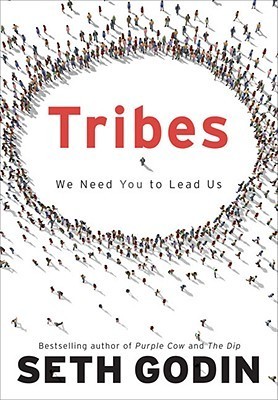
Seth Godin’s Tribes: We Need You to Lead Us, first published by Portfolio in 2008, is a short book built around an unusually large claim: leadership is no longer something that belongs primarily to executives, politicians, founders, or people with formal authority. Wherever people share an interest and can communicate with one another, Godin argues, there is an opportunity for someone to connect them around a desired change and turn a loose group into a tribe.
That argument sounds simple because Godin deliberately writes in slogans, anecdotes, metaphors, and brief provocations rather than long chapters or a tightly formalized theory. Tribes is made up of more than a hundred short sections that repeatedly return to the same questions from different directions: What makes people belong? What separates a movement from an audience? Why do organizations become stagnant? Why do intelligent people wait for permission? What makes someone willing to lead when criticism, uncertainty, and failure remain possible?
The resulting book is much more persuasive as a manifesto than as a complete leadership system. Godin is exceptionally good at changing how readers think about authority, connection, initiative, and the fear of standing out. He is much less complete when dealing with power, institutional constraints, governance, harmful communities, accountability, or what happens after an energized tribe has actually been built. Nearly two decades later, that combination makes Tribes both strikingly prescient and noticeably incomplete.
What Godin Means by a Tribe—and Why 2008 Changed the Opportunity
Godin opens with Joel Spolsky, the software developer and writer whose essays, community-building, conferences, and public ideas helped organize programmers around shared interests. Spolsky becomes Godin’s first demonstration that leadership need not depend on owning an institution or controlling employees. A person can lead by articulating ideas that people already care about, creating ways for those people to recognize one another, and giving their shared interest a direction.
From that example, Godin establishes the book’s basic definition. A tribe is not simply a demographic segment or a collection of customers. It is a group of people connected to an idea, connected to a leader, and, crucially, connected to one another. The last element is what separates a tribe from an ordinary audience. A television network can have millions of viewers who never interact. A celebrity can have admirers who share no meaningful relationship. A tribe becomes stronger because members recognize their common identity and reinforce it through communication.
The Grateful Dead and the Deadheads provide an early cultural illustration. The band’s significance, in Godin’s telling, cannot be understood only through record sales or individual musical transactions. Deadheads participated in an identity. Their relationship with the band mattered, but so did their relationships with other fans, the rituals surrounding concerts, the shared knowledge of the music, and the sense that membership meant something beyond consumption. Godin uses the example to suggest that belonging can create a form of value conventional market measures do not fully capture.
Historically, tribes were constrained by geography. Families, religious communities, political groups, professions, guilds, villages, and local movements often depended on physical proximity because communication across distance was expensive and slow. Godin sees the internet as a dramatic reduction in those coordination costs. Someone who cares deeply about microfinance, open-source software, independent music, animal welfare, or an obscure professional discipline can now find others who care about the same thing without waiting for a local institution to assemble them.
Jacqueline Novogratz and Acumen illustrate the possibilities of this changed environment. Godin is interested not simply in the organization’s financial activity but in its ability to connect people around a mission. A geographically dispersed community can be sustained through stories, communication, events, and a shared conviction about what should change. The technology makes the connection cheaper, but Godin repeatedly warns that technology alone is not the tribe. A platform can help people communicate; it cannot supply the cause, the trust, or the leadership.
This distinction leads to the book’s first major escalation. Godin is not interested in groups that exist only to preserve themselves. He wants tribes that become movements. A movement has a desired future and therefore contains a tension between what exists and what its members believe should exist. A group of enthusiasts may enjoy the same activity, but a movement gains energy when people begin saying, in effect, “People like us believe this should be different.”
Gary Vaynerchuk’s early work around Wine Library TV gives Godin a commercial version of that process. Vaynerchuk did not merely advertise wine; he communicated enthusiasm and expertise in a way that encouraged viewers to participate, learn, discuss, and develop stronger identities as wine enthusiasts. Mich Mathews at Microsoft gives him an internal organizational version. A tribe can exist inside a corporation when employees connect around a purpose that cuts across the formal boxes of an organization chart.
These examples support Godin’s broader claim that tribes are already everywhere. The opportunity is often not to invent a population from nothing but to recognize a group whose members share an interest yet lack sufficient connection or direction. That observation shifts responsibility from institutions toward individuals. If the people and the concern already exist, the missing ingredient may simply be someone willing to say where the group could go next.
The concept of belief becomes increasingly important as Godin develops this argument. People do not join consequential movements simply because a spreadsheet tells them to. They want to participate in something that expresses identity and promises change. Godin links this desire to larger transformations in work and markets, arguing that the old industrial model rewarded standardized production, while newer forms of work increasingly reward ideas, creativity, distinction, initiative, and connection.
That is why he repeatedly asks why the reader is not already leading. The question is deliberately provocative because Godin believes many people have internalized the wrong picture of leadership. They assume they must be appointed, charismatic, senior, wealthy, unusually powerful, or officially authorized before they can influence a group. Godin’s answer is that leadership begins earlier, when someone chooses to challenge the default and persuades others to move voluntarily.
This is the context for one of the book’s most important distinctions: leadership is not management. Management makes an existing process function efficiently. A good manager allocates resources, enforces standards, schedules work, monitors quality, and tries to make a known system predictable. Leadership becomes necessary when the system itself must change. Leaders therefore cannot rely entirely on existing rules, because if the rules already contained the answer, change would be an administrative problem rather than a leadership problem.
Godin does not deny the usefulness of management, but his rhetoric consistently favors leadership because he believes mature organizations become dangerously attached to stability. Hierarchies feel comfortable when authority moves downward and obedience moves upward. The people at the top may benefit enormously from preserving that arrangement, while everyone else learns that following established procedure is safer than questioning it. Godin’s counterclaim is that the apparent security of the status quo is increasingly deceptive because markets, technologies, professions, and cultural expectations continue changing whether an organization wants them to or not.
He therefore values partisanship in the limited sense of caring enough to take a position. A tribe with no emotional commitment has little capacity to move. Leaders “make a ruckus” because meaningful change creates disagreement, and disagreement is often evidence that the proposed direction actually differs from the existing one. Thomas Barnett’s ability to influence debates inside the American defense establishment becomes an example of leading from below: expertise, persistence, and a compelling framework can sometimes create influence even when formal rank is limited.
Godin made the same case publicly in his TED talk on “the tribes we lead”, where he emphasized that modern communication had made it easier for people with a shared idea to find one another and organize around change. The opportunity he describes is therefore technological only in the background. The actual subject of Tribes is the human choice that follows: once connection becomes easier, who is willing to give that connection direction?
From a Group to a Movement: Connection, Tightness, and True Fans
The next stage of Godin’s argument makes an important correction to the way marketers often think about audiences. It is not enough for a leader to communicate with followers. A tribe becomes powerful when followers communicate with one another, because peer connection turns attention into identity and identity into coordinated behavior.
Godin contrasts this with the traditional model of permission marketing, where an organization earns the right to send messages directly to people who have expressed interest. That relationship can be valuable, but it remains primarily vertical: sender to recipient. A tribe adds a horizontal dimension. Members exchange information, recognize one another, develop rituals, reinforce norms, and sometimes create value the leader could never have produced alone.
This is why Godin’s imagined examples often turn businesses into social infrastructure. A restaurant, conference, blog, nonprofit, professional network, or online platform can become more consequential when it helps participants connect rather than merely serving them individually. The leader’s goal is no longer to stand at the center of every transaction. The goal is to make the group increasingly capable of generating its own interactions.
Godin describes movements in similar terms. He invokes figures and organizations as different as Muhammad Yunus, Al Gore, and Skype to show that ideas gain force when dispersed believers can coordinate. The essential change is not the existence of agreement; millions of people may privately agree with something without producing a movement. Power appears when those people know that others share the belief, can communicate with them, and are given a way to participate.
One of the book’s clearest frameworks appears in “Improving a Tribe.” Godin begins with two essentials: a shared interest and a way to communicate. He then distinguishes several directions in which that communication can flow: from leader to tribe, from tribe to leader, from member to member, and from members outward to people who are not yet part of the tribe. Effective leadership improves all of these pathways rather than treating communication as a series of announcements from the top.
He also identifies three broad ways a leader can strengthen a tribe. The leader can transform a shared interest into a passionate goal and desire for change, improve the tools and conditions through which members communicate, and use the existing group’s energy to help it grow or become more tightly connected. These mechanisms matter because Godin’s underlying model is less about command than about amplification. Leaders create circumstances in which the group becomes more capable of sustaining its own commitment.
Bill Bradley’s ideas about movements help Godin make the psychological side more explicit. A movement requires a story about who “we” are and what kind of future people like us want. It also requires a connection between the leader and the group, and finally some concrete form of participation. Organizations frequently fail because they provide activities without offering an identity. People may attend, donate, click, purchase, or work without ever feeling that their actions express membership in a meaningful collective.
Wikipedia becomes a near-perfect illustration of the model because its usefulness depends on distributed contribution. The overwhelming majority of users do not create most of the content, but a comparatively small committed population can produce an enormous shared resource when the platform makes contribution and coordination easy. Godin’s interest is not in Wikipedia as a technology company; it is in the way a small core of motivated participants can produce value disproportionate to its size.
His own experience at Spinnaker makes the argument more personal. Without controlling the entire organization, Godin used an internal newsletter to connect engineers, circulate ideas, and generate voluntary participation around projects that otherwise might have remained isolated. The newsletter mattered because it created visibility and common awareness. People could see that others cared, which made it easier for informal momentum to form.
These examples clarify the distinction between a crowd and a tribe. A crowd can consist of thousands of people occupying the same place or directing attention toward the same spectacle. Its members may have almost no relationship to one another. A tribe contains some shared identity and pattern of connection that persists beyond the moment. This difference explains why Godin consistently distrusts raw audience size as a measure of influence.
His argument about “true fans” pushes the point further. Godin explicitly draws on Kevin Kelly’s “1,000 True Fans” idea, which describes how creators may be able to sustain meaningful work through a comparatively small group of highly committed supporters rather than attempting to reach a mass market. Godin applies the same logic socially: a deeply engaged group that talks, buys, organizes, recommends, volunteers, or creates can matter more than a vast audience that merely notices.
Twitter provides a very 2008 example of how trust might accumulate through repeated interaction. Godin’s deeper point is more durable than the platform reference. Communication tools can make informal relationships visible, but they do not instantly manufacture credibility. Scott Beale’s ability to organize a gathering through Twitter works in Godin’s telling because he had already built social trust. Technology multiplies an existing relationship; it does not replace the work required to create one.
The same logic underlies Godin’s recurring preference for the remarkable over the average. A market filled with competent but indistinguishable offerings naturally directs attention toward whatever gives people a reason to care and talk. This is familiar territory from Godin’s earlier marketing books, but Tribes turns it toward leadership. A leader who merely reproduces existing expectations may manage successfully while giving no one a reason to join a movement.
Initiative therefore becomes both a business advantage and a source of engagement. Godin suggests that people are happier when they can exercise agency rather than spending their careers executing instructions written by someone else. His metaphor of “crowbars” captures the asymmetry that makes such initiative more plausible: cheap communication, social networks, specialized media, and word of mouth allow relatively small actors to exert more leverage than their formal budgets or titles would imply.
By this stage, the book’s architecture is clear. Tribes do not become movements because a charismatic figure broadcasts louder. They become movements when a compelling idea, a credible leader, and dense member-to-member connection combine to create identity and action. The remaining problem is why so many organizations discourage exactly the behavior that would allow such movements to form.
Factories, Fear, and the Heretic’s Choice to Lead
Godin answers that question with the metaphor of the factory. He uses the word broadly, not only for assembly plants but for any system designed to produce predictable results through standardized procedures, measurable outputs, controlled variation, and obedience. The classic industrial bargain offered stability in exchange for compliance: workers followed instructions, managers optimized the system, and owners benefited from reliable repetition.
For much of the twentieth century, Godin argues, that arrangement could be rational. A person who learned to fit the system might receive a relatively stable career, while an organization that perfected repetition could gain an economic advantage. The problem is that the bargain becomes less attractive when routine work can be automated, outsourced, digitized, standardized, or competed away. If an organization can easily specify exactly what a worker should do, Godin assumes it will eventually look for a cheaper way to get that work done.
His argument is not that formal organizations should disappear. He explicitly resists the idea that everyone must become an isolated “free agent.” Organizations coordinate resources, preserve knowledge, combine specialties, and permit people to accomplish things that would be difficult individually. His target is the factory mentality that treats human judgment as an inconvenience and interprets obedience as the highest form of professionalism.
The deeper obstacle, however, is not organizational design. It is fear. Godin believes institutions often contain people who can see what should change but refuse to champion it because doing so could expose them to criticism. Ideas are abundant; willingness to take responsibility for an idea is scarce. This is why organizations may spend enormous energy discussing innovation while repeatedly rewarding people for avoiding visible mistakes.
Godin’s treatment of fear is psychological rather than clinical or systematic. He asks readers to notice how much mental effort goes into predicting disapproval. Someone considering an unconventional proposal may imagine embarrassment, ridicule, a failed presentation, a hostile supervisor, or colleagues dismissing the idea. The imagined social punishment can become larger than the material risk itself, which encourages people to remain within the boundary of what has already been approved.
He even revisits the Peter Principle through this lens. In the conventional formulation, employees rise until they reach a level at which they are no longer competent. Godin suggests that people may instead reach a level at which they become too frightened to lead. They continue performing visible activity, attending meetings, solving routine problems, and satisfying procedural requirements, but they stop risking the judgment required to initiate meaningful change.
This concern connects to his idea of “worth criticizing.” Godin has little interest in work so safe that nobody could object to it. If a proposal changes nothing, threatens no assumption, and produces no strong reaction, it may also be too ordinary to matter. His argument is not that criticism proves an idea is good; it is that the complete avoidance of criticism usually narrows the range of ideas a person is willing to attempt.
Godin sharpens the point by claiming that fear of criticism is often more restrictive than fear of actual failure. A failed experiment may have manageable consequences, yet the possibility of appearing foolish can still prevent someone from trying. Leadership requires separating these fears. Some risks are genuinely serious and should be respected, but a person who treats every possibility of disapproval as if it were catastrophic effectively gives the status quo veto power.
The “heretic” becomes Godin’s ideal response to this problem. Historically, a heretic challenged an accepted religious doctrine. Godin secularizes the term and applies it to people who challenge the rules of an organization, profession, market, or culture. The heretic sees that the existing system has confused its inherited procedures with its deeper purpose and is willing to violate those procedures in order to pursue the purpose more effectively.
This is deliberately provocative language because Godin wants to make rule-breaking feel morally serious rather than merely rebellious. A heretic is not supposed to be someone who causes disruption for entertainment. The leader challenges the rule because something important is being prevented by it. Later sections on faith and religion expand this distinction, but the basic principle appears here: organizations often protect procedures long after those procedures stop serving the mission they were created to support.
At the same time, Godin tries to prevent the leader from becoming a narcissistic hero. His examples of respected figures ask whether a leader is serving the tribe or using the tribe to build a monument to personal importance. Leadership should be generous because the leader creates connection, meaning, direction, and opportunity for others. The best coach does not make everyone permanently dependent on the coach; the coach helps create a group in which members become more capable themselves.
This is an important qualification because Godin’s rhetoric of the lone heretic can otherwise sound individualistic. The book’s actual model is more social. The leader goes first, but the leader succeeds only when other people begin participating voluntarily. A person shouting alone at an institution is not yet leading a tribe. Leadership appears when dissent becomes connection and connection begins generating coordinated change.
How Strong Tribes Work: Communication, Followers, Scale, and Belonging
Once the reader accepts that leadership can emerge without formal authority, Godin turns to the internal quality of the tribe itself. His central idea is “tightness”: the strength and density of relationships among members. A large group is not necessarily influential if its participants have weak ties to the cause and almost no ties to one another.
Tight tribes develop shared language, rituals, references, expectations, and channels of communication. Members know what other members care about, and belonging carries some social meaning. Technology can make this easier through blogs, networks, forums, email, and other systems, but Godin again insists that the tool is secondary. Care, repeated participation, generosity, and trust create tightness; software only reduces friction.
This explains why leadership remains uncomfortable even in a connected world. Strong communities do not emerge from perfectly safe behavior because somebody still has to define a cause, establish a direction, and risk discovering that other people do not agree. Godin treats this discomfort as one of the unavoidable costs of meaningful leadership. If a person waits until a proposal feels socially effortless, the decision has probably already become conventional.
The book also complicates the relationship between leaders and followers. Godin rejects the assumption that following is inherently passive or inferior. Healthy tribes need people who commit to a shared direction and then exercise initiative inside it. Members can become “microleaders,” creating projects, helping newcomers, interpreting the group’s purpose, and connecting other people without waiting for the original leader to supervise every interaction.
That possibility changes what good leadership looks like over time. In some situations, a leader must initially lean in, create urgency, and fill a vacuum. Once a tribe becomes capable of organizing itself, the same leader may need to step back. Deliberately giving members room is different from doing nothing because of fear. Godin’s ideal leader is therefore not a permanent controller but a catalyst who can create enough shared commitment for the group to become less dependent on central direction.
This distinction helps explain why participation alone does not count as leadership. Joining a conference, collecting contacts, posting regularly, attending meetings, or being visibly associated with a movement can all be useful, but none necessarily changes the direction or connectedness of the group. Godin repeatedly asks what someone actually caused to happen. Leadership requires some form of movement, not merely presence.
CrossFit.com and PatientsLikeMe illustrate communities in which member-to-member interaction creates significant value. The leader or platform provides conditions, but the community becomes useful because participants exchange experience, knowledge, encouragement, and practical information with one another. The examples reinforce Godin’s preference for distributed energy over purely centralized expertise.
Smaller examples make the same point culturally. A specialized Seattle restaurant blog can become meaningful because readers develop shared knowledge, insider references, and an identity around their enthusiasm. Godin sees these small communities as evidence that a tribe does not need majority participation to matter. In fact, an attempt to appeal to everyone may weaken the intensity that created the group in the first place.
Curiosity becomes another leadership trait because it allows people to encounter evidence that does not fit their established worldview. Godin contrasts the curious person with the “fundamentalist,” by which he means someone who filters every new possibility through a fixed rule system. The problem is not conviction itself. Leaders need conviction, but conviction without curiosity can turn a tribe into an institution whose first purpose is protecting its own assumptions.
This is why Godin rejects what he calls the plurality myth. Leadership does not require immediate majority support. A committed minority can create products, institutions, artistic movements, political pressure, cultural identities, and market shifts long before “most people” care. The important population is often the group willing to act early, not the much larger group waiting to see what becomes safe.
Godin’s schoolteacher experiment reinforces the difference between nominal participation and commitment. A smaller group that genuinely wants to participate may accomplish more than a larger group assembled through obligation. The lesson is not that scale never matters but that recruiting indifferent people can dilute the culture and burden the people who care most.
He also distinguishes two kinds of strength. Some tribes become more useful as they grow because every new participant expands the network. Others become more desirable through exclusivity because membership signals commitment, rarity, expertise, or belonging. Leaders therefore should not assume that maximum size is always the goal. They must understand whether the tribe’s purpose depends on openness, selectivity, or some combination of the two.
Godin’s deliberately abrasive claim that “most people” do not matter should be understood within this argument about early adoption rather than as a general theory of human importance. He is warning leaders not to dilute every idea in pursuit of universal approval. Even so, the formulation reveals a weakness that becomes more important later: people who are not members of a tribe can still bear the consequences of what that tribe does. Influence and moral responsibility extend beyond the committed core.
Faith, Heresy, and Initiative
The vocabulary of faith and religion forms one of the strangest but most revealing parts of Tribes. Godin is not primarily making a theological argument. He uses religious language metaphorically to distinguish a living commitment to a purpose from the institutional rules that accumulate around that purpose.
The transition begins with frustration. Godin asks readers whether the status quo repeatedly ruins their day. Persistent irritation with an accepted system can be a clue that something is worth changing, but frustration alone does not create leadership. The crucial question is whether someone will transform dissatisfaction into initiative.
Godin dramatizes the cost of dissent by comparing modern organizational heretics with historical religious heretics who could face extreme punishment. His point is that many contemporary professionals enjoy far more freedom than they behave as though they possess. The comparison is rhetorically effective but too broad to take literally, because dissent can still carry serious economic, legal, reputational, and professional consequences depending on the institution and the worker’s position.
Still, the book’s basic challenge is clear. People often ask the wrong question when they want guarantees that an unapproved idea will work before they commit to it. Leadership cannot generally provide that certainty, because a truly new direction does not yet have an established procedure demonstrating its success. Waiting for authorization from the existing system therefore means allowing the old system to decide which alternatives are permitted to exist.
Godin compresses much of his thesis into two propositions: individuals now possess more leverage than they once did, and fear prevents many of them from using it. Cheap communication, networks, publishing tools, and reduced barriers to organizing make it possible for relatively ordinary people to connect others. If those tools are available, then the remaining difference between someone who influences a tribe and someone who does not may be the willingness to act before certainty.
The balloon factory and the unicorn make the status quo visible through metaphor. A factory optimized for balloons naturally treats a unicorn as a threat because the unicorn’s horn could destroy the fragile products around it. The absurdity is deliberate. Organizations frequently design systems that make anything unusual look dangerous, even when the unusual thing represents precisely the adaptation the organization needs.
Generosity is supposed to keep this celebration of disruption from becoming selfish. Godin argues that leaders give people something: connection, possibility, meaning, status, belonging, opportunity, or a more compelling future. Leadership becomes corrupt when the tribe mainly exists to increase the leader’s fame or wealth. Profit may result from leadership, but if money becomes the movement’s primary purpose, Godin believes the social energy that made the movement powerful will weaken.
The stories of Jim Delligatti and Percy Spencer reinforce the value of breaking internal assumptions. Delligatti’s work on what became the Big Mac and Spencer’s association with microwave technology both illustrate innovation emerging when someone sees an opportunity that existing procedures do not fully anticipate. Godin is attracted to these examples because the innovators do not need to abandon organizations in order to become heretics; they can redirect them from within.
Commitment becomes increasingly important as the book proceeds. Godin uses rock climbing to suggest that certain moves cannot be performed while holding fully onto the old position. The metaphor is about commitment under uncertainty: a leader sometimes has to act decisively before knowing whether the next hold will work. The danger of the metaphor is that real organizations often benefit from reversible experiments, but Godin’s purpose is to attack chronic half-commitment rather than to provide a universal decision rule.
His distinction between “faith” and “religion” gives the argument its conceptual form. Faith means belief strong enough to support meaningful action. Religion, in his metaphor, means the procedures, customs, rules, and organizational habits that form around that belief. Religion can be useful when it amplifies faith by preserving knowledge and helping people coordinate, but it becomes destructive when compliance with the rules replaces commitment to the underlying purpose.
This explains why challenges to procedure often feel more threatening than they logically should. Members may interpret a challenge to a particular policy as an attack on the value that policy once protected. A company can confuse its pricing model with its mission, a school can confuse a teaching method with education, or a nonprofit can confuse a fundraising practice with its cause. Heretics become necessary when they can separate the deeper commitment from the historical mechanism.
Godin’s metaphor of switching religions without abandoning faith pushes the distinction further. A person can leave one system while retaining the underlying purpose that initially made the system meaningful. In organizational terms, someone may reject an obsolete process precisely because they remain committed to the goal that process no longer serves effectively.
“Faith is what you do” turns the argument from identity back toward action. Belief is not important simply because someone claims to possess it. It becomes meaningful when it shapes choices made under uncertainty. The person who says an organization should change but never risks anything to change it is expressing an opinion; the person who organizes others and takes responsibility for a different course is beginning to lead.
This is where Godin’s distinction among reacting, responding, and initiating becomes useful. Reacting means behaving automatically after something occurs. Responding involves judgment, but the stimulus still comes from outside. Initiating means causing a new sequence of events. Godin sees leadership most clearly in that third posture because the leader introduces a direction that was not already demanded by the environment.
He is careful, however, not to claim that everyone must always lead. Someone who does not care enough to accept the responsibilities of leadership may be better off following a worthy leader. Following can be intelligent, active, and honorable. The problem arises when someone wants the status of leadership while refusing its discomfort, or when people who see an urgent need for change hide behind the claim that nobody formally authorized them to act.
The concept of permeability helps connect these psychological ideas to organizational structure. Traditional hierarchies make information move primarily upward and instructions move downward. Digital communication makes sideways interaction easier, allowing employees, customers, supporters, and specialists to connect without routing every exchange through formal authority. That does not eliminate hierarchy, but it creates more opportunities for informal influence.
The culmination is Godin’s recurring principle that leaders go first. They do not wait for social proof because creating the first credible example is part of the job. Once a direction becomes obviously correct, many people can administer it. Leadership matters earlier, when the future is plausible but still uncertain.
From Sheepwalking to Micromovements
Godin’s critique of the music industry shows what happens when organizations fail to make that shift. He describes the traditional recording business as a system supported by expensive production, radio promotion, physical distribution, record labels, and attractive margins on packaged music. When digital technology altered those assumptions, industry leaders spent enormous energy trying to defend the old model rather than organizing artists and listeners around the possibilities of the emerging one.
The lesson is not simply that one technology replaced another. Godin is interested in why established organizations struggle to lead during disruption. A mature business model appears orderly because decades of experimentation have already removed much of its uncertainty. The new model initially looks fragmented, less profitable, inconsistent, and difficult to control. Managers naturally compare the polished old system with the messy beginning of the new one and conclude that the old system is safer.
Godin argues that this comparison is misleading. Emerging models should not be expected to look as “clean” as mature models at first. If leaders wait until the new system is obviously superior on every conventional measure, the people willing to tolerate uncertainty will have already shaped it. This principle extends beyond music to publishing, media, technology, nonprofits, education, and other institutions confronting structural change.
“Sheepwalking” gives Godin one of his most memorable names for the opposite behavior. A sheepwalker is an intelligent person trained to act obediently in a system where initiative is discouraged. The problem is not stupidity; it is conditioned passivity. Schools and organizations can teach people that the safest path is to satisfy instructions, avoid visible deviation, and allow someone else to accept responsibility for judgment.
Godin sees that bargain as increasingly fragile because routine obedience is easy to price, compare, outsource, standardize, or automate. Work that depends on judgment, creativity, connection, and initiative is harder to specify in advance and therefore harder to commoditize. His argument sometimes understates how much disciplined routine remains necessary in medicine, engineering, logistics, manufacturing, finance, public administration, and other domains, but his target is narrower than routine itself: he opposes systems that deliberately suppress human judgment even where judgment would create value.
The “thermometer and thermostat” metaphor captures the contrast. A thermometer accurately reports the temperature but does not alter it. A thermostat changes the environment. Godin wants readers to notice how often professional competence rewards excellent reporting on why something is failing without giving anyone responsibility for changing the conditions that produced the failure.
The practical center of the book appears in Godin’s discussion of the “micromovement.” This is as close as Tribes comes to a tribe-building method, though the advice remains flexible rather than procedural. Godin recommends creating a manifesto that clarifies the change and gives members language through which they can understand the movement. A manifesto does not need to be a literal printed document; it is the clear statement of what the group believes, what it opposes, and what future it wants.
The leader must also make it easy for followers to connect with the leader and, more importantly, easy for followers to connect with one another. If every relationship has to pass through the center, the movement remains dependent on the founder. Member-to-member connection gives people a way to share stories, coordinate activity, recruit others, and interpret the group’s identity without constant supervision.
Godin also warns against making money the central purpose of a movement. Businesses can obviously earn revenue, but a tribe held together only by financial transactions is fragile because members have little reason to identify with one another. The movement becomes more powerful when participants feel they are advancing something that matters beyond the leader’s income.
Progress should be visible, and members should be given meaningful ways to contribute. Visible progress reinforces belief because people can see that their participation changes something. Contribution turns followers into participants rather than spectators. The strongest tribe is therefore not the one whose leader performs most impressively but the one in which more members become capable of advancing the shared purpose.
Godin supplements these actions with several principles. Movements benefit from transparency because secrecy inhibits peer coordination and trust. They need a purpose larger than the leader, because communities built entirely around personal worship are unstable and vulnerable to exploitation. They need a model of growth that does not destroy the intensity that made people care in the first place.
A tribe also becomes clearer when it can define itself against some version of the status quo. Movements need not be hostile, but they usually require contrast: this is what currently happens, and this is what people like us believe should happen instead. That contrast creates meaning and makes participation intelligible.
Godin is surprisingly comfortable with exclusion. A strong movement does not need everyone, and attempting to welcome people who reject its core commitment can weaken the tribe. This insight is strategically plausible, but it becomes ethically complicated when transported beyond voluntary communities. Exclusion can create cohesion, yet the same mechanism can intensify prejudice, conformity, and hostility toward outsiders.
Finally, Godin advises leaders to focus more energy on creating followers and participants than on attacking opponents. A movement defined entirely by its enemies becomes dependent on those enemies for identity. Sustainable leadership gives members something affirmative to build.
Other sections around the micromovement reinforce the same logic through different examples. Godin notes that buildings, rituals, and procedures can survive long after the reasons for creating them have disappeared. The existence of a tradition is therefore not evidence that the tradition still serves the tribe. Leaders must periodically distinguish inherited infrastructure from living purpose.
“Every tribe is a media channel” extends the argument into marketing. A traditional advertiser rents attention from newspapers, television networks, search engines, or other intermediaries. A tribe can communicate directly because members already care enough to listen. This does not make media irrelevant, but it changes the value of owning or earning a durable relationship with a community.
Godin also insists that leaders must become comfortable with being wrong. Acting before certainty means some experiments will fail, predictions will miss, and tactics will need revision. The alternative is not guaranteed correctness; it is delayed action. By the time an answer becomes completely obvious, the opportunity to lead may already have passed.
This is also why timing matters. Leadership exists in the interval between possibility and consensus. Too early, and the proposed change may lack the conditions required to work; too late, and following the new consensus is no longer leadership. Godin offers no formula for locating that interval, which is one reason the book remains more inspiring than operational.
The reactionary tribe introduces an important complication. Tribes are not automatically engines of progress. A strong tribe can organize itself around protecting an inherited system, resisting outsiders, or opposing a change. Godin’s practical response is often to create a new tribe rather than spending all available energy converting people deeply attached to the old identity. This is strategically coherent but leaves open the larger question of what happens when competing tribes must share institutions, resources, and political systems.
Godin invokes Ronald Coase to explain why tribes can sometimes replace functions previously handled by formal organizations. Companies exist partly because coordinating transactions through an organization can be cheaper than negotiating each transaction separately in the open market. Digital tools lower some coordination costs, making it possible for distributed groups to accomplish work that once required a conventional hierarchy.
Barbara Barry’s furniture example turns that structural claim back into personal initiative. Instead of endlessly asking for permission to explore a small possibility, she developed a more complete vision and placed it in front of decision-makers. Godin uses the story to show that visible initiative can change the conversation because it transforms an abstract request into something other people can react to.
The nonprofit example involving Mark Rovner makes a similar point about outdated tactics. An organization cannot simply move an old direct-mail fundraising strategy onto the internet and call that innovation. Godin wants nonprofits to treat supporters as advocates, patrons, activists, and members of a cause rather than as names on a cheaper mailing list. The technology matters only if the organization changes the relationship.
This requires what Godin calls the posture of a leader: accepting responsibility for whether communication works. A leader cannot merely say that the audience was too stupid, conservative, busy, or ungrateful to understand. If people are not moved, the leader must examine the story, the medium, the timing, the identity being offered, and the amount of trust already present.
“Switching tribes” applies the same realism to persuasion. Deeply committed members of an opposing tribe are difficult to convert because abandoning an identity carries social and psychological costs. A growing movement may have more success recruiting people who are unaffiliated, loosely attached, or already sympathetic. As the new tribe gains credibility, some people may switch later because social proof reduces the perceived cost.
Godin also warns against “not now” as a disguised form of refusal. Organizations rarely need to reject a threatening idea permanently. They can preserve the status quo simply by postponing experiments until the opportunity loses urgency. Delay therefore becomes a management technique for avoiding confrontation without openly opposing change.
The magician Jamy Ian Swiss helps Godin distinguish tactics from craft. A person can observe a visible technique and still miss the judgment, timing, discipline, and intention that make the technique work. The same is true of tribe-building. Copying a blog format, conference style, social-media tactic, or charismatic gesture does not reproduce the relationships or credibility underlying a successful movement.
Godin’s examples of Tasmin Little, UNICEF communication in Rwanda, and the X Prize all reinforce the principle of designing around the tribe rather than around inherited delivery mechanisms. A violinist seeking wider access to classical music may need unusual distribution or performance choices. A public-information campaign may spread more effectively through songs than printed materials if that is how the intended community already communicates. A visible prize can mobilize outside effort far greater than the amount the organizer could directly purchase.
The recurring question beneath all of these examples is “Who cares?” Godin’s answer is not a demographic category but a level of emotional commitment. A tribe becomes powerful because some people care enough to contribute when no transaction forces them to do so. Without that commitment, manifestos, platforms, newsletters, forums, and campaigns are merely communication machinery.
The Seven Elements of Leadership and Godin’s Final Challenge
Near the end of Tribes, Godin gathers many of his recurring ideas into seven elements of leadership. Leaders challenge the status quo, create a culture around a goal, remain curious about the world they are trying to change, develop the charisma that often emerges from visible commitment, communicate a vision of the future, make decisions consistent with that vision, and connect followers to one another. Formal authority, celebrity, extroversion, credentials, and hierarchical rank are conspicuously absent.
The list clarifies the book because it shows that Godin’s ideal leader is fundamentally a creator of shared identity and movement. Challenging the status quo supplies direction. Culture gives the group a sense of “us.” Curiosity prevents conviction from hardening completely into dogma. Communication gives people a story through which they can understand the desired future. Connecting followers turns leadership from personal influence into a social system.
Godin’s treatment of charisma is especially characteristic. Conventional wisdom often assumes charismatic personalities become leaders because other people are naturally attracted to them. Godin reverses the sequence and argues that people can become charismatic by leading. Visible commitment, clarity, confidence, generosity, and the willingness to take responsibility can make someone more compelling to others.
That does not mean leaders should ignore the people they hope to lead. Godin uses Ronald Reagan and Graham Weston of Rackspace to argue that leadership requires serious listening. Listening is not the same as obeying every preference or constructing permanent consensus. A leader needs to understand the tribe deeply enough to distinguish superficial requests from the values and aspirations that actually organize the group.
Resistance also remains inevitable. Godin calls attention to the “forces of mediocrity,” the informal and formal pressures that pull ambitious ideas back toward what is conventional. Resistance often intensifies precisely when a project becomes consequential because meaningful change redistributes attention, resources, status, or authority. A leader must therefore be capable of treating opposition as information without automatically treating it as a veto.
His advice on selling a book or spreading any new idea returns to the importance of committed minorities. Instead of attempting to persuade everyone simultaneously, find someone who genuinely cares, give that person a compelling reason to participate, and make it easy for the idea to spread onward. Diffusion is strongest when people transmit an idea because sharing it reinforces their own identity.
Godin also argues that many tasks once considered difficult have become easier while leadership has become relatively more valuable. Publishing, communicating, coordinating, and finding specialized people may require fewer resources than before. The scarce work is deciding what deserves to exist, taking responsibility for a direction, and persuading other people to care.
“Trial or error?” makes experimentation explicit. New ideas cannot generally be perfected without attempts that reveal mistakes. Godin refers to innovations such as the iPhone and payment networks to emphasize that iteration, feedback, and error are part of development. His deeper objection is to organizational cultures that claim to want innovation while punishing every deviation from known procedures.
The strongest case study in this part of the book is the work on positive deviance associated with Jerry and Monique Sternin in Vietnam. Instead of importing an outside theory about childhood malnutrition, the approach examined families living under the same broad constraints who nevertheless achieved better nutritional outcomes. Researchers looked for unusual behaviors already working inside the community and then helped other families learn from those practices.
The example is important because it offers a more grounded model of leadership than many of Godin’s anecdotes. The leader does not arrive as an all-knowing outsider. Change begins by identifying existing success within the tribe, making that success visible, and helping members teach one another. The method respects local knowledge while still creating movement.
From there, Godin increasingly frames leadership as an obligation. If modern tools give individuals more leverage, he argues, then refusing to use that leverage solely because initiating change feels uncomfortable becomes harder to justify. The argument is intentionally moral: opportunity creates some responsibility to contribute rather than merely consume.
That responsibility should not depend on personal credit. Godin points to open-source projects and social movements to argue that leaders care more about the cause spreading than about being permanently recognized as the owner of the idea. This echoes his earlier warning against turning the tribe into a monument to the leader.
The “big yes” also grows from this logic. Organizations can produce endless small “no” decisions because rejection feels controllable. The consequential moments are often the comparatively rare decisions in which someone commits identity, resources, reputation, or time to a new possibility. Godin wants readers to become more attentive to those moments instead of treating caution as neutral.
Imagination is what makes such a commitment possible. Management can often operate from existing information because its problem is execution. Leadership must imagine a condition that does not yet exist and then describe it convincingly enough that other people can see themselves inside it. That is why story and belief return near the end of the book.
Matt Groening’s protection of The Simpsons Movie becomes an example of defending a vision against incremental compromise. Leadership sometimes requires saying no to modifications that appear individually reasonable but collectively dissolve what made the project distinctive. The general principle is not stubbornness for its own sake but responsibility for maintaining coherence.
Godin’s idea of belief makes the social mechanism explicit. People act partly through stories about who they are. A leader therefore does more than transmit instructions; the leader offers a narrative in which members can locate themselves. “People like us do things like this” is not stated as a formal equation in Tribes, but the logic runs throughout the book.
This leads naturally to “Why not you, why not now?” Godin has spent the book stripping away excuses based on title, geography, publishing access, communication cost, and organizational rank. Once those excuses weaken, the remaining obstacle increasingly appears personal. The question becomes whether the reader is prepared to accept uncertainty and criticism.
His attack on perfectionism follows the same pattern. Quality systems can be valuable, but Godin argues that perfection becomes destructive when it functions as a reason never to release, experiment, or deviate. Processes such as Six Sigma were designed to reduce defects in contexts where variation is expensive, yet an innovation system that treats every deviation as a defect can also suppress discovery. Godin’s formulation exaggerates the conflict, because reliability and experimentation can coexist when used in different parts of an organization, but his criticism identifies a real tension.
Brad Garlinghouse’s famous internal “Peanut Butter” memo at Yahoo gives Godin a vivid example of dissent from inside an organization. Garlinghouse criticized strategic diffusion and argued that the company was spreading resources too thinly. Godin treats the willingness to make such criticism visible as leadership because it accepts personal risk in order to force attention onto an organizational problem.
“What do you have to lose?” pushes the point toward its rhetorical limit. Godin suggests that people with credibility and employability may exaggerate the danger of principled dissent. For some readers that can be liberating, but the advice is not universally safe. Workers with limited savings, precarious immigration status, discriminatory workplaces, caregiving obligations, or scarce alternatives may face far higher costs for permissionless leadership than Godin’s rhetoric acknowledges.
The no-kill animal-shelter movement serves as a culminating case because it combines many elements of the book. Advocates articulate a clear desired future, challenge an entrenched institutional assumption, mobilize volunteers and donors, establish local examples, encounter resistance, create new expectations, and spread practices across organizations. The movement becomes evidence for Godin’s belief that a small committed group can redefine what a larger system considers normal.
Godin closes by rejecting the notion that leaders possess a recognizable appearance. They do not have to be unusually loud, old, young, male, female, corporate, rebellious, credentialed, or formally appointed. Leadership is a posture toward responsibility and change rather than a demographic type.
That claim explains why “What, Exactly, Should You Do Now?” refuses to provide the detailed checklist readers might expect. A universal recipe would contradict the book’s argument because leadership requires judgment in conditions where the answer has not been standardized. If Godin could tell every reader precisely what to do next, they could simply follow instructions and remain managers of someone else’s method.
“One Last Thing” therefore does not conclude with a technique. Godin asks readers to transmit the challenge and help another person see themselves as capable of leading. The ending is consistent with the entire book: the test of Tribes is not whether the reader agrees with its vocabulary but whether the ideas create another act of connection and initiative.
The Core Framework of Tribes
Godin never turns these ideas into a single formal model with definitions, variables, boundaries, and a sequence that applies universally. Instead, Tribes repeatedly circles several conceptual relationships until an implicit framework emerges. Understanding that framework makes the book more coherent than its fragmented structure initially suggests, but it also reveals where Godin’s persuasive binaries oversimplify organizational life.
Tribe, Movement, and Tightness
A tribe begins with shared interest, but shared interest is not enough. Members must become aware of one another and possess some means of communication. A leader then gives the group direction by articulating a desired change, and repeated interaction strengthens identity until the group becomes capable of sustaining behavior rather than merely expressing preference.
This distinction explains why a tribe is not synonymous with an audience. An audience can receive the same content without developing any internal relationship. A tribe becomes socially meaningful when membership changes how people understand themselves and how they behave toward one another. Its members recognize that they are part of a “we.”
A movement is a tribe oriented toward change. It contains a story about the present and an alternative future. That story need not be political; it can concern software development, music, charitable giving, exercise, professional practice, product design, or nearly any other domain. What matters is that the group shares more than an interest. It shares a direction.
“Tightness” describes the quality of the tribe’s internal bonds. A tight tribe does not necessarily need huge numbers because a comparatively small population can produce high levels of participation, advocacy, creativity, mutual support, and diffusion. This insight remains one of the book’s strongest correctives to vanity metrics. A million nominal followers may have less practical influence than a few thousand people who genuinely identify with the cause.
Yet tightness creates an immediate tension. The same mechanisms that generate trust and coordination can generate pressure to conform. Shared language can produce belonging, but it can also make outsiders legible as outsiders. Strong norms can help members coordinate, but they can also make dissent within the group more difficult. Godin notices exclusion and reactionary tribes but never fully integrates these consequences into his model of tightness.
Leadership Versus Management
Godin’s distinction between management and leadership is one of the most memorable parts of the book because it solves a common conceptual confusion. Management is primarily concerned with making a known system operate effectively. Leadership becomes necessary when someone is attempting to move people toward a condition that does not yet exist.
This is useful because formal authority can produce compliance without producing genuine leadership. A manager can assign tasks because the organization gives them that power. A leader needs some degree of voluntary belief, especially when the proposed direction requires people to do more than simply execute established procedures. Godin therefore democratizes leadership by detaching it from position.
The distinction becomes misleading when treated as a hierarchy in which leadership is creative and noble while management is merely bureaucratic. Reliable organizations depend on excellent management. Hospitals, airlines, factories, banks, software platforms, emergency services, and public institutions cannot treat every repeated procedure as an opportunity for heroic disruption. Standardization often embodies hard-won knowledge about safety and quality.
The more defensible version of Godin’s distinction is therefore situational. Organizations need management to exploit what they already know and leadership to explore what they do not. A mature institution can fail by overmanaging change, but a movement can also fail by under-managing execution. Godin’s book is strongest when it reminds managers that optimization is not enough and weakest when its rhetoric makes routine discipline sound inherently timid.
Heresy, Faith, and the Status Quo
Godin’s religious metaphors are memorable because they describe a real organizational phenomenon: people frequently become attached to procedures as if the procedures were the purpose. “Faith” represents the deeper commitment, while “religion” represents the institutional machinery created around that commitment. The machinery is useful until maintaining it becomes more important than achieving the original goal.
The heretic is the person who notices the separation. A company may claim to value customers while preserving a process customers hate. A nonprofit may claim to value impact while defending a fundraising method that no longer builds real commitment. An organization may claim to value innovation while designing evaluation systems that punish every unsuccessful experiment. The heretic challenges the contradiction.
Godin’s strength here is psychological. Institutional resistance is rarely caused only by explicit self-interest. Rules become symbols of competence, history, status, and identity. Changing them can feel like accusing previous generations or current managers of failure. By calling this attachment “religion,” Godin captures why seemingly technical changes can provoke emotional resistance.
The weakness is that not every rule is dead ritual. Some constraints protect fairness, safety, due process, institutional memory, or people with less power. A leader cannot infer from the existence of resistance that a rule deserves to be broken. Heresy is valuable only when the leader understands what the rule is protecting and can show that another approach serves the underlying purpose better.
What Godin’s Leadership Model Gets Right About Groups
One of the most durable insights in Tribes is the importance of shared identity. Godin repeatedly argues that people become more motivated when they experience themselves not simply as isolated individuals but as members of a meaningful “we.” Leaders do not merely issue instructions; they articulate who the group is, what it values, and what people like its members are trying to accomplish together.
Later leadership research provides a more systematic language for something close to this intuition. A 2021 meta-analysis of social-identity leadership research examined 128 samples involving more than 32,000 participants and found substantial associations between leaders being seen as representing a shared group identity and important leadership outcomes. The research does not validate Tribes as a whole, but it supports Godin’s emphasis on the importance of a psychologically meaningful sense of “us.”
Social-identity leadership theory is also more nuanced than Godin’s presentation. Leaders do not simply announce an identity and expect followers to accept it. They need to be perceived as representing the group, advancing its interests, shaping a shared understanding of who the group is, and embedding that identity in structures and practices. In other words, the leader cannot manufacture a tribe entirely through personal conviction.
Godin’s emphasis on member-to-member connection also remains persuasive. A group whose members interact only with the leader is fragile because the leader becomes a bottleneck. A community in which members help, teach, reinforce, and coordinate with one another has more resilience and capacity. This is why examples such as Wikipedia and positive deviance fit his argument better than examples centered solely on charismatic founders.
The positive-deviance case is particularly strong because it demonstrates leadership through discovery rather than imposition. Successful behaviors already exist within the community. The leader helps identify them, make them visible, and create a process through which members can learn from one another. That model respects local knowledge and shows why peers can sometimes change behavior more effectively than distant experts.
Godin is also right to distinguish numerical reach from committed participation. Modern digital culture makes follower counts highly visible, which can encourage creators, organizations, and movements to optimize for attention rather than relationship. Tribes consistently points toward a more useful question: how many people care enough to act?
His argument about informal leadership is equally durable. Organizations contain influence networks that do not map neatly onto hierarchy. A credible employee who connects people, translates between groups, frames a problem clearly, or helps colleagues coordinate can exercise leadership without managing anyone. The internet did not invent that phenomenon, but digital communication can make such networks faster and more visible.
Where Godin is most convincing, then, is not in the claim that anyone can become a world-changing leader. It is in the narrower proposition that leadership depends partly on creating and representing shared identity, and that this process can occur outside formal authority. Those ideas have survived the aging of his specific social-media examples because they concern group psychology rather than platforms.
The Dark Side Godin Underdevelops: Exclusion, Conformity, and Bad Tribes
The most consequential weakness in Tribes is that Godin spends far more time asking how communities become energized than asking what happens when an energized community becomes destructive. A tribe can be cohesive, connected, emotionally meaningful, and exceptionally effective while pursuing false beliefs, excluding vulnerable outsiders, harassing opponents, or organizing around resentment.
Godin does acknowledge pieces of the problem. He recognizes reactionary tribes, notes that exclusion can strengthen identity, and understands that tribes can become defenders of a status quo. Yet these observations remain side issues rather than becoming part of a systematic ethical framework. His basic vocabulary evaluates tribes mainly according to energy, connection, commitment, and capacity for change.
That is not enough because effectiveness and moral legitimacy are different questions. A leader can be excellent at giving people a shared identity and still lead them toward a harmful objective. Members can communicate intensely and reinforce one another while becoming less open to contradictory evidence. A movement can develop extraordinary tightness around a worldview that depends on hostility toward an out-group.
Contemporary research on online communities makes these possibilities difficult to ignore. A 2024 review in Communications Psychology emphasizes that online communities can generate support, collaboration, belonging, and collective action while also enabling harmful group dynamics including hate communities and cyberbullying. The relevant lesson is not that online tribes are inherently dangerous, but that connection amplifies whatever norms and incentives govern the group.
This creates a tension with Godin’s celebration of partisanship and strong identity. Shared conviction can give people courage to resist a bad institution, but it can also discourage members from questioning their own leaders. If loyalty becomes proof of belonging, dissent may start to feel like betrayal. The tribe that initially protects heretics from the surrounding culture can develop its own orthodoxy and begin punishing heretics within.
Charismatic capture is another underdeveloped risk. Godin warns against leaders who exploit followers, but he offers little guidance about governance mechanisms that would constrain them. A movement built around a compelling founder may need transparent decision-making, financial accountability, succession planning, moderation rules, conflict-resolution processes, and mechanisms through which members can challenge the leader. Tribes largely stops before those problems begin.
The same omission affects the idea of generosity. Godin treats generous leadership as an important moral safeguard, but generosity is a motive rather than an institution. Leaders can believe they are acting generously while making reckless decisions on behalf of other people. Communities therefore need ways to evaluate outcomes, not merely intentions.
Exclusion is similarly complex. Godin is strategically correct that a group may lose coherence if it repeatedly alters its purpose to satisfy people who reject the core mission. Every community has boundaries. Yet boundaries become morally significant when a tribe controls employment, public resources, political rights, professional access, information systems, or essential services. In those situations, exclusion cannot be treated merely as a branding or cohesion decision.
The book’s greatest ethical blind spot can therefore be stated simply: Godin explains why strong collective identity produces movement, but he does not provide a corresponding theory of responsibility proportional to that power. A complete theory of tribal leadership would need to ask not only whether a leader can create a committed “us,” but also how that “us” treats dissenters, outsiders, truth, power, and the people affected by its actions.
A Manifesto, Not a Manual: Style, Structure, and Evidence
The structure of Tribes explains both its popularity and many of its weaknesses. Instead of conventional chapters, Godin writes 126 short titled pieces that may contain a case study, a metaphor, a challenge, a distinction, or an anecdote. The pieces accumulate rather than proceed like a formal argument in which every proposition is established once and then used systematically.
This gives the book speed. A reader can move from the Grateful Dead to Microsoft, from sheepwalking to religion, from positive deviance to the music industry without enduring long stretches of abstraction. Godin continually converts an idea into an image, which makes concepts such as the factory, the heretic, the thermostat, the unicorn, and the crowbar easy to remember.
His prose also relies heavily on binaries. Leaders are contrasted with managers, thermostats with thermometers, initiators with reactors, heretics with defenders of orthodoxy, tribes with crowds, faith with religion, and remarkable work with mediocrity. These contrasts are rhetorically useful because they give readers immediate mental categories. They are analytically dangerous because real organizations often need combinations of the qualities Godin places on opposite sides.
The second-person voice adds motivational force. Godin repeatedly asks the reader why they are waiting, what they fear, what they have to lose, and what they should challenge. The book therefore feels less like an observer describing leadership and more like an advocate attempting to recruit another leader. This is appropriate for a manifesto because the intended outcome is behavioral, not merely intellectual.
Repetition is the obvious cost. A contemporary Publishers Weekly review criticized the book for repeating itself and also questioned the practical career risks of Godin’s invitation to pursue change without waiting for permission. Both criticisms remain fair. The book could communicate its core conceptual framework in substantially fewer pages if efficiency were its only goal.
Yet the repetition is partly intentional. Godin is not simply trying to teach a definition once; he is trying to overcome a learned reluctance. Each example says, from a slightly different direction, that leadership is possible without formal appointment. The repetition functions almost like persuasion through exposure, which helps explain why many readers experience the book as energizing even when they could summarize its intellectual content very quickly.
The evidentiary model is similarly mixed. Godin uses vivid examples, but he rarely asks whether they are representative or whether a competing explanation fits equally well. Successful innovators are easy to celebrate retrospectively because their decisions now look visionary. The many people who broke rules, took risks, challenged institutions, and failed for good reasons are much less visible.
For that reason, Tribes should not be treated as an evidence-based leadership textbook. The case studies illustrate possibilities rather than establishing general causal laws. When Godin says a particular leader succeeded by challenging the status quo, the example demonstrates that such success can happen; it does not prove that challenging the status quo generally produces success.
The book itself effectively admits this limitation at the end. Godin refuses to provide an exact checklist because leadership requires judgment. That refusal is philosophically consistent and practically frustrating. A reader can finish Tribes feeling more willing to act without necessarily knowing how to evaluate whether a cause is sound, how to manage risk, how to govern a community, or how to distinguish courageous persistence from stubborn error.
That is why the most accurate description of Tribes is “manifesto.” Its goal is to alter posture. It wants people who have been conditioned to wait for permission to recognize that they may already possess enough connection, expertise, credibility, and leverage to begin. Once they do begin, they will need methods and disciplines this book does not attempt to provide.
What Has Aged Well—and What Has Not Since 2008
The easiest way to dismiss an old technology book is to point at expired platform references. Tribes contains plenty of distinctly late-2000s material, including an optimistic view of Twitter and the novelty of social-network communication. Yet its deeper technological claim has aged surprisingly well: people with specialized interests can now find one another, communicate cheaply, create identity across distance, and organize without first acquiring access to a major institution.
That shift is visible across creator businesses, open-source projects, online professional communities, political movements, fandoms, support groups, independent media, niche education, crowdfunding, activism, and countless other domains. The specific platforms change, but the reduction in coordination costs remains. Godin was right that the central strategic question would increasingly become not “How do I reach everyone?” but “How do the people who care find one another?”
His emphasis on niche identity also anticipated ideas he later developed more directly. In Godin’s later argument about the decline of mass normality, the erosion of a single mainstream creates more space for specialized communities organized around unusual preferences, identities, and interests. Tribes provides the leadership counterpart to that cultural argument: fragmentation can create opportunity for people who know how to connect a specific community.
The idea that member-to-member connection matters more than pure broadcasting has aged especially well. Traditional mass media gave organizations enormous reach but comparatively limited interaction among audience members. Digital communities allow participants to reinforce identity directly. Modern creators and organizations that treat followers merely as a distribution list often remain weaker than those that create places where members talk to one another.
Godin’s current framing of Tribes on his own site is revealing because he now notes that the book also anticipated growing civic division. That retrospective observation exposes the ambiguity built into the original argument. The same tools that allow constructive communities to find one another also allow antagonistic identities to organize more efficiently.
This is where some of the book’s optimism has aged poorly. The internet did not eliminate geography, status, cost, or institutional power. People can communicate across borders, but regulation, employment, language, infrastructure, wealth, passports, platform control, and physical location still shape who can act and at what risk. Lower communication costs democratize some forms of influence without equalizing society.
The assumption that more connection is usually beneficial also looks incomplete after years of algorithmic polarization, coordinated harassment, misinformation, conspiracy communities, and online radicalization. Godin’s framework can actually explain why some of those groups are powerful: they possess identity, tightness, shared narratives, strong leaders, peer reinforcement, rituals, enemies, and easy communication. What the book lacks is a sufficiently developed method for judging the resulting movement.
Permissionless leadership has also become more complicated. It remains true that many employees wait for approval unnecessarily and that organizations can benefit from initiative. But “ask forgiveness rather than permission” is not equally safe for everyone. A senior technical employee with savings and a strong professional network can absorb risks that a junior worker, contractor, caregiver, or person dependent on a specific employer cannot.
Godin’s critique of management has similarly aged better as a warning than as a binary. The modern organization does need initiative, experimentation, and distributed leadership, but reliable execution remains essential. In many sectors, the challenge is precisely how to create protected zones for experimentation while maintaining disciplined processes where failure would be dangerous.
The “factory” argument is therefore best read metaphorically. Standardized work has not disappeared, and not all standardized work is dehumanizing. What has become more visible is the vulnerability of roles whose value consists entirely in executing instructions that can be encoded, outsourced, or automated. Godin’s insistence that judgment, creativity, trust, and connection create a different kind of value remains relevant even when his predictions are stated too broadly.
The most durable parts of Tribes are consequently less technological than social. People still seek belonging. Small committed groups can still exercise disproportionate influence. Informal leadership still emerges outside organization charts. Shared identity still affects motivation. Fear of criticism still prevents capable people from acting. Those ideas survived the platforms that first made them feel revolutionary.
Critical Review: What Tribes Achieves and Where It Falls Short
Tribes succeeds first as an act of reframing. Many people unconsciously define leadership through hierarchy: a leader is the person at the front of the organization, the person with direct reports, the person whose title grants authority. Godin breaks that definition open and shows that leadership can begin much earlier, when someone connects people around a possibility and gives them the confidence or structure to act together.
That reframing is especially useful for employees, creators, entrepreneurs, nonprofit workers, organizers, educators, and community builders who possess credibility or insight without controlling a formal institution. Godin gives such readers a language for recognizing what they may already be doing. An employee who connects colleagues around a problem may be leading even without becoming their manager.
The book’s second major achievement is its insistence on member-to-member connection. This is more important than the generic advice to “build a community.” Godin understands that a leader-dependent audience and a self-reinforcing tribe are fundamentally different structures. The first requires the central figure to keep supplying energy; the second allows members to create value for one another.
His argument about committed minorities is equally useful. Modern communication environments make scale highly visible and therefore easy to mistake for influence. Godin repeatedly reminds readers that a smaller group with shared identity, trust, and participation may matter more than a huge population of passive observers. This insight remains relevant to businesses, creators, political organizers, professional associations, and nonprofits.
The book also succeeds emotionally. Godin understands that many leadership problems are not knowledge problems. People may already know what is wrong and have plausible ideas for improving it. Their difficulty is the anticipated social cost of being the person who says something, proposes something, or goes first. Tribes is designed to reduce that psychological threshold.
Its greatest intellectual weakness is the quality of evidence. Godin’s anecdotes are memorable, but successful examples are selected after the fact and rarely subjected to competing explanations. A company may have succeeded for reasons beyond the leader’s tribal behavior. A movement may have required institutional resources or historical conditions that disappear when the story is reduced to individual initiative.
The examples therefore work best as illustrations of possibility. They show that bottom-up leadership, distributed communities, positive deviance, and permissionless initiatives can produce meaningful change. They cannot establish how often these strategies work, what conditions predict success, or when the same behavior becomes irresponsible.
The manager-leader distinction suffers from the same tendency toward rhetorical simplification. As a mental model, it is valuable: optimizing an existing system and creating a new direction are genuinely different activities. As an organizational theory, it is incomplete because successful institutions need both. A leader who generates perpetual disruption without building reliable execution can destroy as much value as a manager who refuses to adapt.
Godin’s treatment of risk is a more serious limitation. Fear genuinely prevents people from acting, but fear is not always irrational. Institutions control salaries, promotions, credentials, visas, contracts, professional networks, and access to resources. Informal leaders can face retaliation even when their ideas are correct. A complete leadership philosophy therefore needs a better account of power and asymmetric vulnerability.
The book’s most important limitation, however, is ethical rather than practical. Tribes explains how to generate belonging and movement without developing an equally strong account of how leaders should use that power responsibly. Tight groups can create generosity and mutual aid, but they can also create tribal hostility. Shared identity can enable courage, but it can also suppress internal dissent.
Godin partially anticipates this problem when he mentions reactionary tribes and warns leaders not to exploit followers. Yet he never constructs a serious framework for accountability. Who checks the leader? How does a tribe correct false beliefs? What happens when a group’s purpose harms outsiders? How should internal dissent be protected? When does tightness become coercive? These questions become more urgent as the tribe becomes more successful.
Governance is similarly absent. A leader may be able to start a movement through story, commitment, and connection, but mature communities eventually encounter money, conflict, hierarchy, moderation, succession, strategy, disagreement, and institutional memory. At that stage, management returns through the back door. The movement must build systems or become dependent on improvisation.
This absence helps explain why the book’s final refusal to provide a checklist is both its philosophical strength and its practical weakness. Godin is right that genuine leadership cannot be reduced to executing somebody else’s formula. Judgment matters precisely because situations differ. Yet the lack of a recipe does not eliminate the need for frameworks that help leaders judge risk, ethics, evidence, governance, and competing stakeholder interests.
Stylistically, the repetition will divide readers. Some will find the 126 micro-sections energizing because the book can be read in bursts and each idea receives a fresh metaphor or story. Others will feel that Godin keeps rediscovering the same conclusions: care, connect people, challenge the status quo, overcome fear, and lead before permission arrives.
The most charitable interpretation is that repetition serves the book’s persuasive purpose. Godin is trying to change behavior rather than merely transmit information. A single definition of leadership may not overcome years of conditioning toward obedience, so he gives the reader dozens of examples demonstrating that the permission barrier is often psychological rather than absolute.
Even with those weaknesses, the book’s strongest contribution survives. Leadership is not exhausted by positional authority. Someone begins leading when they articulate a change, connect people who care about it, accept responsibility for moving first, and create conditions in which followers can increasingly act with one another rather than simply obeying the center.
The book’s most important limitation follows directly from that strength. Tribes is excellent at explaining why a person should dare to initiate movement, but much less complete about how that movement should govern itself after people actually begin to follow. The first problem is motivational; the second requires ethics, organizational design, evidence, accountability, and management. Godin gives readers far more help with the first.
Is Tribes Still Worth Reading?
Tribes is still worth reading, but it should be read for the kind of book it actually is. It is not a comprehensive science of leadership, a detailed community-management guide, or an evidence-heavy organizational textbook. It is a compact manifesto designed to change the reader’s relationship with authority, initiative, belonging, and fear.
Creators, entrepreneurs, marketers, nonprofit leaders, educators, internal change agents, organizers, and community builders are the most likely to benefit. The book is especially useful for someone who repeatedly sees possibilities but assumes that acting requires a title or permission they do not possess. Godin’s challenge can help such readers recognize that influence often begins by connecting a small number of people who already care.
Readers seeking governance systems, conflict-resolution methods, organizational psychology in depth, evidence-based leadership models, or rigorous analysis of institutional power will need substantial supplementation. The book also requires more ethical skepticism today than it did for many readers in 2008, because the intervening years have shown how easily the mechanics of belonging can strengthen both constructive and destructive communities.
Its dated platforms matter less than its enduring social insight. People want to belong, they become more powerful when they can find one another, and a committed minority can sometimes change an organization or culture long before the majority understands what is happening. Formal authority remains important, but it is no longer the only plausible starting point for leadership.
The fairest judgment is therefore that Tribes remains a very good book for changing posture and an incomplete book for directing practice. Godin can persuade a reader to stop waiting, identify the people who care, and begin creating connection around a better future. Once that tribe starts acquiring real power, however, the hardest work has only begun.
Last Updated on August 24, 2026 by Aseem Gupta