
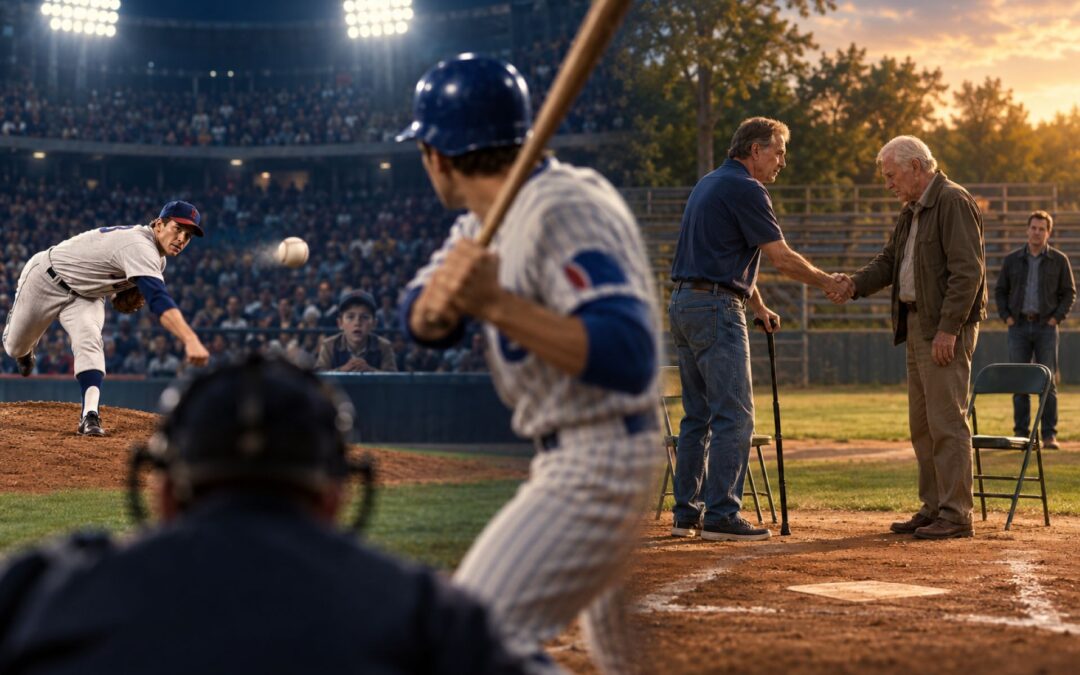
In Calico Joe, John Grisham’s 2012 novel, a young baseball player enjoys one of the most extraordinary debuts imaginable before a deliberate pitch to his head brings his promising career to a devastating end. Thirty years later, the son of the pitcher responsible for the injury tries to arrange a meeting between the two men. What begins as a story about a sporting sensation gradually becomes an examination of damaged families, personal responsibility, and the consequences of violence that cannot be undone.
The novel follows Paul Tracey, who was eleven when his father, New York Mets pitcher Warren Tracey, struck Chicago Cubs rookie Joe Castle with a fastball in 1973. Paul witnessed the incident and understood his father’s intentions more clearly than almost anyone else in the stadium. By 2003, he has built a life far removed from the childhood he shared with an abusive, alcoholic parent, but the memory of Joe Castle has never entirely left him. When Warren is diagnosed with terminal cancer, Paul sees an opportunity to confront a wrong that has remained unacknowledged for three decades.
Grisham combines the excitement of baseball with a comparatively intimate family drama. The novel’s central question is whether a man who has caused permanent harm can take responsibility before his death, and what such an admission can mean to those who have lived with its consequences.
Spoiler Warning: This article discusses the complete novel, including Joe Castle’s injury, Warren Tracey’s confession and death, and the ending.

Paul Tracey’s Unfinished Business
In August 2003, Paul Tracey learns that his father has pancreatic cancer. Doctors have removed a tumor, but the prognosis is poor, and Warren probably has less than three months to live. The news produces none of the ordinary responses expected when a parent faces death. Paul has little affection for Warren, and his mother and sister Jill have even less interest in renewing contact with him.
Warren’s behavior during Paul’s childhood explains the estrangement. He was an alcoholic who frequently subjected his wife and children to verbal and physical abuse. His temper worsened when his baseball career went badly, and he treated his family as an audience upon whom he could unload his professional disappointments. After the marriage collapsed, he moved through a succession of wives and largely disappeared from his children’s lives.
Paul has established a very different existence. He lives in Santa Fe, New Mexico, with his wife, Sara, and their three daughters. He works in software development for an aerospace company, enjoys financial stability, and has created the affectionate domestic environment that was largely absent from his upbringing. Warren has made almost no effort to participate in this family. His granddaughters scarcely know him, and Paul has no desire to pretend that their relationship has been close.
Yet Warren’s approaching death creates a problem Paul cannot dismiss. He has spent thirty years carrying the memory of a particular baseball game, one in which his father inflicted a terrible injury on a young man Paul admired. Warren has consistently maintained that the pitch was accidental, but Paul knows otherwise. He believes his father should acknowledge the truth while there is still time.
The unresolved incident also explains something unusual about Paul’s adult life. As a child, he was obsessed with baseball. He followed the Mets, collected statistics, played Little League, and dreamed of becoming a professional player. By the age of eleven, however, he had abandoned the game altogether. He has not watched a baseball game in thirty years, despite once believing that nothing in the world mattered more.
Paul’s attachment to baseball survives in a carefully preserved scrapbook devoted to Joe Castle. Its newspaper articles and records document the remarkable summer of 1973, when a twenty-one-year-old rookie became the most exciting player in the major leagues. Retrieving the scrapbook revives Paul’s memories and reinforces his determination to confront the past.
Rather than approaching Warren immediately, Paul travels to Calico Rock, Arkansas, where Joe Castle grew up and still lives. He wants to discover what became of his childhood hero and whether Joe might agree to meet the man who ended his career. The journey requires Paul to reopen a history he has spent most of his adult life trying to escape.
Joe Castle’s Spectacular First Month in the Majors
In July 1973, eleven-year-old Paul lives in White Plains, New York, and follows professional baseball with the devotion of a child who knows every batting average, pitching record, and league standing. His father is a starting pitcher for the New York Mets, which gives him unusual access to the sport. Paul and his friend Tom Sabbatini spend countless hours discussing players, imagining their own professional careers, and studying the day’s results.
The Mets are struggling in a closely contested National League East. The Chicago Cubs, another team in the division, suddenly need a first baseman after injuries disrupt their roster. Their Triple-A replacement is also injured, so the organization reaches down to its Double-A affiliate in Midland, Texas.
The player summoned is Joe Castle, a twenty-one-year-old from Calico Rock, Arkansas. Joe has been dominating minor-league pitching, hitting for an exceptionally high average while displaying power, speed, and impressive defensive ability. His promotion happens so suddenly that he arrives in Philadelphia after a hurried journey, receives his uniform, and prepares to face the Phillies with almost no time to adjust.
On July 12, Joe steps into a major-league batter’s box for the first time. He faces Benny Humphries, a hard-throwing left-handed pitcher, and hits the first pitch he sees for a home run. His second appearance produces another homer, putting him alongside the small number of players who have homered in their first two major-league at-bats.
His third appearance is even more astonishing. Against a relief pitcher, Joe switches to the left side of the plate and drives another ball over the fence. No player in Grisham’s fictional baseball history has begun his major-league career with three consecutive home runs.
Joe’s fourth appearance demonstrates something important about him beyond his extraordinary physical ability. With the game tied and a runner on third, he notices how the Phillies are positioning themselves defensively. Rather than attempting a fourth home run, he executes a drag bunt, reaches first base, and brings home the winning run.
The decision surprises spectators and opposing players. Joe has an opportunity to pursue an individual achievement that would make him even more famous, but he chooses the play most likely to help his team win. His brother Charlie, who taught him the bunt years earlier, understands the choice immediately.
The news spreads through Chicago and reaches Calico Rock, where crowds gather around radios and celebrate each successive achievement. Joe’s family joins the townspeople as their quiet Arkansas community becomes the birthplace of baseball’s newest sensation.
His second major-league game produces four more hits, including another spectacular performance at the plate. In his first two games, Joe goes nine-for-nine. He keeps the streak alive in the following contests, leaving announcers, sportswriters, and opposing teams scrambling through record books.
When the Cubs return to Wrigley Field, Joe receives a reception unlike anything normally given to a newly promoted minor leaguer. Thousands of fans arrive hoping to witness history. Television coverage expands, and the excitement surrounding his appearances begins to resemble a national event.
During the Cubs’ series against the San Francisco Giants, Joe extends his consecutive-hits streak to thirteen, surpassing an existing record. After reaching second base on the record-breaking hit, he is presented with the baseball by the opposing catcher. Joe acknowledges the crowd and later passes the ball to his father in the stands.
The gesture shows the importance of Joe’s family in his success. He is not an isolated prodigy who has appeared from nowhere. His achievements represent years of instruction and shared ambition among several generations of baseball-playing Castles.
Joe eventually extends the consecutive-hits streak to fifteen before Giants outfielder Garry Maddox catches a long drive and ends it. Although the streak is over, his extraordinary season continues. He changes from uniform number 42 to number 15, begins stealing bases with remarkable frequency, and keeps producing hits and home runs.
Opposing pitchers increasingly attempt to intimidate him. During one game against the Giants, Juan Marichal throws aggressively inside, but Joe refuses to retreat. He responds with hitting and baserunning that demonstrate both fearlessness and competitive intelligence.
His fame grows as he continues playing brilliantly against Cincinnati, Pittsburgh, and other opponents. By early August, he has appeared on the cover of Sports Illustrated, and reporters have traveled to Calico Rock to investigate his background.
The Castle family has a history of talented baseball players whose ambitions were frustrated by circumstances. Joe’s grandfather Vick briefly reached the major leagues before injury ended his opportunity. His father Bobby was close to becoming a regular major leaguer when World War II interrupted his career. Bobby joined the Navy and suffered a devastating injury in the Pacific.
Joe’s older brothers Charlie and Red also played professional baseball in the minor leagues, though neither reached the majors. Charlie becomes an important teacher of Joe’s batting and baserunning skills, while Red helps develop his fielding. Both also teach him how to defend himself.
Joe inherits their knowledge and benefits from their collective experience. He learns to switch-hit, recognize pitches, place the ball strategically, steal bases, and remain competitive under pressure.
His professional success is accompanied by a strong attachment to his hometown. He has used money from his signing bonus to help his family, and he remains accessible to people who knew him before he became famous. In Calico Rock, his achievements feel like a shared family accomplishment.
By August, pitchers are making increasingly aggressive attempts to control him. In a game against the Atlanta Braves, pitcher Dutch Patton throws near Joe’s head. Joe responds by charging the mound before Patton can complete another pitch, striking him repeatedly and leaving him badly injured. The fight leads to multiple ejections, and Joe receives a five-game suspension.
The incident complicates the image of Joe as an entirely gentle young man. He is capable of serious violence when threatened, although the circumstances differ from the deliberate attack he will later suffer. His aggressive response also strengthens his reputation as a rookie who cannot easily be intimidated.
Despite the suspension, Joe continues his extraordinary season. By the time he is scheduled to face the Mets in late August, his accomplishments have become a source of fascination throughout baseball.
They have also attracted the resentment of Warren Tracey.
Paul’s Childhood and the Baseball Code
For Paul, growing up with a major-league pitcher should have been a dream. He loves the Mets, studies pitching, and imagines following his father into professional baseball. Warren occasionally provides moments that seem to justify this admiration, especially when he pitches well and allows Paul to experience the excitement of the major leagues from unusually close quarters.
Away from the stadium, however, Warren is a deeply disappointing father. He is obsessed with his own career, quick to criticize others, and unable to accept his limitations. He blames managers, teammates, owners, and umpires for his failures. When he drinks, his already unpleasant behavior becomes frightening.
Paul plays for the Scrappers in the White Plains Little League. He is a capable young player, particularly as a hitter, but the presence of his father makes him anxious. Warren lectures him before games, insults him afterward, and sometimes strikes him. Instead of enjoying his father’s attention, Paul feels relieved whenever Warren’s professional schedule prevents him from watching.
The conflict becomes especially serious during a summer All-Star tournament. Paul is selected for the White Plains East team and looks forward to competing against stronger opponents. Warren happens to be home during the All-Star break and attends one of his games.
Paul pitches against Eastchester, where an opposing batter named Luke Gozlo hits a home run and celebrates. Warren regards the celebration as disrespectful. He expects Paul to retaliate by throwing a pitch at the boy during his next appearance.
This demand reflects Warren’s understanding of baseball’s unwritten code. In his view, pitchers must intimidate hitters who become too comfortable or celebrate too openly. Deliberately hitting a batter is an acceptable way to establish authority, regardless of the player’s age.
Paul refuses. He understands the difference between competing against another child and intentionally trying to hurt him. His resistance angers Warren, who becomes increasingly hostile as the game progresses.
When Paul’s team loses, Warren treats the defeat as a personal humiliation. During the drive home, he berates his son, accusing him of weakness and cowardice. Paul knows his father’s professional record well enough to recognize the hypocrisy, but he remains silent because answering back would expose him to further violence.
At home, Warren orders Paul into the backyard for a pitching demonstration. The lesson is intended to show how a pitcher can set up a batter for an inside pitch. Warren throws successive baseballs toward Paul, who is forced to experience the fear and vulnerability of a hitter facing an aggressive pitcher.
The session becomes violent. Warren strikes Paul with a baseball and later slaps him when the boy challenges the lesson. Paul’s mother intervenes with a baseball bat, forcing Warren to stop. Jill also witnesses the confrontation.
The experience changes Paul’s relationship with baseball. He decides that he will never play again while his father is alive. What had once been his source of pleasure and escape has become inseparable from the threat of his father’s anger.
This childhood incident later becomes crucial to Paul’s interpretation of Joe Castle’s injury. Warren teaches his son a recognizable pattern of pitching: begin with balls outside the strike zone and then bring the next pitch aggressively inside. When Paul witnesses Warren use the same approach against Joe, he immediately understands what his father is trying to do.
The contrast between Paul and Joe is striking. Both grow up in families connected to professional baseball, but the lessons they receive are profoundly different.
Joe’s brothers teach him the skills necessary to compete successfully, and their guidance generally reflects a shared investment in his development. Warren teaches Paul that baseball is a place where humiliation must be answered through intimidation and where a father’s pride matters more than his child’s safety.
Yet Joe’s violent response to Dutch Patton shows that the distinction is not entirely simple. Joe’s brothers have also taught him to fight, and he uses that knowledge with devastating force when he believes another pitcher is threatening him.
The novel therefore presents baseball as a sport capable of producing loyalty, generosity, friendship, and excellence, while also revealing a culture in which retaliation can become an accepted expression of toughness.
Paul’s refusal to throw at Luke Gozlo becomes one of the most important decisions of his childhood. He loses his father’s approval, but he preserves a moral boundary that Warren repeatedly crosses.
The August 24 Game That Changed Everything
By August 24, 1973, anticipation surrounding the Mets–Cubs game has become intense. The Cubs are pursuing the National League East title, and Joe Castle remains their most exciting player. Warren Tracey is scheduled to pitch for New York, creating a confrontation between a struggling veteran and the brilliant rookie whose achievements he has repeatedly dismissed.
Warren is thirty-four and facing the decline of a disappointing career. His professional record contains occasional flashes of ability, but he has never become the star he expected to be. Joe’s extraordinary success intensifies his resentment, particularly because it comes so effortlessly to someone barely old enough to have begun his major-league career.
Paul is desperate to see Joe play in person. His mother accompanies him to Shea Stadium, where the atmosphere is unusually charged. Cubs fans have traveled to New York, arguments break out between opposing supporters, and the stadium gradually fills for a game that has attracted national attention.
Paul watches Joe during batting practice, fascinated by the player he has followed through newspapers and broadcasts. Joe’s power and ability to hit from both sides of the plate confirm everything Paul has read about him.
The opening moments are tense but ordinary enough. Warren begins pitching, and Joe eventually approaches the plate for his first confrontation with Paul’s father.
Warren immediately challenges him with a pitch high and inside. Joe avoids it and continues the at-bat without visible intimidation. Warren mixes fastballs with breaking pitches, trying to exploit the rookie’s aggressiveness.
Joe refuses to give in. He repeatedly fouls off difficult pitches, extends the confrontation, and waits for something he can hit. The at-bat becomes a contest between an experienced pitcher who does not want to surrender and a young hitter whose reflexes seem almost impossible to defeat.
On the fifteenth pitch, Joe connects with a low fastball and drives it deep into right-center field for a home run. The stadium erupts, and Paul’s excitement is complicated by the knowledge that his father’s humiliation is unfolding before an enormous audience.
Warren has been defeated in a particularly damaging way. Joe has demonstrated superior skill while forcing him to expend an extraordinary number of pitches. For a man whose pride is already inseparable from his professional insecurity, the encounter becomes intolerable.
When Joe returns to bat in the third inning, the situation has changed. There are two outs and nobody on base, and Warren no longer appears interested primarily in retiring the hitter.
His first pitch is a hard fastball outside the strike zone. Paul recognizes it as the beginning of the pattern Warren demonstrated in the backyard. The second pitch is almost identical, again delivered well outside.
Paul realizes that the next pitch will be aimed at Joe. He wants to warn his idol but cannot make himself act quickly enough. Sitting in the stands, he understands the approaching danger without possessing any practical means of preventing it.
Warren releases the third pitch. It travels directly toward Joe’s head.
For a fraction of a second, Joe does not move. He appears to lose sight of the approaching ball, leaving him unable to duck or turn away in time. The fastball strikes near his right eye with catastrophic force.
Joe collapses at home plate. The crowd reacts with stunned confusion as medical personnel rush onto the field. His injuries are immediately recognized as extremely serious, and he loses consciousness.
The atmosphere changes completely. What had been an exciting confrontation between two players becomes a scene of fear and anger. The Cubs’ players are furious, and the New York crowd watches as Joe receives emergency attention.
Paul notices something particularly disturbing. Rather than responding with obvious horror or remorse, Warren appears momentarily pleased with himself. For Paul, the expression confirms the intention he recognized before the pitch.
An ambulance enters the stadium and carries Joe away. The crowd rises in applause as the injured rookie leaves, but there is no certainty that he will survive, much less return to baseball.
The Cubs want immediate retaliation. Their anger is directed at Warren, whose reputation for throwing at batters makes his claim to innocence difficult to believe.
The situation produces an unusual sequence of retaliation. Cubs manager Whitey Lockman inserts a player named Razor Ruffin as a pinch runner, creating an opportunity to confront Warren on the field. Ruffin attacks the pitcher, and a major brawl breaks out between the teams.
Players and officials struggle to separate the fighters as Shea Stadium descends into chaos. The confrontation adds another layer of violence to an evening already defined by a deliberate act of aggression.
Paul and his mother leave the stadium deeply shaken. The game has destroyed Paul’s remaining belief that Warren might simply be an unpleasant but fundamentally honorable man.
For Joe, the pitch has interrupted an extraordinary career at its highest point. For Warren, it will become the incident that defines his reputation. For Paul, it confirms that the brutality he has experienced at home is inseparable from the way his father behaves in public.
None of them yet understands how permanently the event will change their lives.
Joe’s Injuries and Warren’s Downfall
Joe is taken to Mount Sinai Hospital in New York, where doctors struggle to treat his injuries. His condition is critical, and he remains unconscious for weeks. The news dominates baseball coverage, while fans across the country hope for his recovery.
The seriousness of the injury gradually becomes clear. Joe has sustained damage to his eye and surrounding structures, and his neurological condition remains uncertain. Even if he survives, the possibility of returning to professional baseball is increasingly remote.
Paul follows the medical reports with intense concern. His former excitement about Joe’s achievements has been replaced by a sense of responsibility and helplessness. He has witnessed a deliberate act of violence but cannot undo it or force his father to acknowledge what happened.
Public reaction against Warren is severe. Sportswriters condemn him, fans direct abuse toward him, and threats arrive at the Mets’ offices and players’ homes. His reputation as a pitcher willing to intimidate hitters makes the incident difficult to dismiss as an accident.
At home, the Tracey family faces threatening telephone calls and increasing tension. Paul’s mother becomes frightened, and the family withdraws further from Warren.
One discovery reinforces Paul’s conviction that the pitch was planned. His Joe Castle scrapbook, which had gone missing, appears in the basement near the place where Warren habitually prepares his pregame milkshake. Paul suspects that his father has been studying the young player’s achievements and nursing his resentment.
The discovery cannot independently establish Warren’s intention, but it adds to the pattern Paul has already recognized. Warren has repeatedly disparaged Joe, taught his son how to set up a batter for a dangerous inside pitch, and then used that sequence during the game.
Warren’s professional performance collapses after the incident. He becomes increasingly ineffective, struggles with his control, and appears unable to throw inside with his former aggression. Opposing hitters recognize his hesitation and exploit it.
On September 8, Warren starts against the San Diego Padres and pitches disastrously. His performances since the beanball have become a liability to a Mets team that is otherwise improving.
The organization eventually releases him. His final major-league appearance comes only weeks after Joe’s injury, and his career ends under circumstances that leave little room for nostalgia.
Meanwhile, Joe finally awakens from his coma on September 18. The news brings relief to his family and supporters, but subsequent medical reports reveal the extent of his permanent injuries.
Doctors announce that Joe has lost most of the vision in his right eye. They consider a return to professional baseball extremely unlikely. His extraordinary season, which lasted only thirty-eight games, is effectively over.
His final fictional statistics are astonishing: seventy-eight hits in 160 at-bats, twenty-one home runs, twenty-one doubles, eight triples, thirty-one stolen bases, and a batting average of .488. These figures establish the scale of his lost potential, even though the abbreviated season prevents direct comparison with the achievements of players who completed full major-league careers.
Joe’s absence affects the Cubs as well. The team had built its pennant hopes around his spectacular arrival, but its fortunes decline after he is injured. The Mets, despite Warren’s departure, continue their remarkable late-season run, win the National League pennant, and eventually lose the World Series to Oakland.
Paul’s own attachment to baseball fades during these weeks. He is still capable of enjoying particular moments, especially when Tom Sabbatini’s father takes the boys to a Yankees game, but the uncomplicated excitement has disappeared.
Mr. Sabbatini’s kindness matters because it gives Paul a model of adult behavior different from his father’s. He offers encouragement without intimidation and understands that Paul is experiencing difficulties far beyond an ordinary sporting disappointment.
Paul also visits Mount Sinai Hospital with Tom. Joe’s supporters have filled an area of the hospital with letters, gifts, and messages of encouragement. Paul contributes a letter of his own, identifying himself as Warren Tracey’s son and apologizing for what his father did.
The letter is an attempt to separate Paul’s identity from Warren’s wrongdoing. At eleven, he cannot undo the injury or speak for his father, but he can express the remorse Warren refuses to acknowledge.
After returning to Calico Rock, Joe faces another devastating medical event. In early 1974, he suffers a massive stroke that leaves him with serious physical impairments. His left side is affected, his movements become difficult, and his speech is slow and labored.
His brothers and community help him build a life around the abilities that remain. The local school system provides employment maintaining the baseball field, allowing Joe to remain involved with the sport that once made him famous.
Over the years, he becomes responsible for the field’s upkeep. He cuts the grass, maintains the infield, paints the facilities, and attends to the many small tasks necessary to preserve a playing surface.
The work is modest compared with the career that might have awaited him, but it provides routine, dignity, and continuing contact with baseball.
For Paul, the consequences are also enduring. His parents separate, Warren gradually disappears from family life, and Paul abandons his ambition to become a professional player.
By adulthood, Joe’s career is remembered as one of baseball’s most extraordinary possibilities, while Warren is remembered primarily for the pitch that ended it.
Paul’s Search for Joe and His Confrontation with Warren
Thirty years after the injury, Paul arrives in Calico Rock hoping to learn whether Joe might agree to meet Warren. He is uncertain how the town will receive him, particularly because its most famous resident has suffered at his father’s hands.
Paul’s first contact is Clarence Rook, the publisher of the local newspaper and a devoted historian of the Castle family’s baseball achievements. Paul initially introduces himself under a false name and claims to be a sportswriter, hoping to gain access without immediately revealing his connection to Warren.
When Clarence discovers his identity, the atmosphere becomes hostile. The name Warren Tracey still carries enormous resentment in Calico Rock, and Clarence has little reason to trust the son of the man who injured Joe.
Paul explains that Warren is dying and that he wants the two former players to meet before it is too late. He hopes his father might finally admit what happened and apologize.
Clarence is skeptical. Joe’s brothers are protective of him, and there is no guarantee that reopening the incident would benefit Joe. Bringing Warren into town without permission could produce anger rather than reconciliation.
Nevertheless, Clarence gradually becomes interested in Paul’s proposal. He invites Paul to the home he shares with his wife, Fay, where they discuss the Castle family and Joe’s brief professional career.
Their house overlooks the White River and contains an extensive collection of books, documents, and newspaper material. Clarence has preserved detailed records of Joe’s games, while Paul possesses his own scrapbook from childhood.
The two men compare their recollections and exchange stories about the remarkable summer. Clarence describes his visits to Chicago, the celebrations in Calico Rock, and the family’s immense pride when Joe became a national sensation.
He also recounts the family’s longer baseball history, including the interrupted careers of Joe’s grandfather, father, and brothers. This background helps Paul understand how much Joe’s professional success meant to the entire community.
Clarence discusses Joe’s present life as well. The former player works on the high-school baseball field and prefers to avoid strangers. His brothers help protect his privacy, and the family has no interest in allowing another public spectacle to develop around his injuries.
The following morning, Clarence takes Paul to the field. From a distance, Paul sees Joe operating a mower and moving slowly across the grounds he maintains.
The encounter is painful. Paul remembers a young man who could run, hit, and field with almost unbelievable ability. The man before him now walks with difficulty and depends on a cane.
Yet Paul also sees that Joe has not abandoned baseball. His work demonstrates patience and pride, and the immaculate condition of the field suggests that he continues to care deeply about the game.
Clarence agrees to raise the possibility of a meeting with Charlie and Red, although he warns that the family may reject the idea.
Paul then travels to Florida to confront Warren directly. His father is living with his current wife, Agnes, in a retirement community where golf, cards, and casual socializing occupy much of his time.
Warren has passed through several marriages since leaving Paul’s mother. Some have ended in divorce, and his relationships have often been shaped by financial convenience. His attempted second career as a professional golfer also failed.
The cancer has weakened him, but it has not eliminated his arrogance. He remains defensive about his past and unwilling to discuss the most consequential pitch of his career.
Paul tells Warren about his visit to Calico Rock and proposes that they travel there together. He hopes Warren will explain what happened, admit that the beanball was intentional, and apologize directly to Joe.
Warren resists. He continues describing the incident in terms of baseball’s unwritten rules, suggesting that aggressive pitching is part of the game and that injuries sometimes occur.
Paul knows that a conventional appeal to his father’s conscience may fail. He therefore prepares a written account titled The Beaning of Joe Castle, which reconstructs the incident and accuses Warren of deliberately striking Joe.
He threatens to seek publication unless Warren agrees to make the journey.
The strategy resembles blackmail. Paul believes the threat may force Warren to confront an act he has spent thirty years denying, but it also reveals Paul’s willingness to use pressure and humiliation against his father.
At Wink’s Waffles, a restaurant near Warren’s home, their argument becomes increasingly bitter. Warren objects to Paul’s manuscript and attempts to defend the pitch. He finally acknowledges that he threw at Joe deliberately, although he continues distinguishing the intention to hit a batter from the intention to inflict permanent injury.
Paul challenges that distinction. Warren knew that a baseball thrown toward someone’s head could cause catastrophic harm, and the consequences cannot be dismissed simply because they exceeded his expectations.
Warren also attempts to apologize for aspects of Paul’s childhood, but the gesture does not satisfy him. Paul has come to discuss Joe, and his father still seems unable to understand the full extent of the damage he caused.
The confrontation ends badly. Warren tears up the manuscript and leaves, declaring that Paul is free to publish it after his death.
Paul returns to Santa Fe convinced that the meeting will never happen. He resumes work and family life, gradually abandoning the plan.
On August 24, the thirtieth anniversary of the beanball, he spends time alone at a baseball field. The anniversary confirms that the memory remains important despite his long absence from the sport.
Soon afterward, Warren unexpectedly calls him. The conversation is awkward and initially superficial, but Warren asks about Paul’s family and mentions attempting to contact Jill.
For a man who has spent decades ignoring his children, the questions are remarkable. Paul recognizes that Warren may be becoming more conscious of the relationships he has neglected.
Clarence also reports that the Castle brothers have discussed the possibility of a meeting. Their concerns remain serious, but they have not entirely rejected the proposal.
As Warren’s cancer advances, his condition worsens considerably. He is hospitalized with internal bleeding and other complications, and the disease spreads despite treatment.
Eventually, he agrees to travel to Arkansas.
The decision does not come because Paul’s threat has succeeded. Warren has had time to consider his approaching death and the incident that will dominate his reputation. He chooses to meet Joe because he wants to acknowledge what happened before the opportunity disappears.
The Apology at Joe Castle Field
In October 2003, Paul travels to Little Rock, where he meets Warren and begins the drive toward Calico Rock. The journey is difficult because Warren is seriously ill, weak, and dependent on medication.
Nevertheless, the shared trip produces conversations unlike any Paul remembers having with his father. Warren recalls his minor-league years, the towns where he played, the buses he traveled on, and the teammates whose company helped him survive the uncertainties of professional baseball.
Paul discovers that Warren can be an entertaining storyteller. He possesses memories of baseball that his son would once have loved to hear, but during Paul’s childhood he rarely shared them.
The discovery is both pleasant and painful. It reveals a side of Warren that Paul never experienced when he needed it, while emphasizing how many years have been lost.
They spend the night near Calico Rock before continuing into town the following morning. Clarence meets them at the newspaper office and explains that the Castle brothers have still not given an unconditional agreement to the meeting.
They nevertheless proceed to the high-school field, where Joe is maintaining the grass. Charlie and Red are waiting nearby.
The setting is quiet and almost ceremonial. Rather than bringing the players together in a crowded stadium or public event, Grisham places them on an empty baseball field whose condition reflects Joe’s years of patient work.
Warren and Paul sit in the bleachers with Clarence while Joe finishes mowing. Red then arranges two chairs near home plate and invites Warren onto the field.
Warren approaches Joe, who moves slowly with his cane. The two men shake hands and sit together, looking toward the pitcher’s mound.
Paul, Clarence, Charlie, and Red remain at a distance. The meeting belongs principally to the two former players, not to their observers.
Warren begins by acknowledging the beauty of the field. Their conversation gradually turns to the night at Shea Stadium, when they last faced each other as professional athletes.
He admits that the pitch was intentional. He wanted to hit Joe, intimidate him, and punish him for his success. He acknowledges that the decision was mean-spirited, foolish, and destructive.
Warren also admits that he lied about the incident for thirty years. His public claim that the ball slipped or that the injury was accidental was false.
He tries to explain that he never expected the pitch to cause such terrible consequences. Although he deliberately aimed at Joe’s head, he claims he did not intend to destroy his career or leave him permanently disabled.
The distinction cannot excuse the act, and Warren increasingly recognizes its inadequacy. He understands that a pitcher who intentionally throws at someone’s head cannot control the consequences after the ball leaves his hand.
Joe listens without responding with the anger Warren may have expected. His speech is slow and difficult, but he makes clear that he no longer hates the man who injured him.
Their discussion briefly returns to the original game. Warren recalls Joe’s extraordinary home run, and Joe remembers the at-bat with satisfaction. The conversation allows both men to revisit a moment when they were still simply professional opponents.
Joe also jokes that he never made an out against Warren. The remark makes both men laugh, producing a moment of shared humor that Paul can scarcely imagine occurring between them.
Warren expresses gratitude for Joe’s willingness to accept the apology. For thirty years, he has known that the most infamous act of his career remained unresolved. Joe’s response provides a measure of relief before his approaching death.
The encounter concludes with photographs. Joe and Warren wear caps representing their former teams, and Clarence records the moment. Paul joins one photograph, standing between his father and his childhood hero.
For Paul, the picture completes a connection between two parts of his life that have remained painfully separated since 1973. It will become the final entry in his Joe Castle scrapbook.
After leaving Calico Rock, Warren is exhausted. The journey and the emotional effort of the meeting have taken a considerable toll on him, and he sleeps during much of the return drive.
At the Little Rock airport, both men’s flights are delayed. Warren and Paul find themselves with several hours to spend together.
They eat, share a beer, and watch the 2003 World Series. It is a surprisingly relaxed experience, and it recalls the companionship they might have shared throughout Paul’s childhood.
Warren urges Paul to finish writing the story and seek publication, provided that the Castle family is comfortable with it. He no longer wants the truth suppressed.
As the two men prepare to board their separate flights, Warren thanks Paul for arranging the trip. He admits that he has many regrets and recognizes that he cannot undo the years of damage.
Paul listens but refuses to pretend that everything has been repaired. He knows his father wants reassurance, perhaps even an embrace, but he cannot offer a declaration of forgiveness that he does not genuinely feel.
They shake hands and separate.
The distinction is crucial. Warren has apologized to Joe, and Joe has accepted. Warren and Paul have also experienced a small improvement in their relationship, but the emotional distance between father and son remains.
Warren’s Death, the Letter, and Paul’s Decision to Write
After returning to Florida, Warren deteriorates rapidly. Agnes contacts Paul with updates about his worsening health, but Warren makes little effort to continue communicating directly with his children.
His condition progresses through hospitalization and hospice care. He becomes weaker, stops eating, and eventually reaches the final stages of his illness.
Sara asks Paul whether he wants to visit again. He refuses. The journey to Calico Rock has given them a final shared experience, and Paul does not wish to reopen their complicated relationship through another painful encounter.
Jill remains equally distant. She has no desire to see Warren or participate in public mourning.
Warren dies on November 10, 2003, at the age of sixty-five.
A memorial service is arranged in Florida. Paul decides to attend, although he does so without the ordinary feelings of a grieving son. He does not want to deliver a eulogy or participate in an exaggerated celebration of his father’s life.
He also makes clear that he has no interest in accepting an inheritance. Warren offered little financial or emotional support when Paul needed it, and Paul does not want his father’s money to become a substitute for the relationship they never had.
One detail of the estate surprises him. Warren has left $25,000 to the baseball field in Calico Rock.
The bequest is a meaningful gesture. It cannot compensate Joe for his lost career or injuries, but it represents a practical acknowledgment of the place where Warren finally confessed.
The funeral itself is modest and emotionally unremarkable. A small group of acquaintances attends, and the service includes a eulogy from a golfing companion who remembers Warren through a trivial incident on the course.
The ceremony does little to address Warren’s complicated history. His professional baseball career, family failures, and most consequential act remain largely absent.
Then three unexpected visitors enter the chapel.
Joe Castle arrives with Charlie and Red. The brothers have traveled from Arkansas to attend the service, and their presence astonishes Paul.
Joe has chosen to make the journey despite his physical difficulties. The act extends the generosity he displayed at their earlier meeting, demonstrating that his acceptance of Warren’s apology was not simply a momentary courtesy.
Paul moves closer to them and expresses his gratitude. After the service, he joins the brothers in a private meditation room.
Their conversation begins with appreciation for the trip Paul arranged. Charlie and Red explain how much the meeting meant to Joe, whose life has been permanently shaped by the events of 1973.
Joe then produces an envelope.
Inside is the letter Paul wrote at Mount Sinai Hospital when he was eleven. The message identifies him as Warren Tracey’s son and apologizes for what his father did.
Paul is overwhelmed. He had written the letter during the most painful period of his childhood, with no expectation that Joe would ever read it, much less preserve it for thirty years.
The brothers explain that the Cubs collected thousands of letters and gifts sent to Joe during his hospitalization. The materials were eventually returned to the Castle family, and Joe discovered Paul’s letter while sorting through them.
Recognizing its significance, he kept it separately.
The discovery changes Paul’s understanding of his childhood gesture. What he considered a small, helpless attempt to apologize had reached the person for whom it was intended.
Joe’s decision to preserve the letter suggests that the young boy’s remorse mattered, even though Paul had no responsibility for his father’s conduct.
The conversation turns to Paul’s written account of the beanball. The brothers know that he has been working on a story and ask whether he intends to publish it.
Paul initially hesitates. His original manuscript was written partly to threaten Warren, and he has no desire to exploit Joe or reopen the incident against the family’s wishes.
Charlie and Red, however, encourage him to tell the story. They believe baseball fans would be interested in the events surrounding Joe’s career, Warren’s confession, and their eventual meeting.
Joe agrees, although the brothers would like to review the account before publication.
Their encouragement is particularly important because Warren had also urged Paul to finish the story. Both men whose lives were transformed by the pitch now support a truthful public account of what happened.
After saying goodbye to the Castle brothers, Paul boards his flight home. He reads his childhood letter once more, remembering the boy who admired Joe Castle and feared his own father.
He then opens his laptop and begins writing the story of Calico Joe.
The final action completes the novel’s framing device. The reader has encountered a story presented as the adult Paul Tracey’s reconstruction of events, beginning with childhood memories and ending with the act of putting those memories into writing.
The novel closes without erasing the pain of the past. Joe remains permanently injured, Warren has died, and Paul cannot recover the childhood he lost. Yet the truth has been acknowledged, and the people most closely connected to the incident have reached a new understanding of one another.
The Baseball Worlds of Chicago, New York, and Calico Rock
Grisham’s three principal baseball settings represent different ways the sport shapes personal identity. Chicago is the scene of Joe Castle’s sudden public greatness, New York is the setting of professional pressure and violence, and Calico Rock preserves a more intimate relationship between the game, family, and community.
Wrigley Field becomes the center of Joe’s extraordinary arrival. Cubs fans, accustomed to disappointment, embrace him with an intensity that reflects their long-standing desire for a championship. His performances offer something beyond ordinary sporting success: the possibility that a familiar history of frustration might finally change.
The response is collective. Radio broadcasts, television coverage, newspapers, and crowds turn a young player’s achievements into a public spectacle. His home runs matter partly because they are witnessed by thousands of people who begin investing their hopes in him.
Shea Stadium offers a contrasting environment. The Mets are also competing for the division, but Warren experiences professional baseball through resentment and anxiety rather than joy. He sees younger players as threats and believes that intimidation can compensate for his diminishing abilities.
The atmosphere surrounding the August 24 game reflects this competitive hostility. Fans from opposing teams quarrel, reporters emphasize the contrast between the veteran and the rookie, and Warren approaches the confrontation with his reputation and pride at stake.
Calico Rock operates on a different scale. Its people follow professional baseball passionately, but Joe is valuable to them because he belongs to their community. His success represents the culmination of several generations of Castle family involvement in the sport.
The town’s reaction to his debut shows how quickly professional achievement can transform local life. People gather around radios, celebrate in the streets, and temporarily transfer their loyalties from the Cardinals to the Cubs.
Later, when Joe returns with permanent injuries, the town continues supporting him. His employment maintaining the school field allows him to participate in baseball without returning to the professional environment that made him famous.
The importance of such settings reflects Grisham’s own relationship with the game. In his discussion of Calico Joe with Only a Game, he connects the novel to his memories of baseball and explains his willingness to exaggerate the achievements of his fictional rookie.
That distinction between remembered sporting culture and invented sporting history matters throughout the book. Grisham includes actual teams, players, stadiums, and baseball personalities while altering the events of 1973 to accommodate Joe and Warren.
His author’s note openly acknowledges changes to schedules, rosters, lineups, pitching rotations, and records. The novel therefore should not be treated as an accurate reconstruction of the historical 1973 season.
The fictional alterations serve a narrative purpose. Joe’s records establish the scale of his talent almost immediately, while the recognizable baseball setting makes his loss emotionally comprehensible.
There is also a revealing contrast between Joe’s diminished physical capacity and the continuing quality of the field he maintains. His professional playing days are over, but the grass, dirt, dugouts, and bleachers remain objects of sustained care.
For Joe, Calico Rock provides something professional success could never guarantee: belonging that survives the loss of his athletic abilities.
The Three Lives Changed by One Pitch
The beanball connects three characters whose experiences are fundamentally different. Paul is a witness whose childhood relationship with baseball is destroyed, Joe is the victim whose exceptional career is interrupted, and Warren is the perpetrator who must confront the consequences of an act he has denied for decades.
Their positions cannot be reduced to equal forms of suffering. Warren makes the destructive choice, Joe bears its most devastating physical consequences, and Paul inherits an emotional burden created by his father’s behavior. Grisham develops the story by allowing their lives to remain connected long after they cease sharing a baseball field.
Paul Tracey: The Witness Who Walked Away
Paul is the novel’s narrator and its most psychologically complicated character. His childhood admiration for professional baseball is genuine, but it is inseparable from his desire to admire Warren.
As a boy, Paul wants a father who will discuss games, offer encouragement, and take pride in his achievements. Warren occasionally provides glimpses of this possibility, especially when he pitches well. During a successful appearance against the Cardinals, he even acknowledges Paul in the stands, producing a moment of happiness that reveals how badly the boy wants his affection.
Such moments make Warren’s cruelty more damaging. Paul does not simply dislike his father from the beginning. He repeatedly hopes for a better relationship, only to find that Warren’s insecurity and anger prevent it.
His refusal to throw at Luke Gozlo is an early expression of independent moral judgment. Paul knows that obeying Warren would probably earn approval, but he will not deliberately hurt another child to satisfy his father’s demands.
The punishment that follows shows him the cost of resistance. Baseball becomes dangerous because it provides Warren with another opportunity to control and humiliate him.
Joe Castle offers an alternative model of heroism. Paul can admire the young rookie without being responsible for his moods or failures. Joe’s talent, generosity, and apparent decency provide a contrast to Warren’s bitterness.
The beanball destroys that distinction in a particularly painful way. Paul’s actual father injures the player who has become his idealized hero, leaving him with a sense of helplessness and contamination by association.
His eventual withdrawal from baseball can be understood as a rejection of the world through which Warren exercised power over him. He does not stop loving the game because its rules have changed; he abandons it because too many of its associations have become painful.
Adult Paul’s life demonstrates a substantial break from his upbringing. He provides stability for his wife and daughters and does not seek to reproduce Warren’s behavior. His professional career also places him outside the world of athletics.
Nevertheless, his effort to force Warren into confession reveals that the past continues influencing him. The threatened publication of his manuscript is ethically questionable, and Paul eventually recognizes that blackmail may not be the right way to obtain a sincere apology.
He wants the truth acknowledged, but he also wants Warren to experience the discomfort of exposure. These motives coexist, making his actions more complicated than those of a purely benevolent mediator.
Paul’s most important adult decision may be his refusal to offer false forgiveness. At the airport, he recognizes Warren’s regret but will not pretend that one successful meeting compensates for years of abuse.
His emotional boundary does not prevent him from helping Joe or acknowledging his father’s limited progress. It allows him to distinguish between a morally significant act and the restoration of a relationship that has never been healthy.
Joe Castle: The Hero Who Must Live After Baseball
Joe begins as a figure of almost exaggerated athletic possibility. His power, speed, reflexes, switch-hitting ability, and defensive skill make him exceptional in several aspects of the game simultaneously.
Grisham gives him achievements that seem to exceed the limits of ordinary professional competition. His first three home runs, fifteen consecutive hits, and extraordinary batting average establish him as a player whose career might transform baseball history.
Yet his character is not entirely defined by individual accomplishment. The bunt in his debut game demonstrates tactical intelligence and a willingness to prioritize victory over personal glory. His relationship with his family also suggests that his success has not separated him from the people who helped develop his abilities.
Joe benefits from unusually strong family support. Charlie and Red have invested years in teaching him the game, and his father understands the sacrifices involved in pursuing professional baseball. Their experience helps Joe remain connected to a larger history of ambition and disappointment.
His violent attack on Dutch Patton complicates the image of an entirely gentle hero. Joe responds to threatening pitches with extreme physical aggression, inflicting serious injuries on another player.
The incident shows that he is capable of participating in the retaliatory culture the novel later criticizes. He is not responsible for Warren’s decision to throw at his head, but he is more aggressive and morally complicated than an uncomplicated portrait of sporting innocence would suggest.
After the beanball and subsequent stroke, Joe’s life changes permanently. He can no longer demonstrate the athletic abilities that brought him fame. His movements are impaired, his speech requires considerable effort, and his vision is damaged.
Grisham sometimes presents these changes through Paul’s sorrowful recollection of the young player, emphasizing the contrast between extraordinary physical ability and disability.
However, Joe retains agency. He works regularly, maintains the baseball field with pride, remains closely connected to his brothers, and makes his own decisions about whether to meet Warren.
His acceptance of the apology is especially important. He does not simply become an object of pity or someone whose happiness depends entirely on Warren’s remorse.
Joe has lived with the injury for thirty years. He has experienced anger and disappointment, but by the time Warren arrives, he no longer organizes his life around hatred.
His decision to forgive therefore belongs to him. The novel does not establish that forgiveness has restored his former abilities or eliminated every painful memory.
Joe’s final act of returning Paul’s letter also reveals emotional awareness that cannot be measured by his impaired speech or movement. He recognizes the importance of a child’s apology and preserves it until the moment when it can provide comfort to its author.
Warren Tracey: The Man Behind the Beanball
Warren is the novel’s principal source of conflict, but his destructive behavior begins long before he injures Joe. He is a professional athlete whose talent has never produced the career he believes he deserves.
His resentment is rooted in disappointed ambition. Although he reaches the major leagues and remains there for years, he considers himself underappreciated and repeatedly shifts responsibility for his failures onto other people.
This habit extends into his family life. Warren expects admiration without providing affection, treats criticism as an attack, and regards obedience as proof of loyalty.
His alcoholism intensifies these tendencies. Drinking becomes associated with frightening outbursts, domestic violence, and the collapse of his marriage.
He also confuses masculinity with intimidation. His belief that pitchers must be willing to hurt batters allows him to represent cruelty as professional toughness.
Warren’s treatment of Paul illustrates the connection between his sporting philosophy and personal behavior. He teaches his son to throw at a child’s head, then uses physical violence when Paul refuses.
The confrontation with Joe Castle emerges from the same character. Joe’s remarkable abilities confront Warren with everything he failed to achieve. The young player becomes a living reminder of his own limitations.
By the time Joe hits the fifteen-pitch home run, Warren is ready to respond with an act intended to restore his sense of authority. His deliberate beanball is an attempt to punish a player who has exposed his weaknesses.
Warren’s immediate refusal to admit responsibility reveals another part of his character. He wants the benefits of intimidation without accepting the moral consequences when intimidation causes irreversible harm.
For three decades, he maintains his account of an accident, even though he knows what he intended.
His later life continues reflecting the same pattern of failed relationships and disappointed ambitions. His attempted golfing career produces little lasting success, and his marriages end repeatedly.
Terminal cancer finally forces a degree of reflection. Warren realizes that his reputation will be dominated by a single pitch and that his remaining time is limited.
His willingness to meet Joe represents a genuine change because he eventually confesses without requiring the continuation of Paul’s threatened blackmail. He also begins speaking about regrets that he previously resisted acknowledging.
But the sincerity of his apology does not transform him into a fundamentally different man. His earlier conversations remain defensive, and his concern about how he will be remembered suggests that self-interest still influences him.
Warren’s remorse is therefore best understood as meaningful but incomplete. He recognizes the injury he caused and finally tells the truth, yet he cannot repair his professional failures, broken marriages, or abusive fatherhood.
Grisham gives him a final opportunity to act with some dignity without granting him a complete moral acquittal.
The Families and Friends Who Shape the Story
The contrast between the Tracey and Castle families provides much of the novel’s emotional structure. Joe grows up surrounded by people who take an active interest in his development, while Paul experiences a father whose involvement is often more damaging than absence.
The Castle family has an inherited relationship with baseball. Vick’s brief major-league appearance, Bobby’s interrupted opportunity, and Charlie’s and Red’s minor-league experiences establish a family history of considerable ability without lasting professional success.
Joe becomes the first Castle to transform that potential into national stardom. His success belongs to him, but it also reflects the work of relatives who have taught him and supported him.
Charlie and Red remain central after the injury. They protect Joe’s privacy, help him manage his daily life, and cautiously consider Paul’s request for a meeting.
Their hesitation is understandable. They know that Warren has caused enormous suffering, and they do not want Joe exposed to further humiliation or publicity.
Yet they also respect Joe’s wishes. Their eventual agreement to the meeting demonstrates the difference between protecting a vulnerable family member and controlling his choices.
Paul’s mother provides a contrasting example of parental responsibility. Although she remains in a destructive marriage for years, she repeatedly attempts to protect her children from Warren’s behavior.
Her intervention with the baseball bat is especially significant. She recognizes the violence in the backyard as unacceptable and acts to stop it, even though confronting Warren places her at risk.
Jill’s estrangement from Warren also deserves recognition. Paul becomes involved in the reconciliation because of his particular connection to Joe, but Jill has no comparable reason to reopen her relationship with their father.
The novel does not require every member of the Tracey family to respond identically to Warren’s approaching death. Jill’s refusal to participate is a legitimate expression of her experience.
Sara helps Paul maintain perspective during the 2003 journey. She understands his history and the emotional demands of returning to it, while representing the stable marriage he has established through choices different from Warren’s.
Paul’s three daughters similarly demonstrate the distance between his adult life and his father’s example. Warren has scarcely participated in their upbringing, but Paul’s relationship with them shows that an abusive family history need not determine every later relationship.
Tom Sabbatini and his father provide important kindness during Paul’s childhood. Tom shares Paul’s enthusiasm for baseball, while Mr. Sabbatini offers encouragement, companionship, and generosity without demanding emotional submission.
Their presence shows Paul that baseball can belong to a healthier form of family life.
Clarence Rook plays a different role. As Calico Rock’s newspaper publisher and unofficial historian, he initially approaches Paul with suspicion, but his interest in Joe’s legacy allows him to become a mediator.
Clarence provides information, establishes contact with the Castle brothers, and creates the practical conditions for the final meeting. His wife Fay adds hospitality and warmth, helping Paul feel welcome in a community that initially regards him as connected to an old enemy.
Agnes, Warren’s current wife, is less developed but important to the final stages. She communicates details of Warren’s illness, makes arrangements during his decline, and becomes Paul’s principal contact as death approaches.
These supporting relationships prevent the story from being exclusively a confrontation among three men. They establish the ordinary forms of care, protection, neglect, and loyalty through which the central conflict continues affecting other people.
The Unwritten Baseball Code and the Ethics of Retaliation
The idea of baseball’s unwritten code is central to understanding why Warren behaves as he does. The code consists of informal expectations governing how players should respond to perceived disrespect, excessive celebration, intimidation, and other conduct that teams believe violates the spirit of competition.
In the novel, pitchers sometimes throw inside to make hitters uncomfortable. A batter who crowds the plate or humiliates a pitcher may be considered deserving of a warning. Teams may also expect their pitchers to retaliate when opposing players threaten their teammates.
Such practices are presented as familiar parts of baseball culture rather than official rules. Warren treats them as essential to maintaining authority.
His instruction to Paul during the Little League tournament exposes the dangers of this mindset. Luke Gozlo celebrates a home run, and Warren interprets the celebration as a challenge requiring physical retaliation.
Paul sees the situation differently. The other player is a child who has succeeded in a sporting contest, and deliberately striking him with a baseball would be an act of cruelty.
Warren’s insistence that the rules of retaliation apply even in Little League demonstrates how thoroughly his competitive philosophy has displaced ordinary judgment.
Joe’s confrontation with Dutch Patton presents a more complicated example. Patton throws near Joe’s head, prompting Joe to charge the mound and inflict serious injuries.
Within the culture described by the novel, Joe’s reaction may appear understandable. He has repeatedly faced threatening pitches, and his aggression demonstrates that he will defend himself.
Nevertheless, his response also contributes to a cycle of violence in which players regard physical harm as an acceptable answer to perceived threats.
The August 24 beanball reveals the code’s most destructive application. Warren does not merely pitch inside to discourage Joe from crowding the plate. He deliberately aims at the player’s head after being humiliated by a home run.
His later confession identifies the distinction that his earlier defenses attempt to obscure. He wanted to strike Joe, even if he did not anticipate the complete severity of the injury.
Intentions matter, but they do not eliminate responsibility for foreseeable consequences. A fastball thrown at someone’s head creates an obvious risk of serious harm, regardless of whether the pitcher expects permanent injury.
The retaliatory brawl that follows Joe’s beaning reinforces the problem. The Cubs respond to violence with further violence, and the original event threatens to consume everyone involved.
Grisham does not offer a detailed reform program for baseball or an institutional analysis of pitching rules. He uses the sport’s culture to examine what happens when aggression becomes a measure of character.
Warren’s failure is particularly serious because he extends this philosophy beyond professional competition. He treats his son with the same coercive aggression that he uses against opposing players.
By contrast, Paul’s refusal to injure another child expresses a different understanding of courage. He accepts humiliation and punishment rather than carry out a demand he believes is wrong.
The novel’s ethical distinction is therefore not between competitive and uncompetitive people. Joe is intensely competitive, and Paul wants to succeed. The distinction concerns whether a person is willing to make another’s physical safety subordinate to wounded pride.
Fatherhood, Guilt, and the Limits of Forgiveness
The novel’s treatment of fatherhood and forgiveness develops through the contrast between what adults teach children and how those children respond to the consequences. Warren’s conduct shapes Paul’s childhood, but it does not determine the kind of adult Paul becomes.
The eventual apology also raises questions about what forgiveness can accomplish. Warren admits responsibility, Joe accepts his remorse, and Paul helps create the meeting, yet these actions do not resolve every injury. Grisham’s ending is most persuasive when its separate emotional outcomes are allowed to remain distinct.
Hero Worship and Failed Fatherhood
Paul’s childhood admiration for baseball is inseparable from his relationship with Warren. A professional athlete as a father offers the possibility of pride, access, and shared excitement, and Paul initially hopes to experience all three.
Warren occasionally makes that hope seem reasonable. When he pitches well, Paul is thrilled to see him succeed, and moments of recognition from the field mean a great deal to him.
But Warren does not understand how much his son wants his approval. Instead, he treats Paul as an extension of his own sporting identity and expects him to perform according to standards shaped by professional resentment.
This produces an important contradiction. Warren wants Paul to admire him but repeatedly behaves in ways that make admiration impossible.
Joe Castle becomes an alternative figure because his talent appears accompanied by qualities Paul does not find in his father. The rookie is successful without seeming resentful, competitive without needing to humiliate teammates, and affectionate toward the family that helped him.
Paul’s hero worship is partly an ordinary response to an exciting young player. It is also a way of imagining what a gifted athlete might be like if he were generous, approachable, and grateful rather than bitter.
The Castles reinforce this ideal through their collective devotion to Joe. Charlie and Red teach him, celebrate his success, and remain beside him after the injury. Their example contrasts sharply with Warren’s treatment of his children.
The beanball therefore has a personal significance beyond the destruction of Joe’s career. Paul’s father attacks the person who represents the qualities Paul wishes his father possessed.
His decision to leave baseball can be interpreted as an attempt to escape the emotional conflict created by those two figures.
As an adult, Paul creates a family built on different expectations. He values his wife and daughters, participates in their lives, and does not demand that they validate his professional identity.
The novel does not pretend that this achievement has erased his childhood. Paul’s return to the past demonstrates the persistence of old injuries even after he has established a healthier life.
Nevertheless, he has broken with Warren’s model of fatherhood. He does not have to admire his father, inherit his ambitions, or reproduce his cruelty in order to become a capable adult.
Why Apology Does Not Guarantee Reconciliation
Warren spends thirty years denying that he intentionally injured Joe. His refusal prevents the incident from being understood as an acknowledged act of wrongdoing.
The confession at Joe Castle Field changes that situation. Warren accepts responsibility, admits that he lied, and explicitly asks forgiveness.
The apology is meaningful because it abandons his central defense. He can no longer insist that the pitch was accidental while privately knowing that he deliberately aimed at Joe’s head.
Yet the confession also exposes the limits of what an apology can accomplish. Joe has permanently lost his professional career and substantial physical abilities. Warren’s words cannot restore them.
Joe’s response is therefore a moral choice made within an unchanged physical reality. He accepts the apology, but the consequences of the pitch remain.
His willingness to forgive is especially striking because he has the strongest reason to resent Warren. He suffered the injury, lived through the rehabilitation, and endured thirty years of limitations.
The novel suggests that Joe has reached a position in which continuing to hate Warren would serve little purpose. He does not require Warren’s confession in order to recognize his own worth or preserve his relationship with baseball.
Paul occupies a different position. Warren injured him repeatedly over many years, through neglect, humiliation, and physical violence. Those experiences cannot be reduced to a single moment in a baseball game.
Paul helps arrange the meeting because he believes Warren owes Joe an apology. That decision does not require him to forgive Warren for his childhood.
During the return journey and airport conversation, father and son briefly experience something resembling ordinary companionship. Warren tells stories, jokes, watches baseball with Paul, and acknowledges regret.
These moments are genuine, but they do not provide a complete basis for reconciliation. Paul has spent decades without the father he needed, and Warren’s approaching death does not automatically create an obligation to offer emotional absolution.
His refusal to embrace Warren at the airport is consequently important. He is not punishing his father simply to preserve resentment; he is refusing to express a feeling he does not possess.
Warren’s terminal illness adds urgency without changing the moral situation. Death makes confession necessary if it is ever going to happen, but it does not transform a late apology into a complete account of a lifetime.
The novel’s most credible understanding of forgiveness lies in recognizing these differences. Joe can forgive Warren, Paul can acknowledge his father’s remorse, and Jill can remain entirely estranged without those responses invalidating one another.
The Scrapbook, the Ballfield, and the Objects of Memory
Grisham gives several ordinary objects unusual emotional importance by allowing their meanings to change across the two timelines. Baseball records, a childhood scrapbook, a maintained field, and a preserved letter connect people whose relationships have been interrupted for decades.
Paul’s scrapbook initially represents uncomplicated admiration. He collects articles and statistics because Joe’s performances seem extraordinary and because following the rookie provides an escape from his unhappy home.
After the beanball, the scrapbook becomes evidence of a lost world. It preserves the brief period when Paul could admire baseball without associating it with his father’s cruelty.
Its discovery in Warren’s basement gives it a more disturbing meaning. The articles suggest that Warren may have been privately studying Joe’s success, turning a child’s celebration of sporting greatness into material for an older player’s resentment.
In 2003, the scrapbook becomes a means of reconstructing history. Paul consults it while preparing his journey and compares its contents with Clarence’s extensive records.
The final photograph of Paul standing between Warren and Joe completes its development. It records a meeting that once seemed impossible and links the original hero worship to the adult effort to obtain an apology.
The baseball presented to Joe after his record-breaking hit has a related significance. Joe passes it to his father, turning an individual professional achievement into something shared with his family.
The gesture reflects the larger role of the Castles in his career. His athletic success is personal, but its emotional importance extends to the people who helped make it possible.
Joe Castle Field becomes the novel’s most important physical setting after the original injury. In 1973, Joe’s identity depends upon extraordinary movement: running, sliding, fielding, and hitting with remarkable speed.
By 2003, his body no longer allows those performances. Yet he spends his days caring for a field where others can play.
The well-maintained grounds demonstrate continuity rather than restoration. Joe has found a lasting place within baseball, although it is different from the career that once seemed inevitable.
The location of Warren’s apology gives the field another meaning. Two former professional players meet near home plate, with the pitcher’s mound before them, recreating the spatial relationship of their final confrontation without repeating its violence.
The old team caps worn in the photograph similarly connect past and present. They identify the men as the players they once were, even though their bodies and circumstances have changed dramatically.
The final letter completes the pattern of preserved objects. Paul wrote it as a distressed eleven-year-old who felt compelled to apologize for his father’s conduct.
Joe’s decision to keep it demonstrates that the message had value beyond Paul’s original expectations. When he returns it thirty years later, the letter becomes proof that the boy’s compassion was recognized.
Unlike the newspaper records celebrating Joe’s athletic achievements, the letter preserves a private response to suffering. Its importance lies in the relationship it creates between two people connected by Warren’s violence.
The objects do not erase what happened. They allow the surviving characters to recover parts of their shared history and assign them meanings other than shame, resentment, or loss.
The Alternating Timelines and the Problem of Narrated Memory
Calico Joe alternates between 1973 and 2003, allowing Grisham to develop two kinds of suspense. The earlier narrative builds toward a catastrophe whose basic outcome is already known, while the later narrative asks whether the people affected by that event can reach some form of resolution.
The opening makes clear that Warren’s baseball career ended in disgrace and that Paul has carried an unresolved memory for thirty years. This knowledge shapes the reader’s experience of Joe’s spectacular debut.
Every home run and record increases awareness of what will eventually be lost. The excitement surrounding Joe’s career becomes inseparable from the approaching beanball.
Grisham delays the complete reconstruction of the decisive game while gradually establishing the characters involved. Warren’s abusive behavior, Paul’s refusal to retaliate against another child, and Joe’s repeated confrontations with aggressive pitchers prepare the reader to understand the incident as something more serious than an unfortunate accident.
The 2003 narrative provides a different rhythm. Paul is not racing toward a physical confrontation on the field; he is trying to persuade several reluctant people to participate in an emotionally difficult meeting.
Clarence’s suspicion, the Castle brothers’ concerns, Warren’s denial, and the progression of his illness create obstacles that cannot be overcome through a single dramatic act.
The alternating timelines also change how events are interpreted. Paul’s memories of 1973 are presented through the perspective of an adult who knows what happened afterward. His childhood excitement is therefore accompanied by reflections on Warren’s character and the fragility of Joe’s career.
The novel uses baseball statistics as a central storytelling technique. Joe’s records are described in detail, and the accumulation of hits, home runs, and stolen bases generates excitement resembling a sports broadcast.
These statistics also provide a measure of lost possibility. Joe plays only thirty-eight major-league games, but his performance suggests a career that might have transformed the game’s history.
Grisham’s willingness to exaggerate these achievements is deliberate. His author’s note acknowledges alterations to historical baseball details, while his interviews make clear that the rookie’s extraordinary performances were designed to stretch ordinary expectations.
The prose is generally direct and fast-moving. Grisham favors clear descriptions, accessible dialogue, and recognizable emotional conflicts over elaborate imagery or stylistic experimentation.
The result is a novel that can be followed without specialized literary knowledge or extensive baseball expertise. However, the style also tends to simplify psychological complexity, particularly when characters are associated with strongly contrasting moral qualities.
Paul’s first-person narration introduces another complication. He personally witnessed the August 24 game and experienced Warren’s behavior at home, but much of Joe’s professional career and private family history reaches him through records, reports, and other people’s recollections.
The book sometimes reconstructs scenes in considerable detail without clearly distinguishing documented events from imaginative narration. The most notable example occurs during Warren’s final conversation with Joe.
Paul explicitly establishes that he and the other observers are too far away to hear what the two men say. Nevertheless, the novel supplies their dialogue in detail, including Warren’s confession and Joe’s responses.
The contradiction can be understood as a storytelling convention that allows the reader to witness a decisive conversation. It also raises a question about the narrative’s reliability as a purported memoir.
The problem does not mean Paul is consciously lying. It means the novel moves between first-person recollection and a broader fictional access to events that the narrator could not directly observe.
Grisham prioritizes emotional clarity over strict consistency in narrative perspective. The reader receives the confession in full because it is essential to the resolution, even though the framing device offers no entirely satisfactory explanation for how Paul knows every detail.
The closing scene makes the framing device explicit. Paul begins writing the story after receiving Joe’s approval, suggesting that the preceding narrative is the account he eventually creates.
This ending gives the novel a coherent circular structure. The adult narrator’s unfinished business becomes the reason the story exists, and the act of writing transforms private memory into a public account.
At the same time, the retrospective form leaves room to question how much of the novel should be regarded as literal recollection and how much as reconstructed storytelling.
What the Ending Resolves—and What It Cannot
The ending resolves the central question of Warren’s responsibility. He finally acknowledges that he deliberately threw at Joe’s head and that his repeated claims of an accident were false.
This confession matters because the uncertainty surrounding the pitch has shaped the lives of everyone involved. Paul has known the truth through his own experiences, but public acknowledgment has been missing.
Joe’s acceptance gives Warren the relief he seeks before death. The two men can speak about the original game, laugh together, and part without continuing the hostility that began in 1973.
Yet the novel does not present the meeting as a reversal of the past. Joe remains disabled, and his career cannot resume. The photographs capture an important emotional moment, but they cannot restore the years that were lost.
Paul’s position is equally important. He arranges the meeting and recognizes its significance, but his relationship with Warren remains damaged.
The airport conversation shows a father and son approaching ordinary companionship for perhaps the first time. They talk, drink beer, watch baseball, and acknowledge regret.
Nevertheless, Paul refuses the embrace Warren appears to want. His decision establishes that forgiveness cannot be demanded merely because the wrongdoer is remorseful or approaching death.
Warren’s bequest to Joe Castle Field provides another limited form of restitution. He gives money to a place that matters deeply to Joe, acknowledging the continued significance of the relationship between the injured player and baseball.
The donation is generous, but it is not equivalent to compensation for a lost career. Its meaning lies in the fact that Warren finally chooses to give something rather than take something away.
The Castle brothers’ appearance at the funeral further extends the reconciliation. Their journey demonstrates that Joe’s forgiveness has practical consequences, including a willingness to honor Warren’s death despite the history between them.
The most emotionally significant revelation, however, concerns Paul’s childhood letter. When Joe returns it, Paul discovers that his apology reached the person for whom it was intended.
The letter distinguishes Paul from his father. Warren spent decades denying responsibility, while Paul acknowledged the wrong almost immediately, despite having played no part in committing it.
Its preservation also changes the meaning of Paul’s childhood helplessness. He could not prevent the pitch or restore Joe’s career, but his expression of sympathy mattered enough to be remembered.
Finally, Joe’s approval of Paul’s proposed account allows the story to move beyond private memory. The injured player and the man who caused the injury have both agreed that the truth should be told.
Paul’s decision to write therefore becomes the last stage of the novel’s emotional progression. He no longer needs to preserve the incident solely as a private burden.
The ending is hopeful without offering complete restoration. Warren dies after acknowledging his wrong, Joe remains permanently injured but free of hatred, and Paul gains a clearer understanding of his childhood without having to pretend that it was less painful than he remembers.
Where Calico Joe Succeeds
Calico Joe succeeds most clearly as a compact, emotionally direct story built around a single irreversible event. Grisham creates an extraordinary athlete, allows readers to experience the excitement surrounding his success, and then shows how one deliberate act changes several lives.
The early baseball narrative is especially effective because it gives Joe’s career momentum before introducing the catastrophe. His first three home runs are exciting, but the decision to bunt in his fourth appearance provides a more meaningful glimpse of his character.
Joe’s record-breaking streak also establishes why his loss will matter beyond his family. Chicago’s enthusiasm and Calico Rock’s celebrations create a sense of collective investment in the young player.
The details of Paul’s childhood provide the novel with a stronger foundation than the sporting premise alone might have supplied. Warren’s demands during the Little League tournament and the violence in the backyard explain why Paul recognizes the beanball as intentional.
This connection gives the incident psychological significance. Paul does not merely witness an injury; he witnesses his father’s private cruelty reproduced before a national audience.
Grisham also handles the transition between the two time periods effectively. The reader knows that Joe’s career will end, yet the unfolding details of his rise remain compelling because they increase the emotional weight of the approaching disaster.
The 2003 narrative avoids depending entirely on suspense about whether the meeting will occur. Paul’s encounters with Clarence, the Castles, and Warren gradually establish why the apology matters and why obtaining it will be difficult.
The novel’s brevity helps maintain momentum. Grisham does not spend extensive time developing peripheral characters or elaborate subplots, allowing the central conflict to remain clear.
This simplicity supports the reading advanced in Steven V. Roberts’s contemporary review for The Washington Post, which emphasizes the work’s effectiveness as a moving baseball fable about responsibility and forgiveness.
The most successful emotional moments are grounded in concrete gestures. Warren’s decision to travel despite his illness, Joe’s laughter during their meeting, the donation to the baseball field, and the return of Paul’s letter make reconciliation tangible without requiring lengthy speeches about its meaning.
The ending is particularly effective because the letter provides an emotional connection between the eleven-year-old Paul and the adult narrator. It reveals that the boy’s sympathy was recognized and preserved, giving the final act of writing a personal justification.
The novel also benefits from its willingness to leave Paul’s relationship with Warren partly unresolved. The father and son experience a meaningful final journey, but Paul refuses to offer a false declaration of forgiveness.
That restraint prevents the conclusion from becoming an entirely uncomplicated celebration of reconciliation.
The Price of Simplified Characters and Sentimental Closure
The novel’s clarity comes partly from a simplified moral arrangement. Joe is presented as extraordinarily talented, generous, loyal, and capable of remarkable forgiveness, while Warren is repeatedly selfish, abusive, resentful, and cruel.
This contrast makes the story easy to follow, but it limits the psychological depth of both characters.
Warren’s resentment of Joe is understandable as an extension of his disappointing career, yet his behavior is so consistently unpleasant that he sometimes resembles a collection of destructive traits rather than a fully unpredictable human being.
His alcoholism, domestic abuse, selfishness, unsuccessful relationships, jealousy, and professional decline all reinforce the same judgment. The cumulative effect leaves relatively little room for moral ambiguity.
Joe is similarly idealized. His athletic achievements exceed ordinary plausibility, and his personal generosity makes him exceptionally sympathetic.
The Dutch Patton incident offers a valuable complication because Joe responds to intimidation with severe violence. However, the novel does not explore that contradiction as extensively as it might.
Joe’s later forgiveness is emotionally appealing, but it receives less psychological development than the seriousness of his injuries might seem to require.
These concerns are consistent with the reservations raised in Kirkus Reviews’ assessment of Calico Joe, particularly regarding characterization and the ease of the resolution.
The final meeting is also highly controlled. Warren arrives willing to confess, Joe accepts his apology, the men find shared humor, and the encounter produces photographs that neatly complete Paul’s scrapbook.
The sequence is effective as a dramatic resolution, but it simplifies the difficulties that might accompany a confrontation between two people connected by permanent injury.
Warren’s illness creates a convincing reason for him to reconsider his life, but the progression from denial to confession occurs within a relatively narrow span of the novel. His changing attitude is supported by conversations with Paul, yet the internal process remains only partly visible.
Joe’s own emotional history receives even less attention. The reader knows that he once felt anger and that he no longer hates Warren, but the intervening decades are largely summarized through the accounts of Clarence and the Castle family.
The novel therefore gives considerably more space to the consequences of the injury than to Joe’s interior experience of living with those consequences.
The baseball story also depends upon deliberate exaggeration. Joe’s debut, hitting streak, and final statistics are so extraordinary that they make him appear almost mythical.
This choice is consistent with Grisham’s intention to create an exceptional player, and the author’s note openly acknowledges the alteration of historical baseball details. Nevertheless, readers seeking a more realistic sports novel may find the accumulation of records difficult to accept.
The specialist baseball criticism in Seamheads’ review of the novel raises related questions about predictability and whether the story possesses sufficient depth to justify its central emotional claims.
There is also a tension between the novel’s first-person narration and its access to scenes Paul could not witness. The reconstructed conversation between Warren and Joe is essential to the conclusion, but it weakens the consistency of the memoir-like narrative frame.
Grisham could have preserved Paul’s limited perspective or established more clearly how the conversation became known to him. Instead, he supplies the dialogue directly, prioritizing the emotional experience over the framing device’s internal logic.
These limitations do not invalidate the book. Its purpose is closer to a modern sports fable than an expansive psychological novel, and its concentrated structure allows it to communicate its central conflict efficiently.
The relevant question is whether the simplifications undermine the emotional resolution. They do reduce the depth of Joe and Warren as characters, but the sustained attention to Paul’s childhood gives the novel enough personal grounding to make the final encounter meaningful.
The refusal to provide complete father-son reconciliation is particularly important here. It introduces a measure of emotional honesty that prevents the ending from becoming entirely sentimental.
Who Should Read Calico Joe?
Calico Joe is particularly well suited to readers who enjoy baseball fiction, concise family dramas, and stories about the lasting consequences of personal choices. Grisham’s direct prose and fast-moving structure make the book accessible even to readers who have limited knowledge of professional baseball.
Its strongest appeal lies in the connection between sporting excitement and emotional loss. Joe’s spectacular career provides the initial momentum, but Paul’s changing understanding of his father gives the novel its more enduring significance.
Readers seeking deeply layered characterization, intricate prose, or sustained exploration of the psychological consequences of violence may find the novel too simple. Warren and Joe are sometimes presented in stark moral terms, and the final reconciliation is arranged with a degree of convenience that may not satisfy everyone.
Still, the novel accomplishes much within its limited scope. It tells an engaging baseball story, establishes the destructive consequences of deliberate aggression, and distinguishes the acceptance of an apology from the complete repair of a relationship.
The final image of Paul beginning to write brings these concerns together. He cannot restore Joe’s career, recover his childhood, or change the kind of father Warren was. He can, however, preserve what happened and describe how the people involved eventually confronted it.
That is the novel’s most convincing achievement. Calico Joe recognizes that the past remains part of a person’s life even after responsibility has been acknowledged and forgiveness has been offered. Its ending allows the characters to live with that knowledge without pretending that everything has been made right.
Last Updated on October 12, 2026 by Aseem Gupta