
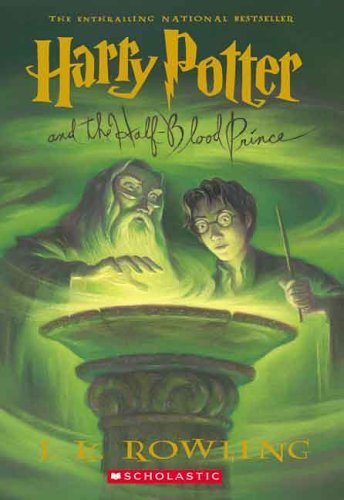
Published in July 2005 as the sixth novel in J.K. Rowling’s seven-book series, Harry Potter and the Half-Blood Prince occupies a peculiar and important position in the larger story. Scholastic’s original publication announcement presented it as the penultimate Harry Potter novel, and that position defines much of what the book must accomplish. It still looks like a Hogwarts school-year story, with classes, Quidditch, romantic jealousy, detentions and Christmas holidays, but the protective boundaries around that structure are collapsing. Its thirty chapters move steadily from the consequences of Voldemort’s return toward a fundamentally different kind of story in which Harry can no longer rely on school, government or even Dumbledore to carry the burden for him.
The immediate background comes from Harry Potter and the Order of the Phoenix, where the Ministry finally witnesses Voldemort’s return, Sirius Black dies and Harry learns the prophecy linking his future to Voldemort’s. Half-Blood Prince begins after those revelations have become public, but its deepest concern is not prophecy itself. It is the problem of understanding incomplete information. Dumbledore begins teaching Harry to reconstruct Voldemort from memories and patterns; Harry receives extraordinary magical knowledge from an anonymous textbook author whose identity and morality he does not know; and he becomes convinced that Draco Malfoy is plotting something dangerous even though he cannot initially prove how the plot works.
The novel therefore gives Harry several different kinds of education at once. One teaches him how to understand an enemy through history, motive and evidence. Another gives him techniques without context and rewards him for trusting results before understanding their source. A third teaches him the frustration of being correct without possessing enough evidence to persuade anyone else. By the end, those lessons converge around Voldemort, Draco, Snape and Dumbledore, leaving Harry with more knowledge than he had at the beginning but far less protection.
Spoiler warning: This article discusses the complete novel, including the identity of the Half-Blood Prince, the Horcrux revelations and Dumbledore’s death, but avoids revealing answers supplied only in Harry Potter and the Deathly Hallows.
Harry Potter and the Half-Blood Prince: Complete Plot Summary
The novel follows Harry’s sixth year at Hogwarts, but its plot is considerably more intricate than a conventional school mystery. Four major threads develop simultaneously: Draco Malfoy has received a secret assignment from Voldemort; Harry becomes dependent on the mysterious Half-Blood Prince’s annotated Potions textbook; Dumbledore uses private lessons to reconstruct Voldemort’s past; and the ordinary emotional lives of Harry, Ron, Hermione, Ginny and their classmates continue inside a world increasingly shaped by war. The apparent separateness of these threads is temporary, because each eventually contributes to the catastrophe at the end of the year.
War Reaches Britain and Dumbledore Returns
The first chapter does not begin with Harry at all. The British Prime Minister is sitting in his office after an inexplicably disastrous week in which a bridge has collapsed, people have been murdered, destructive weather has struck the West Country and one of his ministers has begun behaving bizarrely. Cornelius Fudge arrives through the fireplace and explains that the disasters are connected to the magical world. Voldemort is openly active, Death Eaters are attacking, giants are suspected of participating in destruction, dementors have deserted Azkaban and both Amelia Bones and Emmeline Vance have been murdered.
Fudge’s visit also closes the political story begun in the previous novel. His refusal to acknowledge Voldemort’s return has destroyed his credibility, and he has been removed as Minister for Magic. Rufus Scrimgeour, formerly head of the Auror Office, succeeds him and immediately projects greater toughness. He tells the Prime Minister that the apparently ordinary secretary Kingsley Shacklebolt is actually an Auror placed nearby for protection, while Herbert Chorley’s bizarre behaviour appears to result from a badly performed Imperius Curse.
The chapter changes the scale of the series. Voldemort’s bodily restoration in Harry Potter and the Goblet of Fire can no longer be contained within secret confrontations involving Harry and a small group of wizards. Magical violence now produces bridge collapses, political crises and public fear in the Muggle world, even though Muggles cannot understand the real causes. The war has begun to erase the boundary that once allowed Harry’s magical life and ordinary Britain to exist separately.
The second chapter again leaves Harry’s point of view. Narcissa Malfoy secretly travels with Bellatrix Lestrange to Spinner’s End, where Severus Snape lives with Peter Pettigrew nearby. Bellatrix distrusts Snape and confronts him with almost every question a suspicious reader might ask: why did he remain at Hogwarts after Voldemort disappeared, why did he oppose Quirrell’s attempt to obtain the Sorcerer’s Stone, why did he not immediately return when Voldemort regained his body, why has he never killed Harry, and why has Dumbledore continued trusting him?
Snape answers each accusation with an explanation compatible with loyal service to Voldemort. He claims he remained at Hogwarts because it allowed him to spy on Dumbledore, opposed Quirrell because he did not know Voldemort was possessing him, delayed returning to Voldemort so that Dumbledore would believe his cover, and kept Harry alive because killing a student under Dumbledore’s protection would have destroyed his usefulness as a spy. His arguments satisfy the internal logic of his Death Eater role without actually giving the reader independent proof of where his loyalty lies.
Narcissa has come because Voldemort has assigned her sixteen-year-old son Draco an exceptionally dangerous task. She believes the assignment is partly punishment for Lucius Malfoy’s failure at the Ministry and fears that Voldemort expects Draco to die trying. Bellatrix regards the mission as an honour, but Narcissa’s concern as a mother overwhelms her obedience. She asks Snape to help Draco, then persuades him to make an Unbreakable Vow: he will watch over Draco, protect him as far as possible and, if Draco cannot complete his task, perform the deed himself.
Harry enters the novel in the third chapter. At Privet Drive, he has been following newspaper reports about Voldemort, Scrimgeour and growing speculation that Harry is the “Chosen One.” Dumbledore unexpectedly arrives to collect him much earlier in the summer than Harry expects. His appearance immediately contains a disturbing detail: one of his hands is blackened and shrivelled, evidence that something serious has happened to him, although he refuses to explain it yet.
Dumbledore first settles Sirius Black’s will. Harry has inherited Sirius’s money, possessions and Number Twelve, Grimmauld Place. Because the Black family home may contain enchantments designed to keep it within a pure-blood line, Dumbledore tests Harry’s ownership by summoning Kreacher. When the house-elf is forced to obey Harry, the inheritance is confirmed. Harry sends Kreacher to work in the Hogwarts kitchens rather than keeping him nearby, while Buckbeak remains with Hagrid under the temporary name Witherwings.
Before leaving, Dumbledore confronts the Dursleys about Harry’s childhood. He reminds them that the magical protection connected to Lily Potter’s sacrifice has continued because Harry can still call Petunia Dursley’s house home, even though the Dursleys have given him little affection and considerable neglect. That protection will expire when Harry comes of age at seventeen, so Dumbledore asks only that they allow Harry to return one final time before his next birthday. The scene closes an important phase of Harry’s life: Privet Drive remains magically necessary, but its role is nearly finished.
Dumbledore then takes Harry to recruit Horace Slughorn, an elderly former Hogwarts professor who has gone into hiding because he fears Death Eaters may try to recruit him. Slughorn has staged evidence of an attack and disguised himself as an armchair when Dumbledore and Harry enter his temporary home. He initially refuses to return to teaching, but Dumbledore has brought Harry deliberately. Slughorn enjoys collecting talented, famous and well-connected people, maintaining relationships with former students and taking pleasure in the influence those relationships give him.
Harry also learns that Slughorn taught Lily Evans and considered her one of his favourite students. Slughorn’s admiration is genuine, but so is his tendency to evaluate people according to status and potential usefulness. Dumbledore eventually withdraws as though the recruitment attempt has failed, allowing Slughorn’s fear of isolation and attraction to Harry’s celebrity to work on him. Slughorn changes his mind and accepts the Hogwarts position.
Outside the house, Dumbledore explains Slughorn’s habit of creating circles of promising students around himself. More importantly, he speaks to Harry about Sirius. Harry acknowledges his grief but rejects the idea of surrendering to it; death has become too real for him to waste his life hiding from danger. Dumbledore approves of this response and tells Harry to confide the prophecy to Ron and Hermione rather than carrying it alone.
He then announces that Harry will receive private lessons from him during the coming year. Harry does not yet know their subject, only that Dumbledore has decided to take a much more direct role in his education. Dumbledore also urges him to keep his Invisibility Cloak with him at all times, even inside Hogwarts, another indication that the school is no longer assumed to be absolutely safe.
At the Burrow, wartime anxiety coexists with family life. Tonks appears unusually subdued, with dull hair and a changed manner, creating a mystery that Harry initially interprets incorrectly. Arthur Weasley has been promoted to lead a Ministry office dealing with counterfeit protective objects, a reminder that fear has created opportunities for fraud as well as genuine defence. The Weasley family clock points persistently toward “mortal peril,” while new security routines force even family members to verify one another’s identities before entering the house.
Harry also discovers that Bill Weasley and Fleur Delacour are engaged. Fleur’s presence irritates Molly, Ginny and Hermione, while Harry mostly observes the conflict with amusement. His O.W.L. results arrive, and although he did not receive the Outstanding grade in Potions that Snape demanded for N.E.W.T.-level study, his Exceeds Expectations result will soon prove sufficient under Hogwarts’ new Potions professor.
Draco’s Mission and the Half-Blood Prince
When the Weasleys, Harry and Hermione visit Diagon Alley for school supplies, the street demonstrates how thoroughly fear has altered ordinary wizarding life. Businesses are shuttered, disappearances are discussed openly and dubious sellers offer supposedly protective amulets and potions. Fred and George Weasley’s joke shop is an exception: bright, busy and financially successful, it has adapted to the war by producing both comic products and genuinely useful defensive equipment.
Harry’s attention shifts to Draco Malfoy when he sees Draco and Narcissa behaving secretively. Harry, Ron and Hermione follow Draco into Knockturn Alley and watch him enter Borgin and Burkes. Through magical concealment, Harry overhears enough of Draco’s conversation with Borgin to know that Draco wants something repaired and needs another object in the shop kept safe. Draco threatens Borgin with powerful connections and behaves with a confidence that convinces Harry something larger than ordinary school rivalry is happening.
Harry immediately suspects Draco has become involved with Voldemort. Ron and Hermione regard the idea more cautiously, partly because Draco is still sixteen and partly because Harry cannot explain exactly what he is planning. This disagreement becomes a recurring pattern: Harry’s central suspicion is correct, yet his inability to prove the mechanism repeatedly makes him sound obsessive.
On the Hogwarts Express, Slughorn begins assembling a new version of the “Slug Club.” He invites students whose family backgrounds, achievements or perceived future importance interest him. Harry’s fame makes him an obvious prize, while Ginny earns Slughorn’s attention by demonstrating talent rather than connections. The lunch reveals Slughorn as more than a comic social climber: he has a sophisticated instinct for identifying people who may someday become influential and arranging himself near them.
Harry later hides beneath his Invisibility Cloak in the Slytherin compartment to spy on Draco. Draco speaks as though he has been entrusted with serious work by Voldemort and implies that Hogwarts may soon become irrelevant to him. He detects Harry after the others leave, paralyses him, breaks his nose and leaves him concealed beneath the cloak as the train empties.
Tonks finds Harry before the train returns to London and gets him toward Hogwarts. Her altered appearance and changed Patronus deepen Harry’s suspicion that something has happened to her emotionally. Snape meets them and escorts Harry into the castle, taking the opportunity to humiliate him.
At the opening feast, Harry learns why Slughorn has returned. Snape has finally received the Defence Against the Dark Arts position he has wanted for years, while Slughorn will teach Potions. Because Slughorn accepts students with an Exceeds Expectations O.W.L., Harry and Ron can continue the subject, preserving Harry’s hope of becoming an Auror.
Neither boy has bought the required advanced textbook, so they borrow old copies. Harry receives a battered edition of Advanced Potion-Making filled with handwritten corrections and alternative methods. During the first lesson, Slughorn challenges the class to brew an exceptionally difficult Draught of Living Death and promises a small bottle of Felix Felicis, or liquid luck, to the best student. Harry follows the handwritten alterations rather than the printed method and produces the best potion in the room.
The achievement immediately changes Harry’s status in Potions. Slughorn believes he has discovered extraordinary talent, while Hermione is irritated because Harry’s performance depends on instructions unavailable to the rest of the class. Ron is less troubled by the ethical issue but cannot easily read the handwriting. The mysterious annotations also contain original spells and bits of advice, gradually turning the book into something closer to a private tutor than a school text.
Hermione worries about Harry obeying an unknown author, and Ginny’s experience with Tom Riddle’s diary gives that worry particular force. The textbook appears to contain no enchantment comparable to the diary, however. Eventually Harry discovers an inscription identifying its former owner: the book belongs to someone calling himself the Half-Blood Prince.
Harry becomes fascinated. The Prince seems brilliant, inventive and unusually good at precisely the kinds of practical magic Harry values. Hermione instead wants to know who the writer was and whether Harry should trust him. Their disagreement establishes one of the novel’s central tensions: a method can work perfectly and still leave unanswered questions about its origin, purpose and moral limits.
Voldemort’s Origins and Dumbledore’s Lessons
Dumbledore’s private lessons begin not with advanced duelling but with history. He tells Harry that defeating Voldemort requires understanding what Voldemort is, how he became that way and what patterns his past reveals. The Pensieve allows them to examine memories from witnesses, but Dumbledore repeatedly distinguishes between what a memory actually shows and what he has inferred from incomplete evidence.
The first major memory comes from Bob Ogden, a Ministry official who once visited the Gaunt family near Little Hangleton. The Gaunts are descendants of Salazar Slytherin and have preserved both his Parseltongue and an obsessive belief in pure-blood superiority. Their pride exists alongside extreme poverty, violence and isolation.
Marvolo Gaunt dominates his daughter Merope and son Morfin. Morfin is unstable and aggressive, while Merope has been so terrorised by her father that she appears nearly incapable of competent magic in his presence. Two heirlooms reveal the family’s historical importance: a ring bearing the Peverell coat of arms and a locket said to have belonged to Slytherin.
Merope is secretly in love with Tom Riddle Sr., the handsome Muggle son of a wealthy local family. Morfin has attacked him magically because Merope admires him, bringing Ogden to the Gaunt home. The confrontation eventually leads to Marvolo and Morfin being imprisoned, leaving Merope temporarily free from their control.
Dumbledore reconstructs what probably follows, while carefully acknowledging that part of the sequence is inference rather than witnessed fact. He believes Merope most likely used a love potion to compel Tom Riddle to leave his family and live with her. Once she was pregnant, she seems to have stopped maintaining the enchantment, perhaps hoping he had come to love her genuinely. Instead, Riddle abandoned her and returned home.
The history gives Voldemort a background full of ironies. His fanatical pure-blood ideology comes through a maternal family degraded by generations of inbreeding and obsession with ancestry, while his father is a Muggle whom his mother appears to have coerced magically. Voldemort will later reject his ordinary name and Muggle parentage while appropriating the prestigious Slytherin ancestry that helps him construct a grander identity.
Back at Hogwarts, ordinary school life continues beside these revelations. Harry uses the Prince’s instructions to maintain remarkable success in Potions, while Hermione’s irritation grows. Quidditch also becomes important because Harry is now Gryffindor captain. During Keeper tryouts, Ron competes against the highly self-confident Cormac McLaggen, and Hermione secretly Confunds McLaggen, helping Ron secure the position. Her intervention reveals that her feelings for Ron are already strong enough to compromise the fairness she usually defends.
The war re-enters the school plot during a Hogsmeade visit. Harry encounters Mundungus Fletcher selling objects stolen from Sirius’s house, provoking furious grief. Soon afterwards, Katie Bell and her friend Leanne are arguing over a package when Katie accidentally touches a cursed opal necklace. She rises into the air, screaming, and nearly dies.
Harry recognises the necklace as an object he saw at Borgin and Burkes and immediately connects it to Draco. Yet the evidence remains incomplete. Draco appears to have an alibi, Hogwarts is heavily protected and Harry cannot explain how Draco could have transferred the necklace without being present. His certainty therefore sounds stronger than the proof he can provide.
Dumbledore’s next lesson takes Harry to the London orphanage where Tom Riddle was raised. Mrs Cole, the matron, tells the visiting Dumbledore that Tom is unusual even by the standards of troubled children. Frightening things happen around people who anger him, he seems able to control animals, and two other children, Amy Benson and Dennis Bishop, were traumatised after accompanying him into a cave during a seaside trip.
When Dumbledore meets eleven-year-old Tom, the boy initially assumes Dumbledore is a doctor or authority figure sent to control him. Once convinced that magic is real, he reacts with excitement rather than fear. He already knows that he can make unusual things happen, hurt people who annoy him and speak to snakes.
Dumbledore also discovers that Tom steals small possessions from other children and keeps them as trophies. He forces him to return them and warns him that Hogwarts will not tolerate theft or cruelty. That trophy habit becomes one of the most important details in Dumbledore’s later reasoning because it suggests that Voldemort attaches significance to objects associated with domination and exceptional identity.
The orphanage memory also changes the way the novel approaches evil. Riddle is not depicted as a normal, affectionate child suddenly transformed by one traumatic event. He has suffered abandonment and isolation, but he already delights in secrecy, control and causing fear. Dumbledore’s investigation therefore seeks explanation without turning explanation into excuse.
Love, Jealousy and Failed Assassination Attempts
The middle of the novel deliberately alternates between mortal danger and adolescent emotional disorder. Harry begins to realise that his feelings for Ginny have changed, particularly when he sees her with Dean Thomas. Ron’s own romantic life becomes volatile at the same time. Before a Quidditch match, Ron is so nervous that Harry pretends to put Felix Felicis in his drink; Ron plays brilliantly because he believes he is magically lucky even though Harry gave him nothing.
The deception infuriates Hermione until she learns the truth, but a more personal shock follows when Lavender Brown kisses Ron after Gryffindor’s victory. Ron eagerly enters a relationship with her, partly because he enjoys the attention and partly because his insecurities have been sharpened by hearing about Hermione’s past connection with Viktor Krum. Hermione is hurt and retaliates emotionally, including sending magically conjured birds at Ron after he finds her crying.
Harry is caught between his friends while hiding his own attraction to Ginny because she is Ron’s sister and currently dating Dean. These romantic plots can appear trivial beside Voldemort’s war, yet the contrast is intentional. Harry and his friends remain teenagers whose emotional lives have not stopped merely because death has become more common.
Slughorn’s Christmas party brings several strands together. Harry chooses Luna Lovegood as his guest, avoiding the romantic competition surrounding him. Hermione attends with McLaggen partly to irritate Ron and quickly discovers that his self-absorption makes him unbearable.
Draco is found wandering the corridors and brought near the party, after which Snape takes him aside. Harry follows under the Invisibility Cloak and overhears their argument. Snape makes clear that he knows Draco has a mission and reminds him of promises made to Narcissa, while Draco angrily refuses his help. Harry now possesses another piece of evidence, but because he does not know the details of the Unbreakable Vow, he cannot interpret it completely.
During Christmas at the Burrow, Harry reports what he heard. Lupin continues to defend Dumbledore’s judgment regarding Snape, even though Harry finds such trust incomprehensible. Lupin also describes the larger war, including Fenrir Greyback, a werewolf who deliberately positions himself to attack humans and has aligned himself with Voldemort. Voldemort’s movement is exploiting fear and grievance among groups alienated from mainstream wizarding society, although Greyback himself represents predatory brutality rather than a simple victim of prejudice.
The holiday also brings Harry into direct conflict with Scrimgeour. Percy Weasley arrives at the Burrow with the Minister in what quickly becomes obvious as a staged opportunity for Scrimgeour to speak privately with Harry. Scrimgeour wants Harry to appear supportive of the Ministry, believing the public symbolism of the “Chosen One” standing behind the government would improve morale.
Harry refuses. He remembers the Ministry’s campaign against him and Dumbledore, its willingness to imprison people such as Stan Shunpike without convincing evidence and its tendency to substitute appearances for truth. His rejection marks a political maturation: Harry is not opposed to government as such, but he no longer assumes institutional authority deserves loyalty simply because it claims to represent order.
Dumbledore’s lessons then reveal one of Voldemort’s most consequential early crimes. In Morfin Gaunt’s memory, the teenage Tom Riddle arrives at the Gaunt cottage searching for information about his family. Morfin tells him that his father was the Muggle who abandoned Merope. Riddle subsequently murders his father and paternal grandparents, using Morfin’s wand and altering Morfin’s memory so thoroughly that Morfin confesses to the crimes.
Riddle takes the Gaunt ring for himself. Morfin is convicted and remains in Azkaban, where he eventually dies despite Dumbledore later discovering evidence of the memory alteration. The episode reveals several features of Voldemort at once: he murders the Muggle family whose existence humiliates him, appropriates the magical heirloom that supports his preferred ancestry and uses another person as disposable cover.
A second memory should reveal what happened between Riddle and Slughorn at Hogwarts, but the scene is obviously damaged. Slughorn’s recollection becomes clouded and unnatural at exactly the point where Riddle asks him about Horcruxes. Dumbledore explains that Slughorn has altered the memory because he is ashamed of what he told Riddle, and he gives Harry a specific assignment: obtain the genuine version.
Harry’s attempts fail because Slughorn recognises what Dumbledore wants and becomes evasive whenever the subject approaches the past. Before Harry solves that problem, another attack reaches someone close to him. On Ron’s seventeenth birthday, Ron accidentally eats chocolates sent to Harry by Romilda Vane and falls under the influence of a powerful love potion.
Harry takes him to Slughorn, who provides an antidote. In celebration, Slughorn opens a bottle of mead intended as a gift for Dumbledore. Ron drinks from it and immediately collapses from poison. Harry saves him by forcing a bezoar into his mouth, using knowledge reinforced by his Potions studies. The incident confirms that the necklace was not an isolated attack: someone is repeatedly trying to kill Dumbledore by indirect means, and innocent students are absorbing the danger.
Ron’s hospitalisation begins softening the hostility between him and Hermione, especially after he speaks Hermione’s name while unconscious and Lavender reacts jealously. Harry, meanwhile, continues investigating Draco. A disastrous Quidditch match with McLaggen as substitute Keeper leaves Harry injured when McLaggen interferes with the Beaters and accidentally knocks him out.
Hagrid later tells Harry, Ron and Hermione that he overheard Dumbledore and Snape arguing. Snape appeared reluctant to continue with something Dumbledore expected him to do. Harry interprets the argument as further evidence that Snape is dangerous, but he again lacks context. The reader knows about the Unbreakable Vow; Harry does not.
Harry eventually realises that human students may be unable to follow Draco into places where house-elves can go unnoticed. He summons Kreacher and Dobby and orders them to monitor Draco. Their surveillance finally produces a major breakthrough: Draco repeatedly disappears into the Room of Requirement for long periods, although even the elves cannot discover what he does inside.
The Missing Memory and the Secret of the Horcruxes
Dumbledore continues reconstructing Voldemort’s adult life. After leaving Hogwarts, Tom Riddle unexpectedly takes a job at Borgin and Burkes rather than pursuing the prestigious Ministry career many teachers predicted for him. His work places him close to rare magical objects and wealthy collectors, exactly the environment suited to his growing obsession with historically significant artefacts.
A memory belonging to a house-elf named Hokey shows Riddle visiting the wealthy Hepzibah Smith. Hepzibah proudly displays two treasures: a golden cup once owned by Helga Hufflepuff and the same Slytherin locket that once belonged to Merope. Riddle’s reaction reveals intense interest despite his controlled manners.
Hepzibah dies soon afterwards, and Hokey is blamed after apparently misremembering the amount of poison she placed in her mistress’s drink. The cup and locket disappear. Dumbledore sees an obvious resemblance to Morfin’s story: another death, another altered memory and another meaningful object taken by Riddle.
Riddle then disappears for years. When he eventually returns to Hogwarts, his appearance has begun changing so dramatically that the handsome schoolboy is becoming recognisably inhuman. He asks Dumbledore, now headmaster, for the Defence Against the Dark Arts post.
Dumbledore refuses. He does not believe Voldemort genuinely wants an ordinary teaching career; Hogwarts matters to him as the first place he experienced belonging, as a repository of magical history and as a possible base of influence over future followers. After this rejected application, the Defence Against the Dark Arts position becomes notorious for its rapid turnover, although the novel leaves the exact magical mechanism unstated.
Meanwhile, Harry’s search for Draco reaches a frustrating limit. Dobby and Kreacher confirm that Draco uses the Room of Requirement and that Crabbe and Goyle frequently act as disguised lookouts. Harry cannot simply enter after him because the Room changes according to the user’s need; without knowing what Draco asks the Room to become, Harry cannot reproduce the same space.
Moaning Myrtle adds another clue by describing a boy who comes to her bathroom and cries because he is frightened and cannot make something work. Harry does not initially understand how much this changes the picture of Draco. The boy boasting on the train about secret importance is gradually being replaced by someone isolated, desperate and terrified of failure.
Harry still has not obtained Slughorn’s memory when Aragog, Hagrid’s giant spider, dies. In frustration, Harry finally drinks the Felix Felicis he won in Potions. Rather than making him omnipotent, the potion gives him a powerful sense of timing and intuition. He abandons his original plan and walks toward Hagrid’s hut, where circumstances align in his favour.
On the way he encounters Slughorn and mentions Aragog’s death. Slughorn is interested in Acromantula venom, a valuable magical substance, and accompanies Harry to the funeral. Afterwards, he and Hagrid drink heavily in Aragog’s memory. Harry waits until Slughorn is emotionally open, then appeals to his affection for Lily and his shame about withholding information that could help her son fight the man who killed her.
Slughorn finally gives Harry the genuine memory. The real conversation shows the teenage Riddle asking what a Horcrux is and whether it would be possible to create more than one. Slughorn explains that murder damages the soul and that dark magic can encase part of that damaged soul inside another object, allowing the creator to remain anchored to life even if the body is destroyed.
What truly horrifies Slughorn is Riddle’s interest in repetition. Riddle asks whether the soul could be divided into seven pieces, attracted to seven as a magically significant number. Dumbledore concludes that Voldemort intended to create six Horcruxes while retaining the seventh fragment of soul in his living body.
The revelation reorganises the entire series. The diary Harry destroyed in Harry Potter and the Chamber of Secrets was not merely an enchanted diary containing a memory of young Riddle; it was one of Voldemort’s Horcruxes. The Gaunt ring was another, and Dumbledore has already destroyed it, explaining why the object he now wears contains a cracked stone.
Dumbledore believes the Slytherin locket and Hufflepuff cup are highly likely Horcruxes because they fit Voldemort’s preference for significant trophies. He suspects Voldemort would also have desired objects connected to other Hogwarts founders, although he believes Gryffindor’s surviving relic is safe. Nagini, Voldemort’s snake, is another probable candidate. At this stage, however, part of the inventory remains deduction rather than confirmed fact.
Dumbledore’s strategy becomes clear: Voldemort cannot be permanently defeated until the external soul fragments have been found and destroyed. The private lessons have therefore not been biography for its own sake. Every detail about Riddle’s childhood, ancestry, collecting instinct and attachment to Hogwarts helps predict what objects he selected and where he might have hidden them.
Harry also asks how this changes the prophecy stating that he and Voldemort are destined to face one another. Dumbledore rejects a deterministic reading. Voldemort chose to hear and act upon the prophecy; he chose Harry as the child who threatened him; his attempt to kill Harry created the circumstances that shaped Harry’s life. Harry, in turn, does not oppose Voldemort merely because a prophecy orders him to do so. After the murder of his parents, Cedric and Sirius, Harry wants Voldemort stopped regardless of what any prediction says.
That distinction matters because it preserves Harry’s moral agency. His future may have been predicted, but the book insists that prediction is not the same as compulsion. Voldemort’s obsession with prophecy helped create the enemy he feared, while Harry’s commitment comes from experience, love and choice.
Sectumsempra, the Prophecy and the Cave
Harry’s dependence on the Prince’s textbook reaches its moral crisis when he finally confronts Draco directly. The Prince has not only improved Potions recipes; he has recorded original spells, including one labelled for use against enemies. Harry has previously tried some of the less dangerous inventions, but he does not know what the ominously named Sectumsempra actually does.
Harry follows Draco into a bathroom and discovers him crying with Moaning Myrtle. Draco’s appearance confirms how severely the mission has damaged him: the swaggering boy who once seemed thrilled by secret importance has become frightened, physically strained and increasingly alone. When he realises Harry is present, the encounter rapidly turns into a duel.
As Draco begins to cast a dangerous curse, Harry instinctively uses Sectumsempra. The effect is horrific. Draco is slashed open as though struck by invisible blades and begins bleeding uncontrollably.
Snape arrives and immediately recognises what has happened. He performs the counter-curse and saves Draco, then questions Harry about where he learned the spell. His familiarity with both the curse and its treatment is another clue connecting him to the mysterious textbook, though Harry does not yet understand it.
Harry is horrified by what he has done, but he still cannot bring himself to abandon the Prince completely. When ordered to retrieve his Potions book, he hides the original inside the Room of Requirement and substitutes another copy. He marks the hiding place with objects so he can find it again, choosing preservation over destruction even after the book has nearly caused a death.
Snape punishes Harry with detention, causing him to miss Gryffindor’s final Quidditch match. The team wins without him. When Harry returns to the common room, Ginny runs toward him in celebration, and he finally acts on the feelings he has spent months suppressing. Their kiss begins a relationship that gives Harry a rare period of uncomplicated happiness before the final crisis.
That happiness is interrupted by Professor Trelawney. She reveals that she was the person who originally made the prophecy concerning Harry and Voldemort during her interview with Dumbledore, and she mentions that Snape was the eavesdropper who heard part of it before being discovered. Harry immediately realises the implication: Snape carried the prophecy to Voldemort, and Voldemort subsequently targeted Harry’s family.
Harry confronts Dumbledore in fury. Dumbledore confirms the basic history but insists that Snape later experienced genuine remorse and changed sides. Harry cannot understand why that should outweigh what Snape did, particularly because Dumbledore still refuses to provide the evidence behind his absolute confidence.
The disagreement exposes the limits of Dumbledore’s method as a teacher. He has spent the year training Harry to examine evidence, distinguish memory from interpretation and understand motives, yet on the question that matters most personally to Harry, he asks for trust without supplying the evidence. Dumbledore may have reasons, but Harry does not possess them.
Dumbledore then tells Harry that he believes he has located another Horcrux. Before leaving Hogwarts, Harry alerts Ron and Hermione and asks them to watch Draco and Snape. He gives them the remaining Felix Felicis so that they and their allies will have an advantage if something goes wrong. Then he leaves with Dumbledore.
Their destination is the seaside cave connected to Tom Riddle’s childhood. The place demonstrates why Dumbledore studied apparently minor details from the orphanage. Voldemort has returned to a location associated with one of his earliest acts of secret domination and transformed it into a hiding place protected by elaborate magic.
Entry requires blood, an early indication that the cave’s defences are designed around sacrifice and bodily harm. Inside, Harry and Dumbledore discover a vast black lake. A hidden boat carries them toward a small island, while the water below contains innumerable corpses transformed into Inferi.
At the island’s centre is a stone basin containing a potion that cannot simply be vanished, poured away or otherwise bypassed. Dumbledore determines that it must be drunk. Before beginning, he orders Harry to make him continue no matter what he says once the potion takes effect.
Harry agrees without understanding how terrible the promise will become. As Dumbledore drinks, he becomes increasingly weak and psychologically tormented. He begs, pleads and appears to experience some unbearable internal vision, but neither Harry nor the reader is told exactly what he sees. Bound by his promise, Harry continues forcing the potion into him.
When the basin is finally empty, Dumbledore is desperately thirsty. Harry tries to provide water magically, but it disappears before Dumbledore can drink. The only accessible water is the lake itself. When Harry attempts to fill a goblet there, the Inferi rise and attack.
Harry’s spells cannot hold them off indefinitely. Dumbledore, barely conscious moments earlier, recovers enough strength to conjure a ring of fire, exploiting the Inferi’s weakness and driving them back. Harry takes the locket that had been resting beneath the potion, supports the severely weakened Dumbledore into the boat and helps him escape.
The scene completes a reversal that has been developing all year. Dumbledore began as the teacher leading Harry through controlled memories. In the cave, Harry must become the physically stronger partner, obey a command that causes his mentor suffering and then guide him home. The lesson has stopped being theoretical: Harry is already being forced into the responsibility Dumbledore has been preparing him to carry.
The Astronomy Tower, Dumbledore’s Death and the White Tomb
When Harry and Dumbledore return to Hogsmeade, they see the Dark Mark above Hogwarts. Dumbledore is still extremely weak, but the possibility of an attack on the school forces them to move immediately. Rosmerta provides them with brooms, and they fly toward the Astronomy Tower.
Once there, Dumbledore hears someone approaching. He immobilises Harry beneath the Invisibility Cloak just before Draco enters, meaning Harry can see and hear what follows but cannot intervene. Draco disarms Dumbledore, leaving the headmaster wandless.
The mystery Harry has pursued all year is finally explained. Draco has repaired the broken Vanishing Cabinet hidden in the Room of Requirement and connected it to its counterpart at Borgin and Burkes. The linked cabinets create a passage that bypasses Hogwarts’ normal magical protections, allowing Death Eaters to enter the castle directly.
Draco also reveals how the failed attacks were arranged. He had placed Madam Rosmerta under the Imperius Curse and used her as an intermediary. Through her, the cursed necklace was passed to Katie Bell and the poisoned mead was sent toward Dumbledore. Draco’s methods kept him physically distant from the attacks, helping preserve his alibis, but they also repeatedly endangered other people.
Dumbledore does not respond by attacking Draco or humiliating him. Instead, he forces Draco to confront the real consequences of what he has done. Katie could have died. Ron nearly did. Rosmerta has been enslaved. Death Eaters are now inside a school full of children.
Draco admits that Voldemort will kill him and possibly his family if he fails. Dumbledore recognises that Draco has been trapped by the culture of ambition and allegiance he once embraced. He offers to protect Draco and even arrange the disappearance of his family if Draco abandons the mission.
Draco’s resolve begins to fail. He has succeeded at the technically difficult part of the assignment—repairing the Cabinet and infiltrating Hogwarts—but he cannot easily perform the direct murder that would complete it. His wand lowers.
Before he can decide, Death Eaters arrive on the tower. Elsewhere in Hogwarts, Ron, Hermione, Ginny, Neville, Luna and members of the Order are trying to resist the invasion. The Felix Felicis Harry left behind helps protect his friends during the fighting, but Bill Weasley is badly injured by Fenrir Greyback.
Snape eventually reaches the tower. Harry remains magically paralysed. Dumbledore addresses Snape, and the meaning of the moment is impossible for Harry to interpret because he does not know what has passed between the two men beyond their public history and the fragments he has overheard.
Snape casts the Killing Curse. Dumbledore is thrown from the tower and dies.
The spell binding Harry ends with Dumbledore’s death. Harry races after Snape and the escaping Death Eaters in a state of grief so intense that self-preservation barely matters to him. He repeatedly attacks Snape, but Snape blocks his spells with humiliating ease and taunts him for failing to master nonverbal magic and Occlumency.
When Harry attempts to use spells learned from the Prince, the final title mystery is solved. Snape reveals that he invented them and that he is the Half-Blood Prince. His mother was a witch named Eileen Prince and his father a Muggle named Tobias Snape, allowing him to turn his mother’s surname and his mixed ancestry into the private title he used as a student.
The revelation collapses Harry’s separate categories. The anonymous teacher whose brilliance he admired is the same man he distrusts most. The Potions shortcuts, useful spells, dangerous inventions and intimate knowledge of Sectumsempra all came from Snape.
Snape nevertheless prevents another Death Eater from attacking Harry and insists that Voldemort wants Harry left alive for himself. He escapes Hogwarts with Draco. Hagrid’s hut is set on fire during the retreat, although Hagrid and Fang survive.
Harry returns to Dumbledore’s body and remembers the locket they recovered from the cave. When he examines it, he discovers it is not Slytherin’s true locket. Inside is a message signed “R.A.B.” stating that the real Horcrux has already been taken and that the writer intends to destroy it.
The discovery turns the cave expedition into an apparent failure. Dumbledore suffered terribly to recover a substitute, and Harry does not know who R.A.B. is, where the real locket has gone or whether it has actually been destroyed. His newly acquired mission therefore begins not with certainty but with another mystery.
The school enters mourning. Fawkes sings a lament that Harry experiences as expressing grief beyond ordinary language. In the hospital wing, the consequences of the invasion reveal several forms of love and loyalty that contrast with Voldemort’s world.
Bill has been savaged by Greyback, although Greyback was not fully transformed at the time. His future condition is therefore uncertain, and his face is permanently damaged. Molly assumes that Fleur might reconsider their engagement because of the injury, but Fleur is offended by the suggestion. She insists that Bill’s wounds do nothing to change her love for him, and the confrontation finally dissolves much of the hostility between Fleur and Molly.
Tonks’s mystery is also resolved. Her changed appearance and Patronus reflect emotional distress over Remus Lupin, whom she loves. Lupin has resisted the relationship because he believes his lycanthropy, age and poverty make him unsuitable. The revelation again places love beside fear, but without pretending love automatically resolves every practical problem.
Dumbledore’s death also creates an institutional crisis. McGonagall and the remaining staff must consider whether Hogwarts can remain open now that Death Eaters have penetrated it and the headmaster who embodied its safety is gone. Harry, Ron and Hermione explain what they can without disclosing Dumbledore’s secrets to everyone.
Hermione later solves the Half-Blood Prince’s family identity through records connecting Eileen Prince to Tobias Snape. The mystery is therefore explained in biographical terms, but the much larger question of Snape’s ultimate allegiance remains unresolved within this novel. Harry believes the tower has answered it; the narrative gives him powerful reasons for that belief but stops there.
Dumbledore’s funeral gathers students, teachers, Ministry officials and magical beings beside the Hogwarts lake. The ceremony marks more than the loss of a headmaster. It marks the end of the period in which Harry could assume that Dumbledore would eventually appear with a plan, an explanation or enough power to restore order.
Scrimgeour again tries to question Harry and gain information, but Harry refuses to reveal what Dumbledore was doing. His loyalty now includes protecting Dumbledore’s unfinished work from the Ministry. He has become the keeper of knowledge that institutions do not possess.
Harry also ends his relationship with Ginny. He does not stop loving her; he fears Voldemort will use her connection to him as a weapon. Ginny understands his reasoning more readily than he expects, which makes the separation more painful rather than less.
Finally, Harry decides that ordinary school life cannot remain his primary concern. He intends to visit Godric’s Hollow and then continue searching for the remaining Horcruxes. He does not know whether Hogwarts will reopen or whether he would return if it did.
Ron and Hermione make the decisive answer for him. They intend to accompany him. The novel therefore ends with Harry losing his greatest adult protector but not becoming solitary. His future depends on friendship rather than isolation, and the final task Dumbledore has given him becomes a shared undertaking.
The Wizarding World at War: Setting, Institutions and Power
The setting of Half-Blood Prince is still recognisably the wizarding Britain of the earlier books, but its social atmosphere has changed profoundly. The most important world-building development is not a new magical location; it is the collapse of the assumption that familiar locations are safe. The Ministry, Diagon Alley, the Burrow and eventually Hogwarts all function under conditions of war.
The opening chapter makes the transformation visible at the largest scale. Muggle disasters are being caused by magical violence that the ordinary government cannot publicly explain. The Prime Minister knows enough to understand that his country is being affected by forces outside normal political control, yet revealing the truth would itself violate the secrecy governing relations between the magical and non-magical worlds.
This produces a distinctive kind of helplessness. The Muggle government receives blame for bridge failures, murders and social anxiety whose causes it cannot disclose, while the Ministry of Magic possesses the explanation but cannot guarantee protection. Fudge’s final observation to the Prime Minister captures the basic problem: magic does not give one side unlimited power because the enemy can use magic too.
The wizarding Ministry responds to crisis partly through genuine protective measures and partly through political performance. Scrimgeour is clearly more competent and realistic about Voldemort than Fudge, but Rowling does not present the change of leadership as a simple cure. The government distributes security advice, expands enforcement offices and assigns Aurors to vulnerable targets, yet it also arrests questionable suspects and tries to use Harry as a symbol of confidence.
That distinction matters to Harry. He does not object to Arthur’s work removing fraudulent protective goods, Kingsley protecting the Muggle Prime Minister or practical defensive measures around Hogwarts. His conflict with Scrimgeour comes from the belief that a government must pursue truth rather than merely look decisive. The Ministry’s temptation is to treat public confidence as a substitute for reliable judgment.
Diagon Alley provides the economic version of the same atmosphere. Fear has emptied shops, encouraged dubious sellers and changed consumer behaviour. Yet Fred and George prosper because they understand that people still need humour while also adapting their products to genuine defensive needs. Their joke shop becomes an unexpected image of resilience: war alters ordinary life without eliminating the desire to live it.
Hogwarts initially appears more protected than ever. Students are searched, suspicious objects are monitored and Aurors guard the area. Nevertheless, the school’s defences depend on assumptions about how enemies might enter. Draco succeeds because he does not defeat Hogwarts’ protections directly; he finds a neglected pathway through the Vanishing Cabinets.
The Room of Requirement intensifies this problem. It is one of Hogwarts’ most extraordinary pieces of magic because it adapts to individual need, but precisely that flexibility makes it impossible for Harry to understand Draco’s use of it without knowing what Draco requires. A magical space designed to help students becomes part of an infiltration route. The castle’s richness therefore creates vulnerabilities alongside protections.
The novel also broadens its treatment of groups living at the edges of wizarding society. Dementors abandon Azkaban and align with Voldemort because his return offers them greater freedom to feed on despair. Greyback recruits or intimidates werewolves and uses lycanthropy as terror. Voldemort’s movement benefits from the fact that mainstream wizarding society has produced populations with grievances or ambiguous loyalties, although the book carefully distinguishes social exclusion from the individual cruelty of someone like Greyback.
Blood status remains another system of power. The Gaunts are the clearest demonstration of its absurdity. They consider themselves superior because of descent from Slytherin even while living in violence, poverty and decay. Their obsession with purity has not preserved greatness; it has helped destroy them.
Voldemort nevertheless adopts a version of the same ideology despite his Muggle father. His politics are therefore also an act of identity construction. He selects the ancestry that makes him exceptional, suppresses the ancestry he finds humiliating and transforms private shame into a doctrine that devalues others.
The Burrow offers the most important counter-setting. It is protected, anxious and repeatedly touched by war, yet it remains full of food, teasing, arguments, engagements and family routines. Rowling uses it to show what the war is supposed to preserve. Safety is not merely survival; it is the possibility of ordinary relationships continuing without domination.
By the end, even Hogwarts can no longer guarantee that possibility. The physical invasion matters, but the deeper world-building shift is psychological. The characters can no longer believe there is a separate protected sphere where childhood continues while adults manage the war elsewhere.
Character Analysis
The character work in Half-Blood Prince is unusually dependent on incomplete knowledge. Harry is learning to interpret people who conceal themselves, while several central characters are shown through memories, rumours, partial confessions or contradictory behaviour. The result is a novel in which understanding character becomes part of the mystery structure itself.
Harry Potter: From Protected Student to Chosen Agent
Harry begins the novel grieving Sirius but significantly more emotionally controlled than he was throughout much of Order of the Phoenix. The change is not because his losses hurt less. He has concluded that withdrawal would betray what Sirius represented to him, and he begins treating mortality as a reason to act rather than a reason to retreat.
That maturity coexists with familiar flaws. Harry is stubborn, impatient with authority and inclined to trust intuition strongly once it forms. His certainty about Draco is the clearest example. He recognises that Draco’s behaviour has fundamentally changed before most adults accept the possibility, but because his theory is initially incomplete, he treats disagreement as evidence that others are refusing to see what is obvious.
The novel vindicates Harry without pretending his method is perfect. He is correct that Draco is serving Voldemort and plotting inside Hogwarts. He is wrong or speculative about several details along the way, and he cannot discover the Vanishing Cabinet mechanism until Draco reveals it.
This distinction is central to his development. Being right about a conclusion does not mean every piece of reasoning used to reach it was equally strong. Dumbledore’s lessons repeatedly train Harry to separate evidence, inference and psychological probability, a discipline Harry applies inconsistently to Draco and Snape.
The Prince’s textbook exposes another weakness. Harry values practical competence, particularly after years of being taught by adults whose authority does not always correspond to usefulness. The Prince’s notes work, so Harry becomes emotionally attached to their author before knowing anything about him.
That attachment is understandable. The book gives Harry genuine mastery in a subject where Snape previously made him feel inadequate. It wins him Felix Felicis, improves his knowledge and provides spells he finds clever. Yet Harry gradually confuses effectiveness with trustworthiness.
Sectumsempra breaks that illusion. Harry uses a spell without knowing what it does because the Prince has earned his confidence through repeated success. The horrifying result teaches him that technique divorced from context can make the user morally irresponsible even if the technique itself is ingenious.
Harry’s relationship with prophecy also matures. At the beginning, being called the “Chosen One” by newspapers threatens to turn an intensely personal burden into a public identity. Dumbledore instead teaches him that prophecy has meaning because people choose to act around it. Harry’s struggle against Voldemort is not noble because destiny assigned him a heroic part; it is meaningful because Harry, knowing the cost, still chooses opposition.
The cave and tower complete his movement toward adulthood. Harry must physically support Dumbledore, follow instructions under extreme emotional pressure and then watch the person he trusts most die while he is unable to intervene. The experience destroys the illusion that Dumbledore’s presence guarantees survival.
Harry’s final choice not to resume normal school life follows naturally from that transformation. He has not become omniscient or invulnerable. He accepts the mission precisely while knowing how much remains uncertain, and he does so without pretending that courage means absence of fear or grief.
Albus Dumbledore: Teacher, Strategist and Mortal Man
Dumbledore is more present in Half-Blood Prince than in any previous Harry Potter novel, yet the book simultaneously makes him less godlike. His damaged hand appears almost immediately, and the story repeatedly emphasises age, injury and physical limitation. The effect prepares the reader for a Dumbledore who remains intellectually formidable but is no longer protected from mortality.
His private lessons reveal his greatest strength as an educator: he teaches Harry how to think rather than simply supplying a list of answers. The memories of the Gaunts, the orphanage, Morfin, Hepzibah Smith and Slughorn form an argument. Harry is expected to notice patterns in Voldemort’s choices and understand why those patterns matter.
Dumbledore is particularly careful about uncertainty. He tells Harry when he is making an inference, as with Merope’s probable use of a love potion, and when evidence is incomplete, as with the precise Horcrux inventory. That intellectual honesty is one reason the lessons feel different from ordinary exposition.
He is also an expert manipulator of situations. Slughorn’s recruitment depends on Dumbledore understanding exactly what the older professor desires and placing Harry in view as an irresistible prospect. Later, he assigns Harry the task of obtaining Slughorn’s memory because he knows Harry can appeal to emotions that Dumbledore himself cannot reach.
The moral ambiguity of this strategic side should not be ignored. Dumbledore frequently decides what information other people are ready to receive and acts on their behalf without full consent. His confidence that he knows which secrets must remain hidden may be justified in particular cases, but it creates friction with Harry.
Snape is the most important example. Dumbledore has spent the year teaching Harry to demand evidence and examine motives, then asks him to accept Snape’s loyalty largely because Dumbledore says he has sufficient reason. Harry’s frustration is therefore not simply adolescent refusal to obey. Dumbledore is asking him to suspend the very habits of inquiry he has encouraged.
His treatment of Draco is different. On the Astronomy Tower, Dumbledore recognises that Draco has committed serious wrongdoing but also sees the coercive structure around him. He does not absolve Draco for Katie, Ron or Rosmerta, yet he refuses to reduce him to the role Voldemort has assigned.
Dumbledore’s offer of protection matters because it gives Draco a genuine choice. Voldemort presents only obedience or death. Dumbledore introduces the possibility of escape, even at a moment when Draco is pointing a wand at him.
The cave strips away almost everything except trust. Dumbledore knowingly enters a place designed by Voldemort, drinks a potion he expects to be terrible and makes Harry responsible for forcing him to continue. For once the relationship becomes physically dependent in the opposite direction: Dumbledore must trust Harry to obey when compassion urges him to stop.
His death therefore lands not only because a beloved character dies but because a structure of authority collapses. Harry has repeatedly relied on Dumbledore as the person who knows more than anyone else. The unfinished Horcrux mission forces Harry to continue after discovering that even Dumbledore can miscalculate, suffer and die.
Tom Riddle / Lord Voldemort: Fear of Death and the Construction of a Monster
Voldemort is physically absent from almost the entire present-day action, yet he dominates the novel more thoroughly than many villains who appear constantly. Dumbledore reconstructs him through traces: family history, memories, objects, crimes and the testimony of people who once knew Tom Riddle. The result is less a conventional villain biography than a psychological investigation.
The Gaunt history establishes contradiction at the centre of Riddle’s identity. He descends from Salazar Slytherin through a family obsessed with pure blood, yet he is also the son of a Muggle father who abandoned his mother. Rather than integrate those two inheritances, Voldemort constructs a self that exalts one and annihilates the other.
His adoption of the name Lord Voldemort is therefore more than theatrical branding. Tom Riddle is an ordinary name connected to an unwanted Muggle father and an orphanage he despises. “Lord Voldemort” is a self-created identity promising uniqueness, aristocratic power and separation from ordinary human dependency.
Even as a child, Riddle desires control. He frightens other children, harms people who annoy him, discovers his abilities privately and collects objects from victims. His excitement at learning he is a wizard comes partly from finally acquiring an explanation for why he feels exceptional.
Dumbledore’s memories resist a simplistic explanation in which abandonment mechanically creates evil. Riddle’s circumstances are bleak, but the narrative repeatedly focuses on how he responds to them. He chooses domination where Harry, another orphan exposed to neglect, develops loyalty and empathy.
The trophy habit is especially important because it connects psychology to magical strategy. Voldemort does not want merely functional containers for pieces of his soul. He prefers objects that confirm the identity he has built: Slytherin’s locket, Hufflepuff’s cup and other artefacts associated with magical history.
Horcruxes turn his deepest fear into material form. Voldemort wants freedom from death, but the method requires repeated murder and literal fragmentation of the self. His effort to preserve existence therefore destroys the integrity of the thing being preserved.
That paradox is central to the novel’s judgment of him. Voldemort understands survival as avoiding biological death and power as avoiding dependence. Harry’s life demonstrates the opposite pattern: he survives repeatedly because other people love him, help him, teach him and choose to stand with him.
Voldemort’s inability to understand that kind of connection is not mere ignorance of a sentimental magical rule. It reflects the identity he has deliberately created. To recognise dependence as valuable would require him to admit that vulnerability is not equivalent to weakness.
Severus Snape: The Half-Blood Prince and the Problem of Trust
Snape is the novel’s most carefully constructed ambiguity. The opening at Spinner’s End allows him to explain his entire history as though he were a loyal Death Eater who has successfully deceived Dumbledore. Because his explanations are coherent, readers begin the story knowing that every public action by Snape can potentially support more than one interpretation.
His new position as Defence Against the Dark Arts teacher strengthens the tension. Snape understands Dark magic intimately and teaches the subject with seriousness, emphasising flexibility, nonverbal spells and the dangerous, changing nature of hostile magic. He is cruel toward Harry, but he is not incompetent.
The Prince’s textbook reveals the younger Snape indirectly. Whoever wrote the notes possessed exceptional understanding of Potions, considerable magical inventiveness and a willingness to experiment beyond official instruction. The Prince improves established recipes because he understands how they work rather than simply following authority.
The original spells reveal a darker side of the same intelligence. Some are mischievous or useful, while Sectumsempra is designed to inflict devastating injury. The textbook therefore shows a gifted adolescent mind in which creativity and aggression coexist.
Harry’s admiration for the Prince creates an irony that becomes painful after the revelation. He has spent months treating the anonymous writer as a mentor while resenting Snape as a teacher. In one sense, Harry learns exceptionally well from Snape when personality and prejudice have been removed from the relationship.
The “Half-Blood Prince” name also complicates Snape’s position within Slytherin ideology. He is himself the son of a Muggle father and a witch mother. His private title claims the maternal surname Prince while openly incorporating mixed blood rather than pretending to be pure-blooded.
The tower appears to answer the question of his allegiance. Snape kills Dumbledore after having vowed to complete Draco’s mission if necessary, then escapes with the Death Eaters. From Harry’s perspective, every warning he gave about Snape has been vindicated in the worst possible way.
Yet the novel preserves several complications without resolving them. Snape prevents other Death Eaters from killing Harry, although he explains this through Voldemort’s orders. His fury during the flight from Hogwarts is unusually personal, especially when Harry calls him a coward. Dumbledore’s confidence in him remains unexplained rather than disproven from a neutral perspective.
A responsible reading of Half-Blood Prince should leave the problem there. Harry believes Snape betrayed Dumbledore, and the evidence available to him makes that belief entirely understandable. The novel itself deliberately withholds the information needed to judge Snape’s complete motives.
Draco Malfoy: Ambition, Coercion and Moral Hesitation
Draco undergoes one of the largest transformations in the novel. At first, his secret mission appears to give him exactly what he has long wanted: importance, proximity to Voldemort and superiority over classmates he despises. On the Hogwarts Express, he boasts as though ordinary school life is beneath him.
The mission gradually reveals itself as punishment disguised as honour. Lucius has failed Voldemort and been imprisoned. Draco is given a task so difficult that Narcissa believes Voldemort expects him to die trying, allowing Voldemort to punish the father through the son.
Draco nevertheless accepts responsibility for serious harm. He repairs the Vanishing Cabinet, enslaves Rosmerta through the Imperius Curse and arranges attacks that nearly kill Katie and Ron. His youth and coercion explain his situation; they do not erase the consequences of his choices.
His indirect assassination methods are psychologically revealing. Draco wants to succeed, but he repeatedly creates distance between himself and the actual killing. The necklace and mead allow him to act without facing Dumbledore.
As failure continues, the glamour disappears. He becomes thinner, frightened and isolated. He rejects Snape’s help because accepting it threatens both his pride and his need to prove himself to Voldemort, even though he desperately needs assistance.
The bathroom scene is essential because Harry finally sees Draco outside the role of school antagonist. Draco is crying and confiding in Moaning Myrtle because he believes failure will destroy him and his family. Harry still has reason to stop him, but the scene prevents Draco from remaining a simple caricature.
On the tower, his moral limit becomes visible. Draco has successfully let Death Eaters into Hogwarts and has Dumbledore disarmed, yet he cannot bring himself to kill a defenceless man. Dumbledore’s offer of protection begins to break through the identity Draco has tried to maintain.
That hesitation does not transform Draco into a hero. It does show that joining a violent movement and becoming capable of direct murder are not identical steps. Voldemort tries to collapse that distinction; the novel insists it still matters.
Horace Slughorn: Vanity, Complicity and Shame
Slughorn initially appears to be comic relief: comfortable, self-important, socially opportunistic and fond of famous former students. His “collecting” instinct can be distasteful because he evaluates young people partly according to what they may someday offer him.
He is not, however, a conventional blood supremacist. He admires Lily, a Muggle-born witch, and other talented Muggle-born students. At the same time, his surprise at such talent reveals residual assumptions he does not fully recognise in himself.
Slughorn’s larger flaw is moral evasiveness. He likes comfort and influence without wanting the responsibility that often accompanies them. He hides from the war, cultivates powerful people from the sidelines and prefers to avoid choices that would make him vulnerable.
His altered memory reveals the cost of that instinct. Riddle approached him because Slughorn enjoyed being admired by unusually gifted students. Slughorn answered a dangerous question in a moment of intellectual vanity, then spent years protecting his own self-image by corrupting the memory of the conversation.
His eventual confession is therefore meaningful. Harry does not prove that Slughorn caused Voldemort’s transformation, because Riddle was already pursuing dark knowledge. What Harry persuades him to do is stop allowing shame to become further complicity.
Lily’s memory is what finally reaches him. Slughorn’s affection for her has remained genuine beneath decades of self-protection, and giving Harry the memory becomes a small act of courage. He remains vain afterwards, but the novel allows flawed people to do morally important things without first becoming perfect.
Ron, Hermione and Ginny: Friendship, Jealousy and Ordinary Life
Ron’s sixth year is shaped by insecurity. He has ability but frequently doubts it, especially when comparing himself with Harry or imagining Hermione’s past attraction to Viktor Krum. His Quidditch performance improves dramatically when he believes Felix Felicis is helping him, even though he has not taken it. The episode shows that confidence, rather than talent, is often his immediate limitation.
His relationship with Lavender gives him validation but little emotional depth. Ron enjoys being visibly desired, and the romance allows him to avoid confronting his feelings for Hermione. Once the novelty fades, he becomes trapped in a relationship he no longer knows how to end gracefully.
Hermione’s response reveals contradictions often hidden beneath her competence. She values fairness yet Confunds McLaggen to help Ron. She criticises Harry for relying on the Prince while becoming intensely competitive about being outperformed. Her emotional maturity is considerable in some areas and limited in others.
Her suspicion of the Prince is nevertheless substantially justified. Hermione’s concern is not merely jealousy over Potions. She understands that Harry is granting authority to an unknown person because the advice succeeds, and Sectumsempra proves the danger she has been identifying.
Ginny receives less page time than Harry, but what the novel shows is designed to make her a plausible partner rather than an object of rescue. She is talented at magic and Quidditch, socially confident, willing to challenge Harry and capable of maintaining a life independent of his attention. Slughorn notices her ability before her connection to Harry matters.
Harry’s attraction grows partly because Ginny has stopped orienting herself around him. The shy girl who once could barely speak around Harry is gone. Their relationship becomes possible when she has already developed interests, friendships and romantic experience of her own.
The trio relationship ultimately matters more than any romantic pairing. Ron and Hermione spend much of the novel fighting each other, yet both respond immediately when Harry’s final mission becomes real. Their commitment at the end demonstrates that adolescent jealousy has not destroyed the deeper loyalty built over six years.
Relationships, Love and Loyalty
Love is central to the Harry Potter series, but Half-Blood Prince treats it in unusually varied forms. Romantic attraction, family loyalty, friendship, grief, possessiveness and self-denial all appear in the same book, preventing “love” from functioning as a simple synonym for goodness. Relationships give characters strength, but they also create fear because anything valued can be threatened.
Harry and Dumbledore
Harry and Dumbledore’s relationship becomes more intimate because Dumbledore finally treats Harry as a participant in his long-term strategy rather than merely someone to be protected from information. The private lessons acknowledge that Harry must eventually understand Voldemort well enough to act without constant adult direction.
Dumbledore still controls the terms of that education. He chooses which memories Harry sees, determines when information is revealed and keeps important secrets about Snape. Their relationship therefore combines genuine affection and mentorship with an unequal distribution of knowledge.
Harry’s growth becomes clearest when that imbalance begins reversing physically. In the cave, Dumbledore depends on Harry to complete the task and survive. By the return to Hogwarts, Harry is supporting him rather than following safely behind.
Dumbledore’s death turns mentorship into inheritance. Harry does not inherit Dumbledore’s certainty or power; he inherits an unfinished problem. That is a more demanding legacy because the knowledge he receives must now be interpreted without the teacher who assembled it.
Harry and Ginny
Harry’s attraction to Ginny develops through jealousy before he fully admits it. Watching her with Dean forces him to recognise feelings that have grown while he was treating her simply as Ron’s sister and a familiar member of the Weasley family.
Their eventual relationship is strikingly uncomplicated compared with Ron and Hermione’s conflict. Harry and Ginny already know one another well, share Quidditch, understand danger and do not require constant reassurance. The relationship gives Harry a short period of happiness during a year otherwise dominated by Voldemort.
The breakup at the end is not presented as evidence that the relationship was immature. Harry ends it precisely because it matters enough to become a vulnerability. His decision is debatable—Ginny already belongs to a family deeply involved in the war—but it reflects Harry’s tendency to assume responsibility for protecting people by creating distance.
Ginny’s acceptance is equally important. She does not plead, collapse or promise to stop living. Her response preserves the independence that made Harry fall for her.
Ron and Hermione
Ron and Hermione spend much of the novel turning unspoken affection into open conflict. Neither communicates directly. Instead, Ron reacts to Viktor Krum, Hermione interferes with Quidditch tryouts, Ron dates Lavender and Hermione uses McLaggen as a retaliatory date.
Their jealousy demonstrates how well they understand one another in some ways and how poorly they manage vulnerability. Both would rather provoke a reaction than admit what reaction they want.
Ron’s poisoning changes the atmosphere because real danger renders the social contest temporarily absurd. Hermione rushes to him, Ron calls for her while unconscious and Lavender begins realising that she does not possess the emotional place she imagined.
The novel does not resolve the relationship romantically, but it moves them back toward partnership. By the ending, whatever remains unspoken between them is secondary to the decision both make to accompany Harry.
Draco, Narcissa and Snape
Narcissa’s love for Draco begins the plot that ends Dumbledore’s life. She breaks Voldemort’s instruction by telling Snape about the mission because protecting her son matters more than ideological obedience.
This does not make Narcissa morally innocent. She belongs to a family aligned with Voldemort and shows no broader rejection of the movement’s values. Her maternal love nevertheless creates a loyalty stronger than political submission.
Snape’s promise introduces a different form of obligation. The Unbreakable Vow turns assistance into a magical bond with lethal consequences for failure. From the beginning, Draco’s mission is therefore entangled with another person’s commitment to intervene.
Draco experiences Snape’s help as humiliation because it threatens his ambition to complete the task himself. The relationship exposes the absurdity of Voldemort’s hierarchy: a frightened teenager rejects protection because the violent system judging him rewards success and punishes dependence.
Lupin and Tonks; Bill, Fleur and Molly
The book’s secondary romances create explicit contrasts with Voldemort’s view of weakness. Lupin rejects Tonks because he believes being a poor, older werewolf makes him a burden. His self-denial appears responsible to him but also deprives Tonks of the right to decide what risks she is willing to accept.
Bill and Fleur provide the sharper example. Greyback’s attack changes Bill’s appearance and may produce lasting consequences, but Fleur regards Molly’s assumption that this could alter the engagement as an insult. Her love is not dependent on the beauty or status that initially caused the Weasleys to underestimate her.
Molly and Fleur’s reconciliation therefore corrects a mutual misreading. Molly discovers that Fleur’s glamorous self-confidence does not mean superficiality, while Fleur’s determination demonstrates that loyalty can survive precisely the kind of bodily damage Voldemort’s followers use to inspire fear.
These relationships do not prove that love prevents suffering. Bill remains injured, Tonks remains distressed and Harry gives Ginny up. Their importance lies in showing that vulnerability can produce solidarity rather than domination.
Major Themes
The novel’s themes are unusually integrated with its mysteries. Questions about prophecy, identity, love and mortality are not separate philosophical decorations added to the plot; they determine why Voldemort creates Horcruxes, why Draco hesitates, why Harry trusts the Prince, why Slughorn hides his memory and why Dumbledore spends his final year teaching history rather than combat.
Choice Versus Destiny
The prophecy seems to place Harry inside a predetermined story. Public speculation now calls him the Chosen One, and the prophecy itself says that neither Harry nor Voldemort can continue indefinitely while the other survives.
Dumbledore’s interpretation refuses fatalism. The prophecy mattered because Voldemort believed it mattered. By attacking Harry as a baby, he transformed a possibility into a relationship of mutual conflict.
Harry’s hatred of Voldemort is likewise not implanted by supernatural destiny. Voldemort murdered his parents, attacked him repeatedly, caused the deaths of people he loved and continues terrorising others. Harry would want him stopped even if the prophecy disappeared.
The distinction between prediction and compulsion protects moral responsibility. Voldemort cannot excuse his crimes by claiming prophecy forced him to attack. Harry’s courage is meaningful because he chooses to oppose Voldemort rather than merely acting out a script.
Draco’s story provides a smaller version of the same problem. His circumstances are coercive in a way Harry’s prophecy is not: Voldemort may kill him and his family if he fails. Yet even inside that coercion, the tower scene still contains a moral choice. Dumbledore’s offer matters because it creates an alternative to obedience.
Knowledge, Evidence and Interpretation
Knowledge is arguably the novel’s most important organising theme. Nearly every major plot turns on missing, damaged, secret or misunderstood information.
Dumbledore models one way of knowing. He gathers memories from different witnesses, distinguishes observed fact from inference, compares behavioural patterns and revises conclusions according to evidence. His investigation of Voldemort resembles historical reconstruction more than prophecy.
Slughorn’s altered memory demonstrates that evidence itself can be corrupted. Morfin and Hokey show an even darker version: memories can be magically manipulated until innocent people confess to crimes they did not commit. A memory is therefore powerful evidence but not automatically infallible evidence.
Harry’s Draco investigation shows another problem. Harry correctly perceives a pattern before he can prove the mechanism. His frustration resembles that of someone who has a sound hypothesis without enough evidence to persuade others.
The Prince’s textbook offers the opposite temptation. It gives Harry reliable practical answers without requiring him to understand the source. Because the instructions repeatedly work, he gradually lowers his demand for context.
Sectumsempra reveals why that is dangerous. Knowledge is never only a question of whether something functions. The user must also understand what it does, why it exists and what responsibility follows from using it.
Snape becomes the ultimate unresolved test. Harry has evidence of terrible actions, Dumbledore claims to possess evidence of loyalty and the reader is not given enough information to reconcile the two. The book ends with interpretation still necessary.
Love, Dependence and Voldemort’s Blindness
The novel repeatedly contrasts Voldemort’s fear of dependence with characters whose lives are shaped by attachment. Voldemort treats other people as servants, followers, victims or instruments. Even his alliances depend primarily on fear and reward.
His origin story contains a distorted form of intimacy. If Dumbledore’s reconstruction is correct, Merope obtains Tom Riddle Sr. through magical coercion rather than mutual love. The relationship creates a child but not the reciprocal bond Merope apparently hopes will eventually emerge.
Voldemort’s later understanding of attachment remains instrumental. He understands that loved ones can be threatened and uses that fact against enemies. What he does not understand is why someone might voluntarily accept danger for another person without seeking power in return.
Narcissa, Fleur, Tonks, Ron, Hermione, Ginny and Dumbledore all demonstrate variations of that choice. Their love does not make them invulnerable. It makes them willing to accept vulnerabilities Voldemort considers irrational.
Harry’s strength is therefore inseparable from dependence. He survives and learns through teachers, friends and surrogate families. His willingness to need other people is not a defect he must overcome before becoming heroic.
The ending reinforces this point. Harry initially imagines the Horcrux hunt as his responsibility, but Ron and Hermione refuse the premise that responsibility must mean solitude. Their commitment makes the mission more dangerous for them but more possible for him.
Death, Mortality and the Fear of Dying
Death is the thematic centre of the Horcrux plot. Voldemort’s defining ambition is not simply political rule; it is escape from mortality.
The method he chooses reveals his values. Horcruxes require murder because murder tears the soul. Voldemort accepts repeated spiritual fragmentation as a reasonable price for preserving biological existence.
Dumbledore provides the clearest contrast. He destroys a Horcrux at severe personal cost, continues working while visibly injured and enters the cave knowing that the mission may require suffering. He possesses extraordinary power but does not imagine power abolishes mortality.
Harry occupies the space between them. He does not desire death and grieves intensely when people die, but he increasingly accepts mortality as part of meaningful action. His statement early in the novel that life is short becomes less adolescent bravado after the cave and tower.
The crucial difference is therefore not fear versus fearlessness. Dumbledore and Harry have reasons to fear death. Voldemort’s tragedy is that the fear becomes so absolute that he destroys his humanity trying to eliminate the condition every human shares.
Horcruxes externalise that mistake. He tries to become impossible to destroy by dividing himself, but division itself becomes his deepest vulnerability.
Identity, Blood and Inheritance
The novel contains an extraordinary number of inherited objects, family names and ancestral claims. Sirius leaves Harry a house and house-elf. The Gaunts preserve a ring and locket. Voldemort pursues founder relics. Snape invents a title from his mother’s surname and his mixed ancestry.
Inheritance, however, never determines character by itself. The Gaunts possess distinguished ancestry and behave brutally. Voldemort inherits both Slytherin blood and a Muggle father but chooses to construct identity around only the half that supports his ideology.
Snape’s “Half-Blood Prince” name provides a fascinating parallel. Like Voldemort, Snape has a witch mother and Muggle father and develops a private title while at school. Yet the title explicitly contains “Half-Blood,” acknowledging mixture even while privileging the Prince surname.
Harry’s inheritance works differently again. Sirius gives him property, but what Harry values most about Sirius cannot be inherited materially. Dumbledore leaves him no simple set of answers in this novel; the meaningful inheritance is intellectual responsibility.
The contrast suggests that ancestry and objects become morally important only through the uses people choose for them. Voldemort treats heritage as proof of superiority. Harry increasingly treats inheritance as obligation to the dead and responsibility toward the living.
Institutions, Propaganda and Wartime Fear
The Ministry has learned the truth about Voldemort, but Half-Blood Prince shows that knowing the truth does not automatically produce good government. Scrimgeour’s administration is more serious than Fudge’s, yet it remains vulnerable to the politics of appearance.
Security leaflets, arrests and public reassurance all respond to genuine fear. Some measures are useful; others provide visible evidence that the Ministry is “doing something” regardless of effectiveness. The distinction matters because frightened societies often reward decisive appearance.
Harry’s political education has made him sceptical of that trade. He remembers being treated as a liar when the government found his testimony inconvenient. Consequently, he refuses to lend his image to Scrimgeour without evidence that the underlying behaviour has changed.
The book does not portray the Ministry as equivalent to Voldemort. That would flatten an important distinction. Ministry officials are trying to defend society, often under extraordinary pressure, while Voldemort deliberately produces terror.
The criticism is narrower and more credible: institutions facing crisis can become preoccupied with legitimacy, public confidence and visible enforcement. When that happens, they may punish convenient targets, dismiss inconvenient information or seek symbolic allies instead of confronting uncertainty honestly.
Hogwarts experiences a related failure. Its elaborate protections are real, but confidence in those protections creates blind spots. Draco defeats the system not by overpowering it but by finding what its designers did not anticipate.
Symbols and Motifs
Rowling’s symbolic objects in Half-Blood Prince are unusually concrete because many of them are also functional pieces of the plot. The same ring, locket, textbook, cabinet or memory can operate as evidence, weapon and symbol simultaneously. Their meanings develop through use rather than existing as abstract literary decorations.
Horcruxes and Trophy Objects
A Horcrux is first a magical device for surviving bodily death, but Voldemort’s choice of containers makes it a symbol of identity. He does not appear satisfied with random objects. He wants artefacts that can support the myth he has created about himself.
The Gaunt ring connects him to an ancient magical line. Slytherin’s locket confirms the ancestry he prizes. Hufflepuff’s cup allows him to appropriate another founder’s heritage. These are trophies in the same psychological sense as the small objects young Tom steals from other children.
That continuity allows Dumbledore to predict Voldemort. The adult dark wizard appears almost inhuman, but his strategy still contains the preferences of the orphan who wanted secret proof that he had dominated others.
The symbolism also contains irony. Horcruxes are meant to make Voldemort uniquely permanent, yet their significance makes them more predictable. His need to turn immortality into a monument to exceptional identity creates clues.
The Half-Blood Prince’s Textbook
The Potions book represents knowledge separated from biography. Harry experiences the Prince first as handwriting, methods and spells rather than as a person.
That separation allows a relationship that would otherwise be impossible. Harry despises Snape as a teacher yet enthusiastically learns from Snape’s younger self because the book removes voice, hostility and history from the exchange.
The results expose both the value and danger of decontextualised expertise. The Prince really is brilliant. His Potions methods frequently outperform the official textbook, and several notes are genuinely useful.
The problem is that the same trust carries over to knowledge whose purpose Harry has not investigated. Sectumsempra is not dangerous because it fails. It is dangerous because it works exactly as its inventor intended while Harry has no idea what that intention was.
The book therefore becomes an unusually effective symbol for the distinction between technical reliability and moral trust. An instruction can be correct while the decision to follow it remains irresponsible.
Memories and the Pensieve
Memories function as the architecture of Dumbledore’s lessons. They let Harry visit the past, but they do not simply erase the difficulty of historical knowledge.
Ogden’s memory shows events he witnessed but cannot explain everything that followed. Dumbledore must infer Merope’s later behaviour. Morfin’s memory contains evidence of tampering. Slughorn deliberately corrupts his own recollection to protect himself from shame.
The Pensieve therefore makes memory visible without making interpretation unnecessary. What Harry sees still requires context, comparison and judgment.
This is especially appropriate in a novel concerned with Voldemort’s self-invention. Voldemort has tried to erase parts of his past, including his Muggle ancestry and former name. Dumbledore’s project is partly an act of reconstruction against that self-created mythology.
Memory also preserves the dead. Lily affects Slughorn years after her death because his memory of her can still produce guilt and courage. Sirius remains emotionally present for Harry even after Harry has inherited his material possessions.
Blood, Fire, Water and the Cave
The cave concentrates several elemental images into the novel’s most frightening setting. Blood opens the entrance, establishing sacrifice as the price of access. The gesture reverses Voldemort’s usual relationship to bodily harm: Dumbledore willingly gives his own blood to enter rather than taking someone else’s.
Water appears necessary but treacherous. Dumbledore becomes desperately thirsty, yet the lake is filled with Inferi. The obvious source of relief is therefore also the place from which death rises.
Fire becomes protection. When Harry’s attempts to repel the Inferi are overwhelmed, Dumbledore uses flame to force them back. The image is especially powerful because Dumbledore has just been reduced to near helplessness and suddenly summons one last display of controlled power.
The scene turns the abstract Horcrux problem into physical experience. Immortality is no longer a theoretical dark-art concept discussed in a memory. Harry must cross a lake of corpses created by the worldview that treats human beings as expendable material.
Fawkes and the End of Dumbledore’s Era
Fawkes appears relatively little compared with earlier books, but the phoenix’s lament after Dumbledore’s death gives the aftermath its defining sound. Harry experiences the song as grief that somehow contains consolation without cancelling pain.
The phoenix has long been associated with Dumbledore, whose office and identity include phoenix imagery and whose Order takes the creature as its name. Fawkes’s departure therefore marks the ending of a particular era of protection and leadership.
The symbolism should not be reduced to the simple idea that Dumbledore will return because phoenixes resurrect. The human character dies. What continues is influence: the lessons, loyalties and organisation he leaves behind.
That distinction suits the novel’s treatment of mortality. Survival does not have to mean refusing death. It can mean that what a person created in others continues after the body is gone.
Structure, Point of View and Style
Rowling’s most important structural decision is to begin with two chapters outside Harry’s usual perspective. Most of the series is closely aligned with Harry, which means readers usually discover secrets when he does. “The Other Minister” and “Spinner’s End” temporarily break that pattern.
The first chapter expands the scale of the war before Harry appears. The second creates dramatic irony: readers know Draco has a dangerous mission and know that Snape has promised Narcissa something extraordinary, while Harry begins the year with only suspicions. The central mystery therefore is not simply whether Draco is plotting. It is what the task is, how he will perform it and what Snape’s involvement means.
Once Harry’s viewpoint resumes, the novel largely maintains close third-person narration. This limits information in productive ways. Harry cannot know what Draco does inside the Room of Requirement, why Dumbledore trusts Snape or what Dumbledore experiences while drinking the cave potion.
The Pensieve creates controlled exceptions without abandoning the viewpoint. Harry enters other people’s memories, but he does so alongside Dumbledore, and the scenes remain embedded inside Harry’s process of learning. The structure therefore broadens historical perspective while keeping Harry as the interpretive centre.
Several mysteries run in parallel. Draco is trying to accomplish an unidentified mission. The Half-Blood Prince’s identity is unknown. Slughorn is hiding a memory. Dumbledore’s damaged hand has an incomplete explanation. Voldemort’s method of survival must be reconstructed. Tonks’s altered behaviour creates a smaller emotional mystery.
These threads are connected by the larger question of hidden causes. Visible effects repeatedly precede explanation: Katie is cursed before Harry knows the delivery mechanism, Ron is poisoned before Draco’s method is revealed, the Prince’s spells work before Harry knows the author and Horcrux objects appear in memories before Harry understands why they matter.
The school-year calendar provides a familiar framework around those mysteries. Lessons, Hogsmeade weekends, Christmas, Quidditch and exams continue to organise time. That continuity makes the increasing violence more disturbing because the characters keep attempting normal adolescence inside a structure that no longer fully protects them.
The tone therefore shifts more sharply than in many earlier instalments. Comic scenes involving Slughorn, Ron’s love-potion accident or Fleur can sit close to murder attempts and memories of Voldemort’s crimes. The effect sometimes produces abrupt transitions, but it also captures the book’s governing condition: war does not suspend ordinary life uniformly.
Rowling’s clue planting is particularly strong. The Vanishing Cabinet has existed before Draco understands its potential. The Gaunt ring and Slytherin locket enter the narrative long before the Horcrux explanation makes their importance clear. The cave from Riddle’s childhood reappears as an adult hiding place because Dumbledore has correctly learned to interpret Voldemort’s attachment to meaningful locations.
The title mystery works differently. The Prince’s identity is concealed not through an elaborate external conspiracy but through Harry’s own assumptions. He likes the Prince, so he imagines someone he wants to admire. The possibility that the writer might be Snape remains emotionally unavailable to him until Snape states it.
The prose itself remains accessible and often comic, even while the narrative becomes darker. Dialogue carries substantial character work: Dumbledore’s calm questions, Snape’s controlled sarcasm, Slughorn’s social enthusiasm and Draco’s increasingly unstable defensiveness distinguish people without requiring long psychological explanation.
The final chapters deliberately compress several major revelations into rapid succession. Draco explains the Cabinet, Snape kills Dumbledore, the Prince is identified, the locket proves false and the school enters mourning. That concentration gives the ending enormous momentum while transforming mysteries that seemed separate into consequences of the same failure of interpretation.
Ending Explained: What Dumbledore’s Death Changes
The ending does more than remove a major character. It changes the operating structure of the series. For six books, Harry has repeatedly discovered that adults are fallible, but Dumbledore has remained the closest thing to a final source of knowledge and protection. Half-Blood Prince ends by making that dependence impossible.
What Literally Happens
Harry and Dumbledore return from the cave with what they believe is a Horcrux, only to find Hogwarts under attack. Draco has successfully connected the Vanishing Cabinet in the Room of Requirement to the cabinet at Borgin and Burkes, creating a route for Death Eaters into the castle.
On the Astronomy Tower, Draco disarms Dumbledore but cannot bring himself to kill him. Dumbledore offers Draco and his family protection, and Draco begins lowering his wand.
The Death Eaters interrupt that possibility. Snape arrives and kills Dumbledore with the Killing Curse. Because Dumbledore had immobilised Harry moments before Draco entered, Harry is forced to witness the death without intervening.
During the pursuit, Snape reveals that he is the Half-Blood Prince. Harry then discovers that the locket recovered from the cave is a fake. The real Horcrux was removed earlier by a mysterious R.A.B., who left a message declaring an intention to destroy it.
The aftermath confirms the cost of the invasion. Bill is permanently scarred, Hogwarts’ security has failed, Dumbledore is gone and the school’s future is uncertain. Fawkes leaves after mourning his master.
At Dumbledore’s funeral, Harry makes the choices that establish the final phase of his story. He refuses Scrimgeour’s attempts to gain information, ends his relationship with Ginny and decides to pursue the remaining Horcruxes rather than continue ordinary school life. Ron and Hermione promise to go with him.
What the Ending Means for Harry
Dumbledore’s death completes Harry’s transition from protected student to independent agent, but “independent” does not mean isolated. The year’s private lessons have given Harry the conceptual tools to continue the mission, not a complete set of answers.
That difference is crucial. Dumbledore has taught Harry how to identify Voldemort’s patterns, why Horcruxes matter and what kinds of objects may have been chosen. He has not handed Harry a map showing where every Horcrux is hidden.
The false locket reinforces that uncertainty. If Harry and Dumbledore had returned with a confirmed Horcrux, the mission would begin with a victory. Instead, Harry begins by discovering that someone else has already entered the puzzle and that Dumbledore’s last expedition did not achieve what they believed.
Harry must therefore use the method Dumbledore taught him rather than merely execute Dumbledore’s instructions. He must investigate, infer, revise and act under incomplete conditions.
The breakup with Ginny shows the limits of Harry’s development. He understands connection better than Voldemort does, yet his first instinct remains to protect someone by pushing her away. The decision is motivated by love but shaped by his longstanding tendency to accept danger on behalf of everyone else.
Ron and Hermione’s response prevents that instinct from defining the ending. They do not ask Harry’s permission to care about him or share his risk. Their choice ensures that the next phase of his life begins with companionship.
Dumbledore’s death therefore does not make Harry “the new Dumbledore.” Harry lacks Dumbledore’s knowledge, experience and power. What changes is that he can no longer postpone responsibility until a wiser person explains what to do.
What Remains Unresolved
The most obvious unresolved question is Snape. Within this novel, Harry knows that Snape passed part of the prophecy to Voldemort, made an Unbreakable Vow connected to Draco, killed Dumbledore and fled with the Death Eaters. He also knows that Dumbledore trusted Snape absolutely and claimed to possess compelling reasons for doing so.
The book does not provide enough information to reconcile those facts. Any complete explanation of Snape’s motives belongs beyond the evidentiary boundary of Half-Blood Prince and should not be imported into the novel’s ending.
R.A.B. is similarly unresolved. The initials belong to someone who knew about Voldemort’s Horcruxes, found the cave, obtained the real locket and intended to destroy it. Harry does not yet know the person’s identity or whether the attempt succeeded.
The Horcrux inventory also remains partly uncertain. The diary and ring are destroyed. The locket Harry retrieved is false. Hufflepuff’s cup is a strong candidate, Nagini is Dumbledore’s probable candidate and additional historically significant objects remain possible.
Hogwarts itself faces an uncertain future. Dumbledore’s death has removed the person most associated with its security, and Death Eaters have proved that the school can be penetrated. Whether classes resume has become less important to Harry than the Horcrux mission.
That unresolved quality is deliberate. The novel does not close one adventure and restore normality. It dismantles normality so that the final volume can begin without the old school-year contract.
Critical Review: How Well Does Harry Potter and the Half-Blood Prince Work?
Harry Potter and the Half-Blood Prince has an unusual burden for a penultimate novel. It must remain satisfying as a Hogwarts story while explaining Voldemort’s hidden history, repositioning Snape and Draco, deepening Harry’s relationships, establishing the mechanism of the final conflict and removing Dumbledore from the board. Its strongest achievement is how often these functions reinforce one another rather than feeling like pure setup.
What the Novel Does Exceptionally Well
The Voldemort material is arguably the book’s greatest achievement. Instead of making the antagonist threatening merely by increasing his power, Rowling makes him more understandable without making him more sympathetic. The memories show how Tom Riddle constructs himself from shame, talent, ambition, cruelty and an obsession with exceptional identity.
That backstory also has direct plot value. The Gaunts explain the ring and locket. The orphanage explains the cave and trophy-taking. Hepzibah Smith explains the founder artefacts. Slughorn explains the logic of multiple Horcruxes. Dumbledore’s historical investigation therefore feels like detective work rather than a detached biography.
The Draco plot is similarly well constructed. Readers know from the beginning that something dangerous is happening, so suspense comes from mechanism and morality rather than a simple reveal. Harry’s obsessive investigation can be frustrating, but the novel keeps adding enough evidence to make his suspicion increasingly credible.
Draco’s development gives the climax greater complexity. Had he remained the sneering bully of the earlier books, the tower scene would be a straightforward confrontation between villain and victim. Instead, the year has shown his fear growing as he realises what service to Voldemort actually requires.
The Half-Blood Prince device is also extremely effective. Harry spends a large portion of the novel forming an intellectual relationship with Snape without knowing it. The eventual revelation therefore changes the meaning of hundreds of pages rather than simply answering a trivia question.
The Prince storyline also avoids an easy moral. Harry is not foolish because every annotation is bad; most are excellent. The difficult lesson is that useful knowledge and trustworthy authority are not identical categories.
Harry and Dumbledore’s relationship provides the emotional foundation. Their lessons give Dumbledore more page-level presence than usual, making his death feel like the culmination of a year spent drawing closer rather than an arbitrary shock inserted at the end. The cave, in particular, turns mentorship into dependence before the tower permanently removes it.
The book is also excellent at long-range convergence. The Unbreakable Vow from the opening, Draco’s Borgin and Burkes visit, the Room of Requirement, the Prince’s spells, Slughorn’s shame, the founder objects and Dumbledore’s injured hand all initially occupy different narrative spaces. By the final quarter, they are parts of the same accelerating structure.
The climax from Sectumsempra through the cave, tower, pursuit and funeral is among the strongest sustained sequences in the series. Each chapter changes Harry’s understanding of someone he thought he knew: Draco becomes more human, Snape becomes more threatening, Dumbledore becomes more vulnerable and the Prince becomes identifiable.
The emotional material after Dumbledore’s death is especially controlled. Rowling does not rely only on Harry’s grief. Fleur’s response to Bill, Tonks’s confession, the teachers’ uncertainty and Fawkes’s lament show a community reorganising itself around loss.
The novel’s immediate cultural impact was enormous as well. Scholastic reported that 6.9 million copies were sold in the United States during the first 24 hours, an extraordinary launch that reflected how completely the series had become a shared publishing event by its sixth instalment. That popularity does not determine literary quality, but it helps explain why Dumbledore’s death and the Snape revelation became such significant moments in contemporary popular fiction.
Where the Novel Is Less Effective
The middle portion sometimes repeats Harry’s certainty about Draco more often than the investigation advances. Harry suspects Draco, Ron and Hermione doubt him, another clue appears, Harry restates the theory and the mechanism remains inaccessible. The repetition is psychologically plausible but can slow momentum.
The Voldemort memories create the opposite pacing problem. They are among the novel’s best material, yet several chapters pause the present-day narrative for long retrospective sequences. Because the memories contain such important information, the exposition is usually compelling, but the alternation can make the school plot feel temporarily suspended.
The romantic storylines are deliberately ordinary, which is part of their thematic value, but the tonal movement between them and the war can be abrupt. Ron and Lavender’s comic excesses, Hermione’s jealousy and Harry’s internal reactions to Ginny sometimes sit close to assassination attempts and memories of murder. Some readers will value the contrast as evidence that teenage life continues during crisis; others may experience it as tonal instability.
Ginny is another partial limitation. The novel gives convincing reasons for Harry to like her—confidence, humour, independence, magical ability and shared interests—but much of their actual romantic relationship occurs during a relatively short stretch of the book. Harry’s feelings receive more narrative development than Ginny’s inner life.
Dumbledore’s secrecy is dramatically effective but ethically frustrating. The book asks the reader to admire his evidence-based understanding of Voldemort while accepting that he withholds crucial evidence about Snape from Harry. That contradiction generates the novel’s best mystery, but it also makes Dumbledore’s mentoring strategy vulnerable to criticism.
The book’s position as the sixth volume creates another unavoidable limitation. The R.A.B. mystery, Snape problem and Horcrux hunt are intentionally incomplete. As a standalone novel, Half-Blood Prince therefore ends with less closure than books such as Prisoner of Azkaban or Goblet of Fire.
Yet the lack of closure is not simply unfinished storytelling. The narrative purpose is to destroy the recurring structure in which Harry completes a school year and returns to a temporary reset. The dissatisfaction is part of the transition: there can no longer be a clean restoration because the final conflict has already begun.
Its Place in the Series and Who Should Read It
Within the seven-book series, Half-Blood Prince is the bridge between revelation and execution. Order of the Phoenix gives Harry the prophecy and confirms Voldemort publicly. Half-Blood Prince teaches Harry what defeating Voldemort actually requires and removes the person most capable of doing the work for him.
That makes it less externally adventurous than Goblet of Fire for much of its length and less politically expansive than Order of the Phoenix. Its major discoveries happen in classrooms, memories, conversations and investigations. The book’s power comes from understanding why earlier events happened and what hidden structures have been operating beneath the series.
Readers interested primarily in world-building spectacle may find the Pensieve-heavy structure slower than the tournament or Ministry conflicts of earlier novels. Readers interested in character motivation, long-term plotting and the mythology surrounding Voldemort are likely to find it one of the richest instalments.
It is particularly rewarding on rereading because so much of the novel depends on partial interpretation. Draco’s behaviour, Snape’s conversations, Dumbledore’s comments and the Prince’s notes take on different significance once the reader knows where the year is going, even without importing later revelations.
The book is also one of the series’ strongest demonstrations that fantasy stakes do not require abandoning ordinary human concerns. Quidditch nerves, romantic jealousy, family arguments, professional ambition and schoolwork remain beside war because the point of resisting Voldemort is partly to preserve a world in which such ordinary concerns are allowed to matter.
As a complete novel, it is not flawless. Some middle chapters circle clues rather than advancing them, several emotional relationships could use more space and its conclusion deliberately leaves enormous questions unanswered. Those weaknesses do not undermine its central achievement: it transforms a familiar school story into the preparation for a war without making the change feel disconnected from the six years that came before it.
Harry Potter and the Half-Blood Prince ultimately works because its most important revelation is not the identity of the Prince or even the existence of Horcruxes. It is the discovery that defeating Voldemort requires understanding the choices that made him Voldemort. Dumbledore teaches Harry to look behind the frightening public identity toward the abandoned boy, the stolen trophies, the murdered relatives, the corrupted memories and the repeated refusal to accept ordinary human vulnerability.
Harry’s education follows the opposite movement. He begins the year surrounded by protectors and ends it knowing that protection can fail. He makes serious mistakes, trusts the wrong source too easily, fails to understand Snape, nearly kills Draco and cannot save Dumbledore. None of that disqualifies him from the task ahead; it is part of what makes the responsibility real rather than symbolic.
The difference between Harry and Voldemort is therefore not that Harry possesses perfect knowledge while Voldemort is ignorant. Harry accepts that he needs other people, that he can be wrong, that grief cannot be avoided and that mortality cannot be conquered by refusing to live vulnerably. Voldemort builds his power by fragmenting himself and treating dependence as weakness.
That is why the novel’s final image of Harry’s future is not one of solitary destiny. Dumbledore is gone, Hogwarts may no longer be Harry’s path and the Horcrux hunt is full of unknowns, but Ron and Hermione intend to go with him. For readers following the entire series, Half-Blood Prince remains essential not merely because it explains how Voldemort can be defeated, but because it shows Harry becoming the person capable of continuing the fight after the person who taught him how is no longer there.
Last Updated on August 15, 2026 by Aseem Gupta