
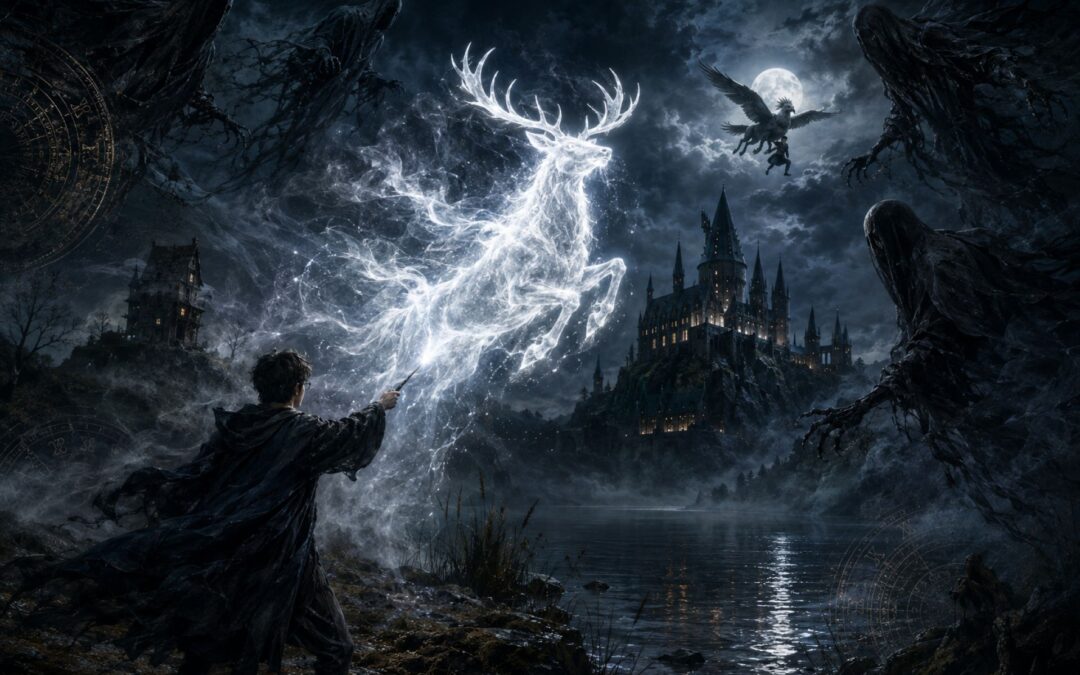
The third novel in J.K. Rowling’s Harry Potter series marks an important change in what a Harry Potter story can be. Harry Potter and the Prisoner of Azkaban still contains the familiar rhythms of the first two books—summer misery with the Dursleys, a return to Hogwarts, new teachers, Quidditch, magical lessons and a mystery that gradually takes over the school year—but its central conflict is no longer structured around Harry discovering that Lord Voldemort is secretly behind everything. Voldemort never appears directly. Instead, the novel makes Harry confront the damaged human world left behind by the first war against him.
That difference allows Rowling to make the story more psychologically complicated than Harry Potter and the Philosopher’s Stone or Harry Potter and the Chamber of Secrets. Harry enters his third year believing that Sirius Black is a murderous Voldemort supporter who betrayed his parents. By the end, he has learned that Sirius is innocent of those crimes, that Peter Pettigrew—the apparently harmless rat Scabbers—is the real traitor, that Remus Lupin was one of his father’s closest friends, and that some of the adults and institutions he trusted have accepted a false version of history for twelve years.
At the same time, Harry must face a more intimate threat. Dementors do not simply frighten him; they force him to hear the final moments of his parents’ lives. Learning to resist them therefore becomes inseparable from learning how to live with grief rather than being controlled by it. The same year that gives Harry a new connection to his dead parents also teaches him that longing for them cannot bring them back.
Spoiler warning: this article discusses the complete novel, including Sirius Black’s innocence, Peter Pettigrew’s identity, Remus Lupin’s lycanthropy, the Marauders, the Time-Turner, Buckbeak’s rescue, Sirius’s escape and the ending.

Harry Potter and the Prisoner of Azkaban: Complete Plot Summary
The novel follows Harry through his third year at Hogwarts, but several apparently separate stories unfold alongside one another. Sirius Black has escaped from Azkaban and is believed to be hunting Harry; Dementors are placed around Hogwarts; Hermione begins behaving as though she can be in several places at once; Ron’s rat Scabbers becomes terrified of Hermione’s cat Crookshanks; Hagrid’s Hippogriff Buckbeak faces execution; Remus Lupin repeatedly disappears because of a mysterious illness; and Harry becomes obsessed with both the identity of a black dog that keeps appearing around him and the history of his parents’ deaths. Rowling gradually reveals that these are not isolated school-year incidents but parts of one tightly connected mystery.
From Privet Drive to the Leaky Cauldron
Harry begins the summer before his third year at Hogwarts in the familiar misery of Privet Drive, although his life has changed enough that the Dursleys can no longer entirely erase his magical identity. He secretly completes his summer homework at night because Vernon and Petunia Dursley still regard magic as something shameful. Unlike earlier birthdays, however, Harry’s thirteenth is marked by evidence that he now belongs to a community that cares about him. Ron Weasley, Hermione Granger and Hagrid send presents, cards and letters, giving Harry something he never had as a child: people who remember that his birthday matters.
Several objects introduced in this apparently quiet opening become important later. Ron sends Harry a Pocket Sneakoscope, a magical device supposedly designed to react when someone untrustworthy is nearby. Hermione sends him a broomstick-servicing kit, reinforcing how well she understands his love of Quidditch, while Hagrid sends The Monster Book of Monsters, a dangerous textbook that must be physically restrained. Harry also receives his Hogwarts letter, which tells him that third-year students are allowed to visit the wizarding village of Hogsmeade if a parent or guardian signs a permission form.
That requirement immediately creates a problem. Harry has no reason to expect Vernon or Petunia to do anything for his happiness, but Vernon soon offers him a bargain. Vernon’s sister Marge is coming to stay, and because she has been told that Harry attends a school for supposedly criminal boys rather than Hogwarts, Vernon wants Harry to cooperate with the lie. If Harry behaves throughout her visit, Vernon promises to sign the Hogsmeade form.
Harry tries to endure Marge’s presence because Hogsmeade matters enough to him to make restraint worthwhile. Marge, however, does not simply dislike him. She expresses a crude belief that bad character is inherited through blood and treats Harry as proof that something must have been wrong with his parents. Her bullying becomes unbearable when she insults James and Lily Potter, calling James worthless and repeating the Dursleys’ false story that Harry’s parents died in a drunken car crash.
Harry loses control of his magic. Marge inflates until she floats like a balloon, and Harry, furious beyond caution, retrieves his school belongings, threatens Vernon with his wand and leaves Privet Drive. The episode establishes an important emotional pattern. Harry can tolerate humiliation directed at himself far longer than attacks on his parents, whose lives he barely remembers but whose memory has become central to his sense of identity.
Once his anger fades, Harry realises how serious his situation may be. He is thirteen, alone in the Muggle world, and has performed underage magic after previously receiving an official warning. While trying to decide where to go, he becomes conscious of a large black animal watching him from the darkness. Startled, he accidentally summons the Knight Bus, a violently fast magical emergency service that can transport stranded witches and wizards.
Harry gives the conductor, Stan Shunpike, the false name Neville Longbottom and asks to be taken to London. During the journey, Stan shows him a newspaper report about Sirius Black, an escaped Azkaban prisoner. The public story is terrifying: Sirius was supposedly one of Voldemort’s most committed supporters, murdered twelve Muggles and another wizard with a single curse, and was taken to Azkaban laughing after the massacre. No one has ever escaped the prison before him.
Harry reaches the Leaky Cauldron expecting Ministry officials to punish him. Instead, he finds Cornelius Fudge, the Minister for Magic, waiting personally for his arrival. Fudge tells Harry that Aunt Marge has been restored to normal and her memory altered, then dismisses Harry’s illegal magic as an understandable accident. The leniency is so unlike Harry’s previous experience of Ministry discipline that it becomes obvious something else is happening.
Fudge arranges for Harry to spend the remaining weeks of the summer at the Leaky Cauldron and makes him promise not to wander into Muggle London. Harry enjoys an extraordinary degree of freedom inside Diagon Alley. He completes his schoolwork in daylight, buys his school supplies and spends hours looking at the Firebolt, a revolutionary racing broom displayed in Quality Quidditch Supplies. He badly wants it but refuses to spend his inheritance irresponsibly when his Nimbus Two Thousand still serves him perfectly well.
The magical shopping district also introduces another subplot. Ron arrives with Scabbers, his old pet rat, who appears increasingly sick and nervous. Hermione goes looking for an owl but instead buys Crookshanks, a large ginger cat that immediately tries to attack Scabbers. Ron interprets this as ordinary predatory behaviour. Hermione believes Crookshanks is misunderstood. Their disagreement initially seems comic, but the cat’s fixation on Scabbers will become one of the novel’s most important clues.
The night before they leave for Hogwarts, Harry overhears Arthur and Molly Weasley arguing about whether he should know the truth about Sirius. Arthur believes Harry has a right to understand the danger; Molly fears the information will terrify him. Harry learns that Sirius is believed to be specifically trying to reach him. The Ministry’s unusual concern now makes sense: Fudge was not overlooking Harry’s accidental magic out of generosity but because finding Harry alive mattered more than punishing him.
Arthur later warns Harry directly, asking him to promise that whatever he learns, he will not go looking for Sirius Black. Harry finds the warning strange. From everything he has heard, Sirius wants to murder him, so deliberately searching for him seems unthinkable.
Dementors, Omens and a Threat Inside Hogwarts
Harry, Ron and Hermione board the Hogwarts Express and find a compartment occupied by a sleeping adult they identify as Professor R. J. Lupin. His patched clothes and exhausted appearance make him seem unlike the imposing teachers Harry usually associates with Hogwarts. They soon learn that Lupin is the school’s new Defence Against the Dark Arts professor.
During the journey, the train unexpectedly stops. The lights go out, an unnatural cold fills the compartment, and a hooded creature enters. Harry experiences the encounter more intensely than anyone else. He hears a woman screaming and begging, loses consciousness and collapses.
Lupin drives the creature away using a mysterious silvery magic and gives the students chocolate to counter its effects. He explains that the creature was a Dementor, one of the guards of Azkaban. Harry is embarrassed that he alone fainted, especially when he later learns that other students merely felt cold, frightened and hopeless. Ginny Weasley reacts badly too, but Harry’s response is extreme because the Dementor forces him into contact with something buried in his memory.
At Hogwarts, Dumbledore announces that Dementors have been stationed around the grounds while the Ministry searches for Sirius. He clearly dislikes their presence and warns the students that Dementors cannot be reasoned with, fooled by disguises or persuaded by excuses. Their presence therefore transforms Hogwarts. The school remains Harry’s safest home, but it is now surrounded by creatures that can attack his mind simply by approaching him.
The year also introduces two new courses. In Divination, Professor Sybill Trelawney teaches the students methods of predicting the future. Looking into Harry’s tea leaves, she interprets the shape she sees as the Grim, a huge spectral dog traditionally regarded as an omen of death. Because Harry has already seen a giant black dog near Privet Drive, the prediction affects him more than he wants to admit.
Hagrid begins his first year as Care of Magical Creatures professor and enthusiastically introduces the class to Hippogriffs, proud magical animals that demand respectful treatment. Harry follows Hagrid’s instructions, bows to Buckbeak and earns the creature’s trust, even riding him briefly. Draco Malfoy deliberately ignores the warnings, insults Buckbeak and is slashed across the arm.
The injury is not severe enough to justify Draco’s later performance, but he exaggerates it and uses his father’s influence to create consequences for Hagrid. The incident becomes a second story about judgment. Buckbeak acted according to the behaviour Hagrid had clearly explained, yet the legal process increasingly treats the creature as though the accusation itself establishes guilt.
Lupin’s first major Defence Against the Dark Arts lesson gives Harry another way of thinking about fear. He teaches the class to confront a Boggart, a creature that assumes the form of whatever frightens the observer most. Neville Longbottom’s Boggart becomes Professor Snape, revealing how deeply Snape’s classroom cruelty affects him. Lupin teaches Neville to defeat the Boggart by transforming fear through humour.
Harry never gets his turn. Lupin deliberately stops the Boggart before it reaches him, and Harry initially thinks the professor doubts his ability. Lupin later explains that he assumed Harry’s greatest fear would be Voldemort and did not want Voldemort’s form appearing in the classroom. Harry tells him that he had actually been thinking about the Dementor from the train.
Lupin is surprised and impressed. Harry’s answer reveals that the Dementor has become more frightening to him than any single enemy because it represents fear itself: the loss of hope, control and access to anything good.
Harry’s exclusion from Hogsmeade soon becomes painful. Because the Dursleys never signed his form and Fudge refused to override the rule, he must remain at school while the others leave. Lupin finds him alone and talks with him, strengthening a relationship that is beginning to feel unusually personal despite Harry not yet knowing why.
On Halloween night, the danger surrounding Sirius suddenly becomes immediate. The Fat Lady’s portrait, which guards the entrance to Gryffindor Tower, is discovered slashed. Sirius apparently tried to enter the common room and attacked the portrait when she refused to give him access. Hogwarts is searched from top to bottom.
The incident transforms Sirius from a distant escaped prisoner into someone capable of penetrating the supposedly secure castle. Security increases, but no one can explain how he entered. The mystery therefore deepens in two directions at once: Sirius seems increasingly dangerous, yet every successful intrusion raises questions about what everyone supposedly knows about him.
Lupin then becomes mysteriously ill, and Snape takes over his Defence class. Instead of following Lupin’s syllabus, Snape assigns a lesson on werewolves and emphasises how to recognise them. Hermione immediately understands more from the lesson than Harry and Ron do, although she initially keeps her conclusion to herself.
Quidditch provides Harry with what should be an escape from these anxieties. During Gryffindor’s match against Hufflepuff, however, Dementors enter the stadium. Harry hears his parents again. This time he hears more clearly that James tried to confront Voldemort while Lily stayed with baby Harry, pleading for his life.
Harry falls from his broom. Cedric Diggory catches the Snitch and wins for Hufflepuff, although he later tries to argue that the match should be replayed because Harry’s fall was caused by the Dementors. More devastatingly, Harry’s Nimbus Two Thousand blows into the Whomping Willow and is destroyed.
The Dementors have now taken something tangible from him. His fear is no longer an embarrassing weakness experienced on a train; it has cost him a match, damaged his confidence and destroyed one of his most prized possessions.
The Marauder’s Map, the Firebolt and Harry’s Growing Anger
Fred and George Weasley respond to Harry’s frustration over Hogsmeade by giving him one of their most valuable secrets: the Marauder’s Map. When activated, it reveals the layout of Hogwarts, including secret passages, and shows the names and movements of people inside the castle.
The Map allows Harry to enter Hogsmeade secretly beneath his Invisibility Cloak. What begins as an act of rebellion changes the course of the novel when Harry overhears Fudge, McGonagall, Hagrid and Madam Rosmerta discussing Sirius in the Three Broomsticks.
For the first time, Harry learns Sirius’s supposed connection to his parents. Sirius was not merely another follower of Voldemort. He had been James Potter’s closest friend, had served as best man at James and Lily’s wedding, and became Harry’s godfather. Most painfully, Harry is told that Sirius was trusted as the Potters’ Secret-Keeper under the Fidelius Charm and betrayed their location to Voldemort.
The story also includes Peter Pettigrew, another friend of James. According to the accepted version of events, Pettigrew confronted Sirius after the Potters’ deaths. Sirius then murdered him along with twelve Muggles, leaving only one of Pettigrew’s fingers behind.
Harry’s emotional relationship with Sirius changes instantly. Previously, he had treated Sirius as a dangerous criminal he expected the adults to catch. Now he imagines him as the man personally responsible for making Harry an orphan.
The discovery produces the anger Arthur Weasley’s warning anticipated. Harry begins fantasising about finding Sirius rather than avoiding him. His feelings echo the uncontrolled fury he experienced when Marge insulted his parents, but now the target seems much more legitimate. If Sirius truly betrayed James and Lily, revenge can feel almost like loyalty.
Christmas introduces another mystery. Harry receives a Firebolt with no note explaining who sent it. For Harry and Ron, the gift seems miraculous. Hermione immediately sees the obvious danger: a supposedly murderous fugitive is trying to reach Harry, and someone has anonymously sent Harry an extraordinarily expensive magical object.
Hermione informs McGonagall, who confiscates the broom so it can be tested for curses. Harry and Ron feel betrayed. Their reaction is understandable because Hermione acted without consulting them, but her judgment is entirely defensible given what they believe at the time. The dispute isolates Hermione from her friends and reinforces one of the novel’s recurring ideas: good judgment is not always emotionally pleasant.
Harry meanwhile begins private Patronus lessons with Lupin. Because ordinary defensive spells are ineffective against Dementors, Lupin teaches him the Patronus Charm, which requires the caster to concentrate on a powerful happy memory and project a protective force.
The training is unusually difficult because Lupin uses a Boggart transformed into a Dementor as practice. Each encounter pulls Harry toward the voices of his parents. He hears James confronting Voldemort and Lily refusing to leave Harry even when Voldemort gives her the opportunity to move aside.
Harry becomes disturbed by his own desire to hear more. The voices are horrifying, but they are also the closest thing he possesses to memories of his parents. Resisting the Dementor therefore means willingly cutting himself off from the only experience that lets him hear them.
Lupin helps Harry understand that this temptation is dangerous. The point of the Patronus is not to erase grief but to prevent grief from consuming the present. Harry gradually improves, though the magic remains incomplete.
McGonagall eventually returns the Firebolt after extensive examination reveals nothing dangerous. Harry’s friendship with Hermione does not immediately recover, however, because another conflict is worsening. Crookshanks repeatedly hunts Scabbers, and Ron finally discovers blood and cat hairs where the rat had been hiding. Scabbers appears to have been killed.
Ron blames Hermione, who had refused to take seriously how frightened Scabbers seemed. Hermione becomes more isolated and overwhelmed. Her academic schedule has already become nearly impossible to understand, and she seems constantly exhausted.
Harry’s confidence against Dementors improves during a Quidditch match against Ravenclaw. Several hooded figures appear near the pitch, but Harry casts a successful Patronus before realising that the “Dementors” are Malfoy and his friends in disguise. Because the threat was false, Harry gains proof that he has progressed: fear no longer automatically controls him.
That victory is followed by a much more frightening event. Sirius enters Gryffindor Tower again and is discovered beside Ron’s bed holding a knife. His target appears to have been the sleeping students, yet he vanishes before he can be captured.
Security becomes even tighter, but Harry continues to evade it. During another illicit trip toward Hogsmeade, he is nearly exposed to Malfoy, and Snape interrogates him afterward. Snape discovers the Marauder’s Map but cannot make it reveal its secrets; instead, the Map insults him under the names Moony, Wormtail, Padfoot and Prongs.
Lupin arrives, sees the Map and immediately recognises it. He saves Harry from Snape but confiscates the object, then rebukes Harry for recklessly leaving the castle when his parents died to keep him alive. Lupin’s response is unusually emotional, hinting once again that his relationship with James and Lily is deeper than Harry understands.
The school-year mysteries are now tightening around one another. Lupin knows the Map’s creators. Snape suspects something about Lupin. Sirius somehow enters the castle despite its defences. Scabbers has disappeared. Crookshanks behaves as though he understands more than a cat should. Harry, however, still lacks the information needed to combine these facts correctly.
The Quidditch Cup, Trelawney’s Prophecy and Buckbeak’s Execution
The conflict over Buckbeak helps repair Ron and Hermione’s friendship. Hagrid is devastated by the decision to execute the Hippogriff, and the trio work together to help him appeal. Ron, who had been unwilling to forgive Hermione over Scabbers, finally agrees to assist her. Hermione apologises for not taking the danger to Scabbers seriously.
The case nevertheless appears hopeless. Hagrid believes Lucius Malfoy’s influence has already shaped the committee’s attitude, and Buckbeak’s behaviour is being interpreted without serious attention to the circumstances that caused Draco’s injury. The subplot mirrors the Sirius story before Harry knows that connection: an official judgment can appear settled while resting on a distorted account of events.
Hermione’s stress finally becomes impossible to conceal. She is taking more subjects than should physically fit into a school timetable, sleeping too little and working constantly. Her frustration erupts when Malfoy mocks Hagrid, and she hits him. The moment is comic and satisfying, but it also shows how far Hermione has been pushed by the year’s accumulated pressure.
Quidditch reaches its climax when Gryffindor plays Slytherin. The match is rough, aggressively competitive and personally charged because Draco and Harry are opposing Seekers. Harry catches the Snitch, and Gryffindor wins the Quidditch Cup.
For Harry, the victory is one of the purest moments of happiness in the novel. Much of the year has forced him to think about murder, prison, fear and his parents’ deaths. Winning the Cup gives him something uncomplicated: success earned with his friends in a world he loves.
Examinations follow, including Harry’s Divination test with Professor Trelawney. Most of her predictions throughout the year have been melodramatic enough that Harry and Hermione increasingly distrust the subject. During Harry’s exam, however, Trelawney suddenly enters a genuine trance and predicts that Voldemort’s servant will return to him before midnight.
Harry reports the prediction but cannot explain what it means. The prophecy becomes significant only later, after its central event has already occurred.
The trio then visit Hagrid on the evening Buckbeak is scheduled to be executed. Inside the hut, Hermione makes an astonishing discovery: Scabbers is alive. Ron’s rat has been hiding rather than killed by Crookshanks.
That discovery should resolve the pet dispute, but it actually intensifies the mystery. Scabbers has lost weight, behaves frantically and appears desperate to escape. Before anyone can investigate, the execution party approaches Hagrid’s hut.
Harry, Ron and Hermione leave before the officials arrive. From a distance, they hear the executioner’s axe fall and believe Buckbeak has been killed.
The Shrieking Shack and the Truth About Sirius Black
Scabbers suddenly escapes from Ron and runs toward the Whomping Willow. As Ron chases him, the enormous black dog that Harry has repeatedly seen appears and attacks. It drags Ron into a hidden passage beneath the tree.
Harry and Hermione follow. The tunnel leads them to the Shrieking Shack in Hogsmeade, supposedly the most haunted building in Britain. Upstairs they find Ron injured and Sirius Black waiting.
Harry’s months of anger explode. He attacks Sirius physically rather than fleeing, convinced that he is confronting the man who betrayed his parents. Sirius does little to defend himself at first, and Harry is close to acting on the desire for revenge that has built since the Three Broomsticks conversation.
Then Lupin enters.
Instead of attacking Sirius, Lupin embraces him.
Hermione immediately reveals what she has deduced from Snape’s werewolf lesson, Lupin’s repeated illnesses and his pattern of absences: Lupin is a werewolf. She assumes this means he has been helping Sirius. Lupin denies that conclusion but admits the central fact.
The focus then shifts to Scabbers. Lupin insists that the rat is not an ordinary animal. He is Peter Pettigrew, supposedly murdered twelve years earlier.
To explain this impossible claim, Lupin tells Harry the history of his own school years. He was bitten by a werewolf as a child and believed he would never be able to attend Hogwarts. Dumbledore created a secret arrangement that allowed him to enrol. A tunnel beneath the Whomping Willow led to the Shrieking Shack, where Lupin could undergo his monthly transformations away from other people.
James Potter, Sirius Black and Peter Pettigrew eventually discovered Lupin’s condition. Instead of rejecting him, they secretly learned to become Animagi so they could accompany him when he transformed. James became a stag, Sirius became a large black dog, and Pettigrew became a rat.
Their nicknames became Prongs, Padfoot and Wormtail, while Lupin was Moony. Together they created the Marauder’s Map.
The story gives Harry something he has wanted for years: knowledge about James as a teenager. Yet that knowledge is not idealised. The friendship was loyal and extraordinary, but the Marauders were also reckless. By roaming Hogwarts and Hogsmeade with a transformed werewolf, they risked other people’s safety.
Their conflict with Snape was even more dangerous. Sirius once told Snape how to reach Lupin during a transformation. James intervened before Snape could be killed. Snape therefore has genuine reasons to distrust Sirius and Lupin even though his hostility has become distorted by resentment.
Before Lupin and Sirius can complete their explanation, Snape emerges from beneath Harry’s Invisibility Cloak. He has followed them and believes he has finally caught Sirius and exposed Lupin.
Snape refuses to listen. From his perspective, Sirius is a murderer and Lupin is the old friend who helped him enter Hogwarts. Harry, Ron and Hermione know enough by this point to believe that the accepted story may be incomplete, and they disarm Snape.
Sirius and Lupin then force Scabbers to reveal his human form.
Peter Pettigrew is alive.
The official story of the Potters’ betrayal collapses. Sirius explains that James and Lily originally intended to use him as their Secret-Keeper. Because Sirius was the obvious choice, he proposed a last-minute switch to Pettigrew, believing Voldemort would pursue Sirius rather than suspect the weak and apparently insignificant Peter.
The strategy failed because Pettigrew was already working for Voldemort.
Pettigrew revealed the Potters’ location. After Voldemort killed James and Lily and disappeared following his failed attack on Harry, Sirius realised what had happened and went after Peter.
Pettigrew was prepared. He confronted Sirius in a crowded street, loudly accused him of betraying the Potters and then caused the explosion that killed twelve Muggles. He cut off one of his own fingers, transformed into a rat and escaped through the wreckage.
Sirius was discovered at the scene laughing. The laughter was not evidence of sadistic pleasure but the breakdown of a man who understood that his own plan had indirectly helped kill his closest friends and that Pettigrew had successfully framed him.
Peter then spent twelve years hidden in plain sight as Scabbers, moving first through the Weasley family and eventually becoming Ron’s pet. Crookshanks had not been trying to kill an innocent rat. The unusually intelligent cat recognised that Scabbers was not what he appeared to be and had been cooperating with Sirius.
Sirius and Lupin prepare to kill Pettigrew. Harry stops them.
His decision is not forgiveness. Pettigrew betrayed Harry’s parents, murdered innocent people and allowed Sirius to spend twelve years in Azkaban for his crimes. Harry still wants him punished.
What Harry refuses is an execution committed in rage.
He argues that James would not have wanted Sirius and Lupin to become killers for his sake. Pettigrew should be taken back to the castle alive, where his testimony can clear Sirius’s name.
The choice is one of Harry’s most significant acts in the series so far. He began the year losing control when Marge insulted his parents and later fantasised about killing Sirius because he believed revenge would honour them. When he finally stands before the person truly responsible for their deaths, he chooses restraint.
The Dementors, Hermione’s Secret and Sirius’s Escape
The group leaves the Shrieking Shack believing the mystery has finally been solved. Pettigrew is bound, Snape is unconscious, and Sirius can potentially prove his innocence.
Sirius then tells Harry something even more emotionally important. As Harry’s godfather and the person James and Lily intended to care for him, Sirius could become Harry’s guardian.
Harry immediately understands what this would mean. He could leave the Dursleys permanently and live with someone who knew his parents, loved James and actually wants Harry in his life.
For a brief period, the novel offers Harry the possibility of the family he has always wanted.
Then the full moon rises.
Lupin realises too late that he has failed to take his Wolfsbane Potion. He transforms into a werewolf. Sirius changes into his dog form to confront him, and the carefully controlled group breaks apart.
In the chaos Pettigrew escapes.
The failure is catastrophic. Without Pettigrew, Sirius loses the living witness who could prove the truth of the massacre. Trelawney’s prophecy is fulfilled: Voldemort’s servant has broken free and is beginning his path back to his master.
Harry and Hermione later find Sirius near the lake, where Dementors surround him. Harry tries to summon a Patronus, but there are too many creatures. As they close in, he sees a distant figure across the water produce an enormous stag Patronus that drives the Dementors away.
Harry loses consciousness believing he has seen James Potter.
When he wakes in the hospital wing, official reality has already reasserted itself. Snape is celebrated for helping recapture Sirius. Pettigrew is gone. Sirius is imprisoned nearby and is about to receive the Dementor’s Kiss, a fate worse than ordinary death because the victim’s soul is removed.
Harry and Hermione try to tell Fudge the truth, but their story is too extraordinary and lacks the evidence that Pettigrew would have provided. Fudge believes the established account. Snape insists that Sirius and Lupin Confunded the students.
Dumbledore listens differently. He cannot simply order the Ministry to accept a story it has rejected, but he tells Hermione cryptically that more than one innocent life can still be saved.
Hermione then reveals the explanation for the impossible timetable she has maintained all year. McGonagall gave her a Time-Turner so that she could attend classes scheduled simultaneously.
Harry and Hermione travel several hours into the past.
The time travel does not allow them to rewrite known events at will. Instead, they discover that their earlier experience already included the consequences of the actions they are now taking.
They hide near Hagrid’s hut and watch their earlier selves leave. The execution party arrives, but Harry and Hermione free Buckbeak before the officials can kill him. The axe strike they heard earlier was not Buckbeak’s death. The executioner, furious at losing the animal, struck another object.
They then wait for the later part of the evening to unfold. Harry knows that Sirius and his earlier self will soon be attacked by Dementors at the lake. He also expects James to appear because he remembers seeing someone who looked like his father.
The moment arrives, but nobody appears.
Harry finally understands.
The person he saw across the lake was not James.
It was Harry himself.
That knowledge makes the impossible spell possible. Earlier, Harry had been exhausted and frightened because he believed someone else would rescue him. Now he knows that he has already seen himself succeed.
He casts a fully formed Patronus. It takes the shape of a stag, the same animal James used as an Animagus, and drives the Dementors away.
Harry and Hermione then return to the castle, rescue Sirius from captivity and bring Buckbeak beneath his window. Sirius escapes on the Hippogriff.
The victory is real but incomplete. Sirius remains legally guilty. Pettigrew remains free. Harry cannot go live with his godfather. The Ministry does not learn the truth.
Lupin also loses his position. After Snape reveals publicly that he is a werewolf, Lupin resigns rather than wait for parents to demand his removal. One of Hogwarts’s most competent and compassionate teachers leaves because prejudice against his condition makes continued employment nearly impossible.
Before going, Lupin returns the Marauder’s Map to Harry. Harry has therefore gained a connection to his father’s past even as another person connected to that past leaves his daily life.
On the journey home, Harry receives a letter from Sirius. Sirius explains that he was the anonymous sender of the Firebolt and confirms Crookshanks’s role in helping him. He also gives Harry signed permission to visit Hogsmeade in the future, finally solving the small problem introduced in Chapter One.
Sirius sends Ron a tiny owl to replace Scabbers. Ron accepts it after Crookshanks shows no hostility toward the bird, humorously reversing the pet conflict that dominated much of the year.
Harry still has to return to Privet Drive, but his position has changed. He tells Vernon that Sirius is his godfather, that he is a convicted murderer who has escaped from prison, and that he is very interested in whether Harry is treated well.
For once, Harry has someone outside the Dursley household whose existence can frighten Vernon more effectively than Harry’s own threats.
Setting, World-Building and Magic
Prisoner of Azkaban substantially expands the magical world because the plot no longer remains centred entirely on Hogwarts and Voldemort. The novel introduces prisons, villages, legal committees, surveillance, new branches of magic and a more complicated relationship between Hogwarts and the Ministry. Almost every major piece of world-building also performs narrative work, which is one reason the book feels larger than its predecessors without becoming disconnected from its mystery.
The most important additions are not merely spectacular magical ideas. They create systems through which the novel can explore fear, judgment, identity and hidden information.
Azkaban and the Dementors
Azkaban initially exists almost entirely through reputation. Wizards who mention the prison respond with dread, and even Hagrid—physically brave enough to deal with monsters—was psychologically devastated by his imprisonment there in the previous novel. Sirius’s escape is considered almost impossible precisely because Azkaban does not rely only on walls or guards.
Its most terrifying security system is psychological. Dementors strip warmth, happiness and hope from the people around them. Prolonged exposure destroys prisoners’ ability to sustain a coherent inner life, which is one reason so many inmates become unstable.
Rowling later expanded the history of the prison in her account of Azkaban and its Dementors, but the novel already establishes the most important political fact: Dumbledore dislikes the creatures and distrusts their use around Hogwarts. The Ministry nevertheless treats them as practical instruments of security.
That decision becomes increasingly indefensible. The Dementors are supposed to protect students from Sirius, but they attack Harry on the train, interfere with a Quidditch match and ultimately attempt to administer the Kiss without meaningful concern for innocence. Their defining quality is not evil intention in the human sense but indifference to individual circumstances.
This makes their institutional role disturbing. A system that relies on creatures incapable of understanding excuses, context or moral distinction may be efficient at punishment but cannot reliably produce justice.
The Dementor’s Kiss pushes the concept even further. Imprisonment can theoretically end; the Kiss destroys the victim’s inner self while leaving the body alive. Fudge’s willingness to allow Sirius to receive it before hearing contrary evidence shows how quickly state punishment can become irreversible once an official narrative hardens into certainty.
Hogwarts, Hogsmeade and a Wider Wizarding World
Hogwarts remains the emotional centre of Harry’s life, but his third year makes the school feel less insulated from the wider magical society. Dementors patrol its boundaries, Ministry decisions determine Buckbeak’s fate, Sirius repeatedly penetrates its security, and students begin travelling to Hogsmeade. Hogwarts is still Harry’s home, yet it is no longer a world capable of sealing external danger outside its gates.
Hogsmeade represents a new stage of independence. In earlier books Harry’s magical life largely meant Hogwarts and Diagon Alley. Third-year students can now enter a civilian wizarding community without teachers directly supervising them, making the village a bridge between childhood schooling and the broader adult world.
Harry’s exclusion therefore matters emotionally beyond missing sweets and social outings. His friends are allowed access to a wider world while his dependence on the Dursleys prevents him from joining them. The unsigned permission form becomes another reminder that people who neither understand nor value Harry continue to exercise legal control over his life.
The school curriculum also becomes more specialised. Divination introduces a field where interpretation is often uncertain, Care of Magical Creatures shows how knowledge affects interactions with dangerous beings, and Hermione’s expanded timetable illustrates the growing complexity of magical education. These classes are not just decorative additions. Divination creates the Grim and Trelawney’s prophecy, Care of Magical Creatures produces Buckbeak’s legal story, and Defence Against the Dark Arts becomes the setting for Harry’s deepest psychological growth.
The Magic That Makes the Mystery Work
One of the novel’s strengths is that its major forms of magic are not arbitrary solutions introduced at the climax. They are planted early enough that readers understand the rules before those rules become essential.
Animagus transformation explains several mysteries simultaneously. Sirius’s black-dog form allows him to move around without being recognised as a human fugitive. Pettigrew’s rat form explains how a supposedly dead man could disappear completely and live inside a wizarding family for twelve years. James’s stag form becomes emotionally significant later through Harry’s Patronus.
Werewolf magic similarly links character and plot. Lupin’s condition explains his monthly illnesses, Snape’s lessons, the Shrieking Shack and the Whomping Willow. Wolfsbane Potion allows Lupin to retain greater control during transformation, but his failure to take it on the crucial night allows Pettigrew to escape.
The Fidelius Charm provides the foundation for the entire betrayal mystery. It hides information inside a designated Secret-Keeper, making the Potters’ location inaccessible unless that person reveals it. Sirius’s decision to switch Secret-Keepers is therefore not a minor historical detail; it creates the misunderstanding on which his imprisonment rests.
The Marauder’s Map is another elegant device because it gives characters extraordinary information without guaranteeing that they will understand it. The Map can reveal Peter Pettigrew’s name, but seeing information is not the same as interpreting it correctly. Lupin notices what others overlook because he knows the Map’s history and recognises the significance of a supposedly dead man moving through Hogwarts.
The Patronus Charm converts memory into defence. Unlike an ordinary attack spell, it requires the caster to summon and sustain something emotionally positive in the presence of a creature that suppresses precisely that capacity. Harry’s mastery of it therefore cannot be separated from his psychological development.
The Time-Turner is the most structurally ambitious device. Hermione uses it throughout the year to attend overlapping classes, but its full importance becomes visible only in the climax. The novel treats time travel as a closed loop: Harry and Hermione do not replace one version of history with another. Their later actions are the hidden causes of events they already witnessed.
Characters and Relationships
The third novel complicates the series by giving Harry access to adults who knew his parents as people rather than legends. Sirius, Lupin and Snape each carry a different version of that past, and none of them offers a completely neutral account. Harry therefore has to begin constructing his own understanding of James, Lily and the first war rather than simply accepting whatever an adult tells him.
His friendships also become more demanding. Ron and Hermione are no longer companions who automatically agree when danger arrives. They clash with one another and with Harry over responsibility, trust and judgment, giving the trio a more realistic internal life.
Harry Potter
Harry’s central development lies in his changing relationship with fear, anger and inherited identity. At the beginning, his most dramatic act is an uncontrolled magical explosion caused by Marge insulting his parents. His rage is understandable, but it governs him so completely that he leaves Privet Drive without a plan.
The Sirius story initially intensifies the same impulse. Once Harry believes Sirius betrayed James and Lily, he begins imagining revenge. Arthur Weasley’s apparently strange warning not to search for Sirius becomes necessary because Harry’s feelings have changed from self-protection to personal hatred.
That hatred exposes how much Harry’s identity depends on people he barely remembers. James and Lily are emotionally present in his life but biographically absent. Other people tell Harry who his parents were, and he invests those stories with enormous importance because they fill the emptiness left by their deaths.
The Dementors make that absence painfully literal. Harry hears his parents’ final moments because the attack on them is the deepest trauma buried in him. Unlike ordinary memory, however, these fragments do not help him understand James and Lily as complete people. They trap him inside the worst moment of their lives.
His Patronus training therefore develops in an unexpected direction. Harry initially thinks success requires finding a sufficiently happy memory. In practice, the greater challenge is choosing life in the present over the strange temptation to hear his parents again.
The Shrieking Shack creates a second test. Harry has the opportunity to participate in killing the person who actually betrayed his parents, yet refuses. His decision does not make him less angry. It proves that anger no longer automatically dictates action.
Harry’s final Patronus is the culmination of this development. At the lake he waits for James to return because he is still psychologically expecting his father to provide rescue. When he realises no one else is coming, the discovery is painful but empowering.
The stag Patronus does not mean Harry has become James. It means that his connection to his father no longer depends on imagining James will somehow return and solve his problems. Harry can inherit love, courage and memory without remaining helpless before the dead.
Sirius Black and Remus Lupin
Sirius is first constructed as a monster through other people’s testimony. He is an Azkaban escapee, alleged mass murderer, supposed Voldemort supporter and apparent betrayer of the Potters. Rowling then reverses almost every part of that identity.
His innocence, however, does not make him flawless. Teenage Sirius was reckless enough to tell Snape how to reach a transformed Lupin, potentially placing both boys in mortal danger. As an adult newly escaped from twelve years of brutal imprisonment, he is driven by vengeance against Pettigrew and is willing to kill him without trial.
Sirius’s strongest quality is loyalty. His disastrous Secret-Keeper plan was designed to protect James and Lily, not betray them. His attachment to Harry is immediate because Harry represents both his godson and the surviving child of his closest friends.
The offer to let Harry live with him is emotionally powerful because Sirius understands exactly what Harry lacks. He does not view Harry as a burden or celebrity. He sees him as family.
Lupin offers a different kind of connection to James. Where Sirius is emotionally intense and impulsive, Lupin is restrained, patient and unusually good at understanding children. His Defence lessons repeatedly transform fear into knowledge rather than humiliation.
His treatment of Neville is especially revealing. After Snape publicly undermines Neville’s confidence, Lupin creates a situation where Neville succeeds in front of the class. He does not simply teach defensive magic; he designs instruction around the emotional needs of the student.
Harry responds strongly because Lupin becomes the first Defence teacher who is both competent and trustworthy. Their private Patronus lessons deepen that bond before Harry learns that Lupin was James’s friend.
Lupin’s weaknesses are quieter than Sirius’s but important. He keeps crucial information about Sirius from Dumbledore because admitting what the Marauders did as teenagers would expose how badly they violated Dumbledore’s trust. His shame therefore prevents him from revealing that Sirius is an Animagus and knows secret passages into Hogwarts.
The omission becomes especially serious because everyone believes Sirius is trying to kill Harry. Lupin’s understandable embarrassment does not excuse the risk.
His lycanthropy also allows the novel to separate dangerous conditions from moral character. Lupin can physically become dangerous during transformation while remaining one of the gentlest people in the story. The problem is not that fear of an uncontrolled werewolf is irrational; it is that society treats Lupin as permanently morally contaminated by a condition he did not choose.
Sirius and Lupin together embody the complicated legacy of the Marauders. Their friendship with James was generous enough to motivate extraordinary acts of loyalty but reckless enough to endanger people. Harry gains meaningful connections to his father without having to pretend that James’s friends were perfect.
Peter Pettigrew and Severus Snape
Pettigrew is the novel’s true human traitor, but Rowling deliberately presents him as unimpressive rather than grandly evil. He attached himself to stronger personalities at school and later switched allegiance when Voldemort seemed more powerful.
That pattern matters. Pettigrew’s defining quality is not ideological conviction but cowardly dependence on whoever can protect him. He betrays James and Lily, frames Sirius, hides inside the Weasley household and then begs each side for mercy depending on who currently holds power.
His years as Scabbers are a particularly effective disguise because his apparent insignificance protects him. Everyone looks for a dangerous fugitive while the real murderer lives as a shabby family pet.
Snape is much more morally complex. His hostility toward Sirius and Lupin is not invented. Sirius genuinely endangered him during their school years, James genuinely bullied him, and Lupin concealed aspects of his friends’ behaviour.
Those experiences help explain why Snape interprets everything in the Shrieking Shack through the assumption that Sirius and Lupin are still dangerous collaborators. The tragedy is that legitimate grievance has hardened into a worldview he cannot revise.
Snape repeatedly sees real evidence but draws conclusions shaped by old hatred. Lupin is a werewolf, but that does not make him Sirius’s criminal accomplice. Sirius did behave recklessly as a teenager, but that does not make him the Potters’ traitor. Harry resembles James and sometimes breaks rules, but that does not make every action evidence of inherited arrogance.
His later exposure of Lupin is especially revealing. Snape is not wrong that Lupin’s uncontrolled transformation created danger. Yet publicly revealing his condition ensures that prejudice, rather than a careful assessment of his teaching, determines Lupin’s future.
Snape therefore belongs to the novel’s wider concern with judgment. He possesses pieces of the truth but is too emotionally invested in one interpretation to assemble them fairly.
Ron, Hermione and Friendship Under Pressure
Ron and Hermione spend much of the novel in conflict because Crookshanks repeatedly tries to attack Scabbers. Ron’s position is emotionally straightforward: Scabbers is his pet, Crookshanks appears determined to kill him, and Hermione refuses to restrain the cat seriously enough.
Hermione’s mistake is not believing Crookshanks is harmless. In retrospect, the cat is correct about Scabbers. Her mistake is expecting Ron to accept that possibility without evidence and failing to respect his attachment to an animal he believes is ordinary.
The Firebolt dispute creates a similar problem between Hermione and Harry. Hermione is almost certainly right to report an anonymous expensive broom when a supposed murderer is trying to reach Harry. She nevertheless acts over Harry’s objections and without involving him in the decision.
These conflicts make the friendship more convincing because none of the characters is entirely reducible to being right or wrong. Hermione has superior judgment in several situations but poor sensitivity to how her actions affect her friends. Ron is justified in demanding that Crookshanks be controlled but wrong about what the cat is actually doing. Harry is understandable in resenting the Firebolt’s confiscation but underestimates the danger suggested by the evidence available at the time.
Hermione’s workload intensifies everything. Her Time-Turner allows her to attend impossible combinations of classes, but magical access to more hours does not remove the physical and psychological burden of doing the work. Her irritability, exhaustion and eventual decision to drop subjects show that having more time is not the same as having unlimited capacity.
The reconciliation over Buckbeak works because the friends return to a shared purpose. Ron begins helping Hermione with the appeal, and Hermione apologises over Scabbers. By the time they reach the Shrieking Shack, their disagreements have not destroyed their loyalty.
Hagrid, Buckbeak, Crookshanks, Draco and the Supporting Cast
Hagrid’s first year as a teacher demonstrates both his strengths and weaknesses. He knows magical creatures intimately and cares about them passionately, but he initially assumes that students will share his comfort with danger. Buckbeak is manageable when treated correctly, yet introducing Hippogriffs in a first lesson reveals Hagrid’s limited instinct for risk management.
Draco deliberately provokes Buckbeak and then weaponises the injury. His role is less about physical danger than social leverage. Lucius Malfoy’s influence turns a school accident into a legal campaign, illustrating how wealth and status can shape supposedly neutral procedures.
Buckbeak is not merely a symbolic innocent. He genuinely can injure someone who behaves disrespectfully. The injustice lies in ignoring the circumstances and treating Draco’s account as decisive because his family has influence.
Crookshanks is one of the cleverest pieces of misdirection. His hostility toward Scabbers appears to confirm Ron’s belief that he is an unusually aggressive cat, but the same behaviour later becomes evidence of perceptiveness. He identifies Pettigrew’s disguise long before the human characters do and helps Sirius reach Hogwarts.
Dumbledore continues to occupy a distinctive position between institutional authority and moral judgment. He cannot simply force the Ministry to accept Harry and Hermione’s story, yet he immediately recognises the possibility that their account is true and creates the conditions for them to rescue Sirius and Buckbeak.
Fudge functions as his opposite in the climax. He is not presented here as a deliberate villain. His failure comes from excessive trust in established procedure and an unwillingness to believe an extraordinary explanation after official certainty has already formed.
Major Themes and Ideas
The novel’s major themes emerge from the same structural principle that drives its mystery: appearances can be accurate at one level and false at another. Sirius looks dangerous because he has escaped from prison, broken into Hogwarts and stalked Harry as a black dog, yet the conclusion everyone draws from those facts is wrong. Lupin genuinely is a werewolf, but the moral assumptions attached to that fact are wrong. Scabbers genuinely behaves like a frightened animal, but the reason is not what Ron assumes.
Rowling repeatedly asks what happens when fear, grief, reputation and authority shape interpretation before the full evidence is known.
Fear, Trauma and Hope
The Dementors are the novel’s clearest representation of psychological fear because they do not merely threaten physical injury. They remove the ability to experience positive emotion.
Rowling later connected the Dementors explicitly to her experience of depression, particularly the sensation that happiness and hope have become inaccessible. That connection is important, but the creatures should not be reduced to a one-to-one clinical metaphor. Within the novel, they are literal beings, prison guards, instruments of punishment and triggers for Harry’s traumatic memories.
Harry’s extreme response demonstrates how fear interacts with personal history. Other characters experience the Dementors as overwhelming despair. Harry hears his mother being murdered because his mind contains a trauma he cannot consciously remember yet has never escaped.
His initial shame is revealing. He judges his collapse as evidence of weakness because others remain standing. Lupin helps him reinterpret the experience. Harry does not react more strongly because he is cowardly; he has more terrible material for the Dementor to exploit.
The Patronus changes the framework from endurance to active resistance. Harry cannot defeat the Dementor by pretending his trauma never happened. He must deliberately sustain a memory of love, connection or happiness while the creature tries to make those feelings impossible.
The final Patronus works because Harry gains certainty rather than because his life suddenly becomes happier. He knows he can perform the spell because he has already seen himself do it. Hope becomes grounded in self-knowledge.
Truth, Evidence and Reputation
Sirius’s reputation is the central example of the novel’s distinction between evidence and interpretation. The facts look overwhelming. He was found at the site of a massacre, Pettigrew vanished leaving a finger, witnesses believed Sirius caused the explosion, and Sirius laughed when arrested.
The problem is not that all those observations were fabricated. Pettigrew constructed a false story out of real evidence.
That pattern repeats everywhere. Crookshanks attacks Scabbers, so Ron concludes the cat is a threat to an innocent pet. Lupin disappears monthly, so Hermione correctly concludes that he is a werewolf, but that fact does not prove he is helping Sirius. An enormous black dog follows Harry, so the Grim interpretation makes the animal an omen of Harry’s death rather than Sirius in disguise.
Even the Firebolt follows the same structure. Hermione cannot prove the broom is cursed, but given the information everyone possesses, suspicion is rational. Once the broom is tested, the evidence changes and the judgment should change with it.
The Marauder’s Map makes the theme almost literal. It can display names and locations with extraordinary accuracy, yet possessing information does not guarantee understanding. The truth about Peter Pettigrew can be visible on the page while remaining psychologically invisible to people who are certain Peter is dead.
Fudge’s behaviour during the climax shows the institutional version of the same mistake. The Ministry has a coherent explanation for Sirius, supported by years of accepted evidence. Harry and Hermione offer a stranger explanation without Pettigrew present to confirm it.
Fudge’s mistake is therefore not simply that he lacks information. He refuses to treat the existing narrative as revisable.
Family, Inheritance and Belonging
Harry spends much of the novel trying to understand what it means to belong to people who are dead. The Dursleys reduce James and Lily to a shameful family story. The wizarding world reveres their sacrifice but usually gives Harry only fragments of who they actually were.
Sirius and Lupin change that. They knew James before he became Harry’s heroic father. Through them, Harry learns about friendship, recklessness, loyalty, rivalry and mistakes.
That knowledge complicates rather than weakens Harry’s bond with James. A parent can remain deeply loved without remaining idealised.
Sirius offers a more immediate form of family. As Harry’s godfather, he represents an alternative to the Dursleys and a living connection to James and Lily. Harry’s instant willingness to live with him shows how desperate he remains for a home in which his presence is wanted.
The promise disappears almost immediately when Pettigrew escapes and Sirius remains a fugitive. Yet the relationship still changes Harry’s emotional world. Sirius exists, loves him and considers himself responsible for him.
The stag Patronus develops this theme at another level. Harry initially sees the distant stag-producing figure and assumes James has returned. The desire is understandable because the entire year has intensified his longing for parental rescue.
The truth is more demanding. James does not return. Harry produces the stag himself.
Inheritance therefore becomes something different from repetition. Harry carries part of his father’s legacy while remaining responsible for his own choices.
Mercy, Revenge and Justice
Harry’s moral development can be traced through the targets of his anger. With Marge, emotion overwhelms control. With Sirius, Harry begins imagining deliberate revenge because he believes Sirius deserves it.
Pettigrew creates the decisive test because Harry finally encounters someone whose guilt is real. Peter betrayed the Potters, framed Sirius and allowed innocent people to die. Nothing about the revelation makes him sympathetic enough to erase responsibility.
Harry nevertheless prevents Sirius and Lupin from killing him.
The distinction between mercy and forgiveness matters. Harry does not excuse Pettigrew. He wants him exposed publicly and imprisoned. His objection is to killing him in anger.
Harry’s reasoning invokes James. He believes his father would not want his friends to become murderers. Whether that claim can be proven is less important than what it reveals about Harry: honouring his parents no longer means satisfying his own rage.
The outcome complicates the moral choice. Pettigrew escapes because Harry spared him. His survival will have consequences beyond this book.
The novel therefore avoids making mercy easy. Harry makes the more restrained choice and does not receive immediate justice as a reward.
Prejudice, Authority and Institutional Failure
Lupin’s story gives the novel its clearest account of prejudice. He was attacked and transformed into a werewolf as a child, yet society treats the condition as though it reveals character. Dumbledore’s willingness to educate him is exceptional precisely because other institutions would exclude him.
The distinction between legitimate caution and prejudice is important. Lupin can become physically dangerous during a full moon, as the climax proves. Reasonable safety measures are therefore necessary.
The injustice lies in assuming that the condition makes him unfit for ordinary life even when properly managed. Snape’s public revelation leads to Lupin’s resignation despite his competence as a teacher.
Buckbeak’s case examines authority from another angle. The Hippogriff did injure Draco, but the legal process is shaped by Draco’s refusal to follow instructions and by the Malfoy family’s influence. Official procedure produces a result that appears lawful while remaining unjust.
Azkaban represents the most extreme institutional failure. Sirius loses twelve years of his life without the truth ever being established. Once he escapes, the same assumptions that imprisoned him make officials unwilling to reconsider his guilt.
The novel does not present a fully developed political theory of government corruption. Its criticism is more specific: institutions become dangerous when punishment is easier than investigation, powerful families influence procedure, prejudice substitutes for individual judgment, and established stories become more important than contradictory evidence.
Symbols and Motifs
The novel repeatedly uses images whose meanings change when characters learn more. Dogs, rats, stags, maps and clocks are not simply decorative symbols; they participate in the mystery by demonstrating how interpretation depends on knowledge. An image that appears threatening in one chapter can become protective in another without the image itself changing.
This makes symbolism unusually integrated with plot. The reader experiences many motifs first as clues and only later understands their larger emotional significance.
The Grim and the Black Dog
The enormous black dog begins as an image of supernatural death. Harry sees it shortly after leaving Privet Drive, and Trelawney later interprets a dog-shaped pattern in his tea leaves as the Grim.
Because Sirius is believed to be hunting Harry, the omen seems plausible. Harry repeatedly encounters the dog in moments associated with danger, making it easy to treat the animal as evidence that death is approaching.
The revelation that the dog is Sirius transforms the image. The supposed death omen is actually Harry’s godfather watching over him.
The symbol therefore illustrates the novel’s central method. The visual information was accurate—a huge black dog really was following Harry—but the assigned meaning was wrong.
That reversal also gives Sirius an appropriately ambiguous form. He can be frightening, aggressive and dangerous, especially when attacking Pettigrew, while simultaneously becoming a source of protection and family for Harry.
The Stag, the Patronus and Harry’s Father
The stag carries a more intimate meaning. James Potter’s Animagus identity was Prongs, a stag, and Harry’s fully formed Patronus eventually takes the same shape.
At the lake, the Patronus first appears to Harry as evidence that James has somehow returned. Distance, exhaustion and desire combine to produce the interpretation he most wants to believe.
The Time-Turner sequence forces him to confront the truth. Harry stands waiting for his father until waiting itself becomes impossible.
When he casts the stag Patronus, the connection to James remains real but changes meaning. Harry does not discover that his father survived or that the dead can return when needed. He discovers that something he associates with James exists within his own magical identity.
The stag therefore represents inheritance without resurrection. Harry can carry his father forward without remaining dependent on the fantasy that James will come back.
The Marauder’s Map, Time and Seeing What Others Miss
The Marauder’s Map embodies the difference between information and understanding. It reveals hidden passages and identities, but users still need the right context to interpret what they see.
Peter Pettigrew can appear on the Map because the Map is not deceived by his Animagus form. Yet the impossible name means little to someone who believes Peter has been dead for twelve years.
The Time-Turner creates a similar problem at the level of chronology. Harry and Hermione originally observe events without seeing their causes. When they revisit the same hours, nothing essential changes; their understanding does.
Buckbeak did not die. The mysterious Patronus caster was not James. Several sounds and movements that seemed unexplained were consequences of Harry and Hermione’s own later actions.
Hermione’s timetable plants the same motif throughout the year. She repeatedly appears where ordinary scheduling says she should not be able to appear. Ron and Harry notice the contradiction but do not understand it because they lack one fact.
Maps, schedules and clocks therefore become part of the novel’s broader interest in hidden structure. Reality may already contain the answer while the observer still lacks the framework required to see it.
Style and Narrative Construction
Prisoner of Azkaban is unusually dependent on structure. Its ending works only because Rowling has planted clues across school lessons, pet arguments, Quidditch matches, Hogsmeade visits and apparently comic details. The novel must make those elements memorable enough to matter later without making their solution too obvious on a first reading.
Its success comes largely from controlling what Harry knows. The narration follows his perspective closely enough that readers tend to inherit his assumptions, while the text quietly places contradictory evidence around him.
Limited Perspective, Mystery and Reversal
Harry is not an unreliable narrator in the conventional sense. The narration generally reports what he sees accurately. The unreliability lies in interpretation.
When Harry sees a black dog, the dog is real. When he hears Sirius betrayed his parents, the people telling him genuinely believe it. When Ron finds evidence suggesting Crookshanks killed Scabbers, the evidence is present. When Sirius stands over Ron’s bed with a knife, he really is there with a knife.
Rowling rarely needs to lie to produce the mystery. She allows characters to connect true observations incorrectly.
That method makes the Shrieking Shack reversal satisfying because it reinterprets rather than erases earlier events. Sirius was entering Gryffindor Tower, but he was looking for Pettigrew. Crookshanks was hunting Scabbers because Scabbers was not an innocent rat. Sirius laughed at the massacre scene, but not because he enjoyed killing twelve people.
The reader experiences the same mental correction Harry does. The solution is not simply new information about the present. It reorganises the meaning of the entire year.
Foreshadowing and Interlocking Subplots
The novel’s clue network is extensive. The Sneakoscope reacts around circumstances involving Pettigrew long before anyone understands why. Scabbers is unusually old for an ordinary rat, missing a toe that corresponds to Pettigrew’s supposed remaining finger, and terrified by animals capable of detecting his disguise.
Crookshanks repeatedly behaves as though Scabbers is not what he appears to be. Lupin becomes sick on a monthly cycle. Snape deliberately teaches the class how to recognise werewolves. Hermione’s timetable contains impossible overlaps. The Marauder’s Map can reveal real names regardless of disguise.
Trelawney’s prophecy is planted late but pays off almost immediately. She predicts the servant’s escape before Pettigrew breaks free and begins returning toward Voldemort.
Even the Firebolt fits the larger structure. An anonymous object from an unknown source appears suspicious because everyone has the wrong understanding of Sirius. Once his identity changes, the meaning of the gift changes as well.
The book’s construction was demanding enough that Rowling later described working intensely on it; reports based on her editorial correspondence note that she revised the manuscript heavily and strengthened the Dementors’ role during development, a process discussed in reporting on her correspondence surrounding the third novel. The density of the final structure reflects that complexity.
The major accomplishment is that most subplots eventually justify their space. Hermione’s academic overload creates the Time-Turner. Scabbers and Crookshanks create Pettigrew’s disguise. Lupin’s lessons create the Patronus. Buckbeak provides the means of Sirius’s escape. The Marauder’s Map exposes connections to the older generation.
What initially looks like a busy school year becomes a machine in which seemingly separate elements converge.
Humour, Darkness and the Closed Time Loop
The novel is darker than its predecessors without abandoning the comic energy that makes Hogwarts appealing. Aunt Marge becoming a balloon, the Knight Bus hurtling through Britain, Trelawney’s theatrical gloom, the Monster Book, Fred and George, Quidditch rivalries and Hermione punching Malfoy keep the book recognisably playful.
That humour matters because darkness is more effective when placed inside a world readers still want to inhabit. Dementors are frightening partly because they intrude into a school year filled with sweets, classes, sport and friendship.
The final chapters push the tone further than the earlier books. Harry confronts the supposed betrayer of his parents, learns that his teacher is a werewolf, discovers a dead man living as his best friend’s rat, prevents an execution and nearly has his soul consumed.
The Time-Turner then forces the narrative to replay its own climax from another perspective. This is risky because time travel can easily make previous danger meaningless. Rowling avoids that problem by using a closed loop.
Harry and Hermione do not erase mistakes through unlimited revision. Pettigrew still escapes. Lupin still transforms. Sirius remains a fugitive.
What changes is what can still be saved inside events that have already happened.
The structure also creates Harry’s most important realisation. He succeeds because he remembers seeing himself succeed. The time loop is therefore not merely a clever mechanical puzzle. It produces the psychological condition that makes the Patronus possible.
Ending Explained: What Harry Really Saves
The ending can initially feel triumphant because Harry and Hermione rescue two innocent lives. Buckbeak is not executed, and Sirius escapes the Dementor’s Kiss. Harry also produces the most powerful Patronus he has ever cast and finally discovers the identity of the figure he saw across the lake.
Yet almost none of the novel’s larger injustices are formally corrected. Pettigrew escapes. Sirius remains a wanted criminal. The Ministry still believes the wrong version of events. Lupin resigns. Harry cannot move in with Sirius and must return to Privet Drive.
The distinction between rescue and justice is therefore essential. Harry can prevent immediate irreversible harm, but he cannot force institutions to recognise the truth.
Buckbeak survives because Harry and Hermione physically remove him before the execution. Sirius survives because they physically free him. Neither rescue requires the Ministry to admit that it was wrong.
Harry’s personal resolution is different. For much of the novel, his relationship with James depends on absence. He wants information about his father, hears his final act through the Dementors and later believes he has literally seen him.
The Time-Turner gives Harry the opportunity to test that belief. He waits for James to appear.
Nobody comes.
The realisation could have been devastating, but Harry instead understands that he already knows someone will cast the Patronus. He has seen the result. What he misunderstood was the caster.
Harry therefore saves Sirius, Hermione, his earlier self and his own image of adulthood at the same time. He stops waiting for a dead father to provide the courage he needs.
The stag Patronus preserves the connection with James without satisfying the fantasy of resurrection. Harry does not lose his father again; he learns a more mature way of carrying him.
Sirius’s letter provides a smaller but meaningful emotional victory. Harry does not receive a new home, yet he gains a godfather who openly claims him as family. The Hogsmeade permission form, trivial compared with murder and imprisonment, closes the circle back to the beginning of the book.
The novel therefore ends with Harry still inside an imperfect situation but less alone than before. He cannot restore the family Voldemort destroyed, but he can build relationships from what survived.
Critical Review: How Well Does Prisoner of Azkaban Work?
As a complete novel, Prisoner of Azkaban succeeds because its emotional development and mystery construction reinforce one another. The Sirius investigation is not merely an external puzzle Harry solves. Every reversal changes Harry’s understanding of his parents, his godfather, his teachers and himself.
The book also represents a turning point for the wider series. Its villains and victims are no longer arranged into completely comfortable categories, and the institutions surrounding Harry can fail even when they claim to be protecting him.
What the Novel Does Exceptionally Well
The mystery is the book’s strongest achievement. Rowling fills the story with clues without making the eventual solution feel mechanically announced. Scabbers’s age, missing toe and nervousness, Crookshanks’s behaviour, Lupin’s illnesses, Snape’s werewolf lesson, the Marauder’s Map and Sirius’s dog form all become obvious in retrospect.
That retrospective clarity gives the novel exceptional reread value. Once readers know Pettigrew is Scabbers, entire scenes change meaning without changing content.
The character work also becomes substantially richer. Lupin is probably the most immediately successful new adult character because his competence, kindness, poverty, secrecy and moral compromises coexist naturally. He can be a genuinely excellent teacher while still making serious mistakes.
Sirius is similarly effective because innocence does not erase damage. Twelve years in Azkaban have left him emotionally volatile, and his teenage behaviour was not harmless. Harry’s longing to live with him therefore feels emotionally true even though Sirius is not presented as an idealised parent.
The Dementors are another major achievement. They function effectively at several levels without requiring one interpretation to eliminate the others. They are monsters, prison guards, sources of suspense, triggers for Harry’s traumatic memories and embodiments of emotional despair.
Harry’s Patronus arc gives the book its strongest emotional payoff. The final spell works because it resolves a conflict established on the train, developed through Lupin’s lessons and tied to Harry’s deepest longing for his parents.
The school setting also remains lively. Rowling avoids allowing the darker plot to consume Hogwarts completely. Quidditch, Hogsmeade, magical lessons and the trio’s personal arguments create ordinary adolescent life around the mystery.
That balance helps explain why the book has often received particularly strong critical attention. One early assessment in The New Yorker, “Under the Spell,” recognised the third book as notably psychological while also suggesting that its reversals could become almost excessively complicated. That tension captures something real about the novel: its complexity is both its greatest structural strength and one of the places where the machinery can become visible.
Where the Plot and World-Building Strain
The most obvious weakness is the extraordinary number of conditions that must align during the climax. Pettigrew can only escape because Lupin transforms at exactly the wrong moment, which happens because Lupin forgets his Wolfsbane Potion after seeing Pettigrew on the Map and rushing from the castle. The explanation is possible, but its convenience is difficult to miss.
The Time-Turner creates a larger world-building problem. Within this novel, the closed-loop sequence is carefully handled and avoids many standard time-travel contradictions. The difficulty is not the mechanics of Chapter 21 but the broader implication that a device with such extraordinary power is provided to a thirteen-year-old primarily so she can take additional classes.
The narrative attempts to make the object restricted and secret, yet its existence naturally raises questions about why similarly consequential events in the magical world cannot be approached through time travel. As a self-contained plot device, it works better than it does as a permanent piece of world-building.
Adult secrecy is another recurring convenience. Lupin knows Sirius is an Animagus and knows secret routes into Hogwarts but withholds the information because admitting it would expose his past behaviour. The shame is psychologically understandable, although the scale of the supposed danger makes his silence difficult to defend.
Sirius himself also fails to communicate in the most useful possible way. Much of this can be explained by his status as a hunted fugitive traumatised by Azkaban, but the mystery depends on adults possessing critical information and revealing it only when events force them together.
Fudge’s refusal to accept the children’s story is believable up to a point. Pettigrew is gone, Sirius is a notorious fugitive, Lupin is compromised by his transformation, and the explanation is extraordinary. Still, the speed with which the Ministry moves toward the Dementor’s Kiss makes the absence of a more thorough investigation feel institutionally reckless.
Pettigrew is also less psychologically developed than Sirius, Lupin or Snape. His cowardice and dependence on stronger protectors are clear, but the book has little interest in exploring the internal process that turned one of James’s friends into Voldemort’s spy. That simplicity helps the mystery function but leaves the true betrayer less complex than several people falsely suspected of betrayal.
The sheer density of the Shrieking Shack revelations can also be demanding. Chapters 17 through 19 must explain Lupin’s lycanthropy, the Marauders, Animagus transformations, the Map, Snape’s history, Pettigrew’s survival, the Secret-Keeper switch and the framing of Sirius. The information is compelling, but much of the novel’s hidden architecture becomes verbal explanation in a relatively short space.
These weaknesses do not undermine the central project, but they reveal the cost of building such an intricate mystery inside a school-year format.
Its Place in the Series and Lasting Value
The most important series-level achievement is that Voldemort is absent as the active villain. He remains the historical force behind the tragedy, but defeating a disguised Voldemort is not the climax.
That choice gives the world room to become morally larger. The central conflict involves people who made mistakes, betrayed friends, misunderstood evidence, carried grudges, abused institutions or tried unsuccessfully to protect one another.
Harry also becomes more independent as a protagonist. In the first books, adults often conceal the truth until Harry reaches the hidden danger himself. Here he begins actively reassessing adult testimony.
His judgment is not always superior. Hermione is more cautious about the Firebolt, Lupin understands the Dementors better, and Dumbledore sees possibilities Harry cannot. The development is not that Harry becomes smarter than every adult but that adulthood itself stops appearing synonymous with certainty.
The novel also makes Harry’s parents dramatically relevant without bringing them back. James and Lily become more than the heroic dead. Their friendships, choices and effects on other people shape the present.
That shift is crucial for the later series because Harry’s struggle with inheritance will increasingly depend on distinguishing love for his parents from idealisation of them.
As a fantasy mystery, the novel remains exceptionally readable because the plot rewards both first-time discovery and rereading. Younger readers can follow the suspense surrounding Sirius and the school adventures, while older readers are likely to notice the deeper emphasis on trauma, criminal punishment, prejudice and the unreliability of public reputation.
It is not flawless. The Time-Turner introduces complications larger than the novel fully confronts, the climax depends on convenient timing, and Pettigrew is thinner as a character than the men whose lives he destroys.
Those flaws do not damage the central mystery enough to outweigh its strengths. The book remains one of the most structurally accomplished volumes in the series because its clues, character development and themes are all built around the same act of revision: learning that the story everyone believes may not be the story that actually happened.
Harry Potter and the Prisoner of Azkaban ultimately matters because Harry ends the year with fewer certainties but a stronger ability to judge for himself. Sirius is not the murderer everyone said he was, Lupin is not dangerous in the way prejudice assumes, Snape is neither simply malicious nor reliably fair, and Pettigrew’s harmlessness was a disguise.
The most important correction, however, concerns Harry’s own expectation of rescue. At the lake he sees the stag, thinks of James and waits for his father to appear. When no one comes, he does not collapse under the disappointment. He understands what he had been looking at all along.
The person capable of saving him was Harry.
That discovery does not erase grief or make the adults around him unnecessary. Lupin teaches him, Sirius gives him family, Hermione enables the rescue, Ron shares the danger and Dumbledore understands enough to point them toward a solution. What changes is Harry’s place within those relationships: he is beginning to become someone who can act from knowledge rather than simply waiting for protection.
That combination of intricate mystery, emotional maturation and a darker understanding of the wizarding world makes Prisoner of Azkaban more than an especially entertaining school-year adventure. It is the point where Harry’s story begins to move from discovering hidden villains toward understanding the more difficult problem of how good, flawed and frightened people decide what to believe.
Last Updated on August 15, 2026 by Aseem Gupta