
Reading Time: 20 Minutes
A country holds elections, changes governments and proudly describes itself as ruled by the people. Yet its citizens may still watch officials misuse public money, reward their associates, protect failed policies and escape consequences that would ruin an ordinary person’s career. A minister resigns after one scandal, another takes the job, and the networks surrounding the office barely change. If voting is supposed to make leaders accountable, why can public power remain so difficult to control?
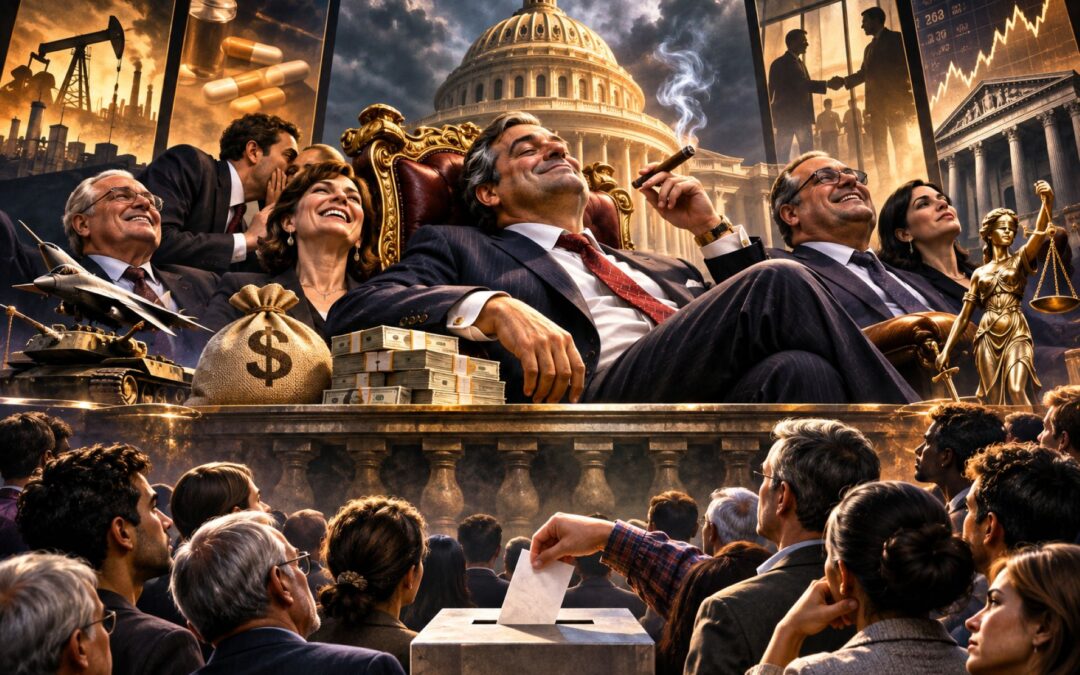
One provocative answer is kakistocracy: government by the worst. The word captures a suspicion older than modern political parties—that a contest for authority may reward the very qualities citizens would least want in a ruler. But it also raises difficult questions. Does political power corrupt decent people, attract people already inclined to abuse it, or produce institutions that make even well-intentioned leaders serve narrow interests? And are these failures intrinsic to democracy, or evidence that democratic safeguards are not working as they should?
A convincing answer cannot simply exchange faith in elections for blanket suspicion of everyone holding office. It must show how particular institutions either reward public service or enable self-dealing.
What Is Kakistocracy? The Idea of Rule by the Worst
The word kakistocracy combines the Greek kakistos, meaning worst, with kratos, meaning rule or power. A kakistocracy is more than a government whose policies someone dislikes. It describes a political order in which those least suited to wield public authority—through incompetence, dishonesty, ruthlessness or contempt for the public interest—nevertheless acquire and retain it.
The expression is not a recent invention. The earliest known English appearance is in Thomas Love Peacock’s 1829 satirical work The Misfortunes of Elphin, where it condemns the harshness of local authorities. In 1876, the American poet and diplomat James Russell Lowell wondered in a letter whether government purportedly exercised for the people was instead becoming a kakistocracy benefiting schemers at the expense of their victims. The history of the word reveals a persistent concern: the people empowered to govern are not necessarily the people most capable of doing so responsibly.
A useful distinction separates three criticisms often bundled together. Incompetence means failing to perform a responsibility adequately; corruption means abusing entrusted power for improper gain; and authoritarianism concerns the concentration or exercise of power without adequate restraints. They can reinforce one another, but none automatically proves the others. A leader can be an effective administrator who steals, an honest politician who makes disastrous decisions, or an authoritarian ruler who possesses formidable organisational talent.
Kakistocracy becomes an especially powerful diagnosis when a system persistently rewards the worst behaviours and protects their practitioners. The decisive question is not whether every politician is wicked, but why misconduct, self-protection or indifference to public welfare might become advantages in political competition. Answering it requires examining both the people seeking office and the institutions that decide what happens once they get there.
A single scandal can reveal individual dishonesty; a pattern of unpunished scandals may reveal defects in oversight, appointments or access to information. This is why the concept is useful only when paired with a careful account of mechanisms.
Why Political Power Attracts and Rewards the Ruthless
In an 1814 letter to John Taylor, John Adams warned against imagining that democracies are naturally free from the ambition, greed and vanity visible under monarchy or aristocracy. Different constitutions may distribute authority differently, but they do not transform human nature. The ambition to rule can survive every change of political system.
A century and more later, the French political thinker Bertrand de Jouvenel developed a related concern in On Power. Institutions created to represent or protect the public could also lend legitimacy to the expansion of authority over it. A government may claim a popular mandate while extending administrative reach into more areas of social life. The point is not that every public programme is oppressive, but that popular approval and limited power are not interchangeable: citizens can legitimately elect leaders who then exercise powers those citizens have little practical capacity to supervise.
There are two related possibilities. Power can corrupt by giving officials opportunities, insulation from ordinary consequences and a growing sense of entitlement. But power can also attract the corruptible: people especially drawn to domination, status or opportunities for personal enrichment may be more willing than others to make political authority the centre of their lives. Frank Herbert captured this second possibility in his novel Chapterhouse: Dune, suggesting that authority can draw people already predisposed to misuse it.
Winning influence requires activities that do not always correspond to governing well. Candidates must build alliances, raise resources, persuade audiences, endure personal attacks and outmanoeuvre rivals. Some of these abilities are valuable in public service. Others—unprincipled promises, opportunistic loyalty, relentless self-promotion or calculated hostility—may be politically effective while undermining the qualities needed for responsible government. A contest can select for skill at winning the contest rather than excellence at the job it confers.
That does not establish that all successful politicians are narcissists or sociopaths. Clinical terms have specific meanings, and a television appearance or a contentious campaign provides no basis for diagnosing someone’s personality. More modestly, political competition may favour behaviours such as strategic manipulation and aggressiveness in some circumstances. Institutional rules, media incentives, party structures and voter expectations all affect whether those behaviours pay off.
The Russian anarchist Mikhail Bakunin approached the problem from another direction. He argued that political office establishes an unequal relationship between those issuing commands and those expected to obey. Even representatives who begin with democratic convictions can come to regard themselves as tutors of a population supposedly incapable of directing its own affairs. His criticism concerns what authority can do to the outlook of its holders, rather than merely the personality of those who pursue it.
Friedrich Hayek offered a sharper institutional explanation in the chapter Why the Worst Get on Top, part of The Road to Serfdom. Writing during the Second World War, Hayek argued that a totalitarian movement attempting to impose one comprehensive social plan would need officials prepared to coerce, deceive and intimidate dissenters. People unwilling to carry out those tasks would be disadvantaged; ruthless people would encounter opportunities for promotion. In such a system, misconduct becomes a qualification for advancement rather than a disqualification.
Hayek’s historical target matters. His argument concerned the incentives of collectivist and totalitarian rule, not empirical proof that every competitive election selects the most immoral candidate. Extending his theory to democracies requires showing where their institutions actually reward comparable behaviour. Still, his underlying insight is valuable: a political system should be judged partly by the actions people must be prepared to undertake to succeed within it.
Russian novelist and dissident Aleksandr Solzhenitsyn likewise warned about the cruelty that can follow when human limitations meet largely unchecked power. These warnings come from different traditions, yet they converge on one concern: good intentions cannot substitute for restraints. If officials can decide when the law applies to them, the qualities that keep someone in power may diverge from those that would make their rule worthwhile.
The same question applies after someone enters office. Does a capable official advance by exposing waste, or by concealing it? Does a party reward members who hold powerful colleagues accountable, or members who defend them regardless of the evidence? Does an administrator gain promotion by delivering effective services, or by reliably protecting the interests of the person who made the appointment? These are not abstract questions about good and evil; they are questions about selection incentives.
Why Elections Do Not Always Produce Good Government
Democracy offers a seemingly straightforward answer to bad leadership: remove the people responsible. Unlike a hereditary monarch, an elected leader can lose office when voters become dissatisfied. That possibility is a powerful restraint, but it does not guarantee that elections always identify the most competent or principled candidates.
Direct democracy lets citizens decide particular questions themselves, commonly through referendums. The central concern is what a majority may legitimately impose on a minority. Nineteenth-century libertarian thinker Auberon Herbert asked why adding one person to a group holding a particular opinion should give that group a moral claim over the lives of those who disagree. His challenge exposes the gap between majority preference and moral legitimacy. The familiar image of wolves voting with a lamb makes the same rhetorical point, although its frequent attribution to Benjamin Franklin is unsupported.
Majority rule, however, is not the whole of constitutional democracy. Fundamental rights, judicial review, due process and limits on governmental authority are intended partly to protect people who lose a vote. A majority may choose a legislature without acquiring an unrestricted right to imprison opponents, confiscate property arbitrarily or silence criticism. Whether such protections work is a separate matter from whether an electoral majority exists.
In representative democracy, citizens choose officeholders who make a vast range of decisions between elections. This creates a second problem: voters generally select from candidates assembled by parties, coalitions and nomination processes they do not directly control. Party loyalty, access to funding, name recognition and campaign organisation can matter as much as demonstrated governing ability. People may therefore vote for the candidate they dislike least rather than someone they affirmatively trust.
Once elected, representatives confront thousands of decisions that were never individually approved by voters. Most people lack the time and information to monitor all of them, and a national election aggregates judgments about many issues into one choice. A voter might support a candidate for economic reasons while opposing their positions on surveillance, appointments or foreign policy. Winning office does not prove that every subsequent action expresses the public’s wishes.
Frank Karsten and Karel Beckman, in Beyond Democracy, press this objection forcefully: elected politicians may respond more closely to party strategists, professional interest groups and organised activists than to ordinary citizens. Hans-Hermann Hoppe goes further, contending that electoral competition particularly favours demagogues who can promise benefits without bearing their full costs. Both critiques raise legitimate questions about representation, but their broad conclusions belong to a libertarian and anti-democratic tradition rather than to settled empirical consensus.
There is another limitation: much government is administered by civil servants, regulators, police authorities and other officials whom citizens do not elect. That is not inherently illegitimate; professional continuity and expertise allow governments to function beyond any single political term. The democratic challenge is ensuring that officials with significant discretion remain subject to law, scrutiny and accountable oversight.
Elections are necessary in representative democracy, but they cannot substitute for all the institutions that govern what happens between elections.
There is also the problem of responsibility being dispersed. An elected minister can blame professional administrators for a failed scheme; administrators can point to political instructions; legislators can say a committee designed the details; and a party can insist the voters endorsed its overall programme. Each institution has an account of why someone else made the consequential choice. Democratic accountability becomes meaningful only when the public can trace decisions to identifiable offices and the checks available to review them.
How Political Elites Protect Their Privileges
The deeper problem begins when those holding power can change the conditions under which their conduct is judged. A public official may influence who receives contracts, which investigations receive attention or which organisations gain privileged access to decision-makers. When personal advantage shapes these choices, the original abuse can help construct the machinery for further abuse.
American writer William Kovacs uses the term jobbery in Reform the Kakistocracy for the exploitation of public office for private benefit. The concept includes familiar bribery and self-dealing but also draws attention to arrangements that can be made to look perfectly ordinary on paper. A favour may be channelled through a contract, a regulatory exemption, an appointment or an ostensibly legitimate policy. The crucial issue is who benefits, why they were selected and whether the public justification survives independent scrutiny.
Kovacs also coins collabortakers, combining the ideas of collaboration and taking, for private actors who cooperate with officials to extract advantages from the political system. The term is deliberately accusatory; not every business that engages with government fits the description. Its analytical value is the recognition that political misconduct can involve networks linking public and private power, not merely isolated politicians accepting envelopes of cash.
A company seeking exclusive protection from competitors may benefit from rules that make market entry prohibitively expensive. An incumbent supplier may prefer a procurement system so complicated that only established contractors can navigate it. A politically connected business may seek targeted subsidies while presenting them as measures for economic growth or national security. These arrangements can preserve private profits through public authority even when their social benefits are weak or uncertain.
The World Bank’s research on governance identifies exclusion, capture and clientelism as problems arising when actors wield unequal power in policymaking. Clientelism exchanges targeted benefits for political support; capture allows narrow interests to shape institutions that should serve a broader public; and exclusion prevents affected groups from exercising comparable influence. Together, they help explain how rules that appear neutral can reproduce unequal access.
Lobbying is an especially contested part of this story. Businesses, unions, charities, patient advocates and professional associations all try to influence policymakers. Such participation can supply information and represent interests government would otherwise overlook. The OECD’s treatment of lobbying therefore distinguishes legitimate influence from improper practices that undermine transparency and integrity. The problem is not persuasion itself, but privileged access, hidden conflicts and the exchange of public decisions for private rewards.
Consider defence procurement. Advanced military technology genuinely requires specialised companies and long-term government relationships. Yet contractors may also lobby for programmes that preserve revenue, while legislators seek to retain jobs and facilities in their constituencies. The resulting military-industrial network can sustain spending decisions through overlapping incentives even without a single conspiratorial mastermind.
In health care, similar tensions arise around patent rules, drug approval, pricing and industry expertise; in technology, they appear in regulatory standards and market access.
The movement of people between regulatory agencies, elected office, lobbying organisations and the industries they oversee can sharpen these concerns. Previous experience may provide valuable knowledge, but it can also create expectations of future employment or personal allegiance. Campaign donations, gifts and political appointments require similar scrutiny because influence may be cultivated without an explicit illegal bargain.
This is why a network does not need to involve a formal conspiracy to act like a cartel. A politician wants campaign support, a contractor wants predictable orders, a regulator wants industry cooperation, and a future applicant wants a prestigious appointment. Each may present their choice as individually reasonable. Over time, however, the repeated choices can exclude competitors and transfer public resources to a relatively closed group. That is a structural claim requiring evidence about particular policies and participants, not grounds for accusing an entire industry of criminal behaviour.
The most damaging consequence is often self-reinforcement. Citizens see favoured interests receiving benefits, lose confidence that rules apply equally and disengage, while well-connected actors become better equipped to defend the system. Principled public servants may decide that advancement requires compromises they will not make. At that point, corruption is no longer only about bad choices by individuals; it becomes a set of incentives that shapes who remains willing to compete for power.
Money, Courts, and the Machinery of Political Protection
The relationship between political authority and finance attracts some of the strongest criticisms of kakistocracy. Money is not simply something government spends; decisions about banking, borrowing and monetary conditions shape which economic actors can expand, which risks are protected and who bears the costs of instability. When those decisions favour politically connected groups without adequate accountability, finance can become another route for concentrating advantage.
J. R. R. Tolkien once expressed suspicion about the distance between visible politicians and the people financially backing them. His point was that public attention fixes on the officeholder, while less visible networks may influence the available choices. That concern is understandable, but it should not be transformed into the claim that bankers secretly control every government decision. Political finance takes different forms across countries, and influence must be demonstrated rather than assumed.
The Austrian economist Murray Rothbard argued that expansion of the money supply can redistribute purchasing power. Those who receive newly created money earlier may spend it before related price changes have spread throughout the economy, while later recipients face altered prices. This is often described as a Cantillon effect. Rothbard treated the process as a possible hidden transfer benefiting those closest to monetary creation and government spending.
A strong criticism of political kakistocracy takes this further: a captured state could use monetary expansion, debt and public expenditure to reward contractors, fund wasteful programmes or sustain politically advantageous spending without immediately raising visible taxes. Such possibilities deserve examination, especially where public contracts and emergency powers lack scrutiny. But the claim that every central-bank expansion simply enriches a ruling class and necessarily causes equivalent inflation is too sweeping.
The relationship depends on the difference between central-bank reserves and money actually circulating through the economy, as well as credit demand, production, expectations and spending behaviour. After the 2008 financial crisis, for example, the US monetary base expanded enormously without an immediate proportionate surge in consumer-price inflation. The San Francisco Federal Reserve’s analysis explains why the textbook money multiplier was not operating mechanically in that period. Monetary policy can create distributional effects, but measuring them requires more than assuming that every new dollar reaches political insiders first.
Banking relationships are especially difficult to assess because central banks pursue multiple aims, including price stability and financial-system functioning, and they operate under legal mandates that vary internationally. Their decisions can avert damaging financial crises while imposing costs or distributing advantages unevenly. The critical democratic questions concern the transparency of those decisions, the beneficiaries of emergency support and the ability of legislatures and independent watchdogs to examine what was done. Calling central banking inherently criminal would prejudge questions the evidence must answer.
Judicial independence poses an equally fundamental problem. Courts are supposed to determine whether government actions comply with law, including when those actions benefit powerful officials. If judges owe their careers to patrons who expect favourable decisions, legal safeguards can be weakened precisely where they are most needed. Kovacs argues that partisan appointments and protective legal arrangements can turn the judiciary from a restraint on power into one of its instruments.
Judges inevitably operate within constitutional and political arrangements, and many are appointed by elected leaders. Political involvement in appointments does not, by itself, establish judicial corruption. The better tests are security of tenure, transparent procedures, reasoned judgments, freedom from retaliation and willingness to rule against powerful interests. A court can uphold an unpopular policy without being captured, just as a formally independent court can fail when its members fear punishment for enforcing the law.
Together, monetary authority and judicial authority show why kakistocracy cannot be diagnosed merely by inspecting politicians’ salaries or personal fortunes. What matters is whether public institutions distribute benefits and enforce rules for defensible public reasons—or whether their design makes private gain easier and accountability harder.
Soft Despotism and the Decline of Independent Society
A society need not lose all its formal elections to experience a troubling concentration of authority. The French thinker Alexis de Tocqueville anticipated a distinctive democratic danger in the second volume of Democracy in America, published in 1840. He imagined a form of soft despotism in which an expansive administrative power guides countless ordinary decisions, leaving citizens formally free but progressively less accustomed to governing their own affairs.
Tocqueville’s warning was striking because it did not depend on a ruler openly abolishing liberty. Instead, he feared that an increasingly comprehensive network of regulations and paternal administration could make people passive and isolated. Citizens might surrender small responsibilities one after another, until political participation narrowed to occasional approval of authorities who managed almost everything else.
Political theorist Robert Nisbet later placed independent associations at the centre of a related argument. Families, professional bodies, religious communities, charities, universities and voluntary groups give people relationships and sources of belonging not wholly dependent on government. Such organisations can also resist arbitrary state power because they possess loyalties, resources and networks beyond the central administration. A society reduced to isolated individuals facing one all-encompassing authority would have fewer places from which opposition could emerge.
These thinkers help explain why the health of democracy cannot be judged through election results alone. A free press can expose misconduct; independent organisations can mobilise communities; universities can challenge accepted narratives; businesses and professional bodies can resist arbitrary interference; and families and associations can sustain forms of mutual support beyond state programmes. Their independence matters, although none is automatically benevolent or immune to abuses of its own.
The worry extends to information as well as administration. If schools teach only approved political narratives and media organisations become dependent on government permission or patronage, citizens may lose the independent knowledge needed to challenge authority. Yet privately owned media can also be manipulated by powerful proprietors, and privately run schools can reproduce dogma. The relevant safeguard is intellectual and institutional pluralism, not simply transferring every function from public to private hands.
The argument requires careful limits. Public education, health services or regulation do not become totalitarian merely because government provides them. Nor is every private association necessarily a safeguard of liberty: some enforce discrimination, conceal abuse or wield coercive power over members. The meaningful question is whether state action remains accountable and compatible with pluralism, individual rights and independent institutions.
Contemporary democracies can suffer surveillance overreach, administrative opacity or restrictions on dissent while remaining fundamentally different from regimes that abolish meaningful opposition, monopolise the press and rely on systematic terror. Calling them identical obscures important distinctions. Tocqueville’s warning is most useful as an account of gradual dependence and weakened civic autonomy, not as proof that every modern welfare or regulatory state is secretly totalitarian.
Is Democracy the Problem, or the Abuse of Political Power?
The strongest anti-democratic interpretation claims that elections themselves help disguise domination. If citizens are repeatedly told that they rule, the distinction between the officials making decisions and the people bound by them may become blurred. Rothbard and Hans-Hermann Hoppe argue that this language can reduce resistance to the growth of state power: coercive decisions seem easier to accept when described as collective self-government.
There is force in the reminder that democratic consent is not unanimous personal consent. A voter who opposed a tax, a war or a surveillance law did not individually authorise it simply because their government won an election. The state remains an institution exercising coercive authority, and its officials must answer for particular decisions. Treating an election victory as a moral blank cheque would make meaningful accountability impossible.
Yet the opposite conclusion—that democracy necessarily produces the worst leaders—requires evidence these arguments do not supply. Under representative democracy, voters can replace governments, opposition parties can organise, investigative journalists can uncover wrongdoing, and courts can overturn unlawful actions. Those safeguards do not always work, and powerful interests can undermine them. But they create peaceful avenues of correction that are often missing under consolidated authoritarian rule.
Comparisons with monarchy or hereditary aristocracy also deserve scrutiny. Hoppe argues that electoral competition favours short-term demagoguery, while alternative political orders may offer different incentives. But a ruler who inherits authority can be incompetent, cruel or captured by courtiers without giving ordinary people a regular opportunity to remove them. Historical monarchies were not uniformly governed by wise natural elites, and democratic politics is not the only system vulnerable to predation.
Empirical evidence makes the debate harder to reduce to a slogan. In a 2019 study, Daron Acemoglu, Suresh Naidu, Pascual Restrepo and James A. Robinson found that democratisation raises long-run economic performance, estimating an increase of roughly 20 percent in GDP per person over the longer term following a transition. Their results point to investment, education and health as important channels. Economic growth is not the whole purpose of democracy, but the findings challenge claims that democratic rule inherently destroys prosperity.
Democratic decline, meanwhile, is a real and measurable problem. International IDEA’s 2025 assessment of global democracy reports deterioration in at least one important dimension of democratic performance in more than half of the countries it assessed over the preceding five years, highlighting pressures on judicial independence, press freedom and electoral integrity. That finding, published after the article’s proposed 2023 editorial date, offers later evidence of institutional vulnerabilities rather than knowledge that could have been available then. It supports concern about erosion, not the conclusion that all democracies have become totalitarian.
The anti-democratic critique is not without its own unanswered political question. If elections are abolished or rendered marginal, what prevents an entrenched alternative from choosing even worse leaders? Hereditary succession, military rule and single-party appointments concentrate selection among people who may have fewer reasons to heed dissent. The shortcomings of majority rule therefore have to be weighed against the shortcomings of whichever mechanism would replace it, rather than against an imaginary system led by perfectly benevolent guardians.
The experience of India’s democratic development illustrates the difficulty of treating democracy as either a guaranteed cure or a meaningless facade. The country established universal adult voting under conditions of widespread poverty and illiteracy, survived an authoritarian Emergency and continued to conduct fiercely contested elections. At the same time, the quality of its institutions and protections has become a subject of sustained controversy. The coexistence of electoral resilience and institutional pressure is precisely what a serious diagnosis must confront.
Perhaps the central distinction is between democracy as a procedure for choosing leaders and constitutional democracy as a wider system for restraining them. The first can persist while the second deteriorates. An election can be genuine even though lobbying is opaque or regulators have been captured; conversely, formal elections can lose meaning when opposition is suppressed and the rules no longer permit real competition. Kakistocracy becomes a useful warning when it identifies these failures, but an unhelpful label when it presumes every democratic government is equally illegitimate.
What Can Prevent Kakistocracy?
No constitutional arrangement can guarantee that people seeking power will be virtuous. A more realistic goal is to design institutions in which misconduct is easier to expose, harder to reward and more likely to carry consequences. That requires looking beyond the character of individual politicians to the incentives facing parties, officials, judges, regulators, donors and citizens.
Separation of powers matters because officials should not be the sole judges of their own conduct. Independent courts, legislative scrutiny, professional audit bodies and transparent procurement rules create opportunities for decisions to be challenged. Their independence must be substantive: an agency with an impressive title but no authority, funding or protection from retaliation cannot serve as an effective restraint.
Political competition also needs to be meaningful. Fair electoral administration, rights of association, protection for opposition parties and an independent press help voters understand both the alternatives and the conduct of incumbents. Transparency around campaign finance, lobbying meetings and conflicts of interest can reveal whether a decision is shaped by evidence or by privileged access. Public disclosure alone does not eliminate capture, but secrecy makes it easier to conceal.
Civil society and professional institutions supply another layer of accountability. Independent universities, community organisations, business associations, unions and investigative journalists can question officials without waiting for an election. Their freedom should not depend on agreeing with the government of the day. At the same time, these organisations must be answerable for their own conflicts and abuses; independence is not permission to operate without standards.
Finally, reform must address the rewards of office. Governments can make appointments more transparent, protect whistleblowers, enforce conflict-of-interest rules and assess policies by their public outcomes rather than their political usefulness. None of these devices makes politics pure, and every safeguard can itself be weakened. Their value lies in making power contestable, rather than relying on the arrival of an exceptional leader who promises to fix everything personally.
Effective reform also demands attention to the difference between illegal favours and legal but damaging rules. Prosecuting bribery is necessary, but it does not solve a procurement system built to discourage competition or an appointment process designed to reward unquestioning loyalty. Scrutinising outcomes, publishing reasons for major decisions and allowing independent review can reveal problems that criminal enforcement alone may never reach. Equally, political opponents must not be able to weaponise anticorruption bodies against rivals while shielding allies. Fairness of enforcement is part of the safeguard itself.
The temptation is to imagine that a sufficiently honest president, prime minister or administrator will rescue a failing system. That hope places extraordinary faith in an individual while leaving untouched the incentives that shaped their predecessors. A society is better protected when even an ambitious, self-interested leader encounters institutions capable of saying no—and when capable public servants can succeed without first proving loyalty to a patron.
Kakistocracy names a fear that citizens have expressed for centuries: those entrusted with public power may come to serve themselves more effectively than they serve the public. That fear can inspire healthy vigilance, but it can also become cynical resignation if every officeholder is assumed guilty before their actions are examined. A politics built entirely on suspicion gives citizens little reason to defend the very institutions they need when abuses occur.
Elections offer a way to choose and remove leaders, but they are not the same as a complete system of accountability. The quality of government ultimately depends on whether law, independent institutions and an active society can prevent authority from becoming private property. The question is not only who gets to rule, but what keeps rulers answerable after they have won.
Last Updated on November 16, 2026 by Aseem Gupta